Tag Archives: india

EQUAL INTERNET

Copyright@shravancharitymission

By Kamlesh Tripathi

i1i2

    The desperate debate raging on ‘Equal Internet’ in India is reflecting very badly on the Czars of telecos. Who otherwise project themselves to be the cat’s whiskers. In their day to day life they project themselves as honest citizens. True to India and its citizenry and especially its youth-force. But behind the scene they form such unethical cartels. That may scuttle and whittle the chances of many innovators and beginners and that too just for some extra pennies.

    This stealthy move jeopardizing equal internet has however exposed them. Ruling BJP should be very careful in playing into their hands. As they have lost a lot of sheen. Ever since they came to power. For not much has changed on the ground. The so called “Acchey Din” continues to be that alluring mirage. Please join the movement against this day light robbery of internet freedom.

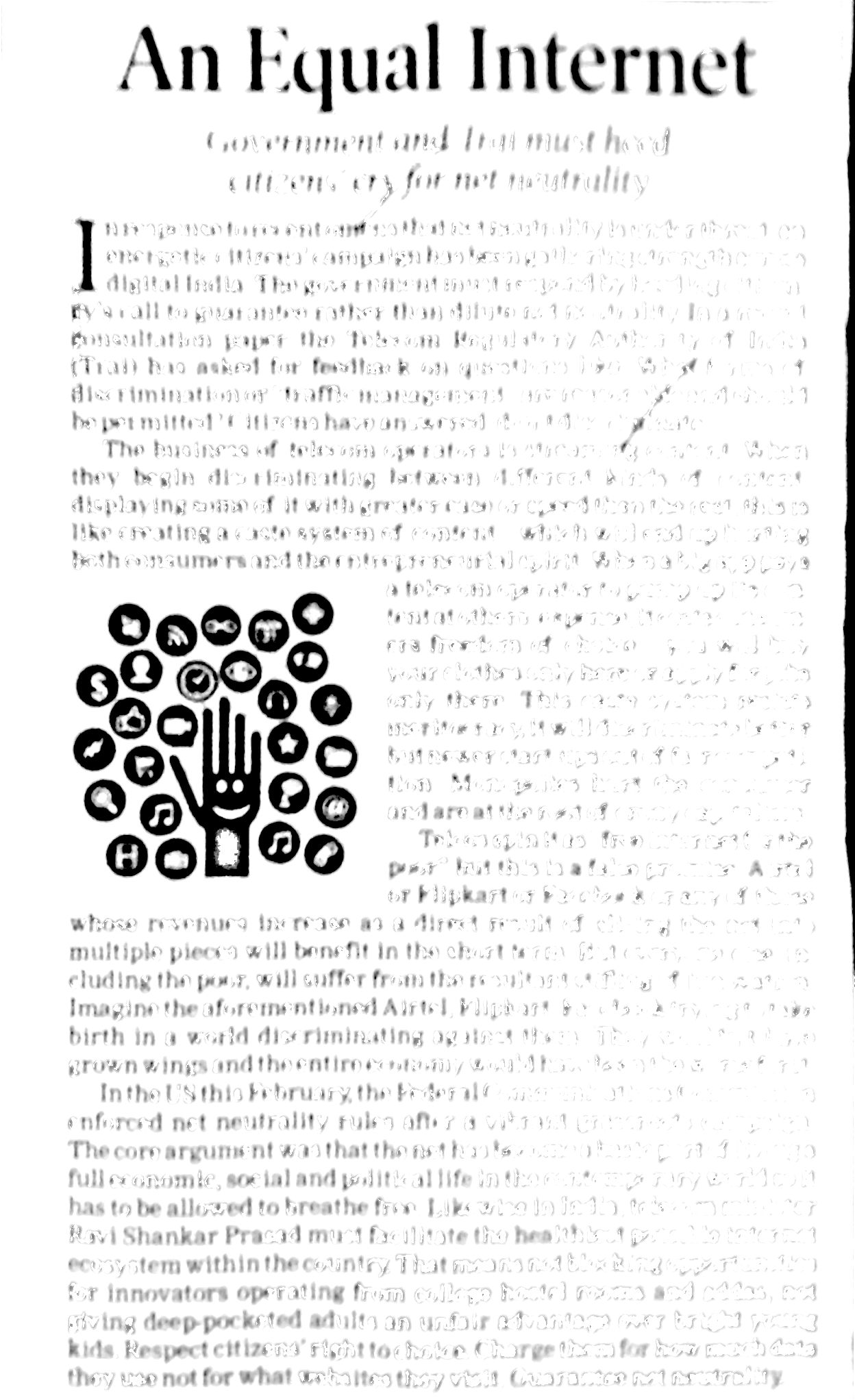
Nice editorial in TOI of today: for your ready perusal

“An Equal Internet

Government and Trai heed citizens cry for net neutrality”

New Doc 7_1 (2)

*****

SAU MEIN NINYANNABE BEIMAN, PHIR BHI MERA BHARAT MAHAN- BY A COMMON MAN

copyright@shravancharitymission


12


MERA BHARAT MAHAN


    I read something very interesting written behind a truck that I was following on a highway some time back till it stopped at a Dhaba. Where, I spoke to the driver who told me these were his heartfelt feelings about present day India. Since all the lines were written in Hindi. I too am presenting it in Hindi using English alphabets for a similar flow and effect. Truly speaking, the lines are quite apt for today’s India and also conveys the love for motherland. 


4

MERA BHARAT MAHAN

Sau mein ninyan-nabbe beiman, phir bhi mera bharat mahan,

Bukhe nangon ko nichod rahe hain beiman, phir bhi mera bharat mahan,

Jhoot per jhoot bol rahen hain gharman, phir bhi mera bharat mahan,

Sab ke hisse ka kha gaye neta aur afsaran, phir bhi mera bharat mahan.

*

Ajab ajab se jari hain farman, phir bhi mera bharat mahan,

Scam ke uppar hai scam, phir bhi mera bharat mahan,

Balatkar ke baad balatkar, phir bhi mera bharat mahan,

Mazhabon ke beech hai ab hai darmiyan, phir bhi mera bharat mahan.

*

Lal aur neeli battiyun ki hai bharmar, phir bhi mera bharat mahaan,

Shauchalaya ki hai mara mari, khule shoch ki hai bharmar, phir bhi mera bharat mahan,

Aur kya kahun Mahoday, in makarraon ke beech bhi hai, mera bharat mahan.

Written by a Common man–a truck driver.

*

Share it if you like it

Posted by Kamlesh Tripathi

*

https://kamleshsujata.wordpress.com

*

Share it if you like it

*

Shravan Charity Mission is an NGO that works for poor children suffering from life threatening diseases. Should you wish to donate for the cause the bank details are given below:

NAME OF ACCOUNT: SHRAVAN CHARITY MISSION

Account no: 680510110004635 (BANK OF INDIA)

IFSC code: BKID0006805

*

Our publications

GLOOM BEHIND THE SMILE

(Archived in 7 prestigious libraries of the US, including, Harvard University and Library of Congress. It can also be accessed in MIT through Worldcat.org. Besides, it is also available for reading in Libraries and archives of Canada and Cancer Aid and Research Foundation Mumbai)  

ONE TO TANGO … RIA’S ODYSSEY

(Archived in Connemara Library, Chennai and Delhi Public Library, GOI, Ministry of Culture)

AADAB LUCKNOW … FOND MEMORIES

(Launched in Lucknow International Literary Festival 2014)

REFRACTIONS … FROM THE PRISM OF GOD

(Co-published by Cankids–Kidscan, a pan India NGO and Shravan Charity Mission, that works for Child cancer in India. The book is endorsed by Ms Preetha Reddy, MD Apollo Hospitals Group. Book was launched in Lucknow International Literary Festival 2016)

TYPICAL TALE OF AN INDIAN SALESMAN

Story of an Indian salesman who is lowly qualified but fights his ways through uncertainities to reach the top. A good read for all salesmen. Book launched on 10th February, 2018 in Gorakhpur Lit-Fest. Now available in Amazon.com and Flipkart

(CAN BE BOUGHT FROM ON LINE BOOK STORES OR WRITE TO US FOR A COPY)

*****


Aadab Lucknow … fond memories

launchCopyright@shravancharitymission

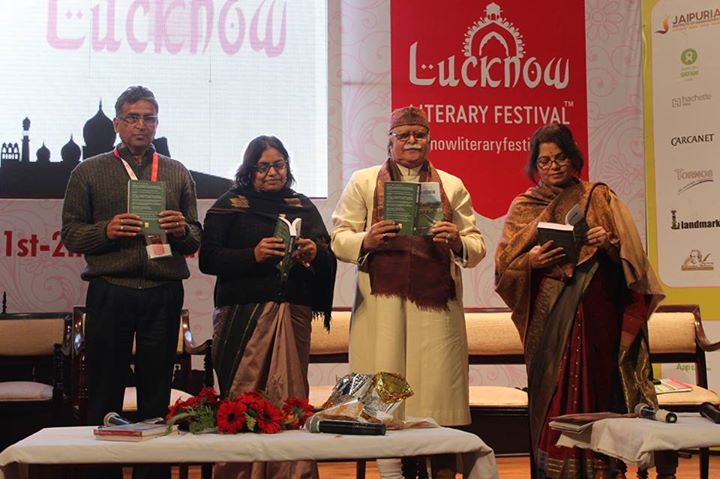
Picture of ‘Aadab Lucknow … fond memories’ book launch in Lucknow literary festival in 2014. A fiction written around city of Lucknow is all about homecoming of a group of friends that had left Lucknow and showcases the culture of ‘brotherhood’ between two major communities namely Hindu and Muslims that reside in Lucknow.

The e-book is available across the world through Partridge Penguin, Barnes & Noble, flipkart and Amazon and print copies are available with Variety Book store, Connaught place, New Delhi, Advani Booksellers Lucknow and Universal Book Depot Lucknow. You could also write to us for a print copy. Charges would be Rs 375 + Rs 25 courier charges in India.

You could also make a NET transfer of Rs 400 as detailed below and let us have your name and address with PIN code and we will courier it to you. Email id:shravancharitymission@gmail.com.

Name of account holder: Kamlesh Tripathi

icici account no (008301504072)

IFSC code: ICIC0000018

INTERESTING FACTS ABOUT INDIA AND THE WORLD- DO YOU KNOW SERIES-1

123

Copyright@shravancharitymission

  • Hooch the crudest form of liquor, is prepared in the most unhygienic of conditions and consumed by the underclass—people who can’t afford even country liquor. ET 24.6.15 chat room
  • The number of private ITIs in India did grow from under 2000 in 2007 to 10,000 in 2014.
  • According to World Bank data, barely 16% of Indian companies were providing enterprise based training in 2007. The shortage of skilled personnel has raised input costs for them, so that more of them now provide in-firm training (36% in 2014)
  • Sensex has delivered nearly 9% excess returns over inflation over long periods. Equities are real gold over a period of time.
  • Equities: At 17.1% CAGR, Rs 10,000 has become-290 times in 36 years. Equities are real gold over a period of time.
  • Liquid biopsy being tested in the US may soon become a boon for cancer treatment.
  • India slipped six places in one year in the global happiness index to be ranked 117th out of 158 nations in 2015. Switzerland tops the chart.
  • In Delhi transport contributes to majorly to emissions (PM2.5) 38%.
  • India has again topped the global remittance chart for 2014, pulling in $70.38 billion which is 3.7% of the country’s $2 trillion GDP from its migrant work force. China follows with $64.14 billion.
  • The average age of AAP cabinet is 42 years.
  • China company erects 57 storey skyscraper in just 19 days.
  • Mission Indra-dhanush would be carried out in two phases-1st 201 high focus districts where nearly 50% of all unvaccinated or partially vaccinated children reside. While 201 districts are being covered in the 1st phase, 297 will be targeted in the second phase in 2015-16. This mission aims to cover 89 lakh children.
  • Only 65% of our children are presently covered-under Universal Immunization Programme (UIP) Mission Indra-dhanush’s configuration will cover 90% full immunization coverage by 2020.
  • India’s information technology revolution happened on its own.
  • It has been found that in 63% of cases people are ignorant about the benefits of immunization in India.
  • It takes a contingent of 30,000 strong international media to cover Olympic games function with events spread far and wide.
  • India has one individual gold medal to show for 92 years of Olympic participation.
  • Aadhar has emerged as one of the largest bio-metric identification programmes in the world with unique identification authority of India issuing nearly 82 crore cards covering nearly 67% of the Indian population.
  • A house insurance costs just Rs 6-12/day however only less than 1% people who can afford it have house insurance.
  • MSME sector which produces 45% of manufacturing output and 40% of total exports- receives only cursory treatment without any tangible steps to make it part of global value chains or improving access to needed technologies & markets.
  • Search engine giant Google is facing anti-trust charges in Europe- abusing its dominant position & manipulating on line traffic.
  • In India we know that 1 in 2 girls are married before the age of 18. If a girl has a baby between 15 and 19 she’s twice as likely to die.
  • India is one of the countries with the highest maternal mortality.
  • Delhi has more than 500,000 manual rickshaws on its streets: Of these, less than a fifth are licensed. And 80% of rickshaw pullers continue their back breaking labour by paying ‘hafta’ to the police that amounts to Rs 10 crore per month.
  • India has 58 million private enterprises, the great majority of which are MSME category. These enterprises provide employment for more than 85% of the working population of India.
  • Unorganised sector have to borrow credit at 2-2.5% per month in India.
  • At present a mere 35 million households of a total of 250 million are in the direct tax net in India.
  • Indian goods travel via Singapore to reach Bangladesh in three weeks; now they will go directly to Bangladeshi ports in a week.
  • Europeans began to wear underwear only in the 17th century when they discovered soft and affordable Indian cloth brought by the East India Company.
  • With 5,000-mile coastline, India has historically been a great trading nation and in some periods, commanded as much as 20% share of world trade compared to 2% today. It always had a positive balance of trade with the world until the industrial revolution in 19th-century England when the mills of Lancashire made our handloom textiles technologically obsolete.
  • Sweden ranks as world’s most gender-egalitarian countries based on a firm belief that men and women should share power equally. Sweden also has a feminist party
  • MAM Ramaswamy-Chennai industrailist holds the record for the most wins in Indian Turf history
  • Indian economy is a startling 82% of entire SAARC region.
  • It takes a contingent of 30,000 strong international media to cover Olympic games function with events spread far and wide-
  • Nepal’s rebuilding to cost 10 billion dollars- Finance Minister of Nepal.
  • Barely 4% of all households in India are headed by women. Over 70% of currently married men are household heads compared to 3% of married women.
  • 41% of all girls aged 19 in India have married and in this context in rural India 47.3% of 19 year old girls had been married, in the urban areas the corresponding figure was 29.2%.
  • A study carried out by Comptroller and Auditor General of India last year on land acquired by the centre between 2006 and 2013–the period between which UPA was in power–reveals that a land mass as thrice the size of Noida was acquired under special economic zone but more than half of it had not been put to use.
  • 80 richest people own more wealth than what is owned by one-half of the human race and very soon just 1% people will own wealth which equals what the rest 99% of would have.
  • In 2001, world’s three richest people owned personal wealth greater than the GDP of 34 poorest nations.
  • In 2001, 51 of 100 top revenue-generating institutions were business operations and not nation states.
  • The average protein intake of a person in India through normal diet has dipped 6-10% in the past two decades with almost 86% of rural and 70% of urban population not getting the government designated 2400 kcal/day. While the richest get over 2518 kcal each day the poorest get less than 1679 kcal—a difference of almost 50%.
  • Food amounts for almost half of the consumer price index (CPI) basket of India.
  • 6 crore small entrepreneurs employ 12 crore people in India.
  • 10 million new workers enter the job market every year in India.
  • The daily intake of oil and fat consumption per person has increased from 31 gram to 42 gram in rural areas and from 42 gram to 52.5 gram in urban areas between 1993-94
  • Today 77% women in India get sterilized
  • Ayurveda is a 6000 year old science.
  • 80 Mumbaikars died everyday due to heart attacks between March 2014 and March 2015 up from 67 deaths daily during the same period the previous year.
  • 41% of all girls aged 19 in India have married, and in that context: In rural India 47.3% of 19 year old girls have been married, and in urban areas the correspondence figure is 29.2%
  • India slipped six places in one year in the global happiness index to be ranked 117th out of 158 nations in 2015. Switzerland tops the chart.
  • India has around 3500 engineering colleges and churns out 14 lakh engineers a year.
  • It has been found that in 63% of cases people are ignorant about the benefits of immunization in India.
  • India has one individual gold medal to show for 92 years of Olympic participation.
  • Aadhar has emerged as one of the largest biometric identification programmes in the world with unique identification authority of India issuing nearly 82 crore cards covering nearly 67% of the Indian population.
  • Bottom 50% of households consume only 25% of subsidised LPG; 41% of PDS kerosene is lost as leakage , only 46% of remainder (or 27% of the total) is consumed by poor households.
  • Hindu India has been the sole nation on earth where Jewish community has never been persecuted even though they have been living here for more than two thousand years.
  • India has never invaded any country in the last ten thousand years of its history.
  • Delhi Metro aims at carrying 25 lakh commuters daily.
  • There are in India 5.7 crore own account enterprises.
  • Childhood deaths used to be 12/100 in India in 1990s. That’s down to 5/100. But 56% die in the first month.
  • At least 60% Indians are still stuck in farming, which produces only 13.9% of the nation’s GDP.
  • Pradhan Mantri Jan Dhan Yojana, saw opening of 12.5 crore accounts in 8 months.
  • SUVs have grown to more than 30% of the total luxury vehicles sold in India.
  • Delhi is fast becoming the world’s pollution capital, and around a fifth of Delhi’s population is caused by traffic.
  • 20th century saw the worst of violent wars in human history.
  • Tata Consultancy Services (TCS) is India’s biggest private sector employer  with 2.5 lakh employees and top recruiter of women, will dole out a special reward amounting to Rs 2,628 crore ($423 million), probably the biggest-ever bonus payout by an Indian company.
  • Our nuclear reactors which were operating at around 50% of capacity a few years ago are now operating at about 83% capacity, thanks to uranium procured from other countries.
  • Let’s put it this way. If you send a silly person on an important job and he acts true to his nature, who is real silly? The man who acted silly or the one who sent him?
  • Only 3% are vegetarian in America, 9% in the U.K., a noteworthy 10% in Italy and Taiwan and surprisingly 8.5% in Israel. And in this particular area, we Indians are the kings, 40% of our huge population is vegetarian.
  • With its meagre 7.5 million foreign tourist arrivals per year, India is losing out on a major employment expansion opportunity.
  • India has around 1,000 diplomats which is far fewer than Britain that has  over 6,000 and China that has around 7,500 diplomats.
  • The  current estimate for India’s landless is around 100 million households, which would constitute at least 300 million families of our population. Another 200 million rural families subsist on less than bighas and must supplement their meagre incomes with some form of labour.
  • India’s future prosperity depends on its urban centers which already contribute a little over two-third of the GDP.
  • The contribution of nuclear energy in electricity generation in India is not more than 3.5%.
  • World’s military expenditure is estimated to have been $1.74 trillion in 2013 or 2.4% of global GDP.
  • In the next five years 22% of China’s GDP growth is estimated to come from the digital sector.
  • The world’s last typewriter clattered off the Godrej line in 2011.
  • Finland has the highest borrowing of library books in the world.
  • Indian Railways is the second biggest procurement agency after defence, spending almost Rs 1 lakh crore a year. It is also the largest buyer of diesel in India.
  • More than 45,000 trucks from North Indian states enter Delhi everyday, plying on Euro III diesel which has 350 ppm sulphur and is greatly more polluting than the 50 ppm sulphur Euro-IV fuel
  • India needs to reverse groundwater usage. Already, the figures suggest that well over half the irrigation requirements are now met by mining groundwater and 15% of all aquifers are in a critical condition.
  • Restaurants abroad that pass of as Indian are often run by Bangladeshis and Pakistanis, rather than persons of Indian origin.
  • At present Rs 3,77,616 crore or 4.2% of Indian GDP is spent across sectors in subsidies.
  • National Optic Fibre Network (NOFN) aims to link India’s 2.5 lakh gram panchayat through 70,000 km of high speed optic fibre in the next three years- thereby enabling 600 million Indians to harness the benefits of modern communication.
  • Our urban population is 377 million or 31% of the total. By 2031 it is projected to rise to 600 million.
  • The first modern Caesarean section was performed by German Gynecologist Ferdinand Adolf Kehrer in 1881.
  • Of 250 million mobile users in India 180 million access internet on mobile, this will shoot up to 500-600 million in a few years
  • Studies show maximum viewing is of two-minute videos and in terms of text 400 words.
  • Mark Twain, is the pen name for Samuel Langhorne Clemens.
  • India is one of the biggest arms importer of the world.
  • Indian gambling market is estimated around $60 billion annually
  • A woman is raped in India every 20 minutes.
  • India’s luxury car market has grown eight times in the last seven years from 4000 units in 2007 to 33,000 units in 2014. And as per car experts the number is expected to hit 100,000 units by 2020.
  • Prime residential prices in Re/sq ft. Monaco-339723, Hongkong-293944, London-283215, New
  • York-174362, Singapore-151419, Shanghai-121608, Paris-116851, Miami-99210, Beijing-97087, Mumbai-61300, Dubai-40455, Delhi-33400, Bengaluru-18600.
  • All India Brewers Association- Beer sales account for only 50% of liquor sales in India- Much lower than in China, Brazil, US & UK. Wine accounts for only 1% of liquor sales.
  • Mumbai has 30 of India’s 68 billionaires.
  • On top of the billionaire list is New York with 114, followed by Moscow 91, Hongkong 53, London 49, Beijing 37 and Mumbai 30
  • Ricky Ponting holds the world record of 24 straight wins in ODI cricket captaincy.
  • Year 2015 is designated by the UN as the ‘Year of Light and technologies.’
  • 22% of households in cities and 31% in villages are in debt.
  • Sri Lankan cricketer Sangakara is a great collector of books
  • Lakshadeep has in all 36 islands.
  • India is pushing its shipyards to build more ships and other vessels for small Indian Ocean island countries in this region.
  • India was a maritime power before China had even heard of the term.
  • A Chinese naval strategist declared China needed 6 aircraft carriers to ‘secure’ the Indian Ocean.
  • According to the Census 2011, 41% of India’s population is under 18. Yet only 4.5% of the total budget is earmarked for children.
  • Today, the number of child labourers in India varies from 50 lakhs to 5 crores in different estimates.
  • Have you seen or heard of a bigger glutton and despot than Zimbabwean President Robert Mugabe who celebrated his 91st birthday with elephant on menu for guests at the lavish 1-million pound bash. According to the mirror, two young elephants were shot and feasted on by the president’s 20,000 guests while the country’s poor struggle to scrape a living. A farmer had donated the elephants to Mugabe along with a lion and a crocodile to be stuffed. Members of the Zimbabwean government offered 40 cows that are due to be held at Victoris falls.
  • Only 43 people since Independence have been conferred the Bharat Ratna.
  • Between census 2001 and 2011, India witnessed a spurt of urban clusters, with the number of towns increasing from 5161 to 7935 in a decade India’s urban population likely to grow to 40% by 2030 from current 31%
  • India posed to be world’s 3rd largest construction market by 2025.
  • India has 7500 km of coastline with opportunities for port and harbour development.
  • India is world’s 2nd largest road network handling more than 60% of freight and 90% of passenger traffic in the country- 64,000 kms of new highways to be developed.
  • India is world’s 3rd largest network of railways spanning 64,600 kms and 25,000 kms of new lines to be added by 2020.
  • Indian airline traffic expected to treble to 450 million by 2023 from 169 million in F-14 and make India world’s 3rd largest aviation market by 2020.
  • Increase in infrastructure investment of 1% of GDP results in additional 34 lakh jobs in India (Compared to 15 lakh in USA and 13 lakh in Brazil)
  • India requires Rs 70 Lakh crore investment required till 2030 for development of urban roads, affordable housing and transportation systems- Rs 39 lakh crore to be invested over the next 20 years to build urban infrastructure for smart cities alone.
  • Contribution of railways to Indian GDP to increase to 3% in 2020 from 1% in 2012.
  • Rs 2 lakh crore to be invested in solar and wind power projects in wastelands and uninhabited regions in India- 50,000 villages to receive electricity through off grid solar by 2030.
  • Indian wedding industry is now valued at 25.5 billion dollars a year
  • Narendra Modi was the first Prime Minister to visit Parliament canteen where he had an ordinary thali costing Rs 29.
  • Indian Census Data: There are about 66 lakh more women who are “currently married” than men.
  • Indian Census Data: More than 18 lakh girls under the age of 15 are married.
  • Indian Census Data: Out of total 120 crore population about 58 crore were married at the time of census 2011.
  • Indian Census Data: among 58 crore married persons 29.3 crore were women while 28.7 crore are men.
  • Indian Census Data: Kerala has the highest skew with 1.13 married women for every married man.
  • Indian Census Data: In the 20-25 age group about 69% of women were married while just over 30% of men were married.
  • Indian Census Data: India’s population in 2011 was 121 crore and, of this , 4.6% or 5.6 crore are widowed, with women out numbering men by a long way; when in 2001 only 18.5 lakh or 0.7% of the then population of 102 was widowed.
  • There are in India 5.7 crore own account enterprises.
  • Delhi Metro aims at 25 lakh commuters daily.
  • India has never invaded any country in the last ten thousand years of its history.
  • Hindu India has been the sole nation on earth where the Jewish community has never been persecuted even though they have been living here for more than two thousand years.
  • Bottom 50% of households consume only 25% of subsidised LPG; 41% of PDS kerosene is lost as leakage, only 46% of the remainder (or 27% of the total) is consumed by poor households in India.
  • The slum population of India has increased from 5.23 crores in 2001 to 6.55 crores in 2011
  • The value of goods that lay unused in urban India was pegged at over Rs 56,000 crore
  • Indian Railways has 66,000 km of rail tracks of which only 13,000 km has been added in the last ten years
  • GOI spent Rs 320 crores on republic day in 2014 an increase from Rs 145 crores in 2001
  • It takes Rs 2.5 lacs per minute to run the Indian Parliament
  • Central Board for film certification certifies 13,500 films every year.
  • Garment factories are India’s second largest employer of the women with 1.2 crore women
  • Last year more than 1000 women were murdered for so called honour crimes in Pakistan
  • 1% owns 48% of global wealth since 2009. 1 in 9 people don’t have enough to eat.
  • More than 1 billion people live on less than $1.25 a day.
  • People younger than 45 years of age account for 40% of all heart  related deaths in India as compared to 10% in the US. So are you exercising enough.
  • Gita is one of the all time best sellers. It is 5153 yeras old says RSS.
  • The Fiscal Responsibility and Budget Management (FRBM) act prescribes that the central government deficit should not exceed 3% of GDP.
  • It is generally believed in the Indian context, the acceptable level of inflation in 4%, and the comfort zone is +/- 2%. In developed economies, the acceptable level of inflation is only 2%

IS LITERACY RATE OF INDIA BEGINNING TO DRIVE INDIAN POLITICS?

Copyright@shravancharitymission

123

    The working definition of literacy in the Indian census since 1991 is as follows: Literacy rate: The total percentage of the population of an area at a particular time aged seven years or above who can read and write with understanding. Here the denominator is the population aged seven years or more.

    At the time of independence in 1947. India had a population of approximately 390 million. This got divided as follows after partition: 330 million people remained in India, 30 million in remained in West Pakistan and another 30 million in East Pakistan.

    The literacy rate of independent India in 1947 was 12%. By around 1950-1951 it had increased to around 18.33% with a population of 35 crore as you can see in the (literacy and population) table below. As compared to 1947 the current average literacy rate of India as per 2011 census, is 74% when the world average is 84%. Of the big states of India some laggard states are below 8% and some above by 20% as compared to the national average of 74%.

LITERACY RATE OF INDIA POPULATION
YEAR PERSON MALE FEMALE YEAR CRORE
1951 18.33 27.16 8.86 1950 35
1961 20.3 40.4 15.35 1960 43
1971 34.45 45.96 21.97 1970 54
1981 43.57 56.38 29.76 1980 69
1991 52.21 64.13 39.29 1990 83
2001 64.83 75.26 63.67 2000 101
2011 74.04 82.14 65.46 2000 117
        2015 124

 564

    In the early stages of independent India. Nothing else mattered than the sweet hangover of the freedom struggle and the newly formed Bharat Mata. That wheeled Pandit Nehru to rule for almost 17 years, as the longest serving Prime Minister (15.8.47 to May 1964). During his tenure the literacy rate rose from 12% to around 25%. The major event that shook India then was the Chinese aggression in the year 1962.

    India was an unquestioning country then. Just rising from the dust of the long colonial rule. And during that period, there was little or no political resistance to the Indian National Congress. That had spearheaded the freedom movement, and most iconic political leaders that mattered then were from this party.

    After Pandit Nehru expired post India-China aggression in 1964 the vacancy was filled in by another firebrand Congress leader Lal Bahadur Shastri. Who, served the country only for around 19 months and expired in Tashkent, part of the erstwhile USSR and today’s Uzbekistan.

    After Shastri’s sad demise. The mantel was adorned by Nehru’s daughter Indira Gandhi. Who, ruled for eleven years from 1966-1977. The three major events during her tenure, happened to be the liberation of East Pakistan and creation of Bangla Desh in 1971 followed by a full blown battle with Pakistan in the same year and declaration of emergency for the third time in India, and this time for internal reasons. Indira Gandhi started at an average literacy rate of around 32% in 1966 but in 1977 when Congress lost, the literacy rate had crept up to around 40%. It was for the first time Congress had gone out of power since independence. And in a manner it took literacy rate to jump by 28% (12% to 40%) to throw out a long standing ruling party at the centre. This goes to prove that literacy rate one way or the other increases the political appetite of the citizenry.

    In the Indian scenario increase in literacy rate has made voters change their minds. That has demanded for a dispensation of a different nature to govern the country. Indira Gandhi had imposed ‘emergency’ in the year 1975 when the average literacy rate was around 40%. This made her lose the general elections and gave entry to the first non-Congress government headed by Morarji Desai in 1977.

    When the average literacy rate of India was around 30%. India could see. In some states, certain state and regional parties gaining ground such as the Dravidian parties that have dominated since 1967. DMK routed Congress in 1967 and in 1972 MGR split DMK into AIDMK. Such incidents clearly dawned an era of new politics.

    Some states of India, such as Kerala and Tamil Nadu have always been ahead of the average Indian literacy rate. In the 2011 census as against the average literacy rate of 74%, Kerala was at 94, Tamilnadu at 80%, Maharastra at 82% and the big laggard states were Bihar at 62%, Jharkhand 66%, AP 67% Rajasthan 66% and UP 68%

    Bihar witnessed JP movement when the literary rate was between 35-40% and Lalu became the Chief Minister of Bihar in 1984 when the literary rate of Bihar was > 45%. In U.P. Mulayam Singh became the chief minister in 1991 and Mayawati in 1995 when the state literacy rate had crossed 45%. Signalling, the thinking minds wanted a change from two national parties, Congress and the BJP. In West Bengal too Congress ruled till 1977 but when the Bengal literacy rate rose to around 40% it was taken over by the Communist rule. And when literacy rate went passed 52% the voters even rejected Communist Party that was getting irrelevant and pulled out Trinamul Congress from the stable of Congress.

7986

    The literacy rate map below shows how certain states maintain their lead in literacy rates. Where, one would find a distinct differentiation within the political set ups of states such as Kerala and Maharastra with that of Bihar and Jharkhand.

2011_Census_India_literacy_distribution_map_by_states_and_union_territories.svg

INDIA WHEN ABOVE 64% AVERAGE LITERACY RATE

    India decided to open up when the literacy rate had gone past 52% in the year 1991 when wide spread reforms were announced. And, as the literacy rate went up, ethics in politics came down. Perhaps, thinking minds made politics much more competitive- resting on the theory of ‘survival of the fittest.’

    Beyond 2001 when the average literacy rate had just crossed 64%. India saw a sea change in terms of, all the four estates. To begin with the first estate (clergy) now tampers with politics without fear. Second estate (Bureaucracy) has become irresponsible, subservient, corrupt and even callous towards the general public. Third estate (Commoners) is perennially pained but have become more knowledgeable and demanding. And the fourth estate (Press and Media) have become all powerful. Yet they remain the saving grace of modern India

INDIAN POLITICS AT 74% LITERACY RATE

    At 74%, politics of India doesn’t remain the same and is deluged by the heft of thinking minds. For in the recent past it attracted grandstanding of agitations, like ‘India against Corruption’ where revered activist like Anna Hazare had to take the centre stage.

    Besides, even the mind space of an Indian voter has got more and more complex. Because of which we could see for the first time. A political leader of the stature of Narendra Modi, to create space in voters mind traveled 3 lac km across 25 states, addressed 473 big public rallies with 5827 public interfaces, including Chai pe charcha and 3D broadcasts. More so. BJP fought more under the banner of Narendra Modi than BJP, like presidential election. In Delhi elections we saw AAP party following the new ‘volunteer’ cult to create tailor made space in voter’s mind that wiped out BJP and Congress. In J&K also it was a star struck and out-of-the-box variety of a political campaign. It was an expensive opportunity that forced BJP to abandon relevant political-IZMS just to form the government.

    As we move towards 100% literacy. The route to State Assembly and Parliament will become more and more arduous. Political Parties will have to change their tone and tenor to address 100% literacy in all their political communication and behaviour. Where, corruption, scams and VVIPSM will have no place. What will simply matter is performance. This indeed will effect hoodwinkers under the garb of individual politicians.

*

By Kamlesh Tripathi

*

https://kamleshsujata.wordpress.com

*

Share if you like it

*

Shravan Charity Mission is an NGO that works for poor children suffering from life threatening diseases. Should you wish to donate for the cause the bank details are given below:

NAME OF ACCOUNT: SHRAVAN CHARITY MISSION

Account no: 680510110004635 (BANK OF INDIA)

IFSC code: BKID0006805

*

Our publications

GLOOM BEHIND THE SMILE

(The book is about a young cancer patient. Now archived in 7 prestigious libraries of the US, including, Harvard University and Library of Congress. It can also be accessed in MIT through Worldcat.org. Besides, it is also available for reading in Libraries and archives of Canada and Cancer Aid and Research Foundation Mumbai)  

ONE TO TANGO … RIA’S ODYSSEY

(Is a book on ‘singlehood’ about a Delhi girl now archived in Connemara Library, Chennai and Delhi Public Library, GOI, Ministry of Culture, Delhi)

AADAB LUCKNOW … FOND MEMORIES

(Is a fiction written around the great city of Nawabs—Lucknow. It describes Lucknow in great detail and also talks about its Hindu-Muslim amity. That happens to be its undying characteristic. The book was launched in Lucknow International Literary Festival of 2014)

REFRACTIONS … FROM THE PRISM OF GOD

(Co-published by Cankids–Kidscan, a pan India NGO and Shravan Charity Mission, that works for Child cancer in India. The book is endorsed by Ms Preetha Reddy, MD Apollo Hospitals Group. It was launched in Lucknow International Literary Festival 2016)

TYPICAL TALE OF AN INDIAN SALESMAN

(Is a story of an Indian salesman who is, humbly qualified. Yet he fights his ways through unceasing uncertainties to reach the top. A good read not only for salesmen. The book was launched on 10th February, 2018 in Gorakhpur Lit-Fest. Now available in Amazon, Flipkart and Onlinegatha

(ALL THE ABOVE TITLES ARE AVAILABLE FOR SALE IN AMAZON, FLIPKART AND OTHER ONLINE STORES OR YOU COULD EVEN WRITE TO US FOR A COPY)

*****


‘ARROGANT INDIA’ INTIMIDATES THE ‘MEEK INDIA’ – THE CURSE OF LAL BATTI- VVIP CULTURE

Copyright@shravancharitymission

123

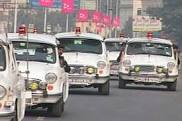
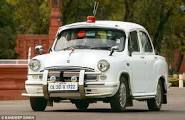
India belongs to we the VVIP and the rest can go to hell by drowning themselves in the sufficiently large Arabian sea or the Bay of Bengal, and for the rest who can’t reach there umpteen rivers are there or climb atop those lofty mountains or any sky-scraper and jump from there, for there is no place for NON-VIPS in India anymore. This is what the meek India is coaxed to feel by the arrogant India, shamelessly, personified by these VVIPs in flesh and blood. This VVIP class (Politicians-Bureaucrats-Judiciary) is not even 1% of the Indian population; but in the manner 1% of the world’s population controls 48% of the world’s wealth, these VVIP’s too control the entire India.

Perhaps, some of these VVIPs must also be feeling that Mahatma Gandhi, our father of the nation was perhaps an idiot, to have travelled third class and roamed in loin cloth, to live a life of simplicity; which we are not. And, so grab everything out, of the frail guts of this cattle class, of meek India.

And, for the meek India, Maharajas of the ancient India or Viceroys of the colonial British Raj, as if had never left but only got swapped by the arrogant India. Today, arrogant India very blatantly exploits the meek India by the sledgehammer of VVIP-ISM; by blocking roads for endless hours, taking their vehicles right up to the tarmac where their aircrafts are parked, by having separate lanes for themselves and also insulting senior citizens, differently abled persons and children who are made to stand in long queues while they walk in at the last moment by-passing security cordons, with their gun toting security guards. They delay lacs and lacs of workers going to office and factories by their stupid traffic movement and then talk of industrial output. They kill patients in ambulances by halting ambulances and then talk of health.

456

In the British Raj, in many cities of India there were some roads and lanes, where Indians could not enter during certain hours (such as main roads and mall roads in many cities) and pitifully we find the same atrocious culture seeping back to haunt the meek India in a more aggressive manner, just to satisfy arrogant India’s egos.

Today, meek India is standing at a crowded crossroad, not knowing which way to go and whom to look at, as all look to be the same, and in the process is losing faith in the institution of democracy that comes through the windows of these elected representatives of political parties and their cahoots in bureaucracy and even the judiciary. For starting from Congress that invented the VVIP-ISM post British Raj; today even BJP sings the same tune after having promised to go the other way, and who knows, tomorrow AAP that started primarily on anti- corruption an anti- VIP culture too may get lured to VVIP-ISM.

And what is more mystifying is the posture in which ‘arrogant India’ approaches ‘meek India’ with folded hands with a promise to serve as a dutiful ‘Public Servant’ thereby exploiting the simplicity of the meek India and once they are elected they show their real ugly face and feudal mindset.

They do everything under the sun to justify the VVIP-ISM- the hateful Lal Batti culture. They operate like parasites on hard earned tax payer’s money and refuse to reform themselves. They inculcate venomous values in their children too and would never bury the skeleton of being called the lord and master.

So what did ‘meek India’ get post-independence? They got Bapu’s- third class, his loin cloth and above all his simplicity and values; and the arrogant class? Well they became the modern day Maharajas and didn’t let the Britishers leave India in the real sense.

MAKE #CRICKET AS POPULAR AS #SOCCER–START ANOTHER #WORLD #CUP AMONGST CRICKET PLAYING CONTINENTS

downloaddownload (1)Copyright@shravancharitymission

By Kamlesh Tripathi

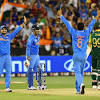
In the Cricket world cup 2015 only fourteen teams are playing. Which are divided into two pools that will play 49 matches in two countries, to decide the world cup title. International Cricket Council (ICC) recognizes more than 125 countries that play cricket. But many are not up to the mark to be included in the international circuit, such as the World Cup. ICC has 10 full members, 38 Associate Members and 59 Affiliate Members and that adds up to 107 countries. The West Indies cricket team does not represent a single country.

The world today has 196 countries and with that logic, cricket looks like an isolated game with only 14 countries, vying for the world cup which is far from a world phenomenon. Even when the cheer and clapping is getting louder each day as the tournament progresses in those 14 countries. And so, this magnificent pageant that is hosted every 4 years is only witnessed by a small section of the world. As the game is not as popular as soccer which is played in almost all the countries.

download (2)download (3)

In the same fashion we also have the shorter version of the game called the T-20 cricket world cup, every four years. And, in addition we keep having individual test matches, ODIs and T-20 series between countries which are generally followed by the supporters of their respective countries only. Recently, BCCI has also launched IPL series to promote, both domestic and international cricket. But, even with all of this, cricket is not getting sold exponentially beyond the 14 countries that participate in the world cup. So, there is a greater need to popularize cricket in less and non-cricket playing countries, by shedding traditional, autocratic and bureaucratic ways of thinking and dealing with cricket.

download (4)

The 14 countries that currently play in the international world cup circuit are- India, Pakistan, Sri Lanka, Bangla Desh, Australia, New Zealand, Afghanistan, UAE, South Africa, Zimbabwe, West Indies, England, Ireland & Scotland.

This more or less promotes cricket in their respective countries only, and to a certain extent in their neighbouring countries. But if cricket needs to spread to other countries by leaps and bounds. Something out-of-the-box needs to be thought through. A better way of popularizing cricket would be to have another world class tournament. Where, we could bunch teams of 3-4 countries, continent wise, and have a world cup tournament amongst them, such as;

Team 1: India, Sri Lanka & Bangladesh

Team 2: Australia, New Zealand

Team 3: Pakistan, Afghanistan and UAE

Team 4: South Africa, Zimbabwe

Team 5: West Indies, England, Ireland and Scotland

HOW WILL THIS HELP IN PROMOTING CRICKET?

Cricket was never played in India, Pakistan, Bangladesh and Sri Lanka, since Adam was a lad. It only came along with the Britishers and became an endearing and formidable game, close to a religion. Which goes to show, if publicized, facilitated and marketed well. It has the potential to become a game as popular as soccer.

Individual countries, and more pointedly India, may have done well to promote cricket in their own country. But Cricket as such has not seen a deluge of popularity, breaking barriers of borders and continents. Rather, it cocooned in its ego and bureaucracy and never butterflied across the world as soccer or lawn tennis. To sight and example, for so many years Bangladesh had to wait to get Test status and same goes for countries like Ireland and Scotland, that are still waiting.

WHAT WILL CHANGE BY BUNCHING TEAMS AND HAVING A WORLD CUP AMONGST CONTINENTS?

Just citing an example. Increase the team members in the squad of Team 1, as referred above (India, Sri Lanka and Bangladesh) by 3-5 and include new talent from China, Nepal, Myanmar, Maldives or any other country close by and give them a chance in warm up matches, or even just let them be with the team or include them in practice sessions or as twelfth man to be viewed by spectators back home. As this also will popularize the game back in their countries in a big way. For, didn’t it suddenly make a world of difference when some of our athletes were seen on world stage, in various disciplines at the Olympics?

And, hold this world cup tournament among continents every two years. As this will help in good publicity and brand building because public memory is too short, and keep the venue in some non-playing country or countries that play, but are not world class like China, Nepal, Myanmar, Maldives, Kabul, Spain, or the US to name a few. Request their dignitaries or popular figures to inaugurate and play the game at these inaugural matches. ICC is rich and could allocate a budget for this. Also, give special incentives including discounted tickets to tourists who want to watch the game of cricket from non-cricket playing countries. And just before the tournament, legendary and star cricketers depending upon their popularity like Sachin Tendulkar, Imran Khan, Viv Richards, Ricky Ponting, Sanat Jaisurya, to name a few, could give cricketing lessons to youngsters who want to play cricket.

Give this world cup tournament a well thought through, heavy weight title, making it look like a competition among titans, continents, giants, bravo juggernauts or even ET. For, this will have a domino effect in popularizing the game by leaps and bounds. Especially, in non playing continents or even non-playing countries or countries where the game is not played to its full potential. For where is the continued rejoice if the game continues to hover and be competed around in the same surroundings. Perhaps, the present day cricket may give you a feeling. As if it has been discarded and rejected by rest of the world and only adopted by few countries, with world potential still to be realized; and all in the interest of cricket.

*****

#OSHO INTERNATIONAL FOUNDATION CROSSES LAXMAN REKHA BY DEMEANING INDIAN FREEDOM FIGHTERS-shouldn’t they apologise to the nation?

Copyright@shravancharitymission

#OSHO INTERNATIONAL FOUNDATION CROSSES LAXMAN REKHA BY DEMEANING INDIAN FREEDOM FIGHTERS-shouldn’t they apologise to the nation?

index    We all know what Chandra Mohan Jain (11December 1931-19 January 1990) aka Acharya Rajneesh from 1960s onwards, aka Bhagwan Shree Rajneesh during 1970s and 1980s, and aka Osho from 1989 stood for:

ss    As a professor of philosophy he drew enough polemics while he traveled throughout India during 1960s as a public speaker. And his outspokenness and out-of-turn criticism of politicians and the political mind space, that included Mahatma Gandhi and the institutionalized religion made him controversial of the irreparable sort. And the legacy goes on even after his death. But this time the Osho International Foundation has crossed the holy Laxman Rekha as this is what they wrote in #The speaking tree on February 7th 2015.

Quote

Why Politicians Create Chaos In The Country

Osho

    ‘Freedom came to India very suddenly, without any preparation. All the so called leaders were only efficient in creating a little bit of chaos here and there, and when freedom came they were absolutely at a loss as to what to do because all their efficiency was in creating chaos.

    So even though freedom did come, those leaders still know only one thing; how to create chaos. They go on doing the same. And those leaders know perfectly well that the only way to be in power is to go on creating chaos. The whole concern of those who are in power is to remain in power, and they can only remain in power if the country remains in chaos. So people go on fighting and they go on managing somehow, proving to the world that they are very much needed, otherwise the country will fall apart. And the interest of the people who are not in power is also in creating chaos because that is the only way to come back into power or to come into power.’

Unquote

osho_international_pune_20111015    While the column targets the Indian Politicians and rulers. The first paragraph cited above, targets even the freedom fighters of India. Perhaps, the author tried to continue moving in the shoes of Chandra Mohan Jain alias Bhagwan Shree Rajneesh alias Osho without realizing the battle for freedom had started way back in 1857 with the 1st mutiny, and so, to say “freedom came to India very suddenly, without any preparation. All the so-called leaders were only efficient in creating a little bit of chaos here and there, and when freedom came they were absolutely at a loss as to what to do because all their efficiency was in creating chaos” is completely wrong and ill willed.

ll    Secondly, freedom struggle and gaining of Independence was not the brain child of any single Politician. Rather, it was the aspiration of approximately 30-35 crore Indians that was ably driven by father of the nation Mahatma Gandhi, together with Jawaharlal Nehru, Sardar Patel to name a few, and many more freedom fighters who even died for the cause of Independent India.

And, moreover the first breed of Politicians, were actually freedom-fighters who definitely did not want chaos for the nation; and took up to the role of Politicians only to steer India out of the woods and therefore to paint freedom fighters with same brush as Politicians is criminal.

Self-styled Gurus and foundations, who have hallucinated all their lives about love and sex, should be well advised not to touch upon certain hallow chords of the nation which are beyond them, and especially for a foundation that has a sobriquet of “sex guru.”

For make no mistake Freedom-Fighters are above any self-styled God-man; so please watch out.

*****

Title: DALBADLUS, TURNCOATS, POACHED AND WILD CARD ENTRIES- HAVING A FIELD DAY IN INDIAN POLITICS

    Probity has always been the hallmark of public life. As a result of which it has always been bracketed as a ‘domain ideology’ suiting a certain section of the society. Therefore, it always required the platform of an ‘ideology’ from where it could operate with probity being, it’s chastity belt.

    This gave the world many ideological terminologies such as Communist, Marxist, Socialist, Capitalist, Secular, Rightist, Leftist to name a few. Almost, like poster signs for various sections of society to choose and follow. And, individual add-ups of these manifested as political parties flagging their brand of ideology. It was therefore difficult to swim through politics without ideological waters until sometime back. But the scenario is now fast changing.

IS TRADITIONAL POLITICKING IRKING THE PRESENT DAY POLITICAN?

Yes, and if I were to say the genesis of traditional ‘ideology’ in politics has become the nemesis of Indian Politics today. I won’t be wrong. Because the heart-throb, of Traditional Indian Politics, the so called the ‘isms’ that behaved as attractive flag-posts such as Communism, Socialism, Capitalism, Secularism to name a few have slowly vaporized into thin air. The pledge to ‘serve’ has transformed into ‘somehow rule.’ The competencies and prowess required earlier to stay afloat in politics too have changed to winnability, glamour, backstabbing, chamchagiri and of course criminality.

BUT WHO GAINS IN ALL OF THIS?

Traditional politicians, who still delve deep in rooted ‘isms’ may lose out to the new wild card entries. As, in the present, a courtship with politics is deemed fashionable only if it is flirting with those political parties, that are high on political libido.

Glaringly in the case of Delhi elections, and that too specifically in BJP. Where, Kiran Bedi was made to paratroop as a CM candidate. Leaving the entire cadre of BJP high and dry. Turncoats like Krishna Tirath, a dalit leader and former union minister who when out of power walked into BJP shamelessly, as if poached like a sitting duck.

But the craziest of all was the induction of dalbadlus like Shazia Ilmi into BJP. Who until a year back was a staunch supporter of AAP. But when it did not suit her, on some flimsy grounds, she left the party. Ostentatiously, exhibiting that she didn’t believe in any moral ‘isms.’ And what was more surprising was her entry into the number one, national ruling party BJP. Just because she happened to be a local glamorous Muslim face. BJP not only didn’t shirk in inducting her but also made her a front line canvasser. Thereby, in many ways announcing ‘isms’ don’t matter anymore. What shockingly matters is the ‘wining of elections’ says a desperate Amit Shah- BJP Head.

TALENT POACHING IN POLITICS

The complexity of present day politics, demands talent of poaching which is more of a lift-off from the ever old corporate inc. Where domain experts are hired laterally to serve certain specialized skill-sets. But there also, in spite of intense competition, corporate professionals don’t forget the salt of the previous company. Unlike poached politicians who spew venom at their previous mentors, and that reminds me of Shazia Ilmi and her tirade against Arvind Kejriwal. That was bereft of any moral standards, and also Kiran Bedi’s out of turn and unwarranted comments about Kejriwal. So does this exhibit the final nailing of ‘isms’in the coffin?

MUFFLER TAKES ON THE TEN LAKH NAME EMBLAZONED SUIT

Some political parties are moving at a pace at which the Indian voter is not moving, and that may take them, to a disconnect with the voters; and there lies the caution.

For make no mistake, at the fall of many ‘isms’ rises the ‘ist’ the ‘anarchist.’ Whose muffler takes on the ten lakh name emblazoned suit. So are ‘isms’ converting into ‘ists’ is what we have to wait and watch?

*****


Article: ARE RURAL SCHOOLS PLAYING WITH THE FUTURE OF OUR CHILDREN AND INDIA?

Copyright@shravancharitymission

r2rr3

NGO Pratham has done well in bringing out an outstanding report called the Annual Status of Education Report (ASER 2014). ASER is an annual household survey to assess children’s schooling status and basic learning levels in Reading and Arithmetic. It is the tenth such survey facilitated by Pratham. This is the largest and most comprehensive annual household survey of children in rural India. It surveyed 16,497 villages located in 577 districts across India covering 341,070 households and 569,229 children.

POSITIVES AT SCHOOL LEVEL:

India, would love to hear, that enrolments in schools, are at a level of 96% and that too for the 6th year in a row. So, most of our kids are now at least, sauntering down the school classrooms. And, to toast the occasion there are regular mid-day meals, to take care of their nourishment and over 80% of our schools have improved infrastructure. And the buck doesn’t stop here, as 75% of rural schools now have provision for drinking water, while 65% even have toilets, which is significantly higher than about half a decade ago.

NON-ACHIEVEMENTS AT SCHOOL LEVEL:

So, while we have made steady progress on the infrastructure side of our schools, what still remains deficient is on the teaching side – how well are these schools teaching their pupils? In depth details are available online. But here are some disturbing points:

  • Almost 50% of the kids in class 5 cannot read simple sentences that are taught in class 2.
  • 50% of the kids in class 5 cannot do basic two digit subtraction which is taught in class 2.
  • And half the kids in class 8 cannot do even simple division that is taught in class 4

So then what is going on in these schools? As half of our school children after having spent more than half a decade in school cannot read basic sentences and do even simple arithmetic; when they could have learnt this in 2-3 years of urban education or in any private school. So do these teachers employed with these schools have any accountability?

ruralrr4

SO THEN, WHERE ARE HEADING TO?

Are these schools responsible for creating a talent pool in our country or are we just to rejoice over enrollment numbers and mid-day meals and forget the core issue of educating our children. In the literacy chain of India this could be the weakest link. For what is literacy anyway? Is it just being able to write your name or learn the bare minimum skill of being able to read and solve those basic arithmetical problems. A skill that you will require lifelong. Or is it something much more than that.

Basic skill of reading and arithmetic is vital for survival in today’s world; as life in any form will require these skills. And if the basics are not strong. No matter how much of education you add in later years will only go for a waste. As the data explains adding number of years of education to such laggards will be of no use. And, also, such laggards though counted in enrollment will never get educated.

And, mind you the percentage of such students is very high, and at a staggering fifty percent. India could have lived with a miniscule percentage of such students but because it is half our students, it depicts an applecart failure in our education system.