AESOP’S FABLES … The Mice and the Weasels
THE MICE AND THE WEASELS
The weasels and the mice were always fighting with each other. In every battle, the weasels were victorious and the mice lost. The weasels ate a large number of mice for dinner after winning over them. So, the mice called a council one day, and appointed generals and commanders to form a large mice army to fight the weasels. The new leaders wore ornaments of feathers and straw. They felt proud. Then, the mice challenged the weasels. The weasels immediately attacked the mouse army. The mice slipped into their holes to escape the weasels, but the leaders got stuck at the narrow openings because of their head-dresses. The weasels caught them and ate them. After losing once again, the mice decided to keep away from the weasels.
MORAL: GREATNESS HAS ITS PENALTIES
Poem: The World within Books … by Kamlesh Tripathi
Copyright@shravancharitymission
Poem: The World within Books
Kamlesh Tripathi
*
Between heaven and humankind,
There stands a quiet respite,
The boundless world of books,
Where dreams get aligned.
*
A place of fascinating legends,
Of stories yet untold,
Where ink turns into magic,
And pages to gold.
*
Between God and mankind,
There exists the world of books,
A world of fairy tales,
That takes you to the realm of space.
*
Books whisper stories,
Books narrate episodes,
A treasure trove is hidden,
Between those tacit pages.
*
They speak in silent voices,
Yet thunder upon your soul,
They carry hidden treasures,
That brightens the life’s goal.
*
Within their illustrious pages,
Lie secrets of the past,
The present finds its meaning,
And the future is foretold.
*
The one who reads awakens,
To live a thousand lives,
Through grief and joy and wonder,
The searching spirit thrives.
*
But one who shuns their wisdom,
And let their pages sleep,
May wander through existence,
In slumber dark and deep.
*
Just as, once in Arden’s forest,
In … As You Like It,
Lover Orlando carved his plea,
Where trees became his books,
And their bark his thoughts to feel.
*
Words blooming on the branches,
Of longing’s living tree.
So too we write our journeys,
In the margins of the mind.
*
Books are living forests,
Where truth and beauty unite.
It’s like the old man sensing in the sea,
The dawn beyond the night.
*
A reader feels the morning,
Before the birth of light.
The world of quiet pages,
A sanctuary so bright.
Between the dust of earth and stars,
Books are our lamp of light.
**
Books are your best friends that live with you all your life.
***
Written and posted by Kamlesh Tripathi
Author, Poet & Columnist
*
Like it and Share it
*
Shravan Charity Mission is an NGO that works for poor children suffering from life-threatening diseases, especially cancer. Our posts are meant for our readers, including children and adults, and have a huge variety of content. We also accept donations for our mission. Should you wish to donate to the cause of cancer? The bank details are given below:
NAME OF ACCOUNT: SHRAVAN CHARITY MISSION
Account no: 680510110004635 (BANK OF INDIA)
IFSC code: BKID0006805
***
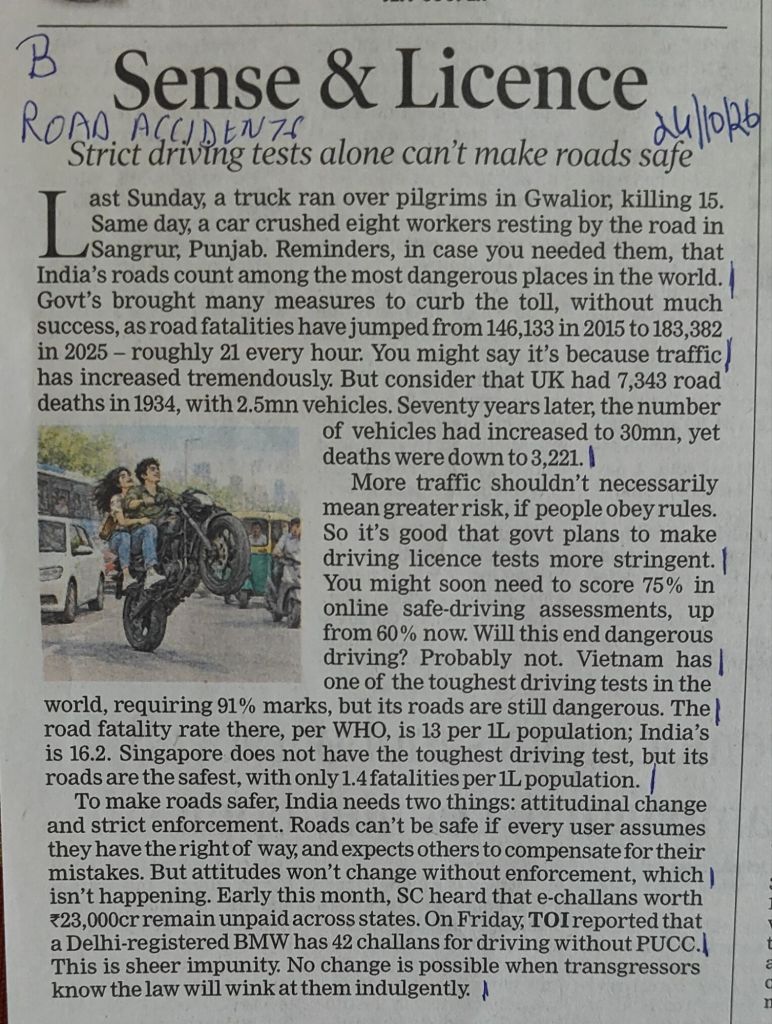
SHIVA’S RATRI … MAHASHIVRATRI … by Kamlesh Tripathi
Copyright@shravancharitymission
Shiva’s Ratri … MahaShivratri
Kamlesh Tripathi
Maha Shivratri means The Towering Night of Shiva. It is one of the most sacred festivals in the Hindu tradition. It is dedicated to Lord God Shiva, the Supreme Soul, and is celebrated annually on the 14th day of the waning moon in the month of Phalguna (February–March). The festival symbolises the triumph of light over darkness, wisdom over ignorance, and spiritual awakening over worldly illusion.
One of the most popular legends associated with Maha Shivratri is the burning of Kamadeva, the god of desire, to ashes. When Kamadeva attempted to disturb Shiva, while he was in meditation with his arrows of attraction, Shiva opened his third eye and reduced him to ashes. This act doesn’t symbolise the rejection of love, but the abstinence from worldly craving. Shiva’s third eye represents spiritual insight. It is the awakening of inner vision that burns away ignorance. Maha Shivratri, therefore, becomes an archetypal night of self-purification and awakening.
Maha Shivratri commemorates the divine wedding of Lord Shiva with Parvati. It symbolises the union of masculine and feminine energies, which maintains the balance of the universe. Additionally, it highlights Shiva’s cosmic dance, the Tandava, representing the eternal cycle of creation, preservation, and destruction. The dance also signifies the natural rhythm of the universe and reminds devotees of the importance of aligning with the flow of life. Shiva’s Trishul (Trident) represents several trinities such as: creation, preservation, and destruction; past, present, and future; body, mind and the atman.
On this day, devotees engage in spiritual practices such as fasting, chanting of mantras, and staying awake through the night. These rituals help individuals transcend material distractions and focus on the divine. These devotional activities symbolise vigilance and spiritual discipline. They include chanting “Om Namah Shivaya” and reciting hymns like the Shiva Chalisa to purify the mind and body. These practices are meant to deepen the connection with Lord Shiva and guide devotees towards spiritual enlightenment.
At the centre of Maha Shivratri’s celebration is the aradhana of Lord Shiva. In Hinduism, ignorance (avidya) is considered the root cause of suffering. Suffering commences when individuals get attached to unwanted worldly desires. Shiva, the great yogi seated in deep meditation, represents mastery over these impulses. His stillness and detachment reflect the ideal of self-control and higher awareness.
The festival also emphasises the renewal of righteousness. According to the Bhagavad Gita, when righteousness declines, the Supreme Being manifests to restore balance. Lord Shiva’s role as the destroyer of evil and protector of the righteous is central to this. Maha Shivratri encourages individuals to purify themselves, embrace virtues like honesty, charity, and forgiveness, and reaffirm their commitment to righteousness.
The worship of Lord Shiva is often performed through the Shiva Lingam, a representation of Shiva’s formless nature. Temples such as Somnath, Kashi-Vishwanath, Mahakaleshwar, and Rameshwar are important pilgrimage sites, attracting millions of devotees. Maha Shivratri is celebrated in various forms across India and the world.
It is a night of inner transformation. By fasting, devotion, and meditation, devotees purify their minds, bodies, and souls, creating space for the divine light. This sacred night serves as an annual reminder that Lord Shiva’s wisdom illuminates the path to spiritual awakening, guiding individuals from ignorance to divine knowledge.
Shiva is known by a thousand names, which reflect his multifaceted roles as creator, destroyer, and a supreme yogi. His key names are Mahadev (The Great God), Shankara (Benefactor), Rudra (The Roarer), and Bholenath (Kind-hearted). Other prominent names are Mahesh, Shambhu, Neelakanta (Blue-throated), and Nataraja (The King of Dance), highlighting his various attributes and cosmic roles.
Written and posted by Kamlesh Tripathi
Author, Poet & Columnist
*
https://kamleshsujata.wordpress.com
*
Like it and Share it
*
Shravan Charity Mission is an NGO that works for poor children suffering from life-threatening diseases, especially cancer. Our posts are meant for our readers, including children and adults, and have a huge variety of content. We also accept donations for our mission. Should you wish to donate to the cause of cancer? The bank details are given below:
NAME OF ACCOUNT: SHRAVAN CHARITY MISSION
Account no: 680510110004635 (BANK OF INDIA)
IFSC code: BKID0006805
***
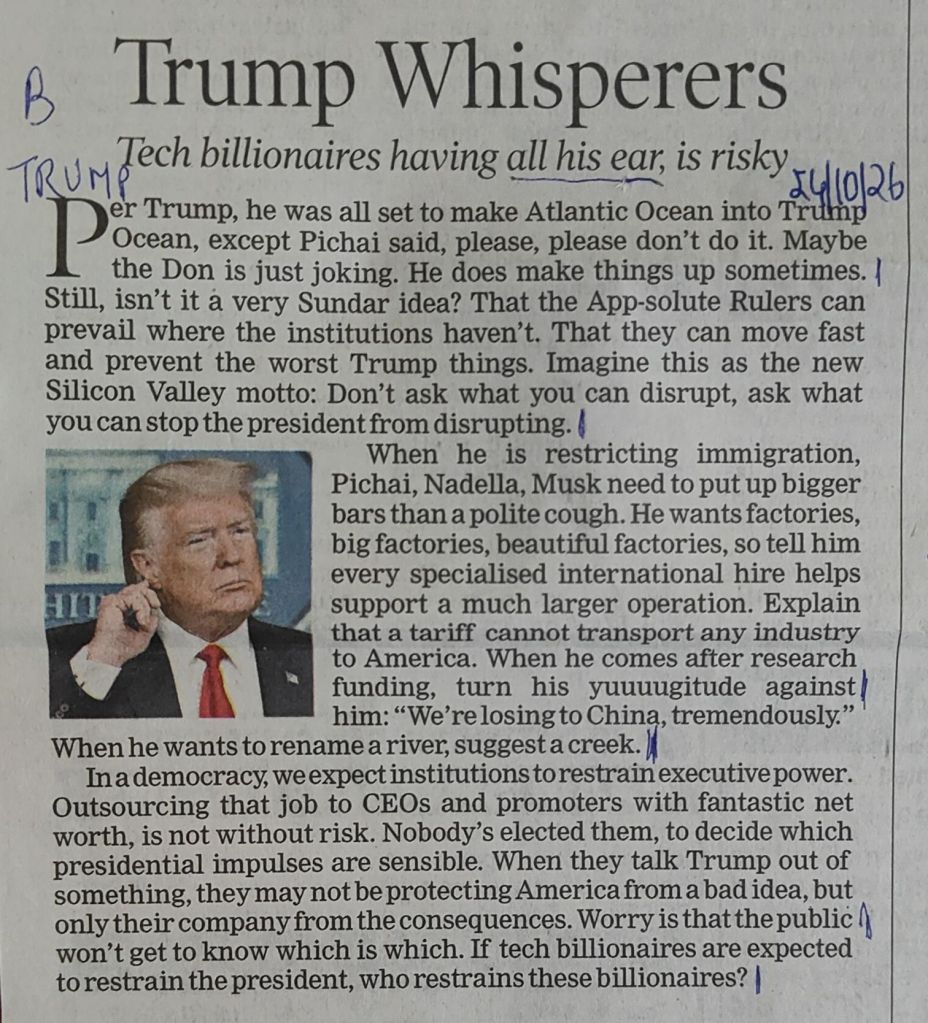
I dreamt of Utopia by Kamlesh Tripathi
Copyright@shravancharitymission
The Goan Everyday newspaper 8/2/26

Written and posted by Kamlesh Tripathi
Reader’s Rewind: I dreamt of Utopia … by Kamlesh Tripathi
Copyright@shravancharitymission
READER’S REWIND: I DREAMT OF UTOPIA
The world has become colourful. But the ‘Happy Prince’ is no longer alive to see it. So is the swallow, who carried out his last orders, but died in the frost, at his feet, before he could escape to Egypt. The lead metal statue of the ‘Happy Prince’ cracks in agony, but his leaden heart still beats for his kingdom and his subjects. But are there any such rulers left, anymore? Well, they are practically extinct or very rare. Perhaps you might remember the name of the author who wrote the story ‘The Happy Prince.’ I’m forgetting his name. Oh! I remember now. It was Oscar Wilde. But “What’s in a name? Wrote Shakespeare. “That which we call a rose / By any other name would smell as sweet.” Maybe Oscar Wilde would like to rewrite the story ‘Happy Prince’ in the context of the present day while residing in heaven. But does a happy man without a shirt exist anymore, as told in the Italian tale ‘The Happy Man’s Shirt’? A quintessential example in recent times was India’s Mahatma Gandhi, the father of the nation, whose simple attire—a loincloth and shawl (without shirt) during the 1930s, particularly around the 1931 Round Table Conference- was given the abrasive title of ‘half-naked fakir’ by the British Prime Minister, Winston Churchill, to mock him. I’m more than sure there isn’t a happy man without a shirt anymore because the man now wears not only shirts but also colourful shirts, yet he remains unhappy.
Utopia is now seized of polarising colours, such as red, blue, green and saffron, and certain adamant tenets and philosophies that rule the roost, along with the so-called isms, the right wing and the left wing, in the central pillar of democracy. Have we gone back in time? Are we proving the Greek epic poem Hesiod’s Theogony correct, which propagated the initial theory that dense darkness covered everything until the earth was born out of chaos? With Earth came the mountains, the sea, the sky and Uranus. Uranus and Earth came together and gave birth to the Titans. Later, the Titans and Gods, both from the same lineage and class, fought for supremacy, in which the Greek God Zeus won, just like Lord Krishna.
But halt there. Take time off to think because the world leaders of today suffer from the same fear as Uranus, Cronus or the Kansa Mama of Mathura, who killed their would-be adversaries. Even Nigas tried to swallow Lord Vishnu in a television series, but that was in a different context. Ajatashatru killed his father Bimbisara to ascend the throne of the Magadha Empire, and in return, his son too killed him for the same throne. The Robinhoods are extinct now. The two biggest democracies are always in the news, but at times for the wrong reasons. The world is full of Brutus in present times, which may put the original Brutus to shame and the Bard into a wonder, ‘to be or not to be’.
One can say goodness has eclipsed and is rarely seen and experienced. Much has evolved, but more is yet to come. So wait and watch. Be on the lookout for that happy man without a shirt, and the happy prince, with a lead heart that beats for the public even now. Fortunately, I dreamt, Utopia shall remain Utopia and not become a Dystopia.
Written and posted by Kamlesh Tripathi
Author, Poet, & Columnist
*
https://kamleshsujata.wordpress.com
*
Like it and Share it
*
Shravan Charity Mission is an NGO that works for poor children suffering from life-threatening diseases, especially cancer. Our posts are meant for our readers, including children and adults, and have a huge variety of content. We also accept donations for our mission. Should you wish to donate to the cause of cancer? The bank details are given below:
NAME OF ACCOUNT: SHRAVAN CHARITY MISSION
Account no: 680510110004635 (BANK OF INDIA)
IFSC code: BKID0006805
***
Kasauli: A Jewel in the Himalayan Crown
Copyright@shravancharitymission
Happy to share my piece ‘Kasauli: A Jewel in the Himalayan Crown’ published today in The Goan Everyday newspaper. Happy reading.

READER’S REWIND: I DREAMT OF UTOPIA
Copyright@shravancharitymission
READER’S REWIND: I DREAMT OF UTOPIA
Kamlesh Tripathi
The world has become colourful. But the ‘Happy Prince’ is no longer alive to see it. So is the swallow, who carried out his last orders, but died in the frost, at his feet, before he could escape to Egypt. The lead metal statue of the ‘Happy Prince’ cracks in agony, but his leaden heart still beats for his kingdom and his subjects. But are there any such rulers left, anymore? Well, they are practically extinct or very rare. Perhaps you might remember the name of the author who wrote the story ‘The Happy Prince.’ I’m forgetting his name. Oh! I remember now. It was Oscar Wilde. But “What’s in a name? Wrote Shakespeare. “That which we call a rose / By any other name would smell as sweet.” Maybe Oscar Wilde would like to rewrite the story ‘Happy Prince’ in the context of the present day while residing in heaven. But does a happy man without a shirt exist anymore, as told in the Italian tale ‘The Happy Man’s Shirt’? A quintessential example in recent times was India’s Mahatma Gandhi, the father of the nation, whose simple attire—a loincloth and shawl (without shirt) during the 1930s, particularly around the 1931 Round Table Conference- was given the abrasive title of ‘half-naked fakir’ by the British Prime Minister, Winston Churchill, to mock him. I’m more than sure there isn’t a happy man without a shirt anymore because the man now wears not only shirts but also colourful shirts, yet he remains unhappy.
Utopia is now seized of polarising colours, such as red, blue, green and saffron, and certain adamant tenets and philosophies that rule the roost, along with the so-called isms, the right wing and the left wing, in the central pillar of democracy. Have we gone back in time? Are we proving the Greek epic poem Hesiod’s Theogony correct, which propagated the initial theory that dense darkness covered everything until the earth was born out of chaos? With Earth came the mountains, the sea, the sky and Uranus. Uranus and Earth came together and gave birth to the Titans. Later, the Titans and Gods, both from the same lineage and class, fought for supremacy, in which the Greek God Zeus won, just like Lord Krishna.
But halt there. Take time off to think because the world leaders of today suffer from the same fear as Uranus, Cronus or the Kansa Mama of Mathura, who killed their would-be adversaries. Even Nigas tried to swallow Lord Vishnu in a television series, but that was in a different context. Ajatashatru killed his father Bimbisara to ascend the throne of the Magadha Empire, and in return, his son too killed him for the same throne. The Robinhoods are extinct now. The two biggest democracies are always in the news, but at times for the wrong reasons. The world is full of Brutus in present times, which may put the original Brutus to shame and the Bard into a wonder, ‘to be or not to be’.
One can say goodness has eclipsed and is rarely seen and experienced. Much has evolved, but more is yet to come. So wait and watch. Be on the lookout for that happy man without a shirt, and the happy prince, with a lead heart that beats for the public even now. Fortunately, I dreamt, Utopia shall remain Utopia and not become a Dystopia.
Written and posted by Kamlesh Tripathi
Author, Poet, & Columnist
*
https://kamleshsujata.wordpress.com
*
Like it and Share it
*
Shravan Charity Mission is an NGO that works for poor children suffering from life-threatening diseases, especially cancer. Our posts are meant for our readers, including children and adults, and have a huge variety of content. We also accept donations for our mission. Should you wish to donate to the cause of cancer? The bank details are given below:
NAME OF ACCOUNT: SHRAVAN CHARITY MISSION
Account no: 680510110004635 (BANK OF INDIA)
IFSC code: BKID0006805
***

Poem: A happy Republic day to Indians by Kamlesh Tripathi
Published by the GOAN EVERYDAY Newspaper on 25/1/26

Poem: A Happy Republic Day 2026 to Indians
Copyright@shravancharitymission
A Happy Republic Day to Indians
*
Kamlesh Tripathi
**
The twenty-sixth of January dawns
a morning stitched with memory and resolve,
When time salutes the nation,
That chose law over power,
And conscience over crown.
*
In nineteen fifty,
The ink became destiny.
The Constitution awoke,
As a commemoration of independence,
With pages breathing justice, liberty,
equality and fraternity.
*
And India rose… not merely free,
But self-governing,
From Kashmir to Kanyakumari,
From Arunachal to Kutch.
A republic by her own word.
*
The long shadow of the Raj fell away,
Chains melted into clauses,
Subjects transformed into citizens,
Power flowed downward.
*
Into the hands of many,
Where ballots replaced commands,
And democracy learned to speak,
In a hundred tongues.
*
The Republic Day reminds you of more,
The cry of Purna-Swaraj in nineteen thirty,
When freedom was first declared in spirit,
Long before it arrived, in fact.
Hope marched ahead of history,
and history followed to cement the victory.
*
Along Kartavya Path—earlier Raj Path,
Boots strike the earth in measured pride,
The mighty Indian Army and para-forces march in style,
With tanks and guns galore,
The mighty Air Force’s flypast on the fore,
Where tableaux bloom with colour and culture,
The bands play melodious tunes,
And folk songs dance beside steel resolve.
*
The Tricolour rises,
The President salutes,
Where sacrifice is honoured,
In silence louder than drums.
*
Across the land,
Homes pause, hearts reflect.
A nation remembers its duties
as much as its rights.
*
The final notes of Beating Retreat,
Fade into the night,
Leaving behind a promise renewed,
That India is on the move.
*
Republic Day is not just a day or a date,
It is a vow repeated every year:
To guard the Constitution,
To deepen democracy,
And to keep India, always,
A Republic of the people.
Jai Hind.
Written and posted by Kamlesh Tripathi
Author, Poet, & Columnist
*
https://kamleshsujata.wordpress.com
*
Like it and Share it
*
Shravan Charity Mission is an NGO that works for poor children suffering from life-threatening diseases, especially cancer. Our posts are meant for our readers, including children and adults, and have a huge variety of content. We also accept donations for our mission. Should you wish to donate to the cause of cancer? The bank details are given below:
NAME OF ACCOUNT: SHRAVAN CHARITY MISSION
Account no: 680510110004635 (BANK OF INDIA)
IFSC code: BKID0006805
***