Category Archives: articles

IS LITERACY RATE OF INDIA BEGINNING TO DRIVE INDIAN POLITICS?

Copyright@shravancharitymission

123

    The working definition of literacy in the Indian census since 1991 is as follows: Literacy rate: The total percentage of the population of an area at a particular time aged seven years or above who can read and write with understanding. Here the denominator is the population aged seven years or more.

    At the time of independence in 1947. India had a population of approximately 390 million. This got divided as follows after partition: 330 million people remained in India, 30 million in remained in West Pakistan and another 30 million in East Pakistan.

    The literacy rate of independent India in 1947 was 12%. By around 1950-1951 it had increased to around 18.33% with a population of 35 crore as you can see in the (literacy and population) table below. As compared to 1947 the current average literacy rate of India as per 2011 census, is 74% when the world average is 84%. Of the big states of India some laggard states are below 8% and some above by 20% as compared to the national average of 74%.

LITERACY RATE OF INDIA POPULATION
YEAR PERSON MALE FEMALE YEAR CRORE
1951 18.33 27.16 8.86 1950 35
1961 20.3 40.4 15.35 1960 43
1971 34.45 45.96 21.97 1970 54
1981 43.57 56.38 29.76 1980 69
1991 52.21 64.13 39.29 1990 83
2001 64.83 75.26 63.67 2000 101
2011 74.04 82.14 65.46 2000 117
        2015 124

 564

    In the early stages of independent India. Nothing else mattered than the sweet hangover of the freedom struggle and the newly formed Bharat Mata. That wheeled Pandit Nehru to rule for almost 17 years, as the longest serving Prime Minister (15.8.47 to May 1964). During his tenure the literacy rate rose from 12% to around 25%. The major event that shook India then was the Chinese aggression in the year 1962.

    India was an unquestioning country then. Just rising from the dust of the long colonial rule. And during that period, there was little or no political resistance to the Indian National Congress. That had spearheaded the freedom movement, and most iconic political leaders that mattered then were from this party.

    After Pandit Nehru expired post India-China aggression in 1964 the vacancy was filled in by another firebrand Congress leader Lal Bahadur Shastri. Who, served the country only for around 19 months and expired in Tashkent, part of the erstwhile USSR and today’s Uzbekistan.

    After Shastri’s sad demise. The mantel was adorned by Nehru’s daughter Indira Gandhi. Who, ruled for eleven years from 1966-1977. The three major events during her tenure, happened to be the liberation of East Pakistan and creation of Bangla Desh in 1971 followed by a full blown battle with Pakistan in the same year and declaration of emergency for the third time in India, and this time for internal reasons. Indira Gandhi started at an average literacy rate of around 32% in 1966 but in 1977 when Congress lost, the literacy rate had crept up to around 40%. It was for the first time Congress had gone out of power since independence. And in a manner it took literacy rate to jump by 28% (12% to 40%) to throw out a long standing ruling party at the centre. This goes to prove that literacy rate one way or the other increases the political appetite of the citizenry.

    In the Indian scenario increase in literacy rate has made voters change their minds. That has demanded for a dispensation of a different nature to govern the country. Indira Gandhi had imposed ‘emergency’ in the year 1975 when the average literacy rate was around 40%. This made her lose the general elections and gave entry to the first non-Congress government headed by Morarji Desai in 1977.

    When the average literacy rate of India was around 30%. India could see. In some states, certain state and regional parties gaining ground such as the Dravidian parties that have dominated since 1967. DMK routed Congress in 1967 and in 1972 MGR split DMK into AIDMK. Such incidents clearly dawned an era of new politics.

    Some states of India, such as Kerala and Tamil Nadu have always been ahead of the average Indian literacy rate. In the 2011 census as against the average literacy rate of 74%, Kerala was at 94, Tamilnadu at 80%, Maharastra at 82% and the big laggard states were Bihar at 62%, Jharkhand 66%, AP 67% Rajasthan 66% and UP 68%

    Bihar witnessed JP movement when the literary rate was between 35-40% and Lalu became the Chief Minister of Bihar in 1984 when the literary rate of Bihar was > 45%. In U.P. Mulayam Singh became the chief minister in 1991 and Mayawati in 1995 when the state literacy rate had crossed 45%. Signalling, the thinking minds wanted a change from two national parties, Congress and the BJP. In West Bengal too Congress ruled till 1977 but when the Bengal literacy rate rose to around 40% it was taken over by the Communist rule. And when literacy rate went passed 52% the voters even rejected Communist Party that was getting irrelevant and pulled out Trinamul Congress from the stable of Congress.

7986

    The literacy rate map below shows how certain states maintain their lead in literacy rates. Where, one would find a distinct differentiation within the political set ups of states such as Kerala and Maharastra with that of Bihar and Jharkhand.

2011_Census_India_literacy_distribution_map_by_states_and_union_territories.svg

INDIA WHEN ABOVE 64% AVERAGE LITERACY RATE

    India decided to open up when the literacy rate had gone past 52% in the year 1991 when wide spread reforms were announced. And, as the literacy rate went up, ethics in politics came down. Perhaps, thinking minds made politics much more competitive- resting on the theory of ‘survival of the fittest.’

    Beyond 2001 when the average literacy rate had just crossed 64%. India saw a sea change in terms of, all the four estates. To begin with the first estate (clergy) now tampers with politics without fear. Second estate (Bureaucracy) has become irresponsible, subservient, corrupt and even callous towards the general public. Third estate (Commoners) is perennially pained but have become more knowledgeable and demanding. And the fourth estate (Press and Media) have become all powerful. Yet they remain the saving grace of modern India

INDIAN POLITICS AT 74% LITERACY RATE

    At 74%, politics of India doesn’t remain the same and is deluged by the heft of thinking minds. For in the recent past it attracted grandstanding of agitations, like ‘India against Corruption’ where revered activist like Anna Hazare had to take the centre stage.

    Besides, even the mind space of an Indian voter has got more and more complex. Because of which we could see for the first time. A political leader of the stature of Narendra Modi, to create space in voters mind traveled 3 lac km across 25 states, addressed 473 big public rallies with 5827 public interfaces, including Chai pe charcha and 3D broadcasts. More so. BJP fought more under the banner of Narendra Modi than BJP, like presidential election. In Delhi elections we saw AAP party following the new ‘volunteer’ cult to create tailor made space in voter’s mind that wiped out BJP and Congress. In J&K also it was a star struck and out-of-the-box variety of a political campaign. It was an expensive opportunity that forced BJP to abandon relevant political-IZMS just to form the government.

    As we move towards 100% literacy. The route to State Assembly and Parliament will become more and more arduous. Political Parties will have to change their tone and tenor to address 100% literacy in all their political communication and behaviour. Where, corruption, scams and VVIPSM will have no place. What will simply matter is performance. This indeed will effect hoodwinkers under the garb of individual politicians.

*

By Kamlesh Tripathi

*

https://kamleshsujata.wordpress.com

*

Share if you like it

*

Shravan Charity Mission is an NGO that works for poor children suffering from life threatening diseases. Should you wish to donate for the cause the bank details are given below:

NAME OF ACCOUNT: SHRAVAN CHARITY MISSION

Account no: 680510110004635 (BANK OF INDIA)

IFSC code: BKID0006805

*

Our publications

GLOOM BEHIND THE SMILE

(The book is about a young cancer patient. Now archived in 7 prestigious libraries of the US, including, Harvard University and Library of Congress. It can also be accessed in MIT through Worldcat.org. Besides, it is also available for reading in Libraries and archives of Canada and Cancer Aid and Research Foundation Mumbai)  

ONE TO TANGO … RIA’S ODYSSEY

(Is a book on ‘singlehood’ about a Delhi girl now archived in Connemara Library, Chennai and Delhi Public Library, GOI, Ministry of Culture, Delhi)

AADAB LUCKNOW … FOND MEMORIES

(Is a fiction written around the great city of Nawabs—Lucknow. It describes Lucknow in great detail and also talks about its Hindu-Muslim amity. That happens to be its undying characteristic. The book was launched in Lucknow International Literary Festival of 2014)

REFRACTIONS … FROM THE PRISM OF GOD

(Co-published by Cankids–Kidscan, a pan India NGO and Shravan Charity Mission, that works for Child cancer in India. The book is endorsed by Ms Preetha Reddy, MD Apollo Hospitals Group. It was launched in Lucknow International Literary Festival 2016)

TYPICAL TALE OF AN INDIAN SALESMAN

(Is a story of an Indian salesman who is, humbly qualified. Yet he fights his ways through unceasing uncertainties to reach the top. A good read not only for salesmen. The book was launched on 10th February, 2018 in Gorakhpur Lit-Fest. Now available in Amazon, Flipkart and Onlinegatha

(ALL THE ABOVE TITLES ARE AVAILABLE FOR SALE IN AMAZON, FLIPKART AND OTHER ONLINE STORES OR YOU COULD EVEN WRITE TO US FOR A COPY)

*****


BOOK QUOTES … INTERESTING LINES

Copyright@shravancharitymission

Name of book and author is not mentioned. Should you want to know please write to us.

ULYSSESHARRY PORTERBENHUR

  • For as his brain developed—you cannot stop your brain developing, and it is one of the tragedies of the half-educated that they develop late, when they are already committed to some wrong way of life.
  •   “It’s all very well,” grumbled Ellis, with his forearms on the table, fidgeting with his glass. The dispute with Mr. Macgregor had made him restless again. “It’s all very well, but I stick to what I said. No natives in this Club! It’s by constantly giving way over small things like that that we’ve ruined the Empire. This country’s only rotten with sedition because we’ve been too soft with them. The only possible policy is to treat ‘em like the dirt they are. This is a critical moment, and we want every bit of prestige we can get. We’ve got to hang together and say, ‘We are the masters, and you beggars—‘ “ Ellis pressed his small thumb down as though flattening a grub—“ ‘you beggars keep your place!’”
  • He followed her into the bedroom. In a week–it was only a week–her appearance had degenerated extraordinarily. Her hair looked greasy. All her lockets were gone, and she was wearing a Manchester longyi of flowered cotton, costing two rupees eight annas. She had coated her face so thick with powder that it was like a clown’s mask, and at the roots of her hair, where the powder ended, there was a ribbon of natural-coloured brown skin. She looked a drab. Flory would not face her, but stood looking sullenly through the open doorway to the veranda.
  • “Thank you, Monsieur.” She spoke in English but her voice was foreign, a rich low voice very seductive in quality. As she was about to pass on, she hesitated and murmured: “Pardon, Monsieur, but I think you were recently at Grasse?”
  • At the same time, the Emperor had a great desire that I should see the magnificence of his palace; but this I was not able to do till three days after, which I spent in cutting down, with my knife, some of the largest trees in the royal park, about a hundred yards distance from the city. Of these trees I made two stools, each about three feet high, and strong enough to bear my weight.
  • Alas,” said Candide, “my dear Pangloss often proved to me that the goods of this world are common to all men, that everyone has an equal right to them. Acting on that principle, the Franciscan should have left us enough to finish our journey. So you have nothing left, fair Cunegonde?”
  • P.V. Narasimha Rao came from humble home. His intellectual centre was India; his roots were deep in its spiritual and religious soil. His knowledge of Sanskrit profound. He was a man of learning, a scholar, a linguist and a thinker of the first order.
  • Gogol has never heard the term ABCD. He eventually gathers that it stands for “American-born confused deshi.” In other words him. he learns that C could also stand for “conflicted.”
  • The Don said meekly, “Wait, I’ll get you your money.” Then he went out into the garden and said to Sonny, “Listen, there’s some men working on the furnace, I don’t understand what they want. Go in and take care of the matter.”
  • “The rudeness spread to one of the assistant directors,” said Moriarty. “Instead of calling Marilyn for a scene, he would stand there and glare at her, tapping his foot for as long as he could. There would eventually be a big blow up, when all the man had to do was say, ‘Excuse me, Miss Monroe, we’re ready for you.’ She was denied all the prerogatives of a star.”
  • Taken aback by this passionate eloquence, Ruru lowered his staff. He feared that the snake might be a sage in disguise. Seeking to appease the great soul, Ruru said, “You do not seem like an ordinary snake. I believe you must be some other being only temporarily occupying this form. Tell me then, how did you come to be a snake?’
  • The sun was now setting. It was about three in the afternoon when Alisande had begun to tell me who the cow-boys were; so she had made pretty good progress with it- for her. She would arrive some time or other, no doubt, but she was not a person who could be hurried- Sandy’s Tale- Mark Twain page 107
  • I honour your circumspection. A fortnight’s acquaintance is certainly very little. One cannot know what a man really is by the end of a fortnight. But if we do not venture somebody else will; and after all, Mrs. Long and her daughters must stand their chance; and, therefore, as she will think it an act of kindness, if you decline the office, I will take it on myself.
  • FAY. Your son is a thorn in my flesh. The contents of his dressing-table are in indictment of his way of life. Not only firearms, but family-planning equipment. A Papal dispensation is needed to dust his room.
  • In a country as diverse as ours, there will always be passionate arguments about how we draw the line when it comes to government action. That is how our democracy works. But our democracy might work a bit better if we recognized that all of us possess values that are worthy of respect; if liberals at least acknowledged that the recreational hunter feels the same way about his gun as they feel about their library books, and if conservatives recognized that most women feel as protective of their right to reproductive freedom as evangelicals do of their right to worship.
  • The pigeon that stays at home is always in terror for the fate of the pigeon on the wing.
  • All this modern brag about women’s lib, male bashing appeared as poster signs for the erudite to read and jostle through this not-so-good world, as you still had the Ria’s of the world to be saved from the callous studs and the bitchy hens of the ‘scheming jungle’ called society.’
  • ‘Mar. Death is a penalty which a person can pay only once, and she has made that payment. What you wish to do has been done already for you. the last words she spoke were, “Anthony, most noble Anthony!” and in the midst of her speech, a rending groan came in the middle of “Anthony”; the word was split in two between, her heart and her lips. She gave up her life, and the half of your name was buried within her.’
  • “All is well so far. The lambardar reports regularly. No refugees have come through the village yet.I am sure no one in Mano Majra even knows that the British have left and the country is divided into Pakistan and Hindustan. Some of them know about Gandhi but I doubt if anyone has even heard about Jinnah.”
  • In the Mahabharata, Pandu has two wives but cannot have sex with them because of a curse. Pandu means pale and weak and could be related to the Sanskrit word panda meant for men unable to have sex with women for a variety of reasons.
  • ‘Mr Gilmer’s back stiffened a little, and I felt sorry for him. Perhaps I’d better explain something now. I’ve heard that lawyers’ children, on seeing their parents in court in the heat of argument, get the wrong idea: they think opposing counsel to be the personal enemies of their parents, they suffer agonies, and are surprised to see them often go out arm-in-arm with their tormentors during the first recess.’
  • ‘Well, there was once a tortoise, who was, of course, provided with a shell, and within this shell he used to hide for protection against the attacks of his enemies. One day, someone said to him, “You must find it very hot inside there in the summertime. Besides, when you are hidden, no one can admire your bodily perfections. Now, here is a serpent who will give you a million and a half for your shell.”’ ‘Good!’ said Monsieur Fouquet, laughing.       ‘So the tortoise sold his shell, and had to go about unprotected. He was discovered by a vulture, who, feeling hungry, broke his back with a blow of his beak, and had him for dinner.’
  • A little later, full into view swung a duplication of his dromedary, tall and white, and bearing a houdah, the travelling litter of Hindostan.’
  • Viswamitra, the greatest of the ascetic heroes of the Iliad of the East, had in him a perfect representative. He might have been called a Life drenched with the wisdom of Brahma- Devotion Incarnate.’
  • ‘He spoke bluffly, and only somebody like Sherlock Holmes or Monsieur Poirot could have divined that at the sound of her voice his soul had turned a double somersault, leaving him quivering with an almost Bill Rowcester-like intensity.’
  • Initially the losses ran to crores of rupees, Sir, but since we stopped production it has proved very economical !

NO PLACE FOR FAILURE, IN CHANGING INDIA: INDIAN MEDIA & SOCIAL NETWORKING SITES JOKE AND RIDICULE 44 YEAR OLD SON OF THE SOIL RAHUL GANDHI WHO COULDN’T MEET UP WITH SUCCESS

Copyright@shravancharitymission

By Kamlesh Tripathi

12

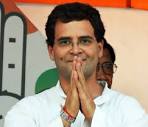
Ever since the stormy news of Rahul Gandhi’s sabbatical for ‘personal introspection’ during the ensuing budget session came in. Both the media and the social networking sites in India have hounded him to cruel smithereens. A parallel of which one cannot remember, at least in the recent past.

When, other, light and more decent ‘critical’ phrases could have been used to put him down. Double-meaning expressions like ‘missing in action’ (MIA) were continuously aired by certain TV channels, knowingly or unknowingly.

‘MIA is a casualty classification assigned to armed services personnel and other combatants who are reported missing during wartime. They may have been killed, wounded, become a prisoner of war, or even deserted. If deceased, neither their remains nor grave has been positively identified.’ And, so the usage of MIA was in bad taste and a clear case of media going overboard.

34

And that brings us to the moot point. Is the youth of this country (as reflected in social networking sites) which is sixty five percent of the Indian population, getting intolerant to failures. That they won’t even spare a person around, their own age group. While this is a welcome sign and also an insignia of progress. It is also a double edge sword. For, in times to come Indian youth with lack of opportunities and explosion of population will surely witness failures in every family, and will every family then treat their loved ones in the manner they have treated Rahul Gandhi, over the last couple of days. For let us not forget he is still part of the great Indian family.

56

Most blame Rahul Gandhi for ditching the Congress party at the crucial Budget session. There are other reports that say he is set to bid adieu to politics. Some say he is unable to have his way with the old guard and therefore beating a tactical retreat.

And we all know, with all the effort put in by him he could not win a single election for his party, in the near past. Many of his own party men are blaming him for the state in which Congress is today. When most of them are either, arm chair politicians, lawyers or inconsequential statesmen. But there are certain other points also to be considered before we rip this man completely.

Rahul Gandhi signals a new kind of India. Where, a politician may leave the turf and decide to do something else. Which may be worth his while and worth his salt, during his lifetime. And that should be taken in the stride; and not be indecently reported by the media. For one will see more politicians behaving in this fashion in times to come. So, give the loser his due.

Prime Minister Narendra Modi says ‘I don’t dream for success in what I do. I only dream to do something worthwhile.’ This is a very powerful statement in today’s context and more so in Rahul Gandhi’s context. So whether you lose or win keep moving. As there is no intrinsic insult in moving away from politics. For politics is only heart burning and time consuming mistress for some. Perhaps, Narendra Modi could have nudged the media to be a little more relenting towards Rahul Gandhi this time, more so when the youth of India looks up to him.

Let us not forget in the emerging India there won’t be any fixed route to politics. For it won’t be necessary to remain a politician all your life. For one could also be a politician like Kiran Bedi who excels in one field and takes away Satish Upadhyay’s due. Or be a tornado like Arvind Kejriwal to take Delhi by storm.

But coming back to Rahul. At least he goes on leave all by himself. Whereas, some like LK Advani and MM Joshi are sent on leave. So which is better? And, India shouldn’t forget its great culture of being humane to all. Irrespective of a winner or a loser.

*****

MAKE #CRICKET AS POPULAR AS #SOCCER–START ANOTHER #WORLD #CUP AMONGST CRICKET PLAYING CONTINENTS

downloaddownload (1)Copyright@shravancharitymission

By Kamlesh Tripathi

In the Cricket world cup 2015 only fourteen teams are playing. Which are divided into two pools that will play 49 matches in two countries, to decide the world cup title. International Cricket Council (ICC) recognizes more than 125 countries that play cricket. But many are not up to the mark to be included in the international circuit, such as the World Cup. ICC has 10 full members, 38 Associate Members and 59 Affiliate Members and that adds up to 107 countries. The West Indies cricket team does not represent a single country.

The world today has 196 countries and with that logic, cricket looks like an isolated game with only 14 countries, vying for the world cup which is far from a world phenomenon. Even when the cheer and clapping is getting louder each day as the tournament progresses in those 14 countries. And so, this magnificent pageant that is hosted every 4 years is only witnessed by a small section of the world. As the game is not as popular as soccer which is played in almost all the countries.

download (2)download (3)

In the same fashion we also have the shorter version of the game called the T-20 cricket world cup, every four years. And, in addition we keep having individual test matches, ODIs and T-20 series between countries which are generally followed by the supporters of their respective countries only. Recently, BCCI has also launched IPL series to promote, both domestic and international cricket. But, even with all of this, cricket is not getting sold exponentially beyond the 14 countries that participate in the world cup. So, there is a greater need to popularize cricket in less and non-cricket playing countries, by shedding traditional, autocratic and bureaucratic ways of thinking and dealing with cricket.

download (4)

The 14 countries that currently play in the international world cup circuit are- India, Pakistan, Sri Lanka, Bangla Desh, Australia, New Zealand, Afghanistan, UAE, South Africa, Zimbabwe, West Indies, England, Ireland & Scotland.

This more or less promotes cricket in their respective countries only, and to a certain extent in their neighbouring countries. But if cricket needs to spread to other countries by leaps and bounds. Something out-of-the-box needs to be thought through. A better way of popularizing cricket would be to have another world class tournament. Where, we could bunch teams of 3-4 countries, continent wise, and have a world cup tournament amongst them, such as;

Team 1: India, Sri Lanka & Bangladesh

Team 2: Australia, New Zealand

Team 3: Pakistan, Afghanistan and UAE

Team 4: South Africa, Zimbabwe

Team 5: West Indies, England, Ireland and Scotland

HOW WILL THIS HELP IN PROMOTING CRICKET?

Cricket was never played in India, Pakistan, Bangladesh and Sri Lanka, since Adam was a lad. It only came along with the Britishers and became an endearing and formidable game, close to a religion. Which goes to show, if publicized, facilitated and marketed well. It has the potential to become a game as popular as soccer.

Individual countries, and more pointedly India, may have done well to promote cricket in their own country. But Cricket as such has not seen a deluge of popularity, breaking barriers of borders and continents. Rather, it cocooned in its ego and bureaucracy and never butterflied across the world as soccer or lawn tennis. To sight and example, for so many years Bangladesh had to wait to get Test status and same goes for countries like Ireland and Scotland, that are still waiting.

WHAT WILL CHANGE BY BUNCHING TEAMS AND HAVING A WORLD CUP AMONGST CONTINENTS?

Just citing an example. Increase the team members in the squad of Team 1, as referred above (India, Sri Lanka and Bangladesh) by 3-5 and include new talent from China, Nepal, Myanmar, Maldives or any other country close by and give them a chance in warm up matches, or even just let them be with the team or include them in practice sessions or as twelfth man to be viewed by spectators back home. As this also will popularize the game back in their countries in a big way. For, didn’t it suddenly make a world of difference when some of our athletes were seen on world stage, in various disciplines at the Olympics?

And, hold this world cup tournament among continents every two years. As this will help in good publicity and brand building because public memory is too short, and keep the venue in some non-playing country or countries that play, but are not world class like China, Nepal, Myanmar, Maldives, Kabul, Spain, or the US to name a few. Request their dignitaries or popular figures to inaugurate and play the game at these inaugural matches. ICC is rich and could allocate a budget for this. Also, give special incentives including discounted tickets to tourists who want to watch the game of cricket from non-cricket playing countries. And just before the tournament, legendary and star cricketers depending upon their popularity like Sachin Tendulkar, Imran Khan, Viv Richards, Ricky Ponting, Sanat Jaisurya, to name a few, could give cricketing lessons to youngsters who want to play cricket.

Give this world cup tournament a well thought through, heavy weight title, making it look like a competition among titans, continents, giants, bravo juggernauts or even ET. For, this will have a domino effect in popularizing the game by leaps and bounds. Especially, in non playing continents or even non-playing countries or countries where the game is not played to its full potential. For where is the continued rejoice if the game continues to hover and be competed around in the same surroundings. Perhaps, the present day cricket may give you a feeling. As if it has been discarded and rejected by rest of the world and only adopted by few countries, with world potential still to be realized; and all in the interest of cricket.

*****

ALL WOMEN’S ROUGH & TOUGH PINK FLEET OF MERU CAB

Copyright@shravancharitymission

By Kamlesh Tripathi

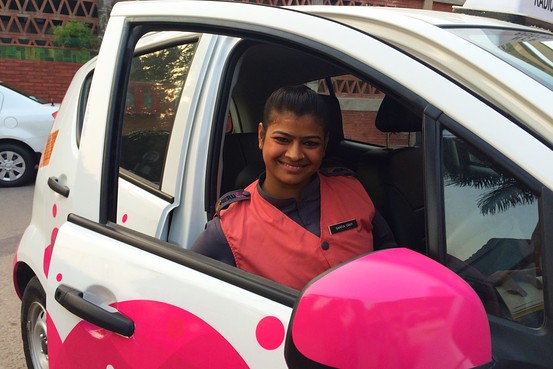
Meru lady cab driver Jyoti Gupta


It was a novel experience when my wife and I were driven home the other day from Delhi Airport by Ms Jyoti Gupta, a lady cab driver, of the pink fleet of radio cabs, christened ‘Meru Eve,’ recently introduced by Meru Cabs.

To begin with Jyoti briefly narrated how the chief executive of Meru Cabs, Siddhartha Pahwa, announced the new service from a dais decorated with daisies and gladioli at the time of launch. The holistic concept being, how to make women safer in Delhi; where the newfound breed, of these daring and young female cabbies were adding value.

Meru lady cab driver

We had some luggage that needed to be transferred to the luggage carrier atop and tied. I offered to help but she refused priding she could do that just alone, and she did it. And while she was doing that we could see some male cabbies prying and smiling at her.

And as we started from the airport, I could see both male and female eyes gazing at her, for she was a novelty- a cab driver, who had dared to break into the hitherto male bastion of cabbies.

In the small conversation that followed she told us why she took up to this career. Surely, it was not for any pantomime. But the intense and rancid pattern of daily abuse from her husband. She now had two college going children, and was up in arms with her husband, seeking divorce; and had merited class ten herself, from Haldwani.

Quick to learn and savvy about business numbers. Knowing her vehicle inside-out. Not scared of the male rowdiness or the male overwhelm on the road. And while driving, she appeared quite a seasoned and inveterate, as I was not missing the male counterpart for a change.

And, there was something captivating about her. For she was not sulking to the challenges of a tough profession, but was gaga about it. As, by now she had already demonstrated the definition of toughness. That was moving away from stark physicality to an enduring mindset which females too had. And, last but not the least she conveyed the ultimate mission of life, that was common for both man and woman, and it was only the short lived difficulties that are different.

All the best Jyoti!

#OSHO INTERNATIONAL FOUNDATION CROSSES LAXMAN REKHA BY DEMEANING INDIAN FREEDOM FIGHTERS-shouldn’t they apologise to the nation?

Copyright@shravancharitymission

#OSHO INTERNATIONAL FOUNDATION CROSSES LAXMAN REKHA BY DEMEANING INDIAN FREEDOM FIGHTERS-shouldn’t they apologise to the nation?

index    We all know what Chandra Mohan Jain (11December 1931-19 January 1990) aka Acharya Rajneesh from 1960s onwards, aka Bhagwan Shree Rajneesh during 1970s and 1980s, and aka Osho from 1989 stood for:

ss    As a professor of philosophy he drew enough polemics while he traveled throughout India during 1960s as a public speaker. And his outspokenness and out-of-turn criticism of politicians and the political mind space, that included Mahatma Gandhi and the institutionalized religion made him controversial of the irreparable sort. And the legacy goes on even after his death. But this time the Osho International Foundation has crossed the holy Laxman Rekha as this is what they wrote in #The speaking tree on February 7th 2015.

Quote

Why Politicians Create Chaos In The Country

Osho

    ‘Freedom came to India very suddenly, without any preparation. All the so called leaders were only efficient in creating a little bit of chaos here and there, and when freedom came they were absolutely at a loss as to what to do because all their efficiency was in creating chaos.

    So even though freedom did come, those leaders still know only one thing; how to create chaos. They go on doing the same. And those leaders know perfectly well that the only way to be in power is to go on creating chaos. The whole concern of those who are in power is to remain in power, and they can only remain in power if the country remains in chaos. So people go on fighting and they go on managing somehow, proving to the world that they are very much needed, otherwise the country will fall apart. And the interest of the people who are not in power is also in creating chaos because that is the only way to come back into power or to come into power.’

Unquote

osho_international_pune_20111015    While the column targets the Indian Politicians and rulers. The first paragraph cited above, targets even the freedom fighters of India. Perhaps, the author tried to continue moving in the shoes of Chandra Mohan Jain alias Bhagwan Shree Rajneesh alias Osho without realizing the battle for freedom had started way back in 1857 with the 1st mutiny, and so, to say “freedom came to India very suddenly, without any preparation. All the so-called leaders were only efficient in creating a little bit of chaos here and there, and when freedom came they were absolutely at a loss as to what to do because all their efficiency was in creating chaos” is completely wrong and ill willed.

ll    Secondly, freedom struggle and gaining of Independence was not the brain child of any single Politician. Rather, it was the aspiration of approximately 30-35 crore Indians that was ably driven by father of the nation Mahatma Gandhi, together with Jawaharlal Nehru, Sardar Patel to name a few, and many more freedom fighters who even died for the cause of Independent India.

And, moreover the first breed of Politicians, were actually freedom-fighters who definitely did not want chaos for the nation; and took up to the role of Politicians only to steer India out of the woods and therefore to paint freedom fighters with same brush as Politicians is criminal.

Self-styled Gurus and foundations, who have hallucinated all their lives about love and sex, should be well advised not to touch upon certain hallow chords of the nation which are beyond them, and especially for a foundation that has a sobriquet of “sex guru.”

For make no mistake Freedom-Fighters are above any self-styled God-man; so please watch out.

*****

ARTICLE: ARE SOME AMERICAN COPS MERE DUFFERS LIKE ERIC PARKER?

Copyright@shravancharitymission

Sureshbhai Patel lying paralysed in hospital
3rd degree torture by Eric Parker


Madisan, Alabama policeman Eric parker is charged with 3rd degree assault and is being fired, after authorities say he threw down a handcuffed 57 year old man from India who was walking around town, while visiting some relatives. Though the FBI is investigating this incident in which Sureshbhai Patel has been paralyzed, yet this brings us to a horrific and nagging question. That is about the IQ levels of some of these American cops who shoot from the hip to prove no point, and in the process they only reveal their racial bias. A media report now suggests Sureshbhai Patel was used as a guinea-pig by Eric Parker to teach his colleague how to pin down criminals. But even that is cruel, animal like and atrocious by any standards. And in the process he has paralyzed Sureshbhai; and his racial sound bite about ‘a black and skinny man roaming the area’ has only embarrassed the black skinny but otherwise healthy President of the US- Barack Obama.

Policeman Eric Parker

Even in some earlier instances American cops have gone overboard, by not being able to distinguish between the turban of an Indian Sardar and a Muslim terrorist of the likes of Osama and have subjected them to humiliation. They have also demeaned Indian dignitaries at airports. So the moot question is. Are American cops insulated from rest of the world, that they can’t even decipher sartorial niches and accomplishments of other countries. And so, shouldn’t they be given a complete run down on various kinds of attires worn across the world since America is the world’s greatest economy and people from all over the world flock here some way or the other. Also, a rerun of visuals at regular intervals about world’s whose who, will help.

NJ cop shooting a black man when both his hands are out of the car

And, in this episode also Eric Parker from all corners looks and behaves like a duffer. Not being able to decipher between a hardcore criminal and a 57 year old non English speaking gentleman, and behaves as if all non English speaking individuals are criminals. The video released only enrages the world. As a cop he should have been more aware than a normal American citizen to decipher between a criminal and a gentleman. So what creates such duffers in the US Police Department is again the moot point when they boast of such a high standard of police training with a sensitive and thinking mindset.

In 2000, the US Department of Justice (USDOJ) Community Oriented Policing Services (COPS) Offices and the Police Executive Research Forum (PERF) collaborated to pilot an innovative post-police academy training strategy with Reno, Nevada Police Department. This problem based learning strategy, titled the Police Training Officers (PTO) Program. Institutionalized adult learning theory and problem solving tools into a process that encouraged new officers to think using proactive mindset, enabling the identification of and solution to problems within their communities

The APOSTC or the Alabama Peace Officers Standards and Training Commission requires law enforcement officers to go through and pass the academy and be certified as police officers of the law. Before going through the academy, they must be employed full time as a cop, meaning they have to work an average of 40 hours per week and within 6 months of being employed they need to complete the academy training in order to be certified. Failing to do so will nullify their employment and they will have to wait two years before submitting another application.

While the training has various physical and legal requirements. It also talks of some important physical, legal and behavioural aspects that the candidates should possess such as:

  • Age should be at least 19 years.
  • Have a high school or a GED
  • Have a valid driver’s license
  • American citizenship
  • Good moral character with no felony or misdemeanor or convictions, and isn’t a registered sex offender
  • Complete medical examination by a licensed doctor or a physician and be certified for good physical health and fit for physical demands of the Police Academy.
  • Complete psychological examination and in case they fail this test, a 2nd comprehensive test will be administered by an agency that is commissioned by the commission and in case a candidate fails, both the test, he or she must wait for a year to become eligible again.

All academy trainees must complete 480 hours of basic academy training.

  • The overall score of all the written exams, first aid exams, legal issues exams should not be less than 70%.
  • Successfully complete and pass the physical agility test.
  • Pass all 43 hours of firearms training. Must qualify in two out of three attempts in the firearms course.

So while the training of Police in the US is all comprehensive there is need to screen officers who nurse racial biases. With the wherewithal of the US, it should not be difficult to identify such policemen and indoctrinate them with better virtues and humanness. For one can perform police duties even without paralyzing dark and skinny ‘Sureshbhais’ for if South Africa could give up apartheid why can’t a minority of police officers in the US. But then to arrive there. The US must first accept the scourge of racialism in its Police force and not just sham away from reality.

*****

THE OBSOLETE SWING OF 9 TO 5 – OFFICE HOURS

index mm mmm

With the rough noose of target around one’s neck and loads of life to carry on with; merely observing office timings has become more of a head count drill and a calculation of salary mechanism for the accounts and HR. For what, if I only observe office timings but don’t achieve my targets. I may still be sacked, even when I am a regular office attendee. But what, if I achieve my business targets and don’t achieve my attendance target. I may have to take a salary cut along with a sack for breaking office discipline, in spite of achieving my business targets. Where, management, at sweet will may be kind enough to sanction my accrued incentives.

Perhaps, there has always been a simmer of sorts between the Management and the employees on this account– office attendance–leave and the targets. Mind you, mere office presence, between 9 to 5 does not get you to your targets, with present day complexities and the sordid hustle and bustle of life. So something, close to high octane energy, something different together with a meandering passion is required to achieve those never ending and ever accruing professional targets of life.

The stated 48 hours of office in a week is just about sufficient to prepare the springboard from where you could dive to pluck your target. But the tedious groundwork starts brewing the moment you get up from your bed; is when your soul starts mating full flow with the business targets. That then moves with you to every corner of your house that you go to, including your precious morning throne. Supposedly your most private moment, where not even your better half is allowed, but those business targets are.

And, beyond the breakfast table, or to any other morning ritual of yours, including your morning prayers, and prayers collectively in tandem with your colleagues for targets. Thus, building the spiritual bulwark for the organization.

The average travel time to office in big cities has increased to over an hour one way and during this time also, you are glued mostly to your business and organizational targets. Where, all you do is to think, plan and set up a daily bit-by-bit approach towards achieving those milestones moments. For in the mornings it is not a rare sight to see business executives waiting impatiently to speak to their clients while they may take any mode of conveyance, including personal cars and two-wheelers, crowded buses and metro rail or a suburban local. And your business pursuit doesn’t just get over when you leave office for most us carry it home whether you like it or not. And the buck doesn’t stop there, as post a Sunday afternoon siesta, when the Monday morning blues erupt in you, is when you open your laptop to prepare for the Monday morning review, cutting into your well deserved weekend. For, if the review goes well your week is made, else, you need to build your entire week all over again. So, what earlier was in the confines of 9 to 5 has spilled beyond the time warp. Some management’s who are abreast to this reality, are sailing through competently with tweaked systems and procedures-employee friendly, but some are still struggling, only to conceive the reality.

The intricacies and pressures of both sides could be better understood. Only, if the modern day employer more appropriately termed as ‘management’ had ever done a job and the ‘employee’ ever ran an enterprise. For both uselessly keep visualizing the other side of the grass is greener, when it is actually a bald zone.

The point of essence is; today’s employee is not a 9 to 5 guy but a 24 x7 guy. Who at times operates from the designated office, from the road, his personal car or even a two-wheeler, airport, railway station, jam packed bus or a bus stand, cab, crowded local suburban, metro rail and at some lucky moments from his residence; for you can’t exist anymore on a obsolete routine of a mere 9 to 5 show up. And in all of this your gadgets (Smart phones and laptops) have become your office.

*****

Title : Mahindra rise moment of Life

‘MAHINDRA RISE MOMENT’ OF MY LIFE

BECOMING MARKET LEADER IN TAMILNADU

    In the year 1991 I was transferred from Jaipur to Chennai as Area Manager. It was a sector shift from Automotive to Farm Equipment. A cross country movement and an exposure to a new work culture. And I vividly remember, how a colleague of mine had even jokingly remarked at that time about my transfer from automobiles to tractors–‘So Kamlesh! now your ‘speed’ reduces but ‘torque’ increases.’ Quite connoting to the characteristics of an automobile and a tractor. But there was a bigger barrier beyond speed and torque. That was the local vernacular ‘Tamil language’ that was utter Greek to me. And my palate that was not akin to the local culinary in all frankness. So, I felt, overall, it was a dim and a losing proposition for me. I landed in Chennai draped in apprehensions. Not knowing fully the local ball game. Yet I was oozing with some valid convictions and arrived procedures as a springboard.

    As a territory, I had Tamilnadu (TN), Kerala and the Andamans. To sell and service, the rugged, Red Mahindra Tractor. Therefore, I needed to rub shoulders with TAFE the local giant. I was told we had an effective network of well laid out, ebullient, dealers and officers. The HO mandate was to become Market leader in two years. More pronounced and reminded often by M&M icon Mr Alan Durante, President and Head of Marketing, AD & FES then.

    If my memory serves me right. TN market was then on an upswing and hovering around 8k-10k tractors annually, between 1992 -1996. TAFE were market leaders, followed by us. But the gap was only widening. With great expectations I had landed in Chennai. When, I decided to do three simple things that I thought would help us achieve our goals:

1.     I took a whirlwind tour of all Dealerships. Basically to establish an effective interpersonal rapport with the owners and their employees that was required as a force multiplier, and even more because I hailed from the North. Bought an English to Tamil translation book to learn and remember some key words. Required for day to day business.

2.     Took a complete inventory of Dealer infrastructure- (hardware, software, systems and processes) from all our Dealerships and branches and did a similar exercise for competitors. To understand where we stood. And, that was an eye opener.

3.     Launched a local ground level tactics “To be the best in each activity.”  Such as paid up stock, availability of spare parts, Dealer finance, Manpower training, Showroom display, Field contact, Tractor workshop record, Vehicle downtimes, Dealer branches and service points for doorstep service.

    During my first year in Chennai. We did not get significant results. To establish ourselves as market leaders. But on realising our level of activities. TAFE too pulled up their socks and started with aggressive wholesale, in districts of Chengalpet, Madurai and Tirunelvelli. I still remember the stinkers I then used to get from Mr Alan for not becoming market leaders.

    But the crafty tempest of TAFE did not deter us, and we continued with our sincere efforts in programming and monitoring the market almost on a daily basis.

    And then on a particular month in F-93, if I remember correctly. We did become Market Leaders for that particular month beating TAFE in their own home ground. For a couple of months we played down this big achievement. To let any fluke pass over. But our efforts were beginning to manifest and soon we became market leaders in all 25, 35 and 45 HP categories.

    Soon Chennai office was also adjudged runners-up, winners and runners-up in financial year’s f-93, f-94 and f-95 in Area Office performance award.

        Today I realise. That was truly a ‘Mahindra rise moment’ for me.

By Kamlesh Tripathi

shravancharitymission@gmail.com

By Kamlesh Tripathi

*

https://kamleshsujata.wordpress.com

*

Share it if you like it

*

Shravan Charity Mission is an NGO that works for poor children suffering from life threatening diseases. Should you wish to donate for the cause the bank details are given below:

NAME OF ACCOUNT: SHRAVAN CHARITY MISSION

Account no: 680510110004635 (BANK OF INDIA)

IFSC code: BKID0006805

*

Our publications

GLOOM BEHIND THE SMILE

(Archived in 7 prestigious libraries of the US, including, Harvard University and Library of Congress. It can also be accessed in MIT through Worldcat.org. Besides, it is also available for reading in Libraries and archives of Canada and Cancer Aid and Research Foundation Mumbai)  

ONE TO TANGO … RIA’S ODYSSEY

(Archived in Connemara Library, Chennai and Delhi Public Library, GOI, Ministry of Culture)

AADAB LUCKNOW … FOND MEMORIES

(Launched in Lucknow International Literary Festival 2014)

REFRACTIONS … FROM THE PRISM OF GOD

(Co-published by Cankids–Kidscan, a pan India NGO and Shravan Charity Mission, that works for Child cancer in India. The book is endorsed by Ms Preetha Reddy, MD Apollo Hospitals Group. Book was launched in Lucknow International Literary Festival 2016)

TYPICAL TALE OF AN INDIAN SALESMAN

Story of an Indian salesman who is lowly qualified but fights his ways through uncertainities to reach the top. A good read for all salesmen. Now available in Amazon.com

(CAN BE BOUGHT FROM ON LINE BOOK STORES OR WRITE TO US FOR COPIES)

*****


ARTICLE: LIVELIHOOD SECURITY IN RURAL INDIA – CHALLENGES

Copyright@shravan charity mission


    Livelihood is the means by which a person or household makes a decent living over a period of time. ‘Livelihood Security’ has been defined differently by various institutions, entities, and scholars. In a broad sense, it implies dignity, in a secure and just society. Being able to withstand stresses of death, disease, natural disasters or even economic slumps.

    It means adequate and sustainable access to income and resources to meet basic needs. Including adequate access to food, potable water, health facilities, educational opportunities, housing and time for community participation and social integration. As said by W. Somerset Maugham, ‘There is nothing so degrading as the constant anxiety about one’s means of livelihood.’

    Swaminathan (1991) has defined sustainable livelihood security as, ‘livelihood options that are ecologically secure, economically efficient and socially equitable in order to underscore three aspects- ecology, economics and equity.’

    In simple terms, job and income are the most critical components of ‘Livelihoods.’

CHALLENGES IN FRONT OF INDIA

    With 60% of India’s population employed in the agriculture sector, that contributes only 15% to India’s currently sulking GDP, challenges of livelihood security in India are getting more and more complex each day. Farm based jobs have remained stagnant due to structural changes in the Indian economy. The share of primary sector in GDP has progressively declined from 26% to 15% between 1998 and 2013. While, the share of the rural population, which was dependent on this sector, has reduced only marginally. This means India’s development models have to be robust enough to deliver dignity of life and sustainability of livelihoods at a scale. And in a pluralistic context that cannot be compared to any other country in the world.

FRAGMENTED LAND HOLDINGS

    India is a land of small farmers. According to Agri-Census 2000-01. Out of around 120 million total land households in the country, there are an estimated 98 million small and marginal holdings. The average size of small holdings is 1.4 ha which has squared down from 2.3 ha in 1971-72. The small holding character of Indian agriculture is much more prominent today than ever before. Though from efficiency point of view, small holdings are equal or better than large holdings. Poverty for small holding farmers is much higher than other farmers as small holdings do not raise enough agricultural income, so as to lift the marginal and small farm households above poverty level.

LOW LEVEL OF FORMAL EDUCATION:

    Education and skills are important for improving farming practices, investment and productivity. The low level of farmers’ education limits public dissemination of knowledge. The NSSO Farmers’ survey shows that awareness about bio-fertilizers, minimum support prices and WTO is associated with education levels.

    The literacy rate and mean years of education for unorganized farm workers is 53.4% compared to national average literacy of 74%.

FINANCIAL INCLUSION:

    Access to finance is critical for empowerment of rural communities. Though various initiatives have been taken by the Government and civil society organizations to mobilize the poor into self help groups (SHGs) and provide micro credit, much needs to be achieved. And as per the NSSO 59th round results:

  • 4% of farmer households are financially excluded from both formal and informal sources.
  • Overall, 73% of farmer households have no access to formal sources of credit.

GLOBALIZATION CHALLENGES:

    Increasing globalization has added to the problems faced by the small holding agriculture. The policies of huge subsidies and protection policies by developed countries have negative effects on small holding farmers in developing countries.

INSUFFICIENT CAPACITY BUILDING OF BENEFICIARIES:

    Out of the estimated 70 million rural below poverty line (BPL) households, 45 million households still need to be organized into SHGs. A significant number of these households are extremely vulnerable. In the absence of aggregate institutions for the poor, such as SHG federations, the poor households could not access higher order support services for productivity enhancement, marketing linkage, risk management among others. Most of the SHGs remain crowded in low productivity and primary sector activities.

POOR ABSORPTION OF TECHNOLOGY:

    ICT can play a significant role in taking best livelihood practices to the rural poor. However, absorption of technology remains poor in the countryside primarily due to lack of basic IT infrastructure, poor penetration of the internet and lack of awareness. Though mobile penetration has been robust, rural internet penetration has been estimated at just 6.7% in December 2013. There is a huge scope for open source software technology suitable for low resource settings especially for the under privileged communities.

WOMEN’S OWNERSHIP AND MANAGEMENT OF LAND:

    There are 400 million women who constitute 33% of the total population of India as per Census of India 2011. Land, in a rural agrarian economy is the source of food security, income and credit power. On the other hand, Indian agriculture is being progressively feminized with women doing the bulk of work. While 63% of India’s rural male work force is engaged in agriculture, the figure is as high as 79% for women. Women are increasingly engaging in pre-production, production and post-production activities abandoning the taboo associated with women ploughing the fields. Average farm labour by women in rural production is 55-66% of the total labour.

    In contrast to the large proportion of farm labour contributed by women, only 9.3% of rural women actually own land. In most of the landless and semi-landless families, women and children suffer from acute poverty, malnutrition and illiteracy. 83% of women engaged in agriculture don’t own the land. Since women don’t own land, they are not recognized as ‘farmers’ in Indian agricultural policy even though they are working on it full time- thus labour on their own land.

    HUMAN RESOURCES:

There is extreme dearth of qualified professionals willing to work in livelihood programs. Though management graduates can develop competency to handle livelihood projects. They are generally wired towards running businesses rather than managing livelihood issues which are connected with heterogeneous stakeholders and participants. Therefore, a special thrust to entice skilled professionals to work in this field will be a key challenge for the Government.

    So, it still remains a big challenge for India to uplift the marginal rural poor.

*****

By Kamlesh Tripathi

*

https://kamleshsujata.wordpress.com

*

Share it if you like it

*

Shravan Charity Mission is an NGO that works for poor children suffering from life threatening diseases especially cancer. Should you wish to donate for the cause. The bank details are given below:

NAME OF ACCOUNT: SHRAVAN CHARITY MISSION

Account no: 680510110004635 (BANK OF INDIA)

IFSC code: BKID0006805

*

Our publications

GLOOM BEHIND THE SMILE

(The book is about a young cancer patient. Now archived in 7 prestigious libraries of the US, including, Harvard University and Library of Congress. It can also be accessed in MIT through Worldcat.org. Besides, it is also available for reading in Libraries and archives of Canada and Cancer Aid and Research Foundation Mumbai)  

ONE TO TANGO … RIA’S ODYSSEY

(Is a book on ‘singlehood’ about a Delhi girl now archived in Connemara Library, Chennai and Delhi Public Library, GOI, Ministry of Culture, Delhi)

AADAB LUCKNOW … FOND MEMORIES

(Is a fiction written around the great city of Nawabs—Lucknow. It describes Lucknow in great detail and also talks about its Hindu-Muslim amity. That happens to be its undying characteristic. The book was launched in Lucknow International Literary Festival of 2014)

REFRACTIONS … FROM THE PRISM OF GOD

(Co-published by Cankids–Kidscan, a pan India NGO and Shravan Charity Mission, that works for Child cancer in India. The book is endorsed by Ms Preetha Reddy, MD Apollo Hospitals Group. It was launched in Lucknow International Literary Festival 2016)

TYPICAL TALE OF AN INDIAN SALESMAN

(Is a story of an Indian salesman who is, humbly qualified. Yet he fights his ways through unceasing uncertainties to reach the top. A good read not only for salesmen. The book was launched on 10th February, 2018 in Gorakhpur Lit-Fest. Now available in Amazon, Flipkart and Onlinegatha

(ALL THE ABOVE TITLES ARE AVAILABLE FOR SALE IN AMAZON, FLIPKART AND OTHER ONLINE STORES OR YOU COULD EVEN WRITE TO US FOR A COPY)

*****