Tag Archives: spiritual

REMEMBRANCE

Copyright@shravancharitymission

By Kamlesh Tripathi

REMEMBRANCE

gloom


Dear Shravan

This is how we remember you on your 23rd birthday


Always alive, as if you never went,

On the roll as if never spent,

Days have passed and years have gone by,

But to me it appears,

As if those bygone moments have just commenced.

*

And there from the heaven,

So much to watch,

But nothing to repent,

For soul is intact what if body is spent.

*

But in this game of body and soul,

For me there is so much to repent,

Having lost you to heaven,

And no one knows the extent.

*

There is indeed a difference,

Between the whiz of your soul and the touch of the body,

The touch is no more,

But the whiz is still felt.

*

My days still commence, with your pleasant memories,

That takes me beyond body and soul,

And thanks for your ‘whiz’ that comes each day, my son,

For that keeps me alive; rest I live.

Bless you Shravan.

*****

Article: A PEEP INTO UNAFFILIATED RELIGION

Copyright@shravancharitymission

By Kamlesh Tripathi


    Time has come for epiphany of ‘unaffiliated religion.’ A sizable population of the world today lives without aligning with any religion as you will read in this narration. The question is how? And how do they manage in this simmering world of religious intolerance. We all know religion is good for the essence of life. But what about religious intolerance and where does unaffiliated religion fit in. Well, no one has ready answers to these question, but one can definitely see the changing paradigms.

    Today, intolerance in every religion has increased manifold. There are fringe groups that have formed in almost every religion that shows intolerance towards other religions. But within all of this. There are still some spunky people. Who believe in the charisma of ‘unaffiliated religion.’ The population of ‘unaffiliated religion’ is around 16 % of the world population. The religiously unaffiliated number is 1.1 billion. Accounting for about one-in-six (16%) people worldwide. It includes atheists, agnostics and people who do not identify with any particular religion. However, many of the religiously unaffiliated. Do hold some religious or spiritual beliefs.

    Apart from unaffiliated religion. There is also irreligion. Which is the absence of religion or indifference towards religion or rejection of religion or even hostility towards religion. When termed as the rejection of religious belief. It engulfs explicit atheism, religious dissidence and secular humanism. And when characterized as hostility towards religion. It includes anti-clericalism, anti-religion and anti-theism.

    According to Pew Research Center’s 2012 global study of 230 countries. 16% of the world’s population is not affiliated to any particular religion, while 84% are affiliated. The interesting fact finding in Pew Research Center’s 2012 global study is: Out of the global non-religious population, 76% reside in Asia and the Pacific, while the remainder reside in Europe (12%), North America (5%), Latin America and the Caribbean (4%), Sub-Saharan Africa (2%) and the Middle East and North Africa (less than 1%).

    According to Pew Research Center projections. The population of the non-religious, though temporarily increasing, will ultimately decline significantly by 2050, because of lower reproductive rates and ageing.

    Being non-religious. Is not necessarily equivalent to being an atheist or agnostic. Pew Research Center’s global study from 2012 noted. That many of the non-religious actually have some religious beliefs. For example, they observed that “belief in God or a higher power is shared by 7% of Chinese unaffiliated adults, 30% of French unaffiliated adults and 68% of unaffiliated U.S. adults.”

    If we were to analyse it country and zone wise. The statistics (pertaining to unaffiliated religion) are even more interesting:

  • Out of a total unaffiliated religious population of around 1.1 billion. The ten most populous countries in respective order of population are China 700 million (52% of population), Japan 70 million (57%), USA 50 million (16%), Vietnam 26 million (30%), South Korea 22 million (46%), Germany 20 million (25%), France 18 million (28%), North Korea 17 million (71.3%), Brazil 15 million (7.9%), & U.K. 13 million (21%). This population totals up to 955 million which is 85% of the total population of unaffiliated religion.
  • If we were to take the first ten countries highest by respective order of percentage share of (Unaffiliated religion) population. They would be: Czech Republic 8 million (76%), North Korea 17 million (71%), Estonia (Baltic state) 0.8 million (60%), Japan 70 million (57%), Hongkong 0.4 million (56%), China 700 million (52%), South Korea 22 million (46%), Latvia (Baltic states) 1 million (44%), Netherlands 7 million (42%), Uruguay 1.4 million (41%). They comprise of 834 million which is 74% of their population.
  • There are six countries where the religiously unaffiliated make up a majority of their population: the Czech Republic (76%), North Korea (71%), Estonia (60%), Japan (57%), Hong Kong (56%) and China (52%).
  • The religiously unaffiliated are heavily concentrated in Asia and the Pacific. Where, more than three-quarters (76%) of the world’s unaffiliated population resides. The remainder is in Europe (12%), North America (5%), Latin America and the Caribbean (4%), sub-Saharan Africa (2%) and the Middle East and North Africa (less than 1%).
  • Although a majority of the religiously unaffiliated live in Asia and the Pacific. Only about one-in-five people (21%) in that region are unaffiliated. More than one-in-six people in Europe (18%) and North America (17%) are religiously unaffiliated. The unaffiliated make up smaller shares in the remaining regions. For instance, less than 1% of those who live in the Middle East-North Africa region are unaffiliated.
  • More than six-in-ten (62%) of all religiously unaffiliated people live in one country, China. The largest population of the religiously unaffiliated outside China are in Japan (6% of all unaffiliated), the United States (5%), Vietnam (2%) and Russia (2%).
  • The population of unaffiliated religion in India is only 0.87 million which is 0.07% of the entire population of the country.
  • There is a definite co-relation between the system of governance, ethos of live and religious fundamentalism and unaffiliated religion. For example take communist countries like China & North Korea where you will find the population of this community to be around 717 million which is about 64% of the entire population of unaffiliated religion. This is because of the regimentation of mindset that has forced people to stay non-aligned. If you take Islamic states, you will find the percentage of unaffiliated religion to be low because of religious fundamentalism.

    Median Age

    Globally, the religiously unaffiliated are older (median age of 34) than the overall global population (median age of 28). Among the five regions for which data are available, sub- Saharan Africa has the youngest population of religiously unaffiliated people (median age of 20), followed by Latin America and the Caribbean (26), North America (31) and Asia and the Pacific (35). Europe has the oldest unaffiliated population, with a median age of 37.

*****


Short story: THE KING AND THE GARDENER

Copyright@shravancharitymission

By Kamlesh Tripathi


Nausherwan the king of Faras was famous for his judicial acumen. He was a big philanthropist too. One day he set out with his ministers to go around the city to ascertain what all was happening. While going around he saw an old gardener in an orchard busy planting walnut saplings. The king entered the orchard and went up to him. He asked—‘are you a servant here or this is your own orchard?’

The gardener replied—‘My Lord I don’t serve anymore. This orchard was planted by my forefathers, so it belongs to me.’

The king said—‘you are planting these walnut saplings. But do you even know it takes twenty years for it to flower and bear fruits. Do you think you’ll live for twenty years to eat the fruits?’

The gardener heard the king dutifully and then politely said–‘My Lord, till now I had so many fruits from trees planted by others. Now it is my duty to plant trees for others. It will be extremely selfish on my part if I plant trees that only bear fruits for me.’

The king was extremely happy with the reply the old gardener had given and as a reward he gave him two asharfees (gold coins).

Moral of the story: One must continuously think of others as others have thought about us.

*****


Short story: RESULT OF KINDNESS

Copyright@shravancharitymission

    Subuktigin was a poor man before he became a king. Just an ordinary soldier. One day he took his gun and sat on his horse and went out for a shikar (hunt) in the jungle. That day he was quite unlucky. Although, he traveled a long distance. But as ill luck would have it. He did not come across a single animal. He was quite disappointed and was about to return when he spotted a deer with her small baby. Subuktigin was suddenly animated and started following the two.

    Scared, the deer ran and hid herself behind the bushes. But in the process her baby was left behind. Subuktigin caught hold of the baby. Tied the legs, and loaded it, on the horse, and then started searching for the deer. But when he could not find her he returned with the baby.

    When the deer saw, her baby being taken away by the cruel shikari. She couldn’t resist and came out of the bushes and started following Subuktigin. After travelling a distance, when Subuktigin turned around he was surprised to see the mother deer following him. In fact he was shocked at the sight, and felt merciful towards her. So, he decided to untie the legs of the baby and let it go. Mother deer was extremely happy to meet her baby once again and in a flash of a moment she disappeared along with her offspring.

    That day after returning home when Subuktigin slept he got a dream. Where, one angel told him—‘Subuktigin! The way you showed mercy on the poor deer was amazing. This has made God happy and therefore he has included your name in the list of would be kings. One day you too will surely become a king.’

    Subuktigin’s dream came true. He later in life became a king. Showing mercy on a deer earned him this reward. People who show mercy on animals are appreciated by God.

*

Posted by Kamlesh Tripathi

*

https://kamleshsujata.wordpress.com

*

Share if you like it

*

Shravan Charity Mission is an NGO that works for poor children suffering from life threatening diseases. Should you wish to donate for the cause the bank details are given below:

NAME OF ACCOUNT: SHRAVAN CHARITY MISSION

Account no: 680510110004635 (BANK OF INDIA)

IFSC code: BKID0006805

*

Our publications

GLOOM BEHIND THE SMILE

(Archived in 7 prestigious libraries of the US, including, Harvard University and Library of Congress. It can also be accessed in MIT through Worldcat.org. Besides, it is also available for reading in Libraries and archives of Canada and Cancer Aid and Research Foundation Mumbai)  

ONE TO TANGO … RIA’S ODYSSEY

(Archived in Connemara Library, Chennai and Delhi Public Library, GOI, Ministry of Culture)

AADAB LUCKNOW … FOND MEMORIES

(Launched in Lucknow International Literary Festival 2014)

REFRACTIONS … FROM THE PRISM OF GOD

(Co-published by Cankids–Kidscan, a pan India NGO and Shravan Charity Mission, that works for Child cancer in India. The book is endorsed by Ms Preetha Reddy, MD Apollo Hospitals Group. Book was launched in Lucknow International Literary Festival 2016)

(CAN BE BOUGHT FROM ON LINE BOOK STORES OR WRITE TO US FOR COPIES)

*****


Short story: Mongoose and the lady

Copyright@shravancharitymission


MONGOOSE AND THE LADY

    Once upon a time there lived a farmer who had a mongoose as a pet in his house. He was very clever and loyal to his master. One day the farmer went out on business and his wife too after feeding the baby and putting him off to sleep left for the nearby well, to fill water in her pitcher. She was relaxed as the mongoose was there to guard the baby.

    But after she left for the well a black snake came out from the nearby hole, close to where the baby was sleeping on the floor. And it started inching towards the infant. On seeing the threat, the mongoose pounced on the snake and attacked him. In the fight that ensued, the mongoose tore the snake into pieces and killed it. He then went to the main door of the house to wait for the farmer’s wife.

    The farmer’s wife soon returned after filling her pitcher when she saw the mongoose resting near the doorstep. But on seeing blood in his mouth she thought he had bitten her baby. She felt saddened and even angry for a moment. And then in a fit of rage she threw the heavy pitcher full of water on the mongoose. Poor mongoose could not withstand the impact of the heavy pitcher and died on the spot.

    Farmer’s wife then ran inside in panic, but only to find that her baby was peacefully sleeping, but close by, a dead snake was lying that was killed by the mongoose. The lady realised her mistake. She ran towards the dead mongoose and held it in her arms and started weeping. But by then it was too late. And that is why it is said:

    One should not act and react without ascertaining facts, and if you do so you’ll only mess up things and be laughed at by the world.

Translated by Kamlesh Tripathi

*****

THE GREEDY KING-MIDAS

Copyright@shravancharitymission

By Kamlesh Tripathi

THE GREEDY KING—MIDAS

    Once upon a time Greece was being ruled by a king called Midas. He was extremely greedy. Besides, his daughter the only thing he loved in the world was Gold. And he was so greedy about gold that even while sleeping he used to make plans of amassing gold in large quantities.

One day while the king was sitting in his treasury and counting his possessions in terms of gold bricks and coins, he saw a ring of smoke rising from the ground and behind that a golden silhouette emerged with a halo on the top that almost resembled an angel. He was transfixed for a moment till the angel said—‘Midas! You are so rich.’

Midas turned melancholic at once and replied—‘Where am I rich. I have so little gold.’

Angel said—‘You are not content even with so much of gold? How much gold do you want?’

King Midas replied—‘I desire; whatever I touch with my hands should turn into gold.’

Angel laughed at the wish of the king and said—‘Very well! From tomorrow morning whatever you touch will turn into gold.’

That night the king could not sleep. He got up quite early in the morning. After getting up he decided to keep his hand on the chair lying close to him just to test the words of the angel. To his surprise the chair turned into gold. He then touched a table and that too turned into gold. Midas in delight started merry making by jumping and dancing. Like a mad man he then ran towards his garden and started touching the plants there. Then he touched the flowers and the leaves, he even touched the branches and the flower pots and everything turned into gold. Everything around was now glittering like gold. Midas now had unlimited gold.

Merry making and excitement had made king Midas tired by now. He hadn’t even realised that his clothes had become heavy as it had turned into gold. He was now thirsty and hungry. After returning from the garden he came and sat on a golden chair. One of his servants kept some delicious food and water in front of him realising his master was hungry. But the moment he touched the food it turned into gold and the moment he lifted the glass of water that too also turned into gold and this made him somewhat nervous. All the delicious food lying in front of Midas had now turned into gold when he was very hungry. He couldn’t have satisfied his hunger and quenched his thirst by food and water made out of gold.

He started weeping. Just then his daughter who was playing in the vicinity came there, when she heard her father crying. And, seeing him crying she climbed on to his lap to wipe his tears. Emotional Midas hugged his daughter but soon realised that his daughter was no more there and in her place Midas had his daughter’s golden statue that was very heavy for him to hold on to. Poor Midas started banging his head on the calamity. Angel who was watching king Midas from heaven witnessed the calamity that befell on him and felt sympathetic towards him and appeared again. On seeing her Midas fell on her feet and started pleading—‘please take back your blessing.’

Angel asked—‘Midas! Now you don’t want gold? Tell me whether a glass of water is more precious or gold? A morsel of bread is beneficial or gold?’

Midas folded his hands and said—‘I don’t want gold. I have come to know that a man doesn’t require gold to survive. Without gold a man can exist but without a glass of water or a loaf of bread he cannot. Now on I will not be greedy for gold.’

Angel then gave him a bowl full of water and said—‘sprinkle this all over.’

Midas sprinkled the water on his daughter, on the chair and the table, on the food and water, in the garden and on the plants and flowers, and everything thereafter from gold came back to its original form.

***

Story: PRIORITIES OF LIFE VS PRIORITIES OF A LIFETIME

Copyright@shravancharitymission

By Kamlesh Tripathi


There was once an old person who used to stay in a remote city with his wife. He was not very well off. But apparently, he was very sincere both towards his family and even his extended family. By nature he was not very diplomatic and conniving, rather he was curt and straightforward, yet he wished everyone well. But his straightforward nature had painted a negative picture of him in the entire family.

One day he realised that his clan had grown both in size and diversity with people settling all across the country and even abroad, and had not come together for many years. Over the years many marriages had taken place, where many daughter-in-laws and son-in-laws had entered the family and many grandchildren were born and many of them had not even met each other. This required a complete churning of the family; for the clan is as closely knit as its last meeting, he thought so.

One day he got a brainwave. He thought of arranging for a family get-together where the entire clan could come under one umbrella just for a couple of days during a holiday or even a weekend. He visualised this could be a forerunner and could set a domino effect of family gatherings amongst family members which in turn will generate fondness and belongingness in the family even after he is gone. He discussed the idea with his wife who too welcomed it.

He then communicated to all the family members about his idea. Some family members responded warmly, some in a lukewarm fashion, some were indifferent and some didn’t even consider the idea worth replying, nevertheless he took the indifference in his stride.

But in spite of the minor disrespect that he suffered at the hands of some members of the family, he decided to go ahead and take initiative as he thought it was a watershed idea to bring together the entire clan. In consultation with members of the family a three day programme was fixed. The dates were finally decided keeping everyone’s convenience in mind; which was during the festival period and that too over a weekend so that leave was not an issue.

The first day was all about receiving people from the airport and the railway station followed by some free time to laze and mingle as most of them would have met after a long gap and some for the first time, followed by a gala dinner in the ambience of some soothing gazals in the club. The second day was all about local sightseeing for which he had booked a van, which was more for the children and the young crowd that not seen the city. For the third day a family puja was planned in the morning followed by shopping during the day and a bout of indoor games in the evening followed by dinner and with that the programme would have come to an end.

While keeping the get-together in mind, he had also started some minor renovations and facelift of his house for the comfort of the guests, considering so many family members were arriving after a long gap and the atmosphere at home had begun to be upbeat. Until one day when less than a month was left he and his wife started getting calls from several family members that they are unable to make it.

For some, important business meetings had sprung up on those very dates falling over the weekend, for some others pressing engagements, and few had an afterthought and didn’t want to come home—that is to their roots for just two or three days, and wanted to come for a longer duration as they considered a short trip as waste of money and an unhealthy return on investment; even when they hadn’t come home for more than a decade. And, under the dubious circumstances the watershed idea of the person was under gradual strangulation and soon it died a painful death.

But destiny at times is inconveniently cruel. Even when the get-together was called off, just a couple of days after the proposed dates of the get-together the person kicked the bucket. The sad news reached one and all. The entire clan was in grief and had little choice now, but to cancel their pressing engagements and meetings, which they couldn’t have done for a family get together. Their viewpoints about return on investment went for a toss as they rushed to have a last glimpse of the person leaving behind all pressing commitments. The same travel agent whose vehicle was booked for sightseeing earlier was now ferrying everyone from the airport as most of them had arrived by flights on account of short notice; but tragically this time it was not for any family get together or sightseeing, but to finally bid adieu to the person.

In our lifetime we all feel as if we have a lot of time to catch up with things in life even when we see death all around us each day.  Whereas, we show urgency and immediacy when it comes to earnings and career, we fail to show the same urgency when it comes to reaching out to our clan or to our inner self and even God. The prudent precept of life therefore is: don’t allow such rare heavenly opportunities–such as a family get together, to go by in your busy life, for you don’t know when the other person will drop dead or when you will make an exit from this world, so grab the opportunity. And remember let not the priorities of life overtake the priorities of a lifetime.

***

STORY: EVEN CURSE BECOMES A BLESSING: IF YOU DEFEND DHARMA (RIGHTEOUSNESS)

Copyright@shravancharitymission


arjun

arjun1

arjun2

    Pandavas were leading a tough life in forced exile somewhere deep in the forests. And as advised by sage Vyas. Arjun had left in search of isolation for a prolonged tapasya. Where, he was able to please lord Shiva. This was when Shiva presented him with his pashupatastra. Amid all of this Devraj Indra took Arjun in his chariot to Swarg Loka, where, he and other Lokpals of heaven, also presented their divyastra to Arjun for his final victory. With these divyastras, Arjun waged a war on asuras known as ‘Nivaatkavach.’ Whom, even, the Devatas were unable to defeat, and repeat attack by them had frustrated the Devatas. In the war that followed. Arjun finally defeated them. They could not withstand the powerful attack from the renowned Gandeev dhanush of Arjun and they ran towards paatal (hell) to save themselves.

    After defeating these asuras when Arjun returned to Amravati all the Devatas welcomed him in a grand fashion. The assembly of Devraj Indra was decorated and he along with Arjun sat on the throne. The Gandharvas picked up their veenas to sing. The beautiful Apsaras of swarg one by one started dancing to the melodious tunes of the Gandharvas. Devraj at any cost wanted to please Arjun. He was therefore, very intently noticing Arjun just to find out what was attracting him.

    Arjun was now residing in heaven. The one and only one heaven, that was majestically decorated. The apsaras were busy dancing and while dancing they wanted to attract and cajole the favourite guests of Devraj Indra. After each dance representative of Devraj used to introduce another apsara and in this manner the assembly swung into a band of melodies. But Arjun, in whose honour all this was being done was quietly sitting with his head down and eyes staring at the ground. And while the grand show in heaven was in progress. He was only remembering his exiled brothers who were living in extreme austerity by eating fruits and roots and by sleeping on the ground. He was therefore not at all attracted towards Amravati.

    Suddenly, Devraj Indra uttered the name of Urvashi. Arjun looked at Urvashi several times, who was dancing in the assembly. Devraj Indra noticed Arjun, while he was looking at Urvashi. After the celebrations got over. Devraj called Gandharva Raj Chitrasen and said—‘go across to Urvashi and tell her. Tonight she needs to spend with Arjun. He is one of our most loved ones and she should make him happy.

    Urvashi herself was attracted towards Arjun, and therefore when she received the message of Devraj she willingly accepted the same. She then decorated herself as much as she could to look ravishing. In the night after decking up. She reached the residence of Arjun.

    When Arjun saw Urvashi he got up from his bed. With both hands he offered his pranam and said—‘Mata! what brings you here at this time? And what can I do for you?

    Urvashi was astounded in the manner Arjun had addressed her—as mother. She minced no words. When, she clearly said, she was attracted towards him, as if in love and that she had also received a message from Devraj to make him happy. She prayed to Arjun to accept her. But Arjun with a stable mind said—‘please don’t say these unbecoming words again. You are the mother of kurukul (Kauravas). I have heard this from many rishis. Today in the sabha when the pratihari called your name, I felt like seeing you. Considering, you as the mother of my kul. I several times, glimpsed your feet. I feel this is what led to some misunderstanding in Devraj’s mind.

    Urvashi says—‘Parth! This is not earth. This is heaven. We apsaras are neither any ones mother, nor sister nor wife. Anyone coming to heaven as per his punya can benefit from us. So you please accede to my request.’

    In the middle of a romantic night the most beautiful apsara of the heaven was incessantly requesting Arjun to accept her. But Dharmyug Arjun was adamant, where Kamdev could not even touch him. Arjun, with folded hands continued praying to Urvashi—‘just as Kunti is my mother, just as Madri is my mother, in the same manner I consider you like my mother. Kindly consider me as your son and shower your affection.’

    Urvashi never expected this kind of a treatment even from the rishis who led a life of extreme austerity. So this was least expected of Arjun. In all of this she felt as if her beauty had been insulted. She then in the lust of love cursed Arjun—‘like an impotent man you did not accept my request. Therefore, for a year you’ll live as a hijra, where, you’ll only sing and dance amidst women.’

    After cursing Arjun, Urvashi left. Arjun too had the power to curse her, especially, when she had cursed him wrongly. But even then Arjun was looking down with his hands folded as a mark of respect, conveying his pranam.

    In the morning Devraj came to know what had transpired during the night. He was happy and said—‘Dhananjay! People who follow the righteous path are never surrounded by calamites. And even if calamity strikes it turns into a lucky mascot. The curse of Urvashi will be for only a man year, after which it will turn into a blessing when after exile you enter a year of anonymity where no will recognise you.’

GLOSSARY

Tapasya–intense meditation and austerity

Pashupatastra–Shiva’s destructible weapon

Swarg Loka–Heaven

Lokpals–Caretakers

Divyastra–Weapons of God

Asuras–Demons

Devatas–Gods

Gandeev Dhanush–Arjun’s famous bow

Paatal–Hell

Amravati–Abode of the deathless

Gandharvas–Melodious singers of heaven

Veenas–Stringed instrument

Apsaras–Beauties of heaven

Pranam–Greetings

Mata–Mother

Rishis–Sages

Sabha–Assembly

Pratihari–Chamberlain

Kul–Lineage

Parth–Nam given to Arjun (An archer who never misses his targets)

Punya–Collective virtues

Dharmyug–Righteous

Kamdev–God of love

Hijra–Eunuch

*

Posted by Kamlesh Tripathi

*

https://kamleshsujata.wordpress.com

*

Share if you like it

*

Shravan Charity Mission is an NGO that works for poor children suffering from life threatening diseases. Should you wish to donate for the cause the bank details are given below:

NAME OF ACCOUNT: SHRAVAN CHARITY MISSION

Account no: 680510110004635 (BANK OF INDIA)

IFSC code: BKID0006805

*

Our publications

GLOOM BEHIND THE SMILE

(Archived in 7 prestigious libraries of the US, including, Harvard University and Library of Congress. It can also be accessed in MIT through Worldcat.org. Besides, it is also available for reading in Libraries and archives of Canada and Cancer Aid and Research Foundation Mumbai)  

ONE TO TANGO … RIA’S ODYSSEY

(Archived in Connemara Library, Chennai and Delhi Public Library, GOI, Ministry of Culture)

AADAB LUCKNOW … FOND MEMORIES

(Launched in Lucknow International Literary Festival 2014)

REFRACTIONS … FROM THE PRISM OF GOD

(Co-published by Cankids–Kidscan, a pan India NGO and Shravan Charity Mission, that works for Child cancer in India. The book is endorsed by Ms Preetha Reddy, MD Apollo Hospitals Group. Book was launched in Lucknow International Literary Festival 2016)

(CAN BE BOUGHT FROM ON LINE BOOK STORES OR WRITE TO US FOR COPIES)

*****


FOLLOW THE TEACHINGS ONLY, DON’T ATTEMPT TO IMITATE GOD

Copyright@shravancharitymission

By Kamlesh Tripathi

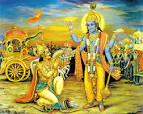
gita picture of gita 2

A tip from Gita

Follow the teachings only, don’t attempt to imitate God- Gita

“Man should attempt to follow the spiritual teachings of God. Either by following the God directly or through his avatars on whom he has vested such powers. His updesh (sermons) alone are good enough for the welfare of mankind, which any intelligent person can explain to us in a proper manner.

It is indeed in the interest of human beings to draw their lessons only from the sermons of God and never try and attempt to either imitate or emulate his actions for that could be hazardous. A devotee of Lord God Shiva shouldn’t attempt to consume poison. Just as he drank all of it that came out from the Samudra Manthan (Churning of the sea).

We should consider God as the supreme power and his avatars the forces that reign and control the direction and speed of the sun and the moon.   Any person without such powers, in his own interest should not try and imitate the all powerful God almighty.

Lord God Shiva consumed all the poison that came out of Samudra manthan, because he had the capacity and ability to do so. But if an ordinary person tries to consume even a drop of poison he will die. Lord Shiva has many ardent devotees and followers who consume ganja (Cannabis) and other intoxicating stuff, thinking they are permitted to follow suit just because Lord God Shiva consumes it. Such devotees and followers are only killing themselves, because their body and soul does not have the capacity to sustain this poison over a long period of time like Lord Shiva.

In the same manner there are many devotees of Lord Krishna who intend to practice and imitate his Rass-Lila or love dance, but forget that he also had the capacity to lift the Goverdhan Parvat which an ordinary person can’t.

Therefore, the best option would be not to imitate the all powerful God and his Avatars and only follow their updesh. Without eligibility and capacity one should not try and copy what God does as it will only hurt. And there are many God’s and Avatars who too don’t have the powers of God Almighty yet they are God’s.

*****

#STORY: BLESSINGS AND SUPREME HAPPINESS

Copyright@shravancharitymission

By Kamlesh Tripathi

blessings and supreme happiness 2 blessings and supreme happiness brahmgyan

Once upon a time there lived a renowned scholar in the forest who had many bright shishyas (pupils). They were under his aegis for a long period of time, and were eager and impatient to learn the rare talent of Brahmagyan (divine knowledge) from their Guru; considering they had acquired enough mastery on other issues and what was left was only the divine knowledge.

They were somewhat suspicious, thinking the Guru was not keen to teach them Brahmagyan the way to paramsukh (supreme happiness) for reasons best known to him. Somewhat, dissatisfied these shishyas were now desisting to move as per the guidance of their Guru and had started putting pressure on him for teaching them Brahmgyan. Their logic was, when they had surrendered themselves completely at the Guru’s feet, then why wasn’t the Guru teaching them the coveted talent that was the way to supreme happiness.

One day the guru called all his shishyas and said, ‘don’t be under the impression that I don’t want to share Brahmagyan with you. But I only want to say that you all are not ready for it as of now. There is no point in pouring amrit (elixir) in a vessel which has many holes because the entire nectar will just flow out. Before pouring the nectar we need to close all the holes.’

Upon hearing Guru’s words all the shishyas started whispering amongst themselves. The oldest out of them got up and said, ‘Gurudev we don’t agree to your logic that we are not ready for Brahmagyan yet.  For many years we have been staying with you and we have carried your message and teachings to many places.   People know us as your representative and even you have praised us for our work in the past. Besides Brahmgyan what else is left for us to attain? Your words are creating doubts in our minds, that you don’t want to share this divine knowledge with us, which is the only way to attain supreme happiness.’

Guru for a moment went quiet as it saddened him, thinking his pupils were not humble, and on the contrary arrogant. He thought this distance between the pupils and the Guru will only weaken them and give them a feeling of defeat, and on the contrary nearness to Guru will increase the feeling of self respect.

After a little while the Guru said, ‘dear students, possibly; I was wrong when I thought you all were not ready for Brahmgyan. I guess you all are adults, knowledgeable and ready for the divine knowledge. But I want to take a small test of you all.’

After saying this he took out is basket of fruits and distributed one fruit to every shishya and requested them to hide it in such a place that when no one is watching they could eat it.

All the pupils were a little surprised at this unusual and simple request of the Guru but since all of them were determined to learn Brahmagyan they decided to carry out his the instructions at any cost. They accepted the order of the Guru. After sometime all the shishyas returned with the belief that they had successfully obeyed the orders of the Guru. Leaving aside one who was a continuous laughing stock, and considered a simpleton in the entire group and many didn’t even consider him in their league.

Guru was eagerly waiting, and with a lot of inquisition he asked about how they ate the fruit without anyone noticing them. Everyone narrated their success story.

Then, was the turn of the simpleton, who was often ridiculed by his fellow students. Upon orders from the Guru he came forward on his wobbly legs with the fruit in his hand to tell his story. Guru displayed anger and said, ‘I had asked you to eat the fruit. Everyone obeyed my orders then why did you not have the fruit? What is the reason tell me?’

Shishya said, ‘’Gurudev I wanted to obey your orders but I had no place to hide. You had instructed to have this fruit when no one is around. But wherever I went I felt I am not alone and God is around me, as you only told us God is omnipresent. Because of this I could neither hide myself nor the fruit. Kindly therefore forgive me because I could not pass the test.

‘No, my child, only you have passed in the exams. All the other shishyas only counted on the physical presence. They forgot about the omnipresent God who watches every action of ours and is a witness to all our deeds. When they don’t understand omnipresent God, how will they be blessed with Brahmagyan? Only you could recognise that supreme existence and that is why only you are entitled to receive the supreme divine knowledge—Brahmagyan.’

This story is from the purans (religious texts) which highlights the point that we should only desire for something when we are capable of handling it. Guru knows when he has to bless his shishyas and when they would be capable enough to learn Brahmagyan the way to supreme happiness.

***