Category Archives: article

ARTICLE: A REQUIEM FOR TIGRESS AVNI

Copyright@shravancharitymission

    One of the notable events of 2018 highlighted by the Press on New Year’s eve was the death of the five year old tigress, Avni, in Maharastra. Animal-lovers and activists, among them a Union Minister, alleged that is was a deliberate act of killing, of a fine specimen of an endangered species. The feeling of loss was heightened by the fact that Avni is survived by two two-month old cubs.

    It looked as if the newspapers revelled in the controversy that erupted after the tragic end of Avni. From November 3 to December 10, day after day, sparks flew and the Press carried reports of allegations by the activists and defensive statements by the alleged perpetrators of the crime, namely, the State Government at the ministerial level and the sharp-shooters, father and son. The Union Minister wanted nothing less than the State Forest Minister’s scalp, to wit, his dismissal or resignation. The latter retorted that those who held animal life more precious than human life should show the way.

    According to one report, the big cat had killed at least 7 out of the 13 who had died during May 2016 and August 2017, in the Loni village Relegaon tehsil, Yavatmal District in the Vidharbha region of Maharastra. In August 2017, Avni made short work of at least three persons. The Forest Department then decided to do away with the animal but the activists in protest took the matter  to the High Court, and later to the Supreme Court. Both the courts nodded their assent for killing the animal. After prolonged but futile efforts at capturing Avni, the State Government engaged two sharp-shooters, Shafath Ali Khan and his son Asghar Ali from Hyderabad, and they accomplished the job on November 2.

    Meanwhile, the activists were up in arms. They maintained that the animal should have been captured rather than killed. They alleged that the land was cleared of wildlife to help a private party to set up a factory. Some experts held that several Acts were violated in the diabolic process. Asghar Ali claimed that the animal was shot dead in self-defence. The Hyderabad Forensic Laboratory, on December 10, 2018, confirmed the attempt at tranquilising the animal.

    It would appear that so much vehemence in the protest against the killing  and the excessive publicity given to the controversy were disproportionate to the intrinsic importance  of the event itself. The tiger, no doubt a marvel of creation, is not ecologically very important. The Project Tiger, which was launched in 1973, to preserve wildlife, set out with the aim in moderate terms viz. ‘to maintain a viable population of tigers in India for scientific, economic, aesthetic, cultural and ecological values.’ It must be said to the credit of the Government that, unlike other Asian countries such as Japan and Korea where the species is extinct, the wildlife conservation measures have paid up in India. From 2500 in 1972, the tiger population increased to 3642 in 2001-2002; the number of ‘Tiger Reserves’ rose from 9, covering an area of 14,000 sq km in 1973 to 27, covering an area of 37,761 sq. km, spread over 17 states.

TIGER IN LITERATURE

    ‘Magnificent’ is the word that comes to my mind when one thinks of this gorgeously striped (in yellow and black) creature. It has inspired poets, novelists and animal lovers no end. William Blake (1757-1827) in a popular poem, gave expression to his wonder:

    ‘What immortal hand or eye could frame thy fearful symmetry?’

    He poised the following question for which we have no answer to this day. ‘Did He who made the lamb make thee?’

    The tiger as an object of worship, as Valmik Thapar points out in his informative book ‘The Cult of the Tiger’ (Penguin 2002), had been prevalent from Siberia to South-East Asia; perhaps, it continues here and there.

    In India, Shiva of the Trinity of Gods, wears the tiger skin vyaagrasina ambara-dhara, as Sri Shankara says in his Shivaashtakam. Even as the Sabarimala Temple of Kerala is in the news, one remembers that the deity brought a tiger home when the Queen of Pandalam wanted Ayyappa to fetch tiger’s milk from the forest. The Supreme Goddess Durga has for her vehicle the tiger.

    The literature on the tiger is vast; about 55 books are listed  as of Indian origin in Valmik Thapar’s book.

    While sympathising with the two surviving cubs, let us have a Requeim for Avni.

RELIGIOUS BELIEF AND CONSERVATION

    India in the 21st century has over one billion people and also boasts of half of the world’s tiger population, half of the world’s Asiatic elephant population and along with these charismatic species, an array of other living organisms. Could any of this have been possible without a core belief in nature? Could the Asiatic elephant have been safe without a belief in Ganesha, the elephant God? Could the tiger have survived had it not been the vehicle of Durga? And would the snake, the turtle, the peacock, the cranes and some of our trees have survived without a bank of beliefs in them?  –Valmik Thapar.

(This article was written by V.S.R.K. and published in Bhavan’s journal in recent months)

Posted by Kamlesh Tripathi

*

https://kamleshsujata.wordpress.com

*

Share it if you like it

*

Shravan Charity Mission is an NGO that works for poor children suffering from life threatening diseases especially cancer. Our posts are meant for our readers that includes both children and adults and it has a huge variety in terms of content. We also accept donations for our mission. Should you wish to donate for the cause. The bank details are given below:

NAME OF ACCOUNT: SHRAVAN CHARITY MISSION

Account no: 680510110004635 (BANK OF INDIA)

IFSC code: BKID0006805

*

Our publications

GLOOM BEHIND THE SMILE

(The book is about a young cancer patient. Now archived in 7 prestigious libraries of the US, including, Harvard University and Library of Congress. It can also be accessed in MIT through Worldcat.org. Besides, it is also available for reading in Libraries and archives of Canada and Cancer Aid and Research Foundation Mumbai)  

ONE TO TANGO … RIA’S ODYSSEY

(Is a book on ‘singlehood’ about a Delhi girl now archived in Connemara Library, Chennai and Delhi Public Library, GOI, Ministry of Culture, Delhi)

AADAB LUCKNOW … FOND MEMORIES

(Is a fiction written around the great city of Nawabs—Lucknow. It describes Lucknow in great detail and also talks about its Hindu-Muslim amity. That happens to be its undying characteristic. The book was launched in Lucknow International Literary Festival of 2014)

REFRACTIONS … FROM THE PRISM OF GOD

(Co-published by Cankids–Kidscan, a pan India NGO and Shravan Charity Mission, that works for Child cancer in India. The book is endorsed by Ms Preetha Reddy, MD Apollo Hospitals Group. It was launched in Lucknow International Literary Festival 2016)

TYPICAL TALE OF AN INDIAN SALESMAN

(Is a story of an Indian salesman who is, humbly qualified. Yet he fights his ways through unceasing uncertainties to reach the top. A good read not only for salesmen. The book was launched on 10th February, 2018 in Gorakhpur Lit-Fest. Now available in Amazon, Flipkart and Onlinegatha)

RHYTHM … in poems

(Published in January 2019. The book contains 50 poems. The poems describe our day to day life. The book is available in Amazon, Flipkart and Onlinegatha)

(ALL THE ABOVE TITLES ARE AVAILABLE FOR SALE IN AMAZON, FLIPKART AND OTHER ONLINE STORES OR YOU COULD EVEN WRITE TO US FOR A COPY)

*****


INTERESTING FACTS & QUOTES–16

Copyright@shravancharitymission  

Google sab janta hai. Google knows everything about everyone through their ‘search history.’ If Google were to enter the business of “Private Detectives’ or open a “Marriage Bureau” they probably would be the best among the trade, as Google knows everything about everyone. And through Google one can say even ‘Úncle Sam’ that is the US also knows everything about everyone.

A committee of senior statisticians has said that verifying 479, randomly selected EVMs, from a total of 10.35 lakh EVMs, achieves a confidence level of 99.99%. Raising sample size further yielded only ‘negligible gains’ in confidence levels. This would also roughly translate to one EVM per Lok Sabha seat. Election Commission says that VVPAT slip count from 1,500 polling stations in elections since March 2017 have matched completely with corresponding EVMs.

In 1939 Savarkar wrote the foreword of a book by a Nazi sympathizer and European born Hindu revivalist who called herself or you could say she wrote under the pseudonym of Savitri Devi Mukerji. Savitri Devi Mukerji lived between (1905-1982), and her real name was Maximiani Portas she was a mix of Greek, French and English parentage, she was a remarkable figure who, among other idiosyncratic beliefs, considered Adolf Hitler an avatar of Vishnu. Her book, prophetically titled “A Warning to be Hindus,” is a passionate polemic about the need for Hindu assertion. A prominent proponent of, deep ecology and Nazism, who served the Axis cause during World War II by spying on Allied forces.

The origin of the word Juggernaut comes from the Hindu God Jagannath. The word is derived from the Sanskrit—Odia Jagannatha meaning “World Lord” which is one of the names of Krishna found in the Sanskrit epics. Where, Jagata means world, combining with Natha meaning Lord. By the eighteenth century juggernaut was in common use as a synonym for an irresistible and destructive force that demanded total devotion or unforgiving sacrifice—the sense in which it pops up in novels of Charlotte Bronte and Charles Dickens, and even Robert Louis Stevenson, who applied it to Dr Jekyll’s foil. Mr Hyde. It was only Mark Twain in his autobiography, who described juggernaut as the kindest of Gods.

The concept of GDP was invented in 1937 by US economist Simon Kuznets, who was later awarded the Nobel Prize for Economics in 1971. In 1944, following the Bretton Woods conference that established the World Bank and the International Monetary Fund, GDP became the standard tool for sizing up the country’s economy.

India is now the largest market for Youtube with over 265 million or you could say 26 crore monthly active users for the video sharing website.

Last week five South Korean celebrities became the world’s first 5G subscribers. The service since then has been opened to regular subscribers as well. Simultaneously the US also saw a limited commercial launch of 5G networks. The intensity with which telecoms in the two countries are claiming they did first, underscores the stakes in this battle for supremacy and how competitive it’s likely to be.

2G opened up mobile telephony mainstream, 3G opened up the app economy and social platforms, 4G redefined businesses from banking to entertainment and transportation, 5G equals superfast communications that backers say will transform life as we know it. Its speed, responsiveness and reach could indeed revolutionise agriculture, utilities, law and order, healthcare, manufacturing, AI and virtual reality.

Whereas, South Korea and the US have launched 5G and China is in a great state of readiness. India on the other hand is yet to allocate spectrum for 5G trails. There is no doubt that rolling out this technology is seriously capital intensive.

During the 2014 campaign, Narendra Modi crisscrossed 3,00,000 km to address hundreds of rallies in person. Five years later, his energy is still undiminished. With 150 rallies already planned and more in the works, he is poised to convert the election into a presidential style contest once again.

Deteriorating quality of education in public institutions poses a serious threat to the Indian youth of today and tomorrow. As it directly affects about 65-70% of the students—those who use publicly funded institutions. 

Mumbai is one of the hottest stock markets of the world, with a gain of nearly 30%.

To go off the rails. Means to start behaving in a way that is not generally acceptable, especially being dishonest or illegal.

Tail wagging the dog means a situation where a small part controls a big part.

Magna-carta—is a document ensuring guarantee of basic rights.

Research shows that over a third of the US population is single. In India too, the demographic has been rising. They now number 74 million or 7 crore and comprise 12% of the female population.

The commonwealth is by no means a perfect institution. It is a legacy of the days when London was the centre of the world and Great Britain was the mother country.

From a peak of 90800 sq km under its control in 2015, IS (Islamic State) is now down to ruling over a mere 3% of Iraq and 5% of Syria today.

More than 80% of Google’s revenue comes just from its ad business. In the last quarter, the company earned $32.6 billion from ads and just $ 6.6 billion from other sources.

A strategic industry should be defined on the basis of its multiplier effect on employment.

India has fought three, and two half wars, against Pakistan, and one against China in the past 70 years. The halves are the limited Kargil war and the longer Pakistani covert war that continues. Two of them in 1965 and 1971 lasted less than a month. The Kargil war went on for three months but in a very small un-populated part of the country. The first Kashmir war began in October 1947 and ended a year and more later on December 31, 1948. The Sino-Indian war of 1962, too, was a month-long affair. Acutely aware of their own vulnerability, India and Pakistan have generally avoided the deliberate targeting of economic and civilian areas during their wars. But in this regard the future now remains unpredictable.

A recent unofficial count found more than 600 lions in the area, up from 523 in a 2015 census in Gujarat. Gujarat’s chief minister Vijay Rupani said. “Our efforts for lion conservation with support of local people have yielded good results. The number of lions now in Gujarat has reached the 600 mark.”

More than 2500 years ago Confucius said that those who govern should do so through merit and virtue, not inherited status. From the 10th century to 1905, Chinese officials were selected primarily through competitive exams and promoted through rigorous performance assessments.

When a sector with less than 15% of GDP supports a population three times its size, we have a convergence of rural and urban hopes which is jobs. You cannot lift rural incomes without absorbing at least two-thirds of those dependent on the farm in non-farm or urban jobs.

China’s staunch opposition has ensured that Taiwan remains the only major country in the world to be outside the UN.

Interesting quotes and lines.

Crime does not pay as well as politics—ALFRED NEWMAN, a US composer.

The ability to look without motive is missing in the world today—Sadhguru Jaggi Vasudev.

I noticed people coming out of restaurants always had more joyful faces than those coming out of temples—anonymous.

I knew nothing about anything. That means I ended up paying enormous attention to everything—anonymous.

When someone spoke, I saw they were only making sounds and I was making up the meaning—anonymous.

Sophocles, one of the three ancient Greek tragedians said he would prefer even to fail with honour than win by cheating.

There can be a world of a difference between knowing ethics and practicing ethics—anonymous.

In business you don’t get what you deserve, you get what you negotiate—CHESTER KARRASS, US author

By Kamlesh Tripathi

*

https://kamleshsujata.wordpress.com

*

Share it if you like it

*

Shravan Charity Mission is an NGO that works for poor children suffering from life threatening diseases especially cancer. Our posts are meant for our readers that includes both children and adults and it has a huge variety in terms of content. We also accept donations for our mission. Should you wish to donate for the cause. The bank details are given below:

NAME OF ACCOUNT: SHRAVAN CHARITY MISSION

Account no: 680510110004635 (BANK OF INDIA)

IFSC code: BKID0006805

*

Our publications

GLOOM BEHIND THE SMILE

(The book is about a young cancer patient. Now archived in 7 prestigious libraries of the US, including, Harvard University and Library of Congress. It can also be accessed in MIT through Worldcat.org. Besides, it is also available for reading in Libraries and archives of Canada and Cancer Aid and Research Foundation Mumbai)  

ONE TO TANGO … RIA’S ODYSSEY

(Is a book on ‘singlehood’ about a Delhi girl now archived in Connemara Library, Chennai and Delhi Public Library, GOI, Ministry of Culture, Delhi)

AADAB LUCKNOW … FOND MEMORIES

(Is a fiction written around the great city of Nawabs—Lucknow. It describes Lucknow in great detail and also talks about its Hindu-Muslim amity. That happens to be its undying characteristic. The book was launched in Lucknow International Literary Festival of 2014)

REFRACTIONS … FROM THE PRISM OF GOD

(Co-published by Cankids–Kidscan, a pan India NGO and Shravan Charity Mission, that works for Child cancer in India. The book is endorsed by Ms Preetha Reddy, MD Apollo Hospitals Group. It was launched in Lucknow International Literary Festival 2016)

TYPICAL TALE OF AN INDIAN SALESMAN

(Is a story of an Indian salesman who is, humbly qualified. Yet he fights his ways through unceasing uncertainties to reach the top. A good read not only for salesmen. The book was launched on 10th February, 2018 in Gorakhpur Lit-Fest. Now available in Amazon, Flipkart and Onlinegatha)

RHYTHM … in poems

(Published in January 2019. The book contains 50 poems. The poems describe our day to day life. The book is available in Amazon, Flipkart and Onlinegatha)

(ALL THE ABOVE TITLES ARE AVAILABLE FOR SALE IN AMAZON, FLIPKART AND OTHER ONLINE STORES OR YOU COULD EVEN WRITE TO US FOR A COPY)

*****


INTERESTING FACTS & QUOTES EPISODE 15

Copyright@shravancharitymission

INTERESTING FACTS 

  1. Hamletian dilemma: The phrase is derived from William Shakespeare’s play Hamlet. When Hamlet, the prince of Dutch learns that his father was murdered by his uncle, he is in a dilemma as to whether he should avenge his father’s death or continue ruling the kingdom.
  2. Begusarai was once known as the “Leningrad” of Bihar, or the “Leningrad” of East. It was recently in news again, because the Communists, are trying to field Kanhaiya Kumar from this pro Communist constituency. Leningrad as we all know is a place in Russia. The famous siege of Leningrad lasted from September 1941 to 1944. By the end of the siege, some 632,000 people are thought to have died with nearly 4,000 people from Leningrad starving to death on Christmas Day, 1941. The first German artillery shell fell on Leningrad on September 1st, 1941.
  3. Teacher absenteeism accounts for the loss of up to one-quarter of the primary school spending. A World Bank Report estimates this loss to be about $2 billion a year in India, just at the primary level.
  4. With a median age of 27.9 years in 2018, India’s population is quite young. By 2020, youth will make up for 34% of India’s population.
  5. Forty-five million young people have been added to the voters list since 2014. Based on 2011 Census, about two crore youngsters turn 18 every year, even though not everyone gets registered to vote.
  6. India has shown responsibility and restraint by targeting a satellite at 300 km altitude, as opposed to China destroying a satellite at the height of 857 km in 2007, which created a lot of risky debris. But even the Indian test has a small likelihood of creating some debris that gets thrown into the higher orbits.
  7. One of the reasons for lesser concern with India’s test has to do with the height of the test. At 300 kilometers, the debris may survive just for months, if not weeks. At 800 kilometers, the Chinese satellite debris has already survived for more than a decade and may survive for a few more years.
  8. India has demonstrated that it can take down satellites in Low Earth Orbits of less than 2,000 km above the surface.
  9. There are over 22,000 artificial objects currently in the orbit that are being tracked by one government agency or another. The European Space Agency estimates that currently there over 34,000 pieces of debris in the orbit that are larger than 10 cm in size; close to a million pieces between 1 cm and 10 cm; and 128 million pieces of debris less than a centimeter in size. With reducing satellite size and the increasing frequency of space launches, this is only set to grow rapidly.
  10. UTSAVA- is a Sanskrit word. Where, UT –means to ‘let go’ or remove and SAVA means worldly sorrows hence the complete word UTSAVA means to “let go your sorrows.”
  11. In the Scandinavian countries without any reservations, around half the MPs are women. In India we only keep talking of 33% which is not happening.
  12. Earth orbital safety in the 21st century is as vital as shipping lane security was, in the 20th century.
  13. The Lucas critique, named after Robert Lucas‘s work on macroeconomic policy making, argues that it is naive to try to predict the effects of a change in economic policy entirely on the basis of human relationships observed in historical data, especially highly aggregated historical data.
  14. Marriage industry of India boasts about 10 million weddings a year.
  15. There are reports that Pakistan is collaborating with China to develop a fifth-generation fighter aircraft. India too needs to double up.
  16. In Hindu philosophy the soul is interpreted as being without a gender.
  17. Security cooperation was one of the reasons why PM Narasimha Rao formally opened diplomatic relations with Israel in 1992, followed by purchase of India’s first IAI Searcher unmanned aerial vehicles (UAVs), and an air combat manoeuvring system from Israel in 1996. 
  18. India is the largest single market for Israeli arms. Israeli arms sale to India is only second to Russia, having gone up by 650% in the past decade, now amounting to $715 million in 2017 alone. IAF misslies fired in Balakot reportedly used Israeli made SPICE-2000 GUIDANCE KITS.
  19. Modi was the first Indian Prime Minister to visit Tel-Aviv in July 2017 and then came the visit of Israeli PM Benjamin Netanyahu to Delhi in January 2018.
  20. Israel is virtually a ‘nation-at-arms’ country. It has always had conscription, or draft, or compulsory enlistment of people in national service. Every Israeli man (who’s Jew or Druze, excepting those with medical disabilities or religious scholars) above 18 serves in the military for 36 months, and every Israeli woman for 24 months.
  21. The National bill of Israel passed in 2018 specified Israel as the nation state of the Jewish people. This makes Israeli state closer to a theocratic one.
  22. Iron and steel accounts for roughly 15-20 % of the total cost in real estate.
  23. Global warming: When Americans were experiencing bone-chilling temperatures on January 29, the world was actually 0.3 degrees warmer on an average compared to a baseline from 1979 to 2000.
  24. Among all the 13 tiger range countries, India alone has the maximum number of tigers (70% of the global wild tiger population) and their source areas. This impressive gain is there despite the fact that our per capita forest is only 0.06 hectare as against the world average of 0.6 hectare, apart from having 60% of global livestock, 17% of world’s human population, with a forest productivity of around 1.34 cubic metre per hectare per year as against world’s average of 2.1 cubic metre per hectare per year.
  25. It has been documented that around 67,911 hectares of forest cover has been lost in 188 districts of India between 2009 and 2011 due to encroachment.

Quotes

  1. Earth: The soil is her flesh, the rocks are her bones, and the wind is her breath; trees and grass her hair. She lives, spreads out, and we live on her. When she moves we have an earthquake—Rabbi Ezekiel Malekar
  2. In real life it is the hare who wins—ANITA BROOKNER, award winning novelist.
  3. Mary Shelley projected through the character, Frankenstein. We all are threatened by the monsters we create. They don’t come into being on their own.
  4. Every fair-minded person holding a position of authority must support the few who have stood up against the injustice being perpetrated in the name of blasphemy—ASMA JAHANGIR, Pakistani Human Rights lawyer and activist.
  5. If you don’t have a coalition with you, you will have a coalition against you—SHIMON PERES. Israeli politician who served as the ninth President of Israel.
  6. ‘No book is perennially useful to mankind,’ says English philosopher David Hume.

By Kamlesh Tripathi

*

https://kamleshsujata.wordpress.com

*

Share it if you like it

*

Shravan Charity Mission is an NGO that works for poor children suffering from life threatening diseases especially cancer. Our posts are meant for our readers that includes both children and adults and it has a huge variety in terms of content. We also accept donations for our mission. Should you wish to donate for the cause. The bank details are given below:

NAME OF ACCOUNT: SHRAVAN CHARITY MISSION

Account no: 680510110004635 (BANK OF INDIA)

IFSC code: BKID0006805

*

Our publications

GLOOM BEHIND THE SMILE

(The book is about a young cancer patient. Now archived in 7 prestigious libraries of the US, including, Harvard University and Library of Congress. It can also be accessed in MIT through Worldcat.org. Besides, it is also available for reading in Libraries and archives of Canada and Cancer Aid and Research Foundation Mumbai)  

ONE TO TANGO … RIA’S ODYSSEY

(Is a book on ‘singlehood’ about a Delhi girl now archived in Connemara Library, Chennai and Delhi Public Library, GOI, Ministry of Culture, Delhi)

AADAB LUCKNOW … FOND MEMORIES

(Is a fiction written around the great city of Nawabs—Lucknow. It describes Lucknow in great detail and also talks about its Hindu-Muslim amity. That happens to be its undying characteristic. The book was launched in Lucknow International Literary Festival of 2014)

REFRACTIONS … FROM THE PRISM OF GOD

(Co-published by Cankids–Kidscan, a pan India NGO and Shravan Charity Mission, that works for Child cancer in India. The book is endorsed by Ms Preetha Reddy, MD Apollo Hospitals Group. It was launched in Lucknow International Literary Festival 2016)

TYPICAL TALE OF AN INDIAN SALESMAN

(Is a story of an Indian salesman who is, humbly qualified. Yet he fights his ways through unceasing uncertainties to reach the top. A good read not only for salesmen. The book was launched on 10th February, 2018 in Gorakhpur Lit-Fest. Now available in Amazon, Flipkart and Onlinegatha)

RHYTHM … in poems

(Published in January 2019. The book contains 50 poems. The poems describe our day to day life. The book is available in Amazon, Flipkart and Onlinegatha)

(ALL THE ABOVE TITLES ARE AVAILABLE FOR SALE IN AMAZON, FLIPKART AND OTHER ONLINE STORES OR YOU COULD EVEN WRITE TO US FOR A COPY)

*****


BOOK CORNER:GODS AND ROBOTS: Myths, Machines, and Ancient Dreams of Technology … by Adrienne Mayor

Copyright@shravancharitymission


Khidki (Window)

–Read India Initiative—

This is only an attempt to create interest in reading. We may not get the time to read all the books in our lifetime. But such reviews, talk and synopsis will at least convey what the book is all about.

Gods and Robots: Myths, Machines and Ancient Dreams of Technology’

Adriyana Mayor in 2018.

Published by Princeton University Press, New Jersey

    Albert Einstein had once said. “Imagination is more important than knowledge. For knowledge is limited, whereas imagination embraces the entire world, stimulating progress, giving birth to evolution.” So, let ‘imagination’ be the tagline of this write-up. As books are indeed an exercise of the author’s imagination. For who could first imagine the concepts of robots, automation, human enhancements, and Artificial Intelligence? Historians tend to trace the idea of automation back to the medieval craftsmen who developed self- moving machines.

    Let me now take you to a research scholar at Stanford University. Her name is Adrienne Mayor. She is a historian of ancient science and warfare, and a classical forklorist who investigates natural knowledge contained in pre-scientific myths and oral traditions. She has recently come out with a book titled, ‘Gods and Robots: Myths, Machines and Ancient Dreams of Technology.’ It’s a long title.

    Adrienne feels Hindu epics are full of AI (Artificial Intelligence) and robots, and legend has it, that they guarded Buddha’s relics.

    In this book the lady author explores how ancient culture imagined futuristic technologies and left behind those imaginations in epics and scriptures. She tells how Ashoka battled robots, and other tech tales from the past.    Faith can move mountains. There is a belief in India among the Hindus that ancient Indians had invented everything from spacecraft to missiles to the internet. Lady author tries to link this theory with her research work. She feels her research got her into the first inklings of the scientific impulse and that took her into the world of mythology, where ancient people first envisioned making artificial life, automation (or robots), self-moving devices, and other marvelous things long before the present day technology made them possible. She states these stories about robots and other machines in ancient oral traditions were first written down during the time of Homer, about some 2,700 years ago. But the Greeks were not the only people to imagine automation and machines in antiquity. Similar stories exist in the Ramayana, Mahabharata, and other epics. In Hindu myths, automations are made by the engineer God Vishwakarma and the sorceress or more appropriately the mystique of Maya. In Greek myths they are made by the God of technology. His name is Hephaestus—the Greek God of fire and metal working and the brilliant artisan Daedalus, a craftsman and artist again from Greek mythology. I consider such myths to be the world’s first science fiction stories. No single civilisation had a monopoly on such ancient dreams of advanced technology. Whether one looks at Greek, Egyptian, Hindu, Islamic, Chinese, Etruscan—the modern name given to the powerful and wealthy civilization of ancient Italy or any other ancient cultural myths about artificial life. They all contemplate what wonders might have been achieved if only one could possess the divine creativity and abilities of the Gods. But it’s not possible to draw a direct line of development from mythology over the millennia to the modern scientific knowledge.

    Further the lady author goes on to say that the Indian and Hellenistic cultures borrowed and influenced each other, beginning in about the fifth century BC, The syncretism only intensified, after Alexander of Macedon and King Porus began relations in the fourth century BC. Jain texts mention that the engineers of Ajatasatru, the  king of Haryanka dynasty of Magadha, invented armoured war chariots with spinning blades, which may have inspired later the Persian scythed chariots. Ajatasatru had powerful machines to hurl massive boulders,  even before Philip—II of Macedon obtained torsion catapults—those huge launchers. India was known for perpetually burning oil lamps, suggesting knowledge of naphtha, that was unknown to the Greeks and the Romans until much later. The travelling Greek sage Apollodorus of Tyana observed automated servants and self-propelled carts in the court of a ruler of India, and India was centuries ahead of Europe in the technologies of distillation and hydraulics. There was probably more give and take than we know about.

    Myths featuring flying chariots and synthetic swans, animated servants, giant robots, machines, and the like appear in the Mahabharata, Ramayana, Kathasaritasagara, Harivamsa, and other works. Self-navigating ships appear in Egyptian texts and Homer’s odyssey; android and animal automations are described in Homer’s Iliad and in Chinese chronicles. And further examples are myriad.

    The book goes on to share the story of android warriors guarding Buddha’s relics. The most detailed account is in the Lokapanatti, a complicated compilation of tales from Burma. After Buddha’s death, the story recounts that King Ajatasatru preserved his bodily remains in a hidden chamber under a stupa. The precious relics were guarded by ‘bhuta vahana yantra’ (spirit transporting machine). These were robotic warriors with whirling swords—reminiscent of the king’s novel war machines with spinning blades. Greek myths tell of automation guardians in human and animal form defending palaces and treasures, but the historical and technological details of this legend make it unique. The story says the robots were constructed from plans and were secretly transported to Patliputra from Romavisaya, the Greek-influenced west, by a yantrakara, that is a robot maker who was originally from Patliputra. The automation soldiers guarded Buddha’s relics until the great Indian emperor Ashoka heard about the secret chamber. Ashoka battled the robots and after he defeated them he learned how to control them. They obeyed him. Historically, we know that Ashoka did unearth and distribute long hidden relics of Buddha across the land.

    By third century BC, craftspeople and engineers in the Greek world, Alexandria, Arabia, India and China began making self-moving devices, flying bird models, animated machines, and automations like those described in myths. Some were miniature and some monumental, some had simple mechanisms but some were quite complex. These inventions were powered by springs, levers, pulleys, water, air, heat, and so on.

    Overall it’s an extremely interesting book of around three hundred pages. The book really impacts you and leaves you enlightened. Where, you might just be inclined to even change your mindset. But yes don’t rush through the book as it is a little complex in terms of old historical words and even geographies and names. You might even have to refer the glossary or even the dictionary a little too often. I would give the book eight out of ten.

Synopsis by Kamlesh Tripathi

*

https://kamleshsujata.wordpress.com

*

Share it if you like it

*

Shravan Charity Mission is an NGO that works for poor children suffering from life threatening diseases especially cancer. Our posts are meant for our readers that includes both children and adults and it has a huge variety in terms of content. We also accept donations for our mission. Should you wish to donate for the cause. The bank details are given below:

NAME OF ACCOUNT: SHRAVAN CHARITY MISSION

Account no: 680510110004635 (BANK OF INDIA)

IFSC code: BKID0006805

*

Our publications

GLOOM BEHIND THE SMILE

(The book is about a young cancer patient. Now archived in 7 prestigious libraries of the US, including, Harvard University and Library of Congress. It can also be accessed in MIT through Worldcat.org. Besides, it is also available for reading in Libraries and archives of Canada and Cancer Aid and Research Foundation Mumbai)  

ONE TO TANGO … RIA’S ODYSSEY

(Is a book on ‘singlehood’ about a Delhi girl now archived in Connemara Library, Chennai and Delhi Public Library, GOI, Ministry of Culture, Delhi)

AADAB LUCKNOW … FOND MEMORIES

(Is a fiction written around the great city of Nawabs—Lucknow. It describes Lucknow in great detail and also talks about its Hindu-Muslim amity. That happens to be its undying characteristic. The book was launched in Lucknow International Literary Festival of 2014)

REFRACTIONS … FROM THE PRISM OF GOD

(Co-published by Cankids–Kidscan, a pan India NGO and Shravan Charity Mission, that works for Child cancer in India. The book is endorsed by Ms Preetha Reddy, MD Apollo Hospitals Group. It was launched in Lucknow International Literary Festival 2016)

TYPICAL TALE OF AN INDIAN SALESMAN

(Is a story of an Indian salesman who is, humbly qualified. Yet he fights his ways through unceasing uncertainties to reach the top. A good read not only for salesmen. The book was launched on 10th February, 2018 in Gorakhpur Lit-Fest. Now available in Amazon, Flipkart and Onlinegatha)

RHYTHM … in poems

(Published in January 2019. The book contains 50 poems. The poems describe our day to day life. The book is available in Amazon, Flipkart and Onlinegatha)

(ALL THE ABOVE TITLES ARE AVAILABLE FOR SALE IN AMAZON, FLIPKART AND OTHER ONLINE STORES OR YOU COULD EVEN WRITE TO US FOR A COPY)

*****



INTERESTING FACTS & QUOTES-EPISODE 14

Copyright@shravancharitymission

  1. It was observed in an Economic Survey of 2016-17 that there are 950 central government welfare schemes accounting for 5% of GDP. But out of that only 11 of them account for 50% of the budget allocation. This indicates that there is a strong case to revisit the balance 939 welfare schemes which are not receiving adequate funds and are perhaps defunct.
  2. Global Trade is $16 trillion and India’s share in that is an abysmal 1.7%. If this could grow up to 2.5%, there would be enough jobs in India. And to further improve on the job situation all jobs leaving China should come to India, and not Vietnam. 
  3. India’s film industry is now a global powerhouse. In 2018, Indians made and watched 1,776 films across several languages, garnering more than Rs 7 Lakh crore in revenues. Indian movies are also becoming a valuable export. And notable is that 60% of Bollywood’s overseas earnings in 2018 came from China.
  4. Hindi film Dangal earned Rs 1300 crore in China, dwarfing its domestic earnings of Rs 500 crore. Dangal is the highest grossing Indian film in China. Amir Khan’s other films, ‘Secret Superstar’ and ‘PK’ were also big earners making Rs 800 crore and Rs 100 crore respectively. 
  5. Bollywood earned Rs 1800 crores from just 10 Indian films released in China in 2018. As compared to an earning of Rs 1200 crore from Indian films released in all other countries out together. The earning of Indian films in overseas markets was 2,500 crore in 2017.
  6. Hindi movie Padmavaat was the highest revenue earner in 2018 at Rs 185 crore followed by Sanju at Rs 148 crore. The other top earners of 2018 were ‘Badhai Ho’ ‘Raazi’ & ‘Stree.’ 
  7. 332 Indian films were released abroad in 2018. About the same as in 2017 which was 331. Indian movies have a strong presence in at least 25 international markets, particularly Gulf, North America and Australia.
  8. Bill Gates as compared to his mentor Warren Buffet owns a home of 66,000 sq ft  estimated cost of which is $64 million which is ten times the size of the 6,000 sq ft Omaha home of Warren Buffet, bought in 1958 for $31,500.
  9. A Mexican Standoff is a confrontation between two or more parties in which no participant can proceed or retreat without being exposed to danger. As a result, all participants need to maintain the strategic tension, which remains unresolved until some outside event makes it possible to resolve it.
  10. Air pollution is a mix of ozone, sulphur-dioxide, nitrogen-di-oxide, carbon monoxide, and fine particles. A 2013 WHO study revealed that Delhi had the world’s worst air, in terms of its PM2.5 count- these happen to be the tiniest granules that settle deep in the lungs and bloodstream. This causes chronic obstructive pulmonary disease, lower respiratory infections, heart disease, cerebrovascular disease and cancers of trachea and lungs.
  11. India is short on oil and imports 80% of its total oil demand.
  12. UN recommends a ratio of more than 222 policemen per one lakh of population, whereas, India has only 106.
  13. Groundwater supplies around 70% of all our water requirement.
  14. Women are not only getting more lead roles. In fact movies led by women are making more money. A study of the global box office from 2014 to 2017 has found that in every budget bracket, average earnings of women-led films outstripped their men-led rivals. Evidently audience viewpoints and taste are shifting such that it now makes good business sense to caste women leads.
  15. The Union cabinet has sanctioned, Rs 4242 crore to strengthen and enhance the technology backbone of the income tax department. Once done it should make filing taxes online easier and also compress the cycle of tax refunds.
  16. Delhi and Arunachal Pradesh are 2500 km apart as the crow flies, more than double the 960 odd km between the farthest points on the British map.
  17. A recent analysis published in Science reported that the oceans are warming at a 40% faster rate than was estimated just five years ago. And 2018 was the fourth hottest year on record.
  18.  Roughly 70% of Indian bank loans are dispensed by government owned banks.
  19. Indian Railways transports more than 23 million passengers and 3 million tonnes of freight every day. This makes it the economic lifeline of India. Derailments account for 50% of rail accidents, with civil engineering defects being the main culprit.
  20. Human mind on an average has over 50,000 thoughts in a day.

By Kamlesh Tripathi

*

https://kamleshsujata.wordpress.com

*

Share it if you like it

*

Shravan Charity Mission is an NGO that works for poor children suffering from life threatening diseases especially cancer. Our posts are meant for our readers that includes both children and adults and it has a huge variety in terms of content. We also accept donations for our mission. Should you wish to donate for the cause. The bank details are given below:

NAME OF ACCOUNT: SHRAVAN CHARITY MISSION

Account no: 680510110004635 (BANK OF INDIA)

IFSC code: BKID0006805

*

Our publications

GLOOM BEHIND THE SMILE

(The book is about a young cancer patient. Now archived in 7 prestigious libraries of the US, including, Harvard University and Library of Congress. It can also be accessed in MIT through Worldcat.org. Besides, it is also available for reading in Libraries and archives of Canada and Cancer Aid and Research Foundation Mumbai)  

ONE TO TANGO … RIA’S ODYSSEY

(Is a book on ‘singlehood’ about a Delhi girl now archived in Connemara Library, Chennai and Delhi Public Library, GOI, Ministry of Culture, Delhi)

AADAB LUCKNOW … FOND MEMORIES

(Is a fiction written around the great city of Nawabs—Lucknow. It describes Lucknow in great detail and also talks about its Hindu-Muslim amity. That happens to be its undying characteristic. The book was launched in Lucknow International Literary Festival of 2014)

REFRACTIONS … FROM THE PRISM OF GOD

(Co-published by Cankids–Kidscan, a pan India NGO and Shravan Charity Mission, that works for Child cancer in India. The book is endorsed by Ms Preetha Reddy, MD Apollo Hospitals Group. It was launched in Lucknow International Literary Festival 2016)

TYPICAL TALE OF AN INDIAN SALESMAN

(Is a story of an Indian salesman who is, humbly qualified. Yet he fights his ways through unceasing uncertainties to reach the top. A good read not only for salesmen. The book was launched on 10th February, 2018 in Gorakhpur Lit-Fest. Now available in Amazon, Flipkart and Onlinegatha)

RHYTHM … in poems

(Published in January 2019. The book contains 50 poems. The poems describe our day to day life. The book is available in Amazon, Flipkart and Onlinegatha)

(ALL THE ABOVE TITLES ARE AVAILABLE FOR SALE IN AMAZON, FLIPKART AND OTHER ONLINE STORES OR YOU COULD EVEN WRITE TO US FOR A COPY)

*****


MEDITATE: Things Will Take Their Own Course … Osho

Copyright@shravancharitymission

    Do not plan anything. Things will take their own course. Planning always presupposes frustration. When you plan, you create the seeds of frustration. Do not plan, just go on working. Let it come. It is always beautiful when it comes by itself. It is always fulfilling, never frustrating, because there has been no expectation. And when there is no expectation, you are never disappointed. The less you are disheartened, the more you can do. The more you are disheartened, the less you can do.

    So I say again: do not plan. Just go on. Let it come by itself. When we plan, we hinder the way of its coming, because of the plans we make, life cannot work. Our plans get in the way.

    No failure is failure, no success is success. Only our conceptions and predetermined plans make them so. If you fail in your plan, you feel disappointed; the ego is hurt. If you succeed, the ego is strengthened and it will plan more, ceaselessly, causing perpetual strain and burden on the mind. The ego is always afraid of life. In life we never know what is going to happen so we make plans for our security. But life continually disturbs our plan because we are not the whole and soul of life; we are only a negligibly small part of the infinite existence.

    The moment you start planning, you begin to compare and contrast. Doubts and fears catch hold of you. The moment you plan, the seeds of frustration take root. Now anxiety will follow. We make plans in order to be free from anxiety, but the plan itself creates anxiety. We become anxious because of our plans, our expectations.

     So do not plan, just go on. You do not plan your breathing, you just go on breathing! Let it come to you easily. All that comes easily becomes divine and nothing that comes with effort can be divine. The divine comes effortlessly. It is, in fact, coming all the time. Let it come. Just let go of yourself and see. Things will begin to move. You will find yourself in the midst of movement, but there will be no anxiety, then there will not be any trouble created for the mind. If something happens, it is all right. If nothing happens, then too it is all right. Everything is all right with a mind that does not plan, that accepts life as it is. Only then can meditation happen, otherwise not.

    If meditation has come to you, if something has flowered in you, the perfume will spread. It will work in its own way. Something has happened to you. You are calm and it ease, tranquillity has been achieved. That will do the work; you will not have to work. What has happened to you will draw people to you. They will come by themselves, they will ask about what has happened to you.

    Let others plan. You just go and meditate. Things will begin to happen, they must happen. Business is always tiring. It has no beauty, no joy. Meditation is not business; do not take meditation in this way. You have experienced meditation, you have come to the door; you have seen something, you have felt something. Let it go on—let existence work.

(Abridged from The Eternal Quest, Osho Times International. Courtesy Osho International Foundation (Speaking Tree 27.3.19)

Synopsis by Kamlesh Tripathi

*

https://kamleshsujata.wordpress.com

*

Share it if you like it

*

Shravan Charity Mission is an NGO that works for poor children suffering from life threatening diseases especially cancer. Our posts are meant for our readers that includes both children and adults and it has a huge variety in terms of content. We also accept donations for our mission. Should you wish to donate for the cause. The bank details are given below:

NAME OF ACCOUNT: SHRAVAN CHARITY MISSION

Account no: 680510110004635 (BANK OF INDIA)

IFSC code: BKID0006805

*

Our publications

GLOOM BEHIND THE SMILE

(The book is about a young cancer patient. Now archived in 7 prestigious libraries of the US, including, Harvard University and Library of Congress. It can also be accessed in MIT through Worldcat.org. Besides, it is also available for reading in Libraries and archives of Canada and Cancer Aid and Research Foundation Mumbai)  

ONE TO TANGO … RIA’S ODYSSEY

(Is a book on ‘singlehood’ about a Delhi girl now archived in Connemara Library, Chennai and Delhi Public Library, GOI, Ministry of Culture, Delhi)

AADAB LUCKNOW … FOND MEMORIES

(Is a fiction written around the great city of Nawabs—Lucknow. It describes Lucknow in great detail and also talks about its Hindu-Muslim amity. That happens to be its undying characteristic. The book was launched in Lucknow International Literary Festival of 2014)

REFRACTIONS … FROM THE PRISM OF GOD

(Co-published by Cankids–Kidscan, a pan India NGO and Shravan Charity Mission, that works for Child cancer in India. The book is endorsed by Ms Preetha Reddy, MD Apollo Hospitals Group. It was launched in Lucknow International Literary Festival 2016)

TYPICAL TALE OF AN INDIAN SALESMAN

(Is a story of an Indian salesman who is, humbly qualified. Yet he fights his ways through unceasing uncertainties to reach the top. A good read not only for salesmen. The book was launched on 10th February, 2018 in Gorakhpur Lit-Fest. Now available in Amazon, Flipkart and Onlinegatha)

RHYTHM … in poems

(Published in January 2019. The book contains 50 poems. The poems describe our day to day life. The book is available in Amazon, Flipkart and Onlinegatha)

(ALL THE ABOVE TITLES ARE AVAILABLE FOR SALE IN AMAZON, FLIPKART AND OTHER ONLINE STORES OR YOU COULD EVEN WRITE TO US FOR A COPY)

*****


INTERESTING FACTS & QUOTES-13

Copyright@shravancharitymission

A controversial ad for a Tel-Aviv hospital portrayed a fetus wearing a military beret, with a caption ‘recipient of the presidential award of excellence, 2038.’ The ad was later withdrawn but the idea it spoke of was very clear.

*

The sun never sets on the British Empire has been used to describe the vast expanse of the British Empire where there was always daylight, at least in one part of their Empire spread across the world.

*

 England, Wales and Scotland are  part of an island forming Great Britain, adding Northern Ireland across the sea makes up the United Kingdom. Add a few miscellaneous islands and the Republic of Ireland to that, and we have the British Isles.

*

When politicians quarrel over diverse interpretations of the constitution it shows that they, knowingly or unknowingly hold it in high regard.

*

Weather is the day-to-day state of the atmosphere, and its short-term variation in minutes to weeks. Whereas, climate is the weather of a place averaged over a period of time, often 30 years.

*

According to a 2015 Nielson report India is the second largest English language print book market in the world with over 9000 publishers producing 90,000 books annually. According to some estimates, an incredible 94% of global content passes through India at some stage of publishing.

*

Nearly 200 million books were sold in the UK last year and the industry is worth 5.7 billion pounds. And whilst the UK remains the largest exporter of physical books in the world, the UK Publishers Association noted last year that India has to have the most exciting publishing industry in the world.

*

According to the Congressional Research Service, Americans own nearly, 50% of the 650 million guns available worldwide, which would bring it to about one gun for every man, woman, and child in the country. Indeed, it is a country where many children—including man-child—do have access to guns. Nearly half of all Americans said they grew up in a house with guns, and almost four in 10 say they grew up in a home with guns.

*

According to the Census 2011, 41% of India’s population is under 18. Yet only 4.5% of the total budget is earmarked for them.

*

Have you seen or heard of a bigger glutton and despot than Zimbabwean President Robert Mugabe who celebrated his 91st birthday with elephant on menu for guests at the lavish 1-million pound bash. According to the mirror, two young elephants were shot and feasted on by the president’s 20,000 guests while the country’s poor, struggle to scrape a living. A farmer had donated the elephants to Mugabe along with a lion and a crocodile to be stuffed.

*

India is posed to be world’s 3rd largest construction market by 2025.

*

What do the four horses of apocalypse mean: Four figures in the Book of Revelation who symbolize the evils to come at the end of the world. The figure representing conquest rides a white horse; war, a red horse; famine, a black horse; and plague, a pale horse. They are often called the Four Horsemen of the Apocalypse.

*

Lakshadeep has in all 36 islands.

*

Indian wedding industry is now valued at 25.5 billion dollars a year.

*

Did you know that every person in the world with an email address receives on an average 72 emails per day?

***

Now lets come to some interesting quotes:

We are what our thoughts have made us; so take care about what you think. Words are secondary. Thoughts live; they travel far—SWAMI VIVEKANANDA

*

The biggest danger of this terrorism and extremism is the tarnishing of the reputation of our beloved religion … we will not allow this to happen—MOHAMMED BIN SALMAN CROWN PRINCE SAUDI ARABIA RIYADH

*

The promise given was a necessity of the past, the word broken is a necessity of the present—Machiavelli

*

What is a cynic? A man who knows the price of everything and value of nothing—OSCAR WILDE

*

I believe in being strong when everything is going wrong–Anonymous

***

By Kamlesh Tripathi

*

https://kamleshsujata.wordpress.com

*

Share it if you like it

*

Shravan Charity Mission is an NGO that works for poor children suffering from life threatening diseases especially cancer. Our posts are meant for our readers that includes both children and adults and it has a huge variety in terms of content. We also accept donations for our mission. Should you wish to donate for the cause. The bank details are given below:

NAME OF ACCOUNT: SHRAVAN CHARITY MISSION

Account no: 680510110004635 (BANK OF INDIA)

IFSC code: BKID0006805

*

Our publications

GLOOM BEHIND THE SMILE

(The book is about a young cancer patient. Now archived in 7 prestigious libraries of the US, including, Harvard University and Library of Congress. It can also be accessed in MIT through Worldcat.org. Besides, it is also available for reading in Libraries and archives of Canada and Cancer Aid and Research Foundation Mumbai)  

ONE TO TANGO … RIA’S ODYSSEY

(Is a book on ‘singlehood’ about a Delhi girl now archived in Connemara Library, Chennai and Delhi Public Library, GOI, Ministry of Culture, Delhi)

AADAB LUCKNOW … FOND MEMORIES

(Is a fiction written around the great city of Nawabs—Lucknow. It describes Lucknow in great detail and also talks about its Hindu-Muslim amity. That happens to be its undying characteristic. The book was launched in Lucknow International Literary Festival of 2014)

REFRACTIONS … FROM THE PRISM OF GOD

(Co-published by Cankids–Kidscan, a pan India NGO and Shravan Charity Mission, that works for Child cancer in India. The book is endorsed by Ms Preetha Reddy, MD Apollo Hospitals Group. It was launched in Lucknow International Literary Festival 2016)

TYPICAL TALE OF AN INDIAN SALESMAN

(Is a story of an Indian salesman who is, humbly qualified. Yet he fights his ways through unceasing uncertainties to reach the top. A good read not only for salesmen. The book was launched on 10th February, 2018 in Gorakhpur Lit-Fest. Now available in Amazon, Flipkart and Onlinegatha)

RHYTHM … in poems

(Published in January 2019. The book contains 50 poems. The poems describe our day to day life. The book is available in Amazon, Flipkart and Onlinegatha)

(ALL THE ABOVE TITLES ARE AVAILABLE FOR SALE IN AMAZON, FLIPKART AND OTHER ONLINE STORES OR YOU COULD EVEN WRITE TO US FOR A COPY)

*****


INTERESTING FACTS & QUOTES-12

Copyright@shravancharitymission

Heavy metal (or simply metal) is a genre of rock music that developed in the late 1960s and early 1970s, largely in the United Kingdom with roots in blue rock, psychedelic rock, and acid rock. The bands that created heavy metal developed a thick, massive sound, characterized by highly amplified distortion, extended guitar solos, emphatic beats, and overall loudness. The genre’s lyrics and performance styles are sometimes associated with aggression and machismo.

Around 16 crore pilgrims are estimated to have taken a dip in Kumbh—a good four crore over state government’s estimate.

Article 35A prevents outsiders from acquiring any immovable property in J&K and also denies property rights to women married to people from outside the state of J&K.

In India buying rural land is one of the major ways to invest black money.

An ageing Mig-21 Bison taking on an F-16 fighter jet is like a Maruti 800 taking on a BMW. Wg Cdr Abhinandan Varthaman shot an F-16 with his Mig-21—a feat likely to go down in the history books.

Prime Minister Narendra Modi recently inaugurated the National War Memorial paying homage to nearly 26,000 military personnel who have laid down their lives for the country since independence.

Agriculture: Shanta Kumar committee report says, minimum support price (MSP) benefits only 6% of the farmers and that too just in wheat and paddy.

Netherlands is the world’s second-largest food exporter. It has many farming centers of excellence focused on exports. They use glasshouses, produce pesticides free fruit & vegetables. Use 90% less water and drones to track growth of crop.

Last week over one crore small farmers were pleasantly surprised to receive Rs 2000 in their bank accounts. This was the first of the three instalments under the Pradhan Mantri Kissan Samman Nidhi Scheme. 

It is a pity that even after 70 years of independence we don’t have accurate land records. Without which, direct benefit transfer to farmers account gets complicated. Most states do not have a central database of land records.

We all talk of war without realising that in the last 70 years or so, US lost 36,000 soldiers in the Korean War, 58,000 in Vietnam on just a population base of 175 million. Iranians lost anywhere up to 1,50,000 in their war with Iraq in the 1980s. China, lost 1,14,000 in the Korean war, and lost another estimated 26,000 in its brief punitive expedition to Vietnam. So think deeply before advocating for war.

In 2019 India observes the 100th year of Jallianwala-Bagh massacre that happened in 1919 during the British Raj.

According to 2011 Census Hindus are a minority in eight states Lakshdweep (2.5%), Mizoram (2.75%), Nagaland (8.85%), (Meghalaya (11.53%), J&K (28.44%), Arunachal Pradesh (29%), Manipur (31.39%) and Punjab (38.40%). But the thing to be noticed is, it is only in J&K where Hindus have been persecuted the most under a Muslim dominated majority.

   The latest Annual Status of Education Report (ASER) reveals that barely 50% of children in class 5 and 73% in Class 8 can read a Class 2 text. Only 44% of class 8 children can do simple division.

China is the world’s largest producer of solar cells, aluminium and steel. On the other hand India has not produced a single global champion or become a global power in a single new field in the last decade.

China’s R&D spending is 2.1% of its GDP, less than the US, but higher than Europe’s average. Meanwhile India’s R&D spending has stagnated at around 0.65% of its GDP for the last two decades. It lacks not just money but even quality scientists for research.

LONDON: Queen Elizabeth II has given her royal approval to a law that will make it illegal in England and Wales to take ‘upskirting’ photos. The law will make it a criminal offense to take pictures under a person’s clothes without permission.

Voter’s don’t respond to economic statistics, they respond to their lived reality and that of people they know—whether they have jobs and their aspirations are being met (or otherwise).

This year … India’s 70th, in its existence as a republic, is also, the year, its economy is billed to overtake that of Britain in size and become the world’s 5th largest economy. 

Narendra Modi has ensured that more than 3 crore women get gas connections. And more than 6 crore toilets were constructed in India during his tenure.

By Kamlesh Tripathi

*

https://kamleshsujata.wordpress.com

*

Share it if you like it

*

Shravan Charity Mission is an NGO that works for poor children suffering from life threatening diseases especially cancer. Our posts are meant for our readers that includes both children and adults and it has a huge variety in terms of content. We also accept donations for our mission. Should you wish to donate for the cause. The bank details are given below:

NAME OF ACCOUNT: SHRAVAN CHARITY MISSION

Account no: 680510110004635 (BANK OF INDIA)

IFSC code: BKID0006805

*

Our publications

GLOOM BEHIND THE SMILE

(The book is about a young cancer patient. Now archived in 7 prestigious libraries of the US, including, Harvard University and Library of Congress. It can also be accessed in MIT through Worldcat.org. Besides, it is also available for reading in Libraries and archives of Canada and Cancer Aid and Research Foundation Mumbai)  

ONE TO TANGO … RIA’S ODYSSEY

(Is a book on ‘singlehood’ about a Delhi girl now archived in Connemara Library, Chennai and Delhi Public Library, GOI, Ministry of Culture, Delhi)

AADAB LUCKNOW … FOND MEMORIES

(Is a fiction written around the great city of Nawabs—Lucknow. It describes Lucknow in great detail and also talks about its Hindu-Muslim amity. That happens to be its undying characteristic. The book was launched in Lucknow International Literary Festival of 2014)

REFRACTIONS … FROM THE PRISM OF GOD

(Co-published by Cankids–Kidscan, a pan India NGO and Shravan Charity Mission, that works for Child cancer in India. The book is endorsed by Ms Preetha Reddy, MD Apollo Hospitals Group. It was launched in Lucknow International Literary Festival 2016)

TYPICAL TALE OF AN INDIAN SALESMAN

(Is a story of an Indian salesman who is, humbly qualified. Yet he fights his ways through unceasing uncertainties to reach the top. A good read not only for salesmen. The book was launched on 10th February, 2018 in Gorakhpur Lit-Fest. Now available in Amazon, Flipkart and Onlinegatha)

RHYTHM … in poems

(Published in January 2019. The book contains 50 poems. The poems describe our day to day life. The book is available in Amazon, Flipkart and Onlinegatha)

(ALL THE ABOVE TITLES ARE AVAILABLE FOR SALE IN AMAZON, FLIPKART AND OTHER ONLINE STORES OR YOU COULD EVEN WRITE TO US FOR A COPY)

*****



Significance of Maha Shivratri

Copyright@shravancharitymission

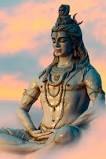
Shivratri as we all know is linked to Lord God Shiva. Shiva has a unique place in Hindu religion. Being incorporeal, or you could say intangible. Shiva alone, is usually not represented by a deity, instead is projected by a lingam. The names of ‘Shiva Temples’ in India bear the suffix of, ‘nath’ or ‘ishwar’ only to indicate that he is the teacher of all beings. One of the many names of Shiva is Sarveshwar, meaning lord of all. Images of Shiva often show him meditating in front of a Shivalingam.

     Hindu mythology talks of Krishna and Rama as avatars. They were born and they died. They are said to have worshipped Shiva. Other Gods also take physical birth, but Shiva neither takes birth, nor, he dies.

    Shiva incarnates himself in a human body. An occurrence that is celebrated during Shivratri. Shiva’s incarnation is associated with ‘ratri’ or night because he manifests in this world when it is enveloped in darkness of ignorance and evil. Omniscient Shiva dispels the darkness by giving humans the light of knowledge. The three parallel lines on the Shivaling are symbolic of Shiva’s knowledge of three aspects of time. The eye in the middle of the lines indicate the eye of wisdom that he gives to human souls.

    The Mahabharata refers to the regenerative role of Shiva, saying that when the world had plunged into darkness, and vicious proliferation. ‘An egg-like form of light descended and established a new order.’ In the ‘Dharma Sam-hita’ which is part of Shiva Purana, it is said that at the end of Kaliyug, during the time of destruction, a magnificent light revealed itself that was piercingly luminous, radiant and eternal. The world was created through this light.

    Shivratri is the commemoration of the arrival of divinity in this world to salvage humanity. In the Bhagwad Gita Krishna says that whenever righteousness declines and unrighteousness arises, he manifests for the protection of the good, and destruction of the wicked, and re-establishment of a holy order.

    According to a few God realized Yogis, Maha Shivaratri was the day when Shiva drank poisonous negativity to protect the world. The Maha Shivaratri is mentioned in several Puranas, particularly the Skanda PuranaLinga Purana and Padma Purana. These medieval era Shaiva texts present different mythologies associated with this festival, but all mention fasting and reverence for icons of Shiva such as the Lingam.

    Different legends describe the significance of Maha Shivaratri. According to one legend in Shaivism tradition, this is the night when Shiva performs the heavenly dance of creation, preservation and destruction.  The chanting of hymns, the reading of Shiva scriptures and the chorus of devotees, joins this cosmic dance and remembers Shiva’s presence, everywhere. According to another legend, this is the night when Shiva and Parvati got married. 

    A different legend states that the offering to Shiva icons such as the linga is an annual occasion to get over past sins if any, and to restart on a virtuous path and thereby reach Mount Kailash and liberation.

    The Gita insinuates at this role of Shiva when Krishna says: “I am the ‘mahakal’ (The God of Death). Death can never approach me.” Such an assertion can be made only by Shiva, the Supreme Parmatma. A soul that never takes birth, is Mrityunjaya, immortal.

    There is no room for confusion about the roles of Shiva and Krishna, because there is but one God, though deities may be many. The Supreme of all souls, across different faith traditions, is understood as being incorporeal and omnipotent. The Ocean of Peace, the Saviour, and the Almighty, is forever beyond the limitations of a physical existence.

    He performs his tasks by giving power to his spiritual children. These Gods and Goddesses, are the slayers or the killers of demons who are also embodiments of purity, love and wisdom. They are not supernatural beings, but humans with divine quality. They foster these qualities in their fellow humans, nurturing a new, elevated consciousness, and thus serve as divine instruments. In the task of creating a righteous world order.

    This is the secret of Maha Shivratri, which will be observed today, the night of the Supreme, comes to liberate his children from suffering and sorrow, as promised in the Gita.

By Kamlesh Tripathi

*

https://kamleshsujata.wordpress.com

*

Share it if you like it

*

Shravan Charity Mission is an NGO that works for poor children suffering from life threatening diseases especially cancer. Our posts are meant for our readers that includes both children and adults and it has a huge variety in terms of content. We also accept donations for our mission. Should you wish to donate for the cause. The bank details are given below:

NAME OF ACCOUNT: SHRAVAN CHARITY MISSION

Account no: 680510110004635 (BANK OF INDIA)

IFSC code: BKID0006805

*

Our publications

GLOOM BEHIND THE SMILE

(The book is about a young cancer patient. Now archived in 7 prestigious libraries of the US, including, Harvard University and Library of Congress. It can also be accessed in MIT through Worldcat.org. Besides, it is also available for reading in Libraries and archives of Canada and Cancer Aid and Research Foundation Mumbai)  

ONE TO TANGO … RIA’S ODYSSEY

(Is a book on ‘singlehood’ about a Delhi girl now archived in Connemara Library, Chennai and Delhi Public Library, GOI, Ministry of Culture, Delhi)

AADAB LUCKNOW … FOND MEMORIES

(Is a fiction written around the great city of Nawabs—Lucknow. It describes Lucknow in great detail and also talks about its Hindu-Muslim amity. That happens to be its undying characteristic. The book was launched in Lucknow International Literary Festival of 2014)

REFRACTIONS … FROM THE PRISM OF GOD

(Co-published by Cankids–Kidscan, a pan India NGO and Shravan Charity Mission, that works for Child cancer in India. The book is endorsed by Ms Preetha Reddy, MD Apollo Hospitals Group. It was launched in Lucknow International Literary Festival 2016)

TYPICAL TALE OF AN INDIAN SALESMAN

(Is a story of an Indian salesman who is, humbly qualified. Yet he fights his ways through unceasing uncertainties to reach the top. A good read not only for salesmen. The book was launched on 10th February, 2018 in Gorakhpur Lit-Fest. Now available in Amazon, Flipkart and Onlinegatha)

RHYTHM … in poems

(Published in January 2019. The book contains 50 poems. The poems describe our day to day life. The book is available in Amazon, Flipkart and Onlinegatha)

(ALL THE ABOVE TITLES ARE AVAILABLE FOR SALE IN AMAZON, FLIPKART AND OTHER ONLINE STORES OR YOU COULD EVEN WRITE TO US FOR A COPY)

*****


BOOK CORNER: Amitav Ghosh … A CRITICAL COMPANION

Copyright@shravancharitymission


Khidki (Window)

–Read India Initiative—

This is only an attempt to create interest in reading. We may not get the time to read all the books in our lifetime. But such reviews, talk and synopsis will at least convey what the book is all about.

Amitav Ghosh

A CRITICAL COMPANION

Edited by Tabish Khair

    In the next twenty minutes or so I would take you through one of the finest pieces of narration. Where, one legend describes the other. Yes, when, Amitav Ghosh describes Satyajit Ray this is all one can say. Amitav Ghosh is a winner of 54th Jnanpith award and also a Padma Shri. I have pulled out this narration from a book titled ‘Amitav Ghosh … a critical companion.’ I have summarised and simplified the article for you to the best of my ability.

    Amitav in this article of his, has gone back to 1989. When he was enjoying his extended stay in the overwhelming city of New York. He had then finished writing of The Shadow Lines. The novel for some reason had a striking influence of Ray in it.

    He was then struck by a sudden wave of Ray nostalgia. And it struck to him that Ray too had once been a stranger in this city and that he too had walked the streets of Manhattan in Kolkata—bought shoes.

     One day, these pent up thoughts propelled Amitav to meet director James Ivory, who he knew to be a good friend of Ray. And later that week he went to interview Ivory, cassette recorder in hand. This is how Ivory described his first meeting with Ray, in the winter of 1960.

    “I looked him up in Calcutta,’ Ivory said. I had never met him. I had seen at that point, Pather Panchali (Song of the Road) and Aparijito (Undefeated). I knew that Apur Sansar (The World of Apu) existed and that sooner or later it would get to New York, but up till then it hadn’t come. And then some Indian friends of mine in Delhi said that apart from The Trilogy he had also made some other films in that time—the late fifties. They described Jalsaghar (The Music Room) to me and that sounded like something I would love to see. Then I made a long trip to Calcutta and went down to Puri and Bhubaneshwar and Madras. While I was in Calcutta I just decided to call him. Just to meet him, but also to ask him if it would be possible to see Jalsaghar. My friend in Delhi said he was very approachable (which he was) and I just called him up. He was in the phone book, so I just called him up and told him who I was. He said fine, he would try and arrange Jalsaghar for me. We agreed to meet in Coffee House and I went there. He was alone and we talked.

    He was immensely tall; he was probably the tallest Indian I have ever met and that seemed symbolically apt. He had a kind of straight forward majesty about him; he was obviously a king, but he was an approachable king. We were friends all his life as long as he lived. Whenever there was something he needed we tried to help. He always helped us. When there was some tremendous thing that would happen to us in the course of our own movie making in India—for instance when Utpal Dutt was put in prison (for his Maoist sympathies) while we were making ‘The Guru’ he helped to get him out. He called up or wrote to Mrs Gandhi and said this is a disgrace, this shouldn’t be allowed—things like that.”

    I asked Ivory what they talked about at that first meeting. ‘He was waiting in the coffee house.’ Ivory said, ‘while the censor was seeing Devi (the Coffee House was in the shadow of the Metro Cinema). Then somebody came from his staff and said that Devi had gone down well with the censors. He was kind of nervous about it because of the retrograde view of Hindu life at its most superstitious let’s say. He was afraid they would make him cut it. But no, it had gone down all right, and he said, would I like to come to the premiere of it, which I did, so I saw the film at the premiere and I was also introduced to Sharmila Tagore, who was very young then. And then he arranged for me to see ‘Jalsaghar’ so he went to the studio in Tollygunge where he made all his films and he sat next to me and translated for me at important moments. I thought it was a marvellous, marvellous movie and I jumped up and told him so at the end. He was surprised that I thought it was so marvellous. He said, well, he thought technically it wasn’t so good, wasn’t quite up to the mark. I said well, it didn’t strike me like that and I asked if there were any plans to show it in the west for I thought people would really like it. He said no, he didn’t have any plans. It had been shown at the Moscow Film Festival but the Russians didn’t like it because they thought it was decadent and that had discouraged him. I said, I thought he might get a different reception in the west if he pursued it. It was released here in the fall of 1963, and as you know a few years ago it was released in Paris and it was a tremendous success—ran for a year or something.’

    Ray was to collaborate with James Ivory and Ismail Merchant on two of their films: he wrote the music of Shakespeare-wallah and helped with the editing of ‘The Householder.’ I asked Ivory how the collaboration had come about.’ After ‘Householder’ was edited,’ he said ‘he still seemed very unwieldy, not very nicely done. I didn’t really have a very good editor—by this time I had met him (Ray) and I asked if I could bring the film to show him. He said sure come on. So Ismail (Merchant) and I climbed on the train—we took the Hindi version of it, all those cans, there must have 24 cans or something. We went from Bombay to Calcutta with all that film. He saw it and liked it—he thought there was something there to work with. I asked him whether he could give us any suggestions about the cutting and he said, yes. He would recut it, but he didn’t want me to interfere while doing that. He said let me have a go at it, I’ll do it my way, you can be in the editing room if you want to be, when we’re all done you can change it if you want to, that’s your business, but let me do what I want to do. So then, he and his editor Dulal Dutt recut the film. They took about four days, and gave it a new shape. It was he (Ray) who suggested that it go into a flashback form.

    Ray was always awfully generous with his time, always, always. I don’t know how he did it; because there was always many many people there, who wanted things done, people who just came to catch a glimpse of him and so on. How he had any kind of life of his own and how he made his movies I don’t know.

    Pather Panchali, to my mind the greatest of Ray’s films, was completed in 1955. It premiered not in Kolkata, but in New York, at the museum of Modern Art. This is how it came about: in 1954 Huston was on his way to India to scout locations for The Man Who Would Be King, when he came to hear of a young advertising-executive who was making a film on a tiny budget. By the time Huston arrived in Kolkata, the film had been stalled for several months, because of lack of money. At the time of Huston’s visit the dominant genre in India was the Bombay film. Ray’s work took Huston by surprise. It was apparent from the rushes that this film belonged in a different order of film-making. Huston was quick to recognize the genius of work. He viewed only twenty-minutes or so of the film, but recalling the occasion in 1987, he said: I’ recognised the footage as the work of a great film-maker.’ Returning to the United States, Huston’s reports of the film were instrumental in persuading the Museum of Modern Art to send Ray some money. MOMA’s advance went a long way towards the completion of Pather Panchali.

    Hollywood had long cast a binding spell on Ray: he was an ardent admirer of such American film-makers as John Ford and Billy Wilder. Although he never worked there. Hollywood came to play a peculiarly serendipitous role in his life; never more so than when one of his idols, John Huston, made it possible for him to complete Pather Panchali. And thus it happened that this most famous of contemporary Indian films premiered not in Kolkata or Mumbai, but in New York. It was first shown at the Museum of Modern Art in April 1955, to a small invited audience.

    Pather Panchali was released in the US (by Edward Harrison) in September 1958 at New York’s Fifth Avenue Theatre. The release was the occasion of Ray’s first visit to the country: he was then thirty-seven. The reception of the film was by no means uniformly enthusiastic. As Ivory describes it: ‘There was a famous review by Bosley Crowther which was meant to have been such a putdown. I read that again the other day and actually he was trying to like it. He was baffled, he made false assumptions, he didn’t really know what to say, but he had to admit that he knew or felt, somehow, dimly that there was something great there and he better not say something too bad about it. And apparently there were many people who wrote angry letters about his review.”

    Thirty one years later, in Columbia University’s Butler Library, I dug up a copy of an interview that Ray gave to Howard Thompson (of the New York Times) on the day of the release. Ray evidently made quite an impression on Thompson: ‘A strapping swarthy chap, with strong features, he (Ray) talks like a realistic poet, without the slightest foreign accent, looking fresh from the American gridiron.’

    Thompson continues: ‘On the day after his arrival he (Ray) stepped inside a fashionable hotel dining room, comfortably clad in occidental garb, and gamely stooped to let the head waiter pin on a Plaza tie. Presently, wearing a casually alert expression, the big rangy Calcuttan sat at a table, opening a package of cigarettes with long, tapering fingers. He had been up early, he said, just walking, camera in hand, an old habit of ‘an old film fam.’

    This is how Ray described the filming of Pather Panchali to Thompson: ‘We shot in and around Calcutta, then had to stop for six months because I was flat broke. I even sold part of my record collection, some old seventy-eights of Bach, Mozart and Beethoven—and part of my wife’s jewelry, not that her mother knew. All that was shown again to the same (financiers). No reaction. Then a year’s gap.’

    Ray was able to continue filming only because of an unlikely intervention: a powerful West Bengal politician, reputed to be ‘close’ to one of Ray’s aunts, authorised a grant from the state government. He was under the impression evidently, that Pather Panchali was a documentary about community development.

    In response to a question about the future of Indian film, Ray told Thompson: ‘I don’t know if our pictures generally will ever spread to a world market, though we have two or three young directors with the right ideas. Our industry centers productionally in Bengal, Madras and Bombay, but those from Bengal are better, more serious. As for why you don’t see more of ours—well, we have our own problems and we’re not so sure Westerners care.’

    ‘The generous mouth widened slightly,’ Thompson continues. ‘Do you?’ he enquired. The penetrating brown eyes twinkled pensively.

    Looking back now, I am sure more than ever aware of the part that Ray played in shaping the imaginary universe of my childhood and youth. I see this even in such details as my interest in science and science fiction; in ghost stories and the fantastical. One of my favourite Ray films to this day, remains Paras Pathar (The Philosopher’s Stone), a neglected masterpiece that deserves a place of honour in the canon of surrealist cinema. When I saw Agantuk (The Stranger), in which the main character is an anthropologist, I began to wonder whether my interest in anthropology too, owed something, perhaps subconsciously, to Ray: I recalled suddenly that references to anthropology go back to some of his earliest work, starting with the African mask in Apur Sansar.

    Ray’s influence extended even to the material world that I inhabited in my early years; a world which he formed to a quite astonishing degree through his influence on typography and through his visual style—a style that was itself a development on a distinctive design traditions of Bengal. That he could exert such great influence was due in part to the fact that this work extended and developed the legacy of the generations preceding his. His greatness as an artist is no way diminished by the fact that he was a rivet in an unbroken chain of aesthetic and intellectual effort that stretches back to mid-nineteenth century—a chain in which I too am, I hope, a small link.

    Ray was for me, not just a great artist; he was something even rarer; an artist who had crafted his life so that it could serve as an example to others. In a world where people in the arts are often expected, even encouraged, to be mindful of those around them, he was exemplary in his dealings with people. This was, I think one of the reasons why he was able to sustain his creative energies for as long as he did: because he refused to make a fetish of himself. As a student I had heard him speak on several occasions: it always seemed to me that there was something very private about his manner. I had the sense that it was by holding the world at arm’s length that he had managed to be as productive as he had. This was a stance I respected then and respect even more today, now that I am more aware of how easy it is to be distracted by the demands of public life.

    Ray was consistent in fighting off the pressures of the wider world. After the success of Pather Panchali he was feted by Jawaharlal Nehru and Indira Gandhi. It was a measure of his integrity that he never allowed their praise and attention to distract him from his own projects. Unlike many other film-makers in India, Ray consciously avoided seeking government financing for his projects, preferring to raise the money from commercial sponsors. He was always deeply aware of his audience in Kolkata and gloried in the discipline they imposed on him—primarily that of keeping his work accessible. This meant that he could never permit himself the luxury of avant-gardism in the manner of his European contemporaries such as Fellini, Bergman and Godard: nor indeed did he ever want to. To the end one of his greatest strengths was his ability to resolve enormously complex plots and themes into deceptively simple narrative structures.

    My favourite Ray story is one I came upon soon after I learnt of the appalling human cost of Werner Herzog’s Fitzcarraldo. Once, while filming an overhead shot, a falling piece of machinery gravely injured a studio-hand who was working on one of Ray’s sets. Ray never used an overhead shot again.

    In 1992 when Hollywood awarded him an Oscar for Lifetime Achievement, Ray was so ill that he received the award lying in his hospital bed. The scene was broadcast on TV and when I saw it I realized that Ray’s illness was so serious that he might not recover. I had always assumed I would meet Ray one day, but I had never made an effort to seek him out. He was such an integral part of my imaginative world that I’d fought shy of meeting him face-to-face: what can one possibly say to someone to whom one owes so great a debt? In 1989 and 1990 I had had several telephone conversations with him. In one of them he’d told me that he greatly enjoyed my first novel, The Circle of Reason. Now I saw that it was I who had been remiss in expressing my admiration and gratitude. In light of his condition this assumed a sudden urgency. I decided to write a letter to Ray, asking if I could visit him. My letter began:

    Dear Mr Ray,

    I have wanted to write to you for many years now, but have always put it off because I knew it would not be easy to say what I wanted too …

It ended:

    The Japanese have a custom which allows people to pay homage to artists they admire by standing outside their houses, alone and in silence, until they are invited in. you are the only person in the world for whom I would gladly do that …

    The letter was dated February 6, 1992. I gave it to Shri Nirmalaya Acharya, a close associate of Ray’s and himself one Kolkata’s legendary literary figures (now sadly deceased and much-missed by all who knew him). Nirmalaya-babu promised to hand it to Ray once he was well enough to read. Alas that day never came: Satyajit Ray died on April 23 1992.

    The day of Satyajit Ray’s death was like none that Kolkata had ever seen before. When the news began to spread, a pall of silence descended on the city. Next morning hundreds of thousands of people filed past his body, braving the intense heat. In the evening when his body was taken to the crematorium, the streets were thickly lined up with people standing in silent vigil. Many held up placards which referred to him as ‘The King.’ The whole city was sunk in an inexpressible sadness: everybody knew that an era had ended, and with it, Kolkata’s claim to primacy in arts. The city was orphaned: its king was gone and there was none to take his place.

    I wandered the streets for hours that night, watching the silent crowds, reading the placards. I was surprised by the depth of my own sense of loss. Yet I was conscious also of an immense sense of privilege, of gratitude, that having been born in Kolkata I had, in some small way, been endowed with a special entitlement to Ray’s universe; gratitude at having had his work to illuminate my surroundings and my past. This is what narrative arts do, at their very best: they shape the world as they relate them. To this day Ray’s work is one of the main anchors that moors me—often despite myself—to the imaginative landscape of Bengal: indeed, to the essential terrain of my own work.

Amitav Ghosh

January 17, 2002

Posted by Kamlesh Tripathi

*

https://kamleshsujata.wordpress.com

*

Share it if you like it

*

Shravan Charity Mission is an NGO that works for poor children suffering from life threatening diseases especially cancer. Our posts are meant for our readers that includes both children and adults and it has a huge variety in terms of content. We also accept donations for our mission. Should you wish to donate for the cause. The bank details are given below:

NAME OF ACCOUNT: SHRAVAN CHARITY MISSION

Account no: 680510110004635 (BANK OF INDIA)

IFSC code: BKID0006805

*

Our publications

GLOOM BEHIND THE SMILE

(The book is about a young cancer patient. Now archived in 7 prestigious libraries of the US, including, Harvard University and Library of Congress. It can also be accessed in MIT through Worldcat.org. Besides, it is also available for reading in Libraries and archives of Canada and Cancer Aid and Research Foundation Mumbai)  

ONE TO TANGO … RIA’S ODYSSEY

(Is a book on ‘singlehood’ about a Delhi girl now archived in Connemara Library, Chennai and Delhi Public Library, GOI, Ministry of Culture, Delhi)

AADAB LUCKNOW … FOND MEMORIES

(Is a fiction written around the great city of Nawabs—Lucknow. It describes Lucknow in great detail and also talks about its Hindu-Muslim amity. That happens to be its undying characteristic. The book was launched in Lucknow International Literary Festival of 2014)

REFRACTIONS … FROM THE PRISM OF GOD

(Co-published by Cankids–Kidscan, a pan India NGO and Shravan Charity Mission, that works for Child cancer in India. The book is endorsed by Ms Preetha Reddy, MD Apollo Hospitals Group. It was launched in Lucknow International Literary Festival 2016)

TYPICAL TALE OF AN INDIAN SALESMAN

(Is a story of an Indian salesman who is, humbly qualified. Yet he fights his ways through unceasing uncertainties to reach the top. A good read not only for salesmen. The book was launched on 10th February, 2018 in Gorakhpur Lit-Fest. Now available in Amazon, Flipkart and Onlinegatha)

RHYTHM … in poems

(Published in January 2019. The book contains 50 poems. The poems describe our day to day life. The book is available in Amazon, Flipkart and Onlinegatha)

(ALL THE ABOVE TITLES ARE AVAILABLE FOR SALE IN AMAZON, FLIPKART AND OTHER ONLINE STORES OR YOU COULD EVEN WRITE TO US FOR A COPY)

*****