Category Archives: article on feedback

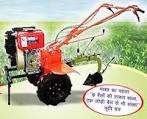
Article: SMALL TRACTORS-POWER TILLERS- THE LIKELY TOTEMPOLE OF NEXT GREEN REVOLUTION OF INDIA

Copyright@shravancharitymission
341

SULKING INDIAN AGRICULTURE

Agriculture remains the mainstay of India, even when it doesn’t contribute sufficiently to the Indian GDP. Around 65% of Indian population depends directly on agriculture when it only accounts for 22% of the GDP. But Indian agriculture now needs to undergo a paradigm shift to feed double the mouths since the last green revolution. Further, farm mechanization, agri-inputs, cropping patterns and seed varieties need to be refurbished to suit new agri challenges such as continuous soil erosion, depleting ground water levels, alarming farm labour situation and sparse market linkages. And this calls for a major overhaul on the production side of agriculture. To tackle issues such as, increase in farm produce and better farm economics, which brings us to the moot point of need based farm mechanization.

ISSUES AT HAND

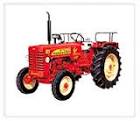
India which is 17% of the world population. But it still cultivates with either the draught animals, which are inefficient and expensive to maintain or by high horsepower tractors owned by large farmers, which are few in numbers. So the daunting question is, when more than 80 percent of the Indian farmers are small and marginal why they are not in a position to purchase tractors below hp (horsepower) 22. Is it because of the government policies that are blocking the smooth transition from draught animals to small tractors and power tillers? and what is more baffling is:

  • Small farmers don’t have a requirement of large tractors. With the amount of land they hold a tractor of 25 hp engine or more is not needed in small and medium farm size. Especially, when statistics for power availability for various agricultural operations, which is an indicator of mechanization has increased from 0.3 kilowatt per hectare in 1971-72 to 1.4 kilowatt per hectare in 2003-04.
  • Even though government puts in subsidies on tractors, farmers don’t get their free will to choose, as large manufacturers step-in to sell their own brands at the behest of Government. So if we are talking of free markets why this nudging?

578

HISTORICAL PERSPECTIVE

Tractors in India were imported initially in 1960s mainly from the US and European countries, prime being the erstwhile Soviet Union. Since these countries historically had large holdings, these machines too were manufactured in the range of medium and high horsepower to suit their own land holding sizes.

Thus, started the of lasting culture of medium and high horsepower tractors in India. Even when our land holding size way back in 1960s was far less than the European and American standards and in the range of around 3 hectares.

This as a beginning was understandable but somewhere down the line a course correction was required, which didn’t happen. Presumably, because the entire technology was new, and we were devoid of the basic sense of change or even the skill to adapt. Small was not beautiful then. A similar trend we had in the auto sector where in you had those bulky fuel guzzlers. But then the auto industry caught the imagination of their customers which farm mechanization industry didn’t.

IMPORT AND MANUFACTURING HISTORY

In the year 1961-62, first time around 880 tractors were assembled from kits purchased from British and German firms. Imports stopped in 1977 but industry’s extended honeymoon with these manufacturers continued as hand holding was required to build sufficient production bandwidth. Although, India got independence in 1947 and the socialist leaning government’s five-year plans of 1950s and 1960s aggressively promoted farm mechanizations, our production of tractors was sluggish. But by late 1980s tractor production moved upwards to 140,000 units per year, yet the prevalence rate was just 2 tractors per 1,000 farmers.

ECONOMIC REFORMS AND FAO PERSPECTIVE

Post economic reforms in 1991, with the steady pace of change, the production of tractors increased to 270,000 units per annum. And in early 2000, India overtook the US as the world’s largest producer of four-wheel tractors. FAO estimated in 1999. Of the total agricultural area in India, less than 50% was under mechanized land preparation. Thereby, indicating large opportunities still existed, and projected this in favour of small machines. Steadily growing, India in 2013 produced 619,000 tractors accounting for 29% of world’s production. And, India currently has 16 domestic and 4 multinational corporations manufacturing tractors.

SOLITARY EFFORT OF 20 HP– Swaraj story:

India had approached the erstwhile Soviet Union in the mid 1960s for R&D and manufacturing support to develop a 20 hp tractor, but they refused. This project was later taken up by Central Mechanical Engineering Research Institute (CMERI) under the council of Scientific and Industrial Research.

CMERI put together a team. They started by studying tractors of other makes that were in the market. Their first prototype was ready in May 1967 but when it was taken for trial it collapsed. Learning from the failure, they developed a second prototype, testing of which was done in October 1968, which proved satisfactory. Independent field trials later at other institutes were also successful. The tractor was called Swaraj. This Company was later promoted by Punjab State Industrial Corporation and turned out to be a blue chip company.

Besides Swaraj no other company tried to delve into 20 hp category for a long time. Until the solo effort was followed by a Delhi based company SAS Motors Ltd that has launched tractor in 15-24 hp category.

LAND HOLDING VS TRACTOR HORSEPOWER MISMATCH?

In 1960s the average land holding size was around 3 hectares (7.4 acres) and in 2010-11 it declined to 1.15ha (at an average level), which is below 3 acres on a more prevalent terminology. And, with these vital statistics, both growth and technological up gradation should have been in the low horse-power segment or in the power tiller segment. But that is clearly not the case. On the contrary both growth and technological up-gradation has been in the medium and high horsepower tractors, apparently because of foreign influence. Where, more likely the low horsepower range of tractors were discouraged because of low margins and high overheads of large manufacturing corporations and also the fatigue and capital cost of introducing a new genre.

For small and marginal farmers, low priced, small tractors of 15-24 hp was required. This generic need was highlighted as early as 1970 when (NCA )National Commission on Agriculture was set up.

At the turn of the century, India had around 2.67 million tractors, which was more than NCA projections. But category wise the number were skewed. As around 1.47 million tractors were in the 31-40 hp category, 0.65 million were in > 40 hp category and 0.68 million were in < 30 hp category. And only a part of 0.68 million tractors below 30 hp comprised of small tractors for which NCA had projected a figure of over 2 million. This large gap is surprising and reveals the callous approach of the government towards small farmers. One can perhaps safely derive that non availability made them go for higher hp tractors thereby spoiling their farm economics. And the quantity of power tillers sold was merely seventy thousand.

But then who was responsible for throwing NCA’s calculation, off balance? Well, no one can pin pointedly say who. But yes, to a certain extent the agricultural community as a whole, together with the Indian tractor industry, can be questioned on this. Instead of small tractors they came up with medium and heavy tractors, which benefited only the large farmers, and as a result tractors got concentrated only in a few states which benefitted from the green revolution such as Punjab, Haryana and parts of Uttar Pradesh (See table: some benefit)

Some benefit
Tractor sales over the last five years
States Tractors sales during last five years Area under cultivation
(‘000 hectares)
UP 290,513 17,986
MP 144,049 22,111
Punjab 121,903 4,033
Rajasthan 95,450 20,971
Haryana 89,346 3,711
Gujarat 76,439 10,293
Bihar 72,467 10,743
AP 68,994 14,461
Maharashtra 66,876 20,925
Karnataka 43,163 12,322
Tamil Nadu 38,852 7,474
Orissa 14,473 5,296
Other states 65,210 15,181
Total 1,188,735 165,507
Sources: Economic Survey 2003-04 & Indian At A Glance 2004

We all agree mechanization is an unavoidable farming tool. For, productivity has to increase along with cost and economics, and that alone is sustainable in the long run. But looking at the perfunctory approach of the government, the big question would be whether farmers should go in for small tractors or still rely of animal power. It may therefore not be out of place to mention relevant statistics of animal power.

STATISTICS ON ANIMAL POWER

– India’s 83 million draught animals carry more than 5 times the freight and four times the passenger traffic carried by railways, in terms of originating traffic.

– Draught animal power contributes 30000 megawatt of power.

– It saves 24 million tonnes of diesel per year, worth more than Rs 33,000 crore.

– Draught animals cultivate about 65% of India’s total cultivable land area

– The present value of draught animals (Rs 50,000-1,00,000/pair) is Rs 2,07,500 crore even on a very conservative estimate.

– It would take 8.3 million tractors to replace draught animal power. This would cost Rs 32,490 crore; so then why is this segment not growing?

– Draught animals provide dung worth Rs 5,000 crore annually. Five million tonnes of firewood will be needed to substitute this.

The crisis around the farmer’s traditional tiller- the draught animal is continuously growing. Even though farmers still rely on draught animals their importance is being undermined by tractors.

According to an NCA report, man can provide a power equivalent to 0.07 hp, a woman 0.05 hp, a bullock/buffalo 0.40 hp, a camel 1 hp and a tractor at least 14 hp. In 1951, the farm power available was just 0.25 kilowatt per ha (KW/ha) of which 97 percent came from draught animals. This has now gone up by almost 6 times to 1.40 KW/ha and the corresponding increase in food grain by four times, and so an optimum, farm mechanization, is the need of the hour.

Farm mechanization is also important from the aspect that 65% of our cultivable area consists of dry farming or rain fed farming where the window of soil bed preparation is very small and if we are unable to do seedbed preparation and sowing in a timely manner, given the receding soil moisture, yields will drastically reduce.

However, 70% percent farmers still use draught animals where they can easily be upgraded to small farm mechanization tools. Such as small hp tractors or power tillers, but for this to happen; government policies should start focusing on the needs of the small farmer.

COMPARISON BETWEEN DRAUGHT ANIMALS AND TRACTOR

Draught animals and tractors are complementary sources of power on Indian farms, and will continue like that for many more years, to meet the ever burgeoning demand of power and of increased production and productivity. A report of 1987 says that a 35 hp tractor can prepare a seed-bed and sow 0.2 (ha) in one hour at Rs 270-300 per ha. Bullocks for the same operation require the entire day at Rs 300 per ha. The problem is draught animals have to be fed throughout the year but their optimal use is restricted to around three months in a year.

INDIAN AGRI DISCONNECT

  • Tractors in India are out of reach for the majority of the farmers. The cheapest being Rs 1.8 lakh almost as much as a new car.
  • Barely 2% of the 115 million farmers own a tractor according to the 1995-96 agriculture, census. Yet they cultivate almost 1/3rd of the countries arable land. This itself highlights the efficient toughness of farm mechanization.
  • Most farmers possessing tractors are rich and own large land holdings. Rate of ploughing is Rs 200-250/hr or Rs 2-2500/hectare
  • But small farmers are unable to reap such benefits. For them a low priced, small tractor of 15-24 HP would be ideal. This need was recognized as early as 1970 when the National Commission on Agriculture (NCA) was set up. After a 5 year study, NCA submitted a long report in 1976, which also recommended the type and quantity of tractors India should have by 2000: 2.08 million tractors and power tillers (a farm machine, with two wheels, to till the soil) below 15HP, 0.12 million medium tractors of 35 HP & 80,000 65 HP tractors, which taken together would total 2.28 million
  • This policy argued that 2.08 million tractors and power tillers below 15 hp were needed for small and medium farmers. Besides, they are also considered more suitable for paddy cultivation — the country’s dominant food grain crop — than medium (25-40 hp) and heavy (above 40 hp) tractors.

ALL TIME PANACEA FOR SULKING INDIAN AGRICULTURE IS FARM MECHANIZATION OF THE RIGHT KIND:

  • To graduate from animal tilling to mechanized tilling and that to by small tractors, power tillers and other economical high precision equipments commensurate with land holding size of small and medium farmers, keeping in mind their farm economics.
  • An option less farmer has to buy a 35 hp category tractor that costs around 5 lacs with bank loan at a high rate of interest, even if he doesn’t require this product. This should be substituted by small tractors or even power tillers.
  • GOI provides a subsidy of 25% limited up to 30,000 tractors. Wherein also, the farmer is cajoled to buy certain brands and this needs to stop forthwith, as user of the product should alone be the decider by any diktat of consumerism.
  • Tractors available in the range of 25-40 hp use advance western technologies, which may not be required for small holdings and this makes the product expensive. In fact what is needed is a below 25 hp tractor or a power tiller that is gender friendly and useful for ‘nuclear farming’ just as a nuclear family. The cost of such tractors will bring down the farmers cost by 50%. As against his investments and maintenance in a pair of bullocks, which requires to be fed and taken care of even when it is not generating any revenue, and also serves best only for a time span of 5-6 years.
  • Farmers need to come out of the clutches of debt to make agriculture more exploring, exciting, remunerative, and even status oriented. This can happen only if simple and cheap technologies are used in conjunction and proportion to their earnings. According to 59th survey by NSSO (January-December 2003) out of 89.35 million farmer households, 43.42 million (48.6%) were reported to be in debt. But in a similar survey in 1991 only showed 26% were in debt.

*****


Article: #SwachhBharatAbhiyan (SBA) – Include existing Public Toilets in SBA

Copyright@shravancharitymission

123

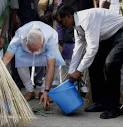
Prime Minister Narendra Modi has done well by wielding the broom to clean a road and its surroundings, thereby, burnishing the lost grandeur of ‘dignity of labour.’ He has also formed a formidable team of star citizens, who have given impetus to the campaign launched in around 4041 statutory towns. Where in you find cine stars, sports persons, social activists, industrialists, professionals and even politicians, psyched out. Icons like Amitabh Bachchan, Anil Ambani, Kamal Hassan, Sachin Tendulkar, Shashi Tharoor and many other distinguished personalities have graced the campaign, by lending both, social and glamour weight.

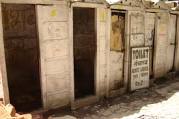
So with all of this, the speed and velocity of the campaign looks set to deliver the goods. However, the priorities within this need to be tweaked, mainly to prioritize the initial tranches. Where, I have some pointed and granular suggestions to make, that oozes right out of my firsthand experience. Create as many Public toilets as possible, in the shortest possible time and also include the existing ones in the campaign. Perhaps, this suggestion of mine may give the whole campaign a better fillip in converting the movement into a mass movement with the least of resistance. Arising, more out of the immediate necessity of the deprived public, in this case the general public; because of the limited, shabby and poor infrastructure that throws the spanner in the development of India.

For it was just, yesterday when I was driving down the crowded market area on Hill Road in Bandra, is when I felt like relieving myself. I stopped the car, got off and started looking for a public urinal. Keeping strictly in mind the Prime Minister’s message of Swacch Bharat Abhiyan, and trying to observe it to my heart’s content.

456

I must have spent about half-an-hour in the crowded market area, in which time I must have covered more than a kilometer but I still could not find a public toilet. Is when I saw the logo of a petrol pump to my heart’s delight, as we all know have toilets. ‘Wow- what a relief’ I said to myself. And this got me thinking.

If this is the condition of Mumbai, one of the biggest metropolis of India what about other cities? With a burgeoning population, Mumbai has a deficit of at least 47,000 toilet seats, and the cost of constructing one toilet is INR 150,000, say authorities, so we can imagine the cost involved. This shortage in 2001 was a whooping 125,000 toilet seats when the Brihan Mumbai Muncipal Corporation (BMC) had conducted its first survey on the sanitation needs for the country’s commercial population. Going by 2001 figures, the ratio of toilets versus population comes to a whopping 1: 50 or 3,000 people using it daily in Mumbai.

MUST COMPLIMENT THE OIL COMPANIES

After relieving myself, I sincerely blessed the oil companies that thought of customer convenience, by having toilets in all their retail outlets which Indian Railways couldn’t provide in all platforms. Further, I thought this is a big opportunity to include these readily available toilets, as part of the Swacch Bharat Abhiyaan as pay and use toilets to catapult the campaign exponentially.

Today, India has about 45,000 filling stations more than Canada or UK as of March 2012, and most are with the facility of a toilet. If these toilets are made to join the SBA on a pay and use basis we can have a sudden flurry of toilets and that will certainly help the SBA.

For the Government to make public toilets, every 1-2 km, in crowded market areas along the road side may be a gigantic and close to a non doable task, so here is the way forward. Today, the immediate pressing need for the Public at large is a convenient network of clean toilets spaced around close proximity and concomitant is the wielding of broom to keep it clean. While it may be possible to construct new toilets on highways and open roads but may be extremely difficult in the already cramped and crowded market areas and this is where these toilets can come in handy

CAMPAIGNS CAN CHANGE REALITIES

Even though Government of India has transcribed incentives for building public toilets. All is not achieved merely by announcing incentives on paper alone, as it requires mindsets to change–that running a public toilet too, is a respectable venture; something like Sulabh Shauchalaya.

And so, India needs a renewed and intense campaign to promote public toilets as a doable business by respectable Individuals, Unemployed Youth, Business Houses, Societies, Builders, NGOs, SMEs, Hospitality Industry and under Corporate Social Responsibility.

Government should promote people having genuine intent of doing this noble task, and who have spare Land on which Private – Public Toilets could be constructed, or even existing toilets that could be utilized at prime and vantage locations as pay and use toilets.

The building bylaws should be tweaked to incentivise for mass proliferation of such public toilets and also sops in the form of rebate in property tax or any other, are a few boons that should be considered by the Government, if possible.

Running public toilets could be ticked at par with running hospitals as both reduce human suffering. Modi Government could further do well in bringing about this social change. Prime Minister Narendra Modi in fact has orated in one of his speeches abroad that he is currently busy in construction of Public toilets.

*****

ARTICLE: ACID ATTACKS BY SICK MINDS

Copyright@shravancharitymission

Kamlesh Tripathi

Shouldn’t I call them depraved. Transcending even the emperors of Rome, and that to without a throne, who could be ‘vindictive, cruel and even insane’- say some ancient historians like Suetonius, Pliny and Cassius Dio.

A day after a woman doctor became a victim of acid attack. Delhi High Court has expressed concern over the ‘spate of acid attacks.’ So, yet again Nero fiddled while Rome burned? But who is our Nero? Surely, the Government in general, and the law enforcement department in particular, who allowed sale of acid off the shelf.

Establishment is now cracking the whip by developing a web application to regulate the sale of acid, with functionalities like registration of stockists and retailers, issue of licenses by the district administration and limiting sale of acid to individuals who furnish proof of identity and residence.

This may to a certain extent prune down unauthorized sale of acid but won’t sterilize the sick mindset. Union minister Rajnath Singh, also suggests of treating acid attacks, that cause serious hurts, as ‘heinous crimes.’

Good Samaritan NGOs have also held demonstrations at ITO demanding quick and swift Police action against the perpetrators of crime in Rajouri Garden. A medical report released, says the 30 year old doctor is traumatized and understands the prognosis of such a severe injury.

And, in all of this the court has again asked for status report from the centre and the state. But, what is more astonishing is the High Court’s reference to acid attacks, when it pointed out that Delhi Police has almost 15,000 posts vacant and therefore a we have deficient police force at hand.

Lack of adequate Police Force results in inadequate patrolling, which encourages sick minds and criminals to enact such ghastly crime; and the government attorney Sanjay Jain is further exhibiting government apathy by saying 15 proposals forwarded by Delhi Police for creation of over 14,000 posts “shall be looked into at the earliest.” So no matter how heinous is the crime, government lives by its age old rhetoric; and so these sick minds will continue having a field day.

*****

ARTICLE- MIND THE BRAND IMAGE OF YOUR SURNAME

copyright@shravancharitymission

16

Oxford dictionary defines the word ‘surname’ as a ‘hereditary name common to all members of a family.’ And in India many families can have the same surname, provided it comes down their lineage and is acceptable to them. In other words surnames are just family, caste or even trade and trait names. But certain towering personalities take their surnames to unimaginable heights and some bring it down. But bringing it down is only okay till it doesn’t start affecting the generic surname in an adverse manner.

Let us start with the father of the nation’s surname- Gandhi. I would call it one of the tallest surnames of the world. Today, Gandhi is almost a synonym for non-violence, freedom struggle and nobility. Many Gandhis may have come and gone thereafter, but this one Gandhi, the father of the nation has stood the ground; thereby raising the brand image of this surname.

Today, some contemporary and tall Gandhis, appear in certain ways, to be in ethereal sync with the father of the nation’s surname, even if they are not up there. Just as Indra and Rajiv Gandhi became the Prime Minister of India, Sonia Gandhi the Congress President and Chairperson of the UPA and Rahul Gandhi Vice President of the Congress Party. And, so the overall brand image of surname ‘Gandhi’ deceptively conveys, as if all Gandhis are a towering personality by default. And in some way or the other guiding India, and could even be dynastical. Surname ‘Nehru’ too had a strong brand image but never got the critical mass to surge ahead, I guess.

32

It is typical of India, certain surnames always zoom you to certain professions, traits and banners. Just as the Khans, the three top stars of India; remind you of acting under the Bollywood banner- the famous trio of Shahrukh, Salman and Amir. But then one Khan could be known as a trouble maker that pulls down the brand image of other Khans. And, the Kapoors, who too remind you of the erstwhile number one family of Bollywood; Prithviraj and Raj Kapoor. And this is how certain brand images of certain surnames have been built.

And, then the Ambanis sounding generic to business; reminds you of Dhirubhai Ambani and his sons Mukesh and Anil now running the biggest business empire of the country. While we come to sports, Tendulkar, Gavaskar and Amarnath brothers connect you to cricket in the manner Amritraj brothers connected you to lawn tennis to name a few sportsmen.

And, I can’t move ahead unless I talk about one of India’s most famous surnames ‘Singh.’ It signifies the ruling class of India. Even the Sikhs as a community wear this famous surname. Many Rajas and erstwhile rulers have used this surname Singh and have given it a high brand image. Lord Rama too was from this clan. Some famous Singhs of India are Dr Karan Singh, Giani Zail Singh and Dr Manmohan Singh who unfortunately got reworded to Maunmohan Singh. But, then, where do we place the famous Yadav Singh involved in this huge scam in Noida.

Then you have one of the oldest and strongest surnames in the name and style of ‘Yadav.’ It originates from Lord Krishna, a Yaduvanshi and therefore considered holy. But then how does it battle the whining cry of criminals such as Pappu Yadav, Lalu Yadav and the more recent ones Shiv Kumar Yadav involved in rape crime. And the lackluster Mulayam Singh Yadav and Akhilesh Yadav who need to do much more in the stream of governance. Probably boxer Vikas Yadav and psephologist-cum-politician Yogendra Yadav bring some reprieve.

‘Modi’ was never a strong surname brand in India. But there again one towering personality like Narendra Modi has made the surname ‘Modi’ as an international brand now having being picked as number two out of thirty most performing of the world leaders.

article: The magic art of ‘Chamchagiri’

Copyright@shravancharitymission

kkkqqq


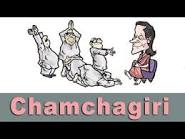
    Word #chamchagiri (sycophancy) requires no introduction. Even the so-called English gentry of our country understands it well enough. And, in India, nothing meaty can be obtained without this art of arts, more precisely, the mother of all arts.

    During our lifetime, we all aspire to become qualified professionals, such as an engineer, a doctor, a lawyer, a bureaucrat, a chartered accountant, and the list goes on and on, for which we go to professional colleges and even qualify through tough exams. But, for this particular ‘art’, you needn’t go to any University to obtain a degree. Yet it remains the most powerful tool of success in contemporary times.

BUT, WHY CHAMCHAGIRI?

    Because it is a two-way requirement and has now become a status symbol. If you call yourself a VIP, you must have chamchas around you. Without chamchas, you don’t qualify as a VIP. Conversely, to survive, grow and secure yourself, you also need to do Chamchagiri. Perhaps that increases your tailwind and catapults you way ahead of the competition.

add

HISTORY OF CHAMCHAGIRI

    It was always there. We have glaring examples of Chamchas operating out of darbars and courts of erstwhile Rajwaras and Kings, in tall Empires, and even in hallowed establishments.

    But in earlier times, it was considered a menial habit almost close to beggary, which has now evolved into a refined and potent art that pays handsome lifetime dividends, which not everyone can learn. Its crafty students are found buzzing around the bureaucratic circles, in corporate corridors, swarming the political circles around parliament and Assembly, and at times it also seeps into the forbidden judiciary.

    While some people through chamchagiri have escalated the growth of their career by coining catchy statements like ‘Indira is India and India is Indira’ made by Dev Kant Barua, the then Congress President. Others have shown it through self-arrival, traits and gestures. Such as a Chief Minister picking up the chappals of the Prime Minister’s son and making him wear them again, while they slipped out in a muddy field during a political campaign. Some more examples that stand tall in my memory are a Police officer touching a senior neta’s feet, in full Police uniform. Security personnel cleaning the sandal of the lady Chief Minister, and also the state-of-the-art gesture of prostrating in front of the lady Chief Minister of Tamil Nadu, Mrs J Jayalalithaa.

    But a recent one that I saw looked a little desperate. This Chamcha had a red plate above his car number plate that read, ‘Vidhayak ka Pratinidhi’ (Representative of MLA). Trying to please his master by becoming his representative. Some Chamchas learn this telling art just to make a living and not to catapult their careers, which is still understandable, like the one above.

    I have often thought about the genesis of this disease called ‘Chamchagiri.’ To me, it always appeared as a colonial and a feudal requirement for better survival. But the hangover of it has only increased when it should have gone down with the world becoming more business-like.

    And, if chamchagiri can get you two square meals, I would send calling for the HRD ministry to at least announce a ‘Certificate course’ in the subject to reduce unemployment for now.

*

By Kamlesh Tripathi

*

https://kamleshsujata.wordpress.com

*

Share if you like it

*

Shravan Charity Mission is an NGO that works for poor children suffering from life threatening diseases. Should you wish to donate for the cause the bank details are given below:

NAME OF ACCOUNT: SHRAVAN CHARITY MISSION

Account no: 680510110004635 (BANK OF INDIA)

IFSC code: BKID0006805

*

Our publications

GLOOM BEHIND THE SMILE

ONE TO TANGO … RIA’S ODYSSEY

AADAB LUCKNOW … FOND MEMORIES

REFRACTIONS … FROM THE PRISM OF GOD

(CAN BE BOUGHT FROM ON LINE BOOK STORES OR WRITE TO US FOR COPIES)

*****


Article: RAPE CRIME IN INDIA

Copyright@ shravan charity mission

By Kamlesh Tripathi

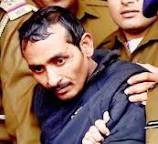
There is no doubt about the fact that someone runs India. But when a heinous crime such as rape is committed in a Uber Cab it appears no runs India. On the contrary it runs on its own inertia. As the powers to be, feign ignorance, about how the crime was committed and ask for one last chance to fight the menace. So, then who runs India? One answer could be these criminals who always succeed in hoodwinking the dispensation while committing such nasty crimes. In front of whom our meek society and the establishment appear as simpleton. Where, these men in high places come out with some face saving, stereotype statements such as the ‘culprit will not be spared’ and just then another culprit surfaces, even before the previous one is forgotten.

There was only one 9/11 in the US, and with that they learnt their lesson and ensured it never happened again. Surely, they must have done something worth the while, to fox and ensnare such criminals as a strong preventive. Similar mindset we find in Israel. But the story in India is quite different. For we are not aspiring that high as of now, as it doesn’t suit us and it could be grossly inconvenient for our establishment. Therefore, in India there is never a last time but always the next time and we deal it, with the gift of the gab.

REALITY CHECK

Today’s TOI reports 1706 cabbies were booked in the uber-crackdown. But then where was Delhi Police before this rape in the Uber-cab? I guess this is all, that Delhi Police knows in terms of prevention of crime–to book people after the crime. And, beyond this they don’t have the competence to deal with the subject. One can also make this out, from the many Delhi Police Commissioners that have come and gone. Not one has proposed a different unconventional, out-of-the-box plan to prevent rape crime in the capital and that itself exhibits the mental bankruptcy. Most have just kicked the can on the road. And, what can one poor commissioner of police anyway do, even the criminal knows.

GOVERNMENT’S INTENTION

Also, government’s intention to come out with a foolproof plan to prevent rape crime is a suspect across various political establishments that we have seen till now. Whether it is the will or mental or physical lethargy we don’t know. A management thought says if you keep taking the same action each time and expect a different result it will never happen. But, in case of rape crime forget the action; government has not even proposed a new template for prevention of rape crimes. And, that it self speaks volumes. Moreover, the new trend, that the higher courts need to direct the executive on all important issues to act is also alarming.

WAY FORWARD

The traditional method of policing is not effective in preventing rape crimes. Rather it is failing miserably. The traditional policemen are only good for writing FIRs. That too when they are told from the top and to some extent catching criminals at a later date. So we need something different. And can that be technology based is something we need to study? We should also emulate best police practices in terms of crime prevention from other countries and implement the same for rape crimes but all of this requires political will.

Political parties and governments need to realize. If you want to continue in power, merely being ahead of your nearest political rival is not going to be enough. You will have to beat them by leaps and bounds. And for that you will have to deliver what you’ve promised. Remember, the public of India has an elephant’s memory and coming to their aid are countless sound bites where you’ve promised prevention of rape crime. So wake up.

*****

Snippet: Cricket, corruption and stubbornness- Lord God Vishnu in conversation with SRINIVASAN

1711srinivasan

Copyright@shravancharitymission

By Kamlesh Tripathi

A snippet

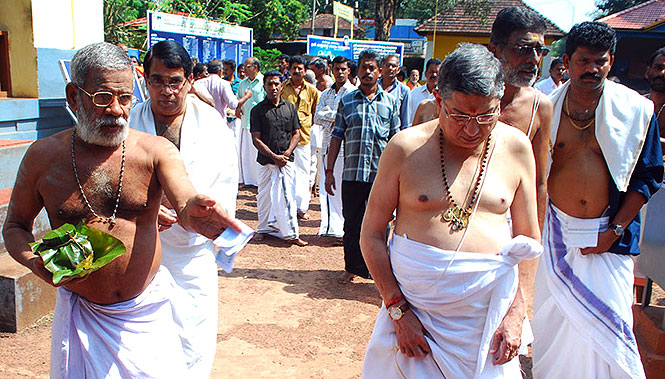
One day, Lord God Vishnu, during one of his sojourns came across N. Srinivasan, the ousted BCCI chief, while he was frequenting his temple-abode atop, a tall hillock. Srinivasan, was attired in a crisp dhoti, bare-chested, appearing that devout Hindu with a holy kumkum- tilak on his broad forehead. And, seeing this, Lord Vishnu was more than tempted to talk to him. He decided to start the conversation in a soft manner, when he disguised himself as a senior Pandit of the temple.

‘Hello Srini, nice to see you in the temple again, and what brings you here so often?’

‘Well my name is Srinivasan and not Srini. And I don’t believe in giving away, anything to anyone once I get it, so don’t take away the ‘vasan’ part of my name. And, by the way who are you, for I’ve never seen you in this temple in the recent past.’

‘Well–well. I am Lord Vishnu and I reside in all temples as the Lord God, and you all are my disciples. Since, I couldn’t have met you in my divine form because you’re facing some charges. I have come to meet you in human disguise. And, I find off late you have started coming to the temple quite regularly.’

‘Yes-yes, I am now inclined to come to the temple for regular blessings. It acts like a relieving bout of physiotherapy. Since I am bruised because of this stupid IPL case where they have got me involved, for conflict of interest. But, please don’t give me that cock and bull story of you being Lord Vishnu. Anyone, out here can recognize me as I’m a celebrity. And what do you want from me?’

‘Well, I am Lord God Vishnu, and I want you to return my name ‘Srinivasan’ to me.’

‘Maybe, your name is Vishnu, but mine is Srinivasan. So where is the conflict and why should I return your name?’

‘Well, Srinivasan is a synonym of Vishnu. And, there lies our conflict, so please return my name, as it stands for goodness.’

‘Return your name, what do you exactly mean by that?’

‘I mean return my holy name to me. Renounce it, and keep some other name matching your profile and characteristics.’

‘Are you mad? Why should I spoil another name. Instead let me keep spoiling this age old and tested name only. And, moreover, you have now become a synonym of me, and I am no more a synonym of yours.’

‘What do you mean?’ asked Lord God Vishnu in some surprise.

‘I mean, I have a wider copyright on the name ‘Srinivasan’ and its synonyms, then you. The very word Srinivasan reminds everyone of me and not you, anymore.’

‘And moreover as a policy I don’t return anything I get or I earn. Entire India knows how I am fighting tooth and nail for my position as the BCCI chief. And you can see it for yourself, I am not giving up.’

‘But, you are priding all the way, with my all powerful name. Moreover, you run the game of cricket considered a religion in this country, as its God, yet you don’t manage the game with any Godly instincts. Shouldn’t you just move away, on your own, till the entire enquiry gets over, and also surrender my name till your name is cleared.’

‘See I am a modern day ‘God’ and I manage affairs in modern ways. But you happen to be an ancient ‘God’ with ancient value system, and system of governance. So, you please carry on, and let’s meet after this bloody case is over.’

With the conversation heading nowhere, Lord God Vishnu decides to leave quite demoralized; is when Srinivasan makes a request,

‘God can you surrender your name ‘Vishnu?’

‘But why?’ asks God.

‘Because, I now realize I have a complete copyright on my name ‘Srinivasan’ and its synonym ‘Vishnu.’

*****

ARTICLE: THE HYPE OF #LITERACY AND DILEMMA OF #EMPLOYABILITY

Copyright@shravancharitymission

961

DEFINITION OF LITERACY

    Literacy, as defined in Census operations, is the ability to read and write with understanding in any language. A person who can merely read but cannot write is not classified as literate. Any formal education or minimum educational standard is not necessarily to be considered literate.

    (UNESCO) has drafted a definition of literacy which is, “the ability to identify, understand, interpret, create, communicate, compute and use printed and written materials associated with varying contexts. Literacy involves a continuum of learning in enabling individuals to achieve their goals, to develop their knowledge and potential, and to participate fully in their community and wider society.”

235

    The National Literacy Mission defines literacy as “acquiring the skills of reading, writing and arithmetic and the ability to apply them to one’s day-to-day life. The achievement of functional literacy implies (i) self-reliance in 3 R’s-reading, writing and arithmetic, (ii) awareness of the causes of deprivation and the ability to move towards amelioration of their condition by participating in the process of development, (iii) acquiring skills to improve economic status and general well being, and (iv) imbibing values such as national integration, conservation of environment, women’s equality, observance of small family norms.”

    According to the latest report released on 31 March 2011 the literacy rate of India has increased to 74%. This means a decadal growth of around 10 %.

BUT CAN MERE LITERACY GUARANTEE EMPLOYMENT?

Is the moot point, as literacy only provides general ability to read, write and a sense of better awareness, but jobs, require deeper and varied skills that need to be created. In the recent Times Ascent edition of 27th November, I read; in the just concluded PAN-IIM World Management Conference held at IIM-KOZHIKODE our HRD Minister Smriti Zubin Irani harping on some appreciative facts about India as a routine lullaby.

    That India is one of the world’s largest democracies and according to some studies 57% of our population is under 30. Our average age is expected to be less than China and the US by 2050. This means more workers, or in other words, a demographic dividend. India has a large pool of workforce that is predominantly English-speaking. 4.4 million Graduates join the Indian job market annually, so there is no shortage of skilled workers in our country. So be it.

    But then do we have appropriate jobs for all as she has not spoken about those unpleasant figures of unemployment. ILO indicates sluggishness in the job market over the last two years where jobless rate could be around 3.8% this year which sounds optimistic. On a more historic note the unemployment rate has been hovering around 6-8 % on an average over the last decade or so. So, can one say, each time when literacy levels have gone up unemployment hasn’t come down?

7

    This necessitates, we should take up skill building on fast track. Which horrifyingly comes up in India at a later stage of our educational system. And considering, the alarming school dropout rate of 40% with more girls facing the brunt, this should start at secondary school level.

CAUSE OF SYSTEMIC WORRY

    It is worrying to see, important ministers making isolated parroted statements in coveted milieus like IIMs and IITs, where even otherwise everything is hunky dory. And it goes without saying the stark reality continues to remain as it is and nothing much has changed on the ground. So the big question is how will the additional annual workforce of 4.4 million per annum be adjusted in the job market, and what is the road map for creating such jobs each year. Time has come when at least 74% of the literate Indians would want to know end-to-end on how these jobs would be created, before one brags about the English speaking workforce of 4.4 million and the young India. The central point therefore is the job-creators and the workforce creators of India need to meet on one platform to align, which is still missing.

    In any case most IIT and IIM graduates or post graduates won’t remain unemployed, rather would be gainfully employed. But what is more worrying is the lower end of the pyramid that will bear the brunt of unemployment.

    Considering the present unemployment rate. HRD minister would have done well by initiating a dialogue with those states and departments where huge vacancies are lying unfilled, especially teachers and police constables. The low hanging fruits. Which I guess is also the baby of HRD ministry. Needful to mention teacher appointments in some states have been subjected to scams, and appointments cancelled subsequently.

INDUSTRY INTERFACE

    One of the biggest sources of employment in any country, with India being no exception is through business and industries. Where, according to the World Bank we are still at an agonizing 142 in the ease of doing business out of 189 countries. And time taken for registration of a business is currently at 27 days that needs to be cut down to one day, as in Canada and New Zealand.

    Government intends to go online on approvals, for over 200 state and central permits by April next year which is laudable. Currently 81 state level clearances and another 133 at the central level are being put on line and out of these more than 50 relate to railway ministry, alone. But the big question remains; whether we can set up industries at a pace matching 4.4 million jobs a year, which will only increase by leaps and bounds. The answer as of now is no and that necessitates searching for other alternatives. And so; where is the MEA proposal (Ministry of External Affairs) if we were to export our workforce to various aging countries about which our Prime Minister talks so often? And which new countries have been identified where our young English speaking workforce can go and work safely with proper work permits and visas, in a safe manner. I guess, the two distinguished ladies Sushma Swaraj and Smriti Irani should meet on this agenda and at least identify the countries, and if for some reason it happens to be Germany, Smriti should not think of replacing German by Sanskrit.

THE ROUTE AHEAD

    For brand India, literacy to full employment will be a long and arduous walk, considering its size and scale. Where, premier institutions such as IIT and IIM should also brainstorm to show the way out. And we will have to figure out other avenues also, where I guess PM Narendra Modi’s team needs to come together on one platform.

*

By Kamlesh Tripathi

*

Share if you like it

*

Shravan Charity Mission is an NGO that works for poor children suffering from life threatening diseases. Should you wish to donate for the cause the bank details are given below:

NAME OF ACCOUNT: SHRAVAN CHARITY MISSION

Account no: 680510110004635 (BANK OF INDIA)

IFSC code: BKID0006805

*

Our publications

GLOOM BEHIND THE SMILE

ONE TO TANGO … RIA’S ODYSSEY

AADAB LUCKNOW … FOND MEMORIES

REFRACTIONS … FROM THE PRISM OF GOD

(CAN BE BOUGHT FROM ON LINE BOOK STORES OR WRITE TO US FOR COPIES)

*****


AADAB LUCKNOW … FOND MEMORIES- A BOOK BY KAMLESH TRIPATHI, CO AUTHOR: SUJATA TRIPATHI

51+O4fGLGaL._BO2,204,203,200_PIsitb-sticker-v3-big,TopRight,0,-55_SX324_SY324_PIkin4,BottomRight,1,22_AA346_SH20_OU31_#AADAB #LUCKNOW … FOND MEMORIES BOOK LAUNCHED IN RECENT- LUCKNOW INTERNATIONAL LITERARY FESTIVAL

E-book available in Amazon.com, Barnes & Noble. Print copies available in Poth.com, Flipkart.

EXCERPTS

‘whatever … whenever … Lucknow is forever.’

‘Aadab-Lucknow … fond memories’ is a story of a group of friends who spend their childhood and part of their adolescence in Lucknow. They part ways for their career and future but the umbilical-cord remains intact and they connect after many years, attempting to relive the city.’

‘What is #Lucknow up to? Smiling, giggling, laughing or weeping. Let’s figure out.’
‘Isn’t Lucknow the world’s showcase of #Hindu-Muslim amity? Do you have any doubts? We have none.’

‘#Imambara-to-see … Evening-in-Ganj-#Hazratganj … Kababs-to-eat …Chikan-to-wear … Attar-for-fragrance … Ikka-buggy-to-roam … Kite-to-fly … Hospitality-by-leaf-Betel-leaf … Sweet-tongue … and the great Lakhnawi pride … after-you-after-you.’

‘Langotia-Gang: A group of ‘Underwear friends’ nay ‘childhood friends’ a metaphorical and peppy expression. The Langotians take you through the intrinsic essence of life.’

‘And post #Kabootar-bazi, dressed in a crisp Achkan, seated on his flashy Ikka, he used to join Rehman for the evening Chai-Nashtaa which he ensured, he never missed after the game. After all … All was fair in love and Kabootar-bazi.’

‘Anyway, guys send me a quick update on, Vakil, Neta, Naukarshah and Abhiyanta … Shahid, IV, Irfan and Savita. Lucknow runs because of these four; business and industry are not there and rest can go to hell.’

‘Other states carry weight as a state, but we carry only some districts as weight.’
‘Mem-sahab, Babuji, kaan laga ke dhyan se suniya Lucknow ka har bachcha kya gaa raha hai.’ (Madam, Sir, listen intently to what every child of Lucknow is singing)

‘Mandar, Masjid, Church the Gurudware da shehar, change shehar Lucknow.’

‘#Awadh shrieks and shrills to the fading countenance of Wajid as she promises to herself to be in command and control of the fond memories of her Mehboob, #Wajid-Ali-Shah.’
SKU-000674302_COVERSKU-000674302_COVER

ONE TO #TANGO … RIA’S ODYSSEY- BOOK BY KAMLESH TRIPATHI

T150_6248_9789382025030

Book on Singlehood

NOW ARCHIVED IN PRESTIGIOUS CONNEMARA STATE PUBLIC LIBRARY, CHENNAI

EXCERPTS

ONE
All this modern brag about #women’s-lib, male-bashing appeared as poster signs for the erudite to read and jostle through this not-so-good world, as you still had the Ria’s of the world to be saved from the callous studs and bitchy hens of the ‘scheming jungle’ called the ‘society.’
TWO
‘Come to the point, Zarine …. What do I do to sort out lives?’
‘What do you dream for Ria?’
‘Good question … Viren- no- Viren … I want Ria to be happy in her forced singlehood,’ replied Viren.
‘Then don’t think of moving out on her, plan to rust on her …. in the sense create situations where she comes and tells you she is not interested in you because of … these … these reasons …. It appears she holds you on a high pedestal. Start lowering your pedestal and do all of that in a subtle way and in no way direct.’
THREE
‘The premise of your friendship is quite chaste as I understand from your e-mail. She was ditched by her boy- friends … rejected by suitors, cold shouldered by sister and left to live by … helpless friends. A personality afflicted and wounded by fellow human beings … and in the middle of all this, she found you as her saviour and fell in love. I don’t blame her … Viren. You represent the … Dodos on this planet, they are not extinct, they live in you. Why couldn’t I get this Dodo when I was undergoing my bad time,’ the affection in Zarine’s tone was, as if oozing out of the mouth-piece.
FOUR
‘#Singlehood’ … to her was a curse. An assortment of … personal abuse, insecurity, vulnerability … incest, dirty eyes and hands.
FIVE
Unusual … end

*****