Category Archives: article

COULD THE BRITISH RAJ HAVE BLUNTED THE INTENSITY OF CASTEISM IN INDIA?

Copyright@shravancharitymission


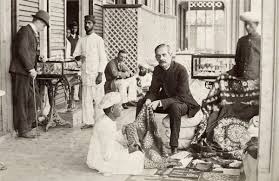
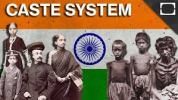
     It is said—‘In India you can change your religion but not your caste.’ But this reality almost met with a challenge from the Britishers at the time of the British Raj which is largely unknown. In fact, had the British Raj, pushed its way through, it would have shown the way for abolishment of the caste system, all together. But they began only with criminals, by sending them to Andamans, better known as Kala Pani. (Literal meaning is ‘black waters’. But ‘Kala’ also signifies ‘kaal’—that signifies the time of death).

    If the British so wanted. In the eighty nine years of their dictatorial rule. They could have at least blunted the ferocity of the caste system in India, if not completely uprooted. But they had other nefarious designs that was to divide and rule. So, while on one hand they exploited the caste rivalry in the mainland, on the other they got rid of it by sending criminals to islands in Kala Pani. Where, they could rid them of their caste. But sadly, most of them were freedom fighters whom they had held as prisoners.

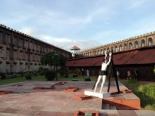
        These remote islands in Andamans, were considered suitable to punish the ‘India Independence’ activists—called the freedom fighters. Not only were they isolated from the mainland. The overseas journey to the islands (Kala Pani) also threatened them with loss of caste that could have resulted in social exclusion. Sadly, this is also corroborated by Hindu religious scriptures. These convicts were largely used in chain-gangs, to construct prisons, buildings and harbor facilities. Many were finally hanged and many died while building these structures. Where, they largely served to colonize the island for the British.

    That brings us, to the moot point. What about those Hindus, who were not prisoners? But have travelled overseas, either on business or pleasure. Have they also lost their caste identity like those prisoners, just because they crossed the seas? Because, as per the scriptures. Those Hindus who have travelled overseas, automatically lose their caste, and to retrieve it they need to go in for deep penance. Further, if we are to believe in the caste system. We also need to believe in the scriptures with equal measure. As both are ancient and part of our tenets. For it can’t be that on one hand we believe in the caste system but give the other theory a grand miss. For our religious scriptures below, say it all.

    The offense of crossing the sea is known as “Samudrolanghana” or “Sagarollanghana.” The Dharma Sutra of Baudhayana (II.1.2.2) lists sea voyages as first of the offences that cause the loss of varna (caste). The Dharma Sutra suggests a person can wipe away this offense in three years by eating little at every fourth meal time. By bathing at dawn, noon and dusk; standing during the day; and seated during the night.

    The reasons behind the taboo include the inability, to carry out the daily rituals, and the sin of contact with the mlecchas (barbarians). The fear of crossing the seas also derives from the notion. That it entailed the end of the reincarnation cycle as the traveler was cut off from the regenerating waters of the Ganges. Such voyages also meant breaking family and social ties. And, according, to another belief in the pre-modern India the Kala Pani (sea water) was inhabited by the houglis, bad spirits and monsters.

    During the Age of Discovery, Portuguese sailors noted that Hindus were reluctant to engage in maritime trade due to this taboo. In the eighteenth century, the Banias of North India, considered, even the crossing of the Indus River, at Attock as a taboo, and underwent purification rituals upon their return. However, not all Hindus adhered to the taboo, especially the Hindu merchants located in Burma, Muscat and other places.

    So, can we, then say. All those Hindus, who have traveled overseas, are now devoid of any caste?

*

By Kamlesh Tripathi

*

                                                       https://kamleshsujata.wordpress.com

*

Share if you like it

*

Shravan Charity Mission is an NGO that works for poor children suffering from life threatening diseases. Should you wish to donate for the cause the bank details are given below:

NAME OF ACCOUNT: SHRAVAN CHARITY MISSION

Account no: 680510110004635 (BANK OF INDIA)

IFSC code: BKID0006805

*

Our publications

GLOOM BEHIND THE SMILE

ONE TO TANGO … RIA’S ODYSSEY

AADAB LUCKNOW … FOND MEMORIES

REFRACTIONS … FROM THE PRISM OF GOD

(CAN BE BOUGHT FROM ON LINE BOOK STORES OR WRITE TO US FOR COPIES)

*****


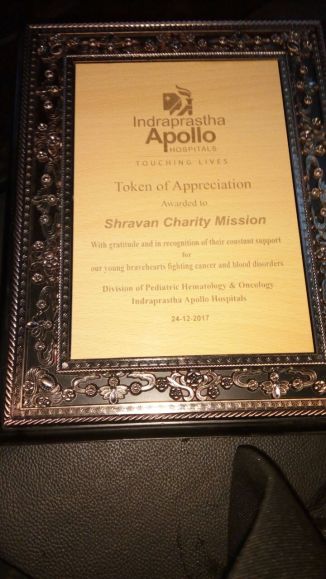
‘SHRAVAN CHARITY MISSION’ RECEIVES APPRECIATION FROM APOLLO HOSPITALS GROUP

Copyright@shravancharitymission


TOUCHING LIVES

‘SHRAVAN CHARITY MISSION’ RECEIVES APPRECIATION FROM APOLLO HOSPITALS


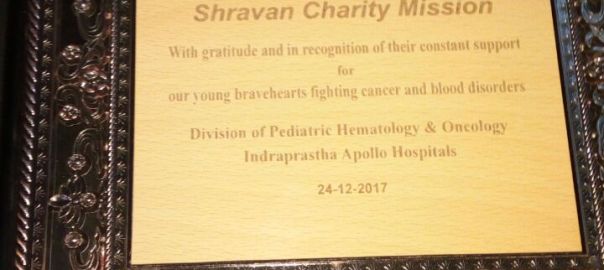
    We are delighted to inform our donors and well wishers. That Apollo Hospitals, which happens to be one of the leading chain of hospitals in India. Has accorded recognition to the work we have done for ‘poor children suffering from life threatening diseases.’

    On 24th December 2016, Apollo Hospitals celebrated their ‘Brave Hearts’ day, where the recognition was announced. It was a glittering function held in their auditorium at Sarita Vihar in Delhi. Where, apart from little brave hearts. The function was well attended by Doctors, officials, parents of brave hearts and NGO staff.

     Shravan Charity Mission was registered in 2010. But due to unavoidable circumstances it could start work only in 2012. Since then it has touched many lives.

    On this sterling moment we would like to thank Apollo Hospitals for their cooperation in bringing about the best in us. And we pledge to continue with our mission.

*

Posted by Kamlesh Tripathi

*

                                                           https://kamleshsujata.wordpress.com

*

Share if you like it

*

Shravan Charity Mission is an NGO that works for poor children suffering from life threatening diseases. Should you wish to donate for the cause the bank details are given below:

NAME OF ACCOUNT: SHRAVAN CHARITY MISSION

Account no: 680510110004635 (BANK OF INDIA)

IFSC code: BKID0006805

*

Our publications

GLOOM BEHIND THE SMILE

ONE TO TANGO … RIA’S ODYSSEY

AADAB LUCKNOW … FOND MEMORIES

REFRACTIONS … FROM THE PRISM OF GOD

(CAN BE BOUGHT FROM ON LINE BOOK STORES OR WRITE TO US FOR COPIES)

*****


OUR VISIT TO GOOD SAMARITAN DORRIS FRANCIS

Copyright@shravancharitymission

Kamlesh Tripathi

Dr Sujata with Dorris Francis


Help is pouring in for ‘traffic heroine.’ As TOI puts it in their Noida edition dated 30th November 2016. In our blog we have previously written about her. (URL is below)

https://goo.gl/tGJuv8  Contribute for Good Samaritan Dorris Francis’s cancer treatment.

On 3rd December we too visited her, to do our bit. The picture shows it all. You too can make your contribution for this brave person as per account details given below:

Name of account: Shravan Charity Mission

Bank of India account no: (680510110004635)

IFSC code: BKID0006805

Or mail your cheque to

Shravan Charity Mission

S-002, Arihant Ambience

Crossings Republik

Ghaziabad-201009

Uttar Pradesh

*****


LORD KRISHNA’S RASLEELA SHOULD NOT BE EMULATED

Copyright@shravancharitymission


    Most Gopis (radha and her sakhis) in their previous lives were great female Rishis (Sage). They were extremely proficient in the study of Vedas. When, Sri Krishna was earlier born as Lord Ram in Ayodhya, all the Rishis wanted to have sensual pleasure with him. Lord Ram had then given a vardaan (blessing) that when he is born as Krishna he will fulfill their wishes. Therefore, to have sensual pleasure with Sri Krishna was an old time wish of the Gopis. And for making Sri Krishna their husband they even went up to Devi Katyayani. There are many such examples like this that establish the fact of Sri Krishna’s supremacy. He was certainly not tied down to the systems and procedures of the physical and mortal world. To bless his devotees in various life situations he used to undertake various jobs and roles. But he could do this only because he was the supreme force. Ordinary and common people should only follow the great teachings of Lord Krishna as spoken and written in Bhagwad Gita. They should never imagine or dare to imitate Krishna by doing the raasleela (Dance of divine love).

    If Sri Krishna could perform raasleela, he could also lift the Goverdhan mount with his little finger. Or he could even kill the ferocious female demon Pootna which was not possible by any ordinary human being. And he had that supreme might to carry out such tasks. Such instances only decorate his personality. In the same manner even raasleela was an uncommon task, that couldn’t have been performed by an ordinary person. Mythology says even Arjun kept doing his duty as advised by Sri Krishna to keep him happy. Doing his duty alone was in his prowess even when Arjun was a great warrior. Krishna desired he should fight his enemies for the sake of mankind which he did to please him. First Arjun was not ready to fight. But later when Krishna exhorted him he changed his mind and decided to fight. Ordinary people only need to follow righteousness and Dharma in the form of karma. They should not abandon their karma at any cost. And by trying to emulate raasleela they are only inviting their own disaster. In the same manner Lord Shiva after Samudra Manthan (churning of the sea) drank the poison that came out of it. This was in the interest of humanity and since then his throat went blue. But if an ordinary person drinks poison to copy Shiva he will surely die.

    So it goes without saying that whatever Sri Krishna did with the Gopis in the raasleela was on account of the age old Vardaan that carried no personal benefit for him.

*

Posted by Kamlesh Tripathi

*

                                                    https://kamleshsujata.wordpress.com

*

Share if you like it

*

Shravan Charity Mission is an NGO that works for poor children suffering from life threatening diseases. Should you wish to donate for the cause the bank details are given below:

NAME OF ACCOUNT: SHRAVAN CHARITY MISSION

Account no: 680510110004635 (BANK OF INDIA)

IFSC code: BKID0006805

*

Our publications

GLOOM BEHIND THE SMILE

ONE TO TANGO … RIA’S ODYSSEY

AADAB LUCKNOW … FOND MEMORIES

REFRACTIONS … FROM THE PRISM OF GOD

(CAN BE BOUGHT FROM ON LINE BOOK STORES OR WRITE TO US FOR COPIES)

*****


CONTRIBUTE FOR GOOD SAMARITAN DORRIS FRANCIS’S CANCER TREATMENT

Copyright@shravancharitymission

By Kamlesh Tripathi

    Please help through Shravan Charity Mission

    Contribute for good Samaritan Dorris Francis’s cancer treatment. Bank details are given below.

TOI press coverage as under: 

    NH-24 good Samaritan in hospital, kin don’t have money for treatment—TOI dated 29.11.16

    Abhijay.Jha@timesgroup.com

    Ghaziabad: She is the reason why you reached office on time every day, got to your daughter or son’s school without getting held up in traffic and kept an appointment.

Dorris Francis was there every morning, rain, shine or smog, managing a chaotic intersection on NH-24 all by herself. Since Diwali, though, that ‘post’ has fallen vacant as a crippling stomach pain landed the 59-year-old in hospital. She was subsequently diagnosed with cancer.

“She is admitted at AIIMS and her condition is not good. she has stomach cancer.” Her husband Victor, said om Monday.

Thiers is a family of modest means, and Victor is worried about the cost of treatment. They have a small house in Ghaziabad’s khora  Colony, not far from intersection where Dorris and Victor lost their 17-year-old daughter, Niki, to an accident in 2008.

    Help pours in for Dorris in sickbed—TOI dated 30.11.16

    Abhijay.Jha@timesgroup.com

Ghaziabad: Help is pouring in for the ‘traffic heroine’ of Ghaziabad, Dorris Francis, who is now undergoing treatment at AIIMS Delhi after being diagnosed with stomach cancer.

After a report of her illness was published in TOI on Tuesday, people from across the country are reportedly contributing for Dorris’s treatment according to her husband, Victor. Dorris has been managing traffic on a particular spot at a busy intersection after her daughter, Nikki died in an accident there in 2010.

Victor told TOI that since morning he has been flooded with calls from people from different places asking after her and wishing her a speedy recovery. A sum total of about Rs 70,000 has already been deposited in Victor’s account. Besides, Max Super Speciality Hospital, Vaishali, had offered free treatment for Dorris.

“I am overwhelmed by the support,” Victor said.

“In the morning I got a call from an elderly lady from Gurgaon, who asked me to collect a cheque from her house as she could not come down on her own because of her age.: Victor said.

Dr Gaurav Agarwal, unit head at Max Super Speciality Hospital, Vaishali, has offered free treatment to Dorris. “We got in touch with her family members and have asked Dorris’s husband to share with us her medical report which we will discuss with our oncologists,” Agarwal said.

An NGO Shravan Charity Mission engaged in helping poor cancer patients has also offered help to Dorris.

Remit on account details as given below:

Name of account: Shravan Charity Mission

Bank of India account no: (680510110004635)

IFSC code: BKID0006805

Or mail your cheque to

Shravan Charity Mission

S-002, Arihant Ambience

Crossings Republik

Ghaziabad-201009

Uttar Pradesh

*****


NGO ACTIVITY-OUR MEETING WITH THREE YOUNG CANCER PATIENTS ON 16TH NOV, 2016.

Copyright@shravancharitymission

By Kamlesh Tripathi

 

    “Nobody can tell what I suffer! But it is always so. Those who do not complain are never pitied.”—Jane Austen, Pride and Prejudice.

    It is indeed difficult to even imagine how much these young kids suffer. Yet they put up a brave face. They don’t complain of pain, and require no one’s pity.

Recently, we visited these brave kids in a hospital. They are diagnosed of cancer. All are a bundle of joy. But are oblivious of what they suffer from. They smile more than us. And, that is where they put us to shame, when it comes to raw guts. We handed over our contribution in the form of cheques, to all the three Parents, of these bravehearts.

rihan

My eyes went moist. When, I saw young baby boy Rihan. Who is five and suffers from NHL (Non-Hodgkin Lymphoma). He has been fighting cancer for the last six months. His father who works as a compounder has already spent more than two lac on his treatment. His income as told to us is around ten to twelve thousand per month. We wish Rihan all the best. And compliment his Parents for taking up this brave fight against cancer.

baby-garv

Garv Chaudhury, baby boy, age two years, was the second child, whom we met from Bulandshahr. He appeared every bit a joy. He was fast asleep when his mother tickled him to meet us. Surprisingly, he didn’t wake up crying. On the contrary he got up staring at us. He suffers from Pre-B ALL (High Risk). We wish him all the very best by praying to God Almighty. We would also like to compliment his father who is a marginal farmer and his mother who is a housewife in taking up this arduous fight against cancer. We wish them the best.

ayesha

Next, we met Ayesha, a bright girl in her teens from Jaipur. Her father is self-employed and runs a workshop. His monthly income is around ten thousand. Ayesha is fighting cancer for the last one year and is diagnosed of Hodgkin’s Lymphoma. We wish her all the best in her fight against cancer. We also wish her Parents the very best in taking up the brave fight.

We all are so busy with our daily lives that we rarely think of such unfortunate and poor children who suffer from cancer. Should you want to contribute for the cause the account details are as given below.

Name of Account: Shravan Charity Mission

Bank of India account no: (680510110004635)

IFSC code: BKID0006805

*****


HELP DOESN’T HAVE A COLOUR OR A RELIGION.

Copyright@shravancharitymission

By Kamlesh Tripathi


    Just as terrorism—Help, too, doesn’t have a religion. It can come from any corner. But unlike terrorism, that kills. Timely help sustains life. I had once gone to a hospital in Delhi. To meet parents of some poor young children who were suffering from cancer. The drill was to provide them with direct financial support, for treatment.

    In all we had met about ten children and their parents in the hospital. Our NGO decided to support three out of them. Based on, certain illness criticalities, doctor’s recommendation and the budget available with us. Out of the three. One child happened to be from Sopore in J&K. His name was Abdul. His father’s name was Fareed. Who, happened to be a small-time shopkeeper with a paltry livelihood. Abdul was suffering from cancer for the last one year. And, during that period Fareed had exhausted all his savings. Although, he had received timely aid from the government. But that too had been gradually spent. Slowly the resources were receding, while the treatment was still in full flow.

    When I met this bright child Abdul. I found him in an animated mood. As he was talking to his mother in Sopore over phone. He had come to Delhi for treatment without her. I spent some time understanding the challenges of Fareed. Then decided to give him the good news of our supporting his son’s treatment. Up to a certain level. But he didn’t sound enthused about it.

    First, I thought he hasn’t understood me. So, I repeated what I had told him earlier. This time I spoke in Hindi. But still his reaction was not at all cheerful. I then specifically enquired, if he had understood what I had said. To which he gave me this shocking reply. ‘Janab, I have understood what you’ve said. You want to pay for my son’s treatment. But yours is a Hindu NGO. So, how can I accept money from your Trust. That too for my son’s treatment? It might not cure him at all, and Allah won’t spare me.’

    For a moment I was shocked. I didn’t know how to react. Does religion lay down crude boundaries at such junctures? I thought dismally. But without being deterred. I opened my bag and wrote a cheque, and handed it over to him.

    He held the cheque and looked at it morosely. I patted his back a couple of times. When his eyes went moist. Perhaps, he was at a break point. Where, on one end, was the health of his son and the mounting expenses because of that, and on the other, were his own self created radical diktats. Which, he was trying to blame it upon his religion.

    I said, ‘Fareed Bhai this cheque is neither Hindu nor Muslim. It’s only a piece of paper from Upparwala, for your son. So utilize it.’ And then I moved out.

    After the episode. A couple of months had passed. But that cheque never came to our account for debit. It was only when the cheque was about to expire. I received a text message from the bank debiting it to our account.

    And upon reading the text message. I felt nice. Not because Hindu money had helped a Muslim. But, because Abdul had realized. That help has no religion or face. It is infinite and can come from any corner of the world. And it is absolutely divine to take help. But the source has to be right.

It is a true story. Names and location are fictitious.

*****


MUSICAL PLAY: MUGHAL-E-AZAM (Don’t just miss it)

Copyright@shravancharitymission


Musical Play: Mughal-E-Azam

A MUST SEE

Directed by

FEROZ ABBAS KHAN

A NCPA AND SHAPOORJI PALLONJI PRESENTATION

(A creation around the famous movie Mughal-e-Azam)

    Mughal-e-Azam (starring Prithviraj Kapoor, Madhubala, Dilip Kumar, Durga Khote, Nigar Sultana, Ajit & Murad) is an epic historical film, directed by K.Asif and produced under the banner of Sterling Investment Corp Pvt Ltd (Shapoorji Pallonji). Prince Salim’s love for Anarkali (a courtesan) leads him to rebel against his father, Emperor Akbar. The plot involves a powerful drama around this confrontation. Interspersed with beautiful dance numbers. The soundtrack, inspired by the Indian classical music, comprises of 12 songs, and is considered among the finest soundtracks in the history of Indian cinema. Nine years in the making and costing ten times more than films made at the time, Mughal-e-Azam remains an all time top grosser of the Indian box-office.

    Such has been the power of the film. That when it was re-released in colour in 2004 with six-track digital sound. It again ran for 25 weeks in theatres. Now, in 2016, for the first time ever in India, a classic film is presented on stage as a Musical Play.

-: GRATITUDE:-

Mr. SHAPOOR P. MISTRY

AND

  1. KHUSHROO N. SUNTOOK

…….

LIGHTING & DESIGN: DAVID LANDER

COSTUME DESIGN: MANISH MALHOTRA

CHOREOGRAPHY: MAYURI UPADHAYA

SCENIC DESIGN: NEIL PATEL

BACKGROUND SCORE: PIYUSH KANOJIA

PROJECTION DESIGN: RICHARD NOWELL

CASTING: MUKESH CHHABRA

CAST

AKBAR: NISSAR KHAN

ANARKALI: PRIYANKA BARVE/NEHA SARGAM

SALEEM: SUNIL KUMAR PALWAL/DHANVEER SINGH

NARRATOR/SANGTARSH: RAJESH JAIS

BAHAR: ASHIMA MAHAJAN

JODHA: SONAL JHA/BHARGAVI CHIRMULEY

MAAN SINGH: TAM BAHADUR RENU

SURAIYA: PALVI JASWAL

DURJAN: AMIT PATHAK/CHIRAG GARG

ANARKALI’S MOTHER: SHWETA PADDA

YOUNG SALEEM: BHAVESH BABANI

KALARIPAYATTU ARTIST: ARPIT SINGH AND VIPIN KAZHIPURATH

P.S. ALL SONGS IN THIS PLAY ARE SUNG LIVE AND ARE NOT PRE-RECORDED

*

I happened to see the play in Mumbai last year. It is indeed worth watching.

*

By Kamlesh Tripathi

*

Share if you like it

*

Shravan Charity Mission is an NGO that works for poor children suffering from life threatening diseases. Should you wish to donate for the cause the bank details are given below:

NAME OF ACCOUNT: SHRAVAN CHARITY MISSION

Account no: 680510110004635 (BANK OF INDIA)

IFSC code: BKID0006805

*

Our publications

GLOOM BEHIND THE SMILE

ONE TO TANGO … RIA’S ODYSSEY

AADAB LUCKNOW … FOND MEMORIES

REFRACTIONS … FROM THE PRISM OF GOD

(CAN BE BOUGHT FROM ON LINE BOOK STORES OR WRITE TO US FOR COPIES)

*****


HIDDEN FACTS

Copyright@shravancharitymission

By Kamlesh Tripathi

hidden-facts2


HIDDEN FACTS


A survey shows around 70% of Indians are non-vegetarian these days.

*

There is a huge amount of debate about GM crops these days. It has tremendous potential to impact on yields if used with appropriate safeguards. Without GM we need another 175-222 million hectares of farmland to feed our population.

*

China on demand side, is trying to nudge its population towards a more vegetarian diet.

*

One estimate pegs the economic loss because of Bengaluru traffic congestion at Rs 3,700 crore a year; including a whopping 50 crore litres of annual fuel losses. Extrapolate these figures to Delhi, Mumbai and other Indian cities and we have a full-blown economic crisis on hand.

hidden-facts

*

Traffic jams: I can easily do 5 or more meetings in a day even if they are spread across Singapore or any European city. In Delhi or Bengaluru, I can never plan more than 2 or maximum 3.”—Rishi Seth—A PR and marketing start-up person.

*

Gadkari’s ministry measures its performance in kilometres of new roads built per year. What good are these new roads, or the existing roads for that matter, when they are rank incapable of moving people and goods quickly—Rishi Seth, PR and marketing startup professional.

*

India has the worst record of road accident deaths in the world; every four minutes a person dies on our roads.

*

India is held at ranson by some of the most corrupt and incompetent civic bodies.

*

WHO’s report on Road Safety 2015 gave India a rating of 3 or 4 out of 10 for enforcement of laws on speed limits, drunk driving or wearing helmets on two wheelers.

*

Tata sons is into over 100 lines of business.

*

hiddenfacts1

In 2016 air passengers in India grew by an impressive 23.17%

*

Nearly 4% of New Zealand’s population is of Indian origin and Hindi is the third most widely spoken language in Auckland.

*

India is New Zealand’s largest source of skilled migrants and 29,000 Indian students are currently enrolled at our academic institutions making them the 2nd largest overseas student population studying in New Zealand.

*

India’s GDP is valued today at $2 trillion. Amitabh Kant, chief executive of Niti Aayog says if all goes well it could touch $10 trillion by 2032. A shorter term assessment would have it reaching $ 5 trillion in the next decade, by 2025-26

*

India is now the fastest growing major aviation market—the number of air passengers has been growing more than 20% year-on-year. In the past 12 months, more than 9 crore passengers flew and another 5 crores  or so flew internationally. In the next few years India will become the 3rd largest aviation market in the world after the US and China.

*****


INTERESTING FACTS

Copyright@shravancharitymission

By Kamlesh Tripathi


The Chinese economy is five times bigger than India’s.

*

The Indus Waters Treaty (IWT) reserved for India just 19.48% of the total waters of the six-river Indus system

*

India is selling 25 million smart phones per quarter and the anticipation is 700 million smart phones in hand by 2020. Internet penetration is growing with 332 million internet users in India. Is now second largest international market, ahead of the US.

*

Aadhar is the only billion-user platform outside the US and the only government one.

*

India is the largest young country in an ageing world and will continue to have a young population for the next 25 years, whereas China has started ageing.

*

Thailand has 25 million international visitors per year while India has only 8 million.

*

The International monetary fund estimates that Indian per capita income more than tripled from about $550 in 1991 to $ 1800 last year.

*

In 1991, the world’s most populous country accounted for a scant 3.6% of global gross domestic product. By 2015 this had nearly doubled to 7%.

*

WHO estimates that the average Indian lives 10 years longer today (68 years) than a quarter century ago. But he has yet to catch up with the average Indonesian (69 years), and continues to lag behind the average Chinese (76 years).

*

Between 1991 and 2015, India slashed infant mortality by more than half- from 86 deaths to 38 deaths per 1000 births.

*

The international Telecommunications Union estimates that mobile subscriptions in India reached 79% of population last year, up from 62% just five years earlier. That sounds awfully impressive until you realise that in China the mobile penetration is 93% and in Indonesia it’s a stratospheric 132%.

*

Back in 1950s and 1960s, US steelworks and auto workers were by far most productive in the world, and could demand high, rising wages. But today the workers in developing countries have acquired skills that are almost as good.

*

Before the industrial revolution, China and India accounted for over half of world GDP, but their share fell to barely 7% in the 20th century.

*

In the 20th century Europe was twice devastated by World Wars, letting the US forge ahead. US hegemony followed in the second half of the 20th century. Even US workers without college degrees had skills that were globally scarce, and so attracted high pay.

*

The world Bank says the number of poor people globally more than halved from 1.75 billion in 1990 to just 702 million in 2015; the proportion of people in extreme poverty fell from 37% to 9.6%; and the world Gini coefficient (which measures inequality) fell from 75% to 62%.

*

The US is indeed a great country, but for completely different reasons. It has been the most welcoming country for immigrants in history. Half the start-ups in Silicon Valley are by people of Chinese or Indian origin. Many Nobel Prizes have been won by first or second generation immigrants.

*

What a lie: Out of the 6753 candidates of the 2009 Lok Sabha elections that were scrutinized, only four admitted that they had exceeded the limit of election spending as prescribed by ECI while 30 said they had spent 90%. The rest claimed that they had spent 52-55%.

*

The telecom industry saw only 40% of the spectrum on offer being sold in 2016. In particular, the complete absence of any bids in the 700 MHz and 900 MHz bands came as a rude shock.

*

Recently, interesting though intriguing data from 70-80 countries show that anxiety levels increase when there is less work (James Tozer in the Economist, citing a study done by the World Bank, in 2015).

*

Economic liberalisation in China and India are commonly thought to have started in 1978 and 1991 respectively.

*****