Tag Archives: shravancharitymission

INTERESTING FACTS & QUOTES EPISODE 25


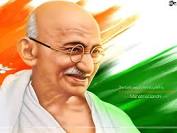
BOOK REVIEW: GRAM SWARAJ by Mahatma Gandhi

Copyright@shravancharitymission

Khidki (Window)

–Read India Initiative—

This is only an attempt to create interest in reading. We may not get the time to read all the books in our lifetime. But such reviews, talk and synopsis will at least convey what the book is all about.

    This book was compiled by H.M.Vyas. He has taken the writings of Gandhi from various sources (but primarily from Harijan and Young India magazines) and has converted it into a useful handbook. Printed and published by Navajivan Publishing first in the year 1962.

    The book encapsulates the thoughts and ethos of Gandhi in the form of excerpts. Indeed Gandhi ji was an amazing thinker and a genius who had the blueprint of India ready even before she was born. The book diagrams the functioning of the smallest community unit of human habitat—that is the village and then sums it up for the nation. The book simplifies an average Indian’s life. It gives that margdarshan specifically to each Indian and perhaps even to all the citizens of the world.

    This publication contains Gandhi’s views on different aspects of rural life including agriculture, village industry, animal husbandry, transport, basic education, health and hygiene.

    For Gandhi Swaraj was a sacred word, a Vedic word, meaning self-rule and self-restraint, and not freedom from all restraint which ‘independence’ often means. As every country is fit to eat, drink and breathe, and so is every nation fit to manage its own affairs, no matter how badly.

    By Swaraj Gandhi meant government of India by the consent of the people as ascertained by the largest number of adult population, male or female, native-born or domiciled, who have contributed by manual labour to the service of the State and who have taken the trouble of having registered their names as voters. Real Swaraj will come not by the acquisition of authority by a few but by the acquisition of the capacity by all to resist authority when it is abused. In other words, Swaraj is to be obtained by educating the masses to a sense of their capacity to regulate and control authority.

    The book has 29 chapters and within that you have sub chapters: Let me briefly take you through the headings of the main chapters in brief as that itself will give you a comprehensive flavour of the book.

  1. Meaning of Swaraj: Swaraj can be maintained, only where, there is a majority of loyal patriotic people to whom the good of the nation is paramount and above all other considerations including personal profit. Swaraj means government by many. But where, the many are immoral or selfish, their government will only spell anarchy and nothing else.
  2. A picture of an ideal society: There will be neither paupers nor beggars, nor high nor low, neither millionaire employers nor half-starved employees, nor intoxicating drinks, or drugs. There will be the same respect for women as vouchsafed to men and the chastity and purity of men and women will be jealously guarded. Where, every woman except one’s wife, will be treated by men of all religions, as mother, sister or daughter according to her age. Where there will be no untouchability and where there will be equal respect for all faiths. They will be all proudly, joyously and voluntarily bread labourers.
  3. Which way lies hope: Industrialism on a mass scale will necessarily lead to passive or active exploitation of the villagers as the problems of competition and marketing come in. Therefore, we have to concentrate on the village being self-contained, manufacturing mainly for use. Provided this character of the industry is maintained, there would be no objection to villagers using even the modern machines and tools that they can make and can afford to use. Only they should not be used as a means of exploitation of others.
  4. Cities and villages: There are two schools of thought in the world. One wants to divide the world into cities and the other into villages. The village civilization and the city civilization are totally different things. One depends on machinery and industrialization, and the other on agriculture and handicrafts. We have given preference to the latter.
  5. Village Swaraj: To serve our villages is to establish Swaraj. Everything else is but an idle dream. If the village perishes India too will perish. It will be no more India. Her own mission in the world will get lost.
  6. Basic Principles of village Swaraj: According to me the economic constitution of India and for that matter of the world, should be such that no one under it should suffer from want of food and clothing. In other words everybody should be able to get sufficient work to enable him to make the two ends meet. And this ideal can be universally realized only if the means of production of the elementary necessaries of life remain in control of the masses. These should be freely available to all as God’s air and water ought to be. They should not be made a vehicle of traffic for the exploitation of others. Their monopolization by any country, nation or group of persons would be unjust. The neglect of this simple principle is the cause of the destitution that we witness today not only in this unhappy land but in other parts of the world too.
  7. Bread labour: The great nature has intended us to earn our bread in the sweat of our brow. Everyone, therefore, who idles away a single minute becomes to that extent a burden upon his neighbours, and to do so is to commit a breach of the very first lesson of Ahimsa. The divine law, that a man must earn his bread by labouring with his own hands, was first stressed by a Russian writer named T. M. Bondaref. Tolstoy advertised it and gave it wide publicity. In my view the same principle has been set forth in the third chapter of Gita, where we are told, that he who eats without offering sacrifice eats stolen food. Sacrifice here can only mean bread labour.
  8. Equality: My idea of a society is that while we all are born equal which means we have a right to equal opportunity, all do not have the same capacity. It is, in the nature of things, impossible. For instance, all cannot have the same height, or colour or degree of intelligence, etc.; therefore in the nature of things, some will have the ability to earn more and others less. People with talents will have more, and they will utilize their talents for this purpose. If they utilize their talents effectively, they will be performing the work of the State. Such people would exist as trustees, on no other terms. I would allow a man of intellect to earn more, I would not cramp his talent. But the bulk of his greater earnings must be used for the good of the State, just as the incomes of all earning sons of the father go to the common family fund.
  9. Theory of Trusteeship: Suppose I have earned a fair amount of wealth either by way of legacy, or by means of trade and industry, I must know that all that wealth does not belong to me, what belongs to me is the right to an honourable livelihood, no better than that enjoyed by millions of others. The rest of my wealth belongs to the community and must be used for the welfare of the community.
  10. Swadeshi: There is a verse in Bhagavad Gita that says, masses follow the classes. Even, concept of Swadeshi like any other good thing can collapse and die if it is made out to be a fetish. That is the danger that must be guarded against. To reject foreign manufactures, merely because they are foreign and to go on wasting national time and money in the promotion in one’s own country of manufactures for which it is not suited, would be a criminal folly and a negation of the Swadeshi spirit. Remember Swadeshi is not a cult of hatred. On the contrary a doctrine of selfless service that has its roots in the purest Ahimsa, i.e., love.
  11. Self-sufficiency and cooperation: Truth and non-violence form the foundation of the order of my conception. Our first duty is that we should not be a burden on society, i.e., we should be self-dependent. From this point of view self-sufficiency itself is a kind of service.
  12. Panchayat Raj—Gandhi writes about Panchayats in pre-independence days: Panchayat has an ancient flavour; it is a good word. It literally means an assembly of five elected by villagers. It represents the system, by which the innumerable village republics of India were governed. But the British Government, by its ruthlessly thorough method of revenue collection, almost destroyed these ancient republics, which could not stand the shock of this revenue collection. Congressmen are now making a crude attempt to revive the system by giving village elders civil and criminal jurisdiction.
  13. Nai Talim: was popularly and correctly described as education through handicrafts. This was part of the truth. The root of this new education went much deeper. It lay in the application of truth and love in every variety of human activity, whether in individual life or a corporate one.
  14. Chapters 14 to 18 are on Agriculture and cattle welfare and deals with various agriculture related issues of those times. Our villagers who are mostly Kisans depend on agriculture and cattle for ploughing. I am rather ignorant in this respect for I have no personal experience. But there is not a single village where we have no agriculture or cattle. Our workers will have to keep a careful eye on the cattle wealth of their village. If we cannot use this wealth properly, India will be doomed to disaster and with that we shall also perish. For these animals will then, as in the West, become an economic burden on us and we shall have no option before us except for killing them.

    The book deals with the problem of ownership of land: The Kisan is the salt of the earth which rightly belongs or should belong to him, and not to the absentee landlord or the Zamindar.

    The other important question for consideration… was whether cow farming should be in the hands of individuals or done collectively. I myself had no hesitation in saying that she could never be saved by individual farming. Her salvation, and with her that of buffalo, could only be brought about by collective endeavour. It is quite impossible for an individual farmer to look after the welfare of his cattle in his own home in a proper and scientific manner. Amongst other causes lack of collective effort has been the principal cause of the deterioration of the cow and hence of cattle/ in general. The world today is moving towards the ideal of collective or co-operative effort in every department of life.

    One potent way of increasing crop production is proper manuring. Artificial manures, I am told, are harmful to the soil. The compost manure emit no bad odour. It would save lakhs of rupees and also increase the fertility of the soil without exhausting it.

    Food Shortage in India is not unfamiliar with starvation and death of tens of thousands, if not millions, due to famine, natural or man-made. I claim that in a well-ordered society there should always be prearranged methods of successful treatment of scarcity of water and food crops.

  1. Khadi & spinning: Every family with a plot of land can grow cotton at least for family use. Cotton growing is an easy process. In Bihar farmers by law were compelled to grow indigo (a tropical plant of the pea family, which was formerly cultivated as a source of dark blue dye) in one of their cultivable land. This was in the interest of the foreign indigo planter. So, why cannot we grow cotton voluntarily for the nation on a certain portion of our land? Decentralization commences from the beginning of the Khadi processes. Today, cotton crop is centralized and has to be sent to distant parts of India. Before the war it used to be sent principally to Britain and Japan. It was and still is a cash crop and therefore, subject to fluctuations of the market. Under the Khadi scheme cotton growing becomes free from this uncertainty and gamble. The grower grows what he needs. The farmer needs to know that his first business is to grow for his own needs. When he does that, he will reduce the chance of a low market ruining him. A combination of home grown cotton and charkha.
  2. Other village industries: I recall a conversation I had with Fazalbhai in 1920 when I was on the eve of launching the movement of Swadeshi. He characteristically said to me, ‘If you, Congressmen, become advertising agents of ours, you will do no good to the country except to put a premium on our wares and to raise the prices of our manufactures. His argument was sound. But he was nonplussed when I informed him that I was to encourage hand-spun and hand-woven Khadi which had been woefully neglected and which needed to be revived if the starving and unemployed millions were to be served. But Khadi is not the only such struggling industry. I therefore suggest to you to direct your attention and effort to all the small-scale, minor, unorganized industries that are today in need of public support.
  3. Village transport—a plea for the village cart: “Animal power is not costlier than machine power in fields or short distance work and hence can compete with the latter in most cases. The present day tendency is towards discarding animal power in preference to machine power. If a farmer has his own cart and travels in it, he has not to spend anything in the form of ready money but uses the produce of his own field in producing power by feeding bullocks. Really grass and grain should be looked upon by the farmer as his petrol, and the cart the motor lorry, and bullocks as the engine converting grass into power. The machine will neither consume grass nor will it yield manure, an article of vast importance. Then the villager has to have his bullocks; where, in any case he has his grass. And if he has a cart, he is also maintaining the village carpenter and the blacksmith; and if he is keeping a cow, he is maintaining a hydrogenation plant converting vegetable oil into solid butter or ghee and also at the same time a bullock manufacturing machine—thus serving a twofold purpose.”
  4. CURRENCY, EXCHANGE AND TAX: Under my system, it is the labour which is the current coin, and not the metal. Any person who can use his labour has that coin, has wealth. He converts his labour into cloth, he converts his labour into grain. If he wants paraffin oil, which he cannot himself produce, he uses his surplus grain for getting the oil. It is this exchange of labour on a free, fair and equal terms—hence it is no robbery. You may object that this is a reversion to the primitive system of barter. But then is not all international trade based on the barter system?
  5. VILLAGE SANITATION: Divorce between intelligence and labour has resulted in criminal negligence of the villages. And so, instead of having graceful hamlets dotting the land, we have dung-heaps. The approach to, many villages, is not a refreshing experience. Often one would like to shut one’s eyes and stuff one’s nose; such is the surrounding dirt and offending smell. If the majority of Congressmen were derived from our villages, as they should be, they should be able to make our villages models of cleanliness in every sense of the word. But they have never considered it their duty to identify themselves with the villagers in their daily lives. A sense of national or social sanitation is not a virtue among us. While taking a bath, we do not mind dirtying the well or the tank or the river by whose side or in which we perform our ablutions. I regard this defect as a great vice which is responsible for the disgraceful state of our villages and the sacred banks of the sacred rivers and for the diseases that spring from insanitation.
  6. VILLAGE HEALTH AND HYGIENE: In a well-ordered society the citizens know and observe the laws of health and hygiene. It is established beyond doubt that ignorance and neglect of the laws of health and hygiene are responsible for the majority of diseases to which mankind is privy. The very high death rate among us is no doubt largely due to our gnawing poverty, but it could be mitigated if the people were properly educated about health and hygiene. “Mens sana in corpore sano” a Latin phrase is perhaps the first law for humanity. Which means “A healthy mind in a healthy body” is a self-evident truth. There is an inevitable connection between mind and body.
  7. Diet: Gandhi suggests a diet chart for men with sedentary habits as follows: Cow’s milk 2 lbs. Cereals (wheat, rice, bajra, in all) 6 oz. Vegetables leafy 3 oz, others 5 oz. Raw 1 oz. Ghee 1½ oz. Or Butter 2 oz. Gur or white sugar 1½ oz. Fresh fruit according to one’s own taste and purse. In any case it is good to take two sour limes a day. The juice should be squeezed and taken with vegetables or in water, cold or hot. All these weights are of raw stuff. I have not put down the amount of salt. It should be added afterwards according to taste. Now, how often should one eat? Many people take two meals a day. The general rule is to take three meals: breakfast early in the morning and before going out to work, dinner at midday and supper in the evening or later. So try it out.
  8. VILLAGE PROTECTION: Peace Brigade. Some time ago I suggested the formation of a Peace Brigade whose members would risk their lives in dealing with riots, especially communal. The idea was, that this Brigade should substitute the police and even the military. This reads ambitious. The achievement may prove impossible. Yet, if the Congress is to succeed in its non-violent struggle, it must develop the power to deal peacefully with such situations.
  9. THE VILLAGE WORKER: The centre of the village worker’s life will be the spinning wheel. The idea at the back of Khadi is, that it is an industry supplementary to agriculture and co-extensive with it. The spinning wheel cannot be said to have been established in its own proper place in our life, until we can banish idleness from our villages and make every village home a busy hive. The worker will not only be spinning regularly but will be working for his bread with the adze or the spade or the last, as the case may be. All his hours minus the eight hours of sleep and rest will be fully occupied with some work. He will have no time to waste. He will allow himself no laziness and allow others none. His life will be a constant lesson to his neighbours in ceaseless and joy-giving industry. Our compulsory or voluntary idleness has to go.

    In chapters 28 & 29 he has covered Government and the village and its links with Khaddar and India and the world.

    Overall it’s a great book just in case you want to know about Gandhi in a much more comprehensive manner. Even, when, the book was written way back one finds the central theme so very relevant for India even today. I’m convinced every Indian should read it.

By Kamlesh Tripathi

*

https://kamleshsujata.wordpress.com

*

Share it if you like it

*

Shravan Charity Mission is an NGO that works for poor children suffering from life threatening diseases especially cancer. Our posts are meant for our readers that includes both children and adults and it has a huge variety in terms of content. We also accept donations for our mission. Should you wish to donate for the cause. The bank details are given below:

NAME OF ACCOUNT: SHRAVAN CHARITY MISSION

Account no: 680510110004635 (BANK OF INDIA)

IFSC code: BKID0006805

*

Our publications

GLOOM BEHIND THE SMILE

(The book is about a young cancer patient. Now archived in 7 prestigious libraries of the US, including, Harvard University and Library of Congress. It can also be accessed in MIT through Worldcat.org. Besides, it is also available for reading in Libraries and archives of Canada and Cancer Aid and Research Foundation Mumbai)  

ONE TO TANGO … RIA’S ODYSSEY

(Is a book on ‘singlehood’ about a Delhi girl now archived in Connemara Library, Chennai and Delhi Public Library, GOI, Ministry of Culture, Delhi)

AADAB LUCKNOW … FOND MEMORIES

(Is a fiction written around the great city of Nawabs—Lucknow. It describes Lucknow in great detail and also talks about its Hindu-Muslim amity. That happens to be its undying characteristic. The book was launched in Lucknow International Literary Festival of 2014)

REFRACTIONS … FROM THE PRISM OF GOD

(Co-published by Cankids–Kidscan, a pan India NGO and Shravan Charity Mission, that works for Child cancer in India. The book is endorsed by Ms Preetha Reddy, MD Apollo Hospitals Group. It was launched in Lucknow International Literary Festival 2016)

TYPICAL TALE OF AN INDIAN SALESMAN

(Is a story of an Indian salesman who is, humbly qualified. Yet he fights his ways through unceasing uncertainties to reach the top. A good read not only for salesmen. The book was launched on 10th February, 2018 in Gorakhpur Lit-Fest. Now available in Amazon, Flipkart and Onlinegatha)

RHYTHM … in poems

(Published in January 2019. The book contains 50 poems. The poems describe our day to day life. The book is available in Amazon, Flipkart and Onlinegatha)

(ALL THE ABOVE TITLES ARE AVAILABLE FOR SALE IN AMAZON, FLIPKART AND OTHER ONLINE STORES OR YOU COULD EVEN WRITE TO US FOR A COPY)

*****



The Statesman

Copyright@shravancharitymission

    Last week, a false report of a death came as a sad shock to many, including myself. It was like hearing that an elderly and ailing relative, whom one had close touch with for a while but had nostalgic memories of, had finally passed away.

    The wrongly reported death was not that of a person but of a newspaper. The Statesman. For many, like my father, ‘The Statesman’ was more than a newspaper; it was a living legend.

    My father would make my sisters read it every day, not so much for the news it carried but for the purity and precision of its language. He would not know that his son who was yet to be born would one day work and write for his beloved Statesman.

    By chance, I became one of the four-member team which in 1967 launched ‘The Junior Statesman weekly,’ The Statesman’s youth magazine. Relations between the paper and the young magazine were like those between a conservative parent and a brash teenager, paradoxically linked by a generation gap. When the Junior Statesman, JS, was shut down in 1977 by the diktat of the then managing director of The Statesman, I was inducted as an assistant editor in the paper.

    The sanctum sanctorum of The Statesman was its editorial page, and its high priests were its editorial writers. I had never met them, but my hero was Niranjan Mazumdar, editorial writer par excellence.

    The story went that when the editor asked Niranjan what the editorial he was about to write was about, Niranjan replied ‘I don’t know—but my typewriter does.’

    I never aspired to be a Niranjan. For one thing I could never type but when my first editorial was published, by Niranjan’s boon companion, Lindsay Emerson, I felt as though I’d been awarded the Nobel Prize for Literature.

    By the time I left The Statesman in 1987 to join The Times of India in Delhi, titans like Niranjan and Lindsay belonged to the mythic past. The Statesman had become a shadow of its former self.

    But those who remember its past glory hold it in enduring affection.

Moral of the story: The life of an organisation no matter how big depends on its people and performance. Performance creates the name, name doesn’t create the performance.

By Kamlesh Tripathi

*

https://kamleshsujata.wordpress.com

*

Share it if you like it

*

Shravan Charity Mission is an NGO that works for poor children suffering from life threatening diseases especially cancer. Our posts are meant for our readers that includes both children and adults and it has a huge variety in terms of content. We also accept donations for our mission. Should you wish to donate for the cause. The bank details are given below:

NAME OF ACCOUNT: SHRAVAN CHARITY MISSION

Account no: 680510110004635 (BANK OF INDIA)

IFSC code: BKID0006805

*

Our publications

GLOOM BEHIND THE SMILE

(The book is about a young cancer patient. Now archived in 7 prestigious libraries of the US, including, Harvard University and Library of Congress. It can also be accessed in MIT through Worldcat.org. Besides, it is also available for reading in Libraries and archives of Canada and Cancer Aid and Research Foundation Mumbai)  

ONE TO TANGO … RIA’S ODYSSEY

(Is a book on ‘singlehood’ about a Delhi girl now archived in Connemara Library, Chennai and Delhi Public Library, GOI, Ministry of Culture, Delhi)

AADAB LUCKNOW … FOND MEMORIES

(Is a fiction written around the great city of Nawabs—Lucknow. It describes Lucknow in great detail and also talks about its Hindu-Muslim amity. That happens to be its undying characteristic. The book was launched in Lucknow International Literary Festival of 2014)

REFRACTIONS … FROM THE PRISM OF GOD

(Co-published by Cankids–Kidscan, a pan India NGO and Shravan Charity Mission, that works for Child cancer in India. The book is endorsed by Ms Preetha Reddy, MD Apollo Hospitals Group. It was launched in Lucknow International Literary Festival 2016)

TYPICAL TALE OF AN INDIAN SALESMAN

(Is a story of an Indian salesman who is, humbly qualified. Yet he fights his ways through unceasing uncertainties to reach the top. A good read not only for salesmen. The book was launched on 10th February, 2018 in Gorakhpur Lit-Fest. Now available in Amazon, Flipkart and Onlinegatha)

RHYTHM … in poems

(Published in January 2019. The book contains 50 poems. The poems describe our day to day life. The book is available in Amazon, Flipkart and Onlinegatha)

(ALL THE ABOVE TITLES ARE AVAILABLE FOR SALE IN AMAZON, FLIPKART AND OTHER ONLINE STORES OR YOU COULD EVEN WRITE TO US FOR A COPY)

*****


INTERESTING FACTS FIGURES & QUOTES: EPISODE 24

Copyright@shravancharitymission


‘The best management is sometimes less management or no management at all.’ William Coyne, who led 3M’s R&D efforts for over a decade, believed a big part of his job was to leave his people alone and protect them from other curious executives. He said: ‘After you plant a seed in the ground, you don’t dig it up every week to see how it is doing.

Purple patch means, a run of success, a winning streak.

‘More sinned against than sinning.’ Is an expression used by those who may be guilty of wrongdoing, but consider themselves the victim of a more serious wrong against them. The phrase comes from William Shakespeare’s play King Lear.

Indonesia which has a population of 270 million (27 crores) and is spread over more than a thousand inhabited islands, managed its recent elections in just one day. Can India ever do the same?

People are more effective when they conquer smaller tasks and celebrate small victories.

Football: We are not Japan who can keep the ball for long spells, especially when we play better opponents—says Sunil Chhetri, Captain Indian Football team.

Indian political outfits can learn from their Western counterparts like the Republicans and Democrats in the US or Tories and Labour in the UK, where the grassroots have a say in choosing party leaders, and defeat leads to churning and shuffling of leaders on the top deck.

Odisha has had close to 300 cyclones between 1800 and 2019 categorized as extremely severe to severe to moderate including cyclone Fani.

Joseph Kennedy (American businessman, investor and politician) once said, ‘The Chinese use two brush strokes to write the word ‘crisis,’ one brush stroke stands for danger, the other for opportunity in crisis, so be aware of the danger –but recognize the opportunity.

World War I lasted from 1st August 1914 to 11th November 1918 (1564 days).

There are about 165 major rivers in the world. These major rivers are long and wide enough to be classified as major rivers with large volumes of water flowing through them every day. They have tributaries that provide fresh water to billions of people.

The Amazon River is the largest in the world. It is 3,980 miles or (6,400 kilometers) long, according to the U.S. National Park Service. It is, however, the world’s largest river by volume and contains 20% of the Earth’s fresh water, according to the National Science Foundation.

Artificial Intelligence is enabling computers to do our thinking for us, and do it much faster and better than we can ourselves.

People from the pharmacy industry know very well that it takes 12 years to make a new drug and maybe it costs $1 billion.

Indira Gandhi openly backed the Bengali Guerrilla movement in 1971 and opted for the military offensive to liberate Bangladesh after asking the army to prepare for the final push at least five months before the war in December. Whereas, Manmohan Singh from the same party, decided to exercise restraint after the 26/11 terror strike on Mumbai.

To scrape the barrel or to scrape the bottom of the barrel means to be reduced to using things or people of the poorest quality because there is nothing else available.

There are many references in the Bible with regard to God’s beneficence in Nature. “When a tree is wantonly cut down, its voice rings from one end of the earth to the other. Be like a tree, because the tree gives shade even to those who cut off its boughs.”

Gun violence in America is out of control. It has been for some time now, but with 307 mass shootings in the first 311 days of 2018. It is reaching, one a day average. Gun homicide rate in the US is 25 times higher than in other high-income countries.

Only 65% of Indian children are presently covered-under Universal Immunization Programme (UIP). Mission Indra-Dhanush’s configuration will cover 90% full immunization coverage by 2020.

India has only one individual gold medal to show for 92 years of Olympic participation.

A house insurance costs just Rs 6-12/ day however only less than 1% people who can afford it have house insurance.

In Greek mythology, Prometheus, (possibly meaning forethought) is a Titan, culture hero, and trickster figure who is credited with the creation of man from clay, and who defies the Gods by stealing fire and giving it to humanity, an act that enabled progress.

Dutch-Scilly War between the Netherlands and the Isles of Scilly (located off the southwest coast of Great Britain) (has lasted from 1651- to 1986: 335 years) is one of the longest, and even the strangest, wars in the world’s history, characterized by a complete absence of battles and bloodshed. It is known as the Three Hundred and Thirty-Five Years’ war. The conflict began on March 30, 1651, as a by-product of the English Civil War. That this war ever existed is disputed. It is said to have been extended by the lack of a peace treaty for 335 years without a single shot being fired.

The country with the most time zones is France, mostly due to its various territories around the world.

Vatican City with a population of fewer than 1,000 people, is the smallest population of any country in the world.

Whether elephants make love or war, the grass always suffers is a hackneyed expression.

Harry S. Truman the 33rd President of the United States once said, ‘It is amazing what you can accomplish if you do not care who gets the credit.’

“The purpose of a fish trap is to catch fish, and when the fish are caught the trap is forgotten. The purpose of a rabbit snare is to catch rabbits. When the rabbits are caught, the snare is forgotten. The purpose of the word is to convey ideas. When the ideas are grasped, the words are forgotten. Where can I find a man who has forgotten words? He is the one I would like to talk to.” said Chinese philosopher Chaung Tzu.

The soldier above all others prays for peace—said American five star general DOUGLAS MACARTHUR.

The secret of getting ahead is getting started—said American writer Mark Twain.

By Kamlesh Tripathi

*

https://kamleshsujata.wordpress.com

*

Share it if you like it

*

Shravan Charity Mission is an NGO that works for poor children suffering from life threatening diseases especially cancer. Our posts are meant for our readers that includes both children and adults and it has a huge variety in terms of content. We also accept donations for our mission. Should you wish to donate for the cause. The bank details are given below:

NAME OF ACCOUNT: SHRAVAN CHARITY MISSION

Account no: 680510110004635 (BANK OF INDIA)

IFSC code: BKID0006805

*

Our publications

GLOOM BEHIND THE SMILE

(The book is about a young cancer patient. Now archived in 7 prestigious libraries of the US, including, Harvard University and Library of Congress. It can also be accessed in MIT through Worldcat.org. Besides, it is also available for reading in Libraries and archives of Canada and Cancer Aid and Research Foundation Mumbai)  

ONE TO TANGO … RIA’S ODYSSEY

(Is a book on ‘singlehood’ about a Delhi girl now archived in Connemara Library, Chennai and Delhi Public Library, GOI, Ministry of Culture, Delhi)

AADAB LUCKNOW … FOND MEMORIES

(Is a fiction written around the great city of Nawabs—Lucknow. It describes Lucknow in great detail and also talks about its Hindu-Muslim amity. That happens to be its undying characteristic. The book was launched in Lucknow International Literary Festival of 2014)

REFRACTIONS … FROM THE PRISM OF GOD

(Co-published by Cankids–Kidscan, a pan India NGO and Shravan Charity Mission, that works for Child cancer in India. The book is endorsed by Ms Preetha Reddy, MD Apollo Hospitals Group. It was launched in Lucknow International Literary Festival 2016)

TYPICAL TALE OF AN INDIAN SALESMAN

(Is a story of an Indian salesman who is, humbly qualified. Yet he fights his ways through unceasing uncertainties to reach the top. A good read not only for salesmen. The book was launched on 10th February, 2018 in Gorakhpur Lit-Fest. Now available in Amazon, Flipkart and Onlinegatha)

RHYTHM … in poems

(Published in January 2019. The book contains 50 poems. The poems describe our day to day life. The book is available in Amazon, Flipkart and Onlinegatha)

(ALL THE ABOVE TITLES ARE AVAILABLE FOR SALE IN AMAZON, FLIPKART AND OTHER ONLINE STORES OR YOU COULD EVEN WRITE TO US FOR A COPY)

*****


A BRIEF ENCOUNTER WITH AMITABH BACHCHAN

Copyright@shravancharitymission


    Portrait of a superstar as a modest young amateur

    It happened many years ago, in what was then called Calcutta, where I lived. The city had a vibrant theatre culture, with groups of actors, both professional and amateur, staging plays in Bengali, Hindi and English.

    An English-language group called, ‘The Amateurs was very prominent on the theatre circuit. I went to a number of performances put up by them. One, in particular, turned out to be especially memorable, thanks to later events. The play written by British playwright, James Saunders, was called, ‘Next Time I’ll Sing to You.’

    It was a compelling play an existential narrative open to many interpretations. Where, all the characters gave forceful performances, but I was struck by one particular actor, a very tall young man, with striking features and a lean athletic build. He exuded what drama critics would call ‘stage presence’, dominating the space around him by the sheer force of a personal magnetism, and exclamation mark in human form.

    A few days later, at a small dinner party, I was introduced to him. He was a junior executive in a mercantile house who’d taken up acting as a hobby. I told him I’d seen the play he’d acted in and had been very impressed by his performance.

    He accepted the compliment with genuine, disarming modesty. I said that the play he’d acted in had caused quite a lot of debate and conjecture in theatre-going circles as to what exactly was its central message. I had my own interpretation as to what it was, which I outlined, and asked him if he agreed with me.

    With charming candour, he replied that he didn’t have a clue what the play was all about. In fact he didn’t even read the whole thing, on the contrary just crammed or learnt the lines he had to say. “I don’t understand all that stuff,” he confided. “I just do what the director of the play tells me to do: look angry, look sad, look happy.”

    He didn’t put it in those words, but he was like a slate on which anything could be written. In short, a great natural-born actor. Which is what he went on to prove himself to be. That was the first, and the only, time I met Amitabh Bachchan.

    This short story is inspired by a column written by Jug Suraiya.

By Kamlesh Tripathi

*

https://kamleshsujata.wordpress.com

*

Share it if you like it

*

Shravan Charity Mission is an NGO that works for poor children suffering from life threatening diseases especially cancer. Our posts are meant for our readers that includes both children and adults and it has a huge variety in terms of content. We also accept donations for our mission. Should you wish to donate for the cause. The bank details are given below:

NAME OF ACCOUNT: SHRAVAN CHARITY MISSION

Account no: 680510110004635 (BANK OF INDIA)

IFSC code: BKID0006805

*

Our publications

GLOOM BEHIND THE SMILE

(The book is about a young cancer patient. Now archived in 7 prestigious libraries of the US, including, Harvard University and Library of Congress. It can also be accessed in MIT through Worldcat.org. Besides, it is also available for reading in Libraries and archives of Canada and Cancer Aid and Research Foundation Mumbai)  

ONE TO TANGO … RIA’S ODYSSEY

(Is a book on ‘singlehood’ about a Delhi girl now archived in Connemara Library, Chennai and Delhi Public Library, GOI, Ministry of Culture, Delhi)

AADAB LUCKNOW … FOND MEMORIES

(Is a fiction written around the great city of Nawabs—Lucknow. It describes Lucknow in great detail and also talks about its Hindu-Muslim amity. That happens to be its undying characteristic. The book was launched in Lucknow International Literary Festival of 2014)

REFRACTIONS … FROM THE PRISM OF GOD

(Co-published by Cankids–Kidscan, a pan India NGO and Shravan Charity Mission, that works for Child cancer in India. The book is endorsed by Ms Preetha Reddy, MD Apollo Hospitals Group. It was launched in Lucknow International Literary Festival 2016)

TYPICAL TALE OF AN INDIAN SALESMAN

(Is a story of an Indian salesman who is, humbly qualified. Yet he fights his ways through unceasing uncertainties to reach the top. A good read not only for salesmen. The book was launched on 10th February, 2018 in Gorakhpur Lit-Fest. Now available in Amazon, Flipkart and Onlinegatha)

RHYTHM … in poems

(Published in January 2019. The book contains 50 poems. The poems describe our day to day life. The book is available in Amazon, Flipkart and Onlinegatha)

(ALL THE ABOVE TITLES ARE AVAILABLE FOR SALE IN AMAZON, FLIPKART AND OTHER ONLINE STORES OR YOU COULD EVEN WRITE TO US FOR A COPY)

*****


INTERESTING FACTS & QUOTES EPISODE-23

Copyright@shravancharitymission

Eric Arthur Blair, better known by his pen name George Orwell, was a famous English novelist, essayist, journalist and critic. He was born in Motihari, Bihar, India on 25th June 1903 of all the places.

Very few are lucky to be a Mozart the world famous composer of classical era who found passion for music at the age of three. The way to tell you’ve found a passionate work is when it doesn’t feel like work.

 Around 30% Americans get less than seven hours of sleep per night, and among single mothers, this rises up to 47%.

 India is one of the world’s most flood prone countries with 113 million (11 crore) people exposed to floods. According to a UN report India’s average annual economic loss due to disasters is estimated to be around $9.8 billion, out of which more than $7billion loss is due to floods.

 Talisman is an object, typically, an inscribed ring or stone, that is thought to have magic powers, and brings good luck.

 In a country with a median age of below 30, where, a million people enter the work force every month, sudden demonetizing can be devastating.

 Even after a full scale up, a fully, financially, digitized economy, like Sweden, still conducts, about 20% of its money transaction in cash.

England: Running a palace is becoming tougher and tougher. It seems that London’s Buckingham Palace is in urgent need of essential repairs, mainly in the plumbing department.     However, a number of British taxpayers—over 85,000 of them, who have signed a petition to that effect- are reluctant to foot  the bill for the job.

 Drawbridge—is a bridge that can be lifted so that ships can pass.

 For far too long, emerging economies such as India have been at the mercy of a supplier’s cartel. It’s therefore time now to change the rules of the game—this is especially in the context of oil.

 China and India are the second and third largest oil importers respectively. When they negotiate together their combined influence in the oil market will help them get a good deal. But will it ever happen?

 The global market of merchandise exports today is approximately $15 trillion. Share of India in these exports is only 1.6% compared to that of 12% of China.

 References to Bihar regions like Magadha, Mithila and Vaishali can be found in ancient texts and epics. The world’s first known republic was established in Vaishali in 6th century BC.

The ‘Umbrella Movement’ was a political movement that emerged during the Hong Kong democracy protests of 2014. Its name arose from the use of umbrellas as a tool for passive resistance to the Hong Kong Police’s use of pepper spray to disperse the crowd during a 79-day occupation of the city demanding more transparent elections, which was sparked by the decision of the Standing Committee of National People’s Congress (NPCSC) on 31 August, 2014 that prescribed a selective pre-screening of candidates for the 2017 election of Hong Kong’s chief executive.

 Soil and water are not commodities, but life-making material.

The element composition of the human body is 72% water and 12% earth.

 Since most of our rivers are forest fed, the best way to resuscitate them is with more vegetation. But the organic content of soil has fallen drastically and the rapid pace of desertification is alarming.

 Soil depletion in this country is so acute that nearly 25% of the Indian agricultural land will not be cultivable in the next 3-5 years.

 In 40 years time, it is estimated that over 60% of our land will be uncultivable.

 The only way to increase organic content of our soil is through tree cultivation and animal waste. If we destroy that our capability to generate food, will be heading towards a disaster.

 Due to lack of vegetation and indiscriminate urban expansion, we are witnessing alarming cycles of food and drought. In the last 12 years, nearly three lakh farmers have committed suicide.

  There are many reforms that India could carry out to become more competitive in manufacturing. These would involve changing its cumbersome labour laws, cutting corporate taxes to levels seen in East Asian countries and improving the transportation networks.

 Bullet train in India is likely to cost $17 billion which is a third of India’s annual defence budget.

India was famous for having many sick industries but no sick industrialist. But I guess the trend is changing now with Mallaya and Nirav Modi in spotlight in the U.K.

 Bengaluru, once a city of 2,500 lakes, boasted of an efficient storm water drainage system of interconnected lakes. If one lake overflowed water would automatically flow into another lake. But with increasing encroachment and solid wastes blocking the channels, floodwater cannot flow to the next water body. Drawing similarities are Hyderabad that has reported extinction of 375 lakes, and Delhi where 274 of 611 water bodies have dried up due to neglect and exploitation.

Not a single Indian city has drainage system that can promptly evacuate intense monsoon rainfalls that occur over short time periods.

 A large part of BMC (Bombay Muncipal Corporation) revenue amounting to Rs 61,000 crore is locked up in fixed deposits and are not being deployed for civic amenities.

 Almost all Indian cities are water-scarce in dry seasons and prone to severe flooding during monsoons. Cities like Delhi, that witness floods every monsoon, are also, some of the most water-stressed cities of the world.

Singapore, a monsoon country, has for the most part, solved urban drainage and water scarcity problems by installing a proper functional drainage system and collection of rainwater harvest.

 When a poor man gets government money, it’s called subsidy, when a rich man gets it, it’s called incentive.

 GST replaced 17 state and central taxes to make India one common market.

 Vidur the royal counsellor in Mahabharat, tells the king that he should sacrifice a person for the sake of a village and a village for the sake of a nation.

 The National Mental Health Survey 2016 published by NIMHANS recently showed that 13.7% of Indians are likely to have some mental illness during their lifetime.

INTERESTING QUOTES & LINES.

 The worst form of democracy is a million times better than an ideal form of dictatorship.

 Muslims are Islam’s biggest enemy—says Hasan Suroor, London based journalist.

 All labour is precious but some are more precious than others: “Believe me, the man who earns his bread by the sweat of his brow, eats oftener a sweetener morsel, however coarse, than he who procures it by the labour of his brains—Washington Irving, American author.

 Buddha said that the past is—already gone and the future is not yet here; there is only one moment when you can be fully alive, and that is the present moment.

 If one’s mind is agitated, one’s breathing will not be calm.

By Kamlesh Tripathi

*

https://kamleshsujata.wordpress.com

*

Share it if you like it

*

Shravan Charity Mission is an NGO that works for poor children suffering from life threatening diseases especially cancer. Our posts are meant for our readers that includes both children and adults and it has a huge variety in terms of content. We also accept donations for our mission. Should you wish to donate for the cause. The bank details are given below:

NAME OF ACCOUNT: SHRAVAN CHARITY MISSION

Account no: 680510110004635 (BANK OF INDIA)

IFSC code: BKID0006805

*

Our publications

GLOOM BEHIND THE SMILE

(The book is about a young cancer patient. Now archived in 7 prestigious libraries of the US, including, Harvard University and Library of Congress. It can also be accessed in MIT through Worldcat.org. Besides, it is also available for reading in Libraries and archives of Canada and Cancer Aid and Research Foundation Mumbai)  

ONE TO TANGO … RIA’S ODYSSEY

(Is a book on ‘singlehood’ about a Delhi girl now archived in Connemara Library, Chennai and Delhi Public Library, GOI, Ministry of Culture, Delhi)

AADAB LUCKNOW … FOND MEMORIES

(Is a fiction written around the great city of Nawabs—Lucknow. It describes Lucknow in great detail and also talks about its Hindu-Muslim amity. That happens to be its undying characteristic. The book was launched in Lucknow International Literary Festival of 2014)

REFRACTIONS … FROM THE PRISM OF GOD

(Co-published by Cankids–Kidscan, a pan India NGO and Shravan Charity Mission, that works for Child cancer in India. The book is endorsed by Ms Preetha Reddy, MD Apollo Hospitals Group. It was launched in Lucknow International Literary Festival 2016)

TYPICAL TALE OF AN INDIAN SALESMAN

(Is a story of an Indian salesman who is, humbly qualified. Yet he fights his ways through unceasing uncertainties to reach the top. A good read not only for salesmen. The book was launched on 10th February, 2018 in Gorakhpur Lit-Fest. Now available in Amazon, Flipkart and Onlinegatha)

RHYTHM … in poems

(Published in January 2019. The book contains 50 poems. The poems describe our day to day life. The book is available in Amazon, Flipkart and Onlinegatha)

(ALL THE ABOVE TITLES ARE AVAILABLE FOR SALE IN AMAZON, FLIPKART AND OTHER ONLINE STORES OR YOU COULD EVEN WRITE TO US FOR A COPY)

*****



THE STORY OF UTANGA & LORD KRISHNA … from Mahabharat

Copyright@sgravancharitymission

    Once when the great battle of Kurukshetra was over, Lord Krishna bade farewell to the Pandavas and left for Dwarka. On his way he met his old Brahmin friend Utanga. Krishna stopped and alighted from his stupendous chariot and wished the Brahmin. Utanga, delighted at the sight of mighty Krishna, returned his greetings and proceeded to make the usual enquiries about the health and welfare of his relatives.

       He enquired if Krishna’s cousins Pandavas and Kauravas loved one another as brothers, and whether they all were flourishing well enough. The innocent Brahmin had not heard about the great battle of Mahabharat that had already been fought.     Lord Krishna was astounded by this question of his and for a moment he stood silent not knowing what to say in reply.

    He then softly narrated what all had happened. How a great battle had been fought where almost all the Kauravas had been exterminated. Upon hearing the story Utanga got very angry. He retorted at Krishna telling him forcefully that He had failed in His duties and warned Him to be prepared to receive his curse. In reply the Lord just smiled and asked him not to use up the fruits of his hard earned penances.

    He then proceeded to show Utanga his Visvarupa primarily to explain to him the message of Bhagavad Gita just as He had done for Arjuna. After this explanation of Krishna, Utanga recovered his calm and with that the Lord was at ease. He told the Brahmin to ask for any boon that he desired. Utanga said, that after having witnessed You—Lord Krishna in your Universal form there isn’t anything left in this world to be desired.

    But when Krishna insisted, Utanga relented by saying that he should be able to find water whenever he felt thirsty in his long journeys. The Lord thus blessed him and went on His way.

    Later when Utanga was passing through a desert he felt very thirsty and remembered the boon he had received from Lord Krishna. He decided to make use of it. The very moment, a nishad (Shudra) appeared before him attired in rags. He had five hunting hounds (dogs) in leash and an animal skin water bag strapped to his shoulder. He offered the bamboo spout of his water bag to the Brahmin to drink from.

    Utanga stared at the man in disgust and told him he was not thirsty and asked him to go. Having said this, he re-approached the Lord in his mind for the boon that He had granted him. The outcaste, meanwhile pressed upon the fastidious Brahmin Utanga, over and over again, to quench his thirst, but it only made Utanga more and more angry, and he refused to drink the water. Finally, the outcaste disappeared.

    Observing the strange disappearance of the Nishad the brahmin reflected, who was he? He could not have been a real Nishad. It was certainly my test where I blundered miserably. I rejected the holy water offered by the outcaste and proved myself to be an arrogant fool. Utanga was now in great anguish when a moment later Krishna Himself appeared before him with his conch shell and discus—Sudershan chakra.

    O Purushottama! Exclaimed Utanga, was it right of You to have sent an outcaste, to offer unclean water to a Brahmin like me? Was this a kind gesture on your part? Asked Utanga in a bitter tone.

    Lord replied smiling, Hey Utanga! It was only for your sake I had asked Indra to take ‘Amrita’ and give it to you as water. He said he would on no account give nectar to a mortal. But I prevailed upon him and he agreed to do so only if I allowed him to test you in the form of a chandal. I accepted the challenge believing you had attained that stage of understanding and wisdom. But you have made me suffer defeat at the hands of Indra. This story is from Mahabharat.

    Moral of the story: Although, the Brahmin asked the Lord only for water, Lord gave him nectar, out of His causeless mercy. The Lord always cares for us more than we do for ourselves. And we just need to have the vision to understand His mercy.

By Kamlesh Tripathi

*

https://kamleshsujata.wordpress.com

*

Share it if you like it

*

Shravan Charity Mission is an NGO that works for poor children suffering from life threatening diseases especially cancer. Our posts are meant for our readers that includes both children and adults and it has a huge variety in terms of content. We also accept donations for our mission. Should you wish to donate for the cause. The bank details are given below:

NAME OF ACCOUNT: SHRAVAN CHARITY MISSION

Account no: 680510110004635 (BANK OF INDIA)

IFSC code: BKID0006805

*

Our publications

GLOOM BEHIND THE SMILE

(The book is about a young cancer patient. Now archived in 7 prestigious libraries of the US, including, Harvard University and Library of Congress. It can also be accessed in MIT through Worldcat.org. Besides, it is also available for reading in Libraries and archives of Canada and Cancer Aid and Research Foundation Mumbai)  

ONE TO TANGO … RIA’S ODYSSEY

(Is a book on ‘singlehood’ about a Delhi girl now archived in Connemara Library, Chennai and Delhi Public Library, GOI, Ministry of Culture, Delhi)

AADAB LUCKNOW … FOND MEMORIES

(Is a fiction written around the great city of Nawabs—Lucknow. It describes Lucknow in great detail and also talks about its Hindu-Muslim amity. That happens to be its undying characteristic. The book was launched in Lucknow International Literary Festival of 2014)

REFRACTIONS … FROM THE PRISM OF GOD

(Co-published by Cankids–Kidscan, a pan India NGO and Shravan Charity Mission, that works for Child cancer in India. The book is endorsed by Ms Preetha Reddy, MD Apollo Hospitals Group. It was launched in Lucknow International Literary Festival 2016)

TYPICAL TALE OF AN INDIAN SALESMAN

(Is a story of an Indian salesman who is, humbly qualified. Yet he fights his ways through unceasing uncertainties to reach the top. A good read not only for salesmen. The book was launched on 10th February, 2018 in Gorakhpur Lit-Fest. Now available in Amazon, Flipkart and Onlinegatha)

RHYTHM … in poems

(Published in January 2019. The book contains 50 poems. The poems describe our day to day life. The book is available in Amazon, Flipkart and Onlinegatha)

(ALL THE ABOVE TITLES ARE AVAILABLE FOR SALE IN AMAZON, FLIPKART AND OTHER ONLINE STORES OR YOU COULD EVEN WRITE TO US FOR A COPY)

*****


LITERARY CORNER: THE POWER OF YOUR SUBCONSCIOUS MIND — Dr Joseph Murphy

Copyright@shravancharitymission

Khidki (Window)

–Read India Initiative—

This is only an attempt to create interest in reading. We may not get the time to read all the books in our lifetime. But such reviews, talk and synopsis will at least convey what the book is all about.

    Joseph Murphy was born in Ireland. He happened to be the son of a private boy’s school headmaster. He was raised as a Roman Catholic. Murphy studied for the priesthood and joined the Jesuits. In his twenties, an experience with a healing prayer led him to leave the Jesuits and move to the United States, where he became a pharmacist in New York (having a degree in chemistry by that time). Here he attended the Church of the Healing Christ (part of the Church of Divine Science), where Emmet Fox a ‘New Thought’ spiritual leader of the early 20th century, during the great depression had become minister in 1931. His large Divine Science church services were held in New York City.

    In the mid-1940s, Murphy moved to Los Angeles, where he met ‘Religious Science’ founder Ernest Holmes, and was ordained into ‘Religious Science’ by Holmes in 1946. Thereafter, while teaching at the Institute of Religious Science. Where, a meeting with ‘Divine Science Association’ president Erwin Gregg led to him being re-ordained into Divine Science, and he became the minister of the Los Angeles Divine Science Church in 1949, which he built into one of the largest ‘New Thought’ congregations in the country. In the next decade, Murphy married, earned a PhD in psychology from the University of Southern California and started writing. After his first wife died in 1976, he remarried a fellow ‘Divine Science’ minister who was his longstanding secretary. Murphy died in 1981.

    One of the pioneering voices of affirmative thinking, Dr. Joseph Murphy can unlock the truly staggering powers, of your subconscious mind, through this book.

    The Power of Your Subconscious Mind has been a bestseller since its first publication in 1963, selling millions of copies since its original publication. It is one of the most brilliant and beloved, spiritual self-help works, of all times that can help you heal yourself, banish your fears, make you sleep better, enjoy better relationships and just feel happier. The techniques are simple and results are seen fast. You can improve your relationships, your finances, and even your physical well-being.

    Dr Joseph Murphy explains that life events are actually the result of the workings of your conscious and subconscious minds. He suggests practical techniques through which one can change one’s destiny, principally by focusing and redirecting this miraculous energy. Years of research studying the world’s major religions convinced him that some Great Power lay behind all spiritual life and that this power is within each of us.

    ‘The Power of Your Subconscious Mind’ will open a world of success, happiness, prosperity, and peace for you.

    In this remarkable book, Dr Murphy combines spiritual wisdom and scientific research to explain how your subconscious mind influences every single aspect of your life. By understanding and harnessing its powers, you can control and improve the quality of your daily life. From getting that promotion you deserve, to overcoming phobias and bad habits, strengthening interpersonal relationships, and increasing your wealth. The Power of Your Subconscious Mind can open a world of success, happiness, prosperity, and peace for you.

    The book has wide claims. It is the ultimate in releasing the miracle working power. As per Dr Murphy miracles will happen. Why is one person sad and another person happy? Why is one person fearful and anxious and another full of faith and confidence.

    The power of subconscious mind is tremendous. A personal healing will always be the most convincing evidence of our subconscious powers. Sub conscious is the God the miracle in you. Many years ago Dr Murphy managed to cure himself of a malignancy—in medical terminology it is called a sarcoma—by using the healing power of his subconscious. As per the author this book can work miracles in your life.

    The contents of the book are rich. It has some twenty chapters all very striking and further divided into sub-chapters for easy readability and better retention as follows:

  • The treasure house within you.
  • How your mind works.
  • The Miracle—Working Power of Your Subconscious.
  • Mental Healings in Ancient Times.
  • Mental Healings in Modern Times.
  • Practical Techniques in Mental Healings.
  • The Tendency of the Subconscious is Lifeward.
  • How to Get the Results You Want.
  • How to Use the Power of Your Subconscious for Wealth.
  • Your, right to be rich.
  • Your Subconscious Mind as a Partner in Success.
  • How Scientists Use the Subconscious Mind.
  • Your Subconscious and the Wonders of Sleep.
  • Your Subconscious Mind and Marital Problems.
  • Your Subconscious Mind and Your Happiness.
  • Your Subconscious Mind and Your Harmonious Human Relationships.
  • How to Use Your Subconscious Mind for Forgiveness.
  • How Your Subconscious Removes Mental Blocks.
  • How to Use Your Subconscious Mind to Remove Fear.
  • How to Stay Young in Spirit Forever.

Some great takeaways from the book are:

  • The law of life is the law of belief.
  • Within your subconscious mind you will find the solution for every problem.
  • Worry, anxiety, fear, and depression interfere with the normal functioning of the heart, lungs, stomach, and intestines.
  • On every continent, in every land, there are shrines at which cures take place. Some are world famous. Others are known only to those who live nearby. Whether celebrated or obscure, the healings that happen at these shrines happen for the same reasons and by way of the same powers of the subconscious mind.
  • Unless you love your work, you cannot possibly consider yourself successful at it, even as, all the rest of the world hails you as a great success.
  • You have used the power to the point where it begins to use you.
  • You spend about eight out of every twenty-four hours, or one-third of your entire life, in sleep. This is an inexorable law of life. Sleep is a divine law, and many answers to our problems come to us when we sound asleep.
  • Nothing rests in sleep. Your heart, lungs, and all your vital organs function while you are asleep. If you eat prior to sleep, the food is digested and assimilated. Your skin secretes perspiration. Your nails and hair continue to grow.
  • Do the thing you are afraid to do, and the death of fear is certain.
  • The only obstacle to your success and achievement is your own thought or mental image.
  • As a man thinketh in his heart (subconscious mind), so is he.
  • Your body is an emotional disk that records your beliefs and impressions.

The book is full of interesting anecdotes. It conveys one simple message of life and that is about your subconscious. Your sub-conscious can heal all your problems. Be it may social, marital, financial, medical, health and even career. Of course to convey this message the author has taken a very descriptive route.

    Just in case you are looking for any solution this indeed is something you could try out.

    I would give the book seven out of ten.

By Kamlesh Tripathi

*

https://kamleshsujata.wordpress.com

*

Share it if you like it

*

Shravan Charity Mission is an NGO that works for poor children suffering from life threatening diseases especially cancer. Our posts are meant for our readers that includes both children and adults and it has a huge variety in terms of content. We also accept donations for our mission. Should you wish to donate for the cause. The bank details are given below:

NAME OF ACCOUNT: SHRAVAN CHARITY MISSION

Account no: 680510110004635 (BANK OF INDIA)

IFSC code: BKID0006805

*

Our publications

GLOOM BEHIND THE SMILE

(The book is about a young cancer patient. Now archived in 7 prestigious libraries of the US, including, Harvard University and Library of Congress. It can also be accessed in MIT through Worldcat.org. Besides, it is also available for reading in Libraries and archives of Canada and Cancer Aid and Research Foundation Mumbai)  

ONE TO TANGO … RIA’S ODYSSEY

(Is a book on ‘singlehood’ about a Delhi girl now archived in Connemara Library, Chennai and Delhi Public Library, GOI, Ministry of Culture, Delhi)

AADAB LUCKNOW … FOND MEMORIES

(Is a fiction written around the great city of Nawabs—Lucknow. It describes Lucknow in great detail and also talks about its Hindu-Muslim amity. That happens to be its undying characteristic. The book was launched in Lucknow International Literary Festival of 2014)

REFRACTIONS … FROM THE PRISM OF GOD

(Co-published by Cankids–Kidscan, a pan India NGO and Shravan Charity Mission, that works for Child cancer in India. The book is endorsed by Ms Preetha Reddy, MD Apollo Hospitals Group. It was launched in Lucknow International Literary Festival 2016)

TYPICAL TALE OF AN INDIAN SALESMAN

(Is a story of an Indian salesman who is, humbly qualified. Yet he fights his ways through unceasing uncertainties to reach the top. A good read not only for salesmen. The book was launched on 10th February, 2018 in Gorakhpur Lit-Fest. Now available in Amazon, Flipkart and Onlinegatha)

RHYTHM … in poems

(Published in January 2019. The book contains 50 poems. The poems describe our day to day life. The book is available in Amazon, Flipkart and Onlinegatha)

(ALL THE ABOVE TITLES ARE AVAILABLE FOR SALE IN AMAZON, FLIPKART AND OTHER ONLINE STORES OR YOU COULD EVEN WRITE TO US FOR A COPY)

*****


INTERESTING FACTS & QUOTES EPISODE-22

Copyright@shravancharitymission

Though William Shakespeare’s entire oeuvre –37 plays and 154 sonnets—is brimful with words of wisdom for every stage and situation of human existence, one of the most quoted aphorisms of his is, “Always the wrong person gives you the right lesson in life.” It may sound a bit contrary and even oxymoronic at first blush, but it’s pregnant with profound wisdom.

Purchasing power parity (PPP) is an economic theory that compares different countries’ currencies through a “basket of goods” approach. According to this concept, two currencies are in equilibrium or at par when a basket of goods (taking into account the exchange rate) is priced the same in both countries. Closely related to PPP is the law of one price (LOOP), which is an economic theory that predicts that after accounting for differences in interest rates and exchange rates, the cost of something in country X should be the same as that in country Y in real terms.

Kamala Devi Harris is the first person of Indian descent to post a credible candidacy for the Democratic Party nomination for US president. Daughter of an Indian cancer researcher and a Jamaican economics professor, for many Desi Americans she is proof that they have ‘arrived.’

Indians on an average do believe that things are getting better: 74% of them, according to a recent Ipsos-MORI poll. Indians are more optimistic than people in wealthy Western countries like those in Europe, North America and Oceania.

India has made significant improvements in reducing HIV infections—from 5.1 millions in 2003 to 2.1 millions in 2017—but it still has the world’s third largest HIV-infected population after South Africa and Nigeria.

India has the highest population of cattle in the world.

India is also the biggest milk producer in the world.

Indore is India’s cleanest city (winner of the Safaigiri Award of 2018).

Agriculture, mining, manufacturing and construction account for 45% of India’s GDP.

The global market in merchandise exports today is approximately $15 trillion. Share of India in these exports is only 1.6% compared with 12% that of China.

Nearly half of India’s farms are less than half hectare, a size too small to yield adequate living standard for a family of five—Arvind Panagariya.

I have never been to mars. What will we discover when we get there? A red landscape, quiet horizon and frozen glaciers? Probably all is as beautiful, in its own way, as the Earth was, thousands of years ago—MA YANSONG.

History is testimony that whenever the majority developed a sense of victim hood, it led to genocide of minorities.

Amongst the great man made places visible from outer space are the pyramids of Egypt, the Great-wall of China, and the Palm islands of Dubai. Now added to the list is the 600-foot figure of Sardar Patel—so tall, at dusk it casts a mile-long shadow over an enormous dry agriculture stretch. The base of the statue houses a research centre dedicated to good governance and agricultural development.

Donald trump is now arguably the most joked about US president on a parody-per-day basis.

Eckhart was once sitting alone under a grove of trees in a lonely place. A friend who was passing by went up to him and said, “I saw you sitting, lonely, and I thought I would keep you company.” Eckhart replied, “I was with myself, but you have come, and if anything, I am feeling lonely now.”

A key facet of water policy must be induction of technology to promote reuse. Recycling does take place in India but it’s nowhere close to the level needed. Elsewhere, recycling has moved to another level. Singapore recycles water for drinking.

Pre-monsoon rainfall from March to April has shown a 27% deficiency. Separately data put out by government shows that water levels in India’s major reservoirs and river basins have fallen to 21% of its average of the last decade.

Agriculture consumes most of India’s water resources.

In March 2019 the Baltic State of Estonia’s parliamentary elections saw almost half the votes cast through E-voting. That should be the vision of our future.

Nobel Prize in science are not given for R&D, they are given for fundamental discoveries.

Gagandeep Kang from Faridabad’s Transnational Health Science and Technology Institute is the first Indian woman to be made fellow of the Royal Society of London—now in the company of Isaac Newton, Albert Einstein and Charles Darwin.

All told private investment alone remains the key to sustained growth.

Current Account Deficit is simply the (investment) – (savings) gap. Therefore if savings are higher than reported, the Current Account Deficit (CAD) will be lower.

Origin of GreenEyed Monster. The term greeneyed monster, meaning jealousy, first appears in Shakespeare’s Othello, when Iago says, “Oh, beware, my lord, of jealousy! It is the greeneyed monster which doth mock the meat it feeds on.”

The phrase luck of the Irish is commonly thought to mean “extreme good fortune.” … “During the gold and silver rush years in the second half of the 19th century, a number of the most famous and successful miners were of Irish and Irish American birth

INTERESTING LINES

The moment I realised God sitting in the temple of every human body, the moment I stand in reverence  before every human being and see God in him—that moment I am free from bondage, and I am free—Swami Vivekananda.

Rabindra Nath Tagore—‘The mind is without fear; and the head is held high; where knowledge is free; where the world has not been broken into fragments by narrow domestic walls.’

Brahminism or Brahminical are not to be understood as related to a community or caste called Brahmins as explained by Babasaheb Ambedkar himself.

Rauf Akhtar stated in his Taslees: Khud ko na kar itna majboor khud ko na kar paamal tu hi woh khuda hai jiski hai tujhe talash.

A commonly quoted aphorism says, ‘New beginnings are often disguised as painful endings.’

By Kamlesh Tripathi

*

https://kamleshsujata.wordpress.com

*

Share it if you like it

*

Shravan Charity Mission is an NGO that works for poor children suffering from life threatening diseases especially cancer. Our posts are meant for our readers that includes both children and adults and it has a huge variety in terms of content. We also accept donations for our mission. Should you wish to donate for the cause. The bank details are given below:

NAME OF ACCOUNT: SHRAVAN CHARITY MISSION

Account no: 680510110004635 (BANK OF INDIA)

IFSC code: BKID0006805

*

Our publications

GLOOM BEHIND THE SMILE

(The book is about a young cancer patient. Now archived in 7 prestigious libraries of the US, including, Harvard University and Library of Congress. It can also be accessed in MIT through Worldcat.org. Besides, it is also available for reading in Libraries and archives of Canada and Cancer Aid and Research Foundation Mumbai)  

ONE TO TANGO … RIA’S ODYSSEY

(Is a book on ‘singlehood’ about a Delhi girl now archived in Connemara Library, Chennai and Delhi Public Library, GOI, Ministry of Culture, Delhi)

AADAB LUCKNOW … FOND MEMORIES

(Is a fiction written around the great city of Nawabs—Lucknow. It describes Lucknow in great detail and also talks about its Hindu-Muslim amity. That happens to be its undying characteristic. The book was launched in Lucknow International Literary Festival of 2014)

REFRACTIONS … FROM THE PRISM OF GOD

(Co-published by Cankids–Kidscan, a pan India NGO and Shravan Charity Mission, that works for Child cancer in India. The book is endorsed by Ms Preetha Reddy, MD Apollo Hospitals Group. It was launched in Lucknow International Literary Festival 2016)

TYPICAL TALE OF AN INDIAN SALESMAN

(Is a story of an Indian salesman who is, humbly qualified. Yet he fights his ways through unceasing uncertainties to reach the top. A good read not only for salesmen. The book was launched on 10th February, 2018 in Gorakhpur Lit-Fest. Now available in Amazon, Flipkart and Onlinegatha)

RHYTHM … in poems

(Published in January 2019. The book contains 50 poems. The poems describe our day to day life. The book is available in Amazon, Flipkart and Onlinegatha)

(ALL THE ABOVE TITLES ARE AVAILABLE FOR SALE IN AMAZON, FLIPKART AND OTHER ONLINE STORES OR YOU COULD EVEN WRITE TO US FOR A COPY)

*****


SHORT STORY: Rs 7

Copyright@shravancharitymission

    Nobel Laureate Professor C. V. Raman after retirement wished to open a Research Institute in Bangalore. So, he gave an advertisement in the newspapers for recruiting three physicists. Lots of eager scientists applied thinking that even if they were not selected, they would at least get an opportunity to meet the Nobel Laureate. 
    In the preliminary selection, five candidates were selected and the final interview was to be taken by Professor C V Raman himself. Where, three were selected out of the five. 
    Next day Professor Raman was taking a walk around when he found one young man waiting to meet him. He realized that it was the same man who was not selected.

    Professor Raman, asked him, what was the problem and he replied that there was no problem at all, but after finishing the interview the office had paid him ₹7 extra than his claim and he wanted to return it. But because the accounts had closed, they could not take back the amount and asked him to enjoy.

    The man said that it is not right for him to accept the money which did not belong to him. Professor C V Raman said, so you wish to return ₹7 and he took the money from him and started walking back.

    But after taking a few steps forward Professor Raman asked the young man to meet him the next day at 10.30 am. The man was happy that he would get an opportunity to meet the great man again.

    When he met the Professor next day the Nobel Laureate told the young man “son, you failed in the Physics test but you have passed the honesty test. So I have created another post for you”.     The young man was surprised and very happy to join.
    Later on he too became a Nobel Laureate in 1983. This young man was no one else but Professor Subrahmanyan Chandrashekhar (US Citizen of Indian Origin).     He has written a book on how seven rupees changed his life. This was how honesty made a great scientist.

    What is lacking in talent can most often be made up for, with hard work, guidance and help from others. But what is lacking in character and values can’t be made up for with anything ever.
    Which is why Einstein had said, “Don’t try to be a person of success, but always be a person of value.” 

By Kamlesh Tripathi

*

https://kamleshsujata.wordpress.com

*

Share it if you like it

*

Shravan Charity Mission is an NGO that works for poor children suffering from life threatening diseases especially cancer. Our posts are meant for our readers that includes both children and adults and it has a huge variety in terms of content. We also accept donations for our mission. Should you wish to donate for the cause. The bank details are given below:

NAME OF ACCOUNT: SHRAVAN CHARITY MISSION

Account no: 680510110004635 (BANK OF INDIA)

IFSC code: BKID0006805

*

Our publications

GLOOM BEHIND THE SMILE

(The book is about a young cancer patient. Now archived in 7 prestigious libraries of the US, including, Harvard University and Library of Congress. It can also be accessed in MIT through Worldcat.org. Besides, it is also available for reading in Libraries and archives of Canada and Cancer Aid and Research Foundation Mumbai)  

ONE TO TANGO … RIA’S ODYSSEY

(Is a book on ‘singlehood’ about a Delhi girl now archived in Connemara Library, Chennai and Delhi Public Library, GOI, Ministry of Culture, Delhi)

AADAB LUCKNOW … FOND MEMORIES

(Is a fiction written around the great city of Nawabs—Lucknow. It describes Lucknow in great detail and also talks about its Hindu-Muslim amity. That happens to be its undying characteristic. The book was launched in Lucknow International Literary Festival of 2014)

REFRACTIONS … FROM THE PRISM OF GOD

(Co-published by Cankids–Kidscan, a pan India NGO and Shravan Charity Mission, that works for Child cancer in India. The book is endorsed by Ms Preetha Reddy, MD Apollo Hospitals Group. It was launched in Lucknow International Literary Festival 2016)

TYPICAL TALE OF AN INDIAN SALESMAN

(Is a story of an Indian salesman who is, humbly qualified. Yet he fights his ways through unceasing uncertainties to reach the top. A good read not only for salesmen. The book was launched on 10th February, 2018 in Gorakhpur Lit-Fest. Now available in Amazon, Flipkart and Onlinegatha)

RHYTHM … in poems

(Published in January 2019. The book contains 50 poems. The poems describe our day to day life. The book is available in Amazon, Flipkart and Onlinegatha)

(ALL THE ABOVE TITLES ARE AVAILABLE FOR SALE IN AMAZON, FLIPKART AND OTHER ONLINE STORES OR YOU COULD EVEN WRITE TO US FOR A COPY)

*****