Category Archives: short story

THE OBSOLETE SWING OF 9 TO 5 – OFFICE HOURS

index mm mmm

With the rough noose of target around one’s neck and loads of life to carry on with; merely observing office timings has become more of a head count drill and a calculation of salary mechanism for the accounts and HR. For what, if I only observe office timings but don’t achieve my targets. I may still be sacked, even when I am a regular office attendee. But what, if I achieve my business targets and don’t achieve my attendance target. I may have to take a salary cut along with a sack for breaking office discipline, in spite of achieving my business targets. Where, management, at sweet will may be kind enough to sanction my accrued incentives.

Perhaps, there has always been a simmer of sorts between the Management and the employees on this account– office attendance–leave and the targets. Mind you, mere office presence, between 9 to 5 does not get you to your targets, with present day complexities and the sordid hustle and bustle of life. So something, close to high octane energy, something different together with a meandering passion is required to achieve those never ending and ever accruing professional targets of life.

The stated 48 hours of office in a week is just about sufficient to prepare the springboard from where you could dive to pluck your target. But the tedious groundwork starts brewing the moment you get up from your bed; is when your soul starts mating full flow with the business targets. That then moves with you to every corner of your house that you go to, including your precious morning throne. Supposedly your most private moment, where not even your better half is allowed, but those business targets are.

And, beyond the breakfast table, or to any other morning ritual of yours, including your morning prayers, and prayers collectively in tandem with your colleagues for targets. Thus, building the spiritual bulwark for the organization.

The average travel time to office in big cities has increased to over an hour one way and during this time also, you are glued mostly to your business and organizational targets. Where, all you do is to think, plan and set up a daily bit-by-bit approach towards achieving those milestones moments. For in the mornings it is not a rare sight to see business executives waiting impatiently to speak to their clients while they may take any mode of conveyance, including personal cars and two-wheelers, crowded buses and metro rail or a suburban local. And your business pursuit doesn’t just get over when you leave office for most us carry it home whether you like it or not. And the buck doesn’t stop there, as post a Sunday afternoon siesta, when the Monday morning blues erupt in you, is when you open your laptop to prepare for the Monday morning review, cutting into your well deserved weekend. For, if the review goes well your week is made, else, you need to build your entire week all over again. So, what earlier was in the confines of 9 to 5 has spilled beyond the time warp. Some management’s who are abreast to this reality, are sailing through competently with tweaked systems and procedures-employee friendly, but some are still struggling, only to conceive the reality.

The intricacies and pressures of both sides could be better understood. Only, if the modern day employer more appropriately termed as ‘management’ had ever done a job and the ‘employee’ ever ran an enterprise. For both uselessly keep visualizing the other side of the grass is greener, when it is actually a bald zone.

The point of essence is; today’s employee is not a 9 to 5 guy but a 24 x7 guy. Who at times operates from the designated office, from the road, his personal car or even a two-wheeler, airport, railway station, jam packed bus or a bus stand, cab, crowded local suburban, metro rail and at some lucky moments from his residence; for you can’t exist anymore on a obsolete routine of a mere 9 to 5 show up. And in all of this your gadgets (Smart phones and laptops) have become your office.

*****

Title : Mahindra rise moment of Life

‘MAHINDRA RISE MOMENT’ OF MY LIFE

BECOMING MARKET LEADER IN TAMILNADU

    In the year 1991 I was transferred from Jaipur to Chennai as Area Manager. It was a sector shift from Automotive to Farm Equipment. A cross country movement and an exposure to a new work culture. And I vividly remember, how a colleague of mine had even jokingly remarked at that time about my transfer from automobiles to tractors–‘So Kamlesh! now your ‘speed’ reduces but ‘torque’ increases.’ Quite connoting to the characteristics of an automobile and a tractor. But there was a bigger barrier beyond speed and torque. That was the local vernacular ‘Tamil language’ that was utter Greek to me. And my palate that was not akin to the local culinary in all frankness. So, I felt, overall, it was a dim and a losing proposition for me. I landed in Chennai draped in apprehensions. Not knowing fully the local ball game. Yet I was oozing with some valid convictions and arrived procedures as a springboard.

    As a territory, I had Tamilnadu (TN), Kerala and the Andamans. To sell and service, the rugged, Red Mahindra Tractor. Therefore, I needed to rub shoulders with TAFE the local giant. I was told we had an effective network of well laid out, ebullient, dealers and officers. The HO mandate was to become Market leader in two years. More pronounced and reminded often by M&M icon Mr Alan Durante, President and Head of Marketing, AD & FES then.

    If my memory serves me right. TN market was then on an upswing and hovering around 8k-10k tractors annually, between 1992 -1996. TAFE were market leaders, followed by us. But the gap was only widening. With great expectations I had landed in Chennai. When, I decided to do three simple things that I thought would help us achieve our goals:

1.     I took a whirlwind tour of all Dealerships. Basically to establish an effective interpersonal rapport with the owners and their employees that was required as a force multiplier, and even more because I hailed from the North. Bought an English to Tamil translation book to learn and remember some key words. Required for day to day business.

2.     Took a complete inventory of Dealer infrastructure- (hardware, software, systems and processes) from all our Dealerships and branches and did a similar exercise for competitors. To understand where we stood. And, that was an eye opener.

3.     Launched a local ground level tactics “To be the best in each activity.”  Such as paid up stock, availability of spare parts, Dealer finance, Manpower training, Showroom display, Field contact, Tractor workshop record, Vehicle downtimes, Dealer branches and service points for doorstep service.

    During my first year in Chennai. We did not get significant results. To establish ourselves as market leaders. But on realising our level of activities. TAFE too pulled up their socks and started with aggressive wholesale, in districts of Chengalpet, Madurai and Tirunelvelli. I still remember the stinkers I then used to get from Mr Alan for not becoming market leaders.

    But the crafty tempest of TAFE did not deter us, and we continued with our sincere efforts in programming and monitoring the market almost on a daily basis.

    And then on a particular month in F-93, if I remember correctly. We did become Market Leaders for that particular month beating TAFE in their own home ground. For a couple of months we played down this big achievement. To let any fluke pass over. But our efforts were beginning to manifest and soon we became market leaders in all 25, 35 and 45 HP categories.

    Soon Chennai office was also adjudged runners-up, winners and runners-up in financial year’s f-93, f-94 and f-95 in Area Office performance award.

        Today I realise. That was truly a ‘Mahindra rise moment’ for me.

By Kamlesh Tripathi

shravancharitymission@gmail.com

By Kamlesh Tripathi

*

https://kamleshsujata.wordpress.com

*

Share it if you like it

*

Shravan Charity Mission is an NGO that works for poor children suffering from life threatening diseases. Should you wish to donate for the cause the bank details are given below:

NAME OF ACCOUNT: SHRAVAN CHARITY MISSION

Account no: 680510110004635 (BANK OF INDIA)

IFSC code: BKID0006805

*

Our publications

GLOOM BEHIND THE SMILE

(Archived in 7 prestigious libraries of the US, including, Harvard University and Library of Congress. It can also be accessed in MIT through Worldcat.org. Besides, it is also available for reading in Libraries and archives of Canada and Cancer Aid and Research Foundation Mumbai)  

ONE TO TANGO … RIA’S ODYSSEY

(Archived in Connemara Library, Chennai and Delhi Public Library, GOI, Ministry of Culture)

AADAB LUCKNOW … FOND MEMORIES

(Launched in Lucknow International Literary Festival 2014)

REFRACTIONS … FROM THE PRISM OF GOD

(Co-published by Cankids–Kidscan, a pan India NGO and Shravan Charity Mission, that works for Child cancer in India. The book is endorsed by Ms Preetha Reddy, MD Apollo Hospitals Group. Book was launched in Lucknow International Literary Festival 2016)

TYPICAL TALE OF AN INDIAN SALESMAN

Story of an Indian salesman who is lowly qualified but fights his ways through uncertainities to reach the top. A good read for all salesmen. Now available in Amazon.com

(CAN BE BOUGHT FROM ON LINE BOOK STORES OR WRITE TO US FOR COPIES)

*****


ARTICLE: KILLING FOR FALSE HONOUR, BUT DYING FOR REAL LOVE

Islamabad and Delhi are located around seven hundred km apart and are divided by an explosive and turbulent international border, with ever increasing aggressive efforts to keep each side sanitized from the overall influence of the other. Yet there appears to be a commonality of sorts that refuses to die. The madness of honour killing. The ethnicity of large parts of Pakistan and that of north India was never too different before independence and even now per se. But post independence India opened up, and moved on- though not whole hog. But Pakistan preferred to remain where it was, rather took some steps backwards.

index rr jjj ppp

Yalda Hakim, Afghanistan born correspondent and presenter of BBC World News, highlights. How in Pakistan women who dare to pursue relationships of their own choice are in danger of losing their lives. She says in her recently published article in TOI- “Dying for Love”

‘In a country fighting to preserve patriarchal and tribal traditions, Pakistan’s women can face brutality- and even death- if they fall in love with the wrong person.

Arifa 25, dared to stand up to her family, running away with the man she fell in love with and secretly marrying him. The following day in a busy street in Karachi, Pakistan’s most populous city, her male family members surrounded the newlyweds and, at gunpoint, dragged Arifa away. After great difficulty her husband, Abdul Malik, managed to establish that she was alive and had been hidden somewhere. Fearing for his life, he has lived in hiding for three months. He says,

“In Pakistan, love is a big sin. Centuries have passed, the world has made so much progress- men have reached the heavens. But our men are still following age-old customs –which focus on denying women freedom.”

In May 2014, the case of the young pregnant woman Farzana Parveen shocked the world. She was stoned to death by her family for marrying the man she was in love with, rather than the man they had chosen for her. This happened outside Lahore high court, in front of the policemen and passersby.

In November, following worldwide media attention, Parveen’s father, brother, cousin and former fiancé were all found guilty of murder and given death sentence. But more often than not, those who commit these brutal acts against women are never charged, protected by tribal laws.

Last year alone, more than 1,000 women were murdered for so-called honour crimes. Some hard-line religious scholars believe that only through the killing of an offending family member-usually a woman-can honour be restored to the rest of the family and tribe. Few people in Pakistan nowadays are willing to challenge these tribal traditions and customs. In fact, according to a recent survey, an overwhelming majority of Pakistanis support the full implementation of Sharia law- Islam’s legal system.’

In 1979, General Zia-ul-Haq, Pakistan’s military dictator, introduced the so called Hudood Ordinance- a controversial set of laws that attempted to Islamise Pakistan. Among other things, it made adultery punishable by stoning and lashing. In 2006, the then President Pervez Musharraf tried to protect women, but the enforcement of his reforms has been limited and adultery remains a crime. Karachi’s central prison for women is where many of those accused of adultery end up.’

BUT IS NORTH INDIA ANY DIFFERENT THAN PAKISTAN IN TERMS OF HONOUR KILLINGS?

Yes only in terms of the scale which is less. While we can say what happens in Pakistan is barbaric, but then honour killings are often reported in the northern regions of India also, and mainly from the states of Punjab, Haryana, Rajasthan and Uttar Pradesh as a result of marrying without their family’s acceptance and sometimes also for marrying outside their caste.

And in contrast honour killings are a rarity in South India and the western states of Maharastra and Gujarat. In some other parts of India, notably West Bengal, honour killings completely ceased about a century ago, largely due to activism and influence of reformists such as Vivekananda, Ramakrishna, Vidyasagar and Raja Ram Mohan Roy. Wish they had also spread their activism in North India.

REPORTS OF SOME SPECIFIC HONOUR KILLINGS IN NORTH INDIA

The Indian state of Punjab has a large number of honour killings. According to the data compiled by the Punjab Police, 34 honour killings were reported in the state between 2008 and 2010: 10 in 2008, 20 in 2009 and four in 2010’

Haryana is also notorious for incidents of honour killing, mainly in the upper caste of the society, among Rajputs and Jaats; considered literate. And, so can we say it has nothing to do with literacy levels?

Bhagalpur in the eastern state of Bihar has also been notorious for honour killings. Recent cases include a 16-year-old girl, Imrana, from Bhojpur who was set on fire inside her house in a case of what the police called ‘moral vigilantism.’ The victim had screamed for help for about 20 minutes before neighbours arrived, only to find her smouldering body. She was admitted to a local hospital, where she later died from her injuries. In May 2008, Jayvirsingh Bhadodiya shot his daughter Vandana Bhadodiya and struck her on the head with an axe. In June some incidents were reported from Delhi.

In June 2012, a man chopped off his 20-year-old daughter’s head with a sword in Rajasthan after learning that she was dating men. According to police officer Omkar Singh, the accused told the court that his daughter Manju had relations with several men. He had asked her to mend her ways several times in the past. However, she did not pay heed. Out of pure rage, he chopped off her head with the sword.

A young couple who were planning to marry were brutally murdered in Garnauthi village, state of Haryana on 18 September 2013 because they were having a love affair. The woman, Nidhi, was beaten to death and the man, Dharmender, was dismembered alive. People in the village and neighbouring villages approved of the killings.

MEASURES AGAINST HONOUR KILLINGS

In 1990 the National Commission for Women set up a statutory body in order to address the issues of honor killings among some ethnic groups in North India. This body reviewed constitutional, legal, and other provisions as well as challenges women faced. The NCW’s activism has contributed significantly towards the reduction of honor killings in rural areas of North India. According to Pakistani activists Hina Jilani and Eman M. Ahmed, Indian women are considerably better protected against honor killings by Indian law and government than Pakistani women, and they have suggested that governments of countries affected by honor killings use Indian law as a model in order to prevent honor killings in their respective societies.

In a landmark judgement in March 2010, Karnal district court ordered the execution of five perpetrators of an honour killing in Kaithal, and imprisoning for life the khap (local caste-based council) chief who ordered the killings of Manoj Banwala (23) and Babli (19) a man and woman of the same clan who eloped and married in June 2007. Despite having been given police protection on court orders, they were kidnapped; their mutilated bodies were found a week later in an irrigation canal.

In June 2010, scrutinizing the increasing number of honor killings, the Supreme Court of India issued notices to the Central Government and six states including Uttar Pradesh, Punjab, Haryana and Rajasthan, to take preventive measures against honor killings.

Alarmed by the rise of honor killings, the Government planned to bring a bill in the Monsoon Session of Parliament July 2010 to provide for deterrent punishment for ‘honor’ killings.

In recent times, the Khap system has attracted criticism from groups, citing the stark prejudice that such groups allegedly hold against others. Women’s Organisation AIDWA has made allegations, in some cases where the Khaps are alleged to have initiated threats of murder and violence to couples who marry outside of the circle.

Supreme Court has declared these ‘Khap panchayats’ as illegal, which often decree or encourage honour killings or other institutionalised atrocities against boys and girls of different castes and religions who wish to get married or have married.

So honour killing is utterly illegal and has to be ruthlessly stamped out. There is no honour in these killings and atrocities. In fact, it is nothing else but barbaric and shameful. Brutal atrocities committed by feudal-minded persons deserve very harsh punishments. And only by acting against it can we stamp out this atrocious feudal mentality. The other thing that needs to be crushed along with it are the Kangaroo courts that are mushrooming all over.

But in all of this the most scathing has been the behavior of some political parties both in Pakistan and India who in the interest of votes have never taken a bulldozing approach either jointly or severally towards all such individuals and self styled institutions who promote honour killings.

*****

Article: #SwachhBharatAbhiyan (SBA) – Include existing Public Toilets in SBA

Copyright@shravancharitymission

123

Prime Minister Narendra Modi has done well by wielding the broom to clean a road and its surroundings, thereby, burnishing the lost grandeur of ‘dignity of labour.’ He has also formed a formidable team of star citizens, who have given impetus to the campaign launched in around 4041 statutory towns. Where in you find cine stars, sports persons, social activists, industrialists, professionals and even politicians, psyched out. Icons like Amitabh Bachchan, Anil Ambani, Kamal Hassan, Sachin Tendulkar, Shashi Tharoor and many other distinguished personalities have graced the campaign, by lending both, social and glamour weight.

So with all of this, the speed and velocity of the campaign looks set to deliver the goods. However, the priorities within this need to be tweaked, mainly to prioritize the initial tranches. Where, I have some pointed and granular suggestions to make, that oozes right out of my firsthand experience. Create as many Public toilets as possible, in the shortest possible time and also include the existing ones in the campaign. Perhaps, this suggestion of mine may give the whole campaign a better fillip in converting the movement into a mass movement with the least of resistance. Arising, more out of the immediate necessity of the deprived public, in this case the general public; because of the limited, shabby and poor infrastructure that throws the spanner in the development of India.

For it was just, yesterday when I was driving down the crowded market area on Hill Road in Bandra, is when I felt like relieving myself. I stopped the car, got off and started looking for a public urinal. Keeping strictly in mind the Prime Minister’s message of Swacch Bharat Abhiyan, and trying to observe it to my heart’s content.

456

I must have spent about half-an-hour in the crowded market area, in which time I must have covered more than a kilometer but I still could not find a public toilet. Is when I saw the logo of a petrol pump to my heart’s delight, as we all know have toilets. ‘Wow- what a relief’ I said to myself. And this got me thinking.

If this is the condition of Mumbai, one of the biggest metropolis of India what about other cities? With a burgeoning population, Mumbai has a deficit of at least 47,000 toilet seats, and the cost of constructing one toilet is INR 150,000, say authorities, so we can imagine the cost involved. This shortage in 2001 was a whooping 125,000 toilet seats when the Brihan Mumbai Muncipal Corporation (BMC) had conducted its first survey on the sanitation needs for the country’s commercial population. Going by 2001 figures, the ratio of toilets versus population comes to a whopping 1: 50 or 3,000 people using it daily in Mumbai.

MUST COMPLIMENT THE OIL COMPANIES

After relieving myself, I sincerely blessed the oil companies that thought of customer convenience, by having toilets in all their retail outlets which Indian Railways couldn’t provide in all platforms. Further, I thought this is a big opportunity to include these readily available toilets, as part of the Swacch Bharat Abhiyaan as pay and use toilets to catapult the campaign exponentially.

Today, India has about 45,000 filling stations more than Canada or UK as of March 2012, and most are with the facility of a toilet. If these toilets are made to join the SBA on a pay and use basis we can have a sudden flurry of toilets and that will certainly help the SBA.

For the Government to make public toilets, every 1-2 km, in crowded market areas along the road side may be a gigantic and close to a non doable task, so here is the way forward. Today, the immediate pressing need for the Public at large is a convenient network of clean toilets spaced around close proximity and concomitant is the wielding of broom to keep it clean. While it may be possible to construct new toilets on highways and open roads but may be extremely difficult in the already cramped and crowded market areas and this is where these toilets can come in handy

CAMPAIGNS CAN CHANGE REALITIES

Even though Government of India has transcribed incentives for building public toilets. All is not achieved merely by announcing incentives on paper alone, as it requires mindsets to change–that running a public toilet too, is a respectable venture; something like Sulabh Shauchalaya.

And so, India needs a renewed and intense campaign to promote public toilets as a doable business by respectable Individuals, Unemployed Youth, Business Houses, Societies, Builders, NGOs, SMEs, Hospitality Industry and under Corporate Social Responsibility.

Government should promote people having genuine intent of doing this noble task, and who have spare Land on which Private – Public Toilets could be constructed, or even existing toilets that could be utilized at prime and vantage locations as pay and use toilets.

The building bylaws should be tweaked to incentivise for mass proliferation of such public toilets and also sops in the form of rebate in property tax or any other, are a few boons that should be considered by the Government, if possible.

Running public toilets could be ticked at par with running hospitals as both reduce human suffering. Modi Government could further do well in bringing about this social change. Prime Minister Narendra Modi in fact has orated in one of his speeches abroad that he is currently busy in construction of Public toilets.

*****

Article: YOURS, MINE BUT NOT INDIA’S- FESTIVALS

Copyright@shravancharitymission

KAMLESH TRIPATHI

132

Yesterday, on the eve of Christmas I was told our office is not closed. As majority are non Christians who don’t celebrate Christmas. So we need to work on Christmas. A similar thing happened on Eid where again our office remained open. And, on both the days, I left in the morning only to return in the evening. Barely squeezing in time for a few text messages of ‘good wishes’ on the occasion to my Christian and Muslim friends, leave aside celebrating with them. I found this approach of certain establishment’s quite non-secular. But I was even more surprised when none of the so called secular parties of India came forward to address this non-secular issue. And, contrary to this on Holi and Diwali, the two major Hindu festivals, when our office remained closed no Christian or Muslim could come to work even if he wanted to. And with the same hypothesis this too was non-secular.

578

India should celebrate and grieve together. Unless we reach out to minorities in their thick and thin, and the minorities reach us in the breath, a sound weaving of minds will never happen, as everyone will celebrate their festivals only as a community and we won’t have too many national festivals.

After all; all our Gods reside in this very country and they all have Indian passports; and it is only for some non-secular establishments to realize this vintage fact.

*****

ARTICLE- MIND THE BRAND IMAGE OF YOUR SURNAME

copyright@shravancharitymission


16

Oxford dictionary defines the word ‘surname’ as a ‘hereditary name common to all members of a family.’ And in India many families can have the same surname, provided it comes down their lineage and is acceptable to them. In other words surnames are just family, caste or even trade and trait names. But certain towering personalities take their surnames to unimaginable heights and some bring it down. But bringing it down is only okay till it doesn’t start affecting the generic surname in an adverse manner.

Let us start with the father of the nation’s surname- Gandhi. I would call it one of the tallest surnames of the world. Today, Gandhi is almost a synonym for non-violence, freedom struggle and nobility. Many Gandhis may have come and gone thereafter, but this one Gandhi, the father of the nation has stood the ground; thereby raising the brand image of this surname.

Today, some contemporary and tall Gandhis, appear in certain ways, to be in ethereal sync with the father of the nation’s surname, even if they are not up there. Just as Indra and Rajiv Gandhi became the Prime Minister of India, Sonia Gandhi the Congress President and Chairperson of the UPA and Rahul Gandhi Vice President of the Congress Party. And, so the overall brand image of surname ‘Gandhi’ deceptively conveys, as if all Gandhis are a towering personality by default. And in some way or the other guiding India, and could even be dynastical. Surname ‘Nehru’ too had a strong brand image but never got the critical mass to surge ahead, I guess.

32

It is typical of India, certain surnames always zoom you to certain professions, traits and banners. Just as the Khans, the three top stars of India; remind you of acting under the Bollywood banner- the famous trio of Shahrukh, Salman and Amir. But then one Khan could be known as a trouble maker that pulls down the brand image of other Khans. And, the Kapoors, who too remind you of the erstwhile number one family of Bollywood; Prithviraj and Raj Kapoor. And this is how certain brand images of certain surnames have been built.

And, then the Ambanis sounding generic to business; reminds you of Dhirubhai Ambani and his sons Mukesh and Anil now running the biggest business empire of the country. While we come to sports, Tendulkar, Gavaskar and Amarnath brothers connect you to cricket in the manner Amritraj brothers connected you to lawn tennis to name a few sportsmen.

And, I can’t move ahead unless I talk about one of India’s most famous surnames ‘Singh.’ It signifies the ruling class of India. Even the Sikhs as a community wear this famous surname. Many Rajas and erstwhile rulers have used this surname Singh and have given it a high brand image. Lord Rama too was from this clan. Some famous Singhs of India are Dr Karan Singh, Giani Zail Singh and Dr Manmohan Singh who unfortunately got reworded to Maunmohan Singh. But, then, where do we place the famous Yadav Singh involved in this huge scam in Noida.

Then you have one of the oldest and strongest surnames in the name and style of ‘Yadav.’ It originates from Lord Krishna, a Yaduvanshi and therefore considered holy. But then how does it battle the whining cry of criminals such as Pappu Yadav, Lalu Yadav and the more recent ones Shiv Kumar Yadav involved in rape crime. And the lackluster Mulayam Singh Yadav and Akhilesh Yadav who need to do much more in the stream of governance. Probably boxer Vikas Yadav and psephologist-cum-politician Yogendra Yadav bring some reprieve.

‘Modi’ was never a strong surname brand in India. But there again one towering personality like Narendra Modi has made the surname ‘Modi’ as an international brand now having being picked as number two out of thirty most performing of the world leaders.

article: The magic art of ‘Chamchagiri’

Copyright@shravancharitymission

kkkqqq


    Word #chamchagiri (sycophancy) requires no introduction. Even the so-called English gentry of our country understands it well enough. And, in India, nothing meaty can be obtained without this art of arts, more precisely, the mother of all arts.

    During our lifetime, we all aspire to become qualified professionals, such as an engineer, a doctor, a lawyer, a bureaucrat, a chartered accountant, and the list goes on and on, for which we go to professional colleges and even qualify through tough exams. But, for this particular ‘art’, you needn’t go to any University to obtain a degree. Yet it remains the most powerful tool of success in contemporary times.

BUT, WHY CHAMCHAGIRI?

    Because it is a two-way requirement and has now become a status symbol. If you call yourself a VIP, you must have chamchas around you. Without chamchas, you don’t qualify as a VIP. Conversely, to survive, grow and secure yourself, you also need to do Chamchagiri. Perhaps that increases your tailwind and catapults you way ahead of the competition.

add

HISTORY OF CHAMCHAGIRI

    It was always there. We have glaring examples of Chamchas operating out of darbars and courts of erstwhile Rajwaras and Kings, in tall Empires, and even in hallowed establishments.

    But in earlier times, it was considered a menial habit almost close to beggary, which has now evolved into a refined and potent art that pays handsome lifetime dividends, which not everyone can learn. Its crafty students are found buzzing around the bureaucratic circles, in corporate corridors, swarming the political circles around parliament and Assembly, and at times it also seeps into the forbidden judiciary.

    While some people through chamchagiri have escalated the growth of their career by coining catchy statements like ‘Indira is India and India is Indira’ made by Dev Kant Barua, the then Congress President. Others have shown it through self-arrival, traits and gestures. Such as a Chief Minister picking up the chappals of the Prime Minister’s son and making him wear them again, while they slipped out in a muddy field during a political campaign. Some more examples that stand tall in my memory are a Police officer touching a senior neta’s feet, in full Police uniform. Security personnel cleaning the sandal of the lady Chief Minister, and also the state-of-the-art gesture of prostrating in front of the lady Chief Minister of Tamil Nadu, Mrs J Jayalalithaa.

    But a recent one that I saw looked a little desperate. This Chamcha had a red plate above his car number plate that read, ‘Vidhayak ka Pratinidhi’ (Representative of MLA). Trying to please his master by becoming his representative. Some Chamchas learn this telling art just to make a living and not to catapult their careers, which is still understandable, like the one above.

    I have often thought about the genesis of this disease called ‘Chamchagiri.’ To me, it always appeared as a colonial and a feudal requirement for better survival. But the hangover of it has only increased when it should have gone down with the world becoming more business-like.

    And, if chamchagiri can get you two square meals, I would send calling for the HRD ministry to at least announce a ‘Certificate course’ in the subject to reduce unemployment for now.

*

By Kamlesh Tripathi

*

https://kamleshsujata.wordpress.com

*

Share if you like it

*

Shravan Charity Mission is an NGO that works for poor children suffering from life threatening diseases. Should you wish to donate for the cause the bank details are given below:

NAME OF ACCOUNT: SHRAVAN CHARITY MISSION

Account no: 680510110004635 (BANK OF INDIA)

IFSC code: BKID0006805

*

Our publications

GLOOM BEHIND THE SMILE

ONE TO TANGO … RIA’S ODYSSEY

AADAB LUCKNOW … FOND MEMORIES

REFRACTIONS … FROM THE PRISM OF GOD

(CAN BE BOUGHT FROM ON LINE BOOK STORES OR WRITE TO US FOR COPIES)

*****


Article-THE FASCINATING TALE OF PARIJAAT TREE

Copyright@shravancharitymission

I LOVE MY INDIA-series

123

    In the manner it is believed that Gods and Asuras (demons) claimed ‘Amrit’ by churning the ocean, in the great mythological event of Samundra Manthan,’ which happens to be the genesis of the world famous ‘Kumbh Mela’ now considered the biggest spiritual congregation on earth. In the same manner it is also believed that either Lord Krishna or Arjun brought the Parijaat Tree from heaven.

THE TREE

    Parijaat is a Baobab tree considered sacred. Located in the village of Kintoor, near district Barabanki in Uttar Pradesh. In botanical terms Parijaat is known as Adansonia Digitata and is placed in a special category, because it does not produce either fruits or seeds and neither can its branch cuttings be planted to reproduce a second Parijaat tree. This is a unisex male tree and the botanist say there is no such tree anywhere else to be found. The leaves of the tree in the lower part have five tips like the fingers of a hand, while in the upper parts it has seven.

    Parijat has beautiful small flowers, with snow-white petals, five in number and a red stalk and after drying the flowers take to a golden tinge. The flower blooms only at night and sheds before sunrise, and it also has medicinal value. Parijaat blossoms very occasionally, with very few flowers, but when it does, that is after the season of ‘Ganga Dashehra’ its fragrance spreads far and wide. The age of this tree is said to be some 1000 to 5000 years and the perimeter of the trunk is around 50 feet and the height around 45 feet.

456

Mythology

    Kintoor is named after Kunti, mother of Pandavas and is about 38 km east, of district headquarters Barbanki. There also exists a number of ancient temples and their remains around this place. Near the temple established by Kunti, is this special tree called Parijaat which is said to have grown out of Kunti’s ashes.

    There are many other legends about this tree that find popular acceptance. One being, Arjun brought it from heaven and Kunti offered its flowers to Lord Shiva.

    There is also a sad romantic myth. According to which Princess Parijataka was in love with Sun, but her love was never reciprocated. Having lost in love, she committed suicide and from her ashes rose, the Parijaat tree. Since she is unable to bear the sight of her love during the day, she blooms only at night, and sheds the flowers as tears, before the sun rises.

    Another story is, Lord Krishna brought this tree for his beloved queen Satyabhama or Rukmini. According to Harivansh Puraan the Parijaat Tree is a Kalpavriksh or wish bearing tree, which, apart from this one is only found in the heaven. New-weds visit the tree for blessings, and every Tuesday a fair is held where local people worship the tree.

    Some myths go on to say, that the tree sheds its tears on the touch of the first rays of the sun. The fragrant flowers spread their fragrance in the entire area during the day, as a sign of undying love for her lover, the Sun.

    Another myth has a romantic link, but is a bone of contention. According to this myth, the Parijat tree was planted in Indralok (the abode of Lord Indra) which was one of the gifts received from the Samudra Manthan. It was thus a celestial plant, not available on earth. To sow seeds of discord, Narada, brought some flowers from Indralok and gave them to Lord Krishna. And waited to see, to which of his wife Krishna gave the flowers to. Finally Krishna gave the flowers to Rukmini. On seeing this, Narada went to Satyabhama; Krishna’s other wife and told her about it.

    On hearing this Satyabhama’s felt very jealous. Then Narada went on to give her a solution. He suggested that she should insist on Krishna getting the plant itself from Indralok and plant it at her home, instead of a few flowers. Satyabhama decided to do that, and when Krishna came to her quarters, she showed her anger and disappointment on the whole incident and insisted that he get the entire plant from Indralok.

    True to his nature in the mean time Narada went and warned Indra that some earthlings were out to steal the celestial plant from his Indralok. Meanwhile when Krishna and Satyabhama after visiting Indralok were about to leave after picking a branch of the celestial Parijata tree, they were accosted by Indra. Soon a battle broke out between them in which Indra lost.

    But Indra would not let it go so easily. He cursed the plant would never bear fruits again, though it might bear flowers, and thus since then, the Parijat tree does not bear any fruit.

    Having brought the tree to Dwarka, Rukmini also took fancy to the tree, because of its flowers. So Krishna planted the tree in such a manner, that though the tree was planted at Satyabhama’s house, but when it bore flowers, they would fall in Rukmini’s home. Satyabhama had asked for the tree and she got it, and Rukmini wanted the flowers, and she had it too!

    It is believed that the Parijat Tree located at Kintur Village, in Barabanki District of Uttar Pradesh belongs to the age of the Mahabharat. It is mentioned in the Mahabharat that Sri Krishna uprooted the Parijata Tree from the kingdom of Indira, the God of Devas, and presented it to his wife Rukmini.

    Another legend in the Puranas suggests that Arjuna of Mahabarat brought the Parijata Tree for his mother Kunti, who offered it to Shiva.

By Kamlesh Tripathi

 *****

*

https://kamleshsujata.wordpress.com

*

Share it if you like it

*

Shravan Charity Mission is an NGO that works for poor children suffering from life threatening diseases especially cancer. Should you wish to donate for the cause. The bank details are given below:

NAME OF ACCOUNT: SHRAVAN CHARITY MISSION

Account no: 680510110004635 (BANK OF INDIA)

IFSC code: BKID0006805

*

By Kamlesh Tripathi

*

https://kamleshsujata.wordpress.com

*

Share it if you like it

*

Shravan Charity Mission is an NGO that works for poor children suffering from life threatening diseases. Should you wish to donate for the cause the bank details are given below:

NAME OF ACCOUNT: SHRAVAN CHARITY MISSION

Account no: 680510110004635 (BANK OF INDIA)

IFSC code: BKID0006805

*

Our publications

GLOOM BEHIND THE SMILE

(The book is about a young cancer patient. Now archived in 7 prestigious libraries of the US, including, Harvard University and Library of Congress. It can also be accessed in MIT through Worldcat.org. Besides, it is also available for reading in Libraries and archives of Canada and Cancer Aid and Research Foundation Mumbai)  

ONE TO TANGO … RIA’S ODYSSEY

(Is a book on ‘singlehood’ about a Delhi girl now archived in Connemara Library, Chennai and Delhi Public Library, GOI, Ministry of Culture, Delhi)

AADAB LUCKNOW … FOND MEMORIES

(Is a fiction written around the great city of Nawabs—Lucknow. It describes Lucknow in great detail and also talks about its Hindu-Muslim amity. That happens to be its undying characteristic. The book was launched in Lucknow International Literary Festival of 2014)

REFRACTIONS … FROM THE PRISM OF GOD

(Co-published by Cankids–Kidscan, a pan India NGO and Shravan Charity Mission, that works for Child cancer in India. The book is endorsed by Ms Preetha Reddy, MD Apollo Hospitals Group. It was launched in Lucknow International Literary Festival 2016)

TYPICAL TALE OF AN INDIAN SALESMAN

(Is a story of an Indian salesman who is, humbly qualified. Yet he fights his ways through unceasing uncertainties to reach the top. A good read not only for salesmen. The book was launched on 10th February, 2018 in Gorakhpur Lit-Fest. Now available in Amazon, Flipkart and Onlinegatha

(ALL THE ABOVE TITLES ARE AVAILABLE FOR SALE IN AMAZON, FLIPKART AND OTHER ONLINE STORES OR YOU COULD EVEN WRITE TO US FOR A COPY)

*****


Article: RAPE CRIME IN INDIA

Copyright@ shravan charity mission

By Kamlesh Tripathi

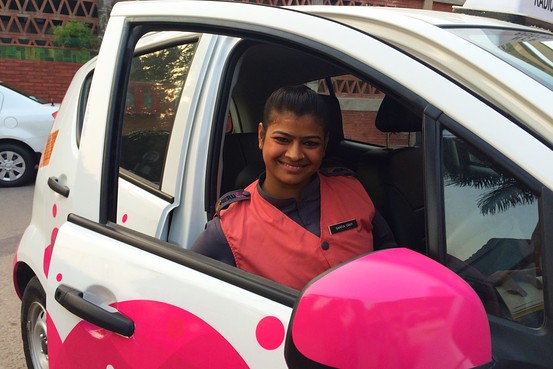
There is no doubt about the fact that someone runs India. But when a heinous crime such as rape is committed in a Uber Cab it appears no runs India. On the contrary it runs on its own inertia. As the powers to be, feign ignorance, about how the crime was committed and ask for one last chance to fight the menace. So, then who runs India? One answer could be these criminals who always succeed in hoodwinking the dispensation while committing such nasty crimes. In front of whom our meek society and the establishment appear as simpleton. Where, these men in high places come out with some face saving, stereotype statements such as the ‘culprit will not be spared’ and just then another culprit surfaces, even before the previous one is forgotten.

There was only one 9/11 in the US, and with that they learnt their lesson and ensured it never happened again. Surely, they must have done something worth the while, to fox and ensnare such criminals as a strong preventive. Similar mindset we find in Israel. But the story in India is quite different. For we are not aspiring that high as of now, as it doesn’t suit us and it could be grossly inconvenient for our establishment. Therefore, in India there is never a last time but always the next time and we deal it, with the gift of the gab.

REALITY CHECK

Today’s TOI reports 1706 cabbies were booked in the uber-crackdown. But then where was Delhi Police before this rape in the Uber-cab? I guess this is all, that Delhi Police knows in terms of prevention of crime–to book people after the crime. And, beyond this they don’t have the competence to deal with the subject. One can also make this out, from the many Delhi Police Commissioners that have come and gone. Not one has proposed a different unconventional, out-of-the-box plan to prevent rape crime in the capital and that itself exhibits the mental bankruptcy. Most have just kicked the can on the road. And, what can one poor commissioner of police anyway do, even the criminal knows.

GOVERNMENT’S INTENTION

Also, government’s intention to come out with a foolproof plan to prevent rape crime is a suspect across various political establishments that we have seen till now. Whether it is the will or mental or physical lethargy we don’t know. A management thought says if you keep taking the same action each time and expect a different result it will never happen. But, in case of rape crime forget the action; government has not even proposed a new template for prevention of rape crimes. And, that it self speaks volumes. Moreover, the new trend, that the higher courts need to direct the executive on all important issues to act is also alarming.

WAY FORWARD

The traditional method of policing is not effective in preventing rape crimes. Rather it is failing miserably. The traditional policemen are only good for writing FIRs. That too when they are told from the top and to some extent catching criminals at a later date. So we need something different. And can that be technology based is something we need to study? We should also emulate best police practices in terms of crime prevention from other countries and implement the same for rape crimes but all of this requires political will.

Political parties and governments need to realize. If you want to continue in power, merely being ahead of your nearest political rival is not going to be enough. You will have to beat them by leaps and bounds. And for that you will have to deliver what you’ve promised. Remember, the public of India has an elephant’s memory and coming to their aid are countless sound bites where you’ve promised prevention of rape crime. So wake up.

*****
Snippet: Cricket, corruption and stubbornness- Lord God Vishnu in conversation with SRINIVASAN

1711srinivasan

Copyright@shravancharitymission

By Kamlesh Tripathi

A snippet

One day, Lord God Vishnu, during one of his sojourns came across N. Srinivasan, the ousted BCCI chief, while he was frequenting his temple-abode atop, a tall hillock. Srinivasan, was attired in a crisp dhoti, bare-chested, appearing that devout Hindu with a holy kumkum- tilak on his broad forehead. And, seeing this, Lord Vishnu was more than tempted to talk to him. He decided to start the conversation in a soft manner, when he disguised himself as a senior Pandit of the temple.

‘Hello Srini, nice to see you in the temple again, and what brings you here so often?’

‘Well my name is Srinivasan and not Srini. And I don’t believe in giving away, anything to anyone once I get it, so don’t take away the ‘vasan’ part of my name. And, by the way who are you, for I’ve never seen you in this temple in the recent past.’

‘Well–well. I am Lord Vishnu and I reside in all temples as the Lord God, and you all are my disciples. Since, I couldn’t have met you in my divine form because you’re facing some charges. I have come to meet you in human disguise. And, I find off late you have started coming to the temple quite regularly.’

‘Yes-yes, I am now inclined to come to the temple for regular blessings. It acts like a relieving bout of physiotherapy. Since I am bruised because of this stupid IPL case where they have got me involved, for conflict of interest. But, please don’t give me that cock and bull story of you being Lord Vishnu. Anyone, out here can recognize me as I’m a celebrity. And what do you want from me?’

‘Well, I am Lord God Vishnu, and I want you to return my name ‘Srinivasan’ to me.’

‘Maybe, your name is Vishnu, but mine is Srinivasan. So where is the conflict and why should I return your name?’

‘Well, Srinivasan is a synonym of Vishnu. And, there lies our conflict, so please return my name, as it stands for goodness.’

‘Return your name, what do you exactly mean by that?’

‘I mean return my holy name to me. Renounce it, and keep some other name matching your profile and characteristics.’

‘Are you mad? Why should I spoil another name. Instead let me keep spoiling this age old and tested name only. And, moreover, you have now become a synonym of me, and I am no more a synonym of yours.’

‘What do you mean?’ asked Lord God Vishnu in some surprise.

‘I mean, I have a wider copyright on the name ‘Srinivasan’ and its synonyms, then you. The very word Srinivasan reminds everyone of me and not you, anymore.’

‘And moreover as a policy I don’t return anything I get or I earn. Entire India knows how I am fighting tooth and nail for my position as the BCCI chief. And you can see it for yourself, I am not giving up.’

‘But, you are priding all the way, with my all powerful name. Moreover, you run the game of cricket considered a religion in this country, as its God, yet you don’t manage the game with any Godly instincts. Shouldn’t you just move away, on your own, till the entire enquiry gets over, and also surrender my name till your name is cleared.’

‘See I am a modern day ‘God’ and I manage affairs in modern ways. But you happen to be an ancient ‘God’ with ancient value system, and system of governance. So, you please carry on, and let’s meet after this bloody case is over.’

With the conversation heading nowhere, Lord God Vishnu decides to leave quite demoralized; is when Srinivasan makes a request,

‘God can you surrender your name ‘Vishnu?’

‘But why?’ asks God.

‘Because, I now realize I have a complete copyright on my name ‘Srinivasan’ and its synonym ‘Vishnu.’

*****