Category Archives: column

HAPPENING WORLD–FACTS & PROJECTIONS

Copyright@shravancharitymission

By Kamlesh Tripathi


By some accounts the Pakistani army chief bears a personal grudge against India—his uncle was killed in the 1965 war and his brother in the 1971

*

India is known for producing CEOs of Google, Microsoft, Pepsico, Mastercard, Deutsche Bank, etc. And Pakistan? For hoisting heads of Al-qaida, Taliban, Lashkar-e-Taiba, Jaish-e-Muhammed, Haqqani group etc.

*

Gandhi arrived in South Africa in 1893 at the age of 23. Within a week he collided head on with racism. His immediate response was to flee the country that so degraded people of colour, but then his inner resilience overpowered him with a sense of mission, and he stayed to redeem the dignity of the racially exploited, to pave the way for the liberation of the colonised the world over and to develop a blueprint for a new social order. He left 21 years later, a near Mahatma (great soul).

*

Valmiki gave up life as a robber and meditated for years in penance before he went up to compose the epic Ramayana. He is now revered as the ‘Adi Kavi,’ or the first poet, as he is said to have invented the ‘Shloka,’ the first verse, which defined the form of Sanskrit poetry.

*

The trade unions represent 15% of the workforce in the organised sector. 85% represents the unorganised sector.

*

Cities are our engines of growth and contribute around 63% of India’s GDP.

*

Chikungunya was discovered in 1952, in Tanganyika. Indian dengue was first recorded in Madras in 1780, but the first proven epidemic was in west Bengal, 1963-64, also proving its first chief minister, BC Roy’s claim: ‘What Calcutta does today, the rest of India does tomorrow.’

*

Total incidents of violent crime in UP fell dramatically from 1999 to 2003 at the rate of 16% per annum. This period coincided with the time when BJP was in power in the state. However, since 2003 when either BSP or SP have been in power, violent crimes in UP have increased significantly at the rate of over 7%. In comparison Bihar which is the closest to UP in its record of crimes, registered increase in violent crimes at 3% per annum.

*

In 2014, violent crime in UP was 25% more than in Bihar.

*

India’s direct tax payers form part of a narrow base which contributes more than 50% of the Centre’s total tax revenue.

*

In 2012-13, tax department’s data showed that 28.9 million individuals filed tax returns, of whom only about 1.6 million people claimed income above Rs 1 million. When this number is juxtaposed with the 2.6 million cars sold the same year.

*

India’s income tax base is unnaturally narrow. It spends less than a rupee to collect Rs 100 of direct tax.

*

Indian railways continues to be the lifeline of the nation with over 800 crore trips annually

*

Air travel in India is likely to continue to grow quickly for the next 10-12 years. To support this growth, investment in airports is expected to be upwards of Rs 2.5 lakh crore. Around 700 planes could be added to our current fleet of around 450 planes totalling an investment of Rs 3 lakh crores.

*

Currently the aviation sector is estimated to directly employ 2 lakh people and 12 lakh people across various parts of the value chain, a multiple of 5.8x. in the next decade the sector could employ more than 5 lakh people directly and 30 lakh overall.

*

From more than 90% of aspirants failing the central Teacher’s eligibility test year after year, to teacher absenteeism touching as high as 40% in the poorest states, to the prevalence of English Teachers who just can’t speak English. All around there are signs that teacher recruitment in India is in a bad shape.

*

Environment: while the Montreal Protocal is now ratified by 197 countries, the Paris agreement has been ratified by 63 countries representing 52.11% of global greenhouse emissions

*

The world bank/IMF estimates the size of Indian economy in 2016 at 2.28 trillion $ making it the world’s 7th largest. At $270 billion in 2015, Pakistan is the world’s 38th largest. India’s export of merchandise has powered past 300$ billion and is closing on $500 billion, if you count services, despite a slowdown in 2016. Pakistan’s exports are straining to get past #30 billion. India’s foreign exchange reserves stand at $367 billion; Pakistan is at $20 billion.

*

Pakistan is one fourth of India’s size. Has a sixth of its population and poses an equal. Yet India cannot rid itself of Pakistani pestilence.

*

Pakistan’s ministry of Overseas told the country’s legislature this week that Saudi Arabia and UAE together hosted nearly 90% of the total Pakistani workforce of 9,48,000 sent overseas last year. Jobs provided to Pakistani by some other counties: Germany 44, Turkey 57, Singapore 68, Japan 84, UK 261 and USA 350.

*****


HIDDEN FACTS

Copyright@shravancharitymission

By Kamlesh Tripathi

hidden-facts2


HIDDEN FACTS


A survey shows around 70% of Indians are non-vegetarian these days.

*

There is a huge amount of debate about GM crops these days. It has tremendous potential to impact on yields if used with appropriate safeguards. Without GM we need another 175-222 million hectares of farmland to feed our population.

*

China on demand side, is trying to nudge its population towards a more vegetarian diet.

*

One estimate pegs the economic loss because of Bengaluru traffic congestion at Rs 3,700 crore a year; including a whopping 50 crore litres of annual fuel losses. Extrapolate these figures to Delhi, Mumbai and other Indian cities and we have a full-blown economic crisis on hand.

hidden-facts

*

Traffic jams: I can easily do 5 or more meetings in a day even if they are spread across Singapore or any European city. In Delhi or Bengaluru, I can never plan more than 2 or maximum 3.”—Rishi Seth—A PR and marketing start-up person.

*

Gadkari’s ministry measures its performance in kilometres of new roads built per year. What good are these new roads, or the existing roads for that matter, when they are rank incapable of moving people and goods quickly—Rishi Seth, PR and marketing startup professional.

*

India has the worst record of road accident deaths in the world; every four minutes a person dies on our roads.

*

India is held at ranson by some of the most corrupt and incompetent civic bodies.

*

WHO’s report on Road Safety 2015 gave India a rating of 3 or 4 out of 10 for enforcement of laws on speed limits, drunk driving or wearing helmets on two wheelers.

*

Tata sons is into over 100 lines of business.

*

hiddenfacts1

In 2016 air passengers in India grew by an impressive 23.17%

*

Nearly 4% of New Zealand’s population is of Indian origin and Hindi is the third most widely spoken language in Auckland.

*

India is New Zealand’s largest source of skilled migrants and 29,000 Indian students are currently enrolled at our academic institutions making them the 2nd largest overseas student population studying in New Zealand.

*

India’s GDP is valued today at $2 trillion. Amitabh Kant, chief executive of Niti Aayog says if all goes well it could touch $10 trillion by 2032. A shorter term assessment would have it reaching $ 5 trillion in the next decade, by 2025-26

*

India is now the fastest growing major aviation market—the number of air passengers has been growing more than 20% year-on-year. In the past 12 months, more than 9 crore passengers flew and another 5 crores  or so flew internationally. In the next few years India will become the 3rd largest aviation market in the world after the US and China.

*****


INTERESTING FACTS

Copyright@shravancharitymission

By Kamlesh Tripathi


The Chinese economy is five times bigger than India’s.

*

The Indus Waters Treaty (IWT) reserved for India just 19.48% of the total waters of the six-river Indus system

*

India is selling 25 million smart phones per quarter and the anticipation is 700 million smart phones in hand by 2020. Internet penetration is growing with 332 million internet users in India. Is now second largest international market, ahead of the US.

*

Aadhar is the only billion-user platform outside the US and the only government one.

*

India is the largest young country in an ageing world and will continue to have a young population for the next 25 years, whereas China has started ageing.

*

Thailand has 25 million international visitors per year while India has only 8 million.

*

The International monetary fund estimates that Indian per capita income more than tripled from about $550 in 1991 to $ 1800 last year.

*

In 1991, the world’s most populous country accounted for a scant 3.6% of global gross domestic product. By 2015 this had nearly doubled to 7%.

*

WHO estimates that the average Indian lives 10 years longer today (68 years) than a quarter century ago. But he has yet to catch up with the average Indonesian (69 years), and continues to lag behind the average Chinese (76 years).

*

Between 1991 and 2015, India slashed infant mortality by more than half- from 86 deaths to 38 deaths per 1000 births.

*

The international Telecommunications Union estimates that mobile subscriptions in India reached 79% of population last year, up from 62% just five years earlier. That sounds awfully impressive until you realise that in China the mobile penetration is 93% and in Indonesia it’s a stratospheric 132%.

*

Back in 1950s and 1960s, US steelworks and auto workers were by far most productive in the world, and could demand high, rising wages. But today the workers in developing countries have acquired skills that are almost as good.

*

Before the industrial revolution, China and India accounted for over half of world GDP, but their share fell to barely 7% in the 20th century.

*

In the 20th century Europe was twice devastated by World Wars, letting the US forge ahead. US hegemony followed in the second half of the 20th century. Even US workers without college degrees had skills that were globally scarce, and so attracted high pay.

*

The world Bank says the number of poor people globally more than halved from 1.75 billion in 1990 to just 702 million in 2015; the proportion of people in extreme poverty fell from 37% to 9.6%; and the world Gini coefficient (which measures inequality) fell from 75% to 62%.

*

The US is indeed a great country, but for completely different reasons. It has been the most welcoming country for immigrants in history. Half the start-ups in Silicon Valley are by people of Chinese or Indian origin. Many Nobel Prizes have been won by first or second generation immigrants.

*

What a lie: Out of the 6753 candidates of the 2009 Lok Sabha elections that were scrutinized, only four admitted that they had exceeded the limit of election spending as prescribed by ECI while 30 said they had spent 90%. The rest claimed that they had spent 52-55%.

*

The telecom industry saw only 40% of the spectrum on offer being sold in 2016. In particular, the complete absence of any bids in the 700 MHz and 900 MHz bands came as a rude shock.

*

Recently, interesting though intriguing data from 70-80 countries show that anxiety levels increase when there is less work (James Tozer in the Economist, citing a study done by the World Bank, in 2015).

*

Economic liberalisation in China and India are commonly thought to have started in 1978 and 1991 respectively.

*****


BOLLYWOOD, CRICKET & loc

Copyright@shravancharitymission

By Kamlesh Tripathi

indian-jawan

    At times it appears the Indian Army Jawan, who fights terrorism at the Line of Control is only fighting to save his own house, but in reality he is fighting for all of us. But the tragedy with Indians is that they show no solidarity with him. Our Prime Minister preaches so much about terrorism in all international forums. But back home India is a divided and selfish lot. People from all professions are only self-centered about themselves and their professions. We don’t realise by behaving in this insensitive manner tomorrow, people may desist from fighting for the country. What will happen then? There is indeed a greater need to feel for our brave jawans and we must perennially keep their morale high. Colonel Anil Chawla puts it quite beautifully.

…………………………………..

Col Anil Chawla, a serving soldier of the INDIAN ARMY wrote this:

Will sending Pakistani artists back, stopping cricket and business with Pakistan actually end terror from Pakistan?

No, it most certainly will not.

BUT there is an emotion called solidarity.

YOU CANNOT MAKE FILMS, PLAY CRICKET, AND DO BUSINESS AS IF EVERYTHING IS FINE, BECAUSE IT IS NOT.

indian-jawan-3indian-jawan2

It makes the soldier wonder aloud, “Why should I alone bear the weight of conflict?”

This conflict between India and Pakistan is not the soldier’s personal war. He is dying and killing for you and me. Imagine a situation in which the soldier felt, and behaved, like Salman Khan, Karan Johar and Mahesh Bhatt? Imagine if a soldier walked up to his superior and said, “Sir, while I am dying on the Line of Control, these people are going about as if everything is absolutely fine between the two countries.”

Why should he alone sacrifice for India, when others were making merry?

Patriotism and sacrifice is not the sole responsibility of the soldier.

The United States boycotted the Moscow Olympics in 1980, and the Russians did likewise when they boycotted the Los Angeles Olympics in 1984. This is what happens when national interest is held paramount. And this is what must happen now.

18 families have been shattered like glass … But the pain of Fawad Khan’s departure is too much to bear, it seems …”

…………………………………

    Film Stars have nothing to do with terrorism…

    Singers have nothing to do with terrorism ….

    Writers have nothing to do with terrorism …

    Directors have nothing to do with terrorism …

    Performers have nothing to do with terrorism …

    Journalists have nothing to do with terrorism …

    Activists have nothing to do with terrorism …

    Cricketers have nothing to do with terrorism …

    Politicians have nothing to do with terrorism …

    Businessmen have nothing to do with terrorism …

    Professionals have nothing to do with terrorism …

    Lawyers have nothing to do with terrorism …

    Then for whom are the Jawans sacrificing their lives for?

    Jai Hind.

*****

BREAKING RELATIONSHIP—LIKE A SUDDEN DEATH

Copyright@shravancharitymission


    In our lives we all are born in a family. Where, we have our parents and our siblings. But as we grow old. We discover, we even have relatives. Where, some are close and some distant and over a period of time. When we grow up, we even make acquaintances and friends. Gradually, some acquaintances turn out to be lifetime friends, and some remain as acquaintances.

    As a proclivity in this arduous and long journey of life. Every now and then we keep making acquaintances, friends and even colleagues. Who, remain with us for a period of time and then we lose track of them. Because, we all have defined journeys. Where, destinations are different and paths are therefore varied.

    In this ever changing scenario we often lose touch with our old contacts, while we form new associations. But we never really feel sad about it as if we have lost the old ones for forever. Because heart-to-heart we all know they are just round the corner, in some different company or a country or a city or a profession. Where, we can just pick the phone and talk to them whenever we want.

    But such is not the case. When any of your close relative, friend, colleague or even an acquaintance tries to sever his or her relationship with you. Or if it’s a vice versa for then. It’ll be like a sudden death of a relationship. And death is a point of no return. So, don’t just head towards the death of a relationship. Even if you’re walking out leave a point for return.

*

By Kamlesh Tripathi

*

                                                        https://kamleshsujata.wordpress.com

*

Share if you like it

*

Shravan Charity Mission is an NGO that works for poor children suffering from life threatening diseases. Should you wish to donate for the cause the bank details are given below:

NAME OF ACCOUNT: SHRAVAN CHARITY MISSION

Account no: 680510110004635 (BANK OF INDIA)

IFSC code: BKID0006805

*

Our publications

GLOOM BEHIND THE SMILE

ONE TO TANGO … RIA’S ODYSSEY

AADAB LUCKNOW … FOND MEMORIES

REFRACTIONS … FROM THE PRISM OF GOD

(CAN BE BOUGHT FROM ON LINE BOOK STORES OR WRITE TO US FOR COPIES)

*****


SHORT STORY: A FRIEND’S ADVISE

Copyright@shravancharitymission

    Durga was a rich farmer, but an extremely lazy one. Who, neither looked after his fields nor his granary. Nor did he ever bother to keep a regular count of his cattle and the health of his dairy. That apart, he did not even bother to look after his own household belongings. Anything and everything, he just left it on his servants to accomplish. His laziness gradually led to mismanagement and soon the situation at home became adverse when he started losing money, both in his farm and even in his dairy.

    One day Harish a friend of Durga came visiting him. He noticed the situation in his house to be extremely deplorable. But he knew well, Durga won’t accede to his valuable sermons.  So he decided to play a noble trick to help him tide over the situation. He said—‘Friend! I’m disheartened to see you in such a deplorable condition. But I have a sure and easy way, to pull you out of your miseries.’

    Durga was now eager to know what his friend had in mind. He politely said—‘kindly tell me know what you have in mind and I’ll surely follow.’

    Harish said—‘my dear friend, before all the birds wake up in the morning. A white swan that lives in Mansarovar lake comes to earth and returns by noon. One cannot exactly say when it comes. But it is generally believed that anyone who is able to have his darshan is considered very lucky. For you’ll have no problems in life thereafter. And you’ll roll in riches.’

    Durga replied—‘Is it so. Then, come what may, I’ll ensure, I have his darshan.’

    After the conversation, Harish left for his home. Next day, Durga got up early in the morning. He came out of his house, in pursuit of the white swan, and walked towards the granary. There he saw one person pilfering his grain out of the heap. But when he saw Durga coming. He started apologizing.

    From the granary Durga returned home. Then he went to his cow ranch. There he saw the milker, milking his cow. But to his surprise, he was only filling his wife’s pot with the milk. Durga reprimanded him. Thereafter, he had something to eat. And then he left his home again in search of the white swan, when he went back to his fields. There he noticed, the labourers had not even come. He patiently waited for them. When they finally arrived he scolded them for coming late. And in this manner, wherever he went, he curtailed his losses.

    Thereafter, in search of the white swan, Durga started getting up early in the morning every day, and started roaming around. With this change of habit, his servants started working honestly. All the pilferage stopped in his granary and even in his dairy. Earlier, he used to be a sickly person. But now he had become healthy because of the long walks and exercise. The fields from where he was getting poor yields, suddenly started giving high returns. And even his cow-ranch started giving milk aplenty that gave him rich dividends.

    One day after a long time, Durga’s friend Harish came to his house again. When, Durga said—‘friend! I couldn’t find that white swan you spoke about last time. But in his pursuit I started making profits.’

    Harish started laughing and replied by saying—‘friend! To toil relentlessly, is the white swan I was talking about. The wings of labour are always white. People, who don’t work and leave everything to their servants, always suffer losses. But, people who toil themselves, and look after their servants, earn fortunes and respect.

    The story is from our mythology.

Posted by Kamlesh Tripathi

*

Share if you like it

*

    Shravan Charity Mission is an NGO that works for poor children suffering from life threatening diseases. Should you wish to donate for the cause the bank details are given below:

NAME OF ACCOUNT: SHRAVAN CHARITY MISSION

Account no: 680510110004635 (BANK OF INDIA)

IFSC code: BKID0006805

*

Our publications

GLOOM BEHIND THE SMILE

ONE TO TANGO … RIA’S ODYSSEY

AADAB LUCKNOW … FOND MEMORIES

REFRACTIONS … FROM THE PRISM OF GOD

(CAN BE BOUGHT FROM ON LINE BOOK STORES OR WRITE TO US FOR COPIES)

*****


DOCTRINE OF KARMA AND REINCARNATION

Copyright@shravancharitymission


    Why do Hindus believe in these two doctrines? One being karma and the other being reincarnation. Because these doctrines not only explain the unusual occurrences logically. They also shed light on day-to-day events of life. Hindus do not consider life and death to be mutually exclusive. But intertwined and inseparable. Like the two sides of the same coin. If there are disparities between two individuals at the time of birth, and if these disparities can be seen. Then the cause for these disparities must have preceded their births.

  • Karma: The word karma means “action.” In accordance with the cosmic laws of karma. Each individual reaps the fruits of his actions, performed in this lifetime or in former lives. This logically explains the disparities in creation, between various individuals, environments and situations. No deed, small or great, good or bad, can be without an effect—this essentially is the law of karma, the law of casualty. In fact one begins to feel as if it is Newton’s 3rd law of motion—‘to every action there is an equal and opposite reaction’ was drawn out of the doctrine of karma.
  • Karma is no fate. Fate implies helplessness in a human being, to determine his own destiny. The law of karma states that the individual is the creator of his own destiny, because his conscious choices in life determines his actions and the fruits thereof.
  • Reincarnation: Hindus believe that the jiva, or the individual being, travels from life to life. Acquiring bodies and environments best suited to exhaust his vasanas (vices) or innate tendencies that are expressed as desires, emotions, and actions. The exhaustion of vasanas allows the jiva to reach his ultimate goal: complete freedom from the cycle of birth and death through the realization of his true nature as the Self, or Brahman.

—synopsis from a book on Hinduism—by Chinmaya Mission Trust—

*

By Kamlesh Tripathi

*

https://kamleshsujata.wordpress.com

*

Share if you like it

*

Shravan Charity Mission is an NGO that works for poor children suffering from life threatening diseases. Should you wish to donate for the cause the bank details are given below:

NAME OF ACCOUNT: SHRAVAN CHARITY MISSION

Account no: 680510110004635 (BANK OF INDIA)

IFSC code: BKID0006805

*

Our publications

GLOOM BEHIND THE SMILE

(Archived in 7 prestigious libraries of the US, including, Harvard University and Library of Congress. It can also be accessed in MIT through Worldcat.org. Besides, it is also available for reading in Libraries and archives of Canada and Cancer Aid and Research Foundation Mumbai)  

ONE TO TANGO … RIA’S ODYSSEY

(Archived in Connemara Library, Chennai and Delhi Public Library, GOI, Ministry of Culture)

AADAB LUCKNOW … FOND MEMORIES

(Launched in Lucknow International Literary Festival 2014)

REFRACTIONS … FROM THE PRISM OF GOD

(Co-published by Cankids–Kidscan, a pan India NGO and Shravan Charity Mission, that works for Child cancer in India. The book is endorsed by Ms Preetha Reddy, MD Apollo Hospitals Group. Book was launched in Lucknow International Literary Festival 2016)

(CAN BE BOUGHT FROM ON LINE BOOK STORES OR WRITE TO US FOR COPIES)

*****


THE SPIRITUAL SIGNIFICANCE OF JOINING PALMS OR ‘NAMASTE’

Copyright@shravancharitymission


    The ancient and traditional greeting of ‘namaskar’ or ‘namaste’ is for one and all. It is done reverently by joining the palms at the chest and humbly bowing the head. Namaskar or Namaste is a form of prostration and salutation and has profound spiritual and ego bearing significance.

    In Sanskrit, namah + te = Namaste. It means, ‘I bow to you along with my prostrations and salutations.’ Namah can also be interpreted as na mama, which in the literal sense would mean, “not mine.” The purpose of saying Namaste is thus to negate one’s ego. Rather separate yourself from your ego and recognize the Divine in every person we greet. And, as we feel the Lord God resides in us. In the same manner we feel, it resides in others too. The joining of the palms depicts this sense of oneness. When we know this significance. Our greeting paves the way for a deeper and divine communion, complete with love and respect.

    Translated from a religious text.

*

Posted by Kamlesh Tripathi

*

                                                    https://kamleshsujata.wordpress.com

*

Share if you like it

*

Shravan Charity Mission is an NGO that works for poor children suffering from life threatening diseases. Should you wish to donate for the cause the bank details are given below:

NAME OF ACCOUNT: SHRAVAN CHARITY MISSION

Account no: 680510110004635 (BANK OF INDIA)

IFSC code: BKID0006805

*

Our publications

GLOOM BEHIND THE SMILE

ONE TO TANGO … RIA’S ODYSSEY

AADAB LUCKNOW … FOND MEMORIES

REFRACTIONS … FROM THE PRISM OF GOD

(CAN BE BOUGHT FROM ON LINE BOOK STORES OR WRITE TO US FOR COPIES)

*****


SUPPORT CHILDREN WITH SPECIAL NEEDS

Copyright@shravancharitymission

By Kamlesh Tripathi

1
Participants waiting for the flag to unfurl
2
flag hoisting area


SUPPORT CHILDREN WITH SPECIAL NEEDS


RAMANUJAN DIVYANG REHABILITATION & SKILL DEVELOPMENT CENTER- A NOBLE EFFORT


My mother’s birthday falls on the 15th of August—that happens to be our Independence Day. She is now no more, but I continue to remember and celebrate her birthday each year in a virtuous manner. And, pursuing the cause as ever, I wanted to do something different again this time, when I came to know that Ramanujan Divyang Rehabilitation & Skill Development Center—located in Palwal is celebrating the Independence Day in a noble manner, so I decided to visit them on that day. The center works for children with special needs. And on the occasion of the Independence Day they had planned for a musical extravaganza where all the protagonists were children who were hearing impaired.

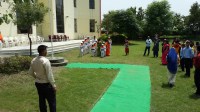
The programme commenced with the chief guest Shri Vipul Goyal, a cabinet minister in Government of Haryana, in charge for Industries, performing the flag hoisting in the presence of these noble yet daring children, followed by a spell of bright and colourful cultural programmes of dance and music performed by the same children.

Needless to say it was a tough task for these children to have stepped, toed, and danced to the soothing rhythms of the gentle music that was being played, that provided no hearing stimulus to them, yet the show went off as immaculate.

7
Minister handing over awards


Apart from the chief guest the programme was also well attended by Shri Tek Chand Sharma M.L.A.; Shri Deepak Mangla—political secretary to the chief minister; Shri Ashok Kumar Sharma—deputy commissioner Palwal; Shri Rahul Sharma—superintendent of police Palwal; Shri Bijender Saroth—President, District Red Cross Society and Shri Jawahar Singh—district president, BJP. As a kind gesture an amount of Rs 50,000 was announced as donation by the honourable minister who was too moved by the spirits of these children.

At this august moment Dr Rajeev Mohan Kukreja—founder Chairman, and Dr Sujata Tripathi—Director of the center were also present.

There isn’t much need for me to describe the function anymore as the pictures will say it all. But what should not go unnoticed is the glimmer of hope in the eyes of both the children and their parents. We all do enough for ourselves and our children but it requires something extra in you to step out and do something for others and especially children with special needs.

Below is a synopsis of what the center does and you could join the cause by donating liberally.

Ramanujan Divyang Rehabilitation & Skill Development Center


About Us


    We are a self sustained educational society of great repute located in one of the backward districts of Southern Haryana, where we are running a ‘facility center’ for children with special needs since 2013. Through this facility center we are imparting specific therapies along with training and education for their overall betterment, as we want all such children to be cognitively and financially self-reliant. And as a first step towards this goal we are providing them with vocational and computer training. Our center, vow’s for good benchmarks and keeping in line with that we have evolved the values of three “S” that we are currently pursuing: a. Self Confidence b. Skill Enhancement c. Self dependent.


  1. FACILITY FOR CHILDREN WITH SPECIAL NEEDS


The center has identified more than 100 children with special needs from nearby villages & Palwal town, and has started a facility center in order to provide them with therapies, together with training & education. It has two sections namely MR (Mentally Retarded) & HI (Hearing Impaired). And we are happy to inform you that today over 30 such students are training under this noble and demanding mission on a regular basis. The center has also appointed two special educators & a speech therapist registered with RCI having required qualification, along with other support staff.


  • VOCATIONAL TRAINING AND SKILL DEVELOPMENT


We intend to cover as many Divyang children and adults to bring them under the central umbrella of ‘mainstream earning members’ in the family and society, by imparting vocational & computer training that they are capable of learning. We also intend training rural women who are unable to travel to towns or cities away from their homes. And for the purpose, the center runs the following programs and has simultaneously applied to (NIOS) National Institute of Open Schooling, for affiliation and accreditation of the following courses:


  • Cutting & Tailoring
  • Indian Embroidery
  • Basics & Advance Computer Training


  • Project ‘SWAVALAMBAN’ — FOR WOMEN & DIVYANGS


Rural women and Divyang persons are often exploited since they are financially not independent. Project Swavalamban is a brain child of Ramanujan Foundation to provide employment exclusively to rural women & Divyang

persons. Swavalamban means ‘Self Dependent’ or “Having Freedom of Action or Initiative/Decisions.” Under project ‘Swavalamban’ our center inculcates and develops skills as per capabilities of the learner & subsequently provides them with raw material to work with. Produced artifacts thereafter are retailed in the market under the brand name “Swavalamban”. This makes it convenient for them to work out of their homes and simultaneously facilitates them to even look after their families. Thus: people involved in project Swavalamban will no longer be a liability for their family and society and will earn their livelihood with self respect.


Currently on a pilot basis following products are being produced by these people:


  1. Hand Knitted Sweaters for ladies, gents, kids and infants.
  2. Embroidered home furnishing such as bed-sheets, pillow covers, table cloths etc.
  3. Handmade dari (rug) from waste wool.


BUT WE NEED HELP


Most children enrolled in the facility-center are from a very poor background. They are unable to pay any fee for such facilities. Till date Ramanujan Foundation and its team were bearing all the expenses. But due to down turn in education sector leading to severe downturn in our own revenues the foundation for now is finding it difficult to bear the cost of center. Hence the humble request, to all our well wishers, patrons and like-minded people to kindly donate as generously as possible for the noble cause.


Our website: www.ramanujan.edu.in

E-mail: info@ramanujan.edu.in


Special significance of number 18 in Hindu scriptures

Copyright@shravancharitymission


    Number 18 unquestionably has a great significance in Hindu scriptures. Apart from the fact that there are 18 Purans, 18 major Up-purans, and 18 Dharm-Shastras. The importance of number 18 is best explained in the great epic of Mahabharat, which is divided into 18 parvas or sections. The great war of Mahabharat was fought with 18 divisions of army. And out of this 11 were on the side of Kauravas and 7 on the side of Pandavas. The war lasted for 18 days. Finally, it is said that only 18 persons survived the war. The treatise Shrimad Bhagwad Gita is a part of Mahabharat and has 18 chapters. In Gita, Lord Krishna describes the ideal man in 18 verses at the end of Chapter 2, in which he lists the 18 traits that constitute the man with a steady wisdom.

    The central theme of all scriptures of all religions in the world are the same: Prime being the victory of the higher being over the lower one, or righteousness over unrighteousness, or of good over the evil, of dharma over adharma. Ved Vyas had originally titled Mahabharat as Jaya (victory). The word Jaya is in the opening stanzas of both Mahabharat and Gita.

    In the Katapayadi–System (numerical notation system) of Sanskrit numerology, each letter has a formula-based numerical value, where the numerical value of the word Jaya is 18. To stress on the importance of the word Jaya, number 18 is given a prominent place not only in Mahabharat, but also in various other Hindu scriptures. Thus, number 18 is repeatedly used as an auspicious reminder, to be alert in our constant battle, for inner spiritual victory.

(taken from Hindu scriptures)

By Kamlesh Tripathi

*****