Tag Archives: hinduism

John Milton and Surdas Surmounted Their Blind Vision … by Kamlesh Tripathi

MYTHOLOGY: THE STORY OF KING AMBARISHA

INDIA AFLOAT LIKE THE SHIP OF THESEUS

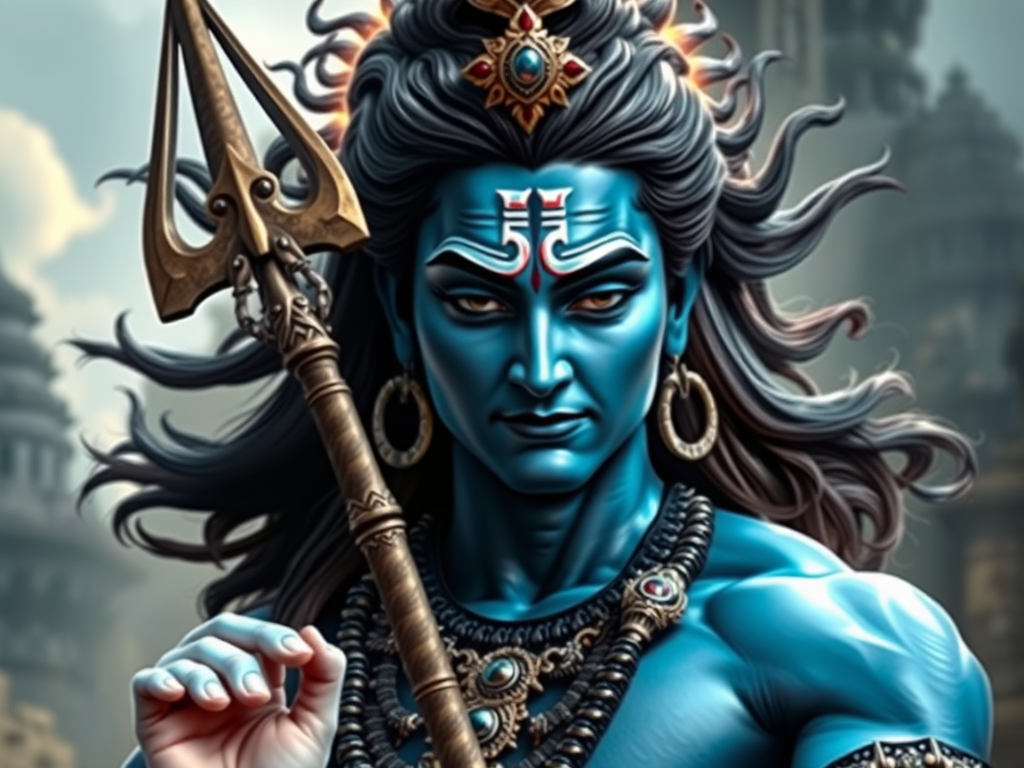
MAHA SHIVRATRI: A NIGHT OF DIVINE ILLUMINATION

    THE BOON AND BANE OF ASHWATTHAMA


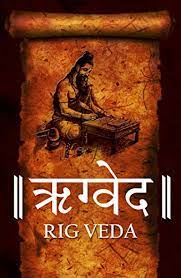
    THE SUMMARY OF RIG VEDA

    Copyright@shravancharitymission

    Rig Veda is regarded as one of the most sacred texts of Hinduism. It has fascinated scholars and historians due to its significance and antiquity. It is a collection of ancient Indian collection of Vedic Sanskrit hymns.

    • The Rigveda is divided into ten books which are known as Mandalas
    • It is a collection of 10,600 verses and 1,028 hymns
    • It is the oldest text in any Indo-European language
    • It has originated from early as 1700 BC
    • The Angiras (rishi family) has composed 35% of the hymns and the Kanva family who has composed 25% of Rig Veda.
    • Many verses of the Rig Veda are still used as very significant Hindu prayers and during rituals.
    • It contains numerous secrets and clarifications about the origin of the world, the importance of the Gods and a lot of advice for living a satisfying and successful life.
    • As per the Rig Veda, the Universe was devised from Prajapati, the initial God and the principal basis of creation.
    • The hymns are known as Sukta that were composed to be used in rituals.
    • Indra is the chief deity cited in the Rig Veda.
    • The sky God Varuna, the Fire God Agni, and the Sun God Surya were some of the other chief deities who were important in the Rig Veda besides older Aryan deities.
    • The God of storms and mountains Rudra, as cited in the Rig Veda is the origin of Lord Shiva, the Hindu God.
    • Lord Vishnu who is one of the Trimurti of Hindu Gods was also a minor deity, as mentioned in the Rig Veda.
    • The universally famous Gayatri mantra (Savitri) is also in Rig-Veda.
    • The varna system, Four-fold division of society, ‘Sudra’, Gamester’s Lament, Purusha Shukta Hymns are mentioned in this Vedic text.

    By Kamlesh Tripathi

    *

    https://kamleshsujata.wordpress.com

    *

    Share it please

    *

    Shravan Charity Mission is an NGO that works for poor children suffering from life threatening diseases especially cancer. Our posts are meant for our readers that includes both children and adults and it has a huge variety in terms of content. We also accept donations for our mission. Should you wish to donate for the cause. The bank details are given below:

    NAME OF ACCOUNT: SHRAVAN CHARITY MISSION

    Account no: 680510110004635 (BANK OF INDIA)

    IFSC code: BKID0006805

    *

    Our Publications

    GLOOM BEHIND THE SMILE

    (The book is about a young cancer patient. Now archived in 8 prestigious libraries of the US that includes Harvard College Library; Harvard University Library; Library of Congress; University of Washington, Seattle; University of Minnesota, Minneapolis; Yale University, New Haven; University of Chicago; University of North Carolina, at Chapel Hill University Libraries. It can also be accessed in MIT through Worldcat.org. Besides, it is also available for reading in libraries and archives of Canada, Cancer Aid and Research Foundation Mumbai; Jaipuria Institute of Management, Noida; India. Shoolini University, Yogananda Knowledge Center, Himachal Pradesh and Azim Premzi University, Bangalore).  

    ONE TO TANGO … RIA’S ODYSSEY

    (Is a book on ‘singlehood’ about a Delhi girl now archived in Connemara Library, Chennai and Delhi Public Library, GOI, Ministry of Culture, Delhi; Available for reading in Indian National Bibliography, March 2016, in the literature section, in Central Reference Library, Ministry of Culture, India, Belvedere, Kolkata-700022)

    AADAB LUCKNOW … FOND MEMORIES

    (Is a fiction written around the great city of Nawabs—Lucknow. It describes Lucknow in great detail and also talks about its Hindu-Muslim amity. That happens to be the undying characteristic of Lucknow. The book was launched in the Lucknow International Literary Festival of 2014. It is included for reading in Askews and Holts Library Services, Lancashire, U.K; Herrick District Library, Holland and Charlotte-Mecklenburg Library, Mecklenburg County in North Carolina, USA; Black Gold Cooperative Library Administration, Arroyo Grande, California).

    REFRACTIONS … FROM THE PRISM OF GOD

    (Co-published by Cankids–Kidscan, a pan India NGO and Shravan Charity Mission, that works for Child cancer in India. The book is endorsed by Ms Preetha Reddy, MD Apollo Hospitals Group. It was launched at Lucknow International Literary Festival in 2016)

    TYPICAL TALE OF AN INDIAN SALESMAN

    (Is a story of an Indian salesman who is, humbly qualified. Yet he fights his way through unceasing uncertainties to reach the top. A good read not only for salesmen. The book was launched on 10th February 2018 at Gorakhpur Lit-Fest. Now available on Amazon, Flipkart and Onlinegatha)

    RHYTHM … in poems

    (Published in January 2019. The book contains 50 poems. The poems describe our day-to-day life. A few poems from the book have been published in Shillong Times, Bandra Times and Bhavan’s Journal. The book is available on Amazon, Flipkart and Onlinegatha)

    MIRAGE

    (Published in February 2020. The book is a collection of eight short stories available in Amazon, Flipkart and Notion Press)

    AWADH ASSAM AND DALAI LAMA … The Kalachakra

    (The story of the man who received His Holiness The Dalai Lama and his retinue in 1959 as a GOI representative when he fled Tibet in 1959. The book was launched on 21st November 2022 by His Holiness The Dalai Lama at Dharmshala. The title is archived in the library of the Department of Information and International Relations (DIIR) Government of Tibet, Tibet Policy Institute (TPI) and the personal library of His Holiness. The title is also archived in The Ohio Digital Library, USA).

    BHAVANS JOURNAL

    Short stories, Book reviews and Articles published in Bhavan’s Journal: 1. Reality and Perception, 15.10.19; 2. Sending the Wrong Message, 31.5.20; 3. Eagle versus Scholars June, 15 & 20 2020; 4. Indica, 15.8.20; 5. The Story of King Chitraketu, August 31 2020; 6. Breaking Through the Chakravyuh, September 30 2020. 7. The Questioning Spouse, October 31, 2020; 8. Happy Days, November 15, 2020; 9. The Karma Cycle of Paddy and Wheat, December 15, 2020; 10. Power Vs Influence, January 31, 2021; 11. Three Refugees, March 15, 2021; 12. Rise and Fall of Ajatashatru, March 31, 2021; 13. Reformed Ruler, May 15, 2021; 14. A Lasting Name, May 31, 2021; 15. Are Animals Better Teachers? June 16, 2021; 16. Book Review: The Gram Swaraj, 1.7.21; 17. Right Age for Achievements, 15.7.21; 18. Big Things Have Small Beginnings, 15.8.21; 19. Where is Gangaridai?, 15.9.21; 20. Confront the Donkey Within You 30.9.21; 21. Know Your Strengths 15.10.21; 22. Poverty 15.11.21; 23. Top View 30.11.21; 24. The Bansuriwala 15.1.22; 25. Sale of Alaska 15.2.22; 26. The Dimasa Kingdom 28.2.22; 27. Buried Treasure 15.4.22; 28. The Kingdom of Pragjyotisha 30.4.22; 29. Who is more useful? 15.5.22; 30. The White Swan from Lake Mansarovar 30.6.22; 31. Bhool Bhulayya 15.9.22; 32. Good Karma 30.9.22; 33. Good Name vs Bad Name 15.10.22; 34. Uttarapath—The Grand Trunk Road 1.12.22; 35. When Gods Get Angry 1.1.23; 36. Holinshed’s Chronicles 15.1.23; 37. Theogony 15.2.23; 38. Poem: Mother 14.5.23; 39. THE NAG MANDIR;

    SUNDAY SHILLONG TIMES

    ARTICLES & POEMS: 1. POEM: HAPPY NEW YEAR 8.1.23; 2. POEM: SPRING 12.3.23; 3. POEM: RIGHT AND WRONG 20.3.23; 4. THE GUSH OF EMOTION—WRITING, 26.3.23; 5. THE NAG MANDIR, 7.5.23; 6. POEM: MOTHER 7.5.23; 7. POEM: RAIN RAIN;

    BANDRA TIMES, MUMBAI

    ARTICLES & POEMS: 1. POEM SPRING, 1.4.23; POEM MOTHER, 1.6.23;

    (ALL THE ABOVE BOOK TITLES ARE AVAILABLE FOR SALE ON AMAZON, FLIPKART AND OTHER ONLINE STORES OR YOU COULD EVEN WRITE TO US FOR A COPY)

    *****
    LITERARY CORNER VIDEO: WHY I AM A HINDU by Shashi Tharoor

    Copyright@shravancharitymission


    By Kamlesh Tripathi

    Author & Blogger

    *

    https://kamleshsujata.wordpress.com

    *

    Share it if you like it

    *

    Shravan Charity Mission is an NGO that works for poor children suffering from life threatening diseases especially cancer. Our posts are meant for our readers that includes both children and adults and it has a huge variety in terms of content. We also accept donations for our mission. Should you wish to donate for the cause. The bank details are given below:

    NAME OF ACCOUNT: SHRAVAN CHARITY MISSION

    Account no: 680510110004635 (BANK OF INDIA)

    IFSC code: BKID0006805

    *

    Our publications

    GLOOM BEHIND THE SMILE

    (The book is about a young cancer patient. Now archived in 7 prestigious libraries of the US, including, Harvard University and Library of Congress. It can also be accessed in MIT through Worldcat.org. Besides, it is also available for reading in Libraries and archives of Canada and Cancer Aid and Research Foundation Mumbai)  

    ONE TO TANGO … RIA’S ODYSSEY

    (Is a book on ‘singlehood’ about a Delhi girl now archived in Connemara Library, Chennai and Delhi Public Library, GOI, Ministry of Culture, Delhi)

    AADAB LUCKNOW … FOND MEMORIES

    (Is a fiction written around the great city of Nawabs—Lucknow. It describes Lucknow in great detail and also talks about its Hindu-Muslim amity. That happens to be its undying characteristic. The book was launched in Lucknow International Literary Festival of 2014)

    REFRACTIONS … FROM THE PRISM OF GOD

    (Co-published by Cankids–Kidscan, a pan India NGO and Shravan Charity Mission, that works for Child cancer in India. The book is endorsed by Ms Preetha Reddy, MD Apollo Hospitals Group. It was launched in Lucknow International Literary Festival 2016)

    TYPICAL TALE OF AN INDIAN SALESMAN

    (Is a story of an Indian salesman who is, humbly qualified. Yet he fights his ways through unceasing uncertainties to reach the top. A good read not only for salesmen. The book was launched on 10th February, 2018 in Gorakhpur Lit-Fest. Now available in Amazon, Flipkart and Onlinegatha)

    RHYTHM … in poems

    (Published in January 2019. The book contains 50 poems. The poems describe our day to day life. The book is available in Amazon, Flipkart and Onlinegatha)

    (ALL THE ABOVE TITLES ARE AVAILABLE FOR SALE IN AMAZON, FLIPKART AND OTHER ONLINE STORES OR YOU COULD EVEN WRITE TO US FOR A COPY)

    *****


    LITERARY CORNER: WHY I AM A HINDU by Shashi Tharoor

    Copyright@shravancharitymission

    Khidki (Window)

    –Read India Initiative—

    This is only an attempt to create interest in reading. We may not get the time to read all the books in our lifetime. But such reviews, talk and synopsis will at least convey what the book is all about.

    WHY I AM A HINDU’

    by Shashi Tharoor

    Publisher Aleph

    Year of publication: 2018

        The price of the book is Rs 699. It’s a 300 page book loaded with some palpable stuff—quite typical of Shashi Tharoor. The book has three main chapters divided into seven sub chapters.

        It starts off quite well with the author glossing over reasons as to why he decided to write this book. Where, he takes you through the essence of Hinduism, but not so much through the rituals but essentially through the religious-socio-cultural plank. He gets into meticulous detailing such as how a Sanskrit word ‘Jagannath’ came to be known as ‘Juggernaut.’ He takes you through the Bhakti movement. He talks about the Advaita Vedanta, the vedic learnings with lots of anecdotes—interesting ones. He describes in great detail the wisdom of Swami Vivekananda and Adi Shankracharya. Talks about his own childhood entangled in Hinduism. The ‘sanskars’ that he got from his parents. While Shashi loves Hinduism he admonishes Hindutva in his hot narration.

        The author, initially appears, quite as a baby faced admirer and a harmless volunteer of Hinduism till around page hundred and forty. But thereafter he changes gear and moves into the domain of political Hinduism.

        Where, he goes unsparingly after Savarkar, Golwalkar and Deen Dayal Upadhyay all stalwarts of the Sangh Parivar. And, as expected of Shashi Tharoor, he does make, a piercing commotion about the atrocities committed by the British Raj on Hinduism, but remains somewhat vague about the atrocities of the Muslim invaders, perhaps, offering them benefit of doubt. He feigns or genuinely believes Hindus are large hearted or even dodos, and will never react to the persecution that they were subjected to at the hands of the British Raj and the devious invaders, even in a millennium which is not quite clear. While he allows Deen Dayal Upadhyay to pass off as a more tolerable face of the Sangh Parivar. For Savarkar and Golwalkar, he projects unalloyed despise rising up to hate, but doesn’t really touch Hedgewar the founding Sangh Chalak even with a bargepole.  Shashi cannot imagine leave alone believing that RSS may have been an initial emotional reaction to the atrocities of the British Raj and the Islamization during Jinnah before and even after the partition. Just as Islamization could have been a reaction to American atrocities on the Muslims as believed by many and not some. And why forget the fascism of Europe that arose primarily because of Communism.

        Beyond page 140 the author shows his real face and that is his attack on Hindutva. The point that he makes is about the ancient Indian culture of hospitality where India has always been a great host to all communities. The population of India is 80% Hindus but they have always looked after the minority communities in terms of Muslims, Christians, Sikhs, Jains, Parsis and others. When you cruise through the book further what becomes more apparent is that Hindutva is the brain child of RSS. And till the time Congress was well in control of India the Indian society was an Utopia and now it has become a dystopia. The book is excellent in terms of narration and flow. And is action packed with all the appreciated fantasies of the Congress regime. Yet, I was left with the following gaps for which I did not find answers or were the answers held back. I really don’t know?

       The book has a good spread of Hinduism’s history but lacks in precipitating/ Hindu emotions because of obvious reasons. It churns out great details about Hinduism yet it does make you feel a depreciated Hindu. The author talks about large scale conversion of Hindus, at the hands of Muslims and even Christians but at the same time is short of saying that both Muslims and Christians are fanatics in that manner.

        Although, he goes after Hindutva with a gun yet he doesn’t give any plausible explanation as to why Hindutva flourished in the last 25-30 years. Was it a pent up emotional need of the Hindus or the failure of Congress party that ruled for so many years. All he does is to blame the Sangh and the BJP. The author having criticised the BJP and the Sangh so vehemently, should have suggested a socio-religious-cultural alternative to BJP which he hasn’t. Muslims have their mosque and Christians their Church but where do Hindus go barring their defining book Gita. And is BJP a reaction to 70 years of Congress rule is the question the author needs to answer to complete the book? BJP has come up through a democratic process. It started with just two seats in the parliament and now occupies almost a full house. If all was going so well for the Hindus in India why did Hindutva gain so much ground. For which there is no elaborate answer from the author barring the cliché of the divisive policy of the RSS and BJP.

        Book is a little too much to digest in one go for an average reader. It’s outright verbose—Shashi Tharoor style. And yes read it with a pinch of salt. The book leans towards Congress. In which he has mixed society, religion and politics. It has excellent flow and detailing. Author admits his erudite team has also helped him in this narration. A large part of the book is all about RSS and BJP bashing. Though India is projected well in the eyes of the world, which, Shashi always does. The first half and even all along, the book is all about the uniqueness of Hindu religion. It covers the Sikh riots in just about half a paragraph just because Congress was to blame for it. Whereas, he criticizes forcefully the doctrine of Hindutva. And mildly conveys about the invaders who came and plundered India from time to time. He sings the same old tune of secularism. He compares India with Pakistan. In Pakistan all non-Muslims have it written on their passports as non-Muslims, signifying they are second rate citizens.

        The book doesn’t reveal the dynamics of an evolving society. One will agree, Hindutva was not in the agenda of things when India got independence. But obviously, there have been factors that propagated the concept of Hindutva later on. Intermittently Shashi criticizes the caste system propagated by the Britishers and subsequently upheld by the Congress party.

        Author doesn’t accept Hindutva as a reaction to Muslim radicalisation. And even fails to say that if Muslim radicalisation continues there is a likelihood of Christian radicalisation too, maybe not in India but in various Christian majority states of the world.

        The book is excellent in terms of detailing and of course the content, language and the flow.

        But surprisingly, it nowhere deciphers between the temperaments of Hindus settled in south and the ones in the north who mostly took the wrath of these Muslim invaders.

        Towards the final chapters the author takes you through some iconic inventions in the realm of Hinduism and Science, especially the inventions of numerals in terms of Shunya or zero. At one point he also tries to justify the invaders and that includes the Mughals starting from Babar. He compares them with the Britishers only to say that Britishers took the loot to their own country whereas, the Muslim invaders spent it here in India. Then he goes on to talk about holy cows, changing the name of Aurangzeb road and even the independence movement.

        Overall it’s an excellent read if you don’t mind the politics that the book generates. I would give the book eight out of ten for the content, detailing, information, language flow and of course Shashi’s guts in being one-sided and the frankness.

    By Kamlesh Tripathi

    *

    https://kamleshsujata.wordpress.com

    *

    Share it if you like it

    *

    Shravan Charity Mission is an NGO that works for poor children suffering from life threatening diseases especially cancer. Our posts are meant for our readers that includes both children and adults and it has a huge variety in terms of content. We also accept donations for our mission. Should you wish to donate for the cause. The bank details are given below:

    NAME OF ACCOUNT: SHRAVAN CHARITY MISSION

    Account no: 680510110004635 (BANK OF INDIA)

    IFSC code: BKID0006805

    *

    Our publications

    GLOOM BEHIND THE SMILE

    (The book is about a young cancer patient. Now archived in 7 prestigious libraries of the US, including, Harvard University and Library of Congress. It can also be accessed in MIT through Worldcat.org. Besides, it is also available for reading in Libraries and archives of Canada and Cancer Aid and Research Foundation Mumbai)  

    ONE TO TANGO … RIA’S ODYSSEY

    (Is a book on ‘singlehood’ about a Delhi girl now archived in Connemara Library, Chennai and Delhi Public Library, GOI, Ministry of Culture, Delhi)

    AADAB LUCKNOW … FOND MEMORIES

    (Is a fiction written around the great city of Nawabs—Lucknow. It describes Lucknow in great detail and also talks about its Hindu-Muslim amity. That happens to be its undying characteristic. The book was launched in Lucknow International Literary Festival of 2014)

    REFRACTIONS … FROM THE PRISM OF GOD

    (Co-published by Cankids–Kidscan, a pan India NGO and Shravan Charity Mission, that works for Child cancer in India. The book is endorsed by Ms Preetha Reddy, MD Apollo Hospitals Group. It was launched in Lucknow International Literary Festival 2016)

    TYPICAL TALE OF AN INDIAN SALESMAN

    (Is a story of an Indian salesman who is, humbly qualified. Yet he fights his ways through unceasing uncertainties to reach the top. A good read not only for salesmen. The book was launched on 10th February, 2018 in Gorakhpur Lit-Fest. Now available in Amazon, Flipkart and Onlinegatha)

    RHYTHM … in poems

    (Published in January 2019. The book contains 50 poems. The poems describe our day to day life. The book is available in Amazon, Flipkart and Onlinegatha)

    (ALL THE ABOVE TITLES ARE AVAILABLE FOR SALE IN AMAZON, FLIPKART AND OTHER ONLINE STORES OR YOU COULD EVEN WRITE TO US FOR A COPY)

    *****


    BOOK CORNER: DEVLOK with Devdutt Pattnaik–3

    Copyright@shravancharitymission

    Khidki (Window)

    –Read India Initiative—

    This is only an attempt to create interest in reading. We may not get the time to read all the books in our lifetime. But such reviews, talk and synopsis will at least convey what the book is all about.

    DEVLOK

    With Devdutt Pattnaik—3

    Based on the third season of the popular television show on EPIC Channel

        This book is based on the third session of the popular television show on EPIC channel. It is actually a question and answer session in which India’s favourite mythologist Devdutt Pattnaik answers questions. This book is the third episode published in 2018 by Penguin Ramdom House India.

        Generally we all feel we know a lot about our own religion. But after reading this book you’ll come to know how little you know about your own religion. For example did you know the answers to the following questions?

    • Names of Vishnu and Shiva’s father?
    • How many types of Ramayana are you aware of?
    • Where did the name of Radha come from?
    • Was Radha older than Krishna?
    • When did Christianity come to India?
    • What are Abrahamic traditions?
    • Did Jesus come to Kashmir?
    • Meaning of ‘Buddham Sharanam Gachhami?’

        The author not only covers Hinduism in this book. He also talks about, or rather takes questions on Islam, Christianity, Buddhism and Jainism. There is no storyline in this book. But yes it does have many short stories and tales explaining various aspects of each religion.

        It is a collection of easy going conversations about Indian mythology based on eponymous television show. There is however the caveat that what is discussed here is not meant to be factually correct—you may therefore refer to your Guru for clarity or even the author.

        It is not an academic work and does not claim to be authoritative. Contained here are simplified versions of mythological tales, taken from various versions found in different scriptures and in folklore. The attempt is to retain the essence embedded in the tales, and to provoke readers to dig deeper into the philosophy.

        The book takes you through a great mix of Hindu rituals, relationship, parent and child relationship. It describes Lord Krishna and Radha in great detail. It tells us how Christianity came to India and about Buddhism and Jainism.

        A chapter explains about Dwarka, types of Ramayana, various types of marriages, Dravid civilization. It also describes Ravana , Khajuraho temples and yoga and also about Prophet, Jainism and Kingship.

        It also talks about rites of passage, defines Indian riti riwaz, talks about Indian tradition,  gives a good and scientific definition of certain old words of mythology. And in simple ways he has explained the customs of Hinduism … in a way connected the dots.

        The book also deals with Hindu customs, details various Ramayanas in various languages. One gets to feel, the book is a brief history of various religions. It has many lok-kathas. Connects North and South of India where it gives a wonderful comparision between Asurs and Rakshas.

        The book does make an impact on you by increasing your knowledge base. It is around a hundred and fifty pages, written in easy read format. The price is rupees two hundred and fifty.

        I would give the book seven out of ten.

    ***

    Synopsis by Kamlesh Tripathi

    *

    https://kamleshsujata.wordpress.com

    *

    Share it if you like it

    *

    Shravan Charity Mission is an NGO that works for poor children suffering from life threatening diseases especially cancer. Our posts are meant for our readers that includes both children and adults and it has a huge variety in terms of content. We also accept donations for our mission. Should you wish to donate for the cause. The bank details are given below:

    NAME OF ACCOUNT: SHRAVAN CHARITY MISSION

    Account no: 680510110004635 (BANK OF INDIA)

    IFSC code: BKID0006805

    *

    Our publications

    GLOOM BEHIND THE SMILE

    (The book is about a young cancer patient. Now archived in 7 prestigious libraries of the US, including, Harvard University and Library of Congress. It can also be accessed in MIT through Worldcat.org. Besides, it is also available for reading in Libraries and archives of Canada and Cancer Aid and Research Foundation Mumbai)  

    ONE TO TANGO … RIA’S ODYSSEY

    (Is a book on ‘singlehood’ about a Delhi girl now archived in Connemara Library, Chennai and Delhi Public Library, GOI, Ministry of Culture, Delhi)

    AADAB LUCKNOW … FOND MEMORIES

    (Is a fiction written around the great city of Nawabs—Lucknow. It describes Lucknow in great detail and also talks about its Hindu-Muslim amity. That happens to be its undying characteristic. The book was launched in Lucknow International Literary Festival of 2014)

    REFRACTIONS … FROM THE PRISM OF GOD

    (Co-published by Cankids–Kidscan, a pan India NGO and Shravan Charity Mission, that works for Child cancer in India. The book is endorsed by Ms Preetha Reddy, MD Apollo Hospitals Group. It was launched in Lucknow International Literary Festival 2016)

    TYPICAL TALE OF AN INDIAN SALESMAN

    (Is a story of an Indian salesman who is, humbly qualified. Yet he fights his ways through unceasing uncertainties to reach the top. A good read not only for salesmen. The book was launched on 10th February, 2018 in Gorakhpur Lit-Fest. Now available in Amazon, Flipkart and Onlinegatha

    (ALL THE ABOVE TITLES ARE AVAILABLE FOR SALE IN AMAZON, FLIPKART AND OTHER ONLINE STORES OR YOU COULD EVEN WRITE TO US FOR A COPY)

    *****


    U.P. THE LAND OF SUPERNORMAL ROLE MODELS

    Copyright@shravancharitymission


        In the complex understructure of India, UP sits like her invisible heart and spiritual voice. One can also address her as a headstrong folklore and tradition champion. Indeed the most populated state that celebrates its lineage in its diversity. It has an irrefutable matrix of society that hails, from two major communities, the Hindus and the Muslims—both passionate lovers of their native.

        Even though, the expanse of Hinduism resonates much beyond India and goes right up to the global frontiers. UP has always been its formidable pillar in the ever lengthening axis. Rather, it has been the primordial hub of religiosity since time immemorial. If we deconstruct her, she expands to a vast region much before it was converted into administrative hedges like states and districts. Which, Gods loved and nature adored. So, one can say she has been the showcase, the playground and even the reliable archives of Hinduism since grand old times.

        She doesn’t require administrate boundaries to conjoin. As, she, connects, consolidates and even identifies herself in many other ways. To begin with she is the mix of Pancha Bhoota—where the elements of Prithvi (Earth), Jal (Water), Agni (fire), Vayu (air) and Akash (ether or the sky) combine for her cosmic creation.

        If we translate this into ground realities we find. Starting from the texture of the soil, to the pitch of the lingo it is one. It has no less than Gods and super humans, as its role models. To say, some of its role models are even better known than the land they belong to won’t be a misnomer. And they all performed their incredible leelas in this very soil. We will come to that a little later.

        UP has that enduring fix of festivals, along with bucolic handholding and even similarity in cereal crops to live and breathe in congruence. There is no life without water they say and water forms the lifeline of any society. To that effect there are vaguely a series of some six or seven imposing rivers, leaving aside many small ones that almost run parallel but certainly from the western side of the state to the eastern corner. And finally,   they all merge as tributaries with Ma Ganga. The main stem of Ganga, begins with the confluence of Bhagirathi and Alaknanda rivers in the town of Devprayag in Uttara Khand. As per mythology she was brought to earth by king Bhagiratha, where, eventually she grew up to the status of Ma Janani in the vast expanse of the state. She is indeed the queen mother of all the water bodies as she carries along with her almost all the rivers. Therefore, for certain she can be called the icon of motherhood the provider—an unbeatable role model again. So blessed is the state that there is hardly a district or a town that is not within the easy catch of a river. Where, inhabitants even identify themselves with the rivers, such as ‘Sarjupari’—person living across river Sarju. There are many annual melas that connect the rural fraternity and its vendors across the sub-regions like Ballia and Nauchandi, to name a few.

        Hinduism has four ashrams when it comes to completing a lifetime—Brahamcharya, (Balkal … Birth to student like), Grihasta (householder), Vanaprastha (retired) and Sannyasa (renunciation). The holy land of UP connects you to some quintessential examples of how some incarnations or avatars of Maha Vishnu have spent their time in these defined ashrams. Hinduism doesn’t come through, without UP. And all lessons of life are available here.

        It teaches us, nothing is easy and everything needs to be fought for, whether you’re an incarnation of God or just a human form. Even, when, Lord Krishna was the 8th incarnation of Maha Vishnu. Mathura was under turmoil at least the night little Krishna was born in Dwaparyuga (the 3rd Yuga). He demonstrated the victory of good over evil when he killed his maternal uncle Kans. And by lifting the Goverdhan Parvat he proclaimed nothing is impossible if you are hell bent upon doing it. On bhakti (devotion) no one can beat Radha as a role model and it all happened in the Braj Bhoomi that is now divided into many districts. But Krishna leela has no boundaries.

        In the same land Bhagwan Sri Ram was born in Ayodhya as the 7th incarnation of Maha Vishnu in Treta Yuga (2nd yuga). Although, he was born before Krishna I’m describing him after Krishna because he had a steady childhood, whereas, Krishna had a fighting one. But Sri Ram exemplified himself as Maryada Purshottam—the quintessential example of respecting contemporary times and fairness accentuating into super goodness. He had many mid life crises which he fought through valiantly all by himself and his devoted team. Prime was 14 years of Banvas (exile into forest) and the abduction of his wife by Ravana. Where, on the one hand he did show grief but on the other hand as a true karmyogi he found his bearings and organized himself to fight the great battle of Lanka to get his wife back. But while doing so he ensured he didn’t overstep the laid down tenets of science and its concomitants, even, when, he was an avatar of Lord Vishnu. Today, Sri Ram is a household name and a role model that is not confined to any district or a religion and where his queen Sita is an epitome of devotion. His entire leela happened along the plains of river Saryu and the famous kingdom of Ayodhya where he ruled. Important to say—role models can be followed by any person from any religion or sect.

        Further, the great war of Mahabharat too, had its roots in Hastinapur near Meerut, again in UP. A well known mythological story of intensely disagreeing, blood thirsty royal cousins, that eventually escalated into a holy war. It is said, what is not seen and read in Mahabharat doesn’t exist in the world. It has again given many role models to the world while it was fought in Dwaparyug. It had many stalwarts. Some important names that one can immediately reflect upon are Krishna, Yudhistir, Bhishma Pitamah, Dronacharya, Kripacharya, Kunti, Karan, Yudhistir, Bhimsen, Arjun, Nakul, Sahdev, Draupadi, Veer Abhimanyu to name a few.

        Krishna derives his umbilical and founding legacy from Braj Bhoomi. From where he goes on to recite those ultimate verses of Gita, that is destined to happen, only once-in-a-planet-time, to a tranced Arjun, challenging him to pick up arms and fight for righteousness. The heft of Krishna thus becomes so very onerous for any one human form to carry as a role model. Resultantly, he spends his life in the little fragments of his teachings to promote his cause.

        Post the battles of Lanka and Mahabharat you had those iconic—blazing writers and poets like Valmiki, Tulsidas and Ved Vyas capturing the vivid description of the proceedings that led to the deadly wars. Together with awesome description of the scenes of war that remain unparalleled even today.

        And going forward when it comes to Vanaprastha and Sanyas we have Varanasi to teach us how to approach retirement and death as a role model. People come to Varanasi to see live Hinduism and even to die. The pyre is ever lit in Manikarnika Ghat and they say if a person is cremated there he or she goes to heaven directly.

        It is one of the oldest ghats of Varanasi. It is revered in Hindu mythology that when Mata Sati, Lord Shiva’s wife sacrificed her life and set her body ablaze after Raja Daksh Prajapati, her father and one of the sons of Lord Brahma tried to humiliate her husband Shiva in the Yagya. Lord Shiva took her burning body to Himalaya. On seeing the unending sorrow of Lord Shiva, Vishnu sent his divine Sudershan Chakra to cut the body into 51 parts which fell on earth. Lord Shiva established Shakti Peeth wherever Sati’s body had fallen. At Manikarnika ghat Mata Sati’s ornament had fallen. The lesson therefore is loaded with the despicable arrogance of king Daksh and the pristine relationship of Sati and Shiva—that can’t be emulated as a role model.

        In the treasured mythological scriptures such as Purans and Upanishads, battles between the Devatas (Gods) and Asuras (Demons) have often been described in great detail and on many occasions. Asuras, have always troubled Devatas for some reason or the other. In fact, they were mostly stronger than the Devatas in strength, and therefore Devatas were always scared of them. Even Devraj Indra who was extremely powerful and laced with a lot of divine offence could not harm them in any manner.  Many such wars were even fought, in an around, the present day UP.   Samudra Mathan (Churning of ocean) resulting into Kumbh, has also seen the bitter war between the Devatas and the Asuras for Amrit (Divine Nectar). Where, Lord Vishnu had to intervene. Because, had Asuras drank Amrit they would have become immortal, and that would have meant destruction of the goodness in the world.

        There are innumerable stories and one can go on and on. But the moot point is, whether, the present day generation of the state is living up to the values created by these role models.

    *

    By Kamlesh Tripathi

    *

                                                          https://kamleshsujata.wordpress.com

    *

    Share if you like it

    *

    Shravan Charity Mission is an NGO that works for poor children suffering from life threatening diseases. Should you wish to donate for the cause the bank details are given below:

    NAME OF ACCOUNT: SHRAVAN CHARITY MISSION

    Account no: 680510110004635 (BANK OF INDIA)

    IFSC code: BKID0006805

    *

    Our publications

    GLOOM BEHIND THE SMILE

    ONE TO TANGO … RIA’S ODYSSEY

    AADAB LUCKNOW … FOND MEMORIES

    REFRACTIONS … FROM THE PRISM OF GOD

    (CAN BE BOUGHT FROM ON LINE BOOK STORES OR WRITE TO US FOR COPIES)

    *****