Copyright@shravancharitymission
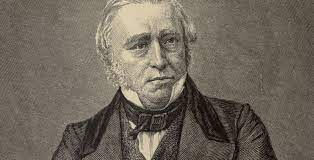
You require reams and reams to describe Lord Thomas Babington Macaulay. By profession, a historian and by occupation, a politician. His lifespan: 25.10.1800-28.12.1859. He was a renowned British historian, a Whig politician, statesman, scholar, poet and essayist. A gold medallist from Cambridge and a law student. He knew German, Dutch and Spanish and was fluent in French. At Cambridge, he twice won the Chancellor’s Medal for English. In 1824, he was made a Fellow of Trinity College, but with the collapse of his father’s business, he was forced to study law. He was called to the bar in 1826 before he started taking interest in politics. Initially, he contributed to Knight’s Quarterly Magazine. Later he began writing essays for The Edinburgh Review.
Before leaving for India Macaulay had written twenty-two essays for The Edinburgh Review. He added three while in India and finished eleven more after returning to England. He contributed five biographies to The Encyclopedia Britannica. His poetry was mostly written in his early career, and most of it is included in his collection of poems titled ‘Lays of Ancient Rome’ (1842). His work ‘The History of England, the first two volumes of which were published in 1849, remained unfinished at the time of his death.
Macaulay remained unmarried though his emotional relationships with his sisters Margaret and Hannah flourished. Margaret died while he was away in India and Hannah accompanied him to India. He decided to move out of Albany, London, where the stairs to his second-floor flat became increasingly difficult for him to negotiate with his ailments while he grew old. To diffuse the situation he bought a house with a garden, within easy walking distance of his brother-in-law. He never remained without a book. Whatever the occasion, Macaulay was rarely without a book in his hand. His reading remained eclectic, including a large number of light and popular novels. ‘Some books which I never should dream of opening at dinner please me at breakfast, and vice versa,’ he cheerfully confessed. Jane Austen remained unrivalled in his literary endearments.
While strolling in his portico, he would memorize in two hours the full 400 lines of Act IV of Merchant of Venice. Another day he would repeat from memory the entire membership of the House of Lords. He kept up his German and Italian and enjoyed burying himself in financial calculations about the stock market and government spending estimates.
A chronic bachelor he breathed his last in his house. He always found solace in books and passed away in his library surrounded by nearly 4,000 books … his biggest love. His global popularity in his own lifetime was rivalled only by Charles Dickens. To kill monotony he often retreated into his voluminous library, where he kept a regular account of his reading.
Thomas Macaulay’s achievements can be classified in three ways: His impact on India, England, and other British colonies. Between 1839 and 1841 he served as the Secretary at War and between 1846 and 1848 as the Paymaster General. He was also a Member of Parliament from the pocket borough of Calne and later M.P. for Leeds. His maiden speech in Parliament advocated the abolition of the civil disabilities of the Jews in the UK. He remained Secretary to the Board of Control under Lord Grey from 1832 until 1833. Later as an aftermath of his father’s dwindling business he accepted a more remunerative office than that of an MP, from which he resigned after the passing of the Government of India Act 1833 to accept an appointment as the first Law Member of the Governor-General’s Council in India between 1834 and 1838. In June 1832, just days after the passing of the Great Reform Act, Britain’s most important constitutional change since the Revolution of 1689, Macaulay was rewarded for his parliamentary eloquence with his first government posting. He was appointed one of the Commissioners of the Board of Control, the quango through which the British Crown managed the affairs of the East India Company. His famous Minute on Indian Education called the ‘Macaulay Minute’ of February 1835 was primarily responsible for the introduction of Western Education in India.
Macaulay spent four years in India, where he devoted his efforts to reforming the Indian criminal code, putting the British and natives on an equal legal footing, establishing an educational system based upon the British model and destroying ancient Indian teaching methods.
A towering intellectual of the 19th century. The high point of his versatile career was the position of colonial administrator in India. He brought the English language and British education to India and by extension to other parts of the world. He even devoted himself to the anti-slavery campaign and believed in good governance. Once he wrote ‘A good government like a good coat is that which fits the body for which it is designed’. He supported the controversial First Opium War against China (1839-1842).
Macaulay recommended English as the official language of secondary education in all schools, and the training of English-speaking Indians as teachers. In his minute, he urged Lord William Bentinck, the then-Governor-General to reform secondary education on practical lines to deliver “useful learning.” Earlier there was no tradition of secondary education in vernacular languages. The institutions supported by the East India Company taught either in Sanskrit or Persian. Hence, he argued, “We have to educate Indians who cannot at present be educated by means of their mother tongue. We must teach them some foreign language.” Macaulay argued that Sanskrit and Persian weren’t more accessible than English to the speakers of the Indian vernacular and the existing Sanskrit and Persian texts were of little use for ‘meaningful learning’. When Macaulay took over as President of the General Committee of Public Instruction its policy was still an uneasy compromise between promoting English education and subsidising the older Arabic, Persian and Sanskrit colleges. So in hindsight had English not been promoted it would have led to the promotion of Arabic, Persian or Sanskrit.
The survival of a pan-Indian judiciary and civil service reforms too would have been impossible without Macaulay’s initiatives. Macaulay’s committee of 1854 gave India her first Civil Service. The act removed the right of patronage to appointments in civil service held by the Court of Directors. The appointment was to be done only by open competition based on merit and was open to all.
He was convinced that India, like medieval Europe, needed to undergo a cultural Renaissance through the infusion of European values, literature, institutions and science, whereas Evangelists saw Western learning as the means to promote Christianity. An obvious way to economise was to send out fewer British officers and rely more on Indians to fill judicial and administrative posts. But that would have meant educating more Indians in English to qualify them for those jobs.
The software revolution in India perhaps wouldn’t have happened had it not been for ‘Macaulay’s minute’ and India might not have been a seamless society had it not been for the famous ‘minute’ either. It was English that allowed the states of South India to successfully neutralise the imposition of Hindi upon them. English thus became the lingua franca of India.
In spite of the countless skills and honours which are not easy to find in a single person, Macaulay had a second nature. He had an anti-Hindu sentiment. He was contemptuous of native Indians, particularly of Hindu customs and religious superstitions. He once wrote ‘I have been persuaded to go to a party at the villa of a very wealthy native who proposes to entertain us with a show of fireworks. As he is a liberal, intelligent man, a friend to education, and in opinions an Englishman, though in morals, I fear, a Hindoo.’ The reference here to morals was to religious affiliation rather than probity of character. And which Indian will ever forget that infamous speech of Macaulay?
In another instance, while visiting a Raja he described Hindu God Ganesha in a very depreciating manner. He said ‘Finally, he was introduced to the household gods and had his first encounter with what was for him the bizarre figure of Ganesh, a fat man with a paunch like Daniel Lambert’s (the fattest man in England), an elephant’s head and trunk, a dozen hands, and a serpent’s tail.
To flatter someone’s evangelical hopes he told him that most Hindus who learned English quickly renounced their own religion for Christianity, unlike Westernized Muslims who held on to their faith. The reason, he explained, was that Hinduism was ‘so extravagantly absurd’ that it was impossible to reconcile with the knowledge of astronomy, geography, or natural history. Islam, on the other hand, belonged to a better family, related as it was to Christianity, and even at its most extreme was rational compared with Hinduism.
But that apart. Despite the anti-Hindu sentiment, Macaulay conceded that Britain as a great trading and manufacturing nation could benefit from India’s wealth and prosperity. Most certainly he liked the wealth but not the Hindus.
***
Posted by Kamlesh Tripathi
*
https://kamleshsujata.wordpress.com
*
Like it and Share it
*
Shravan Charity Mission is an NGO that works for poor children suffering from life-threatening diseases, especially cancer. Our posts are meant for our readers, including children and adults, and have a huge variety in content. We also accept donations for our mission. Should you wish to donate to the cause? The bank details are given below:
NAME OF ACCOUNT: SHRAVAN CHARITY MISSION
Account no: 680510110004635 (BANK OF INDIA)
IFSC code: BKID0006805
*
Kamlesh Tripathi’s Publications
GLOOM BEHIND THE SMILE
(The book is about a young cancer patient. Now archived in 8 prestigious libraries of the US which include Harvard College Library; Harvard University Library; Library of Congress; University of Washington, Seattle; University of Minnesota, Minneapolis; Yale University, New Haven; University of Chicago; University of North Carolina, at Chapel Hill University Libraries. It can also be accessed at MIT through Worldcat.org. Besides, it is also available for reading in libraries and archives of Canada; Cancer Aid and Research Foundation Mumbai; Jaipuria Institute of Management, Noida, India; Shoolini University, Yogananda Knowledge Center, Himachal Pradesh and Azim Premzi University, Bangalore).
ONE TO TANGO … RIA’S ODYSSEY
(Is a book on ‘singlehood’ about a Delhi girl now archived in Connemara Library, Chennai and Delhi Public Library, GOI, Ministry of Culture, Delhi; It is also available for reading in the Indian National Bibliography, March 2016, in the literature section, in Central Reference Library, Ministry of Culture, India, Belvedere, Kolkata-700022)
AADAB LUCKNOW … FOND MEMORIES
(Is a fiction written around the great city of Nawabs—Lucknow. It describes Lucknow in great detail and also talks about its Hindu-Muslim amity, which is the undying characteristic of Lucknow. The book was launched at the Lucknow International Literary Festival in 2014. It is included for reading in Askews and Holts Library Services, Lancashire, U.K; Herrick District Library, Holland and Charlotte-Mecklenburg Library, Mecklenburg County in North Carolina, USA; Black Gold Cooperative Library Administration, Arroyo Grande, California; Berkeley Library, University of California).
REFRACTIONS … FROM THE PRISM OF GOD
(Co-published by Cankids–Kidscan, a pan India NGO and Shravan Charity Mission, that works for child cancer in India. The book is endorsed by Ms Preetha Reddy, MD Apollo Hospitals Group. It was launched at the Lucknow International Literary Festival in 2016).
TYPICAL TALE OF AN INDIAN SALESMAN
(Is a story of an Indian salesman who is, humbly qualified. Yet he fights his way through unceasing uncertainties to reach the top. A good read not only for salesmen. The book was launched on 10th February 2018 at Gorakhpur Lit-Fest. Now available on Amazon, Flipkart and Onlinegatha)
RHYTHM … in poems
(Published in January 2019. The book contains 50 poems. The poems describe our day-to-day life. A few poems from the book have been published in Shillong Times, Bandra Times and Bhavan’s Journal. The book is available on Amazon, Flipkart and Onlinegatha)
MIRAGE
(Published in February 2020. The book is a collection of eight short stories available on Amazon, Flipkart and Notion Press)
AWADH ASSAM AND DALAI LAMA … The Kalachakra
(The story of the man who received His Holiness The Dalai Lama and his retinue in 1959 as a GOI representative when he fled Tibet in 1959. The book was launched on 21st November 2022 by His Holiness The Dalai Lama at Dharmshala. The title is archived in the library of the Department of Information and International Relations (DIIR) Government of Tibet, Tibet Policy Institute (TPI) and the personal library of His Holiness The Dalai Lama. The title is also archived in The Ohio Digital Library, USA. It was recently included in the digital library of the world-renowned company APPLE).
BHAVANS JOURNAL
Short stories, Book reviews and Articles published in Bhavan’s Journal: 1. Reality and Perception, 15.10.19; 2. Sending the Wrong Message, 31.5.20; 3. Eagle versus Scholars June, 15 & 20, 2020; 4. Indica, 15.8.20; 5. The Story of King Chitraketu, August 31 2020; 6. Breaking Through the Chakravyuh, September 30 2020. 7. The Questioning Spouse, October 31, 2020; 8. Happy Days, November 15, 2020; 9. The Karma Cycle of Paddy and Wheat, December 15, 2020; 10. Power Vs Influence, January 31, 2021; 11. Three Refugees, March 15, 2021; 12. Rise and Fall of Ajatashatru, March 31, 2021; 13. Reformed Ruler, May 15, 2021; 14. A Lasting Name, May 31, 2021; 15. Are Animals Better Teachers? June 16, 2021; 16. Book Review: The Gram Swaraj, 1.7.21; 17. Right Age for Achievements, 15.7.21; 18. Big Things Have Small Beginnings, 15.8.21; 19. Where is Gangaridai?, 15.9.21; 20. Confront the Donkey Within You 30.9.21; 21. Know Your Strengths 15.10.21; 22. Poverty 15.11.21; 23. Top View 30.11.21; 24. The Bansuriwala 15.1.22; 25. Sale of Alaska 15.2.22; 26. The Dimasa Kingdom 28.2.22; 27. Buried Treasure 15.4.22; 28. The Kingdom of Pragjyotisha 30.4.22; 29. Who is more useful? 15.5.22; 30. The White Swan from Lake Mansarovar 30.6.22; 31. Bhool Bhulayya 15.9.22; 32. Good Karma 30.9.22; 33. Good Name vs Bad Name 15.10.22; 34. Uttarapath—The Grand Trunk Road 1.12.22; 35. When Gods Get Angry 1.1.23; 36. Holinshed’s Chronicles 15.1.23; 37. Theogony 15.2.23; 38. Poem: Mother 14.5.23; 39. THE NAG MANDIR 30.6.23; 40. The Story of Garuda 30.7.23; 41. Janmabhoomi vs Karmabhoomi 31.8.23; 42. The Ghost Town of Kuldhara 15.9.23; 43. The Tale of Genji 15.10.23;
SHILLONG TIMES—SUNDAY EDITION
ARTICLES & POEMS: 1. POEM: HAPPY NEW YEAR 8.1.23; 2. POEM: SPRING 12.3.23; 3. POEM: RIGHT AND WRONG 20.3.23; 4. THE GUSH OF EMOTION—WRITING, 26.3.23; 5. THE NAG MANDIR, 7.5.23; 6. POEM: MOTHER 7.5.23; 7. POEM: RAIN RAIN 9.7.23; 8. POEM: YOU COME ALONE YOU GO ALONE 6.8.23; 9. RAIN RAIN (SECOND TIME) 10.8.23; 10. POEM: GURU TEACHER 10.8.23; 11. POEM: AUTUMN … THE INTERIM HEAVEN 15.10.23;
BANDRA TIMES, MUMBAI
ARTICLES & POEMS: 1. POEM: SPRING, 1.4.23; 2. POEM: MOTHER, 1.6.23; 3. POEM: RAIN RAIN, 1.8.23;
ARTICLES IN THE DIGITAL MAGAZINE ESAMSKRITI
29.12.2020: INDICA BY MEGASTHENES; 14.3.22: ABOUT THE DIMASA KINGDOM ASSAM; 10.12.22: GRAND TRUNK ROAD-UTTARAPATH; 5.10.23: THE GHOST TOWN OF KULDHARA NEAR JAISALMER;
(ALL THE ABOVE BOOK TITLES ARE AVAILABLE FOR SALE ON AMAZON, FLIPKART AND OTHER ONLINE STORES OR YOU COULD EVEN WRITE TO US FOR A COPY)
*****











 Shravan charity mission