Category Archives: snippet

INTERESTING FACTS & QUOTES EPISODE-22

Copyright@shravancharitymission

Though William Shakespeare’s entire oeuvre –37 plays and 154 sonnets—is brimful with words of wisdom for every stage and situation of human existence, one of the most quoted aphorisms of his is, “Always the wrong person gives you the right lesson in life.” It may sound a bit contrary and even oxymoronic at first blush, but it’s pregnant with profound wisdom.

Purchasing power parity (PPP) is an economic theory that compares different countries’ currencies through a “basket of goods” approach. According to this concept, two currencies are in equilibrium or at par when a basket of goods (taking into account the exchange rate) is priced the same in both countries. Closely related to PPP is the law of one price (LOOP), which is an economic theory that predicts that after accounting for differences in interest rates and exchange rates, the cost of something in country X should be the same as that in country Y in real terms.

Kamala Devi Harris is the first person of Indian descent to post a credible candidacy for the Democratic Party nomination for US president. Daughter of an Indian cancer researcher and a Jamaican economics professor, for many Desi Americans she is proof that they have ‘arrived.’

Indians on an average do believe that things are getting better: 74% of them, according to a recent Ipsos-MORI poll. Indians are more optimistic than people in wealthy Western countries like those in Europe, North America and Oceania.

India has made significant improvements in reducing HIV infections—from 5.1 millions in 2003 to 2.1 millions in 2017—but it still has the world’s third largest HIV-infected population after South Africa and Nigeria.

India has the highest population of cattle in the world.

India is also the biggest milk producer in the world.

Indore is India’s cleanest city (winner of the Safaigiri Award of 2018).

Agriculture, mining, manufacturing and construction account for 45% of India’s GDP.

The global market in merchandise exports today is approximately $15 trillion. Share of India in these exports is only 1.6% compared with 12% that of China.

Nearly half of India’s farms are less than half hectare, a size too small to yield adequate living standard for a family of five—Arvind Panagariya.

I have never been to mars. What will we discover when we get there? A red landscape, quiet horizon and frozen glaciers? Probably all is as beautiful, in its own way, as the Earth was, thousands of years ago—MA YANSONG.

History is testimony that whenever the majority developed a sense of victim hood, it led to genocide of minorities.

Amongst the great man made places visible from outer space are the pyramids of Egypt, the Great-wall of China, and the Palm islands of Dubai. Now added to the list is the 600-foot figure of Sardar Patel—so tall, at dusk it casts a mile-long shadow over an enormous dry agriculture stretch. The base of the statue houses a research centre dedicated to good governance and agricultural development.

Donald trump is now arguably the most joked about US president on a parody-per-day basis.

Eckhart was once sitting alone under a grove of trees in a lonely place. A friend who was passing by went up to him and said, “I saw you sitting, lonely, and I thought I would keep you company.” Eckhart replied, “I was with myself, but you have come, and if anything, I am feeling lonely now.”

A key facet of water policy must be induction of technology to promote reuse. Recycling does take place in India but it’s nowhere close to the level needed. Elsewhere, recycling has moved to another level. Singapore recycles water for drinking.

Pre-monsoon rainfall from March to April has shown a 27% deficiency. Separately data put out by government shows that water levels in India’s major reservoirs and river basins have fallen to 21% of its average of the last decade.

Agriculture consumes most of India’s water resources.

In March 2019 the Baltic State of Estonia’s parliamentary elections saw almost half the votes cast through E-voting. That should be the vision of our future.

Nobel Prize in science are not given for R&D, they are given for fundamental discoveries.

Gagandeep Kang from Faridabad’s Transnational Health Science and Technology Institute is the first Indian woman to be made fellow of the Royal Society of London—now in the company of Isaac Newton, Albert Einstein and Charles Darwin.

All told private investment alone remains the key to sustained growth.

Current Account Deficit is simply the (investment) – (savings) gap. Therefore if savings are higher than reported, the Current Account Deficit (CAD) will be lower.

Origin of GreenEyed Monster. The term greeneyed monster, meaning jealousy, first appears in Shakespeare’s Othello, when Iago says, “Oh, beware, my lord, of jealousy! It is the greeneyed monster which doth mock the meat it feeds on.”

The phrase luck of the Irish is commonly thought to mean “extreme good fortune.” … “During the gold and silver rush years in the second half of the 19th century, a number of the most famous and successful miners were of Irish and Irish American birth

INTERESTING LINES

The moment I realised God sitting in the temple of every human body, the moment I stand in reverence  before every human being and see God in him—that moment I am free from bondage, and I am free—Swami Vivekananda.

Rabindra Nath Tagore—‘The mind is without fear; and the head is held high; where knowledge is free; where the world has not been broken into fragments by narrow domestic walls.’

Brahminism or Brahminical are not to be understood as related to a community or caste called Brahmins as explained by Babasaheb Ambedkar himself.

Rauf Akhtar stated in his Taslees: Khud ko na kar itna majboor khud ko na kar paamal tu hi woh khuda hai jiski hai tujhe talash.

A commonly quoted aphorism says, ‘New beginnings are often disguised as painful endings.’

By Kamlesh Tripathi

*

https://kamleshsujata.wordpress.com

*

Share it if you like it

*

Shravan Charity Mission is an NGO that works for poor children suffering from life threatening diseases especially cancer. Our posts are meant for our readers that includes both children and adults and it has a huge variety in terms of content. We also accept donations for our mission. Should you wish to donate for the cause. The bank details are given below:

NAME OF ACCOUNT: SHRAVAN CHARITY MISSION

Account no: 680510110004635 (BANK OF INDIA)

IFSC code: BKID0006805

*

Our publications

GLOOM BEHIND THE SMILE

(The book is about a young cancer patient. Now archived in 7 prestigious libraries of the US, including, Harvard University and Library of Congress. It can also be accessed in MIT through Worldcat.org. Besides, it is also available for reading in Libraries and archives of Canada and Cancer Aid and Research Foundation Mumbai)  

ONE TO TANGO … RIA’S ODYSSEY

(Is a book on ‘singlehood’ about a Delhi girl now archived in Connemara Library, Chennai and Delhi Public Library, GOI, Ministry of Culture, Delhi)

AADAB LUCKNOW … FOND MEMORIES

(Is a fiction written around the great city of Nawabs—Lucknow. It describes Lucknow in great detail and also talks about its Hindu-Muslim amity. That happens to be its undying characteristic. The book was launched in Lucknow International Literary Festival of 2014)

REFRACTIONS … FROM THE PRISM OF GOD

(Co-published by Cankids–Kidscan, a pan India NGO and Shravan Charity Mission, that works for Child cancer in India. The book is endorsed by Ms Preetha Reddy, MD Apollo Hospitals Group. It was launched in Lucknow International Literary Festival 2016)

TYPICAL TALE OF AN INDIAN SALESMAN

(Is a story of an Indian salesman who is, humbly qualified. Yet he fights his ways through unceasing uncertainties to reach the top. A good read not only for salesmen. The book was launched on 10th February, 2018 in Gorakhpur Lit-Fest. Now available in Amazon, Flipkart and Onlinegatha)

RHYTHM … in poems

(Published in January 2019. The book contains 50 poems. The poems describe our day to day life. The book is available in Amazon, Flipkart and Onlinegatha)

(ALL THE ABOVE TITLES ARE AVAILABLE FOR SALE IN AMAZON, FLIPKART AND OTHER ONLINE STORES OR YOU COULD EVEN WRITE TO US FOR A COPY)

*****


SHORT STORY: Rs 7

Copyright@shravancharitymission

    Nobel Laureate Professor C. V. Raman after retirement wished to open a Research Institute in Bangalore. So, he gave an advertisement in the newspapers for recruiting three physicists. Lots of eager scientists applied thinking that even if they were not selected, they would at least get an opportunity to meet the Nobel Laureate. 
    In the preliminary selection, five candidates were selected and the final interview was to be taken by Professor C V Raman himself. Where, three were selected out of the five. 
    Next day Professor Raman was taking a walk around when he found one young man waiting to meet him. He realized that it was the same man who was not selected.

    Professor Raman, asked him, what was the problem and he replied that there was no problem at all, but after finishing the interview the office had paid him ₹7 extra than his claim and he wanted to return it. But because the accounts had closed, they could not take back the amount and asked him to enjoy.

    The man said that it is not right for him to accept the money which did not belong to him. Professor C V Raman said, so you wish to return ₹7 and he took the money from him and started walking back.

    But after taking a few steps forward Professor Raman asked the young man to meet him the next day at 10.30 am. The man was happy that he would get an opportunity to meet the great man again.

    When he met the Professor next day the Nobel Laureate told the young man “son, you failed in the Physics test but you have passed the honesty test. So I have created another post for you”.     The young man was surprised and very happy to join.
    Later on he too became a Nobel Laureate in 1983. This young man was no one else but Professor Subrahmanyan Chandrashekhar (US Citizen of Indian Origin).     He has written a book on how seven rupees changed his life. This was how honesty made a great scientist.

    What is lacking in talent can most often be made up for, with hard work, guidance and help from others. But what is lacking in character and values can’t be made up for with anything ever.
    Which is why Einstein had said, “Don’t try to be a person of success, but always be a person of value.” 

By Kamlesh Tripathi

*

https://kamleshsujata.wordpress.com

*

Share it if you like it

*

Shravan Charity Mission is an NGO that works for poor children suffering from life threatening diseases especially cancer. Our posts are meant for our readers that includes both children and adults and it has a huge variety in terms of content. We also accept donations for our mission. Should you wish to donate for the cause. The bank details are given below:

NAME OF ACCOUNT: SHRAVAN CHARITY MISSION

Account no: 680510110004635 (BANK OF INDIA)

IFSC code: BKID0006805

*

Our publications

GLOOM BEHIND THE SMILE

(The book is about a young cancer patient. Now archived in 7 prestigious libraries of the US, including, Harvard University and Library of Congress. It can also be accessed in MIT through Worldcat.org. Besides, it is also available for reading in Libraries and archives of Canada and Cancer Aid and Research Foundation Mumbai)  

ONE TO TANGO … RIA’S ODYSSEY

(Is a book on ‘singlehood’ about a Delhi girl now archived in Connemara Library, Chennai and Delhi Public Library, GOI, Ministry of Culture, Delhi)

AADAB LUCKNOW … FOND MEMORIES

(Is a fiction written around the great city of Nawabs—Lucknow. It describes Lucknow in great detail and also talks about its Hindu-Muslim amity. That happens to be its undying characteristic. The book was launched in Lucknow International Literary Festival of 2014)

REFRACTIONS … FROM THE PRISM OF GOD

(Co-published by Cankids–Kidscan, a pan India NGO and Shravan Charity Mission, that works for Child cancer in India. The book is endorsed by Ms Preetha Reddy, MD Apollo Hospitals Group. It was launched in Lucknow International Literary Festival 2016)

TYPICAL TALE OF AN INDIAN SALESMAN

(Is a story of an Indian salesman who is, humbly qualified. Yet he fights his ways through unceasing uncertainties to reach the top. A good read not only for salesmen. The book was launched on 10th February, 2018 in Gorakhpur Lit-Fest. Now available in Amazon, Flipkart and Onlinegatha)

RHYTHM … in poems

(Published in January 2019. The book contains 50 poems. The poems describe our day to day life. The book is available in Amazon, Flipkart and Onlinegatha)

(ALL THE ABOVE TITLES ARE AVAILABLE FOR SALE IN AMAZON, FLIPKART AND OTHER ONLINE STORES OR YOU COULD EVEN WRITE TO US FOR A COPY)

*****


INTERESTING FACTS & QUOTES EPISODE 21

Copyright@shravancharitymission

Floccinaucinihilipilification: is the longest non-technical word in the English language. It means an estimation of something as worthless. It has 29 letters which is more than the entire 26 letters of English Language.

Antidisestablishmentarianism: The word has 28 letters which again is more than the entire 26 letters of English language. It means opposite of disestablishment often used in the context of the Church of England.

                    Let’s not forget Christopher Columbus was looking for India when he lost his way to America. Funnily in his ‘letter of the first voyage’ explaining why he was looking for India, he mentioned the word ‘gold’ 17 times, while he mentioned the word ‘Lord’ and ‘God’ only once.

                ‘Lucky 7′ is the world’s favourite number. There are seven days in a week, seven colours in a rainbow, seven notes in a musical scale, seven seas and above all seven continents.

                Anytime you ask people about happy moments in their lives, they have to really think hard. But ask them about unpleasant or sad moments they will come up easily with many.

                Fake news: There are some 560 million or say (56 crore) internet users and 354 million or say (35 crore) smartphone devices that are either willing recipients, distributors or even victims of this growing phenomenon in India. In many cases all three.

                    Law of ‘diminishing returns’ means: Every incremental acquisition (maybe a costlier car) gives less incremental happiness than the earlier acquisition did.

Around 56% to 58% of GDP is generated by private consumption.

Meteorological department’s first 2019, southwest, monsoon forecast, puts it at, “near normal”, or 96% of the long period average (LPA) of 89 cm. Private forecaster Skymet Weather said, the monsoon would be below normal at 93% of LPA.

From a long term perspective, India is currently in the midst of a dry epoch. Government says that between 1951 and 2007, southwest monsoon has shown a decreasing trend. This monsoon provides about 75% of India’s annual rainfall, significantly influencing food production.

                    ‘Break water to storm’ is a type of phrase which means that we take a measure or make a structure with concrete or with rock at a sea shore to protect coastline from dangerous wave and storm which often take place in sea. Some are naturally created and some barriers made manually are known as breakwater.

            Ashvatta trees are those whose roots are in the air and branches touch the ground, symbolizing the subtle truth that the world we observe is the inversion of the real.

              Orwellian is an adjective describing the situation, idea, or societal condition that George Orwell identified as being destructive to the welfare of a free and open society.

        MAM Ramaswamy- Chennai industrialist holds the record for the most wins in Indian Turf (horse-racing) history.

                  Barely 4% of all households in India are headed by women. Over 70% of currently married men are household heads compared to 3% of married women.

                 The average protein intake of a person in India through normal diet has dipped 6-10% in the past two decades with almost 86% of rural and 70% of urban population not getting the government designated 2400 kilo calories per day. While the richest get over 2518 kilo calories each day the poorest get less than 1679 kilo calories—a difference of almost 50%.

                US and India are able to export only about a quarter of what they import from China.

              In the 1950s private health costs were, just between, 5% to 10%, of the total health bill of the country. Today, the position is reversed and the change has not been in slow motion. There has been an eight fold increase in the number of private hospitals between 1980 and now. This is why, the NSS records, as many as 24% of rural households and as many as 18% of urban households fall into the debt trap on account of medical expenses.

               According to the most recent national survey, around 5 crore people in India are pushed below poverty line due to high out-of-pocket health expenditures.

                  As of the last count there were 20 lakh major temples, three lakh major mosques and thousands of churches in India.

               In the recent past UNESCO estimated that India had lost 50,000 artifacts till 1989. I would say the number is much bigger. India has been able to recover only about 40 pieces of stolen heritage since independence. Fascinatingly 27 of these have come back only in the last 4 years.

                  With half of India’s farm less than half hectare in size many of its farmers need decent jobs to escape poverty.

                In past centuries people suffered from a severe lack of information which made it difficult to verify what’s true. Today we suffer from too much information, so people are too distracted to investigate the truth.

Mountstuart Elphinstone was a Scottish statesman and historian, associated with the government of British India. He later became the Governor of Bombay where he is credited with the opening of several educational institutions accessible to the Indian population.

                 In a single day there are a 50 million exchanges on snapchat. 1.15 billion opinions on facebook, 500 million twitter feeds and a multitude of reactions on newspaper and TV.

And now some interesting lines:

               These days, to find fools is not difficult, and to find people who fool others, is even easier.

                 Tradition is a guide and not a jailor—said SOMERSET MAUGHAM

            George Mikes (Hungarian born-British journalist) said this of Englishmen and queues: ‘An Englishman even if he is alone, forms an orderly queue of one.’

              India has always been a difficult country for Indians.

                   If you are not born with a silver spoon, you better become a spoon.

By Kamlesh Tripathi

*

https://kamleshsujata.wordpress.com

*

Share it if you like it

*

Shravan Charity Mission is an NGO that works for poor children suffering from life threatening diseases especially cancer. Our posts are meant for our readers that includes both children and adults and it has a huge variety in terms of content. We also accept donations for our mission. Should you wish to donate for the cause. The bank details are given below:

NAME OF ACCOUNT: SHRAVAN CHARITY MISSION

Account no: 680510110004635 (BANK OF INDIA)

IFSC code: BKID0006805

*

Our publications

GLOOM BEHIND THE SMILE

(The book is about a young cancer patient. Now archived in 7 prestigious libraries of the US, including, Harvard University and Library of Congress. It can also be accessed in MIT through Worldcat.org. Besides, it is also available for reading in Libraries and archives of Canada and Cancer Aid and Research Foundation Mumbai)  

ONE TO TANGO … RIA’S ODYSSEY

(Is a book on ‘singlehood’ about a Delhi girl now archived in Connemara Library, Chennai and Delhi Public Library, GOI, Ministry of Culture, Delhi)

AADAB LUCKNOW … FOND MEMORIES

(Is a fiction written around the great city of Nawabs—Lucknow. It describes Lucknow in great detail and also talks about its Hindu-Muslim amity. That happens to be its undying characteristic. The book was launched in Lucknow International Literary Festival of 2014)

REFRACTIONS … FROM THE PRISM OF GOD

(Co-published by Cankids–Kidscan, a pan India NGO and Shravan Charity Mission, that works for Child cancer in India. The book is endorsed by Ms Preetha Reddy, MD Apollo Hospitals Group. It was launched in Lucknow International Literary Festival 2016)

TYPICAL TALE OF AN INDIAN SALESMAN

(Is a story of an Indian salesman who is, humbly qualified. Yet he fights his ways through unceasing uncertainties to reach the top. A good read not only for salesmen. The book was launched on 10th February, 2018 in Gorakhpur Lit-Fest. Now available in Amazon, Flipkart and Onlinegatha)

RHYTHM … in poems

(Published in January 2019. The book contains 50 poems. The poems describe our day to day life. The book is available in Amazon, Flipkart and Onlinegatha)

(ALL THE ABOVE TITLES ARE AVAILABLE FOR SALE IN AMAZON, FLIPKART AND OTHER ONLINE STORES OR YOU COULD EVEN WRITE TO US FOR A COPY)

*****

OTHELLO by William Shakespeare

Copyright@shravancharitymission

Khidki (Window)

–Read India Initiative—

This is only an attempt to create interest in reading. We may not get the time to read all the books in our lifetime. But such reviews, talk and synopsis will at least convey what the book is all about.

    Othello is also referred as the (The Tragedy of Othello, or the Moor of Venice) a tragedy written by William Shakespeare, believed to have been written in 1603. It is based on the story Un Capitano Moro (“A Moorish Captain”) by Cinthio, a disciple of Boccaccio, first published in 1565. The story revolves around its two central characters: Othello, a Moorish general in the Venetian army and his unfaithful ensign, Iago. Given its varied and enduring themes of racism, love, jealousy, betrayal, revenge and repentance. Othello is still often performed in professional and community theatre alike, and has been the source for numerous operatic, film, and literary adaptations. .

    Othello begins on a street in Venice, in the midst of an argument between Roderigo, a rich man, and Iago. Roderigo has been paying Iago to help him in his suit to Desdemona. But Roderigo has just learned that Desdemona has married Othello, a general whom Iago begrudgingly serves as an ensign. Iago says he hates Othello, who recently passed him over for the position of lieutenant in favor of an inexperienced soldier Michael Cassio. Unseen, Iago and Roderigo cry out to Brabanzio that his daughter Desdemona has been stolen by and married off to Othello, the Moor.

    Brabanzio finds that his daughter is indeed missing, and he gathers some officers to find Othello. Not wanting his hatred of Othello to be known, Iago leaves Roderigo and hurries back to Othello before Brabanzio sees him. At Othello’s lodgings, Cassio arrives with an urgent message from the duke: Othello’s help is needed in the matter of the imminent Turkish invasion of Cyprus. Not long afterward, Brabanzio arrives with Roderigo and others, and accuses Othello of stealing his daughter by way of witchcraft. When he finds out that Othello is on his way to speak with the duke. Brabanzio decides to go along and accuse Othello before the assembled senate.

    But Brabanzio’s plan backfires. The duke and the senate are very sympathetic towards Othello. Given a chance to speak for himself, Othello explains that he wooed and won Desdemona not by witchcraft but with the stories of his adventures in travel and war. The duke finds Othello’s explanation convincing, and Desdemona herself enters at this point to defend her choice in marriage and to announce to her father that her allegiance is now towards her husband.

    By now Brabanzio is frustrated, but acquiesces and allows the senate meeting to resume. The duke says that Othello must go to Cyprus to aid in the defence against the Turks, who are headed for the island. Desdemona insists that she accompany her husband on his trip, and preparations are made for them to depart that very night.

    In Cyprus the following day, two gentlemen stand on the shore with Montano, the governor of Cyprus. A third gentleman arrives and reports that the Turkish fleet has been wrecked in a storm at the sea. Cassio, whose ship did not suffer the same fate, arrives soon after, followed by a second ship carrying Iago, Roderigo, Desdemona, and Emilia, Iago’s wife. Once they have landed, Othello’s ship is sighted, and the group goes to the harbour. As they wait for Othello, Cassio greets Desdemona by clasping her hand. While watching them, Iago tells the audience that he will use, “as little a web as this hand-holding” to ensnare Cassio.

    Othello arrives, greets his wife, and announces that there will be reveling or enjoyment that evening to celebrate Cyprus’s safety from the Turks. Once everyone has left, Roderigo complains to Iago that he has no chance of breaking up Othello’s marriage. Iago assures Roderigo that as soon as Desdemona’s, “blood is made dull with the act of sport,” she will lose interest in Othello and seek sexual satisfaction elsewhere. However, Iago warns that “elsewhere” will likely be with Cassio. Iago counsels Roderigo that he should cast Cassio into disgrace by starting a fight with Cassio at the evening’s party revels. In a soliloquy, Iago explains to the audience that eliminating Cassio is the first crucial step in his plan to ruin Othello. That night, Iago gets Cassio drunk and then sends Roderigo to start a fight with him. Apparently provoked by Roderigo, Cassio chases Roderigo across the stage. Governor Montano attempts to hold Cassio down, but Cassio stabs him. Iago sends Roderigo to raise an alarm in the town.

    The alarm is rung, and Othello, who had left earlier with plans to consummate his marriage, soon arrives to still the commotion. When Othello demands to know who began the fight, Iago feigns reluctance to implicate his “friend” Cassio, but he ultimately tells the whole story. Othello then strips Cassio of his rank of lieutenant. At this Cassio is extremely upset, and he laments to Iago, once everyone else has gone, that his reputation has been ruined forever. Iago assures Cassio that he can get back into Othello’s good graces by using Desdemona as an intermediary. Then in a soliloquy, Iago tells us that he will frame Cassio and Desdemona as lovers to make-Othello jealous.

    In an attempt to reconcile, Cassio sends some musicians to play beneath Othello’s window. Othello, however, sends his clown to tell the musicians to go away. Hoping to arrange a meeting with Desdemona, Cassio asks the clown, a peasant who serves Othello, to send Emilia to him. After the clown departs, Iago passes by and tells Cassio that he will get Othello out of the way so that Cassio can speak with Desdemona privately. Othello, Iago, and a gentleman go to examine some of the town’s fortifications.

    Desdemona is quite sympathetic to Cassio’s request and promises that she will do everything she can to make Othello forgive his former lieutenant. As Cassio is about to leave, Othello and Iago return. Feeling uneasy, Cassio leaves without talking to Othello. Othello inquires whether it was Cassio who just parted from his wife, and Iago, beginning to kindle Othello’s fire of jealousy, replies, “No, sure, I cannot think it, that he would steal away so guilty-like, Seeing your coming”.

    Othello turns upset and edgy, when Iago furthers his goal of removing both Cassio and Othello by suggesting that Cassio and Desdemona are involved in an affair. Desdemona’s entreaties to Othello to reinstate Cassio as lieutenant add to Othello’s almost immediate conviction that his wife is unfaithful. After Othello’s conversation with Iago, Desdemona comes to call Othello for supper and finds him feeling unwell. She offers him her handkerchief to wrap around his head, but he finds it to be “too little” and lets it drop to the floor. Desdemona and Othello go for dinner, when Emilia picks up the handkerchief, mentioning to the audience that Iago has always wanted her to steal it for him.

    Iago is ecstatic when Emilia gives him the handkerchief, which he plants in Cassio’s room as “evidence” of his affair with Desdemona. When Othello demands “ocular or visual proof” that his wife is unfaithful, Iago says that he has seen Cassio “wipe his beard” with Desdemona’s handkerchief—the first gift Othello ever gave her. The first seed of suspicion is thus born. Othello vows to take vengeance on his wife and on Cassio, and Iago vows that he will help him. When Othello sees Desdemona later that evening, he demands the handkerchief of her, but she tells him that she does not have it with her and attempts to change the subject by continuing her request or suit on Cassio’s behalf. This drives Othello into a further rage, and he storms out. Later, Cassio comes onstage, wondering about the handkerchief he has just found in his chamber. He is greeted by Bianca, a prostitute, whom he asks to take the handkerchief and copy its embroidery for him.

    Through Iago’s machinations, Othello becomes so consumed by jealousy that he falls into a trance and has a fit of epilepsy. As he writhes on the ground, Cassio walks in, but Iago tells him to come back in a few minutes to talk. Once Othello recovers, Iago tells him of the meeting he has planned with Cassio. He instructs Othello to hide nearby and watch as Iago extracts from Cassio the story of his affair with Desdemona. While Othello stands out of earshot, or beyond the point from where he could listen clearly Iago pumps Cassio for information about Bianca the prostitute, causing Cassio to laugh and confirm Othello’s suspicions. Bianca herself then enters with Desdemona’s handkerchief, reprimanding Cassio for making her copy out the embroidery of a love token given to him by another woman. When Desdemona enters with Lodovico and Lodovico subsequently gives Othello a letter from Venice calling him home and instating Cassio as his replacement, Othello goes over the edge, striking Desdemona and then storming out.

    That night, Othello accuses Desdemona of being a whore. He ignores her protestations, seconded by Emilia, that she is innocent. Iago assures Desdemona that Othello is simply upset about matters of state. Later that night, however, Othello ominously tells Desdemona to wait for him in bed and to send Emilia away. Meanwhile, Iago assures the still-complaining Roderigo that everything is going as planned. And in order to prevent Desdemona and Othello from leaving, Roderigo must kill Cassio. Then he will have a clear avenue to his love.

    Iago instructs Roderigo to ambush Cassio, but Roderigo misses his mark and Cassio wounds him instead. Meanwhile, Iago wounds Cassio and runs away. When Othello hears Cassio’s cry, he assumes that Iago has killed Cassio as he said he would. Meanwhile, Lodovico and Graziano enter to see what the commotion is all about. Iago enters shortly thereafter and flies into a pretend rage as he “discovers” Cassio’s assailant Roderigo, whom he murders. Cassio is taken to have his wound dressed.

Meanwhile, Othello stands over his sleeping wife in their bedchamber, preparing to kill her. Desdemona wakes and attempts to plead with Othello. She asserts her innocence, but Othello smothers her. Emilia enters with the news that Roderigo is dead. Othello asks if Cassio is dead too and is mortified when Emilia says he is not. After crying out that she has been murdered, Desdemona changes her story before she dies, claiming that she has committed suicide. Emilia asks Othello what happened, and Othello tells her that he has killed Desdemona for her infidelity, which Iago brought to his attention.

    Montano, Graziano, and Iago come into the room. Iago attempts to silence Emilia, who realizes what Iago has done. At first, Othello insists that Iago has told the truth, citing the handkerchief as evidence. Once Emilia tells him how she found the handkerchief and gave it to Iago, Othello is devastated and begins to weep. He tries to kill Iago but is disarmed. Iago kills Emilia and flees, but he is caught by Lodovico and Montano (Lodovico is a member of Venice’s diplomatic service and also a cousin of Desdemona, who return holding Iago captive. They also bring Cassio, who is now in a chair because of his wound. Othello wounds Iago but is disarmed. Lodovico tells Othello that he must come with them back to Venice to be tried. Othello makes a speech about how he would like to be remembered, then kills himself with a sword he had hidden on his person. The play closes with a speech by Lodovico. He gives Othello’s house and goods to Graziano who is Desdemona’s uncle and orders that Iago be executed.

    People like Iago have lived in all centuries. We should therefore be careful about them. And of course we should never act in haste and suspicion the way Othello did and that ended his life, and that of his wife Desdemona too in great tragedy.

By Kamlesh Tripathi

*

https://kamleshsujata.wordpress.com

*

Share it if you like it

*

Shravan Charity Mission is an NGO that works for poor children suffering from life threatening diseases especially cancer. Our posts are meant for our readers that includes both children and adults and it has a huge variety in terms of content. We also accept donations for our mission. Should you wish to donate for the cause. The bank details are given below:

NAME OF ACCOUNT: SHRAVAN CHARITY MISSION

Account no: 680510110004635 (BANK OF INDIA)

IFSC code: BKID0006805

*

Our publications

GLOOM BEHIND THE SMILE

(The book is about a young cancer patient. Now archived in 7 prestigious libraries of the US, including, Harvard University and Library of Congress. It can also be accessed in MIT through Worldcat.org. Besides, it is also available for reading in Libraries and archives of Canada and Cancer Aid and Research Foundation Mumbai)  

ONE TO TANGO … RIA’S ODYSSEY

(Is a book on ‘singlehood’ about a Delhi girl now archived in Connemara Library, Chennai and Delhi Public Library, GOI, Ministry of Culture, Delhi)

AADAB LUCKNOW … FOND MEMORIES

(Is a fiction written around the great city of Nawabs—Lucknow. It describes Lucknow in great detail and also talks about its Hindu-Muslim amity. That happens to be its undying characteristic. The book was launched in Lucknow International Literary Festival of 2014)

REFRACTIONS … FROM THE PRISM OF GOD

(Co-published by Cankids–Kidscan, a pan India NGO and Shravan Charity Mission, that works for Child cancer in India. The book is endorsed by Ms Preetha Reddy, MD Apollo Hospitals Group. It was launched in Lucknow International Literary Festival 2016)

TYPICAL TALE OF AN INDIAN SALESMAN

(Is a story of an Indian salesman who is, humbly qualified. Yet he fights his ways through unceasing uncertainties to reach the top. A good read not only for salesmen. The book was launched on 10th February, 2018 in Gorakhpur Lit-Fest. Now available in Amazon, Flipkart and Onlinegatha)

RHYTHM … in poems

(Published in January 2019. The book contains 50 poems. The poems describe our day to day life. The book is available in Amazon, Flipkart and Onlinegatha)

(ALL THE ABOVE TITLES ARE AVAILABLE FOR SALE IN AMAZON, FLIPKART AND OTHER ONLINE STORES OR YOU COULD EVEN WRITE TO US FOR A COPY)

*****

The Atomic Bombing of Japan in World War II, 1945

Copyright@shravancharitymission

    The United States dropped atomic bombs on the Japanese cities of Hiroshima and Nagasaki in August 1945 only to hasten the end of the World War II in the Pacific. Although, it was the first, and to date the only, actual use of such weapons of “mass destruction,” the mushroom clouds have hung over every military and political policy since then.

    Less than five months after the sneak attack by the Japanese on Pearl Harbour, in Hawaii the Americans launched a small carrier-based bomber raid against Tokyo. While the attack was good for the American morale, it accomplished little other than to demonstrate to the Japanese that their shores were not invulnerable. Later in the war, U.S. bombers were able to attack the Japanese home islands from bases in China, but it was not until late 1944 that the United States could mount a sustained bombing campaign.

    Because of the distance to Japan, American bombers could not reach the targets and safely return to friendly bases in the Pacific until the island-hopping campaign had captured the Northern Mariana Islands located in (Western north pacific islands). From bases on the Mariana Islands, long-range Boeing B-29 Super-fortresses conducted high altitude bombing runs on November 24, 1944. On March 9, 1945, an armada of 234 B-29s descended to less than 7,000 feet and dropped 1,667 tons of incendiaries on Tokyo. By the time the fire storm finally abated, a sixteen-square-mile corridor that had contained a quarter million homes was in ashes, and more than 80,000 Japanese, mostly civilians, lay dead. Only the Allied fire-bombing of Dresden, in East Germany, the previous month, had killed 135,000, people that exceeded the destruction of the Tokyo raid.

    Both Tokyo and Dresden were primarily civilian rather than military targets. Prior to World War II, international law regarded the bombing of civilians as illegal and barbaric. But after several years of warfare, however, neither the Allies nor the Axis distinguished between military and civilian air targets. Interestingly, while a pilot could drop tons of explosives and firebombs on civilian cities, an infantryman often faced a court-martial for even minor mistreatment of non-combatants. 

    Despite the air raids and their shrinking territory outside their home islands, the Japanese fought on. Their warrior code did not allow for surrender, and soldiers and civilians alike often chose suicide rather than giving up. By July 1945, the Americans were launching more than 1200 bombing sorties a week against Japan. The bombing had killed more than a quarter million (about 2.50 lacs) and left more than nine million homeless. Still, the Japanese gave no indication of surrender as the Americans prepared to invade the home islands.

    While the air attacks and plans for a land invasion continued in the Pacific, a top-secret project back in the United States was coming to fruition. On July 16, 1945, the Manhattan Engineer District successfully carried out history’s first atomic explosion. When President Harry Truman learned of the successful experiment, he remarked in his diary, “It seems to be the most terrible thing ever discovered, but it can be made the most useful.” 

    Truman realized that the “most terrible thing” could shorten the war and prevent as many as a million Allied casualties, as well as untold Japanese deaths, by preventing a ground invasion of Japan. On July 27, the United States issued an ultimatum: surrender or the U.S. would drop a “super weapon.” But Japan refused. In the early morning hours of August 6, 1945, a B-29 Superfortress Bomber named Enola Gay piloted by Lieutenant Colonel Paul Tibbets lifted off from Tinian Island in the Marianas. Aboard was a single atomic bomb weighing 8,000 pounds and containing the destructive power of 12.5 kilotons of TNT. Tibbets headed his plane towards Hiroshima, selected as the primary target because of its military bases and industrial areas. It also had not yet been bombed to any extent, so it would have provided an excellent evaluation of the bomb’s destructive power. 

    At 8:15 A.M., the Enola Gay dropped the device called “Little Boy.” A short time later, Tibbets noted, “A bright light filled the plane. We turned back to look at Hiroshima. The city was hidden by that awful cloud … boiling up, mushrooming.” The immediate impact of Little Boy killed at least 70,000 Hiroshima residents. Some estimates claim three times that number but exact figures are impossible to calculate because the blast destroyed all of the city’s records. 

    Truman again demanded that Japan surrender. After three days when there was no response, a B-29 took off again from Tinian with an even larger atomic bomb aboard. When the crew found their primary target of Kokura obscured by clouds, they turned towards their secondary target, Nagasaki. At 11:02 A.M. on August 9, 1945, they dropped the atomic device known as “Fat Man” that destroyed most of the city and killed more than 60,000 of its inhabitants. 

    Conventional bombing raids were also conducted against other Japanese cities on August 9, and five days later, 800 B-29s raided across the country. On August 15 (Tokyo time), the Japanese finally accepted unconditional surrender. World War II was over. 

    Much debate has occurred since the atomic bombings. While some evidence indicates that the Japanese were considering surrender, but far more information indicates otherwise. Apparently the Japanese were planning to train civilians to use rifles and spears to join the military in resisting a land invasion. Protesters of the Atomic bombings ignore the conventional incendiaries dropped on Tokyo and Dresden that claimed more casualties. Some historians even note that the losses at Hiroshima and Nagasaki were far fewer than the anticipated Japanese casualties from an invasion and continued conventional bombing. 

    Whatever the debate, there can be no doubt that the dropping of the atomic bombs on Japan shortened the war. The strikes against Hiroshima and Nagasaki are the only air battles that directly affected the outcome of a conflict. Air warfare, both before and since, has merely supplemented ground fighting. As confirmed by the recent Allied bombing of Iraq in Desert Storm and in Bosnia, air attacks can harass and make life miserable for civilian population, but battles and wars continue to be decided by ground forces. 

    In addition to hastening the end of the war with Japan, the development and use of the atomic bomb provided the United States with unmatched military superiority—at least for a brief time, until the Soviet Union exploded their own atomic device. The two superpowers then began competitive advancements in nuclear weaponry that brought the world to the edge of destruction. Only tentative treaties and the threat of mutual total destruction kept nuclear arms harnessed, producing the Cold War period in which the U.S., along with the USSR, worked out their differences through conventional means.

By Kamlesh Tripathi

*

https://kamleshsujata.wordpress.com

*

Share it if you like it

*

Shravan Charity Mission is an NGO that works for poor children suffering from life threatening diseases especially cancer. Our posts are meant for our readers that includes both children and adults and it has a huge variety in terms of content. We also accept donations for our mission. Should you wish to donate for the cause. The bank details are given below:

NAME OF ACCOUNT: SHRAVAN CHARITY MISSION

Account no: 680510110004635 (BANK OF INDIA)

IFSC code: BKID0006805

*

Our publications

GLOOM BEHIND THE SMILE

(The book is about a young cancer patient. Now archived in 7 prestigious libraries of the US, including, Harvard University and Library of Congress. It can also be accessed in MIT through Worldcat.org. Besides, it is also available for reading in Libraries and archives of Canada and Cancer Aid and Research Foundation Mumbai)  

ONE TO TANGO … RIA’S ODYSSEY

(Is a book on ‘singlehood’ about a Delhi girl now archived in Connemara Library, Chennai and Delhi Public Library, GOI, Ministry of Culture, Delhi)

AADAB LUCKNOW … FOND MEMORIES

(Is a fiction written around the great city of Nawabs—Lucknow. It describes Lucknow in great detail and also talks about its Hindu-Muslim amity. That happens to be its undying characteristic. The book was launched in Lucknow International Literary Festival of 2014)

REFRACTIONS … FROM THE PRISM OF GOD

(Co-published by Cankids–Kidscan, a pan India NGO and Shravan Charity Mission, that works for Child cancer in India. The book is endorsed by Ms Preetha Reddy, MD Apollo Hospitals Group. It was launched in Lucknow International Literary Festival 2016)

TYPICAL TALE OF AN INDIAN SALESMAN

(Is a story of an Indian salesman who is, humbly qualified. Yet he fights his ways through unceasing uncertainties to reach the top. A good read not only for salesmen. The book was launched on 10th February, 2018 in Gorakhpur Lit-Fest. Now available in Amazon, Flipkart and Onlinegatha)

RHYTHM … in poems

(Published in January 2019. The book contains 50 poems. The poems describe our day to day life. The book is available in Amazon, Flipkart and Onlinegatha)

(ALL THE ABOVE TITLES ARE AVAILABLE FOR SALE IN AMAZON, FLIPKART AND OTHER ONLINE STORES OR YOU COULD EVEN WRITE TO US FOR A COPY)

*****
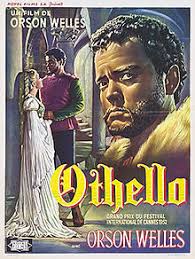


THE TWELVE JYOTIRLINGAS

Copyright@shravancharitymission

    Just in case you have not read Shivpurana let me tell you it is all about Lord Shiva. It contains 24,000 verses divided into twelve Samhitas. Out of these one of them Roudra-samhita narrates the following story.

    Once, Brahma tried to claim superiority over the trinity of Shiva, Mahavishnu and Brahma himself. He vented this thought of his to Mahavishnu. When, suddenly, a huge column of fire, burst out of the earth, between the two and rose into the sky. Brahma flew upwards on his swan to see the tip of the fire while Vishnu as a boar dug deep into the earth to see the lower end of the pillar of fire. Both failed in their mission and returned. It was then that Shiva appeared at the centre of the fire column. This was the first Jyotirlinga.

    Jyotirlingas, represent the beginningless and the endless Stambha or Pillar, indicating the infinite nature of Shiva. In India, there are twelve Jyotirlinga shrines as follows:

  1. SOMNATH

    The Somnath Temple of Gujarat, is near Veraval in the Kathiawad district of Saurashtra. This is a Jyotirlinga shrine. This region is also known as Prabhasa Thirtha. According to the Shivpurana, the Moon God married all the 27 daughters of Daksha Prajapati. However, he liked Rohini more than others. Rohini’s sisters complained to Prajapati, who cursed the moon. As a result, the moon lost his radiance. So, he went to Veraval and prayed to Lord Shiva in a temple. And by the Lord’s grace, he regained his lost shine. Since then, the temple came to be known as Somnath Mandir. It was ransacked and destroyed as many as seventeen times by Muslim invaders, and each time, it was resurrected.

  1. MALLIKARJUNA

    This Jyotirlinga can be seen in Shrishailam Mountain, on the banks of the Krishna River in Andhra Pradesh. According to Shiva Purana, Lord Ganesha got married before Kartikeya. So, an angry Kartikeya left the place and went to Shri-shailam. Seeing their son offended, Shiva and Parvati followed him there. Shiva assumed the form of a Jyotirlinga and resided there as Mallikarjuna. Where, Mallika means Parvati, while Arjuna is another name for Shiva.

  1. MAHAKALESHWAR

    This Jyotirlinga is located on the banks of river Kshipra in the dense Mahakal forest in Ujjain, Madhya Pradesh. It was known as Avantika in ancient times. Legend has it that a five-year-old boy by the name Shrikar was amazed at the devotion of King Chandrasena of Ujjain towards Lord Shiva. Shrikar took a stone and started worshipping it as Shiva. Many people tried to discourage him in different ways, but his devotion only grew. Pleased by his devotion, Lord Shiva assumed the form of a Jyotirlinga and decided to stay in the Mahakal forest.

  1. OMKARESHWAR

    This Jyotirlinga is also in Madhya Pradesh. It is situated on an island called Mandhata or Shivapuri in the Narmada River. The island is shaped like an ‘Om,’ as written in Sanskrit. Omkareshwar means ‘Lord of Omkara,’ the sacred syllable Om. Once, when the Asuras defeated the Devas, the latter prayed to Lord Shiva. Pleased with their prayer, the Lord emerged in the form of Omkareshwar and defeated the Asuras.

  1. VAIDYANATH

    Also known as Vaijnath or Baidyanath, this Jyotirlinga is located at Deogarh in Jharkhand. This place is also called Chitaa-bhoomi. According to a well-known legend, Ravana once requested Lord Shiva to reside in Sri Lanka permanently. Shiva gave him a Jyotirlinga and told him that he should not place it on the ground before reaching Lanka. On the way, however, Ravana felt an urgent need to relieve himself. When a young boy who appeared there offered to hold the lingam in the meantime. The boy, was no one else but Vishnu in disguise, placed the lingam on the ground and disappeared, for he knew that Shiva’s presence would make wicked Ravana’s Lanka invincible. The lingam got fixed to the spot. On his return, Ravana saw what had happened. To propitiate Shiva, he cut off nine of his ten heads. But Shiva joined the severed heads of Ravana’s body, like a Vaidya. Hence the name of the Jyotirlinga became Vaidynath.

  1. BHIMA SHANKAR

    This Jyotirlinga is located on the banks of Bhima River in the Sahyadri region of Pune, Maharashtra. Legend has it that Kumbhakarna’s son, Bhima, vowed to take revenge on Lord Vishnu who, in His incarnation as Rama had killed his father. He began a severe penance and Lord Brahma was pleased and granted him immense power. Soon, Bhima the demon started creating havoc in the world. In the end, Lord Shiva reduced him to ashes. The Gods were overjoyed. On their request, Shiva made the place one of his abodes and manifested himself in the form of Bhima-shankar Jyotirlinga.

  1. RAMESWARAM

    This Jyotirlinga is located on the island of Rameswaram in Tamil Nadu. On his way to Sri Lanka, Sri Rama had stopped at Rameswaram, and worshipped a linga that he had made out of sand. Lord Shiva blessed Rama and then remained at Rameswaram in the form of Jyotirlinga.

  1. NAGESH

    The Nageshwar or Nagnath Jyotirlinga is situated on an island near Dwarka in Gujarat. The place is also known as Daaru-kavan. This Jyotirlinga is known far and wide for protecting devotees from poisons of all kinds. As per the legend in the Shivapurana, a demon by the name of Daruka imprisoned Supriya, a devotee of Shiva. On Supriya’s advice, the other prisoners began chanting, ‘Aum Namah Shivaya.’ Daaruka was enraged on hearing this chant. He sprang forward to kill Supriya. Suddenly, Lord Shiva appeared and put an end to the demon. He then remained on the island as a Jyotirlinga.

  1. VISHVANATH

    The Jyotirlinga at Vishvanath temple is located in Varanasi or Kashi, one of the most ancient cities of the world. It is believed that it was here that the pillar of fire representing Lord Shiva’s endless power broke through the earth’s crust and splayed towards heaven. The faithful are certain that those who die here attain salvation. The original Visvanath temple was destroyed and rebuilt many times. Emperor Aurangzeb destroyed the temple for the last time and built the Gyanvapi Mosque in its place. Later Ahilabai Holkar constructed the present temple adjacent to the mosque.

  1. TRIMBAK

     The Trimbakeshwar temple is located about 30 km from Nashik in Maharashtra, near the Brahmagiri Mountain. It is from this mountain that the river Godavari, also called the Gautami Ganga flows. Long ago, Maharishi Gautam, through his penance, had obtained an everlasting supply of grains. Some Gods became envious of the Maharishi and sent a cow to the granary. The cow was accidentally killed by the sage. On realising this, Maharishi requested Lord Shiva to get the premises purified. Shiva asked Ganga to flow through Nashik and He himself remained there as Trimbakeshwar Jyotirlinga.

  1. KEDARNATH

    At a height of 3,583 metres (12,000 feet) in Uttarakhand, the Kedarnath temple is located on the Rudra Himalaya range. It opens for only six months in a year, from May to November. During the other months, all the mountains here get fully snow clad. It is believed that in ancient times, Lord Shiva, pleased by the penance of Rishis Nara and Narayana, who were incarnations of Lord Vishnu, made a permanent abode in Kedarnath in the form of a Jyotirlinga. Many believe that the Pandavas had come here after the Mahabharta war to pray to Lord Shiva.

  1. GHRISHMESHVAR

    The Ghrish-meshvar or Ghush-meshvar Jyotirlinga is located in a village named Verul, near Aurangabad in Maharashtra. The place is not far from the famous Ajanta and Ellora caves. According to Shivapurana, there was a man named Sudharm, who had two wives, Sudeha and Ghush-ma. They were sisters. When Ghushma bore a son to Sudharm, Sudeha became jealous and threw the baby into a lake. Ghushma, a devotee of Shiva, prayed to the Lord and got her son back. On Sudharm’s request, Shiva manifested himself in the form of Jyotirlinga at that spot and assumed the name Ghush-meshvar.

By Kamlesh Tripathi

*

https://kamleshsujata.wordpress.com

*

Share it if you like it

*

Shravan Charity Mission is an NGO that works for poor children suffering from life threatening diseases especially cancer. Our posts are meant for our readers that includes both children and adults and it has a huge variety in terms of content. We also accept donations for our mission. Should you wish to donate for the cause. The bank details are given below:

NAME OF ACCOUNT: SHRAVAN CHARITY MISSION

Account no: 680510110004635 (BANK OF INDIA)

IFSC code: BKID0006805

*

Our publications

GLOOM BEHIND THE SMILE

(The book is about a young cancer patient. Now archived in 7 prestigious libraries of the US, including, Harvard University and Library of Congress. It can also be accessed in MIT through Worldcat.org. Besides, it is also available for reading in Libraries and archives of Canada and Cancer Aid and Research Foundation Mumbai)  

ONE TO TANGO … RIA’S ODYSSEY

(Is a book on ‘singlehood’ about a Delhi girl now archived in Connemara Library, Chennai and Delhi Public Library, GOI, Ministry of Culture, Delhi)

AADAB LUCKNOW … FOND MEMORIES

(Is a fiction written around the great city of Nawabs—Lucknow. It describes Lucknow in great detail and also talks about its Hindu-Muslim amity. That happens to be its undying characteristic. The book was launched in Lucknow International Literary Festival of 2014)

REFRACTIONS … FROM THE PRISM OF GOD

(Co-published by Cankids–Kidscan, a pan India NGO and Shravan Charity Mission, that works for Child cancer in India. The book is endorsed by Ms Preetha Reddy, MD Apollo Hospitals Group. It was launched in Lucknow International Literary Festival 2016)

TYPICAL TALE OF AN INDIAN SALESMAN

(Is a story of an Indian salesman who is, humbly qualified. Yet he fights his ways through unceasing uncertainties to reach the top. A good read not only for salesmen. The book was launched on 10th February, 2018 in Gorakhpur Lit-Fest. Now available in Amazon, Flipkart and Onlinegatha)

RHYTHM … in poems

(Published in January 2019. The book contains 50 poems. The poems describe our day to day life. The book is available in Amazon, Flipkart and Onlinegatha)

(ALL THE ABOVE TITLES ARE AVAILABLE FOR SALE IN AMAZON, FLIPKART AND OTHER ONLINE STORES OR YOU COULD EVEN WRITE TO US FOR A COPY)

*****
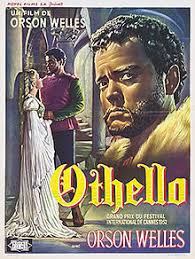


LITERARY CORNER: THE NAMESAKE by Jhumpa Lahiri

Copyright@shravancharitymission

Khidki (Window)

–Read India Initiative—

This is only an attempt to create interest in reading. We may not get the time to read all the books in our lifetime. But such reviews, talk and synopsis will at least convey what the book is all about.

    Jhumpa Lahiri’s full name is Nilanjana Sudeshna “Jhumpa” Lahiri (born July 11, 1967) is an American author known for her short stories, novels and essays in English, and, more recently, in Italian.

    Her debut collection of short-stories, ‘Interpreter of Maladies’ (1999) won her the Pulitzer Prize for Fiction and the PEN-Hemingway Award. Her first novel The Namesake (2003), was also adapted into a popular film of the same name. Her second story collection, ‘Unaccustomed Earth’ (2008) won the ‘Frank O’Connor’ International Short Story Award, while her second novel, ‘The Lowland’ (2013), was a finalist for both the Man Booker Prize and the National Book Award for Fiction. In these works, Lahiri explored the Indian-immigrant experience in America. In 2011, Lahiri moved to Rome, Italy and has since then published two books of essays, and has a forthcoming novel, written in Italian. She has also translated some of her own writings and those of other authors from Italian into English.

    In 2014, Lahiri was awarded the National Humanities Medal. She is currently a professor of creative writing at Princeton University. The novel begins in Cambridge, Massachusetts, in 1968. Ashima Ganguli, expecting a child, makes a snack for herself in the kitchen of her apartment, which she shares with her husband, Ashoke. The two met in Calcutta, where their marriage was arranged by their parents.

    Ashoke is a graduate student in electrical engineering at MIT. Though Ashima was afraid to move across the world with a man she barely knew, she dutifully did so, satisfying her family’s wishes. She gives birth to a boy in the hospital in Cambridge. Ashoke, nearly killed in a train accident as a young man in India, decides that the boy’s nickname, or pet name, should be Gogol, after Nikolai Gogol, the Russian writer. Ashima and Ashoke agree to register the boy’s legal name as “Gogol.” Gogol is Ashoke’s favorite author, in part because Ashoke was reading Gogol during the train accident. A dropped page of that book helped the authorities to recognize Ashoke in the wreckage, and they saved his life.

    The Gangulis wait for an “official” name for Gogol to come in the mail, from Calcutta. But Ashima’s grandmother, who has the ceremonial honour of naming the boy, suffers a stroke, and her letter with Gogol’s official name is lost in the mail. The family settles into life in Cambridge, with Ashima learning to take Gogol around on her errands. As the family prepares for its first trip back to Calcutta, Ashoke and Ashima learn that Ashima’s father has died suddenly. Their trip is shrouded in mourning. Ashima, especially, misses her parents and her home in Calcutta, despite the family’s growing network of Bengali friends in the Boston area. Around the peak of the story the lady author even brings up the abbreviation ABCD (American Born Confused Desi) and how they manage in the US.

    The Gangulis move to a Boston suburb, a university town where Ashoke has found a job teaching electrical engineering. Gogol begins pre-school, then kindergarten, and Ashima misses spending time with him, and walking around the neighbourhood. Gogol begins school, and although his parents have settled on an official name, Nikhil, for him to use there, Gogol insists on being called “Gogol,” and so the name sticks. And he is referred both as Gogol and Nikhil in the book. Ashima and Ashoke have another child, a girl named Sonia. Years pass, and the family settles into the modest house in the suburbs, on Pemberton Road. In high school, Gogol grows resentful of his name, which he finds strange, not “really” Indian. He learns about the life of Nikolai Gogol in a literature class, and is horrified by that man’s bizarre, unhappy existence. Ashoke gives Gogol a copy of Gogol’s stories for his fourteenth birthday, and almost tells him the story of his train accident, but holds back. Gogol hides the book in a closet and forgets about it.

    Gogol officially changes his name to Nikhil before going to Yale. He meets a girl there named Ruth, and they fall in love, dating for over a year. After waiting hurriedly for Gogol’s delayed Amtrak train, one holiday weekend, Ashoke tells his son about the train-wreck that nearly killed him, and that gave Gogol his name. Gogol was unaware of the story until this point. Nikhil develops a love for architecture, and after graduating from Yale, he attends design school at Columbia, then lives uptown and works for a firm in Manhattan.

    He meets a young woman in New York named Maxine, who leads a cosmopolitan life with her parent’s downtown. Nikhil essentially moves into Maxine’s home, and the two date seriously. Gogol introduces Maxine to his parents one summer, then spends two weeks in New Hampshire with Maxine’s family, the Ratliffs, believing that their life, as opposed to his parents,’ is paradise.

    Ashoke takes a visiting professorship outside Cleveland and moves there for the academic year. He comes home every three weeks to see Ashima and take care of household chores. Ashoke calls Ashima one night and tells her he has been admitted to the hospital for a minor stomach ailment. When Ashima calls back, she finds out that Ashoke has died of a heart attack. The family is stunned. Gogol flies to Cleveland and cleans out his father’s apartment. The family observes traditional Bengali mourning practices, from which Maxine feels excluded. Soon after this period is over, Maxine and Gogol break up.

    Gogol continues his life in New York, though he visits his mother and sister in Boston more frequently. Ashima sets Gogol up with Moushumi, a family friend from Pemberton Road, who now studies for a French-literature PhD in New York. Gogol and Moushumi initially resist this blind date, but later find that they like and understand one another. They continue dating and soon fall in love. After about a year, they marry in a large Bengali ceremony in New Jersey, near where Moushumi’s parents now live. They rent an apartment together downtown.

    Time passes. The couple takes a trip to Paris, where Moushumi delivers a paper at a conference. The marriage strains. Moushumi likes spending time with her artistic, Brooklyn friends, whereas Gogol finds them frustrating and selfish. Gogol also resents the spectre of Graham, Moushumi’s banker ex-fiancé, who was good friends with the artistic crew Moushumi still adores. Moushumi, feeling constricted in the marriage, begins an affair with an old friend, an aimless academic named Dimitri Desjardins. She keeps the affair a secret from Gogol for several months, but eventually Nikhil catches her in a lie, and she admits all to him. They divorce.

    Gogol returns to Pemberton Road for a final Christmas party. His sister Sonia is marrying a man named Ben, staying in the Boston area. Ashima decides to spend half her time in Boston and half in Calcutta, close to relatives. Gogol continues working as an architect in New York, but for a smaller firm where he has more creative input. Nikhil goes up to his room and finds the copy of Gogol’s stories his father gave him once, realizing how much the author meant to his father. Gogol, feeling close to Ashoke’s memory, finally begins reading Gogol when the novel ends.

    It’s a very sweet novel that will interest both Indians staying in the US and elsewhere and even Indians staying in India. The book does impact you, especially, because the world has now gone global with a stream of Indians settling down in the US and with many dreaming to be there. I would give the book eight out of ten. Do find time to read this book.

By Kamlesh Tripathi

*

https://kamleshsujata.wordpress.com

*

Share it if you like it

*

Shravan Charity Mission is an NGO that works for poor children suffering from life threatening diseases especially cancer. Our posts are meant for our readers that includes both children and adults and it has a huge variety in terms of content. We also accept donations for our mission. Should you wish to donate for the cause. The bank details are given below:

NAME OF ACCOUNT: SHRAVAN CHARITY MISSION

Account no: 680510110004635 (BANK OF INDIA)

IFSC code: BKID0006805

*

Our publications

GLOOM BEHIND THE SMILE

(The book is about a young cancer patient. Now archived in 7 prestigious libraries of the US, including, Harvard University and Library of Congress. It can also be accessed in MIT through Worldcat.org. Besides, it is also available for reading in Libraries and archives of Canada and Cancer Aid and Research Foundation Mumbai)  

ONE TO TANGO … RIA’S ODYSSEY

(Is a book on ‘singlehood’ about a Delhi girl now archived in Connemara Library, Chennai and Delhi Public Library, GOI, Ministry of Culture, Delhi)

AADAB LUCKNOW … FOND MEMORIES

(Is a fiction written around the great city of Nawabs—Lucknow. It describes Lucknow in great detail and also talks about its Hindu-Muslim amity. That happens to be its undying characteristic. The book was launched in Lucknow International Literary Festival of 2014)

REFRACTIONS … FROM THE PRISM OF GOD

(Co-published by Cankids–Kidscan, a pan India NGO and Shravan Charity Mission, that works for Child cancer in India. The book is endorsed by Ms Preetha Reddy, MD Apollo Hospitals Group. It was launched in Lucknow International Literary Festival 2016)

TYPICAL TALE OF AN INDIAN SALESMAN

(Is a story of an Indian salesman who is, humbly qualified. Yet he fights his ways through unceasing uncertainties to reach the top. A good read not only for salesmen. The book was launched on 10th February, 2018 in Gorakhpur Lit-Fest. Now available in Amazon, Flipkart and Onlinegatha)

RHYTHM … in poems

(Published in January 2019. The book contains 50 poems. The poems describe our day to day life. The book is available in Amazon, Flipkart and Onlinegatha)

(ALL THE ABOVE TITLES ARE AVAILABLE FOR SALE IN AMAZON, FLIPKART AND OTHER ONLINE STORES OR YOU COULD EVEN WRITE TO US FOR A COPY)

*****


INTERESTING FACTS & QUOTES EPISODE-20

Copyright@shravancharitymission

  1. Reading the tea leaves” is an idiom that comes from tasseography—(a fortune telling method) which is the practice of telling someone’s fortune by “reading” a splotched or smeared substance. For example, “everyone says things are going great for our company, but if you read the tea leaves you’ll see trouble ahead.”
  2. Wear one’s heart on one’s sleeve—if you wear your heart on your sleeve, you openly show your feelings or emotions rather than keeping them hidden.
  3. Make short work of—means to complete or consume quickly, for example: The children made short work of the ice cream, or they made short work of cleaning up so they could get to the movies. This term, first recorded in 1577, in effect means “to turn something into a brief task.”
  4. 70% of all English words are Latin or Greek words.
  5. Originally, Hindu simply meant people beyond the river Sindhu, or Indus. But the Indus is now in Islamic Pakistan; and to make matters worse the word ‘Hindu’ did not exist in any Indian language till its use by foreigners that gave Indians a term for self-determination. Hindus, in other words call themselves by a label that they didn’t invent themselves in any of their own languages—the alternative to Hindu could have been Sanatan Dharma—says Shashi Tharoor.
  6. It’s time to vote: If turnout increases, it is believed: ‘People are unhappy with the government and that’s why they are turning out in large numbers to vote to express their anger.’ If the turnout decreases, it is believed, ‘that people are unhappy but since the opposition has nothing concrete to offer they have decided not to turn out to vote.
  7. Political analyst Milan Vaishnav, who co-authored with Devesh Kapur a book on political funding titled (Cost of Democracy) says India’s elections this time can cost up to $10 billion, much more than the 2016 US general election, which saw a spending of around $6.5 billion.
  8. The 19 trillion$-plus American economy hosts a poll spending of around $6.5 billion, and the $2.7 trillion Indian economy may host a poll spending of around $10 billion. Even if you measure everything in purchasing power parity and not exchange rate terms—by PPP, India’s economy is roughly half the size of that of America—so the comparison still holds with as much force.
  9. The Cathedral of Notre Dame was built 850 years ago.
  10. It was only in Notre Dame Cathedral: the coronation of Napolean and the canonisation of Joan of Arc took place. Here a special mass celebrated the liberation from the Nazis and the bell named Emmanuel was rung to mark the tragedy of 9/11. This is where France came to cheer or to mourn.
  11. Oxfam’s latest Wealth report points out, the nine richest Indians own as much wealth as 50% of the Indian population.
  12. The first European power, to implement a meritocratic civil service was the British Empire in India.
  13. 2018 was the fourth hottest year on record and this year-2019 could beat that. Arctic sea ice continues to disappear at an alarming rate and sea-level rises are threatening island nations and low lying areas. In India, 2018 was the sixth warmest year on record and all the six warmest years have come only in the last decade.
  14. A man goes to buy a national flag. The shopkeeper shows different sizes of the national flag to him. Then the man says something to the shopkeeper and the shopkeeper is shocked to hear that. Can you guess what was it that the man said to the shopkeeper? He asked, without thinking. “Can you show me other colours of the national flag?” Friends this is what absent mindedness can do to a person.
  15. It takes a contingent of 30,000 strong international media to cover Olympic game’s function with events spread far and wide.
  16. A house insurance costs just Rs 6-12 per day however only less than 1% people who can afford it have house insurance.
  17. Ayurveda is a 6000 year old science.
  18. Liquid biopsy being tested in the US may soon become a boon for cancer treatment.
  19. Delhi has more than 500,000 manual rickshaws on its streets: Of these, less than a fifth are licensed. And 80% of rickshaw pullers continue their back breaking labour by paying ‘hafta’ to the police that amounts to Rs 10 crore per month.
  20. Europeans began to wear underwear only in the 17th century when they discovered soft and affordable Indian cloth brought by the East India Company.
  21. With 5,000-mile coastline, India has historically been a great trading nation and in some periods, commanded as much as 20% share of world trade compared to 2% today. It always had a positive balance of trade with the world until the industrial revolution in 19th-century England when the mills of Lancashire made our handloom textiles technologically obsolete.
  22. 80 richest people own more wealth than what is owned by one-half of the human race and very soon just 1% people will own wealth which equals what the rest 99% would have.
  23. Food amounts for almost half of the (CPI) consumer price index basket of India.
  24. 6 crore, small entrepreneurs employ 12 crore people in India.

INTERESTING LINES

  1. “You should teach your children that the soil under their feet are the ashes of their grandparents. To respect the earth, you must tell your children that the earth is full of the lives of our ancestors.”
  2. “Just because you do not take an interest in politics doesn’t mean politics won’t take an interest in you—said PERICLES. He was a prominent and influential Greek statesman.
  3. When a man understands the art of seeing, he can trace the spirit of an age and the features of a king even in the knocker on a door, wrote Victor Hugo in his novel, ‘The Hunchback of Notre Dame.’
  4. The economy grows mostly at night when government is sleeping.
  5. ‘I had been the author of un-alterable evils; and I live in daily fear, lest the monster whom I had created should perpetrate some new wickedness.’ –wrote MARY SHELLEY the author of/ Frankenstein.’

By Kamlesh Tripathi

*

https://kamleshsujata.wordpress.com

*

Share it if you like it

*

Shravan Charity Mission is an NGO that works for poor children suffering from life threatening diseases especially cancer. Our posts are meant for our readers that includes both children and adults and it has a huge variety in terms of content. We also accept donations for our mission. Should you wish to donate for the cause. The bank details are given below:

NAME OF ACCOUNT: SHRAVAN CHARITY MISSION

Account no: 680510110004635 (BANK OF INDIA)

IFSC code: BKID0006805

*

Our publications

GLOOM BEHIND THE SMILE

(The book is about a young cancer patient. Now archived in 7 prestigious libraries of the US, including, Harvard University and Library of Congress. It can also be accessed in MIT through Worldcat.org. Besides, it is also available for reading in Libraries and archives of Canada and Cancer Aid and Research Foundation Mumbai)  

ONE TO TANGO … RIA’S ODYSSEY

(Is a book on ‘singlehood’ about a Delhi girl now archived in Connemara Library, Chennai and Delhi Public Library, GOI, Ministry of Culture, Delhi)

AADAB LUCKNOW … FOND MEMORIES

(Is a fiction written around the great city of Nawabs—Lucknow. It describes Lucknow in great detail and also talks about its Hindu-Muslim amity. That happens to be its undying characteristic. The book was launched in Lucknow International Literary Festival of 2014)

REFRACTIONS … FROM THE PRISM OF GOD

(Co-published by Cankids–Kidscan, a pan India NGO and Shravan Charity Mission, that works for Child cancer in India. The book is endorsed by Ms Preetha Reddy, MD Apollo Hospitals Group. It was launched in Lucknow International Literary Festival 2016)

TYPICAL TALE OF AN INDIAN SALESMAN

(Is a story of an Indian salesman who is, humbly qualified. Yet he fights his ways through unceasing uncertainties to reach the top. A good read not only for salesmen. The book was launched on 10th February, 2018 in Gorakhpur Lit-Fest. Now available in Amazon, Flipkart and Onlinegatha)

RHYTHM … in poems

(Published in January 2019. The book contains 50 poems. The poems describe our day to day life. The book is available in Amazon, Flipkart and Onlinegatha)

(ALL THE ABOVE TITLES ARE AVAILABLE FOR SALE IN AMAZON, FLIPKART AND OTHER ONLINE STORES OR YOU COULD EVEN WRITE TO US FOR A COPY)

*****


SHORT STORY: LESSON FROM THE DONKEY

Copyright@shravancharitymission


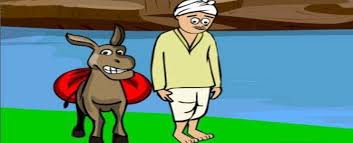
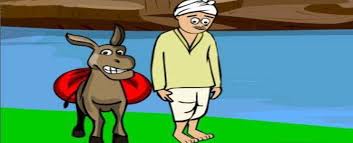
    Once a washer man was going along with his donkey and a bucket filled with clothes. It was pitch dark. They were walking around a small hillock when the donkey fell into a ditch. After falling in the ditch the donkey went into a shock and could not stand properly and so it started braying (hee-haw-hee-haw).

    The washer man who was very attached to his donkey. Could not stand the braying of the donkey. So, he decided to bury it thinking its half dead. He soon started throwing bucket full of mud in the ditch to bury the donkey. But after sometime the washer man was shocked to see the donkey limping out of the ditch slowly and soon he started striding as usual.

    What had happened was, whenever, the mud was thrown in by the washerman, the donkey used to shake it off, and the mud became steps for him, and stepping on those steps the donkey came out.

Moral of the story: Don’t get disheartened when people throw muck at you. Just shake it off as that will further strengthen you to go up in life.

By Kamlesh Tripathi

*

https://kamleshsujata.wordpress.com

*

Share it if you like it

*

Shravan Charity Mission is an NGO that works for poor children suffering from life threatening diseases especially cancer. Our posts are meant for our readers that includes both children and adults and it has a huge variety in terms of content. We also accept donations for our mission. Should you wish to donate for the cause. The bank details are given below:

NAME OF ACCOUNT: SHRAVAN CHARITY MISSION

Account no: 680510110004635 (BANK OF INDIA)

IFSC code: BKID0006805

*

Our publications

GLOOM BEHIND THE SMILE

(The book is about a young cancer patient. Now archived in 7 prestigious libraries of the US, including, Harvard University and Library of Congress. It can also be accessed in MIT through Worldcat.org. Besides, it is also available for reading in Libraries and archives of Canada and Cancer Aid and Research Foundation Mumbai)  

ONE TO TANGO … RIA’S ODYSSEY

(Is a book on ‘singlehood’ about a Delhi girl now archived in Connemara Library, Chennai and Delhi Public Library, GOI, Ministry of Culture, Delhi)

AADAB LUCKNOW … FOND MEMORIES

(Is a fiction written around the great city of Nawabs—Lucknow. It describes Lucknow in great detail and also talks about its Hindu-Muslim amity. That happens to be its undying characteristic. The book was launched in Lucknow International Literary Festival of 2014)

REFRACTIONS … FROM THE PRISM OF GOD

(Co-published by Cankids–Kidscan, a pan India NGO and Shravan Charity Mission, that works for Child cancer in India. The book is endorsed by Ms Preetha Reddy, MD Apollo Hospitals Group. It was launched in Lucknow International Literary Festival 2016)

TYPICAL TALE OF AN INDIAN SALESMAN

(Is a story of an Indian salesman who is, humbly qualified. Yet he fights his ways through unceasing uncertainties to reach the top. A good read not only for salesmen. The book was launched on 10th February, 2018 in Gorakhpur Lit-Fest. Now available in Amazon, Flipkart and Onlinegatha)

RHYTHM … in poems

(Published in January 2019. The book contains 50 poems. The poems describe our day to day life. The book is available in Amazon, Flipkart and Onlinegatha)

(ALL THE ABOVE TITLES ARE AVAILABLE FOR SALE IN AMAZON, FLIPKART AND OTHER ONLINE STORES OR YOU COULD EVEN WRITE TO US FOR A COPY)

*****

WHY CONGRESS & Co LOST 2019 ELECTIONS

Copyright@shravancharitymission

    Finally, the mammoth festival of democracy has ended. It has brought about a number of beginnings and an equal number of endings. Tall, broad, victorious, Narendra Modi, is now well saddled to take India forward, in the next five years. To me, it appears, Narendra Bhai & Amit Bhai se BJP hai, BJP se woh nahi hain. Jahan woh khade ho jate hain BJP ki line wahin se shuru hoti hai. One can use any amount of adjectives … Tornado, Tsunami or any other to describe the Namo wave that was totally unexpected, or kept under wraps, about which the general public is not aware. 

    What astonishes me now is the tectonic shift that the election brought forth through its sensitive and knowledgeable voters. It in fact unsettled all calculations. There was a great hue and cry that Modi is now only a matter of months and days a perception largely created by the novice opposition and even the media, including print, electronic and social in utter munificence. Many prominent journalists, TV channels and Youtube operators now stand exposed, when it comes to their own personal integrity, professional acumen, and even their prowess as political journalist. Where, the pollsters by and large got it right.

    The media is abuzz with a plethora of thoughts and pointers, where, I would also like to join the bandwagon, in making my own thoughts known, even if, it is, a bit too late in the day. The great thing that has happened in this election is that Mother India has got the workhorse, in terms of a reliable, knowledgeable, and a resourceful ruling party with a majority to take India forward. But in the process it has inadvertently smothered the opposition. Opposition now looks pale and withered. And without an opposition, democracy looks incomplete. But then where did the opposition go astray. I have some viewpoints as a voter when it comes to Congress and other opposition parties.

    One, Congress party, which is the main opposition party, is perceived to be a pro Muslim party by a majority of voters. Ever since independence it has ruled with a soft corner for the Muslims. This was fine had it been for a sprint run. But Congress turned out to be a pro-Muslim party for a marathon run. This perhaps gave an uneasy feeling to the Hindu voters. As long as, there was no option, Hindu voters kept voting for Congress. But when a reliable option like BJP surfaced they shifted. The same analysis holds good for Samajwadi Party and other opposition parties. Congress did not rest with this.

    After independence like the British Raj it further divided and exploited the Hindu community through its policies into schedule caste, schedule tribe, and the upper caste just to corner votes. Since 60s Congress has allowed Bangladeshi immigrants into Assam, and now even Mamata Didi is doing the same. And, Hindus, wonder, why was Congress so comfortable with Muslims even when they happened to be illegal immigrants? The answer is very obvious—vote bank. Where, they exploited the language nationalism of Bengalis.

    Two, opposition says, polarization was done largely by the BJP. But voters have come to realise a more comprehensive and covert polarization was done in the long years when Congress ruled, when they gave incentives to Muslims, divided the Hindu community into upper-caste, backward-caste, schedule-caste, and schedule tribe. All for vote bank politics. Congress exploited the divide that existed between Hindus and Muslims that originated at the time of partition. The opposition even during the campaign kept exploiting this by telling the Muslim minority that if BJP comes to power they will be finished. This was totally wrong. Especially, when, even in the long years of Congress and opposition rule the plight of Muslims has not improved.

    Three, opposition criticises the ideology of Hindutva. They say Hindutva is the poison, churned out by RSS, Jansang and now BJP. But the moot point is, if all was going so very well under the Congress regime why at all, did Hindutva, flourish in the last two decades or so. Perhaps, at the time of partition, a divide, or a suspicion did exist between Hindus and Muslims, which the Congress never tried to address in a comprehensive manner.

    Four, if Hindutva was cherished and nourished by BJP and if Hindutva was a cuss word for the opposition, why and how did BJP reach a full house from 2 seats in the parliament. Most opposition leaders have mocked at the grace of Hinduism by attacking Hindutva which they thought was some form of Hindu uprising, and that perhaps has hit the sentiments of most Hindus. A similar analogy can be made about Samajwadi Party. The perception of this party too is a Muslim-Yadav combine. Most police stations of U.P. are packed with Yadavs. So then what is left for the other castes in the state? One could say it is silent polarisation.

    Five, there was never an issue based criticism of BJP by the opposition during the election campaign. Anything and everything that BJP did was wrong including national security. Does a country work like this? Rahul Gandhi whose UPA was drenched in corruption was openly sloganeering, ‘Chowkidar chor hai.’ Which the voters of India didn’t accept. Then you have Mayawati and Mulayam Singh with cases of disproportionate assets, so with what face were they attacking BJP. It was like the pot calling the kettle black. The opposition needs to realise that they are now dealing with educated voters where their silly ways will not cut ice anymore.

    Six, a majority of the opposition parties are family shops, biggest being Congress. Where, everything happens at the diktats of the political-lala. Just as people look for corporate and government jobs and don’t like working for a lala company in the same manner the learned voter especially the young voters want a grand political party now, to rule India and not a bunch of local and parochial leaders. Where, BJP fits the bill.

    Seven, BJP won because it worked on the ground. It had the grip and pulse of the voters including better booth management. Where, opposition was totally divided by their petty vision. The only thing that united them was ‘Modi hatao.’ Congress offered rupees 72,000 per annum to the poor but still it did not find any traction and that speaks a lot about Congress. Mamata, was full time into minority appeasement, and fierce federalism, yet BJP made healthy inroads in Bengal.

    BJPs performance was somewhere below and somewhere above the benchmark, yet they played their cards pretty well. With an average literacy rate of 74% in India political parties cannot bull shit anymore. Social media has made casting of vote a fad, a prestigious duty. In times to come you will have more of educated voters and less of vote banks.

    What may have worked for NDA is that it succeeded to a large extent in turning this election into a referendum in favour of Prime Minister Narendra Modi. Where, opposition parties appear to have helped BJP in the process as their campaigns were primarily about ousting Modi, rather than offering any positive and alternate visions of what they will do if elected to power. It’s a smart phone world where opposition needs to play it better.

   The opposition was fragmented all along and offered no PM candidate, this only cemented the concept of TINA (There is no alternative) factor, in favour of Narendra Modi.

    Just as, Prime Minister Narendra Modi has rephrased, the slogan, ‘Sabka sathsabka vikas’ to ‘Sabka sath sabka vikas and sab ka vishwas’ even the opposition needs the vishwas of the majority community.

    Therefore, the opposition needs to get back to the drawing board to reinvent their respective parties that has an agenda for all communities and not just their own brethren and caste. There is a saying in English, that goes as follows, ‘Words on the street is that elections are already over, only the polling is left.’ If the opposition is vigilant to these words they will get the pulse of their victory much in advance.

By Kamlesh Tripathi

*

https://kamleshsujata.wordpress.com

*

Share it if you like it

*

Shravan Charity Mission is an NGO that works for poor children suffering from life threatening diseases especially cancer. Our posts are meant for our readers that includes both children and adults and it has a huge variety in terms of content. We also accept donations for our mission. Should you wish to donate for the cause. The bank details are given below:

NAME OF ACCOUNT: SHRAVAN CHARITY MISSION

Account no: 680510110004635 (BANK OF INDIA)

IFSC code: BKID0006805

*

Our publications

GLOOM BEHIND THE SMILE

(The book is about a young cancer patient. Now archived in 7 prestigious libraries of the US, including, Harvard University and Library of Congress. It can also be accessed in MIT through Worldcat.org. Besides, it is also available for reading in Libraries and archives of Canada and Cancer Aid and Research Foundation Mumbai)  

ONE TO TANGO … RIA’S ODYSSEY

(Is a book on ‘singlehood’ about a Delhi girl now archived in Connemara Library, Chennai and Delhi Public Library, GOI, Ministry of Culture, Delhi)

AADAB LUCKNOW … FOND MEMORIES

(Is a fiction written around the great city of Nawabs—Lucknow. It describes Lucknow in great detail and also talks about its Hindu-Muslim amity. That happens to be its undying characteristic. The book was launched in Lucknow International Literary Festival of 2014)

REFRACTIONS … FROM THE PRISM OF GOD

(Co-published by Cankids–Kidscan, a pan India NGO and Shravan Charity Mission, that works for Child cancer in India. The book is endorsed by Ms Preetha Reddy, MD Apollo Hospitals Group. It was launched in Lucknow International Literary Festival 2016)

TYPICAL TALE OF AN INDIAN SALESMAN

(Is a story of an Indian salesman who is, humbly qualified. Yet he fights his ways through unceasing uncertainties to reach the top. A good read not only for salesmen. The book was launched on 10th February, 2018 in Gorakhpur Lit-Fest. Now available in Amazon, Flipkart and Onlinegatha)

RHYTHM … in poems

(Published in January 2019. The book contains 50 poems. The poems describe our day to day life. The book is available in Amazon, Flipkart and Onlinegatha)

(ALL THE ABOVE TITLES ARE AVAILABLE FOR SALE IN AMAZON, FLIPKART AND OTHER ONLINE STORES OR YOU COULD EVEN WRITE TO US FOR A COPY)

*****