Category Archives: short srticle

EQUAL INTERNET

Copyright@shravancharitymission
By Kamlesh Tripathi

i1i2

    The desperate debate raging on ‘Equal Internet’ in India is reflecting very badly on the Czars of telecos. Who otherwise project themselves to be the cat’s whiskers. In their day to day life they project themselves as honest citizens. True to India and its citizenry and especially its youth-force. But behind the scene they form such unethical cartels. That may scuttle and whittle the chances of many innovators and beginners and that too just for some extra pennies.

    This stealthy move jeopardizing equal internet has however exposed them. Ruling BJP should be very careful in playing into their hands. As they have lost a lot of sheen. Ever since they came to power. For not much has changed on the ground. The so called “Acchey Din” continues to be that alluring mirage. Please join the movement against this day light robbery of internet freedom.

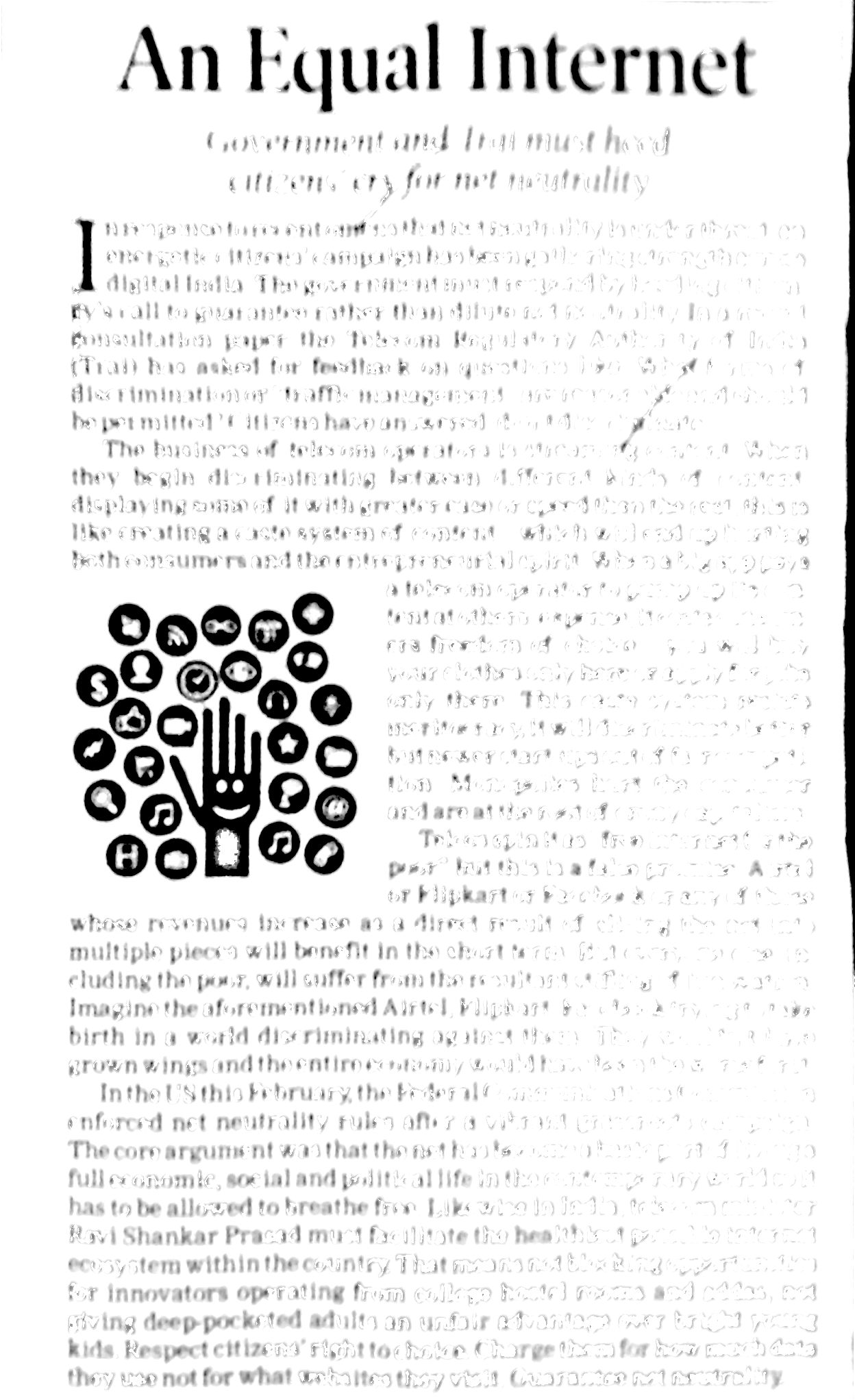
Nice editorial in TOI of today: for your ready perusal

“An Equal Internet

Government and Trai heed citizens cry for net neutrality”

New Doc 7_1 (2)

*****

SPINDRIFT

Copyright@shravancharitymission

    Finding is such pure joy. And how rare, too! It had been several years since I had picked up anything when I found a penknife, a Hindi thriller and a five rupee coin, the last named beaming at me from below the seat of a ramshackle bus plying in our very own metropolis. Recalling that Elvis ditty ‘finders keepers, losers weepers’ I closed my eyes, stiffened my sinews and commended my soul to God before picking up the coin glistening in the errant sunbeam which had chanced through one of the innumerable slits in the roof. Nobody noticed. The conductor did raise a quizzical eye brow but that was about all. The term ‘conductor’ through over use has lost its semantic substance. The fellow is basically a logistics manager and with training can outsmart any sophisticated route operator. Even a funambulist might take a cue from the number of jobs he juggles while on board the boneshaker. This perception is wholly reserved for our country. Now coming back to the treasure trove -the Hindi thriller was a disappointment- not a patch on the Col  Vinod and Capt  Hameed  era  whodunits. Hindi detective fiction since then has been on the decline, virtually on the ‘endangered species’ list. Such a sorry state is inexplicable considering the vast treasure of Indian fiction available in genres like Sorcery, Witchcraft, Tilism, and detective fiction. ‘Chandrakanta’ and ‘Bhootnath’ had once fired the imagination of generation of readers and also contributed immensely to the popularity of Hindi language. These works of Devaki Nandan Khatri have outlived the copyright regime and are in the public domain since the early 60s. That is why they were churning out Chandrakanta serials decades ago paying scant regard to the original text and plot. But perhaps I am digressing.

    In a life time frittered away looking at the mirror I scarcely noticed the ‘sixpence lying at my feet’.  I was never much of a chance finder. At times one does strike a gold mine but the instances are so far removed that they vanish like the may snow drift. Once while waiting to get my vintage Ambassador car serviced I came across an unclaimed copy  Of Human Bondage  by Somerset Maugham. I was familiar with the works of Maugham and therefore happy to add to my collection of Moon and the Sixpence  and Eyeless in Gaza. The neo-intellectuals in my college days would talk of Camus, Kafka and Maugham in the same breath. Perusal of their works was considered the hallmark of intellectual prowess and was a sure passport to the local salons where deipnosophists abound. Photograph of Camus in a trench coat and fedora with a cigarette dangling loosely from the corner of the mouth, looking very much the Bogart of the noir genre, was one of the most widely reproduced photograph of the time.

humphreyHUMPHRY BOGART

    God’s largesse did not end with the book. This time it was a crumpled hundred rupee note with remnants of superfine khaini , the closest western variant being the snuff, much in vogue among the aristocracy of Europe in the days of yore. This bonanza came my way while going to Ranchi town from my college campus at Mesra. It was not one of those savoury trips one looks forward to but an undignified exit due to hostel vacation orders. As the college had been closed sine die it was being hotly debated whether to push homewards or to foregather in some cosy pastoral retreat for some good times together. It all depended on the pelf and riches.

    Emboldened by the find I decided to join the merry revelers, home being at ‘Lands End’. Though I put the money to good use I still haven’t been able to figure out what made the fellow to ‘crumple it’ and to tuck the promissory note under the seat. Perhaps he was a chance finder like me and had acted the way he did to avoid detection by fellow passengers. Of course he would take the booty away while disembarking. Another plausible theory was that he has merely stored the surplus khaini there for a rainy day quite forgetting the king’s ransom in the form of a crumpled note.

    I might add, that now and then, perhaps a ball pen, pocket comb or a sparsely populated purse  or some such trifles, no matter how well supplied one may be with, cannot be acquired without a thrill. Think of a Blackbury or a Rayban thus found. We all live and learn. A defeatist may venture something like “it takes all sorts”.

    The essence of finding something which brings to us unalloyed joy is half unexpectedness and half uniqueness. There being no aposematic forecast, no intuitive premonition and the ‘gift’ coming to you by chance: no one is to be thanked, no one to be owed anything. “Something for nothing …  ” Ay, there’s the rub…”. Shakespeare has put these things so beautifully. To look for the thing is to transform the whole plot-to rob it of its ‘sublime suddenness’-perchance to become even concerned or greedy.

    In its larger context we may use the word discovery-something akin to Columbus discovering America or was it the West Indies. Our concern for trifles and small findings are at once so stimulating and pure joy that to meddle with it would only appeal to a killjoy. Yet there are people who have an unsavoury sense of the sport!

    I recall the small rustic game or charade being played out by stringing a purse or paper money (bill or note) or any such desirable object which the casual walker gleefully stoops to pick up. The pranksters conveniently hidden from view have a field day as they pull the string leading the unsuspecting wayfarer on a merry chase. There are many clever variants which the fun-seeking lads have in their repertoire. In this cyber age of ours such diversions may seem blasé. But for a country whose half the population lives below poverty line there may still be some relevance left in such innocuous and simple pastimes.

    One common thread which runs through this serendipity is the absence of haste. My once rural seat and current urban dwellings present contrasting styles in time management. Reckon a simple activity like breakfast. Absence of haste is anathema to modern spirit. For most commuters it is always charged with disturbing quiet. The unnerving scenario of buses disappearing round the corner and the cacophony of traffic jams brood over the chota hazri , transforming mild God-fearing men into wild harpies as they sprint out like bats from hell. Down at the rural seat the meals are leisurely and indolent- a perfect epitome of laid-back country life of a cultured man. It is a breakfast of ease and languescent mood, a meal of ‘soft murmurs and rustling papers’.

    Circumstances afford little options. This harum-scarum age of ours has everything excepting time where brutish bolting of food is the in-thing. However, a quiet leisurely, laid- back meal by the crackling logs in winter has its unwavering charm.

    Let’s take a little time off for ourselves.

    “We look before and after

    And pine for what is not”

    A.K.Tripathi,

    Guwahati-2015

*****

SC: RETHINK LAW ON JUVENILES INVOLVED IN HEINOUS OFFENCES

Copyright@shravancharitymission

By Kamlesh Tripathi

j1

Court’s Stand Puts Pressure on Centre- Cabinet likely to take up bill

New Doc 6_1

    Supreme Court as usual has done extremely well. In coaxing the centre to have a re-look at the law. Providing mild punishment to juveniles when they are involved in heinous offences. In fact the Supreme Court has requested Parliament to differentiate between juveniles involved in innocuous and serious crimes.

j2j3

    In today’s day and age. Children mature much faster. And, from an early age of around eight to ten years they learn to handle mobiles, smart-phones, Tabs, Computers and even NET-surfing. They go global to compete with the best or the worst of the world. They do not dwell so much on the noble values of their parents. But get more influenced by the heft of materialism. The strings of loose morals that manifest in their parents and families.

j5j7

    A case in point could be Aakash in Gurgaon. Who could not be reformed as a juvenile. Recently he was held for a second murder at the age of twenty one. The first being at the age 14. When he killed his school mate with the revolver of his macho dad. That he carried to school.

    Read, the column below that appeared in TOI recently; an eye opener.

GURGAON: Gurgaon Police has arrested Aakash (21) who shot his friend dead in a city market on March 25. This was Aakash’s second murder. Seven years back, when he was only 14, Aakash had smuggled to his school – Euro International in Gurgaon — a revolver that belonged to his father’s friend and shot dead a classmate with whom he had a scrap a few days back.

According to sources, acting on a tip-off, a police team carried out a search operation around Sultanpur Lake on Sunday night and arrested Aakash alias Ashu and his three associates from a Mahindra Scorpio which was parked there. He evaded arrest so far by hiding in parts of Himachal Pradesh and then in Rohtak district. Cops recovered two illegal pistols from the vehicle. On Monday morning, all four accused were sent to three-day police remand by a city court. “All the accused have confessed to their role in the murder. We are questioning them further and hope to solve the case soon,” said Ved Prakash Godara, DCP (crime).

In his confession, Aakash reportedly told cops that Manish Kumar alias Bihari (23) repeatedly tried to kill him after a dispute over money, leaving him with no option than to kill him first in “self-defence”.
“Aakash has told us that more than a year back Manish sought his help in recovering around Rs 1.5 lakh from a third party and promised to share the money. Once Manish got the money, he refused Aakash his share and they had a fight over it. Aakash claims once Manish forcefully stopped his car with the intent of killing him but he escaped narrowly. Another such attempt was made during a friend’s wedding in Manesar,” an investigator told TOI.

Aakash then planned to kill Manish with the help of three other friends, one of whom is undergoing trial for the murder of a village sarpanch in 2011.

The three aides have been identified as Ashok alias Mental, native of Gijhi village, Manjit alias Monu, resident of Titoli village in Rohtak, and Manish alias Moga, native of Dundahera village.

While Manjit and Manish have no past crime record, Ashok is undergoing trial for the 2011 murder of Dalbeer Sarpanch of Nayagaon-Nayabas village in Rohtak.

On March 25, around 9pm, the accused came in a car and shot Manish Kumar at point blank range while he was eating momos at a stall in Sector 21 market. The victim, a native of Muzaffarpur in Bihar, himself was a history-sheeter and had been booked in several cases of murder and theft. He was recently released after serving a jail term for attempting to murder a lawyer in Kapashera.

*****


#KISHORE-KUMAR- NOT A RECIPIENT OF ANY “PADMA” AWARD EVEN AFTER 27 YEARS OF HIS DEATH

Copyright@shravancharitymission

523

Does it require something more than sterling- unquestioned-talent to earn these awards?

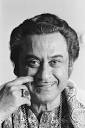
    It is already stinking. But before it starts rotting. The present government should correct, one of the biggest follies of the previous governments of not awarding any ‘Padma’ award to legendary, genius and ever green Kishore Kumar. One of the biggest all time singers of India- who died 27 years ago.

    He spent 41 years in the industry as an actor and a singer and that too par excellence. And all rolled into one as a producer, director, lyricist, music director and a scriptwriter. So, it is indeed intriguing to note why government after government failed to include him in the awardee list- not even a Padma Shri … which is so very pathetic.

    Kishore Kumar was a cynosure of every Indian, cutting across religion, mother- tongue, regions and states. And, I’m more than sure. Indians will be most eager to know as to why this son-of-the-soil has been denied the prestigious ‘Padma’ award. Especially, when we compare this iconic film personality with many others who have received ‘Padma’ awards much earlier in their careers. It gives you an eerie feeling loaded with bias.

    By not including him in the awardee list we have not only insulted Kishore Kumar but every Indian who has a song or two of Kishore on his lips. And may curse be upon all those, who with ulterior motives, kept omitting his name from the list of awardees year after year.

    But a ray of hope comes from Prime Minister Narendra Modi who is now busy correcting many wrongs of India, committed in the past and I am sure he will take up this wrong too.

    Kishore Kumar has sung 2,703 songs in 1188 Hindi films. He has also sung 156 Bengali and 8 Telugu songs. May Kishore Da rest in peace.

*

By Kamlesh Tripathi

*

                                                    https://kamleshsujata.wordpress.com

*

Share if you like it

*

Shravan Charity Mission is an NGO that works for poor children suffering from life threatening diseases. Should you wish to donate for the cause the bank details are given below:

NAME OF ACCOUNT: SHRAVAN CHARITY MISSION

Account no: 680510110004635 (BANK OF INDIA)

IFSC code: BKID0006805

*

Our publications

GLOOM BEHIND THE SMILE

ONE TO TANGO … RIA’S ODYSSEY

AADAB LUCKNOW … FOND MEMORIES

REFRACTIONS … FROM THE PRISM OF GOD

(CAN BE BOUGHT FROM ON LINE BOOK STORES OR WRITE TO US FOR COPIES)

*****


Article: #SwachhBharatAbhiyan (SBA) – Include existing Public Toilets in SBA

Copyright@shravancharitymission

123

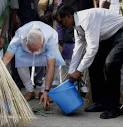
Prime Minister Narendra Modi has done well by wielding the broom to clean a road and its surroundings, thereby, burnishing the lost grandeur of ‘dignity of labour.’ He has also formed a formidable team of star citizens, who have given impetus to the campaign launched in around 4041 statutory towns. Where in you find cine stars, sports persons, social activists, industrialists, professionals and even politicians, psyched out. Icons like Amitabh Bachchan, Anil Ambani, Kamal Hassan, Sachin Tendulkar, Shashi Tharoor and many other distinguished personalities have graced the campaign, by lending both, social and glamour weight.

So with all of this, the speed and velocity of the campaign looks set to deliver the goods. However, the priorities within this need to be tweaked, mainly to prioritize the initial tranches. Where, I have some pointed and granular suggestions to make, that oozes right out of my firsthand experience. Create as many Public toilets as possible, in the shortest possible time and also include the existing ones in the campaign. Perhaps, this suggestion of mine may give the whole campaign a better fillip in converting the movement into a mass movement with the least of resistance. Arising, more out of the immediate necessity of the deprived public, in this case the general public; because of the limited, shabby and poor infrastructure that throws the spanner in the development of India.

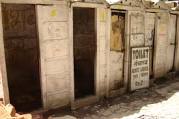
For it was just, yesterday when I was driving down the crowded market area on Hill Road in Bandra, is when I felt like relieving myself. I stopped the car, got off and started looking for a public urinal. Keeping strictly in mind the Prime Minister’s message of Swacch Bharat Abhiyan, and trying to observe it to my heart’s content.

456

I must have spent about half-an-hour in the crowded market area, in which time I must have covered more than a kilometer but I still could not find a public toilet. Is when I saw the logo of a petrol pump to my heart’s delight, as we all know have toilets. ‘Wow- what a relief’ I said to myself. And this got me thinking.

If this is the condition of Mumbai, one of the biggest metropolis of India what about other cities? With a burgeoning population, Mumbai has a deficit of at least 47,000 toilet seats, and the cost of constructing one toilet is INR 150,000, say authorities, so we can imagine the cost involved. This shortage in 2001 was a whooping 125,000 toilet seats when the Brihan Mumbai Muncipal Corporation (BMC) had conducted its first survey on the sanitation needs for the country’s commercial population. Going by 2001 figures, the ratio of toilets versus population comes to a whopping 1: 50 or 3,000 people using it daily in Mumbai.

MUST COMPLIMENT THE OIL COMPANIES

After relieving myself, I sincerely blessed the oil companies that thought of customer convenience, by having toilets in all their retail outlets which Indian Railways couldn’t provide in all platforms. Further, I thought this is a big opportunity to include these readily available toilets, as part of the Swacch Bharat Abhiyaan as pay and use toilets to catapult the campaign exponentially.

Today, India has about 45,000 filling stations more than Canada or UK as of March 2012, and most are with the facility of a toilet. If these toilets are made to join the SBA on a pay and use basis we can have a sudden flurry of toilets and that will certainly help the SBA.

For the Government to make public toilets, every 1-2 km, in crowded market areas along the road side may be a gigantic and close to a non doable task, so here is the way forward. Today, the immediate pressing need for the Public at large is a convenient network of clean toilets spaced around close proximity and concomitant is the wielding of broom to keep it clean. While it may be possible to construct new toilets on highways and open roads but may be extremely difficult in the already cramped and crowded market areas and this is where these toilets can come in handy

CAMPAIGNS CAN CHANGE REALITIES

Even though Government of India has transcribed incentives for building public toilets. All is not achieved merely by announcing incentives on paper alone, as it requires mindsets to change–that running a public toilet too, is a respectable venture; something like Sulabh Shauchalaya.

And so, India needs a renewed and intense campaign to promote public toilets as a doable business by respectable Individuals, Unemployed Youth, Business Houses, Societies, Builders, NGOs, SMEs, Hospitality Industry and under Corporate Social Responsibility.

Government should promote people having genuine intent of doing this noble task, and who have spare Land on which Private – Public Toilets could be constructed, or even existing toilets that could be utilized at prime and vantage locations as pay and use toilets.

The building bylaws should be tweaked to incentivise for mass proliferation of such public toilets and also sops in the form of rebate in property tax or any other, are a few boons that should be considered by the Government, if possible.

Running public toilets could be ticked at par with running hospitals as both reduce human suffering. Modi Government could further do well in bringing about this social change. Prime Minister Narendra Modi in fact has orated in one of his speeches abroad that he is currently busy in construction of Public toilets.

*****

article: SHOULD TEXT BOOKS BE AVAILABLE, BOTH IN PRINT AND E-BOOK FORMAT FOR SCHOOL CHILDREN?

Copyright@shravancharitymission


134

SHOULD TEXT BOOKS BE AVAILABLE, BOTH IN PRINT AND E-BOOK FORMAT FOR SCHOOL CHILDREN?


    Every day when I go for my morning walk. I see innumerable school children and some very young, carrying their heavy rucksacks filled with books up to a bursting point. Many out of them are even unable to walk in the normal manner because of the weight. Some even walk sluggishly and at times are helped by their nannies or their young parents or even their old grand parents. To, be on time for their school bus or any other mode of conveyance that they take. And I am more than sure this must be causing a great amount of unspoken dissonance in these children. Considering, the matrix and size of India. I consider this as an important issue to be looked at seriously. When it affects 52% of our population. The hypothesis finds more ground when we dig into some relevant statistics as given below.

526

MIX OF PRIMARY AND SECONDARY EDUCATION

    India has approximately 113.8 million children attending primary school and another 88.5 million attending secondary. While PE (Primary Education) covers an age group of 5 to 14 years, SE (Secondary Education) covers children in the age group of 14-18 years. PE is up to class 8 and SE spills over to class 12 and beyond that is the HE (Higher Education)

    Now, if we were to analyse the demographic structure of education in India in the table below, we would find:

DEMOGRAPHIC STRUCTURE IN EDUCATION 2009  
AGE GROUP EDUCATION GROUP POPULATION IN CRORE PERCENTAGE OF POPULATION
0-3   7.5 6.50%
4-6 Pre Primary 7.9 6.80%
7-11 Primary (I-V) 14.4 12.40%
12-14 Upper Primary (VI-VIII) 8.5 7.30%
15-18 Secondary (IX-XI) 9.7 8.30%
19-24 Higher (XII+) 12.6 10.90%
  Population 60.6 52.30%

    The population in the age group between 4 to 18 years, which comprises of Pre-Primary to Secondary level, is around 40 crore and around 35% of our total population; which is sizeable. So, at no cost can we condone their issues, especially when they are not adults and cannot speak for themselves. The existing state of play, where they use printed text books may not be that convenient, both for them and their families, but then they have no choice.

SOME MAJOR DISADVANTAGES OF PRINT TEXT BOOKS

  • Bulky and heavy to carry and the weight only increases as you go up, the classes.
  • Often these books are out of print especially when the text is modified or when a new session starts and are even sold at a premium.
  • Print books are subject to wear and tear.
  • Expensive as compared to an e-book, and with the rise in paper, print, labour and transportation costs the prices will only increase.
  • May not be readily available at multiple locations.
  • In many areas we don’t have regular electricity supply or have long power cuts, when you can’t read these books and this is a great disadvantage, during times of examinations and even routine study. Whereas, an e-book can be read in the dark.

INDIAN PRINT TEXT BOOK MARKET

    If we take the Indian text book market it is at a level of $ 1.2 billion, with an addition of $510 million of supplementary books. However, private publishers have access to just 60% of the market. Given the monopoly of state boards and NCERT in 95% of the school text books. And a large chunk of schools are vernacular with local languages; and often out of print.

BENEFITS OF E-BOOKS

    If Finland can say good bye to ‘cursive handwriting’ by 2016, why can’t India move towards e-books. When the advantages are so many,

  • Except for a onetime cost of purchasing the e-reader the recurring costs of purchasing text books will reduce substantially. Government can incentivise purchase of e-readers.
  • It will always be available, both in India and globally. And never out of print.
  • You can even read in the dark.
  • Very light to carry and not bulky.
  • Will give even a rural child a sense of advancement in life.
  • One book for many books: e-reader.

WAY FORWARD

     The government should introduce e-book as a parallel option for children. To assess the ground reality the project could be piloted in a particular district or a state. It could even start with a particular subject. E-books could be readied out of print books and loaded in to simple e-readers, with white paper technology. The project can be launched in identified schools where it could be monitored by an IT instructor of the school along with teachers. And I am sure with this even our rural child will go global.

*

By Kamlesh Tripathi

*

                                                   https://kamleshsujata.wordpress.com

*

Share if you like it

*

Shravan Charity Mission is an NGO that works for poor children suffering from life threatening diseases. Should you wish to donate for the cause the bank details are given below:

NAME OF ACCOUNT: SHRAVAN CHARITY MISSION

Account no: 680510110004635 (BANK OF INDIA)

IFSC code: BKID0006805

*

Our publications

GLOOM BEHIND THE SMILE

ONE TO TANGO … RIA’S ODYSSEY

AADAB LUCKNOW … FOND MEMORIES

REFRACTIONS … FROM THE PRISM OF GOD

(CAN BE BOUGHT FROM ON LINE BOOK STORES OR WRITE TO US FOR COPIES)

*****


#RSS CAN HELP #INDIA EVEN BETTER; THROUGH ITS #SHAKHAS

Copyright@shravancharitymission

By Kamlesh Tripathi

MISSION:

The prime mission of (RSS) Rashtriya Swayamsevak Sangh or National Volunteer Organization” or National Patriotic Organization is to revitalise Indian value system based on universalism, peace and prosperity to all under the divinity of Vasudhaiva Kutumbakam. Holding a world view that the world is just one big family, so propounded by ancient thinkers and carried forward by many others of present day and age. But some contemporary leaders also link it to be the Hindu renaissance. But before getting into this never ending debate let us more objectively and tangibly see how RSS can help the poor Indian work force out of the current quagmire. In fact it would not be out of context to highlight certain issues where RSS can contribute immensely in the present scenario of India.

STRONG BASE:

RSS is an organization that works through its ‘Shahkhas.’ (Shakha-Hindi for “branch”) Most of the organisational work of the RSS is done through the coordination of these shakhas or branches. These shakhas are run for an hour a day in many public places. In 2004 as many as 60,000 shakhas were there throughout India. But the number of these Shakhas had fallen by over 10,000 since the fall of BJP led government in 2004 but has again swelled to 40,000 in 2014 after BJPs returned to power in Delhi.

SHAKHA ACTIVITIES:

These shakhas regularly conduct activities for its volunteers that include; physical fitness, yoga; exercises and also games. It also performs diverse activities emphasizing civic sense, social service, community living and patriotism. And, in the very recent, our Prime Minister has flagged of two important issues out of their kitty. He has spoken about the importance of Yoga in the US and has also launched the Swacch Bharat Abhiyan’ carving out from of the ‘civic sense’ of RSS.

RSS volunteers are also trained in first aid and in rescue and rehabilitation works. And, last but not the least physical fitness and security drills. Where, they are regular performers and also teach the art of self defense on a regular basis. An art much required in present times.

WHAT MORE IT CAN DO

But that apart, there is something more RSS can do very effectively. What comes to my mind is a comprehensive physical training for our poor work force in the rural and urban areas. Since the physicality of a human body is well understood by RSS volunteers, having been in the business of physical fitness for so long, so who else would know this trait better than them. In fact, I would rate RSS as one of the premier organisations for doing this job, clubbed with skill building and providing work-aids or designing new ones to make the jobs of our poor brethren more humane. So, in a more detailed manner RSS can thus delve in the following issues:

  • Train labourers how to carry maximum load on their back without damaging the backbone, muscles or even their skull.
  • What precautions to take, while working in open fields, as human body is subjected to nagging and devastating pollution all over. Here I would also like to mention about the traffic police that works endlessly on polluted roads, and also the factory labour.
  • RSS is also a knowledge reservoir and can help in the development of small implements that can help poor labourers to exert less, at the same time not bring down their output. Something, like a wheel barrow.
  • Develop Small working aids that can help women in giving equal output as men. One can take the cue from MNREGA where women are paid less basis their output.
  • And if pregnant women have to work what precautions they need to take, and what are the safer jobs which they can perform.
  • Security drills for our hapless working community, especially working ladies.
  • They can even hasten the project of 100% literacy. Which is currently at a level of 75%.

On a more realistic note the girth of this mammoth exercise is going to be stupendous and will touch the heart and mind of every Indian irrespective of caste, creed and religion. For it will be for the Indians in the bottom of the pyramid. Quite, appropriately, for the needy and therefore sterling, noble and even centre of right and left. Surely RSS can make an alternate beginning and see its tinge brighten even further.


ARTICLE- INDIAN AGRI’S CHINK IN THE ARMOUR

Copyright@shravancharitymission

915


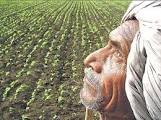
    If the 2011 agri census had its way. It would huff, puff and jostle the policy makers to have a hard look at the stressed agri scenario of India. That is entering from the back doors of gradual reduction in operating land holding size. It may sound primordial. Yet the tremors are only getting closer to the feet, slowly and steadily.

    Let’s take a close look at some of the key statistics thrown up by agriculture census of 2011. Which are rather alarming. More for those who thrive on agriculture and considering the fact that the census takes place every five years. What will emerge in the next one, could only be a heart broken anticipation coming true.

LAND HOLDING PATTERN UNDER STRESS

    The total no of operational holding has increased from 129.22 million hectares (ha) in 2005-06 to 138.35 million ha in 2010-11, showing an increase of 7.06%. This may sound good.

    The operated area has also increased to 159.59 million ha in 2010-11 from 158.32 million ha in 2005-06. A marginal increase of only 0.80%.

    But the average operational size of land holding which was 1.23 ha in 2005-06 has declined to 1.15 ha in 2010-11, at an all India level. Which is below 3 acres on a more prevalent terminology. What it might be in the census of 2015-16 could be anyone’s wild guess. All in all, this shift will only bring about economic stress. That will perforce change the farming paraphernalia of an Indian farmer. But are we ready for it is the moot question?

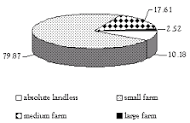
    From the veritable census report in the table below one finds. The small and marginal <2 ha operational area has gone up from 41.14% to 44.58%. While both semi medium, medium and large holding have come down. And the average operational size of holding in <2 ha class has gone up from 83.29% to 85.01%. Now this should at least ring bells if not alarm bells. Further the table also conveys:

REDUCTION SWING IN SIZE OF LAND HOLDINGS
CENSUS-2005-06 CENSUS- 2010-11
SMALL AND MARGINAL < 2HA
AVEARAGE OPERATED SIZE OF HOLDING 83.29% 85.01%
OPERATED AREA 41.14% 44.58%
SEMI MEDIUM AND MEDIUM 2.00 HA-10HA
AVERAGE OPERATED SIZE OF HOLDING 15.85% 14.29%
OPERATED AREA 47.05% 44.88%
LARGE HOLDING > 10.00HA    
AVERAGE OPERATED SIZE OF HOLDING 0.85% 0.70%
OPERATED AREA 11.82% 10.59%

1012

    Major farm productivity is going to come from <2 ha holdings. Therefore, the methodology of agriculture production changes from heavy and medium to mini and micro farm equipment. Which is a capital cost change for the industry. Distribution and marketing too will have to retract and align to the scattered farm production. That is helter-skelter logistics and smaller heaps to carry and deliver.

THE NEW PAGE IN FARM MECHANIZATION

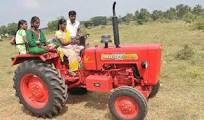
    Reduction in the size of average operational land holding by 6.50% over the last five years ending 2011. Together with the trending future and historical past, has not gone on deaf years with major Farm mechanization companies. As they too, over the years, have added, scaled down variants of lower horse power (HP) tractors in their stable. That is from 60 to 45 to 35 to 25 and now to even 16 (HP). Yet the break-even points of these machines are spilling on to the kuccha village roads or the tarmac roads where they carry passengers, work in brick-kiln and get into seasonal transport jobs to make two ends meet.

    Also mere reduction of HP will not be sufficient in bringing about farmer profitability. The present average land holding size denotes–Like a nuclear family have nuclear farming. But this nuclear farming will be viable only with tilling machines in the range of 3 to 7 HP along with allied paraphernalia. Machines that even a lady can operate and that are self-sustainable, in terms of cost by the income of the farm alone. And do not escrow with other seasonal side operations to break even. Therefore, it is not far when the early birds of the industry will arrive in this segment.

    As a concerned friend of the farmers. I feel the Government of India needs to take a pragmatic view of the ensuing scenario, and work out a complete package for the new trendsetting ‘nuclear farming.’ Which I feel is a new skill set. And I say this for the following reason.

    For etching a full time farming career from a farm of less than 3 acres would mean performing most farm activities yourself. Or in the company of your spouse, and this would require small farm machines for all activities to match that. Especially, when the net farming profitability per acre stands around twenty five to thirty thousand rupees per annum per acre. That too on irrigated land.

    Indian agriculture has been slow but steady in catching signals of change. Perhaps, it is waiting for a point when push comes to shove. But this time it needs to be proactive. And it has the capability to imbibe change. Where, the GOI must facilitate with appropriate policies.

By Kamlesh Tripathi- Ex: General Manager, Mahindra & Mahindra Ltd.; Head Operations, Mahindra Shubh Labh Services Ltd.; Head-Agri-Business & Head Engines for Gensets, Escorts Ltd.; Vice President, Reliance Retail; Head of Marketing & Sales, SAS Motors; (WRITER AND AUTHOR).

*

By Kamlesh Tripathi

*

https://kamleshsujata.wordpress.com

 *

Share if you like it

*

Shravan Charity Mission is an NGO that works for poor children suffering from life threatening diseases. Should you wish to donate for the cause the bank details are given below:

NAME OF ACCOUNT: SHRAVAN CHARITY MISSION

Account no: 680510110004635 (BANK OF INDIA)

IFSC code: BKID0006805

*

Our publications

GLOOM BEHIND THE SMILE

(Archived in 7 prestigious libraries of the US, including, Harvard University and Library of Congress. It can also be accessed in MIT through Worldcat.org. Besides, it is also available for reading in Libraries and archives of Canada and Cancer Aid and Research Foundation Mumbai)  

ONE TO TANGO … RIA’S ODYSSEY

(Archived in Connemara Library, Chennai and Delhi Public Library, GOI, Ministry of Culture)

AADAB LUCKNOW … FOND MEMORIES

(Launched in Lucknow International Literary Festival 2014)

REFRACTIONS … FROM THE PRISM OF GOD

(Co-published by Cankids–Kidscan, a pan India NGO and Shravan Charity Mission, that works for Child cancer in India. The book is endorsed by Ms Preetha Reddy, MD Apollo Hospitals Group. Book was launched in Lucknow International Literary Festival 2016)

(CAN BE BOUGHT FROM ON LINE BOOK STORES OR WRITE TO US FOR COPIES)

*****