Tag Archives: usa

INTERESTING FACTS FIGURES & QUOTES-30

Copyright@shravancharitymission

By 2020, half of India’s internet users will be rural. Nine out of ten internet users are non-English speaking.

A study published in the University of Cincinnati Law Review suggests that CEOs are at twice the risk of developing depression as compared to the general population. Another comprehensive review of literature published in the Journal of Affective Disorders elucidates that people living in developed and wealthy countries have a greater risk of suffering from mood disorders than those living in developing nations.

Annually, on an average, 1.5 lakh people are killed and close to 10 lakh are injured in road crashes across India. As per ministry of road transport data, over 14% fatalities were due to overloading of vehicles. In 2017, 20,848 people were killed due to overloading of vehicles—an average of 57 deaths per day.

The fine currently for overloading trucks—a rampant practice is only Rs 2000. Motor Vehicle Amendment Board proposes to increase it to 20,000 to halt the practice.

Currently India has no central legislation governing the protection of pedestrians. The penalties for irresponsible road behaviour that lead to serious injuries or fatalities have remained minimal for the last three decades and have consequently failed to deter violators.

A recent study by SaveLIFE Foundation shows that 63.3% of the children who admitted to underage driving shared that they started learning how to drive between the ages of 9 to 14.

The proverb warns, ‘You should not bite the hand that feeds you.’ But maybe you should, if it prevents you from feeding yourself—THOMAS SZASZ.

Congress has not won an election in Gujarat, whether Lok Sabha or Vidhan Sabha in 32 years.

 Achilles heel—An Achilles’ heel or Achilles heel is a weakness in spite of overall strength, which can lead to downfall. While the mythological origin refers to a physical vulnerability, idiomatic references to other attributes or qualities that can lead to downfall are common.

Whenever opportunities narrow down you start seeing protests.

Statues and pictures and verse may be grand, but they are not the life for which they stand—JAMES THOMSON, British poet.

Raise your words, not voice. It is rain that grows flowers, not the thunder—Jalaluddin Rumi.

Poor fund allocation in R&D (less than 1% of india’s budget, as compared to 3-5% by countries like the US and China) inhibits innovation and hence prospects of jobs growth. A programme like ‘Small Business innovation and research’ (which provides enterprises with competitive R&D grants) proposed in a Niti Aayog Expert committee can be a game changer.

We can easily forgive a child who is afraid of the dark; the real tragedy of life is when men are afraid of the light—PLATO.

Iceland is the only country that jailed its bankers in the 2008 recession (because Iceland has community norms) but US bailed out its bankers.

The general elections held in 1952, 1957, 1962, and 1967, were simultaneous polls held throughout the country. But this cycle was disrupted in 1969, with the premature dissolution of Loksabha.

Yiwu market is located in Zhejiang district of China. It is the world’s largest wholesale market where over 100000 suppliers exhibit over 400000 genre of products. Yiwu has tied up with leading logistics firms, for shop to door deliveries.

America is practically owned by china—TOMWINNIFIRT, UK journalist.

Germany today has absorbed over a million refugees and settled them across the country—Syrians.

In 2016, tourism and travel contributed 10% of India’s GDP. The largest part of this was domestic tourism, amounting to about 88%. India is the seventh-largest tourist economy globally. Given its riches, natural and manmade. It should be much higher.

The recent series on the Vietnam war produced by Ken Burns and Lynn Novick and written by Geoff Ward (a long time India friend and wildlife lover) makes just this point. After Vietnam, America may still be looking for a war to win.

Indian soldiers walked up the Icchogil canal and to the gates of Lahore in 1965, but came back, soon after, for territory was not on their minds. To this day people in India rue this decision. We all know which party was in power then.

Mahatma Gandhi once said that the future depends on what you do today.

One clear indicator of strain is annual per capita water availability. This was 5177 cubic metres in 1951 which declined to 1545 cubic metres in 2011, against the international threshold for water stress, pegged at 1700 cubic metres. However. National Institute of Hydrology pegs India’s utilisable per capita water availability at just 938 cubic metres in 2010 and expects this to drop to 814 cubic metres by 2025.

At one time a quarter of all American college men were buying or subscribing  to playboy magazine. ‘a woman reading a playboy feels a little like a Jew reading a Nazi manual’—Gloria Steinem.

By Kamlesh Tripathi

*

https://kamleshsujata.wordpress.com

*

Share it if you like it

*

Shravan Charity Mission is an NGO that works for poor children suffering from life threatening diseases especially cancer. Our posts are meant for our readers that includes both children and adults and it has a huge variety in terms of content. We also accept donations for our mission. Should you wish to donate for the cause. The bank details are given below:

NAME OF ACCOUNT: SHRAVAN CHARITY MISSION

Account no: 680510110004635 (BANK OF INDIA)

IFSC code: BKID0006805

*

Our publications

GLOOM BEHIND THE SMILE

(The book is about a young cancer patient. Now archived in 7 prestigious libraries of the US, including, Harvard University and Library of Congress. It can also be accessed in MIT through Worldcat.org. Besides, it is also available for reading in Libraries and archives of Canada and Cancer Aid and Research Foundation Mumbai)  

ONE TO TANGO … RIA’S ODYSSEY

(Is a book on ‘singlehood’ about a Delhi girl now archived in Connemara Library, Chennai and Delhi Public Library, GOI, Ministry of Culture, Delhi)

AADAB LUCKNOW … FOND MEMORIES

(Is a fiction written around the great city of Nawabs—Lucknow. It describes Lucknow in great detail and also talks about its Hindu-Muslim amity. That happens to be its undying characteristic. The book was launched in Lucknow International Literary Festival of 2014)

REFRACTIONS … FROM THE PRISM OF GOD

(Co-published by Cankids–Kidscan, a pan India NGO and Shravan Charity Mission, that works for Child cancer in India. The book is endorsed by Ms Preetha Reddy, MD Apollo Hospitals Group. It was launched in Lucknow International Literary Festival 2016)

TYPICAL TALE OF AN INDIAN SALESMAN

(Is a story of an Indian salesman who is, humbly qualified. Yet he fights his ways through unceasing uncertainties to reach the top. A good read not only for salesmen. The book was launched on 10th February, 2018 in Gorakhpur Lit-Fest. Now available in Amazon, Flipkart and Onlinegatha)

RHYTHM … in poems

(Published in January 2019. The book contains 50 poems. The poems describe our day to day life. The book is available in Amazon, Flipkart and Onlinegatha)

(ALL THE ABOVE TITLES ARE AVAILABLE FOR SALE IN AMAZON, FLIPKART AND OTHER ONLINE STORES OR YOU COULD EVEN WRITE TO US FOR A COPY)

*****


INTERESTING FACTS FIGURES & QUOTES—EPISODE 27

Copyright@shravancharitymission

The West Indies cricket team is a multinational cricket team representing the Anglophone (English speaking) Caribbean region. It is administered by Cricket West Indies. The players of this composite team are selected from a chain of fifteen Caribbean territories, which are parts of several different countries and dependencies. As of 24 June 2018, the West Indies cricket team was ranked ninth in the world in Tests, ninth in One-Day Internationals (ODIs) and seventh in Twenty20 Internationals (T20Is) in the official International Cricket Council (ICC) rankings.

*

India runs the cheapest space programme in the world, where, she has received the maximum returns when compared to all other space faring nations.

*

Balkanisation- is a geopolitical term, originally used to describe the process of fragmentation or division of a region or a state into smaller regions or states that are often hostile or uncooperative with one another.

*

Once in a blue moon even a thought can become larger than its creator.

*

In a complex churning of data on income tax, national accounts, and household surveys, it concluded, that the top 1%, of income earners, in India in 2014, earned, 22% of the national income, the highest share since 1922 when Income Tax was introduced.

*

 India’s central paramilitary forces are almost a million strong.

*

 Magistracy means office or authority of a magistrate.

*

 India is possibly the most holidaying country in the world.

*

 “Storm in a tea cup”—means great outrage or excitement about a trivial matter.

*

 “Make subject’s hair stand on end”— to make someone very frightened, generally used in informal conversation. The thought of jumping out of a plane makes my hair stand on end. Basically it means frightened and scared.

*

‘Animal spirits’ is a term that refers to the emotions and instincts that guide the behaviour of investors and consumers in a market economy. It was coined by British economist John Maynard Keynes in his 1936 book The General Theory of Employment, Interest, and Money, to explain the persistence of economic fluctuations under capitalism. Keynes argued that investment and consumption are often based on how people feel about the overall economy rather than on unbiased, rational analysis of facts. Critics have argued that while people are not perfectly rational, they are not completely guided by emotions either; hence, animal spirits cannot sufficiently explain economic cycles.

*

 The Great Depression was a severe worldwide economic depression that took place mostly during the 1930s, beginning in the US. The timing of the Great Depression varied across nations. In most countries it started in 1929 and lasted until the late 1930s. It was the longest, deepest, and most widespread depression of the 20th century. In the 21st century, the Great Depression is commonly used as an example of how intensely the world’s economy can decline. The Great Depression started in the United States after a major fall in stock prices that began around September 4, 1929, and became worldwide news with the stock market crash of October 29, 1929, (known as the Black Tuesday). Between 1929 and 1932, worldwide gross domestic product (GDP) fell by an estimated 15%. By comparison, worldwide GDP fell by less than 1% from 2008 to 2009 during the Great Recession. Some economies started to recover by the mid-1930s. However, in many countries the negative effects of the Great Depression lasted until the beginning of the World War II. The Great Depression had devastating effects in countries both rich and poor. Personal income, tax revenue, profits and prices dropped, while international trade plunged by more than 50%. Unemployment in the U.S. rose to 25% and in some countries rose as high as 33%. Cities around the world were hit hard, especially those dependent on heavy industry. Construction was virtually halted in many countries. Farming communities and rural areas suffered as crop prices fell by about 60%.

*

Historian Angus Maddison, shows that India’s share of world GDP shrunk from 24.6% to 3.8% between 1700 and 1952. However, Maddison also notes that in terms of per capita GDP, India has consistently lagged behind several European nations even 2000 years ago. By 1700, per-capita income of countries like the Netherlands and Britain was double or thereabouts that of India.

*

The expression ‘Run of the mill’ means: Not outstanding in quality or rarity: average, ordinary.

*

Whole of India is dogged by rash driving. NCRB (National Crime records Bureau’s) data points to 1.35 lakh incidents of rash driving in 2016 causing 1.5 lakh deaths. Rash driving led to 3.5 lakh cases of causing simple and serious injuries and accounted for 39%, the largest category, of IPC offences against the human body.

*

Everyone talks about the rock these days; the problem is they forget about the roll— This quote is by Keith Richards, English musician, singer, and songwriter.

*

If you regard life as a struggle, it will become one, and you will have little joy. It is far better to think of life as a journey in which the difficulties are hills to climb … and it is worth the effort—RICHARD E TURNER, a fighter pilot with the 9th Air Force in the European Theatre during World War II and early in the Korean War.

*

The more people think only of themselves, the more exclusive they become, and less able they become to accept others.

*

Pen is mightier than the sword.

*

Wealth has no permanence: it comes in the morning, and at night it is scattered to the winds. Physical beauty too has no importance, for a rosy face is made pale by the scratch of a single thorn—JALALUDDIN RUMI, 13th century Persian poet.

****

By Kamlesh Tripathi

*

https://kamleshsujata.wordpress.com

*

Share it if you like it

*

Shravan Charity Mission is an NGO that works for poor children suffering from life threatening diseases especially cancer. Our posts are meant for our readers that includes both children and adults and it has a huge variety in terms of content. We also accept donations for our mission. Should you wish to donate for the cause. The bank details are given below:

NAME OF ACCOUNT: SHRAVAN CHARITY MISSION

Account no: 680510110004635 (BANK OF INDIA)

IFSC code: BKID0006805

*

Our publications

GLOOM BEHIND THE SMILE

(The book is about a young cancer patient. Now archived in 7 prestigious libraries of the US, including, Harvard University and Library of Congress. It can also be accessed in MIT through Worldcat.org. Besides, it is also available for reading in Libraries and archives of Canada and Cancer Aid and Research Foundation Mumbai)  

ONE TO TANGO … RIA’S ODYSSEY

(Is a book on ‘singlehood’ about a Delhi girl now archived in Connemara Library, Chennai and Delhi Public Library, GOI, Ministry of Culture, Delhi)

AADAB LUCKNOW … FOND MEMORIES

(Is a fiction written around the great city of Nawabs—Lucknow. It describes Lucknow in great detail and also talks about its Hindu-Muslim amity. That happens to be its undying characteristic. The book was launched in Lucknow International Literary Festival of 2014)

REFRACTIONS … FROM THE PRISM OF GOD

(Co-published by Cankids–Kidscan, a pan India NGO and Shravan Charity Mission, that works for Child cancer in India. The book is endorsed by Ms Preetha Reddy, MD Apollo Hospitals Group. It was launched in Lucknow International Literary Festival 2016)

TYPICAL TALE OF AN INDIAN SALESMAN

(Is a story of an Indian salesman who is, humbly qualified. Yet he fights his ways through unceasing uncertainties to reach the top. A good read not only for salesmen. The book was launched on 10th February, 2018 in Gorakhpur Lit-Fest. Now available in Amazon, Flipkart and Onlinegatha)

RHYTHM … in poems

(Published in January 2019. The book contains 50 poems. The poems describe our day to day life. The book is available in Amazon, Flipkart and Onlinegatha)

(ALL THE ABOVE TITLES ARE AVAILABLE FOR SALE IN AMAZON, FLIPKART AND OTHER ONLINE STORES OR YOU COULD EVEN WRITE TO US FOR A COPY)

*****


INTERESTING FACTS FIGURES & QUOTES: EPISODE 24

Copyright@shravancharitymission


‘The best management is sometimes less management or no management at all.’ William Coyne, who led 3M’s R&D efforts for over a decade, believed a big part of his job was to leave his people alone and protect them from other curious executives. He said: ‘After you plant a seed in the ground, you don’t dig it up every week to see how it is doing.

Purple patch means, a run of success, a winning streak.

‘More sinned against than sinning.’ Is an expression used by those who may be guilty of wrongdoing, but consider themselves the victim of a more serious wrong against them. The phrase comes from William Shakespeare’s play King Lear.

Indonesia which has a population of 270 million (27 crores) and is spread over more than a thousand inhabited islands, managed its recent elections in just one day. Can India ever do the same?

People are more effective when they conquer smaller tasks and celebrate small victories.

Football: We are not Japan who can keep the ball for long spells, especially when we play better opponents—says Sunil Chhetri, Captain Indian Football team.

Indian political outfits can learn from their Western counterparts like the Republicans and Democrats in the US or Tories and Labour in the UK, where the grassroots have a say in choosing party leaders, and defeat leads to churning and shuffling of leaders on the top deck.

Odisha has had close to 300 cyclones between 1800 and 2019 categorized as extremely severe to severe to moderate including cyclone Fani.

Joseph Kennedy (American businessman, investor and politician) once said, ‘The Chinese use two brush strokes to write the word ‘crisis,’ one brush stroke stands for danger, the other for opportunity in crisis, so be aware of the danger –but recognize the opportunity.

World War I lasted from 1st August 1914 to 11th November 1918 (1564 days).

There are about 165 major rivers in the world. These major rivers are long and wide enough to be classified as major rivers with large volumes of water flowing through them every day. They have tributaries that provide fresh water to billions of people.

The Amazon River is the largest in the world. It is 3,980 miles or (6,400 kilometers) long, according to the U.S. National Park Service. It is, however, the world’s largest river by volume and contains 20% of the Earth’s fresh water, according to the National Science Foundation.

Artificial Intelligence is enabling computers to do our thinking for us, and do it much faster and better than we can ourselves.

People from the pharmacy industry know very well that it takes 12 years to make a new drug and maybe it costs $1 billion.

Indira Gandhi openly backed the Bengali Guerrilla movement in 1971 and opted for the military offensive to liberate Bangladesh after asking the army to prepare for the final push at least five months before the war in December. Whereas, Manmohan Singh from the same party, decided to exercise restraint after the 26/11 terror strike on Mumbai.

To scrape the barrel or to scrape the bottom of the barrel means to be reduced to using things or people of the poorest quality because there is nothing else available.

There are many references in the Bible with regard to God’s beneficence in Nature. “When a tree is wantonly cut down, its voice rings from one end of the earth to the other. Be like a tree, because the tree gives shade even to those who cut off its boughs.”

Gun violence in America is out of control. It has been for some time now, but with 307 mass shootings in the first 311 days of 2018. It is reaching, one a day average. Gun homicide rate in the US is 25 times higher than in other high-income countries.

Only 65% of Indian children are presently covered-under Universal Immunization Programme (UIP). Mission Indra-Dhanush’s configuration will cover 90% full immunization coverage by 2020.

India has only one individual gold medal to show for 92 years of Olympic participation.

A house insurance costs just Rs 6-12/ day however only less than 1% people who can afford it have house insurance.

In Greek mythology, Prometheus, (possibly meaning forethought) is a Titan, culture hero, and trickster figure who is credited with the creation of man from clay, and who defies the Gods by stealing fire and giving it to humanity, an act that enabled progress.

Dutch-Scilly War between the Netherlands and the Isles of Scilly (located off the southwest coast of Great Britain) (has lasted from 1651- to 1986: 335 years) is one of the longest, and even the strangest, wars in the world’s history, characterized by a complete absence of battles and bloodshed. It is known as the Three Hundred and Thirty-Five Years’ war. The conflict began on March 30, 1651, as a by-product of the English Civil War. That this war ever existed is disputed. It is said to have been extended by the lack of a peace treaty for 335 years without a single shot being fired.

The country with the most time zones is France, mostly due to its various territories around the world.

Vatican City with a population of fewer than 1,000 people, is the smallest population of any country in the world.

Whether elephants make love or war, the grass always suffers is a hackneyed expression.

Harry S. Truman the 33rd President of the United States once said, ‘It is amazing what you can accomplish if you do not care who gets the credit.’

“The purpose of a fish trap is to catch fish, and when the fish are caught the trap is forgotten. The purpose of a rabbit snare is to catch rabbits. When the rabbits are caught, the snare is forgotten. The purpose of the word is to convey ideas. When the ideas are grasped, the words are forgotten. Where can I find a man who has forgotten words? He is the one I would like to talk to.” said Chinese philosopher Chaung Tzu.

The soldier above all others prays for peace—said American five star general DOUGLAS MACARTHUR.

The secret of getting ahead is getting started—said American writer Mark Twain.

By Kamlesh Tripathi

*

https://kamleshsujata.wordpress.com

*

Share it if you like it

*

Shravan Charity Mission is an NGO that works for poor children suffering from life threatening diseases especially cancer. Our posts are meant for our readers that includes both children and adults and it has a huge variety in terms of content. We also accept donations for our mission. Should you wish to donate for the cause. The bank details are given below:

NAME OF ACCOUNT: SHRAVAN CHARITY MISSION

Account no: 680510110004635 (BANK OF INDIA)

IFSC code: BKID0006805

*

Our publications

GLOOM BEHIND THE SMILE

(The book is about a young cancer patient. Now archived in 7 prestigious libraries of the US, including, Harvard University and Library of Congress. It can also be accessed in MIT through Worldcat.org. Besides, it is also available for reading in Libraries and archives of Canada and Cancer Aid and Research Foundation Mumbai)  

ONE TO TANGO … RIA’S ODYSSEY

(Is a book on ‘singlehood’ about a Delhi girl now archived in Connemara Library, Chennai and Delhi Public Library, GOI, Ministry of Culture, Delhi)

AADAB LUCKNOW … FOND MEMORIES

(Is a fiction written around the great city of Nawabs—Lucknow. It describes Lucknow in great detail and also talks about its Hindu-Muslim amity. That happens to be its undying characteristic. The book was launched in Lucknow International Literary Festival of 2014)

REFRACTIONS … FROM THE PRISM OF GOD

(Co-published by Cankids–Kidscan, a pan India NGO and Shravan Charity Mission, that works for Child cancer in India. The book is endorsed by Ms Preetha Reddy, MD Apollo Hospitals Group. It was launched in Lucknow International Literary Festival 2016)

TYPICAL TALE OF AN INDIAN SALESMAN

(Is a story of an Indian salesman who is, humbly qualified. Yet he fights his ways through unceasing uncertainties to reach the top. A good read not only for salesmen. The book was launched on 10th February, 2018 in Gorakhpur Lit-Fest. Now available in Amazon, Flipkart and Onlinegatha)

RHYTHM … in poems

(Published in January 2019. The book contains 50 poems. The poems describe our day to day life. The book is available in Amazon, Flipkart and Onlinegatha)

(ALL THE ABOVE TITLES ARE AVAILABLE FOR SALE IN AMAZON, FLIPKART AND OTHER ONLINE STORES OR YOU COULD EVEN WRITE TO US FOR A COPY)

*****


LITERARY CORNER: THE POWER OF YOUR SUBCONSCIOUS MIND — Dr Joseph Murphy

Copyright@shravancharitymission

Khidki (Window)

–Read India Initiative—

This is only an attempt to create interest in reading. We may not get the time to read all the books in our lifetime. But such reviews, talk and synopsis will at least convey what the book is all about.
    Joseph Murphy was born in Ireland. He happened to be the son of a private boy’s school headmaster. He was raised as a Roman Catholic. Murphy studied for the priesthood and joined the Jesuits. In his twenties, an experience with a healing prayer led him to leave the Jesuits and move to the United States, where he became a pharmacist in New York (having a degree in chemistry by that time). Here he attended the Church of the Healing Christ (part of the Church of Divine Science), where Emmet Fox a ‘New Thought’ spiritual leader of the early 20th century, during the great depression had become minister in 1931. His large Divine Science church services were held in New York City.

    In the mid-1940s, Murphy moved to Los Angeles, where he met ‘Religious Science’ founder Ernest Holmes, and was ordained into ‘Religious Science’ by Holmes in 1946. Thereafter, while teaching at the Institute of Religious Science. Where, a meeting with ‘Divine Science Association’ president Erwin Gregg led to him being re-ordained into Divine Science, and he became the minister of the Los Angeles Divine Science Church in 1949, which he built into one of the largest ‘New Thought’ congregations in the country. In the next decade, Murphy married, earned a PhD in psychology from the University of Southern California and started writing. After his first wife died in 1976, he remarried a fellow ‘Divine Science’ minister who was his longstanding secretary. Murphy died in 1981.

    One of the pioneering voices of affirmative thinking, Dr. Joseph Murphy can unlock the truly staggering powers, of your subconscious mind, through this book.

    The Power of Your Subconscious Mind has been a bestseller since its first publication in 1963, selling millions of copies since its original publication. It is one of the most brilliant and beloved, spiritual self-help works, of all times that can help you heal yourself, banish your fears, make you sleep better, enjoy better relationships and just feel happier. The techniques are simple and results are seen fast. You can improve your relationships, your finances, and even your physical well-being.

    Dr Joseph Murphy explains that life events are actually the result of the workings of your conscious and subconscious minds. He suggests practical techniques through which one can change one’s destiny, principally by focusing and redirecting this miraculous energy. Years of research studying the world’s major religions convinced him that some Great Power lay behind all spiritual life and that this power is within each of us.

    ‘The Power of Your Subconscious Mind’ will open a world of success, happiness, prosperity, and peace for you.

    In this remarkable book, Dr Murphy combines spiritual wisdom and scientific research to explain how your subconscious mind influences every single aspect of your life. By understanding and harnessing its powers, you can control and improve the quality of your daily life. From getting that promotion you deserve, to overcoming phobias and bad habits, strengthening interpersonal relationships, and increasing your wealth. The Power of Your Subconscious Mind can open a world of success, happiness, prosperity, and peace for you.

    The book has wide claims. It is the ultimate in releasing the miracle working power. As per Dr Murphy miracles will happen. Why is one person sad and another person happy? Why is one person fearful and anxious and another full of faith and confidence.

    The power of subconscious mind is tremendous. A personal healing will always be the most convincing evidence of our subconscious powers. Sub conscious is the God the miracle in you. Many years ago Dr Murphy managed to cure himself of a malignancy—in medical terminology it is called a sarcoma—by using the healing power of his subconscious. As per the author this book can work miracles in your life.

    The contents of the book are rich. It has some twenty chapters all very striking and further divided into sub-chapters for easy readability and better retention as follows:

  • The treasure house within you.
  • How your mind works.
  • The Miracle—Working Power of Your Subconscious.
  • Mental Healings in Ancient Times.
  • Mental Healings in Modern Times.
  • Practical Techniques in Mental Healings.
  • The Tendency of the Subconscious is Lifeward.
  • How to Get the Results You Want.
  • How to Use the Power of Your Subconscious for Wealth.
  • Your, right to be rich.
  • Your Subconscious Mind as a Partner in Success.
  • How Scientists Use the Subconscious Mind.
  • Your Subconscious and the Wonders of Sleep.
  • Your Subconscious Mind and Marital Problems.
  • Your Subconscious Mind and Your Happiness.
  • Your Subconscious Mind and Your Harmonious Human Relationships.
  • How to Use Your Subconscious Mind for Forgiveness.
  • How Your Subconscious Removes Mental Blocks.
  • How to Use Your Subconscious Mind to Remove Fear.
  • How to Stay Young in Spirit Forever.

Some great takeaways from the book are:

  • The law of life is the law of belief.
  • Within your subconscious mind you will find the solution for every problem.
  • Worry, anxiety, fear, and depression interfere with the normal functioning of the heart, lungs, stomach, and intestines.
  • On every continent, in every land, there are shrines at which cures take place. Some are world famous. Others are known only to those who live nearby. Whether celebrated or obscure, the healings that happen at these shrines happen for the same reasons and by way of the same powers of the subconscious mind.
  • Unless you love your work, you cannot possibly consider yourself successful at it, even as, all the rest of the world hails you as a great success.
  • You have used the power to the point where it begins to use you.
  • You spend about eight out of every twenty-four hours, or one-third of your entire life, in sleep. This is an inexorable law of life. Sleep is a divine law, and many answers to our problems come to us when we sound asleep.
  • Nothing rests in sleep. Your heart, lungs, and all your vital organs function while you are asleep. If you eat prior to sleep, the food is digested and assimilated. Your skin secretes perspiration. Your nails and hair continue to grow.
  • Do the thing you are afraid to do, and the death of fear is certain.
  • The only obstacle to your success and achievement is your own thought or mental image.
  • As a man thinketh in his heart (subconscious mind), so is he.
  • Your body is an emotional disk that records your beliefs and impressions.

The book is full of interesting anecdotes. It conveys one simple message of life and that is about your subconscious. Your sub-conscious can heal all your problems. Be it may social, marital, financial, medical, health and even career. Of course to convey this message the author has taken a very descriptive route.

    Just in case you are looking for any solution this indeed is something you could try out.

    I would give the book seven out of ten.

By Kamlesh Tripathi

*

https://kamleshsujata.wordpress.com

*

Share it if you like it

*

Shravan Charity Mission is an NGO that works for poor children suffering from life threatening diseases especially cancer. Our posts are meant for our readers that includes both children and adults and it has a huge variety in terms of content. We also accept donations for our mission. Should you wish to donate for the cause. The bank details are given below:

NAME OF ACCOUNT: SHRAVAN CHARITY MISSION

Account no: 680510110004635 (BANK OF INDIA)

IFSC code: BKID0006805

*

Our publications

GLOOM BEHIND THE SMILE

(The book is about a young cancer patient. Now archived in 7 prestigious libraries of the US, including, Harvard University and Library of Congress. It can also be accessed in MIT through Worldcat.org. Besides, it is also available for reading in Libraries and archives of Canada and Cancer Aid and Research Foundation Mumbai)  

ONE TO TANGO … RIA’S ODYSSEY

(Is a book on ‘singlehood’ about a Delhi girl now archived in Connemara Library, Chennai and Delhi Public Library, GOI, Ministry of Culture, Delhi)

AADAB LUCKNOW … FOND MEMORIES

(Is a fiction written around the great city of Nawabs—Lucknow. It describes Lucknow in great detail and also talks about its Hindu-Muslim amity. That happens to be its undying characteristic. The book was launched in Lucknow International Literary Festival of 2014)

REFRACTIONS … FROM THE PRISM OF GOD

(Co-published by Cankids–Kidscan, a pan India NGO and Shravan Charity Mission, that works for Child cancer in India. The book is endorsed by Ms Preetha Reddy, MD Apollo Hospitals Group. It was launched in Lucknow International Literary Festival 2016)

TYPICAL TALE OF AN INDIAN SALESMAN

(Is a story of an Indian salesman who is, humbly qualified. Yet he fights his ways through unceasing uncertainties to reach the top. A good read not only for salesmen. The book was launched on 10th February, 2018 in Gorakhpur Lit-Fest. Now available in Amazon, Flipkart and Onlinegatha)

RHYTHM … in poems

(Published in January 2019. The book contains 50 poems. The poems describe our day to day life. The book is available in Amazon, Flipkart and Onlinegatha)

(ALL THE ABOVE TITLES ARE AVAILABLE FOR SALE IN AMAZON, FLIPKART AND OTHER ONLINE STORES OR YOU COULD EVEN WRITE TO US FOR A COPY)

*****



INTERESTING FACTS & QUOTES EPISODE-22

Copyright@shravancharitymission

Though William Shakespeare’s entire oeuvre –37 plays and 154 sonnets—is brimful with words of wisdom for every stage and situation of human existence, one of the most quoted aphorisms of his is, “Always the wrong person gives you the right lesson in life.” It may sound a bit contrary and even oxymoronic at first blush, but it’s pregnant with profound wisdom.

Purchasing power parity (PPP) is an economic theory that compares different countries’ currencies through a “basket of goods” approach. According to this concept, two currencies are in equilibrium or at par when a basket of goods (taking into account the exchange rate) is priced the same in both countries. Closely related to PPP is the law of one price (LOOP), which is an economic theory that predicts that after accounting for differences in interest rates and exchange rates, the cost of something in country X should be the same as that in country Y in real terms.

Kamala Devi Harris is the first person of Indian descent to post a credible candidacy for the Democratic Party nomination for US president. Daughter of an Indian cancer researcher and a Jamaican economics professor, for many Desi Americans she is proof that they have ‘arrived.’

Indians on an average do believe that things are getting better: 74% of them, according to a recent Ipsos-MORI poll. Indians are more optimistic than people in wealthy Western countries like those in Europe, North America and Oceania.

India has made significant improvements in reducing HIV infections—from 5.1 millions in 2003 to 2.1 millions in 2017—but it still has the world’s third largest HIV-infected population after South Africa and Nigeria.

India has the highest population of cattle in the world.

India is also the biggest milk producer in the world.

Indore is India’s cleanest city (winner of the Safaigiri Award of 2018).

Agriculture, mining, manufacturing and construction account for 45% of India’s GDP.

The global market in merchandise exports today is approximately $15 trillion. Share of India in these exports is only 1.6% compared with 12% that of China.

Nearly half of India’s farms are less than half hectare, a size too small to yield adequate living standard for a family of five—Arvind Panagariya.

I have never been to mars. What will we discover when we get there? A red landscape, quiet horizon and frozen glaciers? Probably all is as beautiful, in its own way, as the Earth was, thousands of years ago—MA YANSONG.

History is testimony that whenever the majority developed a sense of victim hood, it led to genocide of minorities.

Amongst the great man made places visible from outer space are the pyramids of Egypt, the Great-wall of China, and the Palm islands of Dubai. Now added to the list is the 600-foot figure of Sardar Patel—so tall, at dusk it casts a mile-long shadow over an enormous dry agriculture stretch. The base of the statue houses a research centre dedicated to good governance and agricultural development.

Donald trump is now arguably the most joked about US president on a parody-per-day basis.

Eckhart was once sitting alone under a grove of trees in a lonely place. A friend who was passing by went up to him and said, “I saw you sitting, lonely, and I thought I would keep you company.” Eckhart replied, “I was with myself, but you have come, and if anything, I am feeling lonely now.”

A key facet of water policy must be induction of technology to promote reuse. Recycling does take place in India but it’s nowhere close to the level needed. Elsewhere, recycling has moved to another level. Singapore recycles water for drinking.

Pre-monsoon rainfall from March to April has shown a 27% deficiency. Separately data put out by government shows that water levels in India’s major reservoirs and river basins have fallen to 21% of its average of the last decade.

Agriculture consumes most of India’s water resources.

In March 2019 the Baltic State of Estonia’s parliamentary elections saw almost half the votes cast through E-voting. That should be the vision of our future.

Nobel Prize in science are not given for R&D, they are given for fundamental discoveries.

Gagandeep Kang from Faridabad’s Transnational Health Science and Technology Institute is the first Indian woman to be made fellow of the Royal Society of London—now in the company of Isaac Newton, Albert Einstein and Charles Darwin.

All told private investment alone remains the key to sustained growth.

Current Account Deficit is simply the (investment) – (savings) gap. Therefore if savings are higher than reported, the Current Account Deficit (CAD) will be lower.

Origin of GreenEyed Monster. The term greeneyed monster, meaning jealousy, first appears in Shakespeare’s Othello, when Iago says, “Oh, beware, my lord, of jealousy! It is the greeneyed monster which doth mock the meat it feeds on.”

The phrase luck of the Irish is commonly thought to mean “extreme good fortune.” … “During the gold and silver rush years in the second half of the 19th century, a number of the most famous and successful miners were of Irish and Irish American birth

INTERESTING LINES

The moment I realised God sitting in the temple of every human body, the moment I stand in reverence  before every human being and see God in him—that moment I am free from bondage, and I am free—Swami Vivekananda.

Rabindra Nath Tagore—‘The mind is without fear; and the head is held high; where knowledge is free; where the world has not been broken into fragments by narrow domestic walls.’

Brahminism or Brahminical are not to be understood as related to a community or caste called Brahmins as explained by Babasaheb Ambedkar himself.

Rauf Akhtar stated in his Taslees: Khud ko na kar itna majboor khud ko na kar paamal tu hi woh khuda hai jiski hai tujhe talash.

A commonly quoted aphorism says, ‘New beginnings are often disguised as painful endings.’

By Kamlesh Tripathi

*

https://kamleshsujata.wordpress.com

*

Share it if you like it

*

Shravan Charity Mission is an NGO that works for poor children suffering from life threatening diseases especially cancer. Our posts are meant for our readers that includes both children and adults and it has a huge variety in terms of content. We also accept donations for our mission. Should you wish to donate for the cause. The bank details are given below:

NAME OF ACCOUNT: SHRAVAN CHARITY MISSION

Account no: 680510110004635 (BANK OF INDIA)

IFSC code: BKID0006805

*

Our publications

GLOOM BEHIND THE SMILE

(The book is about a young cancer patient. Now archived in 7 prestigious libraries of the US, including, Harvard University and Library of Congress. It can also be accessed in MIT through Worldcat.org. Besides, it is also available for reading in Libraries and archives of Canada and Cancer Aid and Research Foundation Mumbai)  

ONE TO TANGO … RIA’S ODYSSEY

(Is a book on ‘singlehood’ about a Delhi girl now archived in Connemara Library, Chennai and Delhi Public Library, GOI, Ministry of Culture, Delhi)

AADAB LUCKNOW … FOND MEMORIES

(Is a fiction written around the great city of Nawabs—Lucknow. It describes Lucknow in great detail and also talks about its Hindu-Muslim amity. That happens to be its undying characteristic. The book was launched in Lucknow International Literary Festival of 2014)

REFRACTIONS … FROM THE PRISM OF GOD

(Co-published by Cankids–Kidscan, a pan India NGO and Shravan Charity Mission, that works for Child cancer in India. The book is endorsed by Ms Preetha Reddy, MD Apollo Hospitals Group. It was launched in Lucknow International Literary Festival 2016)

TYPICAL TALE OF AN INDIAN SALESMAN

(Is a story of an Indian salesman who is, humbly qualified. Yet he fights his ways through unceasing uncertainties to reach the top. A good read not only for salesmen. The book was launched on 10th February, 2018 in Gorakhpur Lit-Fest. Now available in Amazon, Flipkart and Onlinegatha)

RHYTHM … in poems

(Published in January 2019. The book contains 50 poems. The poems describe our day to day life. The book is available in Amazon, Flipkart and Onlinegatha)

(ALL THE ABOVE TITLES ARE AVAILABLE FOR SALE IN AMAZON, FLIPKART AND OTHER ONLINE STORES OR YOU COULD EVEN WRITE TO US FOR A COPY)

*****


SHORT STORY: Rs 7

Copyright@shravancharitymission

    Nobel Laureate Professor C. V. Raman after retirement wished to open a Research Institute in Bangalore. So, he gave an advertisement in the newspapers for recruiting three physicists. Lots of eager scientists applied thinking that even if they were not selected, they would at least get an opportunity to meet the Nobel Laureate. 
    In the preliminary selection, five candidates were selected and the final interview was to be taken by Professor C V Raman himself. Where, three were selected out of the five. 
    Next day Professor Raman was taking a walk around when he found one young man waiting to meet him. He realized that it was the same man who was not selected.

    Professor Raman, asked him, what was the problem and he replied that there was no problem at all, but after finishing the interview the office had paid him ₹7 extra than his claim and he wanted to return it. But because the accounts had closed, they could not take back the amount and asked him to enjoy.

    The man said that it is not right for him to accept the money which did not belong to him. Professor C V Raman said, so you wish to return ₹7 and he took the money from him and started walking back.

    But after taking a few steps forward Professor Raman asked the young man to meet him the next day at 10.30 am. The man was happy that he would get an opportunity to meet the great man again.

    When he met the Professor next day the Nobel Laureate told the young man “son, you failed in the Physics test but you have passed the honesty test. So I have created another post for you”.     The young man was surprised and very happy to join.
    Later on he too became a Nobel Laureate in 1983. This young man was no one else but Professor Subrahmanyan Chandrashekhar (US Citizen of Indian Origin).     He has written a book on how seven rupees changed his life. This was how honesty made a great scientist.

    What is lacking in talent can most often be made up for, with hard work, guidance and help from others. But what is lacking in character and values can’t be made up for with anything ever.
    Which is why Einstein had said, “Don’t try to be a person of success, but always be a person of value.” 

By Kamlesh Tripathi

*

https://kamleshsujata.wordpress.com

*

Share it if you like it

*

Shravan Charity Mission is an NGO that works for poor children suffering from life threatening diseases especially cancer. Our posts are meant for our readers that includes both children and adults and it has a huge variety in terms of content. We also accept donations for our mission. Should you wish to donate for the cause. The bank details are given below:

NAME OF ACCOUNT: SHRAVAN CHARITY MISSION

Account no: 680510110004635 (BANK OF INDIA)

IFSC code: BKID0006805

*

Our publications

GLOOM BEHIND THE SMILE

(The book is about a young cancer patient. Now archived in 7 prestigious libraries of the US, including, Harvard University and Library of Congress. It can also be accessed in MIT through Worldcat.org. Besides, it is also available for reading in Libraries and archives of Canada and Cancer Aid and Research Foundation Mumbai)  

ONE TO TANGO … RIA’S ODYSSEY

(Is a book on ‘singlehood’ about a Delhi girl now archived in Connemara Library, Chennai and Delhi Public Library, GOI, Ministry of Culture, Delhi)

AADAB LUCKNOW … FOND MEMORIES

(Is a fiction written around the great city of Nawabs—Lucknow. It describes Lucknow in great detail and also talks about its Hindu-Muslim amity. That happens to be its undying characteristic. The book was launched in Lucknow International Literary Festival of 2014)

REFRACTIONS … FROM THE PRISM OF GOD

(Co-published by Cankids–Kidscan, a pan India NGO and Shravan Charity Mission, that works for Child cancer in India. The book is endorsed by Ms Preetha Reddy, MD Apollo Hospitals Group. It was launched in Lucknow International Literary Festival 2016)

TYPICAL TALE OF AN INDIAN SALESMAN

(Is a story of an Indian salesman who is, humbly qualified. Yet he fights his ways through unceasing uncertainties to reach the top. A good read not only for salesmen. The book was launched on 10th February, 2018 in Gorakhpur Lit-Fest. Now available in Amazon, Flipkart and Onlinegatha)

RHYTHM … in poems

(Published in January 2019. The book contains 50 poems. The poems describe our day to day life. The book is available in Amazon, Flipkart and Onlinegatha)

(ALL THE ABOVE TITLES ARE AVAILABLE FOR SALE IN AMAZON, FLIPKART AND OTHER ONLINE STORES OR YOU COULD EVEN WRITE TO US FOR A COPY)

*****


The Atomic Bombing of Japan in World War II, 1945

Copyright@shravancharitymission

    The United States dropped atomic bombs on the Japanese cities of Hiroshima and Nagasaki in August 1945 only to hasten the end of the World War II in the Pacific. Although, it was the first, and to date the only, actual use of such weapons of “mass destruction,” the mushroom clouds have hung over every military and political policy since then.

    Less than five months after the sneak attack by the Japanese on Pearl Harbour, in Hawaii the Americans launched a small carrier-based bomber raid against Tokyo. While the attack was good for the American morale, it accomplished little other than to demonstrate to the Japanese that their shores were not invulnerable. Later in the war, U.S. bombers were able to attack the Japanese home islands from bases in China, but it was not until late 1944 that the United States could mount a sustained bombing campaign.

    Because of the distance to Japan, American bombers could not reach the targets and safely return to friendly bases in the Pacific until the island-hopping campaign had captured the Northern Mariana Islands located in (Western north pacific islands). From bases on the Mariana Islands, long-range Boeing B-29 Super-fortresses conducted high altitude bombing runs on November 24, 1944. On March 9, 1945, an armada of 234 B-29s descended to less than 7,000 feet and dropped 1,667 tons of incendiaries on Tokyo. By the time the fire storm finally abated, a sixteen-square-mile corridor that had contained a quarter million homes was in ashes, and more than 80,000 Japanese, mostly civilians, lay dead. Only the Allied fire-bombing of Dresden, in East Germany, the previous month, had killed 135,000, people that exceeded the destruction of the Tokyo raid.

    Both Tokyo and Dresden were primarily civilian rather than military targets. Prior to World War II, international law regarded the bombing of civilians as illegal and barbaric. But after several years of warfare, however, neither the Allies nor the Axis distinguished between military and civilian air targets. Interestingly, while a pilot could drop tons of explosives and firebombs on civilian cities, an infantryman often faced a court-martial for even minor mistreatment of non-combatants. 

    Despite the air raids and their shrinking territory outside their home islands, the Japanese fought on. Their warrior code did not allow for surrender, and soldiers and civilians alike often chose suicide rather than giving up. By July 1945, the Americans were launching more than 1200 bombing sorties a week against Japan. The bombing had killed more than a quarter million (about 2.50 lacs) and left more than nine million homeless. Still, the Japanese gave no indication of surrender as the Americans prepared to invade the home islands.

    While the air attacks and plans for a land invasion continued in the Pacific, a top-secret project back in the United States was coming to fruition. On July 16, 1945, the Manhattan Engineer District successfully carried out history’s first atomic explosion. When President Harry Truman learned of the successful experiment, he remarked in his diary, “It seems to be the most terrible thing ever discovered, but it can be made the most useful.” 

    Truman realized that the “most terrible thing” could shorten the war and prevent as many as a million Allied casualties, as well as untold Japanese deaths, by preventing a ground invasion of Japan. On July 27, the United States issued an ultimatum: surrender or the U.S. would drop a “super weapon.” But Japan refused. In the early morning hours of August 6, 1945, a B-29 Superfortress Bomber named Enola Gay piloted by Lieutenant Colonel Paul Tibbets lifted off from Tinian Island in the Marianas. Aboard was a single atomic bomb weighing 8,000 pounds and containing the destructive power of 12.5 kilotons of TNT. Tibbets headed his plane towards Hiroshima, selected as the primary target because of its military bases and industrial areas. It also had not yet been bombed to any extent, so it would have provided an excellent evaluation of the bomb’s destructive power. 

    At 8:15 A.M., the Enola Gay dropped the device called “Little Boy.” A short time later, Tibbets noted, “A bright light filled the plane. We turned back to look at Hiroshima. The city was hidden by that awful cloud … boiling up, mushrooming.” The immediate impact of Little Boy killed at least 70,000 Hiroshima residents. Some estimates claim three times that number but exact figures are impossible to calculate because the blast destroyed all of the city’s records. 

    Truman again demanded that Japan surrender. After three days when there was no response, a B-29 took off again from Tinian with an even larger atomic bomb aboard. When the crew found their primary target of Kokura obscured by clouds, they turned towards their secondary target, Nagasaki. At 11:02 A.M. on August 9, 1945, they dropped the atomic device known as “Fat Man” that destroyed most of the city and killed more than 60,000 of its inhabitants. 

    Conventional bombing raids were also conducted against other Japanese cities on August 9, and five days later, 800 B-29s raided across the country. On August 15 (Tokyo time), the Japanese finally accepted unconditional surrender. World War II was over. 

    Much debate has occurred since the atomic bombings. While some evidence indicates that the Japanese were considering surrender, but far more information indicates otherwise. Apparently the Japanese were planning to train civilians to use rifles and spears to join the military in resisting a land invasion. Protesters of the Atomic bombings ignore the conventional incendiaries dropped on Tokyo and Dresden that claimed more casualties. Some historians even note that the losses at Hiroshima and Nagasaki were far fewer than the anticipated Japanese casualties from an invasion and continued conventional bombing. 

    Whatever the debate, there can be no doubt that the dropping of the atomic bombs on Japan shortened the war. The strikes against Hiroshima and Nagasaki are the only air battles that directly affected the outcome of a conflict. Air warfare, both before and since, has merely supplemented ground fighting. As confirmed by the recent Allied bombing of Iraq in Desert Storm and in Bosnia, air attacks can harass and make life miserable for civilian population, but battles and wars continue to be decided by ground forces. 

    In addition to hastening the end of the war with Japan, the development and use of the atomic bomb provided the United States with unmatched military superiority—at least for a brief time, until the Soviet Union exploded their own atomic device. The two superpowers then began competitive advancements in nuclear weaponry that brought the world to the edge of destruction. Only tentative treaties and the threat of mutual total destruction kept nuclear arms harnessed, producing the Cold War period in which the U.S., along with the USSR, worked out their differences through conventional means.

By Kamlesh Tripathi

*

https://kamleshsujata.wordpress.com

*

Share it if you like it

*

Shravan Charity Mission is an NGO that works for poor children suffering from life threatening diseases especially cancer. Our posts are meant for our readers that includes both children and adults and it has a huge variety in terms of content. We also accept donations for our mission. Should you wish to donate for the cause. The bank details are given below:

NAME OF ACCOUNT: SHRAVAN CHARITY MISSION

Account no: 680510110004635 (BANK OF INDIA)

IFSC code: BKID0006805

*

Our publications

GLOOM BEHIND THE SMILE

(The book is about a young cancer patient. Now archived in 7 prestigious libraries of the US, including, Harvard University and Library of Congress. It can also be accessed in MIT through Worldcat.org. Besides, it is also available for reading in Libraries and archives of Canada and Cancer Aid and Research Foundation Mumbai)  

ONE TO TANGO … RIA’S ODYSSEY

(Is a book on ‘singlehood’ about a Delhi girl now archived in Connemara Library, Chennai and Delhi Public Library, GOI, Ministry of Culture, Delhi)

AADAB LUCKNOW … FOND MEMORIES

(Is a fiction written around the great city of Nawabs—Lucknow. It describes Lucknow in great detail and also talks about its Hindu-Muslim amity. That happens to be its undying characteristic. The book was launched in Lucknow International Literary Festival of 2014)

REFRACTIONS … FROM THE PRISM OF GOD

(Co-published by Cankids–Kidscan, a pan India NGO and Shravan Charity Mission, that works for Child cancer in India. The book is endorsed by Ms Preetha Reddy, MD Apollo Hospitals Group. It was launched in Lucknow International Literary Festival 2016)

TYPICAL TALE OF AN INDIAN SALESMAN

(Is a story of an Indian salesman who is, humbly qualified. Yet he fights his ways through unceasing uncertainties to reach the top. A good read not only for salesmen. The book was launched on 10th February, 2018 in Gorakhpur Lit-Fest. Now available in Amazon, Flipkart and Onlinegatha)

RHYTHM … in poems

(Published in January 2019. The book contains 50 poems. The poems describe our day to day life. The book is available in Amazon, Flipkart and Onlinegatha)

(ALL THE ABOVE TITLES ARE AVAILABLE FOR SALE IN AMAZON, FLIPKART AND OTHER ONLINE STORES OR YOU COULD EVEN WRITE TO US FOR A COPY)

*****



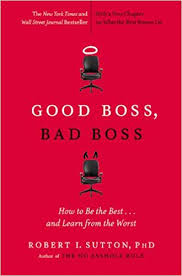
Literary corner: Good Boss Bad Boss–Robert Sutton

Copyright@shravancharitymission

Khidki (Window)

–Read India Initiative—

This is only an attempt to create interest in reading. We may not get the time to read all the books in our lifetime. But such reviews, talk and synopsis will at least convey what the book is all about.

    Robert Sutton is a professor in Stanford University. This book was first published in the year 2010. In life we all have bosses. Some are good and so remembered. Some are atrocious and are soon forgotten. So, quickly analyse yourself as to in which category you fall.

    Numerous studies around the world drew similar conclusions, noting that 75% of the workforce reports that their immediate superior is the most stressful part of their job. And a lot of feudalism still exists out there. Professor Sutton, the best-selling author of ‘The No Asshole rule,’ explores how good and bad bosses affect the workplace and what distinguishes one from the other.

    Sutton’s research is comprehensive and his anecdotes are interesting and far out. As you might guess from the title of his last book. He indulges in salty language and profanity, so be warned. With that caveat, I recommend his book to anyone who has a boss—or—is—a boss. I have divided the summary into 3 parts. The first part being:

NEGATIVE IMPACT OF BAD BOSSES     Bad bosses, especially bullies, have a profound negative impact on their workplaces. In a 2007 survey of almost 8,000 U.S. adults, 37 percent had experienced being bullied at work. Of those respondents, 72 percent said they suffered abuse from their superiors. Employees with their obnoxious bosses were more likely to make intentional mistakes that is (30% as against 6 %), and report sick when they were healthy (29 % as against 4 %), and put minimal effort into their work (33 % vs. 9 %).

    A boss can be bad in many ways, but whatever the permutation, ill-behaved bosses make people feel sick. In England, researchers tracked 6,000 civil service workers for 20 years. Those with bosses who were hypercritical, poor listeners or stingy with praise experienced higher rates of angina, heart attacks and death from heart disease than those working for benevolent bosses.

    Finnish or (Finland) and Swedish studies show similar results. Employees working for bad bosses frequently report feeling angry, stressed out, emotionally numb, depressed or even anxious. It is normally said an employee doesn’t leave the company but he leaves the boss. On the flip side, employees are more satisfied and productive when they feel their bosses care for them.

    Organisations with good bosses enjoy healthier employees, more profitability and greater employee retention.

BALANCE DETERMINATION AND “SMALL WINS.”

    Good bosses are not micromanagers who suppress creativity and interrupt workflow, and they’re not laid-back, like bosses who fail to achieve company goals. Good bosses walk the line between stepping in when necessary and letting their employees work without interference. Good managers have determination, or “grit”—that is, “perseverance and passion towards long-term goals.” Bosses with grit regard work as a marathon, not a sprint. They sustain effort through adversity and never stop learning.

    Good bosses don’t just plan to meet long term goals. They also set out to achieve small wins along the way and they also motivate staffers to reach for lofty goals. For example, some people ‘freak out or freeze up’ when their tasks become overwhelming or too complex. People are more effective when they conquer smaller tasks and celebrate small victories. Helping staff members stay calm and confident is one reason to break projects into manageable, and contained segments.

    Bosses must meet certain performance goals without destroying their workforce. Partners at one law firm made, on an average, almost $1 million a year, but over time they became exhausted by their quest to achieve enough billable hours to satisfy their bosses. Like many other high pressure leaders, this manager was oblivious to his nasty behaviour and bad reputation. Bad bosses tend to have inflated views of their own abilities and performance. By contrast, great bosses strive for a balance between performance and humanity.

    As the research shows, the more time you spend around rotten apples—those lousy, lazy, grumpy and nasty people—the more damage you will suffer. When people are emotionally depleted, they stop focussing on their jobs and instead work on improving their moods. If you find that there are a few subordinates who are so unpleasant that, day after day, they sap your energy you need to inspire others and feel good about your own job, where my advice is—if you can’t get rid of them—spend as little time around them as possible.

    Flipping through the pages further. I see a list that includes the 11 Commandments for wise bosses. Further, there are topics like: How to lead a good fight; tricks for taking charge; and a recipe for an effective apology—which is interesting and the one I liked the most.

    The components of an effective apology are: No sugar coating, take the blame fully, apologize fully, take immediate control over what you can. Explain what you have learned, communicate what you will do differently, and get credit for improvements. Sutton describes how this looks when it is successful.

    In late August 2008, Maple Leaf Foods was responsible for a number of deaths and illnesses caused by bacteria in the meats produced in its plant. So then, how did the CEO, Michael McCain handle the situation? The CEO Michael McCain, announced in a press conference that the plant was closed. He apologized to those hurt by his firm’s products and admitted that he and others in the plant were responsible for the tragedy. He went into detail about the steps Maple Leaf was planning to rectify the problem and emphasised that it was his job to restore the faith of the Canadian people in Maple Leaf.

    By December 2008, polls indicated that confidence in Maple had risen from 60% to 91% since the crisis began. McCain’s swift actions and willingness to take personal responsibility were largely responsible for the turnaround.

    The author has also included sections on issues that bosses deal with every day, including how to create Psychological safety for your employees and how to shield them from “red tape, interfering executives, nosy visitors, unnecessary meetings, and a host of other insults, intrusions and time wasters.”

    These techniques not burdening your employees with excessive meetings, which are notorious time and energy suckers, intercepting and dealing with problems and people so that your employees can focus on their work, and proactively intervening with

upper management when bad directives come down that your people either cannot implement or that will likely harm the company.

    Then there is a chapter titled, “Don’t Shirk the Dirty Work”. Bosses are the ones who have to lay people off, confront poor productivity, or do other things that will hurt others. Author says that dirty work does less harm when bosses add four antidotes into the mix: That is production, control, understanding and compassion.

    First this, predictably helps people know when to relax versus when dread and vigilance are warranted, which protects them from the emotional and physical exhaustion that results when people never feel safe from harm for even a moment. Bosses, for example, can warn people that layoffs are imminent or, conversely, that workers are safe for the next three months.

    Second, the best bosses know that it is better to give people explanations they like than no explanation at all. Employees who are given sound and believable explanations for unsettling changes are less prone to become angry and anxious, retaliate, quit, steal, or become less productive. When fear is in the air, your mantra should be: Simple, concrete, credible and repetitive.

    Third, great bosses help followers feel powerful rather than powerless, especially during rough times. This means that dirty work will do less harm if you can give people some control over when and how bad things happen to them. Fired employees will suffer less if they have control over where they go next, how they leave, and when they leave.

    Fourth the best bosses convey empathy when they make and implement tough decisions. For example, don’t lay people off using text messages, email, or in a public place. Do realize that one day you may be on the other side of the table, so treat people the way you’d like to be treated in this situation.

THE 11 COMMANDMENTS FOR WISE BOSSES

  1. Have strong opinions but weakly held beliefs.
  2. Do not treat others as if they are idiots.
  3. Listen attentively to your people. Don’t just pretend to hear what they say.
  4. Ask a lot of good questions.
  5. Request others for help and gratefully accept their assistance.
  6. Do not hesitate to say, ‘I don’t know.’
  7. Forgive people when they fail, remember the lessons, and teach them to everyone.
  8. Fight as if you’re right, and listen as if you’re wrong.
  9. Do not hold grudges after losing an argument. Instead, help the victors implement their ideas with all their might.
  10. Know your weaknesses and flaws, and work with people who correct and compensate for your weaknesses.
  11. Express gratitude to your people.

    The worst bosses condemn their people to live in constant fear as they wait for the next wave of bad news, which always seems to hit without warning and at random intervals. The best bosses do everything possible to communicate when and how distressing events will unfold. When the timing of a stressful event can be predicted, so can its absence: Psychologist Martin Seligman called this the safety signal hypothesis.

     Predictability helps people know when to relax versus when dread and vigilance are warranted—which protects them from emotional and physical exhaustion that results when people never feel safe from harm for even a moment. Seligman illustrated his hypothesis with air-raid sirens used during the German bombing of London during World War II.

    The sirens were so reliable that people went about their lives most of the time without fear. They didn’t need to worry about running to the shelters unless the sirens sounded.

    The second way was explained to the author by a group of General Electric executives. I pressed them about their rather extreme ‘rank and yank’ system (which has been modified recently, but not much), where each year the bottom 10% of employees that is (‘C Category Players) are fired, the top 20% (A category Players) get the lion’s share—about 80%—of the bonus money, and the mediocre middle 70% (B category Players) get the remaining crumbs.

    I pressed them because a pile of studies shows that giving a few top performers most of the goodies damages team and organizational performance. This happens because people have no incentive to help others—but do have an incentive to undermine, bad-mouth, and demoralise co-workers, because pushing down others decreases the competition they face. The performance also suffers because hard workers who aren’t ‘A’ players become bitter and withhold effort.

    All bosses can be more effective when they work with the peer culture, rather than against, the peer culture. Bosses who are known as fair and consistent will get more support from the peer culture when they do their dirty work. Research on punishment shows that co-workers often believe that offenders are let off too easily by bosses—especially when they have violated the rules consistently, shown little remorse, and a fair process was used to convict and punish the wrongdoer.

    In the best of workplaces, bosses and their charges agree on what is right and what is wrong, and peers—not the boss—dish out punishment. Research on employee theft’ shows that ridicule, rejection, and nasty gossip by peers is 250% more effective for preventing stealing than formal punishment by supervisors.

    Here are a few great quotes from the book.

  1. ‘The best bosses dance on the edge of overconfidence, but a healthy dose of self-doubt and humility saves them from turning arrogant and pig-headed.

Bosses who fail to strike this balance are incompetent, dangerous to follow, and downright demeaning.’

  1. ‘The best bosses don’t just recruit people with stellar solo skills; they bring in employees who will weave their vigour and talents with others … no man or woman is an island.’
  2. ‘Bosses shape how people spend their days and whether they experience joy or despair, perform well or badly or are healthy or sick. Unfortunately, there are hoards of mediocre and downright rotten bosses out there, and big gaps between the best and the worst.’
  3. ‘Psychological safety is the key to creating a workplace where people can be confident enough to act without undue fear of being ridiculed, punished or fired—and be humble enough to openly doubt what is believed and done. As Amy Edmond-son’s research shows, psychological safety emerges when those in power persistently praise, reward, and promote people who have the courage to act, talk about their doubts, successes and failures.
  4. ‘Talented employees who put their need ahead of their colleagues and the company are dangerous.’
  5. ‘The best management is sometimes less management or no management at all. William Coyne, who led 3M’s R&D efforts for over a decade, believed a big part of his job was to leave his people alone and protect them from other curious executives. As he put it: ‘After you plant a seed in the ground, you don’t dig it up every week to see how it is doing.’
  6. ‘The best bosses do more than charge up people and recruit and breed energizers. They eliminate negative because even a few bad apples and destructive acts can undermine many good people and constructive acts.’
  7. Harry S. Truman said, ‘It is amazing what you can accomplish if you do not care who gets the credit.’

    It’s a thrilling, educative and an impacting  book on management practices full of exciting quotes. I would give the book eight out of ten. A good read.

Posted by Kamlesh Tripathi

*

https://kamleshsujata.wordpress.com

*

Share it if you like it

*

Shravan Charity Mission is an NGO that works for poor children suffering from life threatening diseases especially cancer. Our posts are meant for our readers that includes both children and adults and it has a huge variety in terms of content. We also accept donations for our mission. Should you wish to donate for the cause. The bank details are given below:

NAME OF ACCOUNT: SHRAVAN CHARITY MISSION

Account no: 680510110004635 (BANK OF INDIA)

IFSC code: BKID0006805

*

Our publications

GLOOM BEHIND THE SMILE

(The book is about a young cancer patient. Now archived in 7 prestigious libraries of the US, including, Harvard University and Library of Congress. It can also be accessed in MIT through Worldcat.org. Besides, it is also available for reading in Libraries and archives of Canada and Cancer Aid and Research Foundation Mumbai)  

ONE TO TANGO … RIA’S ODYSSEY

(Is a book on ‘singlehood’ about a Delhi girl now archived in Connemara Library, Chennai and Delhi Public Library, GOI, Ministry of Culture, Delhi)

AADAB LUCKNOW … FOND MEMORIES

(Is a fiction written around the great city of Nawabs—Lucknow. It describes Lucknow in great detail and also talks about its Hindu-Muslim amity. That happens to be its undying characteristic. The book was launched in Lucknow International Literary Festival of 2014)

REFRACTIONS … FROM THE PRISM OF GOD

(Co-published by Cankids–Kidscan, a pan India NGO and Shravan Charity Mission, that works for Child cancer in India. The book is endorsed by Ms Preetha Reddy, MD Apollo Hospitals Group. It was launched in Lucknow International Literary Festival 2016)

TYPICAL TALE OF AN INDIAN SALESMAN

(Is a story of an Indian salesman who is, humbly qualified. Yet he fights his ways through unceasing uncertainties to reach the top. A good read not only for salesmen. The book was launched on 10th February, 2018 in Gorakhpur Lit-Fest. Now available in Amazon, Flipkart and Onlinegatha)

RHYTHM … in poems

(Published in January 2019. The book contains 50 poems. The poems describe our day to day life. The book is available in Amazon, Flipkart and Onlinegatha)

(ALL THE ABOVE TITLES ARE AVAILABLE FOR SALE IN AMAZON, FLIPKART AND OTHER ONLINE STORES OR YOU COULD EVEN WRITE TO US FOR A COPY)

*****


INTERESTING FACTS & QUOTES–16

Copyright@shravancharitymission  

Google sab janta hai. Google knows everything about everyone through their ‘search history.’ If Google were to enter the business of “Private Detectives’ or open a “Marriage Bureau” they probably would be the best among the trade, as Google knows everything about everyone. And through Google one can say even ‘Úncle Sam’ that is the US also knows everything about everyone.

A committee of senior statisticians has said that verifying 479, randomly selected EVMs, from a total of 10.35 lakh EVMs, achieves a confidence level of 99.99%. Raising sample size further yielded only ‘negligible gains’ in confidence levels. This would also roughly translate to one EVM per Lok Sabha seat. Election Commission says that VVPAT slip count from 1,500 polling stations in elections since March 2017 have matched completely with corresponding EVMs.

In 1939 Savarkar wrote the foreword of a book by a Nazi sympathizer and European born Hindu revivalist who called herself or you could say she wrote under the pseudonym of Savitri Devi Mukerji. Savitri Devi Mukerji lived between (1905-1982), and her real name was Maximiani Portas she was a mix of Greek, French and English parentage, she was a remarkable figure who, among other idiosyncratic beliefs, considered Adolf Hitler an avatar of Vishnu. Her book, prophetically titled “A Warning to be Hindus,” is a passionate polemic about the need for Hindu assertion. A prominent proponent of, deep ecology and Nazism, who served the Axis cause during World War II by spying on Allied forces.

The origin of the word Juggernaut comes from the Hindu God Jagannath. The word is derived from the Sanskrit—Odia Jagannatha meaning “World Lord” which is one of the names of Krishna found in the Sanskrit epics. Where, Jagata means world, combining with Natha meaning Lord. By the eighteenth century juggernaut was in common use as a synonym for an irresistible and destructive force that demanded total devotion or unforgiving sacrifice—the sense in which it pops up in novels of Charlotte Bronte and Charles Dickens, and even Robert Louis Stevenson, who applied it to Dr Jekyll’s foil. Mr Hyde. It was only Mark Twain in his autobiography, who described juggernaut as the kindest of Gods.

The concept of GDP was invented in 1937 by US economist Simon Kuznets, who was later awarded the Nobel Prize for Economics in 1971. In 1944, following the Bretton Woods conference that established the World Bank and the International Monetary Fund, GDP became the standard tool for sizing up the country’s economy.

India is now the largest market for Youtube with over 265 million or you could say 26 crore monthly active users for the video sharing website.

Last week five South Korean celebrities became the world’s first 5G subscribers. The service since then has been opened to regular subscribers as well. Simultaneously the US also saw a limited commercial launch of 5G networks. The intensity with which telecoms in the two countries are claiming they did first, underscores the stakes in this battle for supremacy and how competitive it’s likely to be.

2G opened up mobile telephony mainstream, 3G opened up the app economy and social platforms, 4G redefined businesses from banking to entertainment and transportation, 5G equals superfast communications that backers say will transform life as we know it. Its speed, responsiveness and reach could indeed revolutionise agriculture, utilities, law and order, healthcare, manufacturing, AI and virtual reality.

Whereas, South Korea and the US have launched 5G and China is in a great state of readiness. India on the other hand is yet to allocate spectrum for 5G trails. There is no doubt that rolling out this technology is seriously capital intensive.

During the 2014 campaign, Narendra Modi crisscrossed 3,00,000 km to address hundreds of rallies in person. Five years later, his energy is still undiminished. With 150 rallies already planned and more in the works, he is poised to convert the election into a presidential style contest once again.

Deteriorating quality of education in public institutions poses a serious threat to the Indian youth of today and tomorrow. As it directly affects about 65-70% of the students—those who use publicly funded institutions. 

Mumbai is one of the hottest stock markets of the world, with a gain of nearly 30%.

To go off the rails. Means to start behaving in a way that is not generally acceptable, especially being dishonest or illegal.

Tail wagging the dog means a situation where a small part controls a big part.

Magna-carta—is a document ensuring guarantee of basic rights.

Research shows that over a third of the US population is single. In India too, the demographic has been rising. They now number 74 million or 7 crore and comprise 12% of the female population.

The commonwealth is by no means a perfect institution. It is a legacy of the days when London was the centre of the world and Great Britain was the mother country.

From a peak of 90800 sq km under its control in 2015, IS (Islamic State) is now down to ruling over a mere 3% of Iraq and 5% of Syria today.

More than 80% of Google’s revenue comes just from its ad business. In the last quarter, the company earned $32.6 billion from ads and just $ 6.6 billion from other sources.

A strategic industry should be defined on the basis of its multiplier effect on employment.

India has fought three, and two half wars, against Pakistan, and one against China in the past 70 years. The halves are the limited Kargil war and the longer Pakistani covert war that continues. Two of them in 1965 and 1971 lasted less than a month. The Kargil war went on for three months but in a very small un-populated part of the country. The first Kashmir war began in October 1947 and ended a year and more later on December 31, 1948. The Sino-Indian war of 1962, too, was a month-long affair. Acutely aware of their own vulnerability, India and Pakistan have generally avoided the deliberate targeting of economic and civilian areas during their wars. But in this regard the future now remains unpredictable.

A recent unofficial count found more than 600 lions in the area, up from 523 in a 2015 census in Gujarat. Gujarat’s chief minister Vijay Rupani said. “Our efforts for lion conservation with support of local people have yielded good results. The number of lions now in Gujarat has reached the 600 mark.”

More than 2500 years ago Confucius said that those who govern should do so through merit and virtue, not inherited status. From the 10th century to 1905, Chinese officials were selected primarily through competitive exams and promoted through rigorous performance assessments.

When a sector with less than 15% of GDP supports a population three times its size, we have a convergence of rural and urban hopes which is jobs. You cannot lift rural incomes without absorbing at least two-thirds of those dependent on the farm in non-farm or urban jobs.

China’s staunch opposition has ensured that Taiwan remains the only major country in the world to be outside the UN.

Interesting quotes and lines.

Crime does not pay as well as politics—ALFRED NEWMAN, a US composer.

The ability to look without motive is missing in the world today—Sadhguru Jaggi Vasudev.

I noticed people coming out of restaurants always had more joyful faces than those coming out of temples—anonymous.

I knew nothing about anything. That means I ended up paying enormous attention to everything—anonymous.

When someone spoke, I saw they were only making sounds and I was making up the meaning—anonymous.

Sophocles, one of the three ancient Greek tragedians said he would prefer even to fail with honour than win by cheating.

There can be a world of a difference between knowing ethics and practicing ethics—anonymous.

In business you don’t get what you deserve, you get what you negotiate—CHESTER KARRASS, US author

By Kamlesh Tripathi

*

https://kamleshsujata.wordpress.com

*

Share it if you like it

*

Shravan Charity Mission is an NGO that works for poor children suffering from life threatening diseases especially cancer. Our posts are meant for our readers that includes both children and adults and it has a huge variety in terms of content. We also accept donations for our mission. Should you wish to donate for the cause. The bank details are given below:

NAME OF ACCOUNT: SHRAVAN CHARITY MISSION

Account no: 680510110004635 (BANK OF INDIA)

IFSC code: BKID0006805

*

Our publications

GLOOM BEHIND THE SMILE

(The book is about a young cancer patient. Now archived in 7 prestigious libraries of the US, including, Harvard University and Library of Congress. It can also be accessed in MIT through Worldcat.org. Besides, it is also available for reading in Libraries and archives of Canada and Cancer Aid and Research Foundation Mumbai)  

ONE TO TANGO … RIA’S ODYSSEY

(Is a book on ‘singlehood’ about a Delhi girl now archived in Connemara Library, Chennai and Delhi Public Library, GOI, Ministry of Culture, Delhi)

AADAB LUCKNOW … FOND MEMORIES

(Is a fiction written around the great city of Nawabs—Lucknow. It describes Lucknow in great detail and also talks about its Hindu-Muslim amity. That happens to be its undying characteristic. The book was launched in Lucknow International Literary Festival of 2014)

REFRACTIONS … FROM THE PRISM OF GOD

(Co-published by Cankids–Kidscan, a pan India NGO and Shravan Charity Mission, that works for Child cancer in India. The book is endorsed by Ms Preetha Reddy, MD Apollo Hospitals Group. It was launched in Lucknow International Literary Festival 2016)

TYPICAL TALE OF AN INDIAN SALESMAN

(Is a story of an Indian salesman who is, humbly qualified. Yet he fights his ways through unceasing uncertainties to reach the top. A good read not only for salesmen. The book was launched on 10th February, 2018 in Gorakhpur Lit-Fest. Now available in Amazon, Flipkart and Onlinegatha)

RHYTHM … in poems

(Published in January 2019. The book contains 50 poems. The poems describe our day to day life. The book is available in Amazon, Flipkart and Onlinegatha)

(ALL THE ABOVE TITLES ARE AVAILABLE FOR SALE IN AMAZON, FLIPKART AND OTHER ONLINE STORES OR YOU COULD EVEN WRITE TO US FOR A COPY)

*****


SHORT STORY: HOW SUZUKI FOUND HIROO ONODA IN THE JUNGLES OF LUBANG (PHILIPPINES)

Copyright@shravancharitymission


    It was in the closing months of 1944 and almost after a decade when the tide was turning against Japan.  Their economy was staggering, their military was exhausted across, half of Asia. The territories that they had won all along the Pacific were now toppling like dominoes against the forces of U.S. Defeat now, seemed inevitable.

    On December 26, 1944, Second Lieutenant Hiroo Onoda of the Japanese Imperial Army was deployed at the small island of Lubang in the Philippines. His orders were, to slow the progress of United States as much as possible. To stand and fight at all costs, and to never surrender. Both he and his commander knew it was essentially a suicide mission.

    In February 1945, the Americans finally arrived at Lubang and took the island by storm. Within days, most of the Japanese soldiers had either surrendered or were killed. But Onoda and three of his men managed to hide in the jungle. From there, they began a campaign of guerrilla warfare against the U.S. forces and the local population. They attacked supply lines, shot stray soldiers, and interfered with the American forces in every possible manner that they could.

    After about six months on August 6 and 9, 1945, United States, dropped the atomic bombs on the cities of Hiroshima and Nagasaki respectively. Japan surrendered, and the deadliest war in human history came to its dramatic end.

    However, thousands of Japanese soldiers were still scattered among the Pacific isle, and most, like Onoda, were hiding in the jungle, unaware that the war was over. These holdouts continued to fight and pillage as they had done before. This became a real problem for rebuilding eastern Asia after the war. Where, the governments did agree that something needs to be done.

    The U.S. military, in agreement with the Japanese government, dropped thousands of leaflets throughout the Pacific region. Announcing that the war was over and it was time for everyone to go home. Onoda and his men, like many others soldiers, found and read these leaflets. But unlike most of them, Onoda decided that they were fake. A trap set by the American forces to get the guerrilla fighters to show themselves. Onoda burned the leaflets. He and his men stayed hidden and continued to fight.

    Five years had gone by. The leaflets had stopped, and most of the American forces had long since gone home. The local population of Lubang attempted to return to their normal lives of farming and fishing. Yet, there were, Hiroo Onoda and his merry men, still shooting farmers, burning their crops, stealing their livestock, and murdering locals who wandered too far into the jungle. The Philippine government then took to drawing up new flyers and spreading them out across the jungle. Come out, they said. The war is over. You lost. But these too, were also ignored by Onoda.

    In 1952, the Japanese government made one final effort to pull out the last remaining soldiers out of the hiding all throughout the Pacific. This time, letters and pictures, from the missing soldiers’ families were air-dropped, along with a personal note from the emperor himself. Once again, Onoda refused to believe that the information was real. Once again, he believed the airdrop, to be a trick of the Americans. So, once again, he and his men stood their ground and continued with their fight.

    By now another few years had gone by. The Philippine locals, sick of being terrorized, finally armed themselves, and began firing back. By 1959, one of Onoda’s companions had surrendered, and another was killed. A decade later. Onoda’s last companion. A man called Kozuka, was killed in a shootout with the local police, while he was burning rice fields—still waging war against the local population, a full quarter-century after the end of World War II.

    Onoda, now having spent more than half of his life in the jungles of Lubang, was all alone.

    In 1972, the news of Kozuka’s death reached Japan and caused a stir. The Japanese people had thought. The last of the soldiers from the war had come home years earlier. The Japanese media began to speculate. If Kozuka was still in Lubang until 1972. Then perhaps, Onoda himself, the last known Japanese holdout, from World War II, might still be alive as well. That year, both Japanese and Philippine governments, jointly sent search parties, to look for the enigmatic second lieutenant Onoda. Who, by now had become a part of a myth, a hero, or even a ghost, for no one knew the reality. Finally, the search parties found nothing.

    As months progressed. The story of Lieutenant Onoda morphed into, something like an urban legend in Japan—the war hero sounded too insane to actually exist. Many romanticized him. Others criticized him. Others thought he was a stuff out of a fairy tale.

    It was around this time that a young man by the name of Norio Suzuki first heard of second lieutenant Onoda. Suzuki was an adventurer, an explorer, and a bit of a hippie. Born after the end of the war. He had dropped out of school and had spent four years hitchhiking his way across Asia, the Middle East, and Africa. Sleeping on park benches, in stranger’s cars, in jail cells, and under the stars. He volunteered on farms for food, and donated blood to pay for places to stay. He was a free spirit, and perhaps a little bit nuts.

    In 1972, Suzuki needed another adventure. He had returned to Japan after his travels and found the strict cultural norms and social hierarchy to be too stifling. He hated school. He couldn’t hold on to a job. He wanted to be back on the road, back on his own again.

    For Suzuki, the legend of Hiroo Onoda came as the answer to his problems. It was a new and worthy adventure for him to pursue. Suzuki believed that he would be the one who would find Onoda. Extensive search parties conducted by the Japanese, Philippine and American governments had not been able to find Onoda. Local police forces had been scavenging the jungles for almost thirty years now with no luck. Thousands of leaflets had met with no response. So, was it this deadbeat, a college dropout, a hippie, be the one, to find him?

    Unarmed and untrained for any sort of reconnaissance or tactical warfare, Suzuki travelled to Lubang and began wandering around the jungle all by himself. His strategy was simple. Scream Onoda’s name really loud and tell him that the emperor was worried about him.

    He found second lieutenant Hiroo Onoda in just four days.

   Moral of the story: One, use the right means and methods to communicate. See how Suzuki found Onoda in just four days. Two, learn to trust people, which Onoda didn’t, and as a result of which, he spent, more than half of his life, in the jungles of Lubang.  

    Second Lieutenant Hiroo Onoda died later in Japan at the age of ninety one.

By Kamlesh Tripathi

*

https://kamleshsujata.wordpress.com

*

Share it if you like it

*

Shravan Charity Mission is an NGO that works for poor children suffering from life threatening diseases especially cancer. Our posts are meant for our readers that includes both children and adults and it has a huge variety in terms of content. We also accept donations for our mission. Should you wish to donate for the cause. The bank details are given below:

NAME OF ACCOUNT: SHRAVAN CHARITY MISSION

Account no: 680510110004635 (BANK OF INDIA)

IFSC code: BKID0006805

*

Our publications

GLOOM BEHIND THE SMILE

(The book is about a young cancer patient. Now archived in 7 prestigious libraries of the US, including, Harvard University and Library of Congress. It can also be accessed in MIT through Worldcat.org. Besides, it is also available for reading in Libraries and archives of Canada and Cancer Aid and Research Foundation Mumbai)  

ONE TO TANGO … RIA’S ODYSSEY

(Is a book on ‘singlehood’ about a Delhi girl now archived in Connemara Library, Chennai and Delhi Public Library, GOI, Ministry of Culture, Delhi)

AADAB LUCKNOW … FOND MEMORIES

(Is a fiction written around the great city of Nawabs—Lucknow. It describes Lucknow in great detail and also talks about its Hindu-Muslim amity. That happens to be its undying characteristic. The book was launched in Lucknow International Literary Festival of 2014)

REFRACTIONS … FROM THE PRISM OF GOD

(Co-published by Cankids–Kidscan, a pan India NGO and Shravan Charity Mission, that works for Child cancer in India. The book is endorsed by Ms Preetha Reddy, MD Apollo Hospitals Group. It was launched in Lucknow International Literary Festival 2016)

TYPICAL TALE OF AN INDIAN SALESMAN

(Is a story of an Indian salesman who is, humbly qualified. Yet he fights his ways through unceasing uncertainties to reach the top. A good read not only for salesmen. The book was launched on 10th February, 2018 in Gorakhpur Lit-Fest. Now available in Amazon, Flipkart and Onlinegatha)

RHYTHM … in poems

(Published in January 2019. The book contains 50 poems. The poems describe our day to day life. The book is available in Amazon, Flipkart and Onlinegatha)

(ALL THE ABOVE TITLES ARE AVAILABLE FOR SALE IN AMAZON, FLIPKART AND OTHER ONLINE STORES OR YOU COULD EVEN WRITE TO US FOR A COPY)

*****