Tag Archives: shravancharitymission

INTERESTING FACTS … episode 8

Copyright@shravancharitymission

In 2016, the Ellen Macarthur foundation reported at the world economic forum, that we all will have, more plastic in the sea, than fish, by 2050. If we continue producing this substance at this rate.

The war between the Allied and Axis powers in World War—II killed 80 million, or 4% of the global population of that time.

The British Raj looted India to their heart’s content, siphoning out, at least 9.2 trillion pounds (or 44.6 trillion$), according to, the recent estimate of Indian Marxist Economist, of JNU fame, Utsa Patnaik.

In the man made Bengal famine of 1942-45, six to seven million Indians were starved to death (a toll far greater than the “Holocaust” when 6 million European Jews were massacred) because of the British Raj’s decison, to divert food supplies away from India..

There is always an ongoing confusion about the difference between climate and weather. Let me clear the air. Weather is the day-to-day state of the atmosphere, and its short-term variation in minutes and up to weeks. Whereas, climate is the weather of a place averaged over a period of time, often 30 years.

In India, 2018, was the 6th warmest year on record, and all the six warmest years, have come in, only in the last decade.

A 2016 study of High Court Judges says, that they could devote a time frame of only 5-6 minutes on an average to decide a case, if they were to hear all the matters listed daily.

20% of the sanctioned posts in Supreme Court, and 38% of that in the High Court are lying vacant.

Alpha waves are produced by the brain when we are in meditation or in a relaxation mode.

The earth’s equatorial diameter is 12,800 km.

Scientists have discovered, that before a major earthquake, an electromagnetic wave of 0.01-10 Hz, emerges, from deep inside, the earth. This wave is sometimes sensed by animals and could be the basis of their premonition of a coming earthquake.

During 2014 Lok Sabha elections. Government of India had spent Rs 3426 crore, that works out to a meagre Rs 41 per voter.

India is unique in having the largest number of children in private schools in the world. Almost half of the urban kids and a third of the rural kids attend private schools, and this is only growing, rapidly. Between 2011 and 2015, government schools lost around 1.1 crore kids, and private schools gained 1.6 crore kids around the same time.

A normal and healthy person takes around 10-12 breaths per minute and the depth of each inhalation is between 500-600 ml. His breathing is relaxed, regular, diaphragmatic and quiet. This type of breathing ensures that various organs of the body get the optimum quantity of oxygen. Whereas, the person who over-breathes chronically, is always prone to anxiety because of the imbalance of oxygen, carbon dioxide and nitrogen in the blood.

Today some 180 Swedish companies are present in India, providing high-end goods and services to the Indian market, and they collectively employ nearly 1,90,000 Indians directly. Sweden is ranked among the top 5 countries who manufacture in India.

Tourism, is one of the largest sectors today, in the world economy. It accounts for 9% of the world’s GDP and contributes to some 200 million jobs globally.

As high as 85% of donors to BJP and Congress party were faceless people who had contributed up to Rs 19,999.

Russian economy is anything but robust. It is increasingly supported by the energy deal with China, which means sooner or later Moscow will be at Beijing’s mercy.

Saudi women by law still need a male guardian’s permission to travel.

In global university rankings—no Indian varsity makes it to the top 250, which is shocking for a country of this size.

By Kamlesh Tripathi

*

https://kamleshsujata.wordpress.com

*

Share it if you like it

*

Shravan Charity Mission is an NGO that works for poor children suffering from life threatening diseases especially cancer. Our posts are meant for our readers that includes both children and adults and it has a huge variety in terms of content. We also accept donations for our mission. Should you wish to donate for the cause. The bank details are given below:

NAME OF ACCOUNT: SHRAVAN CHARITY MISSION

Account no: 680510110004635 (BANK OF INDIA)

IFSC code: BKID0006805

*

Our publications

GLOOM BEHIND THE SMILE

(The book is about a young cancer patient. Now archived in 7 prestigious libraries of the US, including, Harvard University and Library of Congress. It can also be accessed in MIT through Worldcat.org. Besides, it is also available for reading in Libraries and archives of Canada and Cancer Aid and Research Foundation Mumbai)  

ONE TO TANGO … RIA’S ODYSSEY

(Is a book on ‘singlehood’ about a Delhi girl now archived in Connemara Library, Chennai and Delhi Public Library, GOI, Ministry of Culture, Delhi)

AADAB LUCKNOW … FOND MEMORIES

(Is a fiction written around the great city of Nawabs—Lucknow. It describes Lucknow in great detail and also talks about its Hindu-Muslim amity. That happens to be its undying characteristic. The book was launched in Lucknow International Literary Festival of 2014)

REFRACTIONS … FROM THE PRISM OF GOD

(Co-published by Cankids–Kidscan, a pan India NGO and Shravan Charity Mission, that works for Child cancer in India. The book is endorsed by Ms Preetha Reddy, MD Apollo Hospitals Group. It was launched in Lucknow International Literary Festival 2016)

TYPICAL TALE OF AN INDIAN SALESMAN

(Is a story of an Indian salesman who is, humbly qualified. Yet he fights his ways through unceasing uncertainties to reach the top. A good read not only for salesmen. The book was launched on 10th February, 2018 in Gorakhpur Lit-Fest. Now available in Amazon, Flipkart and Onlinegatha)

RHYTHM … in poems

(Published in January 2019. The book contains 50 poems. The poems describe our day to day life. The book is available in Amazon, Flipkart and Onlinegatha)

(ALL THE ABOVE TITLES ARE AVAILABLE FOR SALE IN AMAZON, FLIPKART AND OTHER ONLINE STORES OR YOU COULD EVEN WRITE TO US FOR A COPY)

*****
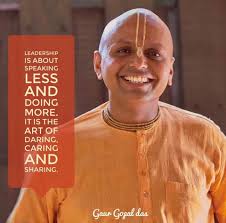


BOOK CORNER: LIFE’S AMAZING SECRETS–How to Find Balance and Purpose in Your Life … by Gaur Gopal Das

Copyright@shravancharitymission

Khidki (Window)

–Read India Initiative—

This is only an attempt to create interest in reading. We may not get the time to read all the books in our lifetime. But such reviews, talk and synopsis will at least convey what the book is all about.

LIFE’S AMAZING SECRETS

How to find balance and purpose in your life

By Gaur Gopal Das

Publisher: Penguin Ananda

Price Rs 250

    GGD (Gaur Gopal Das) is one of the most popular and widely followed monks of present times. Especially, when it comes to the young corporate crowd, who incessantly indulge in social media. GGD is an Electrical Engineer by qualification. After a brief stint with Hewlett Packard, he decided to live as a monk in an ashram, in downtown, Mumbai. And he has now remained there for twenty two years. Where, he has learnt the antiquity of ancient philosophy, and the modernity of contemporary psychology, to become a life coach to thousands in the city.

    He has been travelling all around the world since 2005, to share his wisdom with corporate executives, universities and even charities. In 2016, his global popularity exploded, when he took to online discourses. The purpose of this publication is, to make the readers find a right balance in their lives. The book is inundated with quotes and thoughts from various important and renowned personalities just as most motivational books.

   The book is a little over 200 pages. Largely written in easy and lucid language. There is no piercing story line in this. But the narration takes you through both the visible and the non-visible merry-go-round of life quite royally. To be true. It impacts you positively by the time you complete it. In other words it delights you intrinsically.

    The narration begins with the monk first having a meal with one of his wealthy bhakt, or you could say devotee, Hariprasad, in short Harry and his wife at their posh residence in South Mumbai. Thereafter harry offers to drop GGD to his place of stay and that is how this interesting conversation starts between Harry and the monk in Harry’s luxurious car.

    In such motivational books, one normally comes across, interesting life-lessons that carry the essence of life. The idea of course is to present the amrit post the manthan (churning) that one can straightaway drink, and in that manner this book is no different. And without being a spoiler, since the book, has only, recently been published, let me in a jiffy take you through the book.

    It has some twenty chapters. With blessings of ISKCON and his divine grace A.C. BHAKTIVEDANTA SWAMI SRILA PRABHUPADA whose teachings have been the foundation of this book, coupled with the monks own experiences.

    The book starts with an interesting content list that deals with a gamut of virtues relevant for life, such as, moral, divine, spiritual and behavioural niches that cut across religions. Broadly speaking it is not a Hindu book, as one might make out from the picture of GGD, clad in his saffron robe. On the contrary it is a friendly present to human beings.

    In the journey of life any human being, and that includes even the toughest, will surely come across monotony, clutter, dread, fear, wrath, happiness, dislocation and even temper. The narration has answers for all situations.

    The book is rich with many potent thoughts that will help one take on this tough world. There are interesting chapters that deal with; seeing beyond the obvious; life’s journey; growing through gratitude; why worry; spiritual practice; how to talk sensitively; a virtuous vision; correcting cautiously; forgiveness; fruitful associations; competitive crossroads; self-discovery; decoding spirituality at work; integrity and character; selfless service; family first; the nation narrative and the holy aspect of service that brings joy in life.

    Although GGD is a Hindu monk. Yet he has not propagated, the spirituality route of Hinduism so blatantly. That shows he wants to connect, basically with human beings, and not Hindus alone. A kind of global talent on spiritualism.

    He cites some very beautiful examples such as that of, Joshua Bell, the internationally renowned, violinist, in tag with the experiment of Washington Post. The author also goes on to say he gets up at 4 a.m. for his morning meditation and talks about his strong morning ritual that gives him incessant focus for the day.

    He dwells on thoughts and ideas and how they can change a man’s life where he gives his own example. He says, we are not human beings having spiritual experiences; we are spiritual beings having human experiences—nicely plays with words.

    Most human beings have three things in common—we are all stuck, we all have a journey to complete and we all have a destination. He also goes on to describe God—there is one God. But is identified differently across different cultures.

    After every chapter the author has given a chapter summary which is very interesting as it comes in bullet points. The author raises an interesting question. Does spirituality kill ambition? Well, I’m not going to divulge the answer to the questions raised by the author in this book and the readers will only have to find their own answers by reading the book. The book is available both in print and e-book format. The book also has a few worksheets at the end. A kind of recall test.

    If I need to describe the book, keeping my life in mind. I would say the book touches my soul several times during the day. Say from the time I open my eyes in the morning, till the time I close my eyes in the night.

    The book has been appreciated by, film star and M.P. Hema Malini and also by Central Minister in the BJP Government, Nitin Gatkari.

   I would give the book seven out of ten. It is a worthwhile read. Especially, for corporate executives who face a lot of ups and downs in terms of their career and even their future. It is not a literary masterpiece but yes it conveys some very valuable lessons.

Synopsis by Kamlesh Tripathi

*

https://kamleshsujata.wordpress.com

*

Share it if you like it

*

Shravan Charity Mission is an NGO that works for poor children suffering from life threatening diseases especially cancer. Our posts are meant for our readers that includes both children and adults and it has a huge variety in terms of content. We also accept donations for our mission. Should you wish to donate for the cause. The bank details are given below:

NAME OF ACCOUNT: SHRAVAN CHARITY MISSION

Account no: 680510110004635 (BANK OF INDIA)

IFSC code: BKID0006805

*

Our publications

GLOOM BEHIND THE SMILE

(The book is about a young cancer patient. Now archived in 7 prestigious libraries of the US, including, Harvard University and Library of Congress. It can also be accessed in MIT through Worldcat.org. Besides, it is also available for reading in Libraries and archives of Canada and Cancer Aid and Research Foundation Mumbai)  

ONE TO TANGO … RIA’S ODYSSEY

(Is a book on ‘singlehood’ about a Delhi girl now archived in Connemara Library, Chennai and Delhi Public Library, GOI, Ministry of Culture, Delhi)

AADAB LUCKNOW … FOND MEMORIES

(Is a fiction written around the great city of Nawabs—Lucknow. It describes Lucknow in great detail and also talks about its Hindu-Muslim amity. That happens to be its undying characteristic. The book was launched in Lucknow International Literary Festival of 2014)

REFRACTIONS … FROM THE PRISM OF GOD

(Co-published by Cankids–Kidscan, a pan India NGO and Shravan Charity Mission, that works for Child cancer in India. The book is endorsed by Ms Preetha Reddy, MD Apollo Hospitals Group. It was launched in Lucknow International Literary Festival 2016)

TYPICAL TALE OF AN INDIAN SALESMAN

(Is a story of an Indian salesman who is, humbly qualified. Yet he fights his ways through unceasing uncertainties to reach the top. A good read not only for salesmen. The book was launched on 10th February, 2018 in Gorakhpur Lit-Fest. Now available in Amazon, Flipkart and Onlinegatha)

RHYTHM … in poems

(Published in January 2019. The book contains 50 poems. The poems describe our day to day life. The book is available in Amazon, Flipkart and Onlinegatha)

(ALL THE ABOVE TITLES ARE AVAILABLE FOR SALE IN AMAZON, FLIPKART AND OTHER ONLINE STORES OR YOU COULD EVEN WRITE TO US FOR A COPY)

*****



ARTICLE: WAS NON-VIOLENCE SOLELY RESPONSIBLE FOR INDIA’S INDEPENDENCE OR WAS THERE SOMETHING MORE TO IT?

Copyright@shravancharitymission


    Hello friends welcome to this edition of editorial compass. A lot has been spoken about India achieving independence through the “Brahmastra” of non-violence. But then, there also, happens to be another view-point that calls non-violence a myth.

    The line between historical facts and fiction is more porous than students of history might think. It is not uncommon for countries to create self-suiting or sanitised historical narratives. As George Orwell once said, “Who controls the past controls the future. Who controls the present controls the past.”

    India’s Republic Day Parade this year featured for the first time veterans of the Indian National Army (INA) that waged an armed struggle against the British colonial rule. Four INA veterans in their 90s rode a jeep in the parade that, paradoxically, showcased the life experiences of the apostle of non-violence, Mahatma Gandhi, through 22 tableaux.

    India has long embellished or distorted how it won independence. The incongruous juxtaposition of the INA along with Gandhi at the parade inadvertently highlighted that. The INA veterans participation, in fact, helped underscore the Indian republic’s founding myth—that it won independence only through non-violence. This myth has been deeply instilled in the minds of almost all Indians since their school days.

    Surely, the Gandhi-led, non-violent independence movement played a critical role. Both in galvanising grassroots resistance to British rule and also in helping to gain independence. But the decisive factor was the protracted World War-II, which reduced to ruins large swaths of Europe and Asia, especially the imperial powers. The war between the Allied and Axis powers killed 80 million, or 4% of the global population of that time.

    Despite the Allied victory, a devastated Britian was in no position to hold on to its colonies, including “crown jewel” India. Even colonies, where, there were no grassroots resistance to colonial rule, won independence in the post-World War-II period.

    The British had dominated India through a Machiavellian divide-and-rule strategy. Their exit came only after they had reduced one of the world’s wealthiest economies to one of its poorest. Indeed, they left after they had looted to their heart’s content, siphoning out, at least 9.2 trillion (or 44.6 trillion$) pounds, according to economist Utsa Patnaik’s recent estimate.

    Had the post-1947 India been proactive and forward-looking in securing its frontiers. It could have averted both the Kashmir and Himalayan border problems. China was in deep turmoil until October 1949, and India had ample time and space to assert control over the Himalayan borders. But India’s pernicious founding myth of non-violence gave rise to a pacifist country that believed it could get peace merely by seeking peace, instead of building the capability to defend peace.

    Here’s the paradox: countless numbers of Indians died to the excesses of British colonial regime. Just in the man made Bengal famine of 1942-45, six to seven million starved to death (a toll far greater than the “Holocaust”) due to the British war policy of diverting resources away from India. Britian sent Indian soldiers in large numbers to fight its dirty wars elsewhere, including the two world wars, and many died while serving as cannon fodder. Indeed, the present Indian republic was born in blood in blood: As many as a million civilians died in a senseless violence and millions more were uprooted in the British-contrived partition.

    Yet the myth of India uniquely charting and securing its independence through non-violence was propagated by the interiors of the Raj, the British trained “brown sahibs.” No objective discourse was encouraged post-1947 on the multiple factors—internal and external—that aided India’s independence.

    The hope of Indian independence was first kindled by Japan’s victory in the 1904-05 war with Russia—the first time an Asian nation comprehensively defeated a European rival. However, it was the world war that Adolf Hitler unleashed—with imperial Japan undertaking military expeditions in the name of freeing Asia from white colonial rule—that acted as the catalyst. An emboldened Gandhi serve a “Quit India” notice on the British in 1942.

    While the Subhas Chandra Bose-led INA could not mount a formidable threat to a British colonial military, overflowing with Indian recruits. The Bombay mutiny and other sepoy revolts of 1946 triggered by INA prisoners’ trials undermined Britain’s confidence in sustaining the Raj, hastening its exit. Yet, independent India treated INA soldiers shabbily with many abandoned into penury.

    Against this background the rehabilitation of Bose and the INA has long been overdue. Prime Minister Narendra Modi has done well to initiate the process, however low-key, to give Bose and the INA their due, including recently renaming one Andaman island after Bose and two other Andaman islands to honour INA sacrifices. Modi even wore the INA cap to address a public meeting in Andaman on the 75th anniversary of Bose’s hoisting of the tricolour there.

    Recognising unsung heroes is an essential step towards re-balancing the historical narrative. A rule-based international order, premised on non-violence remains a worthy aspirational goal. But Indian romancing of non-violence as an effective political instrument crimped national security policy since independence. The country hewed to pacifism (with Prime Minister Jawaharlal Nehru publicly bewailing in 1962 that China had “returned evil for good”) and frowned on materialism (even after China surpassed India’s GDP in 1984-85).

    The burden of its quixotic national philosophy has imposed enduring costs, including an absence of a strategic culture, as the late American analyst George Tanham famously pointed out. Lack of a culture to pursue a clear strategic vision and policy hobbles India’s ambition to be a great power.

    Synopsis derived out of an article titled “The Non-violence Myth—India’s founding story bestows upon it a quixotic national philosophy and enduring costs by geostrategist, Brahma Chellany in TOI.

Posted by Kamlesh Tripathi

*

https://kamleshsujata.wordpress.com

*

Share it if you like it

*

Shravan Charity Mission is an NGO that works for poor children suffering from life threatening diseases especially cancer. Our posts are meant for our readers that includes both children and adults and it has a huge variety in terms of content. We also accept donations for our mission. Should you wish to donate for the cause. The bank details are given below:

NAME OF ACCOUNT: SHRAVAN CHARITY MISSION

Account no: 680510110004635 (BANK OF INDIA)

IFSC code: BKID0006805

*

Our publications

GLOOM BEHIND THE SMILE

(The book is about a young cancer patient. Now archived in 7 prestigious libraries of the US, including, Harvard University and Library of Congress. It can also be accessed in MIT through Worldcat.org. Besides, it is also available for reading in Libraries and archives of Canada and Cancer Aid and Research Foundation Mumbai)  

ONE TO TANGO … RIA’S ODYSSEY

(Is a book on ‘singlehood’ about a Delhi girl now archived in Connemara Library, Chennai and Delhi Public Library, GOI, Ministry of Culture, Delhi)

AADAB LUCKNOW … FOND MEMORIES

(Is a fiction written around the great city of Nawabs—Lucknow. It describes Lucknow in great detail and also talks about its Hindu-Muslim amity. That happens to be its undying characteristic. The book was launched in Lucknow International Literary Festival of 2014)

REFRACTIONS … FROM THE PRISM OF GOD

(Co-published by Cankids–Kidscan, a pan India NGO and Shravan Charity Mission, that works for Child cancer in India. The book is endorsed by Ms Preetha Reddy, MD Apollo Hospitals Group. It was launched in Lucknow International Literary Festival 2016)

TYPICAL TALE OF AN INDIAN SALESMAN

(Is a story of an Indian salesman who is, humbly qualified. Yet he fights his ways through unceasing uncertainties to reach the top. A good read not only for salesmen. The book was launched on 10th February, 2018 in Gorakhpur Lit-Fest. Now available in Amazon, Flipkart and Onlinegatha)

RHYTHM … in poems

(Published in January 2019. The book contains 50 poems. The poems describe our day to day life. The book is available in Amazon, Flipkart and Onlinegatha)

(ALL THE ABOVE TITLES ARE AVAILABLE FOR SALE IN AMAZON, FLIPKART AND OTHER ONLINE STORES OR YOU COULD EVEN WRITE TO US FOR A COPY)

*****


SHORT STORY: THE CAMEL AND THE BABY

Copyright@shravancharitymission

    One day, a camel and her baby were chatting when the baby asked.

    “Mother–mother, why do we have humps?” The mother replied, “Our humps are for storing water so that we can survive in the desert”.

    “Oh”, said the child, “and why do we have rounded feet mother?” “Because they are meant to help us walk comfortably in the desert. These legs help us move around in the sand.”

    “Alright. But then why are our eyelashes so long?” To which the mother replied, “To protect our eyes from the severe dust and sand storm of the desert. You can call them our protective covers for the eyes”, replied the mother camel.

    The baby camel thought for a while and then said, “So we have humps to store water for desert journeys, rounded hooves to keep us comfortable when we walk in the desert sand, and long eyelashes to protect us from the sand and dust during a desert storm. So, then what are we doing in a zoo?”

    The mother was dumbfounded.

  Moral: Your strengths, skills, and knowledge are useless if you are not in the right place.

Posted by Kamlesh Tripathi

*

*

Share it if you like it

*

Shravan Charity Mission is an NGO that works for poor children suffering from life threatening diseases especially cancer. Our posts are meant for our readers that includes both children and adults and it has a huge variety in terms of content. We also accept donations for our mission. Should you wish to donate for the cause. The bank details are given below:

NAME OF ACCOUNT: SHRAVAN CHARITY MISSION

Account no: 680510110004635 (BANK OF INDIA)

IFSC code: BKID0006805

*

Our publications

GLOOM BEHIND THE SMILE

(The book is about a young cancer patient. Now archived in 7 prestigious libraries of the US, including, Harvard University and Library of Congress. It can also be accessed in MIT through Worldcat.org. Besides, it is also available for reading in Libraries and archives of Canada and Cancer Aid and Research Foundation Mumbai)  

ONE TO TANGO … RIA’S ODYSSEY

(Is a book on ‘singlehood’ about a Delhi girl now archived in Connemara Library, Chennai and Delhi Public Library, GOI, Ministry of Culture, Delhi)

AADAB LUCKNOW … FOND MEMORIES

(Is a fiction written around the great city of Nawabs—Lucknow. It describes Lucknow in great detail and also talks about its Hindu-Muslim amity. That happens to be its undying characteristic. The book was launched in Lucknow International Literary Festival of 2014)

REFRACTIONS … FROM THE PRISM OF GOD

(Co-published by Cankids–Kidscan, a pan India NGO and Shravan Charity Mission, that works for Child cancer in India. The book is endorsed by Ms Preetha Reddy, MD Apollo Hospitals Group. It was launched in Lucknow International Literary Festival 2016)

TYPICAL TALE OF AN INDIAN SALESMAN

(Is a story of an Indian salesman who is, humbly qualified. Yet he fights his ways through unceasing uncertainties to reach the top. A good read not only for salesmen. The book was launched on 10th February, 2018 in Gorakhpur Lit-Fest. Now available in Amazon, Flipkart and Onlinegatha)

RHYTHM … in poems

(Published in January 2019. The book contains 50 poems. The poems describe our day to day life. The book is available in Amazon, Flipkart and Onlinegatha)

(ALL THE ABOVE TITLES ARE AVAILABLE FOR SALE IN AMAZON, FLIPKART AND OTHER ONLINE STORES OR YOU COULD EVEN WRITE TO US FOR A COPY)

*****

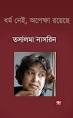
BOOK CORNER: LAJJA by Taslima Nasrin

Copyright@shravancharitymission

Khidki (Window)

–Read India Initiative—

This is only an attempt to create interest in reading. We may not get the time to read all the books in our lifetime. But such reviews, talk and synopsis will at least convey what the book is all about.

    Taslima Nasrin is an award winning writer and a human rights activist. She is also known for her passionate writings on the oppression of women and criticism of religious fundamentalism. She was born in Mymensingh in Bangladesh in 1962. She started writing at the age of fourteen and was acclaimed as a major writer in Dhaka in her late twenties. Her writings also became popular across the border in West Bengal when she won the prestigious Ananda Purashkar in 1992 and then again in 2000. After being forced to leave Bangladesh in 1994, Taslima has lived in India, Europe and the US. She has written more than thirty books, including poetry, essays, novels and memoirs. Her works have been translated into over twenty Indian and European languages.

    Taslima detests fundamentalism and communalism. This was the reason why she wrote Lajja soon after the demolition of Babri Masjid in Ayodhya on 6 December 1992. She says the book took her seven days to write, and deals with the persecution of Hindus, a religious minority in Bangladesh, by the Muslims who were in majority. ‘It is disgraceful that the Hindus in my country were hunted by the Muslims after the destruction of the Babri Masjid. All of us who love Bangladesh should feel ashamed that such a terrible thing could happen in our beautiful country. The riots that took place in 1992 in Bangladesh are the responsibility of us all, and we are all to blame. Lajja is a document of our collective defeat.’

    Lajja was first published in February 1993 in Bangladesh, and sold over 60,000 copies before it was banned. It even earned her a bounty on her head from Islamic fundamentalists and that forced her to flee from her country. Lajja is not only an invaluable historical document but also a text whose relevance has unfortunately not diminished in the two decades since it was published. The novel’s central concern is the evil of communalism that continues to plague the subcontinent, erupting from time to time like a dormant volcano.

    It chronicles the terrifying disintegration of a Hindu family living in Bangladesh in the aftermath of the riots that break out to avenge the destruction of the mosque in India. Hundreds of temples across Bangladesh are grounded to dust or desecrated. Hindu men are butchered, women raped, houses burnt to cinders, and property confiscated. Nasrin brings out the sufferings inflicted on the “minority” community through the trials faced by Sudhamoy Datta, an upright physician who had fought in the Liberation War of 1971 at immense personal cost, along with his family.

    The Dattas, as Nasrin reveals, are divided on the question of staying on, in the land they have always thought of, as their home. Their ancestral seat in the village, once thriving and prosperous, has been usurped by their Muslim neighbours, forcing them to seek refuge in a rented house in Dhaka. However, Sudhamoy stubbornly, desperately, and naively holds on to his faith in the inherent goodness of fellow human beings, even at a time when his allies are turning against his family. His son Suronjon is more vulnerable to the circumstances. Like his father, Suranjon refuses to run away from the country of his birth or give in to communal sentiments he had condemned all his life, but his feelings begin to shift after a terrible tragedy visits the family.

    Sudhamoy’s wife Kiranmoyee and daughter Maya are far less squeamish about making an exodus to India for the sake of their lives and dignity. But then the women, as Nasrin insinuates, are mere pawns in the hands of the men. Maya’s prayer for security is beggared by the lofty ideals of her indifferent, irresponsible and vagabond brother, who remains unemployed mostly for refusing to take orders from anyone. Kiranmoyee nurses a deep, intimate pain, sacrificing every chance of happiness for the sake of her husband’s unshakeable resolve to remain rooted to the land of his birth, even as the consequences of his choice are horrible.

    While focused on the plight of the persecuted, Nasrin’s plot never departs from an area of moral discomfort, never pitting one community against the other or shying away from showing up the prejudices that infiltrate the minds of both Hindus and Muslims.

    Yet, in spite of its sustained ethical complexity, Lajja is not a literary masterpiece but close to it in terms of narration. Nasrin’s plot is interrupted by long roll-calls of damages and killings every few pages. Frequent discourses on politics and power also slow down the pace, and the sub-plots, especially, related to Suronjon’s jilted romantic life. Perhaps, that deserved more attention.

   Secular was supposed to be one of the strong beliefs of the Bengali Muslim, especially during the war of independence, when everyone had to cooperate with one another to win victory. But now the spirit had not only dwindled but had exhausted completely.

    Though ‘Lajja’ is the story of the Duttas, they are reverted to the background, and the newspaper reports and eye-witness accounts, with facts and figures about the number of people killed, temples destroyed, properties looted and women raped, becomes the main theme of the book. This inter-mingling of numerous statistical data with a fictional plot is done with such subtleness and so seamlessly that it becomes a part of the story. The data is not just parroted in the book. It comes as a dialogue from anxious Bengalis living in fear  of their lives, and this is what adds life to these numbers. It makes you realise the enormity and graveness of the situation, and sympathise with the victims. In the ultimate the story ends as a tragedy when Maya who is Suronjon’s sister and Kiranmoyee and Sudhamoy’s daughter is at a point of no return—perhaps dead. Finally Sudhamoy agrees to the long drawn suggestion of his son Suronjon to move to India.

    If you’ve not read the book you’ve indeed missed an endemic view point of life. I would give the book eight out of ten.

By Kamlesh Tripathi

*

https://kamleshsujata.wordpress.com

*

Share it if you like it

*

Shravan Charity Mission is an NGO that works for poor children suffering from life threatening diseases especially cancer. Our posts are meant for our readers that includes both children and adults and it has a huge variety in terms of content. We also accept donations for our mission. Should you wish to donate for the cause. The bank details are given below:

NAME OF ACCOUNT: SHRAVAN CHARITY MISSION

Account no: 680510110004635 (BANK OF INDIA)

IFSC code: BKID0006805

*

Our publications

GLOOM BEHIND THE SMILE

(The book is about a young cancer patient. Now archived in 7 prestigious libraries of the US, including, Harvard University and Library of Congress. It can also be accessed in MIT through Worldcat.org. Besides, it is also available for reading in Libraries and archives of Canada and Cancer Aid and Research Foundation Mumbai)  

ONE TO TANGO … RIA’S ODYSSEY

(Is a book on ‘singlehood’ about a Delhi girl now archived in Connemara Library, Chennai and Delhi Public Library, GOI, Ministry of Culture, Delhi)

AADAB LUCKNOW … FOND MEMORIES

(Is a fiction written around the great city of Nawabs—Lucknow. It describes Lucknow in great detail and also talks about its Hindu-Muslim amity. That happens to be its undying characteristic. The book was launched in Lucknow International Literary Festival of 2014)

REFRACTIONS … FROM THE PRISM OF GOD

(Co-published by Cankids–Kidscan, a pan India NGO and Shravan Charity Mission, that works for Child cancer in India. The book is endorsed by Ms Preetha Reddy, MD Apollo Hospitals Group. It was launched in Lucknow International Literary Festival 2016)

TYPICAL TALE OF AN INDIAN SALESMAN

(Is a story of an Indian salesman who is, humbly qualified. Yet he fights his ways through unceasing uncertainties to reach the top. A good read not only for salesmen. The book was launched on 10th February, 2018 in Gorakhpur Lit-Fest. Now available in Amazon, Flipkart and Onlinegatha)

RHYTHM … in poems

(Published in January 2019. The book contains 50 poems. The poems describe our day to day life. The book is available in Amazon, Flipkart and Onlinegatha)

(ALL THE ABOVE TITLES ARE AVAILABLE FOR SALE IN AMAZON, FLIPKART AND OTHER ONLINE STORES OR YOU COULD EVEN WRITE TO US FOR A COPY)

*****
THE GENESIS OF KUMBH MELA

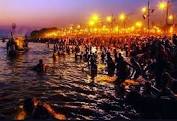
    I have just returned from the pilgrimage of Kumbh Mela at Prayagraj. Where, I even dared to take a dip at Sangam in this biting cold. Sangam happens to be the holy confluence of the Ganga, Yamuna and the mythical Saraswati. It is a blissful experience, to see so many Hindus gathered in such vast numbers. And this is when, one takes time off to think of the grip of faith, coming down from time primordial.

    Kumbha derives its name from both the original festival, being held according to the astrological sign “Kumbha” (Aguarius) and from the associated Hindu legend in which the Gods and demons fought over a pot, or a ‘Kumbh’ of nectar, that would give them immortality. A later addition to the legend says that after taking the pot, one of the Gods, spilled drops of nectar in four places where ‘Kumbha Mela’ is presently held. This is not found in the earliest mentions of the original legend of Samudra Manthan (churning of the ocean) as described in various ancient Hindu texts collectively known as the Puranas.

    The legend of Samudra Manthan tells of a battle between the Devas (benevolent deities) and Asuras (malevolent demigods) for amrita, the nectar drink of immortality. During samudra manthan, amrita was produced and placed in a Kumbha (pot). To prevent the asuras from seizing the amrita, a divine carrier flew away with the pot. In one of the most popular versions added to the original legend later, the carrier of the kumbha is the divine physician Dhanvantari, who stops at four places where the Kumbh Mela is celebrated. In other later additions to the legend, for which clarification is needed the carrier is Garuda, Indra or Mohini, who spill the amrita at four places.

    An entire temporary township covering 2,500 hectares has been constructed, at a cost of several thousand crores. In 2013, the last Kumbha, attracted, 120 million visitors , with 30 million congregating on a single day, Mauni Amawasya, making it the largest human gathering of the world. The Kumbh Mela is held at fixed cycles.

It is said that by bathing at the Sangam, during Kumbha, Moksha or salvation. It is for this reason that Mark Twain—who visited the Kumbha in 1895 wrote: “It is wonderful, the power of a faith like that, that can make multitudes upon multitudes of the old and weak and the young and frail enter without hesitation or complaint upon such incredible journeys.”

Since the dawn of time Kumbha has been a matter of great faith and faith indeed can move mountains.

By Kamlesh Tripathi

*

Share it if you like it

*

Shravan Charity Mission is an NGO that works for poor children suffering from life threatening diseases especially cancer. Our posts are meant for our readers that includes both children and adults and it has a huge variety in terms of content. We also accept donations for our mission. Should you wish to donate for the cause. The bank details are given below:

NAME OF ACCOUNT: SHRAVAN CHARITY MISSION

Account no: 680510110004635 (BANK OF INDIA)

IFSC code: BKID0006805

*

Our publications

GLOOM BEHIND THE SMILE

(The book is about a young cancer patient. Now archived in 7 prestigious libraries of the US, including, Harvard University and Library of Congress. It can also be accessed in MIT through Worldcat.org. Besides, it is also available for reading in Libraries and archives of Canada and Cancer Aid and Research Foundation Mumbai)  

ONE TO TANGO … RIA’S ODYSSEY

(Is a book on ‘singlehood’ about a Delhi girl now archived in Connemara Library, Chennai and Delhi Public Library, GOI, Ministry of Culture, Delhi)

AADAB LUCKNOW … FOND MEMORIES

(Is a fiction written around the great city of Nawabs—Lucknow. It describes Lucknow in great detail and also talks about its Hindu-Muslim amity. That happens to be its undying characteristic. The book was launched in Lucknow International Literary Festival of 2014)

REFRACTIONS … FROM THE PRISM OF GOD

(Co-published by Cankids–Kidscan, a pan India NGO and Shravan Charity Mission, that works for Child cancer in India. The book is endorsed by Ms Preetha Reddy, MD Apollo Hospitals Group. It was launched in Lucknow International Literary Festival 2016)

TYPICAL TALE OF AN INDIAN SALESMAN

(Is a story of an Indian salesman who is, humbly qualified. Yet he fights his ways through unceasing uncertainties to reach the top. A good read not only for salesmen. The book was launched on 10th February, 2018 in Gorakhpur Lit-Fest. Now available in Amazon, Flipkart and Onlinegatha)

RHYTHM … in poems

(Published in January 2019. The book contains 50 poems. The poems describe our day to day life. The book is available in Amazon, Flipkart and Onlinegatha)

(ALL THE ABOVE TITLES ARE AVAILABLE FOR SALE IN AMAZON, FLIPKART AND OTHER ONLINE STORES OR YOU COULD EVEN WRITE TO US FOR A COPY)

*****
INTERESTING FACTS …DID YOU KNOW EPISODE 7

Copyright@shravancharitymission

India has 30 million people of Indian origin living outside India

There are enough history books to note that India’s invaders were often more advanced than their local counterparts in warfare and administration. (Article ‘Time to let go’—we are the products of our past, but we don’t have to be prisoners of it by RISHI SETH, TOI dated 27.11.18)

A shocking multi-city survey has revealed that 59% of Good Samaritans—public spirited citizens who take accident victims to hospitals—were detained by the police, despite the law forbidding it. (TOI editorial dated 28.11.19)

The GOLDEN HOUR is the first hour after the traumatic injury, when doctor’s say emergency treatment is most successful.

A 2006 Law Commission report claimed that 50% of fatalities can be averted by bringing victims to the hospital within the golden hour.

In 2006 India reported 1.35 lakh fatal accidents that claimed 1.48 lakh lives and 1.21 lakh serious injury causing accidents that required hospitalization.

An Assocham study says most students below the age of  13 carry schoolbags weighing up to 45% of their body weight. This load should not exceed 10% of a student’s body weight (TOI editorial dated  28.11.19)

What we call the Spice route, ferried for hundreds of years, pepper and other condiments from what is now Kerala to Arabia, and from there to Europe.

The Portuguese brought chilies to India some 500 years ago when they landed in Goa.

An English courtier Walter Reigh introduced tobacco and potatoes from America to England in the reign of Elizabeth I.

Central banks like our Reserve Bank of India are a construct of modernity for which there is no specific ancient wisdom. The first one, formed exactly 350 years ago, was Sweden’s Riksbank, followed by the Bank of England (1791). Others soon followed including US and France.

Since the end of the cold war, the Chinese nuclear arsenal is the only one that is both expanding and modernising across the board while those of the US and Russia have dropped dramatically.

Just in the last decade, the number of Chinese missiles that can reach the continental United States has more than doubled.

Today almost 4 out of 10 children in Maharastra are stunted, an equal number are under weight. 15% are wasted or weak or extremely thin, 74% are anaemic. And more than half of infants (6-9 months) don’t even get solids or semi-solids that are needed for growth. And within all of this the tribal children are at the bottom of the heap.

The statue of liberty was unveiled in 1886. It was given to the United States by France to celebrate their enduring friendship during the American Revolution. Over the years it has symbolized the freedom and the democracy of the United States including abolishing of slavery.

You can’t make an omelette without breaking the eggs, say the French

According to the Bureau of Police Research and Development, there are 402 police stations in the country that don’t even have a phone line.  Plus, more than seven years after being conceptualised the Rs 2,000 crore project to digitise crime records and connect nearly 14,000 police stations still remain incomplete.

India is the largest producer of milk in the world, with around 85% of its workforce being small farm holders.

Average internet connection speed for the South Koreans is a blazing 23.7 megabits per second, while Indians suffer at a slow rate of 1.7 megabits per second. 

The names of four domain experts of India are: MS Swaminathan, who worked for the Green Revolution of India, Vikram Sarabhai’s who worked on satellites and Homi Bhaba who worked on building India’s atomic energy capabilities and Sam Pitroda who started the telecom revolution in India.

By Kamlesh Tripathi

*

https://kamleshsujata.wordpress.com

*

Share it if you like it

*

Shravan Charity Mission is an NGO that works for poor children suffering from life threatening diseases especially cancer. Our posts are meant for our readers that includes both children and adults and it has a huge variety in terms of content. We also accept donations for our mission. Should you wish to donate for the cause. The bank details are given below:

NAME OF ACCOUNT: SHRAVAN CHARITY MISSION

Account no: 680510110004635 (BANK OF INDIA)

IFSC code: BKID0006805

*

Our publications

GLOOM BEHIND THE SMILE

(The book is about a young cancer patient. Now archived in 7 prestigious libraries of the US, including, Harvard University and Library of Congress. It can also be accessed in MIT through Worldcat.org. Besides, it is also available for reading in Libraries and archives of Canada and Cancer Aid and Research Foundation Mumbai)  

ONE TO TANGO … RIA’S ODYSSEY

(Is a book on ‘singlehood’ about a Delhi girl now archived in Connemara Library, Chennai and Delhi Public Library, GOI, Ministry of Culture, Delhi)

AADAB LUCKNOW … FOND MEMORIES

(Is a fiction written around the great city of Nawabs—Lucknow. It describes Lucknow in great detail and also talks about its Hindu-Muslim amity. That happens to be its undying characteristic. The book was launched in Lucknow International Literary Festival of 2014)

REFRACTIONS … FROM THE PRISM OF GOD

(Co-published by Cankids–Kidscan, a pan India NGO and Shravan Charity Mission, that works for Child cancer in India. The book is endorsed by Ms Preetha Reddy, MD Apollo Hospitals Group. It was launched in Lucknow International Literary Festival 2016)

TYPICAL TALE OF AN INDIAN SALESMAN

(Is a story of an Indian salesman who is, humbly qualified. Yet he fights his ways through unceasing uncertainties to reach the top. A good read not only for salesmen. The book was launched on 10th February, 2018 in Gorakhpur Lit-Fest. Now available in Amazon, Flipkart and Onlinegatha)

RHYTHM … in poems

(Published in January 2019. The book contains 50 poems. The poems describe our day to day life. The book is available in Amazon, Flipkart and Onlinegatha)

(ALL THE ABOVE TITLES ARE AVAILABLE FOR SALE IN AMAZON, FLIPKART AND OTHER ONLINE STORES OR YOU COULD EVEN WRITE TO US FOR A COPY)

*****


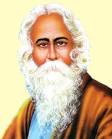
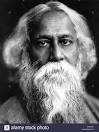
LETTER OF GURUDEV RABINDRANATH TAGORE: SHAZADPUR JULY 1891

Copyrigt@shravancharitymission

Khidki (Window)

–Read India Initiative—

This is only an attempt to create interest in reading. We may not get the time to read all the books in our lifetime. But such reviews, talk and synopsis will at least convey what the book is all about.

SHAZADPUR JULY 1891

    There is another boat at this landing-place and on the shore in front of it a crowd of village women. Some are evidently embarking on a journey and the others seeing them off; infants, veils, and grey hairs are all mixed up in the gathering.

    One girl in particular attracts my attention. She must be about eleven or twelve; but buxom and sturdy, she might pass for fourteen or fifteen. She has a winsome face—very dark, but very pretty. Her hair is cut short like a boy’s, which well becomes her simple, frank, and alert expression. She has a child in her arms and is staring at me with unabashed curiosity, and certainly no lack of straightforwardness or intelligence in her glance. Her half-boyish, half-girlish manner is singularly  attractive—a novel blend of masculine nonchalance and feminine charm. I had no idea there were such types among our village women in Bengal.

    None of this family, apparently, is troubled with too much bashfulness. One of them has unfastened hair in the sun and is combing it out with her ringers, while conversing about their domestic affairs at the top of her voice with another, on board. I gather she has no other children except a girl, a foolish creature who knows neither how to behave or talk, nor even the difference between kin and stranger. I also learn that Gopal’s son-in-law has turned out a neér-do-well, and that his daughter refuses to go to her husband.

    When, at length, it was time to start, they escorted my short-haired damsel, with plump shapely arms, her golden bangles and her guileless, radiant face, into the boat. I could divine that she is returning from her father’s to her husband’s home. They all stood there, following the boat with their gaze as it cast off, one or two wiping their eyes with the loose end of their saris. A little girl, with her hair tightly tied into a knot, clung to the neck of an older woman and silently wept on her shoulder. Perhaps, she was losing a darling Didimani who joined in her doll games and also slapped her when she was naughty …

    The quiet floating away of a boat on the stream seems to add to the pathos of a separation—it is so like death—the departing one lost to sight, those left behind returning to their daily life, wiping their eyes. True, the pang lasts but a while, and is perhaps already wearing of both in those who have gone and those who remain,–pain being temporary, oblivion permanent. But none the less it is not the forgetting, but the pain which is true; and every now and then, in separation or in death, we realise how terribly true.

Posted by Kamlesh Tripathi

*

https://kamleshsujata.wordpress.com

*

Share it if you like it

*

Shravan Charity Mission is an NGO that works for poor children suffering from life threatening diseases especially cancer. Our posts are meant for our readers that includes both children and adults and it has a huge variety in terms of content. We also accept donations for our mission. Should you wish to donate for the cause. The bank details are given below:

NAME OF ACCOUNT: SHRAVAN CHARITY MISSION

Account no: 680510110004635 (BANK OF INDIA)

IFSC code: BKID0006805

*

Our publications

GLOOM BEHIND THE SMILE

(The book is about a young cancer patient. Now archived in 7 prestigious libraries of the US, including, Harvard University and Library of Congress. It can also be accessed in MIT through Worldcat.org. Besides, it is also available for reading in Libraries and archives of Canada and Cancer Aid and Research Foundation Mumbai)  

ONE TO TANGO … RIA’S ODYSSEY

(Is a book on ‘singlehood’ about a Delhi girl now archived in Connemara Library, Chennai and Delhi Public Library, GOI, Ministry of Culture, Delhi)

AADAB LUCKNOW … FOND MEMORIES

(Is a fiction written around the great city of Nawabs—Lucknow. It describes Lucknow in great detail and also talks about its Hindu-Muslim amity. That happens to be its undying characteristic. The book was launched in Lucknow International Literary Festival of 2014)

REFRACTIONS … FROM THE PRISM OF GOD

(Co-published by Cankids–Kidscan, a pan India NGO and Shravan Charity Mission, that works for Child cancer in India. The book is endorsed by Ms Preetha Reddy, MD Apollo Hospitals Group. It was launched in Lucknow International Literary Festival 2016)

TYPICAL TALE OF AN INDIAN SALESMAN

(Is a story of an Indian salesman who is, humbly qualified. Yet he fights his ways through unceasing uncertainties to reach the top. A good read not only for salesmen. The book was launched on 10th February, 2018 in Gorakhpur Lit-Fest. Now available in Amazon, Flipkart and Onlinegatha)

RHYTHM … in poems

(Published in January 2019. The book contains 50 poems. The poems describe our day to day life. The book is available in Amazon, Flipkart and Onlinegatha)

(ALL THE ABOVE TITLES ARE AVAILABLE FOR SALE IN AMAZON, FLIPKART AND OTHER ONLINE STORES OR YOU COULD EVEN WRITE TO US FOR A COPY)

*****


LIT-CORNER VIDEO: THE PIECE OF STRING BY Guy De Maupassant

Copyright@shravancharitymission


By Kamlesh Tripathi

*

https://kamleshsujata.wordpress.com

*

Share it if you like it

*

Shravan Charity Mission is an NGO that works for poor children suffering from life threatening diseases especially cancer. Our posts are meant for our readers that includes both children and adults and it has a huge variety in terms of content. We also accept donations for our mission. Should you wish to donate for the cause. The bank details are given below:

NAME OF ACCOUNT: SHRAVAN CHARITY MISSION

Account no: 680510110004635 (BANK OF INDIA)

IFSC code: BKID0006805

*

Our publications

GLOOM BEHIND THE SMILE

(The book is about a young cancer patient. Now archived in 7 prestigious libraries of the US, including, Harvard University and Library of Congress. It can also be accessed in MIT through Worldcat.org. Besides, it is also available for reading in Libraries and archives of Canada and Cancer Aid and Research Foundation Mumbai)  

ONE TO TANGO … RIA’S ODYSSEY

(Is a book on ‘singlehood’ about a Delhi girl now archived in Connemara Library, Chennai and Delhi Public Library, GOI, Ministry of Culture, Delhi)

AADAB LUCKNOW … FOND MEMORIES

(Is a fiction written around the great city of Nawabs—Lucknow. It describes Lucknow in great detail and also talks about its Hindu-Muslim amity. That happens to be its undying characteristic. The book was launched in Lucknow International Literary Festival of 2014)

REFRACTIONS … FROM THE PRISM OF GOD

(Co-published by Cankids–Kidscan, a pan India NGO and Shravan Charity Mission, that works for Child cancer in India. The book is endorsed by Ms Preetha Reddy, MD Apollo Hospitals Group. It was launched in Lucknow International Literary Festival 2016)

TYPICAL TALE OF AN INDIAN SALESMAN

(Is a story of an Indian salesman who is, humbly qualified. Yet he fights his ways through unceasing uncertainties to reach the top. A good read not only for salesmen. The book was launched on 10th February, 2018 in Gorakhpur Lit-Fest. Now available in Amazon, Flipkart and Onlinegatha)

RHYTHM … in poems

(Published in January 2019. The book contains 50 poems. The poems describe our day to day life. The book is available in Amazon, Flipkart and Onlinegatha)

(ALL THE ABOVE TITLES ARE AVAILABLE FOR SALE IN AMAZON, FLIPKART AND OTHER ONLINE STORES OR YOU COULD EVEN WRITE TO US FOR A COPY)

*****


INTERESTING FACTS … DID YOU KNOW-EPISODE 6

Copyright@shravancharitymission

A linguistic Survey of India reveals there are 780 mother tongues in India. Out of which, 480 are spoken by tribal or adivasis concentrated in the north-east and central-east of India.

*

Arunachal Pradesh has a population of 14 million, which is just about 7% of UP. Yet in Arunachal Pradesh, people speak in 66 tongues—one of India’s least-populated states is linguistically the most diverse.

*

With more than 210 tongues, India’s northeast is the world’s most linguistically diverse place.

*

The length of an average sentence in English has been reducing. According to a study, it came down from an average of 63 words in the 16th century to 22 words by the 19th  century.  One current estimate for sentence length is 14.3 words, a number that will no doubt go down even further, given the direction that technology is taking language to. Earlier in 1896 for the democratic nomination for the president, the average length of a sentence was 104 words, whereas, today politicians speak in sentences that are less than 20 words long.

*

Overseas Indians having foreign passport remit on an average $70 billion, annually to India, which is approximately 3% of India’s GDP. Given India’s large twin deficits in the fiscal and current accounts, these remittances continue to be a vital bridge to India’s economic stability. (TOI 24.1.19).

*

Almost one-third of India’s coastline was lost to soil erosion between 1990 and 2016, according to the National Centre for Coastal Research (TOI 24.1.19).

*

The giant statue of Sardar Vallabhbhai Patel known as the Statue of Unity was built at an astronomical cost of Rs 2,900 crores (TOI article by Ronojoy Sen dated 3.11.19).

*

Sardar Patel was instrumental in getting the 560 odd princely states in 1947 to join the Indian Union. (TOI article by Ronojoy Sen dated 3.11.19).

*

It was well known secret that Nehru and Gandhi had tense moments. In December 1947, Nehru and Patel traded letters on the handling of Kashmir and both threatened to resign. With Gandhi playing the arbiter. (TOI article by Ronojoy Sen dated 3.11.19).

*

As many as 3447 people died in India due to fireworks and crackers in the decade of 2005-2014. This was way higher than the figure of 1,429, that the deadly dengue killed during the same period. (Dipankar Gupta’s article (Why do Indians live dangerously?) TOI 3.11.18.

*

About 28 motor cycle and scooter riders died daily on Indian roads in 2016 because of not wearing helmets (Dipankar Gupta’s article (Why do Indians live dangerously?) TOI 3.11.18

*

In the past four years or so, a total of 23,013 people were killed while trespassing railway tracks, alighting from running trains or falling off them.

*

Another study points out that as many as 452 workers lost their lives between 2013 and 2016, because normal precautions were not taken. The fact is not just the illiterate poor who take unnecessary risks. About 15 motorists die every day for not putting on their seat belts.

*

The 2004 National policy for Urban Street Vendors states, India has about 10 million street vendors. The numbers would have surely gone up by then.—TOI article 23.1.19 Arbind Singh, the national coordinator of National Association of Street Vendors of India (Nasvi)

*

India is home to the highest number of TB patients globally—TOI article dated 23.1.19

*

A third of central government employees are due to retire in the next 10 years. On an aggregate basis, government is ‘short staffed’ going by the number of employees it can have. At the start of 2014, there were 33 lakh employees as against the sanctioned strength of 40.5 lakh, which translates into a shortage of around 18%. The maximum gap is in the revenue department where over 45% jobs are vacant.

*

The pay panel of India has estimated that the US federal government has 668 employees for every one lakh citizens, compared to 139 in India.

*

The average size of homes now being built in the US (average family size 2.4 people) has touched 2,600 sq ft, an all time high, and twice the size of most other developed countries. In contrast to that an Indian family with a household strength of 4.8 persons cramps itself in a 504 sq ft. Indian NSS computed that 32% of Indian urban homes are 258 sq ft or less, which translates to 60 sq ft per person—the minimum specified for a US prison cell.

*

India’s per-capita emission is among the lowest in the world (155th in ranking) a tenth of that of the United States, and a 4th of that of China.

*

White house is a mansion and office–cum-residence that has 132 rooms and 35 bathrooms.

***

By Kamlesh Tripathi

*

https://kamleshsujata.wordpress.com

*

Share it if you like it

*

Shravan Charity Mission is an NGO that works for poor children suffering from life threatening diseases especially cancer. Our posts are meant for our readers that includes both children and adults and it has a huge variety in terms of content. We also accept donations for our mission. Should you wish to donate for the cause. The bank details are given below:

NAME OF ACCOUNT: SHRAVAN CHARITY MISSION

Account no: 680510110004635 (BANK OF INDIA)

IFSC code: BKID0006805

*

Our publications

GLOOM BEHIND THE SMILE

(The book is about a young cancer patient. Now archived in 7 prestigious libraries of the US, including, Harvard University and Library of Congress. It can also be accessed in MIT through Worldcat.org. Besides, it is also available for reading in Libraries and archives of Canada and Cancer Aid and Research Foundation Mumbai)  

ONE TO TANGO … RIA’S ODYSSEY

(Is a book on ‘singlehood’ about a Delhi girl now archived in Connemara Library, Chennai and Delhi Public Library, GOI, Ministry of Culture, Delhi)

AADAB LUCKNOW … FOND MEMORIES

(Is a fiction written around the great city of Nawabs—Lucknow. It describes Lucknow in great detail and also talks about its Hindu-Muslim amity. That happens to be its undying characteristic. The book was launched in Lucknow International Literary Festival of 2014)

REFRACTIONS … FROM THE PRISM OF GOD

(Co-published by Cankids–Kidscan, a pan India NGO and Shravan Charity Mission, that works for Child cancer in India. The book is endorsed by Ms Preetha Reddy, MD Apollo Hospitals Group. It was launched in Lucknow International Literary Festival 2016)

TYPICAL TALE OF AN INDIAN SALESMAN

(Is a story of an Indian salesman who is, humbly qualified. Yet he fights his ways through unceasing uncertainties to reach the top. A good read not only for salesmen. The book was launched on 10th February, 2018 in Gorakhpur Lit-Fest. Now available in Amazon, Flipkart and Onlinegatha)

RHYTHM … in poems

(Published in January 2019. The book contains 50 poems. The poems describe our day to day life. The book is available in Amazon, Flipkart and Onlinegatha)

(ALL THE ABOVE TITLES ARE AVAILABLE FOR SALE IN AMAZON, FLIPKART AND OTHER ONLINE STORES OR YOU COULD EVEN WRITE TO US FOR A COPY)

*****