Tag Archives: pakistan

INTERESTING FACTS & QUOTES EPISODE 15

Copyright@shravancharitymission

INTERESTING FACTS 

  1. Hamletian dilemma: The phrase is derived from William Shakespeare’s play Hamlet. When Hamlet, the prince of Dutch learns that his father was murdered by his uncle, he is in a dilemma as to whether he should avenge his father’s death or continue ruling the kingdom.
  2. Begusarai was once known as the “Leningrad” of Bihar, or the “Leningrad” of East. It was recently in news again, because the Communists, are trying to field Kanhaiya Kumar from this pro Communist constituency. Leningrad as we all know is a place in Russia. The famous siege of Leningrad lasted from September 1941 to 1944. By the end of the siege, some 632,000 people are thought to have died with nearly 4,000 people from Leningrad starving to death on Christmas Day, 1941. The first German artillery shell fell on Leningrad on September 1st, 1941.
  3. Teacher absenteeism accounts for the loss of up to one-quarter of the primary school spending. A World Bank Report estimates this loss to be about $2 billion a year in India, just at the primary level.
  4. With a median age of 27.9 years in 2018, India’s population is quite young. By 2020, youth will make up for 34% of India’s population.
  5. Forty-five million young people have been added to the voters list since 2014. Based on 2011 Census, about two crore youngsters turn 18 every year, even though not everyone gets registered to vote.
  6. India has shown responsibility and restraint by targeting a satellite at 300 km altitude, as opposed to China destroying a satellite at the height of 857 km in 2007, which created a lot of risky debris. But even the Indian test has a small likelihood of creating some debris that gets thrown into the higher orbits.
  7. One of the reasons for lesser concern with India’s test has to do with the height of the test. At 300 kilometers, the debris may survive just for months, if not weeks. At 800 kilometers, the Chinese satellite debris has already survived for more than a decade and may survive for a few more years.
  8. India has demonstrated that it can take down satellites in Low Earth Orbits of less than 2,000 km above the surface.
  9. There are over 22,000 artificial objects currently in the orbit that are being tracked by one government agency or another. The European Space Agency estimates that currently there over 34,000 pieces of debris in the orbit that are larger than 10 cm in size; close to a million pieces between 1 cm and 10 cm; and 128 million pieces of debris less than a centimeter in size. With reducing satellite size and the increasing frequency of space launches, this is only set to grow rapidly.
  10. UTSAVA- is a Sanskrit word. Where, UT –means to ‘let go’ or remove and SAVA means worldly sorrows hence the complete word UTSAVA means to “let go your sorrows.”
  11. In the Scandinavian countries without any reservations, around half the MPs are women. In India we only keep talking of 33% which is not happening.
  12. Earth orbital safety in the 21st century is as vital as shipping lane security was, in the 20th century.
  13. The Lucas critique, named after Robert Lucas‘s work on macroeconomic policy making, argues that it is naive to try to predict the effects of a change in economic policy entirely on the basis of human relationships observed in historical data, especially highly aggregated historical data.
  14. Marriage industry of India boasts about 10 million weddings a year.
  15. There are reports that Pakistan is collaborating with China to develop a fifth-generation fighter aircraft. India too needs to double up.
  16. In Hindu philosophy the soul is interpreted as being without a gender.
  17. Security cooperation was one of the reasons why PM Narasimha Rao formally opened diplomatic relations with Israel in 1992, followed by purchase of India’s first IAI Searcher unmanned aerial vehicles (UAVs), and an air combat manoeuvring system from Israel in 1996. 
  18. India is the largest single market for Israeli arms. Israeli arms sale to India is only second to Russia, having gone up by 650% in the past decade, now amounting to $715 million in 2017 alone. IAF misslies fired in Balakot reportedly used Israeli made SPICE-2000 GUIDANCE KITS.
  19. Modi was the first Indian Prime Minister to visit Tel-Aviv in July 2017 and then came the visit of Israeli PM Benjamin Netanyahu to Delhi in January 2018.
  20. Israel is virtually a ‘nation-at-arms’ country. It has always had conscription, or draft, or compulsory enlistment of people in national service. Every Israeli man (who’s Jew or Druze, excepting those with medical disabilities or religious scholars) above 18 serves in the military for 36 months, and every Israeli woman for 24 months.
  21. The National bill of Israel passed in 2018 specified Israel as the nation state of the Jewish people. This makes Israeli state closer to a theocratic one.
  22. Iron and steel accounts for roughly 15-20 % of the total cost in real estate.
  23. Global warming: When Americans were experiencing bone-chilling temperatures on January 29, the world was actually 0.3 degrees warmer on an average compared to a baseline from 1979 to 2000.
  24. Among all the 13 tiger range countries, India alone has the maximum number of tigers (70% of the global wild tiger population) and their source areas. This impressive gain is there despite the fact that our per capita forest is only 0.06 hectare as against the world average of 0.6 hectare, apart from having 60% of global livestock, 17% of world’s human population, with a forest productivity of around 1.34 cubic metre per hectare per year as against world’s average of 2.1 cubic metre per hectare per year.
  25. It has been documented that around 67,911 hectares of forest cover has been lost in 188 districts of India between 2009 and 2011 due to encroachment.

Quotes

  1. Earth: The soil is her flesh, the rocks are her bones, and the wind is her breath; trees and grass her hair. She lives, spreads out, and we live on her. When she moves we have an earthquake—Rabbi Ezekiel Malekar
  2. In real life it is the hare who wins—ANITA BROOKNER, award winning novelist.
  3. Mary Shelley projected through the character, Frankenstein. We all are threatened by the monsters we create. They don’t come into being on their own.
  4. Every fair-minded person holding a position of authority must support the few who have stood up against the injustice being perpetrated in the name of blasphemy—ASMA JAHANGIR, Pakistani Human Rights lawyer and activist.
  5. If you don’t have a coalition with you, you will have a coalition against you—SHIMON PERES. Israeli politician who served as the ninth President of Israel.
  6. ‘No book is perennially useful to mankind,’ says English philosopher David Hume.

By Kamlesh Tripathi

*

https://kamleshsujata.wordpress.com

*

Share it if you like it

*

Shravan Charity Mission is an NGO that works for poor children suffering from life threatening diseases especially cancer. Our posts are meant for our readers that includes both children and adults and it has a huge variety in terms of content. We also accept donations for our mission. Should you wish to donate for the cause. The bank details are given below:

NAME OF ACCOUNT: SHRAVAN CHARITY MISSION

Account no: 680510110004635 (BANK OF INDIA)

IFSC code: BKID0006805

*

Our publications

GLOOM BEHIND THE SMILE

(The book is about a young cancer patient. Now archived in 7 prestigious libraries of the US, including, Harvard University and Library of Congress. It can also be accessed in MIT through Worldcat.org. Besides, it is also available for reading in Libraries and archives of Canada and Cancer Aid and Research Foundation Mumbai)  

ONE TO TANGO … RIA’S ODYSSEY

(Is a book on ‘singlehood’ about a Delhi girl now archived in Connemara Library, Chennai and Delhi Public Library, GOI, Ministry of Culture, Delhi)

AADAB LUCKNOW … FOND MEMORIES

(Is a fiction written around the great city of Nawabs—Lucknow. It describes Lucknow in great detail and also talks about its Hindu-Muslim amity. That happens to be its undying characteristic. The book was launched in Lucknow International Literary Festival of 2014)

REFRACTIONS … FROM THE PRISM OF GOD

(Co-published by Cankids–Kidscan, a pan India NGO and Shravan Charity Mission, that works for Child cancer in India. The book is endorsed by Ms Preetha Reddy, MD Apollo Hospitals Group. It was launched in Lucknow International Literary Festival 2016)

TYPICAL TALE OF AN INDIAN SALESMAN

(Is a story of an Indian salesman who is, humbly qualified. Yet he fights his ways through unceasing uncertainties to reach the top. A good read not only for salesmen. The book was launched on 10th February, 2018 in Gorakhpur Lit-Fest. Now available in Amazon, Flipkart and Onlinegatha)

RHYTHM … in poems

(Published in January 2019. The book contains 50 poems. The poems describe our day to day life. The book is available in Amazon, Flipkart and Onlinegatha)

(ALL THE ABOVE TITLES ARE AVAILABLE FOR SALE IN AMAZON, FLIPKART AND OTHER ONLINE STORES OR YOU COULD EVEN WRITE TO US FOR A COPY)

*****



BOOK TALK: THIS UNQUIET LAND … by Barkha Dutt

Copyright@shravancharitymission


THIS UNQUIET LAND

(STORIES FROM INDIA’S FAULT LINES)

By Barkha Dutt

(Published in 2016)

Publisher: Aleph

Khidki (Window)

–Read India Initiative—

This is only an attempt to create interest in reading. We may not get the time to read all the books in our lifetime. But such reviews, talk and synopsis will at least convey what the book is all about

    There is an old saying. ‘A reader lives a thousand lives before he dies. The man who never reads lives only once.’ I think the saying fits in quite well in this case as you’ll come across many lives in this book.

    Barkha began working in 1994 for a news show that was originally broadcasted on Doordarshan. Her entry into journalism coincided with the birth of private TV. But, then, why this book all of a sudden? Showcasing India’s fault lines that runs deep and wide. Some of them even go back, centuries. The book is some three hundred plus pages. Where, she has selected certain topics, that have been haunting India for quite some time now. And these topics have even besmirched India’s reputation abroad. Basically she has handpicked issues that she came across during her career as a journalist. And around those issues the book spreads like a Banyan tree, but without any storyline. Hence it is difficult to summarise or even write a synopsis. However, what I’ve attempted here for you is, the trait of the book. Along with its central points that will give a sense of what the book is all about.

    The book spins around issues and the issues spin around Barkha. It has a gamut of aspects—starting right from her childhood, including parents, education, career, enthusiasm and even frustration. But most of the time … it is India’s helplessness. So, not a very superlative narrative for the country I would say. But I guess it can’t be helped. Because, for most journalists the uncompromising tenet is to first broadcast the negatives comprehensively, and beyond that if the time permits a few positive outlines too. Remember by broadcasting achievements you don’t get as many eyeballs as you get by broadcasting disasters. To substantiate the point Barkha quotes a VIP who says—‘India is a country that moves from headlines to headlines.’ Of course sensational ones. 

     The central theme of the book perambulates around, the last hundred years of India. One could call it the not-so-recent as well as the recent events of India. But then, while cruising through the book one does get a stale feeling, as if you’re zipping through some old newspaper columns or an old magazine article in staccato effect. Certain pages get you a feel as if you’re negotiating a long prose, though well described but high on verbosity. And what really keeps you charged during such narrations, are things that you don’t know, and that too, within what you know and also what goes on behind the scene. Many of us know a lot about the Kargil war through electronic and print media. Yet, we may not know, how important a role, late Mr Brajesh Mishra played in solving the crisis. Or we may have heard about Bhanvari Devi rape case in Rajasthan. But we may not know that ‘Bhanvari Devi’ was the starting point in the rape history of India where the other end was ‘Nirbhaya.’ The title covers the following chapters. Where, each chapter appears to be a short book in itself.

    PLACE OF WOMEN:  the chapter is almost like the rape history of modern India. The description below is about Bhanvari Devi and how ghastly.

     ‘Post rape: ‘Back at the police station, she was asked to strip and leave her ghagra behind as evidence. It was past midnight when she made her way home draped in the thin cloth of her husband’s turban.’ she picks the narration from Bhanwari Devi rape case of Rajasthan and links it up with Nirbhaya.

    In between, the lady author also spreads across to other rape cases, that had figured in various headlines during all these years. At times the narration appears as a memoir with a lot of emphasis on the sufferings of Indian women vis-a-vis the unceasing tyranny of the Indian men. Something, that is even otherwise known to most Indians. But then she doesn’t really relay any out-of-the-box suggestions, to at least dampen the malaise. She gives a good account of a lady journalist. Problems she faced while commencing her career. And in all of that, she juggles quite well with the words but the content doesn’t seem to be very uncommon. In certain pages sentences are long. But then they are vivid and to the point. The book has a tilt towards feminism which is quite obvious.

     It’s high on lexicon for an average reader, who might have to Google more often, to keep cruising. Therefore, the target audience is clearly the elite. But shouldn’t books with such historical sparks be, in easy read format? She has dug out some exhaustive statistics on females of India, especially, working women, and their sexual harassment.

    The book has a striking hard cover. The title is appropriate and gets further substantiated by a pin pointing sub title that says—STORIES FROM INDIA’S FAULT LINES. It is well presented in terms of font and flow. But it is still not a very moving book. As it swings between, diverse chapters and the personal memoir and does not have a linear penetrating plot. And it goes on and on. Sure intermittently it has interesting frills. As a messenger she has reported the happenings in the most erudite style, but has not presented too much of her own view points. She also touches upon the Gulabi gang of Uttar Pradesh that once operated in full flow. At places the narration is quite pungent when you compare it with the topic. Chapter deals with women’s issues, especially rape where it also cites three other cases. But then there are no incites or suggestions to solve the menace. She also goes on to describe the methodology of women politicians and about the callousness of women officers who are not sensitive to women’s cause. Superwoman versus supermom is comparison she draws quite artfully.

THE COST OF WAR

    This chapter by and large takes you through the sad tale of Kargil War. During the war Barkha was often seen near the the LOC. It was well covered by the channel she was working for, then. I’m sure. She must be carrying evocative memories about it. Such memories don’t die. Rather, you carry them to your grave. In this chapter, she even goes on to describe the role of Brajesh Misra, principal secretary and national security advisor to Prime Minister Atal Bihari Vajpayee in quite a detail, which you won’t come to know unless you read the book. She even elucidates the role that the diplomats of India played in bringing the war to an end, together with the balancing act of the US. She throws up some good war statistics. But she could have vented her views more ferociously. The chapter has a lot of stuff from ground zero.

    It fleshes out some good war statistics. It also hazily talks about gun configurations. The chapter explicates extensively, about the various wars with Pakistan and even the border skirmishes with China. She mixes the blend of her career and the Kargil war quite efficiently. For the general public doesn’t know what all goes on behind the scene and this is where she makes a killing. Excellent and moving description about martyr’s cremation.

     The sentence that moved me was, ‘And so in Kargil without snow shoes or proper high-altitude gear, Vishal and other first-time troops literally crawled their way up to peaks as high as 18,000 feet, where the temperature slipped to as much as ten degrees below zero to fight for the honour of their platoons and regiments.’

TERROR IN OUR TIME

    The chapter covers the gory parliament attack of 2001. It also gives a good account of, the history of terrorism in modern India. In this the lady author covers selected terrorist attacks. She gives a wide coverage of 26/11 Mumbai attack, describes Ajmal Kasab’s episode in detail. And how, in that moment of disaster, communities come together in Mumbai’s Zaveri bazaar. Narration is good and content is extensive. She also sketchily talks about farmer’s suicide. As a true messenger she reports whatever is happening in India. She talks about various issues without any solutions. Then she goes all over and even touches upon Sheena Bora murder case in page 95. She then even adds Samjhauta express and Malegaon blasts. A lot of it is the same and reverberates in your mind as news items of those times. But yes there are some finer points too, which were kept under the carpet, which is interesting. ‘Extremism is a bigger threat than terrorism’ she hears from another VIP.

    But in the ultimate analysis I would ask. If such books even reach the think tank of the dispensation to act upon, or they just get into their personal libraries and sit their as literary accolades. She further makes an important point–200 districts have Maoist movement—India’s red corridor. Where, she richochet’s some good statistics. And gives a good hidden perspective of India, overall.

IN THE NAME OF GOD

    She covers Gujarat riots together along with with the rapes that happened in 2002. A lot of it is a recount of recent history. How kar-sewaks were murdered and Muslims were massacred as a consequence of that. But she nowhere blames the media for reporting inflammable stuff. Rather she rarely points a finger at the media. She covers Gujarat riots in great detail but has less to say about the sentiments of the relatives of the kar-sewaks who were murdered in Godara. The narration appears as catchy news reports without author’s own modulation. She talks about the strong points of Indira Gandhi. She covers Babri Masjid demolition too. And compares the trinity– Narsimha Rao, Rajiv Gandi and Rahul Gandhi

A CHRONICLE OF KASHMIR

    Barkha mentions the minute India released Maulana Masoor Azhar, Omar Saeed Sheikh and Mushtaq Ahmed on 31.12.99 for hijacking IC-814 India turned into a soft state. Farooq Abdullah who was then the Chief Minister of J&K vehemently protested this. She narrates further, ‘the minute we gave in, India became a soft state; an apoplectic Farooq Abdullah, who was chief minister of Jammu and Kashmir during the hijacking of IC-814, would tell me later. He phoned L.K. Advani, the then home minister, to vehemently oppose the release of terrorist.’ … She doesn’t hesitate in exposing India’s weakness. Then she covers the 1st suicide attack of the valley. Even harps about countries spreading terrorism, such as Pakistan and Afghanistan. She of course has a lifelong obsession about J&K and doesn’t forget to talk about Nehru’s background and the birth and growth of JKLF. An interesting point that she makes is:

    ‘A month later in September, the prevaricating Maharaja Hari Singh made an offer of accession to India for the very first time. Nehru stunned him by making the deal conditional on the release of Sheikh Abdullah from jail. The maharaja refused.’ She also goes on to describe Patel’s conversation with Nehru. And of course she has described J&K’s constitutional history quite well and has also dealt with the malaise of Kashmir in detail.

OF POLITICAL DYNASTS, JUGGERANUTS AND MAVERICKS

    The chapter is full of anecdotal tales which the readers would love reading. It covers lady author’s encounter with various national and international leaders and even there close relatives. Where, it starts from Priyanka, Raga (Rahul Gandhi) and even Robert Vadhra. Barkha is curt and brusque when she wants to be. She compares Modi with Gandhis only to say, ‘Modi was determined to overthrow the political royalty of the Gandhis. He was a citizen who had come to take the kingdom.’ She disparages Raga, who had the luxury of several years of authority without any responsibility. But he neither became a minister in the government nor took charge of the party.

    She then goes on to describe the sum and substance of Arvind Kejriwal and at one point even draws a comparison between him and Raga. Both are youthful men, in their early forties—where, Arvind is acutely educated, and has a self achieved track record.

    Another interesting point that she makes is about Indira Gandhi under whose leadership Congress as an institution collapsed. She then spreads across to various political leaders of India and their parties. Her description about Mani Shankar Aiyar is engrossing. And there is a good compilation of political barbs. And of course how could she leave out Dr Manmohan Singh. L. K. Advani couldn’t have been left out either with his stories about Babri Masjid and his visit to Jinnah’s grave.

    The interesting comparision she draws is in between the ‘Chaiwala’ and the ‘Mufflerman’ (Namo and Arvind Kejriwal). Talks about ‘Achhe Din’ and ‘Make in India.’

    She opines about Modi, ‘I have always felt, in the many years that I have observed him, that Modi’s ambitions are personal not ideological.’

    I personally feel her overexposure to the affairs of Pakistan and Kashmir in some ways narrowed her journalistic prowess. She got branded. And that reflects in the book also. But then exposure is not always in your hands. She covers Nawaz Sharif and his delegation in the US, and his calling Manmohan Singh a ‘Dehati Aurat.’—that she clarifies.

    She talks about AAP party at length and the anti corruption movement.

A SOCIETY IN FLUX

    This chapter flows all over. It has no direction or plot. Whatever she felt … she has written about. And is quite a contrast to the previous chapters. I guess she wanted to close the book now. India is prone to disasters, so she talks about the Nagapattinam Tsunami of 2004, in Tamil Nadu which she had covered. She describes Ambedkar’s conversion ceremony to Buddhism. Where, she doesn’t forget to remind what Mahatma Gandhi had to say about conversion

    ‘I am against conversion, whether it is known as shuddhi by Hindus, tabligh by Mussalmans, or proselytizing by Christians.’

    Then she covers certain topics that had made it to the headlines. She of course digs into the history of India and fetches out things she had not come across in her career. She describes the pliant middle class of India. Talks a bit about the Modern School, where she had studied. Remembers, the Mandal agitation of 1992, and also brushes past IPL, Sunanda Pushkar and even Lalit Modi.

    Overall, a valuable read. Only if you’re interested in knowing how India operates or rather how the government of the day operates.

*****

Synopsis by Kamlesh Tripathi

*

https://kamleshsujata.wordpress.com

*

Share it if you like it

*

Shravan Charity Mission is an NGO that works for poor children suffering from life threatening diseases especially cancer. Should you wish to donate for the cause. The bank details are given below:

NAME OF ACCOUNT: SHRAVAN CHARITY MISSION

Account no: 680510110004635 (BANK OF INDIA)

IFSC code: BKID0006805

*

Our publications

GLOOM BEHIND THE SMILE

(The book is about a young cancer patient. Now archived in 7 prestigious libraries of the US, including, Harvard University and Library of Congress. It can also be accessed in MIT through Worldcat.org. Besides, it is also available for reading in Libraries and archives of Canada and Cancer Aid and Research Foundation Mumbai)  

ONE TO TANGO … RIA’S ODYSSEY

(Is a book on ‘singlehood’ about a Delhi girl now archived in Connemara Library, Chennai and Delhi Public Library, GOI, Ministry of Culture, Delhi)

AADAB LUCKNOW … FOND MEMORIES

(Is a fiction written around the great city of Nawabs—Lucknow. It describes Lucknow in great detail and also talks about its Hindu-Muslim amity. That happens to be its undying characteristic. The book was launched in Lucknow International Literary Festival of 2014)

REFRACTIONS … FROM THE PRISM OF GOD

(Co-published by Cankids–Kidscan, a pan India NGO and Shravan Charity Mission, that works for Child cancer in India. The book is endorsed by Ms Preetha Reddy, MD Apollo Hospitals Group. It was launched in Lucknow International Literary Festival 2016)

TYPICAL TALE OF AN INDIAN SALESMAN

(Is a story of an Indian salesman who is, humbly qualified. Yet he fights his ways through unceasing uncertainties to reach the top. A good read not only for salesmen. The book was launched on 10th February, 2018 in Gorakhpur Lit-Fest. Now available in Amazon, Flipkart and Onlinegatha

(ALL THE ABOVE TITLES ARE AVAILABLE FOR SALE IN AMAZON, FLIPKART AND OTHER ONLINE STORES OR YOU COULD EVEN WRITE TO US FOR A COPY)

*****


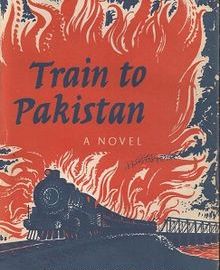
WATCH BOOK TALK: ‘TRAIN TO PAKISTAN’ by Khushwant Singh

Copyright@shravancharitymission


BOOK TALK: TRAIN TO PAKISTAN by Khushwant Singh

Copyright@shravancharitymission


Khidki (Window)

–Read India Initiative—

This is only an attempt to create interest in reading. We may not get the time to read all the books in our lifetime. But such reviews, talk and synopsis will at least convey what the book is all about

THE TRAIN TO PAKISTAN

BY KHUSHWANT SINGH

    The summer of 1947 was not like any other Indian summer. The weather that year had a different feel. What was, looming large on the horizon was, communal riots, and precipitated reports of the proposed division of the country into a Hindu India and a Muslim Pakistan. Within a few months the death toll had mounted to several thousands. ‘Muslims said the Hindus had planned and started the killing. According to the Hindus, the Muslims were to blame.’

    The riots had gradually spread from Calcutta to north and east and west. In Noakhali, East Bengal Muslims massacred Hindus. In Bihar Hindus massacred Muslims. Hundreds of thousands of Hindus and Sikhs who had lived for centuries in the Northwest Frontier abandoned their homes and fled towards the protection of the predominantly Sikh and Hindu communities in the east. They travelled on foot, in bullock carts, crammed into lorries as the riots had become a rout.

    By the summer of 1947 when the creation of a new state of Pakistan was formally announced, ten million people—Muslims, Hindus and Sikhs—were in flight. By the time the monsoon broke, almost a million of them were dead, and entire northern India was up in arms. The only oases of peace that remained were a scatter of little villages lost in the remote reaches of the frontier. Where, one such village happened to be Mano Majra.

    A tiny place, it had only three brick buildings. One belonged to the money lender Lala Ram Lal. The other two were the Sikh temple (Gurudwara), and the mosque (Masjid). Rest of the village was a cluster of flat-roofed mud huts and low-walled courtyards, which fronted on the narrow lanes. There were only seventy families in Mano Majra a fictional village. Lala Ram Lal was the only Hindu family. The others were Sikhs or Muslims, about equal in number and some quasi-Christians. The Sikhs owned all the land around the village and the Muslims were tenants and shared the tilling with the owners. There were a few families of sweepers also whose religion was uncertain. The Muslims claimed them as their own. Yet when American missionaries visited Mano Majra the sweepers wore khaki sola topees and joined their women folk in singing hymns in the accompaniment of harmonium.

    Even though, Mano Majra was said to be on the banks of Sutlej river. It was actually half a mile away from it. Sutlej is the largest river in Punjab. And about a mile north of Mano Majra. The Sutlej is spanned by a railroad bridge. It is a magnificent bridge—its eighteen enormous spans sweep like waves from one pier to another, and at each end of it there is a stone embankment. To, buttress the railway line.

    Mano Majra was always known for its railway station. Since the bridge had only one track. The station had several sidings where less important trains could wait, to make way for the more important ones. Not many trains stopped at Mano Majra. Express trains did not stop at all. Of the many slow passenger trains, only two, one from Delhi to Lahore in the mornings and the other from Lahore to Delhi in the evenings, were scheduled to stop for a few minutes. The only regular customers were the goods train. After dark, when the countryside was steeped in silence. The whistling and puffing of engines, the banging of buffers and the clanking of iron couplings could be heard all through the night. Apart from this, the blasts of the whistle were also heard often when the trains passed. And in all of this the author has done a wonderful job of describing the village activities. The Sikhs and the Muslims had a cordial relationship with each other until the summer of 1947.

    One heavy night in August five dacoits appeared in the village. And in sync with the rumblings of the sidings of the train, they decided to raid the house of the money lender Lala Ram Lal. They hammered the door with their weapons and after breaking it open they entered. They killed Lala Ram Lal and looted his treasure and fired two shots in the air to silence the village.  While leaving they passed through Juggut Singh’s (Juggia) house who was considered the village badmash and threw a bundle of bangles into his house to make him feel feminine. But since Juggut Singh (Juggia) was not at home they missed the action.

    Juggia was on probation where he was not supposed to leave the village and also report to the police station at frequent intervals. His father was a dacoit who was hanged for his crimes. Juggia had developed a physical relationship with Nooran, a Muslim girl who happened to be the daughter of Imam Baksh the Mullah of the Masjid. Once when, Juggia stepped out in the night, taking all the risk only to ‘make love’ to Nooran in the open fields where no one could see them. They heard some footsteps and went quiet. They saw some five people and could make out they were Malli the famous dacoit and his gang mates. Juggia was shocked. What was Malli doing in his village? This was no time for dacoities when the country was wounded, he thought. And, when, he was about to enter his house, he saw the door was open. Where, several villagers were in the courtyard talking to his mother. He turned around, quietly and made his way back to the river.

    In the bureaucratic circles, Mano Majra had some importance because of an officer’s rest house that was located just north of the railway bridge.  It had a flat roofed bungalow made of khaki bricks with a veranda in the front facing the river. It stood in the middle of a squarish plot enclosed by a low wall. Throughout the winter months, officers arrange tours that involved a short halt at the Mano Majra rest house. There they went for shoots and generally had a good time there.

    In the morning before the dacoity in Mano Majra, the rest house had been done up to receive an important guest. Before the arrival of this VIP the SI (sub-inspector) of police and two constables had also turned up on their bicycles. And soon the VIP too arrived in a large American car. His name was Hukum Chand, magistrate and deputy commissioner of the district. He immediately freshened up and got the SI to his room to start a conversation around some urgent issues over a glass of beer. The obsequious SI didn’t waste any time. He was immediately on the mission to please him. Corrupt Hukum Chand was expecting more than normal courtesies from the SI. That included wine, woman and song. The SI had it all in his quiver. During the course of beer he also started enquiring from the SI about the communal tension and about the convoys of dead Sikhs as they had been coming through at Amritsar. They had a frank discussion. Hukum Chand told the SI about Sikhs who retaliated by attacking a Muslim refugee train and sending it across the border with over a thousand corpses. They wrote on the engine ‘Gift to Pakistan!’

     The sentiments were far from normal on both the sides of the border. But it had not affected Mano Majra yet. The Muslims in Mano Majra were not well to do. There was also a discussion on Jugga. The SI reminded Hukum Chand of his father Alam Singh who was hanged two years back. SI explained, Jugga was in a relationship with a Muslim weaver’s daughter whose father was blind and was the mullah of the mosque and his name was Imam Baksh. In the evening Hukum Chand had his round of whisky along with a dance session by a prostitute who was in her teens and even slept with her. The dark side of bureaucracy and feudalism one could say.

    The morning after the dacoity the railway station was more crowded than usual. Residents of Mano Majra loved coming to the station just for the heck of it. Today the train from Delhi had some special visitors. Twelve armed policemen along with a sub-inspector alighted from compartment just behind the engine. And from the other end of the train near the guard’s van, a young man stepped down. Every bit an urbanite and also looked as if he was educated abroad, and somewhat effeminate, in body language. He was looking for a place to stay in Mano Majra. Soon he reached the Gurudwara where he met an old Sikh who happened to be the bhai of the temple. His name was Meet Singh. He enquired the name of the young man when the young man said, ‘Iqbal.’ ‘Iqbal Singh?’ queried the old man. To which Iqbal didn’t reply. Iqbal could have been Iqbal Singh, or Iqbal Chand or even Iqbal Mohammed. He declared himself as a social worker. He carried his own foodstuff to eat including fish complete with head, eyes and tail and even liquor. Bhai Meet Singh adviced Iqbal not to go out too far in the village as it was bad times. And that Lambarder and Imam Baksh, the mullah of the mosque were coming to meet him.

     The attention then shifts to the money lender’s house, who was murdered the previous night. The dacoits had taken a lot of cash and they say over five thousand rupees in silver and gold ornaments from his women. The murder suspect was now Jugga in whose house the packet of bangles was found that was left by the dacoits. He is soon arrested. Jugga pleads not guilty as he wouldn’t have looted and killed his own village brother but he was not heard.

    In fact the arrest of Jugga also had the okay of Hukum Chand the magistrate. In fact the magistrate had also given the concurrence to arrest Iqbal too, and implicate him in the case of murder. Iqbal had become a matter of suspicion because his undisclosed mission. They both are put in the lock up. But Iqbal had arrived a day after the murder and Jugga could not have killed his village-brother or struck a dacoity in his own village. This makes the authorities feel something is amiss. Which, they will not be able to prove it in the court of law. So they timidly accept the mistake and arrest Malli and his gang from Chundunugger police station.  

    Meanwhile things are hotting up in Mano Majra. One day a ‘ghost train’ arrives at Mano Majra railway station. The entire area along the station is cordoned off. Rumours spread it is a ‘funeral train’ carrying dead bodies of Sikhs and Hindus killed in the massacre. Army steps in with some Sikh officers and their Jeeps and trucks. Meanwhile, the local police are commissioned, to go around villages to collect wood and oil. This gives a clear indication, that it is required for mass cremation. The docile villagers, handover whatever is available with them. And after a while all they get to see is the billowing of dense smoke making it amply clear that its mass cremation that is going on. Post this; traumatic rumours spread across the village.

    But even before matters cool of, one day another ‘Ghost Train’ enters Mano Majra. It has no lights. It doesn’t whistle nor does it rumble. The army once cordons off the entire area. Soon an excavator arrives and starts digging a huge pit. The dead bodies are brought from the train and made to rest in the pit—mass burial. After which, the train disappears, as mysteriously, as it had come.

    News spreads that it was the bodies of Hindus and Sikhs brought in the train twice for cremation and burial. Upon reviewing the situation authorities feel another ‘Ghost Train’ can start riots in Mano Majra too. So they decide to shift the Muslim population to the ‘refugee camp’ from where they would be deported to Pakistan. Muslims of Mano Majra are not quite inclined to go to Pakistan as they feel they were born and brought up only in Mano Majra. But the cruel destiny decides that they have to leave. Nooran too, has to leave along with her father Imam Baksh. She comes to meet Jugga’s mother. She informs she is carrying Juggia’s child and therefore if she could adopt her and let her be in her house. But Juggia’s mother is not inclined to keep her, so she asks her to leave for the camp immediately.

    Meanwhile Juggut Singh, Iqbal, Malli and his gang are released from the jail. Iqbal disappears suddenly. But the talk whether he was a Muslim or a Sikh continues. Juggia upon reaching his home learns Nooran had come seeking for shelter at his home but was turned away by his mother. He gets very upset at this and threatens her to kill himself. And by now a young Sikh lad has emerged in Mano Majra. It appears he has come from Pakistan and is full of hatred for Muslims consequent to what he had seen in Pakistan—rape of Hindu and Sikh women and slaughter of their children and men. He is full of fire. He comes to the Gurudwara and provokes the Sikhs to join him for taking revenge. About fifty Sikhs join him as volunteers.

    Next day in the morning, the Sikh lad, along with all the volunteers make a plan. The train loaded with Muslim refugees is likely to start from Chundunugger and by night it will reach Mano Majra. The train has no lights as it being made to move in a surreptitious manner. All along the way they plan to post volunteers with torches who will signal as soon as the train passes them. They plan to tie a sturdy rope from one end to the other on the first steel span of the rail bridge which is at the height of the funnel of the engine which is about twenty feet. And once the train reaches there in the dark it will pull down all the people sitting on the roof say 4-500. The impact might even dislodge the train itself and it might fall into the river. Prima facie it appeared to be a perfect plan when they could have attacked and killed all the refugees.

    By night everything was in place. The train was moving without lights. Each time it passed a volunteer, the torch light flashed giving the signal that the train had moved ahead. It was a moonlit night. When, the Sikh lad saw a silhouette of a hefty person climbing the first steel span. He then started moving on the sturdy rope when he took out his kirpan (sword) and started cutting it. The Sikh lad upon seeing this, yelled at the hefty person to stop what he was doing. But the guy was unfazed. His movements up there had become even swifter by now. The train by now was also close to the steel span. The Sikh lad by now had understood what was happening. Someone was trying to sabotage the plan by cutting the rope as that would have saved all the refugees. So he first yelled and then took out his gun and shot the guy. He was hurt, and by now he was in the centre of the span. Where, his movements had become much more, faster. And finally he was successful in cutting the rope at the nick of the moment. But just then he fell on the track when the train ran over him and into Pakistan.

    The person who cut the rope was no else but Juggut Singh who wanted to save his Muslim girlfriend from being killed but in the process he killed himself.

Synopsis by Kamlesh Tripathi

*

https://kamleshsujata.wordpress.com

*

Share it if you like it

*

Shravan Charity Mission is an NGO that works for poor children suffering from life threatening diseases especially cancer. Should you wish to donate for the cause. The bank details are given below:

NAME OF ACCOUNT: SHRAVAN CHARITY MISSION

Account no: 680510110004635 (BANK OF INDIA)

IFSC code: BKID0006805

*

Our publications

GLOOM BEHIND THE SMILE

(The book is about a young cancer patient. Now archived in 7 prestigious libraries of the US, including, Harvard University and Library of Congress. It can also be accessed in MIT through Worldcat.org. Besides, it is also available for reading in Libraries and archives of Canada and Cancer Aid and Research Foundation Mumbai)  

ONE TO TANGO … RIA’S ODYSSEY

(Is a book on ‘singlehood’ about a Delhi girl now archived in Connemara Library, Chennai and Delhi Public Library, GOI, Ministry of Culture, Delhi)

AADAB LUCKNOW … FOND MEMORIES

(Is a fiction written around the great city of Nawabs—Lucknow. It describes Lucknow in great detail and also talks about its Hindu-Muslim amity. That happens to be its undying characteristic. The book was launched in Lucknow International Literary Festival of 2014)

REFRACTIONS … FROM THE PRISM OF GOD

(Co-published by Cankids–Kidscan, a pan India NGO and Shravan Charity Mission, that works for Child cancer in India. The book is endorsed by Ms Preetha Reddy, MD Apollo Hospitals Group. It was launched in Lucknow International Literary Festival 2016)

TYPICAL TALE OF AN INDIAN SALESMAN

(Is a story of an Indian salesman who is, humbly qualified. Yet he fights his ways through unceasing uncertainties to reach the top. A good read not only for salesmen. The book was launched on 10th February, 2018 in Gorakhpur Lit-Fest. Now available in Amazon, Flipkart and Onlinegatha

(ALL THE ABOVE TITLES ARE AVAILABLE FOR SALE IN AMAZON, FLIPKART AND OTHER ONLINE STORES OR YOU COULD EVEN WRITE TO US FOR A COPY)

*****


STONE PELTERS IN KASHMIR VALLEY

Copyright@shravancharitymission


Few lines on Kashmir Valley that is undergoing the worst of turmoils

“Gar firdaus, ruhe zamin ast, hamin asto, hamin asto, hamin ast”,

Which, translates to

“If there is ever a heaven on earth, it’s here, it’s here in Kashmir.”

*

What should have been the valley of smiles,

Has turned into a stone pelters den,

A misguided nuisance,

Not in the interest of anyone.

*

When Kashmir bleeds,

Separatists are relieved,

But when there is serene,

Separatists feel the demean.

*

From valley to the mountains,

From lakes to the rivers,

From tourism to winter sports,

You have a whole lot of things.

*

Nesting in between,

Korakoram and Zanskar,

Pir Panjal and Himalyas,

And in and around,

 Hazratbal, Mata and Amarnath,

You have so much to pride and revere.

*

So, in those blessed and scenic surroundings,

What made you pick up stones?

What made you devastate your own home?

And what made you surrender to those rogues?

*

What makes you feel India is not your own,

And Pakistan is your home,

The grass is not greener on other side,

Take it from someone who is known.

*

Use the stones to build the valley,

Use the stones to preserve the valley,

Use the stones to kill the enemy,.

Use the stones to rip the separatist.

*

India is your home,

Where you’ve grown,

So leave Pakistan alone,

And fight for your country’s throne.

**

By Kamlesh Tripathi

*

Share if you like it

*

Shravan Charity Mission is an NGO that works for poor children suffering from life threatening diseases. Should you wish to donate for the cause the bank details are given below:

NAME OF ACCOUNT: SHRAVAN CHARITY MISSION

Account no: 680510110004635 (BANK OF INDIA)

IFSC code: BKID0006805

*

Our publications

GLOOM BEHIND THE SMILE

(Archived in 7 prestigious libraries of the US, including, Harvard University and Library of Congress. It can also be accessed in MIT through Worldcat.org. Besides, it is also available for reading in Libraries and archives of Canada and Cancer Aid and Research Foundation Mumbai)  

ONE TO TANGO … RIA’S ODYSSEY

(Archived in Connemara Library, Chennai and Delhi Public Library, GOI, Ministry of Culture)

AADAB LUCKNOW … FOND MEMORIES

(Launched in Lucknow International Literary Festival 2014)

REFRACTIONS … FROM THE PRISM OF GOD

(Co-published by Cankids–Kidscan, a pan India NGO and Shravan Charity Mission, that works for Child cancer in India. The book is endorsed by Ms Preetha Reddy, MD Apollo Hospitals Group. Book was launched in Lucknow International Literary Festival 2016)

TYPICAL TALE OF AN INDIAN SALESMAN

Story of an Indian salesman who is lowly qualified but fights his ways through uncertainities to reach the top. A good read for all salesmen. Now available in Amazon.com

(CAN BE BOUGHT FROM ON LINE BOOK STORES OR WRITE TO US FOR COPIES)

*****


PHILOSOPHER AND THE MERCHANT’S DOG

Copyright@shravancharitymission


    Once, a rich merchant was crossing a turbulent river in a boat along with his dog.  With him there were some other passengers too, including a philosopher. It appeared the unruly dog of the merchant had never sailed earlier and therefore, it was not feeling at home in the changing surroundings. It was running helter-skelter, and in the process, it was brushing and pushing the passengers all over. The dog obviously was scared and in the process it was not allowing anyone to even sit peacefully.

    So much so, even the oarsmen, were feeling shaky about his movements that had unsettled all the passengers and everyone was somewhat panicky. The, boatman was now beginning to fear about the dog’s rowdy acrobats, that was swaying the boat excessively, where, it could have just overturned. In the process, everyone could have drowned including the mischievous dog.

   But the dog was unfazed and remained in a state of caper and romp. The merchant therefore, was regretting having brought him and was in a state of helplessness. But, he was unable to tame him. In the meantime a passenger who happened to be the philosopher in the boat couldn’t resist.

    He walked up to the merchant and said—‘Sir, if you permit me. In a minute or so I could set your dog right. Upon, hearing this, the merchant was greatly relieved and he gave him the permission forthwith.

    The philosopher with the help of two daring passengers lifted the dog and threw him in the river. Frightened, the dog started squealing on top of his voice and started swimming towards the boat. Soon, it even started pawing the boat fearing his life. The philosopher was watching the dog closely and after a little while he pulled him back. But the dog was now frightened. So he waddled to a corner of the boat and just sat there. The passengers and even the merchant were surprised at this docile behavior of his.

    Merchant too was surprised. He asked the philosopher—‘my dog was earlier caper romping all over the boat. But now he stands tamed, and is just sitting in one corner like a domesticated goat. How come?

     Philosopher said-

    ‘Sir, without experiencing pain, no one can imagine the agony of others. It was only when I threw him in the river. He could understand the might of the river, the utility of the boat and the struggle of the oarsmen.

     This story goes out for those ungrateful Indians. Who stay in India but keep abusing her all the time. They too should be thrown into Pakistan so that they realise the beauty of India.

*

Posted by Kamlesh Tripathi

*

Share if you like it

*

Shravan Charity Mission is an NGO that works for poor children suffering from life threatening diseases. Should you wish to donate for the cause the bank details are given below:

NAME OF ACCOUNT: SHRAVAN CHARITY MISSION

Account no: 680510110004635 (BANK OF INDIA)

IFSC code: BKID0006805

*

Our publications

GLOOM BEHIND THE SMILE

ONE TO TANGO … RIA’S ODYSSEY

AADAB LUCKNOW … FOND MEMORIES

REFRACTIONS … FROM THE PRISM OF GOD

(CAN BE BOUGHT FROM ON LINE BOOK STORES OR WRITE TO US FOR COPIES)

*****

HAPPENING WORLD–FACTS & PROJECTIONS

Copyright@shravancharitymission

By Kamlesh Tripathi


By some accounts the Pakistani army chief bears a personal grudge against India—his uncle was killed in the 1965 war and his brother in the 1971

*

India is known for producing CEOs of Google, Microsoft, Pepsico, Mastercard, Deutsche Bank, etc. And Pakistan? For hoisting heads of Al-qaida, Taliban, Lashkar-e-Taiba, Jaish-e-Muhammed, Haqqani group etc.

*

Gandhi arrived in South Africa in 1893 at the age of 23. Within a week he collided head on with racism. His immediate response was to flee the country that so degraded people of colour, but then his inner resilience overpowered him with a sense of mission, and he stayed to redeem the dignity of the racially exploited, to pave the way for the liberation of the colonised the world over and to develop a blueprint for a new social order. He left 21 years later, a near Mahatma (great soul).

*

Valmiki gave up life as a robber and meditated for years in penance before he went up to compose the epic Ramayana. He is now revered as the ‘Adi Kavi,’ or the first poet, as he is said to have invented the ‘Shloka,’ the first verse, which defined the form of Sanskrit poetry.

*

The trade unions represent 15% of the workforce in the organised sector. 85% represents the unorganised sector.

*

Cities are our engines of growth and contribute around 63% of India’s GDP.

*

Chikungunya was discovered in 1952, in Tanganyika. Indian dengue was first recorded in Madras in 1780, but the first proven epidemic was in west Bengal, 1963-64, also proving its first chief minister, BC Roy’s claim: ‘What Calcutta does today, the rest of India does tomorrow.’

*

Total incidents of violent crime in UP fell dramatically from 1999 to 2003 at the rate of 16% per annum. This period coincided with the time when BJP was in power in the state. However, since 2003 when either BSP or SP have been in power, violent crimes in UP have increased significantly at the rate of over 7%. In comparison Bihar which is the closest to UP in its record of crimes, registered increase in violent crimes at 3% per annum.

*

In 2014, violent crime in UP was 25% more than in Bihar.

*

India’s direct tax payers form part of a narrow base which contributes more than 50% of the Centre’s total tax revenue.

*

In 2012-13, tax department’s data showed that 28.9 million individuals filed tax returns, of whom only about 1.6 million people claimed income above Rs 1 million. When this number is juxtaposed with the 2.6 million cars sold the same year.

*

India’s income tax base is unnaturally narrow. It spends less than a rupee to collect Rs 100 of direct tax.

*

Indian railways continues to be the lifeline of the nation with over 800 crore trips annually

*

Air travel in India is likely to continue to grow quickly for the next 10-12 years. To support this growth, investment in airports is expected to be upwards of Rs 2.5 lakh crore. Around 700 planes could be added to our current fleet of around 450 planes totalling an investment of Rs 3 lakh crores.

*

Currently the aviation sector is estimated to directly employ 2 lakh people and 12 lakh people across various parts of the value chain, a multiple of 5.8x. in the next decade the sector could employ more than 5 lakh people directly and 30 lakh overall.

*

From more than 90% of aspirants failing the central Teacher’s eligibility test year after year, to teacher absenteeism touching as high as 40% in the poorest states, to the prevalence of English Teachers who just can’t speak English. All around there are signs that teacher recruitment in India is in a bad shape.

*

Environment: while the Montreal Protocal is now ratified by 197 countries, the Paris agreement has been ratified by 63 countries representing 52.11% of global greenhouse emissions

*

The world bank/IMF estimates the size of Indian economy in 2016 at 2.28 trillion $ making it the world’s 7th largest. At $270 billion in 2015, Pakistan is the world’s 38th largest. India’s export of merchandise has powered past 300$ billion and is closing on $500 billion, if you count services, despite a slowdown in 2016. Pakistan’s exports are straining to get past #30 billion. India’s foreign exchange reserves stand at $367 billion; Pakistan is at $20 billion.

*

Pakistan is one fourth of India’s size. Has a sixth of its population and poses an equal. Yet India cannot rid itself of Pakistani pestilence.

*

Pakistan’s ministry of Overseas told the country’s legislature this week that Saudi Arabia and UAE together hosted nearly 90% of the total Pakistani workforce of 9,48,000 sent overseas last year. Jobs provided to Pakistani by some other counties: Germany 44, Turkey 57, Singapore 68, Japan 84, UK 261 and USA 350.

*****


BOLLYWOOD, CRICKET & loc

Copyright@shravancharitymission

By Kamlesh Tripathi

indian-jawan

    At times it appears the Indian Army Jawan, who fights terrorism at the Line of Control is only fighting to save his own house, but in reality he is fighting for all of us. But the tragedy with Indians is that they show no solidarity with him. Our Prime Minister preaches so much about terrorism in all international forums. But back home India is a divided and selfish lot. People from all professions are only self-centered about themselves and their professions. We don’t realise by behaving in this insensitive manner tomorrow, people may desist from fighting for the country. What will happen then? There is indeed a greater need to feel for our brave jawans and we must perennially keep their morale high. Colonel Anil Chawla puts it quite beautifully.

…………………………………..

Col Anil Chawla, a serving soldier of the INDIAN ARMY wrote this:

Will sending Pakistani artists back, stopping cricket and business with Pakistan actually end terror from Pakistan?

No, it most certainly will not.

BUT there is an emotion called solidarity.

YOU CANNOT MAKE FILMS, PLAY CRICKET, AND DO BUSINESS AS IF EVERYTHING IS FINE, BECAUSE IT IS NOT.

indian-jawan-3indian-jawan2

It makes the soldier wonder aloud, “Why should I alone bear the weight of conflict?”

This conflict between India and Pakistan is not the soldier’s personal war. He is dying and killing for you and me. Imagine a situation in which the soldier felt, and behaved, like Salman Khan, Karan Johar and Mahesh Bhatt? Imagine if a soldier walked up to his superior and said, “Sir, while I am dying on the Line of Control, these people are going about as if everything is absolutely fine between the two countries.”

Why should he alone sacrifice for India, when others were making merry?

Patriotism and sacrifice is not the sole responsibility of the soldier.

The United States boycotted the Moscow Olympics in 1980, and the Russians did likewise when they boycotted the Los Angeles Olympics in 1984. This is what happens when national interest is held paramount. And this is what must happen now.

18 families have been shattered like glass … But the pain of Fawad Khan’s departure is too much to bear, it seems …”

…………………………………

    Film Stars have nothing to do with terrorism…

    Singers have nothing to do with terrorism ….

    Writers have nothing to do with terrorism …

    Directors have nothing to do with terrorism …

    Performers have nothing to do with terrorism …

    Journalists have nothing to do with terrorism …

    Activists have nothing to do with terrorism …

    Cricketers have nothing to do with terrorism …

    Politicians have nothing to do with terrorism …

    Businessmen have nothing to do with terrorism …

    Professionals have nothing to do with terrorism …

    Lawyers have nothing to do with terrorism …

    Then for whom are the Jawans sacrificing their lives for?

    Jai Hind.

*****

THE MUSLIM RANT OF DONALD TRUMP

Copyright@shravancharitymission

By Kamlesh Tripathi


    Donald Trump was being willfully scandalous. When he recently said that the U.S. should shut its doors on all Muslims, as his verbal assault. To the equally outrageous gunning down of civilians in California by a couple, owning allegiance to ISIS. Was it a campaign stunt to pacify the public mood, or just a stray ambient outburst one can’t say. But any which way Trump shot himself in the foot with this off the cuff remark. A person of Trump’s stature who happens to be a billionaire and an aspirant for the Republican nomination surely overlooked the demographic sketch of his own country. Whether by sheer ignorance or design he alone knows but by doing so he labeled Muslims in general as the derogatory stereotype.

    On the other hand ‘Uncle Sam’ poses itself as the big daddy of the world. Showing deep concern for everyone in the planet. Simultaneously, it even keeps track of the maze of weaponry better than anyone else in the world. It also preaches terrorism to be a curse, yet remains one of the largest suppliers of arms in the world.  With these analogies one can safely say. Donald Trump exactly knew what he wanted to say. It it was not just an, off the cuff remark. So, it may not be out of context to contend. He orated what the Republicans had in mind?

    If we for a moment run through the world’s demography. We will find, out of a total world population of 7.26 billion people; 2.40 billion (33.06%) are Christians; 1.70 billion (23.41%) are Muslims; 1.13 billion (15.56%) belong to the unaffiliated religions (The religiously unaffiliated include atheists, agnostics and people who do not identify with any particular religion); 1.08 billion (14.87%) are Hindus; 0.49 billion (6.75%) are Buddhists; 0.40 billion (5.50%) practice the Folk Religion (The precise definition of folk religion varies among scholars. Sometimes also termed popular belief, it consists of ethnic or regional religious customs under the umbrella of a religion, but outside of official doctrine and practices); 0.06 billion (0.83%) belong to the other religions and 0.01 billion (0.01%) are Jews.

    Islam therefore, is the second largest faith on earth with around 1.7 billion adherents, and not just a docile race that Trump’s U.S can think of doing without. But currently it is quite definitely under duress, going through some trying times because of Islamic fundamentalism, that is at its worst. As it perpetrates holocausts in the form of terrorism. Because of which, average Muslims are losing their sheen and are not apparently welcomed in some of the most developed and powerful countries and continents of the world such as the U.S., Europe, South America, Australia, New Zealand to name a few, for no fault of theirs. But by ranting about Muslims Donald Trump has not only added salt to their wounds but has also hoodwinked the American public in general. For, you can shut your doors on Muslims only when its flooding, but not when its merely seeping.

    If we analyze most religions vis-à-vis countries and colonies. We will find there are: 161 countries where Christianity is in a majority; 49 where Muslims are in a majority; 7 countries where unaffiliated religions rule the roost; 3 countries where Hindus are in a majority; 7 where Buddhists are in a majority; 3 countries where folk religion is in a majority and 1 where the Jews are in a majority.

    The data above only tells us that the World Muslim Population by percentage (Pew Research Center, 2014), constitutes the world’s second largest religious group. And if we dig in a little more on the Muslim population across the world we will find.

Concentration of Muslim population

    66% of the world’s Muslims reside in Asia and the Middle East. They are 27% of the total population of Asia and Middle East with around 1.12 billion adherents, and thus the heart of Muslim civilization on earth. And it is notable they share space with over a billion Hindus in the same region. Balance 34% of the Muslim population is spread across other continents and countries such as Africa, Europe, North America, South America, Australia & New Zealand, Melanesia, Caribbean, Micronesia, Mexico & Central America and Polynesia.

    Africa is home to 26% of the world’s Muslim population and 43% of Africa’s population is Muslim. So not surprisingly, Asia, Middle East and Africa together notch up 92% of the world’s Muslim population. And only a paltry 8% is left for the powerful and affluent countries and continents to share. Out of that let us glance at Europe and America.

    Europe has a total of 2.56 % of the world’s Muslim population and 5.85% of Europe’s population is Muslim. If we take Australia and New Zealand, 0.03% of the world’s Muslim population lives there which is 2.2% of their population. South America is home to just around 6.7 lac Muslims which is around 0.04% of the world Muslim population and 0.17% of their own population.

But coming back specifically to Donald Trump; North America is home to only around 35.08 lac Muslims which is only 0.2% of the world’s Muslim population and only 1.02% of their total population. Coming to the U.S. in particular, it is home to only 0.16% of world’s Muslim population, which is only 0.9% of their own population. So the point is, whether Trump says it or not. The Muslim population unlike Asia, Middle East and Africa has traditionally been extremely low in the U.S. and whether it was restricted by design or was never a favourite habitat of the Muslims in particular is a different question altogether.

   A Breibart News review of the State Department and Homeland Security data reveals. United States, admits more than a quarter of a million Muslim migrants each year. To this President Obama intends to add another 10,000 Syrian migrants. In 2013 alone 1,17,423 migrants from Muslim majority countries were permanently  resettled, within the United States. Additionally in 2013 the US voluntarily admitted an extra 1,22,921 temporary migrants from Muslim countries, as foreign students and foreign workers as well as 39,932 refugees from other Muslim countries.

    Even though every year the U.S. admits a number of Muslim migrants. Larger in size than the entire population of Des Moines, Oowa, Lincoln, Nebraska or Dayton or Ohio. Yet it still remains a miniscule and therefore it is not flooding but seeping, where closing of doors doesn’t help.

    The lethal point therefore is that US cannot do without the best of brains whether they come from Christians, Muslims, Hindus, Unaffiliated, Buddhist, Folk Religion, Jews or any other religion; And Trump’s US will have to realize, that you can’t continue to be the big daddy of the world by closing doors on faiths just because of a few rotten apples.

*****


SARBJIT SINGH’S SISTER RECOUNTS THE 3 TIMES SHE MET HIM IN 23 YEARS BEFORE HE DIED IN 2013

Copyright@shravancharitymission

By Kamlesh Tripathi

New Doc 67_1New Doc 68_1

This is a nostalgic account narrated by Dalbir Singh, elder sister of Sarbjit Singh:

  • Sarbjit Singh had to spend 23 years in a Pakistani prison for a small mistake he committed unknowingly, and eventually he was murdered there—He headed in the wrong direction, towards Pakistan, at night after working in his fields located close to the LOC in Punjab and was nabbed by Pakistani rangers.
  • It is an emotional account of a sister; and pixels well about their relationship.
  • Dalbir Singh, Sarabjit’s elder sister considered him as her son. And after Sarabjit was whisked away by Pakistani authorities for 23 years she slept on the floor to please her God for his safe return.
  • It is said; sometimes there is success in defeat and sometimes there is defeat in success—it was success in defeat for Dalbir. For one cannot fathom the turbulence Dalbir must have undergone for 23 long years, each time blaming only herself that she hasn’t done enough to save her brother and she must continue with bigger and untiring efforts—so that was her success; and in the end not being able to save Sarbjit, her defeat.
  • I liked the account as it reminded me of my defeat, when I too could not save my ailing son from cancer, but like Dalbir the untiring  efforts that me and my family had put in gave a whiff of success. For in life one should only try his best and not get intimidated by what is beyond one’s capacity.
  • It also gives an account of how Indian prisoners are treated in Pakistani prisons.

  • Briefly describes how Indian prisoners are treated in Pakistani prisons.
  • Soon to be released as a film.

TOI- 26.5.15

SARBJIT SINGH’S SISTER RECOUNTS THE 3 TIMES SHE MET HIM IN 23 YEARS BEFORE HE DIED IN 2013

I am now determined to tell the world the real story of Sarbjit

Dalbir Singh, 61, is the older sister of Sarbjit Singh, a farmer from Bhikhiwind in Punjab (just 5 kms from the the Indo-Pakistan border). He by mistake crossed over in 1990 while farming, got mistaken as an Indian spy, was given capital punishment in 1991, but was not hanged. He was kept in Kot Lakhpat jail in Lahore for 23 years, before he was killed by inmates a few days after the death of Afzal Guru in India. During his 23 years in jail, his older sister Dalbir Singh who treated him more like her son than her brother, made it her life’s agenda to get him released. While she finally did not succeed, she is determined to reach his real story to the world through a film being made based on his life. The film will be directed by Omung Kumar, the National Award-winning director of Mary Kom. Dalbir Singh met her brother only three times in those 23 years. She opens up to us for the first time after her brother’s death in 2013 and recounts the three times she met her brother in jail. Excerpts:

Did instance like the Kargil War affect you?

At the time of Kargil, I got very scared. There is a nearby village called Khasa, where many army officers live. I went to meet them and asked Brigadier sahab, given the situation how it would affect the way Pakistan would treat our prisoners. I was scared that if there would be war, how would the prisoners come out? I met another Brigadier who told me that if there would be war, we would open up the jail and release the prisoners, so that an innocent man should not get bombed and die in jail. But he didn’t know what the Pakistanis would do. We would feel scared that Khuda na kare, if there was a bomb thrown in jail, how would he be able to run? My heart would sink if there was a flood or earthquake in Lahore.

How did Sarbjit actually cross over to Pakistan?

Our village is just about 4-5 kms from the border. I myself have gone many times to the other side while working together with the women from the other side on our fields. We would be working on our respective fields and sometimes, even eat a meal together with the Pakistani brothers and sisters on the other side.

Gradually and slowly, the situation got bad to worse and they first put a rough line to segregate a boundary and then, there were some fundamentalists on both sides who did not have good thoughts. Though I believe that ours were not as negative as the people on the other side. There would be things smuggled in across the borders, but the women had good behaviour towards each other and there was no enemity. However, if there was anybody who went the other side by mistake, they would be caught and put behind bars termed as ‘spies’. That night, we had finished our dinner when a friend of Sarbjit came and took him to the fields to work. The field was right next to the border. As is usually the case in Punjab, the men drink and then work. Sarbjit and his friend too had their full share of drinks and then, Sarbjit put his axe on his shoulder and not realising which direction he was walking, he walked into the Pakistan side. At that time, there was not even a wire to show the borderline. He was caught and blindfolded and only the next morning, he realised that he was in Lahore’s Kot Lakhpat jail, accused of being an Indian spy by the name of Manjit Singh. Sarbjit was very fond of playing kabaddi and he would often tell me, ‘You wait and see. One day the world will know me as this famous pahelwan.’ I didn’t know then that he would one day become world famous, but not as a kabaddi player. When Sarabjit suddenly disappeared, I initially thought that he must have been picked up by a terrorist group. But it was after nine months, later when he was first presented in the Pakistani courts that he wrote a letter to me telling us how he had been arrested accused of being a man called Manjit Singh, who was allegedly behind four bomb blasts. He asked to please get Shri Akhand Sahib path done. After that in every subsequent letter; he wrote to me details of what he went through. I have all his letters kept in a big bag with me. On August 15, 1991, he was held guilty and sentenced to be hanged. But for so many years, they neither released him nor hanged him despite my making so many appeals and requests for his forgiveness, even though he had committed no crime.

Why was it difficult for you to meet him?

I did not even have a passport, but right from 1990, I tried a lot to go but I never got the permission. At times, I would read in the newspapers that yes, his family can come and meet him, but then there was a call from Pakistan that there was news printed there that they would not grant us permission. Finally I met Rahul Gandhi and took his help to get the visa for me and finally got the visa along with my husband, Sarbjit’s wife and his two daughters Swapandeep and Poonam (Swapandeep was adopted by Dalbir as she does not have kids of her own). While we got the visa and reached Lahore, we were still not allowed to meet him. The jail authorities would say that they had not got permission from Islamabad and Islamabad would say that Lahore had not given the permission. After nine days of feeling mentally tortured, living in Gurudwara Dera Sahib there, I decided to appeal in the High Court. The judge was very kind and he immediately granted permission. It was too late that day, but the next day on April 23, 2008, we all went to jail to see Sarbjit.

What happened in jail that day?

He had been kept in a tiny room where you could hardly stand up with tall walls outside with a big lock. A mother can easily recognise her son. As soon as they opened the door to his room for us to go inside, I recognised him. He was standing at an angle and seeing him, my heart was sinking. His eyesight had gone weak and he wore a broken pair of glasses tied with a thread to hold them together: I told him, ‘At least you could have worn proper glasses.’ He said, ‘I got a lot of gaalis to even get this.’ I remembered that in one of his letters to me, he had written how his eyes burn and itch but the authorities would abuse and harass him, but not give him medicines and glasses. I wanted to hug him but I was not allowed to do so even once, so I held his hand and sat down on the other side of the bars next to him. I held his hands and told him, “Sarbjit, I wish I could have turned blind before seeing you like this.’ I cried profusely so much so, that I fell down holding the bars and got hurt in my forehead. That day knowing we were coming to meet him, he had requested the jail authorities to allow him some water, cold drink and ingredients for tea, as he wanted to make tea for me and serve me. They had given him a stove and he had made tea himself, sticking his hands out of the bars, and then kept it in a flask to serve us later. When I fell down, he got hassled and quickly gave me water and cold drink. Most of the 48 minutes went into crying, but fortunately he met his daughters and we talked a little about his case. I also tied him rakhi and he said, ‘I have nothing to give you today.’ He had tears in his eyes, but he tried to hide them from me even though I knew. I fed him with a piece of barfi like I always did and he bit my hand with his teeth. He said, ‘You have come to give me strength, then why are you scared?’ He recognised his daughters as he had seen their pictures through the newspaper reports. He told me how the Indian prisoners would send him newspaper cuttings hidden behind his rotis. And these he stored in the register he had kept. At that time he was sure he would come back. The one regret that I had was that I was not allowed to hug him.

What was his jail like?

There was no fan inside but outside for us, there was a small fan kept. Inside his room, he had a small pot of water with which he had to manage for the whole day, his bathing, washing clothes, using the washroom or drinking.

Did you visit him again?

I met him again in 2011, when he showed me a diary and register, where he said that he had written every word of what had happened to him in those many years. I wanted that diary after he died, as I wanted everyone to know what he went through in jail, but it was not given to me. When his body came in 2013, only that clay pot came with it. I got to meet him for three hours in 2011. And on this visit, I went to visit him twice. Unlike the last visit, this time he had not taken his bath, not prepared anything for me and looked indifferent. He was quiet and I asked him what happened? He said, ‘Didi, for many days, I don’t even eat or sleep or take a bath and I keep thinking why I am in this state and I keep thinking whether I will come back or not. I can’t even tell you what I go through here.’ I felt that if he kept thinking like that, he would get mentally ill. I summed up strength to give him some and wanted to tie many rakhis that I had taken from here, many of which had been given to me by women in the village. He said, ‘Chalo, you give them to me. I will keep tying it up slowly later.’ I said, ‘No, why are you talking like this? You will be with me in our aangan on the next rakhi.’ It’s only when I visited him for the second time that he was waiting for me, ready to serve me lassi that he had made mixing curd and water and the jail dal. He knew that I was the only one he could tell and told me how they would abuse Indians a lot there. If you ask the jail authorities for medicines or glasses or water, they would say, ‘Aaj bahar nikale? Aaj paani pilaye hi dete hain tumhe.’ He said, ‘Sometimes, they would beat me, sometimes I managed by begging them for forgiveness.’

Was it ever proven that Sarbjit had been convicted wrongly?

The sole witness of the Pakistani police Shaukat Ali was once interviewed by an Indian journalist, who managed to find him there and he said, ‘I don’t know whether Sarbjit has done it and whether he is Manjit or Sarbjit. Those days, my father had died and the police had asked me to say that Sarbjit was Manjit and that he had committed the bomb blasts in court and I said it.’

How did he finally die?

Over the years, there were many times when I would wonder if he would ever come back, but then again, I would meet people and get assured that he would come back. I had kept all the navratras, slept on the floor for 23 years, but it was after meeting SM Krishnaji, the External Affairs minister, that I felt most assured that Sarbjit would be released for sure. I don’t know from where I got the strength to fight, but I was determined and had decided that I would fight, come what may. But I quickly trust people and start feeling they are my own, but got cheated each time. Before Sheikh sahab, all the lawyers who represented us took the money from us, but cheated us in court. They did not even present our case of him not being Manjit even though they had the papers proving that. Afzal Guru had been hanged in India a couple of days before Sarbjit was attacked in prison. We learnt that there was a man who would go inside jail and supply sharpened spoons and knives made from sandooks inside jail to the prisoners there. I feel the Pakistani prisoners there took Afzal’s revenge by killing Sarabjit. I was with Swapandeep the day he was attacked. I had been having a severe back problem for two days and was in terrible pain. I could not sleep and was restless when suddenly I got a call from Pakistan telling me how he had been attacked. I screamed and woke up Swapandeep who was sleeping, but I thought we would still be able to treat him and get him back alive. It’s only when I got his body in the hospital in Lahore that I finally broke down and realised that I had lost my son forever: Uss pal meri umeed bhi khatam ho gayi aur intezaar bhi.

Are you free now?

No, I try but I can never forget Sarbjit. I wish he had come back. For 23 years, my only goal was to get him released. But now, I want people to know who he actually was. What happened with Sarbjit inside jail? What happens to Indians inside Pakistani jails? There is an innocent Pakistani prisoner in Tihar, who has paralysis, that Sarbjit would tell me about. Through this film, I want a message to go to all. I could not bring back Sarbjit, but I hope that this Pakistani child in Tihar is released.

Priya.Gupta@timesgroup.com