Shravan Charity Mission is an NGO that works for poor children suffering from life-threatening diseases, especially cancer. Our posts are meant for our readers, including children and adults, and have a huge variety of content. We also accept donations for our mission. Should you wish to donate to the cause of cancer? The bank details are given below:
Imagine a wandering poet in 15th-century India, reciting verses that touched both kings and commoners. That was Kabir Das, a weaver who spun not just threads, but words that would echo through centuries. His dohe (two-line verses) weren’t just poetry. They were life lessons presented in everyday parlance, cutting across the noise of religious divisions and social barriers. Even today, his razor-sharp wisdom hits home, whether you’re puzzling over life’s essential questions or just trying to be a better person.
Kabir is one of the most fascinating personalities in the history of Indian mysticism. Born in or near Benares to Muslim parents, likely around the year 1440, he became a disciple of the renowned Hindu ascetic Ramananda early in life. Ramananda had brought to North India the religious revival that Ramanuja, the great twelfth-century reformer of Brahmanism, initiated in the South.
At a time when the great Persian mystical poets like Attar, Sadi, Jalaluddin Rumi, and Hafiz were exercising a powerful influence on India’s religious thought process, Kabir dreamt of reconciling the intense and personal Muslim mysticism with the traditional theology of Brahmanism. Kabir was a significant religious reformer and the founder of a sect to which millions of north Indian Hindus still belong.
A hater of religious exclusivism, his wonderful dohe (self-contained rhyming couplets) survive to convey the spontaneous expressions of his vision and love for all religions. It is impossible to tell if Kabir was a Brahman, Sufi, Vedantist, or Vaishnavite. He is, as he says himself, “at once the child of Allah and of Ram.”
Kabir’s life is steeped in contradictory legends, none of which can be verified. Some originate from Hindu sources, while others come from Muslim traditions. They depict him as either a Sufi or a Brahmin saint. Nonetheless, his name serves as definitive proof of his Muslim heritage. A credible story portrays him as the biological or adopted child of a Muslim weaver from Benares, where the chief events of his life transpired.
The syncretic tendencies of the Bhakti religion had reached their full potential in the fifteenth century. The Sufis and Brahmins often had disagreements. Kabir, who was born with religious passion, saw in Ramananda his destined teacher. But he knew the chances were slight that a Hindu guru would accept a Muslim as his disciple. Nevertheless, he hid on the steps of the River Ganges, where Ramananda used to frequent to bathe. The guru, while coming down the steps to the water, trod upon his body unexpectedly, and exclaimed in amazement, “Ram! Ram!” … the name of the incarnation that he worshipped. Kabir then announced that he had received the mantra of initiation from Ramananda’s lips and was, by it, admitted to his discipleship. This led to protests by orthodox Brahmins and Muslims. They both were equally annoyed by this contempt, but Kabir persisted with his claim. It appears Ramananda accepted him. Though Muslim legends speak of the famous Sufi Pir, Takki of Jhansi, as Kabir’s guru in his later life, the Hindu saint is the only human teacher to whom, in his dohe, he acknowledges indebtedness.
Kabir, for years, remained the disciple of Ramananda. He participated in the theological debates which his guru held with the Mullahs and Brahmins of the day. He may or may not have submitted to the traditional education of the Hindu or the Sufi ruminative. And he never adopted the life of the professional ascetic. He remained grounded as a householder and weaver.
Kabir can certainly be considered a unifier, especially in the context of religious and spiritual thought processes in medieval India. His fearless critique of both Hinduism and Islam, as well as his rejection of empty ritualism and dogma, was par excellence. It places him among the most important voices of syncretic spirituality in the Indian subcontinent.
He was certainly an isthmus between Hindu and Muslim traditions. Kabir was born at a time (15th century India) when religious tensions between Hindus and Muslims were rampant. Despite this, his poetry flourished from both traditions. He used Hindu concepts like Rama and Karma. He invoked Sufi Islamic ideas such as Allah, soul-union with the divine, and the murshid (spiritual guide). But he was critical of both Brahmanical orthodoxy and Muslim clergy, often mocking the meaningless rituals of both groups. His criticism had an oblique humour which blunted the ill feeling, if any, like the verse below:
“Mo ko kahan dhunro bande/Main toh tere paas mein/Naa main deval naa main masjid/Naa kaabe kailaas mein/Naa mein koune kriya karam mein/Nahi yog vairaag mein/Khoji ho to turate mila-ihe pal bhar ki talaas mein/Kahyen Kabir suno bhaai saadho sab swason ki swans mein.” (O Servant, where are you seeking Me? I am beside you. I am neither in a temple nor a mosque; I am neither in Kaaba nor in Kailash: Neither am I in rites and ceremonies, nor in Yoga and renunciation. If you are a true seeker, you shall at once see Me: You shall meet Me in a moment of time. Kabir says, “O Sadhu! God is the breath of all breath.”)
Kabir’s mysticism was Bhakti in form, but Sufi in essence. He focused on the inner connection with God, a theme shared by both traditions. He believed in the emphasis of inner experience over rituals. He emphasised personal devotion (Bhakti) over temple rituals. Like Sufi mystics, he stressed on love, surrender, and the heart’s experience of the Divine.
Kabir wrote in vernacular Hindi (a mix of Awadhi, Braj, and Bhojpuri), not in Sanskrit or Persian. For example, “Guru Govind dono khade, kaake laagu pai/Balihaari guru aapne, Jin Govind diyo batay. (When Guru and God both are standing before you, whom will you bow to first? I am indebted to the Guru, who has shown me the path to God, hence, I will bow to him first.)
This made his teachings accessible to ordinary people across caste and religious boundaries, uniting them through shared human concerns such as life, death, love, hypocrisy, suffering, and salvation. Kabir is revered among communities such as Hindus, Muslims, and Sikhs. Several of Kabir’s verses are included in the Guru Granth Sahib. The Kabir Panthis is a sect that still follows his teachings and promotes interfaith harmony.
Kabir can be seen as a harmoniser. Not because he merged religions into one, but because he rose above sectarian identities and pointed toward a universal spiritual truth that transcended dogmas. His fearless voice called for a unity of hearts, not of institutions. He remains a timeless symbol of spiritual integrity, courage and harmony.
Kabir’s dohas (couplets) and poems are a key part of his fearless critique of religious dogma. He did not spare either Hinduism or Islam in pointing out hypocrisy, meaningless rituals, or spiritual arrogance.
Kabir wasn’t against religion per se, but against the ritualistic, dogmatic, and divisive practices that religions had become associated with. His criticism was not destructive—it was reformative, calling people back to the core spiritual experience, love of God, and inner transformation.
Shravan Charity Mission is an NGO that works for poor children suffering from life-threatening diseases, especially cancer. Our posts are meant for our readers, including children and adults, and have a huge variety of content. We also accept donations for our mission. Should you wish to donate to the cause of cancer? The bank details are given below:
The Mongol Empire, the largest in history, owes much of its success to the daughters of Genghis Khan. While their contributions to governance, military strategy, and culture were significant, they have largely been erased from history through censorship and male-dominated narratives. Genghis Khan entrusted his daughters with important responsibilities, especially along the Silk Route, a region critical for trade and cultural exchange. They ruled vast territories, commanded armies, and were involved in education and religious affairs. However, after his death, their influence waned due to attacks by male relatives, and their roles were largely erased from the historical record.
One of the key texts documenting the Mongol Empire’s creation and governance, ‘The Secret History of the Mongols’, had sections censored after Genghis Khan’s death. This ancient document, written in Mongolian, recorded the life and achievements of Genghis Khan and his empire. It was originally a family biography and national charter, but critical references to Genghis Khan’s daughters were struck out. The Secret History includes accounts of his reign, his delegation of power, and the way he established a vast empire. However, when the text reported that Genghis Khan would bestow rewards and responsibilities on his daughters, the unknown editor removed those passages, leaving us with little information about their contributions.
The Mongols were known for their secretive government and guarded records. According to Persian chronicler Rashid al-Din, their history was kept disorganized and hidden from outsiders. Only the Mongol elite had access to their records, and knowledge was considered a powerful weapon, so the ruling family controlled the flow of information. This allowed them to manipulate history for political purposes. Despite their power, Genghis Khan’s daughters were erased from the official accounts, while his sons, who were less capable leaders, maintained more prominent places in history.
Over time, Genghis Khan’s daughters were systematically removed from historical accounts. Chroniclers from various cultures—Chinese, Persian, and others—differed in their accounts, often spelling their names differently or omitting them altogether. By the 17th century, only one of his daughters was remembered, and eventually, even she too faded from the historical record.
Four of Genghis Khan’s daughters became ruling queens and commanded large military forces. At least one was literate, and several supported education, scholarship, and religious institutions. Some married and had children, while others died without descendants. The youngest daughter, whom Genghis Khan reportedly loved the most, was assassinated by her brother after their father’s death. These royal women were known for their impressive headdresses, which made them stand out on horseback. They were skilled in warfare, commanded armies, and sometimes presided over legal matters. Their defiance of traditional gender roles made them stand out in an empire where men typically held power. They rejected the customs of neighbouring cultures, such as foot-binding or wearing veils, and some chose their own husbands or remained unmarried.
Realising the vastness of the empire he was creating, Genghis Khan delegated significant power to his daughters. While his sons were often ineffective in leadership, his daughters helped govern key regions along the Silk Route, overseeing trade, military affairs, and local administration. However, after Genghis Khan’s death, the daughters faced increasing opposition, starting with the wives of their brothers. What began as power struggles among influential women evolved into a broader effort to undermine the role of women in governance. Over time, the male descendants of Genghis Khan intensified their efforts to erase the balance of power established by their father and diminish the role of the royal women.
The Mongol Empire gradually crumbled, partly due to the destruction of the power structure that Genghis Khan had built, including his daughters. By 1368, the Mongols had lost their territories and retreated to the steppe. Yet even then, their struggle continued. In the 15th century, a new Mongol queen, Manduhai the Wise, emerged and revived the Mongol banners, restoring order and governance to a fragmented empire. Like the Mongol queens before her, Manduhai’s reign was eventually forgotten as history closed its doors on these powerful women.
While much of the history of Genghis Khan’s daughters was ignored, evidence of their roles remains scattered across various diplomatic and historical sources. References can be found in reports to the Chinese court, letters to the Vatican, Muslim histories, and even the writings of merchants like Marco Polo. These fragments reveal that Genghis Khan’s daughters were far from being forgotten—they were deliberately erased, their contributions overlooked and their names obscured.
In his book The Secret History of the Mongol Queens, historian Jack Weatherford seeks to restore their lost chapter to history. Through meticulous research, he pieces together the fragmented accounts of these remarkable women. Their legacies, though suppressed, remain a testament to the power and influence women can have, even in patriarchal societies. The Mongol queens were among the most powerful female rulers in history, shaping one of the world’s greatest empires, and their contributions deserve to be remembered.
Shravan Charity Mission is an NGO that works for poor children suffering from life-threatening diseases, especially cancer. Our posts are meant for our readers, including children and adults, and have a huge variety of content. We also accept donations for our mission. Should you wish to donate to the cause of cancer? The bank details are given below:
NAME OF ACCOUNT: SHRAVAN CHARITY MISSION
Account no: 680510110004635 (BANK OF INDIA)
IFSC code: BKID0006805
*
Publications of Kamlesh Tripathi
BOOK TITLE: GLOOM BEHIND THE SMILE
(The book is about a young cancer patient. Now archived in eight prestigious libraries of the US which include Harvard College Library; Harvard University Library; Library of Congress; University of Washington, Seattle; University of Minnesota, Minneapolis; Yale University, New Haven; University of Chicago; University of North Carolina, at Chapel Hill University Libraries. It can also be accessed at MIT through Worldcat.org. Besides, it is also available for reading in the libraries and archives of Canada; the Open Library; Cancer Aid and Research Foundation Mumbai; Jaipuria Institute of Management, Noida, India; Shoolini University, Yogananda Knowledge Center, Himachal Pradesh and Azim Premzi University, Bangalore and the Library of Cancer Aid and Research Foundation, Mumbai. The title also finds a mention in a book titled ‘Enduring Cancer: Life, Death and Diagnosis in Delhi’ by Dwaipayan Banerjee published by the Duke University Press).
BOOK TITLE: ONE TO TANGO … RIA’S ODYSSEY
(It is a book on ‘singlehood’ about a Delhi girl now archived in Connemara Library, Chennai and Delhi Public Library, GOI, Ministry of Culture, Delhi; It is also available for reading in the Indian National Bibliography, March 2016, in the literature section, in Central Reference Library, Ministry of Culture, India, Belvedere, Kolkata-700022)
BOOK TITLE: AADAB LUCKNOW … FOND MEMORIES
(This is a fiction written around the great city of Nawabs—Lucknow. It describes Lucknow in great detail and also talks about its Hindu-Muslim amity, which is the undying characteristic of Lucknow. The book was launched at the Lucknow International Literary Festival in 2014. It is catalogued and included for reading in Askews and Holts Library Services, Lancashire, U.K; Herrick District Library, Holland; Charlotte-Mecklenburg Library, Mecklenburg County, North Carolina, USA; Black Gold Cooperative Library Administration, Arroyo Grande, California; Berkeley Library, University of California; The Peshastin Public Library and The George Public Library near Washington, a Northern Central Washington Libraries branch; the Flagstaff City-Coconino County Public Library in Arizona in the US and the Salina Public Library, Kansas, USA.
BOOK TITLE: REFRACTIONS … FROM THE PRISM OF GOD
(Co-published by Cankids–Kidscan, a pan India NGO and Shravan Charity Mission, that works for child cancer in India. The book is endorsed by Ms Preetha Reddy, MD Apollo Hospitals Group. It was launched at the Lucknow International Literary Festival in 2016).
BOOK TITLE: TYPICAL TALE OF AN INDIAN SALESMAN
(Is a story of an Indian salesman who is, humbly qualified. Yet he fights his way through unceasing uncertainties to reach the top. A good read not only for salesmen but for any reader. The book was launched on 10th February 2018 at Gorakhpur Lit-Fest. Now available on Amazon, Flipkart and Onlinegatha)
BOOK TITLE: RHYTHM … IN POEMS
(Published in January 2019. The book contains 50 poems. The poems are about our day-to-day life. Poems from this book have been published in Shillong Times, Bandra Times, Bhavan’s Journal, Arunachal Times and Goan Net. The book is available on Amazon, Flipkart and Onlinegatha)
BOOK TITLE: MIRAGE
(Published in February 2020. The book is a collection of eight short stories available on Amazon, Flipkart and Notion Press)
BOOK TITLE: AWADH ASSAM AND DALAI LAMA … The Kalachakra
(It is the story of the man who received His Holiness The Dalai Lama and his retinue in 1959 as a GOI representative when he fled Tibet in 1959. The book was launched on 21st November 2022 by His Holiness The Dalai Lama at Dharmshala. The title is archived in the library of the Department of Information and International Relations (DIIR) Government of Tibet, Tibet Policy Institute (TPI) and the personal library of His Holiness The Dalai Lama. The title is also archived in The Ohio Digital Library, USA. It was recently included in the digital library of the world-renowned company APPLE. Included in the library of Friends of Tibet and Maharashtra Mitra Mandal Library in Bandra, Mumbai.
(POEMS, SHORT STORIES AND ARTICLES OF KAMLESH TRIPATHI PUBLISHED IN JOURNALS AND MAGAZINES)
BHAVANS JOURNAL
Short stories, Book reviews and Articles published in Bhavan’s Journal: 1. Reality and Perception, 15.10.19; 2. Sending the Wrong Message, 31.5.20; 3. Eagle versus Scholars, June, 15 & 20, 2020; 4. Indica, 15.8.20; 5. The Story of King Chitraketu, August 31 2020; 6. Breaking Through the Chakravyuh, September 30 2020. 7. The Questioning Spouse, October 31, 2020; 8. Happy Days, November 15, 2020; 9. The Karma Cycle of Paddy and Wheat, December 15, 2020; 10. Power Vs Influence, January 31, 2021; 11. Three Refugees, March 15, 2021; 12. Rise and Fall of Ajatashatru, March 31, 2021; 13. Reformed Ruler, May 15, 2021; 14. A Lasting Name, May 31, 2021; 15. Are Animals Better Teachers? June 16, 2021; 16. Book Review: The Gram Swaraj, 1.7.21; 17. Right Age for Achievements, 15.7.21; 18. Big Things Have Small Beginnings, 15.8.21; 19. Where is Gangaridai?, 15.9.21; 20. Confront the Donkey Within You 30.9.21; 21. Know Your Strengths 15.10.21; 22. Poverty 15.11.21; 23. Top View 30.11.21; 24. The Bansuriwala 15.1.22; 25. Sale of Alaska 15.2.22; 26. The Dimasa Kingdom 28.2.22;27. Buried Treasure 15.4.22; 28. The Kingdom of Pragjyotisha 30.4.22; 29. Who is more useful? 15.5.22; 30. The White Swan from Lake Mansarovar 30.6.22; 31. Bhool Bhulayya 15.9.22; 32. Good Karma 30.9.22; 33. Good Name vs Bad Name 15.10.22; 34. Uttarapath—The Grand Trunk Road 1.12.22; 35. When Gods Get Angry 1.1.23; 36. Holinshed’s Chronicles 15.1.23; 37. Theogony 15.2.23; 38. Poem: Mother 14.5.23; 39. The Nag Mandir 30.6.23; 40. The Story of Garuda 30.7.23; 41. Janmabhoomi vs Karmabhoomi 31.8.23; 42. The Ghost Town of Kuldhara 15.9.23; 43. The Tale of Genji 15.10.23; 44. The Soul Connection 1.12.23; 45.Book review: Jungle Nama … a story of the Sundarban 16.3.24; 46. Book review: A Forgotten Chapter 16.5.24; 47. Exploring Ancient Egypt, 1.8.24; 48. The Story of Dhruva, 16.8.24; 49. Two Hundred Years of Tea in Assam 16.9.24; 50. The Cosmic Messenger 16.10.24; 51. Biblioburro: The Four-Legged Library 16.11.24; 52. The Cologne Cathedral 1.1.25; 53. Gandhi to Mahatma 16.1.25;
THE SHILLONG TIMES
Articles & Poems: 1. Poem: Happy New Year 8.1.23; 2.Poem: Spring 12.3.23; 3.Poem: Right and Wrong 20.3.23; 4.The Gush of Emotion—Writing, 26.3.23; 5. The Nag Mandir, 7.5.23; 6. Poem: Mother 7.5.23; 7. Poem: Rain Rain 9.7.23; 8. Poem:You Come Alone You Go Alone 6.8.23; 9. Poem: Rain Rain (Second Time) 10.8.23; 10. Poem: Guru Teacher 1.10.23; 11. Poem: Autumn … The Interim Heaven 15.10.23; 12. Poem: Happy Diwali 12.11.23; 13. Overcoming Blindness: Learn it the John Milton Way 10.12.23; 14. The Happy Prince and The Happy Man’s Shirt 31.12.23; 15. Annus Mirabilis -2024 7.1.24; 16. Gandhi to Mahatma Gandhi- Incidents that Shaped Gandhi in South Africa 28.1.24; 17. Poem: Together But Not Made For Each Other, 11.2.24; 18. The Birds Bees and The Spiders of Nicholas Guildford and Jonathan Swift 25.2.24; 19. The Overcoats of Nikolai Gogol and Ruskin Bond 10.3.24; 20. The Ethnic Colours of Holi 24.3.24; 21. A Lesson from Dalai Lama, 21.4.24; 22. Poem: Morning Walk 28.4.24; 23. Trip to Rhine Falls, Switzerland, 19.5.24; 24. Poem: Hurt 2.6.24; 25. Poem: Your Conscience Was My Sign On 16.6.24; 26.Poem: The Eerie Ways of Time 7.7.24; 27.Poem: Celebrating the T20 World Champions 14.7.24;28. Read to Rise above mediocrity, 4.8.24; 29. Poem: Desire vs Reality 11.8.24; 30. Jack Ma’s Pristine Advice to Employers, Employees and the Youth 22.9.24; 31. Tagore and Kipling 3.11.24; 32. Poem: Merry Christmas 22.12.24; 33. Poem: The Sunset Point, 5.1.25; 34. Cancer Warning Labels on Alcoholic Beverages, 12.1.25
THE ASSAM TRIBUNE
Article: 1. The Magic of Reading 11.12.23; 2. Gandhi to Mahatma 29.1.24; 3. Geography of Solitude 8.4.24; 4. A Lesson From Dalai Lama, 22.4.24; 5. A Source of Inspiration, 29.4.24; 6. The Four-LeggedLibrary, 12.5.24; 7. Age and Achievement, 10.6.24; 8. Read … To Rise Above Mediocrity, 1.7.24; 9. Crusade for a College, 25.8.24; 10. Hemingway’s Iceberg Theory (Panorama) 27.9.24; 11. Short story: Love in the Air, 20.10.24; 12. Short story: The Prick of Conscience, 5.1.25; 13. Lost in translation, 6.1.25;
THE ARUNACHAL TIMES
Poem: 1. Hope—In The Arc of Twilight, 13.8.23; 2.Poem: Spring 3.3.24; 3.Poem: The Morning Walk 10.3.24;
BANDRA TIMES, MUMBAI
Articles & Poems: 1. Poem: SPRING, 1.4.23; 2. Poem: Mother, 1.6.23; 3. Poem: Rain Rain, 1.8.23; 4. A Lesson From Dalai Lama, 1.6.24; 5. Read to rise above Mediocrity 1.8.24
THE GOAN NET
Poem: 1. Autumn – The Interim Heaven, 6.10.24; 2. Reader’s Rewind 17.11.84; 3. Reader’s Rewind: The Irony of Tash Moustache or Mooch 5.12.24; 4. The Sunset Point 22.12.24; 5. Reader’s Rewind: The Joy of a Morning Walk, 3.1.25;
ARTICLES IN THE DIGITAL MAGAZINE ESAMSKRITI
Aritcles: 29.12.2020: Indica by Megasthenes; 14.3.22: About The Dimasa Kingdom Assam; 10.12.22: Grand Trunk Road–Uttarapath; 5.10.23: The Ghost Town of Kuldhara Near Jaisalmer;
(ALL THE ABOVE BOOK TITLES ARE AVAILABLE FOR SALE ON AMAZON, FLIPKART AND OTHER ONLINE STORES OR YOU COULD EVEN WRITE TO US FOR A COPY)
The heinous acts of ‘Thugs’ were called ‘Thuggee.’ They were organised gangs of robbers and murderers. The English word ‘Thug’ originates from the Hindi word Thug which means a ‘swindler’ or a ‘deceiver’.’ ‘Thugee’ entailed an act of murder and robbery of travellers. It was rampant in the northern parts of the Indian subcontinent.
Thugs travelled in groups. There are numerous folklore about their origin. One recorded by D.F. McLeod an Anglo-Indian civil servant traced it back to the Muslim tribes originating from those who fled Delhi after murdering a physician. Another traced it to certain renowned Muslim families who fled after murdering a favourite slave of Akbar. These original Muslim thugs cultivated thuggee, amongst various communities and castes of Hindus. According to some other folklore, thugs were Kanjars or descended from those, who worked in Mughal barracks. Others blamed the rise of thugs on the disbanding of armies in the employment of Indian rulers after the British conquest. Thugs operated in gangs as highway robbers, first tricking and later strangling their victims.
To take advantage of the victims, the thugs would join travellers to first gain their confidence. This would facilitate them to surprise and strangle the travellers with a handkerchief or a noose. They would then rob, kill and bury the victims. This gave the thugs the name Phansigar, one who kills with a noose. During the 1830s, the Governor-General of India, Lord William Bentinck and his chief captain, William Henry Sleeman, targeted the elimination of thugs.
In physical appearance, the thugs resembled the travellers. They wore turbans and carried some baggage in person. Their attire would deceive, any traveller.
The idea of ‘Thugee’ was to steal maximum loot without being apprehended. The thugs did not accost travellers until their own numbers were greater than their target. They first flattered the travellers they met, which gave them a chance to gauge how many valuables they were carrying. Thugs avoided committing thuggee close to their native place, so their crimes were difficult to discover. They pretended to be either Hindu or Muslim to fool their victims.
They usually attacked in the evening. A common way was to distract their targets while attempting to strangle them from behind. They carried only a few swords for self-defence to avoid any suspicion. At times they even mutilated the corpses of their victims to avoid detection. The corpse was then hidden or buried.
The leader of the gang was called Jamadar. They used ranks such as jamadar and subedar, to suggest that their organisation had a military construct. They spoke a secret language called ‘Ramasee’ to disguise their real intentions from their targets. Although strangulation was one of their most recognised methods of murder, they also used blades and poison.
Thugs were made up of men, who inherited thuggee as a family vocation, as well as those, who were forced to turn to it because of circumstances. The head of the gang was based on inheritance with family members sometimes serving together in the same band. These thugs were known as aseel. Certain thugs, insisted, that beginners were not taught thuggee, by their own family members but by outsiders who were often more skilled and experienced. They were called gurus. Thugs usually kept their acts secret. There were female thugs too who were called baronee in their secret language Ramasee, while an important male thug was called baroo.
Thugs often avoided, the killing of a victim’s child, instead they would adopt the child. At times they murdered women and children to eliminate witnesses. Some thugs avoided killing of victims they considered proscribed according to their beliefs and let other unscrupulous members commit the murder.
It is on record that during the 14th century, a thousand thugs were captured and hanged on the streets of Delhi. Two-hundred years later Sher Shah Suri organised a cavalry of 1,200 men to keep them at bay. Akbar and his successors launched drives against the thugs, but it was only in the 19th century that Sir W. H. Sleeman succeeded in wiping them out after a relentless operation lasting seven years.
The initial references to the thugs as a fraternity, rather than ordinary thieves, is found in Zia-ud-din Barni’s History of Firoz Shah written around 1356, where he narrated an incident of sultan Jalal-ud-din Khalji, having arrested 1,000 thugs.
Poet Surdas, in his couplets, mentioned, robbers called “thugs.” The Janamsakhis, the legendary biographies of Guru Nanak, used the term thug to refer to a robber who used to lure pilgrims. Jean de Thevenot, a French traveller in his account referred to a band of robbers who used a “certain slip with a running noose” to strangle their victims. John Fryer an English doctor of the Royal Society, mentioned a similar method of strangling used by robbers from Surat whom he saw being given capital punishment by the Mughals in 1675. An edict issued by Aurangzeb in 1672 refers to a similar method and uses the term “Phansigar”.
The garrotte (killing by strangulation) is often depicted as a weapon of the thuggee. Thugs committed their murders with nooses of rope or catgut, but later they adopted the use of a length of cloth that could be used as a sash or scarf, and thus more easily concealed. This cloth is sometimes described as a rumal (head covering or kerchief), translated as “yellow scarf”; “yellow”, in this case, may refer to a natural cream or khaki colour rather than bright yellow.
Thug’s preference for strangulation might have originated from a quirk of the law under the Mughal Empire that ruled most of India from the 1500s. For a murderer to be sentenced to death, he or she must have shed the blood of the victim. Those who murdered but did not shed blood might face imprisonment, hard labour and paying of a penalty—but they would not risk execution.
A poison called Datura, derived from a plant in the Nightshade family, was sometimes used by thugs to induce drowsiness making strangulation easier.
The “River Thugs” killed people which included Hindu pilgrims, travelling through the River Ganga, and were active mostly during the winter. Their vocabulary of Ramasee differed from the one used by the thugs on land. They used boats taken on lease from the boat-builders or a jamadar called Khuruck Baboo. Sleeman states that they tapped three times to give the signal to murder, which they always committed during the day. To avoid detection of a corpse, they broke its back and threw it in the river to be eaten by crocodiles and only looted money or jewels.
By the 1870s, the ‘thug cult’ was largely extinct. However, the history of thuggee contributed to the establishment of the Criminal Tribes Act (CTA) of 1871. The CTA was repealed after India gained independence. The Thuggee and Dacoity Department continued to operate until 1904 when it was replaced by the Central Criminal Intelligence Department (CID). Numerous Bollywood movies have been made on ‘Thuggee’, including Gunga Din (1939), Sunghursh (1968), and Thugs of Hindostan.
Shravan Charity Mission is an NGO that works for poor children suffering from life-threatening diseases, especially cancer. Our posts are meant for our readers, including children and adults, and have a huge variety of content. We also accept donations for our mission. Should you wish to donate to the cause of cancer? The bank details are given below:
NAME OF ACCOUNT: SHRAVAN CHARITY MISSION
Account no: 680510110004635 (BANK OF INDIA)
IFSC code: BKID0006805
*
Publications of Kamlesh Tripathi
BOOK TITLE: GLOOM BEHIND THE SMILE
(The book is about a young cancer patient. Now archived in eight prestigious libraries of the US which include Harvard College Library; Harvard University Library; Library of Congress; University of Washington, Seattle; University of Minnesota, Minneapolis; Yale University, New Haven; University of Chicago; University of North Carolina, at Chapel Hill University Libraries. It can also be accessed at MIT through Worldcat.org. Besides, it is also available for reading in the libraries and archives of Canada; the Open Library; Cancer Aid and Research Foundation Mumbai; Jaipuria Institute of Management, Noida, India; Shoolini University, Yogananda Knowledge Center, Himachal Pradesh and Azim Premzi University, Bangalore and the Library of Cancer Aid and Research Foundation, Mumbai. The title also finds a mention in a book titled ‘Enduring Cancer: Life, Death and Diagnosis in Delhi’ by Dwaipayan Banerjee published by the Duke University Press).
BOOK TITLE: ONE TO TANGO … RIA’S ODYSSEY
(It is a book on ‘singlehood’ about a Delhi girl now archived in Connemara Library, Chennai and Delhi Public Library, GOI, Ministry of Culture, Delhi; It is also available for reading in the Indian National Bibliography, March 2016, in the literature section, in Central Reference Library, Ministry of Culture, India, Belvedere, Kolkata-700022)
BOOK TITLE: AADAB LUCKNOW … FOND MEMORIES
(This is a fiction written around the great city of Nawabs—Lucknow. It describes Lucknow in great detail and also talks about its Hindu-Muslim amity, which is the undying characteristic of Lucknow. The book was launched at the Lucknow International Literary Festival in 2014. It is catalogued and included for reading in Askews and Holts Library Services, Lancashire, U.K; Herrick District Library, Holland; Charlotte-Mecklenburg Library, Mecklenburg County, North Carolina, USA; Black Gold Cooperative Library Administration, Arroyo Grande, California; Berkeley Library, University of California; The Peshastin Public Library and The George Public Library near Washington, a Northern Central Washington Libraries branch; the Flagstaff City-Coconino County Public Library in Arizona in the US and the Salina Public Library, Kansas, USA.
BOOK TITLE: REFRACTIONS … FROM THE PRISM OF GOD
(Co-published by Cankids–Kidscan, a pan India NGO and Shravan Charity Mission, that works for child cancer in India. The book is endorsed by Ms Preetha Reddy, MD Apollo Hospitals Group. It was launched at the Lucknow International Literary Festival in 2016).
BOOK TITLE: TYPICAL TALE OF AN INDIAN SALESMAN
(Is a story of an Indian salesman who is, humbly qualified. Yet he fights his way through unceasing uncertainties to reach the top. A good read not only for salesmen but for any reader. The book was launched on 10th February 2018 at Gorakhpur Lit-Fest. Now available on Amazon, Flipkart and Onlinegatha)
BOOK TITLE: RHYTHM … IN POEMS
(Published in January 2019. The book contains 50 poems. The poems are about our day-to-day life. Poems from this book have been published in Shillong Times, Bandra Times, Bhavan’s Journal and Arunachal Times and Goan net. The book is available on Amazon, Flipkart and Onlinegatha)
BOOK TITLE: MIRAGE
(Published in February 2020. The book is a collection of eight short stories available on Amazon, Flipkart and Notion Press)
BOOK TITLE: AWADH ASSAM AND DALAI LAMA … The Kalachakra
(It is the story of the man who received His Holiness The Dalai Lama and his retinue in 1959 as a GOI representative when he fled Tibet in 1959. The book was launched on 21st November 2022 by His Holiness The Dalai Lama at Dharmshala. The title is archived in the library of the Department of Information and International Relations (DIIR) Government of Tibet, Tibet Policy Institute (TPI) and the personal library of His Holiness The Dalai Lama. The title is also archived in The Ohio Digital Library, USA. It was recently included in the digital library of the world-renowned company APPLE. Included in the library of Friends of Tibet and Maharashtra Mitra Mandal Library in Bandra, Mumbai.
(POEMS, SHORT STORIES AND ARTICLES OF KAMLESH TRIPATHI PUBLISHED IN JOURNALS AND MAGAZINES)
BHAVANS JOURNAL
Short stories, Book reviews and Articles published in Bhavan’s Journal: 1. Reality and Perception, 15.10.19; 2. Sending the Wrong Message, 31.5.20; 3. Eagle versus Scholars, June, 15 & 20, 2020; 4. Indica, 15.8.20; 5. The Story of King Chitraketu, August 31 2020; 6. Breaking Through the Chakravyuh, September 30 2020. 7. The Questioning Spouse, October 31, 2020; 8. Happy Days, November 15, 2020; 9. The Karma Cycle of Paddy and Wheat, December 15, 2020; 10. Power Vs Influence, January 31, 2021; 11. Three Refugees, March 15, 2021; 12. Rise and Fall of Ajatashatru, March 31, 2021; 13. Reformed Ruler, May 15, 2021; 14. A Lasting Name, May 31, 2021; 15. Are Animals Better Teachers? June 16, 2021; 16. Book Review: The Gram Swaraj, 1.7.21; 17. Right Age for Achievements, 15.7.21; 18. Big Things Have Small Beginnings, 15.8.21; 19. Where is Gangaridai?, 15.9.21; 20. Confront the Donkey Within You 30.9.21; 21. Know Your Strengths 15.10.21; 22. Poverty 15.11.21; 23. Top View 30.11.21; 24. The Bansuriwala 15.1.22; 25. Sale of Alaska 15.2.22; 26. The Dimasa Kingdom 28.2.22;27. Buried Treasure 15.4.22; 28. The Kingdom of Pragjyotisha 30.4.22; 29. Who is more useful? 15.5.22; 30. The White Swan from Lake Mansarovar 30.6.22; 31. Bhool Bhulayya 15.9.22; 32. Good Karma 30.9.22; 33. Good Name vs Bad Name 15.10.22; 34. Uttarapath—The Grand Trunk Road 1.12.22; 35. When Gods Get Angry 1.1.23; 36. Holinshed’s Chronicles 15.1.23; 37. Theogony 15.2.23; 38. Poem: Mother 14.5.23; 39. The Nag Mandir 30.6.23; 40. The Story of Garuda 30.7.23; 41. Janmabhoomi vs Karmabhoomi 31.8.23; 42. The Ghost Town of Kuldhara 15.9.23; 43. The Tale of Genji 15.10.23; 44. The Soul Connection 1.12.23; 45.Book review: Jungle Nama … a story of the Sundarban 16.3.24; 46. Book review: A Forgotten Chapter 16.5.24; 47. Exploring Ancient Egypt, 1.8.24; 48. The Story of Dhruva, 16.8.24; 49. Two Hundred Years of Tea in Assam 16.9.24; 50. The Cosmic Messenger 16.10.24; 51. Biblioburro: The Four-Legged Library 16.11.24
THE SHILLONG TIMES
Articles & Poems: 1. Poem: Happy New Year 8.1.23; 2.Poem: Spring 12.3.23; 3.Poem: Right and Wrong 20.3.23; 4.The Gush of Emotion—Writing, 26.3.23; 5. The Nag Mandir, 7.5.23; 6. Poem: Mother 7.5.23; 7. Poem: Rain Rain 9.7.23; 8. Poem:You Come Alone You Go Alone 6.8.23; 9. Poem: Rain Rain (Second Time) 10.8.23; 10. Poem: Guru Teacher 1.10.23; 11. Poem: Autumn … The Interim Heaven 15.10.23; 12. Poem: Happy Diwali 12.11.23; 13. Overcoming Blindness: Learn it the John Milton Way 10.12.23; 14. The Happy Prince and The Happy Man’s Shirt 31.12.23; 15. Annus Mirabilis -2024 7.1.24; 16. Gandhi to Mahatma Gandhi- Incidents that Shaped Gandhi in South Africa 28.1.24; 17. Poem: Together But Not Made For Each Other, 11.2.24; 18. The Birds Bees and The Spiders of Nicholas Guildford and Jonathan Swift 25.2.24; 19. The Overcoats of Nikolai Gogol and Ruskin Bond 10.3.24; 20. The Ethnic Colours of Holi 24.3.24; 21. A Lesson from Dalai Lama, 21.4.24; 22. Poem: Morning Walk 28.4.24; 23. Trip to Rhine Falls, Switzerland, 19.5.24; 24. Poem: Hurt 2.6.24; 25. Poem: Your Conscience Was My Sign On 16.6.24; 26.Poem: The Eerie Ways of Time 7.7.24; 27.Poem: Celebrating the T20 World Champions 14.7.24;28. Read to Rise above mediocrity, 4.8.24; 29. Poem: Desire vs Reality 11.8.24; 30. Jack Ma’s Pristine Advice to Employers, Employees and the Youth 22.9.24; 31. Tagore and Kipling 3.11.24; 32. Poem: Merry Christmas 22.12.24;
THE ASSAM TRIBUNE
Article: 1. The Magic of Reading 11.12.23; 2. Gandhi to Mahatma 29.1.24; 3. Geography of Solitude 8.4.24; 4. A Lesson From Dalai Lama, 22.4.24; 5. A Source of Inspiration, 29.4.24; 6. The Four-LeggedLibrary, 12.5.24; 7. Age and Achievement, 10.6.24; 8. Read … To Rise Above Mediocrity, 1.7.24; 9. Crusade for a College, 25.8.24; 10. Hemingway’s Iceberg Theory (Panorama) 27.9.24; 11. Short story: Love in the Air, 20.10.24;
THE ARUNACHAL TIMES
Poem: 1. Hope—In The Arc of Twilight, 13.8.23; 2.Poem: Spring 3.3.24; 3.Poem: The Morning Walk 10.3.24;
BANDRA TIMES, MUMBAI
Articles & Poems: 1. Poem: SPRING, 1.4.23; 2. Poem: Mother, 1.6.23; 3. Poem: Rain Rain, 1.8.23; 4. A Lesson From Dalai Lama, 1.6.24; 5. Read to rise above Mediocrity 1.8.24
THE GOAN NET
Poem: 1. Autumn – The Interim Heaven, 6.10.24; 2. Reader’s Rewind 17.11.84; 3. Reader’s Rewind: The Irony of Tash Moustache or Mooch 5.12.24; 4. The Sunset Point 22.12.24;
ARTICLES IN THE DIGITAL MAGAZINE ESAMSKRITI
Aritcles: 29.12.2020: Indica by Megasthenes; 14.3.22: About The Dimasa Kingdom Assam; 10.12.22: Grand Trunk Road–Uttarapath; 5.10.23: The Ghost Town of Kuldhara Near Jaisalmer;
(ALL THE ABOVE BOOK TITLES ARE AVAILABLE FOR SALE ON AMAZON, FLIPKART AND OTHER ONLINE STORES OR YOU COULD EVEN WRITE TO US FOR A COPY)
This is only an attempt to create interest in reading. We may not get the time to read all the books in our lifetime. But such reviews, talk and synopsis will at least convey what the book is all about.
The Sunset Club is about three men (all fictitious characters) – Sardar Boota Singh, Nawab Barkatullah Baig, and Pandit Preetam Sharma. They have been friends for more than forty years. They’re all octogenarians and are a part of the sunset club. Every evening, during sunset hours these men sit in the Lodhi Gardens, and indulge in conversations about a number of controversial topics. These topics range from religion and politics to love, sex, and scandals.
In the book, the author, delicately portrays, the life and problems of old age. He keeps track of this trio for a year, from January 26, 2009 to January 26, 2010. The different events that take place through a year include violence, general elections, corruption, and natural disasters. The ways in which the conversations of the trio keep changing as per time, are narrated quite well in the book.
The book not only gives a picture of old India, but it also highlights her various social complexities and irony. The readers can experience an emotional roller-coaster ride with sadness and laughter simultaneously in the book. The Sunset Club was published by Penguin India in 2011. It is available in paperback. The price of the book in Amazon for a print copy is Rs 254 and kindle version is Rs 174.
Khushwant Singh was one of India’s best-known writer and columnist. He was the founder-editor of Yojana, the editor of the Illustrated Weekly of India, the National Herald and Hindustan Times. He is the author of classics such as Train to Pakistan, I shall Not Hear the Nightingale (re-titled as The Lost Victory) and Delhi. His non-fiction includes the classic two-volume of ‘A History of the Sikhs,’ a number of translations and works on Sikh religion and culture, Delhi, nature, current affairs and Urdu poetry. In 2007, he was awarded the Padma Vibhushan. Among the other awards that he has received are, the Punjab Ratan, the Sulabh International award for the most honest Indian of the year, and honorary doctorates from several universities. He passed away in 2014 at the age of ninety-nine.
Khushwant Singh at the age of 95 wrote ‘The Sunset Club’ a novel about three friends in their 80s who spend the evenings in Delhi’s Lodhi Gardens talking about love, lust, sex and scandal towards the end of their lives.
The prime protagonists of Sunset Club are Pandit Preetam Sharma, Nawab Barkatullah Baig and Sardar Boota Singh. They are friends for over forty years. They all are now in their eighties. Every evening, at the hour of sunset, they come and sit together on a bench in Lodhi Gardens. There they exchange news, views, events that have gone past during the day, talking about everything from love, lust, sex and scandal to religion and politics.
The book follows a year in the lives of the three men—from January 26 2009 to January 26 2010— Khushwant Singh brings his characters vibrantly to life, with his appetising portrayals, of their fantasies and foibles. His accurate unerring ear for dialogue and his genius for capturing the flavour and texture of everyday life in their households is just fantastic. He interweaves this with the compelling Indian human story as a parallel chronicle of this book. He talks of a year in the life of India, as the country goes through the cycle of seasons, the tumult of general elections, violence, natural disasters and corruption in high places. The narrative is garnished with ribald and is lyrical, poignant and profound, The book is a deeply moving exploration of friendship, sexuality, old age and infirmity. A joyous celebration of nature, an insightful portrait of India’s paradoxes and complexities. A masterpiece from one of India’s most-loved storytellers, The Sunset Club will have you in tears and laughter, and grip you from the first page to the last.
Khushwant Singh has remained a rarity – an almost completely a home-grown success. The Sunset Club, his most recent novel, is an achievement of great measure because of his age—to produce a novel at 95 is testimony of his interest to the cause of writing.
He was a great writer and in that provocateur, raconteur and a celebrated editor of India. He wrote without pomposity and that’s the hallmark of his success as a writer. Even in the autumn of his life the Sardar’s zest for life was undiminished and ‘The Sunset Club is a proof of that. The Sunset Club, tagged as analects of the year 2009, chronicles the friendship of three oldies- a Hindu, A Sikh and a Muslim—but in reality you get to see contemporary India, especially between January 26, 2009 and January 26, 2010.
It does not take a great effort on the reader’s part to realize that Sardar Boota Singh is Khushwant Singh himself. At one point Nawab Barkatullah Baig tells his wife about Boota “He is good company. He spices his talk with anecdotes, quotations and improper language. One can never tell how much of what he says is true, but it doesn’t matter. I enjoy listening to him.” Readers too, enjoy reading it. The book has some Hindi abuses too that come out naturally while in conversation that produces cheap sexy thrills. The author has tried to keep the old men’s bench at Lodhi Gardens warm throughout the pages mainly by the sexual jaunts of bachelor Punjabi Brahmin Sharma, Baig and Boota. These jaunts add to the reader’s interest and tow well with the portrait of contemporary India that lures you to finish the book. Old age and infirmity lurks in the background but it is the recollections of the youth and hope for the next day that is remarkable about the Sunset. Despite the departure of Baig and Sharma, it is the hope that makes Boota gaze upon Bara Gumbaz and makes you feel that it still resembles the fully rounded bosom of a young woman.
The book is an appropriate homage to Delhi, emanating from the Lodhi Gardens, and in the environs of Sujan Singh Park, where Khushwant Singh has lived much of his life. But the real achievement of the book is the mere fact that it simply exists. It’s the kind of book that few writers would attempt today. The sentences and narration is very sharp and upfront. Khushwant Singh’s greatest achievements as a writer came early on, with his monumental and unparalleled ‘History of the Sikhs’ and the Partition classic ‘Train to Pakistan.’ The hold he has on our minds, and the claim he has on our hearts, comes from the rest of his life.
He is the most un-hypocritical of writers, confessing to his preference for tanpura-like buttocks and his enthusiasm for Scotch and women with tremendous zest. His home in Sujan Singh Park has always been open to a stream of writers and publishers who wanted either his blessings or his gossip. His weekly column – carried on without a break, except in rare cases of illness, for decades—has made Santa—Banta jokes famous. And he was proud of, the dirty-minded schoolboy humour that seeped into all his novels,
If you’ve not read this book you’ve indeed missed the spice of life. I would give this book seven out of ten.
Shravan Charity Mission is an NGO that works for poor children suffering from life threatening diseases especially cancer. Our posts are meant for our readers that includes both children and adults and it has a huge variety in terms of content. We also accept donations for our mission. Should you wish to donate for the cause. The bank details are given below:
NAME OF ACCOUNT: SHRAVAN CHARITY MISSION
Account no: 680510110004635 (BANK OF INDIA)
IFSC code: BKID0006805
*
Our publications
GLOOM BEHIND THE SMILE
(The book is about a young cancer patient. Now archived in 7 prestigious libraries of the US, including, Harvard University and Library of Congress. It can also be accessed in MIT through Worldcat.org. Besides, it is also available for reading in Libraries and archives of Canada and Cancer Aid and Research Foundation Mumbai)
ONE TO TANGO … RIA’S ODYSSEY
(Is a book on ‘singlehood’ about a Delhi girl now archived in Connemara Library, Chennai and Delhi Public Library, GOI, Ministry of Culture, Delhi)
AADAB LUCKNOW … FOND MEMORIES
(Is a fiction written around the great city of Nawabs—Lucknow. It describes Lucknow in great detail and also talks about its Hindu-Muslim amity. That happens to be its undying characteristic. The book was launched in Lucknow International Literary Festival of 2014)
REFRACTIONS … FROM THE PRISM OF GOD
(Co-published by Cankids–Kidscan, a pan India NGO and Shravan Charity Mission, that works for Child cancer in India. The book is endorsed by Ms Preetha Reddy, MD Apollo Hospitals Group. It was launched in Lucknow International Literary Festival 2016)
TYPICAL TALE OF AN INDIAN SALESMAN
(Is a story of an Indian salesman who is, humbly qualified. Yet he fights his ways through unceasing uncertainties to reach the top. A good read not only for salesmen. The book was launched on 10th February, 2018 in Gorakhpur Lit-Fest. Now available in Amazon, Flipkart and Onlinegatha)
RHYTHM … in poems
(Published in January 2019. The book contains 50 poems. The poems describe our day to day life. The book is available in Amazon, Flipkart and Onlinegatha)
(ALL THE ABOVE TITLES ARE AVAILABLE FOR SALE IN AMAZON, FLIPKART AND OTHER ONLINE STORES OR YOU COULD EVEN WRITE TO US FOR A COPY)
This is only an attempt to create interest in reading. We may not get the time to read all the books in our lifetime. But such reviews, talk and synopsis will at least convey what the book is all about.
Sir Arthur Conan Doyle as we all know was a British writer best known for his detective fiction featuring the character Sherlock Holmes. Originally a physician, in 1887 he published ‘A Study in Scarlet’ the first of his four novels and thereafter more than fifty short stories about Holmes and Dr. Watson. Brown Hand was first published in The Strand Magazine in May 1899.
The story is based on an Indian urban legend that tells about a Muslim who was forced to have his arm amputated after an accident, but died a few months later, and after death became a ghost and began wandering about in search of his limb.
The central character of the story is a doctor, Sir Dominic Holden, who has had a long spell of service in British India first as a military doctor and then as a private surgeon in Bombay. Once when he was posted at Peshawar, then a main city of undivided Punjab (hence a part of India), he had to attend to a poor Afghan whose one hand was in such a bad state due to the spread of gangrene, that the only way to save his life was to amputate it. The operation was performed and Dr. Holden asked for the amputated hand as his fee. Dr. Holden had a hobby of collecting discarded limbs, organs, cysts from living and dead humans and thus wanted to add the “brown hand” to his collection. Whereas, the Afghan being Islamic, refused to part with his amputated hand, as it breached the rule of his religion which stated amputated body parts should be kept with the owner himself. But Dr. Holden promised to return the Afghan his hand before his death and took the hand with him to his house in Bombay. Thereafter Dr. Holden soon retired and settled in Wiltshire, England. One night he was awakened when someone started pulling his clothes. It was the ghost of his old Afghan patient. Dr. Holden understood that the Afghan had died and his ghost wanted back the amputated hand. From then onwards, the ghost started haunting the doctor’s lab every night for four years looking for his hand. But the ghost failed to find the hand since it had been damaged in a fire that had broken out at the doctor’s house in Bombay. The recurring visits of the ghost, had made the life of Dr. Holden and his wife, Lady Holden, miserable and the ill effects of which on their health was prominent. A doctor known for his steel nerves had now become a scared individual. When, Dr. Holden’s nephew, by the name of Dr Hardacre decided to solve this problem. He spent his first night in the lab and saw the Afghan searching for his hand. The next day, Dr. Holden explained him everything in detail and Hardacre left for London. Hardacre, a doctor himself, went through a book on spirits and found that certain spirits could not leave the living world because of them being strongly attached to something or someone existing in this world. Hardacre decided to try his luck and left for Chadwell where a friend of his was the home surgeon at a hospital for sailors. The home surgeon provided Hardacre with an amputated hand of an Indian sailor as the requirement was a “brown hand”. Hardacre returned to Wiltshire and placed the hand in a jar in his uncle’s lab. Hardacre stayed awake as the Afghan ghost came visiting as usual. But Hardacre’s experiment failed as the Afghan on seeing the hand, wailed in agony and smashed the jar on the floor before disappearing. Next morning, Hardacre realised his mistake as he had brought the left hand of the sailor while the Afghan had had his right hand separated. Hardacre rushed back to Chadwell and luckily got the right hand of the sailor. He returned and placed the hand in a jar in the lab just like the previous day. Dr. Holden forbade Hardacre from sleeping in the lab as he feared risking his nephew’s life. That night, Hardacre again saw somebody approaching him while he tried to sleep. But it wasn’t any ghost but his uncle who seemed overwhelmed with joy and had suddenly regained some of the energy he possessed earlier. Dr. Holden stated that the ghost had finally found his amputated hand and before leaving, he offered the Eastern Salaam bowed thrice in front of him, in a way similar to how Afghans pay respect. Thereafter Holdens lived on peacefully and consulted Hardacre for every major decisions they took thereafter. Before he died, Dr. Holden named Hardacre as the heir to his property.
The story has mild horror and conveys a message that if one is intensely attached to something in this world it becomes difficult for the soul to leave the world without that object.
It makes an interesting read. I would give it seven out of ten.
Shravan Charity Mission is an NGO that works for poor children suffering from life threatening diseases especially cancer. Our posts are meant for our readers that includes both children and adults and it has a huge variety in terms of content. We also accept donations for our mission. Should you wish to donate for the cause. The bank details are given below:
NAME OF ACCOUNT: SHRAVAN CHARITY MISSION
Account no: 680510110004635 (BANK OF INDIA)
IFSC code: BKID0006805
*
Our publications
GLOOM BEHIND THE SMILE
(The book is about a young cancer patient. Now archived in 7 prestigious libraries of the US, including, Harvard University and Library of Congress. It can also be accessed in MIT through Worldcat.org. Besides, it is also available for reading in Libraries and archives of Canada and Cancer Aid and Research Foundation Mumbai)
ONE TO TANGO … RIA’S ODYSSEY
(Is a book on ‘singlehood’ about a Delhi girl now archived in Connemara Library, Chennai and Delhi Public Library, GOI, Ministry of Culture, Delhi)
AADAB LUCKNOW … FOND MEMORIES
(Is a fiction written around the great city of Nawabs—Lucknow. It describes Lucknow in great detail and also talks about its Hindu-Muslim amity. That happens to be its undying characteristic. The book was launched in Lucknow International Literary Festival of 2014)
REFRACTIONS … FROM THE PRISM OF GOD
(Co-published by Cankids–Kidscan, a pan India NGO and Shravan Charity Mission, that works for Child cancer in India. The book is endorsed by Ms Preetha Reddy, MD Apollo Hospitals Group. It was launched in Lucknow International Literary Festival 2016)
TYPICAL TALE OF AN INDIAN SALESMAN
(Is a story of an Indian salesman who is, humbly qualified. Yet he fights his ways through unceasing uncertainties to reach the top. A good read not only for salesmen. The book was launched on 10th February, 2018 in Gorakhpur Lit-Fest. Now available in Amazon, Flipkart and Onlinegatha)
RHYTHM … in poems
(Published in January 2019. The book contains 50 poems. The poems describe our day to day life. The book is available in Amazon, Flipkart and Onlinegatha)
(ALL THE ABOVE TITLES ARE AVAILABLE FOR SALE IN AMAZON, FLIPKART AND OTHER ONLINE STORES OR YOU COULD EVEN WRITE TO US FOR A COPY)
This is only an attempt to create interest in reading. We may not get the time to read all the books in our lifetime. But such reviews, talk and synopsis will at least convey what the book is all about.
Taslima Nasrin is an award winning writer and a human rights activist. She is also known for her passionate writings on the oppression of women and criticism of religious fundamentalism. She was born in Mymensingh in Bangladesh in 1962. She started writing at the age of fourteen and was acclaimed as a major writer in Dhaka in her late twenties. Her writings also became popular across the border in West Bengal when she won the prestigious Ananda Purashkar in 1992 and then again in 2000. After being forced to leave Bangladesh in 1994, Taslima has lived in India, Europe and the US. She has written more than thirty books, including poetry, essays, novels and memoirs. Her works have been translated into over twenty Indian and European languages.
Taslima detests fundamentalism and communalism. This was the reason why she wrote Lajja soon after the demolition of Babri Masjid in Ayodhya on 6 December 1992. She says the book took her seven days to write, and deals with the persecution of Hindus, a religious minority in Bangladesh, by the Muslims who were in majority. ‘It is disgraceful that the Hindus in my country were hunted by the Muslims after the destruction of the Babri Masjid. All of us who love Bangladesh should feel ashamed that such a terrible thing could happen in our beautiful country. The riots that took place in 1992 in Bangladesh are the responsibility of us all, and we are all to blame. Lajja is a document of our collective defeat.’
Lajja was first published in February 1993 in Bangladesh, and sold over 60,000 copies before it was banned. It even earned her a bounty on her head from Islamic fundamentalists and that forced her to flee from her country. Lajja is not only an invaluable historical document but also a text whose relevance has unfortunately not diminished in the two decades since it was published. The novel’s central concern is the evil of communalism that continues to plague the subcontinent, erupting from time to time like a dormant volcano.
It chronicles the terrifying disintegration of a Hindu family living in Bangladesh in the aftermath of the riots that break out to avenge the destruction of the mosque in India. Hundreds of temples across Bangladesh are grounded to dust or desecrated. Hindu men are butchered, women raped, houses burnt to cinders, and property confiscated. Nasrin brings out the sufferings inflicted on the “minority” community through the trials faced by Sudhamoy Datta, an upright physician who had fought in the Liberation War of 1971 at immense personal cost, along with his family.
The Dattas, as Nasrin reveals, are divided on the question of staying on, in the land they have always thought of, as their home. Their ancestral seat in the village, once thriving and prosperous, has been usurped by their Muslim neighbours, forcing them to seek refuge in a rented house in Dhaka. However, Sudhamoy stubbornly, desperately, and naively holds on to his faith in the inherent goodness of fellow human beings, even at a time when his allies are turning against his family. His son Suronjon is more vulnerable to the circumstances. Like his father, Suranjon refuses to run away from the country of his birth or give in to communal sentiments he had condemned all his life, but his feelings begin to shift after a terrible tragedy visits the family.
Sudhamoy’s wife Kiranmoyee and daughter Maya are far less squeamish about making an exodus to India for the sake of their lives and dignity. But then the women, as Nasrin insinuates, are mere pawns in the hands of the men. Maya’s prayer for security is beggared by the lofty ideals of her indifferent, irresponsible and vagabond brother, who remains unemployed mostly for refusing to take orders from anyone. Kiranmoyee nurses a deep, intimate pain, sacrificing every chance of happiness for the sake of her husband’s unshakeable resolve to remain rooted to the land of his birth, even as the consequences of his choice are horrible.
While focused on the plight of the persecuted, Nasrin’s plot never departs from an area of moral discomfort, never pitting one community against the other or shying away from showing up the prejudices that infiltrate the minds of both Hindus and Muslims.
Yet, in spite of its sustained ethical complexity, Lajja is not a literary masterpiece but close to it in terms of narration. Nasrin’s plot is interrupted by long roll-calls of damages and killings every few pages. Frequent discourses on politics and power also slow down the pace, and the sub-plots, especially, related to Suronjon’s jilted romantic life. Perhaps, that deserved more attention.
Secular was supposed to be one of the strong beliefs of the Bengali Muslim, especially during the war of independence, when everyone had to cooperate with one another to win victory. But now the spirit had not only dwindled but had exhausted completely.
Though ‘Lajja’ is the story of the Duttas, they are reverted to the background, and the newspaper reports and eye-witness accounts, with facts and figures about the number of people killed, temples destroyed, properties looted and women raped, becomes the main theme of the book. This inter-mingling of numerous statistical data with a fictional plot is done with such subtleness and so seamlessly that it becomes a part of the story. The data is not just parroted in the book. It comes as a dialogue from anxious Bengalis living in fear of their lives, and this is what adds life to these numbers. It makes you realise the enormity and graveness of the situation, and sympathise with the victims. In the ultimate the story ends as a tragedy when Maya who is Suronjon’s sister and Kiranmoyee and Sudhamoy’s daughter is at a point of no return—perhaps dead. Finally Sudhamoy agrees to the long drawn suggestion of his son Suronjon to move to India.
If you’ve not read the book you’ve indeed missed an endemic view point of life. I would give the book eight out of ten.
Shravan Charity Mission is an NGO that works for poor children suffering from life threatening diseases especially cancer. Our posts are meant for our readers that includes both children and adults and it has a huge variety in terms of content. We also accept donations for our mission. Should you wish to donate for the cause. The bank details are given below:
NAME OF ACCOUNT: SHRAVAN CHARITY MISSION
Account no: 680510110004635 (BANK OF INDIA)
IFSC code: BKID0006805
*
Our publications
GLOOM BEHIND THE SMILE
(The book is about a young cancer patient. Now archived in 7 prestigious libraries of the US, including, Harvard University and Library of Congress. It can also be accessed in MIT through Worldcat.org. Besides, it is also available for reading in Libraries and archives of Canada and Cancer Aid and Research Foundation Mumbai)
ONE TO TANGO … RIA’S ODYSSEY
(Is a book on ‘singlehood’ about a Delhi girl now archived in Connemara Library, Chennai and Delhi Public Library, GOI, Ministry of Culture, Delhi)
AADAB LUCKNOW … FOND MEMORIES
(Is a fiction written around the great city of Nawabs—Lucknow. It describes Lucknow in great detail and also talks about its Hindu-Muslim amity. That happens to be its undying characteristic. The book was launched in Lucknow International Literary Festival of 2014)
REFRACTIONS … FROM THE PRISM OF GOD
(Co-published by Cankids–Kidscan, a pan India NGO and Shravan Charity Mission, that works for Child cancer in India. The book is endorsed by Ms Preetha Reddy, MD Apollo Hospitals Group. It was launched in Lucknow International Literary Festival 2016)
TYPICAL TALE OF AN INDIAN SALESMAN
(Is a story of an Indian salesman who is, humbly qualified. Yet he fights his ways through unceasing uncertainties to reach the top. A good read not only for salesmen. The book was launched on 10th February, 2018 in Gorakhpur Lit-Fest. Now available in Amazon, Flipkart and Onlinegatha)
RHYTHM … in poems
(Published in January 2019. The book contains 50 poems. The poems describe our day to day life. The book is available in Amazon, Flipkart and Onlinegatha)
(ALL THE ABOVE TITLES ARE AVAILABLE FOR SALE IN AMAZON, FLIPKART AND OTHER ONLINE STORES OR YOU COULD EVEN WRITE TO US FOR A COPY)
This is only an attempt to create interest in reading. We may not get the time to read all the books in our lifetime. But such reviews, talk and synopsis will at least convey what the book is all about
THE TRAIN TO PAKISTAN
BY KHUSHWANT SINGH
The summer of 1947 was not like any other Indian summer. The weather that year had a different feel. What was, looming large on the horizon was, communal riots, and precipitated reports of the proposed division of the country into a Hindu India and a Muslim Pakistan. Within a few months the death toll had mounted to several thousands. ‘Muslims said the Hindus had planned and started the killing. According to the Hindus, the Muslims were to blame.’
The riots had gradually spread from Calcutta to north and east and west. In Noakhali, East Bengal Muslims massacred Hindus. In Bihar Hindus massacred Muslims. Hundreds of thousands of Hindus and Sikhs who had lived for centuries in the Northwest Frontier abandoned their homes and fled towards the protection of the predominantly Sikh and Hindu communities in the east. They travelled on foot, in bullock carts, crammed into lorries as the riots had become a rout.
By the summer of 1947 when the creation of a new state of Pakistan was formally announced, ten million people—Muslims, Hindus and Sikhs—were in flight. By the time the monsoon broke, almost a million of them were dead, and entire northern India was up in arms. The only oases of peace that remained were a scatter of little villages lost in the remote reaches of the frontier. Where, one such village happened to be Mano Majra.
A tiny place, it had only three brick buildings. One belonged to the money lender Lala Ram Lal. The other two were the Sikh temple (Gurudwara), and the mosque (Masjid). Rest of the village was a cluster of flat-roofed mud huts and low-walled courtyards, which fronted on the narrow lanes. There were only seventy families in Mano Majra a fictional village. Lala Ram Lal was the only Hindu family. The others were Sikhs or Muslims, about equal in number and some quasi-Christians. The Sikhs owned all the land around the village and the Muslims were tenants and shared the tilling with the owners. There were a few families of sweepers also whose religion was uncertain. The Muslims claimed them as their own. Yet when American missionaries visited Mano Majra the sweepers wore khaki sola topees and joined their women folk in singing hymns in the accompaniment of harmonium.
Even though, Mano Majra was said to be on the banks of Sutlej river. It was actually half a mile away from it. Sutlej is the largest river in Punjab. And about a mile north of Mano Majra. The Sutlej is spanned by a railroad bridge. It is a magnificent bridge—its eighteen enormous spans sweep like waves from one pier to another, and at each end of it there is a stone embankment. To, buttress the railway line.
Mano Majra was always known for its railway station. Since the bridge had only one track. The station had several sidings where less important trains could wait, to make way for the more important ones. Not many trains stopped at Mano Majra. Express trains did not stop at all. Of the many slow passenger trains, only two, one from Delhi to Lahore in the mornings and the other from Lahore to Delhi in the evenings, were scheduled to stop for a few minutes. The only regular customers were the goods train. After dark, when the countryside was steeped in silence. The whistling and puffing of engines, the banging of buffers and the clanking of iron couplings could be heard all through the night. Apart from this, the blasts of the whistle were also heard often when the trains passed. And in all of this the author has done a wonderful job of describing the village activities. The Sikhs and the Muslims had a cordial relationship with each other until the summer of 1947.
One heavy night in August five dacoits appeared in the village. And in sync with the rumblings of the sidings of the train, they decided to raid the house of the money lender Lala Ram Lal. They hammered the door with their weapons and after breaking it open they entered. They killed Lala Ram Lal and looted his treasure and fired two shots in the air to silence the village. While leaving they passed through Juggut Singh’s (Juggia) house who was considered the village badmash and threw a bundle of bangles into his house to make him feel feminine. But since Juggut Singh (Juggia) was not at home they missed the action.
Juggia was on probation where he was not supposed to leave the village and also report to the police station at frequent intervals. His father was a dacoit who was hanged for his crimes. Juggia had developed a physical relationship with Nooran, a Muslim girl who happened to be the daughter of Imam Baksh the Mullah of the Masjid. Once when, Juggia stepped out in the night, taking all the risk only to ‘make love’ to Nooran in the open fields where no one could see them. They heard some footsteps and went quiet. They saw some five people and could make out they were Malli the famous dacoit and his gang mates. Juggia was shocked. What was Malli doing in his village? This was no time for dacoities when the country was wounded, he thought. And, when, he was about to enter his house, he saw the door was open. Where, several villagers were in the courtyard talking to his mother. He turned around, quietly and made his way back to the river.
In the bureaucratic circles, Mano Majra had some importance because of an officer’s rest house that was located just north of the railway bridge. It had a flat roofed bungalow made of khaki bricks with a veranda in the front facing the river. It stood in the middle of a squarish plot enclosed by a low wall. Throughout the winter months, officers arrange tours that involved a short halt at the Mano Majra rest house. There they went for shoots and generally had a good time there.
In the morning before the dacoity in Mano Majra, the rest house had been done up to receive an important guest. Before the arrival of this VIP the SI (sub-inspector) of police and two constables had also turned up on their bicycles. And soon the VIP too arrived in a large American car. His name was Hukum Chand, magistrate and deputy commissioner of the district. He immediately freshened up and got the SI to his room to start a conversation around some urgent issues over a glass of beer. The obsequious SI didn’t waste any time. He was immediately on the mission to please him. Corrupt Hukum Chand was expecting more than normal courtesies from the SI. That included wine, woman and song. The SI had it all in his quiver. During the course of beer he also started enquiring from the SI about the communal tension and about the convoys of dead Sikhs as they had been coming through at Amritsar. They had a frank discussion. Hukum Chand told the SI about Sikhs who retaliated by attacking a Muslim refugee train and sending it across the border with over a thousand corpses. They wrote on the engine ‘Gift to Pakistan!’
The sentiments were far from normal on both the sides of the border. But it had not affected Mano Majra yet. The Muslims in Mano Majra were not well to do. There was also a discussion on Jugga. The SI reminded Hukum Chand of his father Alam Singh who was hanged two years back. SI explained, Jugga was in a relationship with a Muslim weaver’s daughter whose father was blind and was the mullah of the mosque and his name was Imam Baksh. In the evening Hukum Chand had his round of whisky along with a dance session by a prostitute who was in her teens and even slept with her. The dark side of bureaucracy and feudalism one could say.
The morning after the dacoity the railway station was more crowded than usual. Residents of Mano Majra loved coming to the station just for the heck of it. Today the train from Delhi had some special visitors. Twelve armed policemen along with a sub-inspector alighted from compartment just behind the engine. And from the other end of the train near the guard’s van, a young man stepped down. Every bit an urbanite and also looked as if he was educated abroad, and somewhat effeminate, in body language. He was looking for a place to stay in Mano Majra. Soon he reached the Gurudwara where he met an old Sikh who happened to be the bhai of the temple. His name was Meet Singh. He enquired the name of the young man when the young man said, ‘Iqbal.’ ‘Iqbal Singh?’ queried the old man. To which Iqbal didn’t reply. Iqbal could have been Iqbal Singh, or Iqbal Chand or even Iqbal Mohammed. He declared himself as a social worker. He carried his own foodstuff to eat including fish complete with head, eyes and tail and even liquor. Bhai Meet Singh adviced Iqbal not to go out too far in the village as it was bad times. And that Lambarder and Imam Baksh, the mullah of the mosque were coming to meet him.
The attention then shifts to the money lender’s house, who was murdered the previous night. The dacoits had taken a lot of cash and they say over five thousand rupees in silver and gold ornaments from his women. The murder suspect was now Jugga in whose house the packet of bangles was found that was left by the dacoits. He is soon arrested. Jugga pleads not guilty as he wouldn’t have looted and killed his own village brother but he was not heard.
In fact the arrest of Jugga also had the okay of Hukum Chand the magistrate. In fact the magistrate had also given the concurrence to arrest Iqbal too, and implicate him in the case of murder. Iqbal had become a matter of suspicion because his undisclosed mission. They both are put in the lock up. But Iqbal had arrived a day after the murder and Jugga could not have killed his village-brother or struck a dacoity in his own village. This makes the authorities feel something is amiss. Which, they will not be able to prove it in the court of law. So they timidly accept the mistake and arrest Malli and his gang from Chundunugger police station.
Meanwhile things are hotting up in Mano Majra. One day a ‘ghost train’ arrives at Mano Majra railway station. The entire area along the station is cordoned off. Rumours spread it is a ‘funeral train’ carrying dead bodies of Sikhs and Hindus killed in the massacre. Army steps in with some Sikh officers and their Jeeps and trucks. Meanwhile, the local police are commissioned, to go around villages to collect wood and oil. This gives a clear indication, that it is required for mass cremation. The docile villagers, handover whatever is available with them. And after a while all they get to see is the billowing of dense smoke making it amply clear that its mass cremation that is going on. Post this; traumatic rumours spread across the village.
But even before matters cool of, one day another ‘Ghost Train’ enters Mano Majra. It has no lights. It doesn’t whistle nor does it rumble. The army once cordons off the entire area. Soon an excavator arrives and starts digging a huge pit. The dead bodies are brought from the train and made to rest in the pit—mass burial. After which, the train disappears, as mysteriously, as it had come.
News spreads that it was the bodies of Hindus and Sikhs brought in the train twice for cremation and burial. Upon reviewing the situation authorities feel another ‘Ghost Train’ can start riots in Mano Majra too. So they decide to shift the Muslim population to the ‘refugee camp’ from where they would be deported to Pakistan. Muslims of Mano Majra are not quite inclined to go to Pakistan as they feel they were born and brought up only in Mano Majra. But the cruel destiny decides that they have to leave. Nooran too, has to leave along with her father Imam Baksh. She comes to meet Jugga’s mother. She informs she is carrying Juggia’s child and therefore if she could adopt her and let her be in her house. But Juggia’s mother is not inclined to keep her, so she asks her to leave for the camp immediately.
Meanwhile Juggut Singh, Iqbal, Malli and his gang are released from the jail. Iqbal disappears suddenly. But the talk whether he was a Muslim or a Sikh continues. Juggia upon reaching his home learns Nooran had come seeking for shelter at his home but was turned away by his mother. He gets very upset at this and threatens her to kill himself. And by now a young Sikh lad has emerged in Mano Majra. It appears he has come from Pakistan and is full of hatred for Muslims consequent to what he had seen in Pakistan—rape of Hindu and Sikh women and slaughter of their children and men. He is full of fire. He comes to the Gurudwara and provokes the Sikhs to join him for taking revenge. About fifty Sikhs join him as volunteers.
Next day in the morning, the Sikh lad, along with all the volunteers make a plan. The train loaded with Muslim refugees is likely to start from Chundunugger and by night it will reach Mano Majra. The train has no lights as it being made to move in a surreptitious manner. All along the way they plan to post volunteers with torches who will signal as soon as the train passes them. They plan to tie a sturdy rope from one end to the other on the first steel span of the rail bridge which is at the height of the funnel of the engine which is about twenty feet. And once the train reaches there in the dark it will pull down all the people sitting on the roof say 4-500. The impact might even dislodge the train itself and it might fall into the river. Prima facie it appeared to be a perfect plan when they could have attacked and killed all the refugees.
By night everything was in place. The train was moving without lights. Each time it passed a volunteer, the torch light flashed giving the signal that the train had moved ahead. It was a moonlit night. When, the Sikh lad saw a silhouette of a hefty person climbing the first steel span. He then started moving on the sturdy rope when he took out his kirpan (sword) and started cutting it. The Sikh lad upon seeing this, yelled at the hefty person to stop what he was doing. But the guy was unfazed. His movements up there had become even swifter by now. The train by now was also close to the steel span. The Sikh lad by now had understood what was happening. Someone was trying to sabotage the plan by cutting the rope as that would have saved all the refugees. So he first yelled and then took out his gun and shot the guy. He was hurt, and by now he was in the centre of the span. Where, his movements had become much more, faster. And finally he was successful in cutting the rope at the nick of the moment. But just then he fell on the track when the train ran over him and into Pakistan.
The person who cut the rope was no else but Juggut Singh who wanted to save his Muslim girlfriend from being killed but in the process he killed himself.
Shravan Charity Mission is an NGO that works for poor children suffering from life threatening diseases especially cancer. Should you wish to donate for the cause. The bank details are given below:
NAME OF ACCOUNT: SHRAVAN CHARITY MISSION
Account no: 680510110004635 (BANK OF INDIA)
IFSC code: BKID0006805
*
Our publications
GLOOM BEHIND THE SMILE
(The book is about a young cancer patient. Now archived in 7 prestigious libraries of the US, including, Harvard University and Library of Congress. It can also be accessed in MIT through Worldcat.org. Besides, it is also available for reading in Libraries and archives of Canada and Cancer Aid and Research Foundation Mumbai)
ONE TO TANGO … RIA’S ODYSSEY
(Is a book on ‘singlehood’ about a Delhi girl now archived in Connemara Library, Chennai and Delhi Public Library, GOI, Ministry of Culture, Delhi)
AADAB LUCKNOW … FOND MEMORIES
(Is a fiction written around the great city of Nawabs—Lucknow. It describes Lucknow in great detail and also talks about its Hindu-Muslim amity. That happens to be its undying characteristic. The book was launched in Lucknow International Literary Festival of 2014)
REFRACTIONS … FROM THE PRISM OF GOD
(Co-published by Cankids–Kidscan, a pan India NGO and Shravan Charity Mission, that works for Child cancer in India. The book is endorsed by Ms Preetha Reddy, MD Apollo Hospitals Group. It was launched in Lucknow International Literary Festival 2016)
TYPICAL TALE OF AN INDIAN SALESMAN
(Is a story of an Indian salesman who is, humbly qualified. Yet he fights his ways through unceasing uncertainties to reach the top. A good read not only for salesmen. The book was launched on 10th February, 2018 in Gorakhpur Lit-Fest. Now available in Amazon, Flipkart and Onlinegatha
(ALL THE ABOVE TITLES ARE AVAILABLE FOR SALE IN AMAZON, FLIPKART AND OTHER ONLINE STORES OR YOU COULD EVEN WRITE TO US FOR A COPY)
Just as terrorism—Help, too, doesn’t have a religion. It can come from any corner. But unlike terrorism, that kills. Timely help sustains life. I had once gone to a hospital in Delhi. To meet parents of some poor young children who were suffering from cancer. The drill was to provide them with direct financial support, for treatment.
In all we had met about ten children and their parents in the hospital. Our NGO decided to support three out of them. Based on, certain illness criticalities, doctor’s recommendation and the budget available with us. Out of the three. One child happened to be from Sopore in J&K. His name was Abdul. His father’s name was Fareed. Who, happened to be a small-time shopkeeper with a paltry livelihood. Abdul was suffering from cancer for the last one year. And, during that period Fareed had exhausted all his savings. Although, he had received timely aid from the government. But that too had been gradually spent. Slowly the resources were receding, while the treatment was still in full flow.
When I met this bright child Abdul. I found him in an animated mood. As he was talking to his mother in Sopore over phone. He had come to Delhi for treatment without her. I spent some time understanding the challenges of Fareed. Then decided to give him the good news of our supporting his son’s treatment. Up to a certain level. But he didn’t sound enthused about it.
First, I thought he hasn’t understood me. So, I repeated what I had told him earlier. This time I spoke in Hindi. But still his reaction was not at all cheerful. I then specifically enquired, if he had understood what I had said. To which he gave me this shocking reply. ‘Janab, I have understood what you’ve said. You want to pay for my son’s treatment. But yours is a Hindu NGO. So, how can I accept money from your Trust. That too for my son’s treatment? It might not cure him at all, and Allah won’t spare me.’
For a moment I was shocked. I didn’t know how to react. Does religion lay down crude boundaries at such junctures? I thought dismally. But without being deterred. I opened my bag and wrote a cheque, and handed it over to him.
He held the cheque and looked at it morosely. I patted his back a couple of times. When his eyes went moist. Perhaps, he was at a break point. Where, on one end, was the health of his son and the mounting expenses because of that, and on the other, were his own self created radical diktats. Which, he was trying to blame it upon his religion.
I said, ‘Fareed Bhai this cheque is neither Hindu nor Muslim. It’s only a piece of paper from Upparwala, for your son. So utilize it.’ And then I moved out.
After the episode. A couple of months had passed. But that cheque never came to our account for debit. It was only when the cheque was about to expire. I received a text message from the bank debiting it to our account.
And upon reading the text message. I felt nice. Not because Hindu money had helped a Muslim. But, because Abdul had realized. That help has no religion or face. It is infinite and can come from any corner of the world. And it is absolutely divine to take help. But the source has to be right.
It is a true story. Names and location are fictitious.
Earlier Dhaka and now Nice where 84 French nationals were mowed down by a truck used as a weapon, driven by a lone wolf terrorist as they were celebrating the Bastille-day in Nice, calls for a deep introspection.
And off late one is really not sure of what one will get to see when you switch on the TV or get to read when you unfold the newspaper. Probably it will be about another terrorist attack.
After every terrorist attack we prominently see the head of the state issuing statements, denouncing the killings and cursing the terrorist organization responsible for the bloodshed and a reassurance of protecting the country from further attacks.
But this is not sufficient, because the paradigm is fast changing. In Dhaka attack most terrorists were from high families and in Nice it was a lone wolf. The trend shows terrorists are well educated and could be self radicalized. The Islamic State has been losing territory but gaining wider popular appeal, with its call for individuals around the world to carry out jihad. The barbaric interpretation of Islam used to justify such heinous acts thus needs to be quashed.
At times one wonders as to what is driving these terrorists to massacre. They call it a holy war, where they kill hapless and innocent people to please ‘Allah.’ Definitely this cruelty is no jihad. And there is need for the entire world community and especially the Muslim community to run a structured parallel digital campaign against what these Muslim terrorist groups a trying to preach the capable, young and fresh Muslim minds.
The problem cannot be handled by authorities of any country alone. The civil society needs to pitch in very strongly and much before it’s too late as a handful of terrorists are giving a bad name to the entire community.
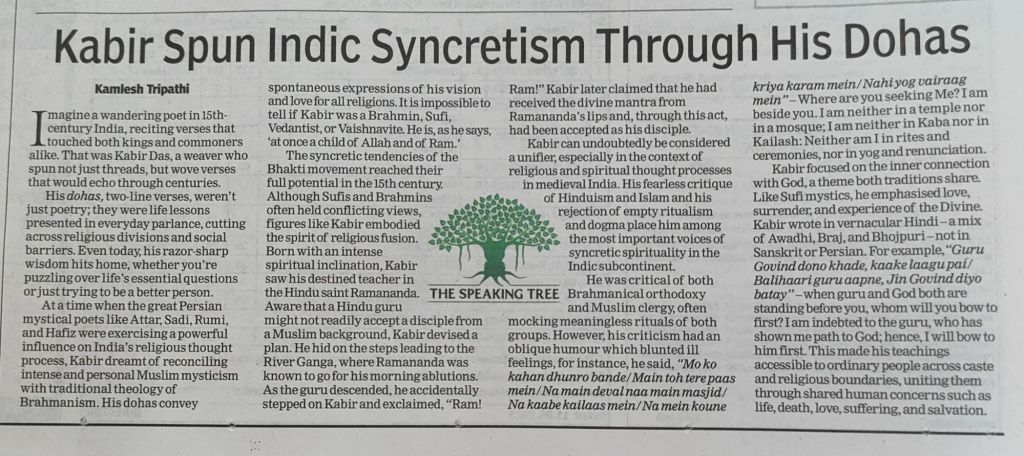


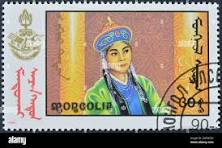
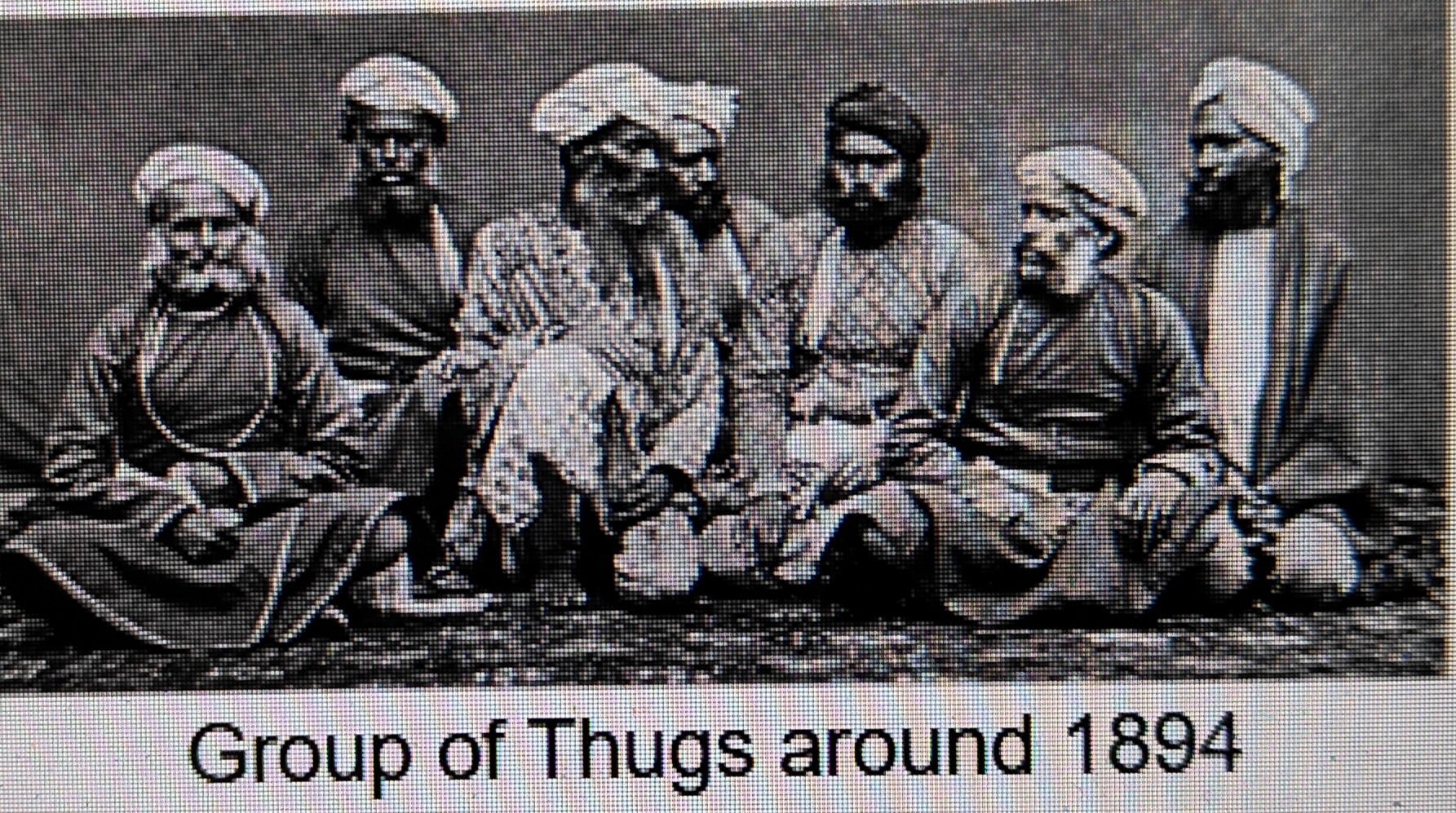



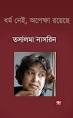


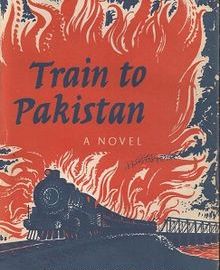


 Shravan charity mission