Even though I am a hindu I have known Jesus for a very long time and once he told me in confidence; up here we all are friends and it is only in planet earth that you fight over religion. MERRY CHRISTMAS.
ARTICLE- MIND THE BRAND IMAGE OF YOUR SURNAME
copyright@shravancharitymission

Oxford dictionary defines the word ‘surname’ as a ‘hereditary name common to all members of a family.’ And in India many families can have the same surname, provided it comes down their lineage and is acceptable to them. In other words surnames are just family, caste or even trade and trait names. But certain towering personalities take their surnames to unimaginable heights and some bring it down. But bringing it down is only okay till it doesn’t start affecting the generic surname in an adverse manner.
Let us start with the father of the nation’s surname- Gandhi. I would call it one of the tallest surnames of the world. Today, Gandhi is almost a synonym for non-violence, freedom struggle and nobility. Many Gandhis may have come and gone thereafter, but this one Gandhi, the father of the nation has stood the ground; thereby raising the brand image of this surname.
Today, some contemporary and tall Gandhis, appear in certain ways, to be in ethereal sync with the father of the nation’s surname, even if they are not up there. Just as Indra and Rajiv Gandhi became the Prime Minister of India, Sonia Gandhi the Congress President and Chairperson of the UPA and Rahul Gandhi Vice President of the Congress Party. And, so the overall brand image of surname ‘Gandhi’ deceptively conveys, as if all Gandhis are a towering personality by default. And in some way or the other guiding India, and could even be dynastical. Surname ‘Nehru’ too had a strong brand image but never got the critical mass to surge ahead, I guess.


It is typical of India, certain surnames always zoom you to certain professions, traits and banners. Just as the Khans, the three top stars of India; remind you of acting under the Bollywood banner- the famous trio of Shahrukh, Salman and Amir. But then one Khan could be known as a trouble maker that pulls down the brand image of other Khans. And, the Kapoors, who too remind you of the erstwhile number one family of Bollywood; Prithviraj and Raj Kapoor. And this is how certain brand images of certain surnames have been built.
And, then the Ambanis sounding generic to business; reminds you of Dhirubhai Ambani and his sons Mukesh and Anil now running the biggest business empire of the country. While we come to sports, Tendulkar, Gavaskar and Amarnath brothers connect you to cricket in the manner Amritraj brothers connected you to lawn tennis to name a few sportsmen.
And, I can’t move ahead unless I talk about one of India’s most famous surnames ‘Singh.’ It signifies the ruling class of India. Even the Sikhs as a community wear this famous surname. Many Rajas and erstwhile rulers have used this surname Singh and have given it a high brand image. Lord Rama too was from this clan. Some famous Singhs of India are Dr Karan Singh, Giani Zail Singh and Dr Manmohan Singh who unfortunately got reworded to Maunmohan Singh. But, then, where do we place the famous Yadav Singh involved in this huge scam in Noida.
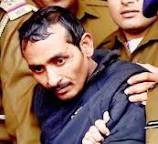
Then you have one of the oldest and strongest surnames in the name and style of ‘Yadav.’ It originates from Lord Krishna, a Yaduvanshi and therefore considered holy. But then how does it battle the whining cry of criminals such as Pappu Yadav, Lalu Yadav and the more recent ones Shiv Kumar Yadav involved in rape crime. And the lackluster Mulayam Singh Yadav and Akhilesh Yadav who need to do much more in the stream of governance. Probably boxer Vikas Yadav and psephologist-cum-politician Yogendra Yadav bring some reprieve.
‘Modi’ was never a strong surname brand in India. But there again one towering personality like Narendra Modi has made the surname ‘Modi’ as an international brand now having being picked as number two out of thirty most performing of the world leaders.
article: The magic art of ‘Chamchagiri’
Copyright@shravancharitymission


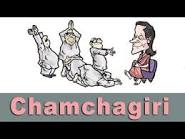
Word #chamchagiri (sycophancy) requires no introduction. Even the so-called English gentry of our country understands it well enough. And, in India, nothing meaty can be obtained without this art of arts, more precisely, the mother of all arts.
During our lifetime, we all aspire to become qualified professionals, such as an engineer, a doctor, a lawyer, a bureaucrat, a chartered accountant, and the list goes on and on, for which we go to professional colleges and even qualify through tough exams. But, for this particular ‘art’, you needn’t go to any University to obtain a degree. Yet it remains the most powerful tool of success in contemporary times.
BUT, WHY CHAMCHAGIRI?
Because it is a two-way requirement and has now become a status symbol. If you call yourself a VIP, you must have chamchas around you. Without chamchas, you don’t qualify as a VIP. Conversely, to survive, grow and secure yourself, you also need to do Chamchagiri. Perhaps that increases your tailwind and catapults you way ahead of the competition.
HISTORY OF CHAMCHAGIRI
It was always there. We have glaring examples of Chamchas operating out of darbars and courts of erstwhile Rajwaras and Kings, in tall Empires, and even in hallowed establishments.
But in earlier times, it was considered a menial habit almost close to beggary, which has now evolved into a refined and potent art that pays handsome lifetime dividends, which not everyone can learn. Its crafty students are found buzzing around the bureaucratic circles, in corporate corridors, swarming the political circles around parliament and Assembly, and at times it also seeps into the forbidden judiciary.
While some people through chamchagiri have escalated the growth of their career by coining catchy statements like ‘Indira is India and India is Indira’ made by Dev Kant Barua, the then Congress President. Others have shown it through self-arrival, traits and gestures. Such as a Chief Minister picking up the chappals of the Prime Minister’s son and making him wear them again, while they slipped out in a muddy field during a political campaign. Some more examples that stand tall in my memory are a Police officer touching a senior neta’s feet, in full Police uniform. Security personnel cleaning the sandal of the lady Chief Minister, and also the state-of-the-art gesture of prostrating in front of the lady Chief Minister of Tamil Nadu, Mrs J Jayalalithaa.
But a recent one that I saw looked a little desperate. This Chamcha had a red plate above his car number plate that read, ‘Vidhayak ka Pratinidhi’ (Representative of MLA). Trying to please his master by becoming his representative. Some Chamchas learn this telling art just to make a living and not to catapult their careers, which is still understandable, like the one above.
I have often thought about the genesis of this disease called ‘Chamchagiri.’ To me, it always appeared as a colonial and a feudal requirement for better survival. But the hangover of it has only increased when it should have gone down with the world becoming more business-like.
And, if chamchagiri can get you two square meals, I would send calling for the HRD ministry to at least announce a ‘Certificate course’ in the subject to reduce unemployment for now.
*
By Kamlesh Tripathi
*
https://kamleshsujata.wordpress.com
*
Share if you like it
*
Shravan Charity Mission is an NGO that works for poor children suffering from life threatening diseases. Should you wish to donate for the cause the bank details are given below:
NAME OF ACCOUNT: SHRAVAN CHARITY MISSION
Account no: 680510110004635 (BANK OF INDIA)
IFSC code: BKID0006805
*
Our publications
GLOOM BEHIND THE SMILE
ONE TO TANGO … RIA’S ODYSSEY
AADAB LUCKNOW … FOND MEMORIES
REFRACTIONS … FROM THE PRISM OF GOD
(CAN BE BOUGHT FROM ON LINE BOOK STORES OR WRITE TO US FOR COPIES)
*****
Article-THE FASCINATING TALE OF PARIJAAT TREE
Copyright@shravancharitymission
I LOVE MY INDIA-series


In the manner it is believed that Gods and Asuras (demons) claimed ‘Amrit’ by churning the ocean, in the great mythological event of Samundra Manthan,’ which happens to be the genesis of the world famous ‘Kumbh Mela’ now considered the biggest spiritual congregation on earth. In the same manner it is also believed that either Lord Krishna or Arjun brought the Parijaat Tree from heaven.
THE TREE
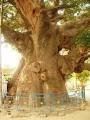
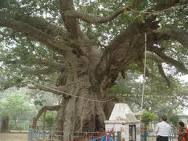
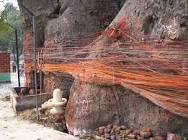
Parijaat is a Baobab tree considered sacred. Located in the village of Kintoor, near district Barabanki in Uttar Pradesh. In botanical terms Parijaat is known as Adansonia Digitata and is placed in a special category, because it does not produce either fruits or seeds and neither can its branch cuttings be planted to reproduce a second Parijaat tree. This is a unisex male tree and the botanist say there is no such tree anywhere else to be found. The leaves of the tree in the lower part have five tips like the fingers of a hand, while in the upper parts it has seven.
Parijat has beautiful small flowers, with snow-white petals, five in number and a red stalk and after drying the flowers take to a golden tinge. The flower blooms only at night and sheds before sunrise, and it also has medicinal value. Parijaat blossoms very occasionally, with very few flowers, but when it does, that is after the season of ‘Ganga Dashehra’ its fragrance spreads far and wide. The age of this tree is said to be some 1000 to 5000 years and the perimeter of the trunk is around 50 feet and the height around 45 feet.

Mythology
Kintoor is named after Kunti, mother of Pandavas and is about 38 km east, of district headquarters Barbanki. There also exists a number of ancient temples and their remains around this place. Near the temple established by Kunti, is this special tree called Parijaat which is said to have grown out of Kunti’s ashes.
There are many other legends about this tree that find popular acceptance. One being, Arjun brought it from heaven and Kunti offered its flowers to Lord Shiva.
There is also a sad romantic myth. According to which Princess Parijataka was in love with Sun, but her love was never reciprocated. Having lost in love, she committed suicide and from her ashes rose, the Parijaat tree. Since she is unable to bear the sight of her love during the day, she blooms only at night, and sheds the flowers as tears, before the sun rises.
Another story is, Lord Krishna brought this tree for his beloved queen Satyabhama or Rukmini. According to Harivansh Puraan the Parijaat Tree is a Kalpavriksh or wish bearing tree, which, apart from this one is only found in the heaven. New-weds visit the tree for blessings, and every Tuesday a fair is held where local people worship the tree.
Some myths go on to say, that the tree sheds its tears on the touch of the first rays of the sun. The fragrant flowers spread their fragrance in the entire area during the day, as a sign of undying love for her lover, the Sun.
Another myth has a romantic link, but is a bone of contention. According to this myth, the Parijat tree was planted in Indralok (the abode of Lord Indra) which was one of the gifts received from the Samudra Manthan. It was thus a celestial plant, not available on earth. To sow seeds of discord, Narada, brought some flowers from Indralok and gave them to Lord Krishna. And waited to see, to which of his wife Krishna gave the flowers to. Finally Krishna gave the flowers to Rukmini. On seeing this, Narada went to Satyabhama; Krishna’s other wife and told her about it.
On hearing this Satyabhama’s felt very jealous. Then Narada went on to give her a solution. He suggested that she should insist on Krishna getting the plant itself from Indralok and plant it at her home, instead of a few flowers. Satyabhama decided to do that, and when Krishna came to her quarters, she showed her anger and disappointment on the whole incident and insisted that he get the entire plant from Indralok.
True to his nature in the mean time Narada went and warned Indra that some earthlings were out to steal the celestial plant from his Indralok. Meanwhile when Krishna and Satyabhama after visiting Indralok were about to leave after picking a branch of the celestial Parijata tree, they were accosted by Indra. Soon a battle broke out between them in which Indra lost.
But Indra would not let it go so easily. He cursed the plant would never bear fruits again, though it might bear flowers, and thus since then, the Parijat tree does not bear any fruit.
Having brought the tree to Dwarka, Rukmini also took fancy to the tree, because of its flowers. So Krishna planted the tree in such a manner, that though the tree was planted at Satyabhama’s house, but when it bore flowers, they would fall in Rukmini’s home. Satyabhama had asked for the tree and she got it, and Rukmini wanted the flowers, and she had it too!
It is believed that the Parijat Tree located at Kintur Village, in Barabanki District of Uttar Pradesh belongs to the age of the Mahabharat. It is mentioned in the Mahabharat that Sri Krishna uprooted the Parijata Tree from the kingdom of Indira, the God of Devas, and presented it to his wife Rukmini.
Another legend in the Puranas suggests that Arjuna of Mahabarat brought the Parijata Tree for his mother Kunti, who offered it to Shiva.
By Kamlesh Tripathi
*****
*
https://kamleshsujata.wordpress.com
*
Share it if you like it
*
Shravan Charity Mission is an NGO that works for poor children suffering from life threatening diseases especially cancer. Should you wish to donate for the cause. The bank details are given below:
NAME OF ACCOUNT: SHRAVAN CHARITY MISSION
Account no: 680510110004635 (BANK OF INDIA)
IFSC code: BKID0006805
*
By Kamlesh Tripathi
*
https://kamleshsujata.wordpress.com
*
Share it if you like it
*
Shravan Charity Mission is an NGO that works for poor children suffering from life threatening diseases. Should you wish to donate for the cause the bank details are given below:
NAME OF ACCOUNT: SHRAVAN CHARITY MISSION
Account no: 680510110004635 (BANK OF INDIA)
IFSC code: BKID0006805
*
Our publications
GLOOM BEHIND THE SMILE
(The book is about a young cancer patient. Now archived in 7 prestigious libraries of the US, including, Harvard University and Library of Congress. It can also be accessed in MIT through Worldcat.org. Besides, it is also available for reading in Libraries and archives of Canada and Cancer Aid and Research Foundation Mumbai)
ONE TO TANGO … RIA’S ODYSSEY
(Is a book on ‘singlehood’ about a Delhi girl now archived in Connemara Library, Chennai and Delhi Public Library, GOI, Ministry of Culture, Delhi)
AADAB LUCKNOW … FOND MEMORIES
(Is a fiction written around the great city of Nawabs—Lucknow. It describes Lucknow in great detail and also talks about its Hindu-Muslim amity. That happens to be its undying characteristic. The book was launched in Lucknow International Literary Festival of 2014)
REFRACTIONS … FROM THE PRISM OF GOD
(Co-published by Cankids–Kidscan, a pan India NGO and Shravan Charity Mission, that works for Child cancer in India. The book is endorsed by Ms Preetha Reddy, MD Apollo Hospitals Group. It was launched in Lucknow International Literary Festival 2016)
TYPICAL TALE OF AN INDIAN SALESMAN
(Is a story of an Indian salesman who is, humbly qualified. Yet he fights his ways through unceasing uncertainties to reach the top. A good read not only for salesmen. The book was launched on 10th February, 2018 in Gorakhpur Lit-Fest. Now available in Amazon, Flipkart and Onlinegatha
(ALL THE ABOVE TITLES ARE AVAILABLE FOR SALE IN AMAZON, FLIPKART AND OTHER ONLINE STORES OR YOU COULD EVEN WRITE TO US FOR A COPY)
*****
Article: RAPE CRIME IN INDIA


Copyright@ shravan charity mission
By Kamlesh Tripathi
There is no doubt about the fact that someone runs India. But when a heinous crime such as rape is committed in a Uber Cab it appears no runs India. On the contrary it runs on its own inertia. As the powers to be, feign ignorance, about how the crime was committed and ask for one last chance to fight the menace. So, then who runs India? One answer could be these criminals who always succeed in hoodwinking the dispensation while committing such nasty crimes. In front of whom our meek society and the establishment appear as simpleton. Where, these men in high places come out with some face saving, stereotype statements such as the ‘culprit will not be spared’ and just then another culprit surfaces, even before the previous one is forgotten.
There was only one 9/11 in the US, and with that they learnt their lesson and ensured it never happened again. Surely, they must have done something worth the while, to fox and ensnare such criminals as a strong preventive. Similar mindset we find in Israel. But the story in India is quite different. For we are not aspiring that high as of now, as it doesn’t suit us and it could be grossly inconvenient for our establishment. Therefore, in India there is never a last time but always the next time and we deal it, with the gift of the gab.
REALITY CHECK
Today’s TOI reports 1706 cabbies were booked in the uber-crackdown. But then where was Delhi Police before this rape in the Uber-cab? I guess this is all, that Delhi Police knows in terms of prevention of crime–to book people after the crime. And, beyond this they don’t have the competence to deal with the subject. One can also make this out, from the many Delhi Police Commissioners that have come and gone. Not one has proposed a different unconventional, out-of-the-box plan to prevent rape crime in the capital and that itself exhibits the mental bankruptcy. Most have just kicked the can on the road. And, what can one poor commissioner of police anyway do, even the criminal knows.
GOVERNMENT’S INTENTION
Also, government’s intention to come out with a foolproof plan to prevent rape crime is a suspect across various political establishments that we have seen till now. Whether it is the will or mental or physical lethargy we don’t know. A management thought says if you keep taking the same action each time and expect a different result it will never happen. But, in case of rape crime forget the action; government has not even proposed a new template for prevention of rape crimes. And, that it self speaks volumes. Moreover, the new trend, that the higher courts need to direct the executive on all important issues to act is also alarming.
WAY FORWARD
The traditional method of policing is not effective in preventing rape crimes. Rather it is failing miserably. The traditional policemen are only good for writing FIRs. That too when they are told from the top and to some extent catching criminals at a later date. So we need something different. And can that be technology based is something we need to study? We should also emulate best police practices in terms of crime prevention from other countries and implement the same for rape crimes but all of this requires political will.
Political parties and governments need to realize. If you want to continue in power, merely being ahead of your nearest political rival is not going to be enough. You will have to beat them by leaps and bounds. And for that you will have to deliver what you’ve promised. Remember, the public of India has an elephant’s memory and coming to their aid are countless sound bites where you’ve promised prevention of rape crime. So wake up.
*****
Article: CORRUPTION- WHO CARES ABOUT ‘GLOBAL WATCHDOG TRANSPARENCY INTERNATIONAL’
By Kamlesh Tripathi
To hell with Transparency International, who cares, hum se zamana hai, zamane se hum nahi … must have been, the guiding-star of conman, non-engineer Yadav Singh who always believed in doing what he was not qualified to do- to be that quack engineer, in that; all powerful office of NOIDA authority. Only, because he believed in those famous lines of film Kaaliya, dialogued by millennia star Amitabh Bacchan “Hum jaha pe khade ho jaate hein, line wahi se shuru hoti hai”
And, so, with such devious crooks in the cupboard what could ‘Mother India’ do to save, her reputation. But prestigious ‘Global Watchdog Transparency International’ has brought some cheer to her.
In spite of such sustained overwhelming efforts to malign India by crooks like Yadav Singh; after about two decades India has ranked less corrupt than China in an annual corruption survey carried out by GWTL. So let us call it the ‘consolation prize’ as India beats China in something, something noble or ethical to be precise, and that is something, that should be cheered.
In its recent survey of 175 countries, India ranks an otherwise depressing 85th, and has improved in the index by jumping 10 places. On the other hand China has fallen 20 places to rank 100th despite mighty Chinese President Xi Jinping, considered by some the most powerful man on earth. More powerful than even the President of the US; who has unleashed a massive countrywide campaign against corruption, arresting a number of high profile military and political leaders. Something, unseen and unheard in India.
While both India and China around 2006-07 were at the same levels, this is the first time since rankings commenced in 1996 that India is now perceived less corrupt than China. But then what is this all about and how is it done. Well the corruption perception Index is compiled by experts like banking institutions, big companies and their organizations based on their view of corruption in public sector.
METHODOLOGY USED
GWTI’s annual report measures perceptions of various kinds of corruption by using a scale where 100 is the cleanest and 0 most corrupt. India’s score moved up to 38 from 36. But despite a slightly better showing by India, its contemporaries on the index are countries like Burkino Faso and Benin, nothing to boast about.
This Berlin based organization published its Corruption Perceptions index of 175 countries on Wednesday wherein Turkey and China showed the biggest drop in the index.
MASS MOVEMENTS DON’T GO FOR A WASTE, THEY ARE RECALLED AND REMEMBERED
India’s perception improvement is said to have triggered off to a heightened awareness and public antipathy on corruption from the time of Anna Hazare’s agitation in2012. This was followed by the first ever Lokpal bill being passed in parliament. India’s reputation has also seen to improve somewhat by the anti-corruption bills wending their way through the Parliament. Corruption was a major issue in the recently concluded general elections where fortunes swung for BJP, dumping Congress. And, even Arvind Kejriwal treaded to the corridors of power for a short while but could not sustain, all because of the anti-corruption movement.
CONCLUSION
The top performer in the chart is Denmark, at 92. So, “when will India be there or will India ever be there, is the bogging question. But, be that as it may; where is India heading to, with the ilk of ‘Yadav Singh’ as one of the prime pedigrees is the nagging question.
Transparency International announced it is campaigning for countries to adopt a procedure called “Unmask the corrupt,” urging the EU, US and G20 countries to follow Denmark’s lead. India too needs to join the bandwagon.
article: SHOULD TEXT BOOKS BE AVAILABLE, BOTH IN PRINT AND E-BOOK FORMAT FOR SCHOOL CHILDREN?
Copyright@shravancharitymission



SHOULD TEXT BOOKS BE AVAILABLE, BOTH IN PRINT AND E-BOOK FORMAT FOR SCHOOL CHILDREN?
Every day when I go for my morning walk. I see innumerable school children and some very young, carrying their heavy rucksacks filled with books up to a bursting point. Many out of them are even unable to walk in the normal manner because of the weight. Some even walk sluggishly and at times are helped by their nannies or their young parents or even their old grand parents. To, be on time for their school bus or any other mode of conveyance that they take. And I am more than sure this must be causing a great amount of unspoken dissonance in these children. Considering, the matrix and size of India. I consider this as an important issue to be looked at seriously. When it affects 52% of our population. The hypothesis finds more ground when we dig into some relevant statistics as given below.



MIX OF PRIMARY AND SECONDARY EDUCATION
India has approximately 113.8 million children attending primary school and another 88.5 million attending secondary. While PE (Primary Education) covers an age group of 5 to 14 years, SE (Secondary Education) covers children in the age group of 14-18 years. PE is up to class 8 and SE spills over to class 12 and beyond that is the HE (Higher Education)
Now, if we were to analyse the demographic structure of education in India in the table below, we would find:
| DEMOGRAPHIC STRUCTURE IN EDUCATION 2009 | |||
| AGE GROUP | EDUCATION GROUP | POPULATION IN CRORE | PERCENTAGE OF POPULATION |
| 0-3 | 7.5 | 6.50% | |
| 4-6 | Pre Primary | 7.9 | 6.80% |
| 7-11 | Primary (I-V) | 14.4 | 12.40% |
| 12-14 | Upper Primary (VI-VIII) | 8.5 | 7.30% |
| 15-18 | Secondary (IX-XI) | 9.7 | 8.30% |
| 19-24 | Higher (XII+) | 12.6 | 10.90% |
| Population | 60.6 | 52.30% | |
The population in the age group between 4 to 18 years, which comprises of Pre-Primary to Secondary level, is around 40 crore and around 35% of our total population; which is sizeable. So, at no cost can we condone their issues, especially when they are not adults and cannot speak for themselves. The existing state of play, where they use printed text books may not be that convenient, both for them and their families, but then they have no choice.
SOME MAJOR DISADVANTAGES OF PRINT TEXT BOOKS
- Bulky and heavy to carry and the weight only increases as you go up, the classes.
- Often these books are out of print especially when the text is modified or when a new session starts and are even sold at a premium.
- Print books are subject to wear and tear.
- Expensive as compared to an e-book, and with the rise in paper, print, labour and transportation costs the prices will only increase.
- May not be readily available at multiple locations.
- In many areas we don’t have regular electricity supply or have long power cuts, when you can’t read these books and this is a great disadvantage, during times of examinations and even routine study. Whereas, an e-book can be read in the dark.
INDIAN PRINT TEXT BOOK MARKET
If we take the Indian text book market it is at a level of $ 1.2 billion, with an addition of $510 million of supplementary books. However, private publishers have access to just 60% of the market. Given the monopoly of state boards and NCERT in 95% of the school text books. And a large chunk of schools are vernacular with local languages; and often out of print.
BENEFITS OF E-BOOKS
If Finland can say good bye to ‘cursive handwriting’ by 2016, why can’t India move towards e-books. When the advantages are so many,
- Except for a onetime cost of purchasing the e-reader the recurring costs of purchasing text books will reduce substantially. Government can incentivise purchase of e-readers.
- It will always be available, both in India and globally. And never out of print.
- You can even read in the dark.
- Very light to carry and not bulky.
- Will give even a rural child a sense of advancement in life.
- One book for many books: e-reader.
WAY FORWARD
The government should introduce e-book as a parallel option for children. To assess the ground reality the project could be piloted in a particular district or a state. It could even start with a particular subject. E-books could be readied out of print books and loaded in to simple e-readers, with white paper technology. The project can be launched in identified schools where it could be monitored by an IT instructor of the school along with teachers. And I am sure with this even our rural child will go global.
*
By Kamlesh Tripathi
*
https://kamleshsujata.wordpress.com
*
Share if you like it
*
Shravan Charity Mission is an NGO that works for poor children suffering from life threatening diseases. Should you wish to donate for the cause the bank details are given below:
NAME OF ACCOUNT: SHRAVAN CHARITY MISSION
Account no: 680510110004635 (BANK OF INDIA)
IFSC code: BKID0006805
*
Our publications
GLOOM BEHIND THE SMILE
ONE TO TANGO … RIA’S ODYSSEY
AADAB LUCKNOW … FOND MEMORIES
REFRACTIONS … FROM THE PRISM OF GOD
(CAN BE BOUGHT FROM ON LINE BOOK STORES OR WRITE TO US FOR COPIES)
*****
Snippet: Cricket, corruption and stubbornness- Lord God Vishnu in conversation with SRINIVASAN
Copyright@shravancharitymission
By Kamlesh Tripathi
A snippet
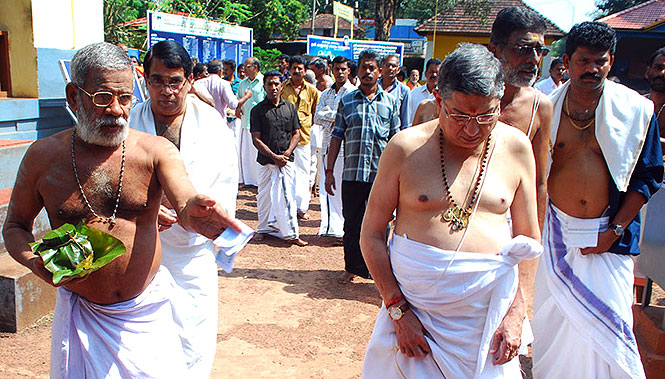
One day, Lord God Vishnu, during one of his sojourns came across N. Srinivasan, the ousted BCCI chief, while he was frequenting his temple-abode atop, a tall hillock. Srinivasan, was attired in a crisp dhoti, bare-chested, appearing that devout Hindu with a holy kumkum- tilak on his broad forehead. And, seeing this, Lord Vishnu was more than tempted to talk to him. He decided to start the conversation in a soft manner, when he disguised himself as a senior Pandit of the temple.
‘Hello Srini, nice to see you in the temple again, and what brings you here so often?’
‘Well my name is Srinivasan and not Srini. And I don’t believe in giving away, anything to anyone once I get it, so don’t take away the ‘vasan’ part of my name. And, by the way who are you, for I’ve never seen you in this temple in the recent past.’
‘Well–well. I am Lord Vishnu and I reside in all temples as the Lord God, and you all are my disciples. Since, I couldn’t have met you in my divine form because you’re facing some charges. I have come to meet you in human disguise. And, I find off late you have started coming to the temple quite regularly.’
‘Yes-yes, I am now inclined to come to the temple for regular blessings. It acts like a relieving bout of physiotherapy. Since I am bruised because of this stupid IPL case where they have got me involved, for conflict of interest. But, please don’t give me that cock and bull story of you being Lord Vishnu. Anyone, out here can recognize me as I’m a celebrity. And what do you want from me?’
‘Well, I am Lord God Vishnu, and I want you to return my name ‘Srinivasan’ to me.’
‘Maybe, your name is Vishnu, but mine is Srinivasan. So where is the conflict and why should I return your name?’
‘Well, Srinivasan is a synonym of Vishnu. And, there lies our conflict, so please return my name, as it stands for goodness.’
‘Return your name, what do you exactly mean by that?’
‘I mean return my holy name to me. Renounce it, and keep some other name matching your profile and characteristics.’
‘Are you mad? Why should I spoil another name. Instead let me keep spoiling this age old and tested name only. And, moreover, you have now become a synonym of me, and I am no more a synonym of yours.’
‘What do you mean?’ asked Lord God Vishnu in some surprise.
‘I mean, I have a wider copyright on the name ‘Srinivasan’ and its synonyms, then you. The very word Srinivasan reminds everyone of me and not you, anymore.’
‘And moreover as a policy I don’t return anything I get or I earn. Entire India knows how I am fighting tooth and nail for my position as the BCCI chief. And you can see it for yourself, I am not giving up.’
‘But, you are priding all the way, with my all powerful name. Moreover, you run the game of cricket considered a religion in this country, as its God, yet you don’t manage the game with any Godly instincts. Shouldn’t you just move away, on your own, till the entire enquiry gets over, and also surrender my name till your name is cleared.’
‘See I am a modern day ‘God’ and I manage affairs in modern ways. But you happen to be an ancient ‘God’ with ancient value system, and system of governance. So, you please carry on, and let’s meet after this bloody case is over.’
With the conversation heading nowhere, Lord God Vishnu decides to leave quite demoralized; is when Srinivasan makes a request,
‘God can you surrender your name ‘Vishnu?’
‘But why?’ asks God.
‘Because, I now realize I have a complete copyright on my name ‘Srinivasan’ and its synonym ‘Vishnu.’
*****
ARTICLE: CAR AND CAREER- A NECESSITY FOR THE WORKING CLASS
Copyright@shravancharitymission



DO INDIAN CAR ADS NEED TO BE MORE REALISTIC?
Yes, they do. As most car ads that you see in the electronic media have a slant towards those usages that you may once in a blue moon put your car to. And it could be in the range of 10-15% of the total car usage time. Something, like going on a quiet cross country drive, or driving intercity, excessive speeding like a mad man, showing off etc. etc.
Yet most car ads repeat, the same stale and brawny messages, of excessive speeding, high horse power availability, zipping speed and pick up from- 0 to 60 km in 5-6 seconds. When these should just be left as specs and features, since most cars in the same class, have it all. Not to forget the risky car acrobats as seen in some ads. The one I readily remember is a Maruti Swift ad, that cannot be performed on Indian roads and are risky for most people who drive them. As many may not even have the real sense of an impact, in case of an accident. Where, one in a million time, your life saving gadgets may not even operate. As it happened in the best of brands like the Toyota Fortuner, where, the court has awarded a huge compensation for an accident victim in U.P..
There are however some SUV ads that stand closer to reality. Such as negotiating rough terrains, going cross-country on a holiday, features like comfortable leg-room, plush interiors, turning radius, ramp angle, mileage- kitna deti hai and so on.
WE NOW REQUIRE A NEW AD PARADIGM
Advertisers should now sensitize themselves to the basic fact, that a majority of car sales happen in the metros. Which have huge traffic jams, with very low average running speed. Where, high speed or high horse power is of less consequence. Rather the irony is. Most of the times, in busy streets bikes and scooters overtake you and sometimes even a bicycle. And, perhaps you are too sheepish about that rogue auto-rickshaw that tends to push you off the track. For a dent in your car may cost you precious time, boss’s irritation as you’ll require leave to repair it and even money. But for him it’ll only be a hammer technology. And the Mary’s little lamb, the cycle rickshaw that might just deliver a deep scar with its jutting axle. So then what should a car ad convey is the big question?
MARRY CAR AND CAREER
Car and career is now a necessity for the working class in India. About 60-70 percent of the times, when we drive our car, it is for going to work. India thinks in cars. Many important decisions of our lives and career are taken while we drive. It is the second most expensive purchase after a house. So tweak the focus of car ads to be more holistic, realistic, contemporary, and in Indian conditions. As I should not be reminded of abroad while seeing an Indian car ad and I have some suggestions in this regard:
- Talk more of speeding dangers than speeding excitements.
- Teach the art of patience: Such as peacefully waiting in traffic jams and signals.
- How to avoid road rage. How to keep cool: Deep breathing
- How to manage scratches: Can we develop stickers that protect our vehicles from minor scratches and rub-offs of two wheelers and fellow cars that often lead to road rage
- Change Indian myth of masculinity: Speeding to safe driving tips.
- Can we integrate a bit of our office or personal life into the driving time.
- Apart from music can we have a gadget that can download thoughts, reminders while driving, send some voice mails along with some robotic operations.
- Remove generic technical myths about car technology.
- We sit in the car for long durations. How does it affect our health in terms of orthopaedic, muscles or even eye-sight.
- At what speed can we take potholes without damaging the car.
- At what speed can we cross a flooded street without the car stalling to improve on traffic jams in monsoon.
- Security net and connect-GPS.
- Driving tips for improving mileage.
- Talk about pedestrian rights.
- Professional tips for a professional drivers. Something like how to handle kids?
- Routine maintenance- many owners and drivers don’t even read the manuals.
- Explain new technology in layman’s language.
*
By Kamlesh Tripathi
*
https://kamleshsujata.wordpress.com
*
Share if you like it
*
Shravan Charity Mission is an NGO that works for poor children suffering from life threatening diseases. Should you wish to donate for the cause the bank details are given below:
NAME OF ACCOUNT: SHRAVAN CHARITY MISSION
Account no: 680510110004635 (BANK OF INDIA)
IFSC code: BKID0006805
*
Our publications
GLOOM BEHIND THE SMILE
(Archived in 7 prestigious libraries of the US, including, Harvard University and Library of Congress. It can also be accessed in MIT through Worldcat.org. Besides, it is also available for reading in Libraries and archives of Canada and Cancer Aid and Research Foundation Mumbai)
ONE TO TANGO … RIA’S ODYSSEY
(Archived in Connemara Library, Chennai and Delhi Public Library, GOI, Ministry of Culture)
AADAB LUCKNOW … FOND MEMORIES
(Launched in Lucknow International Literary Festival 2014)
REFRACTIONS … FROM THE PRISM OF GOD
(Co-published by Cankids–Kidscan, a pan India NGO and Shravan Charity Mission, that works for Child cancer in India. The book is endorsed by Ms Preetha Reddy, MD Apollo Hospitals Group. Book was launched in Lucknow International Literary Festival 2016)
(CAN BE BOUGHT FROM ON LINE BOOK STORES OR WRITE TO US FOR COPIES)
*****
ARTICLE: THE HYPE OF #LITERACY AND DILEMMA OF #EMPLOYABILITY
Copyright@shravancharitymission



DEFINITION OF LITERACY
Literacy, as defined in Census operations, is the ability to read and write with understanding in any language. A person who can merely read but cannot write is not classified as literate. Any formal education or minimum educational standard is not necessarily to be considered literate.
(UNESCO) has drafted a definition of literacy which is, “the ability to identify, understand, interpret, create, communicate, compute and use printed and written materials associated with varying contexts. Literacy involves a continuum of learning in enabling individuals to achieve their goals, to develop their knowledge and potential, and to participate fully in their community and wider society.”

The National Literacy Mission defines literacy as “acquiring the skills of reading, writing and arithmetic and the ability to apply them to one’s day-to-day life. The achievement of functional literacy implies (i) self-reliance in 3 R’s-reading, writing and arithmetic, (ii) awareness of the causes of deprivation and the ability to move towards amelioration of their condition by participating in the process of development, (iii) acquiring skills to improve economic status and general well being, and (iv) imbibing values such as national integration, conservation of environment, women’s equality, observance of small family norms.”
According to the latest report released on 31 March 2011 the literacy rate of India has increased to 74%. This means a decadal growth of around 10 %.
BUT CAN MERE LITERACY GUARANTEE EMPLOYMENT?
Is the moot point, as literacy only provides general ability to read, write and a sense of better awareness, but jobs, require deeper and varied skills that need to be created. In the recent Times Ascent edition of 27th November, I read; in the just concluded PAN-IIM World Management Conference held at IIM-KOZHIKODE our HRD Minister Smriti Zubin Irani harping on some appreciative facts about India as a routine lullaby.
That India is one of the world’s largest democracies and according to some studies 57% of our population is under 30. Our average age is expected to be less than China and the US by 2050. This means more workers, or in other words, a demographic dividend. India has a large pool of workforce that is predominantly English-speaking. 4.4 million Graduates join the Indian job market annually, so there is no shortage of skilled workers in our country. So be it.
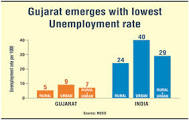
But then do we have appropriate jobs for all as she has not spoken about those unpleasant figures of unemployment. ILO indicates sluggishness in the job market over the last two years where jobless rate could be around 3.8% this year which sounds optimistic. On a more historic note the unemployment rate has been hovering around 6-8 % on an average over the last decade or so. So, can one say, each time when literacy levels have gone up unemployment hasn’t come down?
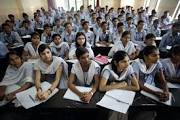
This necessitates, we should take up skill building on fast track. Which horrifyingly comes up in India at a later stage of our educational system. And considering, the alarming school dropout rate of 40% with more girls facing the brunt, this should start at secondary school level.
CAUSE OF SYSTEMIC WORRY
It is worrying to see, important ministers making isolated parroted statements in coveted milieus like IIMs and IITs, where even otherwise everything is hunky dory. And it goes without saying the stark reality continues to remain as it is and nothing much has changed on the ground. So the big question is how will the additional annual workforce of 4.4 million per annum be adjusted in the job market, and what is the road map for creating such jobs each year. Time has come when at least 74% of the literate Indians would want to know end-to-end on how these jobs would be created, before one brags about the English speaking workforce of 4.4 million and the young India. The central point therefore is the job-creators and the workforce creators of India need to meet on one platform to align, which is still missing.
In any case most IIT and IIM graduates or post graduates won’t remain unemployed, rather would be gainfully employed. But what is more worrying is the lower end of the pyramid that will bear the brunt of unemployment.
Considering the present unemployment rate. HRD minister would have done well by initiating a dialogue with those states and departments where huge vacancies are lying unfilled, especially teachers and police constables. The low hanging fruits. Which I guess is also the baby of HRD ministry. Needful to mention teacher appointments in some states have been subjected to scams, and appointments cancelled subsequently.
INDUSTRY INTERFACE
One of the biggest sources of employment in any country, with India being no exception is through business and industries. Where, according to the World Bank we are still at an agonizing 142 in the ease of doing business out of 189 countries. And time taken for registration of a business is currently at 27 days that needs to be cut down to one day, as in Canada and New Zealand.
Government intends to go online on approvals, for over 200 state and central permits by April next year which is laudable. Currently 81 state level clearances and another 133 at the central level are being put on line and out of these more than 50 relate to railway ministry, alone. But the big question remains; whether we can set up industries at a pace matching 4.4 million jobs a year, which will only increase by leaps and bounds. The answer as of now is no and that necessitates searching for other alternatives. And so; where is the MEA proposal (Ministry of External Affairs) if we were to export our workforce to various aging countries about which our Prime Minister talks so often? And which new countries have been identified where our young English speaking workforce can go and work safely with proper work permits and visas, in a safe manner. I guess, the two distinguished ladies Sushma Swaraj and Smriti Irani should meet on this agenda and at least identify the countries, and if for some reason it happens to be Germany, Smriti should not think of replacing German by Sanskrit.
THE ROUTE AHEAD
For brand India, literacy to full employment will be a long and arduous walk, considering its size and scale. Where, premier institutions such as IIT and IIM should also brainstorm to show the way out. And we will have to figure out other avenues also, where I guess PM Narendra Modi’s team needs to come together on one platform.
*
By Kamlesh Tripathi
*
Share if you like it
*
Shravan Charity Mission is an NGO that works for poor children suffering from life threatening diseases. Should you wish to donate for the cause the bank details are given below:
NAME OF ACCOUNT: SHRAVAN CHARITY MISSION
Account no: 680510110004635 (BANK OF INDIA)
IFSC code: BKID0006805
*
Our publications
GLOOM BEHIND THE SMILE
ONE TO TANGO … RIA’S ODYSSEY
AADAB LUCKNOW … FOND MEMORIES
REFRACTIONS … FROM THE PRISM OF GOD
(CAN BE BOUGHT FROM ON LINE BOOK STORES OR WRITE TO US FOR COPIES)
*****
 Shravan charity mission