Category Archives: short article

The Atomic Bombing of Japan in World War II, 1945

Copyright@shravancharitymission

    The United States dropped atomic bombs on the Japanese cities of Hiroshima and Nagasaki in August 1945 only to hasten the end of the World War II in the Pacific. Although, it was the first, and to date the only, actual use of such weapons of “mass destruction,” the mushroom clouds have hung over every military and political policy since then.

    Less than five months after the sneak attack by the Japanese on Pearl Harbour, in Hawaii the Americans launched a small carrier-based bomber raid against Tokyo. While the attack was good for the American morale, it accomplished little other than to demonstrate to the Japanese that their shores were not invulnerable. Later in the war, U.S. bombers were able to attack the Japanese home islands from bases in China, but it was not until late 1944 that the United States could mount a sustained bombing campaign.

    Because of the distance to Japan, American bombers could not reach the targets and safely return to friendly bases in the Pacific until the island-hopping campaign had captured the Northern Mariana Islands located in (Western north pacific islands). From bases on the Mariana Islands, long-range Boeing B-29 Super-fortresses conducted high altitude bombing runs on November 24, 1944. On March 9, 1945, an armada of 234 B-29s descended to less than 7,000 feet and dropped 1,667 tons of incendiaries on Tokyo. By the time the fire storm finally abated, a sixteen-square-mile corridor that had contained a quarter million homes was in ashes, and more than 80,000 Japanese, mostly civilians, lay dead. Only the Allied fire-bombing of Dresden, in East Germany, the previous month, had killed 135,000, people that exceeded the destruction of the Tokyo raid.

    Both Tokyo and Dresden were primarily civilian rather than military targets. Prior to World War II, international law regarded the bombing of civilians as illegal and barbaric. But after several years of warfare, however, neither the Allies nor the Axis distinguished between military and civilian air targets. Interestingly, while a pilot could drop tons of explosives and firebombs on civilian cities, an infantryman often faced a court-martial for even minor mistreatment of non-combatants. 

    Despite the air raids and their shrinking territory outside their home islands, the Japanese fought on. Their warrior code did not allow for surrender, and soldiers and civilians alike often chose suicide rather than giving up. By July 1945, the Americans were launching more than 1200 bombing sorties a week against Japan. The bombing had killed more than a quarter million (about 2.50 lacs) and left more than nine million homeless. Still, the Japanese gave no indication of surrender as the Americans prepared to invade the home islands.

    While the air attacks and plans for a land invasion continued in the Pacific, a top-secret project back in the United States was coming to fruition. On July 16, 1945, the Manhattan Engineer District successfully carried out history’s first atomic explosion. When President Harry Truman learned of the successful experiment, he remarked in his diary, “It seems to be the most terrible thing ever discovered, but it can be made the most useful.” 

    Truman realized that the “most terrible thing” could shorten the war and prevent as many as a million Allied casualties, as well as untold Japanese deaths, by preventing a ground invasion of Japan. On July 27, the United States issued an ultimatum: surrender or the U.S. would drop a “super weapon.” But Japan refused. In the early morning hours of August 6, 1945, a B-29 Superfortress Bomber named Enola Gay piloted by Lieutenant Colonel Paul Tibbets lifted off from Tinian Island in the Marianas. Aboard was a single atomic bomb weighing 8,000 pounds and containing the destructive power of 12.5 kilotons of TNT. Tibbets headed his plane towards Hiroshima, selected as the primary target because of its military bases and industrial areas. It also had not yet been bombed to any extent, so it would have provided an excellent evaluation of the bomb’s destructive power. 

    At 8:15 A.M., the Enola Gay dropped the device called “Little Boy.” A short time later, Tibbets noted, “A bright light filled the plane. We turned back to look at Hiroshima. The city was hidden by that awful cloud … boiling up, mushrooming.” The immediate impact of Little Boy killed at least 70,000 Hiroshima residents. Some estimates claim three times that number but exact figures are impossible to calculate because the blast destroyed all of the city’s records. 

    Truman again demanded that Japan surrender. After three days when there was no response, a B-29 took off again from Tinian with an even larger atomic bomb aboard. When the crew found their primary target of Kokura obscured by clouds, they turned towards their secondary target, Nagasaki. At 11:02 A.M. on August 9, 1945, they dropped the atomic device known as “Fat Man” that destroyed most of the city and killed more than 60,000 of its inhabitants. 

    Conventional bombing raids were also conducted against other Japanese cities on August 9, and five days later, 800 B-29s raided across the country. On August 15 (Tokyo time), the Japanese finally accepted unconditional surrender. World War II was over. 

    Much debate has occurred since the atomic bombings. While some evidence indicates that the Japanese were considering surrender, but far more information indicates otherwise. Apparently the Japanese were planning to train civilians to use rifles and spears to join the military in resisting a land invasion. Protesters of the Atomic bombings ignore the conventional incendiaries dropped on Tokyo and Dresden that claimed more casualties. Some historians even note that the losses at Hiroshima and Nagasaki were far fewer than the anticipated Japanese casualties from an invasion and continued conventional bombing. 

    Whatever the debate, there can be no doubt that the dropping of the atomic bombs on Japan shortened the war. The strikes against Hiroshima and Nagasaki are the only air battles that directly affected the outcome of a conflict. Air warfare, both before and since, has merely supplemented ground fighting. As confirmed by the recent Allied bombing of Iraq in Desert Storm and in Bosnia, air attacks can harass and make life miserable for civilian population, but battles and wars continue to be decided by ground forces. 

    In addition to hastening the end of the war with Japan, the development and use of the atomic bomb provided the United States with unmatched military superiority—at least for a brief time, until the Soviet Union exploded their own atomic device. The two superpowers then began competitive advancements in nuclear weaponry that brought the world to the edge of destruction. Only tentative treaties and the threat of mutual total destruction kept nuclear arms harnessed, producing the Cold War period in which the U.S., along with the USSR, worked out their differences through conventional means.

By Kamlesh Tripathi

*

https://kamleshsujata.wordpress.com

*

Share it if you like it

*

Shravan Charity Mission is an NGO that works for poor children suffering from life threatening diseases especially cancer. Our posts are meant for our readers that includes both children and adults and it has a huge variety in terms of content. We also accept donations for our mission. Should you wish to donate for the cause. The bank details are given below:

NAME OF ACCOUNT: SHRAVAN CHARITY MISSION

Account no: 680510110004635 (BANK OF INDIA)

IFSC code: BKID0006805

*

Our publications

GLOOM BEHIND THE SMILE

(The book is about a young cancer patient. Now archived in 7 prestigious libraries of the US, including, Harvard University and Library of Congress. It can also be accessed in MIT through Worldcat.org. Besides, it is also available for reading in Libraries and archives of Canada and Cancer Aid and Research Foundation Mumbai)  

ONE TO TANGO … RIA’S ODYSSEY

(Is a book on ‘singlehood’ about a Delhi girl now archived in Connemara Library, Chennai and Delhi Public Library, GOI, Ministry of Culture, Delhi)

AADAB LUCKNOW … FOND MEMORIES

(Is a fiction written around the great city of Nawabs—Lucknow. It describes Lucknow in great detail and also talks about its Hindu-Muslim amity. That happens to be its undying characteristic. The book was launched in Lucknow International Literary Festival of 2014)

REFRACTIONS … FROM THE PRISM OF GOD

(Co-published by Cankids–Kidscan, a pan India NGO and Shravan Charity Mission, that works for Child cancer in India. The book is endorsed by Ms Preetha Reddy, MD Apollo Hospitals Group. It was launched in Lucknow International Literary Festival 2016)

TYPICAL TALE OF AN INDIAN SALESMAN

(Is a story of an Indian salesman who is, humbly qualified. Yet he fights his ways through unceasing uncertainties to reach the top. A good read not only for salesmen. The book was launched on 10th February, 2018 in Gorakhpur Lit-Fest. Now available in Amazon, Flipkart and Onlinegatha)

RHYTHM … in poems

(Published in January 2019. The book contains 50 poems. The poems describe our day to day life. The book is available in Amazon, Flipkart and Onlinegatha)

(ALL THE ABOVE TITLES ARE AVAILABLE FOR SALE IN AMAZON, FLIPKART AND OTHER ONLINE STORES OR YOU COULD EVEN WRITE TO US FOR A COPY)

*****


THE TWELVE JYOTIRLINGAS

Copyright@shravancharitymission

    Just in case you have not read Shivpurana let me tell you it is all about Lord Shiva. It contains 24,000 verses divided into twelve Samhitas. Out of these one of them Roudra-samhita narrates the following story.

    Once, Brahma tried to claim superiority over the trinity of Shiva, Mahavishnu and Brahma himself. He vented this thought of his to Mahavishnu. When, suddenly, a huge column of fire, burst out of the earth, between the two and rose into the sky. Brahma flew upwards on his swan to see the tip of the fire while Vishnu as a boar dug deep into the earth to see the lower end of the pillar of fire. Both failed in their mission and returned. It was then that Shiva appeared at the centre of the fire column. This was the first Jyotirlinga.

    Jyotirlingas, represent the beginningless and the endless Stambha or Pillar, indicating the infinite nature of Shiva. In India, there are twelve Jyotirlinga shrines as follows:

  1. SOMNATH

    The Somnath Temple of Gujarat, is near Veraval in the Kathiawad district of Saurashtra. This is a Jyotirlinga shrine. This region is also known as Prabhasa Thirtha. According to the Shivpurana, the Moon God married all the 27 daughters of Daksha Prajapati. However, he liked Rohini more than others. Rohini’s sisters complained to Prajapati, who cursed the moon. As a result, the moon lost his radiance. So, he went to Veraval and prayed to Lord Shiva in a temple. And by the Lord’s grace, he regained his lost shine. Since then, the temple came to be known as Somnath Mandir. It was ransacked and destroyed as many as seventeen times by Muslim invaders, and each time, it was resurrected.

  1. MALLIKARJUNA

    This Jyotirlinga can be seen in Shrishailam Mountain, on the banks of the Krishna River in Andhra Pradesh. According to Shiva Purana, Lord Ganesha got married before Kartikeya. So, an angry Kartikeya left the place and went to Shri-shailam. Seeing their son offended, Shiva and Parvati followed him there. Shiva assumed the form of a Jyotirlinga and resided there as Mallikarjuna. Where, Mallika means Parvati, while Arjuna is another name for Shiva.

  1. MAHAKALESHWAR

    This Jyotirlinga is located on the banks of river Kshipra in the dense Mahakal forest in Ujjain, Madhya Pradesh. It was known as Avantika in ancient times. Legend has it that a five-year-old boy by the name Shrikar was amazed at the devotion of King Chandrasena of Ujjain towards Lord Shiva. Shrikar took a stone and started worshipping it as Shiva. Many people tried to discourage him in different ways, but his devotion only grew. Pleased by his devotion, Lord Shiva assumed the form of a Jyotirlinga and decided to stay in the Mahakal forest.

  1. OMKARESHWAR

    This Jyotirlinga is also in Madhya Pradesh. It is situated on an island called Mandhata or Shivapuri in the Narmada River. The island is shaped like an ‘Om,’ as written in Sanskrit. Omkareshwar means ‘Lord of Omkara,’ the sacred syllable Om. Once, when the Asuras defeated the Devas, the latter prayed to Lord Shiva. Pleased with their prayer, the Lord emerged in the form of Omkareshwar and defeated the Asuras.

  1. VAIDYANATH

    Also known as Vaijnath or Baidyanath, this Jyotirlinga is located at Deogarh in Jharkhand. This place is also called Chitaa-bhoomi. According to a well-known legend, Ravana once requested Lord Shiva to reside in Sri Lanka permanently. Shiva gave him a Jyotirlinga and told him that he should not place it on the ground before reaching Lanka. On the way, however, Ravana felt an urgent need to relieve himself. When a young boy who appeared there offered to hold the lingam in the meantime. The boy, was no one else but Vishnu in disguise, placed the lingam on the ground and disappeared, for he knew that Shiva’s presence would make wicked Ravana’s Lanka invincible. The lingam got fixed to the spot. On his return, Ravana saw what had happened. To propitiate Shiva, he cut off nine of his ten heads. But Shiva joined the severed heads of Ravana’s body, like a Vaidya. Hence the name of the Jyotirlinga became Vaidynath.

  1. BHIMA SHANKAR

    This Jyotirlinga is located on the banks of Bhima River in the Sahyadri region of Pune, Maharashtra. Legend has it that Kumbhakarna’s son, Bhima, vowed to take revenge on Lord Vishnu who, in His incarnation as Rama had killed his father. He began a severe penance and Lord Brahma was pleased and granted him immense power. Soon, Bhima the demon started creating havoc in the world. In the end, Lord Shiva reduced him to ashes. The Gods were overjoyed. On their request, Shiva made the place one of his abodes and manifested himself in the form of Bhima-shankar Jyotirlinga.

  1. RAMESWARAM

    This Jyotirlinga is located on the island of Rameswaram in Tamil Nadu. On his way to Sri Lanka, Sri Rama had stopped at Rameswaram, and worshipped a linga that he had made out of sand. Lord Shiva blessed Rama and then remained at Rameswaram in the form of Jyotirlinga.

  1. NAGESH

    The Nageshwar or Nagnath Jyotirlinga is situated on an island near Dwarka in Gujarat. The place is also known as Daaru-kavan. This Jyotirlinga is known far and wide for protecting devotees from poisons of all kinds. As per the legend in the Shivapurana, a demon by the name of Daruka imprisoned Supriya, a devotee of Shiva. On Supriya’s advice, the other prisoners began chanting, ‘Aum Namah Shivaya.’ Daaruka was enraged on hearing this chant. He sprang forward to kill Supriya. Suddenly, Lord Shiva appeared and put an end to the demon. He then remained on the island as a Jyotirlinga.

  1. VISHVANATH

    The Jyotirlinga at Vishvanath temple is located in Varanasi or Kashi, one of the most ancient cities of the world. It is believed that it was here that the pillar of fire representing Lord Shiva’s endless power broke through the earth’s crust and splayed towards heaven. The faithful are certain that those who die here attain salvation. The original Visvanath temple was destroyed and rebuilt many times. Emperor Aurangzeb destroyed the temple for the last time and built the Gyanvapi Mosque in its place. Later Ahilabai Holkar constructed the present temple adjacent to the mosque.

  1. TRIMBAK

     The Trimbakeshwar temple is located about 30 km from Nashik in Maharashtra, near the Brahmagiri Mountain. It is from this mountain that the river Godavari, also called the Gautami Ganga flows. Long ago, Maharishi Gautam, through his penance, had obtained an everlasting supply of grains. Some Gods became envious of the Maharishi and sent a cow to the granary. The cow was accidentally killed by the sage. On realising this, Maharishi requested Lord Shiva to get the premises purified. Shiva asked Ganga to flow through Nashik and He himself remained there as Trimbakeshwar Jyotirlinga.

  1. KEDARNATH

    At a height of 3,583 metres (12,000 feet) in Uttarakhand, the Kedarnath temple is located on the Rudra Himalaya range. It opens for only six months in a year, from May to November. During the other months, all the mountains here get fully snow clad. It is believed that in ancient times, Lord Shiva, pleased by the penance of Rishis Nara and Narayana, who were incarnations of Lord Vishnu, made a permanent abode in Kedarnath in the form of a Jyotirlinga. Many believe that the Pandavas had come here after the Mahabharta war to pray to Lord Shiva.

  1. GHRISHMESHVAR

    The Ghrish-meshvar or Ghush-meshvar Jyotirlinga is located in a village named Verul, near Aurangabad in Maharashtra. The place is not far from the famous Ajanta and Ellora caves. According to Shivapurana, there was a man named Sudharm, who had two wives, Sudeha and Ghush-ma. They were sisters. When Ghushma bore a son to Sudharm, Sudeha became jealous and threw the baby into a lake. Ghushma, a devotee of Shiva, prayed to the Lord and got her son back. On Sudharm’s request, Shiva manifested himself in the form of Jyotirlinga at that spot and assumed the name Ghush-meshvar.

By Kamlesh Tripathi

*

https://kamleshsujata.wordpress.com

*

Share it if you like it

*

Shravan Charity Mission is an NGO that works for poor children suffering from life threatening diseases especially cancer. Our posts are meant for our readers that includes both children and adults and it has a huge variety in terms of content. We also accept donations for our mission. Should you wish to donate for the cause. The bank details are given below:

NAME OF ACCOUNT: SHRAVAN CHARITY MISSION

Account no: 680510110004635 (BANK OF INDIA)

IFSC code: BKID0006805

*

Our publications

GLOOM BEHIND THE SMILE

(The book is about a young cancer patient. Now archived in 7 prestigious libraries of the US, including, Harvard University and Library of Congress. It can also be accessed in MIT through Worldcat.org. Besides, it is also available for reading in Libraries and archives of Canada and Cancer Aid and Research Foundation Mumbai)  

ONE TO TANGO … RIA’S ODYSSEY

(Is a book on ‘singlehood’ about a Delhi girl now archived in Connemara Library, Chennai and Delhi Public Library, GOI, Ministry of Culture, Delhi)

AADAB LUCKNOW … FOND MEMORIES

(Is a fiction written around the great city of Nawabs—Lucknow. It describes Lucknow in great detail and also talks about its Hindu-Muslim amity. That happens to be its undying characteristic. The book was launched in Lucknow International Literary Festival of 2014)

REFRACTIONS … FROM THE PRISM OF GOD

(Co-published by Cankids–Kidscan, a pan India NGO and Shravan Charity Mission, that works for Child cancer in India. The book is endorsed by Ms Preetha Reddy, MD Apollo Hospitals Group. It was launched in Lucknow International Literary Festival 2016)

TYPICAL TALE OF AN INDIAN SALESMAN

(Is a story of an Indian salesman who is, humbly qualified. Yet he fights his ways through unceasing uncertainties to reach the top. A good read not only for salesmen. The book was launched on 10th February, 2018 in Gorakhpur Lit-Fest. Now available in Amazon, Flipkart and Onlinegatha)

RHYTHM … in poems

(Published in January 2019. The book contains 50 poems. The poems describe our day to day life. The book is available in Amazon, Flipkart and Onlinegatha)

(ALL THE ABOVE TITLES ARE AVAILABLE FOR SALE IN AMAZON, FLIPKART AND OTHER ONLINE STORES OR YOU COULD EVEN WRITE TO US FOR A COPY)

*****


SHORT STORY: JOB ENRICHMENT … learn it from a tehsildar in Karnataka

Copyright@shravancharitymission

    Some bureaucrats have the gumption to transform even small positions, into powerful and meaningful ones, and some indolent bureaucrats would transform, even powerful and prestigious positions, into inconsequential jobs. So it’s all in the incumbent, and depends on the person occupying the chair. This is where B.N. Girish a tehsildar in Karnataka’s Shivamogga district outshines his bureaucratic fraternity. He shows the way as to how an upright bureaucracy can make a difference.

    As a tehsildar in Karnataka’s Shivamogga district he went undercover as a labourer to work at a stone quarry and check for irregularities then returned to raid the place.  This exemplifies the critical role of bureaucracy in India. Since January 2017, BN Girish has been on a crusade against illegal stone and sand mining in the taluk, following up on tips from local people, conducting raids and seizing vehicles. Sand mining owing to the construction boom has become a lucrative industry in rural India but the state’s limited capacity for regulation has inflicted severe ecological damage to hills, rivers and forests.

    Imagine, for a moment, if a corrupt or indifferent officer was in Girish’s place. He would have made enough black money for himself, and at the same time damaged the environment. Now size up the damage such rapacious mining in just one taluk wreaks on the environment, and the losses to public exchequer; and the weakening of law and order machinery when illegal activity gains impunity and profit. Then multiply this by the thousands of taluks in India and we will get a sense of the importance of the lower bureaucracy. Politics was meant to take power to the people and cut through red tape. But in India the Neta-Babu nexus has for long taken advantage of hierarchical inequalities to subvert the system.

    Says Girish. “Locals told me about the Gejjinahalli quarry in March. I had raided it earlier. But labourers stopped work when they spotted my vehicle. Miners have such a strong network that when unknown vehicles enter, they stop work and flee. That’s when I decided to go in disguise so that no one would recognise me.”

    He adds further. “They realised he was an officer only when he started the inquiry. Gejjenahalli has several stone quarries, but I could raid only four as the men in other places got information and ran away. I plan to use a similar method to tackle illegal sand mining problem in the taluk.”

    Such illegal happenings have run their course and have to change now. The RTI Act, the spread of education, ubiquitous smartphones, rising aspirations and worries over environmental degradation are empowering communities to speak up against illegality. It also helps when honest officers come to the aid of hapless citizens. Not surprisingly, the struggles of bureaucrats like Ashok Khemka against successive Haryana governments struck a chord with the public. Perhaps, a new breed of civil servants with a can-do attitude has emerged in recent years with popular following that even rivals politicians. But the likes of B.N. Girish who go the extra mile must become the norm, not the exception.

   So, a big salute to Tehsildar B.N Girish.

By Kamlesh Tripathi

*

https://kamleshsujata.wordpress.com

*

Share it if you like it

*

Shravan Charity Mission is an NGO that works for poor children suffering from life threatening diseases especially cancer. Our posts are meant for our readers that includes both children and adults and it has a huge variety in terms of content. We also accept donations for our mission. Should you wish to donate for the cause. The bank details are given below:

NAME OF ACCOUNT: SHRAVAN CHARITY MISSION

Account no: 680510110004635 (BANK OF INDIA)

IFSC code: BKID0006805

*

Our publications

GLOOM BEHIND THE SMILE

(The book is about a young cancer patient. Now archived in 7 prestigious libraries of the US, including, Harvard University and Library of Congress. It can also be accessed in MIT through Worldcat.org. Besides, it is also available for reading in Libraries and archives of Canada and Cancer Aid and Research Foundation Mumbai)  

ONE TO TANGO … RIA’S ODYSSEY

(Is a book on ‘singlehood’ about a Delhi girl now archived in Connemara Library, Chennai and Delhi Public Library, GOI, Ministry of Culture, Delhi)

AADAB LUCKNOW … FOND MEMORIES

(Is a fiction written around the great city of Nawabs—Lucknow. It describes Lucknow in great detail and also talks about its Hindu-Muslim amity. That happens to be its undying characteristic. The book was launched in Lucknow International Literary Festival of 2014)

REFRACTIONS … FROM THE PRISM OF GOD

(Co-published by Cankids–Kidscan, a pan India NGO and Shravan Charity Mission, that works for Child cancer in India. The book is endorsed by Ms Preetha Reddy, MD Apollo Hospitals Group. It was launched in Lucknow International Literary Festival 2016)

TYPICAL TALE OF AN INDIAN SALESMAN

(Is a story of an Indian salesman who is, humbly qualified. Yet he fights his ways through unceasing uncertainties to reach the top. A good read not only for salesmen. The book was launched on 10th February, 2018 in Gorakhpur Lit-Fest. Now available in Amazon, Flipkart and Onlinegatha)

RHYTHM … in poems

(Published in January 2019. The book contains 50 poems. The poems describe our day to day life. The book is available in Amazon, Flipkart and Onlinegatha)

(ALL THE ABOVE TITLES ARE AVAILABLE FOR SALE IN AMAZON, FLIPKART AND OTHER ONLINE STORES OR YOU COULD EVEN WRITE TO US FOR A COPY)

*****


ARTICLE: A REQUIEM FOR TIGRESS AVNI

Copyright@shravancharitymission

    One of the notable events of 2018 highlighted by the Press on New Year’s eve was the death of the five year old tigress, Avni, in Maharastra. Animal-lovers and activists, among them a Union Minister, alleged that is was a deliberate act of killing, of a fine specimen of an endangered species. The feeling of loss was heightened by the fact that Avni is survived by two two-month old cubs.

    It looked as if the newspapers revelled in the controversy that erupted after the tragic end of Avni. From November 3 to December 10, day after day, sparks flew and the Press carried reports of allegations by the activists and defensive statements by the alleged perpetrators of the crime, namely, the State Government at the ministerial level and the sharp-shooters, father and son. The Union Minister wanted nothing less than the State Forest Minister’s scalp, to wit, his dismissal or resignation. The latter retorted that those who held animal life more precious than human life should show the way.

    According to one report, the big cat had killed at least 7 out of the 13 who had died during May 2016 and August 2017, in the Loni village Relegaon tehsil, Yavatmal District in the Vidharbha region of Maharastra. In August 2017, Avni made short work of at least three persons. The Forest Department then decided to do away with the animal but the activists in protest took the matter  to the High Court, and later to the Supreme Court. Both the courts nodded their assent for killing the animal. After prolonged but futile efforts at capturing Avni, the State Government engaged two sharp-shooters, Shafath Ali Khan and his son Asghar Ali from Hyderabad, and they accomplished the job on November 2.

    Meanwhile, the activists were up in arms. They maintained that the animal should have been captured rather than killed. They alleged that the land was cleared of wildlife to help a private party to set up a factory. Some experts held that several Acts were violated in the diabolic process. Asghar Ali claimed that the animal was shot dead in self-defence. The Hyderabad Forensic Laboratory, on December 10, 2018, confirmed the attempt at tranquilising the animal.

    It would appear that so much vehemence in the protest against the killing  and the excessive publicity given to the controversy were disproportionate to the intrinsic importance  of the event itself. The tiger, no doubt a marvel of creation, is not ecologically very important. The Project Tiger, which was launched in 1973, to preserve wildlife, set out with the aim in moderate terms viz. ‘to maintain a viable population of tigers in India for scientific, economic, aesthetic, cultural and ecological values.’ It must be said to the credit of the Government that, unlike other Asian countries such as Japan and Korea where the species is extinct, the wildlife conservation measures have paid up in India. From 2500 in 1972, the tiger population increased to 3642 in 2001-2002; the number of ‘Tiger Reserves’ rose from 9, covering an area of 14,000 sq km in 1973 to 27, covering an area of 37,761 sq. km, spread over 17 states.

TIGER IN LITERATURE

    ‘Magnificent’ is the word that comes to my mind when one thinks of this gorgeously striped (in yellow and black) creature. It has inspired poets, novelists and animal lovers no end. William Blake (1757-1827) in a popular poem, gave expression to his wonder:

    ‘What immortal hand or eye could frame thy fearful symmetry?’

    He poised the following question for which we have no answer to this day. ‘Did He who made the lamb make thee?’

    The tiger as an object of worship, as Valmik Thapar points out in his informative book ‘The Cult of the Tiger’ (Penguin 2002), had been prevalent from Siberia to South-East Asia; perhaps, it continues here and there.

    In India, Shiva of the Trinity of Gods, wears the tiger skin vyaagrasina ambara-dhara, as Sri Shankara says in his Shivaashtakam. Even as the Sabarimala Temple of Kerala is in the news, one remembers that the deity brought a tiger home when the Queen of Pandalam wanted Ayyappa to fetch tiger’s milk from the forest. The Supreme Goddess Durga has for her vehicle the tiger.

    The literature on the tiger is vast; about 55 books are listed  as of Indian origin in Valmik Thapar’s book.

    While sympathising with the two surviving cubs, let us have a Requeim for Avni.

RELIGIOUS BELIEF AND CONSERVATION

    India in the 21st century has over one billion people and also boasts of half of the world’s tiger population, half of the world’s Asiatic elephant population and along with these charismatic species, an array of other living organisms. Could any of this have been possible without a core belief in nature? Could the Asiatic elephant have been safe without a belief in Ganesha, the elephant God? Could the tiger have survived had it not been the vehicle of Durga? And would the snake, the turtle, the peacock, the cranes and some of our trees have survived without a bank of beliefs in them?  –Valmik Thapar.

(This article was written by V.S.R.K. and published in Bhavan’s journal in recent months)

Posted by Kamlesh Tripathi

*

https://kamleshsujata.wordpress.com

*

Share it if you like it

*

Shravan Charity Mission is an NGO that works for poor children suffering from life threatening diseases especially cancer. Our posts are meant for our readers that includes both children and adults and it has a huge variety in terms of content. We also accept donations for our mission. Should you wish to donate for the cause. The bank details are given below:

NAME OF ACCOUNT: SHRAVAN CHARITY MISSION

Account no: 680510110004635 (BANK OF INDIA)

IFSC code: BKID0006805

*

Our publications

GLOOM BEHIND THE SMILE

(The book is about a young cancer patient. Now archived in 7 prestigious libraries of the US, including, Harvard University and Library of Congress. It can also be accessed in MIT through Worldcat.org. Besides, it is also available for reading in Libraries and archives of Canada and Cancer Aid and Research Foundation Mumbai)  

ONE TO TANGO … RIA’S ODYSSEY

(Is a book on ‘singlehood’ about a Delhi girl now archived in Connemara Library, Chennai and Delhi Public Library, GOI, Ministry of Culture, Delhi)

AADAB LUCKNOW … FOND MEMORIES

(Is a fiction written around the great city of Nawabs—Lucknow. It describes Lucknow in great detail and also talks about its Hindu-Muslim amity. That happens to be its undying characteristic. The book was launched in Lucknow International Literary Festival of 2014)

REFRACTIONS … FROM THE PRISM OF GOD

(Co-published by Cankids–Kidscan, a pan India NGO and Shravan Charity Mission, that works for Child cancer in India. The book is endorsed by Ms Preetha Reddy, MD Apollo Hospitals Group. It was launched in Lucknow International Literary Festival 2016)

TYPICAL TALE OF AN INDIAN SALESMAN

(Is a story of an Indian salesman who is, humbly qualified. Yet he fights his ways through unceasing uncertainties to reach the top. A good read not only for salesmen. The book was launched on 10th February, 2018 in Gorakhpur Lit-Fest. Now available in Amazon, Flipkart and Onlinegatha)

RHYTHM … in poems

(Published in January 2019. The book contains 50 poems. The poems describe our day to day life. The book is available in Amazon, Flipkart and Onlinegatha)

(ALL THE ABOVE TITLES ARE AVAILABLE FOR SALE IN AMAZON, FLIPKART AND OTHER ONLINE STORES OR YOU COULD EVEN WRITE TO US FOR A COPY)

*****


BOOK CORNER: LIFE’S AMAZING SECRETS–How to Find Balance and Purpose in Your Life … by Gaur Gopal Das

Copyright@shravancharitymission

Khidki (Window)

–Read India Initiative—

This is only an attempt to create interest in reading. We may not get the time to read all the books in our lifetime. But such reviews, talk and synopsis will at least convey what the book is all about.

LIFE’S AMAZING SECRETS

How to find balance and purpose in your life

By Gaur Gopal Das

Publisher: Penguin Ananda

Price Rs 250

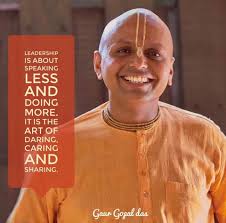
    GGD (Gaur Gopal Das) is one of the most popular and widely followed monks of present times. Especially, when it comes to the young corporate crowd, who incessantly indulge in social media. GGD is an Electrical Engineer by qualification. After a brief stint with Hewlett Packard, he decided to live as a monk in an ashram, in downtown, Mumbai. And he has now remained there for twenty two years. Where, he has learnt the antiquity of ancient philosophy, and the modernity of contemporary psychology, to become a life coach to thousands in the city.

    He has been travelling all around the world since 2005, to share his wisdom with corporate executives, universities and even charities. In 2016, his global popularity exploded, when he took to online discourses. The purpose of this publication is, to make the readers find a right balance in their lives. The book is inundated with quotes and thoughts from various important and renowned personalities just as most motivational books.

   The book is a little over 200 pages. Largely written in easy and lucid language. There is no piercing story line in this. But the narration takes you through both the visible and the non-visible merry-go-round of life quite royally. To be true. It impacts you positively by the time you complete it. In other words it delights you intrinsically.

    The narration begins with the monk first having a meal with one of his wealthy bhakt, or you could say devotee, Hariprasad, in short Harry and his wife at their posh residence in South Mumbai. Thereafter harry offers to drop GGD to his place of stay and that is how this interesting conversation starts between Harry and the monk in Harry’s luxurious car.

    In such motivational books, one normally comes across, interesting life-lessons that carry the essence of life. The idea of course is to present the amrit post the manthan (churning) that one can straightaway drink, and in that manner this book is no different. And without being a spoiler, since the book, has only, recently been published, let me in a jiffy take you through the book.

    It has some twenty chapters. With blessings of ISKCON and his divine grace A.C. BHAKTIVEDANTA SWAMI SRILA PRABHUPADA whose teachings have been the foundation of this book, coupled with the monks own experiences.

    The book starts with an interesting content list that deals with a gamut of virtues relevant for life, such as, moral, divine, spiritual and behavioural niches that cut across religions. Broadly speaking it is not a Hindu book, as one might make out from the picture of GGD, clad in his saffron robe. On the contrary it is a friendly present to human beings.

    In the journey of life any human being, and that includes even the toughest, will surely come across monotony, clutter, dread, fear, wrath, happiness, dislocation and even temper. The narration has answers for all situations.

    The book is rich with many potent thoughts that will help one take on this tough world. There are interesting chapters that deal with; seeing beyond the obvious; life’s journey; growing through gratitude; why worry; spiritual practice; how to talk sensitively; a virtuous vision; correcting cautiously; forgiveness; fruitful associations; competitive crossroads; self-discovery; decoding spirituality at work; integrity and character; selfless service; family first; the nation narrative and the holy aspect of service that brings joy in life.

    Although GGD is a Hindu monk. Yet he has not propagated, the spirituality route of Hinduism so blatantly. That shows he wants to connect, basically with human beings, and not Hindus alone. A kind of global talent on spiritualism.

    He cites some very beautiful examples such as that of, Joshua Bell, the internationally renowned, violinist, in tag with the experiment of Washington Post. The author also goes on to say he gets up at 4 a.m. for his morning meditation and talks about his strong morning ritual that gives him incessant focus for the day.

    He dwells on thoughts and ideas and how they can change a man’s life where he gives his own example. He says, we are not human beings having spiritual experiences; we are spiritual beings having human experiences—nicely plays with words.

    Most human beings have three things in common—we are all stuck, we all have a journey to complete and we all have a destination. He also goes on to describe God—there is one God. But is identified differently across different cultures.

    After every chapter the author has given a chapter summary which is very interesting as it comes in bullet points. The author raises an interesting question. Does spirituality kill ambition? Well, I’m not going to divulge the answer to the questions raised by the author in this book and the readers will only have to find their own answers by reading the book. The book is available both in print and e-book format. The book also has a few worksheets at the end. A kind of recall test.

    If I need to describe the book, keeping my life in mind. I would say the book touches my soul several times during the day. Say from the time I open my eyes in the morning, till the time I close my eyes in the night.

    The book has been appreciated by, film star and M.P. Hema Malini and also by Central Minister in the BJP Government, Nitin Gatkari.

   I would give the book seven out of ten. It is a worthwhile read. Especially, for corporate executives who face a lot of ups and downs in terms of their career and even their future. It is not a literary masterpiece but yes it conveys some very valuable lessons.

Synopsis by Kamlesh Tripathi

*

https://kamleshsujata.wordpress.com

*

Share it if you like it

*

Shravan Charity Mission is an NGO that works for poor children suffering from life threatening diseases especially cancer. Our posts are meant for our readers that includes both children and adults and it has a huge variety in terms of content. We also accept donations for our mission. Should you wish to donate for the cause. The bank details are given below:

NAME OF ACCOUNT: SHRAVAN CHARITY MISSION

Account no: 680510110004635 (BANK OF INDIA)

IFSC code: BKID0006805

*

Our publications

GLOOM BEHIND THE SMILE

(The book is about a young cancer patient. Now archived in 7 prestigious libraries of the US, including, Harvard University and Library of Congress. It can also be accessed in MIT through Worldcat.org. Besides, it is also available for reading in Libraries and archives of Canada and Cancer Aid and Research Foundation Mumbai)  

ONE TO TANGO … RIA’S ODYSSEY

(Is a book on ‘singlehood’ about a Delhi girl now archived in Connemara Library, Chennai and Delhi Public Library, GOI, Ministry of Culture, Delhi)

AADAB LUCKNOW … FOND MEMORIES

(Is a fiction written around the great city of Nawabs—Lucknow. It describes Lucknow in great detail and also talks about its Hindu-Muslim amity. That happens to be its undying characteristic. The book was launched in Lucknow International Literary Festival of 2014)

REFRACTIONS … FROM THE PRISM OF GOD

(Co-published by Cankids–Kidscan, a pan India NGO and Shravan Charity Mission, that works for Child cancer in India. The book is endorsed by Ms Preetha Reddy, MD Apollo Hospitals Group. It was launched in Lucknow International Literary Festival 2016)

TYPICAL TALE OF AN INDIAN SALESMAN

(Is a story of an Indian salesman who is, humbly qualified. Yet he fights his ways through unceasing uncertainties to reach the top. A good read not only for salesmen. The book was launched on 10th February, 2018 in Gorakhpur Lit-Fest. Now available in Amazon, Flipkart and Onlinegatha)

RHYTHM … in poems

(Published in January 2019. The book contains 50 poems. The poems describe our day to day life. The book is available in Amazon, Flipkart and Onlinegatha)

(ALL THE ABOVE TITLES ARE AVAILABLE FOR SALE IN AMAZON, FLIPKART AND OTHER ONLINE STORES OR YOU COULD EVEN WRITE TO US FOR A COPY)

*****


ARTICLE: WAS NON-VIOLENCE SOLELY RESPONSIBLE FOR INDIA’S INDEPENDENCE OR WAS THERE SOMETHING MORE TO IT?

Copyright@shravancharitymission


    Hello friends welcome to this edition of editorial compass. A lot has been spoken about India achieving independence through the “Brahmastra” of non-violence. But then, there also, happens to be another view-point that calls non-violence a myth.

    The line between historical facts and fiction is more porous than students of history might think. It is not uncommon for countries to create self-suiting or sanitised historical narratives. As George Orwell once said, “Who controls the past controls the future. Who controls the present controls the past.”

    India’s Republic Day Parade this year featured for the first time veterans of the Indian National Army (INA) that waged an armed struggle against the British colonial rule. Four INA veterans in their 90s rode a jeep in the parade that, paradoxically, showcased the life experiences of the apostle of non-violence, Mahatma Gandhi, through 22 tableaux.

    India has long embellished or distorted how it won independence. The incongruous juxtaposition of the INA along with Gandhi at the parade inadvertently highlighted that. The INA veterans participation, in fact, helped underscore the Indian republic’s founding myth—that it won independence only through non-violence. This myth has been deeply instilled in the minds of almost all Indians since their school days.

    Surely, the Gandhi-led, non-violent independence movement played a critical role. Both in galvanising grassroots resistance to British rule and also in helping to gain independence. But the decisive factor was the protracted World War-II, which reduced to ruins large swaths of Europe and Asia, especially the imperial powers. The war between the Allied and Axis powers killed 80 million, or 4% of the global population of that time.

    Despite the Allied victory, a devastated Britian was in no position to hold on to its colonies, including “crown jewel” India. Even colonies, where, there were no grassroots resistance to colonial rule, won independence in the post-World War-II period.

    The British had dominated India through a Machiavellian divide-and-rule strategy. Their exit came only after they had reduced one of the world’s wealthiest economies to one of its poorest. Indeed, they left after they had looted to their heart’s content, siphoning out, at least 9.2 trillion (or 44.6 trillion$) pounds, according to economist Utsa Patnaik’s recent estimate.

    Had the post-1947 India been proactive and forward-looking in securing its frontiers. It could have averted both the Kashmir and Himalayan border problems. China was in deep turmoil until October 1949, and India had ample time and space to assert control over the Himalayan borders. But India’s pernicious founding myth of non-violence gave rise to a pacifist country that believed it could get peace merely by seeking peace, instead of building the capability to defend peace.

    Here’s the paradox: countless numbers of Indians died to the excesses of British colonial regime. Just in the man made Bengal famine of 1942-45, six to seven million starved to death (a toll far greater than the “Holocaust”) due to the British war policy of diverting resources away from India. Britian sent Indian soldiers in large numbers to fight its dirty wars elsewhere, including the two world wars, and many died while serving as cannon fodder. Indeed, the present Indian republic was born in blood in blood: As many as a million civilians died in a senseless violence and millions more were uprooted in the British-contrived partition.

    Yet the myth of India uniquely charting and securing its independence through non-violence was propagated by the interiors of the Raj, the British trained “brown sahibs.” No objective discourse was encouraged post-1947 on the multiple factors—internal and external—that aided India’s independence.

    The hope of Indian independence was first kindled by Japan’s victory in the 1904-05 war with Russia—the first time an Asian nation comprehensively defeated a European rival. However, it was the world war that Adolf Hitler unleashed—with imperial Japan undertaking military expeditions in the name of freeing Asia from white colonial rule—that acted as the catalyst. An emboldened Gandhi serve a “Quit India” notice on the British in 1942.

    While the Subhas Chandra Bose-led INA could not mount a formidable threat to a British colonial military, overflowing with Indian recruits. The Bombay mutiny and other sepoy revolts of 1946 triggered by INA prisoners’ trials undermined Britain’s confidence in sustaining the Raj, hastening its exit. Yet, independent India treated INA soldiers shabbily with many abandoned into penury.

    Against this background the rehabilitation of Bose and the INA has long been overdue. Prime Minister Narendra Modi has done well to initiate the process, however low-key, to give Bose and the INA their due, including recently renaming one Andaman island after Bose and two other Andaman islands to honour INA sacrifices. Modi even wore the INA cap to address a public meeting in Andaman on the 75th anniversary of Bose’s hoisting of the tricolour there.

    Recognising unsung heroes is an essential step towards re-balancing the historical narrative. A rule-based international order, premised on non-violence remains a worthy aspirational goal. But Indian romancing of non-violence as an effective political instrument crimped national security policy since independence. The country hewed to pacifism (with Prime Minister Jawaharlal Nehru publicly bewailing in 1962 that China had “returned evil for good”) and frowned on materialism (even after China surpassed India’s GDP in 1984-85).

    The burden of its quixotic national philosophy has imposed enduring costs, including an absence of a strategic culture, as the late American analyst George Tanham famously pointed out. Lack of a culture to pursue a clear strategic vision and policy hobbles India’s ambition to be a great power.

    Synopsis derived out of an article titled “The Non-violence Myth—India’s founding story bestows upon it a quixotic national philosophy and enduring costs by geostrategist, Brahma Chellany in TOI.

Posted by Kamlesh Tripathi

*

https://kamleshsujata.wordpress.com

*

Share it if you like it

*

Shravan Charity Mission is an NGO that works for poor children suffering from life threatening diseases especially cancer. Our posts are meant for our readers that includes both children and adults and it has a huge variety in terms of content. We also accept donations for our mission. Should you wish to donate for the cause. The bank details are given below:

NAME OF ACCOUNT: SHRAVAN CHARITY MISSION

Account no: 680510110004635 (BANK OF INDIA)

IFSC code: BKID0006805

*

Our publications

GLOOM BEHIND THE SMILE

(The book is about a young cancer patient. Now archived in 7 prestigious libraries of the US, including, Harvard University and Library of Congress. It can also be accessed in MIT through Worldcat.org. Besides, it is also available for reading in Libraries and archives of Canada and Cancer Aid and Research Foundation Mumbai)  

ONE TO TANGO … RIA’S ODYSSEY

(Is a book on ‘singlehood’ about a Delhi girl now archived in Connemara Library, Chennai and Delhi Public Library, GOI, Ministry of Culture, Delhi)

AADAB LUCKNOW … FOND MEMORIES

(Is a fiction written around the great city of Nawabs—Lucknow. It describes Lucknow in great detail and also talks about its Hindu-Muslim amity. That happens to be its undying characteristic. The book was launched in Lucknow International Literary Festival of 2014)

REFRACTIONS … FROM THE PRISM OF GOD

(Co-published by Cankids–Kidscan, a pan India NGO and Shravan Charity Mission, that works for Child cancer in India. The book is endorsed by Ms Preetha Reddy, MD Apollo Hospitals Group. It was launched in Lucknow International Literary Festival 2016)

TYPICAL TALE OF AN INDIAN SALESMAN

(Is a story of an Indian salesman who is, humbly qualified. Yet he fights his ways through unceasing uncertainties to reach the top. A good read not only for salesmen. The book was launched on 10th February, 2018 in Gorakhpur Lit-Fest. Now available in Amazon, Flipkart and Onlinegatha)

RHYTHM … in poems

(Published in January 2019. The book contains 50 poems. The poems describe our day to day life. The book is available in Amazon, Flipkart and Onlinegatha)

(ALL THE ABOVE TITLES ARE AVAILABLE FOR SALE IN AMAZON, FLIPKART AND OTHER ONLINE STORES OR YOU COULD EVEN WRITE TO US FOR A COPY)

*****



LETTER OF GURUDEV RABINDRANATH TAGORE: SHAZADPUR JULY 1891

Copyrigt@shravancharitymission

Khidki (Window)

–Read India Initiative—

This is only an attempt to create interest in reading. We may not get the time to read all the books in our lifetime. But such reviews, talk and synopsis will at least convey what the book is all about.

SHAZADPUR JULY 1891

    There is another boat at this landing-place and on the shore in front of it a crowd of village women. Some are evidently embarking on a journey and the others seeing them off; infants, veils, and grey hairs are all mixed up in the gathering.

    One girl in particular attracts my attention. She must be about eleven or twelve; but buxom and sturdy, she might pass for fourteen or fifteen. She has a winsome face—very dark, but very pretty. Her hair is cut short like a boy’s, which well becomes her simple, frank, and alert expression. She has a child in her arms and is staring at me with unabashed curiosity, and certainly no lack of straightforwardness or intelligence in her glance. Her half-boyish, half-girlish manner is singularly  attractive—a novel blend of masculine nonchalance and feminine charm. I had no idea there were such types among our village women in Bengal.

    None of this family, apparently, is troubled with too much bashfulness. One of them has unfastened hair in the sun and is combing it out with her ringers, while conversing about their domestic affairs at the top of her voice with another, on board. I gather she has no other children except a girl, a foolish creature who knows neither how to behave or talk, nor even the difference between kin and stranger. I also learn that Gopal’s son-in-law has turned out a neér-do-well, and that his daughter refuses to go to her husband.

    When, at length, it was time to start, they escorted my short-haired damsel, with plump shapely arms, her golden bangles and her guileless, radiant face, into the boat. I could divine that she is returning from her father’s to her husband’s home. They all stood there, following the boat with their gaze as it cast off, one or two wiping their eyes with the loose end of their saris. A little girl, with her hair tightly tied into a knot, clung to the neck of an older woman and silently wept on her shoulder. Perhaps, she was losing a darling Didimani who joined in her doll games and also slapped her when she was naughty …

    The quiet floating away of a boat on the stream seems to add to the pathos of a separation—it is so like death—the departing one lost to sight, those left behind returning to their daily life, wiping their eyes. True, the pang lasts but a while, and is perhaps already wearing of both in those who have gone and those who remain,–pain being temporary, oblivion permanent. But none the less it is not the forgetting, but the pain which is true; and every now and then, in separation or in death, we realise how terribly true.

Posted by Kamlesh Tripathi

*

https://kamleshsujata.wordpress.com

*

Share it if you like it

*

Shravan Charity Mission is an NGO that works for poor children suffering from life threatening diseases especially cancer. Our posts are meant for our readers that includes both children and adults and it has a huge variety in terms of content. We also accept donations for our mission. Should you wish to donate for the cause. The bank details are given below:

NAME OF ACCOUNT: SHRAVAN CHARITY MISSION

Account no: 680510110004635 (BANK OF INDIA)

IFSC code: BKID0006805

*

Our publications

GLOOM BEHIND THE SMILE

(The book is about a young cancer patient. Now archived in 7 prestigious libraries of the US, including, Harvard University and Library of Congress. It can also be accessed in MIT through Worldcat.org. Besides, it is also available for reading in Libraries and archives of Canada and Cancer Aid and Research Foundation Mumbai)  

ONE TO TANGO … RIA’S ODYSSEY

(Is a book on ‘singlehood’ about a Delhi girl now archived in Connemara Library, Chennai and Delhi Public Library, GOI, Ministry of Culture, Delhi)

AADAB LUCKNOW … FOND MEMORIES

(Is a fiction written around the great city of Nawabs—Lucknow. It describes Lucknow in great detail and also talks about its Hindu-Muslim amity. That happens to be its undying characteristic. The book was launched in Lucknow International Literary Festival of 2014)

REFRACTIONS … FROM THE PRISM OF GOD

(Co-published by Cankids–Kidscan, a pan India NGO and Shravan Charity Mission, that works for Child cancer in India. The book is endorsed by Ms Preetha Reddy, MD Apollo Hospitals Group. It was launched in Lucknow International Literary Festival 2016)

TYPICAL TALE OF AN INDIAN SALESMAN

(Is a story of an Indian salesman who is, humbly qualified. Yet he fights his ways through unceasing uncertainties to reach the top. A good read not only for salesmen. The book was launched on 10th February, 2018 in Gorakhpur Lit-Fest. Now available in Amazon, Flipkart and Onlinegatha)

RHYTHM … in poems

(Published in January 2019. The book contains 50 poems. The poems describe our day to day life. The book is available in Amazon, Flipkart and Onlinegatha)

(ALL THE ABOVE TITLES ARE AVAILABLE FOR SALE IN AMAZON, FLIPKART AND OTHER ONLINE STORES OR YOU COULD EVEN WRITE TO US FOR A COPY)

*****


LONELINESS–I’M IN ELECTRONIC COMPANY

Copyright@shravancharitymission


    My home is like a neat diagram of wilderness now. Things are only quiet here. Life’s hullabaloo is over. There aren’t any vital unanswered questions left in my life to be unraveled any more … barring the ultimate one—death. But surprisingly, I have been handed out, some stiff situations in life that I never asked for in the first place, and that of course includes, certain wayward realities … the most striking one being, loneliness. After deep introspection, it appears to me like those divine semaphores. There is a world of emptiness around me.  It’s taken me more than sixty years to reach this stage. But I didn’t have to struggle for it, the way I struggled for my career and the upbringing of my family. It came on its own, uninvited. I stay in a megapolis—infested largely by a swarm of people occupying those tall blaring buildings all around me. Yet I’m all alone. And what an irony. For in a jungle, I would have been with, unknown but ferocious animals. But in the megapolis I’m with familiar yet unpredictable human beings. Nonetheless, I really can’t decipher which is more dangerous.

    I have a time deprived family. They keep extremely busy. Mostly fire-fighting. So one day I approached God. Thinking he’ll give me company. But then he too has to run the universe, and so, he is very busy in his own world and doesn’t have time for me. Finally, I’ve learnt to live life king size, alone. So I keep busy one way or another. They say life has become easy, yet mind is never at rest. There is always something spooky about life that keeps hovering around me.

    No one comes to my house, and when I attempt to visit someone I’m told they are going out. The timidity to interface … thus continues. I’m told this happens with most of us but we rarely speak about it.

    But, ever since, flesh and blood averted me. My electronic friends have come to my rescue. I have them in droves, steadying my life. I start my day with them. In the night they take that extra pain to put me off to sleep. The smart phones and TV sets bring, so many of my electronic friends to my home each day.

    I now have electronic friends in the likes of Mr Bachchan visiting me all day long showing little gimmicks loaded with huge parables. Where, Arnab Goswami tells me all about the world. Even, Prime Minister Narendra Modi walks into my house in his own electronic attire to tell me how he is serving India and even Rahul Gandhi and Donald Trump are not far away. To top it all, entire Youtube, Bollywood and even Hollywood is at my command.

    Loneliness is the biggest scourge of the present day world. Yet life finds solutions for each catastrophe. Just as you can’t think of a life without flesh and blood, you can’t think of a life without your own electronic friends anymore. Can you?

    This is to cajole all those who suffer because of loneliness. Rise up … get up … do something to kill it.

***

  By Kamlesh Tripathi

*

https://kamleshsujata.wordpress.com

*

Share it if you like it

*

Shravan Charity Mission is an NGO that works for poor children suffering from life threatening diseases especially cancer. Our posts are meant for our readers that includes both children and adults and it has a huge variety in terms of content. We also accept donations for our mission. Should you wish to donate for the cause. The bank details are given below:

NAME OF ACCOUNT: SHRAVAN CHARITY MISSION

Account no: 680510110004635 (BANK OF INDIA)

IFSC code: BKID0006805

*

Our publications

GLOOM BEHIND THE SMILE

(The book is about a young cancer patient. Now archived in 7 prestigious libraries of the US, including, Harvard University and Library of Congress. It can also be accessed in MIT through Worldcat.org. Besides, it is also available for reading in Libraries and archives of Canada and Cancer Aid and Research Foundation Mumbai)  

ONE TO TANGO … RIA’S ODYSSEY

(Is a book on ‘singlehood’ about a Delhi girl now archived in Connemara Library, Chennai and Delhi Public Library, GOI, Ministry of Culture, Delhi)

AADAB LUCKNOW … FOND MEMORIES

(Is a fiction written around the great city of Nawabs—Lucknow. It describes Lucknow in great detail and also talks about its Hindu-Muslim amity. That happens to be its undying characteristic. The book was launched in Lucknow International Literary Festival of 2014)

REFRACTIONS … FROM THE PRISM OF GOD

(Co-published by Cankids–Kidscan, a pan India NGO and Shravan Charity Mission, that works for Child cancer in India. The book is endorsed by Ms Preetha Reddy, MD Apollo Hospitals Group. It was launched in Lucknow International Literary Festival 2016)

TYPICAL TALE OF AN INDIAN SALESMAN

(Is a story of an Indian salesman who is, humbly qualified. Yet he fights his ways through unceasing uncertainties to reach the top. A good read not only for salesmen. The book was launched on 10th February, 2018 in Gorakhpur Lit-Fest. Now available in Amazon, Flipkart and Onlinegatha

(ALL THE ABOVE TITLES ARE AVAILABLE FOR SALE IN AMAZON, FLIPKART AND OTHER ONLINE STORES OR YOU COULD EVEN WRITE TO US FOR A COPY)

*****


SHORT STORY: TWO ARJUN TREES

Copyright@shravancharitymission

Two Arjun Trees

    Kuvera was a great devotee of Lord Shiva. And by the grace of Lord Shiva, Kuvera’s material opulence had no limits. In fact Kuvera was the treasurer of God’s wealth. He had two demigod sons by the name of Nalakuvera and Manigriva.

    As it normally happens, rich men often get addicted to wine and women. These two sons of Kuvera were no different. They also got addicted to the worldly pleasures. Once these two demigods desiring to enjoy life, entered the garden of Lord Shiva in the province of Kailash, located on the banks of Mandakini—Ganges.

    There they got busy listening to the tuneful songs of the beautiful women who accompanied them in that garden filled with fragrant flowers. They started drinking and soon got inebriated. In an intoxicated condition the two demigods entered Ganges that was filled with lotus flowers. There they began to enjoy the company of young girls.

    While they were enjoying themselves in the water, all of a sudden Narada the great sage happened to pass that way. He could understand that the demigods Nalakuvara and Manigriva were thoroughly intoxicated and could not see that he was passing by. The young girls however were not much intoxicated so after seeing sage Narada they immediately began to cover themselves. On the other hand Nalakuvara and Manigriva were so intoxicated that they could not appreciate the presence of sage Narada and therefore did not cover themselves.

    However, great sage Narada was compassionate and a well wisher. He wanted to end their false enjoyment of intoxication and association with young girls and wanted them to see Lord Krishna face to face. So he decided to curse them as follows. Because he felt that the attraction for material enjoyment was due to an increase in the mode of passion. A person in the material world when obliged by material opulence of riches, generally becomes addicted to three things—intoxication, sex and gambling.

    Narada thought, since Nalakuvera and Manigriva were indulging in false pleasure, they should be put into a condition of life that is devoid of opulence. He therefore decided to put these demigods into a condition where they could not be falsely proud of their material opulence and prestige.

    Narada was compassionate and wanted to save them from their fallen life. They were in a mode of darkness and therefore unable to control their senses. They were addicted to sex life. So it was the duty of a saintly person like Narada to save them from their abominable condition.

    In animal life the animal has no sense to understand that he is naked. But Kuvera was the treasurer of the Gods. A very responsible man and Nalakuvera and Manigriva were his two sons. Yet they became so animalistic and irresponsible that they could not understand due to intoxication, that they were naked.

    To cover the lower part of the body is a principle of human civilisation, and when men and women forget this principle they become no better than animals. Narada therefore thought that the best punishment for them was to make them immovable living entities, or trees.

    A tree by nature’s law, is immovable. It is covered by the mode of ignorance and cannot do any harm to anyone. So, the great sage Narada thought it fitting, that although, the brothers were punished to become trees by his mercy, they would continue to keep their memory and be able to know as to why they were being punished.

    After changing the body a living entity generally forgets his previous life. But in special cases by the grace of the Lord, as with Nalakuvara and Manigriva, one could remember his previous life.

    Sage Narada therefore contemplated that the two demigods should remain for one hundred years, in the time of God, in the form of trees. After which they would be fortunate enough to see the Supreme Personality of Godhead face to face, by his causeless mercy. Then again they would be promoted to the life of the demigods and become great devotees of Lord Krishna. After this, the great sage Narada returned to his abode Narayan-ashram and the two demigods turned into trees known as twin Arjuna Trees.

    The two demigods were favoured by the causeless mercy of Narada and given a chance to grow in Nanda’s courtyard and see Lord Krishna face to face.

    Although child Krishna was bound by the wooden mortar. He began to move towards the twin trees in order to fulfil the prophecy of his great devotee Narada. He knew Rishi Narada was his great devotee, and the trees standing before him as twin Arjuna Trees were actually the sons of Kuvera. ‘I must now fulfil the words of my great devotee Narada.’ He thought. Then he proceeded through the passage between the trees. Although he himself was able to pass through, the large wooden mortar stuck horizontally between the trees.

    Taking advantage of this, with great strength Lord Krishna began to pull the rope which was tied to the mortar. As soon as he pulled the two trees, all their branches and limbs, fell down with a great sound. And out of the trees came two great personalities shinning like blazing fire.

    There was light on all sides. The presence of two purified personalities made the ambience beautiful. They walked up to child Krishna and bowed in front of him to offer their respects and prayers. Krishna then blessed them—the two sons of Kubera.

***

Posted by Kamlesh Tripathi

*

https://kamleshsujata.wordpress.com

*

Share it if you like it

*

Shravan Charity Mission is an NGO that works for poor children suffering from life threatening diseases especially cancer. Our posts are meant for our readers that includes both children and adults and it has a huge variety in terms of content. We also accept donations for our mission. Should you wish to donate for the cause. The bank details are given below:

NAME OF ACCOUNT: SHRAVAN CHARITY MISSION

Account no: 680510110004635 (BANK OF INDIA)

IFSC code: BKID0006805

*

Our publications

GLOOM BEHIND THE SMILE

(The book is about a young cancer patient. Now archived in 7 prestigious libraries of the US, including, Harvard University and Library of Congress. It can also be accessed in MIT through Worldcat.org. Besides, it is also available for reading in Libraries and archives of Canada and Cancer Aid and Research Foundation Mumbai)  

ONE TO TANGO … RIA’S ODYSSEY

(Is a book on ‘singlehood’ about a Delhi girl now archived in Connemara Library, Chennai and Delhi Public Library, GOI, Ministry of Culture, Delhi)

AADAB LUCKNOW … FOND MEMORIES

(Is a fiction written around the great city of Nawabs—Lucknow. It describes Lucknow in great detail and also talks about its Hindu-Muslim amity. That happens to be its undying characteristic. The book was launched in Lucknow International Literary Festival of 2014)

REFRACTIONS … FROM THE PRISM OF GOD

(Co-published by Cankids–Kidscan, a pan India NGO and Shravan Charity Mission, that works for Child cancer in India. The book is endorsed by Ms Preetha Reddy, MD Apollo Hospitals Group. It was launched in Lucknow International Literary Festival 2016)

TYPICAL TALE OF AN INDIAN SALESMAN

(Is a story of an Indian salesman who is, humbly qualified. Yet he fights his ways through unceasing uncertainties to reach the top. A good read not only for salesmen. The book was launched on 10th February, 2018 in Gorakhpur Lit-Fest. Now available in Amazon, Flipkart and Onlinegatha

(ALL THE ABOVE TITLES ARE AVAILABLE FOR SALE IN AMAZON, FLIPKART AND OTHER ONLINE STORES OR YOU COULD EVEN WRITE TO US FOR A COPY)

*****


SHORT STORY: The Donkey’s Brain

Copyright@shravancharitymission

    Once there lived a lion in the forest. He had a jackal as his hunting partner. The two of them went together to hunt. The lion used to kill the animals. And the jackal got his share for helping the lion then and there.

    One day the lion fell sick. So he didn’t go out for the hunt. But he was extremely hungry. So he called the jackal and said. ‘Dear friend. I am extremely hungry but I’m too sick to hunt. So, you have to help me with some food.’

    The obedient jackal went off in search of a prey immediately. After roaming for a while, at last, he found a donkey. He went up to him and said, ‘Hello Donkey Sir! The king of the forest is looking for an intelligent minister for his cabinet. He has heard about you from somewhere. So he has sent me to ask if you would like to join his cabinet as a minister.’ The foolish donkey was too happy to hear this. And could not think of the conspiracy behind it. He immediately said yes and started following the jackal. Soon he was in front of the lion. The lion took no time and killed him at once.

    But before eating, the lion felt thirsty. He said to the jackal, ‘Take care of the donkey. I will return in no time after drinking some water.’

    As soon as the lion left. The jackal started eating the brain of the donkey. When the lion returned he found the donkey’s brain was missing.

    He asked the jackal in an angry tone. ‘Where is the donkey’s brain?’

    The jackal answered sheepishly, ‘Your majesty if he had had the brain he wouldn’t have come here?

MORAL OF THE STORY: A small thought can save your life at times. Had the jackal not given a convincing answer, lion probably would have killed the jackal thinking, he ate the brain.

By Kamlesh Tripathi

*

https://kamleshsujata.wordpress.com

*

Share it if you like it

*

Shravan Charity Mission is an NGO that works for poor children suffering from life threatening diseases especially cancer. Our posts are meant for our readers that includes both children and adults and it has a huge variety in terms of content. We also accept donations for our mission. Should you wish to donate for the cause. The bank details are given below:

NAME OF ACCOUNT: SHRAVAN CHARITY MISSION

Account no: 680510110004635 (BANK OF INDIA)

IFSC code: BKID0006805

*

Our publications

GLOOM BEHIND THE SMILE

(The book is about a young cancer patient. Now archived in 7 prestigious libraries of the US, including, Harvard University and Library of Congress. It can also be accessed in MIT through Worldcat.org. Besides, it is also available for reading in Libraries and archives of Canada and Cancer Aid and Research Foundation Mumbai)  

ONE TO TANGO … RIA’S ODYSSEY

(Is a book on ‘singlehood’ about a Delhi girl now archived in Connemara Library, Chennai and Delhi Public Library, GOI, Ministry of Culture, Delhi)

AADAB LUCKNOW … FOND MEMORIES

(Is a fiction written around the great city of Nawabs—Lucknow. It describes Lucknow in great detail and also talks about its Hindu-Muslim amity. That happens to be its undying characteristic. The book was launched in Lucknow International Literary Festival of 2014)

REFRACTIONS … FROM THE PRISM OF GOD

(Co-published by Cankids–Kidscan, a pan India NGO and Shravan Charity Mission, that works for Child cancer in India. The book is endorsed by Ms Preetha Reddy, MD Apollo Hospitals Group. It was launched in Lucknow International Literary Festival 2016)

TYPICAL TALE OF AN INDIAN SALESMAN

(Is a story of an Indian salesman who is, humbly qualified. Yet he fights his ways through unceasing uncertainties to reach the top. A good read not only for salesmen. The book was launched on 10th February, 2018 in Gorakhpur Lit-Fest. Now available in Amazon, Flipkart and Onlinegatha

(ALL THE ABOVE TITLES ARE AVAILABLE FOR SALE IN AMAZON, FLIPKART AND OTHER ONLINE STORES OR YOU COULD EVEN WRITE TO US FOR A COPY)

*****