Category Archives: facts

INTERESTING FACTS & QUOTES-EPISODE 14

Copyright@shravancharitymission

  1. It was observed in an Economic Survey of 2016-17 that there are 950 central government welfare schemes accounting for 5% of GDP. But out of that only 11 of them account for 50% of the budget allocation. This indicates that there is a strong case to revisit the balance 939 welfare schemes which are not receiving adequate funds and are perhaps defunct.
  2. Global Trade is $16 trillion and India’s share in that is an abysmal 1.7%. If this could grow up to 2.5%, there would be enough jobs in India. And to further improve on the job situation all jobs leaving China should come to India, and not Vietnam. 
  3. India’s film industry is now a global powerhouse. In 2018, Indians made and watched 1,776 films across several languages, garnering more than Rs 7 Lakh crore in revenues. Indian movies are also becoming a valuable export. And notable is that 60% of Bollywood’s overseas earnings in 2018 came from China.
  4. Hindi film Dangal earned Rs 1300 crore in China, dwarfing its domestic earnings of Rs 500 crore. Dangal is the highest grossing Indian film in China. Amir Khan’s other films, ‘Secret Superstar’ and ‘PK’ were also big earners making Rs 800 crore and Rs 100 crore respectively. 
  5. Bollywood earned Rs 1800 crores from just 10 Indian films released in China in 2018. As compared to an earning of Rs 1200 crore from Indian films released in all other countries out together. The earning of Indian films in overseas markets was 2,500 crore in 2017.
  6. Hindi movie Padmavaat was the highest revenue earner in 2018 at Rs 185 crore followed by Sanju at Rs 148 crore. The other top earners of 2018 were ‘Badhai Ho’ ‘Raazi’ & ‘Stree.’ 
  7. 332 Indian films were released abroad in 2018. About the same as in 2017 which was 331. Indian movies have a strong presence in at least 25 international markets, particularly Gulf, North America and Australia.
  8. Bill Gates as compared to his mentor Warren Buffet owns a home of 66,000 sq ft  estimated cost of which is $64 million which is ten times the size of the 6,000 sq ft Omaha home of Warren Buffet, bought in 1958 for $31,500.
  9. A Mexican Standoff is a confrontation between two or more parties in which no participant can proceed or retreat without being exposed to danger. As a result, all participants need to maintain the strategic tension, which remains unresolved until some outside event makes it possible to resolve it.
  10. Air pollution is a mix of ozone, sulphur-dioxide, nitrogen-di-oxide, carbon monoxide, and fine particles. A 2013 WHO study revealed that Delhi had the world’s worst air, in terms of its PM2.5 count- these happen to be the tiniest granules that settle deep in the lungs and bloodstream. This causes chronic obstructive pulmonary disease, lower respiratory infections, heart disease, cerebrovascular disease and cancers of trachea and lungs.
  11. India is short on oil and imports 80% of its total oil demand.
  12. UN recommends a ratio of more than 222 policemen per one lakh of population, whereas, India has only 106.
  13. Groundwater supplies around 70% of all our water requirement.
  14. Women are not only getting more lead roles. In fact movies led by women are making more money. A study of the global box office from 2014 to 2017 has found that in every budget bracket, average earnings of women-led films outstripped their men-led rivals. Evidently audience viewpoints and taste are shifting such that it now makes good business sense to caste women leads.
  15. The Union cabinet has sanctioned, Rs 4242 crore to strengthen and enhance the technology backbone of the income tax department. Once done it should make filing taxes online easier and also compress the cycle of tax refunds.
  16. Delhi and Arunachal Pradesh are 2500 km apart as the crow flies, more than double the 960 odd km between the farthest points on the British map.
  17. A recent analysis published in Science reported that the oceans are warming at a 40% faster rate than was estimated just five years ago. And 2018 was the fourth hottest year on record.
  18.  Roughly 70% of Indian bank loans are dispensed by government owned banks.
  19. Indian Railways transports more than 23 million passengers and 3 million tonnes of freight every day. This makes it the economic lifeline of India. Derailments account for 50% of rail accidents, with civil engineering defects being the main culprit.
  20. Human mind on an average has over 50,000 thoughts in a day.

By Kamlesh Tripathi

*

https://kamleshsujata.wordpress.com

*

Share it if you like it

*

Shravan Charity Mission is an NGO that works for poor children suffering from life threatening diseases especially cancer. Our posts are meant for our readers that includes both children and adults and it has a huge variety in terms of content. We also accept donations for our mission. Should you wish to donate for the cause. The bank details are given below:

NAME OF ACCOUNT: SHRAVAN CHARITY MISSION

Account no: 680510110004635 (BANK OF INDIA)

IFSC code: BKID0006805

*

Our publications

GLOOM BEHIND THE SMILE

(The book is about a young cancer patient. Now archived in 7 prestigious libraries of the US, including, Harvard University and Library of Congress. It can also be accessed in MIT through Worldcat.org. Besides, it is also available for reading in Libraries and archives of Canada and Cancer Aid and Research Foundation Mumbai)  

ONE TO TANGO … RIA’S ODYSSEY

(Is a book on ‘singlehood’ about a Delhi girl now archived in Connemara Library, Chennai and Delhi Public Library, GOI, Ministry of Culture, Delhi)

AADAB LUCKNOW … FOND MEMORIES

(Is a fiction written around the great city of Nawabs—Lucknow. It describes Lucknow in great detail and also talks about its Hindu-Muslim amity. That happens to be its undying characteristic. The book was launched in Lucknow International Literary Festival of 2014)

REFRACTIONS … FROM THE PRISM OF GOD

(Co-published by Cankids–Kidscan, a pan India NGO and Shravan Charity Mission, that works for Child cancer in India. The book is endorsed by Ms Preetha Reddy, MD Apollo Hospitals Group. It was launched in Lucknow International Literary Festival 2016)

TYPICAL TALE OF AN INDIAN SALESMAN

(Is a story of an Indian salesman who is, humbly qualified. Yet he fights his ways through unceasing uncertainties to reach the top. A good read not only for salesmen. The book was launched on 10th February, 2018 in Gorakhpur Lit-Fest. Now available in Amazon, Flipkart and Onlinegatha)

RHYTHM … in poems

(Published in January 2019. The book contains 50 poems. The poems describe our day to day life. The book is available in Amazon, Flipkart and Onlinegatha)

(ALL THE ABOVE TITLES ARE AVAILABLE FOR SALE IN AMAZON, FLIPKART AND OTHER ONLINE STORES OR YOU COULD EVEN WRITE TO US FOR A COPY)

*****


INTERESTING FACTS & QUOTES-13

Copyright@shravancharitymission

A controversial ad for a Tel-Aviv hospital portrayed a fetus wearing a military beret, with a caption ‘recipient of the presidential award of excellence, 2038.’ The ad was later withdrawn but the idea it spoke of was very clear.

*

The sun never sets on the British Empire has been used to describe the vast expanse of the British Empire where there was always daylight, at least in one part of their Empire spread across the world.

*

 England, Wales and Scotland are  part of an island forming Great Britain, adding Northern Ireland across the sea makes up the United Kingdom. Add a few miscellaneous islands and the Republic of Ireland to that, and we have the British Isles.

*

When politicians quarrel over diverse interpretations of the constitution it shows that they, knowingly or unknowingly hold it in high regard.

*

Weather is the day-to-day state of the atmosphere, and its short-term variation in minutes to weeks. Whereas, climate is the weather of a place averaged over a period of time, often 30 years.

*

According to a 2015 Nielson report India is the second largest English language print book market in the world with over 9000 publishers producing 90,000 books annually. According to some estimates, an incredible 94% of global content passes through India at some stage of publishing.

*

Nearly 200 million books were sold in the UK last year and the industry is worth 5.7 billion pounds. And whilst the UK remains the largest exporter of physical books in the world, the UK Publishers Association noted last year that India has to have the most exciting publishing industry in the world.

*

According to the Congressional Research Service, Americans own nearly, 50% of the 650 million guns available worldwide, which would bring it to about one gun for every man, woman, and child in the country. Indeed, it is a country where many children—including man-child—do have access to guns. Nearly half of all Americans said they grew up in a house with guns, and almost four in 10 say they grew up in a home with guns.

*

According to the Census 2011, 41% of India’s population is under 18. Yet only 4.5% of the total budget is earmarked for them.

*

Have you seen or heard of a bigger glutton and despot than Zimbabwean President Robert Mugabe who celebrated his 91st birthday with elephant on menu for guests at the lavish 1-million pound bash. According to the mirror, two young elephants were shot and feasted on by the president’s 20,000 guests while the country’s poor, struggle to scrape a living. A farmer had donated the elephants to Mugabe along with a lion and a crocodile to be stuffed.

*

India is posed to be world’s 3rd largest construction market by 2025.

*

What do the four horses of apocalypse mean: Four figures in the Book of Revelation who symbolize the evils to come at the end of the world. The figure representing conquest rides a white horse; war, a red horse; famine, a black horse; and plague, a pale horse. They are often called the Four Horsemen of the Apocalypse.

*

Lakshadeep has in all 36 islands.

*

Indian wedding industry is now valued at 25.5 billion dollars a year.

*

Did you know that every person in the world with an email address receives on an average 72 emails per day?

***

Now lets come to some interesting quotes:

We are what our thoughts have made us; so take care about what you think. Words are secondary. Thoughts live; they travel far—SWAMI VIVEKANANDA

*

The biggest danger of this terrorism and extremism is the tarnishing of the reputation of our beloved religion … we will not allow this to happen—MOHAMMED BIN SALMAN CROWN PRINCE SAUDI ARABIA RIYADH

*

The promise given was a necessity of the past, the word broken is a necessity of the present—Machiavelli

*

What is a cynic? A man who knows the price of everything and value of nothing—OSCAR WILDE

*

I believe in being strong when everything is going wrong–Anonymous

***

By Kamlesh Tripathi

*

https://kamleshsujata.wordpress.com

*

Share it if you like it

*

Shravan Charity Mission is an NGO that works for poor children suffering from life threatening diseases especially cancer. Our posts are meant for our readers that includes both children and adults and it has a huge variety in terms of content. We also accept donations for our mission. Should you wish to donate for the cause. The bank details are given below:

NAME OF ACCOUNT: SHRAVAN CHARITY MISSION

Account no: 680510110004635 (BANK OF INDIA)

IFSC code: BKID0006805

*

Our publications

GLOOM BEHIND THE SMILE

(The book is about a young cancer patient. Now archived in 7 prestigious libraries of the US, including, Harvard University and Library of Congress. It can also be accessed in MIT through Worldcat.org. Besides, it is also available for reading in Libraries and archives of Canada and Cancer Aid and Research Foundation Mumbai)  

ONE TO TANGO … RIA’S ODYSSEY

(Is a book on ‘singlehood’ about a Delhi girl now archived in Connemara Library, Chennai and Delhi Public Library, GOI, Ministry of Culture, Delhi)

AADAB LUCKNOW … FOND MEMORIES

(Is a fiction written around the great city of Nawabs—Lucknow. It describes Lucknow in great detail and also talks about its Hindu-Muslim amity. That happens to be its undying characteristic. The book was launched in Lucknow International Literary Festival of 2014)

REFRACTIONS … FROM THE PRISM OF GOD

(Co-published by Cankids–Kidscan, a pan India NGO and Shravan Charity Mission, that works for Child cancer in India. The book is endorsed by Ms Preetha Reddy, MD Apollo Hospitals Group. It was launched in Lucknow International Literary Festival 2016)

TYPICAL TALE OF AN INDIAN SALESMAN

(Is a story of an Indian salesman who is, humbly qualified. Yet he fights his ways through unceasing uncertainties to reach the top. A good read not only for salesmen. The book was launched on 10th February, 2018 in Gorakhpur Lit-Fest. Now available in Amazon, Flipkart and Onlinegatha)

RHYTHM … in poems

(Published in January 2019. The book contains 50 poems. The poems describe our day to day life. The book is available in Amazon, Flipkart and Onlinegatha)

(ALL THE ABOVE TITLES ARE AVAILABLE FOR SALE IN AMAZON, FLIPKART AND OTHER ONLINE STORES OR YOU COULD EVEN WRITE TO US FOR A COPY)

*****


INTERESTING FACTS & QUOTES-12

Copyright@shravancharitymission

Heavy metal (or simply metal) is a genre of rock music that developed in the late 1960s and early 1970s, largely in the United Kingdom with roots in blue rock, psychedelic rock, and acid rock. The bands that created heavy metal developed a thick, massive sound, characterized by highly amplified distortion, extended guitar solos, emphatic beats, and overall loudness. The genre’s lyrics and performance styles are sometimes associated with aggression and machismo.

Around 16 crore pilgrims are estimated to have taken a dip in Kumbh—a good four crore over state government’s estimate.

Article 35A prevents outsiders from acquiring any immovable property in J&K and also denies property rights to women married to people from outside the state of J&K.

In India buying rural land is one of the major ways to invest black money.

An ageing Mig-21 Bison taking on an F-16 fighter jet is like a Maruti 800 taking on a BMW. Wg Cdr Abhinandan Varthaman shot an F-16 with his Mig-21—a feat likely to go down in the history books.

Prime Minister Narendra Modi recently inaugurated the National War Memorial paying homage to nearly 26,000 military personnel who have laid down their lives for the country since independence.

Agriculture: Shanta Kumar committee report says, minimum support price (MSP) benefits only 6% of the farmers and that too just in wheat and paddy.

Netherlands is the world’s second-largest food exporter. It has many farming centers of excellence focused on exports. They use glasshouses, produce pesticides free fruit & vegetables. Use 90% less water and drones to track growth of crop.

Last week over one crore small farmers were pleasantly surprised to receive Rs 2000 in their bank accounts. This was the first of the three instalments under the Pradhan Mantri Kissan Samman Nidhi Scheme. 

It is a pity that even after 70 years of independence we don’t have accurate land records. Without which, direct benefit transfer to farmers account gets complicated. Most states do not have a central database of land records.

We all talk of war without realising that in the last 70 years or so, US lost 36,000 soldiers in the Korean War, 58,000 in Vietnam on just a population base of 175 million. Iranians lost anywhere up to 1,50,000 in their war with Iraq in the 1980s. China, lost 1,14,000 in the Korean war, and lost another estimated 26,000 in its brief punitive expedition to Vietnam. So think deeply before advocating for war.

In 2019 India observes the 100th year of Jallianwala-Bagh massacre that happened in 1919 during the British Raj.

According to 2011 Census Hindus are a minority in eight states Lakshdweep (2.5%), Mizoram (2.75%), Nagaland (8.85%), (Meghalaya (11.53%), J&K (28.44%), Arunachal Pradesh (29%), Manipur (31.39%) and Punjab (38.40%). But the thing to be noticed is, it is only in J&K where Hindus have been persecuted the most under a Muslim dominated majority.

   The latest Annual Status of Education Report (ASER) reveals that barely 50% of children in class 5 and 73% in Class 8 can read a Class 2 text. Only 44% of class 8 children can do simple division.

China is the world’s largest producer of solar cells, aluminium and steel. On the other hand India has not produced a single global champion or become a global power in a single new field in the last decade.

China’s R&D spending is 2.1% of its GDP, less than the US, but higher than Europe’s average. Meanwhile India’s R&D spending has stagnated at around 0.65% of its GDP for the last two decades. It lacks not just money but even quality scientists for research.

LONDON: Queen Elizabeth II has given her royal approval to a law that will make it illegal in England and Wales to take ‘upskirting’ photos. The law will make it a criminal offense to take pictures under a person’s clothes without permission.

Voter’s don’t respond to economic statistics, they respond to their lived reality and that of people they know—whether they have jobs and their aspirations are being met (or otherwise).

This year … India’s 70th, in its existence as a republic, is also, the year, its economy is billed to overtake that of Britain in size and become the world’s 5th largest economy. 

Narendra Modi has ensured that more than 3 crore women get gas connections. And more than 6 crore toilets were constructed in India during his tenure.

By Kamlesh Tripathi

*

https://kamleshsujata.wordpress.com

*

Share it if you like it

*

Shravan Charity Mission is an NGO that works for poor children suffering from life threatening diseases especially cancer. Our posts are meant for our readers that includes both children and adults and it has a huge variety in terms of content. We also accept donations for our mission. Should you wish to donate for the cause. The bank details are given below:

NAME OF ACCOUNT: SHRAVAN CHARITY MISSION

Account no: 680510110004635 (BANK OF INDIA)

IFSC code: BKID0006805

*

Our publications

GLOOM BEHIND THE SMILE

(The book is about a young cancer patient. Now archived in 7 prestigious libraries of the US, including, Harvard University and Library of Congress. It can also be accessed in MIT through Worldcat.org. Besides, it is also available for reading in Libraries and archives of Canada and Cancer Aid and Research Foundation Mumbai)  

ONE TO TANGO … RIA’S ODYSSEY

(Is a book on ‘singlehood’ about a Delhi girl now archived in Connemara Library, Chennai and Delhi Public Library, GOI, Ministry of Culture, Delhi)

AADAB LUCKNOW … FOND MEMORIES

(Is a fiction written around the great city of Nawabs—Lucknow. It describes Lucknow in great detail and also talks about its Hindu-Muslim amity. That happens to be its undying characteristic. The book was launched in Lucknow International Literary Festival of 2014)

REFRACTIONS … FROM THE PRISM OF GOD

(Co-published by Cankids–Kidscan, a pan India NGO and Shravan Charity Mission, that works for Child cancer in India. The book is endorsed by Ms Preetha Reddy, MD Apollo Hospitals Group. It was launched in Lucknow International Literary Festival 2016)

TYPICAL TALE OF AN INDIAN SALESMAN

(Is a story of an Indian salesman who is, humbly qualified. Yet he fights his ways through unceasing uncertainties to reach the top. A good read not only for salesmen. The book was launched on 10th February, 2018 in Gorakhpur Lit-Fest. Now available in Amazon, Flipkart and Onlinegatha)

RHYTHM … in poems

(Published in January 2019. The book contains 50 poems. The poems describe our day to day life. The book is available in Amazon, Flipkart and Onlinegatha)

(ALL THE ABOVE TITLES ARE AVAILABLE FOR SALE IN AMAZON, FLIPKART AND OTHER ONLINE STORES OR YOU COULD EVEN WRITE TO US FOR A COPY)

*****


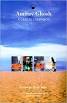
BOOK CORNER: THE SUBTLE ART OF NOT GIVING A F*CK–a counterintuitive approach to living a good life by Mark Manson

Copyright@shravancharitymission


Khidki (Window)

–Read India Initiative—

This is only an attempt to create interest in reading. We may not get the time to read all the books in our lifetime. But such reviews, talk and synopsis will at least convey what the book is all about.
 

    ‘Fuck’ is a scandalous and a vulgar cuss word not meant for the civilized society. But then it has a lot to do with the making and breaking of life. Before, I move ahead let me refresh you with the meaning of this word. One of course is the usual one—to have a sexual intercourse. And running alongside that, it is also used, while expressing, extreme anger, or to add force, to what is being said. Some words get ostracised because of its dirty meaning. According to Oxford dictionary, fuck also means ‘your ruins.’ Let me now construct, two sentences for you, using the four letter word. One is.

  1. I don’t give a fuck—which means I don’t care.
  2. I give a fuck—which means I care.

    I am telling you all of this, to make you understand the book even better. The book has a long title supported by an even longer sub-title that goes as, “THE SUBTLE ART OF NOT GIVING A F*CK—a counter-intuitive approach to living a good life.” by Mark Manson. Counterintuitive means, contrary to intuition, or a kind of common-sense expectation. I would call this book a wonder book, because the author converts the four letter word ‘fuck’ into a handy an appropriate life lesson for readers. New York Times and Globe and mail a Canadian chronicle have declared it, as a bestseller. The other word extensively used in this book is sucks which is an expression of disappointment. The book is priced at $17.99, published in 2016 by Harperone.   The book lives up to its title in all boisterousness. Mark Manson is a star blogger, with more than two million readers. He lives in New York City. The Subtle Art of Not Giving a F*ck, is his, first book.

     For this day and age the book is a self-help guide, written by a super-star blogger. It charts the course for us, to make us happier and stronger. The real panacea of which is how to handle adversity better, and stop trying to be positive all the time. Of course the gap between the two is quite wide.

    For the past few years, Mark Manson through his ecstatically popular blog, has been working on correcting, our delusional expectations, for ourselves and for the world. He now brings his hard fought wisdom to this ground breaking book. Manson makes the argument that human beings by nature are imperfects and even limited. As he writes, ‘not everybody can be extraordinary—there are winners and losers in society, and some of it is not fair or your fault.” Manson advises us to get to know your limitations and accept them as they are. This he says, is the real source of empowerment. Once we embrace our fears, faults and uncertainties. Once we stop running from and avoiding, and start confronting, painful truths—we will begin to find the courage and confidence we desperately need.

    In life, we all have a limited amount of fucks to give. So, you must choose your fucks wisely. Manson brings a much needed, grab-you-by-the-shoulders-an-look-you-in-the-eyes moment, of real-talk, filled with entertaining stories, and profane, ruthless humor. This narration is a refreshing pat on the face of all, so that we can start living a more contented and grounded life.

     The book is a little over two hundred pages and if one goes at an uninterrupted pace, one could finish it within two days. It is in many ways a page turner written in lucid English quite easy to comprehend. It has long gripping sentences with appropriate pauses in terms of sentence breaks and well suited prepositions. The author has curtailed unnecessary flab in his narration. Within a para, the breaks are few and that gives a good flow of thoughts so very necessary for such life-lesson emitting books. Many sentences are somewhat unconventional, and more than that the thoughts are quite out-of-the-box. It is divided into nine chapters with sub-chapters. The book hinges on two prime words—‘fuck’ and ‘sucks.’

    Everyone believes. The key to a good life is a nice job, a sexy limousine, or a pretty girlfriend. The world keeps telling you over-and-over again, that the matrix for a successful life is to have more … more … and … more. Buy more, own more. You are constantly bombarded with messages to give a fuck about everything, and at all times. But the key to a good life is not giving a fuck about more; but giving a fuck about less, or giving a fuck about only what is true and immediate and important. I’m sorry for having used the four letter word so very often in this narration. But without which you wouldn’t have got the real feel of the book.

    The book has many interesting stories and anecdotes that I would not like to disclose in great detail. But yes of course. I liked the one about the Japanese second lieutenant and the Rock Star band. The book teaches that life is essentially an endless series of problems. Problems never stop they only get exchanged or upgraded. Happiness is a constant work-in-progress. It teaches you the value of suffering. Human beings often dedicate a large part of their lives to seemingly useless and destructive causes.

    It says happiness is a problem yet happiness comes by solving problems. And mind you, you are not special. The book defines certain values as shitty and even obsolete. It says a lot of time in our life is wasted in choosing. And of course failure is the way forward. It talks about action, inspiration and even motivation. Most of us commit to action only if we feel a certain level of motivation. And we feel motivated only when we find enough emotional inspiration.

    The book inspires you to believe that you’re wrong about everything. The author cites examples in terms of cartographers who some five hundred years ago believed that California was an island. Doctors believed that by slicing a person’s arm open (or by causing bleeding anywhere) one could cure a disease. Scientists believed that fire was made out of something called phlogiston (a combustible substance). Women believed that rubbing dog urine on their face had anti-aging benefits. Astronomers believed that the sun revolved around the earth. But then were they right?

    I would recommend this book. If not for anything else, at least it will advise you how to be comfortable in negative situations. While reading this book I was even reminded of my own poem that I wrote sometime back. The title of which is … ‘Bad times is a friend of all times’ published in a book titled, ‘Rhythm … in poems.’ I would give this debut book of Mark Manson eight out of ten.

   Synopsis by Kamlesh Tripathi

*

https://kamleshsujata.wordpress.com

*

Share it if you like it

*

Shravan Charity Mission is an NGO that works for poor children suffering from life threatening diseases especially cancer. Our posts are meant for our readers that includes both children and adults and it has a huge variety in terms of content. We also accept donations for our mission. Should you wish to donate for the cause. The bank details are given below:

NAME OF ACCOUNT: SHRAVAN CHARITY MISSION

Account no: 680510110004635 (BANK OF INDIA)

IFSC code: BKID0006805

*

Our publications

GLOOM BEHIND THE SMILE

(The book is about a young cancer patient. Now archived in 7 prestigious libraries of the US, including, Harvard University and Library of Congress. It can also be accessed in MIT through Worldcat.org. Besides, it is also available for reading in Libraries and archives of Canada and Cancer Aid and Research Foundation Mumbai)  

ONE TO TANGO … RIA’S ODYSSEY

(Is a book on ‘singlehood’ about a Delhi girl now archived in Connemara Library, Chennai and Delhi Public Library, GOI, Ministry of Culture, Delhi)

AADAB LUCKNOW … FOND MEMORIES

(Is a fiction written around the great city of Nawabs—Lucknow. It describes Lucknow in great detail and also talks about its Hindu-Muslim amity. That happens to be its undying characteristic. The book was launched in Lucknow International Literary Festival of 2014)

REFRACTIONS … FROM THE PRISM OF GOD

(Co-published by Cankids–Kidscan, a pan India NGO and Shravan Charity Mission, that works for Child cancer in India. The book is endorsed by Ms Preetha Reddy, MD Apollo Hospitals Group. It was launched in Lucknow International Literary Festival 2016)

TYPICAL TALE OF AN INDIAN SALESMAN

(Is a story of an Indian salesman who is, humbly qualified. Yet he fights his ways through unceasing uncertainties to reach the top. A good read not only for salesmen. The book was launched on 10th February, 2018 in Gorakhpur Lit-Fest. Now available in Amazon, Flipkart and Onlinegatha)

RHYTHM … in poems

(Published in January 2019. The book contains 50 poems. The poems describe our day to day life. The book is available in Amazon, Flipkart and Onlinegatha)

(ALL THE ABOVE TITLES ARE AVAILABLE FOR SALE IN AMAZON, FLIPKART AND OTHER ONLINE STORES OR YOU COULD EVEN WRITE TO US FOR A COPY)

*****



INTERESTING FACTS & QUOTES 11

Copyright@shravanchariymission

TEN INTERESTING QUOTES

  1. It is strange that sword and words have the same letters. Even more strange is that they have the same effect if not handled properly. This beautiful quote is by Anonymous
  2. No matter how bad things are a few things will always go right and no matter how good things are a few things will always go wrong. This alone balances life—this quote is from a book ‘Gloom behind the smile’
  3. Being the richest man in the cemetery doesn’t matter to me. Going to bed at night saying we’ve done something wonderful—that’s what matters to me—Steve Jobs
  4. A gentle answer turns away wrath, but a harsh word, stirs up anger—by Solomon, also called Jedidiah, who, according to the Hebrew Bible, Old Testament, Quran, and Hadiths, was a fabulously wealthy, and the wise king of Israel who succeeded his father, King David.. 
  5. ‘I do not want the peace, that pass-eth understanding. I want the understanding which bringeth peace.’—Hellen Keller, American author, political activist and lecturer. She was the first deaf-blind person, to earn a Bachelor’s degree in Arts.
  6. There is nothing either good or bad, but thinking makes it so—William Shakespeare.
  7. Imagination is more important than knowledge—Albert Einstein
  8. Vision is the art of seeing things invisible to others—Jonnathan Swift, Anglo-Irish satirist, essayist, and political pamphleteer.
  9. One person with a commitment is worth more than hundred people who only have interest—Mary Crowley, an American citizen and a cancer patient, who served the citizenry and started Mary Crowley, Cancer Research Center in the US.
  10. The greatest discovery of my generation is that human beings can alter their lives by altering their attitudes of mind—William James, American philosopher and psychologist.

By Kamlesh Tripathi

*

https://kamleshsujata.wordpress.com

*

Share it if you like it

*

Shravan Charity Mission is an NGO that works for poor children suffering from life threatening diseases especially cancer. Our posts are meant for our readers that includes both children and adults and it has a huge variety in terms of content. We also accept donations for our mission. Should you wish to donate for the cause. The bank details are given below:

NAME OF ACCOUNT: SHRAVAN CHARITY MISSION

Account no: 680510110004635 (BANK OF INDIA)

IFSC code: BKID0006805

*

Our publications

GLOOM BEHIND THE SMILE

(The book is about a young cancer patient. Now archived in 7 prestigious libraries of the US, including, Harvard University and Library of Congress. It can also be accessed in MIT through Worldcat.org. Besides, it is also available for reading in Libraries and archives of Canada and Cancer Aid and Research Foundation Mumbai)  

ONE TO TANGO … RIA’S ODYSSEY

(Is a book on ‘singlehood’ about a Delhi girl now archived in Connemara Library, Chennai and Delhi Public Library, GOI, Ministry of Culture, Delhi)

AADAB LUCKNOW … FOND MEMORIES

(Is a fiction written around the great city of Nawabs—Lucknow. It describes Lucknow in great detail and also talks about its Hindu-Muslim amity. That happens to be its undying characteristic. The book was launched in Lucknow International Literary Festival of 2014)

REFRACTIONS … FROM THE PRISM OF GOD

(Co-published by Cankids–Kidscan, a pan India NGO and Shravan Charity Mission, that works for Child cancer in India. The book is endorsed by Ms Preetha Reddy, MD Apollo Hospitals Group. It was launched in Lucknow International Literary Festival 2016)

TYPICAL TALE OF AN INDIAN SALESMAN

(Is a story of an Indian salesman who is, humbly qualified. Yet he fights his ways through unceasing uncertainties to reach the top. A good read not only for salesmen. The book was launched on 10th February, 2018 in Gorakhpur Lit-Fest. Now available in Amazon, Flipkart and Onlinegatha)

RHYTHM … in poems

(Published in January 2019. The book contains 50 poems. The poems describe our day to day life. The book is available in Amazon, Flipkart and Onlinegatha)

(ALL THE ABOVE TITLES ARE AVAILABLE FOR SALE IN AMAZON, FLIPKART AND OTHER ONLINE STORES OR YOU COULD EVEN WRITE TO US FOR A COPY)

*****


THREE CORPORATE LESSONS

Copyright@shravancharitymission

Lesson no 1

    A crow was sitting on a tree doing nothing all day. A small rabbit who was passing by asked the crow, ‘can I also sit like you and do nothing all day long?

    The crow answered: ‘Sure why not, come along. So the rabbit sat on the ground below the crow and rested all day. But in the evening all of a sudden a fox appeared from nowhere and pounced on the cat and ate him up.

    MORAL OF THE STORY: to be sitting and doing nothing like a crow you must be sitting, very high up, on the ladder or position.

    Lesson no 2

    A turkey was chatting with a bull. ‘I would love to be able to get to the top of that tree,’ sighed the turkey, ‘but I haven’t got the energy to do so.’ ‘Well then, why don’t you nibble some of my droppings? Replied the bull. And added ‘They are packed with nutrients.’ The idea appealed to the turkey. He pecked at the lump of dung and discovered. That the bull was in fact right, as it actually gave him enough strength to reach the first branch of the tree. The next day after eating some more dung, he reached the second branch. Finally, after a fortnight, there he was, proudly perched at the top of the tree. But soon he was spotted by a farmer who promptly shot the turkey and had a feast.

MORAL OF THE STORY: Bullshit might get you to the top. But it won’t keep you there.

Lesson no 3

    A little bird was flying south to escape the winter. It was so very cold that the bird froze and fell on the ground in a large field. And while it was lying on the ground there, a cow came by and dropped some dung on it. As the frozen bird lay there in the pile of cow dung, it began to realise how warm it was. The dung was actually thawing him out. He lay there all warm and soon began to sing out of joy. Just then a passing cat heard the bird singing and came to investigate, following the sound. The cat discovered the bird under the pile of cow dung and promptly dug him out and ate him up.

MORAL OF THE STORY: Not everyone who drops shit on you is your enemy. Not everyone who gets you out of shit is your friend. And when you are in deep shit keep your mouth shut.

Posted by Kamlesh Tripathi

*

https://kamleshsujata.wordpress.com

*

Share it if you like it

*

Shravan Charity Mission is an NGO that works for poor children suffering from life threatening diseases especially cancer. Our posts are meant for our readers that includes both children and adults and it has a huge variety in terms of content. We also accept donations for our mission. Should you wish to donate for the cause. The bank details are given below:

NAME OF ACCOUNT: SHRAVAN CHARITY MISSION

Account no: 680510110004635 (BANK OF INDIA)

IFSC code: BKID0006805

*

Our publications

GLOOM BEHIND THE SMILE

(The book is about a young cancer patient. Now archived in 7 prestigious libraries of the US, including, Harvard University and Library of Congress. It can also be accessed in MIT through Worldcat.org. Besides, it is also available for reading in Libraries and archives of Canada and Cancer Aid and Research Foundation Mumbai)  

ONE TO TANGO … RIA’S ODYSSEY

(Is a book on ‘singlehood’ about a Delhi girl now archived in Connemara Library, Chennai and Delhi Public Library, GOI, Ministry of Culture, Delhi)

AADAB LUCKNOW … FOND MEMORIES

(Is a fiction written around the great city of Nawabs—Lucknow. It describes Lucknow in great detail and also talks about its Hindu-Muslim amity. That happens to be its undying characteristic. The book was launched in Lucknow International Literary Festival of 2014)

REFRACTIONS … FROM THE PRISM OF GOD

(Co-published by Cankids–Kidscan, a pan India NGO and Shravan Charity Mission, that works for Child cancer in India. The book is endorsed by Ms Preetha Reddy, MD Apollo Hospitals Group. It was launched in Lucknow International Literary Festival 2016)

TYPICAL TALE OF AN INDIAN SALESMAN

(Is a story of an Indian salesman who is, humbly qualified. Yet he fights his ways through unceasing uncertainties to reach the top. A good read not only for salesmen. The book was launched on 10th February, 2018 in Gorakhpur Lit-Fest. Now available in Amazon, Flipkart and Onlinegatha)

RHYTHM … in poems

(Published in January 2019. The book contains 50 poems. The poems describe our day to day life. The book is available in Amazon, Flipkart and Onlinegatha)

(ALL THE ABOVE TITLES ARE AVAILABLE FOR SALE IN AMAZON, FLIPKART AND OTHER ONLINE STORES OR YOU COULD EVEN WRITE TO US FOR A COPY)

*****


INTERESTING FACTS- CHAPTER 10

Copyright@shravancharitymission

Successful and unsuccessful people do not differ in their abilities. They vary in their desire to reach their potential.

*

Before the world had formed into nation states, any movement of people was merely a normal condition of economics and geography. The Neanderthals shifted base from Africa to Europe and Central Asia in search of a more hospitable climate and food.

*

Toyota has sold more than 5 million of its prized hybrid automobiles across the world and not just in Japan.  It employs more than 350000 employees but most of them are not Japanese.

*

The largest market for Rolls Royce cars, till recently was China, and not United Kingdom/ The darker the night the brighter the stars burn.

*

European Union is the biggest open market, the world’s second largest economy, the first trading partner of 80 countries including India.

*

Tamil Nadu has a questionable record on free speech, with 213 defamation cases filed against politicians and media by the government since 2011.

*

There are 3 cops for each VIP in India and 1 cop for 633 AAM AADMI. See the disparity.

*

What took nature millions of years to produce, we seem ready to wipe out in one generation. It is estimated that by 2030 we will have only 50% of the water we need for our survival in this world.

*

Toilet coverage in India was just 38% in 2014. Official statistics show this has risen to 68% now with 5 crore toilets built in 2.5 lakh villages and with 214 districts declared as Open Defecation Free.

*

Irrigation accounts for 80% of water demand followed by drinking needs, industry and energy sector. And that’s why drip irrigation needs to be promoted across the world.

***

Posted by Kamlesh Tripathi

*

https://kamleshsujata.wordpress.com

*

Share it if you like it

*

Shravan Charity Mission is an NGO that works for poor children suffering from life threatening diseases especially cancer. Our posts are meant for our readers that includes both children and adults and it has a huge variety in terms of content. We also accept donations for our mission. Should you wish to donate for the cause. The bank details are given below:

NAME OF ACCOUNT: SHRAVAN CHARITY MISSION

Account no: 680510110004635 (BANK OF INDIA)

IFSC code: BKID0006805

*

Our publications

GLOOM BEHIND THE SMILE

(The book is about a young cancer patient. Now archived in 7 prestigious libraries of the US, including, Harvard University and Library of Congress. It can also be accessed in MIT through Worldcat.org. Besides, it is also available for reading in Libraries and archives of Canada and Cancer Aid and Research Foundation Mumbai)  

ONE TO TANGO … RIA’S ODYSSEY

(Is a book on ‘singlehood’ about a Delhi girl now archived in Connemara Library, Chennai and Delhi Public Library, GOI, Ministry of Culture, Delhi)

AADAB LUCKNOW … FOND MEMORIES

(Is a fiction written around the great city of Nawabs—Lucknow. It describes Lucknow in great detail and also talks about its Hindu-Muslim amity. That happens to be its undying characteristic. The book was launched in Lucknow International Literary Festival of 2014)

REFRACTIONS … FROM THE PRISM OF GOD

(Co-published by Cankids–Kidscan, a pan India NGO and Shravan Charity Mission, that works for Child cancer in India. The book is endorsed by Ms Preetha Reddy, MD Apollo Hospitals Group. It was launched in Lucknow International Literary Festival 2016)

TYPICAL TALE OF AN INDIAN SALESMAN

(Is a story of an Indian salesman who is, humbly qualified. Yet he fights his ways through unceasing uncertainties to reach the top. A good read not only for salesmen. The book was launched on 10th February, 2018 in Gorakhpur Lit-Fest. Now available in Amazon, Flipkart and Onlinegatha)

RHYTHM … in poems

(Published in January 2019. The book contains 50 poems. The poems describe our day to day life. The book is available in Amazon, Flipkart and Onlinegatha)

(ALL THE ABOVE TITLES ARE AVAILABLE FOR SALE IN AMAZON, FLIPKART AND OTHER ONLINE STORES OR YOU COULD EVEN WRITE TO US FOR A COPY)

*****



SHORT STORY: Lata Bhagvan Kare … the marathon runner

Copyright@shravancharitymission

    This is a real life story of a sixty-five year old lady, Lata Bhagvan Kare, a resident of a small village in Buldhama district, in Maharashra. She was leading a simple life with her husband. They both worked as farm labour and barely made enough to make ends meet. They had a small house near the farmland where they used to live.

    The small savings that they had accumulated all throughout their lives was spent on getting their three daughters married off. Apart from their daughters they also had a son. After the daughters were settled their responsibilities were practically over. They enjoyed the simple pleasures of life and of course each other’s company. They were inseparable and understood each other comprehensively. Their relationship was a proof of the principle that you did not need luxury to be happy.

    One day after returning from the farm, her husband told her that he was not feeling well. First she tried all sorts of herbal medicines to help him, but he wouldn’t get better. The local government hospital, diagnosed him of some serious infection. They recommended he be taken to a bigger hospital that had better facilities for further tests. This bewildered Lata. They barely had enough money for the fare to reach the hospital, let alone the expensive tests prescribed by the doctors. With tearful eyes, she told her husband the news and felt helpless. But then how could she let her husband die without treatment.

    She dropped her ego and pulled together all her courage to beg her neighbours and relatives for donations to go to a bigger hospital in order to save her husband’s life. With the donations she had received they finally got to bigger hospital. This was not the sort of place that they were used to, being in. They felt very uncomfortable and out of place. Nevertheless, Lata gathered courage, to ask for a doctor. The official at the reception desk collected an initial fee. With that they had exhausted almost a major chunk of money that Lata was carrying. They were asked to wait outside the doctor’s cabin until they were called.

    When their turn came, her husband was called in. after examination, the doctor handed her a list for further tests, some medicines and the recommendation for hospitalization. With these developments Lata went into a tizzy. She had no money and nowhere to go. How do I save my husband she thought? With tears flowing down her cheeks, she and her husband slowly walked out of the hospital.

    She couldn’t have afforded the expensive hospital canteen, so they stopped by a samosa stall at the bus stand. They bought two samosas for the journey back to their village. Lata thought this could perhaps be her husband’s last meal. The samosa-wallah wrapped the samosa and handed it to her with a smile. As she ate her samosa and chutney from the newspaper wrapper, she saw the headline: ‘Baramati Marathon: Attractive Prize Money.’ Her heart missed a beat. The next moment she was preparing to run the race.

    The next day as everyone lined up at the start of the race, in their running gear, Lata Kare stood there, in her red-checked Maharashtrian-style sari. Barefoot, with tears in her eyes. She argued with the organisers, to allow her to run in the marathon, but they refused. She was sixty five. In trying to save her husband, they did not want her to die. After about an hour of begging and pleading, they finally agreed to let her run, and pinned a number on her clothes. As she began running, people turned to look at her and laughed.

    It was a sight for sore eyes. Teenagers and young adults who had been practicing for months, for this race, lined up, next to an old lady who had hitched her sari above her ankles. She had never run a race in her life, what to say of a marathon. Little did her competitors know that they were about to get schooled by someone who was old enough to be their grandmother. Lata could not think of anything else, but for the love she had for her husband. This race was a matter of life and death for her. What were a few pebbles and rocks to stop her progress?

    Lata, finally ran and ran like the wind with just one focus—the finish line. Her feet began to bleed, her sari became soaked in sweat, but she kept running and running. It would have been an achievement had she even finished the race. But she had aimed much higher. The people who witnessed this spectacle cheered her all along the way. They were touched by her reason for running.

    It would be a pointless story if she did not win. For there was no award for mere participation, yet she had done it! The organizers of the race could not believe that Lata Kare a sixty-five-year-old Maharashtrian woman from a small village, had won the race. The crowds on the streets of Baramati clapped for her and celebrated her victory. She was now the local hero, but she did not care for the attention.

    She collected her winnings, marched into the hospital and got her husband the best treatment. At the same time she even got a few bandages done on her feet. She had achieved her mission and that was to save her husband. As they say, the most powerful force in the world is love. Lata went on to win for the next two years consecutively.

Moral of the story: If you have determination and confidence nothing is impossible.

Posted by Kamlesh Tripathi

*

https://kamleshsujata.wordpress.com

*

Share it if you like it

*

Shravan Charity Mission is an NGO that works for poor children suffering from life threatening diseases especially cancer. Our posts are meant for our readers that includes both children and adults and it has a huge variety in terms of content. We also accept donations for our mission. Should you wish to donate for the cause. The bank details are given below:

NAME OF ACCOUNT: SHRAVAN CHARITY MISSION

Account no: 680510110004635 (BANK OF INDIA)

IFSC code: BKID0006805

*

Our publications

GLOOM BEHIND THE SMILE

(The book is about a young cancer patient. Now archived in 7 prestigious libraries of the US, including, Harvard University and Library of Congress. It can also be accessed in MIT through Worldcat.org. Besides, it is also available for reading in Libraries and archives of Canada and Cancer Aid and Research Foundation Mumbai)  

ONE TO TANGO … RIA’S ODYSSEY

(Is a book on ‘singlehood’ about a Delhi girl now archived in Connemara Library, Chennai and Delhi Public Library, GOI, Ministry of Culture, Delhi)

AADAB LUCKNOW … FOND MEMORIES

(Is a fiction written around the great city of Nawabs—Lucknow. It describes Lucknow in great detail and also talks about its Hindu-Muslim amity. That happens to be its undying characteristic. The book was launched in Lucknow International Literary Festival of 2014)

REFRACTIONS … FROM THE PRISM OF GOD

(Co-published by Cankids–Kidscan, a pan India NGO and Shravan Charity Mission, that works for Child cancer in India. The book is endorsed by Ms Preetha Reddy, MD Apollo Hospitals Group. It was launched in Lucknow International Literary Festival 2016)

TYPICAL TALE OF AN INDIAN SALESMAN

(Is a story of an Indian salesman who is, humbly qualified. Yet he fights his ways through unceasing uncertainties to reach the top. A good read not only for salesmen. The book was launched on 10th February, 2018 in Gorakhpur Lit-Fest. Now available in Amazon, Flipkart and Onlinegatha)

RHYTHM … in poems

(Published in January 2019. The book contains 50 poems. The poems describe our day to day life. The book is available in Amazon, Flipkart and Onlinegatha)

(ALL THE ABOVE TITLES ARE AVAILABLE FOR SALE IN AMAZON, FLIPKART AND OTHER ONLINE STORES OR YOU COULD EVEN WRITE TO US FOR A COPY)

*****


SHORT STORY: THE VILLAGERS AND THE SNAKE

Copyright@shravancharitymission

    Thousands of years ago, a group of villagers approached a saintly man who was meditating inside a cave in a mountain. Years of meditation had given him the wisdom to solve any problem that came his way. Restless and scared the villagers approached him, when one out of them pleaded, ‘O Sadhu baba! Please help us. There is a large venomous snake that is terrorising the whole village.’ But the sage did not respond. As he was in deep meditation. The villagers looked at each other and then nudged their spokesman to speak again. ‘You can hear the hiss of the snake from miles. He cunningly bites anyone on his path, regardless of whether or not he is threatened. As a consequence of this, we are all fearful, to venture out in the fields all by ourselves, which has led to our crops dying for want of care. The snake’s venom is not the only thing that is killing us one by one. We are also dying because of starvation. So, we beg of you to help us.’

    The saint was compassionate, soft and a spiritual-minded person. After understanding the gravity of the situation. He got up from his straw mat and looked at the villagers. ‘Let’s find that snake,’ he said softly. The villagers cheered at this. They now saw hope, and thought, the Saint will solve their problem. So they trailed behind him in search of their hissing enemy.

    As they approached the deserted ghost land, which was once their home, the scary sound of the snake echoed from the other side of the village. It approached the group of villagers at great speed, paying no regard to their pitchforks nor their torches of fire. The villagers fled for their lives. But the saint stood there, undeterred by the hooded creature that came to attack him. The snake’s slithering and undulating green and black scales shimmered majestically in the sunlight. What beauty! The saint exclaimed.

    This confused the snake since the saint wasn’t fleeing like the rest of its prey. The snake stopped and stared at him. ‘Come ahead, you magnificent creature,’ yelled the saint. The snake, who had never been treated with such kindness before, was mesmerized by these fascinating words. The warmth of the saint’s words, replaced the heat of the blazing fire, it was used to. For a moment the snake lost all its ferocity, and glided towards the saint, and coiled up meekly by his feet in reverence. The villagers, some of them hiding in the trees, and some on the other side of the fields, couldn’t hear this conversation between the two. They looked on from a distance, astounded by what they were now seeing.

    ‘I am stunned by your beauty.’ Said the saint to the snake, as if they were old friends. ‘But why do you frighten these villagers? The snake responded by lowering its hood. ‘Leave your destructive ways and do not terrorise the poor villagers needlessly. Stop biting them—they are no match for you. There is plenty for you to eat in the forest.’ Rattled the saint. Upon hearing this the snake bowed at the saint, and resolved to leave the villagers alone. It had taken a new vow.

    Soon the snake began a new life of innocence, without attempting to harm anyone. From that day onwards the villagers had become elated. Their crop yield doubled, their cattle grazed without fear and even their children played games in the forest. The saint returned to his cave to continue his spiritual journey. A happy story? Not yet

    Some months later, the saint came down from the mountain to beg for food from the villagers, just enough to keep him alive. As he travelled to the village, he saw the same snake, coiled up near the root of a tree, lying mangled, practically dead, its scales had fallen off, it looked emaciated and injured, with sores all over his body.

    ‘My dear friend what happened to you? The saint enquired in deep concern.

    ‘This is the fruit of being good.’ The snake replied. Although, his venom had dried up, yet he spoke with bitterness. ‘I obeyed you. I gave up my tormenting ways. I left the villagers alone and stopped attacking them. But in the process see what has happened to me. Everyone pelts me with stones, beats me with sticks, and even children tease me and drag me mercilessly by my tail. I am now a laughing stock. However, I have kept my promise to you.’

    The saint smiled and said, ‘Dear snake you did what I had asked you to do. But you didn’t understand my discourse, in the right spirit. I had told you not to bite them, but I had said nothing, about stopping, your ferocious hiss, that could deter people for miles on end.’

    The snake uncoiled itself and finally understood what it had to do to survive. The villagers trembled once again as the hissing sound of the snake, returned to the area, like a bad dream. But now the snake exactly knew, where to draw the line, the laxman rekha. And thereafter both the villagers and the snake lived happily.

    Moral of the story: Humility or meekness does not mean you’re a weakling. Everyone was scared of the snake as long as he was wild and used to bite people. But when he adopted to a peaceful living the villagers started poking, fun at him. And when the saint re-appeared in his life, and advised him again, he was able to find the right balance to lead a happy life and so did the villagers.

 *** 

Posted by Kamlesh Tripathi

*

https://kamleshsujata.wordpress.com

*

Share it if you like it

*

Shravan Charity Mission is an NGO that works for poor children suffering from life threatening diseases especially cancer. Our posts are meant for our readers that includes both children and adults and it has a huge variety in terms of content. We also accept donations for our mission. Should you wish to donate for the cause. The bank details are given below:

NAME OF ACCOUNT: SHRAVAN CHARITY MISSION

Account no: 680510110004635 (BANK OF INDIA)

IFSC code: BKID0006805

*

Our publications

GLOOM BEHIND THE SMILE

(The book is about a young cancer patient. Now archived in 7 prestigious libraries of the US, including, Harvard University and Library of Congress. It can also be accessed in MIT through Worldcat.org. Besides, it is also available for reading in Libraries and archives of Canada and Cancer Aid and Research Foundation Mumbai)  

ONE TO TANGO … RIA’S ODYSSEY

(Is a book on ‘singlehood’ about a Delhi girl now archived in Connemara Library, Chennai and Delhi Public Library, GOI, Ministry of Culture, Delhi)

AADAB LUCKNOW … FOND MEMORIES

(Is a fiction written around the great city of Nawabs—Lucknow. It describes Lucknow in great detail and also talks about its Hindu-Muslim amity. That happens to be its undying characteristic. The book was launched in Lucknow International Literary Festival of 2014)

REFRACTIONS … FROM THE PRISM OF GOD

(Co-published by Cankids–Kidscan, a pan India NGO and Shravan Charity Mission, that works for Child cancer in India. The book is endorsed by Ms Preetha Reddy, MD Apollo Hospitals Group. It was launched in Lucknow International Literary Festival 2016)

TYPICAL TALE OF AN INDIAN SALESMAN

(Is a story of an Indian salesman who is, humbly qualified. Yet he fights his ways through unceasing uncertainties to reach the top. A good read not only for salesmen. The book was launched on 10th February, 2018 in Gorakhpur Lit-Fest. Now available in Amazon, Flipkart and Onlinegatha)

RHYTHM … in poems

(Published in January 2019. The book contains 50 poems. The poems describe our day to day life. The book is available in Amazon, Flipkart and Onlinegatha)

(ALL THE ABOVE TITLES ARE AVAILABLE FOR SALE IN AMAZON, FLIPKART AND OTHER ONLINE STORES OR YOU COULD EVEN WRITE TO US FOR A COPY)

*****


BOOK CORNER: Amitav Ghosh … A CRITICAL COMPANION

Copyright@shravancharitymission


Khidki (Window)

–Read India Initiative—

This is only an attempt to create interest in reading. We may not get the time to read all the books in our lifetime. But such reviews, talk and synopsis will at least convey what the book is all about.

Amitav Ghosh

A CRITICAL COMPANION

Edited by Tabish Khair

    In the next twenty minutes or so I would take you through one of the finest pieces of narration. Where, one legend describes the other. Yes, when, Amitav Ghosh describes Satyajit Ray this is all one can say. Amitav Ghosh is a winner of 54th Jnanpith award and also a Padma Shri. I have pulled out this narration from a book titled ‘Amitav Ghosh … a critical companion.’ I have summarised and simplified the article for you to the best of my ability.

    Amitav in this article of his, has gone back to 1989. When he was enjoying his extended stay in the overwhelming city of New York. He had then finished writing of The Shadow Lines. The novel for some reason had a striking influence of Ray in it.

    He was then struck by a sudden wave of Ray nostalgia. And it struck to him that Ray too had once been a stranger in this city and that he too had walked the streets of Manhattan in Kolkata—bought shoes.

     One day, these pent up thoughts propelled Amitav to meet director James Ivory, who he knew to be a good friend of Ray. And later that week he went to interview Ivory, cassette recorder in hand. This is how Ivory described his first meeting with Ray, in the winter of 1960.

    “I looked him up in Calcutta,’ Ivory said. I had never met him. I had seen at that point, Pather Panchali (Song of the Road) and Aparijito (Undefeated). I knew that Apur Sansar (The World of Apu) existed and that sooner or later it would get to New York, but up till then it hadn’t come. And then some Indian friends of mine in Delhi said that apart from The Trilogy he had also made some other films in that time—the late fifties. They described Jalsaghar (The Music Room) to me and that sounded like something I would love to see. Then I made a long trip to Calcutta and went down to Puri and Bhubaneshwar and Madras. While I was in Calcutta I just decided to call him. Just to meet him, but also to ask him if it would be possible to see Jalsaghar. My friend in Delhi said he was very approachable (which he was) and I just called him up. He was in the phone book, so I just called him up and told him who I was. He said fine, he would try and arrange Jalsaghar for me. We agreed to meet in Coffee House and I went there. He was alone and we talked.

    He was immensely tall; he was probably the tallest Indian I have ever met and that seemed symbolically apt. He had a kind of straight forward majesty about him; he was obviously a king, but he was an approachable king. We were friends all his life as long as he lived. Whenever there was something he needed we tried to help. He always helped us. When there was some tremendous thing that would happen to us in the course of our own movie making in India—for instance when Utpal Dutt was put in prison (for his Maoist sympathies) while we were making ‘The Guru’ he helped to get him out. He called up or wrote to Mrs Gandhi and said this is a disgrace, this shouldn’t be allowed—things like that.”

    I asked Ivory what they talked about at that first meeting. ‘He was waiting in the coffee house.’ Ivory said, ‘while the censor was seeing Devi (the Coffee House was in the shadow of the Metro Cinema). Then somebody came from his staff and said that Devi had gone down well with the censors. He was kind of nervous about it because of the retrograde view of Hindu life at its most superstitious let’s say. He was afraid they would make him cut it. But no, it had gone down all right, and he said, would I like to come to the premiere of it, which I did, so I saw the film at the premiere and I was also introduced to Sharmila Tagore, who was very young then. And then he arranged for me to see ‘Jalsaghar’ so he went to the studio in Tollygunge where he made all his films and he sat next to me and translated for me at important moments. I thought it was a marvellous, marvellous movie and I jumped up and told him so at the end. He was surprised that I thought it was so marvellous. He said, well, he thought technically it wasn’t so good, wasn’t quite up to the mark. I said well, it didn’t strike me like that and I asked if there were any plans to show it in the west for I thought people would really like it. He said no, he didn’t have any plans. It had been shown at the Moscow Film Festival but the Russians didn’t like it because they thought it was decadent and that had discouraged him. I said, I thought he might get a different reception in the west if he pursued it. It was released here in the fall of 1963, and as you know a few years ago it was released in Paris and it was a tremendous success—ran for a year or something.’

    Ray was to collaborate with James Ivory and Ismail Merchant on two of their films: he wrote the music of Shakespeare-wallah and helped with the editing of ‘The Householder.’ I asked Ivory how the collaboration had come about.’ After ‘Householder’ was edited,’ he said ‘he still seemed very unwieldy, not very nicely done. I didn’t really have a very good editor—by this time I had met him (Ray) and I asked if I could bring the film to show him. He said sure come on. So Ismail (Merchant) and I climbed on the train—we took the Hindi version of it, all those cans, there must have 24 cans or something. We went from Bombay to Calcutta with all that film. He saw it and liked it—he thought there was something there to work with. I asked him whether he could give us any suggestions about the cutting and he said, yes. He would recut it, but he didn’t want me to interfere while doing that. He said let me have a go at it, I’ll do it my way, you can be in the editing room if you want to be, when we’re all done you can change it if you want to, that’s your business, but let me do what I want to do. So then, he and his editor Dulal Dutt recut the film. They took about four days, and gave it a new shape. It was he (Ray) who suggested that it go into a flashback form.

    Ray was always awfully generous with his time, always, always. I don’t know how he did it; because there was always many many people there, who wanted things done, people who just came to catch a glimpse of him and so on. How he had any kind of life of his own and how he made his movies I don’t know.

    Pather Panchali, to my mind the greatest of Ray’s films, was completed in 1955. It premiered not in Kolkata, but in New York, at the museum of Modern Art. This is how it came about: in 1954 Huston was on his way to India to scout locations for The Man Who Would Be King, when he came to hear of a young advertising-executive who was making a film on a tiny budget. By the time Huston arrived in Kolkata, the film had been stalled for several months, because of lack of money. At the time of Huston’s visit the dominant genre in India was the Bombay film. Ray’s work took Huston by surprise. It was apparent from the rushes that this film belonged in a different order of film-making. Huston was quick to recognize the genius of work. He viewed only twenty-minutes or so of the film, but recalling the occasion in 1987, he said: I’ recognised the footage as the work of a great film-maker.’ Returning to the United States, Huston’s reports of the film were instrumental in persuading the Museum of Modern Art to send Ray some money. MOMA’s advance went a long way towards the completion of Pather Panchali.

    Hollywood had long cast a binding spell on Ray: he was an ardent admirer of such American film-makers as John Ford and Billy Wilder. Although he never worked there. Hollywood came to play a peculiarly serendipitous role in his life; never more so than when one of his idols, John Huston, made it possible for him to complete Pather Panchali. And thus it happened that this most famous of contemporary Indian films premiered not in Kolkata or Mumbai, but in New York. It was first shown at the Museum of Modern Art in April 1955, to a small invited audience.

    Pather Panchali was released in the US (by Edward Harrison) in September 1958 at New York’s Fifth Avenue Theatre. The release was the occasion of Ray’s first visit to the country: he was then thirty-seven. The reception of the film was by no means uniformly enthusiastic. As Ivory describes it: ‘There was a famous review by Bosley Crowther which was meant to have been such a putdown. I read that again the other day and actually he was trying to like it. He was baffled, he made false assumptions, he didn’t really know what to say, but he had to admit that he knew or felt, somehow, dimly that there was something great there and he better not say something too bad about it. And apparently there were many people who wrote angry letters about his review.”

    Thirty one years later, in Columbia University’s Butler Library, I dug up a copy of an interview that Ray gave to Howard Thompson (of the New York Times) on the day of the release. Ray evidently made quite an impression on Thompson: ‘A strapping swarthy chap, with strong features, he (Ray) talks like a realistic poet, without the slightest foreign accent, looking fresh from the American gridiron.’

    Thompson continues: ‘On the day after his arrival he (Ray) stepped inside a fashionable hotel dining room, comfortably clad in occidental garb, and gamely stooped to let the head waiter pin on a Plaza tie. Presently, wearing a casually alert expression, the big rangy Calcuttan sat at a table, opening a package of cigarettes with long, tapering fingers. He had been up early, he said, just walking, camera in hand, an old habit of ‘an old film fam.’

    This is how Ray described the filming of Pather Panchali to Thompson: ‘We shot in and around Calcutta, then had to stop for six months because I was flat broke. I even sold part of my record collection, some old seventy-eights of Bach, Mozart and Beethoven—and part of my wife’s jewelry, not that her mother knew. All that was shown again to the same (financiers). No reaction. Then a year’s gap.’

    Ray was able to continue filming only because of an unlikely intervention: a powerful West Bengal politician, reputed to be ‘close’ to one of Ray’s aunts, authorised a grant from the state government. He was under the impression evidently, that Pather Panchali was a documentary about community development.

    In response to a question about the future of Indian film, Ray told Thompson: ‘I don’t know if our pictures generally will ever spread to a world market, though we have two or three young directors with the right ideas. Our industry centers productionally in Bengal, Madras and Bombay, but those from Bengal are better, more serious. As for why you don’t see more of ours—well, we have our own problems and we’re not so sure Westerners care.’

    ‘The generous mouth widened slightly,’ Thompson continues. ‘Do you?’ he enquired. The penetrating brown eyes twinkled pensively.

    Looking back now, I am sure more than ever aware of the part that Ray played in shaping the imaginary universe of my childhood and youth. I see this even in such details as my interest in science and science fiction; in ghost stories and the fantastical. One of my favourite Ray films to this day, remains Paras Pathar (The Philosopher’s Stone), a neglected masterpiece that deserves a place of honour in the canon of surrealist cinema. When I saw Agantuk (The Stranger), in which the main character is an anthropologist, I began to wonder whether my interest in anthropology too, owed something, perhaps subconsciously, to Ray: I recalled suddenly that references to anthropology go back to some of his earliest work, starting with the African mask in Apur Sansar.

    Ray’s influence extended even to the material world that I inhabited in my early years; a world which he formed to a quite astonishing degree through his influence on typography and through his visual style—a style that was itself a development on a distinctive design traditions of Bengal. That he could exert such great influence was due in part to the fact that this work extended and developed the legacy of the generations preceding his. His greatness as an artist is no way diminished by the fact that he was a rivet in an unbroken chain of aesthetic and intellectual effort that stretches back to mid-nineteenth century—a chain in which I too am, I hope, a small link.

    Ray was for me, not just a great artist; he was something even rarer; an artist who had crafted his life so that it could serve as an example to others. In a world where people in the arts are often expected, even encouraged, to be mindful of those around them, he was exemplary in his dealings with people. This was, I think one of the reasons why he was able to sustain his creative energies for as long as he did: because he refused to make a fetish of himself. As a student I had heard him speak on several occasions: it always seemed to me that there was something very private about his manner. I had the sense that it was by holding the world at arm’s length that he had managed to be as productive as he had. This was a stance I respected then and respect even more today, now that I am more aware of how easy it is to be distracted by the demands of public life.

    Ray was consistent in fighting off the pressures of the wider world. After the success of Pather Panchali he was feted by Jawaharlal Nehru and Indira Gandhi. It was a measure of his integrity that he never allowed their praise and attention to distract him from his own projects. Unlike many other film-makers in India, Ray consciously avoided seeking government financing for his projects, preferring to raise the money from commercial sponsors. He was always deeply aware of his audience in Kolkata and gloried in the discipline they imposed on him—primarily that of keeping his work accessible. This meant that he could never permit himself the luxury of avant-gardism in the manner of his European contemporaries such as Fellini, Bergman and Godard: nor indeed did he ever want to. To the end one of his greatest strengths was his ability to resolve enormously complex plots and themes into deceptively simple narrative structures.

    My favourite Ray story is one I came upon soon after I learnt of the appalling human cost of Werner Herzog’s Fitzcarraldo. Once, while filming an overhead shot, a falling piece of machinery gravely injured a studio-hand who was working on one of Ray’s sets. Ray never used an overhead shot again.

    In 1992 when Hollywood awarded him an Oscar for Lifetime Achievement, Ray was so ill that he received the award lying in his hospital bed. The scene was broadcast on TV and when I saw it I realized that Ray’s illness was so serious that he might not recover. I had always assumed I would meet Ray one day, but I had never made an effort to seek him out. He was such an integral part of my imaginative world that I’d fought shy of meeting him face-to-face: what can one possibly say to someone to whom one owes so great a debt? In 1989 and 1990 I had had several telephone conversations with him. In one of them he’d told me that he greatly enjoyed my first novel, The Circle of Reason. Now I saw that it was I who had been remiss in expressing my admiration and gratitude. In light of his condition this assumed a sudden urgency. I decided to write a letter to Ray, asking if I could visit him. My letter began:

    Dear Mr Ray,

    I have wanted to write to you for many years now, but have always put it off because I knew it would not be easy to say what I wanted too …

It ended:

    The Japanese have a custom which allows people to pay homage to artists they admire by standing outside their houses, alone and in silence, until they are invited in. you are the only person in the world for whom I would gladly do that …

    The letter was dated February 6, 1992. I gave it to Shri Nirmalaya Acharya, a close associate of Ray’s and himself one Kolkata’s legendary literary figures (now sadly deceased and much-missed by all who knew him). Nirmalaya-babu promised to hand it to Ray once he was well enough to read. Alas that day never came: Satyajit Ray died on April 23 1992.

    The day of Satyajit Ray’s death was like none that Kolkata had ever seen before. When the news began to spread, a pall of silence descended on the city. Next morning hundreds of thousands of people filed past his body, braving the intense heat. In the evening when his body was taken to the crematorium, the streets were thickly lined up with people standing in silent vigil. Many held up placards which referred to him as ‘The King.’ The whole city was sunk in an inexpressible sadness: everybody knew that an era had ended, and with it, Kolkata’s claim to primacy in arts. The city was orphaned: its king was gone and there was none to take his place.

    I wandered the streets for hours that night, watching the silent crowds, reading the placards. I was surprised by the depth of my own sense of loss. Yet I was conscious also of an immense sense of privilege, of gratitude, that having been born in Kolkata I had, in some small way, been endowed with a special entitlement to Ray’s universe; gratitude at having had his work to illuminate my surroundings and my past. This is what narrative arts do, at their very best: they shape the world as they relate them. To this day Ray’s work is one of the main anchors that moors me—often despite myself—to the imaginative landscape of Bengal: indeed, to the essential terrain of my own work.

Amitav Ghosh

January 17, 2002

Posted by Kamlesh Tripathi

*

https://kamleshsujata.wordpress.com

*

Share it if you like it

*

Shravan Charity Mission is an NGO that works for poor children suffering from life threatening diseases especially cancer. Our posts are meant for our readers that includes both children and adults and it has a huge variety in terms of content. We also accept donations for our mission. Should you wish to donate for the cause. The bank details are given below:

NAME OF ACCOUNT: SHRAVAN CHARITY MISSION

Account no: 680510110004635 (BANK OF INDIA)

IFSC code: BKID0006805

*

Our publications

GLOOM BEHIND THE SMILE

(The book is about a young cancer patient. Now archived in 7 prestigious libraries of the US, including, Harvard University and Library of Congress. It can also be accessed in MIT through Worldcat.org. Besides, it is also available for reading in Libraries and archives of Canada and Cancer Aid and Research Foundation Mumbai)  

ONE TO TANGO … RIA’S ODYSSEY

(Is a book on ‘singlehood’ about a Delhi girl now archived in Connemara Library, Chennai and Delhi Public Library, GOI, Ministry of Culture, Delhi)

AADAB LUCKNOW … FOND MEMORIES

(Is a fiction written around the great city of Nawabs—Lucknow. It describes Lucknow in great detail and also talks about its Hindu-Muslim amity. That happens to be its undying characteristic. The book was launched in Lucknow International Literary Festival of 2014)

REFRACTIONS … FROM THE PRISM OF GOD

(Co-published by Cankids–Kidscan, a pan India NGO and Shravan Charity Mission, that works for Child cancer in India. The book is endorsed by Ms Preetha Reddy, MD Apollo Hospitals Group. It was launched in Lucknow International Literary Festival 2016)

TYPICAL TALE OF AN INDIAN SALESMAN

(Is a story of an Indian salesman who is, humbly qualified. Yet he fights his ways through unceasing uncertainties to reach the top. A good read not only for salesmen. The book was launched on 10th February, 2018 in Gorakhpur Lit-Fest. Now available in Amazon, Flipkart and Onlinegatha)

RHYTHM … in poems

(Published in January 2019. The book contains 50 poems. The poems describe our day to day life. The book is available in Amazon, Flipkart and Onlinegatha)

(ALL THE ABOVE TITLES ARE AVAILABLE FOR SALE IN AMAZON, FLIPKART AND OTHER ONLINE STORES OR YOU COULD EVEN WRITE TO US FOR A COPY)

*****