As we grow older, our perspectives and lifestyles evolve. Life, as they say, is never static; the only permanence is impermanence. The way we see the world at twenty is vastly different from how we perceive it at forty, sixty, or eighty. Though it is often claimed that age is just a number, the number subtly yet significantly shapes how we view our remaining time on Mother Earth—and how we choose to live it out. Life expands like Parkinson’s Law, filling the available hundred years of human life.
Ancient Hindu wisdom offers a profound framework through the four ashramas—Brahmacharya (student life), Grihastha (householder life), Vanaprastha (withdrawal), and Sannyasa (renunciation). These stages map a gradual transition from outward engagement to inward realisation. In the Bhagavad Gita, Lord Krishna gently reminds us of life’s impermanence: Just as a person discards worn-out garments and puts on new ones, so does the embodied soul discards worn-out bodies and takes on new ones.
William Shakespeare, in his Sonnet 73, compares old age to late autumn and twilight: “That time of year thou mayst in me behold/ When yellow leaves, or none, or few, do hang…” Shakespeare’s metaphor of fading daylight beautifully mirrors the idea of life’s sunset.
In his short story White Nights, Russian novelist Fyodor Dostoyevsky poignantly captures the anxiety of passing time. Lamenting to Nastenka, a girl whom the narrator meets on the street of Saint Petersburg, says: “And you ask yourself: where are your dreams? And you shake your head and say: How quickly do the years fly by! And again you ask yourself: What have you done with your years? Where have you buried your best days? Did you live or not? Look, you say to yourself, look how cold the world is becoming. More years will pass, followed by gloomy solitude, and then doddering old age will come on a walking stick, to be followed by anguish and despondency. Your fantastic world will grow pale, your dreams will wither, die and scatter like yellow leaves from the trees … Oh, Nastenka! It will be sad, you know, to be left alone, quite alone, and not even have something to regret- nothing, absolutely nothing… because all that I have lost, all this, it was all nothing, a stupid, round zero– it was merely a dream!’
In Sailing to Byzantium, poet W.B. Yeats reflects on ageing and the longing for spiritual permanence: “An aged man is but a paltry thing, A tattered coat upon a stick…” Yeats sees old age not merely as decline, but as a call toward artistic and spiritual transcendence.
In his essay Cato MaiorDe Senectute (On Old Age), Cicero argues that old age can be honourable and productive when guided by wisdom and virtue. He challenges the idea that ageing is merely decline.
Rabindranath Tagore often wrote of life’s evening as a time of serenity and fulfilment. In his collection of poems, Stray Birds, he notes: “Death is not extinguishing the light; it is only putting out the lamp because the dawn has come.” His vision transforms sunset into spiritual illumination.
In Ernest Hemingway’s novella, The Old Man and the Sea, fisherman Santiago doesn’t give up in his old age. On the contrary, he kills an 18-foot-long Marlin and a few Sharks that attack the Marlin in the Gulf Stream while alone in his skiff, and returns safely home, only to dream about lions while asleep. The lions represent strength, energy, and the vigour of Santiago’s younger days. Though he is physically old and worn, his spirit still carries the courage and pride of youth. Hemingway gives a tall message in the book: “But man is not made for defeat. A man can be destroyed but not defeated.”
In his later masterpiece, The Glass Bead Game, author Herman Hesse explores withdrawal from worldly ambition and the search for contemplative depth—very much aligned with the Vanaprastha and Sannyasa stages.
American memoirist, essayist, poet, and civil rights activist Maya Angelou spoke of ageing as empowerment rather than diminishment. She once said, “We may encounter many defeats, but we must not be defeated.” Her reflections on later life emphasise resilience and dignity.
In Four Quartets, T S Eliot meditates on time, memory, and spiritual stillness: “Old men ought to be explorers…” He views the later years as a journey inward, not a retreat.
Sunset is the golden period of your life. It might become more meaningful and absorbing when you handhold classics and mythology and carve your own path. A smooth and gainful exit from this world is the best trophy.
Shravan Charity Mission is an NGO that works for poor children suffering from life-threatening diseases, especially cancer. Our posts are meant for readers of all ages and cover a wide variety of content. We also accept donations for our mission. Should you wish to donate to the cause of cancer? The bank details are given below:
Raksha Bandhan is observed on the last day of the Hindu lunar calendar month (Panchang) of Shravan. It normally falls in August. Raksha Bandhan is also known as Rakhi. It is also referred as Saluno. It is an affectionate festival that celebrates the unbreakable bond between brothers and sisters. It’s a day when sisters tie a sacred thread, called “rakhi,” on the wrists of their brothers, symbolising protection and love. In return, the brothers offer gifts and the promise to protect their sisters.
It is an admired and traditional Hindu ritual and festival celebrated every year. Apart from India, it is also celebrated in other parts of the world influenced by the Hindu culture. On this day, sisters of all ages tie a talisman or lucky charm called ‘rakhi’ on the wrists of their brothers. The sisters symbolically protect the brothers by doing this. In return, they receive a gift. Its spiritual significance lies in the protection and interconnectedness of the relationship between the brother and the sister. The expression “Raksha Bandhan” comprehensively describes this ritual.
It is traditionally rooted in the curriculum of territorial or village marriages. The bride is married out of her natal village or town, and her parents, by custom, do not visit her in her married home. In rural north India, village marriage is quite prevalent. Married women travel to their parents’ homes every year to celebrate Raksha Bandhan. Their brothers, who usually live with their parents or somewhere close by, at times, travel to their sisters’ married homes to escort them back. Some brides arrive a few weeks earlier at their natal homes and stay there till the ceremony is over. The brothers serve as lifelong intermediaries between their married sisters’ and parental homes, as well as their potential protectors.
In modern India, where families have become increasingly nuclear, the festival has become more symbolic, yet it remains highly popular. The rituals of this festival have spread beyond their traditional regions. They have transformed owing to migration and technology. Factors influencing are movies, social media, and the religious bent of mind. We all remember the famous Bollywood song ‘Bhaiya mere Rakhi ke bandhan ko nibhana’. Even among females and males who are not blood relatives, tying of the rakhi has promoted the tradition of voluntary kin, crossing lines of caste, class, and religion.
So much has been written about Raksha-Bandhan to establish its credentials. According to the Oxford English Dictionary, the Hindi word Rakhi derives its origin from the Sanskrit word Rakshika, meaning a protector or guardian. The earliest mention of the word Rakhi in the English language dates back to 1829, in Lieutenant Colonel James Tod’s book, Annals & Antiquities of Rajasthan.
Indian poet Nazeer Akbarabadi (1735–1830) wrote one of the first nazms in the Hindustani language on Rakhi. The august poet imagines that he, despite being a Muslim, would like to dress up as a “Bamhan” (Brahmin priest), with a sacred thread and a mark on the forehead, so that he can tie the threads on the wrists of all the beautiful people around him.
Much has been captured about Rakhi in various treatises, dictionaries, and books. Notable examples include the Dictionary of Hindustani and English, authored by Duncan Forbes in 1857. Raksha Bandhan’s reference in the mythology comes out in chapter 137 of the Uttara Parva of the Bhavishya Purana. Here, Lord Krishna narrates to Yudhishthira the ritual of having a raksha thread tied to his right wrist by the royal priest (rajpurohit) on the day of purnima (full moon day) of the Hindu lunar month of Shravan.
Though traditionally, Raksha-Bandhan is observed in northern India. It also encircles central and western India, Nepal, and some other parts of the country, as well as overseas Hindu communities such as Fiji. It is primarily a Hindu festival. Besides India and Nepal, other countries also celebrate Raksha Bandhan. Pakistan and Mauritius are two other countries where Hindus celebrate this festival. In addition wherever we have Hindu diaspora Raksha Bandhan is celebrated.
Folklorist and American anthropologist Susan Snow Wadley writes: ‘In Savan, greenness abounds as the newly planted crops take root in the wet soil. It is a month of joy and gaiety, with swings hanging from tall trees. Girls and women swing high into the sky, singing their joy. The gaiety is even greater because women, especially the young ones, are expected to return to their natal homes for an annual visit during Savan.’
The brothers serve as lifelong intermediaries between their married sisters’ and parental homes, as well as their potential protectors. That’s the bond of Raksha-Bandhan.
Shravan Charity Mission is an NGO that works for poor children suffering from life-threatening diseases, especially cancer. Our posts are meant for our readers, including children and adults, and have a huge variety of content. We also accept donations for our mission. Should you wish to donate to the cause of cancer? The bank details are given below:
Shravan Charity Mission is an NGO that works for poor children suffering from life-threatening diseases, especially cancer. Our posts are meant for our readers, including children and adults, and have a huge variety of content. We also accept donations for our mission. Should you wish to donate to the cause of cancer? The bank details are given below:
Imagine a wandering poet in 15th-century India, reciting verses that touched both kings and commoners. That was Kabir Das, a weaver who spun not just threads, but words that would echo through centuries. His dohe (two-line verses) weren’t just poetry. They were life lessons presented in everyday parlance, cutting across the noise of religious divisions and social barriers. Even today, his razor-sharp wisdom hits home, whether you’re puzzling over life’s essential questions or just trying to be a better person.
Kabir is one of the most fascinating personalities in the history of Indian mysticism. Born in or near Benares to Muslim parents, likely around the year 1440, he became a disciple of the renowned Hindu ascetic Ramananda early in life. Ramananda had brought to North India the religious revival that Ramanuja, the great twelfth-century reformer of Brahmanism, initiated in the South.
At a time when the great Persian mystical poets like Attar, Sadi, Jalaluddin Rumi, and Hafiz were exercising a powerful influence on India’s religious thought process, Kabir dreamt of reconciling the intense and personal Muslim mysticism with the traditional theology of Brahmanism. Kabir was a significant religious reformer and the founder of a sect to which millions of north Indian Hindus still belong.
A hater of religious exclusivism, his wonderful dohe (self-contained rhyming couplets) survive to convey the spontaneous expressions of his vision and love for all religions. It is impossible to tell if Kabir was a Brahman, Sufi, Vedantist, or Vaishnavite. He is, as he says himself, “at once the child of Allah and of Ram.”
Kabir’s life is steeped in contradictory legends, none of which can be verified. Some originate from Hindu sources, while others come from Muslim traditions. They depict him as either a Sufi or a Brahmin saint. Nonetheless, his name serves as definitive proof of his Muslim heritage. A credible story portrays him as the biological or adopted child of a Muslim weaver from Benares, where the chief events of his life transpired.
The syncretic tendencies of the Bhakti religion had reached their full potential in the fifteenth century. The Sufis and Brahmins often had disagreements. Kabir, who was born with religious passion, saw in Ramananda his destined teacher. But he knew the chances were slight that a Hindu guru would accept a Muslim as his disciple. Nevertheless, he hid on the steps of the River Ganges, where Ramananda used to frequent to bathe. The guru, while coming down the steps to the water, trod upon his body unexpectedly, and exclaimed in amazement, “Ram! Ram!” … the name of the incarnation that he worshipped. Kabir then announced that he had received the mantra of initiation from Ramananda’s lips and was, by it, admitted to his discipleship. This led to protests by orthodox Brahmins and Muslims. They both were equally annoyed by this contempt, but Kabir persisted with his claim. It appears Ramananda accepted him. Though Muslim legends speak of the famous Sufi Pir, Takki of Jhansi, as Kabir’s guru in his later life, the Hindu saint is the only human teacher to whom, in his dohe, he acknowledges indebtedness.
Kabir, for years, remained the disciple of Ramananda. He participated in the theological debates which his guru held with the Mullahs and Brahmins of the day. He may or may not have submitted to the traditional education of the Hindu or the Sufi ruminative. And he never adopted the life of the professional ascetic. He remained grounded as a householder and weaver.
Kabir can certainly be considered a unifier, especially in the context of religious and spiritual thought processes in medieval India. His fearless critique of both Hinduism and Islam, as well as his rejection of empty ritualism and dogma, was par excellence. It places him among the most important voices of syncretic spirituality in the Indian subcontinent.
He was certainly an isthmus between Hindu and Muslim traditions. Kabir was born at a time (15th century India) when religious tensions between Hindus and Muslims were rampant. Despite this, his poetry flourished from both traditions. He used Hindu concepts like Rama and Karma. He invoked Sufi Islamic ideas such as Allah, soul-union with the divine, and the murshid (spiritual guide). But he was critical of both Brahmanical orthodoxy and Muslim clergy, often mocking the meaningless rituals of both groups. His criticism had an oblique humour which blunted the ill feeling, if any, like the verse below:
“Mo ko kahan dhunro bande/Main toh tere paas mein/Naa main deval naa main masjid/Naa kaabe kailaas mein/Naa mein koune kriya karam mein/Nahi yog vairaag mein/Khoji ho to turate mila-ihe pal bhar ki talaas mein/Kahyen Kabir suno bhaai saadho sab swason ki swans mein.” (O Servant, where are you seeking Me? I am beside you. I am neither in a temple nor a mosque; I am neither in Kaaba nor in Kailash: Neither am I in rites and ceremonies, nor in Yoga and renunciation. If you are a true seeker, you shall at once see Me: You shall meet Me in a moment of time. Kabir says, “O Sadhu! God is the breath of all breath.”)
Kabir’s mysticism was Bhakti in form, but Sufi in essence. He focused on the inner connection with God, a theme shared by both traditions. He believed in the emphasis of inner experience over rituals. He emphasised personal devotion (Bhakti) over temple rituals. Like Sufi mystics, he stressed on love, surrender, and the heart’s experience of the Divine.
Kabir wrote in vernacular Hindi (a mix of Awadhi, Braj, and Bhojpuri), not in Sanskrit or Persian. For example, “Guru Govind dono khade, kaake laagu pai/Balihaari guru aapne, Jin Govind diyo batay. (When Guru and God both are standing before you, whom will you bow to first? I am indebted to the Guru, who has shown me the path to God, hence, I will bow to him first.)
This made his teachings accessible to ordinary people across caste and religious boundaries, uniting them through shared human concerns such as life, death, love, hypocrisy, suffering, and salvation. Kabir is revered among communities such as Hindus, Muslims, and Sikhs. Several of Kabir’s verses are included in the Guru Granth Sahib. The Kabir Panthis is a sect that still follows his teachings and promotes interfaith harmony.
Kabir can be seen as a harmoniser. Not because he merged religions into one, but because he rose above sectarian identities and pointed toward a universal spiritual truth that transcended dogmas. His fearless voice called for a unity of hearts, not of institutions. He remains a timeless symbol of spiritual integrity, courage and harmony.
Kabir’s dohas (couplets) and poems are a key part of his fearless critique of religious dogma. He did not spare either Hinduism or Islam in pointing out hypocrisy, meaningless rituals, or spiritual arrogance.
Kabir wasn’t against religion per se, but against the ritualistic, dogmatic, and divisive practices that religions had become associated with. His criticism was not destructive—it was reformative, calling people back to the core spiritual experience, love of God, and inner transformation.
Shravan Charity Mission is an NGO that works for poor children suffering from life-threatening diseases, especially cancer. Our posts are meant for our readers, including children and adults, and have a huge variety of content. We also accept donations for our mission. Should you wish to donate to the cause of cancer? The bank details are given below:
–“If there is a paradise on earth, it is here, it is here, it is here,” said Amir Khusrau, a renowned Indian Sufi poet, about Kashmir. But the Pahalgam perpetrators have made it bloody—
*
In the Baisaran valley in Pahalgam,
On the 22nd of April 2025,
While the tourists were freaking out in the meadows,
Helping themselves to a picnic lunch,
Under the bright sun.
*
The terrorist struck,
With all their brutality,
Killing 26 able-bodied Indians,
In the worst of atrocities.
*
It all happened in the beating heart of the Anantnag district,
Where the Lidder River whispers through the valley,
And the tall mountains stand in majestic grace,
In the Vale of Kashmir.
*
The gruesome carnage was committed,
By AK-47-toting terrorists,
On a day that was meant to be peaceful and joyful,
Which humanity will never forget.
*
They say,
Terrorism doesn’t have a religion,
But the terrorists proved it otherwise,
When unable to recite the Kalma,
They shot those hapless Indians,
In an inhuman style.
*
But the Indians,
Never thought like that,
For they were always united in great style,
1.4 billion to be precise.
*
The terrorists asked the victims to undress,
To prove their religion,
And that proved the point,
That terror has a religion.
*
The victims were mostly young,
They were all bright,
They all had ambitions,
To come up in life.
*
The worst came when they were shot dead,
In front of their wives,
Who wailed for their safety,
But the lethal Pakistani terrorists,
Failed to sigh.
*
Being born a Hindu is no crime,
Being born in any religion is divine,
But perpetrating terrorism,
Is a terrible crime.
*
It’s like Alexander Fleming versus Mikhail Kalashnikov,
One invented penicillin,
And the other AK-47,
One saved a life, the other killed the hapless,
Kalashnikov must be turning in his grave,
Seeing the legacy of his invention.
*
Five Lashkar terrorists,
Brought India to an emotional halt,
But let there be no doubt,
In the minds of the killers and their handlers,
The young India is 65% of 1.4 billion,
That will not forget its revenge.
*
–Terrorism is the worst crime against humanity. Life is only a sojourn on Planet Earth. Live with that in mind—
***
Posted by Kamlesh Tripathi
Author, Poet, & Columnist
***
Like it and Share itShravan Charity Mission is an NGO that works for poor children suffering from life-threatening diseases, especially cancer. Our posts are meant for our readers, including children and adults, and have a huge variety of content. We also accept donations for our mission. Should you wish to donate to the cause of cancer? The bank details are given below:680510110004635 (BANK OF INDIA)
The heinous acts of ‘Thugs’ were called ‘Thuggee.’ They were organised gangs of robbers and murderers. The English word ‘Thug’ originates from the Hindi word Thug which means a ‘swindler’ or a ‘deceiver’.’ ‘Thugee’ entailed an act of murder and robbery of travellers. It was rampant in the northern parts of the Indian subcontinent.
Thugs travelled in groups. There are numerous folklore about their origin. One recorded by D.F. McLeod an Anglo-Indian civil servant traced it back to the Muslim tribes originating from those who fled Delhi after murdering a physician. Another traced it to certain renowned Muslim families who fled after murdering a favourite slave of Akbar. These original Muslim thugs cultivated thuggee, amongst various communities and castes of Hindus. According to some other folklore, thugs were Kanjars or descended from those, who worked in Mughal barracks. Others blamed the rise of thugs on the disbanding of armies in the employment of Indian rulers after the British conquest. Thugs operated in gangs as highway robbers, first tricking and later strangling their victims.
To take advantage of the victims, the thugs would join travellers to first gain their confidence. This would facilitate them to surprise and strangle the travellers with a handkerchief or a noose. They would then rob, kill and bury the victims. This gave the thugs the name Phansigar, one who kills with a noose. During the 1830s, the Governor-General of India, Lord William Bentinck and his chief captain, William Henry Sleeman, targeted the elimination of thugs.
In physical appearance, the thugs resembled the travellers. They wore turbans and carried some baggage in person. Their attire would deceive, any traveller.
The idea of ‘Thugee’ was to steal maximum loot without being apprehended. The thugs did not accost travellers until their own numbers were greater than their target. They first flattered the travellers they met, which gave them a chance to gauge how many valuables they were carrying. Thugs avoided committing thuggee close to their native place, so their crimes were difficult to discover. They pretended to be either Hindu or Muslim to fool their victims.
They usually attacked in the evening. A common way was to distract their targets while attempting to strangle them from behind. They carried only a few swords for self-defence to avoid any suspicion. At times they even mutilated the corpses of their victims to avoid detection. The corpse was then hidden or buried.
The leader of the gang was called Jamadar. They used ranks such as jamadar and subedar, to suggest that their organisation had a military construct. They spoke a secret language called ‘Ramasee’ to disguise their real intentions from their targets. Although strangulation was one of their most recognised methods of murder, they also used blades and poison.
Thugs were made up of men, who inherited thuggee as a family vocation, as well as those, who were forced to turn to it because of circumstances. The head of the gang was based on inheritance with family members sometimes serving together in the same band. These thugs were known as aseel. Certain thugs, insisted, that beginners were not taught thuggee, by their own family members but by outsiders who were often more skilled and experienced. They were called gurus. Thugs usually kept their acts secret. There were female thugs too who were called baronee in their secret language Ramasee, while an important male thug was called baroo.
Thugs often avoided, the killing of a victim’s child, instead they would adopt the child. At times they murdered women and children to eliminate witnesses. Some thugs avoided killing of victims they considered proscribed according to their beliefs and let other unscrupulous members commit the murder.
It is on record that during the 14th century, a thousand thugs were captured and hanged on the streets of Delhi. Two-hundred years later Sher Shah Suri organised a cavalry of 1,200 men to keep them at bay. Akbar and his successors launched drives against the thugs, but it was only in the 19th century that Sir W. H. Sleeman succeeded in wiping them out after a relentless operation lasting seven years.
The initial references to the thugs as a fraternity, rather than ordinary thieves, is found in Zia-ud-din Barni’s History of Firoz Shah written around 1356, where he narrated an incident of sultan Jalal-ud-din Khalji, having arrested 1,000 thugs.
Poet Surdas, in his couplets, mentioned, robbers called “thugs.” The Janamsakhis, the legendary biographies of Guru Nanak, used the term thug to refer to a robber who used to lure pilgrims. Jean de Thevenot, a French traveller in his account referred to a band of robbers who used a “certain slip with a running noose” to strangle their victims. John Fryer an English doctor of the Royal Society, mentioned a similar method of strangling used by robbers from Surat whom he saw being given capital punishment by the Mughals in 1675. An edict issued by Aurangzeb in 1672 refers to a similar method and uses the term “Phansigar”.
The garrotte (killing by strangulation) is often depicted as a weapon of the thuggee. Thugs committed their murders with nooses of rope or catgut, but later they adopted the use of a length of cloth that could be used as a sash or scarf, and thus more easily concealed. This cloth is sometimes described as a rumal (head covering or kerchief), translated as “yellow scarf”; “yellow”, in this case, may refer to a natural cream or khaki colour rather than bright yellow.
Thug’s preference for strangulation might have originated from a quirk of the law under the Mughal Empire that ruled most of India from the 1500s. For a murderer to be sentenced to death, he or she must have shed the blood of the victim. Those who murdered but did not shed blood might face imprisonment, hard labour and paying of a penalty—but they would not risk execution.
A poison called Datura, derived from a plant in the Nightshade family, was sometimes used by thugs to induce drowsiness making strangulation easier.
The “River Thugs” killed people which included Hindu pilgrims, travelling through the River Ganga, and were active mostly during the winter. Their vocabulary of Ramasee differed from the one used by the thugs on land. They used boats taken on lease from the boat-builders or a jamadar called Khuruck Baboo. Sleeman states that they tapped three times to give the signal to murder, which they always committed during the day. To avoid detection of a corpse, they broke its back and threw it in the river to be eaten by crocodiles and only looted money or jewels.
By the 1870s, the ‘thug cult’ was largely extinct. However, the history of thuggee contributed to the establishment of the Criminal Tribes Act (CTA) of 1871. The CTA was repealed after India gained independence. The Thuggee and Dacoity Department continued to operate until 1904 when it was replaced by the Central Criminal Intelligence Department (CID). Numerous Bollywood movies have been made on ‘Thuggee’, including Gunga Din (1939), Sunghursh (1968), and Thugs of Hindostan.
Shravan Charity Mission is an NGO that works for poor children suffering from life-threatening diseases, especially cancer. Our posts are meant for our readers, including children and adults, and have a huge variety of content. We also accept donations for our mission. Should you wish to donate to the cause of cancer? The bank details are given below:
NAME OF ACCOUNT: SHRAVAN CHARITY MISSION
Account no: 680510110004635 (BANK OF INDIA)
IFSC code: BKID0006805
*
Publications of Kamlesh Tripathi
BOOK TITLE: GLOOM BEHIND THE SMILE
(The book is about a young cancer patient. Now archived in eight prestigious libraries of the US which include Harvard College Library; Harvard University Library; Library of Congress; University of Washington, Seattle; University of Minnesota, Minneapolis; Yale University, New Haven; University of Chicago; University of North Carolina, at Chapel Hill University Libraries. It can also be accessed at MIT through Worldcat.org. Besides, it is also available for reading in the libraries and archives of Canada; the Open Library; Cancer Aid and Research Foundation Mumbai; Jaipuria Institute of Management, Noida, India; Shoolini University, Yogananda Knowledge Center, Himachal Pradesh and Azim Premzi University, Bangalore and the Library of Cancer Aid and Research Foundation, Mumbai. The title also finds a mention in a book titled ‘Enduring Cancer: Life, Death and Diagnosis in Delhi’ by Dwaipayan Banerjee published by the Duke University Press).
BOOK TITLE: ONE TO TANGO … RIA’S ODYSSEY
(It is a book on ‘singlehood’ about a Delhi girl now archived in Connemara Library, Chennai and Delhi Public Library, GOI, Ministry of Culture, Delhi; It is also available for reading in the Indian National Bibliography, March 2016, in the literature section, in Central Reference Library, Ministry of Culture, India, Belvedere, Kolkata-700022)
BOOK TITLE: AADAB LUCKNOW … FOND MEMORIES
(This is a fiction written around the great city of Nawabs—Lucknow. It describes Lucknow in great detail and also talks about its Hindu-Muslim amity, which is the undying characteristic of Lucknow. The book was launched at the Lucknow International Literary Festival in 2014. It is catalogued and included for reading in Askews and Holts Library Services, Lancashire, U.K; Herrick District Library, Holland; Charlotte-Mecklenburg Library, Mecklenburg County, North Carolina, USA; Black Gold Cooperative Library Administration, Arroyo Grande, California; Berkeley Library, University of California; The Peshastin Public Library and The George Public Library near Washington, a Northern Central Washington Libraries branch; the Flagstaff City-Coconino County Public Library in Arizona in the US and the Salina Public Library, Kansas, USA.
BOOK TITLE: REFRACTIONS … FROM THE PRISM OF GOD
(Co-published by Cankids–Kidscan, a pan India NGO and Shravan Charity Mission, that works for child cancer in India. The book is endorsed by Ms Preetha Reddy, MD Apollo Hospitals Group. It was launched at the Lucknow International Literary Festival in 2016).
BOOK TITLE: TYPICAL TALE OF AN INDIAN SALESMAN
(Is a story of an Indian salesman who is, humbly qualified. Yet he fights his way through unceasing uncertainties to reach the top. A good read not only for salesmen but for any reader. The book was launched on 10th February 2018 at Gorakhpur Lit-Fest. Now available on Amazon, Flipkart and Onlinegatha)
BOOK TITLE: RHYTHM … IN POEMS
(Published in January 2019. The book contains 50 poems. The poems are about our day-to-day life. Poems from this book have been published in Shillong Times, Bandra Times, Bhavan’s Journal and Arunachal Times and Goan net. The book is available on Amazon, Flipkart and Onlinegatha)
BOOK TITLE: MIRAGE
(Published in February 2020. The book is a collection of eight short stories available on Amazon, Flipkart and Notion Press)
BOOK TITLE: AWADH ASSAM AND DALAI LAMA … The Kalachakra
(It is the story of the man who received His Holiness The Dalai Lama and his retinue in 1959 as a GOI representative when he fled Tibet in 1959. The book was launched on 21st November 2022 by His Holiness The Dalai Lama at Dharmshala. The title is archived in the library of the Department of Information and International Relations (DIIR) Government of Tibet, Tibet Policy Institute (TPI) and the personal library of His Holiness The Dalai Lama. The title is also archived in The Ohio Digital Library, USA. It was recently included in the digital library of the world-renowned company APPLE. Included in the library of Friends of Tibet and Maharashtra Mitra Mandal Library in Bandra, Mumbai.
(POEMS, SHORT STORIES AND ARTICLES OF KAMLESH TRIPATHI PUBLISHED IN JOURNALS AND MAGAZINES)
BHAVANS JOURNAL
Short stories, Book reviews and Articles published in Bhavan’s Journal: 1. Reality and Perception, 15.10.19; 2. Sending the Wrong Message, 31.5.20; 3. Eagle versus Scholars, June, 15 & 20, 2020; 4. Indica, 15.8.20; 5. The Story of King Chitraketu, August 31 2020; 6. Breaking Through the Chakravyuh, September 30 2020. 7. The Questioning Spouse, October 31, 2020; 8. Happy Days, November 15, 2020; 9. The Karma Cycle of Paddy and Wheat, December 15, 2020; 10. Power Vs Influence, January 31, 2021; 11. Three Refugees, March 15, 2021; 12. Rise and Fall of Ajatashatru, March 31, 2021; 13. Reformed Ruler, May 15, 2021; 14. A Lasting Name, May 31, 2021; 15. Are Animals Better Teachers? June 16, 2021; 16. Book Review: The Gram Swaraj, 1.7.21; 17. Right Age for Achievements, 15.7.21; 18. Big Things Have Small Beginnings, 15.8.21; 19. Where is Gangaridai?, 15.9.21; 20. Confront the Donkey Within You 30.9.21; 21. Know Your Strengths 15.10.21; 22. Poverty 15.11.21; 23. Top View 30.11.21; 24. The Bansuriwala 15.1.22; 25. Sale of Alaska 15.2.22; 26. The Dimasa Kingdom 28.2.22;27. Buried Treasure 15.4.22; 28. The Kingdom of Pragjyotisha 30.4.22; 29. Who is more useful? 15.5.22; 30. The White Swan from Lake Mansarovar 30.6.22; 31. Bhool Bhulayya 15.9.22; 32. Good Karma 30.9.22; 33. Good Name vs Bad Name 15.10.22; 34. Uttarapath—The Grand Trunk Road 1.12.22; 35. When Gods Get Angry 1.1.23; 36. Holinshed’s Chronicles 15.1.23; 37. Theogony 15.2.23; 38. Poem: Mother 14.5.23; 39. The Nag Mandir 30.6.23; 40. The Story of Garuda 30.7.23; 41. Janmabhoomi vs Karmabhoomi 31.8.23; 42. The Ghost Town of Kuldhara 15.9.23; 43. The Tale of Genji 15.10.23; 44. The Soul Connection 1.12.23; 45.Book review: Jungle Nama … a story of the Sundarban 16.3.24; 46. Book review: A Forgotten Chapter 16.5.24; 47. Exploring Ancient Egypt, 1.8.24; 48. The Story of Dhruva, 16.8.24; 49. Two Hundred Years of Tea in Assam 16.9.24; 50. The Cosmic Messenger 16.10.24; 51. Biblioburro: The Four-Legged Library 16.11.24
THE SHILLONG TIMES
Articles & Poems: 1. Poem: Happy New Year 8.1.23; 2.Poem: Spring 12.3.23; 3.Poem: Right and Wrong 20.3.23; 4.The Gush of Emotion—Writing, 26.3.23; 5. The Nag Mandir, 7.5.23; 6. Poem: Mother 7.5.23; 7. Poem: Rain Rain 9.7.23; 8. Poem:You Come Alone You Go Alone 6.8.23; 9. Poem: Rain Rain (Second Time) 10.8.23; 10. Poem: Guru Teacher 1.10.23; 11. Poem: Autumn … The Interim Heaven 15.10.23; 12. Poem: Happy Diwali 12.11.23; 13. Overcoming Blindness: Learn it the John Milton Way 10.12.23; 14. The Happy Prince and The Happy Man’s Shirt 31.12.23; 15. Annus Mirabilis -2024 7.1.24; 16. Gandhi to Mahatma Gandhi- Incidents that Shaped Gandhi in South Africa 28.1.24; 17. Poem: Together But Not Made For Each Other, 11.2.24; 18. The Birds Bees and The Spiders of Nicholas Guildford and Jonathan Swift 25.2.24; 19. The Overcoats of Nikolai Gogol and Ruskin Bond 10.3.24; 20. The Ethnic Colours of Holi 24.3.24; 21. A Lesson from Dalai Lama, 21.4.24; 22. Poem: Morning Walk 28.4.24; 23. Trip to Rhine Falls, Switzerland, 19.5.24; 24. Poem: Hurt 2.6.24; 25. Poem: Your Conscience Was My Sign On 16.6.24; 26.Poem: The Eerie Ways of Time 7.7.24; 27.Poem: Celebrating the T20 World Champions 14.7.24;28. Read to Rise above mediocrity, 4.8.24; 29. Poem: Desire vs Reality 11.8.24; 30. Jack Ma’s Pristine Advice to Employers, Employees and the Youth 22.9.24; 31. Tagore and Kipling 3.11.24; 32. Poem: Merry Christmas 22.12.24;
THE ASSAM TRIBUNE
Article: 1. The Magic of Reading 11.12.23; 2. Gandhi to Mahatma 29.1.24; 3. Geography of Solitude 8.4.24; 4. A Lesson From Dalai Lama, 22.4.24; 5. A Source of Inspiration, 29.4.24; 6. The Four-LeggedLibrary, 12.5.24; 7. Age and Achievement, 10.6.24; 8. Read … To Rise Above Mediocrity, 1.7.24; 9. Crusade for a College, 25.8.24; 10. Hemingway’s Iceberg Theory (Panorama) 27.9.24; 11. Short story: Love in the Air, 20.10.24;
THE ARUNACHAL TIMES
Poem: 1. Hope—In The Arc of Twilight, 13.8.23; 2.Poem: Spring 3.3.24; 3.Poem: The Morning Walk 10.3.24;
BANDRA TIMES, MUMBAI
Articles & Poems: 1. Poem: SPRING, 1.4.23; 2. Poem: Mother, 1.6.23; 3. Poem: Rain Rain, 1.8.23; 4. A Lesson From Dalai Lama, 1.6.24; 5. Read to rise above Mediocrity 1.8.24
THE GOAN NET
Poem: 1. Autumn – The Interim Heaven, 6.10.24; 2. Reader’s Rewind 17.11.84; 3. Reader’s Rewind: The Irony of Tash Moustache or Mooch 5.12.24; 4. The Sunset Point 22.12.24;
ARTICLES IN THE DIGITAL MAGAZINE ESAMSKRITI
Aritcles: 29.12.2020: Indica by Megasthenes; 14.3.22: About The Dimasa Kingdom Assam; 10.12.22: Grand Trunk Road–Uttarapath; 5.10.23: The Ghost Town of Kuldhara Near Jaisalmer;
(ALL THE ABOVE BOOK TITLES ARE AVAILABLE FOR SALE ON AMAZON, FLIPKART AND OTHER ONLINE STORES OR YOU COULD EVEN WRITE TO US FOR A COPY)
You require reams and reams to describe Lord Thomas Babington Macaulay. By profession, a historian and by occupation, a politician. His lifespan: 25.10.1800-28.12.1859. He was a renowned British historian, a Whig politician, statesman, scholar, poet and essayist. A gold medallist from Cambridge and a law student. He knew German, Dutch and Spanish and was fluent in French. At Cambridge, he twice won the Chancellor’s Medal for English. In 1824, he was made a Fellow of Trinity College, but with the collapse of his father’s business, he was forced to study law. He was called to the bar in 1826 before he started taking interest in politics. Initially, he contributed to Knight’s Quarterly Magazine. Later he began writing essays for The Edinburgh Review.
Before leaving for India Macaulay had written twenty-two essays for The Edinburgh Review. He added three while in India and finished eleven more after returning to England. He contributed five biographies to The Encyclopedia Britannica. His poetry was mostly written in his early career, and most of it is included in his collection of poems titled ‘Lays of Ancient Rome’ (1842). His work ‘The History of England, the first two volumes of which were published in 1849, remained unfinished at the time of his death.
Macaulay remained unmarried though his emotional relationships with his sisters Margaret and Hannah flourished. Margaret died while he was away in India and Hannah accompanied him to India. He decided to move out of Albany, London, where the stairs to his second-floor flat became increasingly difficult for him to negotiate with his ailments while he grew old. To diffuse the situation he bought a house with a garden, within easy walking distance of his brother-in-law. He never remained without a book. Whatever the occasion, Macaulay was rarely without a book in his hand. His reading remained eclectic, including a large number of light and popular novels. ‘Some books which I never should dream of opening at dinner please me at breakfast, and vice versa,’ he cheerfully confessed. Jane Austen remained unrivalled in his literary endearments.
While strolling in his portico, he would memorize in two hours the full 400 lines of Act IV of Merchant of Venice. Another day he would repeat from memory the entire membership of the House of Lords. He kept up his German and Italian and enjoyed burying himself in financial calculations about the stock market and government spending estimates.
A chronic bachelor he breathed his last in his house. He always found solace in books and passed away in his library surrounded by nearly 4,000 books … his biggest love. His global popularity in his own lifetime was rivalled only by Charles Dickens. To kill monotony he often retreated into his voluminous library, where he kept a regular account of his reading.
Thomas Macaulay’s achievements can be classified in three ways: His impact on India, England, and other British colonies. Between 1839 and 1841 he served as the Secretary at War and between 1846 and 1848 as the Paymaster General. He was also a Member of Parliament from the pocket borough of Calne and later M.P. for Leeds. His maiden speech in Parliament advocated the abolition of the civil disabilities of the Jews in the UK. He remained Secretary to the Board of Control under Lord Grey from 1832 until 1833. Later as an aftermath of his father’s dwindling business he accepted a more remunerative office than that of an MP, from which he resigned after the passing of the Government of India Act 1833 to accept an appointment as the first Law Member of the Governor-General’s Council in India between 1834 and 1838. In June 1832, just days after the passing of the Great Reform Act, Britain’s most important constitutional change since the Revolution of 1689, Macaulay was rewarded for his parliamentary eloquence with his first government posting. He was appointed one of the Commissioners of the Board of Control, the quango through which the British Crown managed the affairs of the East India Company. His famous Minute on Indian Education called the ‘Macaulay Minute’ of February 1835 was primarily responsible for the introduction of Western Education in India.
Macaulay spent four years in India, where he devoted his efforts to reforming the Indian criminal code, putting the British and natives on an equal legal footing, establishing an educational system based upon the British model and destroying ancient Indian teaching methods.
A towering intellectual of the 19th century. The high point of his versatile career was the position of colonial administrator in India. He brought the English language and British education to India and by extension to other parts of the world. He even devoted himself to the anti-slavery campaign and believed in good governance. Once he wrote ‘A good government like a good coat is that which fits the body for which it is designed’. He supported the controversial First Opium War against China (1839-1842).
Macaulay recommended English as the official language of secondary education in all schools, and the training of English-speaking Indians as teachers. In his minute, he urged Lord William Bentinck, the then-Governor-General to reform secondary education on practical lines to deliver “useful learning.” Earlier there was no tradition of secondary education in vernacular languages. The institutions supported by the East India Company taught either in Sanskrit or Persian. Hence, he argued, “We have to educate Indians who cannot at present be educated by means of their mother tongue. We must teach them some foreign language.” Macaulay argued that Sanskrit and Persian weren’t more accessible than English to the speakers of the Indian vernacular and the existing Sanskrit and Persian texts were of little use for ‘meaningful learning’. When Macaulay took over as President of the General Committee of Public Instruction its policy was still an uneasy compromise between promoting English education and subsidising the older Arabic, Persian and Sanskrit colleges. So in hindsight had English not been promoted it would have led to the promotion of Arabic, Persian or Sanskrit.
The survival of a pan-Indian judiciary and civil service reforms too would have been impossible without Macaulay’s initiatives. Macaulay’s committee of 1854 gave India her first Civil Service. The act removed the right of patronage to appointments in civil service held by the Court of Directors. The appointment was to be done only by open competition based on merit and was open to all.
He was convinced that India, like medieval Europe, needed to undergo a cultural Renaissance through the infusion of European values, literature, institutions and science, whereas Evangelists saw Western learning as the means to promote Christianity. An obvious way to economise was to send out fewer British officers and rely more on Indians to fill judicial and administrative posts. But that would have meant educating more Indians in English to qualify them for those jobs.
The software revolution in India perhaps wouldn’t have happened had it not been for ‘Macaulay’s minute’ and India might not have been a seamless society had it not been for the famous ‘minute’ either. It was English that allowed the states of South India to successfully neutralise the imposition of Hindi upon them. English thus became the lingua franca of India.
In spite of the countless skills and honours which are not easy to find in a single person, Macaulay had a second nature. He had an anti-Hindu sentiment. He was contemptuous of native Indians, particularly of Hindu customs and religious superstitions. He once wrote ‘I have been persuaded to go to a party at the villa of a very wealthy native who proposes to entertain us with a show of fireworks. As he is a liberal, intelligent man, a friend to education, and in opinions an Englishman, though in morals, I fear, a Hindoo.’ The reference here to morals was to religious affiliation rather than probity of character. And which Indian will ever forget that infamous speech of Macaulay?
In another instance, while visiting a Raja he described Hindu God Ganesha in a very depreciating manner. He said ‘Finally, he was introduced to the household gods and had his first encounter with what was for him the bizarre figure of Ganesh, a fat man with a paunch like Daniel Lambert’s (the fattest man in England), an elephant’s head and trunk, a dozen hands, and a serpent’s tail.
To flatter someone’s evangelical hopes he told him that most Hindus who learned English quickly renounced their own religion for Christianity, unlike Westernized Muslims who held on to their faith. The reason, he explained, was that Hinduism was ‘so extravagantly absurd’ that it was impossible to reconcile with the knowledge of astronomy, geography, or natural history. Islam, on the other hand, belonged to a better family, related as it was to Christianity, and even at its most extreme was rational compared with Hinduism.
But that apart. Despite the anti-Hindu sentiment, Macaulay conceded that Britain as a great trading and manufacturing nation could benefit from India’s wealth and prosperity. Most certainly he liked the wealth but not the Hindus.
Shravan Charity Mission is an NGO that works for poor children suffering from life-threatening diseases, especially cancer. Our posts are meant for our readers, including children and adults, and have a huge variety in content. We also accept donations for our mission. Should you wish to donate to the cause? The bank details are given below:
NAME OF ACCOUNT: SHRAVAN CHARITY MISSION
Account no: 680510110004635 (BANK OF INDIA)
IFSC code: BKID0006805
*
Kamlesh Tripathi’s Publications
GLOOM BEHIND THE SMILE
(The book is about a young cancer patient. Now archived in 8 prestigious libraries of the US which include Harvard College Library; Harvard University Library; Library of Congress; University of Washington, Seattle; University of Minnesota, Minneapolis; Yale University, New Haven; University of Chicago; University of North Carolina, at Chapel Hill University Libraries. It can also be accessed at MIT through Worldcat.org. Besides, it is also available for reading in libraries and archives of Canada; Cancer Aid and Research Foundation Mumbai; Jaipuria Institute of Management, Noida, India; Shoolini University, Yogananda Knowledge Center, Himachal Pradesh and Azim Premzi University, Bangalore).
ONE TO TANGO … RIA’S ODYSSEY
(Is a book on ‘singlehood’ about a Delhi girl now archived in Connemara Library, Chennai and Delhi Public Library, GOI, Ministry of Culture, Delhi; It is also available for reading in the Indian National Bibliography, March 2016, in the literature section, in Central Reference Library, Ministry of Culture, India, Belvedere, Kolkata-700022)
AADAB LUCKNOW … FOND MEMORIES
(Is a fiction written around the great city of Nawabs—Lucknow. It describes Lucknow in great detail and also talks about its Hindu-Muslim amity, which is the undying characteristic of Lucknow. The book was launched at the Lucknow International Literary Festival in 2014. It is included for reading in Askews and Holts Library Services, Lancashire, U.K; Herrick District Library, Holland and Charlotte-Mecklenburg Library, Mecklenburg County in North Carolina, USA; Black Gold Cooperative Library Administration, Arroyo Grande, California; Berkeley Library, University of California).
REFRACTIONS … FROM THE PRISM OF GOD
(Co-published by Cankids–Kidscan, a pan India NGO and Shravan Charity Mission, that works for child cancer in India. The book is endorsed by Ms Preetha Reddy, MD Apollo Hospitals Group. It was launched at the Lucknow International Literary Festival in 2016).
TYPICAL TALE OF AN INDIAN SALESMAN
(Is a story of an Indian salesman who is, humbly qualified. Yet he fights his way through unceasing uncertainties to reach the top. A good read not only for salesmen. The book was launched on 10th February 2018 at Gorakhpur Lit-Fest. Now available on Amazon, Flipkart and Onlinegatha)
RHYTHM … in poems
(Published in January 2019. The book contains 50 poems. The poems describe our day-to-day life. A few poems from the book have been published in Shillong Times, Bandra Times and Bhavan’s Journal. The book is available on Amazon, Flipkart and Onlinegatha)
MIRAGE
(Published in February 2020. The book is a collection of eight short stories available on Amazon, Flipkart and Notion Press)
AWADH ASSAM AND DALAI LAMA … The Kalachakra
(The story of the man who received His Holiness The Dalai Lama and his retinue in 1959 as a GOI representative when he fled Tibet in 1959. The book was launched on 21st November 2022 by His Holiness The Dalai Lama at Dharmshala. The title is archived in the library of the Department of Information and International Relations (DIIR) Government of Tibet, Tibet Policy Institute (TPI) and the personal library of His Holiness The Dalai Lama. The title is also archived in The Ohio Digital Library, USA. It was recently included in the digital library of the world-renowned company APPLE).
BHAVANS JOURNAL
Short stories, Book reviews and Articles published in Bhavan’s Journal: 1. Reality and Perception, 15.10.19; 2. Sending the Wrong Message, 31.5.20; 3.Eagle versus Scholars June, 15 & 20, 2020; 4.Indica, 15.8.20; 5.The Story of King Chitraketu, August 31 2020; 6.Breaking Through the Chakravyuh, September 30 2020. 7. The Questioning Spouse, October 31, 2020; 8. Happy Days, November 15, 2020; 9.The Karma Cycle of Paddy and Wheat, December 15, 2020; 10.Power Vs Influence, January 31, 2021; 11.Three Refugees, March 15, 2021; 12.Rise and Fall of Ajatashatru, March 31, 2021; 13.Reformed Ruler, May 15, 2021; 14.A Lasting Name, May 31, 2021; 15.Are Animals Better Teachers? June 16, 2021; 16.Book Review: The Gram Swaraj, 1.7.21; 17.Right Age for Achievements, 15.7.21; 18.Big Things Have Small Beginnings, 15.8.21; 19.Where is Gangaridai?, 15.9.21; 20.Confront the Donkey Within You 30.9.21; 21. Know Your Strengths 15.10.21; 22. Poverty 15.11.21; 23. Top View 30.11.21; 24. The Bansuriwala 15.1.22; 25.Sale of Alaska 15.2.22; 26.The Dimasa Kingdom 28.2.22; 27. Buried Treasure 15.4.22; 28. The Kingdom of Pragjyotisha 30.4.22; 29.Who is more useful? 15.5.22; 30. The White Swan from Lake Mansarovar 30.6.22; 31. Bhool Bhulayya 15.9.22; 32. Good Karma 30.9.22; 33. Good Name vs Bad Name 15.10.22; 34.Uttarapath—The Grand Trunk Road 1.12.22; 35.When Gods Get Angry 1.1.23; 36. Holinshed’s Chronicles 15.1.23; 37. Theogony 15.2.23; 38. Poem: Mother 14.5.23; 39. THE NAG MANDIR 30.6.23; 40. The Story of Garuda 30.7.23; 41. Janmabhoomi vs Karmabhoomi 31.8.23; 42. The Ghost Town of Kuldhara 15.9.23; 43. The Tale of Genji 15.10.23;
SHILLONG TIMES—SUNDAY EDITION
ARTICLES & POEMS: 1. POEM: HAPPY NEW YEAR 8.1.23; 2. POEM: SPRING 12.3.23; 3. POEM: RIGHT AND WRONG 20.3.23; 4. THE GUSH OF EMOTION—WRITING, 26.3.23; 5. THE NAG MANDIR, 7.5.23; 6. POEM:MOTHER 7.5.23; 7. POEM: RAIN RAIN 9.7.23; 8. POEM:YOU COME ALONE YOUGO ALONE 6.8.23; 9. RAIN RAIN (SECOND TIME) 10.8.23; 10. POEM: GURU TEACHER 10.8.23; 11. POEM: AUTUMN … THE INTERIM HEAVEN 15.10.23;
29.12.2020: INDICA BY MEGASTHENES; 14.3.22: ABOUT THE DIMASA KINGDOM ASSAM; 10.12.22: GRAND TRUNK ROAD-UTTARAPATH; 5.10.23: THE GHOST TOWN OF KULDHARA NEAR JAISALMER;
(ALL THE ABOVE BOOK TITLES ARE AVAILABLE FOR SALE ON AMAZON, FLIPKART AND OTHER ONLINE STORES OR YOU COULD EVEN WRITE TO US FOR A COPY)
Shravan Charity Mission is an NGO that works for poor children suffering from life threatening diseases especially cancer. Our posts are meant for our readers that includes both children and adults and it has a huge variety in terms of content. We also accept donations for our mission. Should you wish to donate for the cause. The bank details are given below:
NAME OF ACCOUNT: SHRAVAN CHARITY MISSION
Account no: 680510110004635 (BANK OF INDIA)
IFSC code: BKID0006805
*
Our Publications
GLOOM BEHIND THE SMILE
(The book is about a young cancer patient. Now archived in 8 prestigious libraries of the US that includes Harvard College Library; Harvard University Library; Library of Congress; University of Washington, Seattle; University of Minnesota, Minneapolis; Yale University, New Haven; University of Chicago; University of North Carolina, at Chapel Hill University Libraries. It can also be accessed in MIT through Worldcat.org. Besides, it is also available for reading in libraries and archives of Canada, Cancer Aid and Research Foundation Mumbai; Jaipuria Institute of Management, Noida; India. Shoolini University, Yogananda Knowledge Center, Himachal Pradesh and Azim Premzi University, Bangalore).
ONE TO TANGO … RIA’S ODYSSEY
(Is a book on ‘singlehood’ about a Delhi girl now archived in Connemara Library, Chennai and Delhi Public Library, GOI, Ministry of Culture, Delhi; Available for reading in Indian National Bibliography, March 2016, in the literature section, in Central Reference Library, Ministry of Culture, India, Belvedere, Kolkata-700022)
AADAB LUCKNOW … FOND MEMORIES
(Is a fiction written around the great city of Nawabs—Lucknow. It describes Lucknow in great detail and also talks about its Hindu-Muslim amity. That happens to be the undying characteristics of Lucknow. The book was launched in Lucknow International Literary Festival of 2014. It is included for reading in Askews and Holts Library Services, Lancashire, U.K; Herrick District Library, Holland and Charlotte-Mecklenburg Library, Mecklenburg County in North Carolina, USA; Black Gold Cooperative Library Administration, Arroyo Grande, California).
REFRACTIONS … FROM THE PRISM OF GOD
(Co-published by Cankids–Kidscan, a pan India NGO and Shravan Charity Mission, that works for Child cancer in India. The book is endorsed by Ms Preetha Reddy, MD Apollo Hospitals Group. It was launched in Lucknow International Literary Festival 2016)
TYPICAL TALE OF AN INDIAN SALESMAN
(Is a story of an Indian salesman who is, humbly qualified. Yet he fights his ways through unceasing uncertainties to reach the top. A good read not only for salesmen. The book was launched on 10th February, 2018 in Gorakhpur Lit-Fest. Now available in Amazon, Flipkart and Onlinegatha)
RHYTHM … in poems
(Published in January 2019. The book contains 50 poems. The poems describe our day to day life. The book is available in Amazon, Flipkart and Onlinegatha)
MIRAGE
(Published in February 2020. The book is a collection of eight short stories available in Amazon, Flipkart and Notion Press)
Short stories, Book reviews and Articles published in Bhavan’s Journal: 1.Reality and Perception, 15.10.19; 2.Sending the Wrong Message, 31.5.20; 3.Eagle versus Scholars June, 15 & 20 2020; 4.Indica, 15.8.20; 5.The Story of King Chitraketu, August 31 2020; 6.Breaking Through the Chakravyuh, September 30 2020. 7. The Questioning Spouse, October 31, 2020; 8. Happy Days, November 15, 2020; 9.The Karma Cycle of Paddy and Wheat, December 15, 2020; 10.Power Vs Influence, January 31, 2021; 11.Three Refugees, March 15, 2021; 12.Rise and Fall of Ajatashatru, March 31, 2021; 13.Reformed Ruler, May 15, 2021; 14.A Lasting Name, May 31, 2021; 15.Are Animals Better Teachers?, June 16, 2021; 16.Book Review: The Gram Swaraj, 1.7.21; 17.Right Age for Achievements, 15.7.21; 18.Big Things Have Small Beginnings, 15.8.21; 19.Where is Gangaridai?, 15.9.21; 20.Confront the Donkey Within You 30.9.21; 21. Know Your Strengths 15.10.21; 22. Poverty 15.11.21; 23. Top View 30.11.21; 24. The Bansuriwala 15.1.22; 25.Sale of Alaska 15.2.22; 26.The Dimasa Kingdom 28.2.22; 27. Buried Treasure 15.4.22; 28. The Kingdom of Pragjyotisha 30.4.22; 29.Who is more useful? 15.5.22; 30. The White Swan from Lake Mansarovar 30.6.22;
(ALL THE ABOVE BOOK TITLES ARE AVAILABLE FOR SALE IN AMAZON, FLIPKART AND OTHER ONLINE STORES OR YOU COULD EVEN WRITE TO US FOR A COPY)
The Dimasa aka Kachari Kingdom also known as Kachari Hidimbāand Timisa kingdom was a major, late medieval, or an early modern kingdom in Assam—Northeast India, ruled by Dimasa kings, called Timisa in the Ahom Buranjis (the Ahom texts).
The Dimasa kingdom and others (Kamata, Chutiya—kingdoms) that developed in the wake of the Kamarupa kingdom were examples of new states that emerged from indigenous communities in Medieval Assam, and that transformed these communities. The British finally annexed the kingdom: The plains in 1832 and the hills in 1834. This kingdom gave its name to undivided Cachar district of colonial Assam. Assam was a province of British India, created in 1912 by the partition of Eastern Bengal and Assam. Its capital was in Shillong. The Assam territory was first separated from Bengal in 1874 as the ‘North-East Frontier’ non-regulation province. It was incorporated into the new province of Eastern Bengal and Assam in 1905 and re-established as a province in 1912.
After independence the undivided Cachar district was split into three districts, in Assam: Cachar, Dima Hasao and Hailakandi district, formerly North Cachar Hills, Cachar district, Hailakandi district. The Dimasa kingdom finds mention in Chinese chronicles. The Undivided Cachar district is congruous, to Govinda Chandra’s, the last king of the Kachari kingdom, a domain in the southern part of Assam.
In the 18th century, a divine Hindu origin was constructed for the rulers of the Kachari kingdom and it was named Hidimba, and the kings as Hidimbesvar. The name Hiḍimba continued to be used in the official records when the East India Company took over the administration of Cachar.
The origin of the Dimasa Kingdom is not clear. According to tradition the Dimasa had their domain in Kamarupa and their kings belonged to a lineage called Ha-tsung-tsa or Ha-cheng-sa, a name first mentioned in a coin from 1520. Some of them had to leave due to a political turmoil and while crossing the Brahmaputra some of them were swept away. Therefore, they are called Dimasa (son of the big river). The similarity in Dimasa traditions and religious beliefs with those of the Chutiya Kingdom a late medieval state that developed around Sadiya a town in Tinsukiya district of Assam, and adjoining areas in Arunachal Pradesh, supports this tradition of initial unity and then divergence. Linguistic studies too point to a close association between the Dimasa language and the Moran language that was alive till the beginning of the 20th-century, suggesting that the Dimasa kingdom had an eastern Assam presence before the advent of the Ahoms. The Dimasas had a tradition of worshipping Kechai Khaiti, the war goddess, common among all Bodo-Kachari people such as the Rabhas, Tiwas, Koch, Chutias, etc. According to an account in a Buranji, the first Ahom king Sukaphaa (1228–1268) encountered a Kachari group in the Tirap region (currently in Arunachal Pradesh), who informed him that, they along with their chief had to leave a place called Mohung (salt springs) losing it to the Nagas and that they were settled near the Dikhou river. This supports a tradition that the eastern boundary of the Kachari domain extended up to Mohong or Namchang (near Jeypore, Assam) beyond the river Dichang, before the arrival of Ahoms.
It is perceived that the Chinese Ming dynasty had political interactions with the Dimasa Kingdom, which canonized it, as a tusi in 1406 named, “Di-ma-sa Pacification Superintendency.”
According to a legend, Hachengsa or Hasengcha was an extraordinary boy brought up by a tiger and a tigress in a forest near Dimapur who replaced the existing king following some divine oracles, which indicates the emergence of a strong military leader able to consolidate power. Subsequently, the Hasengcha Sengfang (clan) emerged, beginning with Khorapha (1520 in Dimapur), the Dimasa kings continued to draw lineage from Hachengcha in Maibong and Khaspur till the 19th century. This legend of the origin of Hachengcha is recorded in an unpublished manuscript written by the late Rajkumar Janmejoy Barman, a member of the royal clan of the Dimasas.
By the 13th century, the Kachari kingdom extended along the southern banks of Brahmaputra River, from Dikhow River to Kallang River and included the valley of Dhansiri and present-day Dima Hasao district. Dimapur was built by Raja Chakradhvaj after being driven from Ghergaon (present-day Dergaon) in Jorhat district. According to the Buranjis who called the kings Khun Timisa, the Kachari settlements to the east of Dikhou withdrew before the Ahom advance. The Chutiya Kingdom existed in the Northeast, and the Kamata Kingdom and the Baro-Bhuyans, to its west.
In Dimapur, the remains of the Kachari city are still evident. The locals around Dimapur refer to the remains as the “Chess Pieces” of Dima Raja or the King of Dimasa. Only a few ancient temples and that too, only in upper Assam, were then built of masonry, whereas, the remains at Dimapur, for instance, which flourished, centuries before the Ahoms arrived, show us that Kacharis knew, all about the art of brick making and permanent buildings.”
The Ahoms settled in the track between the Chutiya and the Kachari Kingdoms that was inhabited by the Borahi and Moran people. The first clash with the Ahom Kingdom took place in 1490, in which the Ahoms were defeated. The Ahoms pursued peace, an Ahom princess was offered to the Kachari king, and the Kachari took control of the land beyond Dhansiri. But in the meanwhile the Ahoms were getting powerful and they pushed the Kacharis back, west. In 1526 the Kacharis defeated the Ahoms in a battle, but in the same year, they were defeated in a second battle. In 1531 the Ahoms advanced up to Dimapur, the capital. The Dimasas in accordance to their animistic faith believed cows (Mushu) to be “Gushu” (impure). This belief is still held by the Dimasas. When the Ahom army attacked the Kachari army, they took the cover of cows. The king of the Kachari Kingdom along with his mother and many royals were murdered after the Ahoms reached the city. The Ahoms later installed Detsung as the king of the Kachari Kingdom with yearly taxes of 20 Elephant and 1 lakhs of rupees (mudras). But in 1536 the Ahoms attacked the Kachari capital once again and ransacked the city. The Dimasa abandoned Dimapur and retreated south to set up their new capital in Maibang. “Mai” means “Paddy” and “bang” means “Plenty or abundance”.
At Maibang, the Dimasa Kachari kings came under Hindu influence. The son of Detsung took a Hindu name Nirbhay Narayan, and established his Brahmin guru as the Dharmadhi that became an important institution of the state. The titular deity of the Dimasas changed from Kechai Khaiti to Ranachandi in the 16th-century as a result of Hinduisation. The royal family came under Hindu influence at Maibang, though the first conversion of a Kachari king to Hinduism is recorded in Khaspur, much later. According to a legend coined at that time, the royal family descends from the famous Ghatotkacha, the son of Bhima of the Mahabharata fame, and Hidambi, a princess of the Kachari people.
Chilarai the younger brother of Nara Narayan, the king of the Kamata Kingdom in the 16th century, attacked the kingdom on or after 1564, during the reign of either Durlabh Narayan or his predecessor, and made it into a tributary of the Koch Kingdom. Where, the size of the annual tribute was— seventy thousand rupees, one thousand gold mohurs and sixty elephants, and that testifies to the resourcefulness of the Kachari state.
A conflict with the Jaintia Kingdom over the region of Dimarua led to a battle and the defeat of the Jaintia king (Dhan Manik). After the death of Dhan Manik, Satrudaman the Dimasa Kachari king, installed Jasa Manik on the throne who manipulated events to bring the Dimasa Kacharis into conflict with the Ahoms once again in 1618. Satrudaman, the most powerful Dimasa Kachari king, ruled over Dimarua in Nagaon district long before it was ruled by Tiwa tribal chief Jongal Balahu, which included, North Cachar, Dhansiri valley, plains of Cachar and parts of eastern Sylhet. After his conquest of Sylhet, he struck coins in his name.
By the reign of Birdarpan Narayan (around 1644), the Kachari rule had withdrawn completely from the Dhansiri valley and it had reverted to a jungle forming a barrier between their kingdom and the Ahom Kingdom. When a successor king, Tamradhwaj, declared independence, the Ahom king invaded Maibong and destroyed its forts in 1706 and the king had to take refuge in Khaspur.
Kacharis had three ruling clans (semfongs): Bodosa (an old historical clan), Thaosengsa (the clan to which the kings belonged to), and Hasyungsa (to which the kings relatives belonged).
The king at Maibang was assisted in his state duties by a council of ministers (Patra and Bhandari), led by a chief called Barbhandari. These and other state offices were manned by people of the Dimasa group, who were not necessarily Hinduized. There were about 40 clans called Sengphong of the Dimasa people, each of which sent a representative to the royal assembly called Mel, a powerful institution that could elect a king. The representatives sat in the Mel mandap (Council Hall) according to the status of the Sengphong that provided a counterfoil to royal powers.
Over time, the Sengphongs developed a hierarchical structure with five royal Sengphongs though most of the kings belonged to the Hacengha (Hasnusa) clan. Some of the clans provided specialized services to the state ministers, ambassadors, storekeepers, court writers, and other bureaucrats and ultimately developed into professional groups, e.g. Songyasa (king’s cooks), Nablaisa (fishermen).
By the 17th century, the Dimasa Kachari rule extended into the plains of Cachar. The plains people did not participate in the courts of the Dimasa Kachari king directly. They were organized according to khels, and the king provided justice and collected revenue via an official called the Uzir. Though the plains people did not participate in the Dimasa Kachari royal court, the Dharmadhi guru and other Brahmins in the court cast a considerable influence, especially with the beginning of the 18th century.
The region of Khaspur, was originally, a part of the Tripura Kingdom, which was taken over by Koch (Koch dynasty of North East) king Chilarai in the 16th century. The region was ruled by a tributary ruler, Kamalnarayana, the brother of king Chilarai. Around 18th century Bhima Singha, the last Koch ruler of Khaspur, didn’t have any male heir. His daughter, Kanchani, married Laxmichandra, the Dimasa prince of Maibong kingdom. Once the last Koch king Bhima Singha died the Dimasas migrated to Khaspur, thus merging the two kingdoms into one. Kachari kingdom under the king Gopichandranarayan, and the control of the Khaspur kingdom, went to the ruler of the Maibong kingdom, as inheritance from the royal marriage and established their capital in Khaspur, near present-day Silchar. The independent rule of the Khaspur’s Koch rulers ended in 1745 when it merged with the Kachari kingdom. Khaspur is a corrupted form of the word Kochpur. Gopichandranarayan (reigning1745-1757), Harichandra (reigning1757-1772) and Laxmichandra (reigning1772-1773) were brothers and ruled the kingdom in succession.
Connect with Hindu Mythology
The widely believed legend that was constructed by the Hindu Brahmins at Khaspur goes as follows: In Mahabharat during their exile, the Pandavas came to the Kachari Kingdom where Bhima fell in love with Hidimbi (sister of Hidimba). Bhima married princess Hidimbi according to the Gandharva system and a son was born to princess Hidimbi, named Ghatotkacha. He ruled the Kachari Kingdom for many decades. Thereafter, kings of his lineage ruled over the vast land of the “Dilao” river (which translates to “long river” in English), now known as Brahmaputra River for centuries until 4th century AD. It is believed that Kacharies participated in the Mahabharat war too.
British occupation
The Dimasa Kachari kingdom came under Burmese occupation in the late early 19th-century along with the Ahom Kingdom. The last king, Govinda Chandra Hasnu, was restored by the British after the Yandabo Treaty in 1826, but he was unable to subjugate Tularam Senapati who ruled the hilly regions. Senapati Tularam Hasnusa’s domain was Mahur River and the Naga Hills in the south, the Doyang river on the west, the Dhansiri River on the east and Jamuna and Doyang in the north. In 1830, Govinda Chandra Hasnu died. In 1832, Senapoti Tularam Hasnu was pensioned off and his region was annexed by the British to ultimately become the North Cachar district. In 1833, Govinda Chandra’s domain was also annexed to become the Cachar district.
In the early nineteenth century, after being dislodged from Meitrabak (present-day Manipur), its princes made Cachar a springboard for the reconquest of the territory. In 1819, the three brothers occupied Cachar and drove Govinda Chandra Hasnu out to Sylhet (now in Bangladesh). The kingdom of Cachar, divided between Govinda Chandra Hasnu and Chaurajit in 1818, was repartitioned after the flight of Govind Chandra among the three Meitrabak princes. Chaurajit got the eastern portion of Cachar bordering Meitrabak which was ruled from Sonai. Gambhir Singh was given the land west of Tillain hill and his headquarters was at Gumrah, Marjit Singh ruled Hailakandi from Jhapirbond. The British annexed the Dimasa Kachari Kingdom under the doctrine of lapse. At the time of British annexation, the kingdom consisted of parts of Nagaon and Karbi Anglong; North Cachar (Dima Hasao), Cachar and the Jiri frontier of Manipur.
Shravan Charity Mission is an NGO that works for poor children suffering from life threatening diseases especially cancer. Our posts are meant for our readers that includes both children and adults and it has a huge variety in terms of content. We also accept donations for our mission. Should you wish to donate for the cause. The bank details are given below:
NAME OF ACCOUNT: SHRAVAN CHARITY MISSION
Account no: 680510110004635 (BANK OF INDIA)
IFSC code: BKID0006805
*
Our publications
GLOOM BEHIND THE SMILE
(The book is about a young cancer patient. Now archived in 8 prestigious libraries of the US that includes Harvard College Library; Harvard University Library; Library of Congress; University of Washington, Seattle; University of Minnesota, Minneapolis; Yale University, New Haven; University of Chicago; University of North Carolina, at Chapel Hill University Libraries. It can also be accessed in MIT through Worldcat.org. Besides, it is also available for reading in libraries and archives of Canada, Cancer Aid and Research Foundation Mumbai and Jaipuria Institute of Management, Noida, India)
ONE TO TANGO … RIA’S ODYSSEY
(Is a book on ‘singlehood’ about a Delhi girl now archived in Connemara Library, Chennai and Delhi Public Library, GOI, Ministry of Culture, Delhi; Available for reading in Indian National Bibliography, March 2016, in the literature section, in Central Reference Library, Ministry of Culture, India, Belvedere, Kolkata-700022)
AADAB LUCKNOW … FOND MEMORIES
(Is a fiction written around the great city of Nawabs—Lucknow. It describes Lucknow in great detail and also talks about its Hindu-Muslim amity. That happens to be the undying characteristics of Lucknow. The book was launched in Lucknow International Literary Festival of 2014. It is included for reading in Askews and Holts Library Services, Lancashire, U.K.)
REFRACTIONS … FROM THE PRISM OF GOD
(Co-published by Cankids–Kidscan, a pan India NGO and Shravan Charity Mission, that works for Child cancer in India. The book is endorsed by Ms Preetha Reddy, MD Apollo Hospitals Group. It was launched in Lucknow International Literary Festival 2016)
TYPICAL TALE OF AN INDIAN SALESMAN
(Is a story of an Indian salesman who is, humbly qualified. Yet he fights his ways through unceasing uncertainties to reach the top. A good read not only for salesmen. The book was launched on 10th February, 2018 in Gorakhpur Lit-Fest. Now available in Amazon, Flipkart and Onlinegatha)
RHYTHM … in poems
(Published in January 2019. The book contains 50 poems. The poems describe our day to day life. The book is available in Amazon, Flipkart and Onlinegatha)
MIRAGE
(Published in February 2020. The book is a collection of eight short stories available in Amazon, Flipkart and Notion Press)
Short stories and Articles published in Bhavan’s Journal: Reality and Perception, 15.10.19; Sending the Wrong Message, 31.5.20; Eagle versus Scholars June, 15 & 20 2020; Indica, 15.8.20; The Story of King Chitraketu, August 31 2020; Breaking Through the Chakravyuh, September 30 2020. The Questioning Spouse, October 31, 2020; Happy Days, November 15, 2020; The Karma Cycle of Paddy and Wheat, December 15,2020;
(ALL THE ABOVE TITLES ARE AVAILABLE FOR SALE IN AMAZON, FLIPKART AND OTHER ONLINE STORES OR YOU COULD EVEN WRITE TO US FOR A COPY)
‘SHIKHANDI … and other tales they don’t tell you,’ by Devdutt Pattanaik.
The subject title was published in the year 2014 by Zubaan in collaboration with Penguin Books. The price of the book is Rs 299. Although, I had heard about this book some time ago I had not read it. I took the book to hand only recently. It comprises of some 176 pages.
The book deals with the discovery or Invention of Queerness. There are different types of people in the world with different types of physiology. There are races, religions, communities who define queerness in their own peculiar manner. Before planning to write this book I’m sure the author must have done a great deal of homework. He must have studied various communities, races and religions to spin out the content of this particular book. I find a growing trend in some publishers these days where they place the name of the author more prominently on the cover page, and in bigger fonts, than the title of the book which only goes to show that the publisher has more confidence on the brand of the author on account of his or her accumulated titles than the subject book’s content. But this obviously comes after the author has made a mark for himself. Is this one such case I wonder?
The subject title was published in the year 2014 by Zubaan in collaboration with Penguin Books. The price of the book is Rs 299. Although, I had heard about this book some time ago I had not read it. I took the book to hand only recently. It comprises of some 176 pages.
The author has made a few daring attempts in the book to put Hindu Gods and Godesses in utter starkness that makes them look frivolous which the author could have avoided. And that also gives one a feeling that the intention behind that act of God is not comprehensively understood or narrowly missed by the author well enough, even when, he has gone through Hindu texts, and some fifty-four select bibliographies that he mentions in the book. The author runs all over. From queerness to hijras, cross-dressers, Gods, mythology and the short stories therein, and then finally it appears as if the author has lost direction. Where, one starts missing the central theme of the book, but was it even there one wonders. In some pages, one wonders, if it is just a collection and free-fall of short stories which is not what the book was intended to be. Even the emotions of characters are not elaborately emoted. The author goes on to say that India is an agricultural community and so it was common to see women as mere fields with men as the farmers who sow seeds.
The author has captured the content of this book in thirty chapters mostly out of Hindu mythology—Mahabharat, Ramayan including South Indian and other religious texts such as Purans, Bible and Greek mythology. The author builds the content of queerness on the premise that—Patriarchy asserts men are superior to women. Feminism clarifies women and men are equal. Queerness questions what constitutes male and female. Queerness isn’t just modern, Western or sexual, says mythologist Devdutt Pattanaik. Take a close look at the vast written and oral traditions in Hinduism, some over two thousand years old, and you will find many overlooked tales, such as those of Shikhandi, who became a man to satisfy her wife being put under a cover. Playful and touching—and sometimes even disturbing—these stories, when compared with their Mesopotamian, Greek, Chinese and Biblical counterparts, reveal the unique Indian way of making sense of queerness. Net-net the book is about the queer retelling of, Indian myths, by the author. But I also have a different take on this book.
The book would have been more powerful had ‘Queerness’ not been the title or the central theme of the book. For it is dominated more by short stories where queerness spins out as a by-product. And the stories needed to be presented with more of a foreground and background. Author ne dil khol ke nahin likha hai yeh kitab. He has tried to stuff in a lot of content in very few pages and therefore the book doesn’t impact you.
Shravan Charity Mission is an NGO that works for poor children suffering from life threatening diseases especially cancer. Our posts are meant for our readers that includes both children and adults and it has a huge variety in terms of content. We also accept donations for our mission. Should you wish to donate for the cause. The bank details are given below:
NAME OF ACCOUNT: SHRAVAN CHARITY MISSION
Account no: 680510110004635 (BANK OF INDIA)
IFSC code: BKID0006805
*
Our publications
GLOOM BEHIND THE SMILE
(The book is about a young cancer patient. Now archived in 7 prestigious libraries of the US, including, Harvard University and Library of Congress. It can also be accessed in MIT through Worldcat.org. Besides, it is also available for reading in Libraries and archives of Canada and Cancer Aid and Research Foundation Mumbai)
ONE TO TANGO … RIA’S ODYSSEY
(Is a book on ‘singlehood’ about a Delhi girl now archived in Connemara Library, Chennai and Delhi Public Library, GOI, Ministry of Culture, Delhi)
AADAB LUCKNOW … FOND MEMORIES
(Is a fiction written around the great city of Nawabs—Lucknow. It describes Lucknow in great detail and also talks about its Hindu-Muslim amity. That happens to be its undying characteristic. The book was launched in Lucknow International Literary Festival of 2014)
REFRACTIONS … FROM THE PRISM OF GOD
(Co-published by Cankids–Kidscan, a pan India NGO and Shravan Charity Mission, that works for Child cancer in India. The book is endorsed by Ms Preetha Reddy, MD Apollo Hospitals Group. It was launched in Lucknow International Literary Festival 2016)
TYPICAL TALE OF AN INDIAN SALESMAN
(Is a story of an Indian salesman who is, humbly qualified. Yet he fights his ways through unceasing uncertainties to reach the top. A good read not only for salesmen. The book was launched on 10th February, 2018 in Gorakhpur Lit-Fest. Now available in Amazon, Flipkart and Onlinegatha)
RHYTHM … in poems
(Published in January 2019. The book contains 50 poems. The poems describe our day to day life. The book is available in Amazon, Flipkart and Onlinegatha)
MIRAGE
(Published in February 2020. The book is a collection of eight short stories. It is available in Amazon, Flipkart and Notion Press)
(ALL THE ABOVE TITLES ARE AVAILABLE FOR SALE IN AMAZON, FLIPKART AND OTHER ONLINE STORES OR YOU COULD EVEN WRITE TO US FOR A COPY)
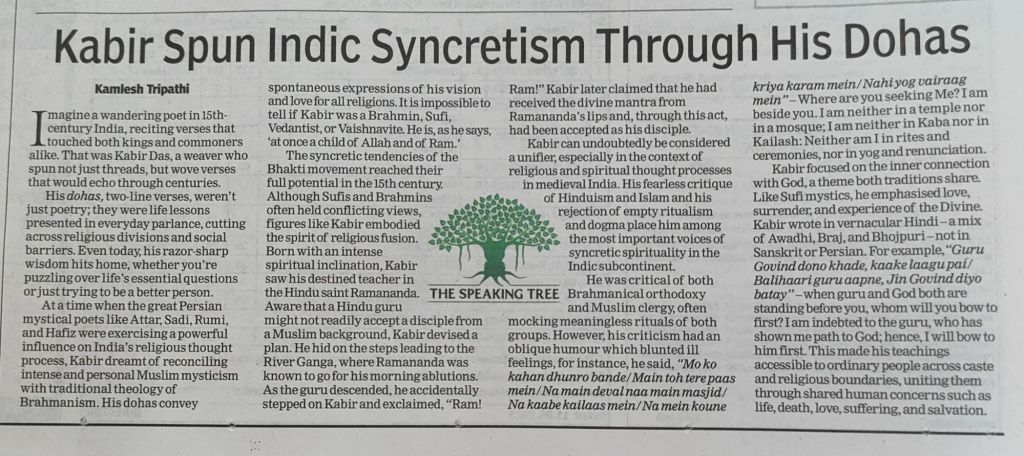


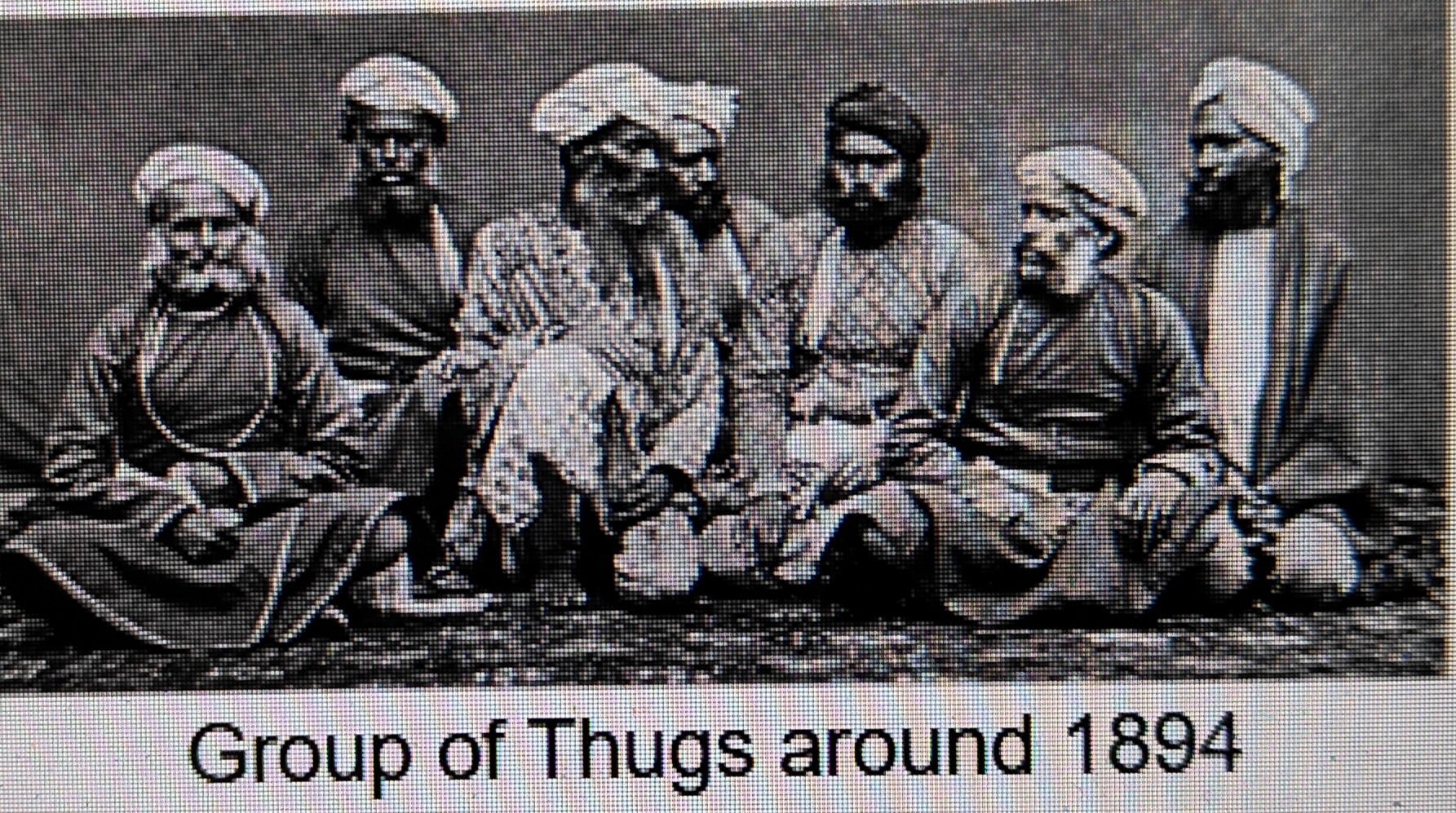
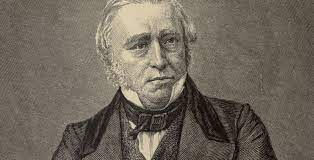


 Shravan charity mission