Tag Archives: british raj

Poem: A Happy Republic Day 2026 to Indians

Should India Include All-Time Classic Movies in School and College Syllabi in This Digital Age? by Kamlesh Tripathi

A CALCUTTA STORY: BLAME THYSELVES, BHADRALOKS

    THE GUJARATI DNA

    LITERARY CORNER: THE INDIAN MUTINY OF 1857

    Copyright@shravancharitymission

    Khidki (Window)

    –Read India Initiative—

    This is only an attempt to create interest in reading. We may not get the time to read all the books in our lifetime. But such reviews, talk and synopsis will at least convey what the book is all about.

    THE INDIAN MUTINY OF 1857

    by

    George Bruce Malleson.

    Pages 278

    Publisher: Rupa Publications.

    Price Rs 278.

    (Caveat: Most foreign writers especially of British origin call it a ‘mutiny’ which means a rebellion against authority. Whereas, Indian writers and more so Indians like calling it a ‘War of Independence)

        The fifth print or impression of this book came out in 2016. Malleson lived from (8 May 1825 to 1 March 1898). He was an English officer born in Wimbledon and educated at Winchester. Thereafter, he obtained a cadetship in the Bengal infantry in 1842, and served through the second Burmese War. He was a prolific writer. He had written extensively on the Sepoy Mutiny. His important works include, ‘History of the Indian Mutiny of 1857-58’ that runs into six volumes, ‘History of the French in India’ and the ‘Decisive Battles of India.’

        He even authored the biographies of the Mughal Emperor Akbar, the French Governor-General Dupleix and the British officer Robert Clive for the Rulers of India series. He died in London on 1st march 1898.

            Mutiny of 1857 remains an event shrouded in mystery and intrigue. Its very significance, whether it can be considered as the first war of Independence, continues to be questioned. The causes of the mutiny are many but all elusive, and so are the consequences of the mutiny. But the moot point is did the mutiny ring the death knell of the British Empire, or was it a mere speck of exaggerated trouble? The book takes you through that.

        It serves to fill a tremendous gap in narrative accounts of the mutiny, and demystifies lay assumptions. It begins with a sizeable background on the genesis of the British Raj in India—a move not deliberate but powerful enough to shape history for decades to come. The author delves in great detail into the causes of the mutiny, unlike preceding writers who mostly concentrated on the consequences. And this the author could do because he was a serving officer and therefore privy to many decisions and happenings. With the aid of personal knowledge and observation he attempts to pin-point the ‘latent power’ that drove the mutiny on.

        He provides a realistic account of all the important operations that took place, praising the heroic and criticizing the undeserving. He is careful not to overlay his work with too much tedious detail, where his writing remains lucid and interesting. 

        The subject book captures successfully, and even uncompromisingly, an event that was perhaps disorganized but large in scale. It deals with each individual and geographical area separately, analysing the causes and effects, both locally and nation-wide. It captures the spirit of the time, its people who fought and died, and the changing attitudes of the British Raj, which was gradually losing control of its Empire.

        In writing this short History of the Indian Mutiny of 1857. The author has aimed at the compilation of a work, which when complete in itself, should narrate the causes as well as the consequences of a movement unforeseen, and even undreamt of. For the mutiny as per the author was sudden and swift in its action, and therefore taxed utmost the energies of the British people. Preceding writers on the same subject, whilst dealing very amply with the consequences, have, with one exception, but dimply shadowed forth the causes. Even the very actors of the Mutiny failed to detect them.

        Sir John Lawrence the then Viceroy of India from 1864 to 1869, himself, writing with full knowledge of events in which he played a very conspicuous part, mistook the instrument for the chief cause. He stopped at the greased cartridge. But the greased cartridge was never issued to the great body of troops, if indeed to any. There must have been a latent motive power to make of an unissued cartridge a grievance so terrible as to rouse into revolting men whose fathers and whose father’s father had contributed in the making of the British Empire in India. The greased cartridge, too, did not concern those landowners and cultivators of Oudh and the North-Western Provinces, who rose almost to a man. What that latent motive power was, the author has described fully, in this volume.

        In the early chapters of the book the author communicates, ‘That his belief about the mutiny is founded on personal knowledge and personal observation. Locally chief of the Commissariat Department at Kanhpur when, in January 1856, Sir James Outram crossed the Ganges to depose or remove from office the King of Oudh, I had witnessed the indignation which the very rumour of his purpose caused among the sipahis of my own guard. I reported their excited state to my superiors, and was laughed at for my pains. But, impressed with the accuracy of my forecast, viz., that the annexation of Oudh would rouse indignation and anger in the sipahi army. Nevertheless, I continued. After my transfer, two months later, to an appointment in the Military Audit Department in Calcutta, to keep a careful record of several occurrences, all apparently of minor importance, which supervened when the effects of the annexation of Oudh had been thoroughly realised by the sipahis. My observations led to the conclusion that they were thoroughly angered, and, a little later, that their minds were being mysteriously worked upon. I kept copious notes of the matters I observed, and discussed them with my brother officers, without, finding that my views were shared by any one of them. Essentially, it was not alone the greased cartridge but a host of other factors that brought about the mutiny of 1857. It would seem, however, that the officer who held the responsible post of Town major. His name Major, Orfeur Cavenagh, had, from his own observation, arrived at conclusions not dissimilar. He has narrated in his admirable work the observations forced upon him by the changed demeanour of the natives of the North-Western Provinces in 1856. But he too, stood, amongst high-placed Europeans, almost alone in his convictions. The fact is that, up to the very outbreak of the mutiny at Mirath, which is present day Meerut, no one, from highest to lowest, believed in the possibility of a general combination. Those, and they could be counted on the fingers of one hand, who endeavoured to hint at an opposite conclusion were ridiculed as alarmists. So ingrained was the belief in the loyalty of the sipahis, and so profound was the ignorance as to the manner in which their minds were affected, that neither the outbreak at Mirath nor the seizure of Delhi entirely removed it.

        The book is divided into twenty eight chapters that begins with the introduction and then talks about the conspirators, to the first mutterings of the storm and the happenings at Barrackpur, Calcutta and the North-West. The revolt at Mirath present day Meerut is significant along with the seizure of Delhi. The effect of the seizure of Delhi across India. The author then goes on to describe the progress of the insurrection in the North-West. There are several other chapters as a spill over of the mutiny that leads to the march to Delhi and the author has listed the reactions and activities that flared up in Kanhpur, Lakhnao, Allahabad, and Calcutta. It also describes in great detail the Britishers taking back famous monuments from the mutineers such as ‘The Residency’ at Lucknow after Havelock’s first attempts to relieve it failed.

        The other places that the book covers are the events in Sagar and Narbada territories, Central India, Rajputana, the Mirath Districts, Rohilkhand and the Punjab province and even Gwalior.

       It then talks of the second attempt to takeover Lakhnao Residency and the Gwalior contingent. It also describes how Sir, Colin Campbell recovers the Duab area of Punjab.

        The book also covers the rebellion in Eastern Bengal, Eastern Bihar, Azamgarh, Allahabad and Eastern Oudh.

        The author has used the old names of the cities and places as they were spelt during those times.

        The book does impact you only if you read it in a continuous stretch. It brings you to a point where you start thinking that sure enough the ‘mutiny of 1857’ the forerunner to the fight for freedom in India that the Indians launched on the British Raj in the twentieth century under Mahatma Gandhi.

        Overall the book is a treat for history lovers. It is meticulously punctuated and that changes the style of writing automatically, and with that the speed of reading, where, you might take some extra hours to finish the book, as compared to some other present day book of similar pages. I would give the book seven out of ten. A must read for history students.

    By Kamlesh Tripathi

    *

    https://kamleshsujata.wordpress.com

    *

    Share it if you like it

    *

    Shravan Charity Mission is an NGO that works for poor children suffering from life threatening diseases especially cancer. Our posts are meant for our readers that includes both children and adults and it has a huge variety in terms of content. We also accept donations for our mission. Should you wish to donate for the cause. The bank details are given below:

    NAME OF ACCOUNT: SHRAVAN CHARITY MISSION

    Account no: 680510110004635 (BANK OF INDIA)

    IFSC code: BKID0006805

    *

    Our publications

    GLOOM BEHIND THE SMILE

    (The book is about a young cancer patient. Now archived in 7 prestigious libraries of the US, including, Harvard University and Library of Congress. It can also be accessed in MIT through Worldcat.org. Besides, it is also available for reading in Libraries and archives of Canada and Cancer Aid and Research Foundation Mumbai)  

    ONE TO TANGO … RIA’S ODYSSEY

    (Is a book on ‘singlehood’ about a Delhi girl now archived in Connemara Library, Chennai and Delhi Public Library, GOI, Ministry of Culture, Delhi)

    AADAB LUCKNOW … FOND MEMORIES

    (Is a fiction written around the great city of Nawabs—Lucknow. It describes Lucknow in great detail and also talks about its Hindu-Muslim amity. That happens to be its undying characteristic. The book was launched in Lucknow International Literary Festival of 2014)

    REFRACTIONS … FROM THE PRISM OF GOD

    (Co-published by Cankids–Kidscan, a pan India NGO and Shravan Charity Mission, that works for Child cancer in India. The book is endorsed by Ms Preetha Reddy, MD Apollo Hospitals Group. It was launched in Lucknow International Literary Festival 2016)

    TYPICAL TALE OF AN INDIAN SALESMAN

    (Is a story of an Indian salesman who is, humbly qualified. Yet he fights his ways through unceasing uncertainties to reach the top. A good read not only for salesmen. The book was launched on 10th February, 2018 in Gorakhpur Lit-Fest. Now available in Amazon, Flipkart and Onlinegatha)

    RHYTHM … in poems

    (Published in January 2019. The book contains 50 poems. The poems describe our day to day life. The book is available in Amazon, Flipkart and Onlinegatha)

    (ALL THE ABOVE TITLES ARE AVAILABLE FOR SALE IN AMAZON, FLIPKART AND OTHER ONLINE STORES OR YOU COULD EVEN WRITE TO US FOR A COPY)

    *****


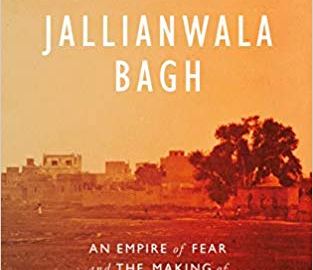
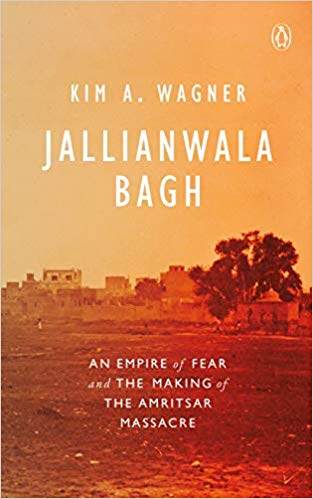
    LITERARY CORNER: “Jallianwala Bagh: An Empire of Fear and the Making of the Amritsar Massacre,” by Kim A Wagner.

    Copyright@shravancharitymission

    Khidki (Window)

    –Read India Initiative—

    This is only an attempt to create interest in reading. We may not get the time to read all the books in our lifetime. But such reviews, talk and synopsis will at least convey what the book is all about.

        Time doesn’t dilute the scars of hateful crimes. I’m pointing at the “Jallianwala Bagh” massacre, a crime perpetrated by Brigadier General Reginald Dyer. People who died in that slaughter, I’m sure, must be turning in their graves on each anniversary of the crime that was unleashed on April 13, 1919 by this devil. With that logic the victims by now must have turned at least a hundred times in their proverbial grave. But the apology from the British is yet to come. This monster, Brigadier Dyer later died on 23 July 1927. Winston Churchill called him a rotten apple simply to disavow his own responsibility.

        But then the rotten apple grew in his own backyard colony called India. General Dyer is also called, “the Butcher of Amritsar,” because of his order to fire repeatedly on a crowd of peaceful protesters. This resulted in the murder of at least 500-600 people and injuries to over a thousand more. Subsequently, Dyer was removed from duty and widely condemned both in Britain and in India. But he became a celebrated hero among some with connections to the British Raj. Some historians argue the episode was a decisive event towards the end of the British rule in India.

        Many books have been written on this particular massacre. Latest being “Jallianwala Bagh: An Empire of Fear and the Making of the Amritsar Massacre,” by historian Kim A Wagner. Wagner teaches, the history of colonial India and the British Empire at Queen Mary, University of London. He has written extensively on the subject of ‘Thuggee,’ the Indian Uprising of 1857, and resistance and colonial violence more generally in 19th and 20th century global history. The book has been published by Penguin, and the price is below Rs 500 in Amazon. Even though it has been a century since Brigadier General Reginald Dyer ordered Indian Army troops to open fire upon an unarmed crowd at Jallianwala Bagh on April 13, 1919, the memory of it is still painful for Indians. British historian Kim Wagner has taken a fresh look at the incident in this book. There are some advance praises about the book, a couple of them are as follows:

    1. “In the cautionary tale provided in Jallianwala Bagh, it is enduring racist fear that lies at the heart of precipitate violence. Analytically sharp but gripping to read, the book is a page turner.”—says Barbara D. Metcalf, Co-Author of “A Concise History of India.”
    1. In the compelling yet exacting study Kim Wagner combines the intimacy of the storyteller and the distance of the historian to evoke the “micro story” of the massacre while understanding it as the “final stage of the much longer process”, stretching back to Sepoy Uprising. Mining a variety of sources—diaries, memoirs and court testimonies—he uncovers fresh perspectives and examines the relation between colonial panic and state brutality with sophistication, sincerity and style rare in published accounts of this much-trodden ground.”–says Santanu Das, Author of, “India, Empire and First War Culture.”

        The book gives a good overview of the massacre from all corners and all stakeholders. Was Jallianwala Bagh massacre a one-off incident, as portrayed back then and even today by many? The book tries to answer that. The author feels rather than being an unprecedented event, the Amritsar massacre revealed the racialized logic of a colonial violence, and we find the exact sentiments expressed by British officers involved in the suppression of the Indian Uprising of 1857, for instance.

        An apology that describes General Dyer as a rotten apple, which is, essentially what Winston Churchill said in 1920, is not an apology at all but rather an attempt to disavow any form of responsibility in terms of the Raj and the British Empire in general.

        There is often a debate about the troops who open fired. Some say they were Gorkhas and Pathan troops. The author with his research tries to clear the air when he says. There probably were a few Sikh troops also present but we have to remember that the British at the same time did not think of the local population in communal terms. Dyer refers to the protesters simply as ‘rebels.’ The composition of the force he took with him to ‘Jallianwala Bagh’ was largely accidental.

        To a question about Indian Army veterans who had served in World War-I, being among the unfortunate crowd that got killed and injured the eyewitnesses describe how veterans called out for people to lie down to avoid being shot, so there were clearly demobilised soldiers in the crowd.

        British Empire apologists often dismiss the Indian National Congress’s findings about the tragedy and settle for government estimates to save their skin. The Indian National Congress actually estimated that 500 had been killed but that 1,000 might not be an exaggerated estimate—based on the door-to-door inquiry made by local agencies, some 540 names were found, and the author feels that somewhere between 500 to 600 were killed and, perhaps, three times that many wounded.

        As per the book it was not a pre-meditated plan. Dyer believed he was entering a war zone and was fully prepared to shoot at anyone who defied his ban on public meetings. He did not know what the layout of the city or Jallianwala Bagh was. Once he arrived at the Bagh, he did not care much about who was actually present but simply open fired without using his brains.

       There is no evidence about the 120 bodies that were recovered from the well. Eye-witnesses describe one or two people falling in it, and Motilal Nehru and Madan Mohan Malviya thought they saw one or two bodies floating in the well, later that summer—which was nothing more than a clay-pot and some old clothes floating in the well. There was a merging of the canal feeding with the holy tank, which runs under Jallianwala Bagh, since we know that some people climbed into that to flee the bullets and that several bodies were later recovered.

        Lastly, Churchill denounced Dyer in 1920 but it was not because he found indiscriminate violence in the Empire unacceptable, but rather because Dyer’s actions made it so difficult to defend British rule in India. That is also why he was eager to depict Dyer and the massacre as ‘un-British.’

        The massacre has been portrayed in several movies, starting with Attenborough’s Gandhi. But author Kim Wagner thinks none of them make more impact than re-enact the set of visual tropes first deployed by Attenborough. There is almost a checklist of recurrent motifs, including Dyer ordering his troops to fire, and people throwing themselves into the well or getting crushed against a locked gate, crying kids sitting next to their dead parents. To break new ground in this respect would require a break from these filmic conventions.

        Jallianwalla Bagh is often the least talked about episode in the British circles but yes to an extent or rather to quite an extent during the trial it helped in understanding the British colonial policy. The Hunter Commission was set up partly to assuage moderate Indian nationalists and Montagu, the Secretary of State for India, never expected it to reveal the things it did. The fact that this was such a large inquiry, which elicited so much evidence, not least Dyer’s own testimony, means that this was probably the best-recorded colonial atrocity within the British Empire up till that point.

        Well if you’re interested in history and the sad chapters of Indian history this book is for you. Well written and great in detailing and largely unbiased barring certain chapters where you get some eerie feeling it sails through in the Indian Ocean without turbulence. A historians prime job is to lay down history in proper perspective where the author I think has not failed. I would give the book seven out of ten.

    Posted by Kamlesh Tripathi

    *

    https://kamleshsujata.wordpress.com

    *

    Share it if you like it

    *

    Shravan Charity Mission is an NGO that works for poor children suffering from life threatening diseases especially cancer. Our posts are meant for our readers that includes both children and adults and it has a huge variety in terms of content. We also accept donations for our mission. Should you wish to donate for the cause. The bank details are given below:

    NAME OF ACCOUNT: SHRAVAN CHARITY MISSION

    Account no: 680510110004635 (BANK OF INDIA)

    IFSC code: BKID0006805

    *

    Our publications

    GLOOM BEHIND THE SMILE

    (The book is about a young cancer patient. Now archived in 7 prestigious libraries of the US, including, Harvard University and Library of Congress. It can also be accessed in MIT through Worldcat.org. Besides, it is also available for reading in Libraries and archives of Canada and Cancer Aid and Research Foundation Mumbai)  

    ONE TO TANGO … RIA’S ODYSSEY

    (Is a book on ‘singlehood’ about a Delhi girl now archived in Connemara Library, Chennai and Delhi Public Library, GOI, Ministry of Culture, Delhi)

    AADAB LUCKNOW … FOND MEMORIES

    (Is a fiction written around the great city of Nawabs—Lucknow. It describes Lucknow in great detail and also talks about its Hindu-Muslim amity. That happens to be its undying characteristic. The book was launched in Lucknow International Literary Festival of 2014)

    REFRACTIONS … FROM THE PRISM OF GOD

    (Co-published by Cankids–Kidscan, a pan India NGO and Shravan Charity Mission, that works for Child cancer in India. The book is endorsed by Ms Preetha Reddy, MD Apollo Hospitals Group. It was launched in Lucknow International Literary Festival 2016)

    TYPICAL TALE OF AN INDIAN SALESMAN

    (Is a story of an Indian salesman who is, humbly qualified. Yet he fights his ways through unceasing uncertainties to reach the top. A good read not only for salesmen. The book was launched on 10th February, 2018 in Gorakhpur Lit-Fest. Now available in Amazon, Flipkart and Onlinegatha)

    RHYTHM … in poems

    (Published in January 2019. The book contains 50 poems. The poems describe our day to day life. The book is available in Amazon, Flipkart and Onlinegatha)

    (ALL THE ABOVE TITLES ARE AVAILABLE FOR SALE IN AMAZON, FLIPKART AND OTHER ONLINE STORES OR YOU COULD EVEN WRITE TO US FOR A COPY)

    *****


    ARTICLE: WAS NON-VIOLENCE SOLELY RESPONSIBLE FOR INDIA’S INDEPENDENCE OR WAS THERE SOMETHING MORE TO IT?

    Copyright@shravancharitymission


        Hello friends welcome to this edition of editorial compass. A lot has been spoken about India achieving independence through the “Brahmastra” of non-violence. But then, there also, happens to be another view-point that calls non-violence a myth.

        The line between historical facts and fiction is more porous than students of history might think. It is not uncommon for countries to create self-suiting or sanitised historical narratives. As George Orwell once said, “Who controls the past controls the future. Who controls the present controls the past.”

        India’s Republic Day Parade this year featured for the first time veterans of the Indian National Army (INA) that waged an armed struggle against the British colonial rule. Four INA veterans in their 90s rode a jeep in the parade that, paradoxically, showcased the life experiences of the apostle of non-violence, Mahatma Gandhi, through 22 tableaux.

        India has long embellished or distorted how it won independence. The incongruous juxtaposition of the INA along with Gandhi at the parade inadvertently highlighted that. The INA veterans participation, in fact, helped underscore the Indian republic’s founding myth—that it won independence only through non-violence. This myth has been deeply instilled in the minds of almost all Indians since their school days.

        Surely, the Gandhi-led, non-violent independence movement played a critical role. Both in galvanising grassroots resistance to British rule and also in helping to gain independence. But the decisive factor was the protracted World War-II, which reduced to ruins large swaths of Europe and Asia, especially the imperial powers. The war between the Allied and Axis powers killed 80 million, or 4% of the global population of that time.

        Despite the Allied victory, a devastated Britian was in no position to hold on to its colonies, including “crown jewel” India. Even colonies, where, there were no grassroots resistance to colonial rule, won independence in the post-World War-II period.

        The British had dominated India through a Machiavellian divide-and-rule strategy. Their exit came only after they had reduced one of the world’s wealthiest economies to one of its poorest. Indeed, they left after they had looted to their heart’s content, siphoning out, at least 9.2 trillion (or 44.6 trillion$) pounds, according to economist Utsa Patnaik’s recent estimate.

        Had the post-1947 India been proactive and forward-looking in securing its frontiers. It could have averted both the Kashmir and Himalayan border problems. China was in deep turmoil until October 1949, and India had ample time and space to assert control over the Himalayan borders. But India’s pernicious founding myth of non-violence gave rise to a pacifist country that believed it could get peace merely by seeking peace, instead of building the capability to defend peace.

        Here’s the paradox: countless numbers of Indians died to the excesses of British colonial regime. Just in the man made Bengal famine of 1942-45, six to seven million starved to death (a toll far greater than the “Holocaust”) due to the British war policy of diverting resources away from India. Britian sent Indian soldiers in large numbers to fight its dirty wars elsewhere, including the two world wars, and many died while serving as cannon fodder. Indeed, the present Indian republic was born in blood in blood: As many as a million civilians died in a senseless violence and millions more were uprooted in the British-contrived partition.

        Yet the myth of India uniquely charting and securing its independence through non-violence was propagated by the interiors of the Raj, the British trained “brown sahibs.” No objective discourse was encouraged post-1947 on the multiple factors—internal and external—that aided India’s independence.

        The hope of Indian independence was first kindled by Japan’s victory in the 1904-05 war with Russia—the first time an Asian nation comprehensively defeated a European rival. However, it was the world war that Adolf Hitler unleashed—with imperial Japan undertaking military expeditions in the name of freeing Asia from white colonial rule—that acted as the catalyst. An emboldened Gandhi serve a “Quit India” notice on the British in 1942.

        While the Subhas Chandra Bose-led INA could not mount a formidable threat to a British colonial military, overflowing with Indian recruits. The Bombay mutiny and other sepoy revolts of 1946 triggered by INA prisoners’ trials undermined Britain’s confidence in sustaining the Raj, hastening its exit. Yet, independent India treated INA soldiers shabbily with many abandoned into penury.

        Against this background the rehabilitation of Bose and the INA has long been overdue. Prime Minister Narendra Modi has done well to initiate the process, however low-key, to give Bose and the INA their due, including recently renaming one Andaman island after Bose and two other Andaman islands to honour INA sacrifices. Modi even wore the INA cap to address a public meeting in Andaman on the 75th anniversary of Bose’s hoisting of the tricolour there.

        Recognising unsung heroes is an essential step towards re-balancing the historical narrative. A rule-based international order, premised on non-violence remains a worthy aspirational goal. But Indian romancing of non-violence as an effective political instrument crimped national security policy since independence. The country hewed to pacifism (with Prime Minister Jawaharlal Nehru publicly bewailing in 1962 that China had “returned evil for good”) and frowned on materialism (even after China surpassed India’s GDP in 1984-85).

        The burden of its quixotic national philosophy has imposed enduring costs, including an absence of a strategic culture, as the late American analyst George Tanham famously pointed out. Lack of a culture to pursue a clear strategic vision and policy hobbles India’s ambition to be a great power.

        Synopsis derived out of an article titled “The Non-violence Myth—India’s founding story bestows upon it a quixotic national philosophy and enduring costs by geostrategist, Brahma Chellany in TOI.

    Posted by Kamlesh Tripathi

    *

    https://kamleshsujata.wordpress.com

    *

    Share it if you like it

    *

    Shravan Charity Mission is an NGO that works for poor children suffering from life threatening diseases especially cancer. Our posts are meant for our readers that includes both children and adults and it has a huge variety in terms of content. We also accept donations for our mission. Should you wish to donate for the cause. The bank details are given below:

    NAME OF ACCOUNT: SHRAVAN CHARITY MISSION

    Account no: 680510110004635 (BANK OF INDIA)

    IFSC code: BKID0006805

    *

    Our publications

    GLOOM BEHIND THE SMILE

    (The book is about a young cancer patient. Now archived in 7 prestigious libraries of the US, including, Harvard University and Library of Congress. It can also be accessed in MIT through Worldcat.org. Besides, it is also available for reading in Libraries and archives of Canada and Cancer Aid and Research Foundation Mumbai)  

    ONE TO TANGO … RIA’S ODYSSEY

    (Is a book on ‘singlehood’ about a Delhi girl now archived in Connemara Library, Chennai and Delhi Public Library, GOI, Ministry of Culture, Delhi)

    AADAB LUCKNOW … FOND MEMORIES

    (Is a fiction written around the great city of Nawabs—Lucknow. It describes Lucknow in great detail and also talks about its Hindu-Muslim amity. That happens to be its undying characteristic. The book was launched in Lucknow International Literary Festival of 2014)

    REFRACTIONS … FROM THE PRISM OF GOD

    (Co-published by Cankids–Kidscan, a pan India NGO and Shravan Charity Mission, that works for Child cancer in India. The book is endorsed by Ms Preetha Reddy, MD Apollo Hospitals Group. It was launched in Lucknow International Literary Festival 2016)

    TYPICAL TALE OF AN INDIAN SALESMAN

    (Is a story of an Indian salesman who is, humbly qualified. Yet he fights his ways through unceasing uncertainties to reach the top. A good read not only for salesmen. The book was launched on 10th February, 2018 in Gorakhpur Lit-Fest. Now available in Amazon, Flipkart and Onlinegatha)

    RHYTHM … in poems

    (Published in January 2019. The book contains 50 poems. The poems describe our day to day life. The book is available in Amazon, Flipkart and Onlinegatha)

    (ALL THE ABOVE TITLES ARE AVAILABLE FOR SALE IN AMAZON, FLIPKART AND OTHER ONLINE STORES OR YOU COULD EVEN WRITE TO US FOR A COPY)

    *****


    BOOK CORNER: SAHIB’S WHO LOVED INDIA … compiled & edited by Khushwant Singh

    Copyright@shravancharitymission

    Khidki (Window)

    –Read India Initiative—

    This is only an attempt to create interest in reading. We may not get the time to read all the books in our lifetime. But such reviews, talk and synopsis will at least convey what the book is all about.

    SAHIBS WHO LOVED INDIA

    Compiled & edited by Khushwant Singh

        For far too long we have despised the English as unwanted rulers. Who exploited India and kept their distance from Indians.  And as soon as their tenures ended, they went back to their homes in England and were happy to forget the time they had spent in India.

    This asymmetrical image of the English in India persists in the mind of most Indians. It is true that the majority of those who came here came because they could not find jobs in their own country. They hated everything about India: its climate, mosquitoes, flies, the filth and finally its dirt consummating into reek.

    Plainly speaking they hated Indians. There were others who enjoyed the luxury of spacious bungalows with servants, shikar, riding, pig-sticking, drinking, dancing. But even they kept themselves aloof from Indians with their ‘whites only’ clubs.

    However, there was a third variety that liked everything about India, stayed away from the racists club, went out of their way to befriend Indians and maintained contacts with them even after returning to England.

    Some even lent tacit support to the freedom movement. They stayed on in India after the country gained independence, reluctantly returning to England when their bread winners retired.

    Khushwant Singh was quite fortunate in knowing quite a few of this breed. Both, whom he befriended during his long years in England and those whom he got to know in India.

    This book, therefore, is a collection of articles written by people who enjoyed India I would say and went back with pleasant memories.

    In all there are about twenty-two articles in this book written by renowned Britishers such as Lord Mountbatten of Burma—as he calls him, Taya Zinkin—a prominent French born journalist and author. She was married to ICS officer Maurice Zinkin, J.A.K Martyn—the Head Master of Doon School and many other distinguished personalities.

    The flavour that you get is quite contrasting. Like in present times you find so many Indians going abroad to work. Well … in those days of the British Raj, there were many Britishers who came to India to work. Some through the bureaucratic process and some on their own.

    Initially they entered India with a lot of apprehension, of it being primitive but when they started working here they started enjoying the country. Especially, the open surroundings, the spacious bungalows and above all the warm people.

    While zooming past the articles you’ll find some of them being even critical about the British establishment and the racist culture that they spread in India.

    Some even disagreed with the thought process that India was not ready for ‘independence.’ That also brings me to the point that there is always a logical disconnect between the rulers and its citizenry.

    It is a rare collection of essays that invites to revisit a vanished era of the sahibs and memsahibs. From Lord Mountbatten to Peggy Holroyde to Maurice and Taya Zinkin.

    Britishers who lived and worked in India reminisce, about topics and points of interest as varied as the Indian Civil Service, the Roshanara Club, shikar and hazari, the amateur cine society of India, the Doon School, Rudyard Kipling and of course Mahatma Gandhi.

    Selected from a series of articles commissioned by Khushwant Singh when he was editor of the illustrated weekly of India. These delightfully individualistic and refreshingly candid writings reveal a fascinating array of British attitudes, experiences, observations and fond memories. The occasional short-lived grouse and above all, a deep and abiding affection and respect for India.

    It’s a less than a lengthy book of around a hundred and ninety pages full of fun. Especially, if you are interested in knowing about episodes that happened during the British Raj.

    The articles are by ICS officers, journalists, technocrats, architects, teachers, BBC correspondents, government servants, army officers and bureaucrats.

    I would give the book nine out of ten.

    ***

    Synopsis by Kamlesh Tripathi

    *

    https://kamleshsujata.wordpress.com

    *

    Share it if you like it

    *

    Shravan Charity Mission is an NGO that works for poor children suffering from life threatening diseases especially cancer. Should you wish to donate for the cause. The bank details are given below:

    NAME OF ACCOUNT: SHRAVAN CHARITY MISSION

    Account no: 680510110004635 (BANK OF INDIA)

    IFSC code: BKID0006805

    *

    Our publications

    GLOOM BEHIND THE SMILE

    (The book is about a young cancer patient. Now archived in 7 prestigious libraries of the US, including, Harvard University and Library of Congress. It can also be accessed in MIT through Worldcat.org. Besides, it is also available for reading in Libraries and archives of Canada and Cancer Aid and Research Foundation Mumbai)  

    ONE TO TANGO … RIA’S ODYSSEY

    (Is a book on ‘singlehood’ about a Delhi girl now archived in Connemara Library, Chennai and Delhi Public Library, GOI, Ministry of Culture, Delhi)

    AADAB LUCKNOW … FOND MEMORIES

    (Is a fiction written around the great city of Nawabs—Lucknow. It describes Lucknow in great detail and also talks about its Hindu-Muslim amity. That happens to be its undying characteristic. The book was launched in Lucknow International Literary Festival of 2014)

    REFRACTIONS … FROM THE PRISM OF GOD

    (Co-published by Cankids–Kidscan, a pan India NGO and Shravan Charity Mission, that works for Child cancer in India. The book is endorsed by Ms Preetha Reddy, MD Apollo Hospitals Group. It was launched in Lucknow International Literary Festival 2016)

    TYPICAL TALE OF AN INDIAN SALESMAN

    (Is a story of an Indian salesman who is, humbly qualified. Yet he fights his ways through unceasing uncertainties to reach the top. A good read not only for salesmen. The book was launched on 10th February, 2018 in Gorakhpur Lit-Fest. Now available in Amazon, Flipkart and Onlinegatha

    (ALL THE ABOVE TITLES ARE AVAILABLE FOR SALE IN AMAZON, FLIPKART AND OTHER ONLINE STORES OR YOU COULD EVEN WRITE TO US FOR A COPY)

    *****


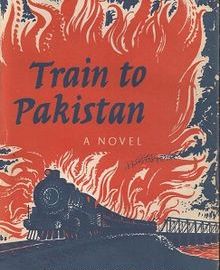
    WATCH BOOK TALK: ‘TRAIN TO PAKISTAN’ by Khushwant Singh

    Copyright@shravancharitymission


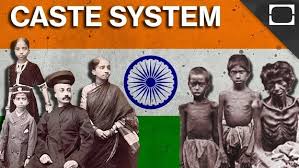
    COULD THE BRITISH RAJ HAVE BLUNTED THE INTENSITY OF CASTEISM IN INDIA?

    Copyright@shravancharitymission


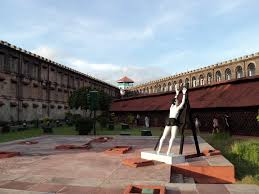
         It is said—‘In India you can change your religion but not your caste.’ But this reality almost met with a challenge from the Britishers at the time of the British Raj which is largely unknown. In fact, had the British Raj, pushed its way through, it would have shown the way for abolishment of the caste system, all together. But they began only with criminals, by sending them to Andamans, better known as Kala Pani. (Literal meaning is ‘black waters’. But ‘Kala’ also signifies ‘kaal’—that signifies the time of death).

        If the British so wanted. In the eighty nine years of their dictatorial rule. They could have at least blunted the ferocity of the caste system in India, if not completely uprooted. But they had other nefarious designs that was to divide and rule. So, while on one hand they exploited the caste rivalry in the mainland, on the other they got rid of it by sending criminals to islands in Kala Pani. Where, they could rid them of their caste. But sadly, most of them were freedom fighters whom they had held as prisoners.

            These remote islands in Andamans, were considered suitable to punish the ‘India Independence’ activists—called the freedom fighters. Not only were they isolated from the mainland. The overseas journey to the islands (Kala Pani) also threatened them with loss of caste that could have resulted in social exclusion. Sadly, this is also corroborated by Hindu religious scriptures. These convicts were largely used in chain-gangs, to construct prisons, buildings and harbor facilities. Many were finally hanged and many died while building these structures. Where, they largely served to colonize the island for the British.

        That brings us, to the moot point. What about those Hindus, who were not prisoners? But have travelled overseas, either on business or pleasure. Have they also lost their caste identity like those prisoners, just because they crossed the seas? Because, as per the scriptures. Those Hindus who have travelled overseas, automatically lose their caste, and to retrieve it they need to go in for deep penance. Further, if we are to believe in the caste system. We also need to believe in the scriptures with equal measure. As both are ancient and part of our tenets. For it can’t be that on one hand we believe in the caste system but give the other theory a grand miss. For our religious scriptures below, say it all.

        The offense of crossing the sea is known as “Samudrolanghana” or “Sagarollanghana.” The Dharma Sutra of Baudhayana (II.1.2.2) lists sea voyages as first of the offences that cause the loss of varna (caste). The Dharma Sutra suggests a person can wipe away this offense in three years by eating little at every fourth meal time. By bathing at dawn, noon and dusk; standing during the day; and seated during the night.

        The reasons behind the taboo include the inability, to carry out the daily rituals, and the sin of contact with the mlecchas (barbarians). The fear of crossing the seas also derives from the notion. That it entailed the end of the reincarnation cycle as the traveler was cut off from the regenerating waters of the Ganges. Such voyages also meant breaking family and social ties. And, according, to another belief in the pre-modern India the Kala Pani (sea water) was inhabited by the houglis, bad spirits and monsters.

        During the Age of Discovery, Portuguese sailors noted that Hindus were reluctant to engage in maritime trade due to this taboo. In the eighteenth century, the Banias of North India, considered, even the crossing of the Indus River, at Attock as a taboo, and underwent purification rituals upon their return. However, not all Hindus adhered to the taboo, especially the Hindu merchants located in Burma, Muscat and other places.

        So, can we, then say. All those Hindus, who have traveled overseas, are now devoid of any caste?

    *

    By Kamlesh Tripathi

    *

                                                           https://kamleshsujata.wordpress.com

    *

    Share if you like it

    *

    Shravan Charity Mission is an NGO that works for poor children suffering from life threatening diseases. Should you wish to donate for the cause the bank details are given below:

    NAME OF ACCOUNT: SHRAVAN CHARITY MISSION

    Account no: 680510110004635 (BANK OF INDIA)

    IFSC code: BKID0006805

    *

    Our publications

    GLOOM BEHIND THE SMILE

    ONE TO TANGO … RIA’S ODYSSEY

    AADAB LUCKNOW … FOND MEMORIES

    REFRACTIONS … FROM THE PRISM OF GOD

    (CAN BE BOUGHT FROM ON LINE BOOK STORES OR WRITE TO US FOR COPIES)

    *****