–There is no poison as pungent as arrogance. Shed arrogance and welcome the happy world around you—
*
There is some turbulence, There is some disturbance, Or is it my arrogance, That disturbs my equilibrium?
*
It echoes through my hollow pride, A voice I silenced, now amplified. It mocks my mask, my constant cloak, The louder I speak, the less I know.
*
There isn’t a song left in me, For arrogance has consumed me completely. Its embers once felt like a sacred flame, But now it only burns in shame.
*
Still, a ray of sunlight dares to creep, Into the room where I barely sleep, Sneaking in through the silent skylight, Scattering gold into my endless night.
*
It encourages me to open my mind, To let the weight of falsehood unwind. It whispers softly with no demand, Let go arrogance and do not command.
*
It tells me to open my arms, To embrace life without titles or charms, To welcome the happy scenes around, And leave the arrogance behind.
*
Nature says: I am on colourful display, For eyes that wander, and hearts that stray, I offer peace that cannot be owned, But you must come to me unthroned.
*
But arrogance tries to forestall the interplay, Building walls that keep joy at bay. Like a vortex, it feeds on control, Draining the light from my soul.
*
Yet the power of the skylight becomes immense, When it allows the sunlight to shine, Inside my once-armoured defence, A quiet light, yet so divine.
*
The trees outside no longer condescend, They sway like sages; they do not pretend. Their wisdom lies in being still, And bending gently to the will.
*
I see now: the path is not to reign, But to walk through sun and storm and rain. To learn, unlearn, and fall apart, Until humility reclaims the heart.
*
So let the sunlight do its part, Peeling arrogance from my heart, In this open space, I start afresh, Because I have miles to go,
Before I rest.
*
–Bury your arrogance and see the difference in your life—
Shravan Charity Mission is an NGO that works for poor children suffering from life-threatening diseases, especially cancer. Our posts are meant for our readers, including children and adults, and have a huge variety of content. We also accept donations for our mission. Should you wish to donate to the cause of cancer? The bank details are given below:
WE TREAT INDIA-PAK HOSTILITY AS INEVITABLE, BUT THESE DIVIDES FORMED WITHIN LIVING MEMORY (FOR THE RECORD)
Sam Dalrymple was set for a career in particle physics until a family trip to Afghanistan to visit the remains of the Bamiyan Buddha rerouted him into history. He started a virtual reality project connecting Partition survivors, which, in turn, inspired his debut book 'Shattered Lands', tracing the unravelling of the Indian Empire. In an interview with Neelam Raaj, he talks about why our complex pasts shouldn't be ignored.
Q. Several years ago, you co-founded Project Dastaan, connecting those displaced by the 1947 Partition through virtual reality. Was it Dastaan that sparked off this deep dive into the five partitions or something else? A. Dastaan was very much the origin of the book. In 2018, my college friends and I began reconnecting individuals displaced in the 1947 Partition of India, the largest forced migration in history, to their ancestral villages through VR. It was while researching the impact of Partition on Tripura and North East India for Dastaan that the book idea first came together: I was chatting with an academic in the region, and when I asked about Partition, he said, "Which one? Burma in 1937, Pakistan in 1947 or Bangladesh in 1971." That conversation made me think about the multiple ruptures and borders that have carved their way through the subcontinent.
Q. The five partitions you write about are the separation of Burma, Arabia and Pakistan from India, the division of 500 princely states, and finally, the creation of Bangladesh. Why did you want to tell this story? A. We live with the consequences of these partitions every day. Just look at the recent war between India and Pakistan. Today, South Asia is one of the most bordered regions in the world, and you can actually see its borders from space. However, 100 years ago, none of these borders were foreseen. Demands for 'independence' were widespread, but no one could have suspected that the nations India, Pakistan, Bangladesh, Yemen and Burma would soon emerge from the wreckage of British India. Nor would anyone have imagined that tiny princely states like Bhutan and Dubai would last until the end of the century, while massive states like Hyderabad would not.
Q. Your book challenges some widely held beliefs, like the idea that India's borders were drawn solely by Cyril Radcliffe. Could you tell us more about that? A. Cyril Radcliffe was famously charged with drawing the Partition border that would slice through British India. Jinnah had suggested his name because he had never been east of Paris, and supposedly his obliviousness would make him impartial. This, of course, had deadly consequences. But what we often forget is that he only drew the lines dividing Punjab and Bengal. Both the LoC and the entire stretch of the India-Pakistan Border from the Arabian Sea to Sri Ganganagar - collectively 81% of the present India-Pakistan Border fence-result from the decisions of seven local princes and have nothing to do with Radcliffe. Thirty-six per cent of the border with East Pakistan (modern Bangladesh) was made by another ten. Had states like Jodhpur joined Pakistan, or had states like Bahawalpur joined India, the border would look very, very different.
Q. The chapter on the Arabian Peninsula ties a global moment -- the British withdrawal from Aden (now in Yemen)-- to a personal story about Dhirubhai Ambani. How did that shape the trajectory of Reliance?, A. We often forget today that Aden was the Dubai of the 1960s. It was the great business hub of its time, and this remained the case right until 1967 when the British pulled out and the revolutionary NLF took over. Dhirubhai Ambani had worked in Aden until the late 1950s, and after the British evacuation from Aden, he found himself perfectly placed to hire his dispossessed colleagues and found use of 'a ready-made source of educated managers, accountants and salesmen, drilled to European standards'. He had just ended a business partnership with his cousin and gone solo, forming a new company called Reliance Commercial Corporation. Reliance ballooned in the years after the fall of Aden, underpinned by a generation of Indian-origin Adenis versed in free market capitalism rather than Nehruvian socialism.
Q. Given that your book comes out against the backdrop of India-Pakistan tensions, what is the perspective you hope readers will take away? A.So often, we treat the hostility between India and Pakistan as inevitable. Even President Trump chimed in, telling reporters aboard Air Force One that India and Pakistan had been fighting "for a thousand years, probably longer than that." But this really isn't the case. These divisions were formed within living memory --as were the divisions between India and Bangladesh, Burma and Yemen, etc. Today, the region's borders have become so embedded in our subconscious that it is easy to forget there were other possibilities for a post-colonial South Asia. Several prominent national figures, including PM Nehru and Burma's founding father Aung San, had once spoken of an 'Asiatic federation' in the 'not very, very distant future', a 'United Nations of South Asia' encompassing India, Pakistan, Ceylon and Burma. Long after the British departed, many still hoped the new borders might prove temporary. Yet in every single one of these countries, governments have made sure to paper over the shared cross-border heritage of their peoples. The last decade has witnessed the decline of globalisation, the strengthening of borders and the resurgence of nationalism across the world. India's partitions are a direct warning of what such a future might hold.
Q. Your Dad, historian William Dalrymple, sparked a lot of debate recently, saying that academics don't make their work as accessible as popular historians. Where do you stand on this? A. I don't think they have to stand in opposition at all. We obviously need both. ***
Shravan Charity Mission is an NGO that works for poor children suffering from life-threatening diseases, especially cancer. Our posts are meant for our readers, including children and adults, and have a huge variety of content. We also accept donations for our mission. Should you wish to donate to the cause of cancer? The bank details are given below:
“Wow! What’s that?” The curious monkey asked his friends–fellow monkeys. The friends, looking in the direction he was pointing, saw what had attracted his attention. It was a log of wood. “What’s so interesting about a log of wood?” His friends asked. Instead of answering the friends, the curious monkey ran to the log and jumped on it. Looking at the wedge in the middle of the log, the monkey reached out to touch it. A little further down, a group of woodcutters were laughing and enjoying their meal, unaware of the prank the curious monkey was about to play. They had been cutting this log of wood all morning and had managed to cut a part of it, but they had to take a break for lunch. Not wanting the log to close up again, they had placed a wedge in the slit to keep it open. This wedge was what the curious monkey began to tug at, while the other monkeys stepped aside. Suddenly, the wedge snapped and the log of wood shut, trapping the curious monkey’s leg. While all his friends ran away in fear, the sad little monkey sat there in pain, waiting for the woodcutters to return from their break. Lesson: Unnecessary interference in others’ matters may interfere with the matters of your life.
Shravan Charity Mission is an NGO that works for poor children suffering from life-threatening diseases, especially cancer. Our posts are meant for our readers, including children and adults, and have a huge variety of content. We also accept donations for our mission. Should you wish to donate to the cause of cancer? The bank details are given below:
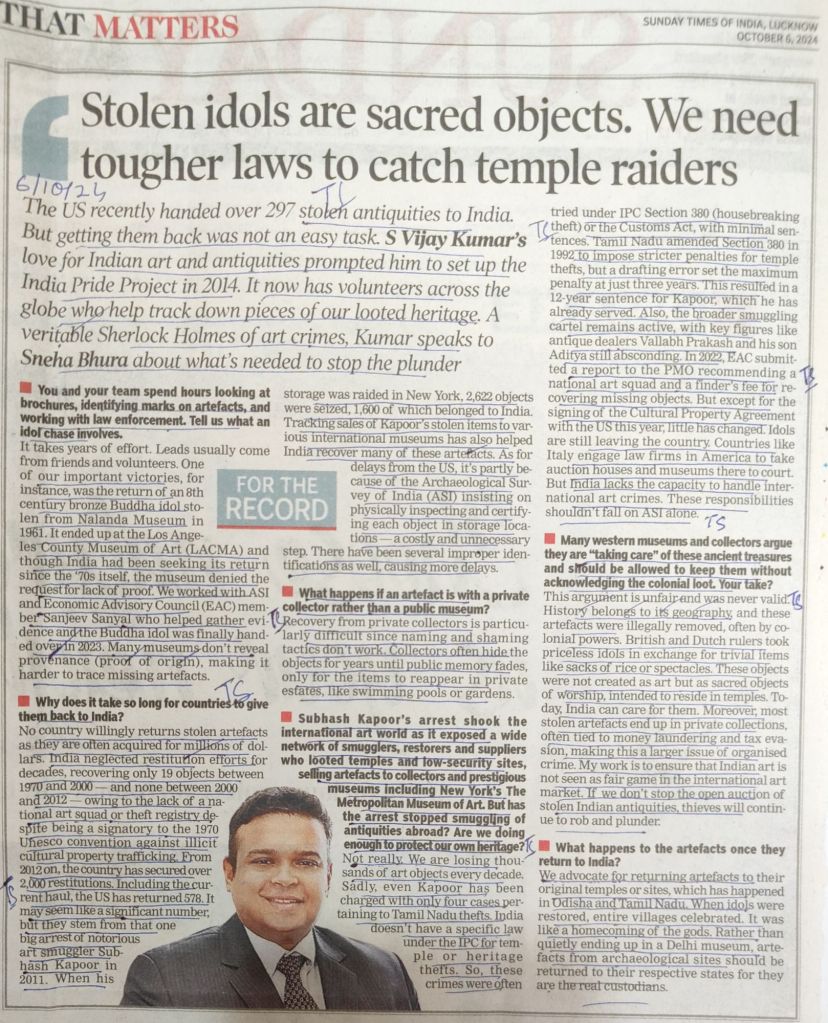
INTERESTING FACTS: STOLEN IDOLS ARE SACRED OBJECTS. WE NEED TOUGHER LAWS TO CATCH TEMPLE RAIDERS. (THE TIMES OF INDIA 6/10/24)
The US recently handed over 297 stolen antiquities to India. But getting them back was not an easy task. S Vijay Kumar’s love for Indian art and antiquities prompted him to set up the India Pride Project in 2014. It now has volunteers across the globe who help track down pieces of our looted heritage. A veritable Sherlock Holmes of art crimes, Kumar speaks to Sneha Bhura about what’s needed to stop the plunder. Q. You and your team spend hours looking at brochures, identifying marks on artefacts, and working with law enforcement. Tell us what an idol chase involves. A. It takes years of effort. Leads usually come from friends and volunteers. One of our important victories, for instance, was the return of an 8th-century bronze Buddha idol stolen from the Nalanda Museum in 1961. It ended up at the Los Angeles County Museum of Art (LACMA), and though India had been seeking its return since the ’70s itself, the museum denied the request for lack of proof. We worked with the ASI and Economic Advisory Council (EAC) member Sanjeev Sanyal, who helped gather evidence and the Buddha idol was finally handed over in 2023. Many museums don’t reveal provenance (proof of origin), making it harder to trace missing artefacts. Q. Why does it take so long for countries to give them back to India? A. No country willingly returns stolen artefacts as they are often acquired for millions of dollars. India neglected restitution efforts for decades, recovering only 19 objects between 1970 and 2000—and none between 2000 and 2012—owing to the lack of a national art squad or theft registry despite being a signatory to the 1970 UNESCO convention against illicit cultural property trafficking. From 2012 on, the country has secured over 2,000 restitutions. Including the current haul, the US has returned 578. It may seem like a significant number, but they stem from that one big arrest of notorious art smuggler Subhash Kapoor in 2011. When his storage was raided in New York, 2622 objects were seized, 1600 of which belonged to India. Tracking sales of Kapoor’s stolen items to various international museums has also helped India recover many of these artefacts. As for delays from the US, it’s partly because of the Archaeological Survey of India (ASI) insisting on physically inspecting and certifying each object in storage locations—a costly and unnecessary step. There have been several improper identifications as well, causing more delays. Q. What happens if an artefact is with a private collector rather than a public museum? A. Recovery from private collectors is particularly difficult since naming and shaming tactics don’t work. Collectors often hide the objects for years until public memory fades, only for the items to reappear in private estates, like swimming pools or gardens. Q. Subhash Kapoor’s arrest shook the international art world as it exposed a wide network of smugglers, restorers and suppliers who looted temples and low-security sites, selling artefacts to collectors and prestigious museums including New York’s The Metropolitan Museum of Art. But has the arrest stopped the smuggling of antiquities abroad? Are we doing enough to protect our own heritage? A. Not really. We are losing thousands of art objects every decade. Sadly, even Kapoor has been charged with only four cases pertaining to Tamil Nadu thefts. India doesn’t have a specific law under the IPC for temple or heritage theft. So, these crimes were often tried under IPC Section 380 (housebreaking theft) or the Customs Act, with minimal sentences. Tamil Nadu amended Section 380 in 1992 to impose stricter penalties for temple thefts, but a drafting error set the maximum penalty at just three years. This resulted in a 12-year sentence for Kapoor, which he has already served. Also, the broader smuggling cartel remains active, with key figures like antique dealers Vallabh Prakash and his son Aditya still absconding. In 2022, EAC submitted a report to the PMO recommending a national art squad and a finder’s fee for recovering missing objects. But except for the signing of the Cultural Property Agreement with the US this year, little has changed. Idols are still leaving the country. Countries like Italy engage law firms in America to take auction houses and museums there to court. But India lacks the capacity to handle international art crimes. These responsibilities shouldn’t fall on ASI alone. Q. Many Western museums and collectors argue they are “taking care” of these ancient treasures and should be allowed to keep them without acknowledging the colonial loot. Your take? A. This argument is unfair and was never valid. History belongs to its geography, and these artefacts were illegally removed, often by colonial powers. British and Dutch rulers took priceless idols in exchange for trivial items like sacks of rice or spectacles. These objects were not created as art but as sacred objects to worship, intended to reside in temples. Today, India can care for them. Moreover, most stolen artefacts end up in private collections, often tied to money laundering and tax evasion, making this a large issue of organised crime. My work is to ensure that Indian art is not seen as fair game in the international art market. If we don’t stop the open auction of stolen Indian antiquities, thieves will continue to rob and plunder. Q. What happens to the artefacts once they return to India? A. We advocate for returning artefacts to their temples or sites, which has happened in Odisha and Tamil Nadu. When idols were restored, entire villages celebrated. It was like the homecoming of the gods. Rather than quietly ending up in a Delhi museum, artefacts from archaeological sites should be returned to their respective states, for they are the real custodians. (TIMES OF INDIA, OCTOBER 6, 2024).
Shravan Charity Mission is an NGO that works for poor children suffering from life-threatening diseases, especially cancer. Our posts are meant for our readers, including children and adults, and have a huge variety of content. We also accept donations for our mission. Should you wish to donate to the cause of cancer? The bank details are given below:
(THE TIMES OF INDIA 21/7/24 SWEET MANGO FACES A BITTER HEAT CHALLENGE
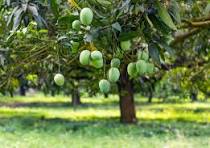
Be it the sweet and succulent Dussehri of Maal-Malihabad, Langda of Varanasi, Saharanpur’s Chausa, or Rataul variety of Baghpat – mango, the king of fruits, continues to reign supreme. Another significant constituent of UP’s diverse mango wealth is Gaurjeet of Gorakhpur, for which the UP government is trying to get a GI tag. If this happens, UP will become the state with the maximum GI-tagged mango varieties. What, however, has emerged as a challenge for mangoes in UP in the last few years is the unpredictable weather. Lucknow-based ICAR lab, Central Institute for Subtropical Horticulture (CISH), is working to make mangoes climate-resilient by introducing new technologies and, also, new varieties. “Last year, it was the untimely rain, and this time, it was the extreme temperature and heat which affected the crops.” Said director, CISH, T Damodaran. CISH Lab conducts research on mandated subtropical fruits, mangoes being the one, to come with improved varieties. In the case of mangoes, Dussehri, being an early ripening variety, is 80% more susceptible to heat and high temperatures. “In many fruits, we saw premature ripening this time, ” the director said. To deal with the impact of weather on mangoes, CISH is working at two levels – developing climate-resilient technologies and making efforts to come up with genetically improved hybrids. Many orchards in Malihabad had mangoes covered with paper bags this year, to control the impact of the heat. “This was only one of the ways devised to tackle the impact of heat. We have also come up with technologies to control the attack of pests on mangoes, as unpredictable weather may also trigger that,” he said. The institute has already released two hybrid mangoes – Ambika and Arunika. The varieties are genetically improved and were tested over a period before they were released for commercial production. Each is a cross of two types of mangoes. Ambika is a cross of Amrapali and Janardan Pasand, and Arunika is a cross of Amrapali and Vanraj, a mango from Gujarat. Two more varieties developed by CISH, Samriddhi and Madhurika, are ready for release shortly. Besides, at least 11 other hybrid mangoes may be up for screening by the institute to be released for commercial production. The hybrids are genetically improved, have high productivity and yield a better-quality fruit. They are also tolerant to heat waves and biotic stress due to the attack of pests and insects. The varieties developed scientifically are also nutraceutically improved. Along with this, CISH has also come up with improved varieties of Dussehri. It is by mid-March that a Dussehri tree usually completes its flowering stage, and within a week, the fruit may set in. In Dussehri’s cycle of growth, rain in March may be damaging because that is when the flowers just open and pollination takes place. “Rain may make flowers either drop or turn black, something that happened last year,” said Naseeb Khan, a mango entrepreneur in Malihabad. In that case, some fruits that develop may be false fruits as they would lack seeds. Mangoes need a temperature between 27 degrees Celsius and 35 degrees Celsius to grow ideally in March and April. The varying temperature damages the fruit. Cloudy weather, high humidity and high velocity winds may further hit the crop. “In many fruits, this year, the seed may become soggy, affecting the taste. It was because of the extreme heat,” said Khan. UP accounts for over 23% of the total mango production in the country. Lucknow, Saharanpur and Meerut are the main mango-producing regions. In the last few years, mango varieties from the state have been exported to Singapore, Malaysia, the US, England and Dubai. (PICTURES OF MANGO VARIETIES ON A PLATTER) (‘OG’ (ORIGINAL) MANGOES OF UP) – Dussehri from Maal-Malihabad in Lucknow, Langda from Varanasi, Rataul from Baghpat, Gaurpreet from Gorakhpur and Chausa from Saharanpur grow naturally in UP. – Dussehri, Rataul and Langda are GI tagged. The UP government has sought a GI tag for Chausa and Gaurpreet. – Dussehri, Langda and Chausa are exported outside UP and India and are commercially successful and popular. FIRST HYBRID MANGO VARIETIES – Work to develop hybrid varieties of mangoes started in the 1960s at the Indian Agricultural Research Institute, New Delhi – The purpose was to develop varieties that would bear every year and have high productivity, besides yielding good quality fruits. – Amrapali (cross of Dussehri and Neelam) and Mallika (cross of Neelam and Dussehri) were the first hybrids. – Dussehri is from North India, and Neelam is from South India. While North Indian varieties are biennial, those from South India bear annually. – CISH CONSERVES AND PROPAGATES 775 MANGO VARIETIES – CISH has the biggest collection of mango germplasm in the world. – Many varieties are now extinct at their places of origin – Collection started in 1975 when the institute started as the Central Mango Research Station. – Kensington Pride from Australia was the first exotic variety brought to the institute. – Today, it has 17 others, including Tommy Atkins, Sensation, Edward, Eldon, Keitt, Kent, Osteen, Palmer, Kitchner, Starch, Filipino, Lilly, Maya, Carabao, Kowasaji Patel, St Alexander & Prior-de-Amroesia. – Mangoes have been sourced from nurseries and orchard owners over a period of time, and are used to develop new varieties.
Shravan Charity Mission is an NGO that works for poor children suffering from life-threatening diseases, especially cancer. Our posts are meant for our readers, including children and adults, and have a huge variety of content. We also accept donations for our mission. Should you wish to donate to the cause of cancer? The bank details are given below:
BIGGER, MESSIER DELHI STILL HAS ITS ARMS WIDE OPEN
…. DELHI IS A RARE CITY WITH A LONG PAST BUT NO HANKERING TO TIE ITSELF DOWN TO IT. WHETHER IT’S PEOPLE OR SPACES, IT ABSORBS THEM ALL WITHOUT RESERVE
Delhi changed for me forever one day in the mid-1980s when a friend took me with him to the site where he was planning to buy a flat. There wasn’t much to see. The large tracts of nothingness, which became what we know today as Vasant Kunj, had no redeeming features. What was astonishing to me, however, was that when I looked towards Delhi, between me and the city stood the visage of Qutub Minar. That there could be a Delhi beyond Qutub Minar was something that made no sense to me. For in my imagination, it was pretty much at the very edge of the city. After all, that was a time when I remember going on a picnic in a bus with family friends to the exotic destination called Deer Park, far from our residence in Karol Bagh. . The Delhi that resides permanently in my mind is a cross between the city shown in Chashme Buddoor (the original, not the ghastly remake) and Oye Lucky, Lucky Oye. On the one hand, there are memories of wide open roads, a time scented with languidness, glorious winter mornings, neighbourhoods basking in leafy silence, and on the other hand, the untidy energy, the hustle, the ability to live loudly and publicly, and friends called Lovely, Pinky, Tinkle, Kuki and OK. The biggest change Delhi has seen is physical. It has burst out of its seams in all directions and has colonised spaces around it. It began with the conquest of Jamnapaar, which started out as a relocation drive of ‘unauthorised settlements’ under the watch of Sanjay Gandhi, but then took on a life of its own. Noida and Gurgaon are now cities in their own right, with their own cultural imprints, while drawing liberally from the mother ship. There are many more cars and there is a lot more money, which gives Delhi more mediums to express itself in. Delhi traffic nips at the heels of those in front, ready to kill to gain an inch of space. The murderous intent is expressed first in sound, achieved by honking persistently, and then sometimes followed by action, as evidenced by the number of road rage incidents. The money is visible everywhere – the old colony markets that continue to thrive, lavish weddings at farmhouses, crowds at high-end restaurants, and homes that overflow with decor. Perhaps the biggest loss is that of the Delhi winter. Delhi’s best, most glorious feature is now shrouded in noxious pollution that hangs like a foreboding and stings like regret. The joy of the outdoors, the enlivening experience of bone-chilling cold being thawed out by the sun as one sat on a charpoy and ate rewari and moongphali, basking for several glorious hours, is now an alleged memory, so far removed it has become. Winters are the time now to start muttering about migrating out of the city, while anxiously looking out for an AQI reading that tells us it is safe to step out of the home for a short walk. There are other losses, too. The cinema theatres, which served as a practical guide to different localities in the city, included Plaza, Odeon, Regal, and Rivoli in CP; Golcha, Novelty, Ritz, Delite, and Moti, which marked out Old Delhi; and Anupam, Savitri, Sapna, and the infamous Uphaar, which dotted areas of South Delhi. Some of these theatres remain, some have been refurbished, while others lie in dilapidated disuse. Nirula’s exists, but it is hard to believe it was at the cultural heart of Delhi’s upper-middle-class youth once. The classic Delhi restaurants – Kwality, Embassy, Moti Mahal and Gaylord- are still around, but their role today is to serve as nostalgic artefacts. One goes there to savour the memory of a Delhi that once was. And while street food in Delhi continues to be as delicious, the famous names are now tourist spots more than unselfconscious, humble eating places. And yet, while Delhi has changed in so many ways, at its core, it feels the same. The life that one leads today is poles apart from one’s experiences growing up, but the idea of Delhi has not shown much change. It still lives fiercely in the present and remains unmindful of the history it is set smack in the middle of. Contrary to its popular image, Delhi is India’s only genuinely cosmopolitan city, in that only a small fraction of its residents can claim to be originally from the city. Everyone is a stranger, and everyone is in the city as a user. Delhi hones our appetite, keeps our competitive edge intact and gives us many opportunities to advertise our success. It might have sprawled in ungainly ways in the last few decades and become even louder and shinier, but there is nothing unrecognisable about Delhi.
(WRITTEN BY SANTOSH DESAI. TOI COLUMNIST AND AUTHOR) TIMES OF INDIA ARTICLE 12.9.21
Shravan Charity Mission is an NGO that works for poor children suffering from life-threatening diseases, especially cancer. Our posts are meant for our readers, including children and adults, and have a huge variety of content. We also accept donations for our mission. Should you wish to donate to the cause of cancer? The bank details are given below:
World Music Day, also known as Fête de la Musique, celebrates the beauty and diversity of music. Sangeet transcends boundaries, cultures, and genres. People worldwide embrace music and its profound impact on their lives. In his essay Music at Night, Aldous Huxley rightly said, “After silence, which comes nearest to expressing the inexpressible is music.” Music is to the soul what words are to the mind. Everything in the universe has a rhythm; everything dances.
Science has proven that rhythmic tones diminish the feral instincts not only in humans but also in animals. Rangers at Kruger National Park in South Africa play instruments to tranquilise rogue elephants. Urdu poet Naubat Rai ‘Nazar’ wrote, “Pathar ke seene mein bhi dil ubhar aata hai/ Iss qadar asar hota hai mausiki ka” – Heart appears even in a stone/This is how music impacts. The Arabic word mausiqi became music in English.
The universal language of symphonic serenity, which the cosmos uses to express itself, has neither geographical barriers nor requires learning a new language to appreciate. One only needs ears to appreciate nature’s soulful cadences. “Kaanon mein jo shahad ghol de/Pahunchaye jo dil ko sukoon/ Usi ko naam diya hai mausiqi ka” — What pours honey into the years/ Gives solace to the heart/ That’s what we call music.
Don’t we say in English that it’s mellifluous to our ears? Anything with the power and quality to transport us to an ethereal realm is tuneful. Listen to Chopin’s classical piano masterpieces, Yehudi Menuhin and Niccolo Paganini’s gossamer creations on a violin or Beethoven’s most famous compositions, including Symphony No 5 in C Minor, you’re bound to say, ‘Agar firdaus var roo e zameenast/Hameenst, Hameenst, Hameenst – if there’s heaven elsewhere on earth/ It’s here, here and here. Tuneful soulfulness also has a therapeutic impact on the human mind.
Many prisons in the Western world have a specific room where prisoners can go and listen to symphonies because rhythms can curb criminal tendencies. In other words, music has a humanising quality. It makes us human and humane. Tunes and tenors are also cathartic. That’s the reason heartbroken people listen to sad songs and ghazals. They feel better after that because sangeet purifies from within and is heart-cleansing. To quote Mirza Ghalib, “Rone se aur ishq mein bebaak ho gaye/ Dhoye gaye hum aise ke bas paak ho gaye” — I felt more liberated in love/Once I shed tears and became sanctified. Let’s listen to soothing music in these times of utter cacophony and merge ourselves into the Elysian bliss because Life is for living/ Death is for the dead. Let life be like music/ And death a note unsaid. Remember, some people have lives; others have musical notes as boon companions. Doesn’t it sound like an ethereal symphony to your ears? June 21 is World Music Day ***
(SPEAKING TREE TIMES OF INDIA, JUNE 21, 2025, “LET YOUR LIFE BE LIKE MUSIC” BY SUMIT PAUL, JUNE 21 IS WORLD MUSIC DAY )
Shravan Charity Mission is an NGO that works for poor children suffering from life-threatening diseases, especially cancer. Our posts are meant for our readers, including children and adults, and have a huge variety of content. We also accept donations for our mission. Should you wish to donate to the cause of cancer? The bank details are given below:
The tiger’s tail takes me back to Shillong of the 60s. Once, I was returning from Guwahati to Shillong in my father’s sky-blue Chevrolet Bel-Air car. Father had returned to Gauhati from Delhi via Kolkata, and the car had gone from Shillong to pick him up from Guwahati airport. (Shillong airport was not operational till mid 70s). I was very young and had tagged along with our friendly chauffeur, Bahadur, to receive Father. Father was a member of the Assam Cabinet. This was before Meghalaya was carved out of the state of Assam; until then, Shillong happened to be the capital of Assam. The sky-blue Chevrolet was cruising along quietly on the winding, hilly road. In those days, the drive from Guwahati to Shillong took about three hours, on account of the single road with a half-hour stop at the picturesque Nongpoh circuit house (midway) surrounded by tall pine trees and lush green hills. Nongpoh was famous for delicious mutton chops.
We were close to Barapani, on the Shillong-Guwahati Road, aka the GS Road. Father was taking a well-deserved rest on the back seat after a hectic tour, and I was in the front seat with Bahadur. I was talking in undertones with him, and he too was replying in the same manner, as we didn’t want to disturb Father. Since Bahadur was well versed with Shillong and the vicinity, I was trying to find out if there was any wildlife around, even when I had seen plenty of wolves and foxes frequenting the iconic Brightwell Bungalow, our home in Barik Point, Shillong.
Suddenly, Bahadur pointed at something unusual as well as bizarre on the roadside, a little before the Umiam Dam Project coming up in Barapani near Shillong. A group of about eight tribals were carrying a tiger with its legs bound on a sturdy pole, and the body lashed with strong and thick creepers. They were resting there while the tiger was lying by their side. Bahadur and I promptly got out of the car and approached the party. I started circling the tiger, not knowing how to approach it. Bahadur offered that I wanted to feel the tiger, especially its ears, whiskers, paws, body or the tail. I realised that even a fallen tiger looked so ferocious. I gradually gathered some guts and touched its tail. The tail wasn’t soft and silky as generally made out. I was anxious that the tiger might get up and pounce on me. But sadly, it was lying dead. I ran my fingers on the tail from one end to the other and finally lifted it with both my hands. It was an amazing experience. Bahadur explained, the tiger uses its tail for balancing, counterbalancing and signalling while chasing targets. Soon we were back in the car. The car was filled with the scent of tiger.
Father enquired if the tiger was dead. We felt the question was strange, as a tiger alive would have threatened and jeopardised our lives, as no one possessed a gun. We then came to know about the extent of the father’s knowledge about the local flora and fauna. He informed us that different tribes used dissimilar poisons to traumatise and kill the prey. The availability of poisons varied with locales, and in the present case, the poison appeared strong enough to kill the tiger immediately and not just make him unconscious. The Khasi Hills had several little-known Asiatic poisons but very powerful ones. Some strong poisons were extracted from flowers that bloomed once in two years or maybe three. This, however, cannot be authenticated now, but the local wisdom still believes in it. The tiger had probably been killed by a poisonous arrow (Teer) and chased after being hit. Tiger meat is still a delicacy and is used as an aphrodisiac in many parts of Asia. The hapless tiger with its upturned body was a grotesque sight. They lifted the pole along with the tiger and vanished into thin air, taking a shortcut through some glade, shouting ‘Khublei.’ (‘Thank you’ or ‘God bless you’ in Khasi language). This method of hunting was primitive, though much followed by the old veterans of the village. It was economical as guns and bullets were unnecessary, and was mostly manpower oriented.
This one-off episode, just twenty minutes of screen time, wrapped around my soul like the tail of a tiger. It struck me not with a roar, but with a whisper so powerful that it echoed through the quiet chambers of my heart. It was a scene that stuck in my mind for life. A mix of danger and beauty.
Since then, whenever I visit Shillong, I stop at the location near the dam to remember the animal that had found space in my heart, and I don’t know why. How could an animal carcass find space in my heart, I could never figure out? I have seen umpteen tigers since then, some in zoos and some in sanctuaries, but that sleeping beauty of my childhood days was different, and the feel of the tiger’s tail was indelible. It lives in me even now as I watch the world in silence. The memory doesn’t fade. It has only grown sharper with time and refuses to forget me. That is why I scripted this story with freshness, as if it had happened only yesterday. Childhood memories always stay alive.
Shravan Charity Mission is an NGO that works for poor children suffering from life-threatening diseases, especially cancer. Our posts are meant for our readers, including children and adults, and have a huge variety of content. We also accept donations for our mission. Should you wish to donate to the cause of cancer? The bank details are given below:
Number 18 unquestionably is considered auspicious and has great significance in Hindu scriptures. This significance is highlighted in the great epic, the Mahabharata. While reading the holy epic Mahabharata, you will find that it is divided into 18 parvas (sections). Let’s not forget that the holy war of the Mahabharata, fought in Kurukshetra, was fought over 18 days. The battlefield witnessed 18 divisions (akshauhinis) of armies. 11 divisions were on the Kauravas’ side and 7 were on the Pandavas’ side. At the end of the war, which lasted 18 days, it is believed that only 18 prominent individuals survived. This underlines the transformative impact of this conflict, which had spiritual and moral dimensions.
The Bhagavad Gita, which is a sacred discourse delivered by Lord Krishna and is the most important part of the Mahabharata, also consists of 18 chapters. At the end of its 2nd chapter, Lord Krishna outlines 18 qualities that define a person of steady wisdom (sthita-prajna), highlighting the traits of one who has achieved spiritual victory.
Apart from the Mahabharata, the number 18 also appears in other key Hindu texts. There are 18 major Puranas and 18 Upapuranas, which include stories, teachings, and cosmological concepts. There are 18 Dharmashastras, guiding principles of law and ethics for righteous living.
The central idea of all scriptures of all religions in the world is the same. The prime idea is the victory of the higher being over the lower one, or righteousness over unrighteousness, or of the good over the evil, and of dharma over adharma. Ved Vyas had originally titled the Mahabharat as Jaya (victory). The word Jaya is in the opening stanzas of both the Mahabharata and the Gita.
Interestingly, in the ancient Katapayadi system (numerical notation system) of Sanskrit numerology, where letters are assigned numerical values, the word “Jaya” (meaning “victory”) equals 18. The original name of the Mahabharata was Jaya Samhita, and it appears in the opening verses of both the Mahabharata and the Gita. This numerical value emphasises the theme of spiritual triumph. To highlight the significance of the word Jaya, the number 18 is given a prominent place not only in the Mahabharata but also in various other Hindu scriptures. Thus, the number 18 is repeatedly used as an auspicious reminder to stay alert in our constant battle for inner spiritual victory.
Across all Hindu scriptures, the central message remains unchanged: the victory of dharma (righteousness) over adharma (unrighteousness), the higher self over the lower, and good over evil. The repeated use of the number 18 serves as a symbolic reminder of this ongoing inner battle—and the ultimate goal of achieving spiritual victory, or jaya.
Shravan Charity Mission is an NGO that works for poor children suffering from life-threatening diseases, especially cancer. Our posts are meant for our readers, including children and adults, and have a huge variety of content. We also accept donations for our mission. Should you wish to donate to the cause of cancer? The bank details are given below:
Biryani is Maharani. The chicken variety is India’s favourite Swiggy-ordered khana.
2021 BIRYANI IS MAHARANI OF ONLINE DELIVERY.
You may have a wishlist of items for Santa to deliver tonight. But when it comes to paet puja – worship of the stomach – Indians have wished for a biryani meal the most this last year. In a survey conducted by food delivery aggregator Swiggy, over 115 biryanis have been ordered every minute in 2021, up from 90 in 2020. That’s a whopping 1.91 biryanis being ordered by someone, somewhere across India every second. And within the glorious ‘one-pot’ dish, it’s the chicken biryani that’s the most popular item ordered online – 4.3 times more than its vegetarian (sic) variety. Cities where the murgh biryani has come out on top of the home delivery menu are Chennai, Kolkata, Lucknow and Hyderabad, with Mumbai choosing the more easily digestible daal khichdi as their No.1 Swiggy-ordered khana. While the top snack ordered in 2021 is the samosa – 5 million orders on Swiggy, ahead of pav bhaji by 4.9 million, and six times more than chicken wings – it is the biryani that is maharani. The mutton biryani lingering behind is possibly because it is for more tender gourmands with more refined taste. But if there is a silver lining that Covid has brought to the country and its palate, it’s that it has made the Great Mughal Khana in its various forms more ubiquitous – and more easily consumed in the finger-licking comfort of home.
Published on 24/12/21, Just in jest, Economic Times
Shravan Charity Mission is an NGO that works for poor children suffering from life-threatening diseases, especially cancer. Our posts are meant for our readers, including children and adults, and have a huge variety of content. We also accept donations for our mission. Should you wish to donate to the cause of cancer? The bank details are given below: