Copyright@shravancharitymission
RAINFORESTS: EARTH’S LUNGS AND WORLD’S PHARMACY
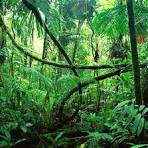
Deep rivers, tall trees, strange animals, beautiful flowers—this is the rainforest. Burning trees, thick smoke, new roads and cities, dead animals, people without homes—this is the rainforest, too. To some people, rainforests mean beautiful places you can visit; to others, they mean trees they can cut down and sell.
Between 1950 and 2000, half of the world’s rainforests disappeared. While you read these words, people are cutting down rainforest trees somewhere in the world.
Beautiful blue butterflies fly from flower to flower, and birds fly in and out of the tall trees. Jaguars wait silently in the shadows, and above them monkeys play. And around you there are hundreds, perhaps thousands of different flowers, plants, and trees – coffee, oranges, bananas, rice, and others that we do not have names for yet. It is hot and wet- rain falls around you, and clouds hide the tops of the trees. Yes, the rainforest is a wonderful, strange place.
But it is a place in great danger too. Every day, people cut down their great trees to make farms, roads, and towns.
We destroy thousands of square kilometres of rainforest every year. In 1950, rainforests covered 15% of the Earth’s land. Fifty years later, we have destroyed more than half of these rainforests. Will there still be any rainforests in the year 2050? No one knows the answer to that question.
Rainforests are home to about fifty million people and millions of species of animals, plants, and insects. In one square kilometre of rainforest, there can be more than 75,000 different species of trees. In all of Britain, there are only 1,443 different species of plants. So when we destroy the rainforests, thousands of species of plants and animals disappear.
The leaves of rainforest trees make about 40% of the Earth’s oxygen. Can the Earth live without the oxygen of the rainforests?
The weather in a rainforest is hot all year round, usually between 20°C and 28°C every day. The weather is always wet, too: rainforests have more than 200 millimetres of rain in a month. In Belem, Brazil, it rains on about 243 days each year. And the rain is heavy! On a rainy day in a rainforest, 20 millimetres of rain can fall. On a rainy day in London, about 5 millimetres of rain falls.
The largest rainforest in the world is the Amazon rainforest, which grows in nine different countries in Latin America. The Amazon rainforest is about a hundred million years old, and has more species of animals and plants than any other place on earth. You can find 20% of all the bird species in the world here. The great Amazon River, which runs through the Amazon rainforest, is the second longest river in the world. It runs 6,400 kilometres from the Andes Mountains to the Atlantic Ocean at Belem, in Brazil, where it is more than 300 kilometres across. There are more than 2,000 species of fish in the Amazon River, more than in the Atlantic Ocean. But this big rainforest is getting smaller. Between 1978 and 2004, more than half a million square kilometres of the Amazon rainforest disappeared.
The second largest rainforest is in Central Africa, and the world’s ninth longest river, the Congo River, runs through it. There are also some rainforests in West Africa.
One part of the Central African rainforest is in Madagascar, which was once part of Africa. About 160 million years ago, it moved away from Africa, and since that time, it has been an island. Its animals and plants have changed very little in those years, and most of them live in no other place on earth. About fifty different species of lemur live in Madagascar, and scientists are still finding new species. In Andohahela, there are twelve species of lemurs living in 760 square kilometres. The Sifaka, a lemur with very long legs, can jump from one tree to another and travel a long way without touching the ground.
The third great rainforest is in Southeast Asia, in Burma, Malaysia, Borneo, and Indonesia, and also in some of the islands of the South Pacific. Between 1950 and 1995, Indonesia lost half of its rainforest. It sells most of the wood from its forest to rich countries. The Rajah Brooke’s birdwing butterfly lives in these forests. It is one of the world’s largest butterflies, with wings about 15 centimetres across. But Indonesia is destroying the home of this beautiful insect.
Australia has rainforests too, but they are disappearing fast. In 1988, someone found a new species of Kangaroo in the rainforest of Australia. This was Bennett’s tree kangaroo. Most kangaroos live on the ground, but the Bennett’s tree kangaroo, which has strong arms and wide feet, lives in trees. When the forests disappear, species like this kangaroo would disappear too?
Most rainforests grow on flat land, but some grow high in the mountains and are called cloud forests. Some rainforests grow by the sea, usually at the mouths of great rivers, where big trees called mangroves grow in the water. The biggest mangrove forests are in India and Bangladesh.
There are temperate rainforests too, which are wet, but not as hot as the rainforests in places like the Amazon. The temperate rainforest in North America grows in northern California and extends north by the Pacific Ocean, through Canada to Alaska. Rainfall in this forest can be more than 200 millimetres a month, and some of the trees grow 48 metres tall. Temperate rainforests also grow in Tasmania, Australia.
More than half the species of plants and animals of the Earth live in rainforests, but we only know about a small number of them.
People who live in the rainforests have always used plants to make medicines. Today, all over the world, people use medicines that are made from rainforest plants. Quinine, the malaria medicine, comes from the cinchona tree of Peru. From the leaves of the beautiful Madagascan flower called the rosy periwinkle, scientists make a medicine for the deadly blood disease leukaemia. Many of the medicines that doctors use for cancer come from the rainforests. Rainforest trees give us many things. Rubber, for example, comes from a rainforest tree, and some trees give us oil.
More than 3,000 kinds of fruits grow in the rainforests. The people of the rainforests use more than 2,000 of them– the rest of the world eats only about 200 kinds. Two of the most popular fruits from the rainforests are bananas and oranges. And there are other rainforest food plants that people eat all over the world, for example, coffee, tea, chocolate and rice. Maize, which is an important food for many people, is another rainforest crop.
How many new species of useful plants have disappeared from the rainforests? Nobody knows. The trees of the rainforest help the air because their leaves use carbon dioxide and make oxygen, which we need to live. They are important for the Earth’s weather too; water from their large leaves goes up into the sky and makes heavy clouds. The clouds then give rain back into the rainforests, and some clouds move to other parts of the Earth and give rain there. The clouds also protect the Earth from the sun.
Today, the Earth is slowly getting hotter, and in some places, changes in weather mean that life is much more difficult for millions of people.
RAINFORESTS AT A GLANCE:
Rainforests are dense, humid forests with a continuous tree canopy, moisture-loving plants, epiphytes (plants growing on others), lianas (woody vines), and no wildfires. There are several types of rainforests. Tropical Rainforests are found near the equator (10 degrees N-S), hot and wet year-round. They have an annual rainfall of 175-200 cm and even more. Their locations are Amazon, Congo, Southeast Asia and the Pacific Islands. The Temperate Rainforests are located in cooler and rainy temperate zones and are dominated by conifers or broadleaf trees. Other types include cloud, dry, subtropical and littoral rainforests.
Rainforests are extremely important for the Planet Earth. They are home to 40-75% of all species. Millions of undiscovered organisms. They are a source for more than 25% of natural medicines. Rainforests are the ‘Earth’s lungs’ and ‘the world’s pharmacy.’ But we need to be cautious about the deforestation of rainforests, which will be suicidal for Planet Earth.
***
Posted by Kamlesh Tripathi
Author, Poet, & Columnist
*
https://kamleshsujata.wordpress.com
*
Like it and Share it
*
Shravan Charity Mission is an NGO that works for poor children suffering from life-threatening diseases, especially cancer. Our posts are meant for our readers, including children and adults, and have a huge variety of content. We also accept donations for our mission. Should you wish to donate to the cause of cancer? The bank details are given below:
NAME OF ACCOUNT: SHRAVAN CHARITY MISSION
Account no: 680510110004635 (BANK OF INDIA)
IFSC code: BKID0006805
***










 Shravan charity mission