INTERESTING FACTS & QUOTES EPISODE 15

Copyright@shravancharitymission

INTERESTING FACTS 

  1. Hamletian dilemma: The phrase is derived from William Shakespeare’s play Hamlet. When Hamlet, the prince of Dutch learns that his father was murdered by his uncle, he is in a dilemma as to whether he should avenge his father’s death or continue ruling the kingdom.
  2. Begusarai was once known as the “Leningrad” of Bihar, or the “Leningrad” of East. It was recently in news again, because the Communists, are trying to field Kanhaiya Kumar from this pro Communist constituency. Leningrad as we all know is a place in Russia. The famous siege of Leningrad lasted from September 1941 to 1944. By the end of the siege, some 632,000 people are thought to have died with nearly 4,000 people from Leningrad starving to death on Christmas Day, 1941. The first German artillery shell fell on Leningrad on September 1st, 1941.
  3. Teacher absenteeism accounts for the loss of up to one-quarter of the primary school spending. A World Bank Report estimates this loss to be about $2 billion a year in India, just at the primary level.
  4. With a median age of 27.9 years in 2018, India’s population is quite young. By 2020, youth will make up for 34% of India’s population.
  5. Forty-five million young people have been added to the voters list since 2014. Based on 2011 Census, about two crore youngsters turn 18 every year, even though not everyone gets registered to vote.
  6. India has shown responsibility and restraint by targeting a satellite at 300 km altitude, as opposed to China destroying a satellite at the height of 857 km in 2007, which created a lot of risky debris. But even the Indian test has a small likelihood of creating some debris that gets thrown into the higher orbits.
  7. One of the reasons for lesser concern with India’s test has to do with the height of the test. At 300 kilometers, the debris may survive just for months, if not weeks. At 800 kilometers, the Chinese satellite debris has already survived for more than a decade and may survive for a few more years.
  8. India has demonstrated that it can take down satellites in Low Earth Orbits of less than 2,000 km above the surface.
  9. There are over 22,000 artificial objects currently in the orbit that are being tracked by one government agency or another. The European Space Agency estimates that currently there over 34,000 pieces of debris in the orbit that are larger than 10 cm in size; close to a million pieces between 1 cm and 10 cm; and 128 million pieces of debris less than a centimeter in size. With reducing satellite size and the increasing frequency of space launches, this is only set to grow rapidly.
  10. UTSAVA- is a Sanskrit word. Where, UT –means to ‘let go’ or remove and SAVA means worldly sorrows hence the complete word UTSAVA means to “let go your sorrows.”
  11. In the Scandinavian countries without any reservations, around half the MPs are women. In India we only keep talking of 33% which is not happening.
  12. Earth orbital safety in the 21st century is as vital as shipping lane security was, in the 20th century.
  13. The Lucas critique, named after Robert Lucas‘s work on macroeconomic policy making, argues that it is naive to try to predict the effects of a change in economic policy entirely on the basis of human relationships observed in historical data, especially highly aggregated historical data.
  14. Marriage industry of India boasts about 10 million weddings a year.
  15. There are reports that Pakistan is collaborating with China to develop a fifth-generation fighter aircraft. India too needs to double up.
  16. In Hindu philosophy the soul is interpreted as being without a gender.
  17. Security cooperation was one of the reasons why PM Narasimha Rao formally opened diplomatic relations with Israel in 1992, followed by purchase of India’s first IAI Searcher unmanned aerial vehicles (UAVs), and an air combat manoeuvring system from Israel in 1996. 
  18. India is the largest single market for Israeli arms. Israeli arms sale to India is only second to Russia, having gone up by 650% in the past decade, now amounting to $715 million in 2017 alone. IAF misslies fired in Balakot reportedly used Israeli made SPICE-2000 GUIDANCE KITS.
  19. Modi was the first Indian Prime Minister to visit Tel-Aviv in July 2017 and then came the visit of Israeli PM Benjamin Netanyahu to Delhi in January 2018.
  20. Israel is virtually a ‘nation-at-arms’ country. It has always had conscription, or draft, or compulsory enlistment of people in national service. Every Israeli man (who’s Jew or Druze, excepting those with medical disabilities or religious scholars) above 18 serves in the military for 36 months, and every Israeli woman for 24 months.
  21. The National bill of Israel passed in 2018 specified Israel as the nation state of the Jewish people. This makes Israeli state closer to a theocratic one.
  22. Iron and steel accounts for roughly 15-20 % of the total cost in real estate.
  23. Global warming: When Americans were experiencing bone-chilling temperatures on January 29, the world was actually 0.3 degrees warmer on an average compared to a baseline from 1979 to 2000.
  24. Among all the 13 tiger range countries, India alone has the maximum number of tigers (70% of the global wild tiger population) and their source areas. This impressive gain is there despite the fact that our per capita forest is only 0.06 hectare as against the world average of 0.6 hectare, apart from having 60% of global livestock, 17% of world’s human population, with a forest productivity of around 1.34 cubic metre per hectare per year as against world’s average of 2.1 cubic metre per hectare per year.
  25. It has been documented that around 67,911 hectares of forest cover has been lost in 188 districts of India between 2009 and 2011 due to encroachment.

Quotes

  1. Earth: The soil is her flesh, the rocks are her bones, and the wind is her breath; trees and grass her hair. She lives, spreads out, and we live on her. When she moves we have an earthquake—Rabbi Ezekiel Malekar
  2. In real life it is the hare who wins—ANITA BROOKNER, award winning novelist.
  3. Mary Shelley projected through the character, Frankenstein. We all are threatened by the monsters we create. They don’t come into being on their own.
  4. Every fair-minded person holding a position of authority must support the few who have stood up against the injustice being perpetrated in the name of blasphemy—ASMA JAHANGIR, Pakistani Human Rights lawyer and activist.
  5. If you don’t have a coalition with you, you will have a coalition against you—SHIMON PERES. Israeli politician who served as the ninth President of Israel.
  6. ‘No book is perennially useful to mankind,’ says English philosopher David Hume.

By Kamlesh Tripathi

*

https://kamleshsujata.wordpress.com

*

Share it if you like it

*

Shravan Charity Mission is an NGO that works for poor children suffering from life threatening diseases especially cancer. Our posts are meant for our readers that includes both children and adults and it has a huge variety in terms of content. We also accept donations for our mission. Should you wish to donate for the cause. The bank details are given below:

NAME OF ACCOUNT: SHRAVAN CHARITY MISSION

Account no: 680510110004635 (BANK OF INDIA)

IFSC code: BKID0006805

*

Our publications

GLOOM BEHIND THE SMILE

(The book is about a young cancer patient. Now archived in 7 prestigious libraries of the US, including, Harvard University and Library of Congress. It can also be accessed in MIT through Worldcat.org. Besides, it is also available for reading in Libraries and archives of Canada and Cancer Aid and Research Foundation Mumbai)  

ONE TO TANGO … RIA’S ODYSSEY

(Is a book on ‘singlehood’ about a Delhi girl now archived in Connemara Library, Chennai and Delhi Public Library, GOI, Ministry of Culture, Delhi)

AADAB LUCKNOW … FOND MEMORIES

(Is a fiction written around the great city of Nawabs—Lucknow. It describes Lucknow in great detail and also talks about its Hindu-Muslim amity. That happens to be its undying characteristic. The book was launched in Lucknow International Literary Festival of 2014)

REFRACTIONS … FROM THE PRISM OF GOD

(Co-published by Cankids–Kidscan, a pan India NGO and Shravan Charity Mission, that works for Child cancer in India. The book is endorsed by Ms Preetha Reddy, MD Apollo Hospitals Group. It was launched in Lucknow International Literary Festival 2016)

TYPICAL TALE OF AN INDIAN SALESMAN

(Is a story of an Indian salesman who is, humbly qualified. Yet he fights his ways through unceasing uncertainties to reach the top. A good read not only for salesmen. The book was launched on 10th February, 2018 in Gorakhpur Lit-Fest. Now available in Amazon, Flipkart and Onlinegatha)

RHYTHM … in poems

(Published in January 2019. The book contains 50 poems. The poems describe our day to day life. The book is available in Amazon, Flipkart and Onlinegatha)

(ALL THE ABOVE TITLES ARE AVAILABLE FOR SALE IN AMAZON, FLIPKART AND OTHER ONLINE STORES OR YOU COULD EVEN WRITE TO US FOR A COPY)

*****


BOOK CORNER:GODS AND ROBOTS: Myths, Machines, and Ancient Dreams of Technology … by Adrienne Mayor

Copyright@shravancharitymission


Khidki (Window)

–Read India Initiative—

This is only an attempt to create interest in reading. We may not get the time to read all the books in our lifetime. But such reviews, talk and synopsis will at least convey what the book is all about.

Gods and Robots: Myths, Machines and Ancient Dreams of Technology’

Adriyana Mayor in 2018.

Published by Princeton University Press, New Jersey

    Albert Einstein had once said. “Imagination is more important than knowledge. For knowledge is limited, whereas imagination embraces the entire world, stimulating progress, giving birth to evolution.” So, let ‘imagination’ be the tagline of this write-up. As books are indeed an exercise of the author’s imagination. For who could first imagine the concepts of robots, automation, human enhancements, and Artificial Intelligence? Historians tend to trace the idea of automation back to the medieval craftsmen who developed self- moving machines.

    Let me now take you to a research scholar at Stanford University. Her name is Adrienne Mayor. She is a historian of ancient science and warfare, and a classical forklorist who investigates natural knowledge contained in pre-scientific myths and oral traditions. She has recently come out with a book titled, ‘Gods and Robots: Myths, Machines and Ancient Dreams of Technology.’ It’s a long title.

    Adrienne feels Hindu epics are full of AI (Artificial Intelligence) and robots, and legend has it, that they guarded Buddha’s relics.

    In this book the lady author explores how ancient culture imagined futuristic technologies and left behind those imaginations in epics and scriptures. She tells how Ashoka battled robots, and other tech tales from the past.    Faith can move mountains. There is a belief in India among the Hindus that ancient Indians had invented everything from spacecraft to missiles to the internet. Lady author tries to link this theory with her research work. She feels her research got her into the first inklings of the scientific impulse and that took her into the world of mythology, where ancient people first envisioned making artificial life, automation (or robots), self-moving devices, and other marvelous things long before the present day technology made them possible. She states these stories about robots and other machines in ancient oral traditions were first written down during the time of Homer, about some 2,700 years ago. But the Greeks were not the only people to imagine automation and machines in antiquity. Similar stories exist in the Ramayana, Mahabharata, and other epics. In Hindu myths, automations are made by the engineer God Vishwakarma and the sorceress or more appropriately the mystique of Maya. In Greek myths they are made by the God of technology. His name is Hephaestus—the Greek God of fire and metal working and the brilliant artisan Daedalus, a craftsman and artist again from Greek mythology. I consider such myths to be the world’s first science fiction stories. No single civilisation had a monopoly on such ancient dreams of advanced technology. Whether one looks at Greek, Egyptian, Hindu, Islamic, Chinese, Etruscan—the modern name given to the powerful and wealthy civilization of ancient Italy or any other ancient cultural myths about artificial life. They all contemplate what wonders might have been achieved if only one could possess the divine creativity and abilities of the Gods. But it’s not possible to draw a direct line of development from mythology over the millennia to the modern scientific knowledge.

    Further the lady author goes on to say that the Indian and Hellenistic cultures borrowed and influenced each other, beginning in about the fifth century BC, The syncretism only intensified, after Alexander of Macedon and King Porus began relations in the fourth century BC. Jain texts mention that the engineers of Ajatasatru, the  king of Haryanka dynasty of Magadha, invented armoured war chariots with spinning blades, which may have inspired later the Persian scythed chariots. Ajatasatru had powerful machines to hurl massive boulders,  even before Philip—II of Macedon obtained torsion catapults—those huge launchers. India was known for perpetually burning oil lamps, suggesting knowledge of naphtha, that was unknown to the Greeks and the Romans until much later. The travelling Greek sage Apollodorus of Tyana observed automated servants and self-propelled carts in the court of a ruler of India, and India was centuries ahead of Europe in the technologies of distillation and hydraulics. There was probably more give and take than we know about.

    Myths featuring flying chariots and synthetic swans, animated servants, giant robots, machines, and the like appear in the Mahabharata, Ramayana, Kathasaritasagara, Harivamsa, and other works. Self-navigating ships appear in Egyptian texts and Homer’s odyssey; android and animal automations are described in Homer’s Iliad and in Chinese chronicles. And further examples are myriad.

    The book goes on to share the story of android warriors guarding Buddha’s relics. The most detailed account is in the Lokapanatti, a complicated compilation of tales from Burma. After Buddha’s death, the story recounts that King Ajatasatru preserved his bodily remains in a hidden chamber under a stupa. The precious relics were guarded by ‘bhuta vahana yantra’ (spirit transporting machine). These were robotic warriors with whirling swords—reminiscent of the king’s novel war machines with spinning blades. Greek myths tell of automation guardians in human and animal form defending palaces and treasures, but the historical and technological details of this legend make it unique. The story says the robots were constructed from plans and were secretly transported to Patliputra from Romavisaya, the Greek-influenced west, by a yantrakara, that is a robot maker who was originally from Patliputra. The automation soldiers guarded Buddha’s relics until the great Indian emperor Ashoka heard about the secret chamber. Ashoka battled the robots and after he defeated them he learned how to control them. They obeyed him. Historically, we know that Ashoka did unearth and distribute long hidden relics of Buddha across the land.

    By third century BC, craftspeople and engineers in the Greek world, Alexandria, Arabia, India and China began making self-moving devices, flying bird models, animated machines, and automations like those described in myths. Some were miniature and some monumental, some had simple mechanisms but some were quite complex. These inventions were powered by springs, levers, pulleys, water, air, heat, and so on.

    Overall it’s an extremely interesting book of around three hundred pages. The book really impacts you and leaves you enlightened. Where, you might just be inclined to even change your mindset. But yes don’t rush through the book as it is a little complex in terms of old historical words and even geographies and names. You might even have to refer the glossary or even the dictionary a little too often. I would give the book eight out of ten.

Synopsis by Kamlesh Tripathi

*

https://kamleshsujata.wordpress.com

*

Share it if you like it

*

Shravan Charity Mission is an NGO that works for poor children suffering from life threatening diseases especially cancer. Our posts are meant for our readers that includes both children and adults and it has a huge variety in terms of content. We also accept donations for our mission. Should you wish to donate for the cause. The bank details are given below:

NAME OF ACCOUNT: SHRAVAN CHARITY MISSION

Account no: 680510110004635 (BANK OF INDIA)

IFSC code: BKID0006805

*

Our publications

GLOOM BEHIND THE SMILE

(The book is about a young cancer patient. Now archived in 7 prestigious libraries of the US, including, Harvard University and Library of Congress. It can also be accessed in MIT through Worldcat.org. Besides, it is also available for reading in Libraries and archives of Canada and Cancer Aid and Research Foundation Mumbai)  

ONE TO TANGO … RIA’S ODYSSEY

(Is a book on ‘singlehood’ about a Delhi girl now archived in Connemara Library, Chennai and Delhi Public Library, GOI, Ministry of Culture, Delhi)

AADAB LUCKNOW … FOND MEMORIES

(Is a fiction written around the great city of Nawabs—Lucknow. It describes Lucknow in great detail and also talks about its Hindu-Muslim amity. That happens to be its undying characteristic. The book was launched in Lucknow International Literary Festival of 2014)

REFRACTIONS … FROM THE PRISM OF GOD

(Co-published by Cankids–Kidscan, a pan India NGO and Shravan Charity Mission, that works for Child cancer in India. The book is endorsed by Ms Preetha Reddy, MD Apollo Hospitals Group. It was launched in Lucknow International Literary Festival 2016)

TYPICAL TALE OF AN INDIAN SALESMAN

(Is a story of an Indian salesman who is, humbly qualified. Yet he fights his ways through unceasing uncertainties to reach the top. A good read not only for salesmen. The book was launched on 10th February, 2018 in Gorakhpur Lit-Fest. Now available in Amazon, Flipkart and Onlinegatha)

RHYTHM … in poems

(Published in January 2019. The book contains 50 poems. The poems describe our day to day life. The book is available in Amazon, Flipkart and Onlinegatha)

(ALL THE ABOVE TITLES ARE AVAILABLE FOR SALE IN AMAZON, FLIPKART AND OTHER ONLINE STORES OR YOU COULD EVEN WRITE TO US FOR A COPY)

*****


INTERESTING FACTS & QUOTES-EPISODE 14

Copyright@shravancharitymission

  1. It was observed in an Economic Survey of 2016-17 that there are 950 central government welfare schemes accounting for 5% of GDP. But out of that only 11 of them account for 50% of the budget allocation. This indicates that there is a strong case to revisit the balance 939 welfare schemes which are not receiving adequate funds and are perhaps defunct.
  2. Global Trade is $16 trillion and India’s share in that is an abysmal 1.7%. If this could grow up to 2.5%, there would be enough jobs in India. And to further improve on the job situation all jobs leaving China should come to India, and not Vietnam. 
  3. India’s film industry is now a global powerhouse. In 2018, Indians made and watched 1,776 films across several languages, garnering more than Rs 7 Lakh crore in revenues. Indian movies are also becoming a valuable export. And notable is that 60% of Bollywood’s overseas earnings in 2018 came from China.
  4. Hindi film Dangal earned Rs 1300 crore in China, dwarfing its domestic earnings of Rs 500 crore. Dangal is the highest grossing Indian film in China. Amir Khan’s other films, ‘Secret Superstar’ and ‘PK’ were also big earners making Rs 800 crore and Rs 100 crore respectively. 
  5. Bollywood earned Rs 1800 crores from just 10 Indian films released in China in 2018. As compared to an earning of Rs 1200 crore from Indian films released in all other countries out together. The earning of Indian films in overseas markets was 2,500 crore in 2017.
  6. Hindi movie Padmavaat was the highest revenue earner in 2018 at Rs 185 crore followed by Sanju at Rs 148 crore. The other top earners of 2018 were ‘Badhai Ho’ ‘Raazi’ & ‘Stree.’ 
  7. 332 Indian films were released abroad in 2018. About the same as in 2017 which was 331. Indian movies have a strong presence in at least 25 international markets, particularly Gulf, North America and Australia.
  8. Bill Gates as compared to his mentor Warren Buffet owns a home of 66,000 sq ft  estimated cost of which is $64 million which is ten times the size of the 6,000 sq ft Omaha home of Warren Buffet, bought in 1958 for $31,500.
  9. A Mexican Standoff is a confrontation between two or more parties in which no participant can proceed or retreat without being exposed to danger. As a result, all participants need to maintain the strategic tension, which remains unresolved until some outside event makes it possible to resolve it.
  10. Air pollution is a mix of ozone, sulphur-dioxide, nitrogen-di-oxide, carbon monoxide, and fine particles. A 2013 WHO study revealed that Delhi had the world’s worst air, in terms of its PM2.5 count- these happen to be the tiniest granules that settle deep in the lungs and bloodstream. This causes chronic obstructive pulmonary disease, lower respiratory infections, heart disease, cerebrovascular disease and cancers of trachea and lungs.
  11. India is short on oil and imports 80% of its total oil demand.
  12. UN recommends a ratio of more than 222 policemen per one lakh of population, whereas, India has only 106.
  13. Groundwater supplies around 70% of all our water requirement.
  14. Women are not only getting more lead roles. In fact movies led by women are making more money. A study of the global box office from 2014 to 2017 has found that in every budget bracket, average earnings of women-led films outstripped their men-led rivals. Evidently audience viewpoints and taste are shifting such that it now makes good business sense to caste women leads.
  15. The Union cabinet has sanctioned, Rs 4242 crore to strengthen and enhance the technology backbone of the income tax department. Once done it should make filing taxes online easier and also compress the cycle of tax refunds.
  16. Delhi and Arunachal Pradesh are 2500 km apart as the crow flies, more than double the 960 odd km between the farthest points on the British map.
  17. A recent analysis published in Science reported that the oceans are warming at a 40% faster rate than was estimated just five years ago. And 2018 was the fourth hottest year on record.
  18.  Roughly 70% of Indian bank loans are dispensed by government owned banks.
  19. Indian Railways transports more than 23 million passengers and 3 million tonnes of freight every day. This makes it the economic lifeline of India. Derailments account for 50% of rail accidents, with civil engineering defects being the main culprit.
  20. Human mind on an average has over 50,000 thoughts in a day.

By Kamlesh Tripathi

*

https://kamleshsujata.wordpress.com

*

Share it if you like it

*

Shravan Charity Mission is an NGO that works for poor children suffering from life threatening diseases especially cancer. Our posts are meant for our readers that includes both children and adults and it has a huge variety in terms of content. We also accept donations for our mission. Should you wish to donate for the cause. The bank details are given below:

NAME OF ACCOUNT: SHRAVAN CHARITY MISSION

Account no: 680510110004635 (BANK OF INDIA)

IFSC code: BKID0006805

*

Our publications

GLOOM BEHIND THE SMILE

(The book is about a young cancer patient. Now archived in 7 prestigious libraries of the US, including, Harvard University and Library of Congress. It can also be accessed in MIT through Worldcat.org. Besides, it is also available for reading in Libraries and archives of Canada and Cancer Aid and Research Foundation Mumbai)  

ONE TO TANGO … RIA’S ODYSSEY

(Is a book on ‘singlehood’ about a Delhi girl now archived in Connemara Library, Chennai and Delhi Public Library, GOI, Ministry of Culture, Delhi)

AADAB LUCKNOW … FOND MEMORIES

(Is a fiction written around the great city of Nawabs—Lucknow. It describes Lucknow in great detail and also talks about its Hindu-Muslim amity. That happens to be its undying characteristic. The book was launched in Lucknow International Literary Festival of 2014)

REFRACTIONS … FROM THE PRISM OF GOD

(Co-published by Cankids–Kidscan, a pan India NGO and Shravan Charity Mission, that works for Child cancer in India. The book is endorsed by Ms Preetha Reddy, MD Apollo Hospitals Group. It was launched in Lucknow International Literary Festival 2016)

TYPICAL TALE OF AN INDIAN SALESMAN

(Is a story of an Indian salesman who is, humbly qualified. Yet he fights his ways through unceasing uncertainties to reach the top. A good read not only for salesmen. The book was launched on 10th February, 2018 in Gorakhpur Lit-Fest. Now available in Amazon, Flipkart and Onlinegatha)

RHYTHM … in poems

(Published in January 2019. The book contains 50 poems. The poems describe our day to day life. The book is available in Amazon, Flipkart and Onlinegatha)

(ALL THE ABOVE TITLES ARE AVAILABLE FOR SALE IN AMAZON, FLIPKART AND OTHER ONLINE STORES OR YOU COULD EVEN WRITE TO US FOR A COPY)

*****


MEDITATE: Things Will Take Their Own Course … Osho

Copyright@shravancharitymission

    Do not plan anything. Things will take their own course. Planning always presupposes frustration. When you plan, you create the seeds of frustration. Do not plan, just go on working. Let it come. It is always beautiful when it comes by itself. It is always fulfilling, never frustrating, because there has been no expectation. And when there is no expectation, you are never disappointed. The less you are disheartened, the more you can do. The more you are disheartened, the less you can do.

    So I say again: do not plan. Just go on. Let it come by itself. When we plan, we hinder the way of its coming, because of the plans we make, life cannot work. Our plans get in the way.

    No failure is failure, no success is success. Only our conceptions and predetermined plans make them so. If you fail in your plan, you feel disappointed; the ego is hurt. If you succeed, the ego is strengthened and it will plan more, ceaselessly, causing perpetual strain and burden on the mind. The ego is always afraid of life. In life we never know what is going to happen so we make plans for our security. But life continually disturbs our plan because we are not the whole and soul of life; we are only a negligibly small part of the infinite existence.

    The moment you start planning, you begin to compare and contrast. Doubts and fears catch hold of you. The moment you plan, the seeds of frustration take root. Now anxiety will follow. We make plans in order to be free from anxiety, but the plan itself creates anxiety. We become anxious because of our plans, our expectations.

     So do not plan, just go on. You do not plan your breathing, you just go on breathing! Let it come to you easily. All that comes easily becomes divine and nothing that comes with effort can be divine. The divine comes effortlessly. It is, in fact, coming all the time. Let it come. Just let go of yourself and see. Things will begin to move. You will find yourself in the midst of movement, but there will be no anxiety, then there will not be any trouble created for the mind. If something happens, it is all right. If nothing happens, then too it is all right. Everything is all right with a mind that does not plan, that accepts life as it is. Only then can meditation happen, otherwise not.

    If meditation has come to you, if something has flowered in you, the perfume will spread. It will work in its own way. Something has happened to you. You are calm and it ease, tranquillity has been achieved. That will do the work; you will not have to work. What has happened to you will draw people to you. They will come by themselves, they will ask about what has happened to you.

    Let others plan. You just go and meditate. Things will begin to happen, they must happen. Business is always tiring. It has no beauty, no joy. Meditation is not business; do not take meditation in this way. You have experienced meditation, you have come to the door; you have seen something, you have felt something. Let it go on—let existence work.

(Abridged from The Eternal Quest, Osho Times International. Courtesy Osho International Foundation (Speaking Tree 27.3.19)

Synopsis by Kamlesh Tripathi

*

https://kamleshsujata.wordpress.com

*

Share it if you like it

*

Shravan Charity Mission is an NGO that works for poor children suffering from life threatening diseases especially cancer. Our posts are meant for our readers that includes both children and adults and it has a huge variety in terms of content. We also accept donations for our mission. Should you wish to donate for the cause. The bank details are given below:

NAME OF ACCOUNT: SHRAVAN CHARITY MISSION

Account no: 680510110004635 (BANK OF INDIA)

IFSC code: BKID0006805

*

Our publications

GLOOM BEHIND THE SMILE

(The book is about a young cancer patient. Now archived in 7 prestigious libraries of the US, including, Harvard University and Library of Congress. It can also be accessed in MIT through Worldcat.org. Besides, it is also available for reading in Libraries and archives of Canada and Cancer Aid and Research Foundation Mumbai)  

ONE TO TANGO … RIA’S ODYSSEY

(Is a book on ‘singlehood’ about a Delhi girl now archived in Connemara Library, Chennai and Delhi Public Library, GOI, Ministry of Culture, Delhi)

AADAB LUCKNOW … FOND MEMORIES

(Is a fiction written around the great city of Nawabs—Lucknow. It describes Lucknow in great detail and also talks about its Hindu-Muslim amity. That happens to be its undying characteristic. The book was launched in Lucknow International Literary Festival of 2014)

REFRACTIONS … FROM THE PRISM OF GOD

(Co-published by Cankids–Kidscan, a pan India NGO and Shravan Charity Mission, that works for Child cancer in India. The book is endorsed by Ms Preetha Reddy, MD Apollo Hospitals Group. It was launched in Lucknow International Literary Festival 2016)

TYPICAL TALE OF AN INDIAN SALESMAN

(Is a story of an Indian salesman who is, humbly qualified. Yet he fights his ways through unceasing uncertainties to reach the top. A good read not only for salesmen. The book was launched on 10th February, 2018 in Gorakhpur Lit-Fest. Now available in Amazon, Flipkart and Onlinegatha)

RHYTHM … in poems

(Published in January 2019. The book contains 50 poems. The poems describe our day to day life. The book is available in Amazon, Flipkart and Onlinegatha)

(ALL THE ABOVE TITLES ARE AVAILABLE FOR SALE IN AMAZON, FLIPKART AND OTHER ONLINE STORES OR YOU COULD EVEN WRITE TO US FOR A COPY)

*****


BOOK CORNER: “JAWS” by Peter Benchley

Copyright@shravancharitymission

Khidki (Window)

–Read India Initiative—

This is only an attempt to create interest in reading. We may not get the time to read all the books in our lifetime. But such reviews, talk and synopsis will at least convey what the book is all about.

    This book was written in the year 1974 by American writer Peter Benchley. It tells the story of a great white shark that preys upon a small resort town and the voyage and determination of three men trying to kill it. So it’s a superb adventure novel. The novel, emanates out of Benchley’s interest in shark attacks after he learned about the exploits of a shark fisherman Frank Mundus in 1964. Doubleday is the publisher of this book, who commissioned Benchley to write the novel in 1971, a period when he worked as a freelance journalist. The book was a great hit. It stayed in the bestseller list for 44 weeks. The novel was later adapted into an exciting movie, by film producers, Richard Zanuck and David Brown, at Universal Pictures.

    The story is set in Amity, a seaside resort town, on Long Island, New York. Before I enter the plot. Let me describe in brief, the main characters to you, because it’s a very fast moving story, where, one needs to be crystal clear about each character. There are eleven of them and their names and brief descriptions are as follows:

  1. Chrissie Watkins—she is the young lady tourist killed by the shark.
  2. Martin Brody—is the police chief of Long island.
  3. Larry Vaughan—is the mayor of the island.
  4. Harry Meadows—Editor of the local newspaper.
  5. Alex Kintner—a young boy killed by shark.
  6. Ben Gardner—Local fisherman.
  7. Leonard Hendricks—Deputy Police Chief.
  8. Matt Hooper—Marine Biologist and also the younger brother of David Hooper.
  9. Ellen—Brody’s wife.
  10. David Hooper—a man whom Ellen used to date earlier.
  11. Quint—a professional shark hunter.

    One night, a massive great white shark kills a young tourist named Chrissie Watkins while she skinny dips in the open waters. After finding the remains of her body washed up on the beach, the investigators realize she was attacked by a shark. Police chief Martin Brody orders closure of Amity beach. But the mayor Larry Vaughan and the town’s selectmen overrule him out of fear for damage to summer tourism, which happens to be the town’s main industry. So, with the connivance of Harry Meadows, the editor of the local newspaper, they hush up the attack.

    But a few days later, the shark kills a young boy named Alex Kintner and thereafter an old man not far from the shore. A local fisherman, Ben Gardner, is then sent by Amity’s authorities to kill the shark, but he too disappears in the water. Brody and his deputy Leonard Hendricks find Gardner’s boat anchored off-shore, empty but with large bite holes, one of which has a massive shark tooth stuck in it. Blaming himself for these deaths, Brody again tries to close the beaches, while Meadows this time investigates the Mayor’s business contacts, only to determine why he wants to keep the beaches open. Finally, Meadows, uncovers, the mayor’s links with the Mafia, who pressure Vaughan to keep the beaches open in order to protect the value of Amity’s real estate, in which the Mafia has invested a great deal of money. Meadows in the meanwhile recruits a marine biologist by the name of Matt Hooper from the Woods Hole Institute to advise them on how to deal with the shark.

    Meanwhile, Brody’s wife Ellen starts missing the affluent life she once had before marrying Brody and having children. She therefore starts a romantic relationship with Matt Hooper, the marine biologist who is also the younger brother of David Hooper, a man Ellen used to date earlier, and the two have a brief affair in a motel outside the town. Throughout the rest of the novel, Brody suspects Ellen and Matt to be having a relationship and is continuously haunted by these miserable thoughts.

    With the beaches still open, people pour into the town, hoping to glimpse the killer shark. Brody sets up patrols to track the fish. After a boy narrowly escapes another attack close to the shore. Brody this time closes the beaches and hires Quint, a professional shark hunter, to kill the shark. After which Brody, Quint and Hooper set out on Quint’s vessel, the name of which is Orca. But the trio are soon at odds with one another. Quint’s ways, anger Hooper, especially when he disembowels a blue shark, and then uses an illegally fished unborn baby dolphin for bait. All the while, Quint pokes fun at Hooper as a rich college boy when Hooper refuses to shoot at the beer cans with them. Brody and Hooper also argue, as Brody’s suspicion about Hooper’s possible affair with Ellen grows stronger; at one point, Brody unsuccessfully attempts to strangle Hooper.

    Their first two days at sea are unproductive, although they do come in contact with the shark by the end of the second day. Upon seeing it for the first time, Hooper estimates the animal to be at least twenty feet long. He is visibly excited and in awe at the size of it. Meanwhile Mayor Larry Vaughan arrives at Brody’s house before Brody returns home and informs Ellen that he and his wife are leaving Amity. But before he leaves, he tells Ellen that he always thought they would make a great couple. After he leaves, Ellen reflects that her life with Brody is much more fulfilling than any other life she might have had with Vaughan, and feels somewhat guilty for her prior thoughts of missing the life she had before marrying Brody.

    After seeing the size of the shark, on the third day Matt Hooper wants to bring along a shark-proof cage, to help take photos of it, and then to use it for killing it with a bang stick. Initially Quint refuses to bring the cage on board, even after Hooper’s offer of hundred dollars, considering it a suicidal idea, but he relents later after Hooper and Brody get into a big argument with him.

        Later that day, after several unsuccessful attempts by Quint to harpoon the shark, Hooper goes underwater and into the shark cage. Where, the shark attacks the cage, something Hooper did not expect it would do, and, after ramming the bars apart, kills and eats Hooper. In the meanwhile Brody informs Quint that the town can no longer afford to pay him to hunt the shark. But Quint no longer cares about the money and resolves to continue until he has killed it.

    When they return to sea the following day, the shark starts ramming the boat. Quint is able to harpoon it several times. The shark leaps out of the water and onto the stern of the Orca ripping a huge hole in the aft section of the boat thereby causing the boat to start sinking. Quint plunges another harpoon into the shark’s belly. With that it falls back into the water, but sadly Quint’s foot gets entangled in the rope of the harpoon, and he is dragged underwater to his death. Brody, now floating on a seat cushion, spots the shark swimming towards him and since he has no choice now he prepares for his death. However, just as the shark gets within a few feet of him, it succumbs to its many wounds, and rolls over in the water and dies before it can kill Brody. The deadly fish sinks down, and goes out of sight, dragging Quint’s still entangled body behind it. The lone survivor of the ordeal, Brody now paddles back to the shore on his makeshift float.

     It’s an excellent book both in terms of storyline, adventure, speed and even the narration. Where, the author has quite vividly described the action scenes in perfect vocabulary, which is not easy, on the contrary extremely painstaking. It leaves a spine chilling impact on you. You begin to hate sharks … at least for some time. I would give the book eight out of ten.

Synopsis by Kamlesh Tripathi

*

https://kamleshsujata.wordpress.com

*

Share it if you like it

*

Shravan Charity Mission is an NGO that works for poor children suffering from life threatening diseases especially cancer. Our posts are meant for our readers that includes both children and adults and it has a huge variety in terms of content. We also accept donations for our mission. Should you wish to donate for the cause. The bank details are given below:

NAME OF ACCOUNT: SHRAVAN CHARITY MISSION

Account no: 680510110004635 (BANK OF INDIA)

IFSC code: BKID0006805

*

Our publications

GLOOM BEHIND THE SMILE

(The book is about a young cancer patient. Now archived in 7 prestigious libraries of the US, including, Harvard University and Library of Congress. It can also be accessed in MIT through Worldcat.org. Besides, it is also available for reading in Libraries and archives of Canada and Cancer Aid and Research Foundation Mumbai)  

ONE TO TANGO … RIA’S ODYSSEY

(Is a book on ‘singlehood’ about a Delhi girl now archived in Connemara Library, Chennai and Delhi Public Library, GOI, Ministry of Culture, Delhi)

AADAB LUCKNOW … FOND MEMORIES

(Is a fiction written around the great city of Nawabs—Lucknow. It describes Lucknow in great detail and also talks about its Hindu-Muslim amity. That happens to be its undying characteristic. The book was launched in Lucknow International Literary Festival of 2014)

REFRACTIONS … FROM THE PRISM OF GOD

(Co-published by Cankids–Kidscan, a pan India NGO and Shravan Charity Mission, that works for Child cancer in India. The book is endorsed by Ms Preetha Reddy, MD Apollo Hospitals Group. It was launched in Lucknow International Literary Festival 2016)

TYPICAL TALE OF AN INDIAN SALESMAN

(Is a story of an Indian salesman who is, humbly qualified. Yet he fights his ways through unceasing uncertainties to reach the top. A good read not only for salesmen. The book was launched on 10th February, 2018 in Gorakhpur Lit-Fest. Now available in Amazon, Flipkart and Onlinegatha)

RHYTHM … in poems

(Published in January 2019. The book contains 50 poems. The poems describe our day to day life. The book is available in Amazon, Flipkart and Onlinegatha)

(ALL THE ABOVE TITLES ARE AVAILABLE FOR SALE IN AMAZON, FLIPKART AND OTHER ONLINE STORES OR YOU COULD EVEN WRITE TO US FOR A COPY)

*****


INTERESTING FACTS & QUOTES-13

Copyright@shravancharitymission

A controversial ad for a Tel-Aviv hospital portrayed a fetus wearing a military beret, with a caption ‘recipient of the presidential award of excellence, 2038.’ The ad was later withdrawn but the idea it spoke of was very clear.

*

The sun never sets on the British Empire has been used to describe the vast expanse of the British Empire where there was always daylight, at least in one part of their Empire spread across the world.

*

 England, Wales and Scotland are  part of an island forming Great Britain, adding Northern Ireland across the sea makes up the United Kingdom. Add a few miscellaneous islands and the Republic of Ireland to that, and we have the British Isles.

*

When politicians quarrel over diverse interpretations of the constitution it shows that they, knowingly or unknowingly hold it in high regard.

*

Weather is the day-to-day state of the atmosphere, and its short-term variation in minutes to weeks. Whereas, climate is the weather of a place averaged over a period of time, often 30 years.

*

According to a 2015 Nielson report India is the second largest English language print book market in the world with over 9000 publishers producing 90,000 books annually. According to some estimates, an incredible 94% of global content passes through India at some stage of publishing.

*

Nearly 200 million books were sold in the UK last year and the industry is worth 5.7 billion pounds. And whilst the UK remains the largest exporter of physical books in the world, the UK Publishers Association noted last year that India has to have the most exciting publishing industry in the world.

*

According to the Congressional Research Service, Americans own nearly, 50% of the 650 million guns available worldwide, which would bring it to about one gun for every man, woman, and child in the country. Indeed, it is a country where many children—including man-child—do have access to guns. Nearly half of all Americans said they grew up in a house with guns, and almost four in 10 say they grew up in a home with guns.

*

According to the Census 2011, 41% of India’s population is under 18. Yet only 4.5% of the total budget is earmarked for them.

*

Have you seen or heard of a bigger glutton and despot than Zimbabwean President Robert Mugabe who celebrated his 91st birthday with elephant on menu for guests at the lavish 1-million pound bash. According to the mirror, two young elephants were shot and feasted on by the president’s 20,000 guests while the country’s poor, struggle to scrape a living. A farmer had donated the elephants to Mugabe along with a lion and a crocodile to be stuffed.

*

India is posed to be world’s 3rd largest construction market by 2025.

*

What do the four horses of apocalypse mean: Four figures in the Book of Revelation who symbolize the evils to come at the end of the world. The figure representing conquest rides a white horse; war, a red horse; famine, a black horse; and plague, a pale horse. They are often called the Four Horsemen of the Apocalypse.

*

Lakshadeep has in all 36 islands.

*

Indian wedding industry is now valued at 25.5 billion dollars a year.

*

Did you know that every person in the world with an email address receives on an average 72 emails per day?

***

Now lets come to some interesting quotes:

We are what our thoughts have made us; so take care about what you think. Words are secondary. Thoughts live; they travel far—SWAMI VIVEKANANDA

*

The biggest danger of this terrorism and extremism is the tarnishing of the reputation of our beloved religion … we will not allow this to happen—MOHAMMED BIN SALMAN CROWN PRINCE SAUDI ARABIA RIYADH

*

The promise given was a necessity of the past, the word broken is a necessity of the present—Machiavelli

*

What is a cynic? A man who knows the price of everything and value of nothing—OSCAR WILDE

*

I believe in being strong when everything is going wrong–Anonymous

***

By Kamlesh Tripathi

*

https://kamleshsujata.wordpress.com

*

Share it if you like it

*

Shravan Charity Mission is an NGO that works for poor children suffering from life threatening diseases especially cancer. Our posts are meant for our readers that includes both children and adults and it has a huge variety in terms of content. We also accept donations for our mission. Should you wish to donate for the cause. The bank details are given below:

NAME OF ACCOUNT: SHRAVAN CHARITY MISSION

Account no: 680510110004635 (BANK OF INDIA)

IFSC code: BKID0006805

*

Our publications

GLOOM BEHIND THE SMILE

(The book is about a young cancer patient. Now archived in 7 prestigious libraries of the US, including, Harvard University and Library of Congress. It can also be accessed in MIT through Worldcat.org. Besides, it is also available for reading in Libraries and archives of Canada and Cancer Aid and Research Foundation Mumbai)  

ONE TO TANGO … RIA’S ODYSSEY

(Is a book on ‘singlehood’ about a Delhi girl now archived in Connemara Library, Chennai and Delhi Public Library, GOI, Ministry of Culture, Delhi)

AADAB LUCKNOW … FOND MEMORIES

(Is a fiction written around the great city of Nawabs—Lucknow. It describes Lucknow in great detail and also talks about its Hindu-Muslim amity. That happens to be its undying characteristic. The book was launched in Lucknow International Literary Festival of 2014)

REFRACTIONS … FROM THE PRISM OF GOD

(Co-published by Cankids–Kidscan, a pan India NGO and Shravan Charity Mission, that works for Child cancer in India. The book is endorsed by Ms Preetha Reddy, MD Apollo Hospitals Group. It was launched in Lucknow International Literary Festival 2016)

TYPICAL TALE OF AN INDIAN SALESMAN

(Is a story of an Indian salesman who is, humbly qualified. Yet he fights his ways through unceasing uncertainties to reach the top. A good read not only for salesmen. The book was launched on 10th February, 2018 in Gorakhpur Lit-Fest. Now available in Amazon, Flipkart and Onlinegatha)

RHYTHM … in poems

(Published in January 2019. The book contains 50 poems. The poems describe our day to day life. The book is available in Amazon, Flipkart and Onlinegatha)

(ALL THE ABOVE TITLES ARE AVAILABLE FOR SALE IN AMAZON, FLIPKART AND OTHER ONLINE STORES OR YOU COULD EVEN WRITE TO US FOR A COPY)

*****


SHORT STORY: BEWARE OF TOO MANY CHOICES

Copyright@shravancharitymission

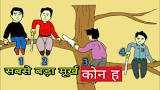
    Once a jackal and a cat met in the middle of a forest. The jackal asked the cat how he would get away from a tiger. The cat said: ‘I know only one way and that is to climb the tree as fast as possible.’  Then the cat asked the jackal what would you do in case you come across a tiger? The jackal replied: ‘Brother,  I know 101 ways of getting away. For example, I can go into the bush. I can climb up the rocks and can even hide behind the tree, or can even go into a hole.’

    Just then all of a sudden a tiger appeared. The cat immediately climbed the tree while the jackal pondered—which solution should he adopt? In the meanwhile the tiger pounced on the jackal and killed it.

    Moral of the story: Too many choices at times create conflicts and problems, and leads to unhappiness. In fact too many choices can paralyse anyone.

By Kamlesh Tripathi

*

https://kamleshsujata.wordpress.com

*

Share it if you like it

*

Shravan Charity Mission is an NGO that works for poor children suffering from life threatening diseases especially cancer. Our posts are meant for our readers that includes both children and adults and it has a huge variety in terms of content. We also accept donations for our mission. Should you wish to donate for the cause. The bank details are given below:

NAME OF ACCOUNT: SHRAVAN CHARITY MISSION

Account no: 680510110004635 (BANK OF INDIA)

IFSC code: BKID0006805

*

Our publications

GLOOM BEHIND THE SMILE

(The book is about a young cancer patient. Now archived in 7 prestigious libraries of the US, including, Harvard University and Library of Congress. It can also be accessed in MIT through Worldcat.org. Besides, it is also available for reading in Libraries and archives of Canada and Cancer Aid and Research Foundation Mumbai)  

ONE TO TANGO … RIA’S ODYSSEY

(Is a book on ‘singlehood’ about a Delhi girl now archived in Connemara Library, Chennai and Delhi Public Library, GOI, Ministry of Culture, Delhi)

AADAB LUCKNOW … FOND MEMORIES

(Is a fiction written around the great city of Nawabs—Lucknow. It describes Lucknow in great detail and also talks about its Hindu-Muslim amity. That happens to be its undying characteristic. The book was launched in Lucknow International Literary Festival of 2014)

REFRACTIONS … FROM THE PRISM OF GOD

(Co-published by Cankids–Kidscan, a pan India NGO and Shravan Charity Mission, that works for Child cancer in India. The book is endorsed by Ms Preetha Reddy, MD Apollo Hospitals Group. It was launched in Lucknow International Literary Festival 2016)

TYPICAL TALE OF AN INDIAN SALESMAN

(Is a story of an Indian salesman who is, humbly qualified. Yet he fights his ways through unceasing uncertainties to reach the top. A good read not only for salesmen. The book was launched on 10th February, 2018 in Gorakhpur Lit-Fest. Now available in Amazon, Flipkart and Onlinegatha)

RHYTHM … in poems

(Published in January 2019. The book contains 50 poems. The poems describe our day to day life. The book is available in Amazon, Flipkart and Onlinegatha)

(ALL THE ABOVE TITLES ARE AVAILABLE FOR SALE IN AMAZON, FLIPKART AND OTHER ONLINE STORES OR YOU COULD EVEN WRITE TO US FOR A COPY)

*****


BOOK STALL: TO BUILD A FIRE by Jack London

Copyright@shravancharitymission

Khidki (Window)

–Read India Initiative—

This is only an attempt to create interest in reading. We may not get the time to read all the books in our lifetime. But such reviews, talk and synopsis will at least convey what the book is all about.

    “To Build a Fire” is a short story by American author Jack London. There are two versions of this story. One published in 1902 and the other in 1908. The story that was written in 1908 has become an anthologized classic, while the 1902 story is lesser known. The 1908 version is about an unnamed protagonist who ventures out in the sub-zero boreal forest (located in the Arctic zone) of the Yukon Territory, along with his dog, to visit some of his friends. While doing so he ignores the warnings from an older man about the dangers of hiking alone. The protagonist underestimates the harsh conditions and slowly begins to freeze to death. After trying and then failing to build a fire, he slips into unconsciousness and dies of hypothermia—low body temperature.

    The 1902 version describes a similar situation, but with a different plot. Though the structure and storyline are similar in both. In 1902 the weather is not as cold and horrendous, and no dog follows the protagonist, the fire is not doused, and the man (named Tom Vincent) suffers only from permanent frostbite. And he survives to become a melancholic but wiser person.

    Whereas, the 1908 version of the story is an example of the naturalist movement that portrays the conflict of man versus nature. It also reflects what Jack London perhaps learned in the Yukon Territory. And it details as follows:

    An unnamed man sets out to hike through the forests bordering the Yukon River on a winter day when the temperature has reached -75°F (-59°C). Having ignored the advice of an old prospector against traveling alone in such weather, he is accompanied only by his large husky dog. The animal’s instincts warn about the dangers of the extreme cold weather. Yet, it follows the man unwillingly. And as they follow the course of a frozen creek, the man is careful to avoid patches of thin ice, hidden in the snow, that cover pockets of unfrozen water. His goal is to reach a group of prospectors (“the boys”) at their camp by 6:00 that evening.

    At half past noon, the man stops and builds a fire so that he can warm up and also eat his lunch. He shortly resumes his hike, when he breaks through the ice and drenches his feet and lower legs, forcing him to stop and build another fire. This one under a tree, in order to dry himself. But as he pulls the twigs, from the brush pile around the tree to feed the flames. The vibrations cause the snow to tumble down from the branches overhead and extinguish the fire. This creates a crisis. The man quickly begins to lose sensation in the extremities and hurries to light another fire. He now begins to premonition the life-threatening danger posed by the cold. He tries to light the fire by igniting all his matches and in the process he exhausts, all of it. Now with no more matches in hand, the man tries to kill the dog for warmth. But his hands are so stiff that he can neither strangle it nor draw his knife. Finally, he tries to restore his circulation by running towards the camp, but stumbles and falls in the snow. The man dies of hypothermia, imagining himself standing with “the boys” as they find his body. The dog leaves the body after dark to find food and shelter at the camp.

    The man and the dog’s relationship is followed throughout the story. The man is in absolute control of the dog, as explicitly mentioned by London. The dog is almost like a slave to him and is shown cowering before the man and following orders. However, there is no physical intimacy between the two. The man doesn’t pet the dog or treat him fondly. In fact, the man forces the dog to go ahead of him when he suspects the ice will break. This helps to build the idea that the man believes nature is intended to serve him. The man’s interactions, in this relationship, is how the reader discovers the man’s personality and character to be. By including the dog in the story, the author makes the man less likable. London even describes the dog as his “toil-slave”.

    “Man vs Nature” is one of the themes presented in this short story. The protagonist decides to face the brutal cold temperatures of the Yukon Territory, despite being warned by an older man. The short story depicts the protagonist’s battle of life and death while highlighting the importance of the fire.

    Another theme illustrated in the story is the man’s human sense of judgment contrasted with the dog’s animal instincts. Throughout the story, London hints that the dog has more knowledge of survival than the man. The judgment versus instinct theme is evident when the man builds the first fire. While the dog wants to stay by the fire to keep warm, the man is determined to keep moving. And as the dog reluctantly follows the man across a frozen river, the dog is more cautious than the man.

    The protagonist’s desperation is evident throughout the story. It is noticeable soon after the man falls into a frozen river. In order to save himself, he scrambles to build a fire but is too busy worrying about his health to notice the mistake of building a fire underneath a tree that has collected an enormous amount of snow. After the first fire is put out, his desperation becomes even more defined as he seemingly will do anything to survive. Including attempting to kill his dog for warmth and using all his matches at once in a final attempt to light his last fire. His desperation for survival and his fear of death causes his demise as he freezes to death at the end of the story.

    Another evident theme in the story is perseverance. Although the man makes several mistakes and is getting frostbite in his fingers and toes, he continues to fight for survival.

    Stupidity and arrogance are personified in the story’s protagonist. For example, he goes through the extremely cold territory alone, despite going for the first time. He laughs off the crucial advice of traveling with an acquaintance because he thinks he knows what he’s doing. This arrogance results in the protagonist putting himself in a dangerous situation that was preventable. At first, he thinks it’s nothing and that everything will be fine. By the end of the story, he dies as a result of his arrogance. Another example of arrogance occurs when the protagonist disregards the possibility that there may be situations he cannot overcome. The old man warns the protagonist of this and also seems to have a better understanding of the natural world, respecting the fact that there are some situations the man will be unable to control. Not only does the old man see the protagonist’s stupidity, but the dog notices the man’s lack of knowledge about the terrain and its obstacles after he fails to keep a fire going.

    Succumbing to death is another theme in the story: more specifically the peace that may be found in death. London foreshadows the death of the man early in the story, so it is not a surprise that the man dies. London depicts the death quite differently than many other authors do. The man drifts off into a calm and peaceful slumber devoid of suffering and pain. London’s use of relaxing words dissuades the reader from feeling a great deal of sympathy for the man, as the death is merciful and graciously anticipated, rather than sad. In contrast to more dramatic depictions of death, London’s depiction reveals death as a peaceful escape from tumult and pain.

    Individualism is another common theme London portrays in the story. The man only relies on himself to get him through the Yukon; he doesn’t believe that he needs any help. This theme can also be connected to the theme mentioned above of the man’s judgement, and the man’s arrogance.

Synopsis by Kamlesh Tripathi

*

https://kamleshsujata.wordpress.com

*

Share it if you like it

*

Shravan Charity Mission is an NGO that works for poor children suffering from life threatening diseases especially cancer. Our posts are meant for our readers that includes both children and adults and it has a huge variety in terms of content. We also accept donations for our mission. Should you wish to donate for the cause. The bank details are given below:

NAME OF ACCOUNT: SHRAVAN CHARITY MISSION

Account no: 680510110004635 (BANK OF INDIA)

IFSC code: BKID0006805

*

Our publications

GLOOM BEHIND THE SMILE

(The book is about a young cancer patient. Now archived in 7 prestigious libraries of the US, including, Harvard University and Library of Congress. It can also be accessed in MIT through Worldcat.org. Besides, it is also available for reading in Libraries and archives of Canada and Cancer Aid and Research Foundation Mumbai)  

ONE TO TANGO … RIA’S ODYSSEY

(Is a book on ‘singlehood’ about a Delhi girl now archived in Connemara Library, Chennai and Delhi Public Library, GOI, Ministry of Culture, Delhi)

AADAB LUCKNOW … FOND MEMORIES

(Is a fiction written around the great city of Nawabs—Lucknow. It describes Lucknow in great detail and also talks about its Hindu-Muslim amity. That happens to be its undying characteristic. The book was launched in Lucknow International Literary Festival of 2014)

REFRACTIONS … FROM THE PRISM OF GOD

(Co-published by Cankids–Kidscan, a pan India NGO and Shravan Charity Mission, that works for Child cancer in India. The book is endorsed by Ms Preetha Reddy, MD Apollo Hospitals Group. It was launched in Lucknow International Literary Festival 2016)

TYPICAL TALE OF AN INDIAN SALESMAN

(Is a story of an Indian salesman who is, humbly qualified. Yet he fights his ways through unceasing uncertainties to reach the top. A good read not only for salesmen. The book was launched on 10th February, 2018 in Gorakhpur Lit-Fest. Now available in Amazon, Flipkart and Onlinegatha)

RHYTHM … in poems

(Published in January 2019. The book contains 50 poems. The poems describe our day to day life. The book is available in Amazon, Flipkart and Onlinegatha)

(ALL THE ABOVE TITLES ARE AVAILABLE FOR SALE IN AMAZON, FLIPKART AND OTHER ONLINE STORES OR YOU COULD EVEN WRITE TO US FOR A COPY)

*****



SHORT STORY: HOW SUZUKI FOUND HIROO ONODA IN THE JUNGLES OF LUBANG (PHILIPPINES)

Copyright@shravancharitymission


    It was in the closing months of 1944 and almost after a decade when the tide was turning against Japan.  Their economy was staggering, their military was exhausted across, half of Asia. The territories that they had won all along the Pacific were now toppling like dominoes against the forces of U.S. Defeat now, seemed inevitable.

    On December 26, 1944, Second Lieutenant Hiroo Onoda of the Japanese Imperial Army was deployed at the small island of Lubang in the Philippines. His orders were, to slow the progress of United States as much as possible. To stand and fight at all costs, and to never surrender. Both he and his commander knew it was essentially a suicide mission.

    In February 1945, the Americans finally arrived at Lubang and took the island by storm. Within days, most of the Japanese soldiers had either surrendered or were killed. But Onoda and three of his men managed to hide in the jungle. From there, they began a campaign of guerrilla warfare against the U.S. forces and the local population. They attacked supply lines, shot stray soldiers, and interfered with the American forces in every possible manner that they could.

    After about six months on August 6 and 9, 1945, United States, dropped the atomic bombs on the cities of Hiroshima and Nagasaki respectively. Japan surrendered, and the deadliest war in human history came to its dramatic end.

    However, thousands of Japanese soldiers were still scattered among the Pacific isle, and most, like Onoda, were hiding in the jungle, unaware that the war was over. These holdouts continued to fight and pillage as they had done before. This became a real problem for rebuilding eastern Asia after the war. Where, the governments did agree that something needs to be done.

    The U.S. military, in agreement with the Japanese government, dropped thousands of leaflets throughout the Pacific region. Announcing that the war was over and it was time for everyone to go home. Onoda and his men, like many others soldiers, found and read these leaflets. But unlike most of them, Onoda decided that they were fake. A trap set by the American forces to get the guerrilla fighters to show themselves. Onoda burned the leaflets. He and his men stayed hidden and continued to fight.

    Five years had gone by. The leaflets had stopped, and most of the American forces had long since gone home. The local population of Lubang attempted to return to their normal lives of farming and fishing. Yet, there were, Hiroo Onoda and his merry men, still shooting farmers, burning their crops, stealing their livestock, and murdering locals who wandered too far into the jungle. The Philippine government then took to drawing up new flyers and spreading them out across the jungle. Come out, they said. The war is over. You lost. But these too, were also ignored by Onoda.

    In 1952, the Japanese government made one final effort to pull out the last remaining soldiers out of the hiding all throughout the Pacific. This time, letters and pictures, from the missing soldiers’ families were air-dropped, along with a personal note from the emperor himself. Once again, Onoda refused to believe that the information was real. Once again, he believed the airdrop, to be a trick of the Americans. So, once again, he and his men stood their ground and continued with their fight.

    By now another few years had gone by. The Philippine locals, sick of being terrorized, finally armed themselves, and began firing back. By 1959, one of Onoda’s companions had surrendered, and another was killed. A decade later. Onoda’s last companion. A man called Kozuka, was killed in a shootout with the local police, while he was burning rice fields—still waging war against the local population, a full quarter-century after the end of World War II.

    Onoda, now having spent more than half of his life in the jungles of Lubang, was all alone.

    In 1972, the news of Kozuka’s death reached Japan and caused a stir. The Japanese people had thought. The last of the soldiers from the war had come home years earlier. The Japanese media began to speculate. If Kozuka was still in Lubang until 1972. Then perhaps, Onoda himself, the last known Japanese holdout, from World War II, might still be alive as well. That year, both Japanese and Philippine governments, jointly sent search parties, to look for the enigmatic second lieutenant Onoda. Who, by now had become a part of a myth, a hero, or even a ghost, for no one knew the reality. Finally, the search parties found nothing.

    As months progressed. The story of Lieutenant Onoda morphed into, something like an urban legend in Japan—the war hero sounded too insane to actually exist. Many romanticized him. Others criticized him. Others thought he was a stuff out of a fairy tale.

    It was around this time that a young man by the name of Norio Suzuki first heard of second lieutenant Onoda. Suzuki was an adventurer, an explorer, and a bit of a hippie. Born after the end of the war. He had dropped out of school and had spent four years hitchhiking his way across Asia, the Middle East, and Africa. Sleeping on park benches, in stranger’s cars, in jail cells, and under the stars. He volunteered on farms for food, and donated blood to pay for places to stay. He was a free spirit, and perhaps a little bit nuts.

    In 1972, Suzuki needed another adventure. He had returned to Japan after his travels and found the strict cultural norms and social hierarchy to be too stifling. He hated school. He couldn’t hold on to a job. He wanted to be back on the road, back on his own again.

    For Suzuki, the legend of Hiroo Onoda came as the answer to his problems. It was a new and worthy adventure for him to pursue. Suzuki believed that he would be the one who would find Onoda. Extensive search parties conducted by the Japanese, Philippine and American governments had not been able to find Onoda. Local police forces had been scavenging the jungles for almost thirty years now with no luck. Thousands of leaflets had met with no response. So, was it this deadbeat, a college dropout, a hippie, be the one, to find him?

    Unarmed and untrained for any sort of reconnaissance or tactical warfare, Suzuki travelled to Lubang and began wandering around the jungle all by himself. His strategy was simple. Scream Onoda’s name really loud and tell him that the emperor was worried about him.

    He found second lieutenant Hiroo Onoda in just four days.

   Moral of the story: One, use the right means and methods to communicate. See how Suzuki found Onoda in just four days. Two, learn to trust people, which Onoda didn’t, and as a result of which, he spent, more than half of his life, in the jungles of Lubang.  

    Second Lieutenant Hiroo Onoda died later in Japan at the age of ninety one.

By Kamlesh Tripathi

*

https://kamleshsujata.wordpress.com

*

Share it if you like it

*

Shravan Charity Mission is an NGO that works for poor children suffering from life threatening diseases especially cancer. Our posts are meant for our readers that includes both children and adults and it has a huge variety in terms of content. We also accept donations for our mission. Should you wish to donate for the cause. The bank details are given below:

NAME OF ACCOUNT: SHRAVAN CHARITY MISSION

Account no: 680510110004635 (BANK OF INDIA)

IFSC code: BKID0006805

*

Our publications

GLOOM BEHIND THE SMILE

(The book is about a young cancer patient. Now archived in 7 prestigious libraries of the US, including, Harvard University and Library of Congress. It can also be accessed in MIT through Worldcat.org. Besides, it is also available for reading in Libraries and archives of Canada and Cancer Aid and Research Foundation Mumbai)  

ONE TO TANGO … RIA’S ODYSSEY

(Is a book on ‘singlehood’ about a Delhi girl now archived in Connemara Library, Chennai and Delhi Public Library, GOI, Ministry of Culture, Delhi)

AADAB LUCKNOW … FOND MEMORIES

(Is a fiction written around the great city of Nawabs—Lucknow. It describes Lucknow in great detail and also talks about its Hindu-Muslim amity. That happens to be its undying characteristic. The book was launched in Lucknow International Literary Festival of 2014)

REFRACTIONS … FROM THE PRISM OF GOD

(Co-published by Cankids–Kidscan, a pan India NGO and Shravan Charity Mission, that works for Child cancer in India. The book is endorsed by Ms Preetha Reddy, MD Apollo Hospitals Group. It was launched in Lucknow International Literary Festival 2016)

TYPICAL TALE OF AN INDIAN SALESMAN

(Is a story of an Indian salesman who is, humbly qualified. Yet he fights his ways through unceasing uncertainties to reach the top. A good read not only for salesmen. The book was launched on 10th February, 2018 in Gorakhpur Lit-Fest. Now available in Amazon, Flipkart and Onlinegatha)

RHYTHM … in poems

(Published in January 2019. The book contains 50 poems. The poems describe our day to day life. The book is available in Amazon, Flipkart and Onlinegatha)

(ALL THE ABOVE TITLES ARE AVAILABLE FOR SALE IN AMAZON, FLIPKART AND OTHER ONLINE STORES OR YOU COULD EVEN WRITE TO US FOR A COPY)

*****


BOOK CORNER: I AM ALWAYS HERE WITH YOU by Himanshu Rai

Copyright@shravancharitymission

Khidki (Window)

–Read India Initiative—

This is only an attempt to create interest in reading. We may not get the time to read all the books in our lifetime. But such reviews, talk and synopsis will at least convey what the book is all about.


I AM ALWAYS HERE WITH YOU

By Himanshu Rai

Publisher: Srishti Publishers

Price Rs 195

    They say love acknowledges no boundaries. I agree to that. But then love is also a state of mind that often stands on the crutches of tragedies. In this flurry of viewpoints let me add one more—‘Love knows no time, or distance, and it certainly knows no reason- says lady author Genevieve Dewey, and then again there is that famous Hindi song ‘janam-janam ka sath hai nibha ne ko. Sao sao bar mene janam liye, a Mohd Rafi song enacted on the screen by Babita and Shammi Kapur in film, ‘Tum se accha kaun hai’ released in the year 1966. So in sum, love is ever-green and the oldest plaything that mankind pulled out from the treasures of mother earth.

    I have just finished reading this title, ‘I am Always Here With You’ written by young author Himanshu Rai who happens to be a telecom professional and also a fraternity friend of mine. It so happened by the stroke of luck I had read one of his earlier titles, this being his second one. India being a young nation, is deep in love, and therefore a number of love stories are flowering all over the place. There was once the deluge of Mills & Boon that took the ‘rustic India’ by storm. And now we have the unlimited, ‘Indian love stories’ that is taking the ‘unrealised India’ by storm.

     Since the book was published only recently I’ll refrain myself from being a spoiler. But yes of course there is Kartik and Ashima entangled in deep puppy love. Both are good students studying in Dehradun. Kartik’s father wants him to be an engineer. But his love takes him somewhere else both academically and emotionally. This only creates a deep rift between the father and the son after Kartik’s marriage with Ashima. As the story unfolds, after seven years of courtship, and two years of marriage they are now about to graduate into the next hierarchy of life. And all along Kartik attempts to mend his relationship with his father where he even seeks the support of his wife Ashima.

    All is moving well until here. But then life is, so very, unpredictable as they say. And you’ll have to read the book to find out why Ashima is now marrying someone else? And why is Kartik accepting that helplessly?

    I would desist from going any further on the storyline. But yes, the book definitely appears to be written, keeping in mind the young readers. It goes on to pass the im-memorial message, that love is crazy.

    It’s an offbeat story. Where, the author has tried to bring in, some innovative ideas that are somewhat unconventional, but not filled with cheer. The book paces well but within the same context so it gets over-descriptive at spaces where it can be avoided. There are enchanting pages about school and college romance that will mostly delight the young age group. The author has used the methodology of quote-unquote where he could have used simple narration to make the story move faster. For in the first forty pages I found the book to be slow and it picks up a little after seventy pages. But then it slows down again before the end and that is because of some meticulous descriptions that the author takes us through. The book has titillating love scenes but they do not culminate at any point. It has well captured emotions. But the author could have done well with lesser of detailing and more of events in the story. Or he could have ended the book at around, a hundred and fifty pages. To me it was like a fairy tale. High on emotions that made my own love story look pale. Once again the book is descriptive where a plethora of emotions inter-twine within the ambit of high emotions with less of engaging events or episodes.

    Some books impact you for their meaty storyline, some for the wisdom, that they provide you, some for the narration and language, and some for all of these. So, the readers need to find it out for themselves by reading the book which way the book has impacted them.

    The book is around two hundred pages written in lucid language easy to understand.

    Overall, it’s a good read, for the college crowd and even other grown up youngsters where slow moving stories with high pitch emotions can be a selling point.

    A line that I liked out of the book was, ‘friendship is the start, but togetherness is the end.’

    I wish Himanshu Rai the very best in is his future titles.

Synopsis by Kamlesh Tripathi

*

https://kamleshsujata.wordpress.com

*

Share it if you like it

*

Shravan Charity Mission is an NGO that works for poor children suffering from life threatening diseases especially cancer. Our posts are meant for our readers that includes both children and adults and it has a huge variety in terms of content. We also accept donations for our mission. Should you wish to donate for the cause. The bank details are given below:

NAME OF ACCOUNT: SHRAVAN CHARITY MISSION

Account no: 680510110004635 (BANK OF INDIA)

IFSC code: BKID0006805

*

Our publications

GLOOM BEHIND THE SMILE

(The book is about a young cancer patient. Now archived in 7 prestigious libraries of the US, including, Harvard University and Library of Congress. It can also be accessed in MIT through Worldcat.org. Besides, it is also available for reading in Libraries and archives of Canada and Cancer Aid and Research Foundation Mumbai)  

ONE TO TANGO … RIA’S ODYSSEY

(Is a book on ‘singlehood’ about a Delhi girl now archived in Connemara Library, Chennai and Delhi Public Library, GOI, Ministry of Culture, Delhi)

AADAB LUCKNOW … FOND MEMORIES

(Is a fiction written around the great city of Nawabs—Lucknow. It describes Lucknow in great detail and also talks about its Hindu-Muslim amity. That happens to be its undying characteristic. The book was launched in Lucknow International Literary Festival of 2014)

REFRACTIONS … FROM THE PRISM OF GOD

(Co-published by Cankids–Kidscan, a pan India NGO and Shravan Charity Mission, that works for Child cancer in India. The book is endorsed by Ms Preetha Reddy, MD Apollo Hospitals Group. It was launched in Lucknow International Literary Festival 2016)

TYPICAL TALE OF AN INDIAN SALESMAN

(Is a story of an Indian salesman who is, humbly qualified. Yet he fights his ways through unceasing uncertainties to reach the top. A good read not only for salesmen. The book was launched on 10th February, 2018 in Gorakhpur Lit-Fest. Now available in Amazon, Flipkart and Onlinegatha)

RHYTHM … in poems

(Published in January 2019. The book contains 50 poems. The poems describe our day to day life. The book is available in Amazon, Flipkart and Onlinegatha)

(ALL THE ABOVE TITLES ARE AVAILABLE FOR SALE IN AMAZON, FLIPKART AND OTHER ONLINE STORES OR YOU COULD EVEN WRITE TO US FOR A COPY)

*****