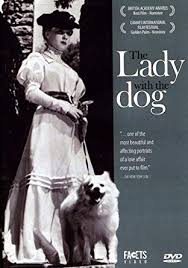
Category Archives: storytelling

STORY: TWO FRIENDS AND THE BEAR

Copyright@shravancharitymission
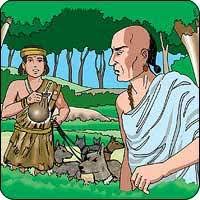
    Vijay and Raju were friends. Once while they were on a holiday they went into a forest. Where, they were enjoying the beauty of nature. When suddenly they saw a bear charging at them. They were frightened. Raju who knew how to climb a tree, ran towards it and climbed it up in no time. He did not think of Vijay who did not know how to climb a tree.

    Vijay got nervous and thought for a second. He had heard, animals do not prefer dead bodies. So, he fell on the ground and held his breath. The bear sniffed him for a few moments and thought he was dead and decided to carry on. Upon witnessing the scene Raju asked Vijay. ‘What did the bear whisper in your ears?’ 

Vijay replied, The bear asked me to keep away from friends like you.’ 

Moral of the story is: A friend in need is a friend indeed.

Posted by Kamlesh Tripathi

*

https://kamleshsujata.wordpress.com

*

Share it if you like it

*

Shravan Charity Mission is an NGO that works for poor children suffering from life threatening diseases especially cancer. Our posts are meant for our readers that includes both children and adults and it has a huge variety in terms of content. We also accept donations for our mission. Should you wish to donate for the cause. The bank details are given below:

NAME OF ACCOUNT: SHRAVAN CHARITY MISSION

Account no: 680510110004635 (BANK OF INDIA)

IFSC code: BKID0006805

*

Our publications

GLOOM BEHIND THE SMILE

(The book is about a young cancer patient. Now archived in 7 prestigious libraries of the US, including, Harvard University and Library of Congress. It can also be accessed in MIT through Worldcat.org. Besides, it is also available for reading in Libraries and archives of Canada and Cancer Aid and Research Foundation Mumbai)  

ONE TO TANGO … RIA’S ODYSSEY

(Is a book on ‘singlehood’ about a Delhi girl now archived in Connemara Library, Chennai and Delhi Public Library, GOI, Ministry of Culture, Delhi)

AADAB LUCKNOW … FOND MEMORIES

(Is a fiction written around the great city of Nawabs—Lucknow. It describes Lucknow in great detail and also talks about its Hindu-Muslim amity. That happens to be its undying characteristic. The book was launched in Lucknow International Literary Festival of 2014)

REFRACTIONS … FROM THE PRISM OF GOD

(Co-published by Cankids–Kidscan, a pan India NGO and Shravan Charity Mission, that works for Child cancer in India. The book is endorsed by Ms Preetha Reddy, MD Apollo Hospitals Group. It was launched in Lucknow International Literary Festival 2016)

TYPICAL TALE OF AN INDIAN SALESMAN

(Is a story of an Indian salesman who is, humbly qualified. Yet he fights his ways through unceasing uncertainties to reach the top. A good read not only for salesmen. The book was launched on 10th February, 2018 in Gorakhpur Lit-Fest. Now available in Amazon, Flipkart and Onlinegatha)

RHYTHM … in poems

(Published in January 2019. The book contains 50 poems. The poems describe our day to day life. The book is available in Amazon, Flipkart and Onlinegatha)

(ALL THE ABOVE TITLES ARE AVAILABLE FOR SALE IN AMAZON, FLIPKART AND OTHER ONLINE STORES OR YOU COULD EVEN WRITE TO US FOR A COPY)

*****


BOOK REVIEW: THE BROWN HAND by Sir Arthur Conan Doyle

Copyright@shravancharitymission

Khidki (Window)

–Read India Initiative—

This is only an attempt to create interest in reading. We may not get the time to read all the books in our lifetime. But such reviews, talk and synopsis will at least convey what the book is all about.

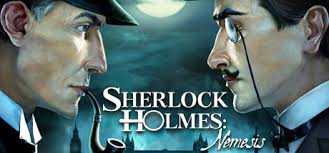
    Sir Arthur Conan Doyle as we all know was a British writer best known for his detective fiction featuring the character Sherlock Holmes. Originally a physician, in 1887 he published ‘A Study in Scarlet’ the first of his four novels and thereafter more than fifty short stories about Holmes and Dr. Watson. Brown Hand was first published in The Strand Magazine in May 1899.

    The story is based on an Indian urban legend that tells about a Muslim who was forced to have his arm amputated after an accident, but died a few months later, and after death became a ghost and began wandering about in search of his limb.

    The central character of the story is a doctor, Sir Dominic Holden, who has had a long spell of service in British India first as a military doctor and then as a private surgeon in Bombay. Once when he was posted at Peshawar, then a main city of undivided Punjab (hence a part of India), he had to attend to a poor Afghan whose one hand was in such a bad state due to the spread of gangrene, that the only way to save his life was to amputate it. The operation was performed and Dr. Holden asked for the amputated hand as his fee. Dr. Holden had a hobby of collecting discarded limbs, organs, cysts from living and dead humans and thus wanted to add the “brown hand” to his collection. Whereas, the Afghan being Islamic, refused to part with his amputated hand, as it breached the rule of his religion which stated amputated body parts should be kept with the owner himself. But Dr. Holden promised to return the Afghan his hand before his death and took the hand with him to his house in Bombay. Thereafter Dr. Holden soon retired and settled in Wiltshire, England. One night he was awakened when someone started pulling his clothes. It was the ghost of his old Afghan patient. Dr. Holden understood that the Afghan had died and his ghost wanted back the amputated hand. From then onwards, the ghost started haunting the doctor’s lab every night for four years looking for his hand. But the ghost failed to find the hand since it had been damaged in a fire that had broken out at the doctor’s house in Bombay. The recurring visits of the ghost, had made the life of Dr. Holden and his wife, Lady Holden, miserable and the ill effects of which on their health was prominent. A doctor known for his steel nerves had now become a scared individual.
When, Dr. Holden’s nephew, by the name of Dr Hardacre decided to solve this problem. He spent his first night in the lab and saw the Afghan searching for his hand. The next day, Dr. Holden explained him everything in detail and Hardacre left for London. Hardacre, a doctor himself, went through a book on spirits and found that certain spirits could not leave the living world because of them being strongly attached to something or someone existing in this world. Hardacre decided to try his luck and left for Chadwell where a friend of his was the home surgeon at a hospital for sailors. The home surgeon provided Hardacre with an amputated hand of an Indian sailor as the requirement was a “brown hand”.
    Hardacre returned to Wiltshire and placed the hand in a jar in his uncle’s lab. Hardacre stayed awake as the Afghan ghost came visiting as usual. But Hardacre’s experiment failed as the Afghan on seeing the hand, wailed in agony and smashed the jar on the floor before disappearing. Next morning, Hardacre realised his mistake as he had brought the left hand of the sailor while the Afghan had had his right hand separated. Hardacre rushed back to Chadwell and luckily got the right hand of the sailor. He returned and placed the hand in a jar in the lab just like the previous day. Dr. Holden forbade Hardacre from sleeping in the lab as he feared risking his nephew’s life.
That night, Hardacre again saw somebody approaching him while he tried to sleep. But it wasn’t any ghost but his uncle who seemed overwhelmed with joy and had suddenly regained some of the energy he possessed earlier. Dr. Holden stated that the ghost had finally found his amputated hand and before leaving, he offered the Eastern Salaam bowed thrice in front of him, in a way similar to how Afghans pay respect. Thereafter Holdens lived on peacefully and consulted Hardacre for every major decisions they took thereafter. Before he died, Dr. Holden named Hardacre as the heir to his property.

    The story has mild horror and conveys a message that if one is intensely attached to something in this world it becomes difficult for the soul to leave the world without that object.

    It makes an interesting read. I would give it seven out of ten.

By Kamlesh Tripathi

*

https://kamleshsujata.wordpress.com

*

Share it if you like it

*

Shravan Charity Mission is an NGO that works for poor children suffering from life threatening diseases especially cancer. Our posts are meant for our readers that includes both children and adults and it has a huge variety in terms of content. We also accept donations for our mission. Should you wish to donate for the cause. The bank details are given below:

NAME OF ACCOUNT: SHRAVAN CHARITY MISSION

Account no: 680510110004635 (BANK OF INDIA)

IFSC code: BKID0006805

*

Our publications

GLOOM BEHIND THE SMILE

(The book is about a young cancer patient. Now archived in 7 prestigious libraries of the US, including, Harvard University and Library of Congress. It can also be accessed in MIT through Worldcat.org. Besides, it is also available for reading in Libraries and archives of Canada and Cancer Aid and Research Foundation Mumbai)  

ONE TO TANGO … RIA’S ODYSSEY

(Is a book on ‘singlehood’ about a Delhi girl now archived in Connemara Library, Chennai and Delhi Public Library, GOI, Ministry of Culture, Delhi)

AADAB LUCKNOW … FOND MEMORIES

(Is a fiction written around the great city of Nawabs—Lucknow. It describes Lucknow in great detail and also talks about its Hindu-Muslim amity. That happens to be its undying characteristic. The book was launched in Lucknow International Literary Festival of 2014)

REFRACTIONS … FROM THE PRISM OF GOD

(Co-published by Cankids–Kidscan, a pan India NGO and Shravan Charity Mission, that works for Child cancer in India. The book is endorsed by Ms Preetha Reddy, MD Apollo Hospitals Group. It was launched in Lucknow International Literary Festival 2016)

TYPICAL TALE OF AN INDIAN SALESMAN

(Is a story of an Indian salesman who is, humbly qualified. Yet he fights his ways through unceasing uncertainties to reach the top. A good read not only for salesmen. The book was launched on 10th February, 2018 in Gorakhpur Lit-Fest. Now available in Amazon, Flipkart and Onlinegatha)

RHYTHM … in poems

(Published in January 2019. The book contains 50 poems. The poems describe our day to day life. The book is available in Amazon, Flipkart and Onlinegatha)

(ALL THE ABOVE TITLES ARE AVAILABLE FOR SALE IN AMAZON, FLIPKART AND OTHER ONLINE STORES OR YOU COULD EVEN WRITE TO US FOR A COPY)

*****


STORY: SATAN IN DISGUISE

Copyright@shravancharitymission

    There once lived an old tiger in a forest. He could not hunt animals as he used to do when he was young. It was therefore becoming difficult for him, to get his prey. One day the tiger thought, “I have lost the strength and speed of my youth. Unless, I discover some trick to catch my prey, I will starve to death”.

    After a serious thought, the tiger came out with a plan. He began by telling everyone, “I am now old. So I have turned into a vegetarian. I have become a sanyasi. I will no more hunt animals.” 

    Soon his words spread across the jungle. Innocent animals who were otherwise scared of him came to pay their respect to the aged tiger, thinking, that the tiger had turned into a saint. But in reality the tiger pounced on all the animals when they came to his cave.
    This information fell in the ears of a fox. The fox began to think, “Can a tiger become a vegetarian, and thereby a saint?” He was now eager to unearth the truth.
    Stealthily, the fox approached the tiger’s cave. He minutely and carefully examined the foot prints of the all animals that had gone to meet the tiger. He found to his dismay, all foot prints going towards the cave but not returning from the there. He then told all the animals in the forest. “The tiger is a cheat. So, don’t go to his cave as he has eaten up all the animals that went there”. 
    The tiger had to starve to death. 
MORAL OF THE STORY: Satanic words are not to be believed.

Posted by Kamlesh Tripathi

*

https://kamleshsujata.wordpress.com

*

Share it if you like it

*

Shravan Charity Mission is an NGO that works for poor children suffering from life threatening diseases especially cancer. Our posts are meant for our readers that includes both children and adults and it has a huge variety in terms of content. We also accept donations for our mission. Should you wish to donate for the cause. The bank details are given below:

NAME OF ACCOUNT: SHRAVAN CHARITY MISSION

Account no: 680510110004635 (BANK OF INDIA)

IFSC code: BKID0006805

*

Our publications

GLOOM BEHIND THE SMILE

(The book is about a young cancer patient. Now archived in 7 prestigious libraries of the US, including, Harvard University and Library of Congress. It can also be accessed in MIT through Worldcat.org. Besides, it is also available for reading in Libraries and archives of Canada and Cancer Aid and Research Foundation Mumbai)  

ONE TO TANGO … RIA’S ODYSSEY

(Is a book on ‘singlehood’ about a Delhi girl now archived in Connemara Library, Chennai and Delhi Public Library, GOI, Ministry of Culture, Delhi)

AADAB LUCKNOW … FOND MEMORIES

(Is a fiction written around the great city of Nawabs—Lucknow. It describes Lucknow in great detail and also talks about its Hindu-Muslim amity. That happens to be its undying characteristic. The book was launched in Lucknow International Literary Festival of 2014)

REFRACTIONS … FROM THE PRISM OF GOD

(Co-published by Cankids–Kidscan, a pan India NGO and Shravan Charity Mission, that works for Child cancer in India. The book is endorsed by Ms Preetha Reddy, MD Apollo Hospitals Group. It was launched in Lucknow International Literary Festival 2016)

TYPICAL TALE OF AN INDIAN SALESMAN

(Is a story of an Indian salesman who is, humbly qualified. Yet he fights his ways through unceasing uncertainties to reach the top. A good read not only for salesmen. The book was launched on 10th February, 2018 in Gorakhpur Lit-Fest. Now available in Amazon, Flipkart and Onlinegatha)

RHYTHM … in poems

(Published in January 2019. The book contains 50 poems. The poems describe our day to day life. The book is available in Amazon, Flipkart and Onlinegatha)

(ALL THE ABOVE TITLES ARE AVAILABLE FOR SALE IN AMAZON, FLIPKART AND OTHER ONLINE STORES OR YOU COULD EVEN WRITE TO US FOR A COPY)

*****


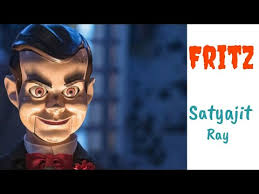
BOOK REVIEW: FRITZ by Satyajit Ray

Copyright@shravancharitymission

Khidki (Window)

–Read India Initiative—

This is only an attempt to create interest in reading. We may not get the time to read all the books in our lifetime. But such reviews, talk and synopsis will at least convey what the book is all about.

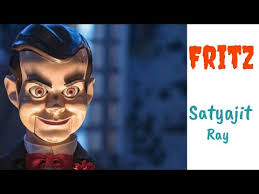
    This short story was published in The Penguin Book of ‘Indian GHOST stories, edited by Ruskin Bond, is about a Swiss doll named Fritz. The price of this book is Rs 250.
We all know Satyajit Ray, an Indian filmmaker, screenwriter, music composer, graphic artist, lyricist and author, widely regarded as one of the greatest filmmakers of the 20th Century. Ray was born in Calcutta into a Bengali family which was prominent in the field of arts and literature.
    In this short story there are two main protagonists. One is Jayant, who works in the editorial section of a newspaper and the other is his friend Shankar, the narrator, who is a school teacher. They are great friends and have finally managed sometime to go on a holiday together. They decide to go to Bundi a small town in Rajasthan around two hundred km from Jaipur. Incidentally Jayant had been to this town in his childhood along with his parents. Jayant’s father was in the Archaeological Survey of India and that gave him the opportunity to visit many tourist locations.
    They plan to stay at the Circuit House where Jayant had stayed before, when he had come along with his father many years ago on an official visit. When they reach Bundi, Shankar notices Jayant is not his usual self. He is in a pensive mood and thinking about something. Shankar tries to query Jayant about his mood. Jayant says it’s nothing but old memories inundating his mind. Shankar thinks that Jayant being the over-emotional type. Is now getting nostalgic, so he doesn’t say anything further in the matter.
They go for a stroll in the beautiful compound of the Circuit House when Jayant suddenly remembers that there was a tall Deodar tree there. He searches for it by looking around and finds it at the end of the compound. He looks at the trunk searchingly and says, it was out here he had met a European in the form of a doll, but doesn’t quite remember who it was or how they had met.
    They return to the Circuit House where Jayant remembers Dilawar, the cook, who had prepared their dinner when he had come with his father. His reminiscences don’t stop there. They continue full flow and then he is inundated with the memories of Fritz. He tells Shankar, the tale of Fritz, the European doll, which Shankar hears amusedly. It was a one-foot tall Swiss doll brought from Switzerland by his uncle for him. He says he was very attached to the doll and was devastated when two stray dogs had mutilated it. He had buried the doll’s remnants under the very same deodar tree.
Shankar is quite tired so he goes to bed but wakes up abruptly in the middle of the night and finds Jayant sitting on his bed, looking perplexed. Upon asking the reason, Jayant says that something had walked over his chest when he was asleep. Shankar assures that it could have been a dream but Jayant shows him his pillow. Where, there were faint marks pointing to the fact that an animal had walked over it. Shankar does a thorough search of the place but doesn’t find any small animal like mice or rats. Shankar feels that his friend is just exaggerating his pent up emotions, nevertheless, he offers him some soothing words. After which they both go off to sleep.
    The following day, they visit ‘Bundi Fort.’ About which Shankar is happy, as he remembers the famous poem of Tagore ‘The Fort of Bundi.’ During the visit to the fort on the hills, Jayant remains lost in his thoughts. After returning, Shankar queries about his state of mind persistently. Jayant says, that Fritz, the doll, had come back alive, and it was the doll last night who had walked over his chest leaving his footprints. Shankar, now annoyed with Jayant’s irrational fears, suggests to dig up the doll’s grave and see for himself that the doll isn’t back.
    Jayant agrees. Together, they have the gardener dig the place where Fritz was buried. To their horror, they find a pure white, 12-inch, human skeleton, lying there exactly, of the same size as Fritz. They both are confused and horrified when they see it. Eerie thoughts and weird assumptions come to their mind. The story ends there, on a cliff-hanger, with various connotations to suit the reader.
    The story is narrated in first person from Shankar’s perspective and that provides a realistic depth into Jayant’s emotions, unclouded by Jayant’s irrational fears and beliefs.
The story is built on short conversations between the two protagonists. The author within the limited space has also described the scenic surroundings quite well. Even Jayant’s childhood memories are well captured. The story unwinds on flashbacks. Where, the sequencing of flashbacks is quite perfect.
    The characters are well-portrayed. Where, Jayant is projected as a serious person and even emotional. Whereas, Shankar is a smart, rational man who believes only in what he sees. Hence, he is annoyed at Jayant’s assumption that Fritz is back. And it’ll only be right to say that Shankar is quite a determined person, because even when Jayant was reluctant to dig the grave, he was sure about what he wanted to do and how to get it done.
    The story is set in Bundi, Rajasthan. The author has used plain English, easy to understand. It is a good read. I would give the story seven out of ten.

By Kamlesh Tripathi

*

https://kamleshsujata.wordpress.com

*

Share it if you like it

*

Shravan Charity Mission is an NGO that works for poor children suffering from life threatening diseases especially cancer. Our posts are meant for our readers that includes both children and adults and it has a huge variety in terms of content. We also accept donations for our mission. Should you wish to donate for the cause. The bank details are given below:

NAME OF ACCOUNT: SHRAVAN CHARITY MISSION

Account no: 680510110004635 (BANK OF INDIA)

IFSC code: BKID0006805

*

Our publications

GLOOM BEHIND THE SMILE

(The book is about a young cancer patient. Now archived in 7 prestigious libraries of the US, including, Harvard University and Library of Congress. It can also be accessed in MIT through Worldcat.org. Besides, it is also available for reading in Libraries and archives of Canada and Cancer Aid and Research Foundation Mumbai)  

ONE TO TANGO … RIA’S ODYSSEY

(Is a book on ‘singlehood’ about a Delhi girl now archived in Connemara Library, Chennai and Delhi Public Library, GOI, Ministry of Culture, Delhi)

AADAB LUCKNOW … FOND MEMORIES

(Is a fiction written around the great city of Nawabs—Lucknow. It describes Lucknow in great detail and also talks about its Hindu-Muslim amity. That happens to be its undying characteristic. The book was launched in Lucknow International Literary Festival of 2014)

REFRACTIONS … FROM THE PRISM OF GOD

(Co-published by Cankids–Kidscan, a pan India NGO and Shravan Charity Mission, that works for Child cancer in India. The book is endorsed by Ms Preetha Reddy, MD Apollo Hospitals Group. It was launched in Lucknow International Literary Festival 2016)

TYPICAL TALE OF AN INDIAN SALESMAN

(Is a story of an Indian salesman who is, humbly qualified. Yet he fights his ways through unceasing uncertainties to reach the top. A good read not only for salesmen. The book was launched on 10th February, 2018 in Gorakhpur Lit-Fest. Now available in Amazon, Flipkart and Onlinegatha)

RHYTHM … in poems

(Published in January 2019. The book contains 50 poems. The poems describe our day to day life. The book is available in Amazon, Flipkart and Onlinegatha)

(ALL THE ABOVE TITLES ARE AVAILABLE FOR SALE IN AMAZON, FLIPKART AND OTHER ONLINE STORES OR YOU COULD EVEN WRITE TO US FOR A COPY)

*****


STORY: LESSON FROM THE BEST FRIEND

Copyright@shravancharitymission

    Once, two friends were walking through the desert. At some point of the journey they had an argument, and in the heat of the moment one friend slapped the other on the face.

   The one who got slapped was hurt, but without saying a word he wrote on the sand.  

“Today my best friend slapped me on the face.”

    Thereafter, they kept on walking until they found an oasis, where they decided to take a bath and rest. But by accident the one who had been slapped got stuck in the wetland and started drowning, but the friend saved him. After he recovered from the near drowning, he wrote on a stone;

“Today my best friend saved my life.”

    The friend who had slapped and saved his best friend asked him;

 “After I hurt you, you wrote in the sand and now, you write on a stone, why?”

    The friend replied;

 “When someone hurts us we should write it down in sand where winds of forgiveness can erase it away. But, when someone does something good for us, we must engrave it in stone where no wind can ever erase it.”

By Kamlesh Tripathi

*

https://kamleshsujata.wordpress.com

*

Share it if you like it

*

Shravan Charity Mission is an NGO that works for poor children suffering from life threatening diseases especially cancer. Our posts are meant for our readers that includes both children and adults and it has a huge variety in terms of content. We also accept donations for our mission. Should you wish to donate for the cause. The bank details are given below:

NAME OF ACCOUNT: SHRAVAN CHARITY MISSION

Account no: 680510110004635 (BANK OF INDIA)

IFSC code: BKID0006805

*

Our publications

GLOOM BEHIND THE SMILE

(The book is about a young cancer patient. Now archived in 7 prestigious libraries of the US, including, Harvard University and Library of Congress. It can also be accessed in MIT through Worldcat.org. Besides, it is also available for reading in Libraries and archives of Canada and Cancer Aid and Research Foundation Mumbai)  

ONE TO TANGO … RIA’S ODYSSEY

(Is a book on ‘singlehood’ about a Delhi girl now archived in Connemara Library, Chennai and Delhi Public Library, GOI, Ministry of Culture, Delhi)

AADAB LUCKNOW … FOND MEMORIES

(Is a fiction written around the great city of Nawabs—Lucknow. It describes Lucknow in great detail and also talks about its Hindu-Muslim amity. That happens to be its undying characteristic. The book was launched in Lucknow International Literary Festival of 2014)

REFRACTIONS … FROM THE PRISM OF GOD

(Co-published by Cankids–Kidscan, a pan India NGO and Shravan Charity Mission, that works for Child cancer in India. The book is endorsed by Ms Preetha Reddy, MD Apollo Hospitals Group. It was launched in Lucknow International Literary Festival 2016)

TYPICAL TALE OF AN INDIAN SALESMAN

(Is a story of an Indian salesman who is, humbly qualified. Yet he fights his ways through unceasing uncertainties to reach the top. A good read not only for salesmen. The book was launched on 10th February, 2018 in Gorakhpur Lit-Fest. Now available in Amazon, Flipkart and Onlinegatha)

RHYTHM … in poems

(Published in January 2019. The book contains 50 poems. The poems describe our day to day life. The book is available in Amazon, Flipkart and Onlinegatha)

(ALL THE ABOVE TITLES ARE AVAILABLE FOR SALE IN AMAZON, FLIPKART AND OTHER ONLINE STORES OR YOU COULD EVEN WRITE TO US FOR A COPY)

*****



THE BLIND MEN AND THE ELEPHANT

Copyright@shravancharitymission

    Once a group of blind men heard that a strange animal, called elephant, had been brought to town, but none of them were aware of its shape and form. Out of curiosity, they said: “We must inspect and know it by touch, of which we are capable”. Soon, they decided to experience it out, and when they found the elephant they started groping it. In the case of the first person, whose hand landed on the trunk of the elephant said, “This animal is like a thick snake.” For another one whose hand reached its ear, it seemed like a fan. As for another person, whose hand was upon its leg, said, the elephant is a pillar like a tree-trunk. The blind man who placed his hand upon its side said the elephant, “is a wall”. Another who felt its tail, described it as a rope. The last felt its tusk and said, ‘the elephant is hard, smooth and like a spear.

    The moral of the parable is that human beings have a tendency to claim about the absolute truth based on their limited, subjective experience as they ignore other people’s limited, subjective experiences which may be equally true.

    In some versions, of the blind men, they discover their disagreements. They suspect the others to be not telling the truth and come to blows. The stories also differ primarily in how the elephant’s body parts are described, and how violent the conflict becomes and how the conflict among the men and their perspectives is resolved. In some versions, they stop talking, and start listening and collaborate to “see” the full elephant. In another, a sighted man enters the parable and describes the entire elephant from various perspectives, the blind men then learn that they were all partially correct and partially wrong. While one’s subjective experience is true, it may not be the totality of truth.

    The parable has been used to illustrate a range of truths and fallacies; broadly, the parable implies that one’s subjective experience can be true, but that experience is inherently limited by its failure to account for other truths or a totality of truth.

By Kamlesh Tripathi

*

https://kamleshsujata.wordpress.com

*

Share it if you like it

*

Shravan Charity Mission is an NGO that works for poor children suffering from life threatening diseases especially cancer. Our posts are meant for our readers that includes both children and adults and it has a huge variety in terms of content. We also accept donations for our mission. Should you wish to donate for the cause. The bank details are given below:

NAME OF ACCOUNT: SHRAVAN CHARITY MISSION

Account no: 680510110004635 (BANK OF INDIA)

IFSC code: BKID0006805

*

Our publications

GLOOM BEHIND THE SMILE

(The book is about a young cancer patient. Now archived in 7 prestigious libraries of the US, including, Harvard University and Library of Congress. It can also be accessed in MIT through Worldcat.org. Besides, it is also available for reading in Libraries and archives of Canada and Cancer Aid and Research Foundation Mumbai)  

ONE TO TANGO … RIA’S ODYSSEY

(Is a book on ‘singlehood’ about a Delhi girl now archived in Connemara Library, Chennai and Delhi Public Library, GOI, Ministry of Culture, Delhi)

AADAB LUCKNOW … FOND MEMORIES

(Is a fiction written around the great city of Nawabs—Lucknow. It describes Lucknow in great detail and also talks about its Hindu-Muslim amity. That happens to be its undying characteristic. The book was launched in Lucknow International Literary Festival of 2014)

REFRACTIONS … FROM THE PRISM OF GOD

(Co-published by Cankids–Kidscan, a pan India NGO and Shravan Charity Mission, that works for Child cancer in India. The book is endorsed by Ms Preetha Reddy, MD Apollo Hospitals Group. It was launched in Lucknow International Literary Festival 2016)

TYPICAL TALE OF AN INDIAN SALESMAN

(Is a story of an Indian salesman who is, humbly qualified. Yet he fights his ways through unceasing uncertainties to reach the top. A good read not only for salesmen. The book was launched on 10th February, 2018 in Gorakhpur Lit-Fest. Now available in Amazon, Flipkart and Onlinegatha)

RHYTHM … in poems

(Published in January 2019. The book contains 50 poems. The poems describe our day to day life. The book is available in Amazon, Flipkart and Onlinegatha)

(ALL THE ABOVE TITLES ARE AVAILABLE FOR SALE IN AMAZON, FLIPKART AND OTHER ONLINE STORES OR YOU COULD EVEN WRITE TO US FOR A COPY)

*****


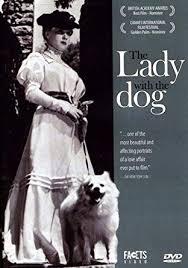
THE LADY WITH THE DOG by Anton Chekov

Copyright@shravancharitymission

Khidki (Window)

–Read India Initiative—

This is only an attempt to create interest in reading. We may not get the time to read all the books in our lifetime. But such reviews, talk and synopsis will at least convey what the book is all about.

    “The Lady with the Dog” is a short story by Anton Chekhov. First published in 1899. It describes an adulterous affair between Dmitri Dmitritch Gurov, an unhappily married, Moscow banker, and Anna Sergeyevna Von Diderits, a young married woman. The affair begins while both are vacationing alone in the Crimean sea resort of Yalta. The story comprises of four parts: Part I describes the initial meeting in Yalta, Part II the consummation of the affair and the remaining time in Yalta, Part III Gurov’s return to Moscow and his visit to Anna’s town, and Part IV Anna’s visits to Moscow. This is one of Chekhov’s most famous pieces of short fiction. Vladimir Nabokov, (Russian-born American novelist) for instance, considers it as one of the greatest short stories ever written. It has an average plot to my mind but then it is an interesting read.

    Dmitri Gurov works for a Moscow bank. He is under 40, married and has a daughter and two sons. But he is unhappy in his marriage, resulting in monotony and meaninglessness of his life. He is frequently unfaithful to his wife, and considers women to be of “a lower race”. While vacationing in Yalta, he sees a young woman walking along the seafront with her little Pomeranian, and endeavours to know her. The lady, Anna Sergeyevna, is also unhappily married and vacationing without her spouse. Anna and Dmitri soon commence an affair, and spend most of their time together, often walking and taking drives to the nearby village of Oreanda. Though, she is expecting her husband to come to Yalta, he eventually sends for her to come home, saying that something is wrong with his eyes. Gurov sees her off at the station. As they part, both feel that they would never see each other again, and that their brief affair is over.

    Returning to Moscow, to his loveless marriage, and to his daily routine, working by the day and clubbing by the night, Gurov expects to soon forget young Anna. But to his surprise, her memory keeps haunting him. Unexpectedly, he feels, he is deeply in love for the first time in his life, after many affairs and just as he is approaching middle age. He strongly feels that he must see Anna, despite the obvious complications. On the ruse of going to St. Petersburg to take care of some business, he sets off to her town to find her. Learning the location of the family’s residence from a hotel porter, he finds the house, only to realize that it would be futile to intrude. In despair, he rationalizes that Anna has probably forgotten him and found someone else, and heads back to his hotel.

    In the evening, he remembers having seen a sign earlier in the day announcing the opening performance of ‘The Geisha.’ When he reasons that Anna and her husband might come to see the play. So, he goes to the theatre. And, as expected the couple enters the theatre and he watches them intently. When the husband goes out for a smoke during the first interval, Gurov greets Anna, who is bewildered and runs from him. After following her through the theatre, he confronts her and she confides that she has been thinking of him constantly. Frightened, she begs him to leave and promises to come see him in Moscow.

She makes excuses to occasionally come to Moscow, telling her husband that she is going there to see a doctor, which he “believes and does not believe”. They are both now fully aware that for the first time in their lives they have actually fallen in love, and they both wonder how they might overcome the many challenges that face them and achieve their fervent wish to permanently live together. They desperately try to come up with a plan, but the story ends without offering a resolution:

    “They . . . talked of how to avoid the necessity for secrecy, for deception, for living in different towns and not seeing each other for long stretches of time. . . . and it was clear to both of them that . . . the most complicated and difficult part of their journey was just beginning.”

   Nabokov wrote about that unconventional ending:

“All the traditional rules … have been broken in this wonderful short story…. no problem, no regular climax, no point at the end. And it is one of the greatest stories ever written.”

    Interpretations and philosophical reflections

    The story beautifully captures the quiet desperation of the two protagonists, their dissatisfaction with their meaningless lives and loveless marriages, and their craving for something better. Their deep love for each other fills that void and radically transforms their outlook on life. But that love also breaks their hearts, for, in 19th century Russia, they find it almost impossible to break away and start a new life together.

    The story can be seen as “Gurov’s spiritual journey—his transformation from a connoisseur of women to a man tenderly devoted to a single ordinary woman.” The story can also be seen as “playing with the paradox that a lie—a husband deceiving a wife or a wife deceiving a husband—can be the fulcrum of truth of feeling, a vehicle of authenticity.”

    Maxim Gorky, another great Russian writer from a working-class background, saw the importance of the story as a wake-up call to people “to let go of sleepy, half-dead existence.”

    Robert Fulford offers yet another interpretation of the story:

    “What Chekhov says in this sophisticated parable is that love radically alters the landscape of existence. When touched by love, we know the world in a different way. Love changes the inner landscape, too. Under the pressure of love, Gurov looks inside himself and sees someone he has not known before, someone capable of feelings that he barely knew existed.”

    Gurov often looks behind his immediate surroundings and reflects on the meaning of our existence. Here for instance is one poetic passage:

    ‘Yalta was hardly visible through the morning mist; white clouds stood motionless on the mountaintops. The leaves did not stir on the trees, crickets chirped, and the monotonous hollow sound of the sea, rising up from below, spoke of the peace, of the eternal sleep awaiting us. So it must have sounded when there was no Yalta, no Oreanda here; so it sounds now; and it will sound as indifferently and monotonously when we are all no more. And in this constancy, in this complete indifference to the life and death of each of us, there lies hidden, perhaps, a pledge of our eternal salvation, of the unceasing movement of life upon earth, of unceasing progress towards perfection. Sitting beside a young woman who in the dawn seemed so lovely, soothed and spellbound in these magical surroundings—the sea, mountains, clouds, the wide open sky—Gurov thought how in reality everything is beautiful in this world when one reflects: everything except what we think or do ourselves when we forget our human dignity and the higher aims of our existence.”

    Chekhov poetically describes his vision of what real love could be like:

    “Anna Sergeyevna and he loved each other like people very close and akin, like husband and wife, like tender friends; it seemed to them that fate itself had meant them for one another, and they could not understand why he had a wife and she a husband; and it was as though they were a pair of birds of passage, caught and forced to live in different cages. They forgave each other for what they were ashamed of in their past, they forgave everything in the present, and felt that this love of theirs had changed them both.”

    In the story we see Dmitri Gurov who is bored with his wife and views women as the lower race and uses women to bring an excitement to his other-wise dull life. Dmitri falls in love with the lady, Anna, when on vacation in Yalta. They are forced to go back to their normal life. Gurov cant stop thinking about her and realizes he loves her. He travels through the country to try and find her and tell her how he doesn’t want to live without her. The story brings a strong ironic ending because Gurov who thought of women to be inferior and using them only for excitement, is now chasing one across the country wanting nothing more than to be with her.

By Kamlesh Tripathi

*

https://kamleshsujata.wordpress.com

*

Share it if you like it

*

Shravan Charity Mission is an NGO that works for poor children suffering from life threatening diseases especially cancer. Our posts are meant for our readers that includes both children and adults and it has a huge variety in terms of content. We also accept donations for our mission. Should you wish to donate for the cause. The bank details are given below:

NAME OF ACCOUNT: SHRAVAN CHARITY MISSION

Account no: 680510110004635 (BANK OF INDIA)

IFSC code: BKID0006805

*

Our publications

GLOOM BEHIND THE SMILE

(The book is about a young cancer patient. Now archived in 7 prestigious libraries of the US, including, Harvard University and Library of Congress. It can also be accessed in MIT through Worldcat.org. Besides, it is also available for reading in Libraries and archives of Canada and Cancer Aid and Research Foundation Mumbai)  

ONE TO TANGO … RIA’S ODYSSEY

(Is a book on ‘singlehood’ about a Delhi girl now archived in Connemara Library, Chennai and Delhi Public Library, GOI, Ministry of Culture, Delhi)

AADAB LUCKNOW … FOND MEMORIES

(Is a fiction written around the great city of Nawabs—Lucknow. It describes Lucknow in great detail and also talks about its Hindu-Muslim amity. That happens to be its undying characteristic. The book was launched in Lucknow International Literary Festival of 2014)

REFRACTIONS … FROM THE PRISM OF GOD

(Co-published by Cankids–Kidscan, a pan India NGO and Shravan Charity Mission, that works for Child cancer in India. The book is endorsed by Ms Preetha Reddy, MD Apollo Hospitals Group. It was launched in Lucknow International Literary Festival 2016)

TYPICAL TALE OF AN INDIAN SALESMAN

(Is a story of an Indian salesman who is, humbly qualified. Yet he fights his ways through unceasing uncertainties to reach the top. A good read not only for salesmen. The book was launched on 10th February, 2018 in Gorakhpur Lit-Fest. Now available in Amazon, Flipkart and Onlinegatha)

RHYTHM … in poems

(Published in January 2019. The book contains 50 poems. The poems describe our day to day life. The book is available in Amazon, Flipkart and Onlinegatha)

(ALL THE ABOVE TITLES ARE AVAILABLE FOR SALE IN AMAZON, FLIPKART AND OTHER ONLINE STORES OR YOU COULD EVEN WRITE TO US FOR A COPY)

*****


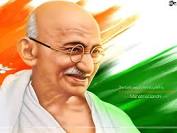
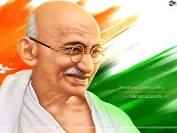
BOOK REVIEW: GRAM SWARAJ by Mahatma Gandhi

Copyright@shravancharitymission

Khidki (Window)

–Read India Initiative—

This is only an attempt to create interest in reading. We may not get the time to read all the books in our lifetime. But such reviews, talk and synopsis will at least convey what the book is all about.

    This book was compiled by H.M.Vyas. He has taken the writings of Gandhi from various sources (but primarily from Harijan and Young India magazines) and has converted it into a useful handbook. Printed and published by Navajivan Publishing first in the year 1962.

    The book encapsulates the thoughts and ethos of Gandhi in the form of excerpts. Indeed Gandhi ji was an amazing thinker and a genius who had the blueprint of India ready even before she was born. The book diagrams the functioning of the smallest community unit of human habitat—that is the village and then sums it up for the nation. The book simplifies an average Indian’s life. It gives that margdarshan specifically to each Indian and perhaps even to all the citizens of the world.

    This publication contains Gandhi’s views on different aspects of rural life including agriculture, village industry, animal husbandry, transport, basic education, health and hygiene.

    For Gandhi Swaraj was a sacred word, a Vedic word, meaning self-rule and self-restraint, and not freedom from all restraint which ‘independence’ often means. As every country is fit to eat, drink and breathe, and so is every nation fit to manage its own affairs, no matter how badly.

    By Swaraj Gandhi meant government of India by the consent of the people as ascertained by the largest number of adult population, male or female, native-born or domiciled, who have contributed by manual labour to the service of the State and who have taken the trouble of having registered their names as voters. Real Swaraj will come not by the acquisition of authority by a few but by the acquisition of the capacity by all to resist authority when it is abused. In other words, Swaraj is to be obtained by educating the masses to a sense of their capacity to regulate and control authority.

    The book has 29 chapters and within that you have sub chapters: Let me briefly take you through the headings of the main chapters in brief as that itself will give you a comprehensive flavour of the book.

  1. Meaning of Swaraj: Swaraj can be maintained, only where, there is a majority of loyal patriotic people to whom the good of the nation is paramount and above all other considerations including personal profit. Swaraj means government by many. But where, the many are immoral or selfish, their government will only spell anarchy and nothing else.
  2. A picture of an ideal society: There will be neither paupers nor beggars, nor high nor low, neither millionaire employers nor half-starved employees, nor intoxicating drinks, or drugs. There will be the same respect for women as vouchsafed to men and the chastity and purity of men and women will be jealously guarded. Where, every woman except one’s wife, will be treated by men of all religions, as mother, sister or daughter according to her age. Where there will be no untouchability and where there will be equal respect for all faiths. They will be all proudly, joyously and voluntarily bread labourers.
  3. Which way lies hope: Industrialism on a mass scale will necessarily lead to passive or active exploitation of the villagers as the problems of competition and marketing come in. Therefore, we have to concentrate on the village being self-contained, manufacturing mainly for use. Provided this character of the industry is maintained, there would be no objection to villagers using even the modern machines and tools that they can make and can afford to use. Only they should not be used as a means of exploitation of others.
  4. Cities and villages: There are two schools of thought in the world. One wants to divide the world into cities and the other into villages. The village civilization and the city civilization are totally different things. One depends on machinery and industrialization, and the other on agriculture and handicrafts. We have given preference to the latter.
  5. Village Swaraj: To serve our villages is to establish Swaraj. Everything else is but an idle dream. If the village perishes India too will perish. It will be no more India. Her own mission in the world will get lost.
  6. Basic Principles of village Swaraj: According to me the economic constitution of India and for that matter of the world, should be such that no one under it should suffer from want of food and clothing. In other words everybody should be able to get sufficient work to enable him to make the two ends meet. And this ideal can be universally realized only if the means of production of the elementary necessaries of life remain in control of the masses. These should be freely available to all as God’s air and water ought to be. They should not be made a vehicle of traffic for the exploitation of others. Their monopolization by any country, nation or group of persons would be unjust. The neglect of this simple principle is the cause of the destitution that we witness today not only in this unhappy land but in other parts of the world too.
  7. Bread labour: The great nature has intended us to earn our bread in the sweat of our brow. Everyone, therefore, who idles away a single minute becomes to that extent a burden upon his neighbours, and to do so is to commit a breach of the very first lesson of Ahimsa. The divine law, that a man must earn his bread by labouring with his own hands, was first stressed by a Russian writer named T. M. Bondaref. Tolstoy advertised it and gave it wide publicity. In my view the same principle has been set forth in the third chapter of Gita, where we are told, that he who eats without offering sacrifice eats stolen food. Sacrifice here can only mean bread labour.
  8. Equality: My idea of a society is that while we all are born equal which means we have a right to equal opportunity, all do not have the same capacity. It is, in the nature of things, impossible. For instance, all cannot have the same height, or colour or degree of intelligence, etc.; therefore in the nature of things, some will have the ability to earn more and others less. People with talents will have more, and they will utilize their talents for this purpose. If they utilize their talents effectively, they will be performing the work of the State. Such people would exist as trustees, on no other terms. I would allow a man of intellect to earn more, I would not cramp his talent. But the bulk of his greater earnings must be used for the good of the State, just as the incomes of all earning sons of the father go to the common family fund.
  9. Theory of Trusteeship: Suppose I have earned a fair amount of wealth either by way of legacy, or by means of trade and industry, I must know that all that wealth does not belong to me, what belongs to me is the right to an honourable livelihood, no better than that enjoyed by millions of others. The rest of my wealth belongs to the community and must be used for the welfare of the community.
  10. Swadeshi: There is a verse in Bhagavad Gita that says, masses follow the classes. Even, concept of Swadeshi like any other good thing can collapse and die if it is made out to be a fetish. That is the danger that must be guarded against. To reject foreign manufactures, merely because they are foreign and to go on wasting national time and money in the promotion in one’s own country of manufactures for which it is not suited, would be a criminal folly and a negation of the Swadeshi spirit. Remember Swadeshi is not a cult of hatred. On the contrary a doctrine of selfless service that has its roots in the purest Ahimsa, i.e., love.
  11. Self-sufficiency and cooperation: Truth and non-violence form the foundation of the order of my conception. Our first duty is that we should not be a burden on society, i.e., we should be self-dependent. From this point of view self-sufficiency itself is a kind of service.
  12. Panchayat Raj—Gandhi writes about Panchayats in pre-independence days: Panchayat has an ancient flavour; it is a good word. It literally means an assembly of five elected by villagers. It represents the system, by which the innumerable village republics of India were governed. But the British Government, by its ruthlessly thorough method of revenue collection, almost destroyed these ancient republics, which could not stand the shock of this revenue collection. Congressmen are now making a crude attempt to revive the system by giving village elders civil and criminal jurisdiction.
  13. Nai Talim: was popularly and correctly described as education through handicrafts. This was part of the truth. The root of this new education went much deeper. It lay in the application of truth and love in every variety of human activity, whether in individual life or a corporate one.
  14. Chapters 14 to 18 are on Agriculture and cattle welfare and deals with various agriculture related issues of those times. Our villagers who are mostly Kisans depend on agriculture and cattle for ploughing. I am rather ignorant in this respect for I have no personal experience. But there is not a single village where we have no agriculture or cattle. Our workers will have to keep a careful eye on the cattle wealth of their village. If we cannot use this wealth properly, India will be doomed to disaster and with that we shall also perish. For these animals will then, as in the West, become an economic burden on us and we shall have no option before us except for killing them.

    The book deals with the problem of ownership of land: The Kisan is the salt of the earth which rightly belongs or should belong to him, and not to the absentee landlord or the Zamindar.

    The other important question for consideration… was whether cow farming should be in the hands of individuals or done collectively. I myself had no hesitation in saying that she could never be saved by individual farming. Her salvation, and with her that of buffalo, could only be brought about by collective endeavour. It is quite impossible for an individual farmer to look after the welfare of his cattle in his own home in a proper and scientific manner. Amongst other causes lack of collective effort has been the principal cause of the deterioration of the cow and hence of cattle/ in general. The world today is moving towards the ideal of collective or co-operative effort in every department of life.

    One potent way of increasing crop production is proper manuring. Artificial manures, I am told, are harmful to the soil. The compost manure emit no bad odour. It would save lakhs of rupees and also increase the fertility of the soil without exhausting it.

    Food Shortage in India is not unfamiliar with starvation and death of tens of thousands, if not millions, due to famine, natural or man-made. I claim that in a well-ordered society there should always be prearranged methods of successful treatment of scarcity of water and food crops.

  1. Khadi & spinning: Every family with a plot of land can grow cotton at least for family use. Cotton growing is an easy process. In Bihar farmers by law were compelled to grow indigo (a tropical plant of the pea family, which was formerly cultivated as a source of dark blue dye) in one of their cultivable land. This was in the interest of the foreign indigo planter. So, why cannot we grow cotton voluntarily for the nation on a certain portion of our land? Decentralization commences from the beginning of the Khadi processes. Today, cotton crop is centralized and has to be sent to distant parts of India. Before the war it used to be sent principally to Britain and Japan. It was and still is a cash crop and therefore, subject to fluctuations of the market. Under the Khadi scheme cotton growing becomes free from this uncertainty and gamble. The grower grows what he needs. The farmer needs to know that his first business is to grow for his own needs. When he does that, he will reduce the chance of a low market ruining him. A combination of home grown cotton and charkha.
  2. Other village industries: I recall a conversation I had with Fazalbhai in 1920 when I was on the eve of launching the movement of Swadeshi. He characteristically said to me, ‘If you, Congressmen, become advertising agents of ours, you will do no good to the country except to put a premium on our wares and to raise the prices of our manufactures. His argument was sound. But he was nonplussed when I informed him that I was to encourage hand-spun and hand-woven Khadi which had been woefully neglected and which needed to be revived if the starving and unemployed millions were to be served. But Khadi is not the only such struggling industry. I therefore suggest to you to direct your attention and effort to all the small-scale, minor, unorganized industries that are today in need of public support.
  3. Village transport—a plea for the village cart: “Animal power is not costlier than machine power in fields or short distance work and hence can compete with the latter in most cases. The present day tendency is towards discarding animal power in preference to machine power. If a farmer has his own cart and travels in it, he has not to spend anything in the form of ready money but uses the produce of his own field in producing power by feeding bullocks. Really grass and grain should be looked upon by the farmer as his petrol, and the cart the motor lorry, and bullocks as the engine converting grass into power. The machine will neither consume grass nor will it yield manure, an article of vast importance. Then the villager has to have his bullocks; where, in any case he has his grass. And if he has a cart, he is also maintaining the village carpenter and the blacksmith; and if he is keeping a cow, he is maintaining a hydrogenation plant converting vegetable oil into solid butter or ghee and also at the same time a bullock manufacturing machine—thus serving a twofold purpose.”
  4. CURRENCY, EXCHANGE AND TAX: Under my system, it is the labour which is the current coin, and not the metal. Any person who can use his labour has that coin, has wealth. He converts his labour into cloth, he converts his labour into grain. If he wants paraffin oil, which he cannot himself produce, he uses his surplus grain for getting the oil. It is this exchange of labour on a free, fair and equal terms—hence it is no robbery. You may object that this is a reversion to the primitive system of barter. But then is not all international trade based on the barter system?
  5. VILLAGE SANITATION: Divorce between intelligence and labour has resulted in criminal negligence of the villages. And so, instead of having graceful hamlets dotting the land, we have dung-heaps. The approach to, many villages, is not a refreshing experience. Often one would like to shut one’s eyes and stuff one’s nose; such is the surrounding dirt and offending smell. If the majority of Congressmen were derived from our villages, as they should be, they should be able to make our villages models of cleanliness in every sense of the word. But they have never considered it their duty to identify themselves with the villagers in their daily lives. A sense of national or social sanitation is not a virtue among us. While taking a bath, we do not mind dirtying the well or the tank or the river by whose side or in which we perform our ablutions. I regard this defect as a great vice which is responsible for the disgraceful state of our villages and the sacred banks of the sacred rivers and for the diseases that spring from insanitation.
  6. VILLAGE HEALTH AND HYGIENE: In a well-ordered society the citizens know and observe the laws of health and hygiene. It is established beyond doubt that ignorance and neglect of the laws of health and hygiene are responsible for the majority of diseases to which mankind is privy. The very high death rate among us is no doubt largely due to our gnawing poverty, but it could be mitigated if the people were properly educated about health and hygiene. “Mens sana in corpore sano” a Latin phrase is perhaps the first law for humanity. Which means “A healthy mind in a healthy body” is a self-evident truth. There is an inevitable connection between mind and body.
  7. Diet: Gandhi suggests a diet chart for men with sedentary habits as follows: Cow’s milk 2 lbs. Cereals (wheat, rice, bajra, in all) 6 oz. Vegetables leafy 3 oz, others 5 oz. Raw 1 oz. Ghee 1½ oz. Or Butter 2 oz. Gur or white sugar 1½ oz. Fresh fruit according to one’s own taste and purse. In any case it is good to take two sour limes a day. The juice should be squeezed and taken with vegetables or in water, cold or hot. All these weights are of raw stuff. I have not put down the amount of salt. It should be added afterwards according to taste. Now, how often should one eat? Many people take two meals a day. The general rule is to take three meals: breakfast early in the morning and before going out to work, dinner at midday and supper in the evening or later. So try it out.
  8. VILLAGE PROTECTION: Peace Brigade. Some time ago I suggested the formation of a Peace Brigade whose members would risk their lives in dealing with riots, especially communal. The idea was, that this Brigade should substitute the police and even the military. This reads ambitious. The achievement may prove impossible. Yet, if the Congress is to succeed in its non-violent struggle, it must develop the power to deal peacefully with such situations.
  9. THE VILLAGE WORKER: The centre of the village worker’s life will be the spinning wheel. The idea at the back of Khadi is, that it is an industry supplementary to agriculture and co-extensive with it. The spinning wheel cannot be said to have been established in its own proper place in our life, until we can banish idleness from our villages and make every village home a busy hive. The worker will not only be spinning regularly but will be working for his bread with the adze or the spade or the last, as the case may be. All his hours minus the eight hours of sleep and rest will be fully occupied with some work. He will have no time to waste. He will allow himself no laziness and allow others none. His life will be a constant lesson to his neighbours in ceaseless and joy-giving industry. Our compulsory or voluntary idleness has to go.

    In chapters 28 & 29 he has covered Government and the village and its links with Khaddar and India and the world.

    Overall it’s a great book just in case you want to know about Gandhi in a much more comprehensive manner. Even, when, the book was written way back one finds the central theme so very relevant for India even today. I’m convinced every Indian should read it.

By Kamlesh Tripathi

*

https://kamleshsujata.wordpress.com

*

Share it if you like it

*

Shravan Charity Mission is an NGO that works for poor children suffering from life threatening diseases especially cancer. Our posts are meant for our readers that includes both children and adults and it has a huge variety in terms of content. We also accept donations for our mission. Should you wish to donate for the cause. The bank details are given below:

NAME OF ACCOUNT: SHRAVAN CHARITY MISSION

Account no: 680510110004635 (BANK OF INDIA)

IFSC code: BKID0006805

*

Our publications

GLOOM BEHIND THE SMILE

(The book is about a young cancer patient. Now archived in 7 prestigious libraries of the US, including, Harvard University and Library of Congress. It can also be accessed in MIT through Worldcat.org. Besides, it is also available for reading in Libraries and archives of Canada and Cancer Aid and Research Foundation Mumbai)  

ONE TO TANGO … RIA’S ODYSSEY

(Is a book on ‘singlehood’ about a Delhi girl now archived in Connemara Library, Chennai and Delhi Public Library, GOI, Ministry of Culture, Delhi)

AADAB LUCKNOW … FOND MEMORIES

(Is a fiction written around the great city of Nawabs—Lucknow. It describes Lucknow in great detail and also talks about its Hindu-Muslim amity. That happens to be its undying characteristic. The book was launched in Lucknow International Literary Festival of 2014)

REFRACTIONS … FROM THE PRISM OF GOD

(Co-published by Cankids–Kidscan, a pan India NGO and Shravan Charity Mission, that works for Child cancer in India. The book is endorsed by Ms Preetha Reddy, MD Apollo Hospitals Group. It was launched in Lucknow International Literary Festival 2016)

TYPICAL TALE OF AN INDIAN SALESMAN

(Is a story of an Indian salesman who is, humbly qualified. Yet he fights his ways through unceasing uncertainties to reach the top. A good read not only for salesmen. The book was launched on 10th February, 2018 in Gorakhpur Lit-Fest. Now available in Amazon, Flipkart and Onlinegatha)

RHYTHM … in poems

(Published in January 2019. The book contains 50 poems. The poems describe our day to day life. The book is available in Amazon, Flipkart and Onlinegatha)

(ALL THE ABOVE TITLES ARE AVAILABLE FOR SALE IN AMAZON, FLIPKART AND OTHER ONLINE STORES OR YOU COULD EVEN WRITE TO US FOR A COPY)

*****


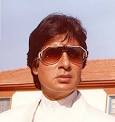
A BRIEF ENCOUNTER WITH AMITABH BACHCHAN

Copyright@shravancharitymission


    Portrait of a superstar as a modest young amateur

    It happened many years ago, in what was then called Calcutta, where I lived. The city had a vibrant theatre culture, with groups of actors, both professional and amateur, staging plays in Bengali, Hindi and English.

    An English-language group called, ‘The Amateurs was very prominent on the theatre circuit. I went to a number of performances put up by them. One, in particular, turned out to be especially memorable, thanks to later events. The play written by British playwright, James Saunders, was called, ‘Next Time I’ll Sing to You.’

    It was a compelling play an existential narrative open to many interpretations. Where, all the characters gave forceful performances, but I was struck by one particular actor, a very tall young man, with striking features and a lean athletic build. He exuded what drama critics would call ‘stage presence’, dominating the space around him by the sheer force of a personal magnetism, and exclamation mark in human form.

    A few days later, at a small dinner party, I was introduced to him. He was a junior executive in a mercantile house who’d taken up acting as a hobby. I told him I’d seen the play he’d acted in and had been very impressed by his performance.

    He accepted the compliment with genuine, disarming modesty. I said that the play he’d acted in had caused quite a lot of debate and conjecture in theatre-going circles as to what exactly was its central message. I had my own interpretation as to what it was, which I outlined, and asked him if he agreed with me.

    With charming candour, he replied that he didn’t have a clue what the play was all about. In fact he didn’t even read the whole thing, on the contrary just crammed or learnt the lines he had to say. “I don’t understand all that stuff,” he confided. “I just do what the director of the play tells me to do: look angry, look sad, look happy.”

    He didn’t put it in those words, but he was like a slate on which anything could be written. In short, a great natural-born actor. Which is what he went on to prove himself to be. That was the first, and the only, time I met Amitabh Bachchan.

    This short story is inspired by a column written by Jug Suraiya.

By Kamlesh Tripathi

*

https://kamleshsujata.wordpress.com

*

Share it if you like it

*

Shravan Charity Mission is an NGO that works for poor children suffering from life threatening diseases especially cancer. Our posts are meant for our readers that includes both children and adults and it has a huge variety in terms of content. We also accept donations for our mission. Should you wish to donate for the cause. The bank details are given below:

NAME OF ACCOUNT: SHRAVAN CHARITY MISSION

Account no: 680510110004635 (BANK OF INDIA)

IFSC code: BKID0006805

*

Our publications

GLOOM BEHIND THE SMILE

(The book is about a young cancer patient. Now archived in 7 prestigious libraries of the US, including, Harvard University and Library of Congress. It can also be accessed in MIT through Worldcat.org. Besides, it is also available for reading in Libraries and archives of Canada and Cancer Aid and Research Foundation Mumbai)  

ONE TO TANGO … RIA’S ODYSSEY

(Is a book on ‘singlehood’ about a Delhi girl now archived in Connemara Library, Chennai and Delhi Public Library, GOI, Ministry of Culture, Delhi)

AADAB LUCKNOW … FOND MEMORIES

(Is a fiction written around the great city of Nawabs—Lucknow. It describes Lucknow in great detail and also talks about its Hindu-Muslim amity. That happens to be its undying characteristic. The book was launched in Lucknow International Literary Festival of 2014)

REFRACTIONS … FROM THE PRISM OF GOD

(Co-published by Cankids–Kidscan, a pan India NGO and Shravan Charity Mission, that works for Child cancer in India. The book is endorsed by Ms Preetha Reddy, MD Apollo Hospitals Group. It was launched in Lucknow International Literary Festival 2016)

TYPICAL TALE OF AN INDIAN SALESMAN

(Is a story of an Indian salesman who is, humbly qualified. Yet he fights his ways through unceasing uncertainties to reach the top. A good read not only for salesmen. The book was launched on 10th February, 2018 in Gorakhpur Lit-Fest. Now available in Amazon, Flipkart and Onlinegatha)

RHYTHM … in poems

(Published in January 2019. The book contains 50 poems. The poems describe our day to day life. The book is available in Amazon, Flipkart and Onlinegatha)

(ALL THE ABOVE TITLES ARE AVAILABLE FOR SALE IN AMAZON, FLIPKART AND OTHER ONLINE STORES OR YOU COULD EVEN WRITE TO US FOR A COPY)

*****


THE STORY OF UTANGA & LORD KRISHNA … from Mahabharat

Copyright@sgravancharitymission

    Once when the great battle of Kurukshetra was over, Lord Krishna bade farewell to the Pandavas and left for Dwarka. On his way he met his old Brahmin friend Utanga. Krishna stopped and alighted from his stupendous chariot and wished the Brahmin. Utanga, delighted at the sight of mighty Krishna, returned his greetings and proceeded to make the usual enquiries about the health and welfare of his relatives.

       He enquired if Krishna’s cousins Pandavas and Kauravas loved one another as brothers, and whether they all were flourishing well enough. The innocent Brahmin had not heard about the great battle of Mahabharat that had already been fought.     Lord Krishna was astounded by this question of his and for a moment he stood silent not knowing what to say in reply.

    He then softly narrated what all had happened. How a great battle had been fought where almost all the Kauravas had been exterminated. Upon hearing the story Utanga got very angry. He retorted at Krishna telling him forcefully that He had failed in His duties and warned Him to be prepared to receive his curse. In reply the Lord just smiled and asked him not to use up the fruits of his hard earned penances.

    He then proceeded to show Utanga his Visvarupa primarily to explain to him the message of Bhagavad Gita just as He had done for Arjuna. After this explanation of Krishna, Utanga recovered his calm and with that the Lord was at ease. He told the Brahmin to ask for any boon that he desired. Utanga said, that after having witnessed You—Lord Krishna in your Universal form there isn’t anything left in this world to be desired.

    But when Krishna insisted, Utanga relented by saying that he should be able to find water whenever he felt thirsty in his long journeys. The Lord thus blessed him and went on His way.

    Later when Utanga was passing through a desert he felt very thirsty and remembered the boon he had received from Lord Krishna. He decided to make use of it. The very moment, a nishad (Shudra) appeared before him attired in rags. He had five hunting hounds (dogs) in leash and an animal skin water bag strapped to his shoulder. He offered the bamboo spout of his water bag to the Brahmin to drink from.

    Utanga stared at the man in disgust and told him he was not thirsty and asked him to go. Having said this, he re-approached the Lord in his mind for the boon that He had granted him. The outcaste, meanwhile pressed upon the fastidious Brahmin Utanga, over and over again, to quench his thirst, but it only made Utanga more and more angry, and he refused to drink the water. Finally, the outcaste disappeared.

    Observing the strange disappearance of the Nishad the brahmin reflected, who was he? He could not have been a real Nishad. It was certainly my test where I blundered miserably. I rejected the holy water offered by the outcaste and proved myself to be an arrogant fool. Utanga was now in great anguish when a moment later Krishna Himself appeared before him with his conch shell and discus—Sudershan chakra.

    O Purushottama! Exclaimed Utanga, was it right of You to have sent an outcaste, to offer unclean water to a Brahmin like me? Was this a kind gesture on your part? Asked Utanga in a bitter tone.

    Lord replied smiling, Hey Utanga! It was only for your sake I had asked Indra to take ‘Amrita’ and give it to you as water. He said he would on no account give nectar to a mortal. But I prevailed upon him and he agreed to do so only if I allowed him to test you in the form of a chandal. I accepted the challenge believing you had attained that stage of understanding and wisdom. But you have made me suffer defeat at the hands of Indra. This story is from Mahabharat.

    Moral of the story: Although, the Brahmin asked the Lord only for water, Lord gave him nectar, out of His causeless mercy. The Lord always cares for us more than we do for ourselves. And we just need to have the vision to understand His mercy.

By Kamlesh Tripathi

*

https://kamleshsujata.wordpress.com

*

Share it if you like it

*

Shravan Charity Mission is an NGO that works for poor children suffering from life threatening diseases especially cancer. Our posts are meant for our readers that includes both children and adults and it has a huge variety in terms of content. We also accept donations for our mission. Should you wish to donate for the cause. The bank details are given below:

NAME OF ACCOUNT: SHRAVAN CHARITY MISSION

Account no: 680510110004635 (BANK OF INDIA)

IFSC code: BKID0006805

*

Our publications

GLOOM BEHIND THE SMILE

(The book is about a young cancer patient. Now archived in 7 prestigious libraries of the US, including, Harvard University and Library of Congress. It can also be accessed in MIT through Worldcat.org. Besides, it is also available for reading in Libraries and archives of Canada and Cancer Aid and Research Foundation Mumbai)  

ONE TO TANGO … RIA’S ODYSSEY

(Is a book on ‘singlehood’ about a Delhi girl now archived in Connemara Library, Chennai and Delhi Public Library, GOI, Ministry of Culture, Delhi)

AADAB LUCKNOW … FOND MEMORIES

(Is a fiction written around the great city of Nawabs—Lucknow. It describes Lucknow in great detail and also talks about its Hindu-Muslim amity. That happens to be its undying characteristic. The book was launched in Lucknow International Literary Festival of 2014)

REFRACTIONS … FROM THE PRISM OF GOD

(Co-published by Cankids–Kidscan, a pan India NGO and Shravan Charity Mission, that works for Child cancer in India. The book is endorsed by Ms Preetha Reddy, MD Apollo Hospitals Group. It was launched in Lucknow International Literary Festival 2016)

TYPICAL TALE OF AN INDIAN SALESMAN

(Is a story of an Indian salesman who is, humbly qualified. Yet he fights his ways through unceasing uncertainties to reach the top. A good read not only for salesmen. The book was launched on 10th February, 2018 in Gorakhpur Lit-Fest. Now available in Amazon, Flipkart and Onlinegatha)

RHYTHM … in poems

(Published in January 2019. The book contains 50 poems. The poems describe our day to day life. The book is available in Amazon, Flipkart and Onlinegatha)

(ALL THE ABOVE TITLES ARE AVAILABLE FOR SALE IN AMAZON, FLIPKART AND OTHER ONLINE STORES OR YOU COULD EVEN WRITE TO US FOR A COPY)

*****