Category Archives: general knowledge

INTERESTING FACTS FIGURES & QUOTES EPISODE 25

Copyright@shravancharitymission

Burkina Faso is the least educated country of the world with a literacy rate of 21.8%. It is a landlocked country in West Africa.

William Shakespeare termed old age as the second childhood.

Maize Corn is the most produced grain in the world. Whereas, wheat covers most of the earth than any other crop.

Angkor Wat is a temple complex in Cambodia and one of the largest religious monuments of the world, on a site measuring 162.6 hectares. Originally constructed as a Hindu temple dedicated to God Vishnu for the Khmer Empire. It was gradually transformed into a Buddhist temple towards the end of the 12th century.

Are pigs the neatest of animals in the world: Contrary to popular belief, pigs are unable to sweat; instead, they wallow in mud to cool down. Their mucky appearance gives pigs an undeserved reputation for slovenliness. In fact, pigs are some of the cleanest animals around, refusing to excrete, anywhere near their living or eating areas when given a choice.

Staple diet of America: Whether it’s roasted, baked, fried, transformed into a patty, or used in a salad, sandwich or casserole, chicken remains a major dietary staple in the United States. Americans get almost as many calories from chicken as they do from bread, according to the USDA.

There is one major difference between a ROM (that is read-only memory) and a RAM (that is random-access memory) chip: ROM can hold data without power and RAM cannot. Essentially, ROM is meant for permanent storage, and RAM is for temporary storage.

Basketball is probably the most popular indoor sports in the world.

In a disturbing trend, tigers in the country are increasingly being killed by snares, even in the core areas of the sanctuaries. In the last nine years, 24 tigers and 114 leopards have suffered slow, agonizing deaths due to these traps. Worryingly, apart from poachers, local communities are also using these wire noose snares to kill the big cats preying on their livestock.

There has been a steady increase in tiger population in the last few years. India had 2,226 tigers as per the 2014 All India Tiger Estimation. This accounts for a 60% jump in tiger population compared to 2006.

Tigers need large habitats as they have high juvenile dispersal rates. Tigers have lost more than 95% of their historical range.

“Everything is ready except the east wind,” is an ancient Chinese proverb that translates to how can everything be ready without the thing which is most crucial.

Recently, the catastrophic disappearance of emperor penguins from Antarctica made global headlines. The colony of adults and nursing chicks was among the largest in the world. It sank without a trace due to global warming, because of weakened ice collapsing on unchilling waters. The tragedy is similar to the proverbial collapse of a star caused by the death of a sparrow.

In less than sixty years Singapore has transformed from a poor developed country into one of the richest—its per capita income is now double that of Australia. Singapore will be in a class entirely of its own by 2050.

Men argue. Nature acts–VOLTAIRE, French historian and philosopher.

If you destroy a free market you create a black market—WINSTON CHURCHILL, Prime Minister of U.K.

The poetry of earth is never dead—JOHN KEATS, English romantic poet.

Tell me and I’ll forget; show me and I may remember; involve me and I’ll understand—A Chinese proverb.

I want a brighter word than bright—JOHN KEATS, English romantic poet.

Nothing ever becomes real till it is experienced—JOHN KEATS, English romantic poet.

By Kamlesh Tripathi

*

https://kamleshsujata.wordpress.com

*

Share it if you like it

*

Shravan Charity Mission is an NGO that works for poor children suffering from life threatening diseases especially cancer. Our posts are meant for our readers that includes both children and adults and it has a huge variety in terms of content. We also accept donations for our mission. Should you wish to donate for the cause. The bank details are given below:

NAME OF ACCOUNT: SHRAVAN CHARITY MISSION

Account no: 680510110004635 (BANK OF INDIA)

IFSC code: BKID0006805

*

Our publications

GLOOM BEHIND THE SMILE

(The book is about a young cancer patient. Now archived in 7 prestigious libraries of the US, including, Harvard University and Library of Congress. It can also be accessed in MIT through Worldcat.org. Besides, it is also available for reading in Libraries and archives of Canada and Cancer Aid and Research Foundation Mumbai)  

ONE TO TANGO … RIA’S ODYSSEY

(Is a book on ‘singlehood’ about a Delhi girl now archived in Connemara Library, Chennai and Delhi Public Library, GOI, Ministry of Culture, Delhi)

AADAB LUCKNOW … FOND MEMORIES

(Is a fiction written around the great city of Nawabs—Lucknow. It describes Lucknow in great detail and also talks about its Hindu-Muslim amity. That happens to be its undying characteristic. The book was launched in Lucknow International Literary Festival of 2014)

REFRACTIONS … FROM THE PRISM OF GOD

(Co-published by Cankids–Kidscan, a pan India NGO and Shravan Charity Mission, that works for Child cancer in India. The book is endorsed by Ms Preetha Reddy, MD Apollo Hospitals Group. It was launched in Lucknow International Literary Festival 2016)

TYPICAL TALE OF AN INDIAN SALESMAN

(Is a story of an Indian salesman who is, humbly qualified. Yet he fights his ways through unceasing uncertainties to reach the top. A good read not only for salesmen. The book was launched on 10th February, 2018 in Gorakhpur Lit-Fest. Now available in Amazon, Flipkart and Onlinegatha)

RHYTHM … in poems

(Published in January 2019. The book contains 50 poems. The poems describe our day to day life. The book is available in Amazon, Flipkart and Onlinegatha)

(ALL THE ABOVE TITLES ARE AVAILABLE FOR SALE IN AMAZON, FLIPKART AND OTHER ONLINE STORES OR YOU COULD EVEN WRITE TO US FOR A COPY)

*****


INTERESTING FACTS FIGURES & QUOTES: EPISODE 24

Copyright@shravancharitymission


‘The best management is sometimes less management or no management at all.’ William Coyne, who led 3M’s R&D efforts for over a decade, believed a big part of his job was to leave his people alone and protect them from other curious executives. He said: ‘After you plant a seed in the ground, you don’t dig it up every week to see how it is doing.

Purple patch means, a run of success, a winning streak.

‘More sinned against than sinning.’ Is an expression used by those who may be guilty of wrongdoing, but consider themselves the victim of a more serious wrong against them. The phrase comes from William Shakespeare’s play King Lear.

Indonesia which has a population of 270 million (27 crores) and is spread over more than a thousand inhabited islands, managed its recent elections in just one day. Can India ever do the same?

People are more effective when they conquer smaller tasks and celebrate small victories.

Football: We are not Japan who can keep the ball for long spells, especially when we play better opponents—says Sunil Chhetri, Captain Indian Football team.

Indian political outfits can learn from their Western counterparts like the Republicans and Democrats in the US or Tories and Labour in the UK, where the grassroots have a say in choosing party leaders, and defeat leads to churning and shuffling of leaders on the top deck.

Odisha has had close to 300 cyclones between 1800 and 2019 categorized as extremely severe to severe to moderate including cyclone Fani.

Joseph Kennedy (American businessman, investor and politician) once said, ‘The Chinese use two brush strokes to write the word ‘crisis,’ one brush stroke stands for danger, the other for opportunity in crisis, so be aware of the danger –but recognize the opportunity.

World War I lasted from 1st August 1914 to 11th November 1918 (1564 days).

There are about 165 major rivers in the world. These major rivers are long and wide enough to be classified as major rivers with large volumes of water flowing through them every day. They have tributaries that provide fresh water to billions of people.

The Amazon River is the largest in the world. It is 3,980 miles or (6,400 kilometers) long, according to the U.S. National Park Service. It is, however, the world’s largest river by volume and contains 20% of the Earth’s fresh water, according to the National Science Foundation.

Artificial Intelligence is enabling computers to do our thinking for us, and do it much faster and better than we can ourselves.

People from the pharmacy industry know very well that it takes 12 years to make a new drug and maybe it costs $1 billion.

Indira Gandhi openly backed the Bengali Guerrilla movement in 1971 and opted for the military offensive to liberate Bangladesh after asking the army to prepare for the final push at least five months before the war in December. Whereas, Manmohan Singh from the same party, decided to exercise restraint after the 26/11 terror strike on Mumbai.

To scrape the barrel or to scrape the bottom of the barrel means to be reduced to using things or people of the poorest quality because there is nothing else available.

There are many references in the Bible with regard to God’s beneficence in Nature. “When a tree is wantonly cut down, its voice rings from one end of the earth to the other. Be like a tree, because the tree gives shade even to those who cut off its boughs.”

Gun violence in America is out of control. It has been for some time now, but with 307 mass shootings in the first 311 days of 2018. It is reaching, one a day average. Gun homicide rate in the US is 25 times higher than in other high-income countries.

Only 65% of Indian children are presently covered-under Universal Immunization Programme (UIP). Mission Indra-Dhanush’s configuration will cover 90% full immunization coverage by 2020.

India has only one individual gold medal to show for 92 years of Olympic participation.

A house insurance costs just Rs 6-12/ day however only less than 1% people who can afford it have house insurance.

In Greek mythology, Prometheus, (possibly meaning forethought) is a Titan, culture hero, and trickster figure who is credited with the creation of man from clay, and who defies the Gods by stealing fire and giving it to humanity, an act that enabled progress.

Dutch-Scilly War between the Netherlands and the Isles of Scilly (located off the southwest coast of Great Britain) (has lasted from 1651- to 1986: 335 years) is one of the longest, and even the strangest, wars in the world’s history, characterized by a complete absence of battles and bloodshed. It is known as the Three Hundred and Thirty-Five Years’ war. The conflict began on March 30, 1651, as a by-product of the English Civil War. That this war ever existed is disputed. It is said to have been extended by the lack of a peace treaty for 335 years without a single shot being fired.

The country with the most time zones is France, mostly due to its various territories around the world.

Vatican City with a population of fewer than 1,000 people, is the smallest population of any country in the world.

Whether elephants make love or war, the grass always suffers is a hackneyed expression.

Harry S. Truman the 33rd President of the United States once said, ‘It is amazing what you can accomplish if you do not care who gets the credit.’

“The purpose of a fish trap is to catch fish, and when the fish are caught the trap is forgotten. The purpose of a rabbit snare is to catch rabbits. When the rabbits are caught, the snare is forgotten. The purpose of the word is to convey ideas. When the ideas are grasped, the words are forgotten. Where can I find a man who has forgotten words? He is the one I would like to talk to.” said Chinese philosopher Chaung Tzu.

The soldier above all others prays for peace—said American five star general DOUGLAS MACARTHUR.

The secret of getting ahead is getting started—said American writer Mark Twain.

By Kamlesh Tripathi

*

https://kamleshsujata.wordpress.com

*

Share it if you like it

*

Shravan Charity Mission is an NGO that works for poor children suffering from life threatening diseases especially cancer. Our posts are meant for our readers that includes both children and adults and it has a huge variety in terms of content. We also accept donations for our mission. Should you wish to donate for the cause. The bank details are given below:

NAME OF ACCOUNT: SHRAVAN CHARITY MISSION

Account no: 680510110004635 (BANK OF INDIA)

IFSC code: BKID0006805

*

Our publications

GLOOM BEHIND THE SMILE

(The book is about a young cancer patient. Now archived in 7 prestigious libraries of the US, including, Harvard University and Library of Congress. It can also be accessed in MIT through Worldcat.org. Besides, it is also available for reading in Libraries and archives of Canada and Cancer Aid and Research Foundation Mumbai)  

ONE TO TANGO … RIA’S ODYSSEY

(Is a book on ‘singlehood’ about a Delhi girl now archived in Connemara Library, Chennai and Delhi Public Library, GOI, Ministry of Culture, Delhi)

AADAB LUCKNOW … FOND MEMORIES

(Is a fiction written around the great city of Nawabs—Lucknow. It describes Lucknow in great detail and also talks about its Hindu-Muslim amity. That happens to be its undying characteristic. The book was launched in Lucknow International Literary Festival of 2014)

REFRACTIONS … FROM THE PRISM OF GOD

(Co-published by Cankids–Kidscan, a pan India NGO and Shravan Charity Mission, that works for Child cancer in India. The book is endorsed by Ms Preetha Reddy, MD Apollo Hospitals Group. It was launched in Lucknow International Literary Festival 2016)

TYPICAL TALE OF AN INDIAN SALESMAN

(Is a story of an Indian salesman who is, humbly qualified. Yet he fights his ways through unceasing uncertainties to reach the top. A good read not only for salesmen. The book was launched on 10th February, 2018 in Gorakhpur Lit-Fest. Now available in Amazon, Flipkart and Onlinegatha)

RHYTHM … in poems

(Published in January 2019. The book contains 50 poems. The poems describe our day to day life. The book is available in Amazon, Flipkart and Onlinegatha)

(ALL THE ABOVE TITLES ARE AVAILABLE FOR SALE IN AMAZON, FLIPKART AND OTHER ONLINE STORES OR YOU COULD EVEN WRITE TO US FOR A COPY)

*****


INTERESTING FACTS & QUOTES EPISODE-22

Copyright@shravancharitymission

Though William Shakespeare’s entire oeuvre –37 plays and 154 sonnets—is brimful with words of wisdom for every stage and situation of human existence, one of the most quoted aphorisms of his is, “Always the wrong person gives you the right lesson in life.” It may sound a bit contrary and even oxymoronic at first blush, but it’s pregnant with profound wisdom.

Purchasing power parity (PPP) is an economic theory that compares different countries’ currencies through a “basket of goods” approach. According to this concept, two currencies are in equilibrium or at par when a basket of goods (taking into account the exchange rate) is priced the same in both countries. Closely related to PPP is the law of one price (LOOP), which is an economic theory that predicts that after accounting for differences in interest rates and exchange rates, the cost of something in country X should be the same as that in country Y in real terms.

Kamala Devi Harris is the first person of Indian descent to post a credible candidacy for the Democratic Party nomination for US president. Daughter of an Indian cancer researcher and a Jamaican economics professor, for many Desi Americans she is proof that they have ‘arrived.’

Indians on an average do believe that things are getting better: 74% of them, according to a recent Ipsos-MORI poll. Indians are more optimistic than people in wealthy Western countries like those in Europe, North America and Oceania.

India has made significant improvements in reducing HIV infections—from 5.1 millions in 2003 to 2.1 millions in 2017—but it still has the world’s third largest HIV-infected population after South Africa and Nigeria.

India has the highest population of cattle in the world.

India is also the biggest milk producer in the world.

Indore is India’s cleanest city (winner of the Safaigiri Award of 2018).

Agriculture, mining, manufacturing and construction account for 45% of India’s GDP.

The global market in merchandise exports today is approximately $15 trillion. Share of India in these exports is only 1.6% compared with 12% that of China.

Nearly half of India’s farms are less than half hectare, a size too small to yield adequate living standard for a family of five—Arvind Panagariya.

I have never been to mars. What will we discover when we get there? A red landscape, quiet horizon and frozen glaciers? Probably all is as beautiful, in its own way, as the Earth was, thousands of years ago—MA YANSONG.

History is testimony that whenever the majority developed a sense of victim hood, it led to genocide of minorities.

Amongst the great man made places visible from outer space are the pyramids of Egypt, the Great-wall of China, and the Palm islands of Dubai. Now added to the list is the 600-foot figure of Sardar Patel—so tall, at dusk it casts a mile-long shadow over an enormous dry agriculture stretch. The base of the statue houses a research centre dedicated to good governance and agricultural development.

Donald trump is now arguably the most joked about US president on a parody-per-day basis.

Eckhart was once sitting alone under a grove of trees in a lonely place. A friend who was passing by went up to him and said, “I saw you sitting, lonely, and I thought I would keep you company.” Eckhart replied, “I was with myself, but you have come, and if anything, I am feeling lonely now.”

A key facet of water policy must be induction of technology to promote reuse. Recycling does take place in India but it’s nowhere close to the level needed. Elsewhere, recycling has moved to another level. Singapore recycles water for drinking.

Pre-monsoon rainfall from March to April has shown a 27% deficiency. Separately data put out by government shows that water levels in India’s major reservoirs and river basins have fallen to 21% of its average of the last decade.

Agriculture consumes most of India’s water resources.

In March 2019 the Baltic State of Estonia’s parliamentary elections saw almost half the votes cast through E-voting. That should be the vision of our future.

Nobel Prize in science are not given for R&D, they are given for fundamental discoveries.

Gagandeep Kang from Faridabad’s Transnational Health Science and Technology Institute is the first Indian woman to be made fellow of the Royal Society of London—now in the company of Isaac Newton, Albert Einstein and Charles Darwin.

All told private investment alone remains the key to sustained growth.

Current Account Deficit is simply the (investment) – (savings) gap. Therefore if savings are higher than reported, the Current Account Deficit (CAD) will be lower.

Origin of GreenEyed Monster. The term greeneyed monster, meaning jealousy, first appears in Shakespeare’s Othello, when Iago says, “Oh, beware, my lord, of jealousy! It is the greeneyed monster which doth mock the meat it feeds on.”

The phrase luck of the Irish is commonly thought to mean “extreme good fortune.” … “During the gold and silver rush years in the second half of the 19th century, a number of the most famous and successful miners were of Irish and Irish American birth

INTERESTING LINES

The moment I realised God sitting in the temple of every human body, the moment I stand in reverence  before every human being and see God in him—that moment I am free from bondage, and I am free—Swami Vivekananda.

Rabindra Nath Tagore—‘The mind is without fear; and the head is held high; where knowledge is free; where the world has not been broken into fragments by narrow domestic walls.’

Brahminism or Brahminical are not to be understood as related to a community or caste called Brahmins as explained by Babasaheb Ambedkar himself.

Rauf Akhtar stated in his Taslees: Khud ko na kar itna majboor khud ko na kar paamal tu hi woh khuda hai jiski hai tujhe talash.

A commonly quoted aphorism says, ‘New beginnings are often disguised as painful endings.’

By Kamlesh Tripathi

*

https://kamleshsujata.wordpress.com

*

Share it if you like it

*

Shravan Charity Mission is an NGO that works for poor children suffering from life threatening diseases especially cancer. Our posts are meant for our readers that includes both children and adults and it has a huge variety in terms of content. We also accept donations for our mission. Should you wish to donate for the cause. The bank details are given below:

NAME OF ACCOUNT: SHRAVAN CHARITY MISSION

Account no: 680510110004635 (BANK OF INDIA)

IFSC code: BKID0006805

*

Our publications

GLOOM BEHIND THE SMILE

(The book is about a young cancer patient. Now archived in 7 prestigious libraries of the US, including, Harvard University and Library of Congress. It can also be accessed in MIT through Worldcat.org. Besides, it is also available for reading in Libraries and archives of Canada and Cancer Aid and Research Foundation Mumbai)  

ONE TO TANGO … RIA’S ODYSSEY

(Is a book on ‘singlehood’ about a Delhi girl now archived in Connemara Library, Chennai and Delhi Public Library, GOI, Ministry of Culture, Delhi)

AADAB LUCKNOW … FOND MEMORIES

(Is a fiction written around the great city of Nawabs—Lucknow. It describes Lucknow in great detail and also talks about its Hindu-Muslim amity. That happens to be its undying characteristic. The book was launched in Lucknow International Literary Festival of 2014)

REFRACTIONS … FROM THE PRISM OF GOD

(Co-published by Cankids–Kidscan, a pan India NGO and Shravan Charity Mission, that works for Child cancer in India. The book is endorsed by Ms Preetha Reddy, MD Apollo Hospitals Group. It was launched in Lucknow International Literary Festival 2016)

TYPICAL TALE OF AN INDIAN SALESMAN

(Is a story of an Indian salesman who is, humbly qualified. Yet he fights his ways through unceasing uncertainties to reach the top. A good read not only for salesmen. The book was launched on 10th February, 2018 in Gorakhpur Lit-Fest. Now available in Amazon, Flipkart and Onlinegatha)

RHYTHM … in poems

(Published in January 2019. The book contains 50 poems. The poems describe our day to day life. The book is available in Amazon, Flipkart and Onlinegatha)

(ALL THE ABOVE TITLES ARE AVAILABLE FOR SALE IN AMAZON, FLIPKART AND OTHER ONLINE STORES OR YOU COULD EVEN WRITE TO US FOR A COPY)

*****


SHORT STORY: Rs 7

Copyright@shravancharitymission

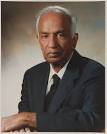
    Nobel Laureate Professor C. V. Raman after retirement wished to open a Research Institute in Bangalore. So, he gave an advertisement in the newspapers for recruiting three physicists. Lots of eager scientists applied thinking that even if they were not selected, they would at least get an opportunity to meet the Nobel Laureate. 
    In the preliminary selection, five candidates were selected and the final interview was to be taken by Professor C V Raman himself. Where, three were selected out of the five. 
    Next day Professor Raman was taking a walk around when he found one young man waiting to meet him. He realized that it was the same man who was not selected.

    Professor Raman, asked him, what was the problem and he replied that there was no problem at all, but after finishing the interview the office had paid him ₹7 extra than his claim and he wanted to return it. But because the accounts had closed, they could not take back the amount and asked him to enjoy.

    The man said that it is not right for him to accept the money which did not belong to him. Professor C V Raman said, so you wish to return ₹7 and he took the money from him and started walking back.

    But after taking a few steps forward Professor Raman asked the young man to meet him the next day at 10.30 am. The man was happy that he would get an opportunity to meet the great man again.

    When he met the Professor next day the Nobel Laureate told the young man “son, you failed in the Physics test but you have passed the honesty test. So I have created another post for you”.     The young man was surprised and very happy to join.
    Later on he too became a Nobel Laureate in 1983. This young man was no one else but Professor Subrahmanyan Chandrashekhar (US Citizen of Indian Origin).     He has written a book on how seven rupees changed his life. This was how honesty made a great scientist.

    What is lacking in talent can most often be made up for, with hard work, guidance and help from others. But what is lacking in character and values can’t be made up for with anything ever.
    Which is why Einstein had said, “Don’t try to be a person of success, but always be a person of value.” 

By Kamlesh Tripathi

*

https://kamleshsujata.wordpress.com

*

Share it if you like it

*

Shravan Charity Mission is an NGO that works for poor children suffering from life threatening diseases especially cancer. Our posts are meant for our readers that includes both children and adults and it has a huge variety in terms of content. We also accept donations for our mission. Should you wish to donate for the cause. The bank details are given below:

NAME OF ACCOUNT: SHRAVAN CHARITY MISSION

Account no: 680510110004635 (BANK OF INDIA)

IFSC code: BKID0006805

*

Our publications

GLOOM BEHIND THE SMILE

(The book is about a young cancer patient. Now archived in 7 prestigious libraries of the US, including, Harvard University and Library of Congress. It can also be accessed in MIT through Worldcat.org. Besides, it is also available for reading in Libraries and archives of Canada and Cancer Aid and Research Foundation Mumbai)  

ONE TO TANGO … RIA’S ODYSSEY

(Is a book on ‘singlehood’ about a Delhi girl now archived in Connemara Library, Chennai and Delhi Public Library, GOI, Ministry of Culture, Delhi)

AADAB LUCKNOW … FOND MEMORIES

(Is a fiction written around the great city of Nawabs—Lucknow. It describes Lucknow in great detail and also talks about its Hindu-Muslim amity. That happens to be its undying characteristic. The book was launched in Lucknow International Literary Festival of 2014)

REFRACTIONS … FROM THE PRISM OF GOD

(Co-published by Cankids–Kidscan, a pan India NGO and Shravan Charity Mission, that works for Child cancer in India. The book is endorsed by Ms Preetha Reddy, MD Apollo Hospitals Group. It was launched in Lucknow International Literary Festival 2016)

TYPICAL TALE OF AN INDIAN SALESMAN

(Is a story of an Indian salesman who is, humbly qualified. Yet he fights his ways through unceasing uncertainties to reach the top. A good read not only for salesmen. The book was launched on 10th February, 2018 in Gorakhpur Lit-Fest. Now available in Amazon, Flipkart and Onlinegatha)

RHYTHM … in poems

(Published in January 2019. The book contains 50 poems. The poems describe our day to day life. The book is available in Amazon, Flipkart and Onlinegatha)

(ALL THE ABOVE TITLES ARE AVAILABLE FOR SALE IN AMAZON, FLIPKART AND OTHER ONLINE STORES OR YOU COULD EVEN WRITE TO US FOR A COPY)

*****


INTERESTING FACTS & QUOTES EPISODE 21

Copyright@shravancharitymission

Floccinaucinihilipilification: is the longest non-technical word in the English language. It means an estimation of something as worthless. It has 29 letters which is more than the entire 26 letters of English Language.

Antidisestablishmentarianism: The word has 28 letters which again is more than the entire 26 letters of English language. It means opposite of disestablishment often used in the context of the Church of England.

                    Let’s not forget Christopher Columbus was looking for India when he lost his way to America. Funnily in his ‘letter of the first voyage’ explaining why he was looking for India, he mentioned the word ‘gold’ 17 times, while he mentioned the word ‘Lord’ and ‘God’ only once.

                ‘Lucky 7′ is the world’s favourite number. There are seven days in a week, seven colours in a rainbow, seven notes in a musical scale, seven seas and above all seven continents.

                Anytime you ask people about happy moments in their lives, they have to really think hard. But ask them about unpleasant or sad moments they will come up easily with many.

                Fake news: There are some 560 million or say (56 crore) internet users and 354 million or say (35 crore) smartphone devices that are either willing recipients, distributors or even victims of this growing phenomenon in India. In many cases all three.

                    Law of ‘diminishing returns’ means: Every incremental acquisition (maybe a costlier car) gives less incremental happiness than the earlier acquisition did.

Around 56% to 58% of GDP is generated by private consumption.

Meteorological department’s first 2019, southwest, monsoon forecast, puts it at, “near normal”, or 96% of the long period average (LPA) of 89 cm. Private forecaster Skymet Weather said, the monsoon would be below normal at 93% of LPA.

From a long term perspective, India is currently in the midst of a dry epoch. Government says that between 1951 and 2007, southwest monsoon has shown a decreasing trend. This monsoon provides about 75% of India’s annual rainfall, significantly influencing food production.

                    ‘Break water to storm’ is a type of phrase which means that we take a measure or make a structure with concrete or with rock at a sea shore to protect coastline from dangerous wave and storm which often take place in sea. Some are naturally created and some barriers made manually are known as breakwater.

            Ashvatta trees are those whose roots are in the air and branches touch the ground, symbolizing the subtle truth that the world we observe is the inversion of the real.

              Orwellian is an adjective describing the situation, idea, or societal condition that George Orwell identified as being destructive to the welfare of a free and open society.

        MAM Ramaswamy- Chennai industrialist holds the record for the most wins in Indian Turf (horse-racing) history.

                  Barely 4% of all households in India are headed by women. Over 70% of currently married men are household heads compared to 3% of married women.

                 The average protein intake of a person in India through normal diet has dipped 6-10% in the past two decades with almost 86% of rural and 70% of urban population not getting the government designated 2400 kilo calories per day. While the richest get over 2518 kilo calories each day the poorest get less than 1679 kilo calories—a difference of almost 50%.

                US and India are able to export only about a quarter of what they import from China.

              In the 1950s private health costs were, just between, 5% to 10%, of the total health bill of the country. Today, the position is reversed and the change has not been in slow motion. There has been an eight fold increase in the number of private hospitals between 1980 and now. This is why, the NSS records, as many as 24% of rural households and as many as 18% of urban households fall into the debt trap on account of medical expenses.

               According to the most recent national survey, around 5 crore people in India are pushed below poverty line due to high out-of-pocket health expenditures.

                  As of the last count there were 20 lakh major temples, three lakh major mosques and thousands of churches in India.

               In the recent past UNESCO estimated that India had lost 50,000 artifacts till 1989. I would say the number is much bigger. India has been able to recover only about 40 pieces of stolen heritage since independence. Fascinatingly 27 of these have come back only in the last 4 years.

                  With half of India’s farm less than half hectare in size many of its farmers need decent jobs to escape poverty.

                In past centuries people suffered from a severe lack of information which made it difficult to verify what’s true. Today we suffer from too much information, so people are too distracted to investigate the truth.

Mountstuart Elphinstone was a Scottish statesman and historian, associated with the government of British India. He later became the Governor of Bombay where he is credited with the opening of several educational institutions accessible to the Indian population.

                 In a single day there are a 50 million exchanges on snapchat. 1.15 billion opinions on facebook, 500 million twitter feeds and a multitude of reactions on newspaper and TV.

And now some interesting lines:

               These days, to find fools is not difficult, and to find people who fool others, is even easier.

                 Tradition is a guide and not a jailor—said SOMERSET MAUGHAM

            George Mikes (Hungarian born-British journalist) said this of Englishmen and queues: ‘An Englishman even if he is alone, forms an orderly queue of one.’

              India has always been a difficult country for Indians.

                   If you are not born with a silver spoon, you better become a spoon.

By Kamlesh Tripathi

*

https://kamleshsujata.wordpress.com

*

Share it if you like it

*

Shravan Charity Mission is an NGO that works for poor children suffering from life threatening diseases especially cancer. Our posts are meant for our readers that includes both children and adults and it has a huge variety in terms of content. We also accept donations for our mission. Should you wish to donate for the cause. The bank details are given below:

NAME OF ACCOUNT: SHRAVAN CHARITY MISSION

Account no: 680510110004635 (BANK OF INDIA)

IFSC code: BKID0006805

*

Our publications

GLOOM BEHIND THE SMILE

(The book is about a young cancer patient. Now archived in 7 prestigious libraries of the US, including, Harvard University and Library of Congress. It can also be accessed in MIT through Worldcat.org. Besides, it is also available for reading in Libraries and archives of Canada and Cancer Aid and Research Foundation Mumbai)  

ONE TO TANGO … RIA’S ODYSSEY

(Is a book on ‘singlehood’ about a Delhi girl now archived in Connemara Library, Chennai and Delhi Public Library, GOI, Ministry of Culture, Delhi)

AADAB LUCKNOW … FOND MEMORIES

(Is a fiction written around the great city of Nawabs—Lucknow. It describes Lucknow in great detail and also talks about its Hindu-Muslim amity. That happens to be its undying characteristic. The book was launched in Lucknow International Literary Festival of 2014)

REFRACTIONS … FROM THE PRISM OF GOD

(Co-published by Cankids–Kidscan, a pan India NGO and Shravan Charity Mission, that works for Child cancer in India. The book is endorsed by Ms Preetha Reddy, MD Apollo Hospitals Group. It was launched in Lucknow International Literary Festival 2016)

TYPICAL TALE OF AN INDIAN SALESMAN

(Is a story of an Indian salesman who is, humbly qualified. Yet he fights his ways through unceasing uncertainties to reach the top. A good read not only for salesmen. The book was launched on 10th February, 2018 in Gorakhpur Lit-Fest. Now available in Amazon, Flipkart and Onlinegatha)

RHYTHM … in poems

(Published in January 2019. The book contains 50 poems. The poems describe our day to day life. The book is available in Amazon, Flipkart and Onlinegatha)

(ALL THE ABOVE TITLES ARE AVAILABLE FOR SALE IN AMAZON, FLIPKART AND OTHER ONLINE STORES OR YOU COULD EVEN WRITE TO US FOR A COPY)

*****

THE TWELVE JYOTIRLINGAS

Copyright@shravancharitymission

    Just in case you have not read Shivpurana let me tell you it is all about Lord Shiva. It contains 24,000 verses divided into twelve Samhitas. Out of these one of them Roudra-samhita narrates the following story.

    Once, Brahma tried to claim superiority over the trinity of Shiva, Mahavishnu and Brahma himself. He vented this thought of his to Mahavishnu. When, suddenly, a huge column of fire, burst out of the earth, between the two and rose into the sky. Brahma flew upwards on his swan to see the tip of the fire while Vishnu as a boar dug deep into the earth to see the lower end of the pillar of fire. Both failed in their mission and returned. It was then that Shiva appeared at the centre of the fire column. This was the first Jyotirlinga.

    Jyotirlingas, represent the beginningless and the endless Stambha or Pillar, indicating the infinite nature of Shiva. In India, there are twelve Jyotirlinga shrines as follows:

  1. SOMNATH

    The Somnath Temple of Gujarat, is near Veraval in the Kathiawad district of Saurashtra. This is a Jyotirlinga shrine. This region is also known as Prabhasa Thirtha. According to the Shivpurana, the Moon God married all the 27 daughters of Daksha Prajapati. However, he liked Rohini more than others. Rohini’s sisters complained to Prajapati, who cursed the moon. As a result, the moon lost his radiance. So, he went to Veraval and prayed to Lord Shiva in a temple. And by the Lord’s grace, he regained his lost shine. Since then, the temple came to be known as Somnath Mandir. It was ransacked and destroyed as many as seventeen times by Muslim invaders, and each time, it was resurrected.

  1. MALLIKARJUNA

    This Jyotirlinga can be seen in Shrishailam Mountain, on the banks of the Krishna River in Andhra Pradesh. According to Shiva Purana, Lord Ganesha got married before Kartikeya. So, an angry Kartikeya left the place and went to Shri-shailam. Seeing their son offended, Shiva and Parvati followed him there. Shiva assumed the form of a Jyotirlinga and resided there as Mallikarjuna. Where, Mallika means Parvati, while Arjuna is another name for Shiva.

  1. MAHAKALESHWAR

    This Jyotirlinga is located on the banks of river Kshipra in the dense Mahakal forest in Ujjain, Madhya Pradesh. It was known as Avantika in ancient times. Legend has it that a five-year-old boy by the name Shrikar was amazed at the devotion of King Chandrasena of Ujjain towards Lord Shiva. Shrikar took a stone and started worshipping it as Shiva. Many people tried to discourage him in different ways, but his devotion only grew. Pleased by his devotion, Lord Shiva assumed the form of a Jyotirlinga and decided to stay in the Mahakal forest.

  1. OMKARESHWAR

    This Jyotirlinga is also in Madhya Pradesh. It is situated on an island called Mandhata or Shivapuri in the Narmada River. The island is shaped like an ‘Om,’ as written in Sanskrit. Omkareshwar means ‘Lord of Omkara,’ the sacred syllable Om. Once, when the Asuras defeated the Devas, the latter prayed to Lord Shiva. Pleased with their prayer, the Lord emerged in the form of Omkareshwar and defeated the Asuras.

  1. VAIDYANATH

    Also known as Vaijnath or Baidyanath, this Jyotirlinga is located at Deogarh in Jharkhand. This place is also called Chitaa-bhoomi. According to a well-known legend, Ravana once requested Lord Shiva to reside in Sri Lanka permanently. Shiva gave him a Jyotirlinga and told him that he should not place it on the ground before reaching Lanka. On the way, however, Ravana felt an urgent need to relieve himself. When a young boy who appeared there offered to hold the lingam in the meantime. The boy, was no one else but Vishnu in disguise, placed the lingam on the ground and disappeared, for he knew that Shiva’s presence would make wicked Ravana’s Lanka invincible. The lingam got fixed to the spot. On his return, Ravana saw what had happened. To propitiate Shiva, he cut off nine of his ten heads. But Shiva joined the severed heads of Ravana’s body, like a Vaidya. Hence the name of the Jyotirlinga became Vaidynath.

  1. BHIMA SHANKAR

    This Jyotirlinga is located on the banks of Bhima River in the Sahyadri region of Pune, Maharashtra. Legend has it that Kumbhakarna’s son, Bhima, vowed to take revenge on Lord Vishnu who, in His incarnation as Rama had killed his father. He began a severe penance and Lord Brahma was pleased and granted him immense power. Soon, Bhima the demon started creating havoc in the world. In the end, Lord Shiva reduced him to ashes. The Gods were overjoyed. On their request, Shiva made the place one of his abodes and manifested himself in the form of Bhima-shankar Jyotirlinga.

  1. RAMESWARAM

    This Jyotirlinga is located on the island of Rameswaram in Tamil Nadu. On his way to Sri Lanka, Sri Rama had stopped at Rameswaram, and worshipped a linga that he had made out of sand. Lord Shiva blessed Rama and then remained at Rameswaram in the form of Jyotirlinga.

  1. NAGESH

    The Nageshwar or Nagnath Jyotirlinga is situated on an island near Dwarka in Gujarat. The place is also known as Daaru-kavan. This Jyotirlinga is known far and wide for protecting devotees from poisons of all kinds. As per the legend in the Shivapurana, a demon by the name of Daruka imprisoned Supriya, a devotee of Shiva. On Supriya’s advice, the other prisoners began chanting, ‘Aum Namah Shivaya.’ Daaruka was enraged on hearing this chant. He sprang forward to kill Supriya. Suddenly, Lord Shiva appeared and put an end to the demon. He then remained on the island as a Jyotirlinga.

  1. VISHVANATH

    The Jyotirlinga at Vishvanath temple is located in Varanasi or Kashi, one of the most ancient cities of the world. It is believed that it was here that the pillar of fire representing Lord Shiva’s endless power broke through the earth’s crust and splayed towards heaven. The faithful are certain that those who die here attain salvation. The original Visvanath temple was destroyed and rebuilt many times. Emperor Aurangzeb destroyed the temple for the last time and built the Gyanvapi Mosque in its place. Later Ahilabai Holkar constructed the present temple adjacent to the mosque.

  1. TRIMBAK

     The Trimbakeshwar temple is located about 30 km from Nashik in Maharashtra, near the Brahmagiri Mountain. It is from this mountain that the river Godavari, also called the Gautami Ganga flows. Long ago, Maharishi Gautam, through his penance, had obtained an everlasting supply of grains. Some Gods became envious of the Maharishi and sent a cow to the granary. The cow was accidentally killed by the sage. On realising this, Maharishi requested Lord Shiva to get the premises purified. Shiva asked Ganga to flow through Nashik and He himself remained there as Trimbakeshwar Jyotirlinga.

  1. KEDARNATH

    At a height of 3,583 metres (12,000 feet) in Uttarakhand, the Kedarnath temple is located on the Rudra Himalaya range. It opens for only six months in a year, from May to November. During the other months, all the mountains here get fully snow clad. It is believed that in ancient times, Lord Shiva, pleased by the penance of Rishis Nara and Narayana, who were incarnations of Lord Vishnu, made a permanent abode in Kedarnath in the form of a Jyotirlinga. Many believe that the Pandavas had come here after the Mahabharta war to pray to Lord Shiva.

  1. GHRISHMESHVAR

    The Ghrish-meshvar or Ghush-meshvar Jyotirlinga is located in a village named Verul, near Aurangabad in Maharashtra. The place is not far from the famous Ajanta and Ellora caves. According to Shivapurana, there was a man named Sudharm, who had two wives, Sudeha and Ghush-ma. They were sisters. When Ghushma bore a son to Sudharm, Sudeha became jealous and threw the baby into a lake. Ghushma, a devotee of Shiva, prayed to the Lord and got her son back. On Sudharm’s request, Shiva manifested himself in the form of Jyotirlinga at that spot and assumed the name Ghush-meshvar.

By Kamlesh Tripathi

*

https://kamleshsujata.wordpress.com

*

Share it if you like it

*

Shravan Charity Mission is an NGO that works for poor children suffering from life threatening diseases especially cancer. Our posts are meant for our readers that includes both children and adults and it has a huge variety in terms of content. We also accept donations for our mission. Should you wish to donate for the cause. The bank details are given below:

NAME OF ACCOUNT: SHRAVAN CHARITY MISSION

Account no: 680510110004635 (BANK OF INDIA)

IFSC code: BKID0006805

*

Our publications

GLOOM BEHIND THE SMILE

(The book is about a young cancer patient. Now archived in 7 prestigious libraries of the US, including, Harvard University and Library of Congress. It can also be accessed in MIT through Worldcat.org. Besides, it is also available for reading in Libraries and archives of Canada and Cancer Aid and Research Foundation Mumbai)  

ONE TO TANGO … RIA’S ODYSSEY

(Is a book on ‘singlehood’ about a Delhi girl now archived in Connemara Library, Chennai and Delhi Public Library, GOI, Ministry of Culture, Delhi)

AADAB LUCKNOW … FOND MEMORIES

(Is a fiction written around the great city of Nawabs—Lucknow. It describes Lucknow in great detail and also talks about its Hindu-Muslim amity. That happens to be its undying characteristic. The book was launched in Lucknow International Literary Festival of 2014)

REFRACTIONS … FROM THE PRISM OF GOD

(Co-published by Cankids–Kidscan, a pan India NGO and Shravan Charity Mission, that works for Child cancer in India. The book is endorsed by Ms Preetha Reddy, MD Apollo Hospitals Group. It was launched in Lucknow International Literary Festival 2016)

TYPICAL TALE OF AN INDIAN SALESMAN

(Is a story of an Indian salesman who is, humbly qualified. Yet he fights his ways through unceasing uncertainties to reach the top. A good read not only for salesmen. The book was launched on 10th February, 2018 in Gorakhpur Lit-Fest. Now available in Amazon, Flipkart and Onlinegatha)

RHYTHM … in poems

(Published in January 2019. The book contains 50 poems. The poems describe our day to day life. The book is available in Amazon, Flipkart and Onlinegatha)

(ALL THE ABOVE TITLES ARE AVAILABLE FOR SALE IN AMAZON, FLIPKART AND OTHER ONLINE STORES OR YOU COULD EVEN WRITE TO US FOR A COPY)

*****


INTERESTING FACTS & QUOTES EPISODE-20

Copyright@shravancharitymission

  1. Reading the tea leaves” is an idiom that comes from tasseography—(a fortune telling method) which is the practice of telling someone’s fortune by “reading” a splotched or smeared substance. For example, “everyone says things are going great for our company, but if you read the tea leaves you’ll see trouble ahead.”
  2. Wear one’s heart on one’s sleeve—if you wear your heart on your sleeve, you openly show your feelings or emotions rather than keeping them hidden.
  3. Make short work of—means to complete or consume quickly, for example: The children made short work of the ice cream, or they made short work of cleaning up so they could get to the movies. This term, first recorded in 1577, in effect means “to turn something into a brief task.”
  4. 70% of all English words are Latin or Greek words.
  5. Originally, Hindu simply meant people beyond the river Sindhu, or Indus. But the Indus is now in Islamic Pakistan; and to make matters worse the word ‘Hindu’ did not exist in any Indian language till its use by foreigners that gave Indians a term for self-determination. Hindus, in other words call themselves by a label that they didn’t invent themselves in any of their own languages—the alternative to Hindu could have been Sanatan Dharma—says Shashi Tharoor.
  6. It’s time to vote: If turnout increases, it is believed: ‘People are unhappy with the government and that’s why they are turning out in large numbers to vote to express their anger.’ If the turnout decreases, it is believed, ‘that people are unhappy but since the opposition has nothing concrete to offer they have decided not to turn out to vote.
  7. Political analyst Milan Vaishnav, who co-authored with Devesh Kapur a book on political funding titled (Cost of Democracy) says India’s elections this time can cost up to $10 billion, much more than the 2016 US general election, which saw a spending of around $6.5 billion.
  8. The 19 trillion$-plus American economy hosts a poll spending of around $6.5 billion, and the $2.7 trillion Indian economy may host a poll spending of around $10 billion. Even if you measure everything in purchasing power parity and not exchange rate terms—by PPP, India’s economy is roughly half the size of that of America—so the comparison still holds with as much force.
  9. The Cathedral of Notre Dame was built 850 years ago.
  10. It was only in Notre Dame Cathedral: the coronation of Napolean and the canonisation of Joan of Arc took place. Here a special mass celebrated the liberation from the Nazis and the bell named Emmanuel was rung to mark the tragedy of 9/11. This is where France came to cheer or to mourn.
  11. Oxfam’s latest Wealth report points out, the nine richest Indians own as much wealth as 50% of the Indian population.
  12. The first European power, to implement a meritocratic civil service was the British Empire in India.
  13. 2018 was the fourth hottest year on record and this year-2019 could beat that. Arctic sea ice continues to disappear at an alarming rate and sea-level rises are threatening island nations and low lying areas. In India, 2018 was the sixth warmest year on record and all the six warmest years have come only in the last decade.
  14. A man goes to buy a national flag. The shopkeeper shows different sizes of the national flag to him. Then the man says something to the shopkeeper and the shopkeeper is shocked to hear that. Can you guess what was it that the man said to the shopkeeper? He asked, without thinking. “Can you show me other colours of the national flag?” Friends this is what absent mindedness can do to a person.
  15. It takes a contingent of 30,000 strong international media to cover Olympic game’s function with events spread far and wide.
  16. A house insurance costs just Rs 6-12 per day however only less than 1% people who can afford it have house insurance.
  17. Ayurveda is a 6000 year old science.
  18. Liquid biopsy being tested in the US may soon become a boon for cancer treatment.
  19. Delhi has more than 500,000 manual rickshaws on its streets: Of these, less than a fifth are licensed. And 80% of rickshaw pullers continue their back breaking labour by paying ‘hafta’ to the police that amounts to Rs 10 crore per month.
  20. Europeans began to wear underwear only in the 17th century when they discovered soft and affordable Indian cloth brought by the East India Company.
  21. With 5,000-mile coastline, India has historically been a great trading nation and in some periods, commanded as much as 20% share of world trade compared to 2% today. It always had a positive balance of trade with the world until the industrial revolution in 19th-century England when the mills of Lancashire made our handloom textiles technologically obsolete.
  22. 80 richest people own more wealth than what is owned by one-half of the human race and very soon just 1% people will own wealth which equals what the rest 99% would have.
  23. Food amounts for almost half of the (CPI) consumer price index basket of India.
  24. 6 crore, small entrepreneurs employ 12 crore people in India.

INTERESTING LINES

  1. “You should teach your children that the soil under their feet are the ashes of their grandparents. To respect the earth, you must tell your children that the earth is full of the lives of our ancestors.”
  2. “Just because you do not take an interest in politics doesn’t mean politics won’t take an interest in you—said PERICLES. He was a prominent and influential Greek statesman.
  3. When a man understands the art of seeing, he can trace the spirit of an age and the features of a king even in the knocker on a door, wrote Victor Hugo in his novel, ‘The Hunchback of Notre Dame.’
  4. The economy grows mostly at night when government is sleeping.
  5. ‘I had been the author of un-alterable evils; and I live in daily fear, lest the monster whom I had created should perpetrate some new wickedness.’ –wrote MARY SHELLEY the author of/ Frankenstein.’

By Kamlesh Tripathi

*

https://kamleshsujata.wordpress.com

*

Share it if you like it

*

Shravan Charity Mission is an NGO that works for poor children suffering from life threatening diseases especially cancer. Our posts are meant for our readers that includes both children and adults and it has a huge variety in terms of content. We also accept donations for our mission. Should you wish to donate for the cause. The bank details are given below:

NAME OF ACCOUNT: SHRAVAN CHARITY MISSION

Account no: 680510110004635 (BANK OF INDIA)

IFSC code: BKID0006805

*

Our publications

GLOOM BEHIND THE SMILE

(The book is about a young cancer patient. Now archived in 7 prestigious libraries of the US, including, Harvard University and Library of Congress. It can also be accessed in MIT through Worldcat.org. Besides, it is also available for reading in Libraries and archives of Canada and Cancer Aid and Research Foundation Mumbai)  

ONE TO TANGO … RIA’S ODYSSEY

(Is a book on ‘singlehood’ about a Delhi girl now archived in Connemara Library, Chennai and Delhi Public Library, GOI, Ministry of Culture, Delhi)

AADAB LUCKNOW … FOND MEMORIES

(Is a fiction written around the great city of Nawabs—Lucknow. It describes Lucknow in great detail and also talks about its Hindu-Muslim amity. That happens to be its undying characteristic. The book was launched in Lucknow International Literary Festival of 2014)

REFRACTIONS … FROM THE PRISM OF GOD

(Co-published by Cankids–Kidscan, a pan India NGO and Shravan Charity Mission, that works for Child cancer in India. The book is endorsed by Ms Preetha Reddy, MD Apollo Hospitals Group. It was launched in Lucknow International Literary Festival 2016)

TYPICAL TALE OF AN INDIAN SALESMAN

(Is a story of an Indian salesman who is, humbly qualified. Yet he fights his ways through unceasing uncertainties to reach the top. A good read not only for salesmen. The book was launched on 10th February, 2018 in Gorakhpur Lit-Fest. Now available in Amazon, Flipkart and Onlinegatha)

RHYTHM … in poems

(Published in January 2019. The book contains 50 poems. The poems describe our day to day life. The book is available in Amazon, Flipkart and Onlinegatha)

(ALL THE ABOVE TITLES ARE AVAILABLE FOR SALE IN AMAZON, FLIPKART AND OTHER ONLINE STORES OR YOU COULD EVEN WRITE TO US FOR A COPY)

*****


LEADERSHIP A TOUGH BALL GAME OR A CHILD’S PLAY

Copyright@shravancharitymission

    U.S. academic environments, define leadership as, ‘a process of social influence in which a person can enlist the aid and support of others in the accomplishment of a common task.’ Leadership is a primordial trait. Where, the ancient leaders were of course, the ‘Blue Bloods.’

        Says Henry Kissinger, ‘The task of the leader is to get his people from where they are to where they have not been.’     Says John C Maxwell, American author, ‘A leader is one who knows the way, goes the way, and shows the way.’

    To me, leadership is neither a tough ball game, for all times to come, nor a child’s play, but the cyclic median of the two. It’s about motivating people to achieve both, covert and overt success, in their hitherto unproven life. For people, who enjoy leadership challenges, it’s a child’s play right up to the grand finale, and for those who don’t, it’s a tough ball game … a Herculean task, akin to boiling the ocean or even the ‘Achilles heel.’ But I guess the toughness of ‘leadership’ wanes in front of dexterity, passion and perseverance, the hallmarks to fame.

    Sanskrit literature professes ten types of leaders. Aristocratic thinkers of the past have postulated that leadership depends on one’s ‘blue blood’ or ‘genes’. Where monarchy takes an extreme view of the same idea.

    The flock of leadership largely depends on the number of challenges that the environment emits. Environment could be both micro and macro. As and when the number of challenges goes up, one will find new leaders are born to handle those challenges. So, one can safely assume that challenges create leadership and concomitantly one can say leaderships envision new challenges?

    Leadership is a stubborn labyrinth to begin with and so, a hard nut to crack at the initial stages. But once the tricks of the trade are learnt, it becomes a feather touch to operate.

    A number of theories have sprung up on leadership. Where, the trait theory, explores at length about the authority of monarchs, lords and even bishops and how their authority later began to wane, is sumptuously spoken about. The writings of Thomas Carlyle, Scottish philosopher, and Francis Galton, a Victorian era statistician, whose works have prompted decades of research on the subject are equally popular. Carlyle identified the talents, skills, and physical characteristics of people who rose to power. Meanwhile, Galton’s Hereditary Genius (1869) examined leadership qualities, in the families of powerful men. However, the numbers of eminent relatives dropped off when his focus moved from first-degree to second-degree relatives, Galton concluded that qualities of leadership are inherited. In other words, leaders are born, not developed. So, both these notable works, lent, great initial support to the notion that leadership is rooted in the characteristics of a leader. But then, how does one decipher if leadership is a tough ball game or a child’s play. Also, how do you explain a recent example of Prime Minister, Narendra Modi who is not a blue blood nor a born dynast and comes from a humble back ground? Yet, he turns out to be one of the most popular Prime Ministers of India.

    Over a period of time the essence of leadership has evolved into, simplification of traits and virtues. But before I move forward let me also tell you, that leadership is, an extensively written and described art, that touches the research area along with practical skills that burnishes the brand of an organization, and within that the team or an individual, to achieve the specialised goal. Exceptions are however there. Just as we have Orwellian states running into dystopia we also have Orwellian organisations that semaphores as one man show. But then that is not the epitome of sound leadership.

    Leadership has an umbrella of qualities. I would for your immediate practice, list out some of them. These are indeed effective tools to practice.

    ‘The supreme quality for leadership is unquestionably integrity. Without it, no real success is possible, no matter whether it is on a section gang, a football field, in an army, or in an office.’—said President Dwight D Eisenhower. Honesty and integrity are two bliss ingredients that make a good leader. How can one expect, one’s followers, to be honest when you yourself lack in these qualities. Leaders succeed when they stick to their values and core beliefs. Remember, without ethics, this will not be possible.

    Confidence is the core attribute an effective leader must have, at his, or her command. If you are unsure about your own decisions, then your subordinates will never follow you. As a leader, you have to be oozing with confidence. Where, one needs to exhibit a ray of swagger and assertiveness to gain the confidence of one’s subordinates. But the caution is that confidence should not translate into overconfidence.

    A leader needs to inspire his or her subjects. They look up to him for guidance. The most difficult job of a leader is to persuade others to follow him. You can only inspire by setting a good example. When the going gets tough the tough get going, and that is where you come in. A positive leader is calm and positive in all situations and keeps the motivation level high. Says American statesman, John Quincy Adams, “If your actions inspire others to dream more, learn more, do more and become more, you are a leader.”  

    If you have commitment and passion in you nothing remains a challenge. When your teammates see a hands on person they too will give their best shot.

    An effective leader needs to be an effective communicator too. Until you communicate clearly and effectively to your team things will not move. The other important prowess of leadership qualities is the art of decision making. Sound decision making comes with good on the job knowledge. This also requires long term vision.  And then we come to accountability. Where, one needs to follow the approach of late Arnold H Glasow, a U.S. businessman when he said, “A good leader takes little more than his share of the blame and little less than his share of the credit.”

    Focus on the core issues. Issues that will take the organisation to greater heights and into the formidable bracket, while delegate and empower the rest to your subordinates. For that will give the right synergy, to both, the organisation and the subordinates to grow.

    Steve Jobs was way ahead of times along with his visionary thoughts and ideas. Perhaps, he had the sixth, the seventh and even the eight sense about leadership. He went on to say ‘Innovation distinguishes between a leader and a follower.’  True enough, in order to get ahead in today’s fast-paced world, a leader must be both creative and innovative at the same time. Creative thinking and constant innovation is what makes you and your team stand out from the crowd. Think out of the box to come up with unique ideas and turn those ideas and goals into reality.

    Last but not the least is empathy. A true leader should have a reserve of empathy for his followers. But on the contrary, most leaders, only follow a dictatorial style of working these days, that lacks empathy altogether. Due to this, they fail to make a closer connect with their followers. The first step towards becoming an effective leader is to understand the problems and feel the pain of your followers. This should be supplemented by the endeavour to provide them with suitable solutions to solve their issues.

    There is no fixed mould of learning for an effective leader. The path traverses through the high frequency highs and lows of life. And that is why for some people leadership is a tough ball game and for some others a child’s play. But yes, there is a lot to learn from the day-to-day.

    Let me cite the example of the most influential economist of the twentieth century. His name was John Maynard Keynes. Although, he was an economist, he did not have a formal degree in Economics. And, if I remember correctly, he had, just about eight days of formal training and the rest was all, on the job learning. Yet, he turned out to be one of the most influential economist of the world. A revered leader.

   The offbeat para above, solely, tells us, that for an open mind everything is a child’s play. But for a closed mind everything is a hard ball game. And of course in life one thing that doesn’t have a cul-de-sac is the razzmatazz of leadership.

By Kamlesh Tripathi

*

https://kamleshsujata.wordpress.com

*

Share it if you like it

*

Shravan Charity Mission is an NGO that works for poor children suffering from life threatening diseases especially cancer. Our posts are meant for our readers that includes both children and adults and it has a huge variety in terms of content. We also accept donations for our mission. Should you wish to donate for the cause. The bank details are given below:

NAME OF ACCOUNT: SHRAVAN CHARITY MISSION

Account no: 680510110004635 (BANK OF INDIA)

IFSC code: BKID0006805

*

Our publications

GLOOM BEHIND THE SMILE

(The book is about a young cancer patient. Now archived in 7 prestigious libraries of the US, including, Harvard University and Library of Congress. It can also be accessed in MIT through Worldcat.org. Besides, it is also available for reading in Libraries and archives of Canada and Cancer Aid and Research Foundation Mumbai)  

ONE TO TANGO … RIA’S ODYSSEY

(Is a book on ‘singlehood’ about a Delhi girl now archived in Connemara Library, Chennai and Delhi Public Library, GOI, Ministry of Culture, Delhi)

AADAB LUCKNOW … FOND MEMORIES

(Is a fiction written around the great city of Nawabs—Lucknow. It describes Lucknow in great detail and also talks about its Hindu-Muslim amity. That happens to be its undying characteristic. The book was launched in Lucknow International Literary Festival of 2014)

REFRACTIONS … FROM THE PRISM OF GOD

(Co-published by Cankids–Kidscan, a pan India NGO and Shravan Charity Mission, that works for Child cancer in India. The book is endorsed by Ms Preetha Reddy, MD Apollo Hospitals Group. It was launched in Lucknow International Literary Festival 2016)

TYPICAL TALE OF AN INDIAN SALESMAN

(Is a story of an Indian salesman who is, humbly qualified. Yet he fights his ways through unceasing uncertainties to reach the top. A good read not only for salesmen. The book was launched on 10th February, 2018 in Gorakhpur Lit-Fest. Now available in Amazon, Flipkart and Onlinegatha)

RHYTHM … in poems

(Published in January 2019. The book contains 50 poems. The poems describe our day to day life. The book is available in Amazon, Flipkart and Onlinegatha)

(ALL THE ABOVE TITLES ARE AVAILABLE FOR SALE IN AMAZON, FLIPKART AND OTHER ONLINE STORES OR YOU COULD EVEN WRITE TO US FOR A COPY)

*****


LITERARY CORNER: THE INDIAN MUTINY OF 1857

Copyright@shravancharitymission

Khidki (Window)

–Read India Initiative—

This is only an attempt to create interest in reading. We may not get the time to read all the books in our lifetime. But such reviews, talk and synopsis will at least convey what the book is all about.

THE INDIAN MUTINY OF 1857

by

George Bruce Malleson.

Pages 278

Publisher: Rupa Publications.

Price Rs 278.

(Caveat: Most foreign writers especially of British origin call it a ‘mutiny’ which means a rebellion against authority. Whereas, Indian writers and more so Indians like calling it a ‘War of Independence)

    The fifth print or impression of this book came out in 2016. Malleson lived from (8 May 1825 to 1 March 1898). He was an English officer born in Wimbledon and educated at Winchester. Thereafter, he obtained a cadetship in the Bengal infantry in 1842, and served through the second Burmese War. He was a prolific writer. He had written extensively on the Sepoy Mutiny. His important works include, ‘History of the Indian Mutiny of 1857-58’ that runs into six volumes, ‘History of the French in India’ and the ‘Decisive Battles of India.’

    He even authored the biographies of the Mughal Emperor Akbar, the French Governor-General Dupleix and the British officer Robert Clive for the Rulers of India series. He died in London on 1st march 1898.

        Mutiny of 1857 remains an event shrouded in mystery and intrigue. Its very significance, whether it can be considered as the first war of Independence, continues to be questioned. The causes of the mutiny are many but all elusive, and so are the consequences of the mutiny. But the moot point is did the mutiny ring the death knell of the British Empire, or was it a mere speck of exaggerated trouble? The book takes you through that.

    It serves to fill a tremendous gap in narrative accounts of the mutiny, and demystifies lay assumptions. It begins with a sizeable background on the genesis of the British Raj in India—a move not deliberate but powerful enough to shape history for decades to come. The author delves in great detail into the causes of the mutiny, unlike preceding writers who mostly concentrated on the consequences. And this the author could do because he was a serving officer and therefore privy to many decisions and happenings. With the aid of personal knowledge and observation he attempts to pin-point the ‘latent power’ that drove the mutiny on.

    He provides a realistic account of all the important operations that took place, praising the heroic and criticizing the undeserving. He is careful not to overlay his work with too much tedious detail, where his writing remains lucid and interesting. 

    The subject book captures successfully, and even uncompromisingly, an event that was perhaps disorganized but large in scale. It deals with each individual and geographical area separately, analysing the causes and effects, both locally and nation-wide. It captures the spirit of the time, its people who fought and died, and the changing attitudes of the British Raj, which was gradually losing control of its Empire.

    In writing this short History of the Indian Mutiny of 1857. The author has aimed at the compilation of a work, which when complete in itself, should narrate the causes as well as the consequences of a movement unforeseen, and even undreamt of. For the mutiny as per the author was sudden and swift in its action, and therefore taxed utmost the energies of the British people. Preceding writers on the same subject, whilst dealing very amply with the consequences, have, with one exception, but dimply shadowed forth the causes. Even the very actors of the Mutiny failed to detect them.

    Sir John Lawrence the then Viceroy of India from 1864 to 1869, himself, writing with full knowledge of events in which he played a very conspicuous part, mistook the instrument for the chief cause. He stopped at the greased cartridge. But the greased cartridge was never issued to the great body of troops, if indeed to any. There must have been a latent motive power to make of an unissued cartridge a grievance so terrible as to rouse into revolting men whose fathers and whose father’s father had contributed in the making of the British Empire in India. The greased cartridge, too, did not concern those landowners and cultivators of Oudh and the North-Western Provinces, who rose almost to a man. What that latent motive power was, the author has described fully, in this volume.

    In the early chapters of the book the author communicates, ‘That his belief about the mutiny is founded on personal knowledge and personal observation. Locally chief of the Commissariat Department at Kanhpur when, in January 1856, Sir James Outram crossed the Ganges to depose or remove from office the King of Oudh, I had witnessed the indignation which the very rumour of his purpose caused among the sipahis of my own guard. I reported their excited state to my superiors, and was laughed at for my pains. But, impressed with the accuracy of my forecast, viz., that the annexation of Oudh would rouse indignation and anger in the sipahi army. Nevertheless, I continued. After my transfer, two months later, to an appointment in the Military Audit Department in Calcutta, to keep a careful record of several occurrences, all apparently of minor importance, which supervened when the effects of the annexation of Oudh had been thoroughly realised by the sipahis. My observations led to the conclusion that they were thoroughly angered, and, a little later, that their minds were being mysteriously worked upon. I kept copious notes of the matters I observed, and discussed them with my brother officers, without, finding that my views were shared by any one of them. Essentially, it was not alone the greased cartridge but a host of other factors that brought about the mutiny of 1857. It would seem, however, that the officer who held the responsible post of Town major. His name Major, Orfeur Cavenagh, had, from his own observation, arrived at conclusions not dissimilar. He has narrated in his admirable work the observations forced upon him by the changed demeanour of the natives of the North-Western Provinces in 1856. But he too, stood, amongst high-placed Europeans, almost alone in his convictions. The fact is that, up to the very outbreak of the mutiny at Mirath, which is present day Meerut, no one, from highest to lowest, believed in the possibility of a general combination. Those, and they could be counted on the fingers of one hand, who endeavoured to hint at an opposite conclusion were ridiculed as alarmists. So ingrained was the belief in the loyalty of the sipahis, and so profound was the ignorance as to the manner in which their minds were affected, that neither the outbreak at Mirath nor the seizure of Delhi entirely removed it.

    The book is divided into twenty eight chapters that begins with the introduction and then talks about the conspirators, to the first mutterings of the storm and the happenings at Barrackpur, Calcutta and the North-West. The revolt at Mirath present day Meerut is significant along with the seizure of Delhi. The effect of the seizure of Delhi across India. The author then goes on to describe the progress of the insurrection in the North-West. There are several other chapters as a spill over of the mutiny that leads to the march to Delhi and the author has listed the reactions and activities that flared up in Kanhpur, Lakhnao, Allahabad, and Calcutta. It also describes in great detail the Britishers taking back famous monuments from the mutineers such as ‘The Residency’ at Lucknow after Havelock’s first attempts to relieve it failed.

    The other places that the book covers are the events in Sagar and Narbada territories, Central India, Rajputana, the Mirath Districts, Rohilkhand and the Punjab province and even Gwalior.

   It then talks of the second attempt to takeover Lakhnao Residency and the Gwalior contingent. It also describes how Sir, Colin Campbell recovers the Duab area of Punjab.

    The book also covers the rebellion in Eastern Bengal, Eastern Bihar, Azamgarh, Allahabad and Eastern Oudh.

    The author has used the old names of the cities and places as they were spelt during those times.

    The book does impact you only if you read it in a continuous stretch. It brings you to a point where you start thinking that sure enough the ‘mutiny of 1857’ the forerunner to the fight for freedom in India that the Indians launched on the British Raj in the twentieth century under Mahatma Gandhi.

    Overall the book is a treat for history lovers. It is meticulously punctuated and that changes the style of writing automatically, and with that the speed of reading, where, you might take some extra hours to finish the book, as compared to some other present day book of similar pages. I would give the book seven out of ten. A must read for history students.

By Kamlesh Tripathi

*

https://kamleshsujata.wordpress.com

*

Share it if you like it

*

Shravan Charity Mission is an NGO that works for poor children suffering from life threatening diseases especially cancer. Our posts are meant for our readers that includes both children and adults and it has a huge variety in terms of content. We also accept donations for our mission. Should you wish to donate for the cause. The bank details are given below:

NAME OF ACCOUNT: SHRAVAN CHARITY MISSION

Account no: 680510110004635 (BANK OF INDIA)

IFSC code: BKID0006805

*

Our publications

GLOOM BEHIND THE SMILE

(The book is about a young cancer patient. Now archived in 7 prestigious libraries of the US, including, Harvard University and Library of Congress. It can also be accessed in MIT through Worldcat.org. Besides, it is also available for reading in Libraries and archives of Canada and Cancer Aid and Research Foundation Mumbai)  

ONE TO TANGO … RIA’S ODYSSEY

(Is a book on ‘singlehood’ about a Delhi girl now archived in Connemara Library, Chennai and Delhi Public Library, GOI, Ministry of Culture, Delhi)

AADAB LUCKNOW … FOND MEMORIES

(Is a fiction written around the great city of Nawabs—Lucknow. It describes Lucknow in great detail and also talks about its Hindu-Muslim amity. That happens to be its undying characteristic. The book was launched in Lucknow International Literary Festival of 2014)

REFRACTIONS … FROM THE PRISM OF GOD

(Co-published by Cankids–Kidscan, a pan India NGO and Shravan Charity Mission, that works for Child cancer in India. The book is endorsed by Ms Preetha Reddy, MD Apollo Hospitals Group. It was launched in Lucknow International Literary Festival 2016)

TYPICAL TALE OF AN INDIAN SALESMAN

(Is a story of an Indian salesman who is, humbly qualified. Yet he fights his ways through unceasing uncertainties to reach the top. A good read not only for salesmen. The book was launched on 10th February, 2018 in Gorakhpur Lit-Fest. Now available in Amazon, Flipkart and Onlinegatha)

RHYTHM … in poems

(Published in January 2019. The book contains 50 poems. The poems describe our day to day life. The book is available in Amazon, Flipkart and Onlinegatha)

(ALL THE ABOVE TITLES ARE AVAILABLE FOR SALE IN AMAZON, FLIPKART AND OTHER ONLINE STORES OR YOU COULD EVEN WRITE TO US FOR A COPY)

*****


INTERESTING FACTS & QUOTES-19

Copyright@shravancharitymission

Boiling the ocean: Means to go overboard or to delve deep into such small details that a project becomes impossible. The phrase, boil the ocean, appears in business as well as other group settings. In the literal sense, boiling the ocean is  impossible because there’s too much water for it to be possible.

What are brown, grey and white goods? Brown goods are consumer electronics, grey goods are computers etc., and white goods are domestic appliances. These are collective names for different types of electric and electronic equipment. These goods also include equipment powered by batteries such as computers, monitors, industrial dishwashers, ventilation units, etc.

 Difference between advertising and publicity: Advertising is what a company says about its own product, but Publicity is what others says about a product. Conversely, publicity is done by a third party which is not related to any company. Whereas, advertising is under the control of the company which is just opposite to publicity.

Mumbai discharges 750 metric tonnes of plastic every day, which is a sixth of its total garbage.

Mckinsey & Company an American worldwide management consulting firm estimates that tech giants worldwide spent anywhere between $20-30 billion on artificial intelligence in 2016.

Till 1985 marijuana and cannabis, that is, ganja and bhang derivatives, were legally sold in the country through authorised retail shops in India. It is believed moderate consumption of marijuana is far less harmful than tobacco and alcohol.

An old Rabbi once asked his pupils how they could tell when the night had ended and the day had begun. “Could it be”, asked one of the students, “when you can see an animal at a distance and tell for sure, whether it’s a sheep or a dog?” “No”, answered the Rabbi. “Is it, when you can look at a tree at a distance and tell whether it’s a fig tree or a peach tree?” wondered another. Again, the Rabbi answered “No”. The impatient pupils demanded: “Then what is it?” “Well … it is, when you can look at the face of any man or a woman and see that it is your sister or brother: Till then it is still midnight.”

Although we are second to China in population, our country is adding almost an entire Australia each year.

Recently published data shows that a quarter of white extremist’s attacks, in Europe since 2015 targeted Muslims and mosques. And now you have the retaliatory Sri-Lanka terror attack.

It’s always been the nature of government that it underpays at the top and overpays at the bottom.

The latest report of the UN’s Inter-governmental Panel on Climate Change (IPCC), released recently, states that Indian agriculture may be significantly impacted even by a 1.5 degree centigrade increase in average global temperature.

According to the Indian healthcare market research report 2016, our healthcare sector is one of the largest in terms of employment and revenue generation. Growing at a CAGR (compound annual growth rate) of 16.5%, it will possibly be worth $280 billion by 2020. The 2017 national health policy seeks to increase government spending from the abysmally low 1.4% to 2.5% of India’s GDP.

Russia has lost more than it has won through its policy of confronting the west.

Rivers have been the lifeline of all civilizations. No wonder they are considered sacred across cultures. In India, the Ganga symbolises knowledge, Yamuna was known for love stories, Narmada stood for bhakti, knowledge and logic, Saraswati for brilliance and architecture, and India got its name from the Sindhu also known as Indus.

The name Punjab has been derived from five rivers, which are Jhelum, Chenab, Ravi, Beas and Sutlej that collectively signify “five waters” or “the land of five waters.” Starting off in the Tibetan highland of western China near Lake Mansarovar in Tibet Autonomous Region, the Indus river flows through the Ladakh district of Jammu and Kashmir.

One of the longest rivers in the world, the Sindhu also known as Indus has a total length of over 2,000 miles and runs south from the Kailash Mountain in Tibet all the way to the Arabian Sea in Karachi, Pakistan. Where, Jhelum, Chenab, Ravi, Beas, and Sutlej—eventually flow into the Indus.

Russia has no companies in the top 100 global brands. The three most valuable companies in Russia today were also the three most valuable 10 years ago.

The brain contains 10 billion nerve cells, making thousands of billions of connections with each other. It is the most powerful data processor we know, but at the same time it is incredibly delicate. As soft as a ripe avocado, the brain has to be encased in the tough bones of the skull, and floats in its own waterbed of fluid. An adult brain weighs over 3 lb and fills the skull. It receives one-fifth of the blood pumped out by the heart at each beat.

82% of the wealth generated last year went to the richest 1% of the global population, while the 3.7 billion people who make up the poorest half of the world saw no increase in their wealth. Adding Indian dimension to the horror story of global inequity, the report, added India’s richest 1% garnered as much as 73% of the total wealth generated in the country in 2017.

India is a water stressed country with a per-capita water availability reducing from 1820 to 1545 cubic metres between 2001 to 2011.

Online retail in India is estimated to grow to $200 billion by 2026, up from just $15 billion in 2016.

Car penetration—India is around 20 per 1000 people, China is at 90 per 1000 people, and the US is at 750 1000 people.

Greenpeace International, an NGO estimated that the beverage giant Coca Cola produced 110 billion throwaway plastic bottles in 2015. Most of these go for landfills or to the ocean. Owing up to its responsibility the company recently announced that it would make all its packaging recyclable by 2030.

Tripura has one of the highest unemployment rates in the country and suffers from lack of infrastructure. Manik Sarkar of the Communist Party of India (Marxist) served as the Chief Minister of Tripura from 1998 to 2018. His reign was the longest in the state’s history.

Prices are the only thing that defy the law of gravity.

Interesting quotes and lines.

‘In depth of the winter I finally learned that there was in me an invincible summer’—ALBERT CAMUS, French philosopher, author,  and journalist.

‘God’s in His Heaven, All’s right with the world’–Robert Browning.

Don Marquis once joked, ‘an idea is not responsible for the people who believe in it.’

‘Everyone dies. But not everyone lives’—Shobha De.

‘Life is like riding a bicycle. To keep your balance, you must keep moving’—ALBERT EINSTEIN

By Kamlesh Tripathi

*

https://kamleshsujata.wordpress.com

*

Share it if you like it

*

Shravan Charity Mission is an NGO that works for poor children suffering from life threatening diseases especially cancer. Our posts are meant for our readers that includes both children and adults and it has a huge variety in terms of content. We also accept donations for our mission. Should you wish to donate for the cause. The bank details are given below:

NAME OF ACCOUNT: SHRAVAN CHARITY MISSION

Account no: 680510110004635 (BANK OF INDIA)

IFSC code: BKID0006805

*

Our publications

GLOOM BEHIND THE SMILE

(The book is about a young cancer patient. Now archived in 7 prestigious libraries of the US, including, Harvard University and Library of Congress. It can also be accessed in MIT through Worldcat.org. Besides, it is also available for reading in Libraries and archives of Canada and Cancer Aid and Research Foundation Mumbai)  

ONE TO TANGO … RIA’S ODYSSEY

(Is a book on ‘singlehood’ about a Delhi girl now archived in Connemara Library, Chennai and Delhi Public Library, GOI, Ministry of Culture, Delhi)

AADAB LUCKNOW … FOND MEMORIES

(Is a fiction written around the great city of Nawabs—Lucknow. It describes Lucknow in great detail and also talks about its Hindu-Muslim amity. That happens to be its undying characteristic. The book was launched in Lucknow International Literary Festival of 2014)

REFRACTIONS … FROM THE PRISM OF GOD

(Co-published by Cankids–Kidscan, a pan India NGO and Shravan Charity Mission, that works for Child cancer in India. The book is endorsed by Ms Preetha Reddy, MD Apollo Hospitals Group. It was launched in Lucknow International Literary Festival 2016)

TYPICAL TALE OF AN INDIAN SALESMAN

(Is a story of an Indian salesman who is, humbly qualified. Yet he fights his ways through unceasing uncertainties to reach the top. A good read not only for salesmen. The book was launched on 10th February, 2018 in Gorakhpur Lit-Fest. Now available in Amazon, Flipkart and Onlinegatha)

RHYTHM … in poems

(Published in January 2019. The book contains 50 poems. The poems describe our day to day life. The book is available in Amazon, Flipkart and Onlinegatha)

(ALL THE ABOVE TITLES ARE AVAILABLE FOR SALE IN AMAZON, FLIPKART AND OTHER ONLINE STORES OR YOU COULD EVEN WRITE TO US FOR A COPY)

*****