Category Archives: articles

Title: DALBADLUS, TURNCOATS, POACHED AND WILD CARD ENTRIES- HAVING A FIELD DAY IN INDIAN POLITICS

    Probity has always been the hallmark of public life. As a result of which it has always been bracketed as a ‘domain ideology’ suiting a certain section of the society. Therefore, it always required the platform of an ‘ideology’ from where it could operate with probity being, it’s chastity belt.

    This gave the world many ideological terminologies such as Communist, Marxist, Socialist, Capitalist, Secular, Rightist, Leftist to name a few. Almost, like poster signs for various sections of society to choose and follow. And, individual add-ups of these manifested as political parties flagging their brand of ideology. It was therefore difficult to swim through politics without ideological waters until sometime back. But the scenario is now fast changing.

IS TRADITIONAL POLITICKING IRKING THE PRESENT DAY POLITICAN?

Yes, and if I were to say the genesis of traditional ‘ideology’ in politics has become the nemesis of Indian Politics today. I won’t be wrong. Because the heart-throb, of Traditional Indian Politics, the so called the ‘isms’ that behaved as attractive flag-posts such as Communism, Socialism, Capitalism, Secularism to name a few have slowly vaporized into thin air. The pledge to ‘serve’ has transformed into ‘somehow rule.’ The competencies and prowess required earlier to stay afloat in politics too have changed to winnability, glamour, backstabbing, chamchagiri and of course criminality.

BUT WHO GAINS IN ALL OF THIS?

Traditional politicians, who still delve deep in rooted ‘isms’ may lose out to the new wild card entries. As, in the present, a courtship with politics is deemed fashionable only if it is flirting with those political parties, that are high on political libido.

Glaringly in the case of Delhi elections, and that too specifically in BJP. Where, Kiran Bedi was made to paratroop as a CM candidate. Leaving the entire cadre of BJP high and dry. Turncoats like Krishna Tirath, a dalit leader and former union minister who when out of power walked into BJP shamelessly, as if poached like a sitting duck.

But the craziest of all was the induction of dalbadlus like Shazia Ilmi into BJP. Who until a year back was a staunch supporter of AAP. But when it did not suit her, on some flimsy grounds, she left the party. Ostentatiously, exhibiting that she didn’t believe in any moral ‘isms.’ And what was more surprising was her entry into the number one, national ruling party BJP. Just because she happened to be a local glamorous Muslim face. BJP not only didn’t shirk in inducting her but also made her a front line canvasser. Thereby, in many ways announcing ‘isms’ don’t matter anymore. What shockingly matters is the ‘wining of elections’ says a desperate Amit Shah- BJP Head.

TALENT POACHING IN POLITICS

The complexity of present day politics, demands talent of poaching which is more of a lift-off from the ever old corporate inc. Where domain experts are hired laterally to serve certain specialized skill-sets. But there also, in spite of intense competition, corporate professionals don’t forget the salt of the previous company. Unlike poached politicians who spew venom at their previous mentors, and that reminds me of Shazia Ilmi and her tirade against Arvind Kejriwal. That was bereft of any moral standards, and also Kiran Bedi’s out of turn and unwarranted comments about Kejriwal. So does this exhibit the final nailing of ‘isms’in the coffin?

MUFFLER TAKES ON THE TEN LAKH NAME EMBLAZONED SUIT

Some political parties are moving at a pace at which the Indian voter is not moving, and that may take them, to a disconnect with the voters; and there lies the caution.

For make no mistake, at the fall of many ‘isms’ rises the ‘ist’ the ‘anarchist.’ Whose muffler takes on the ten lakh name emblazoned suit. So are ‘isms’ converting into ‘ists’ is what we have to wait and watch?

*****


ARTICLE: KILLING FOR FALSE HONOUR, BUT DYING FOR REAL LOVE

Islamabad and Delhi are located around seven hundred km apart and are divided by an explosive and turbulent international border, with ever increasing aggressive efforts to keep each side sanitized from the overall influence of the other. Yet there appears to be a commonality of sorts that refuses to die. The madness of honour killing. The ethnicity of large parts of Pakistan and that of north India was never too different before independence and even now per se. But post independence India opened up, and moved on- though not whole hog. But Pakistan preferred to remain where it was, rather took some steps backwards.

index rr jjj ppp

Yalda Hakim, Afghanistan born correspondent and presenter of BBC World News, highlights. How in Pakistan women who dare to pursue relationships of their own choice are in danger of losing their lives. She says in her recently published article in TOI- “Dying for Love”

‘In a country fighting to preserve patriarchal and tribal traditions, Pakistan’s women can face brutality- and even death- if they fall in love with the wrong person.

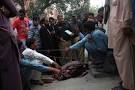
Arifa 25, dared to stand up to her family, running away with the man she fell in love with and secretly marrying him. The following day in a busy street in Karachi, Pakistan’s most populous city, her male family members surrounded the newlyweds and, at gunpoint, dragged Arifa away. After great difficulty her husband, Abdul Malik, managed to establish that she was alive and had been hidden somewhere. Fearing for his life, he has lived in hiding for three months. He says,

“In Pakistan, love is a big sin. Centuries have passed, the world has made so much progress- men have reached the heavens. But our men are still following age-old customs –which focus on denying women freedom.”

In May 2014, the case of the young pregnant woman Farzana Parveen shocked the world. She was stoned to death by her family for marrying the man she was in love with, rather than the man they had chosen for her. This happened outside Lahore high court, in front of the policemen and passersby.

In November, following worldwide media attention, Parveen’s father, brother, cousin and former fiancé were all found guilty of murder and given death sentence. But more often than not, those who commit these brutal acts against women are never charged, protected by tribal laws.

Last year alone, more than 1,000 women were murdered for so-called honour crimes. Some hard-line religious scholars believe that only through the killing of an offending family member-usually a woman-can honour be restored to the rest of the family and tribe. Few people in Pakistan nowadays are willing to challenge these tribal traditions and customs. In fact, according to a recent survey, an overwhelming majority of Pakistanis support the full implementation of Sharia law- Islam’s legal system.’

In 1979, General Zia-ul-Haq, Pakistan’s military dictator, introduced the so called Hudood Ordinance- a controversial set of laws that attempted to Islamise Pakistan. Among other things, it made adultery punishable by stoning and lashing. In 2006, the then President Pervez Musharraf tried to protect women, but the enforcement of his reforms has been limited and adultery remains a crime. Karachi’s central prison for women is where many of those accused of adultery end up.’

BUT IS NORTH INDIA ANY DIFFERENT THAN PAKISTAN IN TERMS OF HONOUR KILLINGS?

Yes only in terms of the scale which is less. While we can say what happens in Pakistan is barbaric, but then honour killings are often reported in the northern regions of India also, and mainly from the states of Punjab, Haryana, Rajasthan and Uttar Pradesh as a result of marrying without their family’s acceptance and sometimes also for marrying outside their caste.

And in contrast honour killings are a rarity in South India and the western states of Maharastra and Gujarat. In some other parts of India, notably West Bengal, honour killings completely ceased about a century ago, largely due to activism and influence of reformists such as Vivekananda, Ramakrishna, Vidyasagar and Raja Ram Mohan Roy. Wish they had also spread their activism in North India.

REPORTS OF SOME SPECIFIC HONOUR KILLINGS IN NORTH INDIA

The Indian state of Punjab has a large number of honour killings. According to the data compiled by the Punjab Police, 34 honour killings were reported in the state between 2008 and 2010: 10 in 2008, 20 in 2009 and four in 2010’

Haryana is also notorious for incidents of honour killing, mainly in the upper caste of the society, among Rajputs and Jaats; considered literate. And, so can we say it has nothing to do with literacy levels?

Bhagalpur in the eastern state of Bihar has also been notorious for honour killings. Recent cases include a 16-year-old girl, Imrana, from Bhojpur who was set on fire inside her house in a case of what the police called ‘moral vigilantism.’ The victim had screamed for help for about 20 minutes before neighbours arrived, only to find her smouldering body. She was admitted to a local hospital, where she later died from her injuries. In May 2008, Jayvirsingh Bhadodiya shot his daughter Vandana Bhadodiya and struck her on the head with an axe. In June some incidents were reported from Delhi.

In June 2012, a man chopped off his 20-year-old daughter’s head with a sword in Rajasthan after learning that she was dating men. According to police officer Omkar Singh, the accused told the court that his daughter Manju had relations with several men. He had asked her to mend her ways several times in the past. However, she did not pay heed. Out of pure rage, he chopped off her head with the sword.

A young couple who were planning to marry were brutally murdered in Garnauthi village, state of Haryana on 18 September 2013 because they were having a love affair. The woman, Nidhi, was beaten to death and the man, Dharmender, was dismembered alive. People in the village and neighbouring villages approved of the killings.

MEASURES AGAINST HONOUR KILLINGS

In 1990 the National Commission for Women set up a statutory body in order to address the issues of honor killings among some ethnic groups in North India. This body reviewed constitutional, legal, and other provisions as well as challenges women faced. The NCW’s activism has contributed significantly towards the reduction of honor killings in rural areas of North India. According to Pakistani activists Hina Jilani and Eman M. Ahmed, Indian women are considerably better protected against honor killings by Indian law and government than Pakistani women, and they have suggested that governments of countries affected by honor killings use Indian law as a model in order to prevent honor killings in their respective societies.

In a landmark judgement in March 2010, Karnal district court ordered the execution of five perpetrators of an honour killing in Kaithal, and imprisoning for life the khap (local caste-based council) chief who ordered the killings of Manoj Banwala (23) and Babli (19) a man and woman of the same clan who eloped and married in June 2007. Despite having been given police protection on court orders, they were kidnapped; their mutilated bodies were found a week later in an irrigation canal.

In June 2010, scrutinizing the increasing number of honor killings, the Supreme Court of India issued notices to the Central Government and six states including Uttar Pradesh, Punjab, Haryana and Rajasthan, to take preventive measures against honor killings.

Alarmed by the rise of honor killings, the Government planned to bring a bill in the Monsoon Session of Parliament July 2010 to provide for deterrent punishment for ‘honor’ killings.

In recent times, the Khap system has attracted criticism from groups, citing the stark prejudice that such groups allegedly hold against others. Women’s Organisation AIDWA has made allegations, in some cases where the Khaps are alleged to have initiated threats of murder and violence to couples who marry outside of the circle.

Supreme Court has declared these ‘Khap panchayats’ as illegal, which often decree or encourage honour killings or other institutionalised atrocities against boys and girls of different castes and religions who wish to get married or have married.

So honour killing is utterly illegal and has to be ruthlessly stamped out. There is no honour in these killings and atrocities. In fact, it is nothing else but barbaric and shameful. Brutal atrocities committed by feudal-minded persons deserve very harsh punishments. And only by acting against it can we stamp out this atrocious feudal mentality. The other thing that needs to be crushed along with it are the Kangaroo courts that are mushrooming all over.

But in all of this the most scathing has been the behavior of some political parties both in Pakistan and India who in the interest of votes have never taken a bulldozing approach either jointly or severally towards all such individuals and self styled institutions who promote honour killings.

*****

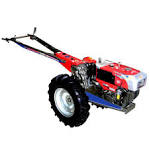
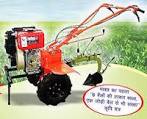
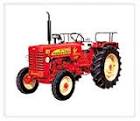
Article: SMALL TRACTORS-POWER TILLERS- THE LIKELY TOTEMPOLE OF NEXT GREEN REVOLUTION OF INDIA

Copyright@shravancharitymission
341

SULKING INDIAN AGRICULTURE

Agriculture remains the mainstay of India, even when it doesn’t contribute sufficiently to the Indian GDP. Around 65% of Indian population depends directly on agriculture when it only accounts for 22% of the GDP. But Indian agriculture now needs to undergo a paradigm shift to feed double the mouths since the last green revolution. Further, farm mechanization, agri-inputs, cropping patterns and seed varieties need to be refurbished to suit new agri challenges such as continuous soil erosion, depleting ground water levels, alarming farm labour situation and sparse market linkages. And this calls for a major overhaul on the production side of agriculture. To tackle issues such as, increase in farm produce and better farm economics, which brings us to the moot point of need based farm mechanization.

ISSUES AT HAND

India which is 17% of the world population. But it still cultivates with either the draught animals, which are inefficient and expensive to maintain or by high horsepower tractors owned by large farmers, which are few in numbers. So the daunting question is, when more than 80 percent of the Indian farmers are small and marginal why they are not in a position to purchase tractors below hp (horsepower) 22. Is it because of the government policies that are blocking the smooth transition from draught animals to small tractors and power tillers? and what is more baffling is:

  • Small farmers don’t have a requirement of large tractors. With the amount of land they hold a tractor of 25 hp engine or more is not needed in small and medium farm size. Especially, when statistics for power availability for various agricultural operations, which is an indicator of mechanization has increased from 0.3 kilowatt per hectare in 1971-72 to 1.4 kilowatt per hectare in 2003-04.
  • Even though government puts in subsidies on tractors, farmers don’t get their free will to choose, as large manufacturers step-in to sell their own brands at the behest of Government. So if we are talking of free markets why this nudging?

578

HISTORICAL PERSPECTIVE

Tractors in India were imported initially in 1960s mainly from the US and European countries, prime being the erstwhile Soviet Union. Since these countries historically had large holdings, these machines too were manufactured in the range of medium and high horsepower to suit their own land holding sizes.

Thus, started the of lasting culture of medium and high horsepower tractors in India. Even when our land holding size way back in 1960s was far less than the European and American standards and in the range of around 3 hectares.

This as a beginning was understandable but somewhere down the line a course correction was required, which didn’t happen. Presumably, because the entire technology was new, and we were devoid of the basic sense of change or even the skill to adapt. Small was not beautiful then. A similar trend we had in the auto sector where in you had those bulky fuel guzzlers. But then the auto industry caught the imagination of their customers which farm mechanization industry didn’t.

IMPORT AND MANUFACTURING HISTORY

In the year 1961-62, first time around 880 tractors were assembled from kits purchased from British and German firms. Imports stopped in 1977 but industry’s extended honeymoon with these manufacturers continued as hand holding was required to build sufficient production bandwidth. Although, India got independence in 1947 and the socialist leaning government’s five-year plans of 1950s and 1960s aggressively promoted farm mechanizations, our production of tractors was sluggish. But by late 1980s tractor production moved upwards to 140,000 units per year, yet the prevalence rate was just 2 tractors per 1,000 farmers.

ECONOMIC REFORMS AND FAO PERSPECTIVE

Post economic reforms in 1991, with the steady pace of change, the production of tractors increased to 270,000 units per annum. And in early 2000, India overtook the US as the world’s largest producer of four-wheel tractors. FAO estimated in 1999. Of the total agricultural area in India, less than 50% was under mechanized land preparation. Thereby, indicating large opportunities still existed, and projected this in favour of small machines. Steadily growing, India in 2013 produced 619,000 tractors accounting for 29% of world’s production. And, India currently has 16 domestic and 4 multinational corporations manufacturing tractors.

SOLITARY EFFORT OF 20 HP– Swaraj story:

India had approached the erstwhile Soviet Union in the mid 1960s for R&D and manufacturing support to develop a 20 hp tractor, but they refused. This project was later taken up by Central Mechanical Engineering Research Institute (CMERI) under the council of Scientific and Industrial Research.

CMERI put together a team. They started by studying tractors of other makes that were in the market. Their first prototype was ready in May 1967 but when it was taken for trial it collapsed. Learning from the failure, they developed a second prototype, testing of which was done in October 1968, which proved satisfactory. Independent field trials later at other institutes were also successful. The tractor was called Swaraj. This Company was later promoted by Punjab State Industrial Corporation and turned out to be a blue chip company.

Besides Swaraj no other company tried to delve into 20 hp category for a long time. Until the solo effort was followed by a Delhi based company SAS Motors Ltd that has launched tractor in 15-24 hp category.

LAND HOLDING VS TRACTOR HORSEPOWER MISMATCH?

In 1960s the average land holding size was around 3 hectares (7.4 acres) and in 2010-11 it declined to 1.15ha (at an average level), which is below 3 acres on a more prevalent terminology. And, with these vital statistics, both growth and technological up gradation should have been in the low horse-power segment or in the power tiller segment. But that is clearly not the case. On the contrary both growth and technological up-gradation has been in the medium and high horsepower tractors, apparently because of foreign influence. Where, more likely the low horsepower range of tractors were discouraged because of low margins and high overheads of large manufacturing corporations and also the fatigue and capital cost of introducing a new genre.

For small and marginal farmers, low priced, small tractors of 15-24 hp was required. This generic need was highlighted as early as 1970 when (NCA )National Commission on Agriculture was set up.

At the turn of the century, India had around 2.67 million tractors, which was more than NCA projections. But category wise the number were skewed. As around 1.47 million tractors were in the 31-40 hp category, 0.65 million were in > 40 hp category and 0.68 million were in < 30 hp category. And only a part of 0.68 million tractors below 30 hp comprised of small tractors for which NCA had projected a figure of over 2 million. This large gap is surprising and reveals the callous approach of the government towards small farmers. One can perhaps safely derive that non availability made them go for higher hp tractors thereby spoiling their farm economics. And the quantity of power tillers sold was merely seventy thousand.

But then who was responsible for throwing NCA’s calculation, off balance? Well, no one can pin pointedly say who. But yes, to a certain extent the agricultural community as a whole, together with the Indian tractor industry, can be questioned on this. Instead of small tractors they came up with medium and heavy tractors, which benefited only the large farmers, and as a result tractors got concentrated only in a few states which benefitted from the green revolution such as Punjab, Haryana and parts of Uttar Pradesh (See table: some benefit)

Some benefit
Tractor sales over the last five years
States Tractors sales during last five years Area under cultivation
(‘000 hectares)
UP 290,513 17,986
MP 144,049 22,111
Punjab 121,903 4,033
Rajasthan 95,450 20,971
Haryana 89,346 3,711
Gujarat 76,439 10,293
Bihar 72,467 10,743
AP 68,994 14,461
Maharashtra 66,876 20,925
Karnataka 43,163 12,322
Tamil Nadu 38,852 7,474
Orissa 14,473 5,296
Other states 65,210 15,181
Total 1,188,735 165,507
Sources: Economic Survey 2003-04 & Indian At A Glance 2004

We all agree mechanization is an unavoidable farming tool. For, productivity has to increase along with cost and economics, and that alone is sustainable in the long run. But looking at the perfunctory approach of the government, the big question would be whether farmers should go in for small tractors or still rely of animal power. It may therefore not be out of place to mention relevant statistics of animal power.

STATISTICS ON ANIMAL POWER

– India’s 83 million draught animals carry more than 5 times the freight and four times the passenger traffic carried by railways, in terms of originating traffic.

– Draught animal power contributes 30000 megawatt of power.

– It saves 24 million tonnes of diesel per year, worth more than Rs 33,000 crore.

– Draught animals cultivate about 65% of India’s total cultivable land area

– The present value of draught animals (Rs 50,000-1,00,000/pair) is Rs 2,07,500 crore even on a very conservative estimate.

– It would take 8.3 million tractors to replace draught animal power. This would cost Rs 32,490 crore; so then why is this segment not growing?

– Draught animals provide dung worth Rs 5,000 crore annually. Five million tonnes of firewood will be needed to substitute this.

The crisis around the farmer’s traditional tiller- the draught animal is continuously growing. Even though farmers still rely on draught animals their importance is being undermined by tractors.

According to an NCA report, man can provide a power equivalent to 0.07 hp, a woman 0.05 hp, a bullock/buffalo 0.40 hp, a camel 1 hp and a tractor at least 14 hp. In 1951, the farm power available was just 0.25 kilowatt per ha (KW/ha) of which 97 percent came from draught animals. This has now gone up by almost 6 times to 1.40 KW/ha and the corresponding increase in food grain by four times, and so an optimum, farm mechanization, is the need of the hour.

Farm mechanization is also important from the aspect that 65% of our cultivable area consists of dry farming or rain fed farming where the window of soil bed preparation is very small and if we are unable to do seedbed preparation and sowing in a timely manner, given the receding soil moisture, yields will drastically reduce.

However, 70% percent farmers still use draught animals where they can easily be upgraded to small farm mechanization tools. Such as small hp tractors or power tillers, but for this to happen; government policies should start focusing on the needs of the small farmer.

COMPARISON BETWEEN DRAUGHT ANIMALS AND TRACTOR

Draught animals and tractors are complementary sources of power on Indian farms, and will continue like that for many more years, to meet the ever burgeoning demand of power and of increased production and productivity. A report of 1987 says that a 35 hp tractor can prepare a seed-bed and sow 0.2 (ha) in one hour at Rs 270-300 per ha. Bullocks for the same operation require the entire day at Rs 300 per ha. The problem is draught animals have to be fed throughout the year but their optimal use is restricted to around three months in a year.

INDIAN AGRI DISCONNECT

  • Tractors in India are out of reach for the majority of the farmers. The cheapest being Rs 1.8 lakh almost as much as a new car.
  • Barely 2% of the 115 million farmers own a tractor according to the 1995-96 agriculture, census. Yet they cultivate almost 1/3rd of the countries arable land. This itself highlights the efficient toughness of farm mechanization.
  • Most farmers possessing tractors are rich and own large land holdings. Rate of ploughing is Rs 200-250/hr or Rs 2-2500/hectare
  • But small farmers are unable to reap such benefits. For them a low priced, small tractor of 15-24 HP would be ideal. This need was recognized as early as 1970 when the National Commission on Agriculture (NCA) was set up. After a 5 year study, NCA submitted a long report in 1976, which also recommended the type and quantity of tractors India should have by 2000: 2.08 million tractors and power tillers (a farm machine, with two wheels, to till the soil) below 15HP, 0.12 million medium tractors of 35 HP & 80,000 65 HP tractors, which taken together would total 2.28 million
  • This policy argued that 2.08 million tractors and power tillers below 15 hp were needed for small and medium farmers. Besides, they are also considered more suitable for paddy cultivation — the country’s dominant food grain crop — than medium (25-40 hp) and heavy (above 40 hp) tractors.

ALL TIME PANACEA FOR SULKING INDIAN AGRICULTURE IS FARM MECHANIZATION OF THE RIGHT KIND:

  • To graduate from animal tilling to mechanized tilling and that to by small tractors, power tillers and other economical high precision equipments commensurate with land holding size of small and medium farmers, keeping in mind their farm economics.
  • An option less farmer has to buy a 35 hp category tractor that costs around 5 lacs with bank loan at a high rate of interest, even if he doesn’t require this product. This should be substituted by small tractors or even power tillers.
  • GOI provides a subsidy of 25% limited up to 30,000 tractors. Wherein also, the farmer is cajoled to buy certain brands and this needs to stop forthwith, as user of the product should alone be the decider by any diktat of consumerism.
  • Tractors available in the range of 25-40 hp use advance western technologies, which may not be required for small holdings and this makes the product expensive. In fact what is needed is a below 25 hp tractor or a power tiller that is gender friendly and useful for ‘nuclear farming’ just as a nuclear family. The cost of such tractors will bring down the farmers cost by 50%. As against his investments and maintenance in a pair of bullocks, which requires to be fed and taken care of even when it is not generating any revenue, and also serves best only for a time span of 5-6 years.
  • Farmers need to come out of the clutches of debt to make agriculture more exploring, exciting, remunerative, and even status oriented. This can happen only if simple and cheap technologies are used in conjunction and proportion to their earnings. According to 59th survey by NSSO (January-December 2003) out of 89.35 million farmer households, 43.42 million (48.6%) were reported to be in debt. But in a similar survey in 1991 only showed 26% were in debt.

*****


Article: #SwachhBharatAbhiyan (SBA) – Include existing Public Toilets in SBA

Copyright@shravancharitymission
123

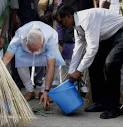
Prime Minister Narendra Modi has done well by wielding the broom to clean a road and its surroundings, thereby, burnishing the lost grandeur of ‘dignity of labour.’ He has also formed a formidable team of star citizens, who have given impetus to the campaign launched in around 4041 statutory towns. Where in you find cine stars, sports persons, social activists, industrialists, professionals and even politicians, psyched out. Icons like Amitabh Bachchan, Anil Ambani, Kamal Hassan, Sachin Tendulkar, Shashi Tharoor and many other distinguished personalities have graced the campaign, by lending both, social and glamour weight.

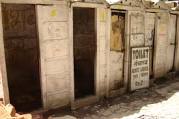
So with all of this, the speed and velocity of the campaign looks set to deliver the goods. However, the priorities within this need to be tweaked, mainly to prioritize the initial tranches. Where, I have some pointed and granular suggestions to make, that oozes right out of my firsthand experience. Create as many Public toilets as possible, in the shortest possible time and also include the existing ones in the campaign. Perhaps, this suggestion of mine may give the whole campaign a better fillip in converting the movement into a mass movement with the least of resistance. Arising, more out of the immediate necessity of the deprived public, in this case the general public; because of the limited, shabby and poor infrastructure that throws the spanner in the development of India.

For it was just, yesterday when I was driving down the crowded market area on Hill Road in Bandra, is when I felt like relieving myself. I stopped the car, got off and started looking for a public urinal. Keeping strictly in mind the Prime Minister’s message of Swacch Bharat Abhiyan, and trying to observe it to my heart’s content.

456

I must have spent about half-an-hour in the crowded market area, in which time I must have covered more than a kilometer but I still could not find a public toilet. Is when I saw the logo of a petrol pump to my heart’s delight, as we all know have toilets. ‘Wow- what a relief’ I said to myself. And this got me thinking.

If this is the condition of Mumbai, one of the biggest metropolis of India what about other cities? With a burgeoning population, Mumbai has a deficit of at least 47,000 toilet seats, and the cost of constructing one toilet is INR 150,000, say authorities, so we can imagine the cost involved. This shortage in 2001 was a whooping 125,000 toilet seats when the Brihan Mumbai Muncipal Corporation (BMC) had conducted its first survey on the sanitation needs for the country’s commercial population. Going by 2001 figures, the ratio of toilets versus population comes to a whopping 1: 50 or 3,000 people using it daily in Mumbai.

MUST COMPLIMENT THE OIL COMPANIES

After relieving myself, I sincerely blessed the oil companies that thought of customer convenience, by having toilets in all their retail outlets which Indian Railways couldn’t provide in all platforms. Further, I thought this is a big opportunity to include these readily available toilets, as part of the Swacch Bharat Abhiyaan as pay and use toilets to catapult the campaign exponentially.

Today, India has about 45,000 filling stations more than Canada or UK as of March 2012, and most are with the facility of a toilet. If these toilets are made to join the SBA on a pay and use basis we can have a sudden flurry of toilets and that will certainly help the SBA.

For the Government to make public toilets, every 1-2 km, in crowded market areas along the road side may be a gigantic and close to a non doable task, so here is the way forward. Today, the immediate pressing need for the Public at large is a convenient network of clean toilets spaced around close proximity and concomitant is the wielding of broom to keep it clean. While it may be possible to construct new toilets on highways and open roads but may be extremely difficult in the already cramped and crowded market areas and this is where these toilets can come in handy

CAMPAIGNS CAN CHANGE REALITIES

Even though Government of India has transcribed incentives for building public toilets. All is not achieved merely by announcing incentives on paper alone, as it requires mindsets to change–that running a public toilet too, is a respectable venture; something like Sulabh Shauchalaya.

And so, India needs a renewed and intense campaign to promote public toilets as a doable business by respectable Individuals, Unemployed Youth, Business Houses, Societies, Builders, NGOs, SMEs, Hospitality Industry and under Corporate Social Responsibility.

Government should promote people having genuine intent of doing this noble task, and who have spare Land on which Private – Public Toilets could be constructed, or even existing toilets that could be utilized at prime and vantage locations as pay and use toilets.

The building bylaws should be tweaked to incentivise for mass proliferation of such public toilets and also sops in the form of rebate in property tax or any other, are a few boons that should be considered by the Government, if possible.

Running public toilets could be ticked at par with running hospitals as both reduce human suffering. Modi Government could further do well in bringing about this social change. Prime Minister Narendra Modi in fact has orated in one of his speeches abroad that he is currently busy in construction of Public toilets.

*****

ARTICLE: ACID ATTACKS BY SICK MINDS

Copyright@shravancharitymission

Kamlesh Tripathi

Shouldn’t I call them depraved. Transcending even the emperors of Rome, and that to without a throne, who could be ‘vindictive, cruel and even insane’- say some ancient historians like Suetonius, Pliny and Cassius Dio.

A day after a woman doctor became a victim of acid attack. Delhi High Court has expressed concern over the ‘spate of acid attacks.’ So, yet again Nero fiddled while Rome burned? But who is our Nero? Surely, the Government in general, and the law enforcement department in particular, who allowed sale of acid off the shelf.

Establishment is now cracking the whip by developing a web application to regulate the sale of acid, with functionalities like registration of stockists and retailers, issue of licenses by the district administration and limiting sale of acid to individuals who furnish proof of identity and residence.

This may to a certain extent prune down unauthorized sale of acid but won’t sterilize the sick mindset. Union minister Rajnath Singh, also suggests of treating acid attacks, that cause serious hurts, as ‘heinous crimes.’

Good Samaritan NGOs have also held demonstrations at ITO demanding quick and swift Police action against the perpetrators of crime in Rajouri Garden. A medical report released, says the 30 year old doctor is traumatized and understands the prognosis of such a severe injury.

And, in all of this the court has again asked for status report from the centre and the state. But, what is more astonishing is the High Court’s reference to acid attacks, when it pointed out that Delhi Police has almost 15,000 posts vacant and therefore a we have deficient police force at hand.

Lack of adequate Police Force results in inadequate patrolling, which encourages sick minds and criminals to enact such ghastly crime; and the government attorney Sanjay Jain is further exhibiting government apathy by saying 15 proposals forwarded by Delhi Police for creation of over 14,000 posts “shall be looked into at the earliest.” So no matter how heinous is the crime, government lives by its age old rhetoric; and so these sick minds will continue having a field day.

*****

Article: YOURS, MINE BUT NOT INDIA’S- FESTIVALS

Copyright@shravancharitymission

KAMLESH TRIPATHI

132

Yesterday, on the eve of Christmas I was told our office is not closed. As majority are non Christians who don’t celebrate Christmas. So we need to work on Christmas. A similar thing happened on Eid where again our office remained open. And, on both the days, I left in the morning only to return in the evening. Barely squeezing in time for a few text messages of ‘good wishes’ on the occasion to my Christian and Muslim friends, leave aside celebrating with them. I found this approach of certain establishment’s quite non-secular. But I was even more surprised when none of the so called secular parties of India came forward to address this non-secular issue. And, contrary to this on Holi and Diwali, the two major Hindu festivals, when our office remained closed no Christian or Muslim could come to work even if he wanted to. And with the same hypothesis this too was non-secular.

578

India should celebrate and grieve together. Unless we reach out to minorities in their thick and thin, and the minorities reach us in the breath, a sound weaving of minds will never happen, as everyone will celebrate their festivals only as a community and we won’t have too many national festivals.

After all; all our Gods reside in this very country and they all have Indian passports; and it is only for some non-secular establishments to realize this vintage fact.

*****

Article: RAPE CRIME IN INDIA

Copyright@ shravan charity mission

By Kamlesh Tripathi

There is no doubt about the fact that someone runs India. But when a heinous crime such as rape is committed in a Uber Cab it appears no runs India. On the contrary it runs on its own inertia. As the powers to be, feign ignorance, about how the crime was committed and ask for one last chance to fight the menace. So, then who runs India? One answer could be these criminals who always succeed in hoodwinking the dispensation while committing such nasty crimes. In front of whom our meek society and the establishment appear as simpleton. Where, these men in high places come out with some face saving, stereotype statements such as the ‘culprit will not be spared’ and just then another culprit surfaces, even before the previous one is forgotten.

There was only one 9/11 in the US, and with that they learnt their lesson and ensured it never happened again. Surely, they must have done something worth the while, to fox and ensnare such criminals as a strong preventive. Similar mindset we find in Israel. But the story in India is quite different. For we are not aspiring that high as of now, as it doesn’t suit us and it could be grossly inconvenient for our establishment. Therefore, in India there is never a last time but always the next time and we deal it, with the gift of the gab.

REALITY CHECK

Today’s TOI reports 1706 cabbies were booked in the uber-crackdown. But then where was Delhi Police before this rape in the Uber-cab? I guess this is all, that Delhi Police knows in terms of prevention of crime–to book people after the crime. And, beyond this they don’t have the competence to deal with the subject. One can also make this out, from the many Delhi Police Commissioners that have come and gone. Not one has proposed a different unconventional, out-of-the-box plan to prevent rape crime in the capital and that itself exhibits the mental bankruptcy. Most have just kicked the can on the road. And, what can one poor commissioner of police anyway do, even the criminal knows.

GOVERNMENT’S INTENTION

Also, government’s intention to come out with a foolproof plan to prevent rape crime is a suspect across various political establishments that we have seen till now. Whether it is the will or mental or physical lethargy we don’t know. A management thought says if you keep taking the same action each time and expect a different result it will never happen. But, in case of rape crime forget the action; government has not even proposed a new template for prevention of rape crimes. And, that it self speaks volumes. Moreover, the new trend, that the higher courts need to direct the executive on all important issues to act is also alarming.

WAY FORWARD

The traditional method of policing is not effective in preventing rape crimes. Rather it is failing miserably. The traditional policemen are only good for writing FIRs. That too when they are told from the top and to some extent catching criminals at a later date. So we need something different. And can that be technology based is something we need to study? We should also emulate best police practices in terms of crime prevention from other countries and implement the same for rape crimes but all of this requires political will.

Political parties and governments need to realize. If you want to continue in power, merely being ahead of your nearest political rival is not going to be enough. You will have to beat them by leaps and bounds. And for that you will have to deliver what you’ve promised. Remember, the public of India has an elephant’s memory and coming to their aid are countless sound bites where you’ve promised prevention of rape crime. So wake up.

*****

article: SHOULD TEXT BOOKS BE AVAILABLE, BOTH IN PRINT AND E-BOOK FORMAT FOR SCHOOL CHILDREN?

Copyright@shravancharitymission


134

SHOULD TEXT BOOKS BE AVAILABLE, BOTH IN PRINT AND E-BOOK FORMAT FOR SCHOOL CHILDREN?


    Every day when I go for my morning walk. I see innumerable school children and some very young, carrying their heavy rucksacks filled with books up to a bursting point. Many out of them are even unable to walk in the normal manner because of the weight. Some even walk sluggishly and at times are helped by their nannies or their young parents or even their old grand parents. To, be on time for their school bus or any other mode of conveyance that they take. And I am more than sure this must be causing a great amount of unspoken dissonance in these children. Considering, the matrix and size of India. I consider this as an important issue to be looked at seriously. When it affects 52% of our population. The hypothesis finds more ground when we dig into some relevant statistics as given below.

526

MIX OF PRIMARY AND SECONDARY EDUCATION

    India has approximately 113.8 million children attending primary school and another 88.5 million attending secondary. While PE (Primary Education) covers an age group of 5 to 14 years, SE (Secondary Education) covers children in the age group of 14-18 years. PE is up to class 8 and SE spills over to class 12 and beyond that is the HE (Higher Education)

    Now, if we were to analyse the demographic structure of education in India in the table below, we would find:

DEMOGRAPHIC STRUCTURE IN EDUCATION 2009  
AGE GROUP EDUCATION GROUP POPULATION IN CRORE PERCENTAGE OF POPULATION
0-3   7.5 6.50%
4-6 Pre Primary 7.9 6.80%
7-11 Primary (I-V) 14.4 12.40%
12-14 Upper Primary (VI-VIII) 8.5 7.30%
15-18 Secondary (IX-XI) 9.7 8.30%
19-24 Higher (XII+) 12.6 10.90%
  Population 60.6 52.30%

    The population in the age group between 4 to 18 years, which comprises of Pre-Primary to Secondary level, is around 40 crore and around 35% of our total population; which is sizeable. So, at no cost can we condone their issues, especially when they are not adults and cannot speak for themselves. The existing state of play, where they use printed text books may not be that convenient, both for them and their families, but then they have no choice.

SOME MAJOR DISADVANTAGES OF PRINT TEXT BOOKS

  • Bulky and heavy to carry and the weight only increases as you go up, the classes.
  • Often these books are out of print especially when the text is modified or when a new session starts and are even sold at a premium.
  • Print books are subject to wear and tear.
  • Expensive as compared to an e-book, and with the rise in paper, print, labour and transportation costs the prices will only increase.
  • May not be readily available at multiple locations.
  • In many areas we don’t have regular electricity supply or have long power cuts, when you can’t read these books and this is a great disadvantage, during times of examinations and even routine study. Whereas, an e-book can be read in the dark.

INDIAN PRINT TEXT BOOK MARKET

    If we take the Indian text book market it is at a level of $ 1.2 billion, with an addition of $510 million of supplementary books. However, private publishers have access to just 60% of the market. Given the monopoly of state boards and NCERT in 95% of the school text books. And a large chunk of schools are vernacular with local languages; and often out of print.

BENEFITS OF E-BOOKS

    If Finland can say good bye to ‘cursive handwriting’ by 2016, why can’t India move towards e-books. When the advantages are so many,

  • Except for a onetime cost of purchasing the e-reader the recurring costs of purchasing text books will reduce substantially. Government can incentivise purchase of e-readers.
  • It will always be available, both in India and globally. And never out of print.
  • You can even read in the dark.
  • Very light to carry and not bulky.
  • Will give even a rural child a sense of advancement in life.
  • One book for many books: e-reader.

WAY FORWARD

     The government should introduce e-book as a parallel option for children. To assess the ground reality the project could be piloted in a particular district or a state. It could even start with a particular subject. E-books could be readied out of print books and loaded in to simple e-readers, with white paper technology. The project can be launched in identified schools where it could be monitored by an IT instructor of the school along with teachers. And I am sure with this even our rural child will go global.

*

By Kamlesh Tripathi

*

                                                   https://kamleshsujata.wordpress.com

*

Share if you like it

*

Shravan Charity Mission is an NGO that works for poor children suffering from life threatening diseases. Should you wish to donate for the cause the bank details are given below:

NAME OF ACCOUNT: SHRAVAN CHARITY MISSION

Account no: 680510110004635 (BANK OF INDIA)

IFSC code: BKID0006805

*

Our publications

GLOOM BEHIND THE SMILE

ONE TO TANGO … RIA’S ODYSSEY

AADAB LUCKNOW … FOND MEMORIES

REFRACTIONS … FROM THE PRISM OF GOD

(CAN BE BOUGHT FROM ON LINE BOOK STORES OR WRITE TO US FOR COPIES)

*****

 

Snippet: Cricket, corruption and stubbornness- Lord God Vishnu in conversation with SRINIVASAN

1711srinivasan

Copyright@shravancharitymission

By Kamlesh Tripathi

A snippet

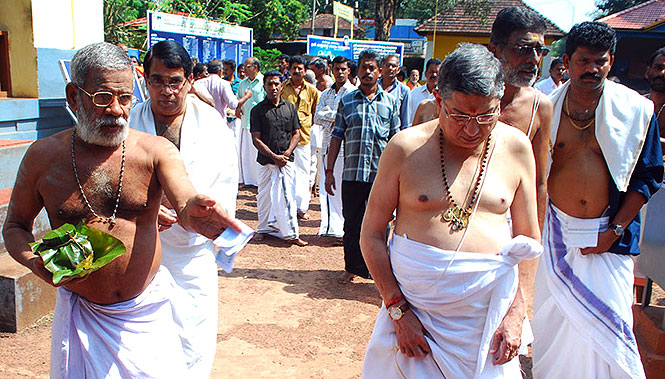
One day, Lord God Vishnu, during one of his sojourns came across N. Srinivasan, the ousted BCCI chief, while he was frequenting his temple-abode atop, a tall hillock. Srinivasan, was attired in a crisp dhoti, bare-chested, appearing that devout Hindu with a holy kumkum- tilak on his broad forehead. And, seeing this, Lord Vishnu was more than tempted to talk to him. He decided to start the conversation in a soft manner, when he disguised himself as a senior Pandit of the temple.

‘Hello Srini, nice to see you in the temple again, and what brings you here so often?’

‘Well my name is Srinivasan and not Srini. And I don’t believe in giving away, anything to anyone once I get it, so don’t take away the ‘vasan’ part of my name. And, by the way who are you, for I’ve never seen you in this temple in the recent past.’

‘Well–well. I am Lord Vishnu and I reside in all temples as the Lord God, and you all are my disciples. Since, I couldn’t have met you in my divine form because you’re facing some charges. I have come to meet you in human disguise. And, I find off late you have started coming to the temple quite regularly.’

‘Yes-yes, I am now inclined to come to the temple for regular blessings. It acts like a relieving bout of physiotherapy. Since I am bruised because of this stupid IPL case where they have got me involved, for conflict of interest. But, please don’t give me that cock and bull story of you being Lord Vishnu. Anyone, out here can recognize me as I’m a celebrity. And what do you want from me?’

‘Well, I am Lord God Vishnu, and I want you to return my name ‘Srinivasan’ to me.’

‘Maybe, your name is Vishnu, but mine is Srinivasan. So where is the conflict and why should I return your name?’

‘Well, Srinivasan is a synonym of Vishnu. And, there lies our conflict, so please return my name, as it stands for goodness.’

‘Return your name, what do you exactly mean by that?’

‘I mean return my holy name to me. Renounce it, and keep some other name matching your profile and characteristics.’

‘Are you mad? Why should I spoil another name. Instead let me keep spoiling this age old and tested name only. And, moreover, you have now become a synonym of me, and I am no more a synonym of yours.’

‘What do you mean?’ asked Lord God Vishnu in some surprise.

‘I mean, I have a wider copyright on the name ‘Srinivasan’ and its synonyms, then you. The very word Srinivasan reminds everyone of me and not you, anymore.’

‘And moreover as a policy I don’t return anything I get or I earn. Entire India knows how I am fighting tooth and nail for my position as the BCCI chief. And you can see it for yourself, I am not giving up.’

‘But, you are priding all the way, with my all powerful name. Moreover, you run the game of cricket considered a religion in this country, as its God, yet you don’t manage the game with any Godly instincts. Shouldn’t you just move away, on your own, till the entire enquiry gets over, and also surrender my name till your name is cleared.’

‘See I am a modern day ‘God’ and I manage affairs in modern ways. But you happen to be an ancient ‘God’ with ancient value system, and system of governance. So, you please carry on, and let’s meet after this bloody case is over.’

With the conversation heading nowhere, Lord God Vishnu decides to leave quite demoralized; is when Srinivasan makes a request,

‘God can you surrender your name ‘Vishnu?’

‘But why?’ asks God.

‘Because, I now realize I have a complete copyright on my name ‘Srinivasan’ and its synonym ‘Vishnu.’

*****

ARTICLE: CAR AND CAREER- A NECESSITY FOR THE WORKING CLASS


Copyright@shravancharitymission

DO INDIAN CAR ADS NEED TO BE MORE REALISTIC?

    Yes, they do. As most car ads that you see in the electronic media have a slant towards those usages that you may once in a blue moon put your car to. And it could be in the range of 10-15% of the total car usage time. Something, like going on a quiet cross country drive, or driving intercity, excessive speeding like a mad man, showing off etc. etc.

    Yet most car ads repeat, the same stale and brawny messages, of excessive speeding, high horse power availability, zipping speed and pick up from- 0 to 60 km in 5-6 seconds. When these should just be left as specs and features, since most cars in the same class, have it all. Not to forget the risky car acrobats as seen in some ads. The one I readily remember is a Maruti Swift ad, that cannot be performed on Indian roads and are risky for most people who drive them. As many may not even have the real sense of an impact, in case of an accident. Where, one in a million time, your life saving gadgets may not even operate. As it happened in the best of brands like the Toyota Fortuner, where, the court has awarded a huge compensation for an accident victim in U.P..

    There are however some SUV ads that stand closer to reality. Such as negotiating rough terrains, going cross-country on a holiday, features like comfortable leg-room, plush interiors, turning radius, ramp angle, mileage- kitna deti hai and so on.

WE NOW REQUIRE A NEW AD PARADIGM

    Advertisers should now sensitize themselves to the basic fact, that a majority of car sales happen in the metros. Which have huge traffic jams, with very low average running speed. Where, high speed or high horse power is of less consequence. Rather the irony is. Most of the times, in busy streets bikes and scooters overtake you and sometimes even a bicycle. And, perhaps you are too sheepish about that rogue auto-rickshaw that tends to push you off the track. For a dent in your car may cost you precious time, boss’s irritation as you’ll require leave to repair it and even money. But for him it’ll only be a hammer technology. And the Mary’s little lamb, the cycle rickshaw that might just deliver a deep scar with its jutting axle. So then what should a car ad convey is the big question?

MARRY CAR AND CAREER

    Car and career is now a necessity for the working class in India. About 60-70 percent of the times, when we drive our car, it is for going to work. India thinks in cars. Many important decisions of our lives and career are taken while we drive. It is the second most expensive purchase after a house. So tweak the focus of car ads to be more holistic, realistic, contemporary, and in Indian conditions. As I should not be reminded of abroad while seeing an Indian car ad and I have some suggestions in this regard:

  • Talk more of speeding dangers than speeding excitements.
  • Teach the art of patience: Such as peacefully waiting in traffic jams and signals.
  • How to avoid road rage. How to keep cool: Deep breathing
  • How to manage scratches: Can we develop stickers that protect our vehicles from minor scratches and rub-offs of two wheelers and fellow cars that often lead to road rage
  • Change Indian myth of masculinity: Speeding to safe driving tips.
  • Can we integrate a bit of our office or personal life into the driving time.
  • Apart from music can we have a gadget that can download thoughts, reminders while driving, send some voice mails along with some robotic operations.
  • Remove generic technical myths about car technology.
  • We sit in the car for long durations. How does it affect our health in terms of orthopaedic, muscles or even eye-sight.
  • At what speed can we take potholes without damaging the car.
  • At what speed can we cross a flooded street without the car stalling to improve on traffic jams in monsoon.
  • Security net and connect-GPS.
  • Driving tips for improving mileage.
  • Talk about pedestrian rights.
  • Professional tips for a professional drivers. Something like how to handle kids?
  • Routine maintenance- many owners and drivers don’t even read the manuals.
  • Explain new technology in layman’s language.

*

By Kamlesh Tripathi

*

https://kamleshsujata.wordpress.com

*

Share if you like it

*

Shravan Charity Mission is an NGO that works for poor children suffering from life threatening diseases. Should you wish to donate for the cause the bank details are given below:

NAME OF ACCOUNT: SHRAVAN CHARITY MISSION

Account no: 680510110004635 (BANK OF INDIA)

IFSC code: BKID0006805

*

Our publications

GLOOM BEHIND THE SMILE

(Archived in 7 prestigious libraries of the US, including, Harvard University and Library of Congress. It can also be accessed in MIT through Worldcat.org. Besides, it is also available for reading in Libraries and archives of Canada and Cancer Aid and Research Foundation Mumbai)  

ONE TO TANGO … RIA’S ODYSSEY

(Archived in Connemara Library, Chennai and Delhi Public Library, GOI, Ministry of Culture)

AADAB LUCKNOW … FOND MEMORIES

(Launched in Lucknow International Literary Festival 2014)

REFRACTIONS … FROM THE PRISM OF GOD

(Co-published by Cankids–Kidscan, a pan India NGO and Shravan Charity Mission, that works for Child cancer in India. The book is endorsed by Ms Preetha Reddy, MD Apollo Hospitals Group. Book was launched in Lucknow International Literary Festival 2016)

(CAN BE BOUGHT FROM ON LINE BOOK STORES OR WRITE TO US FOR COPIES)

*****