Category Archives: article

WHY CONGRESS & Co LOST 2019 ELECTIONS

Copyright@shravancharitymission

    Finally, the mammoth festival of democracy has ended. It has brought about a number of beginnings and an equal number of endings. Tall, broad, victorious, Narendra Modi, is now well saddled to take India forward, in the next five years. To me, it appears, Narendra Bhai & Amit Bhai se BJP hai, BJP se woh nahi hain. Jahan woh khade ho jate hain BJP ki line wahin se shuru hoti hai. One can use any amount of adjectives … Tornado, Tsunami or any other to describe the Namo wave that was totally unexpected, or kept under wraps, about which the general public is not aware. 

    What astonishes me now is the tectonic shift that the election brought forth through its sensitive and knowledgeable voters. It in fact unsettled all calculations. There was a great hue and cry that Modi is now only a matter of months and days a perception largely created by the novice opposition and even the media, including print, electronic and social in utter munificence. Many prominent journalists, TV channels and Youtube operators now stand exposed, when it comes to their own personal integrity, professional acumen, and even their prowess as political journalist. Where, the pollsters by and large got it right.

    The media is abuzz with a plethora of thoughts and pointers, where, I would also like to join the bandwagon, in making my own thoughts known, even if, it is, a bit too late in the day. The great thing that has happened in this election is that Mother India has got the workhorse, in terms of a reliable, knowledgeable, and a resourceful ruling party with a majority to take India forward. But in the process it has inadvertently smothered the opposition. Opposition now looks pale and withered. And without an opposition, democracy looks incomplete. But then where did the opposition go astray. I have some viewpoints as a voter when it comes to Congress and other opposition parties.

    One, Congress party, which is the main opposition party, is perceived to be a pro Muslim party by a majority of voters. Ever since independence it has ruled with a soft corner for the Muslims. This was fine had it been for a sprint run. But Congress turned out to be a pro-Muslim party for a marathon run. This perhaps gave an uneasy feeling to the Hindu voters. As long as, there was no option, Hindu voters kept voting for Congress. But when a reliable option like BJP surfaced they shifted. The same analysis holds good for Samajwadi Party and other opposition parties. Congress did not rest with this.

    After independence like the British Raj it further divided and exploited the Hindu community through its policies into schedule caste, schedule tribe, and the upper caste just to corner votes. Since 60s Congress has allowed Bangladeshi immigrants into Assam, and now even Mamata Didi is doing the same. And, Hindus, wonder, why was Congress so comfortable with Muslims even when they happened to be illegal immigrants? The answer is very obvious—vote bank. Where, they exploited the language nationalism of Bengalis.

    Two, opposition says, polarization was done largely by the BJP. But voters have come to realise a more comprehensive and covert polarization was done in the long years when Congress ruled, when they gave incentives to Muslims, divided the Hindu community into upper-caste, backward-caste, schedule-caste, and schedule tribe. All for vote bank politics. Congress exploited the divide that existed between Hindus and Muslims that originated at the time of partition. The opposition even during the campaign kept exploiting this by telling the Muslim minority that if BJP comes to power they will be finished. This was totally wrong. Especially, when, even in the long years of Congress and opposition rule the plight of Muslims has not improved.

    Three, opposition criticises the ideology of Hindutva. They say Hindutva is the poison, churned out by RSS, Jansang and now BJP. But the moot point is, if all was going so very well under the Congress regime why at all, did Hindutva, flourish in the last two decades or so. Perhaps, at the time of partition, a divide, or a suspicion did exist between Hindus and Muslims, which the Congress never tried to address in a comprehensive manner.

    Four, if Hindutva was cherished and nourished by BJP and if Hindutva was a cuss word for the opposition, why and how did BJP reach a full house from 2 seats in the parliament. Most opposition leaders have mocked at the grace of Hinduism by attacking Hindutva which they thought was some form of Hindu uprising, and that perhaps has hit the sentiments of most Hindus. A similar analogy can be made about Samajwadi Party. The perception of this party too is a Muslim-Yadav combine. Most police stations of U.P. are packed with Yadavs. So then what is left for the other castes in the state? One could say it is silent polarisation.

    Five, there was never an issue based criticism of BJP by the opposition during the election campaign. Anything and everything that BJP did was wrong including national security. Does a country work like this? Rahul Gandhi whose UPA was drenched in corruption was openly sloganeering, ‘Chowkidar chor hai.’ Which the voters of India didn’t accept. Then you have Mayawati and Mulayam Singh with cases of disproportionate assets, so with what face were they attacking BJP. It was like the pot calling the kettle black. The opposition needs to realise that they are now dealing with educated voters where their silly ways will not cut ice anymore.

    Six, a majority of the opposition parties are family shops, biggest being Congress. Where, everything happens at the diktats of the political-lala. Just as people look for corporate and government jobs and don’t like working for a lala company in the same manner the learned voter especially the young voters want a grand political party now, to rule India and not a bunch of local and parochial leaders. Where, BJP fits the bill.

    Seven, BJP won because it worked on the ground. It had the grip and pulse of the voters including better booth management. Where, opposition was totally divided by their petty vision. The only thing that united them was ‘Modi hatao.’ Congress offered rupees 72,000 per annum to the poor but still it did not find any traction and that speaks a lot about Congress. Mamata, was full time into minority appeasement, and fierce federalism, yet BJP made healthy inroads in Bengal.

    BJPs performance was somewhere below and somewhere above the benchmark, yet they played their cards pretty well. With an average literacy rate of 74% in India political parties cannot bull shit anymore. Social media has made casting of vote a fad, a prestigious duty. In times to come you will have more of educated voters and less of vote banks.

    What may have worked for NDA is that it succeeded to a large extent in turning this election into a referendum in favour of Prime Minister Narendra Modi. Where, opposition parties appear to have helped BJP in the process as their campaigns were primarily about ousting Modi, rather than offering any positive and alternate visions of what they will do if elected to power. It’s a smart phone world where opposition needs to play it better.

   The opposition was fragmented all along and offered no PM candidate, this only cemented the concept of TINA (There is no alternative) factor, in favour of Narendra Modi.

    Just as, Prime Minister Narendra Modi has rephrased, the slogan, ‘Sabka sathsabka vikas’ to ‘Sabka sath sabka vikas and sab ka vishwas’ even the opposition needs the vishwas of the majority community.

    Therefore, the opposition needs to get back to the drawing board to reinvent their respective parties that has an agenda for all communities and not just their own brethren and caste. There is a saying in English, that goes as follows, ‘Words on the street is that elections are already over, only the polling is left.’ If the opposition is vigilant to these words they will get the pulse of their victory much in advance.

By Kamlesh Tripathi

*

https://kamleshsujata.wordpress.com

*

Share it if you like it

*

Shravan Charity Mission is an NGO that works for poor children suffering from life threatening diseases especially cancer. Our posts are meant for our readers that includes both children and adults and it has a huge variety in terms of content. We also accept donations for our mission. Should you wish to donate for the cause. The bank details are given below:

NAME OF ACCOUNT: SHRAVAN CHARITY MISSION

Account no: 680510110004635 (BANK OF INDIA)

IFSC code: BKID0006805

*

Our publications

GLOOM BEHIND THE SMILE

(The book is about a young cancer patient. Now archived in 7 prestigious libraries of the US, including, Harvard University and Library of Congress. It can also be accessed in MIT through Worldcat.org. Besides, it is also available for reading in Libraries and archives of Canada and Cancer Aid and Research Foundation Mumbai)  

ONE TO TANGO … RIA’S ODYSSEY

(Is a book on ‘singlehood’ about a Delhi girl now archived in Connemara Library, Chennai and Delhi Public Library, GOI, Ministry of Culture, Delhi)

AADAB LUCKNOW … FOND MEMORIES

(Is a fiction written around the great city of Nawabs—Lucknow. It describes Lucknow in great detail and also talks about its Hindu-Muslim amity. That happens to be its undying characteristic. The book was launched in Lucknow International Literary Festival of 2014)

REFRACTIONS … FROM THE PRISM OF GOD

(Co-published by Cankids–Kidscan, a pan India NGO and Shravan Charity Mission, that works for Child cancer in India. The book is endorsed by Ms Preetha Reddy, MD Apollo Hospitals Group. It was launched in Lucknow International Literary Festival 2016)

TYPICAL TALE OF AN INDIAN SALESMAN

(Is a story of an Indian salesman who is, humbly qualified. Yet he fights his ways through unceasing uncertainties to reach the top. A good read not only for salesmen. The book was launched on 10th February, 2018 in Gorakhpur Lit-Fest. Now available in Amazon, Flipkart and Onlinegatha)

RHYTHM … in poems

(Published in January 2019. The book contains 50 poems. The poems describe our day to day life. The book is available in Amazon, Flipkart and Onlinegatha)

(ALL THE ABOVE TITLES ARE AVAILABLE FOR SALE IN AMAZON, FLIPKART AND OTHER ONLINE STORES OR YOU COULD EVEN WRITE TO US FOR A COPY)

*****


VAND CHAKNA … IN SIKHISM

Copyright@shravancharitymission

    Vand Chakna in Sikhism, is best explained as “sharing and caring.” On one occasion, when Guru Nanak was with his two sons and Lehna (Guru Angad Dev) there was a corpse covered with a cloth lying there. He asked who will eat this. No one responded, but Lehna, having full faith in his master, accepted it and when he removed the cloth, he saw there was a tray full of sacred food, which he served to his master and ate the leftovers. On this Guru Nanak said, “Lehna, you are blessed with sacred food because you shared it. Similarly, people should use wealth, not only for themselves, but share it with others. If one consumes it only for himself then it is like a corpse. But when we share it with others it becomes sacred.”

    This constitutes the basis for “Langar” the community kitchen, and Dasvandh, that is sharing one-tenth of one’s earnings with the community.

By Kamlesh Tripathi

*

https://kamleshsujata.wordpress.com

*

Share it if you like it

*

Shravan Charity Mission is an NGO that works for poor children suffering from life threatening diseases especially cancer. Our posts are meant for our readers that includes both children and adults and it has a huge variety in terms of content. We also accept donations for our mission. Should you wish to donate for the cause. The bank details are given below:

NAME OF ACCOUNT: SHRAVAN CHARITY MISSION

Account no: 680510110004635 (BANK OF INDIA)

IFSC code: BKID0006805

*

Our publications

GLOOM BEHIND THE SMILE

(The book is about a young cancer patient. Now archived in 7 prestigious libraries of the US, including, Harvard University and Library of Congress. It can also be accessed in MIT through Worldcat.org. Besides, it is also available for reading in Libraries and archives of Canada and Cancer Aid and Research Foundation Mumbai)  

ONE TO TANGO … RIA’S ODYSSEY

(Is a book on ‘singlehood’ about a Delhi girl now archived in Connemara Library, Chennai and Delhi Public Library, GOI, Ministry of Culture, Delhi)

AADAB LUCKNOW … FOND MEMORIES

(Is a fiction written around the great city of Nawabs—Lucknow. It describes Lucknow in great detail and also talks about its Hindu-Muslim amity. That happens to be its undying characteristic. The book was launched in Lucknow International Literary Festival of 2014)

REFRACTIONS … FROM THE PRISM OF GOD

(Co-published by Cankids–Kidscan, a pan India NGO and Shravan Charity Mission, that works for Child cancer in India. The book is endorsed by Ms Preetha Reddy, MD Apollo Hospitals Group. It was launched in Lucknow International Literary Festival 2016)

TYPICAL TALE OF AN INDIAN SALESMAN

(Is a story of an Indian salesman who is, humbly qualified. Yet he fights his ways through unceasing uncertainties to reach the top. A good read not only for salesmen. The book was launched on 10th February, 2018 in Gorakhpur Lit-Fest. Now available in Amazon, Flipkart and Onlinegatha)

RHYTHM … in poems

(Published in January 2019. The book contains 50 poems. The poems describe our day to day life. The book is available in Amazon, Flipkart and Onlinegatha)

(ALL THE ABOVE TITLES ARE AVAILABLE FOR SALE IN AMAZON, FLIPKART AND OTHER ONLINE STORES OR YOU COULD EVEN WRITE TO US FOR A COPY)

*****


LEADERSHIP A TOUGH BALL GAME OR A CHILD’S PLAY

Copyright@shravancharitymission

    U.S. academic environments, define leadership as, ‘a process of social influence in which a person can enlist the aid and support of others in the accomplishment of a common task.’ Leadership is a primordial trait. Where, the ancient leaders were of course, the ‘Blue Bloods.’

        Says Henry Kissinger, ‘The task of the leader is to get his people from where they are to where they have not been.’     Says John C Maxwell, American author, ‘A leader is one who knows the way, goes the way, and shows the way.’

    To me, leadership is neither a tough ball game, for all times to come, nor a child’s play, but the cyclic median of the two. It’s about motivating people to achieve both, covert and overt success, in their hitherto unproven life. For people, who enjoy leadership challenges, it’s a child’s play right up to the grand finale, and for those who don’t, it’s a tough ball game … a Herculean task, akin to boiling the ocean or even the ‘Achilles heel.’ But I guess the toughness of ‘leadership’ wanes in front of dexterity, passion and perseverance, the hallmarks to fame.

    Sanskrit literature professes ten types of leaders. Aristocratic thinkers of the past have postulated that leadership depends on one’s ‘blue blood’ or ‘genes’. Where monarchy takes an extreme view of the same idea.

    The flock of leadership largely depends on the number of challenges that the environment emits. Environment could be both micro and macro. As and when the number of challenges goes up, one will find new leaders are born to handle those challenges. So, one can safely assume that challenges create leadership and concomitantly one can say leaderships envision new challenges?

    Leadership is a stubborn labyrinth to begin with and so, a hard nut to crack at the initial stages. But once the tricks of the trade are learnt, it becomes a feather touch to operate.

    A number of theories have sprung up on leadership. Where, the trait theory, explores at length about the authority of monarchs, lords and even bishops and how their authority later began to wane, is sumptuously spoken about. The writings of Thomas Carlyle, Scottish philosopher, and Francis Galton, a Victorian era statistician, whose works have prompted decades of research on the subject are equally popular. Carlyle identified the talents, skills, and physical characteristics of people who rose to power. Meanwhile, Galton’s Hereditary Genius (1869) examined leadership qualities, in the families of powerful men. However, the numbers of eminent relatives dropped off when his focus moved from first-degree to second-degree relatives, Galton concluded that qualities of leadership are inherited. In other words, leaders are born, not developed. So, both these notable works, lent, great initial support to the notion that leadership is rooted in the characteristics of a leader. But then, how does one decipher if leadership is a tough ball game or a child’s play. Also, how do you explain a recent example of Prime Minister, Narendra Modi who is not a blue blood nor a born dynast and comes from a humble back ground? Yet, he turns out to be one of the most popular Prime Ministers of India.

    Over a period of time the essence of leadership has evolved into, simplification of traits and virtues. But before I move forward let me also tell you, that leadership is, an extensively written and described art, that touches the research area along with practical skills that burnishes the brand of an organization, and within that the team or an individual, to achieve the specialised goal. Exceptions are however there. Just as we have Orwellian states running into dystopia we also have Orwellian organisations that semaphores as one man show. But then that is not the epitome of sound leadership.

    Leadership has an umbrella of qualities. I would for your immediate practice, list out some of them. These are indeed effective tools to practice.

    ‘The supreme quality for leadership is unquestionably integrity. Without it, no real success is possible, no matter whether it is on a section gang, a football field, in an army, or in an office.’—said President Dwight D Eisenhower. Honesty and integrity are two bliss ingredients that make a good leader. How can one expect, one’s followers, to be honest when you yourself lack in these qualities. Leaders succeed when they stick to their values and core beliefs. Remember, without ethics, this will not be possible.

    Confidence is the core attribute an effective leader must have, at his, or her command. If you are unsure about your own decisions, then your subordinates will never follow you. As a leader, you have to be oozing with confidence. Where, one needs to exhibit a ray of swagger and assertiveness to gain the confidence of one’s subordinates. But the caution is that confidence should not translate into overconfidence.

    A leader needs to inspire his or her subjects. They look up to him for guidance. The most difficult job of a leader is to persuade others to follow him. You can only inspire by setting a good example. When the going gets tough the tough get going, and that is where you come in. A positive leader is calm and positive in all situations and keeps the motivation level high. Says American statesman, John Quincy Adams, “If your actions inspire others to dream more, learn more, do more and become more, you are a leader.”  

    If you have commitment and passion in you nothing remains a challenge. When your teammates see a hands on person they too will give their best shot.

    An effective leader needs to be an effective communicator too. Until you communicate clearly and effectively to your team things will not move. The other important prowess of leadership qualities is the art of decision making. Sound decision making comes with good on the job knowledge. This also requires long term vision.  And then we come to accountability. Where, one needs to follow the approach of late Arnold H Glasow, a U.S. businessman when he said, “A good leader takes little more than his share of the blame and little less than his share of the credit.”

    Focus on the core issues. Issues that will take the organisation to greater heights and into the formidable bracket, while delegate and empower the rest to your subordinates. For that will give the right synergy, to both, the organisation and the subordinates to grow.

    Steve Jobs was way ahead of times along with his visionary thoughts and ideas. Perhaps, he had the sixth, the seventh and even the eight sense about leadership. He went on to say ‘Innovation distinguishes between a leader and a follower.’  True enough, in order to get ahead in today’s fast-paced world, a leader must be both creative and innovative at the same time. Creative thinking and constant innovation is what makes you and your team stand out from the crowd. Think out of the box to come up with unique ideas and turn those ideas and goals into reality.

    Last but not the least is empathy. A true leader should have a reserve of empathy for his followers. But on the contrary, most leaders, only follow a dictatorial style of working these days, that lacks empathy altogether. Due to this, they fail to make a closer connect with their followers. The first step towards becoming an effective leader is to understand the problems and feel the pain of your followers. This should be supplemented by the endeavour to provide them with suitable solutions to solve their issues.

    There is no fixed mould of learning for an effective leader. The path traverses through the high frequency highs and lows of life. And that is why for some people leadership is a tough ball game and for some others a child’s play. But yes, there is a lot to learn from the day-to-day.

    Let me cite the example of the most influential economist of the twentieth century. His name was John Maynard Keynes. Although, he was an economist, he did not have a formal degree in Economics. And, if I remember correctly, he had, just about eight days of formal training and the rest was all, on the job learning. Yet, he turned out to be one of the most influential economist of the world. A revered leader.

   The offbeat para above, solely, tells us, that for an open mind everything is a child’s play. But for a closed mind everything is a hard ball game. And of course in life one thing that doesn’t have a cul-de-sac is the razzmatazz of leadership.

By Kamlesh Tripathi

*

https://kamleshsujata.wordpress.com

*

Share it if you like it

*

Shravan Charity Mission is an NGO that works for poor children suffering from life threatening diseases especially cancer. Our posts are meant for our readers that includes both children and adults and it has a huge variety in terms of content. We also accept donations for our mission. Should you wish to donate for the cause. The bank details are given below:

NAME OF ACCOUNT: SHRAVAN CHARITY MISSION

Account no: 680510110004635 (BANK OF INDIA)

IFSC code: BKID0006805

*

Our publications

GLOOM BEHIND THE SMILE

(The book is about a young cancer patient. Now archived in 7 prestigious libraries of the US, including, Harvard University and Library of Congress. It can also be accessed in MIT through Worldcat.org. Besides, it is also available for reading in Libraries and archives of Canada and Cancer Aid and Research Foundation Mumbai)  

ONE TO TANGO … RIA’S ODYSSEY

(Is a book on ‘singlehood’ about a Delhi girl now archived in Connemara Library, Chennai and Delhi Public Library, GOI, Ministry of Culture, Delhi)

AADAB LUCKNOW … FOND MEMORIES

(Is a fiction written around the great city of Nawabs—Lucknow. It describes Lucknow in great detail and also talks about its Hindu-Muslim amity. That happens to be its undying characteristic. The book was launched in Lucknow International Literary Festival of 2014)

REFRACTIONS … FROM THE PRISM OF GOD

(Co-published by Cankids–Kidscan, a pan India NGO and Shravan Charity Mission, that works for Child cancer in India. The book is endorsed by Ms Preetha Reddy, MD Apollo Hospitals Group. It was launched in Lucknow International Literary Festival 2016)

TYPICAL TALE OF AN INDIAN SALESMAN

(Is a story of an Indian salesman who is, humbly qualified. Yet he fights his ways through unceasing uncertainties to reach the top. A good read not only for salesmen. The book was launched on 10th February, 2018 in Gorakhpur Lit-Fest. Now available in Amazon, Flipkart and Onlinegatha)

RHYTHM … in poems

(Published in January 2019. The book contains 50 poems. The poems describe our day to day life. The book is available in Amazon, Flipkart and Onlinegatha)

(ALL THE ABOVE TITLES ARE AVAILABLE FOR SALE IN AMAZON, FLIPKART AND OTHER ONLINE STORES OR YOU COULD EVEN WRITE TO US FOR A COPY)

*****


INTERESTING FACTS & QUOTES-19

Copyright@shravancharitymission

Boiling the ocean: Means to go overboard or to delve deep into such small details that a project becomes impossible. The phrase, boil the ocean, appears in business as well as other group settings. In the literal sense, boiling the ocean is  impossible because there’s too much water for it to be possible.

What are brown, grey and white goods? Brown goods are consumer electronics, grey goods are computers etc., and white goods are domestic appliances. These are collective names for different types of electric and electronic equipment. These goods also include equipment powered by batteries such as computers, monitors, industrial dishwashers, ventilation units, etc.

 Difference between advertising and publicity: Advertising is what a company says about its own product, but Publicity is what others says about a product. Conversely, publicity is done by a third party which is not related to any company. Whereas, advertising is under the control of the company which is just opposite to publicity.

Mumbai discharges 750 metric tonnes of plastic every day, which is a sixth of its total garbage.

Mckinsey & Company an American worldwide management consulting firm estimates that tech giants worldwide spent anywhere between $20-30 billion on artificial intelligence in 2016.

Till 1985 marijuana and cannabis, that is, ganja and bhang derivatives, were legally sold in the country through authorised retail shops in India. It is believed moderate consumption of marijuana is far less harmful than tobacco and alcohol.

An old Rabbi once asked his pupils how they could tell when the night had ended and the day had begun. “Could it be”, asked one of the students, “when you can see an animal at a distance and tell for sure, whether it’s a sheep or a dog?” “No”, answered the Rabbi. “Is it, when you can look at a tree at a distance and tell whether it’s a fig tree or a peach tree?” wondered another. Again, the Rabbi answered “No”. The impatient pupils demanded: “Then what is it?” “Well … it is, when you can look at the face of any man or a woman and see that it is your sister or brother: Till then it is still midnight.”

Although we are second to China in population, our country is adding almost an entire Australia each year.

Recently published data shows that a quarter of white extremist’s attacks, in Europe since 2015 targeted Muslims and mosques. And now you have the retaliatory Sri-Lanka terror attack.

It’s always been the nature of government that it underpays at the top and overpays at the bottom.

The latest report of the UN’s Inter-governmental Panel on Climate Change (IPCC), released recently, states that Indian agriculture may be significantly impacted even by a 1.5 degree centigrade increase in average global temperature.

According to the Indian healthcare market research report 2016, our healthcare sector is one of the largest in terms of employment and revenue generation. Growing at a CAGR (compound annual growth rate) of 16.5%, it will possibly be worth $280 billion by 2020. The 2017 national health policy seeks to increase government spending from the abysmally low 1.4% to 2.5% of India’s GDP.

Russia has lost more than it has won through its policy of confronting the west.

Rivers have been the lifeline of all civilizations. No wonder they are considered sacred across cultures. In India, the Ganga symbolises knowledge, Yamuna was known for love stories, Narmada stood for bhakti, knowledge and logic, Saraswati for brilliance and architecture, and India got its name from the Sindhu also known as Indus.

The name Punjab has been derived from five rivers, which are Jhelum, Chenab, Ravi, Beas and Sutlej that collectively signify “five waters” or “the land of five waters.” Starting off in the Tibetan highland of western China near Lake Mansarovar in Tibet Autonomous Region, the Indus river flows through the Ladakh district of Jammu and Kashmir.

One of the longest rivers in the world, the Sindhu also known as Indus has a total length of over 2,000 miles and runs south from the Kailash Mountain in Tibet all the way to the Arabian Sea in Karachi, Pakistan. Where, Jhelum, Chenab, Ravi, Beas, and Sutlej—eventually flow into the Indus.

Russia has no companies in the top 100 global brands. The three most valuable companies in Russia today were also the three most valuable 10 years ago.

The brain contains 10 billion nerve cells, making thousands of billions of connections with each other. It is the most powerful data processor we know, but at the same time it is incredibly delicate. As soft as a ripe avocado, the brain has to be encased in the tough bones of the skull, and floats in its own waterbed of fluid. An adult brain weighs over 3 lb and fills the skull. It receives one-fifth of the blood pumped out by the heart at each beat.

82% of the wealth generated last year went to the richest 1% of the global population, while the 3.7 billion people who make up the poorest half of the world saw no increase in their wealth. Adding Indian dimension to the horror story of global inequity, the report, added India’s richest 1% garnered as much as 73% of the total wealth generated in the country in 2017.

India is a water stressed country with a per-capita water availability reducing from 1820 to 1545 cubic metres between 2001 to 2011.

Online retail in India is estimated to grow to $200 billion by 2026, up from just $15 billion in 2016.

Car penetration—India is around 20 per 1000 people, China is at 90 per 1000 people, and the US is at 750 1000 people.

Greenpeace International, an NGO estimated that the beverage giant Coca Cola produced 110 billion throwaway plastic bottles in 2015. Most of these go for landfills or to the ocean. Owing up to its responsibility the company recently announced that it would make all its packaging recyclable by 2030.

Tripura has one of the highest unemployment rates in the country and suffers from lack of infrastructure. Manik Sarkar of the Communist Party of India (Marxist) served as the Chief Minister of Tripura from 1998 to 2018. His reign was the longest in the state’s history.

Prices are the only thing that defy the law of gravity.

Interesting quotes and lines.

‘In depth of the winter I finally learned that there was in me an invincible summer’—ALBERT CAMUS, French philosopher, author,  and journalist.

‘God’s in His Heaven, All’s right with the world’–Robert Browning.

Don Marquis once joked, ‘an idea is not responsible for the people who believe in it.’

‘Everyone dies. But not everyone lives’—Shobha De.

‘Life is like riding a bicycle. To keep your balance, you must keep moving’—ALBERT EINSTEIN

By Kamlesh Tripathi

*

https://kamleshsujata.wordpress.com

*

Share it if you like it

*

Shravan Charity Mission is an NGO that works for poor children suffering from life threatening diseases especially cancer. Our posts are meant for our readers that includes both children and adults and it has a huge variety in terms of content. We also accept donations for our mission. Should you wish to donate for the cause. The bank details are given below:

NAME OF ACCOUNT: SHRAVAN CHARITY MISSION

Account no: 680510110004635 (BANK OF INDIA)

IFSC code: BKID0006805

*

Our publications

GLOOM BEHIND THE SMILE

(The book is about a young cancer patient. Now archived in 7 prestigious libraries of the US, including, Harvard University and Library of Congress. It can also be accessed in MIT through Worldcat.org. Besides, it is also available for reading in Libraries and archives of Canada and Cancer Aid and Research Foundation Mumbai)  

ONE TO TANGO … RIA’S ODYSSEY

(Is a book on ‘singlehood’ about a Delhi girl now archived in Connemara Library, Chennai and Delhi Public Library, GOI, Ministry of Culture, Delhi)

AADAB LUCKNOW … FOND MEMORIES

(Is a fiction written around the great city of Nawabs—Lucknow. It describes Lucknow in great detail and also talks about its Hindu-Muslim amity. That happens to be its undying characteristic. The book was launched in Lucknow International Literary Festival of 2014)

REFRACTIONS … FROM THE PRISM OF GOD

(Co-published by Cankids–Kidscan, a pan India NGO and Shravan Charity Mission, that works for Child cancer in India. The book is endorsed by Ms Preetha Reddy, MD Apollo Hospitals Group. It was launched in Lucknow International Literary Festival 2016)

TYPICAL TALE OF AN INDIAN SALESMAN

(Is a story of an Indian salesman who is, humbly qualified. Yet he fights his ways through unceasing uncertainties to reach the top. A good read not only for salesmen. The book was launched on 10th February, 2018 in Gorakhpur Lit-Fest. Now available in Amazon, Flipkart and Onlinegatha)

RHYTHM … in poems

(Published in January 2019. The book contains 50 poems. The poems describe our day to day life. The book is available in Amazon, Flipkart and Onlinegatha)

(ALL THE ABOVE TITLES ARE AVAILABLE FOR SALE IN AMAZON, FLIPKART AND OTHER ONLINE STORES OR YOU COULD EVEN WRITE TO US FOR A COPY)

*****


SHORT STORY: JOB ENRICHMENT … learn it from a tehsildar in Karnataka

Copyright@shravancharitymission

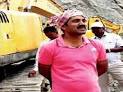
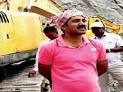
    Some bureaucrats have the gumption to transform even small positions, into powerful and meaningful ones, and some indolent bureaucrats would transform, even powerful and prestigious positions, into inconsequential jobs. So it’s all in the incumbent, and depends on the person occupying the chair. This is where B.N. Girish a tehsildar in Karnataka’s Shivamogga district outshines his bureaucratic fraternity. He shows the way as to how an upright bureaucracy can make a difference.

    As a tehsildar in Karnataka’s Shivamogga district he went undercover as a labourer to work at a stone quarry and check for irregularities then returned to raid the place.  This exemplifies the critical role of bureaucracy in India. Since January 2017, BN Girish has been on a crusade against illegal stone and sand mining in the taluk, following up on tips from local people, conducting raids and seizing vehicles. Sand mining owing to the construction boom has become a lucrative industry in rural India but the state’s limited capacity for regulation has inflicted severe ecological damage to hills, rivers and forests.

    Imagine, for a moment, if a corrupt or indifferent officer was in Girish’s place. He would have made enough black money for himself, and at the same time damaged the environment. Now size up the damage such rapacious mining in just one taluk wreaks on the environment, and the losses to public exchequer; and the weakening of law and order machinery when illegal activity gains impunity and profit. Then multiply this by the thousands of taluks in India and we will get a sense of the importance of the lower bureaucracy. Politics was meant to take power to the people and cut through red tape. But in India the Neta-Babu nexus has for long taken advantage of hierarchical inequalities to subvert the system.

    Says Girish. “Locals told me about the Gejjinahalli quarry in March. I had raided it earlier. But labourers stopped work when they spotted my vehicle. Miners have such a strong network that when unknown vehicles enter, they stop work and flee. That’s when I decided to go in disguise so that no one would recognise me.”

    He adds further. “They realised he was an officer only when he started the inquiry. Gejjenahalli has several stone quarries, but I could raid only four as the men in other places got information and ran away. I plan to use a similar method to tackle illegal sand mining problem in the taluk.”

    Such illegal happenings have run their course and have to change now. The RTI Act, the spread of education, ubiquitous smartphones, rising aspirations and worries over environmental degradation are empowering communities to speak up against illegality. It also helps when honest officers come to the aid of hapless citizens. Not surprisingly, the struggles of bureaucrats like Ashok Khemka against successive Haryana governments struck a chord with the public. Perhaps, a new breed of civil servants with a can-do attitude has emerged in recent years with popular following that even rivals politicians. But the likes of B.N. Girish who go the extra mile must become the norm, not the exception.

   So, a big salute to Tehsildar B.N Girish.

By Kamlesh Tripathi

*

https://kamleshsujata.wordpress.com

*

Share it if you like it

*

Shravan Charity Mission is an NGO that works for poor children suffering from life threatening diseases especially cancer. Our posts are meant for our readers that includes both children and adults and it has a huge variety in terms of content. We also accept donations for our mission. Should you wish to donate for the cause. The bank details are given below:

NAME OF ACCOUNT: SHRAVAN CHARITY MISSION

Account no: 680510110004635 (BANK OF INDIA)

IFSC code: BKID0006805

*

Our publications

GLOOM BEHIND THE SMILE

(The book is about a young cancer patient. Now archived in 7 prestigious libraries of the US, including, Harvard University and Library of Congress. It can also be accessed in MIT through Worldcat.org. Besides, it is also available for reading in Libraries and archives of Canada and Cancer Aid and Research Foundation Mumbai)  

ONE TO TANGO … RIA’S ODYSSEY

(Is a book on ‘singlehood’ about a Delhi girl now archived in Connemara Library, Chennai and Delhi Public Library, GOI, Ministry of Culture, Delhi)

AADAB LUCKNOW … FOND MEMORIES

(Is a fiction written around the great city of Nawabs—Lucknow. It describes Lucknow in great detail and also talks about its Hindu-Muslim amity. That happens to be its undying characteristic. The book was launched in Lucknow International Literary Festival of 2014)

REFRACTIONS … FROM THE PRISM OF GOD

(Co-published by Cankids–Kidscan, a pan India NGO and Shravan Charity Mission, that works for Child cancer in India. The book is endorsed by Ms Preetha Reddy, MD Apollo Hospitals Group. It was launched in Lucknow International Literary Festival 2016)

TYPICAL TALE OF AN INDIAN SALESMAN

(Is a story of an Indian salesman who is, humbly qualified. Yet he fights his ways through unceasing uncertainties to reach the top. A good read not only for salesmen. The book was launched on 10th February, 2018 in Gorakhpur Lit-Fest. Now available in Amazon, Flipkart and Onlinegatha)

RHYTHM … in poems

(Published in January 2019. The book contains 50 poems. The poems describe our day to day life. The book is available in Amazon, Flipkart and Onlinegatha)

(ALL THE ABOVE TITLES ARE AVAILABLE FOR SALE IN AMAZON, FLIPKART AND OTHER ONLINE STORES OR YOU COULD EVEN WRITE TO US FOR A COPY)

*****


INTERESTING FACTS & QUOTES-18

Copyright@shravancharitymission

The difference between an enemy and an adversary. An adversary is someone you want to defeat, an enemy is someone you have to destroy. Our political leaders have started treating their adversaries as enemies which is sad.

What does the expression mutually exclusive mean: If two events are mutually exclusive, it means, that they cannot occur at the same time. For example, the two possible outcomes of a coin flip are mutually exclusive; when you flip a coin. It cannot land both on heads and tails simultaneously.

A rat’s ass: I don’t give a rat’s ass means a minimum degree of interest. The phrase is considered vulgar. Generally meaning minimum amount or degree of care or interest—usually used in the phrase don’t give a rat’s ass.

The boom barrier (also known as the boom gate) fell on gate no. 28C, of the Chunar-Chopan, railway crossing near Khairahi railway station, 180km from Allahabad, in the recent past. With this the last unmanned level crossing on Indian Railway’s 67,300-km track comes to an end.

The founder of the Brahma-Kumaris taught seekers not to renounce hearth and home, nor worldly responsibilities to get spiritual salvation but to attain it by balancing material life with the spiritual, through regular practice of soul-consciousness.

To be fair the British Raj did impoverish India. In this regard there are credible estimates available, from the leading British economist Angus Maddison that shows India’s share of world GDP shrunk from 24.6% to 3.8% between 1700 and 1952. However, Maddison also notes that in terms of per-capita GDP, India has consistently lagged behind several European nations even 2,000 years ago. By 1700, per-capita income of countries like the Netherlands and Britain was double or thereabouts that of India.

Ancient India had its time under the sun, but that is over. The modern world, led by China, is now playing a completely different ballgame. Today, China is known as the world’s factory.

The UAE launched in 2009 an ambitious 10-year plan to teach English to locals to prepare them for a future without oil, attracting English teachers from all around the world to come and teach local children. Meanwhile, the English-speaking population of the Philippines, Indonesia and Sri Lanka has already taken over India’s burgeoning BPO industry. So, India needs to wake up fast.

A huge tusker was crossing a wooden bridge. A fly was perched on his left earlobe. After they got across, the fly said, ‘Hey didn’t we really shake up that bridge?’ That sums up the human attitude today. Though we are a microscopic speck in the cosmic scale, we delude ourselves that we are the centre of creation. We think the planet is in peril when only human existence and their well-being are truly imperilled.

Though John Maynard Keynes was one of the most influential economic policy makers of the 20th century. Keynes did not actually have a degree in economics. In fact, his total professional training came to little more than eight weeks. All the rest was learnt on the job.

Despite the Rs 1.6 lakh crore annual PDS (public distribution system) subsidy.  India ranks at 103 out of 119 countries in the world Hunger Index, and 21% of Indian children between 0-5 years are malnourished. India’s touted demographic dividend could partly turn out to be a demographic time bomb.

India with the world’s youngest workforce, comprising, nearly a fifth of the world’s millennial is struggling to keep pace with changing times. Millennial or Generation Y, comprising 34% of India’s population are already 45% of the Indian workforce and by 2025 this number is expected to reach 75%.

According to a 2016, millennial survey by Deloitte, 16.8% of millennial evaluate career opportunities by good work-life balance, followed by 13.4% who look for opportunities to progress, and 11% who seek flexibility. Companies where millennial talent is a significant part of the workforce are implementing initiatives like relaxed dress codes and flexi-timing to attract and retain talent. Living in the gig economy, key skill for millennial is preparedness to move across industries and roles.

 There are 1.3 million Anganwadi centres across India. Anganwadi is a type of rural child care centre. They were started by the Indian Government in 1975 as part of the Integrated Child Development Services Program to combat child hunger and malnutrition. Anganwadi means “courtyard shelter” in Indian languages.

The Greeks probably invented the idea of organised competitive sports. Where, organised team as well as individual sports came mostly from the British.

Lights are very tricky. See how they behave. When blue green and red lights combine, they produce a white light. On the other hand, intersection of magenta, (purplish red) yellow and cyan, (greenish blue) leads to black that absorbs all colours. So be careful with lights.

Two-third of the paddy procurement in India is just from 5 states led by Punjab.

US confirms 90% of addicts experience a relapse shortly after undergoing de-addiction treatment. Around 22.5% of the world’s population is tobacco-dependent and 4.9% people have alcohol use disorder.

Over 80% of India’s workforce is employed in the unorganised and informal sector.

When over 18.6 million adults remain unemployed in India, what is the reason India still employs over 10 million children.

Fascism arose in Europe as a reaction to communism.

No Hindu worships the primary God of the Vedas today. Have you seen a temple of Indra today?

In 1934, the AICC passed a resolution prohibiting Congress members from also being members of the RSS, Hindu Mahasabha or the Muslim League.

14 of the world’s 15 most polluted cities are in India.

India Pakistan partition of 1947 was an event that displaced around 15 million and killed a million.

Interesting lines & quotes:

I think Mark Twain sums it up pretty nicely: “Twenty years from now you will be more disappointed by the things that you didn’t do then by the ones you did do. So throw off the bowlines. Sail away from the safe harbour. Catch the trade winds in your sails. Explore. Dream. Discover.”

  Whoever, fights monsters should see to it that in the process he does not become a monster—FRIEDRICH NIETZSCHE, German philosopher, poet and cultural critic.

Words on the street is that elections are already over, only the polling is left.

Mahatma Gandhi once said—’there is no way to peace, peace is the way.’

 Misery is the by-product of a lazy mind. Happiness is the by-product of an alert mind. Stop kicking yourself with regrets and guilt feelings. Give up feelings of being guilty. You will find yourself happy—SWAMI SUKHABODHANANDA

By Kamlesh Tripathi

*

https://kamleshsujata.wordpress.com

*

Share it if you like it

*

Shravan Charity Mission is an NGO that works for poor children suffering from life threatening diseases especially cancer. Our posts are meant for our readers that includes both children and adults and it has a huge variety in terms of content. We also accept donations for our mission. Should you wish to donate for the cause. The bank details are given below:

NAME OF ACCOUNT: SHRAVAN CHARITY MISSION

Account no: 680510110004635 (BANK OF INDIA)

IFSC code: BKID0006805

*

Our publications

GLOOM BEHIND THE SMILE

(The book is about a young cancer patient. Now archived in 7 prestigious libraries of the US, including, Harvard University and Library of Congress. It can also be accessed in MIT through Worldcat.org. Besides, it is also available for reading in Libraries and archives of Canada and Cancer Aid and Research Foundation Mumbai)  

ONE TO TANGO … RIA’S ODYSSEY

(Is a book on ‘singlehood’ about a Delhi girl now archived in Connemara Library, Chennai and Delhi Public Library, GOI, Ministry of Culture, Delhi)

AADAB LUCKNOW … FOND MEMORIES

(Is a fiction written around the great city of Nawabs—Lucknow. It describes Lucknow in great detail and also talks about its Hindu-Muslim amity. That happens to be its undying characteristic. The book was launched in Lucknow International Literary Festival of 2014)

REFRACTIONS … FROM THE PRISM OF GOD

(Co-published by Cankids–Kidscan, a pan India NGO and Shravan Charity Mission, that works for Child cancer in India. The book is endorsed by Ms Preetha Reddy, MD Apollo Hospitals Group. It was launched in Lucknow International Literary Festival 2016)

TYPICAL TALE OF AN INDIAN SALESMAN

(Is a story of an Indian salesman who is, humbly qualified. Yet he fights his ways through unceasing uncertainties to reach the top. A good read not only for salesmen. The book was launched on 10th February, 2018 in Gorakhpur Lit-Fest. Now available in Amazon, Flipkart and Onlinegatha)

RHYTHM … in poems

(Published in January 2019. The book contains 50 poems. The poems describe our day to day life. The book is available in Amazon, Flipkart and Onlinegatha)

(ALL THE ABOVE TITLES ARE AVAILABLE FOR SALE IN AMAZON, FLIPKART AND OTHER ONLINE STORES OR YOU COULD EVEN WRITE TO US FOR A COPY)

*****


ARTICLE: A REQUIEM FOR TIGRESS AVNI

Copyright@shravancharitymission

    One of the notable events of 2018 highlighted by the Press on New Year’s eve was the death of the five year old tigress, Avni, in Maharastra. Animal-lovers and activists, among them a Union Minister, alleged that is was a deliberate act of killing, of a fine specimen of an endangered species. The feeling of loss was heightened by the fact that Avni is survived by two two-month old cubs.

    It looked as if the newspapers revelled in the controversy that erupted after the tragic end of Avni. From November 3 to December 10, day after day, sparks flew and the Press carried reports of allegations by the activists and defensive statements by the alleged perpetrators of the crime, namely, the State Government at the ministerial level and the sharp-shooters, father and son. The Union Minister wanted nothing less than the State Forest Minister’s scalp, to wit, his dismissal or resignation. The latter retorted that those who held animal life more precious than human life should show the way.

    According to one report, the big cat had killed at least 7 out of the 13 who had died during May 2016 and August 2017, in the Loni village Relegaon tehsil, Yavatmal District in the Vidharbha region of Maharastra. In August 2017, Avni made short work of at least three persons. The Forest Department then decided to do away with the animal but the activists in protest took the matter  to the High Court, and later to the Supreme Court. Both the courts nodded their assent for killing the animal. After prolonged but futile efforts at capturing Avni, the State Government engaged two sharp-shooters, Shafath Ali Khan and his son Asghar Ali from Hyderabad, and they accomplished the job on November 2.

    Meanwhile, the activists were up in arms. They maintained that the animal should have been captured rather than killed. They alleged that the land was cleared of wildlife to help a private party to set up a factory. Some experts held that several Acts were violated in the diabolic process. Asghar Ali claimed that the animal was shot dead in self-defence. The Hyderabad Forensic Laboratory, on December 10, 2018, confirmed the attempt at tranquilising the animal.

    It would appear that so much vehemence in the protest against the killing  and the excessive publicity given to the controversy were disproportionate to the intrinsic importance  of the event itself. The tiger, no doubt a marvel of creation, is not ecologically very important. The Project Tiger, which was launched in 1973, to preserve wildlife, set out with the aim in moderate terms viz. ‘to maintain a viable population of tigers in India for scientific, economic, aesthetic, cultural and ecological values.’ It must be said to the credit of the Government that, unlike other Asian countries such as Japan and Korea where the species is extinct, the wildlife conservation measures have paid up in India. From 2500 in 1972, the tiger population increased to 3642 in 2001-2002; the number of ‘Tiger Reserves’ rose from 9, covering an area of 14,000 sq km in 1973 to 27, covering an area of 37,761 sq. km, spread over 17 states.

TIGER IN LITERATURE

    ‘Magnificent’ is the word that comes to my mind when one thinks of this gorgeously striped (in yellow and black) creature. It has inspired poets, novelists and animal lovers no end. William Blake (1757-1827) in a popular poem, gave expression to his wonder:

    ‘What immortal hand or eye could frame thy fearful symmetry?’

    He poised the following question for which we have no answer to this day. ‘Did He who made the lamb make thee?’

    The tiger as an object of worship, as Valmik Thapar points out in his informative book ‘The Cult of the Tiger’ (Penguin 2002), had been prevalent from Siberia to South-East Asia; perhaps, it continues here and there.

    In India, Shiva of the Trinity of Gods, wears the tiger skin vyaagrasina ambara-dhara, as Sri Shankara says in his Shivaashtakam. Even as the Sabarimala Temple of Kerala is in the news, one remembers that the deity brought a tiger home when the Queen of Pandalam wanted Ayyappa to fetch tiger’s milk from the forest. The Supreme Goddess Durga has for her vehicle the tiger.

    The literature on the tiger is vast; about 55 books are listed  as of Indian origin in Valmik Thapar’s book.

    While sympathising with the two surviving cubs, let us have a Requeim for Avni.

RELIGIOUS BELIEF AND CONSERVATION

    India in the 21st century has over one billion people and also boasts of half of the world’s tiger population, half of the world’s Asiatic elephant population and along with these charismatic species, an array of other living organisms. Could any of this have been possible without a core belief in nature? Could the Asiatic elephant have been safe without a belief in Ganesha, the elephant God? Could the tiger have survived had it not been the vehicle of Durga? And would the snake, the turtle, the peacock, the cranes and some of our trees have survived without a bank of beliefs in them?  –Valmik Thapar.

(This article was written by V.S.R.K. and published in Bhavan’s journal in recent months)

Posted by Kamlesh Tripathi

*

https://kamleshsujata.wordpress.com

*

Share it if you like it

*

Shravan Charity Mission is an NGO that works for poor children suffering from life threatening diseases especially cancer. Our posts are meant for our readers that includes both children and adults and it has a huge variety in terms of content. We also accept donations for our mission. Should you wish to donate for the cause. The bank details are given below:

NAME OF ACCOUNT: SHRAVAN CHARITY MISSION

Account no: 680510110004635 (BANK OF INDIA)

IFSC code: BKID0006805

*

Our publications

GLOOM BEHIND THE SMILE

(The book is about a young cancer patient. Now archived in 7 prestigious libraries of the US, including, Harvard University and Library of Congress. It can also be accessed in MIT through Worldcat.org. Besides, it is also available for reading in Libraries and archives of Canada and Cancer Aid and Research Foundation Mumbai)  

ONE TO TANGO … RIA’S ODYSSEY

(Is a book on ‘singlehood’ about a Delhi girl now archived in Connemara Library, Chennai and Delhi Public Library, GOI, Ministry of Culture, Delhi)

AADAB LUCKNOW … FOND MEMORIES

(Is a fiction written around the great city of Nawabs—Lucknow. It describes Lucknow in great detail and also talks about its Hindu-Muslim amity. That happens to be its undying characteristic. The book was launched in Lucknow International Literary Festival of 2014)

REFRACTIONS … FROM THE PRISM OF GOD

(Co-published by Cankids–Kidscan, a pan India NGO and Shravan Charity Mission, that works for Child cancer in India. The book is endorsed by Ms Preetha Reddy, MD Apollo Hospitals Group. It was launched in Lucknow International Literary Festival 2016)

TYPICAL TALE OF AN INDIAN SALESMAN

(Is a story of an Indian salesman who is, humbly qualified. Yet he fights his ways through unceasing uncertainties to reach the top. A good read not only for salesmen. The book was launched on 10th February, 2018 in Gorakhpur Lit-Fest. Now available in Amazon, Flipkart and Onlinegatha)

RHYTHM … in poems

(Published in January 2019. The book contains 50 poems. The poems describe our day to day life. The book is available in Amazon, Flipkart and Onlinegatha)

(ALL THE ABOVE TITLES ARE AVAILABLE FOR SALE IN AMAZON, FLIPKART AND OTHER ONLINE STORES OR YOU COULD EVEN WRITE TO US FOR A COPY)

*****



INTERESTING FACTS & QUOTES–16

Copyright@shravancharitymission  

Google sab janta hai. Google knows everything about everyone through their ‘search history.’ If Google were to enter the business of “Private Detectives’ or open a “Marriage Bureau” they probably would be the best among the trade, as Google knows everything about everyone. And through Google one can say even ‘Úncle Sam’ that is the US also knows everything about everyone.

A committee of senior statisticians has said that verifying 479, randomly selected EVMs, from a total of 10.35 lakh EVMs, achieves a confidence level of 99.99%. Raising sample size further yielded only ‘negligible gains’ in confidence levels. This would also roughly translate to one EVM per Lok Sabha seat. Election Commission says that VVPAT slip count from 1,500 polling stations in elections since March 2017 have matched completely with corresponding EVMs.

In 1939 Savarkar wrote the foreword of a book by a Nazi sympathizer and European born Hindu revivalist who called herself or you could say she wrote under the pseudonym of Savitri Devi Mukerji. Savitri Devi Mukerji lived between (1905-1982), and her real name was Maximiani Portas she was a mix of Greek, French and English parentage, she was a remarkable figure who, among other idiosyncratic beliefs, considered Adolf Hitler an avatar of Vishnu. Her book, prophetically titled “A Warning to be Hindus,” is a passionate polemic about the need for Hindu assertion. A prominent proponent of, deep ecology and Nazism, who served the Axis cause during World War II by spying on Allied forces.

The origin of the word Juggernaut comes from the Hindu God Jagannath. The word is derived from the Sanskrit—Odia Jagannatha meaning “World Lord” which is one of the names of Krishna found in the Sanskrit epics. Where, Jagata means world, combining with Natha meaning Lord. By the eighteenth century juggernaut was in common use as a synonym for an irresistible and destructive force that demanded total devotion or unforgiving sacrifice—the sense in which it pops up in novels of Charlotte Bronte and Charles Dickens, and even Robert Louis Stevenson, who applied it to Dr Jekyll’s foil. Mr Hyde. It was only Mark Twain in his autobiography, who described juggernaut as the kindest of Gods.

The concept of GDP was invented in 1937 by US economist Simon Kuznets, who was later awarded the Nobel Prize for Economics in 1971. In 1944, following the Bretton Woods conference that established the World Bank and the International Monetary Fund, GDP became the standard tool for sizing up the country’s economy.

India is now the largest market for Youtube with over 265 million or you could say 26 crore monthly active users for the video sharing website.

Last week five South Korean celebrities became the world’s first 5G subscribers. The service since then has been opened to regular subscribers as well. Simultaneously the US also saw a limited commercial launch of 5G networks. The intensity with which telecoms in the two countries are claiming they did first, underscores the stakes in this battle for supremacy and how competitive it’s likely to be.

2G opened up mobile telephony mainstream, 3G opened up the app economy and social platforms, 4G redefined businesses from banking to entertainment and transportation, 5G equals superfast communications that backers say will transform life as we know it. Its speed, responsiveness and reach could indeed revolutionise agriculture, utilities, law and order, healthcare, manufacturing, AI and virtual reality.

Whereas, South Korea and the US have launched 5G and China is in a great state of readiness. India on the other hand is yet to allocate spectrum for 5G trails. There is no doubt that rolling out this technology is seriously capital intensive.

During the 2014 campaign, Narendra Modi crisscrossed 3,00,000 km to address hundreds of rallies in person. Five years later, his energy is still undiminished. With 150 rallies already planned and more in the works, he is poised to convert the election into a presidential style contest once again.

Deteriorating quality of education in public institutions poses a serious threat to the Indian youth of today and tomorrow. As it directly affects about 65-70% of the students—those who use publicly funded institutions. 

Mumbai is one of the hottest stock markets of the world, with a gain of nearly 30%.

To go off the rails. Means to start behaving in a way that is not generally acceptable, especially being dishonest or illegal.

Tail wagging the dog means a situation where a small part controls a big part.

Magna-carta—is a document ensuring guarantee of basic rights.

Research shows that over a third of the US population is single. In India too, the demographic has been rising. They now number 74 million or 7 crore and comprise 12% of the female population.

The commonwealth is by no means a perfect institution. It is a legacy of the days when London was the centre of the world and Great Britain was the mother country.

From a peak of 90800 sq km under its control in 2015, IS (Islamic State) is now down to ruling over a mere 3% of Iraq and 5% of Syria today.

More than 80% of Google’s revenue comes just from its ad business. In the last quarter, the company earned $32.6 billion from ads and just $ 6.6 billion from other sources.

A strategic industry should be defined on the basis of its multiplier effect on employment.

India has fought three, and two half wars, against Pakistan, and one against China in the past 70 years. The halves are the limited Kargil war and the longer Pakistani covert war that continues. Two of them in 1965 and 1971 lasted less than a month. The Kargil war went on for three months but in a very small un-populated part of the country. The first Kashmir war began in October 1947 and ended a year and more later on December 31, 1948. The Sino-Indian war of 1962, too, was a month-long affair. Acutely aware of their own vulnerability, India and Pakistan have generally avoided the deliberate targeting of economic and civilian areas during their wars. But in this regard the future now remains unpredictable.

A recent unofficial count found more than 600 lions in the area, up from 523 in a 2015 census in Gujarat. Gujarat’s chief minister Vijay Rupani said. “Our efforts for lion conservation with support of local people have yielded good results. The number of lions now in Gujarat has reached the 600 mark.”

More than 2500 years ago Confucius said that those who govern should do so through merit and virtue, not inherited status. From the 10th century to 1905, Chinese officials were selected primarily through competitive exams and promoted through rigorous performance assessments.

When a sector with less than 15% of GDP supports a population three times its size, we have a convergence of rural and urban hopes which is jobs. You cannot lift rural incomes without absorbing at least two-thirds of those dependent on the farm in non-farm or urban jobs.

China’s staunch opposition has ensured that Taiwan remains the only major country in the world to be outside the UN.

Interesting quotes and lines.

Crime does not pay as well as politics—ALFRED NEWMAN, a US composer.

The ability to look without motive is missing in the world today—Sadhguru Jaggi Vasudev.

I noticed people coming out of restaurants always had more joyful faces than those coming out of temples—anonymous.

I knew nothing about anything. That means I ended up paying enormous attention to everything—anonymous.

When someone spoke, I saw they were only making sounds and I was making up the meaning—anonymous.

Sophocles, one of the three ancient Greek tragedians said he would prefer even to fail with honour than win by cheating.

There can be a world of a difference between knowing ethics and practicing ethics—anonymous.

In business you don’t get what you deserve, you get what you negotiate—CHESTER KARRASS, US author

By Kamlesh Tripathi

*

https://kamleshsujata.wordpress.com

*

Share it if you like it

*

Shravan Charity Mission is an NGO that works for poor children suffering from life threatening diseases especially cancer. Our posts are meant for our readers that includes both children and adults and it has a huge variety in terms of content. We also accept donations for our mission. Should you wish to donate for the cause. The bank details are given below:

NAME OF ACCOUNT: SHRAVAN CHARITY MISSION

Account no: 680510110004635 (BANK OF INDIA)

IFSC code: BKID0006805

*

Our publications

GLOOM BEHIND THE SMILE

(The book is about a young cancer patient. Now archived in 7 prestigious libraries of the US, including, Harvard University and Library of Congress. It can also be accessed in MIT through Worldcat.org. Besides, it is also available for reading in Libraries and archives of Canada and Cancer Aid and Research Foundation Mumbai)  

ONE TO TANGO … RIA’S ODYSSEY

(Is a book on ‘singlehood’ about a Delhi girl now archived in Connemara Library, Chennai and Delhi Public Library, GOI, Ministry of Culture, Delhi)

AADAB LUCKNOW … FOND MEMORIES

(Is a fiction written around the great city of Nawabs—Lucknow. It describes Lucknow in great detail and also talks about its Hindu-Muslim amity. That happens to be its undying characteristic. The book was launched in Lucknow International Literary Festival of 2014)

REFRACTIONS … FROM THE PRISM OF GOD

(Co-published by Cankids–Kidscan, a pan India NGO and Shravan Charity Mission, that works for Child cancer in India. The book is endorsed by Ms Preetha Reddy, MD Apollo Hospitals Group. It was launched in Lucknow International Literary Festival 2016)

TYPICAL TALE OF AN INDIAN SALESMAN

(Is a story of an Indian salesman who is, humbly qualified. Yet he fights his ways through unceasing uncertainties to reach the top. A good read not only for salesmen. The book was launched on 10th February, 2018 in Gorakhpur Lit-Fest. Now available in Amazon, Flipkart and Onlinegatha)

RHYTHM … in poems

(Published in January 2019. The book contains 50 poems. The poems describe our day to day life. The book is available in Amazon, Flipkart and Onlinegatha)

(ALL THE ABOVE TITLES ARE AVAILABLE FOR SALE IN AMAZON, FLIPKART AND OTHER ONLINE STORES OR YOU COULD EVEN WRITE TO US FOR A COPY)

*****



INTERESTING FACTS & QUOTES EPISODE 15

Copyright@shravancharitymission

INTERESTING FACTS 

  1. Hamletian dilemma: The phrase is derived from William Shakespeare’s play Hamlet. When Hamlet, the prince of Dutch learns that his father was murdered by his uncle, he is in a dilemma as to whether he should avenge his father’s death or continue ruling the kingdom.
  2. Begusarai was once known as the “Leningrad” of Bihar, or the “Leningrad” of East. It was recently in news again, because the Communists, are trying to field Kanhaiya Kumar from this pro Communist constituency. Leningrad as we all know is a place in Russia. The famous siege of Leningrad lasted from September 1941 to 1944. By the end of the siege, some 632,000 people are thought to have died with nearly 4,000 people from Leningrad starving to death on Christmas Day, 1941. The first German artillery shell fell on Leningrad on September 1st, 1941.
  3. Teacher absenteeism accounts for the loss of up to one-quarter of the primary school spending. A World Bank Report estimates this loss to be about $2 billion a year in India, just at the primary level.
  4. With a median age of 27.9 years in 2018, India’s population is quite young. By 2020, youth will make up for 34% of India’s population.
  5. Forty-five million young people have been added to the voters list since 2014. Based on 2011 Census, about two crore youngsters turn 18 every year, even though not everyone gets registered to vote.
  6. India has shown responsibility and restraint by targeting a satellite at 300 km altitude, as opposed to China destroying a satellite at the height of 857 km in 2007, which created a lot of risky debris. But even the Indian test has a small likelihood of creating some debris that gets thrown into the higher orbits.
  7. One of the reasons for lesser concern with India’s test has to do with the height of the test. At 300 kilometers, the debris may survive just for months, if not weeks. At 800 kilometers, the Chinese satellite debris has already survived for more than a decade and may survive for a few more years.
  8. India has demonstrated that it can take down satellites in Low Earth Orbits of less than 2,000 km above the surface.
  9. There are over 22,000 artificial objects currently in the orbit that are being tracked by one government agency or another. The European Space Agency estimates that currently there over 34,000 pieces of debris in the orbit that are larger than 10 cm in size; close to a million pieces between 1 cm and 10 cm; and 128 million pieces of debris less than a centimeter in size. With reducing satellite size and the increasing frequency of space launches, this is only set to grow rapidly.
  10. UTSAVA- is a Sanskrit word. Where, UT –means to ‘let go’ or remove and SAVA means worldly sorrows hence the complete word UTSAVA means to “let go your sorrows.”
  11. In the Scandinavian countries without any reservations, around half the MPs are women. In India we only keep talking of 33% which is not happening.
  12. Earth orbital safety in the 21st century is as vital as shipping lane security was, in the 20th century.
  13. The Lucas critique, named after Robert Lucas‘s work on macroeconomic policy making, argues that it is naive to try to predict the effects of a change in economic policy entirely on the basis of human relationships observed in historical data, especially highly aggregated historical data.
  14. Marriage industry of India boasts about 10 million weddings a year.
  15. There are reports that Pakistan is collaborating with China to develop a fifth-generation fighter aircraft. India too needs to double up.
  16. In Hindu philosophy the soul is interpreted as being without a gender.
  17. Security cooperation was one of the reasons why PM Narasimha Rao formally opened diplomatic relations with Israel in 1992, followed by purchase of India’s first IAI Searcher unmanned aerial vehicles (UAVs), and an air combat manoeuvring system from Israel in 1996. 
  18. India is the largest single market for Israeli arms. Israeli arms sale to India is only second to Russia, having gone up by 650% in the past decade, now amounting to $715 million in 2017 alone. IAF misslies fired in Balakot reportedly used Israeli made SPICE-2000 GUIDANCE KITS.
  19. Modi was the first Indian Prime Minister to visit Tel-Aviv in July 2017 and then came the visit of Israeli PM Benjamin Netanyahu to Delhi in January 2018.
  20. Israel is virtually a ‘nation-at-arms’ country. It has always had conscription, or draft, or compulsory enlistment of people in national service. Every Israeli man (who’s Jew or Druze, excepting those with medical disabilities or religious scholars) above 18 serves in the military for 36 months, and every Israeli woman for 24 months.
  21. The National bill of Israel passed in 2018 specified Israel as the nation state of the Jewish people. This makes Israeli state closer to a theocratic one.
  22. Iron and steel accounts for roughly 15-20 % of the total cost in real estate.
  23. Global warming: When Americans were experiencing bone-chilling temperatures on January 29, the world was actually 0.3 degrees warmer on an average compared to a baseline from 1979 to 2000.
  24. Among all the 13 tiger range countries, India alone has the maximum number of tigers (70% of the global wild tiger population) and their source areas. This impressive gain is there despite the fact that our per capita forest is only 0.06 hectare as against the world average of 0.6 hectare, apart from having 60% of global livestock, 17% of world’s human population, with a forest productivity of around 1.34 cubic metre per hectare per year as against world’s average of 2.1 cubic metre per hectare per year.
  25. It has been documented that around 67,911 hectares of forest cover has been lost in 188 districts of India between 2009 and 2011 due to encroachment.

Quotes

  1. Earth: The soil is her flesh, the rocks are her bones, and the wind is her breath; trees and grass her hair. She lives, spreads out, and we live on her. When she moves we have an earthquake—Rabbi Ezekiel Malekar
  2. In real life it is the hare who wins—ANITA BROOKNER, award winning novelist.
  3. Mary Shelley projected through the character, Frankenstein. We all are threatened by the monsters we create. They don’t come into being on their own.
  4. Every fair-minded person holding a position of authority must support the few who have stood up against the injustice being perpetrated in the name of blasphemy—ASMA JAHANGIR, Pakistani Human Rights lawyer and activist.
  5. If you don’t have a coalition with you, you will have a coalition against you—SHIMON PERES. Israeli politician who served as the ninth President of Israel.
  6. ‘No book is perennially useful to mankind,’ says English philosopher David Hume.

By Kamlesh Tripathi

*

https://kamleshsujata.wordpress.com

*

Share it if you like it

*

Shravan Charity Mission is an NGO that works for poor children suffering from life threatening diseases especially cancer. Our posts are meant for our readers that includes both children and adults and it has a huge variety in terms of content. We also accept donations for our mission. Should you wish to donate for the cause. The bank details are given below:

NAME OF ACCOUNT: SHRAVAN CHARITY MISSION

Account no: 680510110004635 (BANK OF INDIA)

IFSC code: BKID0006805

*

Our publications

GLOOM BEHIND THE SMILE

(The book is about a young cancer patient. Now archived in 7 prestigious libraries of the US, including, Harvard University and Library of Congress. It can also be accessed in MIT through Worldcat.org. Besides, it is also available for reading in Libraries and archives of Canada and Cancer Aid and Research Foundation Mumbai)  

ONE TO TANGO … RIA’S ODYSSEY

(Is a book on ‘singlehood’ about a Delhi girl now archived in Connemara Library, Chennai and Delhi Public Library, GOI, Ministry of Culture, Delhi)

AADAB LUCKNOW … FOND MEMORIES

(Is a fiction written around the great city of Nawabs—Lucknow. It describes Lucknow in great detail and also talks about its Hindu-Muslim amity. That happens to be its undying characteristic. The book was launched in Lucknow International Literary Festival of 2014)

REFRACTIONS … FROM THE PRISM OF GOD

(Co-published by Cankids–Kidscan, a pan India NGO and Shravan Charity Mission, that works for Child cancer in India. The book is endorsed by Ms Preetha Reddy, MD Apollo Hospitals Group. It was launched in Lucknow International Literary Festival 2016)

TYPICAL TALE OF AN INDIAN SALESMAN

(Is a story of an Indian salesman who is, humbly qualified. Yet he fights his ways through unceasing uncertainties to reach the top. A good read not only for salesmen. The book was launched on 10th February, 2018 in Gorakhpur Lit-Fest. Now available in Amazon, Flipkart and Onlinegatha)

RHYTHM … in poems

(Published in January 2019. The book contains 50 poems. The poems describe our day to day life. The book is available in Amazon, Flipkart and Onlinegatha)

(ALL THE ABOVE TITLES ARE AVAILABLE FOR SALE IN AMAZON, FLIPKART AND OTHER ONLINE STORES OR YOU COULD EVEN WRITE TO US FOR A COPY)

*****


BOOK CORNER:GODS AND ROBOTS: Myths, Machines, and Ancient Dreams of Technology … by Adrienne Mayor

Copyright@shravancharitymission


Khidki (Window)

–Read India Initiative—

This is only an attempt to create interest in reading. We may not get the time to read all the books in our lifetime. But such reviews, talk and synopsis will at least convey what the book is all about.

Gods and Robots: Myths, Machines and Ancient Dreams of Technology’

Adriyana Mayor in 2018.

Published by Princeton University Press, New Jersey

    Albert Einstein had once said. “Imagination is more important than knowledge. For knowledge is limited, whereas imagination embraces the entire world, stimulating progress, giving birth to evolution.” So, let ‘imagination’ be the tagline of this write-up. As books are indeed an exercise of the author’s imagination. For who could first imagine the concepts of robots, automation, human enhancements, and Artificial Intelligence? Historians tend to trace the idea of automation back to the medieval craftsmen who developed self- moving machines.

    Let me now take you to a research scholar at Stanford University. Her name is Adrienne Mayor. She is a historian of ancient science and warfare, and a classical forklorist who investigates natural knowledge contained in pre-scientific myths and oral traditions. She has recently come out with a book titled, ‘Gods and Robots: Myths, Machines and Ancient Dreams of Technology.’ It’s a long title.

    Adrienne feels Hindu epics are full of AI (Artificial Intelligence) and robots, and legend has it, that they guarded Buddha’s relics.

    In this book the lady author explores how ancient culture imagined futuristic technologies and left behind those imaginations in epics and scriptures. She tells how Ashoka battled robots, and other tech tales from the past.    Faith can move mountains. There is a belief in India among the Hindus that ancient Indians had invented everything from spacecraft to missiles to the internet. Lady author tries to link this theory with her research work. She feels her research got her into the first inklings of the scientific impulse and that took her into the world of mythology, where ancient people first envisioned making artificial life, automation (or robots), self-moving devices, and other marvelous things long before the present day technology made them possible. She states these stories about robots and other machines in ancient oral traditions were first written down during the time of Homer, about some 2,700 years ago. But the Greeks were not the only people to imagine automation and machines in antiquity. Similar stories exist in the Ramayana, Mahabharata, and other epics. In Hindu myths, automations are made by the engineer God Vishwakarma and the sorceress or more appropriately the mystique of Maya. In Greek myths they are made by the God of technology. His name is Hephaestus—the Greek God of fire and metal working and the brilliant artisan Daedalus, a craftsman and artist again from Greek mythology. I consider such myths to be the world’s first science fiction stories. No single civilisation had a monopoly on such ancient dreams of advanced technology. Whether one looks at Greek, Egyptian, Hindu, Islamic, Chinese, Etruscan—the modern name given to the powerful and wealthy civilization of ancient Italy or any other ancient cultural myths about artificial life. They all contemplate what wonders might have been achieved if only one could possess the divine creativity and abilities of the Gods. But it’s not possible to draw a direct line of development from mythology over the millennia to the modern scientific knowledge.

    Further the lady author goes on to say that the Indian and Hellenistic cultures borrowed and influenced each other, beginning in about the fifth century BC, The syncretism only intensified, after Alexander of Macedon and King Porus began relations in the fourth century BC. Jain texts mention that the engineers of Ajatasatru, the  king of Haryanka dynasty of Magadha, invented armoured war chariots with spinning blades, which may have inspired later the Persian scythed chariots. Ajatasatru had powerful machines to hurl massive boulders,  even before Philip—II of Macedon obtained torsion catapults—those huge launchers. India was known for perpetually burning oil lamps, suggesting knowledge of naphtha, that was unknown to the Greeks and the Romans until much later. The travelling Greek sage Apollodorus of Tyana observed automated servants and self-propelled carts in the court of a ruler of India, and India was centuries ahead of Europe in the technologies of distillation and hydraulics. There was probably more give and take than we know about.

    Myths featuring flying chariots and synthetic swans, animated servants, giant robots, machines, and the like appear in the Mahabharata, Ramayana, Kathasaritasagara, Harivamsa, and other works. Self-navigating ships appear in Egyptian texts and Homer’s odyssey; android and animal automations are described in Homer’s Iliad and in Chinese chronicles. And further examples are myriad.

    The book goes on to share the story of android warriors guarding Buddha’s relics. The most detailed account is in the Lokapanatti, a complicated compilation of tales from Burma. After Buddha’s death, the story recounts that King Ajatasatru preserved his bodily remains in a hidden chamber under a stupa. The precious relics were guarded by ‘bhuta vahana yantra’ (spirit transporting machine). These were robotic warriors with whirling swords—reminiscent of the king’s novel war machines with spinning blades. Greek myths tell of automation guardians in human and animal form defending palaces and treasures, but the historical and technological details of this legend make it unique. The story says the robots were constructed from plans and were secretly transported to Patliputra from Romavisaya, the Greek-influenced west, by a yantrakara, that is a robot maker who was originally from Patliputra. The automation soldiers guarded Buddha’s relics until the great Indian emperor Ashoka heard about the secret chamber. Ashoka battled the robots and after he defeated them he learned how to control them. They obeyed him. Historically, we know that Ashoka did unearth and distribute long hidden relics of Buddha across the land.

    By third century BC, craftspeople and engineers in the Greek world, Alexandria, Arabia, India and China began making self-moving devices, flying bird models, animated machines, and automations like those described in myths. Some were miniature and some monumental, some had simple mechanisms but some were quite complex. These inventions were powered by springs, levers, pulleys, water, air, heat, and so on.

    Overall it’s an extremely interesting book of around three hundred pages. The book really impacts you and leaves you enlightened. Where, you might just be inclined to even change your mindset. But yes don’t rush through the book as it is a little complex in terms of old historical words and even geographies and names. You might even have to refer the glossary or even the dictionary a little too often. I would give the book eight out of ten.

Synopsis by Kamlesh Tripathi

*

https://kamleshsujata.wordpress.com

*

Share it if you like it

*

Shravan Charity Mission is an NGO that works for poor children suffering from life threatening diseases especially cancer. Our posts are meant for our readers that includes both children and adults and it has a huge variety in terms of content. We also accept donations for our mission. Should you wish to donate for the cause. The bank details are given below:

NAME OF ACCOUNT: SHRAVAN CHARITY MISSION

Account no: 680510110004635 (BANK OF INDIA)

IFSC code: BKID0006805

*

Our publications

GLOOM BEHIND THE SMILE

(The book is about a young cancer patient. Now archived in 7 prestigious libraries of the US, including, Harvard University and Library of Congress. It can also be accessed in MIT through Worldcat.org. Besides, it is also available for reading in Libraries and archives of Canada and Cancer Aid and Research Foundation Mumbai)  

ONE TO TANGO … RIA’S ODYSSEY

(Is a book on ‘singlehood’ about a Delhi girl now archived in Connemara Library, Chennai and Delhi Public Library, GOI, Ministry of Culture, Delhi)

AADAB LUCKNOW … FOND MEMORIES

(Is a fiction written around the great city of Nawabs—Lucknow. It describes Lucknow in great detail and also talks about its Hindu-Muslim amity. That happens to be its undying characteristic. The book was launched in Lucknow International Literary Festival of 2014)

REFRACTIONS … FROM THE PRISM OF GOD

(Co-published by Cankids–Kidscan, a pan India NGO and Shravan Charity Mission, that works for Child cancer in India. The book is endorsed by Ms Preetha Reddy, MD Apollo Hospitals Group. It was launched in Lucknow International Literary Festival 2016)

TYPICAL TALE OF AN INDIAN SALESMAN

(Is a story of an Indian salesman who is, humbly qualified. Yet he fights his ways through unceasing uncertainties to reach the top. A good read not only for salesmen. The book was launched on 10th February, 2018 in Gorakhpur Lit-Fest. Now available in Amazon, Flipkart and Onlinegatha)

RHYTHM … in poems

(Published in January 2019. The book contains 50 poems. The poems describe our day to day life. The book is available in Amazon, Flipkart and Onlinegatha)

(ALL THE ABOVE TITLES ARE AVAILABLE FOR SALE IN AMAZON, FLIPKART AND OTHER ONLINE STORES OR YOU COULD EVEN WRITE TO US FOR A COPY)

*****