Tag Archives: PMO

CUSTOMER APATHY BY #INDRAPRASTHA GAS LIMITED #IGL-Open letter to IGL

Copyright@shravancharitymission
New Doc 12_1

Where are ‘acchey din?’

Mr Chairman/CMD whoever you are:  is this how IGL operates?


On 20th October I had made a payment through a cheque to IGL for pipeline gas connection and since then six months have passed and the connection has not been commissioned. Business Partner number is 7000083109

The IGL staff that is doing the work on the ground consists of some people who are most callous about customer care. On six occasions a particular person told me he will come for inspection, latest being yesterday when one of their officials Mr Saurabh said he will come but never came. And they do not even have the decency to call and say they couldn’t come, and will come on some other day. Perhaps being in government they feel they are above all.

This is when our Prime Minister is talking of ‘acchey din’ when such officials are letting him down.

Mr Chairman/CMD of Indraparstha Gas Ltd. please tell me whom to contact?

Regards

Kamlesh Tripathi

9971494795, 0120-2845009

CC- PMO /Ministry of Petroleum/ yeswecan PMO website, IGL website

SHOULDN’T #HONOURABLE #COURTS DIRECT DEFAULTING #BUILDERS & #DEVELOPERS TO #COMPENSATE AGGRIEVED #HOME-BUYERS AT 24% ANNUAL RATE OF INTEREST?

Copyright@shravancharitymission
SHOULDN’T #HONOURABLE #COURTS DIRECT DEFAULTING #BUILDERS & #DEVELOPERS TO #COMPENSATE AGGRIEVED #HOME-BUYERS AT 24% ANNUAL RATE OF INTEREST?

101112

Developers and Builders often cry foul when #Honourable #Courts tell them to refund amounts, and that too with interest @ 14% per annum for non-delivery of flats to a home-buyer. Refer the TOI column below wherein Supreme Court directs a reputed builder Supertech Ltd for such a refund. But have the builders ever thought of what the poor buyer undergoes having put in his life’s savings, to his misdeeds maybe not in this case, which often include illegal construction, overcharging, not refunding amounts even when mentioned in agreements and making the buyer run from pillar to post; in case the buyer doesn’t toe in line with the developer. And, at times his cronies even display muscle power, especially when you want to meet him or a senior person in his office to plead your case.

15

SO WHAT CAN BE DONE TO MAKE DEVELOPERS MORE SENSITIVE TOWARDS BUYERS?

But before that let us analyse as to why the developer is so callous towards the buyer when it comes to resolution of disputes? One of the main reasons is because he makes much more than 14% return on the amount he has already received from the buyer.

In fact the honourable Supreme Court will be more accurate if the compensation awarded to the buyer is increased from 14% to 24% especially in cases where the builder needs to refund as per agreement and defaults, as this will instill a lot more seriousness in the developer fearing a business loss if he has to refund @ of 24% penal interest. Often after paying the booking amounts if the home-buyer wants to retract, when he discovers the reputation of the builder is not good or when he pays half the amount and realises the property is not being financed by banks and he cannot get a bank loan to fund, the builder in all humility should refund the amounts as per the agreement but doesn’t, and makes the buyer run from pillar to post and in such cases he rotates the amount at least once or may be 1.5 times a year and makes much more than 14% and that is the prime reason why he is so unfair with the buyers and doesn’t refund the amount forthwith; and so holds the amount by his teeth and doesn’t let it go till directed by the court of law. And for the court of law to direct it may take a couple of years and so each year he makes a profit on the amount. But imagine the same scenario with 24% penal interest where he starts making a loss. He would then willingly return the amount forthwith and thus number of complaints will reduce drastically and even builders will become more responsible both in letter and spirit towards a home-buyer.

Hapless home-buyer has, little or no support, from either the Government or any other agency including #CREDAI which again is a builder’s consortium and seldom helps the home-buyer.

And, therefore one can’t help but feel, media and the judiciary are the two biggest friends of a common man.

Supreme Court tells Supertech to refund flat owners

TNN | Jul 31, 2014, 12.06AM IST

NEW DELHI: The Supreme Court on Wednesday asked Supertech to refund the principal amount along with 14% interest by October 30 to flat owners in the ?Emerald Court’ twin towers in Noida, which was sealed on May 5 when the SC stayed their demolition ordered by the Allahabad high court.

The builder said it would cast a huge liability as the interest on money paid five years ago for booking flats in the twin towers would exceed the principal amount. This means, if a person had booked a flat paying Rs 50 lakh, then he/she would get back nearly Rs 1 crore from the builder.

A bench of Chief Justice R M Lodha and Justices Kurian Joseph and R F Nariman asked Supertech to pay nearly 50 flat owners the principal amount by August 30 and the compound interest accrued at 14% per annum by October 30.

#KISHORE-KUMAR- NOT A RECIPIENT OF ANY “PADMA” AWARD EVEN AFTER 27 YEARS OF HIS DEATH

Copyright@shravancharitymission

523

Does it require something more than sterling- unquestioned-talent to earn these awards?

    It is already stinking. But before it starts rotting. The present government should correct, one of the biggest follies of the previous governments of not awarding any ‘Padma’ award to legendary, genius and ever green Kishore Kumar. One of the biggest all time singers of India- who died 27 years ago.

    He spent 41 years in the industry as an actor and a singer and that too par excellence. And all rolled into one as a producer, director, lyricist, music director and a scriptwriter. So, it is indeed intriguing to note why government after government failed to include him in the awardee list- not even a Padma Shri … which is so very pathetic.

    Kishore Kumar was a cynosure of every Indian, cutting across religion, mother- tongue, regions and states. And, I’m more than sure. Indians will be most eager to know as to why this son-of-the-soil has been denied the prestigious ‘Padma’ award. Especially, when we compare this iconic film personality with many others who have received ‘Padma’ awards much earlier in their careers. It gives you an eerie feeling loaded with bias.

    By not including him in the awardee list we have not only insulted Kishore Kumar but every Indian who has a song or two of Kishore on his lips. And may curse be upon all those, who with ulterior motives, kept omitting his name from the list of awardees year after year.

    But a ray of hope comes from Prime Minister Narendra Modi who is now busy correcting many wrongs of India, committed in the past and I am sure he will take up this wrong too.

    Kishore Kumar has sung 2,703 songs in 1188 Hindi films. He has also sung 156 Bengali and 8 Telugu songs. May Kishore Da rest in peace.

*

By Kamlesh Tripathi

*

                                                    https://kamleshsujata.wordpress.com

*

Share if you like it

*

Shravan Charity Mission is an NGO that works for poor children suffering from life threatening diseases. Should you wish to donate for the cause the bank details are given below:

NAME OF ACCOUNT: SHRAVAN CHARITY MISSION

Account no: 680510110004635 (BANK OF INDIA)

IFSC code: BKID0006805

*

Our publications

GLOOM BEHIND THE SMILE

ONE TO TANGO … RIA’S ODYSSEY

AADAB LUCKNOW … FOND MEMORIES

REFRACTIONS … FROM THE PRISM OF GOD

(CAN BE BOUGHT FROM ON LINE BOOK STORES OR WRITE TO US FOR COPIES)

*****


Article: SMALL TRACTORS-POWER TILLERS- THE LIKELY TOTEMPOLE OF NEXT GREEN REVOLUTION OF INDIA

Copyright@shravancharitymission

341

SULKING INDIAN AGRICULTURE

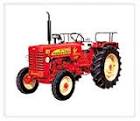
Agriculture remains the mainstay of India, even when it doesn’t contribute sufficiently to the Indian GDP. Around 65% of Indian population depends directly on agriculture when it only accounts for 22% of the GDP. But Indian agriculture now needs to undergo a paradigm shift to feed double the mouths since the last green revolution. Further, farm mechanization, agri-inputs, cropping patterns and seed varieties need to be refurbished to suit new agri challenges such as continuous soil erosion, depleting ground water levels, alarming farm labour situation and sparse market linkages. And this calls for a major overhaul on the production side of agriculture. To tackle issues such as, increase in farm produce and better farm economics, which brings us to the moot point of need based farm mechanization.

ISSUES AT HAND

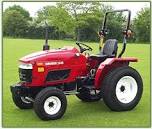
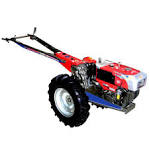
India which is 17% of the world population. But it still cultivates with either the draught animals, which are inefficient and expensive to maintain or by high horsepower tractors owned by large farmers, which are few in numbers. So the daunting question is, when more than 80 percent of the Indian farmers are small and marginal why they are not in a position to purchase tractors below hp (horsepower) 22. Is it because of the government policies that are blocking the smooth transition from draught animals to small tractors and power tillers? and what is more baffling is:

  • Small farmers don’t have a requirement of large tractors. With the amount of land they hold a tractor of 25 hp engine or more is not needed in small and medium farm size. Especially, when statistics for power availability for various agricultural operations, which is an indicator of mechanization has increased from 0.3 kilowatt per hectare in 1971-72 to 1.4 kilowatt per hectare in 2003-04.
  • Even though government puts in subsidies on tractors, farmers don’t get their free will to choose, as large manufacturers step-in to sell their own brands at the behest of Government. So if we are talking of free markets why this nudging?
578

HISTORICAL PERSPECTIVE

Tractors in India were imported initially in 1960s mainly from the US and European countries, prime being the erstwhile Soviet Union. Since these countries historically had large holdings, these machines too were manufactured in the range of medium and high horsepower to suit their own land holding sizes.

Thus, started the of lasting culture of medium and high horsepower tractors in India. Even when our land holding size way back in 1960s was far less than the European and American standards and in the range of around 3 hectares.

This as a beginning was understandable but somewhere down the line a course correction was required, which didn’t happen. Presumably, because the entire technology was new, and we were devoid of the basic sense of change or even the skill to adapt. Small was not beautiful then. A similar trend we had in the auto sector where in you had those bulky fuel guzzlers. But then the auto industry caught the imagination of their customers which farm mechanization industry didn’t.

IMPORT AND MANUFACTURING HISTORY

In the year 1961-62, first time around 880 tractors were assembled from kits purchased from British and German firms. Imports stopped in 1977 but industry’s extended honeymoon with these manufacturers continued as hand holding was required to build sufficient production bandwidth. Although, India got independence in 1947 and the socialist leaning government’s five-year plans of 1950s and 1960s aggressively promoted farm mechanizations, our production of tractors was sluggish. But by late 1980s tractor production moved upwards to 140,000 units per year, yet the prevalence rate was just 2 tractors per 1,000 farmers.

ECONOMIC REFORMS AND FAO PERSPECTIVE

Post economic reforms in 1991, with the steady pace of change, the production of tractors increased to 270,000 units per annum. And in early 2000, India overtook the US as the world’s largest producer of four-wheel tractors. FAO estimated in 1999. Of the total agricultural area in India, less than 50% was under mechanized land preparation. Thereby, indicating large opportunities still existed, and projected this in favour of small machines. Steadily growing, India in 2013 produced 619,000 tractors accounting for 29% of world’s production. And, India currently has 16 domestic and 4 multinational corporations manufacturing tractors.

SOLITARY EFFORT OF 20 HP– Swaraj story:

India had approached the erstwhile Soviet Union in the mid 1960s for R&D and manufacturing support to develop a 20 hp tractor, but they refused. This project was later taken up by Central Mechanical Engineering Research Institute (CMERI) under the council of Scientific and Industrial Research.

CMERI put together a team. They started by studying tractors of other makes that were in the market. Their first prototype was ready in May 1967 but when it was taken for trial it collapsed. Learning from the failure, they developed a second prototype, testing of which was done in October 1968, which proved satisfactory. Independent field trials later at other institutes were also successful. The tractor was called Swaraj. This Company was later promoted by Punjab State Industrial Corporation and turned out to be a blue chip company.

Besides Swaraj no other company tried to delve into 20 hp category for a long time. Until the solo effort was followed by a Delhi based company SAS Motors Ltd that has launched tractor in 15-24 hp category.

LAND HOLDING VS TRACTOR HORSEPOWER MISMATCH?

In 1960s the average land holding size was around 3 hectares (7.4 acres) and in 2010-11 it declined to 1.15ha (at an average level), which is below 3 acres on a more prevalent terminology. And, with these vital statistics, both growth and technological up gradation should have been in the low horse-power segment or in the power tiller segment. But that is clearly not the case. On the contrary both growth and technological up-gradation has been in the medium and high horsepower tractors, apparently because of foreign influence. Where, more likely the low horsepower range of tractors were discouraged because of low margins and high overheads of large manufacturing corporations and also the fatigue and capital cost of introducing a new genre.

For small and marginal farmers, low priced, small tractors of 15-24 hp was required. This generic need was highlighted as early as 1970 when (NCA )National Commission on Agriculture was set up.

At the turn of the century, India had around 2.67 million tractors, which was more than NCA projections. But category wise the number were skewed. As around 1.47 million tractors were in the 31-40 hp category, 0.65 million were in > 40 hp category and 0.68 million were in < 30 hp category. And only a part of 0.68 million tractors below 30 hp comprised of small tractors for which NCA had projected a figure of over 2 million. This large gap is surprising and reveals the callous approach of the government towards small farmers. One can perhaps safely derive that non availability made them go for higher hp tractors thereby spoiling their farm economics. And the quantity of power tillers sold was merely seventy thousand.

But then who was responsible for throwing NCA’s calculation, off balance? Well, no one can pin pointedly say who. But yes, to a certain extent the agricultural community as a whole, together with the Indian tractor industry, can be questioned on this. Instead of small tractors they came up with medium and heavy tractors, which benefited only the large farmers, and as a result tractors got concentrated only in a few states which benefitted from the green revolution such as Punjab, Haryana and parts of Uttar Pradesh (See table: some benefit)

Some benefit
Tractor sales over the last five years
States Tractors sales during last five years Area under cultivation
(‘000 hectares)
UP 290,513 17,986
MP 144,049 22,111
Punjab 121,903 4,033
Rajasthan 95,450 20,971
Haryana 89,346 3,711
Gujarat 76,439 10,293
Bihar 72,467 10,743
AP 68,994 14,461
Maharashtra 66,876 20,925
Karnataka 43,163 12,322
Tamil Nadu 38,852 7,474
Orissa 14,473 5,296
Other states 65,210 15,181
Total 1,188,735 165,507
Sources: Economic Survey 2003-04 & Indian At A Glance 2004

We all agree mechanization is an unavoidable farming tool. For, productivity has to increase along with cost and economics, and that alone is sustainable in the long run. But looking at the perfunctory approach of the government, the big question would be whether farmers should go in for small tractors or still rely of animal power. It may therefore not be out of place to mention relevant statistics of animal power.

STATISTICS ON ANIMAL POWER

– India’s 83 million draught animals carry more than 5 times the freight and four times the passenger traffic carried by railways, in terms of originating traffic.

– Draught animal power contributes 30000 megawatt of power.

– It saves 24 million tonnes of diesel per year, worth more than Rs 33,000 crore.

– Draught animals cultivate about 65% of India’s total cultivable land area

– The present value of draught animals (Rs 50,000-1,00,000/pair) is Rs 2,07,500 crore even on a very conservative estimate.

– It would take 8.3 million tractors to replace draught animal power. This would cost Rs 32,490 crore; so then why is this segment not growing?

– Draught animals provide dung worth Rs 5,000 crore annually. Five million tonnes of firewood will be needed to substitute this.

The crisis around the farmer’s traditional tiller- the draught animal is continuously growing. Even though farmers still rely on draught animals their importance is being undermined by tractors.

According to an NCA report, man can provide a power equivalent to 0.07 hp, a woman 0.05 hp, a bullock/buffalo 0.40 hp, a camel 1 hp and a tractor at least 14 hp. In 1951, the farm power available was just 0.25 kilowatt per ha (KW/ha) of which 97 percent came from draught animals. This has now gone up by almost 6 times to 1.40 KW/ha and the corresponding increase in food grain by four times, and so an optimum, farm mechanization, is the need of the hour.

Farm mechanization is also important from the aspect that 65% of our cultivable area consists of dry farming or rain fed farming where the window of soil bed preparation is very small and if we are unable to do seedbed preparation and sowing in a timely manner, given the receding soil moisture, yields will drastically reduce.

However, 70% percent farmers still use draught animals where they can easily be upgraded to small farm mechanization tools. Such as small hp tractors or power tillers, but for this to happen; government policies should start focusing on the needs of the small farmer.

COMPARISON BETWEEN DRAUGHT ANIMALS AND TRACTOR

Draught animals and tractors are complementary sources of power on Indian farms, and will continue like that for many more years, to meet the ever burgeoning demand of power and of increased production and productivity. A report of 1987 says that a 35 hp tractor can prepare a seed-bed and sow 0.2 (ha) in one hour at Rs 270-300 per ha. Bullocks for the same operation require the entire day at Rs 300 per ha. The problem is draught animals have to be fed throughout the year but their optimal use is restricted to around three months in a year.

INDIAN AGRI DISCONNECT

  • Tractors in India are out of reach for the majority of the farmers. The cheapest being Rs 1.8 lakh almost as much as a new car.
  • Barely 2% of the 115 million farmers own a tractor according to the 1995-96 agriculture, census. Yet they cultivate almost 1/3rd of the countries arable land. This itself highlights the efficient toughness of farm mechanization.
  • Most farmers possessing tractors are rich and own large land holdings. Rate of ploughing is Rs 200-250/hr or Rs 2-2500/hectare
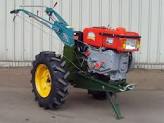
  • But small farmers are unable to reap such benefits. For them a low priced, small tractor of 15-24 HP would be ideal. This need was recognized as early as 1970 when the National Commission on Agriculture (NCA) was set up. After a 5 year study, NCA submitted a long report in 1976, which also recommended the type and quantity of tractors India should have by 2000: 2.08 million tractors and power tillers (a farm machine, with two wheels, to till the soil) below 15HP, 0.12 million medium tractors of 35 HP & 80,000 65 HP tractors, which taken together would total 2.28 million
  • This policy argued that 2.08 million tractors and power tillers below 15 hp were needed for small and medium farmers. Besides, they are also considered more suitable for paddy cultivation — the country’s dominant food grain crop — than medium (25-40 hp) and heavy (above 40 hp) tractors.

ALL TIME PANACEA FOR SULKING INDIAN AGRICULTURE IS FARM MECHANIZATION OF THE RIGHT KIND:

  • To graduate from animal tilling to mechanized tilling and that to by small tractors, power tillers and other economical high precision equipments commensurate with land holding size of small and medium farmers, keeping in mind their farm economics.
  • An option less farmer has to buy a 35 hp category tractor that costs around 5 lacs with bank loan at a high rate of interest, even if he doesn’t require this product. This should be substituted by small tractors or even power tillers.
  • GOI provides a subsidy of 25% limited up to 30,000 tractors. Wherein also, the farmer is cajoled to buy certain brands and this needs to stop forthwith, as user of the product should alone be the decider by any diktat of consumerism.
  • Tractors available in the range of 25-40 hp use advance western technologies, which may not be required for small holdings and this makes the product expensive. In fact what is needed is a below 25 hp tractor or a power tiller that is gender friendly and useful for ‘nuclear farming’ just as a nuclear family. The cost of such tractors will bring down the farmers cost by 50%. As against his investments and maintenance in a pair of bullocks, which requires to be fed and taken care of even when it is not generating any revenue, and also serves best only for a time span of 5-6 years.
  • Farmers need to come out of the clutches of debt to make agriculture more exploring, exciting, remunerative, and even status oriented. This can happen only if simple and cheap technologies are used in conjunction and proportion to their earnings. According to 59th survey by NSSO (January-December 2003) out of 89.35 million farmer households, 43.42 million (48.6%) were reported to be in debt. But in a similar survey in 1991 only showed 26% were in debt.

*****


Article: Providing gender friendly, low capital and operating cost, farm equipments to our Farm Labour for sustained livelihood and economic freedom.

Letter for #PMO

  • Majority of the Indian farm labour is landless and almost 50% of them are females.
  • For most of them to make two ends meet, is a huge task. Especially women who are paid less basis their reduced output as compared to males; and so there is need to provide them with equipments and tools that can increase their output and thereby multiply Indian labour output in totality.
  • Most women labourers even have children who play around their work areas. With mechanization women will finish their work in a shorter duration of time and will have more time for their children.
  • A major portion of the farm labour, sustains under tough conditions, below poverty line budgets, and earn their living by doing routine farm operations such as land preparation, sowing, spraying, transplanting, weeding, harvesting etc. Most of these operations are done manually where GOI can make a fruitful intervention by providing cheap, economical yet effective farm equipments.

SUGGESTIONS

  • Since most farm operations cited above are hitherto performed manually we would like to suggest that these be done by mechanised farm equipments to increase output, make it gender friendly and decimate seasonality factor.
  • Indian agriculture census 2001 states, the operational land holding has increased from 129.22 million from 2005-06 to 138.35 million in 2011 showing an increase of 7.06%, but the average operated size of holding which was 1.23 ha in 2006-06 has declined to 1.15 ha in 2010-11 at an average all India level, which is below 3 acres. The small and marginal <2 ha operated area has gone up from 41.14% to 44.58% while both semi medium, medium and large holding have come down. And the average operated size of holding in < 2 ha class has gone up from 83.29% to 85.01%. This should ring alarm bells.
  • The above statistics presents a scary picture, both for the farmer and the farm labour.
  • This necessitates a paradigm shift in the way agriculture is done. First the concept of Indian farming, like a ‘nuclear’ family should shift to ‘nuclear’ farming, and the manual farm labour needs to be converted into mechanised farm labour where both male and female could do equal amount of work thereby raising the total Indian farm labour output.

HOW DO WE ACHIEVE COST EFFECTIVE, GENDER FRIENDLY, MECHANISED FARM LABOUR?

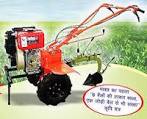
  • GOI can achieve the target of mechanised farm labour by introducing the new concept, compact, gender friendly, light weight, multi-purpose, self-propelled, new age- multi functional power weeders in the farm.
  • These multifunctional self propelled weeders can be operated by even females and can do several operations in the entire crop cycle such as tilling, levelling, seed drill operations, spraying of pesticides and weedicides, mechanised weeding, irrigation and water pump operations, harvesting such as potato digger, inter-cultivation and ridger operations.
  • It is also pocket friendly.
  • Mechanised weeder is environment friendly and also helps in the fight against cancer: Since manual weeding has become extremely expensive due to non-availability of farm labour, that has moved to greener pastures; farmers use excessive weedicides to kill weeds, which has spoilt the soil strata and ground water that is becoming prone to cancer. With mass utilization of mechanised weeders we can avoid usage of chemical weedicide thereby helping in fight against cancer.
  • Also we could promote and incentivise e-rickshaws for farm labour during off season

WAY FORWARD

  • GOI should incentivise purchase of such modern multi-purpose self propelled equipments through Ministry of Agriculture, Ministry of Rural Development and Ministry of women welfare.

*****


article: SHOULD TEXT BOOKS BE AVAILABLE, BOTH IN PRINT AND E-BOOK FORMAT FOR SCHOOL CHILDREN?

Copyright@shravancharitymission


134

SHOULD TEXT BOOKS BE AVAILABLE, BOTH IN PRINT AND E-BOOK FORMAT FOR SCHOOL CHILDREN?


    Every day when I go for my morning walk. I see innumerable school children and some very young, carrying their heavy rucksacks filled with books up to a bursting point. Many out of them are even unable to walk in the normal manner because of the weight. Some even walk sluggishly and at times are helped by their nannies or their young parents or even their old grand parents. To, be on time for their school bus or any other mode of conveyance that they take. And I am more than sure this must be causing a great amount of unspoken dissonance in these children. Considering, the matrix and size of India. I consider this as an important issue to be looked at seriously. When it affects 52% of our population. The hypothesis finds more ground when we dig into some relevant statistics as given below.

526

MIX OF PRIMARY AND SECONDARY EDUCATION

    India has approximately 113.8 million children attending primary school and another 88.5 million attending secondary. While PE (Primary Education) covers an age group of 5 to 14 years, SE (Secondary Education) covers children in the age group of 14-18 years. PE is up to class 8 and SE spills over to class 12 and beyond that is the HE (Higher Education)

    Now, if we were to analyse the demographic structure of education in India in the table below, we would find:

DEMOGRAPHIC STRUCTURE IN EDUCATION 2009  
AGE GROUP EDUCATION GROUP POPULATION IN CRORE PERCENTAGE OF POPULATION
0-3   7.5 6.50%
4-6 Pre Primary 7.9 6.80%
7-11 Primary (I-V) 14.4 12.40%
12-14 Upper Primary (VI-VIII) 8.5 7.30%
15-18 Secondary (IX-XI) 9.7 8.30%
19-24 Higher (XII+) 12.6 10.90%
  Population 60.6 52.30%

    The population in the age group between 4 to 18 years, which comprises of Pre-Primary to Secondary level, is around 40 crore and around 35% of our total population; which is sizeable. So, at no cost can we condone their issues, especially when they are not adults and cannot speak for themselves. The existing state of play, where they use printed text books may not be that convenient, both for them and their families, but then they have no choice.

SOME MAJOR DISADVANTAGES OF PRINT TEXT BOOKS

  • Bulky and heavy to carry and the weight only increases as you go up, the classes.
  • Often these books are out of print especially when the text is modified or when a new session starts and are even sold at a premium.
  • Print books are subject to wear and tear.
  • Expensive as compared to an e-book, and with the rise in paper, print, labour and transportation costs the prices will only increase.
  • May not be readily available at multiple locations.
  • In many areas we don’t have regular electricity supply or have long power cuts, when you can’t read these books and this is a great disadvantage, during times of examinations and even routine study. Whereas, an e-book can be read in the dark.

INDIAN PRINT TEXT BOOK MARKET

    If we take the Indian text book market it is at a level of $ 1.2 billion, with an addition of $510 million of supplementary books. However, private publishers have access to just 60% of the market. Given the monopoly of state boards and NCERT in 95% of the school text books. And a large chunk of schools are vernacular with local languages; and often out of print.

BENEFITS OF E-BOOKS

    If Finland can say good bye to ‘cursive handwriting’ by 2016, why can’t India move towards e-books. When the advantages are so many,

  • Except for a onetime cost of purchasing the e-reader the recurring costs of purchasing text books will reduce substantially. Government can incentivise purchase of e-readers.
  • It will always be available, both in India and globally. And never out of print.
  • You can even read in the dark.
  • Very light to carry and not bulky.
  • Will give even a rural child a sense of advancement in life.
  • One book for many books: e-reader.

WAY FORWARD

     The government should introduce e-book as a parallel option for children. To assess the ground reality the project could be piloted in a particular district or a state. It could even start with a particular subject. E-books could be readied out of print books and loaded in to simple e-readers, with white paper technology. The project can be launched in identified schools where it could be monitored by an IT instructor of the school along with teachers. And I am sure with this even our rural child will go global.

*

By Kamlesh Tripathi

*

                                                   https://kamleshsujata.wordpress.com

*

Share if you like it

*

Shravan Charity Mission is an NGO that works for poor children suffering from life threatening diseases. Should you wish to donate for the cause the bank details are given below:

NAME OF ACCOUNT: SHRAVAN CHARITY MISSION

Account no: 680510110004635 (BANK OF INDIA)

IFSC code: BKID0006805

*

Our publications

GLOOM BEHIND THE SMILE

ONE TO TANGO … RIA’S ODYSSEY

AADAB LUCKNOW … FOND MEMORIES

REFRACTIONS … FROM THE PRISM OF GOD

(CAN BE BOUGHT FROM ON LINE BOOK STORES OR WRITE TO US FOR COPIES)

*****


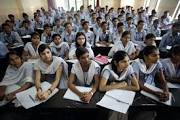
ARTICLE: THE HYPE OF #LITERACY AND DILEMMA OF #EMPLOYABILITY

Copyright@shravancharitymission

961

DEFINITION OF LITERACY

    Literacy, as defined in Census operations, is the ability to read and write with understanding in any language. A person who can merely read but cannot write is not classified as literate. Any formal education or minimum educational standard is not necessarily to be considered literate.

    (UNESCO) has drafted a definition of literacy which is, “the ability to identify, understand, interpret, create, communicate, compute and use printed and written materials associated with varying contexts. Literacy involves a continuum of learning in enabling individuals to achieve their goals, to develop their knowledge and potential, and to participate fully in their community and wider society.”

235

    The National Literacy Mission defines literacy as “acquiring the skills of reading, writing and arithmetic and the ability to apply them to one’s day-to-day life. The achievement of functional literacy implies (i) self-reliance in 3 R’s-reading, writing and arithmetic, (ii) awareness of the causes of deprivation and the ability to move towards amelioration of their condition by participating in the process of development, (iii) acquiring skills to improve economic status and general well being, and (iv) imbibing values such as national integration, conservation of environment, women’s equality, observance of small family norms.”

    According to the latest report released on 31 March 2011 the literacy rate of India has increased to 74%. This means a decadal growth of around 10 %.

BUT CAN MERE LITERACY GUARANTEE EMPLOYMENT?

Is the moot point, as literacy only provides general ability to read, write and a sense of better awareness, but jobs, require deeper and varied skills that need to be created. In the recent Times Ascent edition of 27th November, I read; in the just concluded PAN-IIM World Management Conference held at IIM-KOZHIKODE our HRD Minister Smriti Zubin Irani harping on some appreciative facts about India as a routine lullaby.

    That India is one of the world’s largest democracies and according to some studies 57% of our population is under 30. Our average age is expected to be less than China and the US by 2050. This means more workers, or in other words, a demographic dividend. India has a large pool of workforce that is predominantly English-speaking. 4.4 million Graduates join the Indian job market annually, so there is no shortage of skilled workers in our country. So be it.

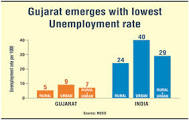
    But then do we have appropriate jobs for all as she has not spoken about those unpleasant figures of unemployment. ILO indicates sluggishness in the job market over the last two years where jobless rate could be around 3.8% this year which sounds optimistic. On a more historic note the unemployment rate has been hovering around 6-8 % on an average over the last decade or so. So, can one say, each time when literacy levels have gone up unemployment hasn’t come down?

7

    This necessitates, we should take up skill building on fast track. Which horrifyingly comes up in India at a later stage of our educational system. And considering, the alarming school dropout rate of 40% with more girls facing the brunt, this should start at secondary school level.

CAUSE OF SYSTEMIC WORRY

    It is worrying to see, important ministers making isolated parroted statements in coveted milieus like IIMs and IITs, where even otherwise everything is hunky dory. And it goes without saying the stark reality continues to remain as it is and nothing much has changed on the ground. So the big question is how will the additional annual workforce of 4.4 million per annum be adjusted in the job market, and what is the road map for creating such jobs each year. Time has come when at least 74% of the literate Indians would want to know end-to-end on how these jobs would be created, before one brags about the English speaking workforce of 4.4 million and the young India. The central point therefore is the job-creators and the workforce creators of India need to meet on one platform to align, which is still missing.

    In any case most IIT and IIM graduates or post graduates won’t remain unemployed, rather would be gainfully employed. But what is more worrying is the lower end of the pyramid that will bear the brunt of unemployment.

    Considering the present unemployment rate. HRD minister would have done well by initiating a dialogue with those states and departments where huge vacancies are lying unfilled, especially teachers and police constables. The low hanging fruits. Which I guess is also the baby of HRD ministry. Needful to mention teacher appointments in some states have been subjected to scams, and appointments cancelled subsequently.

INDUSTRY INTERFACE

    One of the biggest sources of employment in any country, with India being no exception is through business and industries. Where, according to the World Bank we are still at an agonizing 142 in the ease of doing business out of 189 countries. And time taken for registration of a business is currently at 27 days that needs to be cut down to one day, as in Canada and New Zealand.

    Government intends to go online on approvals, for over 200 state and central permits by April next year which is laudable. Currently 81 state level clearances and another 133 at the central level are being put on line and out of these more than 50 relate to railway ministry, alone. But the big question remains; whether we can set up industries at a pace matching 4.4 million jobs a year, which will only increase by leaps and bounds. The answer as of now is no and that necessitates searching for other alternatives. And so; where is the MEA proposal (Ministry of External Affairs) if we were to export our workforce to various aging countries about which our Prime Minister talks so often? And which new countries have been identified where our young English speaking workforce can go and work safely with proper work permits and visas, in a safe manner. I guess, the two distinguished ladies Sushma Swaraj and Smriti Irani should meet on this agenda and at least identify the countries, and if for some reason it happens to be Germany, Smriti should not think of replacing German by Sanskrit.

THE ROUTE AHEAD

    For brand India, literacy to full employment will be a long and arduous walk, considering its size and scale. Where, premier institutions such as IIT and IIM should also brainstorm to show the way out. And we will have to figure out other avenues also, where I guess PM Narendra Modi’s team needs to come together on one platform.

*

By Kamlesh Tripathi

*

Share if you like it

*

Shravan Charity Mission is an NGO that works for poor children suffering from life threatening diseases. Should you wish to donate for the cause the bank details are given below:

NAME OF ACCOUNT: SHRAVAN CHARITY MISSION

Account no: 680510110004635 (BANK OF INDIA)

IFSC code: BKID0006805

*

Our publications

GLOOM BEHIND THE SMILE

ONE TO TANGO … RIA’S ODYSSEY

AADAB LUCKNOW … FOND MEMORIES

REFRACTIONS … FROM THE PRISM OF GOD

(CAN BE BOUGHT FROM ON LINE BOOK STORES OR WRITE TO US FOR COPIES)

*****