Tag Archives: kamlesh tripathi

SHORT STORY: BIRBAL AND THE CABBAGE

Copyright@shravancharitymission

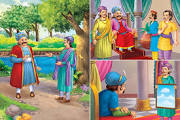
One day Akbar and Birbal were riding through the countryside when they happened to pass by a field where cabbage was being grown.

    “Cabbage is such a delight. I love cabbage!” explained Akbar.

    “Cabbage is the king of all vegetables my lord!” said Birbal.

    A few weeks later they were riding past the cabbage field again.

    This time however, the emperor made a face when he saw the vegetables. “I used to love cabbage but now I have no taste for it.” said Akbar.

    “Cabbage indeed is a tasteless vegetable huzoor.” agreed Birbal.

    The emperor was astonished at this remark of Birbal.

    “But Birbal, last time you said it was the king of vegetables!” pointed Akbar.

    “I did,” admitted Birbal. “But I am your servant Your Majesty, and not of cabbage.”

By Kamlesh Tripathi

*

https://kamleshsujata.wordpress.com

*

Share it if you like it

*

Shravan Charity Mission is an NGO that works for poor children suffering from life threatening diseases especially cancer. Our posts are meant for our readers that includes both children and adults and it has a huge variety in terms of content. We also accept donations for our mission. Should you wish to donate for the cause. The bank details are given below:

NAME OF ACCOUNT: SHRAVAN CHARITY MISSION

Account no: 680510110004635 (BANK OF INDIA)

IFSC code: BKID0006805

*

Our publications

GLOOM BEHIND THE SMILE

(The book is about a young cancer patient. Now archived in 7 prestigious libraries of the US, including, Harvard University and Library of Congress. It can also be accessed in MIT through Worldcat.org. Besides, it is also available for reading in Libraries and archives of Canada and Cancer Aid and Research Foundation Mumbai)  

ONE TO TANGO … RIA’S ODYSSEY

(Is a book on ‘singlehood’ about a Delhi girl now archived in Connemara Library, Chennai and Delhi Public Library, GOI, Ministry of Culture, Delhi)

AADAB LUCKNOW … FOND MEMORIES

(Is a fiction written around the great city of Nawabs—Lucknow. It describes Lucknow in great detail and also talks about its Hindu-Muslim amity. That happens to be its undying characteristic. The book was launched in Lucknow International Literary Festival of 2014)

REFRACTIONS … FROM THE PRISM OF GOD

(Co-published by Cankids–Kidscan, a pan India NGO and Shravan Charity Mission, that works for Child cancer in India. The book is endorsed by Ms Preetha Reddy, MD Apollo Hospitals Group. It was launched in Lucknow International Literary Festival 2016)

TYPICAL TALE OF AN INDIAN SALESMAN

(Is a story of an Indian salesman who is, humbly qualified. Yet he fights his ways through unceasing uncertainties to reach the top. A good read not only for salesmen. The book was launched on 10th February, 2018 in Gorakhpur Lit-Fest. Now available in Amazon, Flipkart and Onlinegatha)

RHYTHM … in poems

(Published in January 2019. The book contains 50 poems. The poems describe our day to day life. The book is available in Amazon, Flipkart and Onlinegatha)

(ALL THE ABOVE TITLES ARE AVAILABLE FOR SALE IN AMAZON, FLIPKART AND OTHER ONLINE STORES OR YOU COULD EVEN WRITE TO US FOR A COPY)

*****


SHORT STORY: BIRBAL’S KICHADI

Copyright@shravancharitymission

    Once on a cold winter day, Akbar and Birbal were passing through a lake. Akbar stopped for a moment and put his finger into the freezing water and immediately took it out, saying, “I don’t think anyone can sustain a night in this cold water”. Birbal, took that, as a challenge, and said, that he would find someone who could do that. Akbar promised a sum of 1000 gold coins, to whosoever, who could spend a night, standing in the cold water of the lake. Soon, Birbal found a poor man who agreed to undertake the challenge for the 1000 gold coins. Guarded by two royal guards, the poor man spent the entire night standing in the freezing water.

    In the morning, the poor man was taken to court for the reward. Upon being asked by the king how he could stand in the freezing water, the man replied, “My lord, I kept looking at a lamp that was burning at a distance, and spent my entire night looking at it”. On learning this, the emperor said, “This man is not worthy of the reward as he could manage to stand in the lake only because he was getting warmth from the lamp”. The poor man felt doomed and heart-broken, and he reached Birbal for help. Birbal didn’t go to the court the next day. Akbar visited Birbal to find the reason. To his amusement, the king found Birbal sitting beside the fire with a pot hanging almost 6 feet above it. On being enquired, Birbal said, “I am cooking khichadi, my lord”. Akbar started laughing and said that is impossible. Birbal said, “It is possible My Lord—just as the poor man who can stay warm by simply looking at the lamp burning at a distance, I can cook this khichadi in the same manner.” Akbar understood Birbal’s point, and rewarded the poor man for the challenge.

By Kamlesh Tripathi

*

https://kamleshsujata.wordpress.com

*

Share it if you like it

*

Shravan Charity Mission is an NGO that works for poor children suffering from life threatening diseases especially cancer. Our posts are meant for our readers that includes both children and adults and it has a huge variety in terms of content. We also accept donations for our mission. Should you wish to donate for the cause. The bank details are given below:

NAME OF ACCOUNT: SHRAVAN CHARITY MISSION

Account no: 680510110004635 (BANK OF INDIA)

IFSC code: BKID0006805

*

Our publications

GLOOM BEHIND THE SMILE

(The book is about a young cancer patient. Now archived in 7 prestigious libraries of the US, including, Harvard University and Library of Congress. It can also be accessed in MIT through Worldcat.org. Besides, it is also available for reading in Libraries and archives of Canada and Cancer Aid and Research Foundation Mumbai)  

ONE TO TANGO … RIA’S ODYSSEY

(Is a book on ‘singlehood’ about a Delhi girl now archived in Connemara Library, Chennai and Delhi Public Library, GOI, Ministry of Culture, Delhi)

AADAB LUCKNOW … FOND MEMORIES

(Is a fiction written around the great city of Nawabs—Lucknow. It describes Lucknow in great detail and also talks about its Hindu-Muslim amity. That happens to be its undying characteristic. The book was launched in Lucknow International Literary Festival of 2014)

REFRACTIONS … FROM THE PRISM OF GOD

(Co-published by Cankids–Kidscan, a pan India NGO and Shravan Charity Mission, that works for Child cancer in India. The book is endorsed by Ms Preetha Reddy, MD Apollo Hospitals Group. It was launched in Lucknow International Literary Festival 2016)

TYPICAL TALE OF AN INDIAN SALESMAN

(Is a story of an Indian salesman who is, humbly qualified. Yet he fights his ways through unceasing uncertainties to reach the top. A good read not only for salesmen. The book was launched on 10th February, 2018 in Gorakhpur Lit-Fest. Now available in Amazon, Flipkart and Onlinegatha)

RHYTHM … in poems

(Published in January 2019. The book contains 50 poems. The poems describe our day to day life. The book is available in Amazon, Flipkart and Onlinegatha)

(ALL THE ABOVE TITLES ARE AVAILABLE FOR SALE IN AMAZON, FLIPKART AND OTHER ONLINE STORES OR YOU COULD EVEN WRITE TO US FOR A COPY)

*****


BOOK REVIEW: TWENTY THOUSAND LEAGUES UNDER THE SEA– by Jules Verne

Copyright@shravancharitymission

Khidki (Window)

–Read India Initiative—

This is only an attempt to create interest in reading. We may not get the time to read all the books in our lifetime. But such reviews, talk and synopsis will at least convey what the book is all about.

    ‘Twenty Thousand Leagues Under the Sea’ is a classic science fiction, adventure novel, written in 1870 by French writer Jules Verne. The novel was first translated into English in the year 1873 by Reverend Lewis Page Mercier. 

    The book was highly acclaimed when it was published and remains so. It is regarded as one of the premier adventure novels and one of Verne’s greatest works, along with ‘Around the World in Eighty Days’ and ‘Journey to the Center of the Earth.’

    In the book the description and detailing of Nemo’s ship—the Nautilus, is considered to be way ahead of its time, as it accurately describes innumerable features of a modern submarine, which at the time of writing this book were very primitive vessels.

    The title ‘twenty thousand leagues’ refers to the distance travelled while under the sea. 20,000 leagues (or 80,000 km) is nearly twice the circumference of the Earth. The greatest depth mentioned in the book is four leagues. The book uses metric leagues, which are four kilometres each.

    During the year 1866, ships of several nations spot a mysterious sea monster, which some suggest to be a giant narwhal. (A narwhal, or narwhale, is a medium sized, toothed whale that possesses a large ‘tusk’ from a protruding canine tooth). The United States government assembles an expedition in New York City to find and destroy the monster. Professor Pierre Aronnax, a French marine biologist and narrator of the story, who happens to be in New York at the time, receives a last-minute invitation to join the expedition, which he accepts. Canadian whaler and master harpoonist Ned Land and Aronnax’s faithful servant Conseil are also brought aboard.

    The expedition departs from 34th Street Pier in Manhattan aboard the United States Navy frigate Abraham Lincoln and travels south around Cape Horn into the Pacific Ocean. After a long search, the ship finds the monster and then attacks the beast, which damages the ship’s rudder. The three protagonists are then hurled into the water when they get hold of the “hideout” of the creature, which they find, to their surprise, to be a submarine way far ahead of its era. They are forced to wait on the back of the submarine boat until morning when they are captured and brought inside the vessel, where they meet its enigmatic creator and commander, Captain Nemo.

    The rest of the story follows the adventures of the protagonists aboard the creature—the submarine, the Nautiluswhich was built in secrecy and now roams the seas free from any land-based government. Captain Nemo’s motivation is implied to be both a scientific thirst for knowledge and a desire for revenge upon (and self-imposed exile from) civilzation. Nemo explains that his submarine is electrically powered and can perform advanced marine biology research. He also tells his new passengers that although he appreciates conversing with such an expert as Aronnax, maintaining the secrecy of his existence requires never letting them leave. Aronnax and Conseil are enthralled by the undersea adventures, but Ned Land the harpoonist can only think of escape.

    They visit many places under the ocean, some real-world and others fictional. The travellers witness the real corals of the Red Sea, the wrecks of the battle of Vigo Bay, the Antarctic ice shelves, the Transatlantic telegraph cable and the legendary submerged land of Atlantis. The travelers also use diving suits to hunt sharks and other marine life with air-guns and have an underwater funeral for a crew member who died when an accident occurred under mysterious conditions inside the Nautilus. When the Nautilus returns to the Atlantic Ocean, a pack of “poulpes” (usually translated as a giant squid, although in French “poulpe” means “octopus”) attack the vessel and kill a crew member.

    Throughout the story Captain Nemo is suggested to have exiled himself from the world after an encounter with the forces that occupied his country that had devastating effects on his family. Not long after the incident of the poulpes, Nemo suddenly changes his behaviour toward Aronnax, avoiding him. Aronnax no longer feels the same and begins to sympathize with Ned Land. Near the end of the book, the Nautilus is attacked by a warship of some nation that had made Nemo suffer.

    Filled with hatred and revenge, Nemo ignores Aronnax’s pleas for mercy. Nemo—nicknamed “angel of hatred” by Aronnax—destroys the ship, ramming it just below the waterline, and consequently sinking it into the bottom of the sea, much to Aronnax’s horror, as he watches the ship plunge into the abyss. Nemo kneels before the pictures of his wife and children and is plunged into deep depression after this encounter. For several days after this, the situation of protagonists’ keeps changing.

    No one seems to be on board any longer and the Nautilus moves about randomly. Ned Land is even more depressed, Conseil fears for Ned’s life, and Aronnax, horrified at what Nemo had done to the ship, can no longer stand the situation either. One evening, Ned Land announces an opportunity to escape. Although Aronnax wants to leave Nemo, whom he now holds in horror, he still wishes to see him for one last time. But he knows that Nemo would never let him escape, so he avoids meeting him.

    Before the escape, however, he sees him one last time (although secretly), and hears him say, “Almighty God! Enough! Enough!” Aronnax immediately goes to his companions and they are ready to escape. But while they loosen the dinghy, they discover that Nautilus has wandered into the Moskenstraumen, a whirlpool more commonly known as the “Mael-strom”. They finally manage to escape and find refuge on a nearby island off the coast of Norway, but the fate of the Nautilus is unknown.

    It’s an excellent book to read. Even e-book is available quite cheap. So pick it up. The description and detailing especially done 150 years back is par-excellence. The author indeed was a genious.

    Novels are all about imagination. And I salute his imagination. I would give this novel eight out of ten.

By Kamlesh Tripathi

*

https://kamleshsujata.wordpress.com

*

Share it if you like it

*

Shravan Charity Mission is an NGO that works for poor children suffering from life threatening diseases especially cancer. Our posts are meant for our readers that includes both children and adults and it has a huge variety in terms of content. We also accept donations for our mission. Should you wish to donate for the cause. The bank details are given below:

NAME OF ACCOUNT: SHRAVAN CHARITY MISSION

Account no: 680510110004635 (BANK OF INDIA)

IFSC code: BKID0006805

*

Our publications

GLOOM BEHIND THE SMILE

(The book is about a young cancer patient. Now archived in 7 prestigious libraries of the US, including, Harvard University and Library of Congress. It can also be accessed in MIT through Worldcat.org. Besides, it is also available for reading in Libraries and archives of Canada and Cancer Aid and Research Foundation Mumbai)  

ONE TO TANGO … RIA’S ODYSSEY

(Is a book on ‘singlehood’ about a Delhi girl now archived in Connemara Library, Chennai and Delhi Public Library, GOI, Ministry of Culture, Delhi)

AADAB LUCKNOW … FOND MEMORIES

(Is a fiction written around the great city of Nawabs—Lucknow. It describes Lucknow in great detail and also talks about its Hindu-Muslim amity. That happens to be its undying characteristic. The book was launched in Lucknow International Literary Festival of 2014)

REFRACTIONS … FROM THE PRISM OF GOD

(Co-published by Cankids–Kidscan, a pan India NGO and Shravan Charity Mission, that works for Child cancer in India. The book is endorsed by Ms Preetha Reddy, MD Apollo Hospitals Group. It was launched in Lucknow International Literary Festival 2016)

TYPICAL TALE OF AN INDIAN SALESMAN

(Is a story of an Indian salesman who is, humbly qualified. Yet he fights his ways through unceasing uncertainties to reach the top. A good read not only for salesmen. The book was launched on 10th February, 2018 in Gorakhpur Lit-Fest. Now available in Amazon, Flipkart and Onlinegatha)

RHYTHM … in poems

(Published in January 2019. The book contains 50 poems. The poems describe our day to day life. The book is available in Amazon, Flipkart and Onlinegatha)

(ALL THE ABOVE TITLES ARE AVAILABLE FOR SALE IN AMAZON, FLIPKART AND OTHER ONLINE STORES OR YOU COULD EVEN WRITE TO US FOR A COPY)

*****


JAMES JOYCE–why did Ireland refuse to accept his dead body.

Copyright@shravancharitymission

Khidki (Window)

–Read India Initiative—

This is only an attempt to create interest in reading. We may not get the time to read all the books in our lifetime. But such reviews, talk and synopsis will at least convey what the book is all about.

    James Joyce is a 20th-century writer. His full name was James Augustine Aloysius Joyce (life span: 2 February 1882 – 13 January 1941) was an Irish novelist, short story writer, poet, teacher, and a literary critic. He contributed to the modernist avant-garde, and is regarded as one of the most influential and important authors of the 20th century. Joyce is best known for Ulysses (written in 1922), a landmark work in which the episodes of Homer’s Odyssey are paralleled in a variety of literary styles, most famously stream of consciousness (a narrative mode). In literature Ulysses was also the hero of Homer’s Odyssey.

    Other well-known works of James Joyce are the short-story collection ‘Dubliners’ (1914), and the novels, ‘A Portrait of the Artist as a Young Man’ (1916) and ‘Finnegans Wake’ (1939). His other writings include three books of poetry, a play, his published letters and occasional journalism. Apart from writing he also had an accomplished tenor and therefore could sing well.

EARLY LIFE

    He was born on 2 February 1882, in Dublin, Ireland. Joyce’s father was John Stanislaus Joyce and his mother was Mary Jane “May” Murray. He was the eldest of ten surviving siblings; two died of typhoid. James was baptised according to the rites of the Catholic Church.

     In 1887, his father was appointed rate collector by Dublin Corporation. The family subsequently moved to the fashionable adjacent small town of Bray, 12 miles from Dublin. Around this time Joyce was attacked by a dog, leading to his lifelong cynophobia (fear of dogs). He also suffered from astraphobia (fear of thunder and lightning).

EDUCATION

    Joyce had begun his education at Clongowes Wood College, a Jesuit boarding school near Clane, County Kildare, Ireland, in 1888, but had to leave it, in 1892, when his father could no longer pay the fee. Joyce then studied at home and briefly at the Christian Brothers O’Çonnel School, on North Richmond Street, in Dublin, before he was offered a place in the Jesuits’ Dublin school, Belvedere College, in 1893.

    Joyce later enrolled at the established University College Dublin (UCD) in 1898, studying English, French and Italian. He became active in theatrical and literary circles in the city. Joyce wrote a number of articles and at least two plays (since lost) during this period. Many of the friends he made at University College Dublin appeared as characters in Joyce’s works. Joyce was first introduced to the Irish public by Arthur Griffith in his newspaper, United Irishman, in November 1901. Joyce had written an article on the Irish Literary Theatre and his college magazine refused to print it. Joyce had it printed himself and distributed it locally. In 1901, the National Census of Ireland listed James Joyce (19) as an English- and Irish-speaking scholar living with his mother and father, six sisters and three brothers at Royal Terrace (now Inverness Road), Clontarf, Dublin.

PERSONAL HABITS: A lot has been spoken about his drinking habit. His father John Joyce too, was into, heavy drinking and even lost his job because of that and the habit was imbibed by his son James Joyce. James occasionally even got into brawls because of his drinking habit. He also had a very restless life.

HIS RESTLESS EARLY LIFE

    After graduating from University College Dublin in 1902, Joyce left for Paris to study medicine, but he soon abandoned it. This may have been because he found the technical lectures in French too difficult. Joyce had earlier failed to pass chemistry in his own English language in Dublin. But Joyce claimed ill health as the problem and wrote home that he was unwell and complained about the cold weather. He stayed on for a few months, appealing for finance which his family could ill-afford. His mother was diagnosed of cancer, when his father sent him a telegram that read, “NOTHER DYING COME HOME FATHER”. (Nother—a non-standard spelling for another) Joyce returned to Ireland. Fearing for her son’s impiety, his mother tried unsuccessfully to get Joyce to make his confession and to take communion. She finally passed into a coma and died. James and his brother Stanislaus refused to kneel with other members of the family praying by her bedside. After her death he continued to drink heavily, as a consequence conditions at home grew quite appalling. He scraped together a living by reviewing books, teaching, and singing.

ABOUT HIS WRITING

        In 1904, while in his early twenties, Joyce emigrated to continental Europe with his partner (and later wife) Nora Barnacle. They lived in Trieste—Italy, Paris, and Zurich. Although most of his adult life was spent abroad, Joyce’s fictional universe centres on Dublin and is populated largely by characters who closely resemble family members, enemies and friends from his time there. Ulysses in particular is set with precision in the streets and alleyways of the city.

    In 1891 Joyce wrote a poem on the death of Charles Stewart Parnell. His father was angry at the treatment of Parnell by the Catholic Church. The elder Joyce had the poem printed and even sent a part to the Vatican Library.

    On 7 January 1904, Joyce attempted to publish ‘A Portrait of the Artist’ an essay-story dealing with aesthetics, only to have it rejected by the free-thinking magazine Dana. He decided, on his twenty-second birthday, to revise the story into a novel he called Stephen Hero. It was a fictional rendering of Joyce’s youth, but he eventually grew frustrated with its direction and abandoned this work. It was never published in this form, but years later, in Trieste, Joyce completely rewrote it, as ‘A Portrait of the Artist as a Young Man.’ The unfinished Stephen Hero was published after his death.

    In 1904, he met Nora Barnacle, a young woman from Galway city, Ireland, who was working as a chambermaid. On 16 June 1904 they had their first outing together, they walked to the Dublin suburb of Ringsend, where Nora masturbated him sexually. This event was commemorated by providing the date for the action of Ulysses (as “Bloomsday”).

    Joyce and Nora went into self-imposed exile, moving first to Zürich in Switzerland, where he ostensibly taught English at the Berlitz Language School. Later he was sent to Trieste, which was then part of Austria-Hungary (until the First World War), and is today part of Italy. He later taught in Pola, part of Croatia today. He stayed there, teaching English mainly to Austro-Hungarian naval officers stationed at the Pola base, from October 1904 until March 1905. Later he moved back to Trieste and began teaching English there. He remained in Trieste for the next ten years.

    Later that year Nora gave birth to their first child, George (known as Giorgio). Joyce persuaded his brother, Stanislaus, to join him in Trieste, and secured a teaching position for him at the school. Joyce sought to augment his family’s meagre income with his brother’s earnings. Stanislaus and Joyce had strained relations while they lived together in Trieste, arguing about Joyce’s drinking habits and frivolity with money.

    Joyce became frustrated with life in Trieste and moved to Rome in late 1906, taking employment as a clerk in a bank. But he disliked Rome and returned to Trieste in early 1907. So it was either Trieste or Dublin for him. His daughter Lucia was born later that year.

    Joyce returned to Dublin in mid-1909 with George his son, to visit his father and work on getting Dubliners published. While preparing to return to Trieste he decided to take one of his sisters, Eva, back with him to help Nora run the home. He spent a month in Trieste before returning to Dublin, this time as a representative of some cinema owners and businessmen from Trieste. With their backing he launched Ireland’s first cinema, the Volta Cinematography, which was well-received, but fell apart after Joyce left. He returned to Trieste in January 1910 with another sister, Eileen, in tow. For Eva had become homesick for Dublin and returned a few years later, but Eileen spent the rest of her life on the continent.

    Joyce returned to Dublin again briefly in mid-1912 for publishing his book ‘Dubliners’ but landed into a disagreement with his Dublin publisher. His trip was fruitless and upon his return he wrote a poem “Gas from a Burner’ as an invective, against publisher Roberts. After this trip, he never again came closer to Dublin than London, despite many pleas from his father and invitations from his fellow Irish writer, William Butler Yeats.

    One of his students in Trieste, Ettore Smith Ettore Schmitz, better known by the pseudonym Italo Svevo. They met in 1907 and became lasting friends and mutual critics. Schmitz was a Catholic of Jewish origin and became a primary model for Leopold Bloom; (the fictional protagonist and hero of James Joyce’s Ulysses) most of the details about the Jewish faith in Ulysses came from Schmitz’s responses to queries from Joyce. While living in Trieste, Joyce was first beset with eye problems that ultimately required over a dozen surgical operations.

    Joyce concocted a number of money-making schemes during this period, including an attempt to become a cinema magnate in Dublin. In 1915, after most of his students in Trieste were con-scripted to fight in the First World War, Joyce moved to Zürich.  Joyce set himself to finishing Ulysses in Paris, delighted to find that he was gradually gaining fame as an avant-garde writer. A further grant from a well-wisher meant he could devote himself full-time into writing again, as well as consort with other literary figures in the city. During this time, Joyce’s eyes began to give him more and more problems and he often wore an eye-patch. He was treated in Paris, undergoing nine operations before his surgeon’s death in 1929. Throughout the 1930s he travelled frequently to Switzerland for eye surgeries and for treatments for his daughter Lucia, who, according to the Joyces, suffered from schizophrenia. Lucia was analysed by Carl Jung a Swiss Psychiatrist at the time, who after reading U-lysses, is said to have concluded that her father too had schizophrenia. Jung said that she and her father were two people heading to the bottom of a river, except that Joyce was diving and Lucia was sinking.

    In Paris, two litterateurs or say activists nursed Joyce during his long years of writing ‘Finnegans Wake.’ Had it not been for their support this book probably would not have seen the light of the day.

JOYCE AND RELIGION

    The issue of Joyce’s relationship with religion is somewhat controversial. Early in life, he gave up on Catholicism. He expressed—My mind rejects the whole present social order and Christianity. Six years ago I left the Catholic church, hating it most fervently. I found it impossible for me to remain in it on account of the impulses of my nature. I made secret war upon it when I was a student and declined to accept the positions it offered me. By doing this I made myself a beggar but I retained my pride. Now I make open war upon it by what I write and say and do.

    When the arrangements for Joyce’s burial were being made, a Catholic priest offered a religious service, which Joyce’s wife, Nora, declined, saying, “I couldn’t do that to him.”

    Some novelist and historians have argued that Joyce, later in life, reconciled with the faith he rejected earlier and that his parting with the faith was succeeded, by a not so obvious reunion, and that Ulysses and Finnegans Wake are essentially Catholic expressions. Likewise, Hugh Kenner and T.S. Eliot believed they saw between the lines of Joyce’s work the outlook of a serious Christian and that beneath the veneer of the work lies a remnant of a Catholic belief and attitude. Kevin Sullivan maintains that, rather than reconciling with the faith, Joyce never left it. 

DEATH

    On 11 January 1941, Joyce underwent a surgery in Zürich for a perforated duodenal ulcer. He fell into a coma the following day. He awoke at 2 a.m. on 13 January 1941, and asked a nurse to call his wife and son, before losing consciousness again. They were en route when he died 15 minutes later. Joyce was less than a month short of his 59th birthday. His body was buried in the Fluntern Cemetery, Zürich.   Although two senior Irish diplomats were in Switzerland at the time of his death, neither attended Joyce’s funeral, and the Irish government later declined Nora’s offer to permit the repatriation of Joyce’s remains.

    When Joseph Walshe secretary at the Department of External Affairs in Dublin was informed of Joyce’s death he remarked—‘If possible find out did he die a Catholic? Express sympathy with Mrs Joyce and explain inability to attend funeral.’ Buried originally in an ordinary grave, Joyce was moved in 1966 to a more prominent “honour grave,” with a seated portrait statue by American artist Milton Hebald nearby. Nora, whom he had married in 1931, survived him by 10 years. She is buried by his side, as is, their son Giorgio, who died in 1976.

By Kamlesh Tripathi

*

https://kamleshsujata.wordpress.com

*

Share it if you like it

*

Shravan Charity Mission is an NGO that works for poor children suffering from life threatening diseases especially cancer. Our posts are meant for our readers that includes both children and adults and it has a huge variety in terms of content. We also accept donations for our mission. Should you wish to donate for the cause. The bank details are given below:

NAME OF ACCOUNT: SHRAVAN CHARITY MISSION

Account no: 680510110004635 (BANK OF INDIA)

IFSC code: BKID0006805

*

Our publications

GLOOM BEHIND THE SMILE

(The book is about a young cancer patient. Now archived in 7 prestigious libraries of the US, including, Harvard University and Library of Congress. It can also be accessed in MIT through Worldcat.org. Besides, it is also available for reading in Libraries and archives of Canada and Cancer Aid and Research Foundation Mumbai)  

ONE TO TANGO … RIA’S ODYSSEY

(Is a book on ‘singlehood’ about a Delhi girl now archived in Connemara Library, Chennai and Delhi Public Library, GOI, Ministry of Culture, Delhi)

AADAB LUCKNOW … FOND MEMORIES

(Is a fiction written around the great city of Nawabs—Lucknow. It describes Lucknow in great detail and also talks about its Hindu-Muslim amity. That happens to be its undying characteristic. The book was launched in Lucknow International Literary Festival of 2014)

REFRACTIONS … FROM THE PRISM OF GOD

(Co-published by Cankids–Kidscan, a pan India NGO and Shravan Charity Mission, that works for Child cancer in India. The book is endorsed by Ms Preetha Reddy, MD Apollo Hospitals Group. It was launched in Lucknow International Literary Festival 2016)

TYPICAL TALE OF AN INDIAN SALESMAN

(Is a story of an Indian salesman who is, humbly qualified. Yet he fights his ways through unceasing uncertainties to reach the top. A good read not only for salesmen. The book was launched on 10th February, 2018 in Gorakhpur Lit-Fest. Now available in Amazon, Flipkart and Onlinegatha)

RHYTHM … in poems

(Published in January 2019. The book contains 50 poems. The poems describe our day to day life. The book is available in Amazon, Flipkart and Onlinegatha)

(ALL THE ABOVE TITLES ARE AVAILABLE FOR SALE IN AMAZON, FLIPKART AND OTHER ONLINE STORES OR YOU COULD EVEN WRITE TO US FOR A COPY)

*****
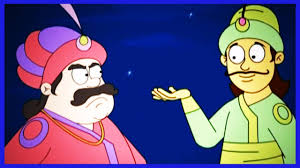


SHORT STORY: LESSON FROM LORD SHIVA

Copyright@shravancharitymission

    In Mahabharata, before the great battle, Arjuna went to the mountains for secret weapons that would help him win the battle. On the way he saw a deer and shot it dead for food. Simultaneously, a stranger also shot it and came to claim the deer. Arrogant Arjuna became arrogant and did not allow the stranger to touch it without a fight. But very soon, to his surprise, the unknown person set aside his quiver and all his arrows. Disarmed and ashamed, the greatest archer started praying to God with all humility for help. Suddenly he found that his adversary was no one else but Lord Shiva himself in disguise who came to advise him not to take the great venture without divine intervention. The power of the creator must be sought for winning the unknown.

    In the spiritual field, we generally behave like Arjuna and want to win all our battles all by ourselves with our limited intellect and big ego. Remember, the rich storehouse of hidden potential within us is only opened unto us when we are humble, devoid of ego and possessed by a total sense of surrender to God.

By Kamlesh Tripathi

*

https://kamleshsujata.wordpress.com

*

Share it if you like it

*

Shravan Charity Mission is an NGO that works for poor children suffering from life threatening diseases especially cancer. Our posts are meant for our readers that includes both children and adults and it has a huge variety in terms of content. We also accept donations for our mission. Should you wish to donate for the cause. The bank details are given below:

NAME OF ACCOUNT: SHRAVAN CHARITY MISSION

Account no: 680510110004635 (BANK OF INDIA)

IFSC code: BKID0006805

*

Our publications

GLOOM BEHIND THE SMILE

(The book is about a young cancer patient. Now archived in 7 prestigious libraries of the US, including, Harvard University and Library of Congress. It can also be accessed in MIT through Worldcat.org. Besides, it is also available for reading in Libraries and archives of Canada and Cancer Aid and Research Foundation Mumbai)  

ONE TO TANGO … RIA’S ODYSSEY

(Is a book on ‘singlehood’ about a Delhi girl now archived in Connemara Library, Chennai and Delhi Public Library, GOI, Ministry of Culture, Delhi)

AADAB LUCKNOW … FOND MEMORIES

(Is a fiction written around the great city of Nawabs—Lucknow. It describes Lucknow in great detail and also talks about its Hindu-Muslim amity. That happens to be its undying characteristic. The book was launched in Lucknow International Literary Festival of 2014)

REFRACTIONS … FROM THE PRISM OF GOD

(Co-published by Cankids–Kidscan, a pan India NGO and Shravan Charity Mission, that works for Child cancer in India. The book is endorsed by Ms Preetha Reddy, MD Apollo Hospitals Group. It was launched in Lucknow International Literary Festival 2016)

TYPICAL TALE OF AN INDIAN SALESMAN

(Is a story of an Indian salesman who is, humbly qualified. Yet he fights his ways through unceasing uncertainties to reach the top. A good read not only for salesmen. The book was launched on 10th February, 2018 in Gorakhpur Lit-Fest. Now available in Amazon, Flipkart and Onlinegatha)

RHYTHM … in poems

(Published in January 2019. The book contains 50 poems. The poems describe our day to day life. The book is available in Amazon, Flipkart and Onlinegatha)

(ALL THE ABOVE TITLES ARE AVAILABLE FOR SALE IN AMAZON, FLIPKART AND OTHER ONLINE STORES OR YOU COULD EVEN WRITE TO US FOR A COPY)

*****


INTERESTING FACTS FIGURES AND QUOTES, EPISODE 31

Copyright@shravancharitymission


There is a tendency in India if something is good, mix some kind of politics in it and destroy it. After all politics is the will of the people.

Double, double, toil and trouble; fire burn and cauldron bubble.‘ is one of the most famous lines in English literature. These lines are spoken in unison by three witches who predict Macbeth’s future throughout the play. These lines show how what the witches say can have double meanings and can be contradictory.

Non-violence is the first article of my faith. It is also the last article of my creed—Mahatma Gandhi.

A country has a trade-deficit when it imports more than it exports. Trump thinks of it as as something bad which it is not. I run a trade deficit with my domestic help and my local grocery store. I buy more from them then they do from me.

The greater misfortune is that the Englishmen and their Indian associates in the administration of the country do not know that they are engaged in a crime I have attempted to describe—Mahatma Gandhi in his oral statement on March 18, 1922.

That quintessential American product, the I-Phone, uses parts from 43 countries. As local products rise in price because of expensive foreign parts, price rise, demand goes down, jobs are lost and everyone is worse off.

According to a German philosopher, we are what we eat, as what we eat makes up not just our bodies but also shapes our tastes, inclinations and personality in general.

‘Don’t let the fox guard the hen house’ means don’t assign the duty of protecting or controlling valuable information or resources to someone who is likely to exploit that opportunity.

The proverb ‘fence eating the crop’ comes from a skepticism of those who break laws they are supposed to uphold.

When you are finished changing, you are finished—Benjamin Franklin.

The Kingdom of Nepal stands out today as the only Hindu Kingdom in the world whose independence is recognised by England, France, Italy and other great powers—Vinayak Damodar Savarkar, 1937.

One cannot believe that Indians are in any way inferior to the Japanese in intellectual capacity. The most effective difference between these two eastern peoples is that whereas India lies at the mercy of the British, Japan has been spared the shadow of domination—Rabindranath Tagore, 1941.

All brands of people are arrayed on Congress Platform. If there can be a magic box which contains a Cobra and a mongoose living together, it is Congress—Pandit Deendayal Upadhyaya.

Britishers were a representative of the West, ruled this country for over a century and, during this period adopted such measures whereby in the minds of our people, a contempt for things Bharatiya and respect for everything Western were subtly created.—Pandit Deendayal Upadhyaya, 1965.

Mother Teresa believed that abortion is the highest form of evil, as it is the killing of a life that has already been conceived.

It is less important, I believe, where you start. It is more important how and what you learn. If the learning is high, the development gradient is steep, and, given time, you can find yourself in a previously unattainable place. I believe the Infosys story is living proof of this—Narayana Murthy.

Sometimes when you have a goal in front of you it is easy to focus. Cyclists have pelotons who give them that focus as to what they should achieve in short bursts—Viswanathan Anand.

China and India have two of the world’s four largest militaries.

The Folger Shakespeare Library is an independent research library on Capitol Hill in Washington, D.C., in the United States. It has the world’s largest collection of the printed works of William Shakespeare, and is a primary repository for rare materials from the early modern period (1500–1750). The library was established by Henry Clay Folger in association with his wife, Emily Jordan Folger. It opened in 1932, two years after his death.

From Alexander onwards, the Greeks, the Turks, the Moguls, the Portuguese, the British, the French, the Dutch, all of them came and looted us, took over what was ours. Yet we have not done this to any other nation. We have not conquered anyone. We have not grabbed their land, their culture, their history and tried to enforce our way of life on them. Why? Because we respect the freedom of others—APJ Abdul Kalam.

No matter how many people support you and help you, when you perform, you are alone—Abhinav Bindra.

I may never be perfect. That’s okay. But I can always be better than I was yesterday—Abinav Bindra.

India imports 90% oil, 100% gold and 100% copper.

There is an old racist saying ‘once you go black you can’t go back’ (a Google search will reveal its meaning).

What makes PM2.5 particles extremely dangerous is their cancerous ability to penetrate human body and stick onto to the insides of the lungs. According to a recent study conducted by IIT Kanpur the mix sources responsible for PM2.5 changes seasonally in the region. In winters vehicular emissions account for 25% of PM2.5; 30% is accounted for by sulphur and nitrogen oxide emissions from vehicles, industry and power generation facilities; 26% comes from burning of wood, cow dung, and agricultural waste for cooking and heating; 8% comes from burning of garbage; 5% from the burning of coal and fly ash; 4% from agricultural and road dust; and 2% from construction dust.

By Kamlesh Tripathi

*

https://kamleshsujata.wordpress.com

*

Share it if you like it

*

Shravan Charity Mission is an NGO that works for poor children suffering from life threatening diseases especially cancer. Our posts are meant for our readers that includes both children and adults and it has a huge variety in terms of content. We also accept donations for our mission. Should you wish to donate for the cause. The bank details are given below:

NAME OF ACCOUNT: SHRAVAN CHARITY MISSION

Account no: 680510110004635 (BANK OF INDIA)

IFSC code: BKID0006805

*

Our publications

GLOOM BEHIND THE SMILE

(The book is about a young cancer patient. Now archived in 7 prestigious libraries of the US, including, Harvard University and Library of Congress. It can also be accessed in MIT through Worldcat.org. Besides, it is also available for reading in Libraries and archives of Canada and Cancer Aid and Research Foundation Mumbai)  

ONE TO TANGO … RIA’S ODYSSEY

(Is a book on ‘singlehood’ about a Delhi girl now archived in Connemara Library, Chennai and Delhi Public Library, GOI, Ministry of Culture, Delhi)

AADAB LUCKNOW … FOND MEMORIES

(Is a fiction written around the great city of Nawabs—Lucknow. It describes Lucknow in great detail and also talks about its Hindu-Muslim amity. That happens to be its undying characteristic. The book was launched in Lucknow International Literary Festival of 2014)

REFRACTIONS … FROM THE PRISM OF GOD

(Co-published by Cankids–Kidscan, a pan India NGO and Shravan Charity Mission, that works for Child cancer in India. The book is endorsed by Ms Preetha Reddy, MD Apollo Hospitals Group. It was launched in Lucknow International Literary Festival 2016)

TYPICAL TALE OF AN INDIAN SALESMAN

(Is a story of an Indian salesman who is, humbly qualified. Yet he fights his ways through unceasing uncertainties to reach the top. A good read not only for salesmen. The book was launched on 10th February, 2018 in Gorakhpur Lit-Fest. Now available in Amazon, Flipkart and Onlinegatha)

RHYTHM … in poems

(Published in January 2019. The book contains 50 poems. The poems describe our day to day life. The book is available in Amazon, Flipkart and Onlinegatha)

(ALL THE ABOVE TITLES ARE AVAILABLE FOR SALE IN AMAZON, FLIPKART AND OTHER ONLINE STORES OR YOU COULD EVEN WRITE TO US FOR A COPY)

*****
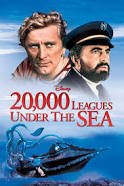


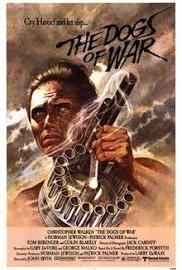
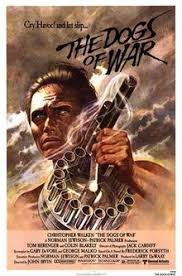
BOOK REVIEW: THE DOGS OF WAR BY FREDERICK FORSYTH

Copyright@shravancharitymission

Khidki (Window)

–Read India Initiative—

This is only an attempt to create interest in reading. We may not get the time to read all the books in our lifetime. But such reviews, talk and synopsis will at least convey what the book is all about.

    The Dogs of War (1974) is a war novel by Frederick Forsyth featuring a small group of European mercenary soldiers hired by a British industrialist to depose the government of the fictional African country of Zangaro.

    An eponymous film was also released in 1980, based on the novel directed by John Irvin. The movie was filmed in Belize in Central America.

    The story details a geologist’s mineral discovery, followed by preparations for the attack that entails: soldier recruitment, training, reconnaissance, and the logistics of the coup d’état. Like most of Forsyth’s work, the novel is more about the protagonists’ art of espionage occupational tradecraft than their characters. The source of the title, The Dogs of War, is Act III, scene 1, line 270 of Julius Caesar (1599), by William Shakespeare: Cry, ‘Havoc!’, and let slip the dogs of war.

    The mercenary protagonists are professional killers—ruthless, violent men, heroic only in the loosest sense of the word. Thus, they are anti-heroes. Initially introduced as simply killers, as the novel progresses they are gradually shown to adhere to a relatively moral mercenary code; however as the mercenary leader Shannon tries to explain at one point, it is difficult for civilians to understand this. I’ve divided the narration into three parts.

Part 1: The Crystal Mountain: Year 1970: The prologue shows “Cat” Shannon and his fellow mercenaries leaving a West African war they have lost, saying their goodbyes to the General, who employed them for six months.

    A few weeks later, a prospector employed by British based company, ‘Man-son Consolidated’ sends mineral samples, acquired from the “Crystal Mountain” in the remote hinterland of the African republic of Zangaro, to headquarters. When they are analysed, ruthless British mining tycoon Sir James Manson realises that there is a huge platinum deposit in Zangaro. The president of Zangaro, Jean Kimba, is a Marxist, homicidal, insane, and under Soviet influence, so any public announcement of the findings would benefit only the Russians. Confiding only in his top assistants, security chief Simon Endean, financial expert Martin Thorpe and Manson himself, they plan to depose Kimba and install a puppet leader who, for a pittance, will sign over Zangaro’s mining rights to a shell company secretly owned by Manson. When Manson Consolidated eventually acquires the shell company for a fair market price, Sir James Manson and his aides pocket £60 million.

    On the recommendation of a freelance writer (a thinly-veiled allusion to Forsyth himself), Endean hires Anglo Irish mercenary soldier “Cat” Shannon to reconnoitre Zangaro, and to investigate how Kimba might be deposed. After visiting the country posing as a tourist, Shannon reports that the army has little fighting value and that Kimba has concentrated the national armoury, treasury and radio station within the presidential palace in Clarence, the Zangaran capital city and principal port. If the palace is stormed and Kimba killed, there will be no opposition to any new regime. Because there is no organised dissident faction in Zangaro, the attacking force will have to be assembled outside the country and land near Clarence to launch the attack. Shannon prices the mission at £100,000, with £10,000 for himself. Although Shannon has dealt only with Endean who is using a false name, he has had Endean tailed by a private investigator and has discovered his true identity and his involvement with Sir James Manson.

    Although Manson has taken steps to silence the few people aware of the Crystal Mountain platinum deposit, the chemist who analysed the samples has inadvertently revealed his findings to the Soviets, who assign a KGB bodyguard to Kimba while they prepare to send in their own geological survey team. Manson learns from a Foreign Office bureaucrat that the Soviets have got wind of the deposit. He commissions Shannon to organise and mount the coup, to take place on the eve of Zangaro’s Independence Day, one hundred days hence, although he does not tell Shannon of the Soviet involvement.

Part 2: The Hundred Days

Shannon reassembles his old team to execute the attack on Kimba’s palace that includes: German ex-smuggler Kurt Semmler, South African mortar expert Janni Dupree, Belgian bazooka specialist “Tiny” Marc Vlaminck, and Corsican knife-fighter Jean-Baptiste Langarotti. Semmler travels Europe looking for a suitable cargo ship to transport them and their equipment to Zangaro. Dupree remains in London to buy all their uniforms, boots, haversacks and sleeping bags. Langarotti travels to Marseilles to acquire inflatable boats for the amphibious assault. Vlaminck accompanies Shannon to Belgium to obtain one hundred ‘Schmeisser’   submachine guns from a former member of the SS, then remains in Belgium to prepare them to be smuggled out in oil drums. Shannon then travels to Luxembourg to establish a holding company to handle the purchase of the ship, to Spain to buy walkie-talkies, foghorns, flares, and 400,000 rounds of 9mm ammunition for the Schmeissers with a forged end user certificate, and to Yugoslavia to buy bazookas, mortars, and ammunition for them.

    Shannon also finds time for a brief sexual liaison with Julie Manson, Sir James Man-son’s daughter, from whom he learns the bare essentials of Manson’s true plans. Simultaneously, Charles Roux, one of Shannon’s rivals, tries to have Shannon killed since he is frustrated that Endean did not approach him for the contract despite the freelance writer recommending him. Upon this, Langarotti tips Shannon off and they lure the assassin hired by Roux into a trap, sending his severed head to Roux to permanently silence him.

    Martin Thorpe has in the meanwhile secretly purchased the controlling share in Bormac Trading, a mining and plantation-owning company which has long ceased trading, from Lady MacAllister, the ailing widow of the company’s founder. His and Manson’s involvement is concealed behind the names of several fictitious shareholders. Endean has simultaneously obtained the agreement of Colonel Antoine Bobi, a former commander of the Zangaran Army who fell out with Kimba and is now in exile, to participate in Man-son’s scheme. Once installed as president, the venal and illiterate Bobi will sign over the mineral rights of the Crystal Mountain to Bormac Trading for a nominal price but a large bribe for himself.

    The mercenaries get underway after Semmler acquires a nondescript cargo ship Toscana, for the operation. Hidden in oil drums, the Schmeissers are smuggled across the Belgian border into France and loaded aboard the Toscana at Marseilles, along with the uniforms and inflatable boats, marked supposedly for watersports in Morocco. They then sail to Ploce in Yugoslavia to load the mortars and rocket launchers purchased legitimately from an arms dealer, without telling the Yugoslavian authorities that they already have arms aboard. These weapons are then concealed below the deck and the ship sails to Castellon in Spain to collect the ammunition (supposedly sold to the Iraqi police force). The ship then travels to Freetown in Sierra Leone to pick up six African mercenaries, disguised as casual stevedores, who will also participate in the attack, and Dr Okoye, an African academic.

Part 3: The Killing Spree

    The attack on President Kimba’s palace takes place as planned. In the early hours of the morning, the mercenaries land on the shores of Zangaro and set up foghorns and flares to disorient the defenders and light their way through the attack. Dupree and two of the African mercenaries begin the assault by using mortars to bombard both a nearby army camp and the interior of the palace compound, thereby eliminating the palace guard, while Vlaminck destroys the compound gates with anti-tank rockets. As the bombardment ceases, Semmler, Shannon, Langarotti and the other four African mercenaries storm the palace, with Semmler shooting Kimba as he tries to escape through his bedroom window. Kimba’s KGB bodyguard escapes the firefight and shoots Vlaminck in the chest, but Vlaminck retaliates, killing him with his last bazooka rocket as he dies. Following the bombardment, Dupree and his two African mercenaries attack the nearby army camp. A Zangaran soldier throws a grenade at them as he flees and one of the African mercenaries throws it back, but it falls short and Dupree, deafened by the gunfire and shelling, fails to hear the warnings and is accidentally killed in the blast.

    Around midday, Endean arrives in Clarence to install Colonel Bobi as the new Zangaran president. He has his own bodyguard, a former East End gang enforcer. When Endean and Bobi arrive at the palace, Shannon lures Bobi into a room where a shot is heard; just as Endean realizes that Shannon has killed Bobi, Shannon then shoots Endean’s bodyguard as the enforcer, tries to draw his gun, and casually introduces Dr. Okoye as the new head of the government. At Shannon’s request, the Soviet geological survey team’s request to land in Zangaro is permanently refused.

Now we come to the aftermath

    As Shannon drives Endean to the border, he explains that Endean’s otherwise comprehensive research failed to note the 20,000 immigrant workers who did most of the work in Zangaro, but were politically dis-en-franchised by the Kimba government. A hundred of them, in new uniforms and armed with Schmeissers, have already been recruited as the nucleus of the new Zangaran Army.

    When Shannon tells Endean that the coup was really conducted on behalf of a Nigerian General, Endean is furious but Shannon points out that this government will at least be fair, and if Manson wants the platinum, he will have to pay the proper market price. Endean threatens revenge if he ever sees the mercenary in London, but Shannon is unperturbed with the warning.

    In the novel’s epilogue, it is revealed that Dupree and Vlaminck were buried in simple unmarked graves near the shore. Semmler, later sold the Toscana to its captain, and died while on another mercenary operation in Africa. Langarotti’s fate, is ambiguous; the novel tells only that after he took his pay, he was last heard of going to train a new group of Hutu partisans in Burundi against Michel Micombero, telling Shannon “It’s not really the money. It was never for the money.”

    The epilogue reveals that before embarking on the Zangaro operation, Shannon was diagnosed with terminal lung cancer (skin cancer in some American editions) with only a year to six months to live. Three months after the coup, he posts the remainder of his earnings to the surviving family members of his fallen teammates, and also sends a manuscript (presumably outlining the entire plan) to a journalist in London (presumably the aforementioned freelance writer). Lastly, Shannon walks into the African bush, whistling a favourite tune (“a Spanish Harlem”), to end his life on his own terms with “a gun in his hand, blood in his mouth, and a bullet in his chest”.

    Although each work by Forsyth stands individually, there are certain similarities which may be described as his stylistic formula for success: There is always an efficient hero who is at odds with the establishment; a historical backdrop frequently places the hero in contact with known public figures in known historical situations; intricate detail is offered, lending authenticity to the work; and ingenious plots, which resemble large jigsaw puzzles of seemingly disconnected actions or events, are developed. Other writers use one or more parts of the formula, but it is these four facets that, when used collectively, distinguish a Forsyth work.

My take eight out of ten.

By Kamlesh Tripathi

*

https://kamleshsujata.wordpress.com

*

Share it if you like it

*

Shravan Charity Mission is an NGO that works for poor children suffering from life threatening diseases especially cancer. Our posts are meant for our readers that includes both children and adults and it has a huge variety in terms of content. We also accept donations for our mission. Should you wish to donate for the cause. The bank details are given below:

NAME OF ACCOUNT: SHRAVAN CHARITY MISSION

Account no: 680510110004635 (BANK OF INDIA)

IFSC code: BKID0006805

*

Our publications

GLOOM BEHIND THE SMILE

(The book is about a young cancer patient. Now archived in 7 prestigious libraries of the US, including, Harvard University and Library of Congress. It can also be accessed in MIT through Worldcat.org. Besides, it is also available for reading in Libraries and archives of Canada and Cancer Aid and Research Foundation Mumbai)  

ONE TO TANGO … RIA’S ODYSSEY

(Is a book on ‘singlehood’ about a Delhi girl now archived in Connemara Library, Chennai and Delhi Public Library, GOI, Ministry of Culture, Delhi)

AADAB LUCKNOW … FOND MEMORIES

(Is a fiction written around the great city of Nawabs—Lucknow. It describes Lucknow in great detail and also talks about its Hindu-Muslim amity. That happens to be its undying characteristic. The book was launched in Lucknow International Literary Festival of 2014)

REFRACTIONS … FROM THE PRISM OF GOD

(Co-published by Cankids–Kidscan, a pan India NGO and Shravan Charity Mission, that works for Child cancer in India. The book is endorsed by Ms Preetha Reddy, MD Apollo Hospitals Group. It was launched in Lucknow International Literary Festival 2016)

TYPICAL TALE OF AN INDIAN SALESMAN

(Is a story of an Indian salesman who is, humbly qualified. Yet he fights his ways through unceasing uncertainties to reach the top. A good read not only for salesmen. The book was launched on 10th February, 2018 in Gorakhpur Lit-Fest. Now available in Amazon, Flipkart and Onlinegatha)

RHYTHM … in poems

(Published in January 2019. The book contains 50 poems. The poems describe our day to day life. The book is available in Amazon, Flipkart and Onlinegatha)

(ALL THE ABOVE TITLES ARE AVAILABLE FOR SALE IN AMAZON, FLIPKART AND OTHER ONLINE STORES OR YOU COULD EVEN WRITE TO US FOR A COPY)

*****


INTERESTING FACTS FIGURES & QUOTES-30

Copyright@shravancharitymission

By 2020, half of India’s internet users will be rural. Nine out of ten internet users are non-English speaking.

A study published in the University of Cincinnati Law Review suggests that CEOs are at twice the risk of developing depression as compared to the general population. Another comprehensive review of literature published in the Journal of Affective Disorders elucidates that people living in developed and wealthy countries have a greater risk of suffering from mood disorders than those living in developing nations.

Annually, on an average, 1.5 lakh people are killed and close to 10 lakh are injured in road crashes across India. As per ministry of road transport data, over 14% fatalities were due to overloading of vehicles. In 2017, 20,848 people were killed due to overloading of vehicles—an average of 57 deaths per day.

The fine currently for overloading trucks—a rampant practice is only Rs 2000. Motor Vehicle Amendment Board proposes to increase it to 20,000 to halt the practice.

Currently India has no central legislation governing the protection of pedestrians. The penalties for irresponsible road behaviour that lead to serious injuries or fatalities have remained minimal for the last three decades and have consequently failed to deter violators.

A recent study by SaveLIFE Foundation shows that 63.3% of the children who admitted to underage driving shared that they started learning how to drive between the ages of 9 to 14.

The proverb warns, ‘You should not bite the hand that feeds you.’ But maybe you should, if it prevents you from feeding yourself—THOMAS SZASZ.

Congress has not won an election in Gujarat, whether Lok Sabha or Vidhan Sabha in 32 years.

 Achilles heel—An Achilles’ heel or Achilles heel is a weakness in spite of overall strength, which can lead to downfall. While the mythological origin refers to a physical vulnerability, idiomatic references to other attributes or qualities that can lead to downfall are common.

Whenever opportunities narrow down you start seeing protests.

Statues and pictures and verse may be grand, but they are not the life for which they stand—JAMES THOMSON, British poet.

Raise your words, not voice. It is rain that grows flowers, not the thunder—Jalaluddin Rumi.

Poor fund allocation in R&D (less than 1% of india’s budget, as compared to 3-5% by countries like the US and China) inhibits innovation and hence prospects of jobs growth. A programme like ‘Small Business innovation and research’ (which provides enterprises with competitive R&D grants) proposed in a Niti Aayog Expert committee can be a game changer.

We can easily forgive a child who is afraid of the dark; the real tragedy of life is when men are afraid of the light—PLATO.

Iceland is the only country that jailed its bankers in the 2008 recession (because Iceland has community norms) but US bailed out its bankers.

The general elections held in 1952, 1957, 1962, and 1967, were simultaneous polls held throughout the country. But this cycle was disrupted in 1969, with the premature dissolution of Loksabha.

Yiwu market is located in Zhejiang district of China. It is the world’s largest wholesale market where over 100000 suppliers exhibit over 400000 genre of products. Yiwu has tied up with leading logistics firms, for shop to door deliveries.

America is practically owned by china—TOMWINNIFIRT, UK journalist.

Germany today has absorbed over a million refugees and settled them across the country—Syrians.

In 2016, tourism and travel contributed 10% of India’s GDP. The largest part of this was domestic tourism, amounting to about 88%. India is the seventh-largest tourist economy globally. Given its riches, natural and manmade. It should be much higher.

The recent series on the Vietnam war produced by Ken Burns and Lynn Novick and written by Geoff Ward (a long time India friend and wildlife lover) makes just this point. After Vietnam, America may still be looking for a war to win.

Indian soldiers walked up the Icchogil canal and to the gates of Lahore in 1965, but came back, soon after, for territory was not on their minds. To this day people in India rue this decision. We all know which party was in power then.

Mahatma Gandhi once said that the future depends on what you do today.

One clear indicator of strain is annual per capita water availability. This was 5177 cubic metres in 1951 which declined to 1545 cubic metres in 2011, against the international threshold for water stress, pegged at 1700 cubic metres. However. National Institute of Hydrology pegs India’s utilisable per capita water availability at just 938 cubic metres in 2010 and expects this to drop to 814 cubic metres by 2025.

At one time a quarter of all American college men were buying or subscribing  to playboy magazine. ‘a woman reading a playboy feels a little like a Jew reading a Nazi manual’—Gloria Steinem.

By Kamlesh Tripathi

*

https://kamleshsujata.wordpress.com

*

Share it if you like it

*

Shravan Charity Mission is an NGO that works for poor children suffering from life threatening diseases especially cancer. Our posts are meant for our readers that includes both children and adults and it has a huge variety in terms of content. We also accept donations for our mission. Should you wish to donate for the cause. The bank details are given below:

NAME OF ACCOUNT: SHRAVAN CHARITY MISSION

Account no: 680510110004635 (BANK OF INDIA)

IFSC code: BKID0006805

*

Our publications

GLOOM BEHIND THE SMILE

(The book is about a young cancer patient. Now archived in 7 prestigious libraries of the US, including, Harvard University and Library of Congress. It can also be accessed in MIT through Worldcat.org. Besides, it is also available for reading in Libraries and archives of Canada and Cancer Aid and Research Foundation Mumbai)  

ONE TO TANGO … RIA’S ODYSSEY

(Is a book on ‘singlehood’ about a Delhi girl now archived in Connemara Library, Chennai and Delhi Public Library, GOI, Ministry of Culture, Delhi)

AADAB LUCKNOW … FOND MEMORIES

(Is a fiction written around the great city of Nawabs—Lucknow. It describes Lucknow in great detail and also talks about its Hindu-Muslim amity. That happens to be its undying characteristic. The book was launched in Lucknow International Literary Festival of 2014)

REFRACTIONS … FROM THE PRISM OF GOD

(Co-published by Cankids–Kidscan, a pan India NGO and Shravan Charity Mission, that works for Child cancer in India. The book is endorsed by Ms Preetha Reddy, MD Apollo Hospitals Group. It was launched in Lucknow International Literary Festival 2016)

TYPICAL TALE OF AN INDIAN SALESMAN

(Is a story of an Indian salesman who is, humbly qualified. Yet he fights his ways through unceasing uncertainties to reach the top. A good read not only for salesmen. The book was launched on 10th February, 2018 in Gorakhpur Lit-Fest. Now available in Amazon, Flipkart and Onlinegatha)

RHYTHM … in poems

(Published in January 2019. The book contains 50 poems. The poems describe our day to day life. The book is available in Amazon, Flipkart and Onlinegatha)

(ALL THE ABOVE TITLES ARE AVAILABLE FOR SALE IN AMAZON, FLIPKART AND OTHER ONLINE STORES OR YOU COULD EVEN WRITE TO US FOR A COPY)

*****


Speech of Narayana Murthy

Copyright@shravancharitymission

Exuberant speech of Narayana Murthy at New York University (Stern School of Business)
Dean Cooley, faculty, staff, distinguished guests, and, most importantly, the graduating class of 2007, it is a great privilege to speak at your commencement ceremonies.
I thank Dean Cooley and Prof Marti Subrahmanyam for their kind invitation. I am exhilarated to be part of such a joyous occasion. Congratulations to you, the class of 2007, on completing an important milestone in your life journey.
After some thought, I have decided to share with you some of my life lessons. I learned these lessons in the context of my early career struggles, a life lived under the influence of sometimes unplanned events which were the crucibles that tempered my character and reshaped my future.
I would like first to share some of these key life events with you, in the hope that these may help you understand my struggles and how chance events and unplanned encounters with influential persons shaped my life and career.
Later, I will share the deeper life lessons that I have learned. My sincere hope is that this sharing will help you see your own trials and tribulations for the hidden blessings they can be.
The first event occurred when I was a graduate student in Control Theory at IIT, Kanpur, in India. At breakfast on a bright Sunday morning in 1968, I had a chance encounter with a famous computer scientist on sabbatical from a well-known US university.
He was discussing exciting new developments in the field of computer science with a large group of students and how such developments would alter our future. He was articulate, passionate and quite convincing. I was hooked. I went straight from breakfast to the library, read four or five papers he had suggested, and left the library determined to study computer science.
Friends, when I look back today at that pivotal meeting, I marvel at how one role model can alter for the better the future of a young student. This experience taught me that valuable advice can sometimes come from an unexpected source, and chance events can sometimes open new doors.
The next event that left an indelible mark on me occurred in 1974. The location: Nis, a border town between former Yugoslavia, now Serbia, and Bulgaria. I was hitchhiking from Paris back to Mysore, India, my home town.
By the time a kind driver dropped me at Nis railway station at 9 p.m. on a Saturday night, the restaurant was closed. So was the bank the next morning, and I could not eat because I had no local money. I slept on the railway platform until 8.30 pm in the night when the Sofia Express pulled in.
The only passengers in my compartment were a girl and a boy. I struck a conversation in French with the young girl. She talked about the travails of living in an iron curtain country, until we were roughly interrupted by some policemen who, I later gathered, were summoned by the young man who thought we were criticising the communist government of Bulgaria.
The girl was led away; my backpack and sleeping bag were confiscated. I was dragged along the platform into a small 8×8 foot room with a cold stone floor and a hole in one corner by way of toilet facilities. I was held in that bitterly cold room without food or water for over 72 hours.
I had lost all hope of ever seeing the outside world again, when the door opened. I was again dragged out unceremoniously, locked up in the guard’s compartment on a departing freight train and told that I would be released 20 hours later upon reaching Istanbul. The guard’s final words still ring in my ears — “You are from a friendly country called India and that is why we are letting you go!”
The journey to Istanbul was lonely, and I was starving. This long, lonely, cold journey forced me to deeply rethink my convictions about Communism. Early on a dark Thursday morning, after being hungry for 108 hours, I was purged of any last vestiges of affinity for the Left.
I concluded that entrepreneurship, resulting in large-scale job creation, was the only viable mechanism for eradicating poverty in societies.
Deep in my heart, I always thank the Bulgarian guards for transforming me from a confused Leftist into a determined, compassionate capitalist! Inevitably, this sequence of events led to the eventual founding of Infosys in 1981.
While these first two events were rather fortuitous, the next two, both concerning the Infosys journey, were more planned and profoundly influenced my career trajectory.
On a chilly Saturday morning in winter 1990, five of the seven founders of Infosys met in our small office in a leafy Bangalore suburb. The decision at hand was the possible sale of Infosys for the enticing sum of $1 million. After nine years of toil in the then business-unfriendly India, we were quite happy at the prospect of seeing at least some money.
I let my younger colleagues talk about their future plans. Discussions about the travails of our journey thus far and our future challenges went on for about four hours. I had not yet spoken a word.
Finally, it was my turn. I spoke about our journey from a small Mumbai apartment in 1981 that had been beset with many challenges, but also of how I believed we were at the darkest hour before the dawn. I then took an audacious step. If they were all bent upon selling the company, I said, I would buy out all my colleagues, though I did not have a cent in my pocket.
There was a stunned silence in the room. My colleagues wondered aloud about my foolhardiness. But I remained silent. However, after an hour of my arguments, my colleagues changed their minds to my way of thinking. I urged them that if we wanted to create a great company, we should be optimistic and confident. They have more than lived up to their promise of that day.
In the seventeen years since that day, Infosys has grown to revenues in excess of $3.0 billion, a net income of more than $800 million and a market capitalisation of more than $28 billion, 28,000 times richer than the offer of $1 million on that day.
In the process, Infosys has created more than 70,000 well-paying jobs, 2,000-plus dollar-millionaires and 20,000-plus rupee millionaires.
A final story: On a hot summer morning in 1995, a Fortune-10 corporation had sequestered all their Indian software vendors, including Infosys, in different rooms at the Taj Residency hotel in Bangalore so that the vendors could not communicate with one another. This customer’s propensity for tough negotiations was well-known. Our team was very nervous.
First of all, with revenues of only around $5 million, we were minnows compared to the customer.
Second, this customer contributed fully 25% of our revenues. The loss of this business would potentially devastate our recently-listed company.
Third, the customer’s negotiation style was very aggressive. The customer team would go from room to room, get the best terms out of each vendor and then pit one vendor against the other. This went on for several rounds. Our various arguments why a fair price — one that allowed us to invest in good people, R&D, infrastructure, technology and training — was actually in their interest failed to cut any ice with the customer.
By 5 p.m. on the last day, we had to make a decision right on the spot whether to accept the customer’s terms or to walk out.
All eyes were on me as I mulled over the decision. I closed my eyes, and reflected upon our journey until then. Through many a tough call, we had always thought about the long-term interests of Infosys. I communicated clearly to the customer team that we could not accept their terms, since it could well lead us to letting them down later. But I promised a smooth, professional transition to a vendor of customer’s choice.
This was a turning point for Infosys.
Subsequently, we created a Risk Mitigation Council which ensured that we would never again depend too much on any one client, technology, country, application area or key employee. The crisis was a blessing in disguise. Today, Infosys has a sound de-risking strategy that has stabilised its revenues and profits.
I want to share with you, next, the life lessons these events have taught me.
1. I will begin with the importance of learning from experience. It is less important, I believe, where you start. It is more important how and what you learn. If the quality of the learning is high, the development gradient is steep, and, given time, you can find yourself in a previously unattainable place. I believe the Infosys story is living proof of this.
Learning from experience, however, can be complicated. It can be much more difficult to learn from success than from failure. If we fail, we think carefully about the precise cause. Success can indiscriminately reinforce all our prior actions.
2. A second theme concerns the power of chance events. As I think across a wide variety of settings in my life, I am struck by the incredible role played by the interplay of chance events with intentional choices. While the turning points themselves are indeed often fortuitous, how we respond to them is anything but so. It is this very quality of how we respond systematically to chance events that is crucial.
3. Of course, the mindset one works with is also quite critical. As recent work by the psychologist, Carol Dweck, has shown, it matters greatly whether one believes in ability as inherent or that it can be developed. Put simply, the former view, a fixed mindset, creates a tendency to avoid challenges, to ignore useful negative feedback and leads such people to plateau early and not achieve their full potential.
The latter view, a growth mindset, leads to a tendency to embrace challenges, to learn from criticism and such people reach ever higher levels of achievement.
4. The fourth theme is a cornerstone of the Indian spiritual tradition: self-knowledge. Indeed, the highest form of knowledge, it is said, is self-knowledge. I believe this greater awareness and knowledge of oneself is what ultimately helps develop a more grounded belief in oneself, courage, determination, and, above all, humility, all qualities which enable one to wear one’s success with dignity and grace.
Based on my life experiences, I can assert that it is this belief in learning from experience, a growth mindset, the power of chance events, and self-reflection that have helped me grow to the present.
Back in the 1960s, the odds of my being in front of you today would have been zero. Yet here I stand before you! With every successive step, the odds kept changing in my favour, and it is these life lessons that made all the difference.
My young friends, I would like to end with some words of advice. Do you believe that your future is pre-ordained, and is already set? Or, do you believe that your future is yet to be written and that it will depend upon the sometimes fortuitous events?
Do you believe that these events can provide turning points to which you will respond with your energy and enthusiasm? Do you believe that you will learn from these events and that you will reflect on your setbacks? Do you believe that you will examine your successes with even greater care?
I hope you believe that the future will be shaped by several turning points with great learning opportunities. In fact, this is the path I have walked to much advantage.
A final word: When, one day, you have made your mark on the world, remember that, in the ultimate analysis, we are all mere temporary custodians of the wealth we generate, whether it be financial, intellectual, or emotional. The best use of all your wealth is to share it with those less fortunate.
I believe that we have all at some time eaten the fruit from trees that we did not plant. In the fullness of time, when it is our turn to give, it behooves us in turn to plant gardens that we may never eat the fruit of, which will largely benefit generations to come. I believe this is our sacred responsibility, one that I hope you will shoulder in time.
Thank you for your patience. Go forth and embrace your future with open arms, and pursue enthusiastically your own life journey of discovery!

By Kamlesh Tripathi

*

https://kamleshsujata.wordpress.com

*

Share it if you like it

*

Shravan Charity Mission is an NGO that works for poor children suffering from life threatening diseases especially cancer. Our posts are meant for our readers that includes both children and adults and it has a huge variety in terms of content. We also accept donations for our mission. Should you wish to donate for the cause. The bank details are given below:

NAME OF ACCOUNT: SHRAVAN CHARITY MISSION

Account no: 680510110004635 (BANK OF INDIA)

IFSC code: BKID0006805

*

Our publications

GLOOM BEHIND THE SMILE

(The book is about a young cancer patient. Now archived in 7 prestigious libraries of the US, including, Harvard University and Library of Congress. It can also be accessed in MIT through Worldcat.org. Besides, it is also available for reading in Libraries and archives of Canada and Cancer Aid and Research Foundation Mumbai)  

ONE TO TANGO … RIA’S ODYSSEY

(Is a book on ‘singlehood’ about a Delhi girl now archived in Connemara Library, Chennai and Delhi Public Library, GOI, Ministry of Culture, Delhi)

AADAB LUCKNOW … FOND MEMORIES

(Is a fiction written around the great city of Nawabs—Lucknow. It describes Lucknow in great detail and also talks about its Hindu-Muslim amity. That happens to be its undying characteristic. The book was launched in Lucknow International Literary Festival of 2014)

REFRACTIONS … FROM THE PRISM OF GOD

(Co-published by Cankids–Kidscan, a pan India NGO and Shravan Charity Mission, that works for Child cancer in India. The book is endorsed by Ms Preetha Reddy, MD Apollo Hospitals Group. It was launched in Lucknow International Literary Festival 2016)

TYPICAL TALE OF AN INDIAN SALESMAN

(Is a story of an Indian salesman who is, humbly qualified. Yet he fights his ways through unceasing uncertainties to reach the top. A good read not only for salesmen. The book was launched on 10th February, 2018 in Gorakhpur Lit-Fest. Now available in Amazon, Flipkart and Onlinegatha)

RHYTHM … in poems

(Published in January 2019. The book contains 50 poems. The poems describe our day to day life. The book is available in Amazon, Flipkart and Onlinegatha)

(ALL THE ABOVE TITLES ARE AVAILABLE FOR SALE IN AMAZON, FLIPKART AND OTHER ONLINE STORES OR YOU COULD EVEN WRITE TO US FOR A COPY)

*****


BOOK REVIEW: THE BROWN HAND by Sir Arthur Conan Doyle

Copyright@shravancharitymission

Khidki (Window)

–Read India Initiative—

This is only an attempt to create interest in reading. We may not get the time to read all the books in our lifetime. But such reviews, talk and synopsis will at least convey what the book is all about.

    Sir Arthur Conan Doyle as we all know was a British writer best known for his detective fiction featuring the character Sherlock Holmes. Originally a physician, in 1887 he published ‘A Study in Scarlet’ the first of his four novels and thereafter more than fifty short stories about Holmes and Dr. Watson. Brown Hand was first published in The Strand Magazine in May 1899.

    The story is based on an Indian urban legend that tells about a Muslim who was forced to have his arm amputated after an accident, but died a few months later, and after death became a ghost and began wandering about in search of his limb.

    The central character of the story is a doctor, Sir Dominic Holden, who has had a long spell of service in British India first as a military doctor and then as a private surgeon in Bombay. Once when he was posted at Peshawar, then a main city of undivided Punjab (hence a part of India), he had to attend to a poor Afghan whose one hand was in such a bad state due to the spread of gangrene, that the only way to save his life was to amputate it. The operation was performed and Dr. Holden asked for the amputated hand as his fee. Dr. Holden had a hobby of collecting discarded limbs, organs, cysts from living and dead humans and thus wanted to add the “brown hand” to his collection. Whereas, the Afghan being Islamic, refused to part with his amputated hand, as it breached the rule of his religion which stated amputated body parts should be kept with the owner himself. But Dr. Holden promised to return the Afghan his hand before his death and took the hand with him to his house in Bombay. Thereafter Dr. Holden soon retired and settled in Wiltshire, England. One night he was awakened when someone started pulling his clothes. It was the ghost of his old Afghan patient. Dr. Holden understood that the Afghan had died and his ghost wanted back the amputated hand. From then onwards, the ghost started haunting the doctor’s lab every night for four years looking for his hand. But the ghost failed to find the hand since it had been damaged in a fire that had broken out at the doctor’s house in Bombay. The recurring visits of the ghost, had made the life of Dr. Holden and his wife, Lady Holden, miserable and the ill effects of which on their health was prominent. A doctor known for his steel nerves had now become a scared individual.
When, Dr. Holden’s nephew, by the name of Dr Hardacre decided to solve this problem. He spent his first night in the lab and saw the Afghan searching for his hand. The next day, Dr. Holden explained him everything in detail and Hardacre left for London. Hardacre, a doctor himself, went through a book on spirits and found that certain spirits could not leave the living world because of them being strongly attached to something or someone existing in this world. Hardacre decided to try his luck and left for Chadwell where a friend of his was the home surgeon at a hospital for sailors. The home surgeon provided Hardacre with an amputated hand of an Indian sailor as the requirement was a “brown hand”.
    Hardacre returned to Wiltshire and placed the hand in a jar in his uncle’s lab. Hardacre stayed awake as the Afghan ghost came visiting as usual. But Hardacre’s experiment failed as the Afghan on seeing the hand, wailed in agony and smashed the jar on the floor before disappearing. Next morning, Hardacre realised his mistake as he had brought the left hand of the sailor while the Afghan had had his right hand separated. Hardacre rushed back to Chadwell and luckily got the right hand of the sailor. He returned and placed the hand in a jar in the lab just like the previous day. Dr. Holden forbade Hardacre from sleeping in the lab as he feared risking his nephew’s life.
That night, Hardacre again saw somebody approaching him while he tried to sleep. But it wasn’t any ghost but his uncle who seemed overwhelmed with joy and had suddenly regained some of the energy he possessed earlier. Dr. Holden stated that the ghost had finally found his amputated hand and before leaving, he offered the Eastern Salaam bowed thrice in front of him, in a way similar to how Afghans pay respect. Thereafter Holdens lived on peacefully and consulted Hardacre for every major decisions they took thereafter. Before he died, Dr. Holden named Hardacre as the heir to his property.

    The story has mild horror and conveys a message that if one is intensely attached to something in this world it becomes difficult for the soul to leave the world without that object.

    It makes an interesting read. I would give it seven out of ten.

By Kamlesh Tripathi

*

https://kamleshsujata.wordpress.com

*

Share it if you like it

*

Shravan Charity Mission is an NGO that works for poor children suffering from life threatening diseases especially cancer. Our posts are meant for our readers that includes both children and adults and it has a huge variety in terms of content. We also accept donations for our mission. Should you wish to donate for the cause. The bank details are given below:

NAME OF ACCOUNT: SHRAVAN CHARITY MISSION

Account no: 680510110004635 (BANK OF INDIA)

IFSC code: BKID0006805

*

Our publications

GLOOM BEHIND THE SMILE

(The book is about a young cancer patient. Now archived in 7 prestigious libraries of the US, including, Harvard University and Library of Congress. It can also be accessed in MIT through Worldcat.org. Besides, it is also available for reading in Libraries and archives of Canada and Cancer Aid and Research Foundation Mumbai)  

ONE TO TANGO … RIA’S ODYSSEY

(Is a book on ‘singlehood’ about a Delhi girl now archived in Connemara Library, Chennai and Delhi Public Library, GOI, Ministry of Culture, Delhi)

AADAB LUCKNOW … FOND MEMORIES

(Is a fiction written around the great city of Nawabs—Lucknow. It describes Lucknow in great detail and also talks about its Hindu-Muslim amity. That happens to be its undying characteristic. The book was launched in Lucknow International Literary Festival of 2014)

REFRACTIONS … FROM THE PRISM OF GOD

(Co-published by Cankids–Kidscan, a pan India NGO and Shravan Charity Mission, that works for Child cancer in India. The book is endorsed by Ms Preetha Reddy, MD Apollo Hospitals Group. It was launched in Lucknow International Literary Festival 2016)

TYPICAL TALE OF AN INDIAN SALESMAN

(Is a story of an Indian salesman who is, humbly qualified. Yet he fights his ways through unceasing uncertainties to reach the top. A good read not only for salesmen. The book was launched on 10th February, 2018 in Gorakhpur Lit-Fest. Now available in Amazon, Flipkart and Onlinegatha)

RHYTHM … in poems

(Published in January 2019. The book contains 50 poems. The poems describe our day to day life. The book is available in Amazon, Flipkart and Onlinegatha)

(ALL THE ABOVE TITLES ARE AVAILABLE FOR SALE IN AMAZON, FLIPKART AND OTHER ONLINE STORES OR YOU COULD EVEN WRITE TO US FOR A COPY)

*****