Category Archives: short story

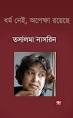
BOOK CORNER: LAJJA by Taslima Nasrin

Copyright@shravancharitymission

Khidki (Window)

–Read India Initiative—

This is only an attempt to create interest in reading. We may not get the time to read all the books in our lifetime. But such reviews, talk and synopsis will at least convey what the book is all about.
    Taslima Nasrin is an award winning writer and a human rights activist. She is also known for her passionate writings on the oppression of women and criticism of religious fundamentalism. She was born in Mymensingh in Bangladesh in 1962. She started writing at the age of fourteen and was acclaimed as a major writer in Dhaka in her late twenties. Her writings also became popular across the border in West Bengal when she won the prestigious Ananda Purashkar in 1992 and then again in 2000. After being forced to leave Bangladesh in 1994, Taslima has lived in India, Europe and the US. She has written more than thirty books, including poetry, essays, novels and memoirs. Her works have been translated into over twenty Indian and European languages.

    Taslima detests fundamentalism and communalism. This was the reason why she wrote Lajja soon after the demolition of Babri Masjid in Ayodhya on 6 December 1992. She says the book took her seven days to write, and deals with the persecution of Hindus, a religious minority in Bangladesh, by the Muslims who were in majority. ‘It is disgraceful that the Hindus in my country were hunted by the Muslims after the destruction of the Babri Masjid. All of us who love Bangladesh should feel ashamed that such a terrible thing could happen in our beautiful country. The riots that took place in 1992 in Bangladesh are the responsibility of us all, and we are all to blame. Lajja is a document of our collective defeat.’

    Lajja was first published in February 1993 in Bangladesh, and sold over 60,000 copies before it was banned. It even earned her a bounty on her head from Islamic fundamentalists and that forced her to flee from her country. Lajja is not only an invaluable historical document but also a text whose relevance has unfortunately not diminished in the two decades since it was published. The novel’s central concern is the evil of communalism that continues to plague the subcontinent, erupting from time to time like a dormant volcano.

    It chronicles the terrifying disintegration of a Hindu family living in Bangladesh in the aftermath of the riots that break out to avenge the destruction of the mosque in India. Hundreds of temples across Bangladesh are grounded to dust or desecrated. Hindu men are butchered, women raped, houses burnt to cinders, and property confiscated. Nasrin brings out the sufferings inflicted on the “minority” community through the trials faced by Sudhamoy Datta, an upright physician who had fought in the Liberation War of 1971 at immense personal cost, along with his family.

    The Dattas, as Nasrin reveals, are divided on the question of staying on, in the land they have always thought of, as their home. Their ancestral seat in the village, once thriving and prosperous, has been usurped by their Muslim neighbours, forcing them to seek refuge in a rented house in Dhaka. However, Sudhamoy stubbornly, desperately, and naively holds on to his faith in the inherent goodness of fellow human beings, even at a time when his allies are turning against his family. His son Suronjon is more vulnerable to the circumstances. Like his father, Suranjon refuses to run away from the country of his birth or give in to communal sentiments he had condemned all his life, but his feelings begin to shift after a terrible tragedy visits the family.

    Sudhamoy’s wife Kiranmoyee and daughter Maya are far less squeamish about making an exodus to India for the sake of their lives and dignity. But then the women, as Nasrin insinuates, are mere pawns in the hands of the men. Maya’s prayer for security is beggared by the lofty ideals of her indifferent, irresponsible and vagabond brother, who remains unemployed mostly for refusing to take orders from anyone. Kiranmoyee nurses a deep, intimate pain, sacrificing every chance of happiness for the sake of her husband’s unshakeable resolve to remain rooted to the land of his birth, even as the consequences of his choice are horrible.

    While focused on the plight of the persecuted, Nasrin’s plot never departs from an area of moral discomfort, never pitting one community against the other or shying away from showing up the prejudices that infiltrate the minds of both Hindus and Muslims.

    Yet, in spite of its sustained ethical complexity, Lajja is not a literary masterpiece but close to it in terms of narration. Nasrin’s plot is interrupted by long roll-calls of damages and killings every few pages. Frequent discourses on politics and power also slow down the pace, and the sub-plots, especially, related to Suronjon’s jilted romantic life. Perhaps, that deserved more attention.

   Secular was supposed to be one of the strong beliefs of the Bengali Muslim, especially during the war of independence, when everyone had to cooperate with one another to win victory. But now the spirit had not only dwindled but had exhausted completely.

    Though ‘Lajja’ is the story of the Duttas, they are reverted to the background, and the newspaper reports and eye-witness accounts, with facts and figures about the number of people killed, temples destroyed, properties looted and women raped, becomes the main theme of the book. This inter-mingling of numerous statistical data with a fictional plot is done with such subtleness and so seamlessly that it becomes a part of the story. The data is not just parroted in the book. It comes as a dialogue from anxious Bengalis living in fear  of their lives, and this is what adds life to these numbers. It makes you realise the enormity and graveness of the situation, and sympathise with the victims. In the ultimate the story ends as a tragedy when Maya who is Suronjon’s sister and Kiranmoyee and Sudhamoy’s daughter is at a point of no return—perhaps dead. Finally Sudhamoy agrees to the long drawn suggestion of his son Suronjon to move to India.

    If you’ve not read the book you’ve indeed missed an endemic view point of life. I would give the book eight out of ten.

By Kamlesh Tripathi

*

https://kamleshsujata.wordpress.com

*

Share it if you like it

*

Shravan Charity Mission is an NGO that works for poor children suffering from life threatening diseases especially cancer. Our posts are meant for our readers that includes both children and adults and it has a huge variety in terms of content. We also accept donations for our mission. Should you wish to donate for the cause. The bank details are given below:

NAME OF ACCOUNT: SHRAVAN CHARITY MISSION

Account no: 680510110004635 (BANK OF INDIA)

IFSC code: BKID0006805

*

Our publications

GLOOM BEHIND THE SMILE

(The book is about a young cancer patient. Now archived in 7 prestigious libraries of the US, including, Harvard University and Library of Congress. It can also be accessed in MIT through Worldcat.org. Besides, it is also available for reading in Libraries and archives of Canada and Cancer Aid and Research Foundation Mumbai)  

ONE TO TANGO … RIA’S ODYSSEY

(Is a book on ‘singlehood’ about a Delhi girl now archived in Connemara Library, Chennai and Delhi Public Library, GOI, Ministry of Culture, Delhi)

AADAB LUCKNOW … FOND MEMORIES

(Is a fiction written around the great city of Nawabs—Lucknow. It describes Lucknow in great detail and also talks about its Hindu-Muslim amity. That happens to be its undying characteristic. The book was launched in Lucknow International Literary Festival of 2014)

REFRACTIONS … FROM THE PRISM OF GOD

(Co-published by Cankids–Kidscan, a pan India NGO and Shravan Charity Mission, that works for Child cancer in India. The book is endorsed by Ms Preetha Reddy, MD Apollo Hospitals Group. It was launched in Lucknow International Literary Festival 2016)

TYPICAL TALE OF AN INDIAN SALESMAN

(Is a story of an Indian salesman who is, humbly qualified. Yet he fights his ways through unceasing uncertainties to reach the top. A good read not only for salesmen. The book was launched on 10th February, 2018 in Gorakhpur Lit-Fest. Now available in Amazon, Flipkart and Onlinegatha)

RHYTHM … in poems

(Published in January 2019. The book contains 50 poems. The poems describe our day to day life. The book is available in Amazon, Flipkart and Onlinegatha)

(ALL THE ABOVE TITLES ARE AVAILABLE FOR SALE IN AMAZON, FLIPKART AND OTHER ONLINE STORES OR YOU COULD EVEN WRITE TO US FOR A COPY)

*****

THE GENESIS OF KUMBH MELA

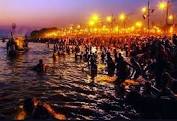
    I have just returned from the pilgrimage of Kumbh Mela at Prayagraj. Where, I even dared to take a dip at Sangam in this biting cold. Sangam happens to be the holy confluence of the Ganga, Yamuna and the mythical Saraswati. It is a blissful experience, to see so many Hindus gathered in such vast numbers. And this is when, one takes time off to think of the grip of faith, coming down from time primordial.

    Kumbha derives its name from both the original festival, being held according to the astrological sign “Kumbha” (Aguarius) and from the associated Hindu legend in which the Gods and demons fought over a pot, or a ‘Kumbh’ of nectar, that would give them immortality. A later addition to the legend says that after taking the pot, one of the Gods, spilled drops of nectar in four places where ‘Kumbha Mela’ is presently held. This is not found in the earliest mentions of the original legend of Samudra Manthan (churning of the ocean) as described in various ancient Hindu texts collectively known as the Puranas.

    The legend of Samudra Manthan tells of a battle between the Devas (benevolent deities) and Asuras (malevolent demigods) for amrita, the nectar drink of immortality. During samudra manthan, amrita was produced and placed in a Kumbha (pot). To prevent the asuras from seizing the amrita, a divine carrier flew away with the pot. In one of the most popular versions added to the original legend later, the carrier of the kumbha is the divine physician Dhanvantari, who stops at four places where the Kumbh Mela is celebrated. In other later additions to the legend, for which clarification is needed the carrier is Garuda, Indra or Mohini, who spill the amrita at four places.

    An entire temporary township covering 2,500 hectares has been constructed, at a cost of several thousand crores. In 2013, the last Kumbha, attracted, 120 million visitors , with 30 million congregating on a single day, Mauni Amawasya, making it the largest human gathering of the world. The Kumbh Mela is held at fixed cycles.

It is said that by bathing at the Sangam, during Kumbha, Moksha or salvation. It is for this reason that Mark Twain—who visited the Kumbha in 1895 wrote: “It is wonderful, the power of a faith like that, that can make multitudes upon multitudes of the old and weak and the young and frail enter without hesitation or complaint upon such incredible journeys.”

Since the dawn of time Kumbha has been a matter of great faith and faith indeed can move mountains.

By Kamlesh Tripathi

*

Share it if you like it

*

Shravan Charity Mission is an NGO that works for poor children suffering from life threatening diseases especially cancer. Our posts are meant for our readers that includes both children and adults and it has a huge variety in terms of content. We also accept donations for our mission. Should you wish to donate for the cause. The bank details are given below:

NAME OF ACCOUNT: SHRAVAN CHARITY MISSION

Account no: 680510110004635 (BANK OF INDIA)

IFSC code: BKID0006805

*

Our publications

GLOOM BEHIND THE SMILE

(The book is about a young cancer patient. Now archived in 7 prestigious libraries of the US, including, Harvard University and Library of Congress. It can also be accessed in MIT through Worldcat.org. Besides, it is also available for reading in Libraries and archives of Canada and Cancer Aid and Research Foundation Mumbai)  

ONE TO TANGO … RIA’S ODYSSEY

(Is a book on ‘singlehood’ about a Delhi girl now archived in Connemara Library, Chennai and Delhi Public Library, GOI, Ministry of Culture, Delhi)

AADAB LUCKNOW … FOND MEMORIES

(Is a fiction written around the great city of Nawabs—Lucknow. It describes Lucknow in great detail and also talks about its Hindu-Muslim amity. That happens to be its undying characteristic. The book was launched in Lucknow International Literary Festival of 2014)

REFRACTIONS … FROM THE PRISM OF GOD

(Co-published by Cankids–Kidscan, a pan India NGO and Shravan Charity Mission, that works for Child cancer in India. The book is endorsed by Ms Preetha Reddy, MD Apollo Hospitals Group. It was launched in Lucknow International Literary Festival 2016)

TYPICAL TALE OF AN INDIAN SALESMAN

(Is a story of an Indian salesman who is, humbly qualified. Yet he fights his ways through unceasing uncertainties to reach the top. A good read not only for salesmen. The book was launched on 10th February, 2018 in Gorakhpur Lit-Fest. Now available in Amazon, Flipkart and Onlinegatha)

RHYTHM … in poems

(Published in January 2019. The book contains 50 poems. The poems describe our day to day life. The book is available in Amazon, Flipkart and Onlinegatha)

(ALL THE ABOVE TITLES ARE AVAILABLE FOR SALE IN AMAZON, FLIPKART AND OTHER ONLINE STORES OR YOU COULD EVEN WRITE TO US FOR A COPY)

*****

LIT-CORNER VIDEO: THE PIECE OF STRING BY Guy De Maupassant

Copyright@shravancharitymission


By Kamlesh Tripathi

*

https://kamleshsujata.wordpress.com

*

Share it if you like it

*

Shravan Charity Mission is an NGO that works for poor children suffering from life threatening diseases especially cancer. Our posts are meant for our readers that includes both children and adults and it has a huge variety in terms of content. We also accept donations for our mission. Should you wish to donate for the cause. The bank details are given below:

NAME OF ACCOUNT: SHRAVAN CHARITY MISSION

Account no: 680510110004635 (BANK OF INDIA)

IFSC code: BKID0006805

*

Our publications

GLOOM BEHIND THE SMILE

(The book is about a young cancer patient. Now archived in 7 prestigious libraries of the US, including, Harvard University and Library of Congress. It can also be accessed in MIT through Worldcat.org. Besides, it is also available for reading in Libraries and archives of Canada and Cancer Aid and Research Foundation Mumbai)  

ONE TO TANGO … RIA’S ODYSSEY

(Is a book on ‘singlehood’ about a Delhi girl now archived in Connemara Library, Chennai and Delhi Public Library, GOI, Ministry of Culture, Delhi)

AADAB LUCKNOW … FOND MEMORIES

(Is a fiction written around the great city of Nawabs—Lucknow. It describes Lucknow in great detail and also talks about its Hindu-Muslim amity. That happens to be its undying characteristic. The book was launched in Lucknow International Literary Festival of 2014)

REFRACTIONS … FROM THE PRISM OF GOD

(Co-published by Cankids–Kidscan, a pan India NGO and Shravan Charity Mission, that works for Child cancer in India. The book is endorsed by Ms Preetha Reddy, MD Apollo Hospitals Group. It was launched in Lucknow International Literary Festival 2016)

TYPICAL TALE OF AN INDIAN SALESMAN

(Is a story of an Indian salesman who is, humbly qualified. Yet he fights his ways through unceasing uncertainties to reach the top. A good read not only for salesmen. The book was launched on 10th February, 2018 in Gorakhpur Lit-Fest. Now available in Amazon, Flipkart and Onlinegatha)

RHYTHM … in poems

(Published in January 2019. The book contains 50 poems. The poems describe our day to day life. The book is available in Amazon, Flipkart and Onlinegatha)

(ALL THE ABOVE TITLES ARE AVAILABLE FOR SALE IN AMAZON, FLIPKART AND OTHER ONLINE STORES OR YOU COULD EVEN WRITE TO US FOR A COPY)

*****


Literary Corner: Coffee House

Copyright@shravancharitymission


By Kamlesh Tripathi

*

https://kamleshsujata.wordpress.com

*

Share it if you like it

*

Shravan Charity Mission is an NGO that works for poor children suffering from life threatening diseases especially cancer. Our posts are meant for our readers that includes both children and adults and it has a huge variety in terms of content. We also accept donations for our mission. Should you wish to donate for the cause. The bank details are given below:

NAME OF ACCOUNT: SHRAVAN CHARITY MISSION

Account no: 680510110004635 (BANK OF INDIA)

IFSC code: BKID0006805

*

Our publications

GLOOM BEHIND THE SMILE

(The book is about a young cancer patient. Now archived in 7 prestigious libraries of the US, including, Harvard University and Library of Congress. It can also be accessed in MIT through Worldcat.org. Besides, it is also available for reading in Libraries and archives of Canada and Cancer Aid and Research Foundation Mumbai)  

ONE TO TANGO … RIA’S ODYSSEY

(Is a book on ‘singlehood’ about a Delhi girl now archived in Connemara Library, Chennai and Delhi Public Library, GOI, Ministry of Culture, Delhi)

AADAB LUCKNOW … FOND MEMORIES

(Is a fiction written around the great city of Nawabs—Lucknow. It describes Lucknow in great detail and also talks about its Hindu-Muslim amity. That happens to be its undying characteristic. The book was launched in Lucknow International Literary Festival of 2014)

REFRACTIONS … FROM THE PRISM OF GOD

(Co-published by Cankids–Kidscan, a pan India NGO and Shravan Charity Mission, that works for Child cancer in India. The book is endorsed by Ms Preetha Reddy, MD Apollo Hospitals Group. It was launched in Lucknow International Literary Festival 2016)

TYPICAL TALE OF AN INDIAN SALESMAN

(Is a story of an Indian salesman who is, humbly qualified. Yet he fights his ways through unceasing uncertainties to reach the top. A good read not only for salesmen. The book was launched on 10th February, 2018 in Gorakhpur Lit-Fest. Now available in Amazon, Flipkart and Onlinegatha

(ALL THE ABOVE TITLES ARE AVAILABLE FOR SALE IN AMAZON, FLIPKART AND OTHER ONLINE STORES OR YOU COULD EVEN WRITE TO US FOR A COPY)

*****


Literary Corner: About Lord Mountbatten of Burma

Copyright@shravancharitymission


By Kamlesh Tripathi

*

https://kamleshsujata.wordpress.com

*

Share it if you like it

*

Shravan Charity Mission is an NGO that works for poor children suffering from life threatening diseases especially cancer. Our posts are meant for our readers that includes both children and adults and it has a huge variety in terms of content. We also accept donations for our mission. Should you wish to donate for the cause. The bank details are given below:

NAME OF ACCOUNT: SHRAVAN CHARITY MISSION

Account no: 680510110004635 (BANK OF INDIA)

IFSC code: BKID0006805

*

Our publications

GLOOM BEHIND THE SMILE

(The book is about a young cancer patient. Now archived in 7 prestigious libraries of the US, including, Harvard University and Library of Congress. It can also be accessed in MIT through Worldcat.org. Besides, it is also available for reading in Libraries and archives of Canada and Cancer Aid and Research Foundation Mumbai)  

ONE TO TANGO … RIA’S ODYSSEY

(Is a book on ‘singlehood’ about a Delhi girl now archived in Connemara Library, Chennai and Delhi Public Library, GOI, Ministry of Culture, Delhi)

AADAB LUCKNOW … FOND MEMORIES

(Is a fiction written around the great city of Nawabs—Lucknow. It describes Lucknow in great detail and also talks about its Hindu-Muslim amity. That happens to be its undying characteristic. The book was launched in Lucknow International Literary Festival of 2014)

REFRACTIONS … FROM THE PRISM OF GOD

(Co-published by Cankids–Kidscan, a pan India NGO and Shravan Charity Mission, that works for Child cancer in India. The book is endorsed by Ms Preetha Reddy, MD Apollo Hospitals Group. It was launched in Lucknow International Literary Festival 2016)

TYPICAL TALE OF AN INDIAN SALESMAN

(Is a story of an Indian salesman who is, humbly qualified. Yet he fights his ways through unceasing uncertainties to reach the top. A good read not only for salesmen. The book was launched on 10th February, 2018 in Gorakhpur Lit-Fest. Now available in Amazon, Flipkart and Onlinegatha

(ALL THE ABOVE TITLES ARE AVAILABLE FOR SALE IN AMAZON, FLIPKART AND OTHER ONLINE STORES OR YOU COULD EVEN WRITE TO US FOR A COPY)

*****


BOOK CORNER VIDEO: THE THREE QUESTIONS by Leo Tolstoy

Copyright@shravancharitymission


By Kamlesh Tripathi

*

https://kamleshsujata.wordpress.com

*

Share it if you like it

*

Shravan Charity Mission is an NGO that works for poor children suffering from life threatening diseases especially cancer. Our posts are meant for our readers that includes both children and adults and it has a huge variety in terms of content. We also accept donations for our mission. Should you wish to donate for the cause. The bank details are given below:

NAME OF ACCOUNT: SHRAVAN CHARITY MISSION

Account no: 680510110004635 (BANK OF INDIA)

IFSC code: BKID0006805

*

Our publications

GLOOM BEHIND THE SMILE

(The book is about a young cancer patient. Now archived in 7 prestigious libraries of the US, including, Harvard University and Library of Congress. It can also be accessed in MIT through Worldcat.org. Besides, it is also available for reading in Libraries and archives of Canada and Cancer Aid and Research Foundation Mumbai)  

ONE TO TANGO … RIA’S ODYSSEY

(Is a book on ‘singlehood’ about a Delhi girl now archived in Connemara Library, Chennai and Delhi Public Library, GOI, Ministry of Culture, Delhi)

AADAB LUCKNOW … FOND MEMORIES

(Is a fiction written around the great city of Nawabs—Lucknow. It describes Lucknow in great detail and also talks about its Hindu-Muslim amity. That happens to be its undying characteristic. The book was launched in Lucknow International Literary Festival of 2014)

REFRACTIONS … FROM THE PRISM OF GOD

(Co-published by Cankids–Kidscan, a pan India NGO and Shravan Charity Mission, that works for Child cancer in India. The book is endorsed by Ms Preetha Reddy, MD Apollo Hospitals Group. It was launched in Lucknow International Literary Festival 2016)

TYPICAL TALE OF AN INDIAN SALESMAN

(Is a story of an Indian salesman who is, humbly qualified. Yet he fights his ways through unceasing uncertainties to reach the top. A good read not only for salesmen. The book was launched on 10th February, 2018 in Gorakhpur Lit-Fest. Now available in Amazon, Flipkart and Onlinegatha

(ALL THE ABOVE TITLES ARE AVAILABLE FOR SALE IN AMAZON, FLIPKART AND OTHER ONLINE STORES OR YOU COULD EVEN WRITE TO US FOR A COPY)

*****



BOOK CORNER VIDEO: The Legend of Lakshmi Prasad by Twinkle Khanna

Copyright@shravancharitymission


Posted by Kamlesh Tripathi

*

https://kamleshsujata.wordpress.com

*

Share it if you like it

*

Shravan Charity Mission is an NGO that works for poor children suffering from life threatening diseases especially cancer. Our posts are meant for our readers that includes both children and adults and it has a huge variety in terms of content. We also accept donations for our mission. Should you wish to donate for the cause. The bank details are given below:

NAME OF ACCOUNT: SHRAVAN CHARITY MISSION

Account no: 680510110004635 (BANK OF INDIA)

IFSC code: BKID0006805

*

Our publications

GLOOM BEHIND THE SMILE

(The book is about a young cancer patient. Now archived in 7 prestigious libraries of the US, including, Harvard University and Library of Congress. It can also be accessed in MIT through Worldcat.org. Besides, it is also available for reading in Libraries and archives of Canada and Cancer Aid and Research Foundation Mumbai)  

ONE TO TANGO … RIA’S ODYSSEY

(Is a book on ‘singlehood’ about a Delhi girl now archived in Connemara Library, Chennai and Delhi Public Library, GOI, Ministry of Culture, Delhi)

AADAB LUCKNOW … FOND MEMORIES

(Is a fiction written around the great city of Nawabs—Lucknow. It describes Lucknow in great detail and also talks about its Hindu-Muslim amity. That happens to be its undying characteristic. The book was launched in Lucknow International Literary Festival of 2014)

REFRACTIONS … FROM THE PRISM OF GOD

(Co-published by Cankids–Kidscan, a pan India NGO and Shravan Charity Mission, that works for Child cancer in India. The book is endorsed by Ms Preetha Reddy, MD Apollo Hospitals Group. It was launched in Lucknow International Literary Festival 2016)

TYPICAL TALE OF AN INDIAN SALESMAN

(Is a story of an Indian salesman who is, humbly qualified. Yet he fights his ways through unceasing uncertainties to reach the top. A good read not only for salesmen. The book was launched on 10th February, 2018 in Gorakhpur Lit-Fest. Now available in Amazon, Flipkart and Onlinegatha

(ALL THE ABOVE TITLES ARE AVAILABLE FOR SALE IN AMAZON, FLIPKART AND OTHER ONLINE STORES OR YOU COULD EVEN WRITE TO US FOR A COPY)

*****


BOOK CORNER: THE ANIMAL FARM by George Orwell

Copyright@shravancharitymission

Khidki (Window)

–Read India Initiative—

This is only an attempt to create interest in reading. We may not get the time to read all the books in our lifetime. But such reviews, talk and synopsis will at least convey what the book is all about.

ANIMAL FARM

By George Orwell

      Animal Farm is an allegorical novella of a hundred and twelve pages by George Orwell, first published in England on 17 August 1945. According to Orwell, the book reflects events leading up to the Russian Revolution of 1917 and then into the Stalinist era of the Soviet Union. Orwell, a democratic socialist himself was a critic of Joseph Stalin and was hostile to Moscow-directed Stalin-ism, an attitude that was critically shaped by his experiences during the Spanish Civil War. Soviet Union, he believed, had become a brutal dictatorship, built upon a cult of personality and enforced by a reign of terror.

    In a letter to Yvonne Davet, Orwell described Animal Farm as a satirical tale against Stalin. In his essay ‘Why I Write’ (1946), he wrote, Animal Farm was the first book in which he tried, with full consciousness of what he was doing, “to fuse political purpose and artistic purpose into one whole.”

    The original title was Animal Farm: A Fairy Story. But the U.S. publishers dropped the subtitle when it was published in 1946. Only one of the translations during Orwell’s lifetime kept it. Other titular variations included subtitles like “A Satire” and “A Contemporary Satire.”

    Orwell wrote the book between November 1943 and February 1944, when the UK was in its wartime alliance with the Soviet Union. Then the British people and intelligentsia held Stalin in high esteem, a phenomenon Orwell hated. The manuscript was initially rejected by a number of British and American publishers, including one of Orwell’s own, Victor Gollancz, which delayed its publication. It became a great commercial success when it did appear partly because international relations were transformed as the wartime alliance gave way to the Cold War.

    Time magazine chose the book as one of the 100 best English-language novels (1923 to 2005). It also featured at number 31 on the Modern Library List of Best 20th-Century Novels. It won a retrospective Hugo Award in 1996 and is included in the Great Books of the Western World selection.

PLOT

    Old Major, the old boar on the Manor Farm, summons the animals on the farm together for a meeting, during which he refers to humans as “enemies” and teaches the animals a revolutionary song called “Beasts of England.”

    But when Major dies, two young pigs, Snowball and Napolean, assume command and consider it a duty to prepare for the Rebellion. The animals revolt driving the drunken, irresponsible farmer Mr Jones, as well as Mrs Jones and the other human caretakers and employees, off the farm, renaming it “Animal Farm”. They adopt the Seven Commandments of Animalism, the most important being, “All animals are equal”. The decree is painted in large letters on one side of the barn.

    Snowball teaches the animals to read and write, while Napoleon educates young puppies on the principles of Animalism. Food is plentiful, and the farm runs smoothly. The pigs elevate themselves to positions of leadership and set aside special food items, ostensibly for their personal health.

    Sometime later, several men attack Animal Farm. Jones and his men are making an attempt to recapture the farm, aided by several other farmers who are terrified of similar animal revolts. Snowball and the animals, who are hiding in ambush, defeat the men by launching a surprise attack as soon as they enter the farmyard. Snowball’s popularity soars with this, and the event is proclaimed as “The Battle of the Cowshed”. It is celebrated annually with the firing of a gun, on the anniversary of the Rebellion. Napoleon and Snowball vie for pre-eminence now. When Snowball announces his plans to modernize the farm by building a windmill. Napoleon has his dogs chase Snowball away from the farm and declares himself as the leader.

    Napoleon enacts changes to the governance structure of the farm, replacing meetings with a committee of pigs who will run the farm. Through a young pig named Squealer, Napoleon claims credit for the windmill idea. The animals work harder with the promise of easier lives with the windmill. When the animals find the windmill collapsed after a violent storm, Napoleon and Squealer convince the animals that Snowball is trying to sabotage their project.

    Once Snowball becomes a scapegoat, Napoleon begins to purge the farm with his dogs, killing animals he accuses of consorting with his old rival. When some animals recall the Battle of the Cowshed, Napoleon (who was nowhere to be found during the battle) frequently smears Snowball as a collaborator of Farmer Jones, while falsely representing himself as the hero of the battle. “Beasts of England” is replaced with an anthem glorifying Napoleon, who appears to be adopting the lifestyle of a man. The animals remain convinced that they are better off than they were under Mr. Jones.

    Mr Frederick, a neighbouring farmer, attacks the farm, using blasting powder to blow up the restored windmill. Although the animals win the battle, they do so at a great cost, as many, including Boxer, the workhorse, are wounded.

    Despite his injuries, Boxer continues working harder and harder, until he collapses while working on the windmill. Napoleon sends for a van to purportedly take Boxer to a veterinary surgeon, explaining that better care can only be given there. Benjamin, the cynical donkey who “could read as well as any pig, notices that the van belongs to a knacker and attempts a futile rescue. Squealer quickly assures the animals that the van had been purchased from the knacker by an animal hospital, and that the previous owner’s signboard had not been repainted.

    In a subsequent report, Squealer reports sadly to the animals that Boxer died peacefully at the animal hospital. The pigs hold a festival one day after Boxer’s death to further praise the glories of Animal Farm and have the animals work harder by taking on Boxer’s ways.

    However, the truth is that Napoleon had engineered the sale of Boxer to the knacker, allowing Napoleon and his inner circle to acquire money to buy whisky for themselves. (In 1940s England, one way for farms to make money was to sell large animals to a knacker, who would kill the animal and boil its remains into animal glue)

    Years pass, the windmill is rebuilt, and another one is also constructed, which gives the farm a good amount of income. However, the ideals which Snowball propagated, including stalls with electric lighting, heating, and running water are all forgotten, with Napoleon advocating that the happiest animals live simple lives. Apart from Boxer, many of the animals who had participated in the Rebellion are now dead or old. Farmer Jones, having moved away after giving up on reclaiming his farm, has also died.

    The pigs start to resemble humans, as they walk upright, carrying whips, they drink alcohol and wear clothes. The Seven Commandments are abridged to just two phrases: “All animals are equal, but some animals are more equal than others.” and “Four legs good, two legs better.”

    Napoleon holds a dinner party for the pigs and local farmers, with whom he celebrates a new alliance. He abolishes the practice of the revolutionary traditions and restores the name “The Manor Farm”. When the animals outside look at the pigs and men, they can no longer distinguish between the two.

Synopsis posted by Kamlesh Tripathi

*

https://kamleshsujata.wordpress.com

*

Share it if you like it

*

Shravan Charity Mission is an NGO that works for poor children suffering from life threatening diseases especially cancer. Our posts are meant for our readers that includes both children and adults and it has a huge variety in terms of content. We also accept donations for our mission. Should you wish to donate for the cause. The bank details are given below:

NAME OF ACCOUNT: SHRAVAN CHARITY MISSION

Account no: 680510110004635 (BANK OF INDIA)

IFSC code: BKID0006805

*

Our publications

GLOOM BEHIND THE SMILE

(The book is about a young cancer patient. Now archived in 7 prestigious libraries of the US, including, Harvard University and Library of Congress. It can also be accessed in MIT through Worldcat.org. Besides, it is also available for reading in Libraries and archives of Canada and Cancer Aid and Research Foundation Mumbai)  

ONE TO TANGO … RIA’S ODYSSEY

(Is a book on ‘singlehood’ about a Delhi girl now archived in Connemara Library, Chennai and Delhi Public Library, GOI, Ministry of Culture, Delhi)

AADAB LUCKNOW … FOND MEMORIES

(Is a fiction written around the great city of Nawabs—Lucknow. It describes Lucknow in great detail and also talks about its Hindu-Muslim amity. That happens to be its undying characteristic. The book was launched in Lucknow International Literary Festival of 2014)

REFRACTIONS … FROM THE PRISM OF GOD

(Co-published by Cankids–Kidscan, a pan India NGO and Shravan Charity Mission, that works for Child cancer in India. The book is endorsed by Ms Preetha Reddy, MD Apollo Hospitals Group. It was launched in Lucknow International Literary Festival 2016)

TYPICAL TALE OF AN INDIAN SALESMAN

(Is a story of an Indian salesman who is, humbly qualified. Yet he fights his ways through unceasing uncertainties to reach the top. A good read not only for salesmen. The book was launched on 10th February, 2018 in Gorakhpur Lit-Fest. Now available in Amazon, Flipkart and Onlinegatha

(ALL THE ABOVE TITLES ARE AVAILABLE FOR SALE IN AMAZON, FLIPKART AND OTHER ONLINE STORES OR YOU COULD EVEN WRITE TO US FOR A COPY)

*****


SHORT STORY: THE FOOLISH HARE

Copyright@shravancharitymission

The Foolish Hare

    One day a little foolish hare was sitting under a fruit tree, and was deeply immersed in his own thoughts. As a matter of habit he mostly took quick decisions without giving a second thought. One day he got a brainwave. “What’ll happen to me when the earth comes to an end?” At that very moment a fruit fell from the tree. Off ran the foolish hare as fast as his legs could carry him. He thought that the noise of the fruit falling on the ground was that of the earth breaking to pieces. He ran and ran, not daring to look behind. 

    “Brother, Brother,” called another little hare that saw him running, “please tell me what has happened!” 

    But the little hare ran on and on and did not turn to answer. So, the other hare ran after him calling louder and louder, “What has happened, little brother, what has happened?” 

    Unable to withstand the repeated call of the fellow hare, the little hare stopped for a moment and said, “The earth is breaking into pieces!” Upon hearing this the other hare started running even faster, and then a third hare joined them and then a fourth and a fifth till a hundred thousand hare started racing through the fields. And they raced through the forest and valleys. Upon hearing that the earth was coming to an end even the deer, the boars, the elks, the buffaloes, the oxen, the rhinos, the tigers, the lions and the elephants, all ran wildly with them. 

    But among them lived a lion that was very wise. He knew everything that happened in the world. He came to know that so many hundreds and thousands of animals were running away because they believed that the earth was breaking into pieces. He thought, “This earth of ours is far from coming to an end. But these poor creatures will die if I don’t save them. In their fright they might just run blindly and drown in the sea.” 

    So, he ran at such a pace that he reached a certain mountain which lay in their path. As they passed by the mountain he roared three times, so loudly that they stopped. All stood still, close to each other, trembling. 

    The great lion descended from the mountain and approached them. “Why are you running at such a pace?” he asked. 

    “The earth is breaking to pieces”, they replied. 

    “Who saw it breaking to pieces?” he asked. 

    “The elephants”, they replied. 

    “Did you see it breaking?” he asked the elephants. 

    “No. we did not see it. The lions saw it,” they replied. 

    “Did you see it?” he asked the lions. 

    “No. the tigers saw it”, they replied. 

    Then the lion asked the tigers, “Did you see it?” 

    “The rhinos saw it”, they replied. 

    But the rhinos said, “The elks saw it.” 

    The elks said, “The bears saw it.” 

    The bears said, “The oxen saw it.” 

    The oxen said. “The deer saw it.” 

    The deer said. “The hares saw it.” 

    And the hares said, “That little one told us that the earth was breaking.” 

    “Did you see the earth breaking?” He asked the little hare. 

    “Yes lord,” replied the hare. “I saw it breaking.” “Where were you when you saw it breaking?” He asked. 

    With a trembling voice the little hare replied, “I was sitting beneath a fruit tree and thought, “What will happen to me when the earth comes to an end?” And at that very moment I heard the noise of the earth breaking so I ran.” 

    The wise lion thought for a moment. He was sitting under a fruit tree. Certainly the noise he heard was that of a fruit falling on the ground. “Ride on my back, little one,” he said, “and show me where you saw the earth break.” 

    The little hare jumped on his back and the great lion flew to the place. But as they approached the fruit tree, the little hare jumped off. So frightened was he to return to the spot. And he pointed out the tree to the lion, saying, “Lord, there is the tree.” 

    The great lion went to the tree and saw the spot where the little hare had been sitting and the fruit which had fallen from the tree. “Come here little one”, he called. 

    “Now where do you see the earth broken? 

    Little hare looked around. He saw the fruit on the ground. Now he knew there was no reason for his fright. He jumped once again on the lion’s back and away they went to the hundreds of creatures who were awaiting their return. 

    The lion then told the great multitude that the noise the little hare had heard was of a fruit falling to the ground. And so all turned back, the elephants to the valleys, the lions to the caves, the deer to the river banks and the little hare to the fruit tree. The little hare was foolish and had brought trouble to all animals. 

    MORAL: Beware of rumours … especially whattsapp rumours. And being foolish is dangerous for oneself as well as others.

By Kamlesh Tripathi

*

https://kamleshsujata.wordpress.com

*

Share it if you like it

*

Shravan Charity Mission is an NGO that works for poor children suffering from life threatening diseases especially cancer. Our posts are meant for our readers that includes both children and adults and it has a huge variety in terms of content. We also accept donations for our mission. Should you wish to donate for the cause. The bank details are given below:

NAME OF ACCOUNT: SHRAVAN CHARITY MISSION

Account no: 680510110004635 (BANK OF INDIA)

IFSC code: BKID0006805

*

Our publications

GLOOM BEHIND THE SMILE

(The book is about a young cancer patient. Now archived in 7 prestigious libraries of the US, including, Harvard University and Library of Congress. It can also be accessed in MIT through Worldcat.org. Besides, it is also available for reading in Libraries and archives of Canada and Cancer Aid and Research Foundation Mumbai)  

ONE TO TANGO … RIA’S ODYSSEY

(Is a book on ‘singlehood’ about a Delhi girl now archived in Connemara Library, Chennai and Delhi Public Library, GOI, Ministry of Culture, Delhi)

AADAB LUCKNOW … FOND MEMORIES

(Is a fiction written around the great city of Nawabs—Lucknow. It describes Lucknow in great detail and also talks about its Hindu-Muslim amity. That happens to be its undying characteristic. The book was launched in Lucknow International Literary Festival of 2014)

REFRACTIONS … FROM THE PRISM OF GOD

(Co-published by Cankids–Kidscan, a pan India NGO and Shravan Charity Mission, that works for Child cancer in India. The book is endorsed by Ms Preetha Reddy, MD Apollo Hospitals Group. It was launched in Lucknow International Literary Festival 2016)

TYPICAL TALE OF AN INDIAN SALESMAN

(Is a story of an Indian salesman who is, humbly qualified. Yet he fights his ways through unceasing uncertainties to reach the top. A good read not only for salesmen. The book was launched on 10th February, 2018 in Gorakhpur Lit-Fest. Now available in Amazon, Flipkart and Onlinegatha

(ALL THE ABOVE TITLES ARE AVAILABLE FOR SALE IN AMAZON, FLIPKART AND OTHER ONLINE STORES OR YOU COULD EVEN WRITE TO US FOR A COPY)

*****



BOOK CORNER: THE PIECE OF STRING by Guy De Maupassant

Copyright@shravancharitymission

Khidki (Window)

–Read India Initiative—

This is only an attempt to create interest in reading. We may not get the time to read all the books in our lifetime. But such reviews, talk and synopsis will at least convey what the book is all about.


THE PIECE OF STRING

By Guy De Maupassant

    The story is set in the little village of Norman. It is about several months into the life of Maitre Hauchecorne, an old peasant. On an autumn market-day in Goderville, Hauchecorne is about to enter the square when he sees a piece of string on the ground. And he being of the saving kind, picks the string and keeps it with him. As he does so, he becomes aware that an enemy of his, M. Malandain, the local harness maker, is watching him. Ashamed to be seen picking up a remnant of string, the protagonist furtively hides it in his clothing and then pretends to be looking for something of value on the ground. With his head bent over in his intent search, he moves on towards the market.

    A few hours later, Hauchecorne is having his noon meal at the local tavern, Jordain’s, which is filled with local peasants, their gossipy chatter, and the powerful odour of food cooking. Twice the meal and the chatter are interrupted. First, by the voice of the town crier, who gravely announces the loss by M. Houlbreque of a pocketbook containing five hundred franc. Second, by the appearance of the chief of gendarmes, who summons Hauchecorne to see the mayor on business.

    Leaving his meal, the protagonist hurries to the mayor’s office. Where, he is unofficially confronted with the charge of having found Houlbreque’s pocketbook and of keeping it. The sole witness to the incident is Malandain, says the mayor. Hauchecorne sputters in rage at the accusation coming from his enemy. His defense—one that he shouts over and over—is that no one could seriously mistake a pocketbook for a piece of string. Those present do not believe him, and they say so, which enrages Hauchecorne even more. Malandain appears, and his reiterating of the charge against the protagonist leads to a lengthy and bitter exchange between them. To prove his innocence, Hauchecorne insists on being searched. But no pocketbook or large sum of money is found on him. The mayor dismisses him with a warning that as mayor he will consult a higher authority in the matter.

    Out in the village again, old Hauchecorne finds that many of the peasants have already heard of the event. But to set the record straight Hauchecorne begins to restate what he told the mayor and the others. That he found a piece of string and came across no pocketbook. To dramatize his points he turns his pockets inside out. Both his friends and strangers boldly tell him that they place no faith in his story, and that he is indeed an old rascal and a rogue.

    On his way home that night, and after his evening meal, he again stops his neighbours and strangers and again goes over his litany of facts in relation to the string and the pocketbook and the mayor’s false accusation. But sadly no single peasant steps forward to support his claim of innocence.

    The day’s events have made him ill. The next day, however, the pocketbook and its contents are found on the road and returned to their rightful owner. In his hour of triumph, Hauchecorne goes into the village and endlessly recounts the charge made against him the previous day and then the good news that fully exonerates him. Indeed, he spends the rest of the day on the road, returning often to the square to spread the news. At first he is convinced that his big adventure has ended most favourably for him, but as the day wears on, he senses that something is still wrong. He was easy now, yet something was worrying him without his knowing exactly what it is. People had a joking manner while they listened to him. They did not seem convinced. He seemed to feel their remarks behind his back.

    A week later, having brooded over the collective reaction to his supposed vindication, the protagonist returns once more to the Goderville market and once more confronts his peers with the details of the found string and the lost and returned pocketbook. On the streets and in Jordain’s, the response to Hauchecorne is the same: That he is guilty and both he and they know it. From time to time that day, he is even told that he had an accomplice who gave back the pocketbook, once Hauchecorne’s name had become implicated in the theft.

    Angry, dejected, and confused, he is unable to finish his meal at Jordain’s and is forced to return home amid the sound of mocking laughter. Going over and over in his mind the events that began one week before, Hauchecorne tries to come to terms with what has happened to him. He is positive of one thing. He is unable to prove his innocence because his reputation in Goderville for being crafty is well-known. He is, perhaps, capable of having done what they accused him of and even of boasting of it as a good trick. In other words, his reputation has preceded him—and that did not stand him in good stead now.

    Once he had prided himself on these tricky business practices. But now he had understood that those practices had predisposed his peasant neighbours and friends to doubt his innocence. The Norman peasant, suspicious by nature, was ready to think the worst of old Hauchecorne, and what all he could do.

    The gross injustice weighs heavily on the protagonist’s mind. He sees himself as being alone in the community (in fact, Guy de Maupassant does not mention Hauchecorne’s family, if he does have one). He knows, he has no defenders and many accusers. His brooding continues. His mind begins to get affected by his need to convince them that he is no dissembler. Hauchecorne goes forth every day in the village, redoubling his efforts to persuade any and all that he spied a piece of string in the road and put it in his pocket, but about the pocketbook, he knows nothing. The cruelty of the peasants is such that Hauchecorne becomes in short order, a butt of public jokes. The more they ask him to recite his tale of woe, the more elaborate and the more subtle his argument for his innocence becomes; as always, he is never believed.

    The protagonist falls ill in late December and is bedridden for some time. Early in January, he dies. In his deathbed delirium, his denials of wrongdoing are focused in a single phrase uttered repeatedly: “A little bit of string—a little bit of string.”

***

Synopsis by Kamlesh Tripathi

*

https://kamleshsujata.wordpress.com

*

Share it if you like it

*

Shravan Charity Mission is an NGO that works for poor children suffering from life threatening diseases especially cancer. Our posts are meant for our readers that includes both children and adults and it has a huge variety in terms of content. We also accept donations for our mission. Should you wish to donate for the cause. The bank details are given below:

NAME OF ACCOUNT: SHRAVAN CHARITY MISSION

Account no: 680510110004635 (BANK OF INDIA)

IFSC code: BKID0006805

*

Our publications

GLOOM BEHIND THE SMILE

(The book is about a young cancer patient. Now archived in 7 prestigious libraries of the US, including, Harvard University and Library of Congress. It can also be accessed in MIT through Worldcat.org. Besides, it is also available for reading in Libraries and archives of Canada and Cancer Aid and Research Foundation Mumbai)  

ONE TO TANGO … RIA’S ODYSSEY

(Is a book on ‘singlehood’ about a Delhi girl now archived in Connemara Library, Chennai and Delhi Public Library, GOI, Ministry of Culture, Delhi)

AADAB LUCKNOW … FOND MEMORIES

(Is a fiction written around the great city of Nawabs—Lucknow. It describes Lucknow in great detail and also talks about its Hindu-Muslim amity. That happens to be its undying characteristic. The book was launched in Lucknow International Literary Festival of 2014)

REFRACTIONS … FROM THE PRISM OF GOD

(Co-published by Cankids–Kidscan, a pan India NGO and Shravan Charity Mission, that works for Child cancer in India. The book is endorsed by Ms Preetha Reddy, MD Apollo Hospitals Group. It was launched in Lucknow International Literary Festival 2016)

TYPICAL TALE OF AN INDIAN SALESMAN

(Is a story of an Indian salesman who is, humbly qualified. Yet he fights his ways through unceasing uncertainties to reach the top. A good read not only for salesmen. The book was launched on 10th February, 2018 in Gorakhpur Lit-Fest. Now available in Amazon, Flipkart and Onlinegatha

(ALL THE ABOVE TITLES ARE AVAILABLE FOR SALE IN AMAZON, FLIPKART AND OTHER ONLINE STORES OR YOU COULD EVEN WRITE TO US FOR A COPY)

*****