Category Archives: column

INTERESTING FACTS- CHAPTER 10

Copyright@shravancharitymission

Successful and unsuccessful people do not differ in their abilities. They vary in their desire to reach their potential.

*

Before the world had formed into nation states, any movement of people was merely a normal condition of economics and geography. The Neanderthals shifted base from Africa to Europe and Central Asia in search of a more hospitable climate and food.

*

Toyota has sold more than 5 million of its prized hybrid automobiles across the world and not just in Japan.  It employs more than 350000 employees but most of them are not Japanese.

*

The largest market for Rolls Royce cars, till recently was China, and not United Kingdom/ The darker the night the brighter the stars burn.

*

European Union is the biggest open market, the world’s second largest economy, the first trading partner of 80 countries including India.

*

Tamil Nadu has a questionable record on free speech, with 213 defamation cases filed against politicians and media by the government since 2011.

*

There are 3 cops for each VIP in India and 1 cop for 633 AAM AADMI. See the disparity.

*

What took nature millions of years to produce, we seem ready to wipe out in one generation. It is estimated that by 2030 we will have only 50% of the water we need for our survival in this world.

*

Toilet coverage in India was just 38% in 2014. Official statistics show this has risen to 68% now with 5 crore toilets built in 2.5 lakh villages and with 214 districts declared as Open Defecation Free.

*

Irrigation accounts for 80% of water demand followed by drinking needs, industry and energy sector. And that’s why drip irrigation needs to be promoted across the world.

***

Posted by Kamlesh Tripathi

*

https://kamleshsujata.wordpress.com

*

Share it if you like it

*

Shravan Charity Mission is an NGO that works for poor children suffering from life threatening diseases especially cancer. Our posts are meant for our readers that includes both children and adults and it has a huge variety in terms of content. We also accept donations for our mission. Should you wish to donate for the cause. The bank details are given below:

NAME OF ACCOUNT: SHRAVAN CHARITY MISSION

Account no: 680510110004635 (BANK OF INDIA)

IFSC code: BKID0006805

*

Our publications

GLOOM BEHIND THE SMILE

(The book is about a young cancer patient. Now archived in 7 prestigious libraries of the US, including, Harvard University and Library of Congress. It can also be accessed in MIT through Worldcat.org. Besides, it is also available for reading in Libraries and archives of Canada and Cancer Aid and Research Foundation Mumbai)  

ONE TO TANGO … RIA’S ODYSSEY

(Is a book on ‘singlehood’ about a Delhi girl now archived in Connemara Library, Chennai and Delhi Public Library, GOI, Ministry of Culture, Delhi)

AADAB LUCKNOW … FOND MEMORIES

(Is a fiction written around the great city of Nawabs—Lucknow. It describes Lucknow in great detail and also talks about its Hindu-Muslim amity. That happens to be its undying characteristic. The book was launched in Lucknow International Literary Festival of 2014)

REFRACTIONS … FROM THE PRISM OF GOD

(Co-published by Cankids–Kidscan, a pan India NGO and Shravan Charity Mission, that works for Child cancer in India. The book is endorsed by Ms Preetha Reddy, MD Apollo Hospitals Group. It was launched in Lucknow International Literary Festival 2016)

TYPICAL TALE OF AN INDIAN SALESMAN

(Is a story of an Indian salesman who is, humbly qualified. Yet he fights his ways through unceasing uncertainties to reach the top. A good read not only for salesmen. The book was launched on 10th February, 2018 in Gorakhpur Lit-Fest. Now available in Amazon, Flipkart and Onlinegatha)

RHYTHM … in poems

(Published in January 2019. The book contains 50 poems. The poems describe our day to day life. The book is available in Amazon, Flipkart and Onlinegatha)

(ALL THE ABOVE TITLES ARE AVAILABLE FOR SALE IN AMAZON, FLIPKART AND OTHER ONLINE STORES OR YOU COULD EVEN WRITE TO US FOR A COPY)

*****


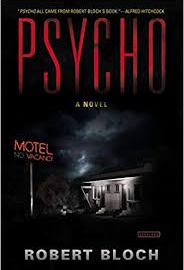
BOOK CORNER: PSYCHO by Robert Bloch

Copyright@shravancharitymission

Khidki (Window)

–Read India Initiative—

This is only an attempt to create interest in reading. We may not get the time to read all the books in our lifetime. But such reviews, talk and synopsis will at least convey what the book is all about.

Psycho was written in the year 1959 by American author Robert Bloch. The book is so-so-so-so very scary that one might even feel scared, in meeting its author.  The novel is widely recognized, as Bloch’s, most illustrious work. So intensely written, that even while narrating it to you now, I get a feeling as if someone is standing behind me.

    The book was later adapted into Alfred Hitchcock’s seminal 1960 film of the same name, and was loosely adapted into the Bates Motel television series of (2013-2017). Bloch later wrote two sequels, which are unrelated to any of the film sequels.

    The novel tells the story of Norman Bates, caretaker of an isolated motel who struggles under his domineering Mother and gets embroiled in a series of murders. 

     Norman Bates is the main protagonist of this novel, who traces his struggles with insanity, particularly, split personality disorder. In the novel, Norman is described, as in mid-forties, overweight, pale, and balding. As a child, Norman had an extremely dysfunctional, even abusive relationship, with his Mother that forever changed his ability to relate normally in society. As an adult, Norman lives alone with his Mother and runs the Bates Motel. When the novel opens, Norman is reading about the Oedipus Situation or Complex with the hope of understanding more about his strange relationship with his Mother. It’s clear that Norman’s relationship with his Mother has deeply affected the way he views all women, particularly women, to whom he is sexually attracted. Norman drinks as an excuse to block the strange voices in his head—arguably his Mother’s voice—telling him that he’s not good enough, and reminding him that he’s impotent.

    All in all ‘Psycho’ is a horror story of Norman Bates, and his strange relationship with his Mother, and the motel he runs on the side of a deserted highway.

    The novel opens with an image of a forty-year-old Norman Bates reading in his office. His Mother approaches and chides him for reading filthy material. The two get into a vicious fight is when the Mother lambasts Norman. He is too weak, and too afraid to stand up to her. She challenges everything of Norman, from his social skills to his sexual predilections while he silently takes the abuse. In his head, however, he imagines the release he would feel if he killed his Mother, but the buzzer ringing at the front door breaks him from his thoughts. Someone needs a room in the motel.

    Its a woman who needs a room. Mary Crane, has just driven across several states in the pouring rain. Norman doesn’t know that Mary Crane has stolen $40,000 from her real estate boss. She hopes to meet Sam Loomis, her fiancé with whom she’s been having a long distance relationship, and with this money she wants to settle his debts, and start a married life together. After getting lost on the highway, Mary pulls into the Bates Motel and asks for a room. Norman, who has clearly never interacted with young women, shyly asks Mary, up to the house for dinner. She accepts, but when she hears of the horrific, and seemingly abusive, relationship that Norman has with his Mother, she gently suggests that Norman put her in an institution. This idea outrages Norman, who shouts and screams that his Mother is normal: “She’s not crazy!” Mary quietly excuses herself, and returns to her motel room, and vows to return the money she’s stolen so that she doesn’t end up being tortured by guilt. Moments later, an old woman enters Mary’s room while she’s in the shower and beheads her.

    In the moments before Mary was murdered, Norman had been watching her undress through a peephole in his office. He was drinking at that time, and passed out in his chair. He awoke to find Mary’s corpse and immediately suspected his Mother to be the murderer. He momentarily considers letting Mother go to the prison, but the thought of being separated from her is too much for him. He knows he must protect her, help cover up her crimes. Norman methodically cleans up the murder scene, just as he remembers cleaning up the scene with Mother and “Uncle Joe” all those years ago. He deposits Mary’s corpse and the car into the sinkhole behind the motel and assumes he has got away with the murder. Meanwhile, Mary’s old boss, Mr. Lowery, hires a private detective to track Mary in order to recover his $40,000 that she had stolen. The detective, Mr. Arbogast, traces Mary to the motel and now stands knocking at the door, demanding to speak with Norman, or his Mother. Moments later, the same mysterious figure, who appears to be an old woman, attacks Arbogast and slits his throat. Norman deposits Arbogast’s body and the car in the same sinkhole.

    Unfortunately for Norman, Mary Crane’s little sister Lila by now had grown suspicious of her sister’s disappearance. She meets up with Sam Loomis to search for her. They too trace Mary back to the Bates Motel, Lila is now convinced that something terrible has happened to Mary in the motel only.

    She notifies the local sheriff, but he insists that she is wrong. He tells her that Norman Bates is harmless, and that his mother has been dead for years now (after she poisoned herself and her lover, “Uncle Joe”). Unconvinced, Lila arranges for Sam Loomis to distract Norman while she explores the house searching for clues. Although Sam does his best to distract Norman, he drops his guard when Norman smashes a whisky bottle over Sam’s head, knocking him unconscious. Meanwhile, as Lila explores the house, she finds a tiny shrivelled woman whom she assumes is Mrs. Bates. But as she approaches, she discovers that the woman is actually a taxidermal corpse or you could say a stuffed corpse. Norman appears behind Lila, dressed in his mother’s clothes and speaking in a high, affected voice saying, “I am Norma Bates.” He raises a butcher knife and pounces on Lila, but Sam, who wakes up from his stupor well on time, manages to wrestle Norman away from her and hold him there until he is arrested. In the weeks that follow, it is discovered that Norman only had murdered his mother and her lover, “Uncle Joe.” To mask the guilt he felt over the murders, Norman developed a split personality in which Mother became his alternate self. At the trial, Norman is found to be insane and is institutionalized or you could say imprisoned in a house prison for life.

Synopsis by Kamlesh Tripathi

*

https://kamleshsujata.wordpress.com

*

Share it if you like it

*

Shravan Charity Mission is an NGO that works for poor children suffering from life threatening diseases especially cancer. Our posts are meant for our readers that includes both children and adults and it has a huge variety in terms of content. We also accept donations for our mission. Should you wish to donate for the cause. The bank details are given below:

NAME OF ACCOUNT: SHRAVAN CHARITY MISSION

Account no: 680510110004635 (BANK OF INDIA)

IFSC code: BKID0006805

*

Our publications

GLOOM BEHIND THE SMILE

(The book is about a young cancer patient. Now archived in 7 prestigious libraries of the US, including, Harvard University and Library of Congress. It can also be accessed in MIT through Worldcat.org. Besides, it is also available for reading in Libraries and archives of Canada and Cancer Aid and Research Foundation Mumbai)  

ONE TO TANGO … RIA’S ODYSSEY

(Is a book on ‘singlehood’ about a Delhi girl now archived in Connemara Library, Chennai and Delhi Public Library, GOI, Ministry of Culture, Delhi)

AADAB LUCKNOW … FOND MEMORIES

(Is a fiction written around the great city of Nawabs—Lucknow. It describes Lucknow in great detail and also talks about its Hindu-Muslim amity. That happens to be its undying characteristic. The book was launched in Lucknow International Literary Festival of 2014)

REFRACTIONS … FROM THE PRISM OF GOD

(Co-published by Cankids–Kidscan, a pan India NGO and Shravan Charity Mission, that works for Child cancer in India. The book is endorsed by Ms Preetha Reddy, MD Apollo Hospitals Group. It was launched in Lucknow International Literary Festival 2016)

TYPICAL TALE OF AN INDIAN SALESMAN

(Is a story of an Indian salesman who is, humbly qualified. Yet he fights his ways through unceasing uncertainties to reach the top. A good read not only for salesmen. The book was launched on 10th February, 2018 in Gorakhpur Lit-Fest. Now available in Amazon, Flipkart and Onlinegatha)

RHYTHM … in poems

(Published in January 2019. The book contains 50 poems. The poems describe our day to day life. The book is available in Amazon, Flipkart and Onlinegatha)

(ALL THE ABOVE TITLES ARE AVAILABLE FOR SALE IN AMAZON, FLIPKART AND OTHER ONLINE STORES OR YOU COULD EVEN WRITE TO US FOR A COPY)

*****



SHORT STORY: Lata Bhagvan Kare … the marathon runner

Copyright@shravancharitymission

    This is a real life story of a sixty-five year old lady, Lata Bhagvan Kare, a resident of a small village in Buldhama district, in Maharashra. She was leading a simple life with her husband. They both worked as farm labour and barely made enough to make ends meet. They had a small house near the farmland where they used to live.

    The small savings that they had accumulated all throughout their lives was spent on getting their three daughters married off. Apart from their daughters they also had a son. After the daughters were settled their responsibilities were practically over. They enjoyed the simple pleasures of life and of course each other’s company. They were inseparable and understood each other comprehensively. Their relationship was a proof of the principle that you did not need luxury to be happy.

    One day after returning from the farm, her husband told her that he was not feeling well. First she tried all sorts of herbal medicines to help him, but he wouldn’t get better. The local government hospital, diagnosed him of some serious infection. They recommended he be taken to a bigger hospital that had better facilities for further tests. This bewildered Lata. They barely had enough money for the fare to reach the hospital, let alone the expensive tests prescribed by the doctors. With tearful eyes, she told her husband the news and felt helpless. But then how could she let her husband die without treatment.

    She dropped her ego and pulled together all her courage to beg her neighbours and relatives for donations to go to a bigger hospital in order to save her husband’s life. With the donations she had received they finally got to bigger hospital. This was not the sort of place that they were used to, being in. They felt very uncomfortable and out of place. Nevertheless, Lata gathered courage, to ask for a doctor. The official at the reception desk collected an initial fee. With that they had exhausted almost a major chunk of money that Lata was carrying. They were asked to wait outside the doctor’s cabin until they were called.

    When their turn came, her husband was called in. after examination, the doctor handed her a list for further tests, some medicines and the recommendation for hospitalization. With these developments Lata went into a tizzy. She had no money and nowhere to go. How do I save my husband she thought? With tears flowing down her cheeks, she and her husband slowly walked out of the hospital.

    She couldn’t have afforded the expensive hospital canteen, so they stopped by a samosa stall at the bus stand. They bought two samosas for the journey back to their village. Lata thought this could perhaps be her husband’s last meal. The samosa-wallah wrapped the samosa and handed it to her with a smile. As she ate her samosa and chutney from the newspaper wrapper, she saw the headline: ‘Baramati Marathon: Attractive Prize Money.’ Her heart missed a beat. The next moment she was preparing to run the race.

    The next day as everyone lined up at the start of the race, in their running gear, Lata Kare stood there, in her red-checked Maharashtrian-style sari. Barefoot, with tears in her eyes. She argued with the organisers, to allow her to run in the marathon, but they refused. She was sixty five. In trying to save her husband, they did not want her to die. After about an hour of begging and pleading, they finally agreed to let her run, and pinned a number on her clothes. As she began running, people turned to look at her and laughed.

    It was a sight for sore eyes. Teenagers and young adults who had been practicing for months, for this race, lined up, next to an old lady who had hitched her sari above her ankles. She had never run a race in her life, what to say of a marathon. Little did her competitors know that they were about to get schooled by someone who was old enough to be their grandmother. Lata could not think of anything else, but for the love she had for her husband. This race was a matter of life and death for her. What were a few pebbles and rocks to stop her progress?

    Lata, finally ran and ran like the wind with just one focus—the finish line. Her feet began to bleed, her sari became soaked in sweat, but she kept running and running. It would have been an achievement had she even finished the race. But she had aimed much higher. The people who witnessed this spectacle cheered her all along the way. They were touched by her reason for running.

    It would be a pointless story if she did not win. For there was no award for mere participation, yet she had done it! The organizers of the race could not believe that Lata Kare a sixty-five-year-old Maharashtrian woman from a small village, had won the race. The crowds on the streets of Baramati clapped for her and celebrated her victory. She was now the local hero, but she did not care for the attention.

    She collected her winnings, marched into the hospital and got her husband the best treatment. At the same time she even got a few bandages done on her feet. She had achieved her mission and that was to save her husband. As they say, the most powerful force in the world is love. Lata went on to win for the next two years consecutively.

Moral of the story: If you have determination and confidence nothing is impossible.

Posted by Kamlesh Tripathi

*

https://kamleshsujata.wordpress.com

*

Share it if you like it

*

Shravan Charity Mission is an NGO that works for poor children suffering from life threatening diseases especially cancer. Our posts are meant for our readers that includes both children and adults and it has a huge variety in terms of content. We also accept donations for our mission. Should you wish to donate for the cause. The bank details are given below:

NAME OF ACCOUNT: SHRAVAN CHARITY MISSION

Account no: 680510110004635 (BANK OF INDIA)

IFSC code: BKID0006805

*

Our publications

GLOOM BEHIND THE SMILE

(The book is about a young cancer patient. Now archived in 7 prestigious libraries of the US, including, Harvard University and Library of Congress. It can also be accessed in MIT through Worldcat.org. Besides, it is also available for reading in Libraries and archives of Canada and Cancer Aid and Research Foundation Mumbai)  

ONE TO TANGO … RIA’S ODYSSEY

(Is a book on ‘singlehood’ about a Delhi girl now archived in Connemara Library, Chennai and Delhi Public Library, GOI, Ministry of Culture, Delhi)

AADAB LUCKNOW … FOND MEMORIES

(Is a fiction written around the great city of Nawabs—Lucknow. It describes Lucknow in great detail and also talks about its Hindu-Muslim amity. That happens to be its undying characteristic. The book was launched in Lucknow International Literary Festival of 2014)

REFRACTIONS … FROM THE PRISM OF GOD

(Co-published by Cankids–Kidscan, a pan India NGO and Shravan Charity Mission, that works for Child cancer in India. The book is endorsed by Ms Preetha Reddy, MD Apollo Hospitals Group. It was launched in Lucknow International Literary Festival 2016)

TYPICAL TALE OF AN INDIAN SALESMAN

(Is a story of an Indian salesman who is, humbly qualified. Yet he fights his ways through unceasing uncertainties to reach the top. A good read not only for salesmen. The book was launched on 10th February, 2018 in Gorakhpur Lit-Fest. Now available in Amazon, Flipkart and Onlinegatha)

RHYTHM … in poems

(Published in January 2019. The book contains 50 poems. The poems describe our day to day life. The book is available in Amazon, Flipkart and Onlinegatha)

(ALL THE ABOVE TITLES ARE AVAILABLE FOR SALE IN AMAZON, FLIPKART AND OTHER ONLINE STORES OR YOU COULD EVEN WRITE TO US FOR A COPY)

*****


REMEMBRANCE–SHRADHANJALI

Copyright@shravancharitymission

 (Shravan Tripathi 23.1.1993 — 24.2.2009)

DEAR SHRAVAN

I see you here and I see you there,

Even when I know,

All very well,

You aren’t … really there.

*

And every year on this very day,

You do send me to despair,

But when I reflect,

 I still can recollect.

*

Those lovely moments,

When you were born,

When I had thought,

We’ll be together … life long,

But that was not to be.

*

In your fight for life,

I remember with gripe,

Seasons had come, and seasons had gone,

Where time was kind, but destiny was strong.

*

Though time fought well,

 Yet destiny won,

As it snatched you away,

With its divine intent.

*

Now that you’re gone,

There isn’t too much of a song,

Except for the noble mission,

That you had brought along.

*

You often come in my dreams,

That brings me loads of serene,

Is when, I wilfully dream,

To serve those sick umpteen.

*

It is said,

Life is a mystery,

Where destiny,

 Is another name of cruelty?

 But where God is kind,

But time is like a serpentine.

*

And when I bring it upon myself,

I realise,

Your short life span was indeed the mystery,

Where destiny pulled off the grim cruelty,

And between the mystery and the cruelty,

Was God’s beauty?

But where time still meanders,

Like the serpentine’s ferocity.

*

And in this windswept life of mine,

 One more year, goes by,

But I’m happy to tell you,

I’ve kept your mission alive.

*

So rest in peace,

For you have achieved,

What you came for, in discreet.

***

Only the luckiest of the lucky don’t encounter the agony of losing their child

*****

By Kamlesh Tripathi

*

https://kamleshsujata.wordpress.com

*

Share it if you like it

*

Shravan Charity Mission is an NGO that works for poor children suffering from life threatening diseases especially cancer. Our posts are meant for our readers that includes both children and adults and it has a huge variety in terms of content. We also accept donations for our mission. Should you wish to donate for the cause. The bank details are given below:

NAME OF ACCOUNT: SHRAVAN CHARITY MISSION

Account no: 680510110004635 (BANK OF INDIA)

IFSC code: BKID0006805

*

Our publications

GLOOM BEHIND THE SMILE

(The book is about a young cancer patient. Now archived in 7 prestigious libraries of the US, including, Harvard University and Library of Congress. It can also be accessed in MIT through Worldcat.org. Besides, it is also available for reading in Libraries and archives of Canada and Cancer Aid and Research Foundation Mumbai)  

ONE TO TANGO … RIA’S ODYSSEY

(Is a book on ‘singlehood’ about a Delhi girl now archived in Connemara Library, Chennai and Delhi Public Library, GOI, Ministry of Culture, Delhi)

AADAB LUCKNOW … FOND MEMORIES

(Is a fiction written around the great city of Nawabs—Lucknow. It describes Lucknow in great detail and also talks about its Hindu-Muslim amity. That happens to be its undying characteristic. The book was launched in Lucknow International Literary Festival of 2014)

REFRACTIONS … FROM THE PRISM OF GOD

(Co-published by Cankids–Kidscan, a pan India NGO and Shravan Charity Mission, that works for Child cancer in India. The book is endorsed by Ms Preetha Reddy, MD Apollo Hospitals Group. It was launched in Lucknow International Literary Festival 2016)

TYPICAL TALE OF AN INDIAN SALESMAN

(Is a story of an Indian salesman who is, humbly qualified. Yet he fights his ways through unceasing uncertainties to reach the top. A good read not only for salesmen. The book was launched on 10th February, 2018 in Gorakhpur Lit-Fest. Now available in Amazon, Flipkart and Onlinegatha)

RHYTHM … in poems

(Published in January 2019. The book contains 50 poems. The poems describe our day to day life. The book is available in Amazon, Flipkart and Onlinegatha)

(ALL THE ABOVE TITLES ARE AVAILABLE FOR SALE IN AMAZON, FLIPKART AND OTHER ONLINE STORES OR YOU COULD EVEN WRITE TO US FOR A COPY)

*****


SHORT STORY: THE VILLAGERS AND THE SNAKE

Copyright@shravancharitymission

    Thousands of years ago, a group of villagers approached a saintly man who was meditating inside a cave in a mountain. Years of meditation had given him the wisdom to solve any problem that came his way. Restless and scared the villagers approached him, when one out of them pleaded, ‘O Sadhu baba! Please help us. There is a large venomous snake that is terrorising the whole village.’ But the sage did not respond. As he was in deep meditation. The villagers looked at each other and then nudged their spokesman to speak again. ‘You can hear the hiss of the snake from miles. He cunningly bites anyone on his path, regardless of whether or not he is threatened. As a consequence of this, we are all fearful, to venture out in the fields all by ourselves, which has led to our crops dying for want of care. The snake’s venom is not the only thing that is killing us one by one. We are also dying because of starvation. So, we beg of you to help us.’

    The saint was compassionate, soft and a spiritual-minded person. After understanding the gravity of the situation. He got up from his straw mat and looked at the villagers. ‘Let’s find that snake,’ he said softly. The villagers cheered at this. They now saw hope, and thought, the Saint will solve their problem. So they trailed behind him in search of their hissing enemy.

    As they approached the deserted ghost land, which was once their home, the scary sound of the snake echoed from the other side of the village. It approached the group of villagers at great speed, paying no regard to their pitchforks nor their torches of fire. The villagers fled for their lives. But the saint stood there, undeterred by the hooded creature that came to attack him. The snake’s slithering and undulating green and black scales shimmered majestically in the sunlight. What beauty! The saint exclaimed.

    This confused the snake since the saint wasn’t fleeing like the rest of its prey. The snake stopped and stared at him. ‘Come ahead, you magnificent creature,’ yelled the saint. The snake, who had never been treated with such kindness before, was mesmerized by these fascinating words. The warmth of the saint’s words, replaced the heat of the blazing fire, it was used to. For a moment the snake lost all its ferocity, and glided towards the saint, and coiled up meekly by his feet in reverence. The villagers, some of them hiding in the trees, and some on the other side of the fields, couldn’t hear this conversation between the two. They looked on from a distance, astounded by what they were now seeing.

    ‘I am stunned by your beauty.’ Said the saint to the snake, as if they were old friends. ‘But why do you frighten these villagers? The snake responded by lowering its hood. ‘Leave your destructive ways and do not terrorise the poor villagers needlessly. Stop biting them—they are no match for you. There is plenty for you to eat in the forest.’ Rattled the saint. Upon hearing this the snake bowed at the saint, and resolved to leave the villagers alone. It had taken a new vow.

    Soon the snake began a new life of innocence, without attempting to harm anyone. From that day onwards the villagers had become elated. Their crop yield doubled, their cattle grazed without fear and even their children played games in the forest. The saint returned to his cave to continue his spiritual journey. A happy story? Not yet

    Some months later, the saint came down from the mountain to beg for food from the villagers, just enough to keep him alive. As he travelled to the village, he saw the same snake, coiled up near the root of a tree, lying mangled, practically dead, its scales had fallen off, it looked emaciated and injured, with sores all over his body.

    ‘My dear friend what happened to you? The saint enquired in deep concern.

    ‘This is the fruit of being good.’ The snake replied. Although, his venom had dried up, yet he spoke with bitterness. ‘I obeyed you. I gave up my tormenting ways. I left the villagers alone and stopped attacking them. But in the process see what has happened to me. Everyone pelts me with stones, beats me with sticks, and even children tease me and drag me mercilessly by my tail. I am now a laughing stock. However, I have kept my promise to you.’

    The saint smiled and said, ‘Dear snake you did what I had asked you to do. But you didn’t understand my discourse, in the right spirit. I had told you not to bite them, but I had said nothing, about stopping, your ferocious hiss, that could deter people for miles on end.’

    The snake uncoiled itself and finally understood what it had to do to survive. The villagers trembled once again as the hissing sound of the snake, returned to the area, like a bad dream. But now the snake exactly knew, where to draw the line, the laxman rekha. And thereafter both the villagers and the snake lived happily.

    Moral of the story: Humility or meekness does not mean you’re a weakling. Everyone was scared of the snake as long as he was wild and used to bite people. But when he adopted to a peaceful living the villagers started poking, fun at him. And when the saint re-appeared in his life, and advised him again, he was able to find the right balance to lead a happy life and so did the villagers.

 *** 

Posted by Kamlesh Tripathi

*

https://kamleshsujata.wordpress.com

*

Share it if you like it

*

Shravan Charity Mission is an NGO that works for poor children suffering from life threatening diseases especially cancer. Our posts are meant for our readers that includes both children and adults and it has a huge variety in terms of content. We also accept donations for our mission. Should you wish to donate for the cause. The bank details are given below:

NAME OF ACCOUNT: SHRAVAN CHARITY MISSION

Account no: 680510110004635 (BANK OF INDIA)

IFSC code: BKID0006805

*

Our publications

GLOOM BEHIND THE SMILE

(The book is about a young cancer patient. Now archived in 7 prestigious libraries of the US, including, Harvard University and Library of Congress. It can also be accessed in MIT through Worldcat.org. Besides, it is also available for reading in Libraries and archives of Canada and Cancer Aid and Research Foundation Mumbai)  

ONE TO TANGO … RIA’S ODYSSEY

(Is a book on ‘singlehood’ about a Delhi girl now archived in Connemara Library, Chennai and Delhi Public Library, GOI, Ministry of Culture, Delhi)

AADAB LUCKNOW … FOND MEMORIES

(Is a fiction written around the great city of Nawabs—Lucknow. It describes Lucknow in great detail and also talks about its Hindu-Muslim amity. That happens to be its undying characteristic. The book was launched in Lucknow International Literary Festival of 2014)

REFRACTIONS … FROM THE PRISM OF GOD

(Co-published by Cankids–Kidscan, a pan India NGO and Shravan Charity Mission, that works for Child cancer in India. The book is endorsed by Ms Preetha Reddy, MD Apollo Hospitals Group. It was launched in Lucknow International Literary Festival 2016)

TYPICAL TALE OF AN INDIAN SALESMAN

(Is a story of an Indian salesman who is, humbly qualified. Yet he fights his ways through unceasing uncertainties to reach the top. A good read not only for salesmen. The book was launched on 10th February, 2018 in Gorakhpur Lit-Fest. Now available in Amazon, Flipkart and Onlinegatha)

RHYTHM … in poems

(Published in January 2019. The book contains 50 poems. The poems describe our day to day life. The book is available in Amazon, Flipkart and Onlinegatha)

(ALL THE ABOVE TITLES ARE AVAILABLE FOR SALE IN AMAZON, FLIPKART AND OTHER ONLINE STORES OR YOU COULD EVEN WRITE TO US FOR A COPY)

*****



INTERESTING FACTS-episode 9

Copyright@shravancharitymission

TEN INTERESTING QUOTES

He was a great patriot, a humanitarian, a loyal friend—provided of course he really is dead—French philosopher Voltaire

*

If we have data, let’s look at data. If all we have are opinions, let’s go with mine—Jim Barksdale

*

The difficulty lies not so much in developing new ideas as in escaping from old ones—John Maynard Keynes

*

 Who controls the past controls the future. Who controls the present controls the past—George Orwell

*

As the Americans say, fool me once, shame on you; fool me twice, shame on me-

*

Forty is the old age of youth; fifty the youth of old age—Victor Hugo

*

We are products of our past, but we don’t have to be prisoners of it.’ American author Rick Warren

*

Personality is an unbroken series of successful gestures—F Scott Fitzgerald

*

The biggest room in the world is the room for improvement—Navjot Singh Siddhu

*

You cannot police a community without effectively working with the community-Willam Bratton

***

Posted by Kamlesh Tripathi

*

https://kamleshsujata.wordpress.com

*

Share it if you like it

*

Shravan Charity Mission is an NGO that works for poor children suffering from life threatening diseases especially cancer. Our posts are meant for our readers that includes both children and adults and it has a huge variety in terms of content. We also accept donations for our mission. Should you wish to donate for the cause. The bank details are given below:

NAME OF ACCOUNT: SHRAVAN CHARITY MISSION

Account no: 680510110004635 (BANK OF INDIA)

IFSC code: BKID0006805

*

Our publications

GLOOM BEHIND THE SMILE

(The book is about a young cancer patient. Now archived in 7 prestigious libraries of the US, including, Harvard University and Library of Congress. It can also be accessed in MIT through Worldcat.org. Besides, it is also available for reading in Libraries and archives of Canada and Cancer Aid and Research Foundation Mumbai)  

ONE TO TANGO … RIA’S ODYSSEY

(Is a book on ‘singlehood’ about a Delhi girl now archived in Connemara Library, Chennai and Delhi Public Library, GOI, Ministry of Culture, Delhi)

AADAB LUCKNOW … FOND MEMORIES

(Is a fiction written around the great city of Nawabs—Lucknow. It describes Lucknow in great detail and also talks about its Hindu-Muslim amity. That happens to be its undying characteristic. The book was launched in Lucknow International Literary Festival of 2014)

REFRACTIONS … FROM THE PRISM OF GOD

(Co-published by Cankids–Kidscan, a pan India NGO and Shravan Charity Mission, that works for Child cancer in India. The book is endorsed by Ms Preetha Reddy, MD Apollo Hospitals Group. It was launched in Lucknow International Literary Festival 2016)

TYPICAL TALE OF AN INDIAN SALESMAN

(Is a story of an Indian salesman who is, humbly qualified. Yet he fights his ways through unceasing uncertainties to reach the top. A good read not only for salesmen. The book was launched on 10th February, 2018 in Gorakhpur Lit-Fest. Now available in Amazon, Flipkart and Onlinegatha)

RHYTHM … in poems

(Published in January 2019. The book contains 50 poems. The poems describe our day to day life. The book is available in Amazon, Flipkart and Onlinegatha)

(ALL THE ABOVE TITLES ARE AVAILABLE FOR SALE IN AMAZON, FLIPKART AND OTHER ONLINE STORES OR YOU COULD EVEN WRITE TO US FOR A COPY)

*****


SHORT STORY: FOUR FRIENDS

Copyright@shravancharitymission


    Once, there were four friends who didn’t enjoy studying. They were hard core party buffs. One day they partied all night before their exams and decided to skip the test by lying to the professor. So, they went up to the dean and told him that they had been to a wedding the previous night and on their way back, they had a flat tyre and couldn’t reach for the exam on time. And they continued saying that they had to push the car all the way back, as they didn’t have a spare tyre and hence were extremely tired, and therefore could not write the exam.

    The dean listened and agreed to let them take the test on a later date. Happy that they got a second chance, the four friends studied hard and were ready for the exam. On the day of exam, the dean asked the students to sit in separate classrooms, which the students agreed to.

The examination paper had only two questions, for a total of 100 marks. The questions were:

  1. Your name:
  2. Which tyre of the car burst: a) Front left b) Front right c) Rear left d) Rear right

Moral: You may be smart, but there are people smarter than you in this world.

By Kamlesh Tripathi

*

https://kamleshsujata.wordpress.com

*

Share it if you like it

*

Shravan Charity Mission is an NGO that works for poor children suffering from life threatening diseases especially cancer. Our posts are meant for our readers that includes both children and adults and it has a huge variety in terms of content. We also accept donations for our mission. Should you wish to donate for the cause. The bank details are given below:

NAME OF ACCOUNT: SHRAVAN CHARITY MISSION

Account no: 680510110004635 (BANK OF INDIA)

IFSC code: BKID0006805

*

Our publications

GLOOM BEHIND THE SMILE

(The book is about a young cancer patient. Now archived in 7 prestigious libraries of the US, including, Harvard University and Library of Congress. It can also be accessed in MIT through Worldcat.org. Besides, it is also available for reading in Libraries and archives of Canada and Cancer Aid and Research Foundation Mumbai)  

ONE TO TANGO … RIA’S ODYSSEY

(Is a book on ‘singlehood’ about a Delhi girl now archived in Connemara Library, Chennai and Delhi Public Library, GOI, Ministry of Culture, Delhi)

AADAB LUCKNOW … FOND MEMORIES

(Is a fiction written around the great city of Nawabs—Lucknow. It describes Lucknow in great detail and also talks about its Hindu-Muslim amity. That happens to be its undying characteristic. The book was launched in Lucknow International Literary Festival of 2014)

REFRACTIONS … FROM THE PRISM OF GOD

(Co-published by Cankids–Kidscan, a pan India NGO and Shravan Charity Mission, that works for Child cancer in India. The book is endorsed by Ms Preetha Reddy, MD Apollo Hospitals Group. It was launched in Lucknow International Literary Festival 2016)

TYPICAL TALE OF AN INDIAN SALESMAN

(Is a story of an Indian salesman who is, humbly qualified. Yet he fights his ways through unceasing uncertainties to reach the top. A good read not only for salesmen. The book was launched on 10th February, 2018 in Gorakhpur Lit-Fest. Now available in Amazon, Flipkart and Onlinegatha)

RHYTHM … in poems

(Published in January 2019. The book contains 50 poems. The poems describe our day to day life. The book is available in Amazon, Flipkart and Onlinegatha)

(ALL THE ABOVE TITLES ARE AVAILABLE FOR SALE IN AMAZON, FLIPKART AND OTHER ONLINE STORES OR YOU COULD EVEN WRITE TO US FOR A COPY)

*****


BOOK CORNER: LIFE’S AMAZING SECRETS–How to Find Balance and Purpose in Your Life … by Gaur Gopal Das

Copyright@shravancharitymission

Khidki (Window)

–Read India Initiative—

This is only an attempt to create interest in reading. We may not get the time to read all the books in our lifetime. But such reviews, talk and synopsis will at least convey what the book is all about.

LIFE’S AMAZING SECRETS

How to find balance and purpose in your life

By Gaur Gopal Das

Publisher: Penguin Ananda

Price Rs 250

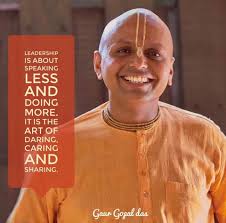
    GGD (Gaur Gopal Das) is one of the most popular and widely followed monks of present times. Especially, when it comes to the young corporate crowd, who incessantly indulge in social media. GGD is an Electrical Engineer by qualification. After a brief stint with Hewlett Packard, he decided to live as a monk in an ashram, in downtown, Mumbai. And he has now remained there for twenty two years. Where, he has learnt the antiquity of ancient philosophy, and the modernity of contemporary psychology, to become a life coach to thousands in the city.

    He has been travelling all around the world since 2005, to share his wisdom with corporate executives, universities and even charities. In 2016, his global popularity exploded, when he took to online discourses. The purpose of this publication is, to make the readers find a right balance in their lives. The book is inundated with quotes and thoughts from various important and renowned personalities just as most motivational books.

   The book is a little over 200 pages. Largely written in easy and lucid language. There is no piercing story line in this. But the narration takes you through both the visible and the non-visible merry-go-round of life quite royally. To be true. It impacts you positively by the time you complete it. In other words it delights you intrinsically.

    The narration begins with the monk first having a meal with one of his wealthy bhakt, or you could say devotee, Hariprasad, in short Harry and his wife at their posh residence in South Mumbai. Thereafter harry offers to drop GGD to his place of stay and that is how this interesting conversation starts between Harry and the monk in Harry’s luxurious car.

    In such motivational books, one normally comes across, interesting life-lessons that carry the essence of life. The idea of course is to present the amrit post the manthan (churning) that one can straightaway drink, and in that manner this book is no different. And without being a spoiler, since the book, has only, recently been published, let me in a jiffy take you through the book.

    It has some twenty chapters. With blessings of ISKCON and his divine grace A.C. BHAKTIVEDANTA SWAMI SRILA PRABHUPADA whose teachings have been the foundation of this book, coupled with the monks own experiences.

    The book starts with an interesting content list that deals with a gamut of virtues relevant for life, such as, moral, divine, spiritual and behavioural niches that cut across religions. Broadly speaking it is not a Hindu book, as one might make out from the picture of GGD, clad in his saffron robe. On the contrary it is a friendly present to human beings.

    In the journey of life any human being, and that includes even the toughest, will surely come across monotony, clutter, dread, fear, wrath, happiness, dislocation and even temper. The narration has answers for all situations.

    The book is rich with many potent thoughts that will help one take on this tough world. There are interesting chapters that deal with; seeing beyond the obvious; life’s journey; growing through gratitude; why worry; spiritual practice; how to talk sensitively; a virtuous vision; correcting cautiously; forgiveness; fruitful associations; competitive crossroads; self-discovery; decoding spirituality at work; integrity and character; selfless service; family first; the nation narrative and the holy aspect of service that brings joy in life.

    Although GGD is a Hindu monk. Yet he has not propagated, the spirituality route of Hinduism so blatantly. That shows he wants to connect, basically with human beings, and not Hindus alone. A kind of global talent on spiritualism.

    He cites some very beautiful examples such as that of, Joshua Bell, the internationally renowned, violinist, in tag with the experiment of Washington Post. The author also goes on to say he gets up at 4 a.m. for his morning meditation and talks about his strong morning ritual that gives him incessant focus for the day.

    He dwells on thoughts and ideas and how they can change a man’s life where he gives his own example. He says, we are not human beings having spiritual experiences; we are spiritual beings having human experiences—nicely plays with words.

    Most human beings have three things in common—we are all stuck, we all have a journey to complete and we all have a destination. He also goes on to describe God—there is one God. But is identified differently across different cultures.

    After every chapter the author has given a chapter summary which is very interesting as it comes in bullet points. The author raises an interesting question. Does spirituality kill ambition? Well, I’m not going to divulge the answer to the questions raised by the author in this book and the readers will only have to find their own answers by reading the book. The book is available both in print and e-book format. The book also has a few worksheets at the end. A kind of recall test.

    If I need to describe the book, keeping my life in mind. I would say the book touches my soul several times during the day. Say from the time I open my eyes in the morning, till the time I close my eyes in the night.

    The book has been appreciated by, film star and M.P. Hema Malini and also by Central Minister in the BJP Government, Nitin Gatkari.

   I would give the book seven out of ten. It is a worthwhile read. Especially, for corporate executives who face a lot of ups and downs in terms of their career and even their future. It is not a literary masterpiece but yes it conveys some very valuable lessons.

Synopsis by Kamlesh Tripathi

*

https://kamleshsujata.wordpress.com

*

Share it if you like it

*

Shravan Charity Mission is an NGO that works for poor children suffering from life threatening diseases especially cancer. Our posts are meant for our readers that includes both children and adults and it has a huge variety in terms of content. We also accept donations for our mission. Should you wish to donate for the cause. The bank details are given below:

NAME OF ACCOUNT: SHRAVAN CHARITY MISSION

Account no: 680510110004635 (BANK OF INDIA)

IFSC code: BKID0006805

*

Our publications

GLOOM BEHIND THE SMILE

(The book is about a young cancer patient. Now archived in 7 prestigious libraries of the US, including, Harvard University and Library of Congress. It can also be accessed in MIT through Worldcat.org. Besides, it is also available for reading in Libraries and archives of Canada and Cancer Aid and Research Foundation Mumbai)  

ONE TO TANGO … RIA’S ODYSSEY

(Is a book on ‘singlehood’ about a Delhi girl now archived in Connemara Library, Chennai and Delhi Public Library, GOI, Ministry of Culture, Delhi)

AADAB LUCKNOW … FOND MEMORIES

(Is a fiction written around the great city of Nawabs—Lucknow. It describes Lucknow in great detail and also talks about its Hindu-Muslim amity. That happens to be its undying characteristic. The book was launched in Lucknow International Literary Festival of 2014)

REFRACTIONS … FROM THE PRISM OF GOD

(Co-published by Cankids–Kidscan, a pan India NGO and Shravan Charity Mission, that works for Child cancer in India. The book is endorsed by Ms Preetha Reddy, MD Apollo Hospitals Group. It was launched in Lucknow International Literary Festival 2016)

TYPICAL TALE OF AN INDIAN SALESMAN

(Is a story of an Indian salesman who is, humbly qualified. Yet he fights his ways through unceasing uncertainties to reach the top. A good read not only for salesmen. The book was launched on 10th February, 2018 in Gorakhpur Lit-Fest. Now available in Amazon, Flipkart and Onlinegatha)

RHYTHM … in poems

(Published in January 2019. The book contains 50 poems. The poems describe our day to day life. The book is available in Amazon, Flipkart and Onlinegatha)

(ALL THE ABOVE TITLES ARE AVAILABLE FOR SALE IN AMAZON, FLIPKART AND OTHER ONLINE STORES OR YOU COULD EVEN WRITE TO US FOR A COPY)

*****



ARTICLE: WAS NON-VIOLENCE SOLELY RESPONSIBLE FOR INDIA’S INDEPENDENCE OR WAS THERE SOMETHING MORE TO IT?

Copyright@shravancharitymission


    Hello friends welcome to this edition of editorial compass. A lot has been spoken about India achieving independence through the “Brahmastra” of non-violence. But then, there also, happens to be another view-point that calls non-violence a myth.

    The line between historical facts and fiction is more porous than students of history might think. It is not uncommon for countries to create self-suiting or sanitised historical narratives. As George Orwell once said, “Who controls the past controls the future. Who controls the present controls the past.”

    India’s Republic Day Parade this year featured for the first time veterans of the Indian National Army (INA) that waged an armed struggle against the British colonial rule. Four INA veterans in their 90s rode a jeep in the parade that, paradoxically, showcased the life experiences of the apostle of non-violence, Mahatma Gandhi, through 22 tableaux.

    India has long embellished or distorted how it won independence. The incongruous juxtaposition of the INA along with Gandhi at the parade inadvertently highlighted that. The INA veterans participation, in fact, helped underscore the Indian republic’s founding myth—that it won independence only through non-violence. This myth has been deeply instilled in the minds of almost all Indians since their school days.

    Surely, the Gandhi-led, non-violent independence movement played a critical role. Both in galvanising grassroots resistance to British rule and also in helping to gain independence. But the decisive factor was the protracted World War-II, which reduced to ruins large swaths of Europe and Asia, especially the imperial powers. The war between the Allied and Axis powers killed 80 million, or 4% of the global population of that time.

    Despite the Allied victory, a devastated Britian was in no position to hold on to its colonies, including “crown jewel” India. Even colonies, where, there were no grassroots resistance to colonial rule, won independence in the post-World War-II period.

    The British had dominated India through a Machiavellian divide-and-rule strategy. Their exit came only after they had reduced one of the world’s wealthiest economies to one of its poorest. Indeed, they left after they had looted to their heart’s content, siphoning out, at least 9.2 trillion (or 44.6 trillion$) pounds, according to economist Utsa Patnaik’s recent estimate.

    Had the post-1947 India been proactive and forward-looking in securing its frontiers. It could have averted both the Kashmir and Himalayan border problems. China was in deep turmoil until October 1949, and India had ample time and space to assert control over the Himalayan borders. But India’s pernicious founding myth of non-violence gave rise to a pacifist country that believed it could get peace merely by seeking peace, instead of building the capability to defend peace.

    Here’s the paradox: countless numbers of Indians died to the excesses of British colonial regime. Just in the man made Bengal famine of 1942-45, six to seven million starved to death (a toll far greater than the “Holocaust”) due to the British war policy of diverting resources away from India. Britian sent Indian soldiers in large numbers to fight its dirty wars elsewhere, including the two world wars, and many died while serving as cannon fodder. Indeed, the present Indian republic was born in blood in blood: As many as a million civilians died in a senseless violence and millions more were uprooted in the British-contrived partition.

    Yet the myth of India uniquely charting and securing its independence through non-violence was propagated by the interiors of the Raj, the British trained “brown sahibs.” No objective discourse was encouraged post-1947 on the multiple factors—internal and external—that aided India’s independence.

    The hope of Indian independence was first kindled by Japan’s victory in the 1904-05 war with Russia—the first time an Asian nation comprehensively defeated a European rival. However, it was the world war that Adolf Hitler unleashed—with imperial Japan undertaking military expeditions in the name of freeing Asia from white colonial rule—that acted as the catalyst. An emboldened Gandhi serve a “Quit India” notice on the British in 1942.

    While the Subhas Chandra Bose-led INA could not mount a formidable threat to a British colonial military, overflowing with Indian recruits. The Bombay mutiny and other sepoy revolts of 1946 triggered by INA prisoners’ trials undermined Britain’s confidence in sustaining the Raj, hastening its exit. Yet, independent India treated INA soldiers shabbily with many abandoned into penury.

    Against this background the rehabilitation of Bose and the INA has long been overdue. Prime Minister Narendra Modi has done well to initiate the process, however low-key, to give Bose and the INA their due, including recently renaming one Andaman island after Bose and two other Andaman islands to honour INA sacrifices. Modi even wore the INA cap to address a public meeting in Andaman on the 75th anniversary of Bose’s hoisting of the tricolour there.

    Recognising unsung heroes is an essential step towards re-balancing the historical narrative. A rule-based international order, premised on non-violence remains a worthy aspirational goal. But Indian romancing of non-violence as an effective political instrument crimped national security policy since independence. The country hewed to pacifism (with Prime Minister Jawaharlal Nehru publicly bewailing in 1962 that China had “returned evil for good”) and frowned on materialism (even after China surpassed India’s GDP in 1984-85).

    The burden of its quixotic national philosophy has imposed enduring costs, including an absence of a strategic culture, as the late American analyst George Tanham famously pointed out. Lack of a culture to pursue a clear strategic vision and policy hobbles India’s ambition to be a great power.

    Synopsis derived out of an article titled “The Non-violence Myth—India’s founding story bestows upon it a quixotic national philosophy and enduring costs by geostrategist, Brahma Chellany in TOI.

Posted by Kamlesh Tripathi

*

https://kamleshsujata.wordpress.com

*

Share it if you like it

*

Shravan Charity Mission is an NGO that works for poor children suffering from life threatening diseases especially cancer. Our posts are meant for our readers that includes both children and adults and it has a huge variety in terms of content. We also accept donations for our mission. Should you wish to donate for the cause. The bank details are given below:

NAME OF ACCOUNT: SHRAVAN CHARITY MISSION

Account no: 680510110004635 (BANK OF INDIA)

IFSC code: BKID0006805

*

Our publications

GLOOM BEHIND THE SMILE

(The book is about a young cancer patient. Now archived in 7 prestigious libraries of the US, including, Harvard University and Library of Congress. It can also be accessed in MIT through Worldcat.org. Besides, it is also available for reading in Libraries and archives of Canada and Cancer Aid and Research Foundation Mumbai)  

ONE TO TANGO … RIA’S ODYSSEY

(Is a book on ‘singlehood’ about a Delhi girl now archived in Connemara Library, Chennai and Delhi Public Library, GOI, Ministry of Culture, Delhi)

AADAB LUCKNOW … FOND MEMORIES

(Is a fiction written around the great city of Nawabs—Lucknow. It describes Lucknow in great detail and also talks about its Hindu-Muslim amity. That happens to be its undying characteristic. The book was launched in Lucknow International Literary Festival of 2014)

REFRACTIONS … FROM THE PRISM OF GOD

(Co-published by Cankids–Kidscan, a pan India NGO and Shravan Charity Mission, that works for Child cancer in India. The book is endorsed by Ms Preetha Reddy, MD Apollo Hospitals Group. It was launched in Lucknow International Literary Festival 2016)

TYPICAL TALE OF AN INDIAN SALESMAN

(Is a story of an Indian salesman who is, humbly qualified. Yet he fights his ways through unceasing uncertainties to reach the top. A good read not only for salesmen. The book was launched on 10th February, 2018 in Gorakhpur Lit-Fest. Now available in Amazon, Flipkart and Onlinegatha)

RHYTHM … in poems

(Published in January 2019. The book contains 50 poems. The poems describe our day to day life. The book is available in Amazon, Flipkart and Onlinegatha)

(ALL THE ABOVE TITLES ARE AVAILABLE FOR SALE IN AMAZON, FLIPKART AND OTHER ONLINE STORES OR YOU COULD EVEN WRITE TO US FOR A COPY)

*****


BOOK CORNER: LAJJA by Taslima Nasrin

Copyright@shravancharitymission

Khidki (Window)

–Read India Initiative—

This is only an attempt to create interest in reading. We may not get the time to read all the books in our lifetime. But such reviews, talk and synopsis will at least convey what the book is all about.

    Taslima Nasrin is an award winning writer and a human rights activist. She is also known for her passionate writings on the oppression of women and criticism of religious fundamentalism. She was born in Mymensingh in Bangladesh in 1962. She started writing at the age of fourteen and was acclaimed as a major writer in Dhaka in her late twenties. Her writings also became popular across the border in West Bengal when she won the prestigious Ananda Purashkar in 1992 and then again in 2000. After being forced to leave Bangladesh in 1994, Taslima has lived in India, Europe and the US. She has written more than thirty books, including poetry, essays, novels and memoirs. Her works have been translated into over twenty Indian and European languages.

    Taslima detests fundamentalism and communalism. This was the reason why she wrote Lajja soon after the demolition of Babri Masjid in Ayodhya on 6 December 1992. She says the book took her seven days to write, and deals with the persecution of Hindus, a religious minority in Bangladesh, by the Muslims who were in majority. ‘It is disgraceful that the Hindus in my country were hunted by the Muslims after the destruction of the Babri Masjid. All of us who love Bangladesh should feel ashamed that such a terrible thing could happen in our beautiful country. The riots that took place in 1992 in Bangladesh are the responsibility of us all, and we are all to blame. Lajja is a document of our collective defeat.’

    Lajja was first published in February 1993 in Bangladesh, and sold over 60,000 copies before it was banned. It even earned her a bounty on her head from Islamic fundamentalists and that forced her to flee from her country. Lajja is not only an invaluable historical document but also a text whose relevance has unfortunately not diminished in the two decades since it was published. The novel’s central concern is the evil of communalism that continues to plague the subcontinent, erupting from time to time like a dormant volcano.

    It chronicles the terrifying disintegration of a Hindu family living in Bangladesh in the aftermath of the riots that break out to avenge the destruction of the mosque in India. Hundreds of temples across Bangladesh are grounded to dust or desecrated. Hindu men are butchered, women raped, houses burnt to cinders, and property confiscated. Nasrin brings out the sufferings inflicted on the “minority” community through the trials faced by Sudhamoy Datta, an upright physician who had fought in the Liberation War of 1971 at immense personal cost, along with his family.

    The Dattas, as Nasrin reveals, are divided on the question of staying on, in the land they have always thought of, as their home. Their ancestral seat in the village, once thriving and prosperous, has been usurped by their Muslim neighbours, forcing them to seek refuge in a rented house in Dhaka. However, Sudhamoy stubbornly, desperately, and naively holds on to his faith in the inherent goodness of fellow human beings, even at a time when his allies are turning against his family. His son Suronjon is more vulnerable to the circumstances. Like his father, Suranjon refuses to run away from the country of his birth or give in to communal sentiments he had condemned all his life, but his feelings begin to shift after a terrible tragedy visits the family.

    Sudhamoy’s wife Kiranmoyee and daughter Maya are far less squeamish about making an exodus to India for the sake of their lives and dignity. But then the women, as Nasrin insinuates, are mere pawns in the hands of the men. Maya’s prayer for security is beggared by the lofty ideals of her indifferent, irresponsible and vagabond brother, who remains unemployed mostly for refusing to take orders from anyone. Kiranmoyee nurses a deep, intimate pain, sacrificing every chance of happiness for the sake of her husband’s unshakeable resolve to remain rooted to the land of his birth, even as the consequences of his choice are horrible.

    While focused on the plight of the persecuted, Nasrin’s plot never departs from an area of moral discomfort, never pitting one community against the other or shying away from showing up the prejudices that infiltrate the minds of both Hindus and Muslims.

    Yet, in spite of its sustained ethical complexity, Lajja is not a literary masterpiece but close to it in terms of narration. Nasrin’s plot is interrupted by long roll-calls of damages and killings every few pages. Frequent discourses on politics and power also slow down the pace, and the sub-plots, especially, related to Suronjon’s jilted romantic life. Perhaps, that deserved more attention.

   Secular was supposed to be one of the strong beliefs of the Bengali Muslim, especially during the war of independence, when everyone had to cooperate with one another to win victory. But now the spirit had not only dwindled but had exhausted completely.

    Though ‘Lajja’ is the story of the Duttas, they are reverted to the background, and the newspaper reports and eye-witness accounts, with facts and figures about the number of people killed, temples destroyed, properties looted and women raped, becomes the main theme of the book. This inter-mingling of numerous statistical data with a fictional plot is done with such subtleness and so seamlessly that it becomes a part of the story. The data is not just parroted in the book. It comes as a dialogue from anxious Bengalis living in fear  of their lives, and this is what adds life to these numbers. It makes you realise the enormity and graveness of the situation, and sympathise with the victims. In the ultimate the story ends as a tragedy when Maya who is Suronjon’s sister and Kiranmoyee and Sudhamoy’s daughter is at a point of no return—perhaps dead. Finally Sudhamoy agrees to the long drawn suggestion of his son Suronjon to move to India.

    If you’ve not read the book you’ve indeed missed an endemic view point of life. I would give the book eight out of ten.

By Kamlesh Tripathi

*

https://kamleshsujata.wordpress.com

*

Share it if you like it

*

Shravan Charity Mission is an NGO that works for poor children suffering from life threatening diseases especially cancer. Our posts are meant for our readers that includes both children and adults and it has a huge variety in terms of content. We also accept donations for our mission. Should you wish to donate for the cause. The bank details are given below:

NAME OF ACCOUNT: SHRAVAN CHARITY MISSION

Account no: 680510110004635 (BANK OF INDIA)

IFSC code: BKID0006805

*

Our publications

GLOOM BEHIND THE SMILE

(The book is about a young cancer patient. Now archived in 7 prestigious libraries of the US, including, Harvard University and Library of Congress. It can also be accessed in MIT through Worldcat.org. Besides, it is also available for reading in Libraries and archives of Canada and Cancer Aid and Research Foundation Mumbai)  

ONE TO TANGO … RIA’S ODYSSEY

(Is a book on ‘singlehood’ about a Delhi girl now archived in Connemara Library, Chennai and Delhi Public Library, GOI, Ministry of Culture, Delhi)

AADAB LUCKNOW … FOND MEMORIES

(Is a fiction written around the great city of Nawabs—Lucknow. It describes Lucknow in great detail and also talks about its Hindu-Muslim amity. That happens to be its undying characteristic. The book was launched in Lucknow International Literary Festival of 2014)

REFRACTIONS … FROM THE PRISM OF GOD

(Co-published by Cankids–Kidscan, a pan India NGO and Shravan Charity Mission, that works for Child cancer in India. The book is endorsed by Ms Preetha Reddy, MD Apollo Hospitals Group. It was launched in Lucknow International Literary Festival 2016)

TYPICAL TALE OF AN INDIAN SALESMAN

(Is a story of an Indian salesman who is, humbly qualified. Yet he fights his ways through unceasing uncertainties to reach the top. A good read not only for salesmen. The book was launched on 10th February, 2018 in Gorakhpur Lit-Fest. Now available in Amazon, Flipkart and Onlinegatha)

RHYTHM … in poems

(Published in January 2019. The book contains 50 poems. The poems describe our day to day life. The book is available in Amazon, Flipkart and Onlinegatha)

(ALL THE ABOVE TITLES ARE AVAILABLE FOR SALE IN AMAZON, FLIPKART AND OTHER ONLINE STORES OR YOU COULD EVEN WRITE TO US FOR A COPY)

*****