The world has become colourful. But the ‘Happy Prince’ is no longer alive to see it. So is the swallow, who carried out his last orders, but died in the frost, at his feet, before he could escape to Egypt. The lead metal statue of the ‘Happy Prince’ cracks in agony, but his leaden heart still beats for his kingdom and his subjects. But are there any such rulers left, anymore? Well, they are practically extinct or very rare. Perhaps you might remember the name of the author who wrote the story ‘The Happy Prince.’ I’m forgetting his name. Oh! I remember now. It was Oscar Wilde. But “What’s in a name? Wrote Shakespeare. “That which we call a rose / By any other name would smell as sweet.” Maybe Oscar Wilde would like to rewrite the story ‘Happy Prince’ in the context of the present day while residing in heaven. But does a happy man without a shirt exist anymore, as told in the Italian tale ‘The Happy Man’s Shirt’? A quintessential example in recent times was India’s Mahatma Gandhi, the father of the nation, whose simple attire—a loincloth and shawl (without shirt) during the 1930s, particularly around the 1931 Round Table Conference- was given the abrasive title of ‘half-naked fakir’ by the British Prime Minister, Winston Churchill, to mock him. I’m more than sure there isn’t a happy man without a shirt anymore because the man now wears not only shirts but also colourful shirts, yet he remains unhappy.
Utopia is now seized of polarising colours, such as red, blue, green and saffron, and certain adamant tenets and philosophies that rule the roost, along with the so-called isms, the right wing and the left wing, in the central pillar of democracy. Have we gone back in time? Are we proving the Greek epic poem Hesiod’s Theogony correct, which propagated the initial theory that dense darkness covered everything until the earth was born out of chaos? With Earth came the mountains, the sea, the sky and Uranus. Uranus and Earth came together and gave birth to the Titans. Later, the Titans and Gods, both from the same lineage and class, fought for supremacy, in which the Greek God Zeus won, just like Lord Krishna.
But halt there. Take time off to think because the world leaders of today suffer from the same fear as Uranus, Cronus or the Kansa Mama of Mathura, who killed their would-be adversaries. Even Nigas tried to swallow Lord Vishnu in a television series, but that was in a different context. Ajatashatru killed his father Bimbisara to ascend the throne of the Magadha Empire, and in return, his son too killed him for the same throne. The Robinhoods are extinct now. The two biggest democracies are always in the news, but at times for the wrong reasons. The world is full of Brutus in present times, which may put the original Brutus to shame and the Bard into a wonder, ‘to be or not to be’.
One can say goodness has eclipsed and is rarely seen and experienced. Much has evolved, but more is yet to come. So wait and watch. Be on the lookout for that happy man without a shirt, and the happy prince, with a lead heart that beats for the public even now. Fortunately, I dreamt, Utopia shall remain Utopia and not become a Dystopia.
Shravan Charity Mission is an NGO that works for poor children suffering from life-threatening diseases, especially cancer. Our posts are meant for our readers, including children and adults, and have a huge variety of content. We also accept donations for our mission. Should you wish to donate to the cause of cancer? The bank details are given below:
The world has become colourful. But the ‘Happy Prince’ is no longer alive to see it. So is the swallow, who carried out his last orders, but died in the frost, at his feet, before he could escape to Egypt. The lead metal statue of the ‘Happy Prince’ cracks in agony, but his leaden heart still beats for his kingdom and his subjects. But are there any such rulers left, anymore? Well, they are practically extinct or very rare. Perhaps you might remember the name of the author who wrote the story ‘The Happy Prince.’ I’m forgetting his name. Oh! I remember now. It was Oscar Wilde. But “What’s in a name? Wrote Shakespeare. “That which we call a rose / By any other name would smell as sweet.” Maybe Oscar Wilde would like to rewrite the story ‘Happy Prince’ in the context of the present day while residing in heaven. But does a happy man without a shirt exist anymore, as told in the Italian tale ‘The Happy Man’s Shirt’? A quintessential example in recent times was India’s Mahatma Gandhi, the father of the nation, whose simple attire—a loincloth and shawl (without shirt) during the 1930s, particularly around the 1931 Round Table Conference- was given the abrasive title of ‘half-naked fakir’ by the British Prime Minister, Winston Churchill, to mock him. I’m more than sure there isn’t a happy man without a shirt anymore because the man now wears not only shirts but also colourful shirts, yet he remains unhappy.
Utopia is now seized of polarising colours, such as red, blue, green and saffron, and certain adamant tenets and philosophies that rule the roost, along with the so-called isms, the right wing and the left wing, in the central pillar of democracy. Have we gone back in time? Are we proving the Greek epic poem Hesiod’s Theogony correct, which propagated the initial theory that dense darkness covered everything until the earth was born out of chaos? With Earth came the mountains, the sea, the sky and Uranus. Uranus and Earth came together and gave birth to the Titans. Later, the Titans and Gods, both from the same lineage and class, fought for supremacy, in which the Greek God Zeus won, just like Lord Krishna.
But halt there. Take time off to think because the world leaders of today suffer from the same fear as Uranus, Cronus or the Kansa Mama of Mathura, who killed their would-be adversaries. Even Nigas tried to swallow Lord Vishnu in a television series, but that was in a different context. Ajatashatru killed his father Bimbisara to ascend the throne of the Magadha Empire, and in return, his son too killed him for the same throne. The Robinhoods are extinct now. The two biggest democracies are always in the news, but at times for the wrong reasons. The world is full of Brutus in present times, which may put the original Brutus to shame and the Bard into a wonder, ‘to be or not to be’.
One can say goodness has eclipsed and is rarely seen and experienced. Much has evolved, but more is yet to come. So wait and watch. Be on the lookout for that happy man without a shirt, and the happy prince, with a lead heart that beats for the public even now. Fortunately, I dreamt, Utopia shall remain Utopia and not become a Dystopia.
Shravan Charity Mission is an NGO that works for poor children suffering from life-threatening diseases, especially cancer. Our posts are meant for our readers, including children and adults, and have a huge variety of content. We also accept donations for our mission. Should you wish to donate to the cause of cancer? The bank details are given below:
The world has become colourful. But the ‘Happy Prince’ is no more alive to see it. So is the swallow, who carried out his last orders, but died in the frost, at his feet, before escaping to Egypt. The lead metal statue of the ‘Happy Prince’ cracks in agony but his leaden heart still beats for his kingdom and his junta. But are there any such rulers left, anymore? Well, they are practically extinct. Perhaps, you might know the author who wrote the story ‘Happy Prince.’ I’m forgetting his name. Oh! I remember now it was Oscar Wilde, par naam me kya rakha hai, Oscar can rewrite the story in the context of the present-day while residing in heaven. And is there a ‘happy man’ without a shirt, anymore, as told in the Italian tale, or like the half-naked fakir—Mahatma Gandhi in India, the father of the nation without a shirt who was given the abrasive title by the British Prime Minister, Winston Churchill. I’m sure there isn’t a happy man without a shirt anymore because the man now wears not only shirts but also colourful shirts, yet he remains unhappy.
The Utopia is now seized of radiant colours, such as red—blue, green and saffron, and some adamant tenets, and philosophies, required to rule, and the so-called isms, the right wing and the left wing in the central hall of democracy. Have we gone back in time? Are we proving Hesiod’s Theogony to be right, that propagated initially, the theory that said, the dense darkness covered everything, until the earth was born out of chaos? With earth came the mountains, the sea, the sky and the Uranus. Uranus and Earth came together and gave birth to the Titans. Later the Titans and Gods both from the same lineage and class fought for supremacy and the Greek God Zeus won just like Lord Krishna.
But halt there. Take time off to think because the world leaders of today suffer from the same fear as Uranus, Cronus and the Kansa Mama of Mathura, who killed their would-be adversaries. Even Nigas tried swallowing Lord Vishnu but that was in a different context. Ajatashatru killed his father Bimbisara to take the throne of Magadha and in return, his son too killed him for the throne. The Robinhoods are extinct now. The two biggest democracies are always in the news but at times for the wrong reasons. The world is full of Brutus in today’s times which may put the original Brutus to shame and the Bard into a wonder—to be or not to be.
It appears as if goodness has become a ghost which is rarely seen and experienced. Much has evolved, but more is yet to come. So wait and watch. Be on the lookout for that happy man without a shirt, and the happy prince, with a lead heart that beats for the public even now. Hopefully, I dreamt, Utopia will remain Utopia and not become a Dystopia.
Shravan Charity Mission is an NGO that works for poor children suffering from life-threatening diseases, especially cancer. Our posts are meant for our readers, including children and adults, and have a huge variety of content. We also accept donations for our mission. Should you wish to donate to the cause of cancer? The bank details are given below:
NAME OF ACCOUNT: SHRAVAN CHARITY MISSION
Account no: 680510110004635 (BANK OF INDIA)
IFSC code: BKID0006805
*
Publications of Kamlesh Tripathi
BOOK TITLE: GLOOM BEHIND THE SMILE
(The book is about a young cancer patient. Now archived in eight prestigious libraries of the US which include Harvard College Library; Harvard University Library; Library of Congress; University of Washington, Seattle; University of Minnesota, Minneapolis; Yale University, New Haven; University of Chicago; University of North Carolina, at Chapel Hill University Libraries. It can also be accessed at MIT through Worldcat.org. Besides, it is also available for reading in the libraries and archives of Canada; the Open Library; Cancer Aid and Research Foundation Mumbai; Jaipuria Institute of Management, Noida, India; Shoolini University, Yogananda Knowledge Center, Himachal Pradesh and Azim Premzi University, Bangalore and the Library of Cancer Aid and Research Foundation, Mumbai. The title also finds a mention in a book titled ‘Enduring Cancer: Life, Death and Diagnosis in Delhi,’ by Dwaipayan Banerjee published by the Duke University Press).
BOOK TITLE: ONE TO TANGO … RIA’S ODYSSEY
(It is a book on ‘singlehood’ about a Delhi girl now archived in Connemara Library, Chennai and Delhi Public Library, GOI, Ministry of Culture, Delhi; It is also available for reading in the Indian National Bibliography, March 2016, in the literature section, in Central Reference Library, Ministry of Culture, India, Belvedere, Kolkata-700022)
BOOK TITLE: AADAB LUCKNOW … FOND MEMORIES
(This is a fiction written around the great city of Nawabs—Lucknow. It describes Lucknow in great detail and also talks about its Hindu-Muslim amity, which is the undying characteristic of Lucknow. The book was launched at the Lucknow International Literary Festival in 2014. It is catalogued and included for reading in Askews and Holts Library Services, Lancashire, U.K; Herrick District Library, Holland; Charlotte-Mecklenburg Library, Mecklenburg County, North Carolina, USA; Black Gold Cooperative Library Administration, Arroyo Grande, California; Berkeley Library, University of California; The Peshastin Public Library and The George Public Library near Washington, a Northern Central Washington Libraries branch; the Flagstaff City-Coconino County Public Library in Arizona in the US and the Salina Public Library, Kansas, USA.
BOOK TITLE: REFRACTIONS … FROM THE PRISM OF GOD
(Co-published by Cankids–Kidscan, a pan India NGO and Shravan Charity Mission, that works for child cancer in India. The book is endorsed by Ms Preetha Reddy, MD Apollo Hospitals Group. It was launched at the Lucknow International Literary Festival in 2016).
BOOK TITLE: TYPICAL TALE OF AN INDIAN SALESMAN
(Is a story of an Indian salesman who is, humbly qualified. Yet he fights his way through unceasing uncertainties to reach the top. A good read not only for salesmen but for any reader. The book was launched on 10th February 2018 at Gorakhpur Lit-Fest. Now available on Amazon, Flipkart and Onlinegatha)
BOOK TITLE: RHYTHM … IN POEMS
(Published in January 2019. The book contains 50 poems. The poems are about our day-to-day life. Poems from this book have been published in Shillong Times, Bandra Times, Bhavan’s Journal and Arunachal Times and Goan Net. The book is available on Amazon, Flipkart and Onlinegatha)
BOOK TITLE: MIRAGE
(Published in February 2020. The book is a collection of eight short stories available on Amazon, Flipkart and Notion Press)
BOOK TITLE: AWADH ASSAM AND DALAI LAMA … The Kalachakra
(It is the story of the man who received His Holiness The Dalai Lama and his retinue in 1959 as a GOI representative when he fled Tibet in 1959. The book was launched on 21st November 2022 by His Holiness The Dalai Lama at Dharmshala. The title is archived in the library of the Department of Information and International Relations (DIIR) Government of Tibet, Tibet Policy Institute (TPI) and the personal library of His Holiness The Dalai Lama. The title is also archived in The Ohio Digital Library, USA. It was recently included in the digital library of the world-renowned company APPLE. Included in the library of Friends of Tibet and Maharashtra Mitra Mandal Library in Bandra, Mumbai.
(POEMS, SHORT STORIES AND ARTICLES OF KAMLESH TRIPATHI PUBLISHED IN JOURNALS AND MAGAZINES)
BHAVANS JOURNAL
Short stories, Book reviews and Articles published in Bhavan’s Journal: 1. Reality and Perception, 15.10.19; 2. Sending the Wrong Message, 31.5.20; 3. Eagle versus Scholars, June, 15 & 20, 2020; 4. Indica, 15.8.20; 5. The Story of King Chitraketu, August 31 2020; 6. Breaking Through the Chakravyuh, September 30 2020. 7. The Questioning Spouse, October 31, 2020; 8. Happy Days, November 15, 2020; 9. The Karma Cycle of Paddy and Wheat, December 15, 2020; 10. Power Vs Influence, January 31, 2021; 11. Three Refugees, March 15, 2021; 12. Rise and Fall of Ajatashatru, March 31, 2021; 13. Reformed Ruler, May 15, 2021; 14. A Lasting Name, May 31, 2021; 15. Are Animals Better Teachers? June 16, 2021; 16. Book Review: The Gram Swaraj, 1.7.21; 17. Right Age for Achievements, 15.7.21; 18. Big Things Have Small Beginnings, 15.8.21; 19. Where is Gangaridai?, 15.9.21; 20. Confront the Donkey Within You 30.9.21; 21. Know Your Strengths 15.10.21; 22. Poverty 15.11.21; 23. Top View 30.11.21; 24. The Bansuriwala 15.1.22; 25. Sale of Alaska 15.2.22; 26. The Dimasa Kingdom 28.2.22;27. Buried Treasure 15.4.22; 28. The Kingdom of Pragjyotisha 30.4.22; 29. Who is more useful? 15.5.22; 30. The White Swan from Lake Mansarovar 30.6.22; 31. Bhool Bhulayya 15.9.22; 32. Good Karma 30.9.22; 33. Good Name vs Bad Name 15.10.22; 34. Uttarapath—The Grand Trunk Road 1.12.22; 35. When Gods Get Angry 1.1.23; 36. Holinshed’s Chronicles 15.1.23; 37. Theogony 15.2.23; 38. Poem: Mother 14.5.23; 39. The Nag Mandir 30.6.23; 40. The Story of Garuda 30.7.23; 41. Janmabhoomi vs Karmabhoomi 31.8.23; 42. The Ghost Town of Kuldhara 15.9.23; 43. The Tale of Genji 15.10.23; 44. The Soul Connection 1.12.23; 45.Book review: Jungle Nama … a story of the Sundarban 16.3.24; 46. Book review: A Forgotten Chapter 16.5.24; 47. Exploring Ancient Egypt, 1.8.24; 48. The Story of Dhruva, 16.8.24; 49. Two Hundred Years of Tea in Assam 16.9.24; 50. The Cosmic Messenger 16.10.24; 51. Biblioburro: The Four-Legged Library 16.11.24
THE SHILLONG TIMES
Articles & Poems: 1. Poem: Happy New Year 8.1.23; 2.Poem: Spring 12.3.23; 3.Poem: Right and Wrong 20.3.23; 4.The Gush of Emotion—Writing, 26.3.23; 5. The Nag Mandir, 7.5.23; 6. Poem: Mother 7.5.23; 7. Poem: Rain Rain 9.7.23; 8. Poem:You Come Alone You Go Alone 6.8.23; 9. Poem: Rain Rain (Second Time) 10.8.23; 10. Poem: Guru Teacher 1.10.23; 11. Poem: Autumn … The Interim Heaven 15.10.23; 12. Poem: Happy Diwali 12.11.23; 13. Overcoming Blindness: Learn it the John Milton Way 10.12.23; 14. The Happy Prince and The Happy Man’s Shirt 31.12.23; 15. Annus Mirabilis -2024 7.1.24; 16. Gandhi to Mahatma Gandhi- Incidents that Shaped Gandhi in South Africa 28.1.24; 17. Poem: Together But Not Made For Each Other, 11.2.24; 18. The Birds Bees and The Spiders of Nicholas Guildford and Jonathan Swift 25.2.24; 19. The Overcoats of Nikolai Gogol and Ruskin Bond 10.3.24; 20. The Ethnic Colours of Holi 24.3.24; 21. A Lesson from Dalai Lama, 21.4.24; 22. Poem: Morning Walk 28.4.24; 23. Trip to Rhine Falls, Switzerland, 19.5.24; 24. Poem: Hurt 2.6.24; 25. Poem: Your Conscience Was My Sign On 16.6.24; 26.Poem: The Eerie Ways of Time 7.7.24; 27.Poem: Celebrating the T20 World Champions 14.7.24;28. Read to Rise above mediocrity, 4.8.24; 29. Poem: Desire vs Reality 11.8.24; 30. Jack Ma’s Pristine Advice to Employers, Employees and the Youth 22.9.24; 31. Tagore and Kipling 3.11.24;
THE ASSAM TRIBUNE
Article: 1. The Magic of Reading 11.12.23; 2. Gandhi to Mahatma 29.1.24; 3. Geography of Solitude 8.4.24; 4. A Lesson From Dalai Lama, 22.4.24; 5. A Source of Inspiration, 29.4.24; 6. The Four-LeggedLibrary, 12.5.24; 7. Age and Achievement, 10.6.24; 8. Read … To Rise Above Mediocrity, 1.7.24; 9. Crusade for a College, 25.8.24; 10. Hemingway’s Iceberg Theory (Panorama) 27.9.24; 11. Short story: Love in the Air, 20.10.24;
THE ARUNACHAL TIMES
Poem: 1. Hope—In The Arc of Twilight, 13.8.23; 2.Poem: Spring 3.3.24; 3.Poem: The Morning Walk 10.3.24;
BANDRA TIMES, MUMBAI
Articles & Poems: 1. Poem: SPRING, 1.4.23; 2. Poem: Mother, 1.6.23; 3. Poem: Rain Rain, 1.8.23; 4. A Lesson From Dalai Lama, 1.6.24; 5. Read to rise above Mediocrity 1.8.24
THE GOAN NETEVERYDAY
Poem: 1. Autumn – The Interim Heaven, 6.10.24; 2. Reader’s Rewind 17.11.84; 3. Reader’s Rewind: The Irony of Tash Moustache and Mooch 5.12.24;
ARTICLES IN THE DIGITAL MAGAZINE ESAMSKRITI
Aritcles: 29.12.2020: Indica by Megasthenes; 14.3.22: About The Dimasa Kingdom Assam; 10.12.22: Grand Trunk Road–Uttarapath; 5.10.23: The Ghost Town of Kuldhara Near Jaisalmer;
(ALL THE ABOVE BOOK TITLES ARE AVAILABLE FOR SALE ON AMAZON, FLIPKART AND OTHER ONLINE STORES OR YOU COULD EVEN WRITE TO US FOR A COPY)
Burkina Faso is the least educated country in the world, with a literacy rate of 21.8%. It is a landlocked country in West Africa.
*
William Shakespeare termed old age as the second childhood.
*
Maize Corn is the most produced grain in the world. Wheat covers more of the earth than any other crop.
*
Angkor Wat is a temple complex in Cambodia and one of the largest religious monuments in the world, on a site measuring 162.6 hectares. Originally constructed as a Hindu temple dedicated to God Vishnu for the Khmer Empire, it was gradually transformed into a Buddhist temple towards the end of the 12th century.
*
Are pigs the neatest of animals in the world? Contrary to popular belief, pigs are unable to sweat; instead, they wallow in mud to cool down. Their mucky appearance gives pigs an undeserved reputation for slovenliness. In fact, pigs are some of the cleanest animals around, refusing to excrete anywhere near their living or eating areas when given a choice.
*
Staple diet of America: Whether it’s roasted, baked, fried, transformed into a patty, or used in a salad, sandwich or casserole, chicken remains a major dietary staple in the United States. Americans get almost as many calories from chicken as they do from bread, according to the USDA.
*
There is one major difference between a ROM (that is, read-only memory) and a RAM (that is, random-access memory) chip: ROM can hold data without power, and RAM cannot. Essentially, ROM is meant for permanent storage, and RAM is for temporary storage.
*
Basketball is probably the most popular indoor sport in the world.
*
In a disturbing trend, tigers in the country are increasingly being killed by snares, even in the core areas of the sanctuaries. In the last nine years, 24 tigers and 114 leopards have suffered slow, agonising deaths due to these traps. Worryingly, apart from poachers, local communities are also using these wire noose snares to kill the big cats preying on their livestock.
*
There has been a steady increase in the tiger population in the last few years. India had 2,226 tigers as per the 2014 All India Tiger Estimation. This accounts for a 60% jump in tiger population compared to 2006.
*
Tigers need large habitats as they have high juvenile dispersal rates. Tigers have lost more than 95% of their historical range.
*
“Everything is ready except the east wind,” is an ancient Chinese proverb that translates to how can everything be ready without the most crucial thing.
*
Recently, the catastrophic disappearance of emperor penguins from Antarctica made global headlines. The colony of adults and nursing chicks was among the largest in the world. It sank without a trace due to global warming, because of weakened ice collapsing on unchilling waters. The tragedy is similar to the proverbial collapse of a star caused by the death of a sparrow.
*
In less than sixty years, Singapore has transformed from a poor developed country into one of the richest. Its per capita income is now double that of Australia. Singapore will be in a class entirely of its own by 2050.
*
Men argue. Nature acts–VOLTAIRE, French historian and philosopher.
*
If you destroy a free market, you create a black market—WINSTON CHURCHILL, Prime Minister of U.K.
*
The poetry of earth is never dead—JOHN KEATS, English romantic poet.
*
Tell me and I’ll forget; show me and I may remember; involve me and I’ll understand—A Chinese proverb.
*
I want a brighter word than bright—JOHN KEATS, English romantic poet.
*
Nothing ever becomes real till it is experienced—JOHN KEATS, English romantic poet.
Shravan Charity Mission is an NGO that works for poor children suffering from life-threatening diseases, especially cancer. Our posts are meant for our readers, including children and adults, and have a huge variety of content. We also accept donations for our mission. Should you wish to donate to the cause of cancer? The bank details are given below:
This is only an attempt to create interest in reading. We may not get the time to read all the books in our lifetime. But such reviews, talk and synopsis will at least convey what the book is all about.
Time doesn’t dilute the scars of hateful crimes. I’m pointing at the “Jallianwala Bagh” massacre, a crime perpetrated by Brigadier General Reginald Dyer. People who died in that slaughter, I’m sure, must be turning in their graves on each anniversary of the crime that was unleashed on April 13, 1919 by this devil. With that logic the victims by now must have turned at least a hundred times in their proverbial grave. But the apology from the British is yet to come. This monster, Brigadier Dyer later died on 23 July 1927. Winston Churchill called him a rotten apple simply to disavow his own responsibility.
But then the rotten apple grew in his own backyard colony called India. General Dyer is also called, “the Butcher of Amritsar,” because of his order to fire repeatedly on a crowd of peaceful protesters. This resulted in the murder of at least 500-600 people and injuries to over a thousand more. Subsequently, Dyer was removed from duty and widely condemned both in Britain and in India. But he became a celebrated hero among some with connections to the British Raj. Some historians argue the episode was a decisive event towards the end of the British rule in India.
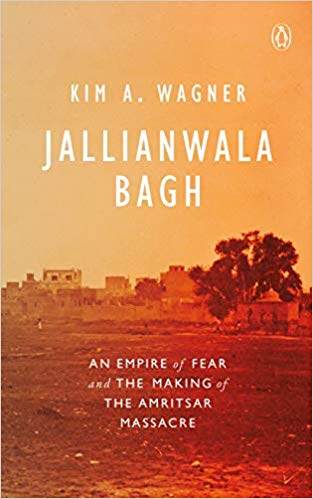
Many books have been written on this particular massacre. Latest being “Jallianwala Bagh: An Empire of Fear and the Making of the Amritsar Massacre,” by historian Kim A Wagner. Wagner teaches, the history of colonial India and the British Empire at Queen Mary, University of London. He has written extensively on the subject of ‘Thuggee,’ the Indian Uprising of 1857, and resistance and colonial violence more generally in 19th and 20th century global history. The book has been published by Penguin, and the price is below Rs 500 in Amazon. Even though it has been a century since Brigadier General Reginald Dyer ordered Indian Army troops to open fire upon an unarmed crowd at Jallianwala Bagh on April 13, 1919, the memory of it is still painful for Indians. British historian Kim Wagner has taken a fresh look at the incident in this book. There are some advance praises about the book, a couple of them are as follows:
“In the cautionary tale provided in Jallianwala Bagh, it is enduring racist fear that lies at the heart of precipitate violence. Analytically sharp but gripping to read, the book is a page turner.”—says Barbara D. Metcalf, Co-Author of “A Concise History of India.”
In the compelling yet exacting study Kim Wagner combines the intimacy of the storyteller and the distance of the historian to evoke the “micro story” of the massacre while understanding it as the “final stage of the much longer process”, stretching back to Sepoy Uprising. Mining a variety of sources—diaries, memoirs and court testimonies—he uncovers fresh perspectives and examines the relation between colonial panic and state brutality with sophistication, sincerity and style rare in published accounts of this much-trodden ground.”–says Santanu Das, Author of, “India, Empire and First War Culture.”
The book gives a good overview of the massacre from all corners and all stakeholders. Was Jallianwala Bagh massacre a one-off incident, as portrayed back then and even today by many? The book tries to answer that. The author feels rather than being an unprecedented event, the Amritsar massacre revealed the racialized logic of a colonial violence, and we find the exact sentiments expressed by British officers involved in the suppression of the Indian Uprising of 1857, for instance.
An apology that describes General Dyer as a rotten apple, which is, essentially what Winston Churchill said in 1920, is not an apology at all but rather an attempt to disavow any form of responsibility in terms of the Raj and the British Empire in general.
There is often a debate about the troops who open fired. Some say they were Gorkhas and Pathan troops. The author with his research tries to clear the air when he says. There probably were a few Sikh troops also present but we have to remember that the British at the same time did not think of the local population in communal terms. Dyer refers to the protesters simply as ‘rebels.’ The composition of the force he took with him to ‘Jallianwala Bagh’ was largely accidental.
To a question about Indian Army veterans who had served in World War-I, being among the unfortunate crowd that got killed and injured the eyewitnesses describe how veterans called out for people to lie down to avoid being shot, so there were clearly demobilised soldiers in the crowd.
British Empire apologists often dismiss the Indian National Congress’s findings about the tragedy and settle for government estimates to save their skin. The Indian National Congress actually estimated that 500 had been killed but that 1,000 might not be an exaggerated estimate—based on the door-to-door inquiry made by local agencies, some 540 names were found, and the author feels that somewhere between 500 to 600 were killed and, perhaps, three times that many wounded.
As per the book it was not a pre-meditated plan. Dyer believed he was entering a war zone and was fully prepared to shoot at anyone who defied his ban on public meetings. He did not know what the layout of the city or Jallianwala Bagh was. Once he arrived at the Bagh, he did not care much about who was actually present but simply open fired without using his brains.
There is no evidence about the 120 bodies that were recovered from the well. Eye-witnesses describe one or two people falling in it, and Motilal Nehru and Madan Mohan Malviya thought they saw one or two bodies floating in the well, later that summer—which was nothing more than a clay-pot and some old clothes floating in the well. There was a merging of the canal feeding with the holy tank, which runs under Jallianwala Bagh, since we know that some people climbed into that to flee the bullets and that several bodies were later recovered.
Lastly, Churchill denounced Dyer in 1920 but it was not because he found indiscriminate violence in the Empire unacceptable, but rather because Dyer’s actions made it so difficult to defend British rule in India. That is also why he was eager to depict Dyer and the massacre as ‘un-British.’
The massacre has been portrayed in several movies, starting with Attenborough’s Gandhi. But author Kim Wagner thinks none of them make more impact than re-enact the set of visual tropes first deployed by Attenborough. There is almost a checklist of recurrent motifs, including Dyer ordering his troops to fire, and people throwing themselves into the well or getting crushed against a locked gate, crying kids sitting next to their dead parents. To break new ground in this respect would require a break from these filmic conventions.
Jallianwalla Bagh is often the least talked about episode in the British circles but yes to an extent or rather to quite an extent during the trial it helped in understanding the British colonial policy. The Hunter Commission was set up partly to assuage moderate Indian nationalists and Montagu, the Secretary of State for India, never expected it to reveal the things it did. The fact that this was such a large inquiry, which elicited so much evidence, not least Dyer’s own testimony, means that this was probably the best-recorded colonial atrocity within the British Empire up till that point.
Well if you’re interested in history and the sad chapters of Indian history this book is for you. Well written and great in detailing and largely unbiased barring certain chapters where you get some eerie feeling it sails through in the Indian Ocean without turbulence. A historians prime job is to lay down history in proper perspective where the author I think has not failed. I would give the book seven out of ten.
Shravan Charity Mission is an NGO that works for poor children suffering from life threatening diseases especially cancer. Our posts are meant for our readers that includes both children and adults and it has a huge variety in terms of content. We also accept donations for our mission. Should you wish to donate for the cause. The bank details are given below:
NAME OF ACCOUNT: SHRAVAN CHARITY MISSION
Account no: 680510110004635 (BANK OF INDIA)
IFSC code: BKID0006805
*
Our publications
GLOOM BEHIND THE SMILE
(The book is about a young cancer patient. Now archived in 7 prestigious libraries of the US, including, Harvard University and Library of Congress. It can also be accessed in MIT through Worldcat.org. Besides, it is also available for reading in Libraries and archives of Canada and Cancer Aid and Research Foundation Mumbai)
ONE TO TANGO … RIA’S ODYSSEY
(Is a book on ‘singlehood’ about a Delhi girl now archived in Connemara Library, Chennai and Delhi Public Library, GOI, Ministry of Culture, Delhi)
AADAB LUCKNOW … FOND MEMORIES
(Is a fiction written around the great city of Nawabs—Lucknow. It describes Lucknow in great detail and also talks about its Hindu-Muslim amity. That happens to be its undying characteristic. The book was launched in Lucknow International Literary Festival of 2014)
REFRACTIONS … FROM THE PRISM OF GOD
(Co-published by Cankids–Kidscan, a pan India NGO and Shravan Charity Mission, that works for Child cancer in India. The book is endorsed by Ms Preetha Reddy, MD Apollo Hospitals Group. It was launched in Lucknow International Literary Festival 2016)
TYPICAL TALE OF AN INDIAN SALESMAN
(Is a story of an Indian salesman who is, humbly qualified. Yet he fights his ways through unceasing uncertainties to reach the top. A good read not only for salesmen. The book was launched on 10th February, 2018 in Gorakhpur Lit-Fest. Now available in Amazon, Flipkart and Onlinegatha)
RHYTHM … in poems
(Published in January 2019. The book contains 50 poems. The poems describe our day to day life. The book is available in Amazon, Flipkart and Onlinegatha)
(ALL THE ABOVE TITLES ARE AVAILABLE FOR SALE IN AMAZON, FLIPKART AND OTHER ONLINE STORES OR YOU COULD EVEN WRITE TO US FOR A COPY)



 Shravan charity mission