Tag Archives: shravancharitymission

BOOK REVIEW: NO ONE IS TOO SMALL TO MAKE A DIFFERENCE

Copyright@shravancharitymission
Khidki (Window)

–Read India Initiative—

This is only an attempt to create interest in reading. We may not get the time to read all the books in our lifetime. But such reviews, talk and synopsis will at least convey what the book is all about.

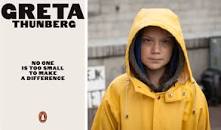
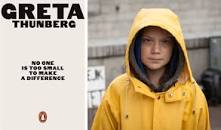
    This is a book by teenager climate activist Greta Thunberg, published on 30 May 2019. It consists of a collection of eleven speeches which she has written and orated about global warming and climate crisis.

    Greta Thunberg, born in 2003, August, one day decided not to go to school. Instead, she started to strike outside the Swedish Parliament. Her actions sparked off a global movement on climate crisis, inspiring millions of pupils to go on strike to save our planet. This helped her earning the prestigious Prix Liberte, as well as the Nobel Peace Prize nomination. Greta has Asperger’s syndrome (a developmental disorder characterised by significant difficulties in social interaction and nonverbal communication, along with restricted and repetitive patterns of behaviour and interests). She considers it a gift that has enabled her to see the climate crisis ‘in black and white.’

    ‘No One Is Too Small to Make a Difference is Greta’s first book in English, a collection of her speeches from climate rallies across Europe to audiences at the UN, the World Economic Forum, and the British Parliament. Her next book, ‘Scenes from the Heart’ is a memoir, jointly written with her mother, the opera singer, Malena Ernman, her sister Beata Ernman, and her father Svante Thurnberg.

    The subject book is by Penguin. In all 68 pages. In her speeches she makes some very relevant points that are as follows:

  • When school started in August this year I decided enough is enough. I sat on the ground outside the Swedish Parliament. I school-striked for the climate.
  • Climate scientist Johan Rockstrom and some other people wrote that we have at most three years to reverse growth in greenhouse –gas emissions if we were to reach the goals set in the Paris Agreement. Since then over a year and two months have already passed, and in that time many other scientists have said the same thing. Since then a lot of things have got worse and greenhouse emissions continue to increase.
  • In Sweden we live our lives as if we had the resources of 4.2 planets. Our carbon foot-print is one of the ten worst in the world. This means Sweden steals 3.2 years of natural resources from future generations every year. Those of us who are part of these future generations would like Sweden to stop doing that. She is not shy of criticizing her own country while trying to save the planet from global warming.
  • Many people say that Sweden is a small country, and that it doesn’t matter what we do. But I think it does matter what we do. I think if a few girls can get headlines all over the world by just not going to school for a few weeks, imagine what we could do together if we wanted to.
  • Newspapers continue not to write about climate change even when they know climate is a critical question of our time.
  • Many politicians have ridiculed me and us. They have called me retarded, a bitch, a terrorist and many other things.
  • When I was eight years old, I first heard about something called climate change, or global warming. Apparently a thing human beings had created by their way of living.
  • If burning fossil fuels was so very bad that it threatened our very existence, how could we just continue like before? Why were there no restrictions? Why wasn’t it made illegal?
  • Countries like Sweden, the US and UK need to start reducing emissions by at least 15 percent every year to stay below a 2 degree Celsius warming target. Now IPCC (Inter-governmental Panel on Climate Change) say that we have to aim for 1.5 degree Celsius.
  • No one ever speaks about the aspect of equity, or climate justice, clearly stated all over in the Paris Agreement and the Kyoto Protocol, which is absolutely essential to make the Paris Agreement work on a global scale. This means rich countries need to get down to zero emissions, within six to twelve years, so that people in poorer countries can heighten their standard of living by building some of the infrastructure that we have already built, such as roads, hospitals, electricity, schools and clean drinking water. Otherwise, how can we expect countries like India or Nigeria to care about the climate crisis if we, who already have everything, don’t care even a second about it, basis our actual commitments to the Paris Agreement?
  • Why should I be studying for a future that’ll soon not be there, and moreover, when no one is doing anything whatsoever to save it?
  • Today we use 100 million barrels of oil every day. There are no policies to change that. There are no rules to keep that oil in the ground.
  • According to the IPCC, we are less than twelve years away from the point of no return to disaster. There are no grey areas when it comes to survival.
  • Here in Davos—just like everywhere else—everyone is talking about money. It seems that money and growth are our only main concerns.
  • We are now at a time in history where everyone with any insight of the climate crisis that threatens our civilization and the entire biosphere must speak out. The bigger your carbon footprint—the bigger your moral duty. The bigger your platform—the bigger your responsibility.
  • In May 2018 I was one of the winners in a writing competition about the environment held by Svenska Dagbladet, a Swedish newspaper. I got my article published when some people contacted me, among them was Bo Thoren from Fossil Free Dalsland.
  • On the 20th August I sat down outside the Swedish Parliament. I handed out fliers with a long list of facts about the climate crisis and explanations on why I was striking. The first thing I did was to post on Twitter and Instagram what I was doing and it soon went viral. Then journalists and newspapers started arriving. A Swedish entrepreneur and businessman active in the climate movement, Ingmar Rentzhog, was among the first to arrive. He spoke with me and took pictures that he posted on facebook.
  • Many people say that we don’t have any solutions to the climate crisis. And they are right. Because how do you ‘solve’ the greatest crisis that humanity has ever faced? How do you ‘solve’ a war? How do you ‘solve’ going to the moon for the first time? How do you ‘solve’ inventing new inventions?
  • The climate crisis is both the easiest and the hardest issue mankind has ever faced.

    This is a priceless book written by a teenager activist hence I would not like to rate it. Instead, I would like to recommend the book to every citizen of the world.

By Kamlesh Tripathi

*

https://kamleshsujata.wordpress.com

*

Share it if you like it

*

Shravan Charity Mission is an NGO that works for poor children suffering from life threatening diseases especially cancer. Our posts are meant for our readers that includes both children and adults and it has a huge variety in terms of content. We also accept donations for our mission. Should you wish to donate for the cause. The bank details are given below:

NAME OF ACCOUNT: SHRAVAN CHARITY MISSION

Account no: 680510110004635 (BANK OF INDIA)

IFSC code: BKID0006805

*

Our publications

GLOOM BEHIND THE SMILE

(The book is about a young cancer patient. Now archived in 7 prestigious libraries of the US, including, Harvard University and Library of Congress. It can also be accessed in MIT through Worldcat.org. Besides, it is also available for reading in Libraries and archives of Canada and Cancer Aid and Research Foundation Mumbai)  

ONE TO TANGO … RIA’S ODYSSEY

(Is a book on ‘singlehood’ about a Delhi girl now archived in Connemara Library, Chennai and Delhi Public Library, GOI, Ministry of Culture, Delhi)

AADAB LUCKNOW … FOND MEMORIES

(Is a fiction written around the great city of Nawabs—Lucknow. It describes Lucknow in great detail and also talks about its Hindu-Muslim amity. That happens to be its undying characteristic. The book was launched in Lucknow International Literary Festival of 2014)

REFRACTIONS … FROM THE PRISM OF GOD

(Co-published by Cankids–Kidscan, a pan India NGO and Shravan Charity Mission, that works for Child cancer in India. The book is endorsed by Ms Preetha Reddy, MD Apollo Hospitals Group. It was launched in Lucknow International Literary Festival 2016)

TYPICAL TALE OF AN INDIAN SALESMAN

(Is a story of an Indian salesman who is, humbly qualified. Yet he fights his ways through unceasing uncertainties to reach the top. A good read not only for salesmen. The book was launched on 10th February, 2018 in Gorakhpur Lit-Fest. Now available in Amazon, Flipkart and Onlinegatha)

RHYTHM … in poems

(Published in January 2019. The book contains 50 poems. The poems describe our day to day life. The book is available in Amazon, Flipkart and Onlinegatha)

(ALL THE ABOVE TITLES ARE AVAILABLE FOR SALE IN AMAZON, FLIPKART AND OTHER ONLINE STORES OR YOU COULD EVEN WRITE TO US FOR A COPY)

*****



INTERESTING FACTS FIGURES & QUOTES–50

Copyright@shravancharitymission

GREEN CAPITAL OF EUROPE: Denmark was the first country in the world to enact an environmental law. Its capital, Copenhagen boasts of a unique collaboration of its residents, institutions and government in making it one of the world’s most environment friendly cities in the world. It aims at becoming carbon neutral by 2025 by increasing the use of renewable energy sources. About 40% of its population uses bicycles to commute over its 350 km long network of bicycle paths. To further facilitate fast, safe and pleasant bike rides, the municipality is building ‘greenways’ (interconnected bicycle routes) which cover more than 100 km from one end of the city to the other. The large offshore wind turbine farm generates 4% of the city’s electricity. The city is harnessing solar and sound energy as well. Organic food is very popular—one in every ten purchases is organic, accounting for 45% of all food consumption in the city. Copenhagen is one of the few places in Europe where the inner harbour allows people to swim in its waters which are effectively cleaned by sewage treatment plants. In June 2010, the municipality enforced a mandatory green roof policy which requires vegetation and soil to cover the roofs of all new buildings.

*

GREEN POWER The concept of eco-city was introduced by Richard Register in his book “Ecocity Berkeley: Building Cities for a Healthy Future (1987).” The features of an eco-friendly city are: Pollution is kept to the minimum. Use of fossil fuels is reduced or eliminated. Renewable energy sources like wind turbines, solar panels, bio-gas from sewage etc., are used. Waste is recycled. Buildings are built in accordance with green norms. At least 20 percent of the city surface is covered with water features and green space. Energy-efficient public transport, footpaths and biking routes reduce the use of cars.

*

JEANS FROM GARBAGE: A label on a pair of waste<Less denim jeans made by a top American manufacturer proudly announces: “These jeans are made of garbage.” The company has taken the lead in reusing the massive amounts of plastic waste produced by modern society. In the U.S. alone, around a million plastic bottles are used every twenty minutes. Where, only a minuscule amount, less than 30 percent, is recycled. The company’s partial solution to the problem was to create two lines of clothing—jeans and trucker jackets—that contain 20 percent recycled plastic. The plastic bottles and food trays collected from dumps are cleaned, sorted and crushed into flakes. A special technology then spins the plastic into polyester fibre. It is blended with cotton fibre, then woven into yarn to create the denim. The denim looks and feels like traditional denim except that the colour of the plastic used. The company reused more than 3.6 million bottles and food trays for the 300,000 Waste<Less jeans and jackets produced in 2013.

*

 The word Lynch—“Lynching” once meant any kind of on-the-spot punishment without trial, through flogging. Today, it means to thrash someone in a mob frenzy without a trial. From William Lynch, the author of ‘Lynch’s Law.’ The ‘law’ was an agreement with the Virginia General Assembly in 1782 that allowed Lynch to capture and punish criminals in Pittsylvania County without trial. The county had no official courts.

*

Oscar—‘Statuette is awarded for excellence in film acting, directing etc, given annually since 1928 by the Academy of Motion Picture Arts and Sciences.’ The name Óscar’ was first applied to the statuette in 1936. The story: Margaret Herrick, the Academy’s librarian, took a look at the first statuette and said: ‘He reminds me of my Uncle Oscar!’ Her uncle was Oscar Pierce, and the statuette was named Oscar. Remember big things have small beginnings.

By Kamlesh Tripathi

*

https://kamleshsujata.wordpress.com

*

Share it if you like it

*

Shravan Charity Mission is an NGO that works for poor children suffering from life threatening diseases especially cancer. Our posts are meant for our readers that includes both children and adults and it has a huge variety in terms of content. We also accept donations for our mission. Should you wish to donate for the cause. The bank details are given below:

NAME OF ACCOUNT: SHRAVAN CHARITY MISSION

Account no: 680510110004635 (BANK OF INDIA)

IFSC code: BKID0006805

*

Our publications

GLOOM BEHIND THE SMILE

(The book is about a young cancer patient. Now archived in 7 prestigious libraries of the US, including, Harvard University and Library of Congress. It can also be accessed in MIT through Worldcat.org. Besides, it is also available for reading in Libraries and archives of Canada and Cancer Aid and Research Foundation Mumbai)  

ONE TO TANGO … RIA’S ODYSSEY

(Is a book on ‘singlehood’ about a Delhi girl now archived in Connemara Library, Chennai and Delhi Public Library, GOI, Ministry of Culture, Delhi)

AADAB LUCKNOW … FOND MEMORIES

(Is a fiction written around the great city of Nawabs—Lucknow. It describes Lucknow in great detail and also talks about its Hindu-Muslim amity. That happens to be its undying characteristic. The book was launched in Lucknow International Literary Festival of 2014)

REFRACTIONS … FROM THE PRISM OF GOD

(Co-published by Cankids–Kidscan, a pan India NGO and Shravan Charity Mission, that works for Child cancer in India. The book is endorsed by Ms Preetha Reddy, MD Apollo Hospitals Group. It was launched in Lucknow International Literary Festival 2016)

TYPICAL TALE OF AN INDIAN SALESMAN

(Is a story of an Indian salesman who is, humbly qualified. Yet he fights his ways through unceasing uncertainties to reach the top. A good read not only for salesmen. The book was launched on 10th February, 2018 in Gorakhpur Lit-Fest. Now available in Amazon, Flipkart and Onlinegatha)

RHYTHM … in poems

(Published in January 2019. The book contains 50 poems. The poems describe our day to day life. The book is available in Amazon, Flipkart and Onlinegatha)

(ALL THE ABOVE TITLES ARE AVAILABLE FOR SALE IN AMAZON, FLIPKART AND OTHER ONLINE STORES OR YOU COULD EVEN WRITE TO US FOR A COPY)

*****


INTERESTING FACTS FIGURES & QUOTES 49: THE BERLIN WALL

Copyright@shravancharitymission

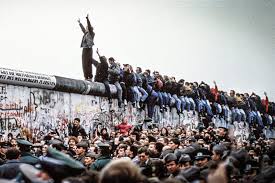
    Berlin wall is the wall that divided the world. More than a physical barrier the Berlin wall stood as a solid political and ideological symbol of the divide between a democratic Western Germany and a Communist Eastern Germany. Looking back on the rise and fall of the Berlin wall 30 years on:

WHAT WAS BERLIN WALL

    A guarded concrete wall that physically and ideologically divided Germany’s capital, the Berlin wall stood tall between 1961 and 1989.

    Construction of the wall commenced on August 13, 1961, by the German Democratic Republic (GDR) to ensure, people from East Germany did not emigrate to West Germany. The wall finally fell on November 9, 1989 after East Germany declared all the crossing points along the wall open.

BACKDROP TO THE BUILDING OF THE WALL

    In 1949 a war torn Germany formally split into two independent nations—The Federal Republic of Germany and the German Democratic Republic—with the FDR allied to the Western Democracies led by the US and the GDR allied to the Soviet Union led by Russia. These superpowers had growing geopolitical tension between them, in what is today known as the cold-war. The city of Berlin, was at the centre of this heated split, with one part under the eastern bloc and the remaining three with the west under US, Britain and France.

    Needless to say that the ideologies of the two power blocs were enforced on the Germans, with East Germany following communism and the west following a democratic approach.

WHY WAS THE WALL BUILT

    Free flow of people between the two parts was allowed through Berlin as East Germany had sealed its mainland border from the west along the Elbe River and the mountains of Harz with barbed wire and fire-zones.

    As time passed, many people from East Germany migrated to the West in search of better jobs and infrastructure.

    One in six people fled from the east to the west. This irked the GDR as its economy was deeply affected due to this ‘brain-drain.’ Thus in a bid to halt this migration, East German Communists were given the permission by Moscow to close the border and build a physical barrier along it.

    With information from their informers in the western part, that the west will not react, East German Police in a top-secret operation, established a human cordon along the border with West Berlin. The border forces then went on to build a solid breeze block wall topped with barbed-wire from what was earlier just a wire-mesh fence.

THE WALL AND ATTEMPTS TO CROSS IT

    The Berlin Wall was more than 140 kilometres long. The houses contained between the fences were razed and the inhabitants relocated, thus establishing what later became known as the death strip. The death strip was covered with raked sand or gravel, rendering footprints easy to notice, easing the detection of trespassers and also enabling officers to see which guards had neglected their task. It offered no cover, and, most importantly, it offered clear fields of fire for the Wall guards.

    The top of the wall was lined with a smooth pipe, intended to make it more difficult to scale. The Wall was reinforced by mesh fencing, signal fencing, anti-vehicle trenches, barbed wire, dogs on long lines, “beds of nails” (also known as “Stalin’s Carpet”) under balconies hanging over the “death strip”, there were over 116 watchtowers, and 20 bunkers with hundreds of guards. This version of the Wall is the one most commonly seen in photographs, and the surviving fragments of the Wall in Berlin and elsewhere around the world are generally pieces of the fourth-generation Wall.

    There were nine border crossings between East and West Berlin. These allowed visits by West Berliners, other West Germans, Western foreigners and Allied personnel into East Berlin, as well as visits by GDR citizens and citizens of other socialist countries into West Berlin, provided that they held the necessary permits.

FALL OF THE BERLIN WALL

    Things started to deteriorate for the Eastern Bloc in the 1980s with the start of an energy crisis and political struggle within the bloc. Rising civil unrest also put pressure on the East German Government. However, what started the downfall of the GDR was the fail of the ‘Íron Curtain’ between Hungary and Austria. The opening of that border led to several East Germans migrating to West Germany through Hungary. However, this attempt was quickly blocked, but East Germans began to camp at the West German embassies across the Eastern Bloc and refused to return. Meanwhile, demonstrations began within East Germany in full swing.

    East Germany was pressurised to relax some of its regulations on travel to West Germany. On November 9, 1989, at a press conference to announce the same an East German spokesman Gunter Schabowski announced that East Germans would be free to travel into West Germany, starting immediately. However, he failed to clarify that some regulations would still apply. This led to the western media reporting that the border had been opened, leading to large crowds gathering at either sides of the checkpoints. Eventually, passports checks were abandoned and people crossed the border unrestricted. The evening on November 9, 1989 is known as the night the wall came down.

    The Berlin wall had fallen and this fall marked the beginning of the unification of Germany which took place on October 3, 1990.

By Kamlesh Tripathi

*

https://kamleshsujata.wordpress.com

*

Share it if you like it

*

Shravan Charity Mission is an NGO that works for poor children suffering from life threatening diseases especially cancer. Our posts are meant for our readers that includes both children and adults and it has a huge variety in terms of content. We also accept donations for our mission. Should you wish to donate for the cause. The bank details are given below:

NAME OF ACCOUNT: SHRAVAN CHARITY MISSION

Account no: 680510110004635 (BANK OF INDIA)

IFSC code: BKID0006805

*

Our publications

GLOOM BEHIND THE SMILE

(The book is about a young cancer patient. Now archived in 7 prestigious libraries of the US, including, Harvard University and Library of Congress. It can also be accessed in MIT through Worldcat.org. Besides, it is also available for reading in Libraries and archives of Canada and Cancer Aid and Research Foundation Mumbai)  

ONE TO TANGO … RIA’S ODYSSEY

(Is a book on ‘singlehood’ about a Delhi girl now archived in Connemara Library, Chennai and Delhi Public Library, GOI, Ministry of Culture, Delhi)

AADAB LUCKNOW … FOND MEMORIES

(Is a fiction written around the great city of Nawabs—Lucknow. It describes Lucknow in great detail and also talks about its Hindu-Muslim amity. That happens to be its undying characteristic. The book was launched in Lucknow International Literary Festival of 2014)

REFRACTIONS … FROM THE PRISM OF GOD

(Co-published by Cankids–Kidscan, a pan India NGO and Shravan Charity Mission, that works for Child cancer in India. The book is endorsed by Ms Preetha Reddy, MD Apollo Hospitals Group. It was launched in Lucknow International Literary Festival 2016)

TYPICAL TALE OF AN INDIAN SALESMAN

(Is a story of an Indian salesman who is, humbly qualified. Yet he fights his ways through unceasing uncertainties to reach the top. A good read not only for salesmen. The book was launched on 10th February, 2018 in Gorakhpur Lit-Fest. Now available in Amazon, Flipkart and Onlinegatha)

RHYTHM … in poems

(Published in January 2019. The book contains 50 poems. The poems describe our day to day life. The book is available in Amazon, Flipkart and Onlinegatha)

(ALL THE ABOVE TITLES ARE AVAILABLE FOR SALE IN AMAZON, FLIPKART AND OTHER ONLINE STORES OR YOU COULD EVEN WRITE TO US FOR A COPY)

*****


INTERESTING FACTS FIGURES & QUOTES 48: The Correlation between British Empire and English Language

Copyright@shravancharitymission

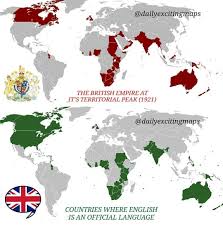
    There was a time when the sun did not set on the British Empire. The saying implied the vastness of the British Empire. Historians inferred that roughly 25% of the earth’s landmass was in control of the British. The Empire was so extensive, that at any point of time, there was daylight in one of its colonies. This resulted in English language, travelling to several continents and many countries across the globe. India was no exception. English gradually became the lingua-franca in many countries.

    There was also a deluge of Europeans who started migrating to America from the Continent and British Isles. So English language too, travelled with them to Amercia. Historically speaking, Europeans were one of the most aggressive and ambitious race on planet earth. They managed to change the name of New Amsterdam to New York (in the honour the Duke of York). They bought New Amsterdam from the local tribe (the Lenapes). And with all this the spread of English language continued hammer and tongs. Gradually, it even travelled, to down and under (Australia and New Zealand) and even Africa. In other words, wherever, British established colonies English language gained roots. Europe has given to the world great seafarers and explorers. English language concomitantly travelled to wherever they went. The language of English was also skilfully taught and used in administration and day-to-day living, and today it connects the world.

    British rule in India began around 1757. English language in India is therefore, over 250 years old. The British left India around 70 years ago, after which English language in India has stood on its own spine. Since then the language has Indianised and even undergone a change in tone and tenor. With the advent of social media English Language has even made deep inroads into rural areas.

    A number of high-flying authors have emerged in India and they have been able to decolonise the traditional English oeuvre. The assortment of Indian authors is wide. But there is a threat to English language in India and that is from Hinglish (a blend of Hindi and English) and conversely there is also a threat to Hindi from English.  

    There is nothing definitive about which way the camel is going to sit, but yes, one can only leave it to the long term opportunities that the languages wish to partner with.

By Kamlesh Tripathi

*

https://kamleshsujata.wordpress.com

*

Share it if you like it

*

Shravan Charity Mission is an NGO that works for poor children suffering from life threatening diseases especially cancer. Our posts are meant for our readers that includes both children and adults and it has a huge variety in terms of content. We also accept donations for our mission. Should you wish to donate for the cause. The bank details are given below:

NAME OF ACCOUNT: SHRAVAN CHARITY MISSION

Account no: 680510110004635 (BANK OF INDIA)

IFSC code: BKID0006805

*

Our publications

GLOOM BEHIND THE SMILE

(The book is about a young cancer patient. Now archived in 7 prestigious libraries of the US, including, Harvard University and Library of Congress. It can also be accessed in MIT through Worldcat.org. Besides, it is also available for reading in Libraries and archives of Canada and Cancer Aid and Research Foundation Mumbai)  

ONE TO TANGO … RIA’S ODYSSEY

(Is a book on ‘singlehood’ about a Delhi girl now archived in Connemara Library, Chennai and Delhi Public Library, GOI, Ministry of Culture, Delhi)

AADAB LUCKNOW … FOND MEMORIES

(Is a fiction written around the great city of Nawabs—Lucknow. It describes Lucknow in great detail and also talks about its Hindu-Muslim amity. That happens to be its undying characteristic. The book was launched in Lucknow International Literary Festival of 2014)

REFRACTIONS … FROM THE PRISM OF GOD

(Co-published by Cankids–Kidscan, a pan India NGO and Shravan Charity Mission, that works for Child cancer in India. The book is endorsed by Ms Preetha Reddy, MD Apollo Hospitals Group. It was launched in Lucknow International Literary Festival 2016)

TYPICAL TALE OF AN INDIAN SALESMAN

(Is a story of an Indian salesman who is, humbly qualified. Yet he fights his ways through unceasing uncertainties to reach the top. A good read not only for salesmen. The book was launched on 10th February, 2018 in Gorakhpur Lit-Fest. Now available in Amazon, Flipkart and Onlinegatha)

RHYTHM … in poems

(Published in January 2019. The book contains 50 poems. The poems describe our day to day life. The book is available in Amazon, Flipkart and Onlinegatha)

(ALL THE ABOVE TITLES ARE AVAILABLE FOR SALE IN AMAZON, FLIPKART AND OTHER ONLINE STORES OR YOU COULD EVEN WRITE TO US FOR A COPY)

*****


BOOK REVIEW: SUDHA MURTHY … The Upside Down King

Copyright@shravancharitymission

Khidki (Window)

–Read India Initiative—

This is only an attempt to create interest in reading. We may not get the time to read all the books in our lifetime. But such reviews, talk and synopsis will at least convey what the book is all about.

    This book is about—‘Unusual tales of Rama and Krishna.’ But before that let me give you a brief introduction of Sudha Murthy.

    Sudha Murthy was born in 1950 in Shiggaon, north Karnataka. She did her M-Tech in computer science, and is now the chairperson of the Infosys Foundation. A prolific writer both in English and Kannada, she has written novels, technical books, travelogues, collections of short stories and non-fictional pieces. She has also written eight bestselling books for children. Her books have been translated into, all major Indian languages. Sudha Murthy is the recipient of the R.K. Narayan Award for Literature (2006), the Padma Shri (2006), the Attimabbe Award from the Government of Karnataka for excellence in Kannada literature (2011) and, most recently the Lifetime Achievement Award at the 2018 Crossword Book Awards.

    Mythology is an appropriate means to connect the past with the present, and it also keeps the future in focus.  Talking of mythology did you know there was a time when bears spoke, the moon laughed and babies were found inside the fish? And have you ever seen a man with a thousand arms?

    The tales in this collection of short stories revolve around the two most popular avatars of Lord Vishnu—Rama and Krishna—and their lineages. There are countless stories on the two, yet most are simply disappearing from the hearts and minds of the present generation. So there is a great need to connect the youth of today with these stories. This is what the book does.

    Bestselling author Sudha Murthy, takes you on a whirlwind tour, where she narrates about the days, when demons and deities walked alongside humans, where animals could talk and gods granted the most glorious boons to common people.

    The book is a publication of Puffin Books. The content has some twenty three short stories out of Hindu mythology. All very interesting. Written in lucid English. The power of such short stories is immense as it often reveals what you don’t know and therefore comes to you as a surprise. It gives you a very precise moral lesson most of the times.

    The book brings to you unusual tales of Lord Rama and Krishna. It brings to you, life lessons, of various kinds, where you learn about the lineages of so many Devtas and Asuras. Most of these stories are available in our mythological texts such as Ramayana, Gita, Vedas and Puranas. Sudha Murthy as an author has put them in a logical sequence. To give you a flavour of the book I will briefly narrate one such story that the author has incorporated in this book from the ilk of mythology. It goes as follows …

    The kingdom of Kishkindha was ruled by the monkey king Bali along with his brother Sugriva. Kishkinda lies on the banks of river Tungabhadra and is surrounded by mountains.

    One day, Mayavi, a demon, approached the gates of the kingdom and challenged Bali to take up a fight with him, which Bali couldn’t have refused. He accepted the challenge and agreed to fight with him. Soon, the battle began. Sugriva became a witness to the fight. As the fight progressed, Mayavi entered a nearby cave and Bali in his haste followed suit. But before entering the cave, Bali asked Sugriva to wait for him and went inside alone.

    Six months passed but Bali did not emerge from the cave. Finally, Sugriva heard screams and saw blood flowing out of the cave. He concluded that his brother had been killed. So, with a heavy heart, and great effort Sugriva rolled a bolder to seal the cave’s mouth to contain the demon within.

    The kingdom of Kishkindha was now without a king. Sugriva took over, and became the acting ruler. But one day, Bali walked into the kingdom unexpected—hale and hearty. When he saw Sugriva, he got upset with him and said. ‘How dare you rule my kingdom? And why did you seal the mouth of the cave, when I, only told you, to wait for me.’

    Sugriva folded his hands and replied earnestly, ‘my dear brother, I heard terrible screams and saw a lot of blood on the ground near the cave. I mistakenly assumed that the demon perhaps had killed you, and in the interest of, wanting to save the subjects of the kingdom, I blocked the mouth of the cave. I am only the acting ruler and took over in your absence. Kindly forgive me and take back your kingdom.’

    Bali, however, was in no mood to listen and forgive. ‘Do you think I can die so easily at the hands of a mere demon? Aren’t you aware of my boons and my strength? Sugriva, your actions stink of deceit. You never intended to let me out. On the contrary, you did your best to ensure, that I remain trapped. And you have always had your lustful eyes on my beautiful wife Tara. Come on, admit, all of this is true.’

    Sugriva’s response in return did not satisfy Bali. He yelled at his brother, ‘Leave my kingdom now. If you enter my kingdom again I will kill you. And as an act of revenge I will detain your wife Ruma. She will not be accompanying you.’

    Sugriva was now choice less, so he left the kingdom immediately.

    Gradually, Bali became very powerful and a cause of concern for sage Matanga who lived close by, on Rishyamukha Mountain. Bali’s arrogance grew by leaps and bounds. This was when he was noticed by sage Matanga, who then cursed and commanded him to leave the kingdom of Kishkindha or he would die, and that, he shall also die instantly, the moment he re-enters the kingdom of Kishkindha.

        Bali, therefore, stayed away from Kishkindha. Sugriva took advantage of this situation and came back to the kingdom to rule it. But he was aware that he must not cross the kingdom’s boundaries at any cost for he’ll get killed by Bali.

    But in spite of all odds, Bali remained extremely powerful. He had the ability to travel in all directions and offer his daily prayers to Lord Surya, who moved from east to west. He even had a special boon that allowed him to gain half of his opponent’s energy whenever he fought anyone in a solo combat. It made him virtually indestructible, but he remained unhappy at the loss of his kingdom.

    Kishkindha is recognised today as the heritage site of the Hampi in northern Karnataka. It is this kingdom that gave rise to the great empire of Vijayanagara.

    This was just a sample. The stories indeed are interesting, but the book lacks proper editing. I would give it seven out of ten.

By Kamlesh Tripathi

*

https://kamleshsujata.wordpress.com

*

Share it if you like it

*

Shravan Charity Mission is an NGO that works for poor children suffering from life threatening diseases especially cancer. Our posts are meant for our readers that includes both children and adults and it has a huge variety in terms of content. We also accept donations for our mission. Should you wish to donate for the cause. The bank details are given below:

NAME OF ACCOUNT: SHRAVAN CHARITY MISSION

Account no: 680510110004635 (BANK OF INDIA)

IFSC code: BKID0006805

*

Our publications

GLOOM BEHIND THE SMILE

(The book is about a young cancer patient. Now archived in 7 prestigious libraries of the US, including, Harvard University and Library of Congress. It can also be accessed in MIT through Worldcat.org. Besides, it is also available for reading in Libraries and archives of Canada and Cancer Aid and Research Foundation Mumbai)  

ONE TO TANGO … RIA’S ODYSSEY

(Is a book on ‘singlehood’ about a Delhi girl now archived in Connemara Library, Chennai and Delhi Public Library, GOI, Ministry of Culture, Delhi)

AADAB LUCKNOW … FOND MEMORIES

(Is a fiction written around the great city of Nawabs—Lucknow. It describes Lucknow in great detail and also talks about its Hindu-Muslim amity. That happens to be its undying characteristic. The book was launched in Lucknow International Literary Festival of 2014)

REFRACTIONS … FROM THE PRISM OF GOD

(Co-published by Cankids–Kidscan, a pan India NGO and Shravan Charity Mission, that works for Child cancer in India. The book is endorsed by Ms Preetha Reddy, MD Apollo Hospitals Group. It was launched in Lucknow International Literary Festival 2016)

TYPICAL TALE OF AN INDIAN SALESMAN

(Is a story of an Indian salesman who is, humbly qualified. Yet he fights his ways through unceasing uncertainties to reach the top. A good read not only for salesmen. The book was launched on 10th February, 2018 in Gorakhpur Lit-Fest. Now available in Amazon, Flipkart and Onlinegatha)

RHYTHM … in poems

(Published in January 2019. The book contains 50 poems. The poems describe our day to day life. The book is available in Amazon, Flipkart and Onlinegatha)

(ALL THE ABOVE TITLES ARE AVAILABLE FOR SALE IN AMAZON, FLIPKART AND OTHER ONLINE STORES OR YOU COULD EVEN WRITE TO US FOR A COPY)

*****


SHORT STORY: HANUMAN’S VISIT TO PATALA LOK

Copyright@shravancharitymission

    Whenever Yamraj, the Lord of Death attempted to meet Lord Rama, to tell him about, the amount of time, he had, in his human form, Hanuman would refuse entry to him. Yamraj was aware of Hanuman’s strength and the boon of immortality granted to him, so he did not wish to cross him.

    Rama, however, understood, that a human life has to complete the cycle of birth and death. He knew Hanuman was trying to protect him from his death by avoiding his meeting with Yamaraj. But Rama knew at some point in time he has to meet Yamaraj. But he realised that it was not possible to do so with Hanuman around.

    One day Rama and Hanuman went out for a walk. Rama took off his ring and began playing with it. He then discreetly dropped it into a small crack on the ground, and then requested Hanuman, ‘I have dropped my ring somewhere. Will you please retrieve it for me.?’

    Hanuman nodded. He then transformed his body into a miniature so that he could easily get into the crack on the ground. But the closer he got to the ring, the more, the ring fell below and below. He had no choice but to follow it.

    After sometime the ring reached Patala Lok. There Hanuman met Nagaraja, the king of the serpents. Hanuman said, ‘Dear Sir, Rama’s ring has fallen somewhere here. Will you please give it back to me? I must return it to him. Nagaraja replied.

    ‘I have a room full of rings. Everything that falls from the earth is kept there. You can go to the room and search for it yourself.’

    Hanuman acquiesced and entered the room, where he saw hundreds of rings on display. He kept searching until he found the ring that he was looking for. It seemed to take barely a few minutes. Hanuman thanked Nagaraja and made his way back to Ayodhya. But time takes on a different meaning in Patala Lok. A second there is worth many years on earth. By the time Hanuman reached the city, a lot of time had already passed, and Rama had already left his mortal body and achieved Nirvana.

    To his dismay, Hanuman realized that he had missed seeing Lord Rama exit the earth. Hanuman felt miserable but knew that Lord Rama wanted things to play out in that manner.

    Even today, Hanuman continues to live on our planet. There is a strong belief that whenever there are prayers for Rama. Hanuman appears in his invisible form to bless the devotees.

By Kamlesh Tripathi

*

https://kamleshsujata.wordpress.com

*

Share it if you like it

*

Shravan Charity Mission is an NGO that works for poor children suffering from life threatening diseases especially cancer. Our posts are meant for our readers that includes both children and adults and it has a huge variety in terms of content. We also accept donations for our mission. Should you wish to donate for the cause. The bank details are given below:

NAME OF ACCOUNT: SHRAVAN CHARITY MISSION

Account no: 680510110004635 (BANK OF INDIA)

IFSC code: BKID0006805

*

Our publications

GLOOM BEHIND THE SMILE

(The book is about a young cancer patient. Now archived in 7 prestigious libraries of the US, including, Harvard University and Library of Congress. It can also be accessed in MIT through Worldcat.org. Besides, it is also available for reading in Libraries and archives of Canada and Cancer Aid and Research Foundation Mumbai)  

ONE TO TANGO … RIA’S ODYSSEY

(Is a book on ‘singlehood’ about a Delhi girl now archived in Connemara Library, Chennai and Delhi Public Library, GOI, Ministry of Culture, Delhi)

AADAB LUCKNOW … FOND MEMORIES

(Is a fiction written around the great city of Nawabs—Lucknow. It describes Lucknow in great detail and also talks about its Hindu-Muslim amity. That happens to be its undying characteristic. The book was launched in Lucknow International Literary Festival of 2014)

REFRACTIONS … FROM THE PRISM OF GOD

(Co-published by Cankids–Kidscan, a pan India NGO and Shravan Charity Mission, that works for Child cancer in India. The book is endorsed by Ms Preetha Reddy, MD Apollo Hospitals Group. It was launched in Lucknow International Literary Festival 2016)

TYPICAL TALE OF AN INDIAN SALESMAN

(Is a story of an Indian salesman who is, humbly qualified. Yet he fights his ways through unceasing uncertainties to reach the top. A good read not only for salesmen. The book was launched on 10th February, 2018 in Gorakhpur Lit-Fest. Now available in Amazon, Flipkart and Onlinegatha)

RHYTHM … in poems

(Published in January 2019. The book contains 50 poems. The poems describe our day to day life. The book is available in Amazon, Flipkart and Onlinegatha)

(ALL THE ABOVE TITLES ARE AVAILABLE FOR SALE IN AMAZON, FLIPKART AND OTHER ONLINE STORES OR YOU COULD EVEN WRITE TO US FOR A COPY)

*****


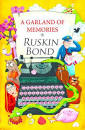
BOOK REVIEW: A GARLAND OF MEMORIES by Ruskin Bond

Copyright@shravancharitymission

Khidki (Window)

–Read India Initiative—

This is only an attempt to create interest in reading. We may not get the time to read all the books in our lifetime. But such reviews, talk and synopsis will at least convey what the book is all about.

    It is one of the cutest books I’ve ever read. It reminds me of a book titled ‘Glimpses of Bengal’ by Gurudev Rabindranath Tagore that I had read some time ago. Glimpses of Bengal is the English translation of Gurudev’s letters that he had written in Bengali, and they indeed were rich with scenic description and personal thoughts when he was a youth.

    It appears to me Ruskin Bond has taken the cue from Gurudev in converting his essays and short stories into a publication titled ‘A Garland of Memories.’

    The book is a Natraj Publishers publication and is available in Amazon for Rs 173.

    It’s a flavoursome narration of essays and short stories by the author. On a day when you have nothing much to do, pick up, this book and you’re sure to have a good time. It’s a slim spine just about 146 pages.

    The author narrates the most interesting tales, from his chance encounter with Rudyard Kipling’s ghost, to his adventures with his eccentric Uncle Ken; being witness to a bitter battle between a brave snake and a brave mongoose and two foolhardy birds. It is about the hungry pet python who ate up everyone’s lunch and the mythical snow-woman who almost exists.

    The narration is in Bond’s unique, lucid, simple prose and is based on his real life experiences. I’m amazed at Ruskin Bond’s ground knowledge, of forests, animals, flora and fauna, and the jungles of Mussorie, Dehradun and one can say the entire Uttarakhand. In that he very aptly mixes the experiences of his three year stay in Europe. And, oh boy, with that, the cocktail becomes ecstatic. I expect this collection to make smile laugh and even cry.

    There are in all thirty-four chapters—comprising essays and short-stories. They were originally written for various Indian publications—The statesman, Times of India, Hindustan Times, Deccan Herald, among others—and several were published in the children’s magazines and some even in foreign magazines.

    Friends, if you are interested in nature, don’t miss books, such as, ‘Glimpses of Bengal’ and ‘A Garland of Memories’ that describe the nature of yester-years so very well. Mind you with the degradation of environment and the cutting of forests and trees, such books are becoming more and more precious or you could say priceless. The book also glimpses past a ghost story.

    A line that I particularly liked in the book goes as follows:

    Live long, my friend, be wise and strong,

    But do not take from any man his song.

    Having canvassed so much about the book let me also narrate a synopsis of an episode out of it, that’ll give you an umbrella flavour of the content. It is about flattery. Narration is in first person.

    When I was a boy in Dehradun, there was a mango-grove just opposite my bungalow. It belonged to Seth Govind Ram (May his soul rest in peace). During the mango season, it was fiercely guarded by a giant chowkidar called Phambiri. All my efforts to get into the mango-grove were normally repulsed by him. On one occasion I even received a mild lathi-blow on my backside.

    ‘I just want to climb the tree,’ I pleaded.

    ‘Come back when the mango season is over,’ said Phambiri with a vicious smile copied from a filmi-villain.

    I then discovered he was an ex-wrestler. A champion in his youth, who had the distinction of over-throwing the great King Kong (I did not know at the time that King Kong, in his bad years, was constantly being thrown out of the ring). Whenever I passed the grove and saw Phambari, I would comment on his great strength, his superb physique, his muscles like cricket balls, and his bull like neck and shoulders. Gradually he warmed up to me, and began to tell me of his exploits. I acclaimed them. Then he showed me his feats of strength, like picking up rocks and hurling them across the road. I applauded and applauded. And before long, he invited me into the mango grove, and by the end of the week I was having all the mangoes I wanted to. To be frank the guardian of the grove actually pressed them upon me.

    Flattery will get you everywhere.

    One of the first lessons learnt in school is that, the majority of teachers are susceptible to the most blatant forms of flattery. Hard work helps a little, but the child at the top of the class is often held in high esteem by the teachers. This paragon of virtue, wears an, adoring smile, and always waits, till the teacher is out of hearing, before slandering her. ‘They do but flatter with their lips, and dissemble their real feelings in their double heart.’

    There is that cynical old ploy of telling a woman she looks ten years younger than her actual age. This doesn’t always work. I once told a woman (who looked fifty) that she looked attractive forty, and she hit me, over the ear, with her handbag. It turned out she was thirty. Be careful when you flatter. The results can sometimes be unexpected. Ruskin Bond wrote this piece some 40 years ago.

    I would give this book seven out of ten.

Posted by Kamlesh Tripathi

*

https://kamleshsujata.wordpress.com

*

Share it if you like it

*

Shravan Charity Mission is an NGO that works for poor children suffering from life threatening diseases especially cancer. Our posts are meant for our readers that includes both children and adults and it has a huge variety in terms of content. We also accept donations for our mission. Should you wish to donate for the cause. The bank details are given below:

NAME OF ACCOUNT: SHRAVAN CHARITY MISSION

Account no: 680510110004635 (BANK OF INDIA)

IFSC code: BKID0006805

*

Our publications

GLOOM BEHIND THE SMILE

(The book is about a young cancer patient. Now archived in 7 prestigious libraries of the US, including, Harvard University and Library of Congress. It can also be accessed in MIT through Worldcat.org. Besides, it is also available for reading in Libraries and archives of Canada and Cancer Aid and Research Foundation Mumbai)  

ONE TO TANGO … RIA’S ODYSSEY

(Is a book on ‘singlehood’ about a Delhi girl now archived in Connemara Library, Chennai and Delhi Public Library, GOI, Ministry of Culture, Delhi)

AADAB LUCKNOW … FOND MEMORIES

(Is a fiction written around the great city of Nawabs—Lucknow. It describes Lucknow in great detail and also talks about its Hindu-Muslim amity. That happens to be its undying characteristic. The book was launched in Lucknow International Literary Festival of 2014)

REFRACTIONS … FROM THE PRISM OF GOD

(Co-published by Cankids–Kidscan, a pan India NGO and Shravan Charity Mission, that works for Child cancer in India. The book is endorsed by Ms Preetha Reddy, MD Apollo Hospitals Group. It was launched in Lucknow International Literary Festival 2016)

TYPICAL TALE OF AN INDIAN SALESMAN

(Is a story of an Indian salesman who is, humbly qualified. Yet he fights his ways through unceasing uncertainties to reach the top. A good read not only for salesmen. The book was launched on 10th February, 2018 in Gorakhpur Lit-Fest. Now available in Amazon, Flipkart and Onlinegatha)

RHYTHM … in poems

(Published in January 2019. The book contains 50 poems. The poems describe our day to day life. The book is available in Amazon, Flipkart and Onlinegatha)

(ALL THE ABOVE TITLES ARE AVAILABLE FOR SALE IN AMAZON, FLIPKART AND OTHER ONLINE STORES OR YOU COULD EVEN WRITE TO US FOR A COPY)

*****


INTERESTING FACTS FIGURES & QUOTES-47: THE MOUNTAIN RAILWAYS OF INDIA

Copyright@shravancharitymission

    We often call it the Toy-Train, that chugs on, the Kalka-Shimla, UNESCO, world heritage railway track.

    The mountain railways of India, is now collectively designated as world heritage site, by the United Nations Educational Scientific and Cultural Organisation (UNESCO), and is still, fully functional, and operational.

    Three railways form this heritage site—The Darjeeling Himalayan Railway, The Nilgiri Mountain Railway and The Kalka-Shimla Railway. These mountain railways are over hundred years old and known the world over for their engineering and scenic views. The mountain railways of India were first declared a heritage site in 1999. The Darjeeling Himalayan Railway was the first to be declared and the remaining two followed suit. Let us analyse them one by one.

KALKA-SHIMLA RAILWAY

    The train runs between Kalka and Shimla. This narrow gauge railway was built in 1898 by the British to connect their summer capital of Shimla, with the rest of the Indian Rail System. H.S. Hanington was the Chief Engineer of the project. At the time of its construction, nearly 107 tunnels and 864 bridges were built throughout its course.

    Kalka-Shimla Railway is a recent addition to the heritage list, after it was added by UNESCO as an extension of the Mountain-Railways of India in 2008.

THE NILGIRIS MOUNTAIN RAILWAYS

    This high altitude railway connects Udhagamandalam (Ooty) and Mettupalayam. Its construction was first proposed in 1854, but commenced only in 1891. Construction of this 45.88 km long metre-gauge single-track railway got completed in 1908. It has the steepest track in Asia. The train passes through 16 tunnels, 208 curves and over 250 bridges. It scales from a height of 326 metres to 2203 metres.

    It was added to the mountain railways of India heritage in 2005 by UNESCO. Prior to its entry, the heritage site was known as Darjeeling Himalayan Railways.

THE DARJEELING HIMALAYAN RAILWAY

    Darjeeling Himalayan Railway was the first railway to be inscribed by UNESCO as a world heritage site in 1999. The other railways were added later. It is a narrow-guage railway that connects New-Jalpaiguri and Darjeeling. Construction commenced in 1879 and got completed in 1881. It runs for a distance of nearly 88 km. It travels through different elevations from 100 metres to 2258 metres. Ghum at 2258 metres is the highest station on this route and also in India. Batasia Loop is one of the most scenic points on the route.

So hop on to these beautiful trains that chug through the mighty mountains of India.

Posted by Kamlesh Tripathi

*

https://kamleshsujata.wordpress.com

*

Share it if you like it

*

Shravan Charity Mission is an NGO that works for poor children suffering from life threatening diseases especially cancer. Our posts are meant for our readers that includes both children and adults and it has a huge variety in terms of content. We also accept donations for our mission. Should you wish to donate for the cause. The bank details are given below:

NAME OF ACCOUNT: SHRAVAN CHARITY MISSION

Account no: 680510110004635 (BANK OF INDIA)

IFSC code: BKID0006805

*

Our publications

GLOOM BEHIND THE SMILE

(The book is about a young cancer patient. Now archived in 7 prestigious libraries of the US, including, Harvard University and Library of Congress. It can also be accessed in MIT through Worldcat.org. Besides, it is also available for reading in Libraries and archives of Canada and Cancer Aid and Research Foundation Mumbai)  

ONE TO TANGO … RIA’S ODYSSEY

(Is a book on ‘singlehood’ about a Delhi girl now archived in Connemara Library, Chennai and Delhi Public Library, GOI, Ministry of Culture, Delhi)

AADAB LUCKNOW … FOND MEMORIES

(Is a fiction written around the great city of Nawabs—Lucknow. It describes Lucknow in great detail and also talks about its Hindu-Muslim amity. That happens to be its undying characteristic. The book was launched in Lucknow International Literary Festival of 2014)

REFRACTIONS … FROM THE PRISM OF GOD

(Co-published by Cankids–Kidscan, a pan India NGO and Shravan Charity Mission, that works for Child cancer in India. The book is endorsed by Ms Preetha Reddy, MD Apollo Hospitals Group. It was launched in Lucknow International Literary Festival 2016)

TYPICAL TALE OF AN INDIAN SALESMAN

(Is a story of an Indian salesman who is, humbly qualified. Yet he fights his ways through unceasing uncertainties to reach the top. A good read not only for salesmen. The book was launched on 10th February, 2018 in Gorakhpur Lit-Fest. Now available in Amazon, Flipkart and Onlinegatha)

RHYTHM … in poems

(Published in January 2019. The book contains 50 poems. The poems describe our day to day life. The book is available in Amazon, Flipkart and Onlinegatha)

(ALL THE ABOVE TITLES ARE AVAILABLE FOR SALE IN AMAZON, FLIPKART AND OTHER ONLINE STORES OR YOU COULD EVEN WRITE TO US FOR A COPY)

*****


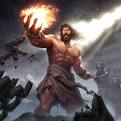
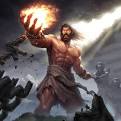
SHORT STORY: Zeus … Prometheus and the Two Roads

Copyright@shravancharitymission

    Zeus and Prometheus are Greek Gods. In the olden days, the Greeks believed Zeus to be the King of all Gods, and Prometheus, the God who made man. Prometheus stole fire and gave it to mankind.

    One day, Zeus called Prometheus and said, “I command you, Prometheus, to show all human beings the way to freedom and the way to slavery.”

    Prometheus said, “The way to freedom will be rough in the beginning, with many blocks and steep climbs. There would be no water to drink. There would be no pathways, only thorns. It will be extremely tough. And there would be dangers on all sides. But the road would eventually become a smooth and plain. There will be fruit trees and streams on both sides of the path. The difficulty will end. People will be able to rest. And finally they will attain freedom.”

    Prometheus then added, “Contrary to this, the way to slavery will start out, as a smooth and plain in the beginning. The pathway will be full of beautiful flowers and very –comfortable. Just the opposite of the road leading to freedom. But later on, there will be only blocks, steep climbs and difficulty on all sides.”

    In simple terms what Prometheus said was, Good things in life do not come easy. All those successful people around you have struggled extremely hard to get there.

By Kamlesh Tripathi

*

https://kamleshsujata.wordpress.com

*

Share it if you like it

*

Shravan Charity Mission is an NGO that works for poor children suffering from life threatening diseases especially cancer. Our posts are meant for our readers that includes both children and adults and it has a huge variety in terms of content. We also accept donations for our mission. Should you wish to donate for the cause. The bank details are given below:

NAME OF ACCOUNT: SHRAVAN CHARITY MISSION

Account no: 680510110004635 (BANK OF INDIA)

IFSC code: BKID0006805

*

Our publications

GLOOM BEHIND THE SMILE

(The book is about a young cancer patient. Now archived in 7 prestigious libraries of the US, including, Harvard University and Library of Congress. It can also be accessed in MIT through Worldcat.org. Besides, it is also available for reading in Libraries and archives of Canada and Cancer Aid and Research Foundation Mumbai)  

ONE TO TANGO … RIA’S ODYSSEY

(Is a book on ‘singlehood’ about a Delhi girl now archived in Connemara Library, Chennai and Delhi Public Library, GOI, Ministry of Culture, Delhi)

AADAB LUCKNOW … FOND MEMORIES

(Is a fiction written around the great city of Nawabs—Lucknow. It describes Lucknow in great detail and also talks about its Hindu-Muslim amity. That happens to be its undying characteristic. The book was launched in Lucknow International Literary Festival of 2014)

REFRACTIONS … FROM THE PRISM OF GOD

(Co-published by Cankids–Kidscan, a pan India NGO and Shravan Charity Mission, that works for Child cancer in India. The book is endorsed by Ms Preetha Reddy, MD Apollo Hospitals Group. It was launched in Lucknow International Literary Festival 2016)

TYPICAL TALE OF AN INDIAN SALESMAN

(Is a story of an Indian salesman who is, humbly qualified. Yet he fights his ways through unceasing uncertainties to reach the top. A good read not only for salesmen. The book was launched on 10th February, 2018 in Gorakhpur Lit-Fest. Now available in Amazon, Flipkart and Onlinegatha)

RHYTHM … in poems

(Published in January 2019. The book contains 50 poems. The poems describe our day to day life. The book is available in Amazon, Flipkart and Onlinegatha)

(ALL THE ABOVE TITLES ARE AVAILABLE FOR SALE IN AMAZON, FLIPKART AND OTHER ONLINE STORES OR YOU COULD EVEN WRITE TO US FOR A COPY)

*****


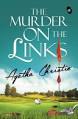
BOOK REVIEW: THE MURDER ON THE LINKS by Agatha Christie

Copyright@shravancharitymission

Khidki (Window)

–Read India Initiative—

This is only an attempt to create interest in reading. We may not get the time to read all the books in our lifetime. But such reviews, talk and synopsis will at least convey what the book is all about.

Characters

  1. Hercule Poirot – The famous Belgian detective called in by the man who would be murdered.
  2. Captain Arthur Hastings – Poirot’s assistant on the case, accompanying him at his request, and the narrator of the story.
  3. Monsieur Giraud – Detective of the Paris Surete and the investigating officer. Considers Poirot to be his rival and resents his involvement in the investigation.
  4. Monsieur Hautet – Examining Magistrate, and Giruad’s assistant. More respectful of Poirot’s reputation, and thus more helpful to the Belgian detective.
  5. Paul Renauld/Georges Conneau – The victim of the case. Requested Poirot’s assistance for an unknown matter, prior to his murder. Involved in the Beroldy murder some 22 years ago, in which he was the killer, but escaped justice when caught.
  6. Eloise Renauld – Renauld’s wife, whom he met in South America. Helped her husband fake his kidnapping on the night of his death. Initially suspected of the murder by Poirot, until Eloise sees her husband’s body.
  7. Jack Renauld – Renauld’s son, born in South America, and raised both there and in France. Mistakenly suspected of murder by Giraud, due to an argument between him and his father. Formerly in love with Marthe, now in love with Bella.
  8. Madame Daubreuil/Madame Jeanne Beroldy – Renauld’s neighbour and blackmailer. Involved in plotting the murder of her husband 22 years ago, but escaped justice when exposed.
  9. Marthe Daubreuil – The killer. Madame Daubreuil’s daughter, who wants to marry Jack, but is unaware that he is in love with another woman.
  10. Gabriel Stonor – Renauld’s secretary. Absent at the time of the murder, and has no knowledge on his employer’s past.
  11. Bella Duveen – A stage performer, with whom Jack is in love, twin of Dulcie Duveen.
  12. Dulcie Duveen – A stage performer and Bella’s sister, who works under her stage name of “Cinderella” and the twin of Bella. She is the love interest of Hastings during the novel.
  13. Lucien Bex – Commissary of Police for Merlinville.
  14. Monsieur Marchaud – Police sergeant in Merlinville’s police.
  15. Dr Durand – Local doctor and police surgeon in Merlinville.
  16. Françoise Arrichet – An elderly servant of the Renauld’s household, one of three servants present at the Renauld’s house during the crime.
  17. Léonie Oulard – A young maid of the Renauld’s household, one of three servants present at the Renauld’s house during the crime.
  18. Denise Oulard – A maid of the Renaulds’ household and Léonie’s sister, and one of three servants present at the Renauld’s house during the crime.
  19. Auguste – Renaulds’ gardener. Absent from the house on the night of the murder.
  20. Joseph Aarons – A British theatrical agent.

    Hercule Poirot and Captain Hastings travel to Merlinville-sur-Mer, France, to meet Paul Renauld, who has requested for their help. Upon arriving at his home, in the Villa Genevieve, local police greet them with news that Paul Renauld has been found dead that morning. Renauld had been stabbed on the back with a letter-opener and left in a newly dug grave adjacent to a local golf course. Renauld’s wife, Eloise Renauld, claims masked men broke into the villa at 2 am, tied her up, and took her husband away with them. Upon inspecting Paul Renauld’s body, Eloise collapses with grief at seeing her dead husband. Perhaps, she was not expecting this. Monsieur Giraud of the Sûreté leads the police investigation, and resents Poirot’s involvement in the case, where Monsieur Hautet, the Examining Magistrate, is more open to sharing key information with him.

    Poirot notes four key facts about the case: One, a piece of, lead piping, is found near the body. Two, only three female servants were in the villa, as both Renauld’s son Jack and his chauffeur had been sent away. Three, an unknown person visited the house the day before, whom Renauld urged to leave immediately. Four, Renauld’s immediate neighbour, Madame Daubreuil, had placed 200,000 francs into her bank account over recent weeks.

    When Renauld’s secretary, Gabriel Stonor, returns from England, he suggests blackmail, as his, employer’s past is a complete mystery prior to his career in South America.     Meanwhile, Hastings, Poirot’s number two, unexpectedly encounters a young woman he met before, known to him as “Cinderella”, who asks him to see the crime scene, and then mysteriously disappears with the murder weapon. Poirot later travels to Paris to research the case’s similarities to that of a murder case some 22 years ago, which has only one difference – the killer, Georges Conneau, later confessed to the crime, in which he and his lover, Madame Beroldy, had plotted to kill her husband and claim that the murder was carried out by masked intruders; and where, both disappeared soon afterwards.

    Returning from Paris, Poirot learns that the body of an unknown man has been found, stabbed through the heart with the murder weapon. An examination shows he has the hands of a tramp, that he died before Renauld’s murder from an epilectic fit, and that he was stabbed after death. Giraud the investigating officer arrests Jack Renauld on the basis that he wanted his father’s money. Jack admits to police that he had argued with his father over wishing to marry Madam Daubreuil’s daughter Marthe, whom his parents found unsuitable. Poirot reveals a flaw in Giraud’s theory, as Renauld had changed his will two weeks before his murder, disinheriting Jack. Soon afterwards, Jack is released from prison after Bella Duveen, an English stage performer he loves, confesses to the murder. Both had come across the body on the night of the murder, and assumed the other had killed Renauld. Poirot reveals neither did, as the real killer was Marthe Daubreuil.

    Poirot elaborates on his theory. Paul Renauld the victim was in fact Georges Conneau, while fleeing France, he changed his name in Canada to start a new life. After gaining a wife and a son, and making a fortune in South America, he returned to France to settle down with his new family. But by misfortune, he found that his immediate neighbour was Madam Beroldy, and like him, she too, had changed her identity to become Madam Daubreuil. Blackmailed by her, over his past, Renauld’s situation worsens when Jack his son gets attracted to her daughter. But when, a tramp dies on his grounds, he sees an opportunity to escape Madam Daubreuil. He uses the same ruse, as he had used before, while committing a murder, but with one difference. This time, he uses it to fake his own death. His plan was simple – staging his own kidnapping at night. He disfigures tramp’s body with a pipe, and then buries him as Paul Reynold beside the golf course, before fleeing the area by train. Anyone, who would recognise the body as not his, would be sent away, so as to assure that his wife Eloise will falsely identify the body as his. Poirot suspected Eloise’s involvement in the scheme, as her reaction, to her husband’s death, was not genuine until she saw his body.

    However, the plan was unfortunately discovered by Marthe, who overheard, the Renaulds, discussing it together. She for sure stood to gain financially if she married Jack Renauld, their son, but the success of this scheme would ruin her plans. So, she decides to follow Renauld and stabs him, after he digs the grave, for tramp’s body. To expose Marthe as the killer, Poirot asks Eloise to openly disinherit Jack Renauld. That night, Marthe attempts to kill Eloise when Jack leaves her alone in the villa, but dies trying, when Eloise is saved by Cinderella. Marthe’s mother disappears again. Jack and his mother plan to go to South America, joined by Hastings and Dulcie Duveen — who is his Cinderella and Bella’s twin sister.

    The plot is a little less scheming. I would give the book seven of ten.

By Kamlesh Tripathi

*

https://kamleshsujata.wordpress.com

*

Share it if you like it

*

Shravan Charity Mission is an NGO that works for poor children suffering from life threatening diseases especially cancer. Our posts are meant for our readers that includes both children and adults and it has a huge variety in terms of content. We also accept donations for our mission. Should you wish to donate for the cause. The bank details are given below:

NAME OF ACCOUNT: SHRAVAN CHARITY MISSION

Account no: 680510110004635 (BANK OF INDIA)

IFSC code: BKID0006805

*

Our publications

GLOOM BEHIND THE SMILE

(The book is about a young cancer patient. Now archived in 7 prestigious libraries of the US, including, Harvard University and Library of Congress. It can also be accessed in MIT through Worldcat.org. Besides, it is also available for reading in Libraries and archives of Canada and Cancer Aid and Research Foundation Mumbai)  

ONE TO TANGO … RIA’S ODYSSEY

(Is a book on ‘singlehood’ about a Delhi girl now archived in Connemara Library, Chennai and Delhi Public Library, GOI, Ministry of Culture, Delhi)

AADAB LUCKNOW … FOND MEMORIES

(Is a fiction written around the great city of Nawabs—Lucknow. It describes Lucknow in great detail and also talks about its Hindu-Muslim amity. That happens to be its undying characteristic. The book was launched in Lucknow International Literary Festival of 2014)

REFRACTIONS … FROM THE PRISM OF GOD

(Co-published by Cankids–Kidscan, a pan India NGO and Shravan Charity Mission, that works for Child cancer in India. The book is endorsed by Ms Preetha Reddy, MD Apollo Hospitals Group. It was launched in Lucknow International Literary Festival 2016)

TYPICAL TALE OF AN INDIAN SALESMAN

(Is a story of an Indian salesman who is, humbly qualified. Yet he fights his ways through unceasing uncertainties to reach the top. A good read not only for salesmen. The book was launched on 10th February, 2018 in Gorakhpur Lit-Fest. Now available in Amazon, Flipkart and Onlinegatha)

RHYTHM … in poems

(Published in January 2019. The book contains 50 poems. The poems describe our day to day life. The book is available in Amazon, Flipkart and Onlinegatha)

(ALL THE ABOVE TITLES ARE AVAILABLE FOR SALE IN AMAZON, FLIPKART AND OTHER ONLINE STORES OR YOU COULD EVEN WRITE TO US FOR A COPY)

*****