Shravan Charity Mission is an NGO that works for poor children suffering from life-threatening diseases, especially cancer. Our posts are meant for our readers, including children and adults, and have a huge variety of content. We also accept donations for our mission. Should you wish to donate to the cause of cancer? The bank details are given below:
(THE TIMES OF INDIA 21/7/24 SWEET MANGO FACES A BITTER HEAT CHALLENGE
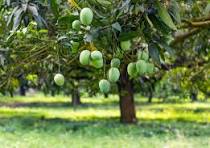
Be it the sweet and succulent Dussehri of Maal-Malihabad, Langda of Varanasi, Saharanpur’s Chausa, or Rataul variety of Baghpat – mango, the king of fruits, continues to reign supreme. Another significant constituent of UP’s diverse mango wealth is Gaurjeet of Gorakhpur, for which the UP government is trying to get a GI tag. If this happens, UP will become the state with the maximum GI-tagged mango varieties. What, however, has emerged as a challenge for mangoes in UP in the last few years is the unpredictable weather. Lucknow-based ICAR lab, Central Institute for Subtropical Horticulture (CISH), is working to make mangoes climate-resilient by introducing new technologies and, also, new varieties. “Last year, it was the untimely rain, and this time, it was the extreme temperature and heat which affected the crops.” Said director, CISH, T Damodaran. CISH Lab conducts research on mandated subtropical fruits, mangoes being the one, to come with improved varieties. In the case of mangoes, Dussehri, being an early ripening variety, is 80% more susceptible to heat and high temperatures. “In many fruits, we saw premature ripening this time, ” the director said. To deal with the impact of weather on mangoes, CISH is working at two levels – developing climate-resilient technologies and making efforts to come up with genetically improved hybrids. Many orchards in Malihabad had mangoes covered with paper bags this year, to control the impact of the heat. “This was only one of the ways devised to tackle the impact of heat. We have also come up with technologies to control the attack of pests on mangoes, as unpredictable weather may also trigger that,” he said. The institute has already released two hybrid mangoes – Ambika and Arunika. The varieties are genetically improved and were tested over a period before they were released for commercial production. Each is a cross of two types of mangoes. Ambika is a cross of Amrapali and Janardan Pasand, and Arunika is a cross of Amrapali and Vanraj, a mango from Gujarat. Two more varieties developed by CISH, Samriddhi and Madhurika, are ready for release shortly. Besides, at least 11 other hybrid mangoes may be up for screening by the institute to be released for commercial production. The hybrids are genetically improved, have high productivity and yield a better-quality fruit. They are also tolerant to heat waves and biotic stress due to the attack of pests and insects. The varieties developed scientifically are also nutraceutically improved. Along with this, CISH has also come up with improved varieties of Dussehri. It is by mid-March that a Dussehri tree usually completes its flowering stage, and within a week, the fruit may set in. In Dussehri’s cycle of growth, rain in March may be damaging because that is when the flowers just open and pollination takes place. “Rain may make flowers either drop or turn black, something that happened last year,” said Naseeb Khan, a mango entrepreneur in Malihabad. In that case, some fruits that develop may be false fruits as they would lack seeds. Mangoes need a temperature between 27 degrees Celsius and 35 degrees Celsius to grow ideally in March and April. The varying temperature damages the fruit. Cloudy weather, high humidity and high velocity winds may further hit the crop. “In many fruits, this year, the seed may become soggy, affecting the taste. It was because of the extreme heat,” said Khan. UP accounts for over 23% of the total mango production in the country. Lucknow, Saharanpur and Meerut are the main mango-producing regions. In the last few years, mango varieties from the state have been exported to Singapore, Malaysia, the US, England and Dubai. (PICTURES OF MANGO VARIETIES ON A PLATTER) (‘OG’ (ORIGINAL) MANGOES OF UP) – Dussehri from Maal-Malihabad in Lucknow, Langda from Varanasi, Rataul from Baghpat, Gaurpreet from Gorakhpur and Chausa from Saharanpur grow naturally in UP. – Dussehri, Rataul and Langda are GI tagged. The UP government has sought a GI tag for Chausa and Gaurpreet. – Dussehri, Langda and Chausa are exported outside UP and India and are commercially successful and popular. FIRST HYBRID MANGO VARIETIES – Work to develop hybrid varieties of mangoes started in the 1960s at the Indian Agricultural Research Institute, New Delhi – The purpose was to develop varieties that would bear every year and have high productivity, besides yielding good quality fruits. – Amrapali (cross of Dussehri and Neelam) and Mallika (cross of Neelam and Dussehri) were the first hybrids. – Dussehri is from North India, and Neelam is from South India. While North Indian varieties are biennial, those from South India bear annually. – CISH CONSERVES AND PROPAGATES 775 MANGO VARIETIES – CISH has the biggest collection of mango germplasm in the world. – Many varieties are now extinct at their places of origin – Collection started in 1975 when the institute started as the Central Mango Research Station. – Kensington Pride from Australia was the first exotic variety brought to the institute. – Today, it has 17 others, including Tommy Atkins, Sensation, Edward, Eldon, Keitt, Kent, Osteen, Palmer, Kitchner, Starch, Filipino, Lilly, Maya, Carabao, Kowasaji Patel, St Alexander & Prior-de-Amroesia. – Mangoes have been sourced from nurseries and orchard owners over a period of time, and are used to develop new varieties.
Shravan Charity Mission is an NGO that works for poor children suffering from life-threatening diseases, especially cancer. Our posts are meant for our readers, including children and adults, and have a huge variety of content. We also accept donations for our mission. Should you wish to donate to the cause of cancer? The bank details are given below:
In the Hindu texts, Ambarisha is a mythological Ikshvaku (Suryavanshi) king, and the son of Mandhata. He is believed to have conquered the whole world in a week. He lived during the Treta Yuga.
According to the Bhagavata Purana, the king was a great devotee of Lord Vishnu, and he adhered firmly to the truth. On being pleased with his devotion, Lord Vishnu gave his Sudarshana Chakra to Ambarisha, who worshipped the deity’s weapon with great devotion. Once, during the Vaikuntha Ekadashi, Ambarisha performed the Dvadashi Vrata at Vrindavana, which required that the king start a fast on Ekadashi and break it at the start of Dvadasi (the twelfth day), and then feed all his people. As the moment of breaking the fast was drawing near, the mighty sage Durvasa appeared out of nowhere. He was received with full honours by King Ambarisha. Durvasa Muni agreed to the king’s request to be his honoured guest and have a meal with him, but asked the king to wait until he finished his bath in the Yamuna River and returned. As the auspicious moment approached when the king had to break his fast to fulfil the vow of the vrata, Durvasa did not turn up. On the advice of his priests, the king broke his fast by consuming a little water and waited for the arrival of sage Durvasa to offer him food. Durvasa, who was well known for his short temper, could ascertain by his mystic power that King Ambarisha had violated the respect due to a guest by breaking his fast before the guest had taken his meal, and in his rage he created an asura to kill Ambarisha, out of a strand of his hair. But because Ambarisha was a great devotee of Lord Vishnu, the Sudarshana Chakra intervened to destroy the asura, and further started chasing Durvasa himself. Sage Durvasa became extremely frightened, and he ran for his life.
The Sudarshan Chakra was soon inches away from Durvasa Muni’s back, as it chased him like a blazing forest fire. On the run and desperate to protect himself, Durvasa Muni went everywhere: through the sky, over the earth’s surface, into caves and under the ocean. He ran through all three planets, but could not escape the Lord’s weapon. Sudarshan Chakra followed him nonstop.
Sage Durvasa felt the unbearable heat. Finally, he went to Satya-loka and asked Brahma for protection, saying, “O my Lord, kindly protect me.” Brahma said, “I cannot help you. I am under the control of Lord Narayana, the master of the Sudarshan Chakra.” Having been told that Brahma couldn’t protect him. Durvasa Muni went to Lord Shiva in Kailash and asked for his protection.
“You should go to the Supreme Lord Narayana. This Sudarshan Chakra is unbearable even for me,” said Shiva. Durvasa Muni then proceeded to Vaikuntha, the celestial abode of Lord Vishnu. There, he fell at Lord Narayana’s lotus feet and begged for protection.
“Oh, Durvasa, you should know that I am completely under the control of my devotees. So you should go to Maharaja Ambarisha. Only he can protect you from this Sudarshan Chakra.” Immediately upon being advised so by Lord Vishnu, Durvasa Muni realised his mistake and rushed back to Maharaja Ambarisha.
The sage begged the devoted king Ambarisha for forgiveness. The king then politely requested the Sudarshan Chakra not to harm the sage Durvasa. At the king’s request, the Sudarshan Chakra became peaceful and returned to Lord Narayana.
Maharaja Ambarisha then offered delicious prasad to the sage. The sage said, “My dear King, please have your meal first. In the beginning, I thought you were an ordinary person, but now I understand that you are the most exalted devotee of the Lord.”
Shravan Charity Mission is an NGO that works for poor children suffering from life-threatening diseases, especially cancer. Our posts are meant for our readers, including children and adults, and have a huge variety of content. We also accept donations for our mission. Should you wish to donate to the cause of cancer? The bank details are given below:
TIMES OF INDIA 18.1.22 : INDIA MUST GIVE TAIWAN A HELPING HAND BY BRAHMA CHELLANEY
After swallowing Hong Kong, redrawing the South China Sea’s geopolitical map and encroaching on Indian and Bhutanese borderlands, an expansionist China is itching to move on Taiwan. This island democracy is a technological powerhouse central to the international semiconductor business. Taiwan also plays an indirect role in the defence of India because its autonomous existence ties up a sizable portion of China’s armed forces. CHINA’S EXAGGERATED CLAIMS Beijing’s claim that Taiwan has “always been” part of China is dubious, at best, and based on revisionist history. For most of its history, Taiwan was inhabited by Malayo-Polynesian tribes and had no ties with China until the island’s Dutch colonial rulers in the 17th century invited Chinese workers to emigrate. In that sense, Taiwan is closer to the Philippines than China. The world cannot afford to let Taiwan go the way of the once-autonomous Tibet, which was gobbled up by the Mao Zedong’s regime in the early 1950s. Tibet’s annexation remains one of the most far-reaching geopolitical developments in post-World War II history, which resulted in China imposing itself as India’s neighbour and waging unending aggression. Today, Taiwan has all the attributes of a robust independent state, and most Taiwanese want it to stay that way. But China’s new Mao, Xi Jingping, calls the island’s incorporation a “historic mission”. Xi is working to implement the expansionist agenda that Mao left unfinished, which explains why he has not spared even tiny Bhutan. In the way a porcupine’s quills protect it from larger predators by making it difficult to digest, Taiwan needs to create porcupine-like defences with weapons like anti-ship and anti-aircraft missiles. By turning a Chinese invasion into a bloody and protracted guerrilla campaign, a porcupine Taiwan would inflict high costs on China, including major military casualties. CREATING INTERNATIONAL SPACE But no less important than bolstering its defences is Taiwan’s imperative to carve out greater international space for itself. If Taiwan gains greater presence on the global stage, it will be able to shore up its status as a defacto nation, making it more difficult for China to seize the island in the way it occupied Tibet and Xinjiang soon after coming under communist rule in 1949. The then-independent Tibet, for example, should have applied for United Nations membership shortly after that international body came into existence in 1945, but it never did. China, as a step towards annexing Taiwan, is working to wipe out its international identity by bribing countries to break off diplomatic ties with Taipei and by vetoing Taiwan’s presence even in international forums. Its poaching has left only 13 nations and the Vatican is still recognising Taiwan. But recently, China has been forced to eat humble pie by a puny nation. Lithuania, with just 18,500 active military personnel, has set an example for bigger countries on how to stand up to the global Goliath’s bullying. Undeterred by China’s sanctions campaign against it, Lithuania has allowed Taiwan to open a de facto embassy. With some other European states- from the Czech Republic and Poland to Slovakia – already seeking to deepen ties with Taiwan, Lithuania indeed promises to serve as a bellwether of sorts. THE INDIA CONNECT India, locked in several military standoffs with China, needs to think and act creatively, including helping Taiwan by learning from its historical mistake on Tibet. When China invaded Tibet in 1950, India opposed Tibet’s desperate plea for a UN discussion before acquiescing in the Chinese annexation of the buffer, including withdrawing its military escorts from Tibet and handing over Tibet’s postal, telegraph and telephone services that it was running. If Taiwan is not to go Tibet’s way, India must do its part to help Taiwan reinforce its defences and self-governing status. India must follow the lead of Japan and the US in strengthening ties with Taipei. And it should emulate the example set by minnow Lithuania and allow Taiwan to rename its “Taipei Economic and Cultural Centre” in New Delhi as the “Taiwanese Representative Office”, while rebranding its own mission in Taipei as the “India Representative Office”. Make no mistake: Taiwan is on the frontline of international defence against Xi’s totalitarianism and expansionism, which have spawned a Muslim gulag Xinjiang, brutal repression in Tibet and Himalayan aggression. Major democracies must act before it becomes too late to save Taiwan, a democratic success story. If China succeeds in recolonising Taiwan, India’s security will come under greater pressure. (The writer is a professor of strategic studies, Centre for Policy Research) Times of India 18/1/22
Shravan Charity Mission is an NGO that works for poor children suffering from life-threatening diseases, especially cancer. Our posts are meant for our readers, including children and adults, and have a huge variety of content. We also accept donations for our mission. Should you wish to donate to the cause of cancer? The bank details are given below:
BIGGER, MESSIER DELHI STILL HAS ITS ARMS WIDE OPEN
…. DELHI IS A RARE CITY WITH A LONG PAST BUT NO HANKERING TO TIE ITSELF DOWN TO IT. WHETHER IT’S PEOPLE OR SPACES, IT ABSORBS THEM ALL WITHOUT RESERVE
Delhi changed for me forever one day in the mid-1980s when a friend took me with him to the site where he was planning to buy a flat. There wasn’t much to see. The large tracts of nothingness, which became what we know today as Vasant Kunj, had no redeeming features. What was astonishing to me, however, was that when I looked towards Delhi, between me and the city stood the visage of Qutub Minar. That there could be a Delhi beyond Qutub Minar was something that made no sense to me. For in my imagination, it was pretty much at the very edge of the city. After all, that was a time when I remember going on a picnic in a bus with family friends to the exotic destination called Deer Park, far from our residence in Karol Bagh. . The Delhi that resides permanently in my mind is a cross between the city shown in Chashme Buddoor (the original, not the ghastly remake) and Oye Lucky, Lucky Oye. On the one hand, there are memories of wide open roads, a time scented with languidness, glorious winter mornings, neighbourhoods basking in leafy silence, and on the other hand, the untidy energy, the hustle, the ability to live loudly and publicly, and friends called Lovely, Pinky, Tinkle, Kuki and OK. The biggest change Delhi has seen is physical. It has burst out of its seams in all directions and has colonised spaces around it. It began with the conquest of Jamnapaar, which started out as a relocation drive of ‘unauthorised settlements’ under the watch of Sanjay Gandhi, but then took on a life of its own. Noida and Gurgaon are now cities in their own right, with their own cultural imprints, while drawing liberally from the mother ship. There are many more cars and there is a lot more money, which gives Delhi more mediums to express itself in. Delhi traffic nips at the heels of those in front, ready to kill to gain an inch of space. The murderous intent is expressed first in sound, achieved by honking persistently, and then sometimes followed by action, as evidenced by the number of road rage incidents. The money is visible everywhere – the old colony markets that continue to thrive, lavish weddings at farmhouses, crowds at high-end restaurants, and homes that overflow with decor. Perhaps the biggest loss is that of the Delhi winter. Delhi’s best, most glorious feature is now shrouded in noxious pollution that hangs like a foreboding and stings like regret. The joy of the outdoors, the enlivening experience of bone-chilling cold being thawed out by the sun as one sat on a charpoy and ate rewari and moongphali, basking for several glorious hours, is now an alleged memory, so far removed it has become. Winters are the time now to start muttering about migrating out of the city, while anxiously looking out for an AQI reading that tells us it is safe to step out of the home for a short walk. There are other losses, too. The cinema theatres, which served as a practical guide to different localities in the city, included Plaza, Odeon, Regal, and Rivoli in CP; Golcha, Novelty, Ritz, Delite, and Moti, which marked out Old Delhi; and Anupam, Savitri, Sapna, and the infamous Uphaar, which dotted areas of South Delhi. Some of these theatres remain, some have been refurbished, while others lie in dilapidated disuse. Nirula’s exists, but it is hard to believe it was at the cultural heart of Delhi’s upper-middle-class youth once. The classic Delhi restaurants – Kwality, Embassy, Moti Mahal and Gaylord- are still around, but their role today is to serve as nostalgic artefacts. One goes there to savour the memory of a Delhi that once was. And while street food in Delhi continues to be as delicious, the famous names are now tourist spots more than unselfconscious, humble eating places. And yet, while Delhi has changed in so many ways, at its core, it feels the same. The life that one leads today is poles apart from one’s experiences growing up, but the idea of Delhi has not shown much change. It still lives fiercely in the present and remains unmindful of the history it is set smack in the middle of. Contrary to its popular image, Delhi is India’s only genuinely cosmopolitan city, in that only a small fraction of its residents can claim to be originally from the city. Everyone is a stranger, and everyone is in the city as a user. Delhi hones our appetite, keeps our competitive edge intact and gives us many opportunities to advertise our success. It might have sprawled in ungainly ways in the last few decades and become even louder and shinier, but there is nothing unrecognisable about Delhi.
(WRITTEN BY SANTOSH DESAI. TOI COLUMNIST AND AUTHOR) TIMES OF INDIA ARTICLE 12.9.21
Shravan Charity Mission is an NGO that works for poor children suffering from life-threatening diseases, especially cancer. Our posts are meant for our readers, including children and adults, and have a huge variety of content. We also accept donations for our mission. Should you wish to donate to the cause of cancer? The bank details are given below: