Copyright@shravancharitymission
In today’s digital world, where attention spans are shrinking and reading habits are on the decline, it is about time we rethink how we educate and connect with the younger generation. A powerful and often overlooked tool is the classic Indian cinema. Just like the manner in which William Shakespeare’s plays are studied in schools and colleges for their literary merit and social relevance, classic Indian films, too, deserve a place in our school and college syllabi.
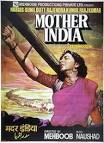
It is said that old books and films are windows to the past. They serve as mirrors reflecting the values, struggles, and ethos of a bygone era. A few months ago, on the occasion of Mother’s Day, while reminiscing about my late mother, I stumbled upon the evergreen classic ‘Mother India’ on television. Although I had watched it several times before, especially because my one-time close friend, the late Sajid Khan, had played a role in it as the young Sunil Dutt, this time it felt different. As if I wasn’t just watching the movie ‘Mother India.’ But I was watching the real India of 1957.

The film tells the touching story of Radha, an impoverished, rural village woman who struggles against all odds to raise her sons in her husband’s absence. She encounters severe poverty, exploitation by a moneylender, and personal tragedy, yet she emerges as an emblem of strength, sacrifice, and moral integrity. In several ways, she becomes the archetype of the traditional Indian woman.
Mother India is more than just a typical film. It holds cultural and social significance. It vividly depicts the struggles of rural India in the post-independence period. Watching this movie is like stepping back in time to understand what our ancestors endured. ‘Mother India’ is one of the many classics preserved in the archives of Bollywood, as well as in the regional film centres of Tollywood and Kollywood.

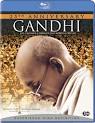
There are many such classic, cult and epic films and TV serials like Dosti, Do Bigha Zamin, Guide, Haqueeqat, Gandhi, Sholay, Pather Panchali, Ramayana, Mahabharat, to name a few, that vividly capture different aspects of Indian life. It could be from social inequality, the British Raj, mythology, penance, the fight for India’s freedom or the wars with Pakistan and China. These films provide context, depth, and real-life visuals to what students might otherwise only read or cram in history or literature books.
It is about time the Government considers constituting a national panel to select a curated list of classic Indian films for inclusion in school and college syllabi. These films could be rotated class-wise or standard-wise, or stream-wise. They could be aligned with topics in history, literature, sociology, ethics, and more. The way Shakespearean plays are studied for their literary value and insights into human behaviour, Indian classics can also be studied for their cultural, emotional, and historical richness.
65% of India’s population is under 35. Digital distractions are everywhere; therefore, classic films can be a more engaging add-on to traditional textbooks. Surveys show that young people today often struggle to read even 500 words at a stretch, but they can easily sit through a well-written storyline in a movie. Visual learning is known to improve retention and understanding. It makes classic movies an effective educational tool.
This approach need not be limited to domestic films alone. Historical and biographical classics from Hollywood or other international cinemas, such as Cromwell, Nuremberg or Schindler’s List, could also be part of an extended curriculum. This will especially benefit students planning to work or study abroad. It will help them gain cultural and historical awareness about the countries they are headed to.

Incorporating cinema into education doesn’t mean replacing books, but it would mean enhancing the learning experience. Students could watch in-syllabus films followed by classroom discussions, essays, or creative projects. It would not only build their analytical and emotional intelligence. It will also cultivate a deeper appreciation of India’s cinematic and historical heritage.
Furthermore, in business and professional schools, an extracurricular cinema curriculum could be developed to help students understand global cultures, leadership models, historical contexts, and ethical dilemmas, all of which are frequently depicted in well-made films.
Cinema is not just entertainment. It is a form of art that captures the values of society, its history, and love for humanity. Though Indian classic movies are rich in content, emotion, and social commentary, they are a forgotten treasure. They can educate, inspire, and connect the youth to their roots.
In this digital era, where attention spans are short and reading habits are waning, integrating timeless films into the academic curriculum may well be the most impactful way to preserve our cultural heritage and prepare students for a more thoughtfully aware future.
Written and posted by Kamlesh Tripathi
Author, Poet, & Columnist
*
https://kamleshsujata.wordpress.com
*
Like it and Share it
*
Shravan Charity Mission is an NGO that works for poor children suffering from life-threatening diseases, especially cancer. Our posts are meant for our readers, including children and adults, and have a huge variety of content. We also accept donations for our mission. Should you wish to donate to the cause of cancer? The bank details are given below:
NAME OF ACCOUNT: SHRAVAN CHARITY MISSION
Account no: 680510110004635 (BANK OF INDIA)
IFSC code: BKID0006805
***
*




 Shravan charity mission