Category Archives: snippet

ARTICLE: ARE SOME AMERICAN COPS MERE DUFFERS LIKE ERIC PARKER?

Copyright@shravancharitymission

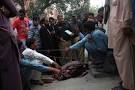
Sureshbhai Patel lying paralysed in hospital
3rd degree torture by Eric Parker


Madisan, Alabama policeman Eric parker is charged with 3rd degree assault and is being fired, after authorities say he threw down a handcuffed 57 year old man from India who was walking around town, while visiting some relatives. Though the FBI is investigating this incident in which Sureshbhai Patel has been paralyzed, yet this brings us to a horrific and nagging question. That is about the IQ levels of some of these American cops who shoot from the hip to prove no point, and in the process they only reveal their racial bias. A media report now suggests Sureshbhai Patel was used as a guinea-pig by Eric Parker to teach his colleague how to pin down criminals. But even that is cruel, animal like and atrocious by any standards. And in the process he has paralyzed Sureshbhai; and his racial sound bite about ‘a black and skinny man roaming the area’ has only embarrassed the black skinny but otherwise healthy President of the US- Barack Obama.

Policeman Eric Parker

Even in some earlier instances American cops have gone overboard, by not being able to distinguish between the turban of an Indian Sardar and a Muslim terrorist of the likes of Osama and have subjected them to humiliation. They have also demeaned Indian dignitaries at airports. So the moot question is. Are American cops insulated from rest of the world, that they can’t even decipher sartorial niches and accomplishments of other countries. And so, shouldn’t they be given a complete run down on various kinds of attires worn across the world since America is the world’s greatest economy and people from all over the world flock here some way or the other. Also, a rerun of visuals at regular intervals about world’s whose who, will help.

NJ cop shooting a black man when both his hands are out of the car

And, in this episode also Eric Parker from all corners looks and behaves like a duffer. Not being able to decipher between a hardcore criminal and a 57 year old non English speaking gentleman, and behaves as if all non English speaking individuals are criminals. The video released only enrages the world. As a cop he should have been more aware than a normal American citizen to decipher between a criminal and a gentleman. So what creates such duffers in the US Police Department is again the moot point when they boast of such a high standard of police training with a sensitive and thinking mindset.

In 2000, the US Department of Justice (USDOJ) Community Oriented Policing Services (COPS) Offices and the Police Executive Research Forum (PERF) collaborated to pilot an innovative post-police academy training strategy with Reno, Nevada Police Department. This problem based learning strategy, titled the Police Training Officers (PTO) Program. Institutionalized adult learning theory and problem solving tools into a process that encouraged new officers to think using proactive mindset, enabling the identification of and solution to problems within their communities

The APOSTC or the Alabama Peace Officers Standards and Training Commission requires law enforcement officers to go through and pass the academy and be certified as police officers of the law. Before going through the academy, they must be employed full time as a cop, meaning they have to work an average of 40 hours per week and within 6 months of being employed they need to complete the academy training in order to be certified. Failing to do so will nullify their employment and they will have to wait two years before submitting another application.

While the training has various physical and legal requirements. It also talks of some important physical, legal and behavioural aspects that the candidates should possess such as:

  • Age should be at least 19 years.
  • Have a high school or a GED
  • Have a valid driver’s license
  • American citizenship
  • Good moral character with no felony or misdemeanor or convictions, and isn’t a registered sex offender
  • Complete medical examination by a licensed doctor or a physician and be certified for good physical health and fit for physical demands of the Police Academy.
  • Complete psychological examination and in case they fail this test, a 2nd comprehensive test will be administered by an agency that is commissioned by the commission and in case a candidate fails, both the test, he or she must wait for a year to become eligible again.

All academy trainees must complete 480 hours of basic academy training.

  • The overall score of all the written exams, first aid exams, legal issues exams should not be less than 70%.
  • Successfully complete and pass the physical agility test.
  • Pass all 43 hours of firearms training. Must qualify in two out of three attempts in the firearms course.

So while the training of Police in the US is all comprehensive there is need to screen officers who nurse racial biases. With the wherewithal of the US, it should not be difficult to identify such policemen and indoctrinate them with better virtues and humanness. For one can perform police duties even without paralyzing dark and skinny ‘Sureshbhais’ for if South Africa could give up apartheid why can’t a minority of police officers in the US. But then to arrive there. The US must first accept the scourge of racialism in its Police force and not just sham away from reality.

*****

Title : Mahindra rise moment of Life

‘MAHINDRA RISE MOMENT’ OF MY LIFE

BECOMING MARKET LEADER IN TAMILNADU

    In the year 1991 I was transferred from Jaipur to Chennai as Area Manager. It was a sector shift from Automotive to Farm Equipment. A cross country movement and an exposure to a new work culture. And I vividly remember, how a colleague of mine had even jokingly remarked at that time about my transfer from automobiles to tractors–‘So Kamlesh! now your ‘speed’ reduces but ‘torque’ increases.’ Quite connoting to the characteristics of an automobile and a tractor. But there was a bigger barrier beyond speed and torque. That was the local vernacular ‘Tamil language’ that was utter Greek to me. And my palate that was not akin to the local culinary in all frankness. So, I felt, overall, it was a dim and a losing proposition for me. I landed in Chennai draped in apprehensions. Not knowing fully the local ball game. Yet I was oozing with some valid convictions and arrived procedures as a springboard.

    As a territory, I had Tamilnadu (TN), Kerala and the Andamans. To sell and service, the rugged, Red Mahindra Tractor. Therefore, I needed to rub shoulders with TAFE the local giant. I was told we had an effective network of well laid out, ebullient, dealers and officers. The HO mandate was to become Market leader in two years. More pronounced and reminded often by M&M icon Mr Alan Durante, President and Head of Marketing, AD & FES then.

    If my memory serves me right. TN market was then on an upswing and hovering around 8k-10k tractors annually, between 1992 -1996. TAFE were market leaders, followed by us. But the gap was only widening. With great expectations I had landed in Chennai. When, I decided to do three simple things that I thought would help us achieve our goals:

1.     I took a whirlwind tour of all Dealerships. Basically to establish an effective interpersonal rapport with the owners and their employees that was required as a force multiplier, and even more because I hailed from the North. Bought an English to Tamil translation book to learn and remember some key words. Required for day to day business.

2.     Took a complete inventory of Dealer infrastructure- (hardware, software, systems and processes) from all our Dealerships and branches and did a similar exercise for competitors. To understand where we stood. And, that was an eye opener.

3.     Launched a local ground level tactics “To be the best in each activity.”  Such as paid up stock, availability of spare parts, Dealer finance, Manpower training, Showroom display, Field contact, Tractor workshop record, Vehicle downtimes, Dealer branches and service points for doorstep service.

    During my first year in Chennai. We did not get significant results. To establish ourselves as market leaders. But on realising our level of activities. TAFE too pulled up their socks and started with aggressive wholesale, in districts of Chengalpet, Madurai and Tirunelvelli. I still remember the stinkers I then used to get from Mr Alan for not becoming market leaders.

    But the crafty tempest of TAFE did not deter us, and we continued with our sincere efforts in programming and monitoring the market almost on a daily basis.

    And then on a particular month in F-93, if I remember correctly. We did become Market Leaders for that particular month beating TAFE in their own home ground. For a couple of months we played down this big achievement. To let any fluke pass over. But our efforts were beginning to manifest and soon we became market leaders in all 25, 35 and 45 HP categories.

    Soon Chennai office was also adjudged runners-up, winners and runners-up in financial year’s f-93, f-94 and f-95 in Area Office performance award.

        Today I realise. That was truly a ‘Mahindra rise moment’ for me.

By Kamlesh Tripathi

shravancharitymission@gmail.com

By Kamlesh Tripathi

*

https://kamleshsujata.wordpress.com

*

Share it if you like it

*

Shravan Charity Mission is an NGO that works for poor children suffering from life threatening diseases. Should you wish to donate for the cause the bank details are given below:

NAME OF ACCOUNT: SHRAVAN CHARITY MISSION

Account no: 680510110004635 (BANK OF INDIA)

IFSC code: BKID0006805

*

Our publications

GLOOM BEHIND THE SMILE

(Archived in 7 prestigious libraries of the US, including, Harvard University and Library of Congress. It can also be accessed in MIT through Worldcat.org. Besides, it is also available for reading in Libraries and archives of Canada and Cancer Aid and Research Foundation Mumbai)  

ONE TO TANGO … RIA’S ODYSSEY

(Archived in Connemara Library, Chennai and Delhi Public Library, GOI, Ministry of Culture)

AADAB LUCKNOW … FOND MEMORIES

(Launched in Lucknow International Literary Festival 2014)

REFRACTIONS … FROM THE PRISM OF GOD

(Co-published by Cankids–Kidscan, a pan India NGO and Shravan Charity Mission, that works for Child cancer in India. The book is endorsed by Ms Preetha Reddy, MD Apollo Hospitals Group. Book was launched in Lucknow International Literary Festival 2016)

TYPICAL TALE OF AN INDIAN SALESMAN

Story of an Indian salesman who is lowly qualified but fights his ways through uncertainities to reach the top. A good read for all salesmen. Now available in Amazon.com

(CAN BE BOUGHT FROM ON LINE BOOK STORES OR WRITE TO US FOR COPIES)

*****


ARTICLE: LIVELIHOOD SECURITY IN RURAL INDIA – CHALLENGES

Copyright@shravan charity mission


    Livelihood is the means by which a person or household makes a decent living over a period of time. ‘Livelihood Security’ has been defined differently by various institutions, entities, and scholars. In a broad sense, it implies dignity, in a secure and just society. Being able to withstand stresses of death, disease, natural disasters or even economic slumps.

    It means adequate and sustainable access to income and resources to meet basic needs. Including adequate access to food, potable water, health facilities, educational opportunities, housing and time for community participation and social integration. As said by W. Somerset Maugham, ‘There is nothing so degrading as the constant anxiety about one’s means of livelihood.’

    Swaminathan (1991) has defined sustainable livelihood security as, ‘livelihood options that are ecologically secure, economically efficient and socially equitable in order to underscore three aspects- ecology, economics and equity.’

    In simple terms, job and income are the most critical components of ‘Livelihoods.’

CHALLENGES IN FRONT OF INDIA

    With 60% of India’s population employed in the agriculture sector, that contributes only 15% to India’s currently sulking GDP, challenges of livelihood security in India are getting more and more complex each day. Farm based jobs have remained stagnant due to structural changes in the Indian economy. The share of primary sector in GDP has progressively declined from 26% to 15% between 1998 and 2013. While, the share of the rural population, which was dependent on this sector, has reduced only marginally. This means India’s development models have to be robust enough to deliver dignity of life and sustainability of livelihoods at a scale. And in a pluralistic context that cannot be compared to any other country in the world.

FRAGMENTED LAND HOLDINGS

    India is a land of small farmers. According to Agri-Census 2000-01. Out of around 120 million total land households in the country, there are an estimated 98 million small and marginal holdings. The average size of small holdings is 1.4 ha which has squared down from 2.3 ha in 1971-72. The small holding character of Indian agriculture is much more prominent today than ever before. Though from efficiency point of view, small holdings are equal or better than large holdings. Poverty for small holding farmers is much higher than other farmers as small holdings do not raise enough agricultural income, so as to lift the marginal and small farm households above poverty level.

LOW LEVEL OF FORMAL EDUCATION:

    Education and skills are important for improving farming practices, investment and productivity. The low level of farmers’ education limits public dissemination of knowledge. The NSSO Farmers’ survey shows that awareness about bio-fertilizers, minimum support prices and WTO is associated with education levels.

    The literacy rate and mean years of education for unorganized farm workers is 53.4% compared to national average literacy of 74%.

FINANCIAL INCLUSION:

    Access to finance is critical for empowerment of rural communities. Though various initiatives have been taken by the Government and civil society organizations to mobilize the poor into self help groups (SHGs) and provide micro credit, much needs to be achieved. And as per the NSSO 59th round results:

  • 4% of farmer households are financially excluded from both formal and informal sources.
  • Overall, 73% of farmer households have no access to formal sources of credit.

GLOBALIZATION CHALLENGES:

    Increasing globalization has added to the problems faced by the small holding agriculture. The policies of huge subsidies and protection policies by developed countries have negative effects on small holding farmers in developing countries.

INSUFFICIENT CAPACITY BUILDING OF BENEFICIARIES:

    Out of the estimated 70 million rural below poverty line (BPL) households, 45 million households still need to be organized into SHGs. A significant number of these households are extremely vulnerable. In the absence of aggregate institutions for the poor, such as SHG federations, the poor households could not access higher order support services for productivity enhancement, marketing linkage, risk management among others. Most of the SHGs remain crowded in low productivity and primary sector activities.

POOR ABSORPTION OF TECHNOLOGY:

    ICT can play a significant role in taking best livelihood practices to the rural poor. However, absorption of technology remains poor in the countryside primarily due to lack of basic IT infrastructure, poor penetration of the internet and lack of awareness. Though mobile penetration has been robust, rural internet penetration has been estimated at just 6.7% in December 2013. There is a huge scope for open source software technology suitable for low resource settings especially for the under privileged communities.

WOMEN’S OWNERSHIP AND MANAGEMENT OF LAND:

    There are 400 million women who constitute 33% of the total population of India as per Census of India 2011. Land, in a rural agrarian economy is the source of food security, income and credit power. On the other hand, Indian agriculture is being progressively feminized with women doing the bulk of work. While 63% of India’s rural male work force is engaged in agriculture, the figure is as high as 79% for women. Women are increasingly engaging in pre-production, production and post-production activities abandoning the taboo associated with women ploughing the fields. Average farm labour by women in rural production is 55-66% of the total labour.

    In contrast to the large proportion of farm labour contributed by women, only 9.3% of rural women actually own land. In most of the landless and semi-landless families, women and children suffer from acute poverty, malnutrition and illiteracy. 83% of women engaged in agriculture don’t own the land. Since women don’t own land, they are not recognized as ‘farmers’ in Indian agricultural policy even though they are working on it full time- thus labour on their own land.

    HUMAN RESOURCES:

There is extreme dearth of qualified professionals willing to work in livelihood programs. Though management graduates can develop competency to handle livelihood projects. They are generally wired towards running businesses rather than managing livelihood issues which are connected with heterogeneous stakeholders and participants. Therefore, a special thrust to entice skilled professionals to work in this field will be a key challenge for the Government.

    So, it still remains a big challenge for India to uplift the marginal rural poor.

*****

By Kamlesh Tripathi

*

https://kamleshsujata.wordpress.com

*

Share it if you like it

*

Shravan Charity Mission is an NGO that works for poor children suffering from life threatening diseases especially cancer. Should you wish to donate for the cause. The bank details are given below:

NAME OF ACCOUNT: SHRAVAN CHARITY MISSION

Account no: 680510110004635 (BANK OF INDIA)

IFSC code: BKID0006805

*

Our publications

GLOOM BEHIND THE SMILE

(The book is about a young cancer patient. Now archived in 7 prestigious libraries of the US, including, Harvard University and Library of Congress. It can also be accessed in MIT through Worldcat.org. Besides, it is also available for reading in Libraries and archives of Canada and Cancer Aid and Research Foundation Mumbai)  

ONE TO TANGO … RIA’S ODYSSEY

(Is a book on ‘singlehood’ about a Delhi girl now archived in Connemara Library, Chennai and Delhi Public Library, GOI, Ministry of Culture, Delhi)

AADAB LUCKNOW … FOND MEMORIES

(Is a fiction written around the great city of Nawabs—Lucknow. It describes Lucknow in great detail and also talks about its Hindu-Muslim amity. That happens to be its undying characteristic. The book was launched in Lucknow International Literary Festival of 2014)

REFRACTIONS … FROM THE PRISM OF GOD

(Co-published by Cankids–Kidscan, a pan India NGO and Shravan Charity Mission, that works for Child cancer in India. The book is endorsed by Ms Preetha Reddy, MD Apollo Hospitals Group. It was launched in Lucknow International Literary Festival 2016)

TYPICAL TALE OF AN INDIAN SALESMAN

(Is a story of an Indian salesman who is, humbly qualified. Yet he fights his ways through unceasing uncertainties to reach the top. A good read not only for salesmen. The book was launched on 10th February, 2018 in Gorakhpur Lit-Fest. Now available in Amazon, Flipkart and Onlinegatha

(ALL THE ABOVE TITLES ARE AVAILABLE FOR SALE IN AMAZON, FLIPKART AND OTHER ONLINE STORES OR YOU COULD EVEN WRITE TO US FOR A COPY)

*****


Title: DALBADLUS, TURNCOATS, POACHED AND WILD CARD ENTRIES- HAVING A FIELD DAY IN INDIAN POLITICS

    Probity has always been the hallmark of public life. As a result of which it has always been bracketed as a ‘domain ideology’ suiting a certain section of the society. Therefore, it always required the platform of an ‘ideology’ from where it could operate with probity being, it’s chastity belt.

    This gave the world many ideological terminologies such as Communist, Marxist, Socialist, Capitalist, Secular, Rightist, Leftist to name a few. Almost, like poster signs for various sections of society to choose and follow. And, individual add-ups of these manifested as political parties flagging their brand of ideology. It was therefore difficult to swim through politics without ideological waters until sometime back. But the scenario is now fast changing.

IS TRADITIONAL POLITICKING IRKING THE PRESENT DAY POLITICAN?

Yes, and if I were to say the genesis of traditional ‘ideology’ in politics has become the nemesis of Indian Politics today. I won’t be wrong. Because the heart-throb, of Traditional Indian Politics, the so called the ‘isms’ that behaved as attractive flag-posts such as Communism, Socialism, Capitalism, Secularism to name a few have slowly vaporized into thin air. The pledge to ‘serve’ has transformed into ‘somehow rule.’ The competencies and prowess required earlier to stay afloat in politics too have changed to winnability, glamour, backstabbing, chamchagiri and of course criminality.

BUT WHO GAINS IN ALL OF THIS?

Traditional politicians, who still delve deep in rooted ‘isms’ may lose out to the new wild card entries. As, in the present, a courtship with politics is deemed fashionable only if it is flirting with those political parties, that are high on political libido.

Glaringly in the case of Delhi elections, and that too specifically in BJP. Where, Kiran Bedi was made to paratroop as a CM candidate. Leaving the entire cadre of BJP high and dry. Turncoats like Krishna Tirath, a dalit leader and former union minister who when out of power walked into BJP shamelessly, as if poached like a sitting duck.

But the craziest of all was the induction of dalbadlus like Shazia Ilmi into BJP. Who until a year back was a staunch supporter of AAP. But when it did not suit her, on some flimsy grounds, she left the party. Ostentatiously, exhibiting that she didn’t believe in any moral ‘isms.’ And what was more surprising was her entry into the number one, national ruling party BJP. Just because she happened to be a local glamorous Muslim face. BJP not only didn’t shirk in inducting her but also made her a front line canvasser. Thereby, in many ways announcing ‘isms’ don’t matter anymore. What shockingly matters is the ‘wining of elections’ says a desperate Amit Shah- BJP Head.

TALENT POACHING IN POLITICS

The complexity of present day politics, demands talent of poaching which is more of a lift-off from the ever old corporate inc. Where domain experts are hired laterally to serve certain specialized skill-sets. But there also, in spite of intense competition, corporate professionals don’t forget the salt of the previous company. Unlike poached politicians who spew venom at their previous mentors, and that reminds me of Shazia Ilmi and her tirade against Arvind Kejriwal. That was bereft of any moral standards, and also Kiran Bedi’s out of turn and unwarranted comments about Kejriwal. So does this exhibit the final nailing of ‘isms’in the coffin?

MUFFLER TAKES ON THE TEN LAKH NAME EMBLAZONED SUIT

Some political parties are moving at a pace at which the Indian voter is not moving, and that may take them, to a disconnect with the voters; and there lies the caution.

For make no mistake, at the fall of many ‘isms’ rises the ‘ist’ the ‘anarchist.’ Whose muffler takes on the ten lakh name emblazoned suit. So are ‘isms’ converting into ‘ists’ is what we have to wait and watch?

*****


ARTICLE: KILLING FOR FALSE HONOUR, BUT DYING FOR REAL LOVE

Islamabad and Delhi are located around seven hundred km apart and are divided by an explosive and turbulent international border, with ever increasing aggressive efforts to keep each side sanitized from the overall influence of the other. Yet there appears to be a commonality of sorts that refuses to die. The madness of honour killing. The ethnicity of large parts of Pakistan and that of north India was never too different before independence and even now per se. But post independence India opened up, and moved on- though not whole hog. But Pakistan preferred to remain where it was, rather took some steps backwards.

index rr jjj ppp

Yalda Hakim, Afghanistan born correspondent and presenter of BBC World News, highlights. How in Pakistan women who dare to pursue relationships of their own choice are in danger of losing their lives. She says in her recently published article in TOI- “Dying for Love”

‘In a country fighting to preserve patriarchal and tribal traditions, Pakistan’s women can face brutality- and even death- if they fall in love with the wrong person.

Arifa 25, dared to stand up to her family, running away with the man she fell in love with and secretly marrying him. The following day in a busy street in Karachi, Pakistan’s most populous city, her male family members surrounded the newlyweds and, at gunpoint, dragged Arifa away. After great difficulty her husband, Abdul Malik, managed to establish that she was alive and had been hidden somewhere. Fearing for his life, he has lived in hiding for three months. He says,

“In Pakistan, love is a big sin. Centuries have passed, the world has made so much progress- men have reached the heavens. But our men are still following age-old customs –which focus on denying women freedom.”

In May 2014, the case of the young pregnant woman Farzana Parveen shocked the world. She was stoned to death by her family for marrying the man she was in love with, rather than the man they had chosen for her. This happened outside Lahore high court, in front of the policemen and passersby.

In November, following worldwide media attention, Parveen’s father, brother, cousin and former fiancé were all found guilty of murder and given death sentence. But more often than not, those who commit these brutal acts against women are never charged, protected by tribal laws.

Last year alone, more than 1,000 women were murdered for so-called honour crimes. Some hard-line religious scholars believe that only through the killing of an offending family member-usually a woman-can honour be restored to the rest of the family and tribe. Few people in Pakistan nowadays are willing to challenge these tribal traditions and customs. In fact, according to a recent survey, an overwhelming majority of Pakistanis support the full implementation of Sharia law- Islam’s legal system.’

In 1979, General Zia-ul-Haq, Pakistan’s military dictator, introduced the so called Hudood Ordinance- a controversial set of laws that attempted to Islamise Pakistan. Among other things, it made adultery punishable by stoning and lashing. In 2006, the then President Pervez Musharraf tried to protect women, but the enforcement of his reforms has been limited and adultery remains a crime. Karachi’s central prison for women is where many of those accused of adultery end up.’

BUT IS NORTH INDIA ANY DIFFERENT THAN PAKISTAN IN TERMS OF HONOUR KILLINGS?

Yes only in terms of the scale which is less. While we can say what happens in Pakistan is barbaric, but then honour killings are often reported in the northern regions of India also, and mainly from the states of Punjab, Haryana, Rajasthan and Uttar Pradesh as a result of marrying without their family’s acceptance and sometimes also for marrying outside their caste.

And in contrast honour killings are a rarity in South India and the western states of Maharastra and Gujarat. In some other parts of India, notably West Bengal, honour killings completely ceased about a century ago, largely due to activism and influence of reformists such as Vivekananda, Ramakrishna, Vidyasagar and Raja Ram Mohan Roy. Wish they had also spread their activism in North India.

REPORTS OF SOME SPECIFIC HONOUR KILLINGS IN NORTH INDIA

The Indian state of Punjab has a large number of honour killings. According to the data compiled by the Punjab Police, 34 honour killings were reported in the state between 2008 and 2010: 10 in 2008, 20 in 2009 and four in 2010’

Haryana is also notorious for incidents of honour killing, mainly in the upper caste of the society, among Rajputs and Jaats; considered literate. And, so can we say it has nothing to do with literacy levels?

Bhagalpur in the eastern state of Bihar has also been notorious for honour killings. Recent cases include a 16-year-old girl, Imrana, from Bhojpur who was set on fire inside her house in a case of what the police called ‘moral vigilantism.’ The victim had screamed for help for about 20 minutes before neighbours arrived, only to find her smouldering body. She was admitted to a local hospital, where she later died from her injuries. In May 2008, Jayvirsingh Bhadodiya shot his daughter Vandana Bhadodiya and struck her on the head with an axe. In June some incidents were reported from Delhi.

In June 2012, a man chopped off his 20-year-old daughter’s head with a sword in Rajasthan after learning that she was dating men. According to police officer Omkar Singh, the accused told the court that his daughter Manju had relations with several men. He had asked her to mend her ways several times in the past. However, she did not pay heed. Out of pure rage, he chopped off her head with the sword.

A young couple who were planning to marry were brutally murdered in Garnauthi village, state of Haryana on 18 September 2013 because they were having a love affair. The woman, Nidhi, was beaten to death and the man, Dharmender, was dismembered alive. People in the village and neighbouring villages approved of the killings.

MEASURES AGAINST HONOUR KILLINGS

In 1990 the National Commission for Women set up a statutory body in order to address the issues of honor killings among some ethnic groups in North India. This body reviewed constitutional, legal, and other provisions as well as challenges women faced. The NCW’s activism has contributed significantly towards the reduction of honor killings in rural areas of North India. According to Pakistani activists Hina Jilani and Eman M. Ahmed, Indian women are considerably better protected against honor killings by Indian law and government than Pakistani women, and they have suggested that governments of countries affected by honor killings use Indian law as a model in order to prevent honor killings in their respective societies.

In a landmark judgement in March 2010, Karnal district court ordered the execution of five perpetrators of an honour killing in Kaithal, and imprisoning for life the khap (local caste-based council) chief who ordered the killings of Manoj Banwala (23) and Babli (19) a man and woman of the same clan who eloped and married in June 2007. Despite having been given police protection on court orders, they were kidnapped; their mutilated bodies were found a week later in an irrigation canal.

In June 2010, scrutinizing the increasing number of honor killings, the Supreme Court of India issued notices to the Central Government and six states including Uttar Pradesh, Punjab, Haryana and Rajasthan, to take preventive measures against honor killings.

Alarmed by the rise of honor killings, the Government planned to bring a bill in the Monsoon Session of Parliament July 2010 to provide for deterrent punishment for ‘honor’ killings.

In recent times, the Khap system has attracted criticism from groups, citing the stark prejudice that such groups allegedly hold against others. Women’s Organisation AIDWA has made allegations, in some cases where the Khaps are alleged to have initiated threats of murder and violence to couples who marry outside of the circle.

Supreme Court has declared these ‘Khap panchayats’ as illegal, which often decree or encourage honour killings or other institutionalised atrocities against boys and girls of different castes and religions who wish to get married or have married.

So honour killing is utterly illegal and has to be ruthlessly stamped out. There is no honour in these killings and atrocities. In fact, it is nothing else but barbaric and shameful. Brutal atrocities committed by feudal-minded persons deserve very harsh punishments. And only by acting against it can we stamp out this atrocious feudal mentality. The other thing that needs to be crushed along with it are the Kangaroo courts that are mushrooming all over.

But in all of this the most scathing has been the behavior of some political parties both in Pakistan and India who in the interest of votes have never taken a bulldozing approach either jointly or severally towards all such individuals and self styled institutions who promote honour killings.

*****

SNIPPET: EVEN SIMPLE GARDEN TOOLS FOR WOMEN ARE NOT THAT SIMPLE TO DESIGN: REQUIRES INTENSIVE RESEARCH

I never thought simple garden tools require intricate research for gender specificity, till one day I went through the website of Green Heron Tools in the US wherein Adams and Brensinger promoters of this company feel. Systematic research to design garden tools for women is a must. ‘And, it’s about time farm and garden tools broke out of ‘one size fits all’ model where these two women farmers of the US are bridging the gender gap by designing tools specifically for women.

For, even if we all are equal, we are not equally sized or proportioned, because of the striking differences between women and men’s bodies. The tools that work efficiently in a man’s hands may not be that efficient in a women’s hand and so it could even be a health hazard. For example,

According to Green Heron Tools. A women’s body tends to have a lot less upper body strength, less of lower body strength, a lower center of gravity, proportionally shorter limbs, smaller hands and less grip strength than men’s bodies, which means that a ‘one size fits all’ shovel isn’t nearly as efficient or easy to use for a woman.

DESIGN AND MANUFACTURE OF HERSHOVEL

But thanks to the work of these two women farmers behind Green Heron Tools. Women now have another choice when it comes to farm and garden tools, in the form of the HERShovel, which was scientifically and specifically designed for women’s bodies. The company’s tools and other equipment are not just ergonomic, but are hergonomic, and designed to be “easiest, safest, most comfortable and most effective for women.”

After years of farming and talking with other women farmers, and sharing their frustrations about the tools they used. Ann Adams and Liz Brensinger saw an opportunity to bridge the gender tool gap by developing a line of tools and equipment that would work better for women, because they were designed with women’s bodies in mind. The two applied for, and received, a series of grants (Small Business Innovation Research grants) through the U.S. Department of Agriculture to develop their ideas, and as part of the process, they arranged to videotape women farmers as they shoveled, which revealed that women tended to use tools very differently than men did. Everything, from the angle that women put the shovel into the ground to the amount of energy expended while shoveling was analyzed, and the result of the research was the development of the HERShovel, which weighed less, was angled differently, had a large D-shaped handle, and required less energy to use. According to an interview at Modern Farmer, this new tool was the first ever shovel to be ergonomically designed for women.

For two years, the partners and their researchers pulled shovels off the shelf at places like Lowe’s and an online survey and a female focus group told Adams and Brensinger what they didn’t like about the tools they used as it was too heavy, too long and awkward. Thereafter working with Agricultural Engineers and a specialist in ergonomics at Pennsylvania State University, they designed and tested various prototypes. The HERS shovel/spade hybrid that resulted features an angled blade because “women don’t use a shovel the way men do,” says Adams. “Men power down straight. Most women can’t so that. Women put the shovel blade into the soil at an angle and take small bites.”

Once they had a prototype, it was time to test the theory that a properly designed shovel is less tiring to use. Subjects donned oxygen sensors to measure the energy expended using the HERS shovel prototype versus others, and started digging. The proof was in: HERS required less effort.

HERS weighs less than 4 ½ pounds and comes in three shaft lengths. Its foot is larger than the normal. The hollow, D shaped handle is tilted for leverage and textured to reduce slippage. Every part of the shovel is sourced and made in the US. If HERS is a success, the pair will develop more long-handled tools.

Adams and Brensinger didn’t start Green Heron Tools to get rich, but to fulfill a vocation: to make women’s lives easier and better, and to bring more women back to the land. “It’s a public health issue.’ Adam says. “If women can garden without pain or risk of injury, they can garden longer. I want to be able to garden for the rest of my life,’ she says. Millions of women hope they will be able to, as well.

One hopes in India we too will develop such implements for better women’s productivity.

*****


ARTICLE: THE FOOD-TASTE DIVIDE OF INDIA- SOMEONE’S DELICACY IS SOMEONE’S NIGHTMARE

Copyright@shravancharitymission

12

    Like language and religion, taste of food also divides India. It may not sound absurd, if I chime in on a lighter note that meals divide, desserts synergize and only spirits unite. Because, from Kashmir to Kanyakumari, North-East to Rajasthan it is the same old story, as Indian taste buds nicely know, how to differ since yore. In fact, the division starts from the time of cooking. Indian meals are cooked in various types of aromatic cooking oils and treated to some of the most pungent and tangy herbs and masalas, the combination of which may change by the number of colonies you may have in your city. So while there may be some affinity for the food-basket by locality, area, region or even a race, in the Indian kitchen. There is nothing too patriotic about the great Indian cuisine on a PAN India basis, as it is too vast to stand as one and united- and this does create a kind of dissonance in the Indian society. Yet, some local Indian dishes, processed food and street food have gone worldwide, and in return some foreign cuisine, fast-food and fusion food have adopted India.

HISTORICAL PERSPECTIVE

3

4Historically speaking. Indian cuisine has a 5,000-year old history, of various groups and cultures in the subcontinent. Leading to diversity of flavours and regional cuisines found in modern day India. Also, given the range of diversity in soil type, climate and occupations, these cuisines vary significantly from each other and use locally available spices, herbs, vegetables and fruits. Indian food-taste is also heavily influenced by seasonality, religious and cultural choices and traditions.

INDIAN FOOD PYRAMID: LOCAL, REGIONAL AND THE NATIONAL PLATTER

    Cuisines seldom have precise geographical divides. Instead they mostly have local and regional lovers for life that provides taste security within the customary food security. For, when a north Indian lands in the heart of South India he might get food blues, as he is insured by the latter but not by the former—taste security. For a delicacy of one, might be the nightmare of another.

    Indian food pyramid largely rests on water, cereals, vegetables, fruits, sea-food, milk, curd, meat and poultry. Mother earth offers raw ingredients, after which ethnicity takes over to process to individual tastes and delights.


567

SOMEONE’S DELICACY COULD BE SOMEONE’S NIGHTMARE

The popular southern delicacy combos of Idli-Vada-Dosa-Uttahapam dipped in tangy Rasam or Sambhar served in Banana leaf with delicious coconut chutney might not gel well with a person from J&K, as all are not, the likes of foodies. The much hyped Butter-ChickenNaan, Chawal-Chole and Rajma-Chawal combo of north might leave a Tamilian half stuffed, and the sweet Gujarati Thali might find a Bihari running for his salt. Or a Kerala mutton curry cooked in coconut oil might even prompt a Muslim from U.P to give up non-veg altogether. And, last but not the least the taste of a raw fish from Andamans, a delicacy, might leave a fish-veteran from Bengal starved.

    Given that, there exists a difference between eating to ones delight than gobble and swallow just to survive. But the art of survival does teach you to create your own short-menu out of the spread.

HOW INDIA UNITES WITH A DIVERSE KITCHEN

    Mobility teaches the art of survival, when, one is forced to pick and choose a dish closest to the palate out of the unknown assortment in an alien kitchen. This has led to broad banding of taste through certain likeable dishes. While the base of Indian palate has remained within the confines of Dal-Chawal-Roti-Paratha-Sabzi-Saag-Kadi-Rajma-Chole-Meat-Chicken-Milk-Curd-Yogurt-Street food and Snacks. The variants of these have only created the diversity in the Indian kitchens.

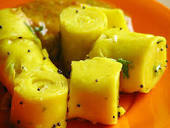
    But in this regard a lot of hand holding has been done to broad base the food-taste pyramid of India. Mainly to homogenise the taste buds and to that extent some generic nomenclatures have become almost national food icons. Just to name a few: Tandoori chicken, Butter-chicken, Biryani, Keema, Kebab, Rogan-Josh, Korma, Chole-bature, Matar-Paneer, Poori, Papad, Dhokla, Bisi-bele-bath, Kachori, Samosa,Vada-paav, Batata-vada, the famous Indian Chaat, Pakora, Pooha, Daal-Baati, Gol Gappe and Pani-Puri, and from the Punjabi cuisine Paratha, stuffed Paratha especially in breakfast, Roti-made out of corn flour and Sarson-Da-Saag and Dal-Makhani and from the North-East Fried Rice, Noodles, Chilly chicken, Manchurian, Thupka-noodle soup and momos that have travelled places and become the hallmark and symbol of Indianness. And, not to forget the vast spread of Indian sweets that has always been a great leveler in terms Indian synergy. The South can of course boast of Dosa, Idli, Vada, Sambhar, Rasam and Uthapam.

BUT WHAT UNITES THE FOOD-TASTE BUDS OF CHILDREN AND THE YOUTH OF INDIA?

    Beyond the dividing spread of the Indian cuisine lies the unifying umbrella of some of the big food banners of India and abroad that have served the Indian populace for a long period of time now. To be more upright some are even serving the third generation now. Perhaps, they stole the Indian taste buds when they were young- ‘catch them- young’ as they phrased.

    Today, Domino’s Pizza India makes and sells four lakh pizzas a day or more than 12 crore pizzas a year and that speaks of the new food craze. Foreign beverages in India are serving the third generation with unified formulation. Indian Chinese largely a fusion cuisine is available across India. Burgers are available at any nook and corner and so are Maggi noodles. Tailor made Momos are even retailed out of handcarts in Delhi. Halidram’s Bhujia Peanuts and Namkeen are available in any market as an evening snack. Potato chips and wafers of MCcain or any other, could be any child’s preference. And why forget the tasty chocolates, yoghurt and morning oats and cornflakes that children prefer over any other Indian breakfast. Not to forget the all-tasty basket of biscuits from Britannia or any other brand with hot tea. Of course one can’t forget Amul and Mother dairy for their Yogurt and milk as an add-on to any Indian breakfast; for there is no North, South, East and West divide about these branded food products as they come with one taste or max a tweaked variant.

    And how quietly and neatly they have sneaked into the Indian kitchen space. Easy to make, easy to serve and easy to preserve.

*****

By Kamlesh Tripathi

*

https://kamleshsujata.wordpress.com

*

Share it if you like it

*

Shravan Charity Mission is an NGO that works for poor children suffering from life threatening diseases especially cancer. Our posts are meant for our readers that includes both children and adults and it has a huge variety in terms of content. We also accept donations for our mission. Should you wish to donate for the cause. The bank details are given below:

NAME OF ACCOUNT: SHRAVAN CHARITY MISSION

Account no: 680510110004635 (BANK OF INDIA)

IFSC code: BKID0006805

*

Our publications

GLOOM BEHIND THE SMILE

(The book is about a young cancer patient. Now archived in 7 prestigious libraries of the US, including, Harvard University and Library of Congress. It can also be accessed in MIT through Worldcat.org. Besides, it is also available for reading in Libraries and archives of Canada and Cancer Aid and Research Foundation Mumbai)  

ONE TO TANGO … RIA’S ODYSSEY

(Is a book on ‘singlehood’ about a Delhi girl now archived in Connemara Library, Chennai and Delhi Public Library, GOI, Ministry of Culture, Delhi)

AADAB LUCKNOW … FOND MEMORIES

(Is a fiction written around the great city of Nawabs—Lucknow. It describes Lucknow in great detail and also talks about its Hindu-Muslim amity. That happens to be its undying characteristic. The book was launched in Lucknow International Literary Festival of 2014)

REFRACTIONS … FROM THE PRISM OF GOD

(Co-published by Cankids–Kidscan, a pan India NGO and Shravan Charity Mission, that works for Child cancer in India. The book is endorsed by Ms Preetha Reddy, MD Apollo Hospitals Group. It was launched in Lucknow International Literary Festival 2016)

TYPICAL TALE OF AN INDIAN SALESMAN

(Is a story of an Indian salesman who is, humbly qualified. Yet he fights his ways through unceasing uncertainties to reach the top. A good read not only for salesmen. The book was launched on 10th February, 2018 in Gorakhpur Lit-Fest. Now available in Amazon, Flipkart and Onlinegatha

(ALL THE ABOVE TITLES ARE AVAILABLE FOR SALE IN AMAZON, FLIPKART AND OTHER ONLINE STORES OR YOU COULD EVEN WRITE TO US FOR A COPY)

*****


Article: #SwachhBharatAbhiyan (SBA) – Include existing Public Toilets in SBA

Copyright@shravancharitymission

123

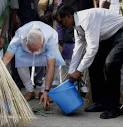
Prime Minister Narendra Modi has done well by wielding the broom to clean a road and its surroundings, thereby, burnishing the lost grandeur of ‘dignity of labour.’ He has also formed a formidable team of star citizens, who have given impetus to the campaign launched in around 4041 statutory towns. Where in you find cine stars, sports persons, social activists, industrialists, professionals and even politicians, psyched out. Icons like Amitabh Bachchan, Anil Ambani, Kamal Hassan, Sachin Tendulkar, Shashi Tharoor and many other distinguished personalities have graced the campaign, by lending both, social and glamour weight.

So with all of this, the speed and velocity of the campaign looks set to deliver the goods. However, the priorities within this need to be tweaked, mainly to prioritize the initial tranches. Where, I have some pointed and granular suggestions to make, that oozes right out of my firsthand experience. Create as many Public toilets as possible, in the shortest possible time and also include the existing ones in the campaign. Perhaps, this suggestion of mine may give the whole campaign a better fillip in converting the movement into a mass movement with the least of resistance. Arising, more out of the immediate necessity of the deprived public, in this case the general public; because of the limited, shabby and poor infrastructure that throws the spanner in the development of India.

For it was just, yesterday when I was driving down the crowded market area on Hill Road in Bandra, is when I felt like relieving myself. I stopped the car, got off and started looking for a public urinal. Keeping strictly in mind the Prime Minister’s message of Swacch Bharat Abhiyan, and trying to observe it to my heart’s content.

456

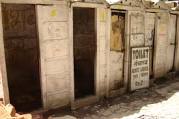
I must have spent about half-an-hour in the crowded market area, in which time I must have covered more than a kilometer but I still could not find a public toilet. Is when I saw the logo of a petrol pump to my heart’s delight, as we all know have toilets. ‘Wow- what a relief’ I said to myself. And this got me thinking.

If this is the condition of Mumbai, one of the biggest metropolis of India what about other cities? With a burgeoning population, Mumbai has a deficit of at least 47,000 toilet seats, and the cost of constructing one toilet is INR 150,000, say authorities, so we can imagine the cost involved. This shortage in 2001 was a whooping 125,000 toilet seats when the Brihan Mumbai Muncipal Corporation (BMC) had conducted its first survey on the sanitation needs for the country’s commercial population. Going by 2001 figures, the ratio of toilets versus population comes to a whopping 1: 50 or 3,000 people using it daily in Mumbai.

MUST COMPLIMENT THE OIL COMPANIES

After relieving myself, I sincerely blessed the oil companies that thought of customer convenience, by having toilets in all their retail outlets which Indian Railways couldn’t provide in all platforms. Further, I thought this is a big opportunity to include these readily available toilets, as part of the Swacch Bharat Abhiyaan as pay and use toilets to catapult the campaign exponentially.

Today, India has about 45,000 filling stations more than Canada or UK as of March 2012, and most are with the facility of a toilet. If these toilets are made to join the SBA on a pay and use basis we can have a sudden flurry of toilets and that will certainly help the SBA.

For the Government to make public toilets, every 1-2 km, in crowded market areas along the road side may be a gigantic and close to a non doable task, so here is the way forward. Today, the immediate pressing need for the Public at large is a convenient network of clean toilets spaced around close proximity and concomitant is the wielding of broom to keep it clean. While it may be possible to construct new toilets on highways and open roads but may be extremely difficult in the already cramped and crowded market areas and this is where these toilets can come in handy

CAMPAIGNS CAN CHANGE REALITIES

Even though Government of India has transcribed incentives for building public toilets. All is not achieved merely by announcing incentives on paper alone, as it requires mindsets to change–that running a public toilet too, is a respectable venture; something like Sulabh Shauchalaya.

And so, India needs a renewed and intense campaign to promote public toilets as a doable business by respectable Individuals, Unemployed Youth, Business Houses, Societies, Builders, NGOs, SMEs, Hospitality Industry and under Corporate Social Responsibility.

Government should promote people having genuine intent of doing this noble task, and who have spare Land on which Private – Public Toilets could be constructed, or even existing toilets that could be utilized at prime and vantage locations as pay and use toilets.

The building bylaws should be tweaked to incentivise for mass proliferation of such public toilets and also sops in the form of rebate in property tax or any other, are a few boons that should be considered by the Government, if possible.

Running public toilets could be ticked at par with running hospitals as both reduce human suffering. Modi Government could further do well in bringing about this social change. Prime Minister Narendra Modi in fact has orated in one of his speeches abroad that he is currently busy in construction of Public toilets.

*****

ARTICLE: ACID ATTACKS BY SICK MINDS

Copyright@shravancharitymission

Kamlesh Tripathi

Shouldn’t I call them depraved. Transcending even the emperors of Rome, and that to without a throne, who could be ‘vindictive, cruel and even insane’- say some ancient historians like Suetonius, Pliny and Cassius Dio.

A day after a woman doctor became a victim of acid attack. Delhi High Court has expressed concern over the ‘spate of acid attacks.’ So, yet again Nero fiddled while Rome burned? But who is our Nero? Surely, the Government in general, and the law enforcement department in particular, who allowed sale of acid off the shelf.

Establishment is now cracking the whip by developing a web application to regulate the sale of acid, with functionalities like registration of stockists and retailers, issue of licenses by the district administration and limiting sale of acid to individuals who furnish proof of identity and residence.

This may to a certain extent prune down unauthorized sale of acid but won’t sterilize the sick mindset. Union minister Rajnath Singh, also suggests of treating acid attacks, that cause serious hurts, as ‘heinous crimes.’

Good Samaritan NGOs have also held demonstrations at ITO demanding quick and swift Police action against the perpetrators of crime in Rajouri Garden. A medical report released, says the 30 year old doctor is traumatized and understands the prognosis of such a severe injury.

And, in all of this the court has again asked for status report from the centre and the state. But, what is more astonishing is the High Court’s reference to acid attacks, when it pointed out that Delhi Police has almost 15,000 posts vacant and therefore a we have deficient police force at hand.

Lack of adequate Police Force results in inadequate patrolling, which encourages sick minds and criminals to enact such ghastly crime; and the government attorney Sanjay Jain is further exhibiting government apathy by saying 15 proposals forwarded by Delhi Police for creation of over 14,000 posts “shall be looked into at the earliest.” So no matter how heinous is the crime, government lives by its age old rhetoric; and so these sick minds will continue having a field day.

*****

Article: YOURS, MINE BUT NOT INDIA’S- FESTIVALS

Copyright@shravancharitymission

KAMLESH TRIPATHI

132

Yesterday, on the eve of Christmas I was told our office is not closed. As majority are non Christians who don’t celebrate Christmas. So we need to work on Christmas. A similar thing happened on Eid where again our office remained open. And, on both the days, I left in the morning only to return in the evening. Barely squeezing in time for a few text messages of ‘good wishes’ on the occasion to my Christian and Muslim friends, leave aside celebrating with them. I found this approach of certain establishment’s quite non-secular. But I was even more surprised when none of the so called secular parties of India came forward to address this non-secular issue. And, contrary to this on Holi and Diwali, the two major Hindu festivals, when our office remained closed no Christian or Muslim could come to work even if he wanted to. And with the same hypothesis this too was non-secular.

578

India should celebrate and grieve together. Unless we reach out to minorities in their thick and thin, and the minorities reach us in the breath, a sound weaving of minds will never happen, as everyone will celebrate their festivals only as a community and we won’t have too many national festivals.

After all; all our Gods reside in this very country and they all have Indian passports; and it is only for some non-secular establishments to realize this vintage fact.

*****