Category Archives: short story

The Atomic Bombing of Japan in World War II, 1945

Copyright@shravancharitymission
    The United States dropped atomic bombs on the Japanese cities of Hiroshima and Nagasaki in August 1945 only to hasten the end of the World War II in the Pacific. Although, it was the first, and to date the only, actual use of such weapons of “mass destruction,” the mushroom clouds have hung over every military and political policy since then.

    Less than five months after the sneak attack by the Japanese on Pearl Harbour, in Hawaii the Americans launched a small carrier-based bomber raid against Tokyo. While the attack was good for the American morale, it accomplished little other than to demonstrate to the Japanese that their shores were not invulnerable. Later in the war, U.S. bombers were able to attack the Japanese home islands from bases in China, but it was not until late 1944 that the United States could mount a sustained bombing campaign.

    Because of the distance to Japan, American bombers could not reach the targets and safely return to friendly bases in the Pacific until the island-hopping campaign had captured the Northern Mariana Islands located in (Western north pacific islands). From bases on the Mariana Islands, long-range Boeing B-29 Super-fortresses conducted high altitude bombing runs on November 24, 1944. On March 9, 1945, an armada of 234 B-29s descended to less than 7,000 feet and dropped 1,667 tons of incendiaries on Tokyo. By the time the fire storm finally abated, a sixteen-square-mile corridor that had contained a quarter million homes was in ashes, and more than 80,000 Japanese, mostly civilians, lay dead. Only the Allied fire-bombing of Dresden, in East Germany, the previous month, had killed 135,000, people that exceeded the destruction of the Tokyo raid.

    Both Tokyo and Dresden were primarily civilian rather than military targets. Prior to World War II, international law regarded the bombing of civilians as illegal and barbaric. But after several years of warfare, however, neither the Allies nor the Axis distinguished between military and civilian air targets. Interestingly, while a pilot could drop tons of explosives and firebombs on civilian cities, an infantryman often faced a court-martial for even minor mistreatment of non-combatants. 

    Despite the air raids and their shrinking territory outside their home islands, the Japanese fought on. Their warrior code did not allow for surrender, and soldiers and civilians alike often chose suicide rather than giving up. By July 1945, the Americans were launching more than 1200 bombing sorties a week against Japan. The bombing had killed more than a quarter million (about 2.50 lacs) and left more than nine million homeless. Still, the Japanese gave no indication of surrender as the Americans prepared to invade the home islands.

    While the air attacks and plans for a land invasion continued in the Pacific, a top-secret project back in the United States was coming to fruition. On July 16, 1945, the Manhattan Engineer District successfully carried out history’s first atomic explosion. When President Harry Truman learned of the successful experiment, he remarked in his diary, “It seems to be the most terrible thing ever discovered, but it can be made the most useful.” 

    Truman realized that the “most terrible thing” could shorten the war and prevent as many as a million Allied casualties, as well as untold Japanese deaths, by preventing a ground invasion of Japan. On July 27, the United States issued an ultimatum: surrender or the U.S. would drop a “super weapon.” But Japan refused. In the early morning hours of August 6, 1945, a B-29 Superfortress Bomber named Enola Gay piloted by Lieutenant Colonel Paul Tibbets lifted off from Tinian Island in the Marianas. Aboard was a single atomic bomb weighing 8,000 pounds and containing the destructive power of 12.5 kilotons of TNT. Tibbets headed his plane towards Hiroshima, selected as the primary target because of its military bases and industrial areas. It also had not yet been bombed to any extent, so it would have provided an excellent evaluation of the bomb’s destructive power. 

    At 8:15 A.M., the Enola Gay dropped the device called “Little Boy.” A short time later, Tibbets noted, “A bright light filled the plane. We turned back to look at Hiroshima. The city was hidden by that awful cloud … boiling up, mushrooming.” The immediate impact of Little Boy killed at least 70,000 Hiroshima residents. Some estimates claim three times that number but exact figures are impossible to calculate because the blast destroyed all of the city’s records. 

    Truman again demanded that Japan surrender. After three days when there was no response, a B-29 took off again from Tinian with an even larger atomic bomb aboard. When the crew found their primary target of Kokura obscured by clouds, they turned towards their secondary target, Nagasaki. At 11:02 A.M. on August 9, 1945, they dropped the atomic device known as “Fat Man” that destroyed most of the city and killed more than 60,000 of its inhabitants. 

    Conventional bombing raids were also conducted against other Japanese cities on August 9, and five days later, 800 B-29s raided across the country. On August 15 (Tokyo time), the Japanese finally accepted unconditional surrender. World War II was over. 

    Much debate has occurred since the atomic bombings. While some evidence indicates that the Japanese were considering surrender, but far more information indicates otherwise. Apparently the Japanese were planning to train civilians to use rifles and spears to join the military in resisting a land invasion. Protesters of the Atomic bombings ignore the conventional incendiaries dropped on Tokyo and Dresden that claimed more casualties. Some historians even note that the losses at Hiroshima and Nagasaki were far fewer than the anticipated Japanese casualties from an invasion and continued conventional bombing. 

    Whatever the debate, there can be no doubt that the dropping of the atomic bombs on Japan shortened the war. The strikes against Hiroshima and Nagasaki are the only air battles that directly affected the outcome of a conflict. Air warfare, both before and since, has merely supplemented ground fighting. As confirmed by the recent Allied bombing of Iraq in Desert Storm and in Bosnia, air attacks can harass and make life miserable for civilian population, but battles and wars continue to be decided by ground forces. 

    In addition to hastening the end of the war with Japan, the development and use of the atomic bomb provided the United States with unmatched military superiority—at least for a brief time, until the Soviet Union exploded their own atomic device. The two superpowers then began competitive advancements in nuclear weaponry that brought the world to the edge of destruction. Only tentative treaties and the threat of mutual total destruction kept nuclear arms harnessed, producing the Cold War period in which the U.S., along with the USSR, worked out their differences through conventional means.

By Kamlesh Tripathi

*

https://kamleshsujata.wordpress.com

*

Share it if you like it

*

Shravan Charity Mission is an NGO that works for poor children suffering from life threatening diseases especially cancer. Our posts are meant for our readers that includes both children and adults and it has a huge variety in terms of content. We also accept donations for our mission. Should you wish to donate for the cause. The bank details are given below:

NAME OF ACCOUNT: SHRAVAN CHARITY MISSION

Account no: 680510110004635 (BANK OF INDIA)

IFSC code: BKID0006805

*

Our publications

GLOOM BEHIND THE SMILE

(The book is about a young cancer patient. Now archived in 7 prestigious libraries of the US, including, Harvard University and Library of Congress. It can also be accessed in MIT through Worldcat.org. Besides, it is also available for reading in Libraries and archives of Canada and Cancer Aid and Research Foundation Mumbai)  

ONE TO TANGO … RIA’S ODYSSEY

(Is a book on ‘singlehood’ about a Delhi girl now archived in Connemara Library, Chennai and Delhi Public Library, GOI, Ministry of Culture, Delhi)

AADAB LUCKNOW … FOND MEMORIES

(Is a fiction written around the great city of Nawabs—Lucknow. It describes Lucknow in great detail and also talks about its Hindu-Muslim amity. That happens to be its undying characteristic. The book was launched in Lucknow International Literary Festival of 2014)

REFRACTIONS … FROM THE PRISM OF GOD

(Co-published by Cankids–Kidscan, a pan India NGO and Shravan Charity Mission, that works for Child cancer in India. The book is endorsed by Ms Preetha Reddy, MD Apollo Hospitals Group. It was launched in Lucknow International Literary Festival 2016)

TYPICAL TALE OF AN INDIAN SALESMAN

(Is a story of an Indian salesman who is, humbly qualified. Yet he fights his ways through unceasing uncertainties to reach the top. A good read not only for salesmen. The book was launched on 10th February, 2018 in Gorakhpur Lit-Fest. Now available in Amazon, Flipkart and Onlinegatha)

RHYTHM … in poems

(Published in January 2019. The book contains 50 poems. The poems describe our day to day life. The book is available in Amazon, Flipkart and Onlinegatha)

(ALL THE ABOVE TITLES ARE AVAILABLE FOR SALE IN AMAZON, FLIPKART AND OTHER ONLINE STORES OR YOU COULD EVEN WRITE TO US FOR A COPY)

*****


THE TWELVE JYOTIRLINGAS

Copyright@shravancharitymission

    Just in case you have not read Shivpurana let me tell you it is all about Lord Shiva. It contains 24,000 verses divided into twelve Samhitas. Out of these one of them Roudra-samhita narrates the following story.

    Once, Brahma tried to claim superiority over the trinity of Shiva, Mahavishnu and Brahma himself. He vented this thought of his to Mahavishnu. When, suddenly, a huge column of fire, burst out of the earth, between the two and rose into the sky. Brahma flew upwards on his swan to see the tip of the fire while Vishnu as a boar dug deep into the earth to see the lower end of the pillar of fire. Both failed in their mission and returned. It was then that Shiva appeared at the centre of the fire column. This was the first Jyotirlinga.

    Jyotirlingas, represent the beginningless and the endless Stambha or Pillar, indicating the infinite nature of Shiva. In India, there are twelve Jyotirlinga shrines as follows:

  1. SOMNATH

    The Somnath Temple of Gujarat, is near Veraval in the Kathiawad district of Saurashtra. This is a Jyotirlinga shrine. This region is also known as Prabhasa Thirtha. According to the Shivpurana, the Moon God married all the 27 daughters of Daksha Prajapati. However, he liked Rohini more than others. Rohini’s sisters complained to Prajapati, who cursed the moon. As a result, the moon lost his radiance. So, he went to Veraval and prayed to Lord Shiva in a temple. And by the Lord’s grace, he regained his lost shine. Since then, the temple came to be known as Somnath Mandir. It was ransacked and destroyed as many as seventeen times by Muslim invaders, and each time, it was resurrected.

  1. MALLIKARJUNA

    This Jyotirlinga can be seen in Shrishailam Mountain, on the banks of the Krishna River in Andhra Pradesh. According to Shiva Purana, Lord Ganesha got married before Kartikeya. So, an angry Kartikeya left the place and went to Shri-shailam. Seeing their son offended, Shiva and Parvati followed him there. Shiva assumed the form of a Jyotirlinga and resided there as Mallikarjuna. Where, Mallika means Parvati, while Arjuna is another name for Shiva.

  1. MAHAKALESHWAR

    This Jyotirlinga is located on the banks of river Kshipra in the dense Mahakal forest in Ujjain, Madhya Pradesh. It was known as Avantika in ancient times. Legend has it that a five-year-old boy by the name Shrikar was amazed at the devotion of King Chandrasena of Ujjain towards Lord Shiva. Shrikar took a stone and started worshipping it as Shiva. Many people tried to discourage him in different ways, but his devotion only grew. Pleased by his devotion, Lord Shiva assumed the form of a Jyotirlinga and decided to stay in the Mahakal forest.

  1. OMKARESHWAR

    This Jyotirlinga is also in Madhya Pradesh. It is situated on an island called Mandhata or Shivapuri in the Narmada River. The island is shaped like an ‘Om,’ as written in Sanskrit. Omkareshwar means ‘Lord of Omkara,’ the sacred syllable Om. Once, when the Asuras defeated the Devas, the latter prayed to Lord Shiva. Pleased with their prayer, the Lord emerged in the form of Omkareshwar and defeated the Asuras.

  1. VAIDYANATH

    Also known as Vaijnath or Baidyanath, this Jyotirlinga is located at Deogarh in Jharkhand. This place is also called Chitaa-bhoomi. According to a well-known legend, Ravana once requested Lord Shiva to reside in Sri Lanka permanently. Shiva gave him a Jyotirlinga and told him that he should not place it on the ground before reaching Lanka. On the way, however, Ravana felt an urgent need to relieve himself. When a young boy who appeared there offered to hold the lingam in the meantime. The boy, was no one else but Vishnu in disguise, placed the lingam on the ground and disappeared, for he knew that Shiva’s presence would make wicked Ravana’s Lanka invincible. The lingam got fixed to the spot. On his return, Ravana saw what had happened. To propitiate Shiva, he cut off nine of his ten heads. But Shiva joined the severed heads of Ravana’s body, like a Vaidya. Hence the name of the Jyotirlinga became Vaidynath.

  1. BHIMA SHANKAR

    This Jyotirlinga is located on the banks of Bhima River in the Sahyadri region of Pune, Maharashtra. Legend has it that Kumbhakarna’s son, Bhima, vowed to take revenge on Lord Vishnu who, in His incarnation as Rama had killed his father. He began a severe penance and Lord Brahma was pleased and granted him immense power. Soon, Bhima the demon started creating havoc in the world. In the end, Lord Shiva reduced him to ashes. The Gods were overjoyed. On their request, Shiva made the place one of his abodes and manifested himself in the form of Bhima-shankar Jyotirlinga.

  1. RAMESWARAM

    This Jyotirlinga is located on the island of Rameswaram in Tamil Nadu. On his way to Sri Lanka, Sri Rama had stopped at Rameswaram, and worshipped a linga that he had made out of sand. Lord Shiva blessed Rama and then remained at Rameswaram in the form of Jyotirlinga.

  1. NAGESH

    The Nageshwar or Nagnath Jyotirlinga is situated on an island near Dwarka in Gujarat. The place is also known as Daaru-kavan. This Jyotirlinga is known far and wide for protecting devotees from poisons of all kinds. As per the legend in the Shivapurana, a demon by the name of Daruka imprisoned Supriya, a devotee of Shiva. On Supriya’s advice, the other prisoners began chanting, ‘Aum Namah Shivaya.’ Daaruka was enraged on hearing this chant. He sprang forward to kill Supriya. Suddenly, Lord Shiva appeared and put an end to the demon. He then remained on the island as a Jyotirlinga.

  1. VISHVANATH

    The Jyotirlinga at Vishvanath temple is located in Varanasi or Kashi, one of the most ancient cities of the world. It is believed that it was here that the pillar of fire representing Lord Shiva’s endless power broke through the earth’s crust and splayed towards heaven. The faithful are certain that those who die here attain salvation. The original Visvanath temple was destroyed and rebuilt many times. Emperor Aurangzeb destroyed the temple for the last time and built the Gyanvapi Mosque in its place. Later Ahilabai Holkar constructed the present temple adjacent to the mosque.

  1. TRIMBAK

     The Trimbakeshwar temple is located about 30 km from Nashik in Maharashtra, near the Brahmagiri Mountain. It is from this mountain that the river Godavari, also called the Gautami Ganga flows. Long ago, Maharishi Gautam, through his penance, had obtained an everlasting supply of grains. Some Gods became envious of the Maharishi and sent a cow to the granary. The cow was accidentally killed by the sage. On realising this, Maharishi requested Lord Shiva to get the premises purified. Shiva asked Ganga to flow through Nashik and He himself remained there as Trimbakeshwar Jyotirlinga.

  1. KEDARNATH

    At a height of 3,583 metres (12,000 feet) in Uttarakhand, the Kedarnath temple is located on the Rudra Himalaya range. It opens for only six months in a year, from May to November. During the other months, all the mountains here get fully snow clad. It is believed that in ancient times, Lord Shiva, pleased by the penance of Rishis Nara and Narayana, who were incarnations of Lord Vishnu, made a permanent abode in Kedarnath in the form of a Jyotirlinga. Many believe that the Pandavas had come here after the Mahabharta war to pray to Lord Shiva.

  1. GHRISHMESHVAR

    The Ghrish-meshvar or Ghush-meshvar Jyotirlinga is located in a village named Verul, near Aurangabad in Maharashtra. The place is not far from the famous Ajanta and Ellora caves. According to Shivapurana, there was a man named Sudharm, who had two wives, Sudeha and Ghush-ma. They were sisters. When Ghushma bore a son to Sudharm, Sudeha became jealous and threw the baby into a lake. Ghushma, a devotee of Shiva, prayed to the Lord and got her son back. On Sudharm’s request, Shiva manifested himself in the form of Jyotirlinga at that spot and assumed the name Ghush-meshvar.

By Kamlesh Tripathi

*

https://kamleshsujata.wordpress.com

*

Share it if you like it

*

Shravan Charity Mission is an NGO that works for poor children suffering from life threatening diseases especially cancer. Our posts are meant for our readers that includes both children and adults and it has a huge variety in terms of content. We also accept donations for our mission. Should you wish to donate for the cause. The bank details are given below:

NAME OF ACCOUNT: SHRAVAN CHARITY MISSION

Account no: 680510110004635 (BANK OF INDIA)

IFSC code: BKID0006805

*

Our publications

GLOOM BEHIND THE SMILE

(The book is about a young cancer patient. Now archived in 7 prestigious libraries of the US, including, Harvard University and Library of Congress. It can also be accessed in MIT through Worldcat.org. Besides, it is also available for reading in Libraries and archives of Canada and Cancer Aid and Research Foundation Mumbai)  

ONE TO TANGO … RIA’S ODYSSEY

(Is a book on ‘singlehood’ about a Delhi girl now archived in Connemara Library, Chennai and Delhi Public Library, GOI, Ministry of Culture, Delhi)

AADAB LUCKNOW … FOND MEMORIES

(Is a fiction written around the great city of Nawabs—Lucknow. It describes Lucknow in great detail and also talks about its Hindu-Muslim amity. That happens to be its undying characteristic. The book was launched in Lucknow International Literary Festival of 2014)

REFRACTIONS … FROM THE PRISM OF GOD

(Co-published by Cankids–Kidscan, a pan India NGO and Shravan Charity Mission, that works for Child cancer in India. The book is endorsed by Ms Preetha Reddy, MD Apollo Hospitals Group. It was launched in Lucknow International Literary Festival 2016)

TYPICAL TALE OF AN INDIAN SALESMAN

(Is a story of an Indian salesman who is, humbly qualified. Yet he fights his ways through unceasing uncertainties to reach the top. A good read not only for salesmen. The book was launched on 10th February, 2018 in Gorakhpur Lit-Fest. Now available in Amazon, Flipkart and Onlinegatha)

RHYTHM … in poems

(Published in January 2019. The book contains 50 poems. The poems describe our day to day life. The book is available in Amazon, Flipkart and Onlinegatha)

(ALL THE ABOVE TITLES ARE AVAILABLE FOR SALE IN AMAZON, FLIPKART AND OTHER ONLINE STORES OR YOU COULD EVEN WRITE TO US FOR A COPY)

*****



SHORT STORY: LESSON FROM THE DONKEY

Copyright@shravancharitymission


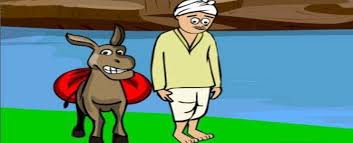
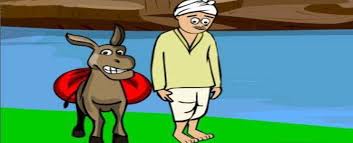
    Once a washer man was going along with his donkey and a bucket filled with clothes. It was pitch dark. They were walking around a small hillock when the donkey fell into a ditch. After falling in the ditch the donkey went into a shock and could not stand properly and so it started braying (hee-haw-hee-haw).

    The washer man who was very attached to his donkey. Could not stand the braying of the donkey. So, he decided to bury it thinking its half dead. He soon started throwing bucket full of mud in the ditch to bury the donkey. But after sometime the washer man was shocked to see the donkey limping out of the ditch slowly and soon he started striding as usual.

    What had happened was, whenever, the mud was thrown in by the washerman, the donkey used to shake it off, and the mud became steps for him, and stepping on those steps the donkey came out.

Moral of the story: Don’t get disheartened when people throw muck at you. Just shake it off as that will further strengthen you to go up in life.

By Kamlesh Tripathi

*

https://kamleshsujata.wordpress.com

*

Share it if you like it

*

Shravan Charity Mission is an NGO that works for poor children suffering from life threatening diseases especially cancer. Our posts are meant for our readers that includes both children and adults and it has a huge variety in terms of content. We also accept donations for our mission. Should you wish to donate for the cause. The bank details are given below:

NAME OF ACCOUNT: SHRAVAN CHARITY MISSION

Account no: 680510110004635 (BANK OF INDIA)

IFSC code: BKID0006805

*

Our publications

GLOOM BEHIND THE SMILE

(The book is about a young cancer patient. Now archived in 7 prestigious libraries of the US, including, Harvard University and Library of Congress. It can also be accessed in MIT through Worldcat.org. Besides, it is also available for reading in Libraries and archives of Canada and Cancer Aid and Research Foundation Mumbai)  

ONE TO TANGO … RIA’S ODYSSEY

(Is a book on ‘singlehood’ about a Delhi girl now archived in Connemara Library, Chennai and Delhi Public Library, GOI, Ministry of Culture, Delhi)

AADAB LUCKNOW … FOND MEMORIES

(Is a fiction written around the great city of Nawabs—Lucknow. It describes Lucknow in great detail and also talks about its Hindu-Muslim amity. That happens to be its undying characteristic. The book was launched in Lucknow International Literary Festival of 2014)

REFRACTIONS … FROM THE PRISM OF GOD

(Co-published by Cankids–Kidscan, a pan India NGO and Shravan Charity Mission, that works for Child cancer in India. The book is endorsed by Ms Preetha Reddy, MD Apollo Hospitals Group. It was launched in Lucknow International Literary Festival 2016)

TYPICAL TALE OF AN INDIAN SALESMAN

(Is a story of an Indian salesman who is, humbly qualified. Yet he fights his ways through unceasing uncertainties to reach the top. A good read not only for salesmen. The book was launched on 10th February, 2018 in Gorakhpur Lit-Fest. Now available in Amazon, Flipkart and Onlinegatha)

RHYTHM … in poems

(Published in January 2019. The book contains 50 poems. The poems describe our day to day life. The book is available in Amazon, Flipkart and Onlinegatha)

(ALL THE ABOVE TITLES ARE AVAILABLE FOR SALE IN AMAZON, FLIPKART AND OTHER ONLINE STORES OR YOU COULD EVEN WRITE TO US FOR A COPY)

*****
VAND CHAKNA … IN SIKHISM

Copyright@shravancharitymission

    Vand Chakna in Sikhism, is best explained as “sharing and caring.” On one occasion, when Guru Nanak was with his two sons and Lehna (Guru Angad Dev) there was a corpse covered with a cloth lying there. He asked who will eat this. No one responded, but Lehna, having full faith in his master, accepted it and when he removed the cloth, he saw there was a tray full of sacred food, which he served to his master and ate the leftovers. On this Guru Nanak said, “Lehna, you are blessed with sacred food because you shared it. Similarly, people should use wealth, not only for themselves, but share it with others. If one consumes it only for himself then it is like a corpse. But when we share it with others it becomes sacred.”

    This constitutes the basis for “Langar” the community kitchen, and Dasvandh, that is sharing one-tenth of one’s earnings with the community.

By Kamlesh Tripathi

*

https://kamleshsujata.wordpress.com

*

Share it if you like it

*

Shravan Charity Mission is an NGO that works for poor children suffering from life threatening diseases especially cancer. Our posts are meant for our readers that includes both children and adults and it has a huge variety in terms of content. We also accept donations for our mission. Should you wish to donate for the cause. The bank details are given below:

NAME OF ACCOUNT: SHRAVAN CHARITY MISSION

Account no: 680510110004635 (BANK OF INDIA)

IFSC code: BKID0006805

*

Our publications

GLOOM BEHIND THE SMILE

(The book is about a young cancer patient. Now archived in 7 prestigious libraries of the US, including, Harvard University and Library of Congress. It can also be accessed in MIT through Worldcat.org. Besides, it is also available for reading in Libraries and archives of Canada and Cancer Aid and Research Foundation Mumbai)  

ONE TO TANGO … RIA’S ODYSSEY

(Is a book on ‘singlehood’ about a Delhi girl now archived in Connemara Library, Chennai and Delhi Public Library, GOI, Ministry of Culture, Delhi)

AADAB LUCKNOW … FOND MEMORIES

(Is a fiction written around the great city of Nawabs—Lucknow. It describes Lucknow in great detail and also talks about its Hindu-Muslim amity. That happens to be its undying characteristic. The book was launched in Lucknow International Literary Festival of 2014)

REFRACTIONS … FROM THE PRISM OF GOD

(Co-published by Cankids–Kidscan, a pan India NGO and Shravan Charity Mission, that works for Child cancer in India. The book is endorsed by Ms Preetha Reddy, MD Apollo Hospitals Group. It was launched in Lucknow International Literary Festival 2016)

TYPICAL TALE OF AN INDIAN SALESMAN

(Is a story of an Indian salesman who is, humbly qualified. Yet he fights his ways through unceasing uncertainties to reach the top. A good read not only for salesmen. The book was launched on 10th February, 2018 in Gorakhpur Lit-Fest. Now available in Amazon, Flipkart and Onlinegatha)

RHYTHM … in poems

(Published in January 2019. The book contains 50 poems. The poems describe our day to day life. The book is available in Amazon, Flipkart and Onlinegatha)

(ALL THE ABOVE TITLES ARE AVAILABLE FOR SALE IN AMAZON, FLIPKART AND OTHER ONLINE STORES OR YOU COULD EVEN WRITE TO US FOR A COPY)

*****


SHORT STORY: LESSON FROM THE OAK TREE

Copyright @shravancharitymission

    Chinese sage Chaung Tsu narrates the story of a huge old oak tree that was declared worthless by a carpenter because its timber was of bad quality and anything made from it would break, rot or wither away. Subsequently, in the story, the tree told the carpenter that it had turned useless on purpose because it wished to live a natural and happy life. Had its timber been useful it would have been cut into pieces, made into something else and would have been dead long ago. The sage enlightens us further by saying that in trying to be valued, desirable and significant in the eyes of the world, we usually end up relinquishing our deeper essence and we start living artificially. Despite assuming a grandiose form, our life is then fraught with meaninglessness and misery.

    Moral of the story: Think of yourself before you think of becoming useful for the world.

By Kamlesh Tripathi

*

https://kamleshsujata.wordpress.com

*

Share it if you like it

*

Shravan Charity Mission is an NGO that works for poor children suffering from life threatening diseases especially cancer. Our posts are meant for our readers that includes both children and adults and it has a huge variety in terms of content. We also accept donations for our mission. Should you wish to donate for the cause. The bank details are given below:

NAME OF ACCOUNT: SHRAVAN CHARITY MISSION

Account no: 680510110004635 (BANK OF INDIA)

IFSC code: BKID0006805

*

Our publications

GLOOM BEHIND THE SMILE

(The book is about a young cancer patient. Now archived in 7 prestigious libraries of the US, including, Harvard University and Library of Congress. It can also be accessed in MIT through Worldcat.org. Besides, it is also available for reading in Libraries and archives of Canada and Cancer Aid and Research Foundation Mumbai)  

ONE TO TANGO … RIA’S ODYSSEY

(Is a book on ‘singlehood’ about a Delhi girl now archived in Connemara Library, Chennai and Delhi Public Library, GOI, Ministry of Culture, Delhi)

AADAB LUCKNOW … FOND MEMORIES

(Is a fiction written around the great city of Nawabs—Lucknow. It describes Lucknow in great detail and also talks about its Hindu-Muslim amity. That happens to be its undying characteristic. The book was launched in Lucknow International Literary Festival of 2014)

REFRACTIONS … FROM THE PRISM OF GOD

(Co-published by Cankids–Kidscan, a pan India NGO and Shravan Charity Mission, that works for Child cancer in India. The book is endorsed by Ms Preetha Reddy, MD Apollo Hospitals Group. It was launched in Lucknow International Literary Festival 2016)

TYPICAL TALE OF AN INDIAN SALESMAN

(Is a story of an Indian salesman who is, humbly qualified. Yet he fights his ways through unceasing uncertainties to reach the top. A good read not only for salesmen. The book was launched on 10th February, 2018 in Gorakhpur Lit-Fest. Now available in Amazon, Flipkart and Onlinegatha)

RHYTHM … in poems

(Published in January 2019. The book contains 50 poems. The poems describe our day to day life. The book is available in Amazon, Flipkart and Onlinegatha)

(ALL THE ABOVE TITLES ARE AVAILABLE FOR SALE IN AMAZON, FLIPKART AND OTHER ONLINE STORES OR YOU COULD EVEN WRITE TO US FOR A COPY)

*****


SHORT STORY: JOB ENRICHMENT … learn it from a tehsildar in Karnataka

Copyright@shravancharitymission

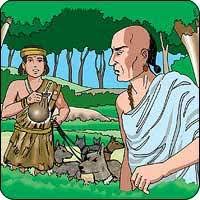
    Some bureaucrats have the gumption to transform even small positions, into powerful and meaningful ones, and some indolent bureaucrats would transform, even powerful and prestigious positions, into inconsequential jobs. So it’s all in the incumbent, and depends on the person occupying the chair. This is where B.N. Girish a tehsildar in Karnataka’s Shivamogga district outshines his bureaucratic fraternity. He shows the way as to how an upright bureaucracy can make a difference.

    As a tehsildar in Karnataka’s Shivamogga district he went undercover as a labourer to work at a stone quarry and check for irregularities then returned to raid the place.  This exemplifies the critical role of bureaucracy in India. Since January 2017, BN Girish has been on a crusade against illegal stone and sand mining in the taluk, following up on tips from local people, conducting raids and seizing vehicles. Sand mining owing to the construction boom has become a lucrative industry in rural India but the state’s limited capacity for regulation has inflicted severe ecological damage to hills, rivers and forests.

    Imagine, for a moment, if a corrupt or indifferent officer was in Girish’s place. He would have made enough black money for himself, and at the same time damaged the environment. Now size up the damage such rapacious mining in just one taluk wreaks on the environment, and the losses to public exchequer; and the weakening of law and order machinery when illegal activity gains impunity and profit. Then multiply this by the thousands of taluks in India and we will get a sense of the importance of the lower bureaucracy. Politics was meant to take power to the people and cut through red tape. But in India the Neta-Babu nexus has for long taken advantage of hierarchical inequalities to subvert the system.

    Says Girish. “Locals told me about the Gejjinahalli quarry in March. I had raided it earlier. But labourers stopped work when they spotted my vehicle. Miners have such a strong network that when unknown vehicles enter, they stop work and flee. That’s when I decided to go in disguise so that no one would recognise me.”

    He adds further. “They realised he was an officer only when he started the inquiry. Gejjenahalli has several stone quarries, but I could raid only four as the men in other places got information and ran away. I plan to use a similar method to tackle illegal sand mining problem in the taluk.”

    Such illegal happenings have run their course and have to change now. The RTI Act, the spread of education, ubiquitous smartphones, rising aspirations and worries over environmental degradation are empowering communities to speak up against illegality. It also helps when honest officers come to the aid of hapless citizens. Not surprisingly, the struggles of bureaucrats like Ashok Khemka against successive Haryana governments struck a chord with the public. Perhaps, a new breed of civil servants with a can-do attitude has emerged in recent years with popular following that even rivals politicians. But the likes of B.N. Girish who go the extra mile must become the norm, not the exception.

   So, a big salute to Tehsildar B.N Girish.

By Kamlesh Tripathi

*

https://kamleshsujata.wordpress.com

*

Share it if you like it

*

Shravan Charity Mission is an NGO that works for poor children suffering from life threatening diseases especially cancer. Our posts are meant for our readers that includes both children and adults and it has a huge variety in terms of content. We also accept donations for our mission. Should you wish to donate for the cause. The bank details are given below:

NAME OF ACCOUNT: SHRAVAN CHARITY MISSION

Account no: 680510110004635 (BANK OF INDIA)

IFSC code: BKID0006805

*

Our publications

GLOOM BEHIND THE SMILE

(The book is about a young cancer patient. Now archived in 7 prestigious libraries of the US, including, Harvard University and Library of Congress. It can also be accessed in MIT through Worldcat.org. Besides, it is also available for reading in Libraries and archives of Canada and Cancer Aid and Research Foundation Mumbai)  

ONE TO TANGO … RIA’S ODYSSEY

(Is a book on ‘singlehood’ about a Delhi girl now archived in Connemara Library, Chennai and Delhi Public Library, GOI, Ministry of Culture, Delhi)

AADAB LUCKNOW … FOND MEMORIES

(Is a fiction written around the great city of Nawabs—Lucknow. It describes Lucknow in great detail and also talks about its Hindu-Muslim amity. That happens to be its undying characteristic. The book was launched in Lucknow International Literary Festival of 2014)

REFRACTIONS … FROM THE PRISM OF GOD

(Co-published by Cankids–Kidscan, a pan India NGO and Shravan Charity Mission, that works for Child cancer in India. The book is endorsed by Ms Preetha Reddy, MD Apollo Hospitals Group. It was launched in Lucknow International Literary Festival 2016)

TYPICAL TALE OF AN INDIAN SALESMAN

(Is a story of an Indian salesman who is, humbly qualified. Yet he fights his ways through unceasing uncertainties to reach the top. A good read not only for salesmen. The book was launched on 10th February, 2018 in Gorakhpur Lit-Fest. Now available in Amazon, Flipkart and Onlinegatha)

RHYTHM … in poems

(Published in January 2019. The book contains 50 poems. The poems describe our day to day life. The book is available in Amazon, Flipkart and Onlinegatha)

(ALL THE ABOVE TITLES ARE AVAILABLE FOR SALE IN AMAZON, FLIPKART AND OTHER ONLINE STORES OR YOU COULD EVEN WRITE TO US FOR A COPY)

*****



LITERARY CORNER: CATCH-22 by Joseph Heller

Copyright@shravancharitymission

Khidki (Window)

–Read India Initiative—

This is only an attempt to create interest in reading. We may not get the time to read all the books in our lifetime. But such reviews, talk and synopsis will at least convey what the book is all about.

    In our normal day-to-day life we often use the phrase Catch-22. It means a dilemma or difficult circumstance from which there is no escape because of mutually conflicting or dependent conditions.

    Catch-22 is a satirical novel by American author Joseph Heller who began writing it in 1953. The novel was first published in 1961. Often cited as one of the most significant novels of the twentieth century, it uses a distinctive non-chronological third-person omniscient narration, describing events from the points of view of different characters (where, the author has, or seems to have, access to knowledge of all characters, places, and events of the story, including any given characters and thoughts). The book has separate storylines which are out of sequence so the timeline of the novel develops along with the plot.

    The novel is set during World War II, from 1942 to 1944. It mainly follows the life of Captain John Yossarian, a U.S. Army Air Forces B-25 Bombardier (Bombardier is a member of the bomber crew in the US Air-force). Most of the events in the book occur while the fictional 256th Squadron is based on the island of Pianosa, in the Mediterranean Sea, west of Italy. The novel looks into the experiences of Yossarian and the other airmen in the camp, who attempt to maintain their sanity while fulfilling their service requirements so that they may return home.

    PLOT

    During the second half of World War II, a soldier named Yossarian is stationed with his Air Force squadron on the island of Pianosa, near the Italian coast in the Mediterranean Sea. Yossarian and his friends endure a nightmarish, absurd existence defined by bureaucracy and violence: they are like inhuman resources in the eyes of their blindly ambitious superior officers. The squadron is thrown thoughtlessly into brutal combat situations and bombing runs in which it is more important for the squadron members to capture good aerial photographs of explosions than to destroy their targets. Their colonels continually raise the number of missions that they are required to fly before being sent home, so that no one is ever sent home. Still, no one but Yossarian seems to realize that there is a war going on; everyone thinks he is crazy when he insists that millions of people are trying to kill him.

    Yossarian’s story forms the core of the novel, so most events are refracted through his point of view. Yossarian takes the whole war personally: unswayed by national ideals or abstract principles, Yossarian is furious that his life is in constant danger through no fault of his own. He has a strong desire to live and is determined to be immortal or die trying. As a result, he spends a great deal of his time in the hospital, faking various illnesses in order to avoid the war. As the novel progresses through its loosely connected series of recurring stories and anecdotes, Yossarian is continually troubled by his memory of Snowden, a soldier who died in his arms on a mission when Yossarian lost all his desire to participate in the war. Yossarian is placed in ridiculous, absurd, desperate, and tragic circumstances—where he sees friends die and disappear, his squadron gets bombed by its own mess officer, and colonels and generals volunteer their men for the most perilous battle in order to enhance their own reputation.

    Catch-22 is a law defined in various ways throughout the novel. First, Yossarian discovers that it is possible to be discharged from military service because of insanity. Always looking for a way out, Yossarian claims that he is insane, only to find out that by claiming that he is insane he has proved that he is obviously sane—since any sane person would claim that he or she is insane in order to avoid flying bombing missions. Elsewhere, Catch-22 is defined as a law that is illegal to read. Ironically, the place where it is written that it is illegal is in Catch-22 itself. It is yet again defined as the law that the enemy is allowed to do anything that one can’t keep him from doing. In short, then, Catch-22 is any paradoxical, circular reasoning that catches its victim in its illogic and serves those who have made the law. Catch-22 can be found in the novel not only where it is explicitly defined but also throughout the characters stories, which are full of catches and instances of circular reasoning that trap unwitting bystanders in their snares—for instance, the ability of the powerful officer Milo Minderbinder to make great sums of money by trading among the companies that he himself owns.

    As Yossarian struggles to stay alive, a number of secondary stories unfold around him. His friend Nately falls in love with a whore from Rome and woos her constantly, despite her continued indifference and the fact that her kid sister constantly interferes with their romantic rendezvous. Finally, she falls in love with Nately, but he is killed on his very next mission.

    When Yossarian brings her the bad news, she blames him for Nately’s death and tries to stab him every time she sees him thereafter. Another subplot follows the rise of the black-market empire of Milo Minderbinder, the squadron’s mess hall officer. Milo runs a syndicate in which he borrows military planes and pilots to transport food between various points in Europe, making a massive profit from his sales. Although he claims that “everyone has a share” in the syndicate, this promise is later proven false. Milo’s enterprise flourishes nonetheless, and he is revered almost religiously by communities all over Europe.

The novel draws to a close as Yossarian, troubled by Nately’s death, refuses to fly any more missions. He wanders the streets of Rome, encountering every kind of human horror—rape, disease, murder. He is eventually arrested for being in Rome without a pass, and his superior officers, Colonel Cathcart and Colonel Korn, offer him a choice. He can either face a court-martial or be released and sent home with an honorable discharge.But there is only one condition: in order to be released, he must approve of Cathcart and Korn and state his support for their policy, which requires all the men in the squadron to fly eighty missions. Although he is tempted by the offer, Yossarian realizes that to comply would be to endanger the lives of other innocent men. So he chooses another way out, deciding to desert the army and flee to neutral Sweden. In doing so, he turns his back on the dehumanizing machinery of the military, rejects the rule of Catch-22, and strives to gain control of his own life.

    So friends if you’ve not read this book you have indeed missed something in life. I would give the book eight out of ten.

By Kamlesh Tripathi

*

https://kamleshsujata.wordpress.com

*

Share it if you like it

*

Shravan Charity Mission is an NGO that works for poor children suffering from life threatening diseases especially cancer. Our posts are meant for our readers that includes both children and adults and it has a huge variety in terms of content. We also accept donations for our mission. Should you wish to donate for the cause. The bank details are given below:

NAME OF ACCOUNT: SHRAVAN CHARITY MISSION

Account no: 680510110004635 (BANK OF INDIA)

IFSC code: BKID0006805

*

Our publications

GLOOM BEHIND THE SMILE

(The book is about a young cancer patient. Now archived in 7 prestigious libraries of the US, including, Harvard University and Library of Congress. It can also be accessed in MIT through Worldcat.org. Besides, it is also available for reading in Libraries and archives of Canada and Cancer Aid and Research Foundation Mumbai)  

ONE TO TANGO … RIA’S ODYSSEY

(Is a book on ‘singlehood’ about a Delhi girl now archived in Connemara Library, Chennai and Delhi Public Library, GOI, Ministry of Culture, Delhi)

AADAB LUCKNOW … FOND MEMORIES

(Is a fiction written around the great city of Nawabs—Lucknow. It describes Lucknow in great detail and also talks about its Hindu-Muslim amity. That happens to be its undying characteristic. The book was launched in Lucknow International Literary Festival of 2014)

REFRACTIONS … FROM THE PRISM OF GOD

(Co-published by Cankids–Kidscan, a pan India NGO and Shravan Charity Mission, that works for Child cancer in India. The book is endorsed by Ms Preetha Reddy, MD Apollo Hospitals Group. It was launched in Lucknow International Literary Festival 2016)

TYPICAL TALE OF AN INDIAN SALESMAN

(Is a story of an Indian salesman who is, humbly qualified. Yet he fights his ways through unceasing uncertainties to reach the top. A good read not only for salesmen. The book was launched on 10th February, 2018 in Gorakhpur Lit-Fest. Now available in Amazon, Flipkart and Onlinegatha)

RHYTHM … in poems

(Published in January 2019. The book contains 50 poems. The poems describe our day to day life. The book is available in Amazon, Flipkart and Onlinegatha)

(ALL THE ABOVE TITLES ARE AVAILABLE FOR SALE IN AMAZON, FLIPKART AND OTHER ONLINE STORES OR YOU COULD EVEN WRITE TO US FOR A COPY)

*****


LITERARY CORNER VIDEO: WHY I AM A HINDU by Shashi Tharoor

Copyright@shravancharitymission


By Kamlesh Tripathi

Author & Blogger

*

https://kamleshsujata.wordpress.com

*

Share it if you like it

*

Shravan Charity Mission is an NGO that works for poor children suffering from life threatening diseases especially cancer. Our posts are meant for our readers that includes both children and adults and it has a huge variety in terms of content. We also accept donations for our mission. Should you wish to donate for the cause. The bank details are given below:

NAME OF ACCOUNT: SHRAVAN CHARITY MISSION

Account no: 680510110004635 (BANK OF INDIA)

IFSC code: BKID0006805

*

Our publications

GLOOM BEHIND THE SMILE

(The book is about a young cancer patient. Now archived in 7 prestigious libraries of the US, including, Harvard University and Library of Congress. It can also be accessed in MIT through Worldcat.org. Besides, it is also available for reading in Libraries and archives of Canada and Cancer Aid and Research Foundation Mumbai)  

ONE TO TANGO … RIA’S ODYSSEY

(Is a book on ‘singlehood’ about a Delhi girl now archived in Connemara Library, Chennai and Delhi Public Library, GOI, Ministry of Culture, Delhi)

AADAB LUCKNOW … FOND MEMORIES

(Is a fiction written around the great city of Nawabs—Lucknow. It describes Lucknow in great detail and also talks about its Hindu-Muslim amity. That happens to be its undying characteristic. The book was launched in Lucknow International Literary Festival of 2014)

REFRACTIONS … FROM THE PRISM OF GOD

(Co-published by Cankids–Kidscan, a pan India NGO and Shravan Charity Mission, that works for Child cancer in India. The book is endorsed by Ms Preetha Reddy, MD Apollo Hospitals Group. It was launched in Lucknow International Literary Festival 2016)

TYPICAL TALE OF AN INDIAN SALESMAN

(Is a story of an Indian salesman who is, humbly qualified. Yet he fights his ways through unceasing uncertainties to reach the top. A good read not only for salesmen. The book was launched on 10th February, 2018 in Gorakhpur Lit-Fest. Now available in Amazon, Flipkart and Onlinegatha)

RHYTHM … in poems

(Published in January 2019. The book contains 50 poems. The poems describe our day to day life. The book is available in Amazon, Flipkart and Onlinegatha)

(ALL THE ABOVE TITLES ARE AVAILABLE FOR SALE IN AMAZON, FLIPKART AND OTHER ONLINE STORES OR YOU COULD EVEN WRITE TO US FOR A COPY)

*****


ARTICLE: A REQUIEM FOR TIGRESS AVNI

Copyright@shravancharitymission

    One of the notable events of 2018 highlighted by the Press on New Year’s eve was the death of the five year old tigress, Avni, in Maharastra. Animal-lovers and activists, among them a Union Minister, alleged that is was a deliberate act of killing, of a fine specimen of an endangered species. The feeling of loss was heightened by the fact that Avni is survived by two two-month old cubs.

    It looked as if the newspapers revelled in the controversy that erupted after the tragic end of Avni. From November 3 to December 10, day after day, sparks flew and the Press carried reports of allegations by the activists and defensive statements by the alleged perpetrators of the crime, namely, the State Government at the ministerial level and the sharp-shooters, father and son. The Union Minister wanted nothing less than the State Forest Minister’s scalp, to wit, his dismissal or resignation. The latter retorted that those who held animal life more precious than human life should show the way.

    According to one report, the big cat had killed at least 7 out of the 13 who had died during May 2016 and August 2017, in the Loni village Relegaon tehsil, Yavatmal District in the Vidharbha region of Maharastra. In August 2017, Avni made short work of at least three persons. The Forest Department then decided to do away with the animal but the activists in protest took the matter  to the High Court, and later to the Supreme Court. Both the courts nodded their assent for killing the animal. After prolonged but futile efforts at capturing Avni, the State Government engaged two sharp-shooters, Shafath Ali Khan and his son Asghar Ali from Hyderabad, and they accomplished the job on November 2.

    Meanwhile, the activists were up in arms. They maintained that the animal should have been captured rather than killed. They alleged that the land was cleared of wildlife to help a private party to set up a factory. Some experts held that several Acts were violated in the diabolic process. Asghar Ali claimed that the animal was shot dead in self-defence. The Hyderabad Forensic Laboratory, on December 10, 2018, confirmed the attempt at tranquilising the animal.

    It would appear that so much vehemence in the protest against the killing  and the excessive publicity given to the controversy were disproportionate to the intrinsic importance  of the event itself. The tiger, no doubt a marvel of creation, is not ecologically very important. The Project Tiger, which was launched in 1973, to preserve wildlife, set out with the aim in moderate terms viz. ‘to maintain a viable population of tigers in India for scientific, economic, aesthetic, cultural and ecological values.’ It must be said to the credit of the Government that, unlike other Asian countries such as Japan and Korea where the species is extinct, the wildlife conservation measures have paid up in India. From 2500 in 1972, the tiger population increased to 3642 in 2001-2002; the number of ‘Tiger Reserves’ rose from 9, covering an area of 14,000 sq km in 1973 to 27, covering an area of 37,761 sq. km, spread over 17 states.

TIGER IN LITERATURE

    ‘Magnificent’ is the word that comes to my mind when one thinks of this gorgeously striped (in yellow and black) creature. It has inspired poets, novelists and animal lovers no end. William Blake (1757-1827) in a popular poem, gave expression to his wonder:

    ‘What immortal hand or eye could frame thy fearful symmetry?’

    He poised the following question for which we have no answer to this day. ‘Did He who made the lamb make thee?’

    The tiger as an object of worship, as Valmik Thapar points out in his informative book ‘The Cult of the Tiger’ (Penguin 2002), had been prevalent from Siberia to South-East Asia; perhaps, it continues here and there.

    In India, Shiva of the Trinity of Gods, wears the tiger skin vyaagrasina ambara-dhara, as Sri Shankara says in his Shivaashtakam. Even as the Sabarimala Temple of Kerala is in the news, one remembers that the deity brought a tiger home when the Queen of Pandalam wanted Ayyappa to fetch tiger’s milk from the forest. The Supreme Goddess Durga has for her vehicle the tiger.

    The literature on the tiger is vast; about 55 books are listed  as of Indian origin in Valmik Thapar’s book.

    While sympathising with the two surviving cubs, let us have a Requeim for Avni.

RELIGIOUS BELIEF AND CONSERVATION

    India in the 21st century has over one billion people and also boasts of half of the world’s tiger population, half of the world’s Asiatic elephant population and along with these charismatic species, an array of other living organisms. Could any of this have been possible without a core belief in nature? Could the Asiatic elephant have been safe without a belief in Ganesha, the elephant God? Could the tiger have survived had it not been the vehicle of Durga? And would the snake, the turtle, the peacock, the cranes and some of our trees have survived without a bank of beliefs in them?  –Valmik Thapar.

(This article was written by V.S.R.K. and published in Bhavan’s journal in recent months)

Posted by Kamlesh Tripathi

*

https://kamleshsujata.wordpress.com

*

Share it if you like it

*

Shravan Charity Mission is an NGO that works for poor children suffering from life threatening diseases especially cancer. Our posts are meant for our readers that includes both children and adults and it has a huge variety in terms of content. We also accept donations for our mission. Should you wish to donate for the cause. The bank details are given below:

NAME OF ACCOUNT: SHRAVAN CHARITY MISSION

Account no: 680510110004635 (BANK OF INDIA)

IFSC code: BKID0006805

*

Our publications

GLOOM BEHIND THE SMILE

(The book is about a young cancer patient. Now archived in 7 prestigious libraries of the US, including, Harvard University and Library of Congress. It can also be accessed in MIT through Worldcat.org. Besides, it is also available for reading in Libraries and archives of Canada and Cancer Aid and Research Foundation Mumbai)  

ONE TO TANGO … RIA’S ODYSSEY

(Is a book on ‘singlehood’ about a Delhi girl now archived in Connemara Library, Chennai and Delhi Public Library, GOI, Ministry of Culture, Delhi)

AADAB LUCKNOW … FOND MEMORIES

(Is a fiction written around the great city of Nawabs—Lucknow. It describes Lucknow in great detail and also talks about its Hindu-Muslim amity. That happens to be its undying characteristic. The book was launched in Lucknow International Literary Festival of 2014)

REFRACTIONS … FROM THE PRISM OF GOD

(Co-published by Cankids–Kidscan, a pan India NGO and Shravan Charity Mission, that works for Child cancer in India. The book is endorsed by Ms Preetha Reddy, MD Apollo Hospitals Group. It was launched in Lucknow International Literary Festival 2016)

TYPICAL TALE OF AN INDIAN SALESMAN

(Is a story of an Indian salesman who is, humbly qualified. Yet he fights his ways through unceasing uncertainties to reach the top. A good read not only for salesmen. The book was launched on 10th February, 2018 in Gorakhpur Lit-Fest. Now available in Amazon, Flipkart and Onlinegatha)

RHYTHM … in poems

(Published in January 2019. The book contains 50 poems. The poems describe our day to day life. The book is available in Amazon, Flipkart and Onlinegatha)

(ALL THE ABOVE TITLES ARE AVAILABLE FOR SALE IN AMAZON, FLIPKART AND OTHER ONLINE STORES OR YOU COULD EVEN WRITE TO US FOR A COPY)

*****


SHORT STORY: NIRAV MODI AND THE CURSE OF MIDAS

Copyright@shravancharitymission

    Nirav Modi, the fugitive diamond merchant who fled the country after reportedly swindling the banks for over Rs 13,000 crore, has one thing in common with a character in Greek legend, King Midas of Phrygia: and that is insatiable greed.

    By all standards, Modi ran a successful diamond business and had amassed more wealth than most people can even dream of. The sale of his art collection alone is said to have fetched Rs 58 crore. He owns several properties in India, and at least two apartments in a tower block in Central London, which in themselves would cost several million British pound sterling.

    But I guess all these immense riches were apparently not enough to satisfy him, so he conspired to swindle the banks for thousands of crores of rupees.

    Now he is fugitive from the law in London. A prisoner who has been denied bail by a British judge and is facing extradition to India, where he is likely to do extended jail term.

    So then why, when he already had more money than anyone could possibly spend in several luxurious lifetimes was he compelled to become a cheat and land himself in such a mess as he is now in?

    The answer is, insatiable greed. Modi’s story parallels that of Midas. Who was granted a boon by Dionysus, the God of wine and revelry. Midas chose infinite wealth and was granted the golden touch whereby everything he laid hands on turned into precious metal.

    But Midas’s joy at having been given the golden touch was short-lived. As he could not eat nor drink anything, because whatever he came in contact with turned into gold, including his beloved daughter.

    Midas then realised that his golden touch, born out of uncontrollable greed, was not a boon but a curse. So, he went back to Dionysus and begged of him to take back his baneful gift. The God told Midas to go bathe in a river that would wash away the unbearable burden of his greed.

    The dietary disorder of bulimia turns people into obsessive eaters who cannot stop themselves from consuming much more than what their bodies actually require or what their constitutions can withstand. If untreated, bulimia leads to obesity and other life-threatening conditions. The unbridled greed for material wealth is a bulimia of the spirit, an uncontrolled and uncontrollable appetite that leads to grevious consequences.

    In Oliver Stone’s movie, Wall Street, the protagonist, Gordon Gekko, sums up the mantra of compulsive consumption: ‘Greed is good’. But greed, as Midas discovered, is far from being good; greed is another word for grief.

    The so-called ‘subprime crisis’, which started in the US in 2007 and led to worldwide financial turmoil, was caused by greed, and led to many millions losing their life savings, their homes and their jobs.

    Greed is harmful not just for our financial health. Greed for more and more of the planet’s limited resources has brought us to the brink of irretrievable environmental catastrophe.

    Collective human greed –particularly as evidenced by the world’s wealthiest nations, who have shown that the more you have more you desire to have—has endangered the Earth, perhaps beyond salvation.

    Not just Nirav Modi, we are all inheritors of the curse of Midas.

    This column is inspired by a recent article of Jug Suraiya in Speaking Tree.

Posted by Kamlesh Tripathi

*

https://kamleshsujata.wordpress.com

*

Share it if you like it

*

Shravan Charity Mission is an NGO that works for poor children suffering from life threatening diseases especially cancer. Our posts are meant for our readers that includes both children and adults and it has a huge variety in terms of content. We also accept donations for our mission. Should you wish to donate for the cause. The bank details are given below:

NAME OF ACCOUNT: SHRAVAN CHARITY MISSION

Account no: 680510110004635 (BANK OF INDIA)

IFSC code: BKID0006805

*

Our publications

GLOOM BEHIND THE SMILE

(The book is about a young cancer patient. Now archived in 7 prestigious libraries of the US, including, Harvard University and Library of Congress. It can also be accessed in MIT through Worldcat.org. Besides, it is also available for reading in Libraries and archives of Canada and Cancer Aid and Research Foundation Mumbai)  

ONE TO TANGO … RIA’S ODYSSEY

(Is a book on ‘singlehood’ about a Delhi girl now archived in Connemara Library, Chennai and Delhi Public Library, GOI, Ministry of Culture, Delhi)

AADAB LUCKNOW … FOND MEMORIES

(Is a fiction written around the great city of Nawabs—Lucknow. It describes Lucknow in great detail and also talks about its Hindu-Muslim amity. That happens to be its undying characteristic. The book was launched in Lucknow International Literary Festival of 2014)

REFRACTIONS … FROM THE PRISM OF GOD

(Co-published by Cankids–Kidscan, a pan India NGO and Shravan Charity Mission, that works for Child cancer in India. The book is endorsed by Ms Preetha Reddy, MD Apollo Hospitals Group. It was launched in Lucknow International Literary Festival 2016)

TYPICAL TALE OF AN INDIAN SALESMAN

(Is a story of an Indian salesman who is, humbly qualified. Yet he fights his ways through unceasing uncertainties to reach the top. A good read not only for salesmen. The book was launched on 10th February, 2018 in Gorakhpur Lit-Fest. Now available in Amazon, Flipkart and Onlinegatha)

RHYTHM … in poems

(Published in January 2019. The book contains 50 poems. The poems describe our day to day life. The book is available in Amazon, Flipkart and Onlinegatha)

(ALL THE ABOVE TITLES ARE AVAILABLE FOR SALE IN AMAZON, FLIPKART AND OTHER ONLINE STORES OR YOU COULD EVEN WRITE TO US FOR A COPY)

*****