Category Archives: article

ARTICLE: CAR AND CAREER- A NECESSITY FOR THE WORKING CLASS


Copyright@shravancharitymission

DO INDIAN CAR ADS NEED TO BE MORE REALISTIC?

    Yes, they do. As most car ads that you see in the electronic media have a slant towards those usages that you may once in a blue moon put your car to. And it could be in the range of 10-15% of the total car usage time. Something, like going on a quiet cross country drive, or driving intercity, excessive speeding like a mad man, showing off etc. etc.

    Yet most car ads repeat, the same stale and brawny messages, of excessive speeding, high horse power availability, zipping speed and pick up from- 0 to 60 km in 5-6 seconds. When these should just be left as specs and features, since most cars in the same class, have it all. Not to forget the risky car acrobats as seen in some ads. The one I readily remember is a Maruti Swift ad, that cannot be performed on Indian roads and are risky for most people who drive them. As many may not even have the real sense of an impact, in case of an accident. Where, one in a million time, your life saving gadgets may not even operate. As it happened in the best of brands like the Toyota Fortuner, where, the court has awarded a huge compensation for an accident victim in U.P..

    There are however some SUV ads that stand closer to reality. Such as negotiating rough terrains, going cross-country on a holiday, features like comfortable leg-room, plush interiors, turning radius, ramp angle, mileage- kitna deti hai and so on.

WE NOW REQUIRE A NEW AD PARADIGM

    Advertisers should now sensitize themselves to the basic fact, that a majority of car sales happen in the metros. Which have huge traffic jams, with very low average running speed. Where, high speed or high horse power is of less consequence. Rather the irony is. Most of the times, in busy streets bikes and scooters overtake you and sometimes even a bicycle. And, perhaps you are too sheepish about that rogue auto-rickshaw that tends to push you off the track. For a dent in your car may cost you precious time, boss’s irritation as you’ll require leave to repair it and even money. But for him it’ll only be a hammer technology. And the Mary’s little lamb, the cycle rickshaw that might just deliver a deep scar with its jutting axle. So then what should a car ad convey is the big question?

MARRY CAR AND CAREER

    Car and career is now a necessity for the working class in India. About 60-70 percent of the times, when we drive our car, it is for going to work. India thinks in cars. Many important decisions of our lives and career are taken while we drive. It is the second most expensive purchase after a house. So tweak the focus of car ads to be more holistic, realistic, contemporary, and in Indian conditions. As I should not be reminded of abroad while seeing an Indian car ad and I have some suggestions in this regard:

  • Talk more of speeding dangers than speeding excitements.
  • Teach the art of patience: Such as peacefully waiting in traffic jams and signals.
  • How to avoid road rage. How to keep cool: Deep breathing
  • How to manage scratches: Can we develop stickers that protect our vehicles from minor scratches and rub-offs of two wheelers and fellow cars that often lead to road rage
  • Change Indian myth of masculinity: Speeding to safe driving tips.
  • Can we integrate a bit of our office or personal life into the driving time.
  • Apart from music can we have a gadget that can download thoughts, reminders while driving, send some voice mails along with some robotic operations.
  • Remove generic technical myths about car technology.
  • We sit in the car for long durations. How does it affect our health in terms of orthopaedic, muscles or even eye-sight.
  • At what speed can we take potholes without damaging the car.
  • At what speed can we cross a flooded street without the car stalling to improve on traffic jams in monsoon.
  • Security net and connect-GPS.
  • Driving tips for improving mileage.
  • Talk about pedestrian rights.
  • Professional tips for a professional drivers. Something like how to handle kids?
  • Routine maintenance- many owners and drivers don’t even read the manuals.
  • Explain new technology in layman’s language.

*

By Kamlesh Tripathi

*

https://kamleshsujata.wordpress.com

*

Share if you like it

*

Shravan Charity Mission is an NGO that works for poor children suffering from life threatening diseases. Should you wish to donate for the cause the bank details are given below:

NAME OF ACCOUNT: SHRAVAN CHARITY MISSION

Account no: 680510110004635 (BANK OF INDIA)

IFSC code: BKID0006805

*

Our publications

GLOOM BEHIND THE SMILE

(Archived in 7 prestigious libraries of the US, including, Harvard University and Library of Congress. It can also be accessed in MIT through Worldcat.org. Besides, it is also available for reading in Libraries and archives of Canada and Cancer Aid and Research Foundation Mumbai)  

ONE TO TANGO … RIA’S ODYSSEY

(Archived in Connemara Library, Chennai and Delhi Public Library, GOI, Ministry of Culture)

AADAB LUCKNOW … FOND MEMORIES

(Launched in Lucknow International Literary Festival 2014)

REFRACTIONS … FROM THE PRISM OF GOD

(Co-published by Cankids–Kidscan, a pan India NGO and Shravan Charity Mission, that works for Child cancer in India. The book is endorsed by Ms Preetha Reddy, MD Apollo Hospitals Group. Book was launched in Lucknow International Literary Festival 2016)

(CAN BE BOUGHT FROM ON LINE BOOK STORES OR WRITE TO US FOR COPIES)

*****


ARTICLE: THE HYPE OF #LITERACY AND DILEMMA OF #EMPLOYABILITY

Copyright@shravancharitymission

961

DEFINITION OF LITERACY

    Literacy, as defined in Census operations, is the ability to read and write with understanding in any language. A person who can merely read but cannot write is not classified as literate. Any formal education or minimum educational standard is not necessarily to be considered literate.

    (UNESCO) has drafted a definition of literacy which is, “the ability to identify, understand, interpret, create, communicate, compute and use printed and written materials associated with varying contexts. Literacy involves a continuum of learning in enabling individuals to achieve their goals, to develop their knowledge and potential, and to participate fully in their community and wider society.”

235

    The National Literacy Mission defines literacy as “acquiring the skills of reading, writing and arithmetic and the ability to apply them to one’s day-to-day life. The achievement of functional literacy implies (i) self-reliance in 3 R’s-reading, writing and arithmetic, (ii) awareness of the causes of deprivation and the ability to move towards amelioration of their condition by participating in the process of development, (iii) acquiring skills to improve economic status and general well being, and (iv) imbibing values such as national integration, conservation of environment, women’s equality, observance of small family norms.”

    According to the latest report released on 31 March 2011 the literacy rate of India has increased to 74%. This means a decadal growth of around 10 %.

BUT CAN MERE LITERACY GUARANTEE EMPLOYMENT?

Is the moot point, as literacy only provides general ability to read, write and a sense of better awareness, but jobs, require deeper and varied skills that need to be created. In the recent Times Ascent edition of 27th November, I read; in the just concluded PAN-IIM World Management Conference held at IIM-KOZHIKODE our HRD Minister Smriti Zubin Irani harping on some appreciative facts about India as a routine lullaby.

    That India is one of the world’s largest democracies and according to some studies 57% of our population is under 30. Our average age is expected to be less than China and the US by 2050. This means more workers, or in other words, a demographic dividend. India has a large pool of workforce that is predominantly English-speaking. 4.4 million Graduates join the Indian job market annually, so there is no shortage of skilled workers in our country. So be it.

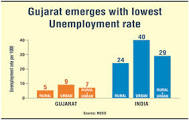
    But then do we have appropriate jobs for all as she has not spoken about those unpleasant figures of unemployment. ILO indicates sluggishness in the job market over the last two years where jobless rate could be around 3.8% this year which sounds optimistic. On a more historic note the unemployment rate has been hovering around 6-8 % on an average over the last decade or so. So, can one say, each time when literacy levels have gone up unemployment hasn’t come down?

7

    This necessitates, we should take up skill building on fast track. Which horrifyingly comes up in India at a later stage of our educational system. And considering, the alarming school dropout rate of 40% with more girls facing the brunt, this should start at secondary school level.

CAUSE OF SYSTEMIC WORRY

    It is worrying to see, important ministers making isolated parroted statements in coveted milieus like IIMs and IITs, where even otherwise everything is hunky dory. And it goes without saying the stark reality continues to remain as it is and nothing much has changed on the ground. So the big question is how will the additional annual workforce of 4.4 million per annum be adjusted in the job market, and what is the road map for creating such jobs each year. Time has come when at least 74% of the literate Indians would want to know end-to-end on how these jobs would be created, before one brags about the English speaking workforce of 4.4 million and the young India. The central point therefore is the job-creators and the workforce creators of India need to meet on one platform to align, which is still missing.

    In any case most IIT and IIM graduates or post graduates won’t remain unemployed, rather would be gainfully employed. But what is more worrying is the lower end of the pyramid that will bear the brunt of unemployment.

    Considering the present unemployment rate. HRD minister would have done well by initiating a dialogue with those states and departments where huge vacancies are lying unfilled, especially teachers and police constables. The low hanging fruits. Which I guess is also the baby of HRD ministry. Needful to mention teacher appointments in some states have been subjected to scams, and appointments cancelled subsequently.

INDUSTRY INTERFACE

    One of the biggest sources of employment in any country, with India being no exception is through business and industries. Where, according to the World Bank we are still at an agonizing 142 in the ease of doing business out of 189 countries. And time taken for registration of a business is currently at 27 days that needs to be cut down to one day, as in Canada and New Zealand.

    Government intends to go online on approvals, for over 200 state and central permits by April next year which is laudable. Currently 81 state level clearances and another 133 at the central level are being put on line and out of these more than 50 relate to railway ministry, alone. But the big question remains; whether we can set up industries at a pace matching 4.4 million jobs a year, which will only increase by leaps and bounds. The answer as of now is no and that necessitates searching for other alternatives. And so; where is the MEA proposal (Ministry of External Affairs) if we were to export our workforce to various aging countries about which our Prime Minister talks so often? And which new countries have been identified where our young English speaking workforce can go and work safely with proper work permits and visas, in a safe manner. I guess, the two distinguished ladies Sushma Swaraj and Smriti Irani should meet on this agenda and at least identify the countries, and if for some reason it happens to be Germany, Smriti should not think of replacing German by Sanskrit.

THE ROUTE AHEAD

    For brand India, literacy to full employment will be a long and arduous walk, considering its size and scale. Where, premier institutions such as IIT and IIM should also brainstorm to show the way out. And we will have to figure out other avenues also, where I guess PM Narendra Modi’s team needs to come together on one platform.

*

By Kamlesh Tripathi

*

Share if you like it

*

Shravan Charity Mission is an NGO that works for poor children suffering from life threatening diseases. Should you wish to donate for the cause the bank details are given below:

NAME OF ACCOUNT: SHRAVAN CHARITY MISSION

Account no: 680510110004635 (BANK OF INDIA)

IFSC code: BKID0006805

*

Our publications

GLOOM BEHIND THE SMILE

ONE TO TANGO … RIA’S ODYSSEY

AADAB LUCKNOW … FOND MEMORIES

REFRACTIONS … FROM THE PRISM OF GOD

(CAN BE BOUGHT FROM ON LINE BOOK STORES OR WRITE TO US FOR COPIES)

*****


ARTICLE: #FARM TO #FORK methodology- IN BIG TICKET #RETAIL

Copyright@shravancharitymission

bigrel


BY KAMLESH TRIPATHI- FORMER GENERAL MANAGER MAHINDRA & MAHINDRA LTD., HEAD OPERATIONS MAHINDRA SHUBH LABH SERVICES LTD., HEAD AGRI BUSINESS AND ENGINES. ESCORTS LTD., VICE PRESIDENT RELIANCE RETAIL (FREELANCE JOURNALIST AND AUTHOR)

STATE OF PLAY

How would you like if it was written behind the packet of wheat flour that you just bought, ‘The contents were grown in the farm of Nanak Ram near Saras town, district Sehore, Madhya Pradesh.’ This is ‘traceability’ in agri terms. Sounds like a distant dream. But then the ‘big dream’ of the big ticket ‘Indian Retail.’ Connect the farm-gate to the fork. But before we get into this let us have a flavor of how the current system operates. Indian farming traditionally has been hooked to the mechanics of Artheyas (Grain merchants) Artheyas were created to help farmers with their documents while selling their crops in the mandis. These documents included entry of grain receipts in mandi registers, raising sales invoices and also tax challans. As most of them were illiterates and did not know how to read or write. This created a lifelong bond between the Artheyas and the farmers. The Artheyas initially started as the humble ombudsman assisting the farmers but gradually transformed into strong ‘gaddis’ at the influential grain market. But at the same time the profile of farmers continued to be the same or even declined comparatively, as the number of small and marginal farm holdings only increased and profits dwindled.

Today, a farmer depends on the artheyas for crop finance and finance in case of crop failure. He also treats the artheya as an assured market for his crop. And also depends on him for certain exigency finance which he may require in terms of marriage, illness, festivals thus forging a strong bond. And as compared to banks, their documentation is simple and not cumbersome and so a big convenience. But artheyas don’t forget their pound of flesh; and finance at high rate of interest and in some cases even beyond 24% per annum, and this hits farmer profitability. Even for the grain that the farmer sells through the artheyas, he charges commissions which is the major reason for grain, vegetable and even fruit prices becoming more than double from the farm level. Government in recent times has started warehouse receipt system; a type of finance that is available by mortgaging crop but then it entails a series of documentation.

hhkk

FARM TO FORK GENESIS

When the big ticket retail entered India the whole value chain from farm-gate to fork was examined by them in detail. What they found was, if the artheyas were removed from the system, and if they could buy grains, vegetables and even fruits directly from the farmers, a substantial value could be unlocked, saved and this could be shared amongst the three stakeholders; the farmer, retailer and the consumer. And, a lot of ground research has been done in this spectrum since then.

WAY FORWARD AND HOW DOES IT WORK ON THE GROUND:

Most big retailers have aggregation or stock points that store merchandise, from where it is brought to the retail floor, basis guidelines of minimum and daily stocking level. Some even have cold chains and reefer trucks for fruit and vegetable movement. Farmers who grow vegetables in the surrounding areas come with their seasonal vegetables and off load their stocks in these stock points basis number of plucking. These stocks are then sorted and graded for pricing by the company on a mutually agreed basis, after which it is taken in stock and payments are made once a week or in a fortnight to these regular suppliers. In case of onions and potatoes which have specific areas of production and limited season, such purchases may be made through one big farmer or a consortium of farmers or at times an agent who deals in these veggies. Fruits are more seasonal and the companies buy directly from orchard owners. Like apples are supplied by orchard owners from Kashmir and Himachal Pradesh, mangoes could be from Malihabad near Lucknow . Farm gate purchase for grains is more tedious and cumbersome and still continues in a big way through the mandis, because of the government policies. Even the cropping regions are quite diverse; like Basmati paddy is grown in Punjab and Haryana, as an example. Some states have also tried contract farming where farmers are first registered before the cropping season. A particular variety of seed is given to them and package of practice is explained, and when the crop is harvested the Company lifts the entire crop. Fritolay the potato chips company has done contract farming for potatoes in Ranjangaon area near Pune and Punjab Agro has taken up a huge contract farming initiative of Basmati paddy in Punjab.

ADVANTAGES VS DISADVANTAGES

Farm to fork- is model of agriculture that has come to stay and has the following advantages and disadvantages:

• Increased Profitability: It gives greater profitability and earnings to small and marginal farmers which are growing in number.

• Expert advice on crops are available such as drip irrigation, optimum use of pesticides, new cropping patterns, crop diversification and fertilizer usage, to name a few; from international crop experts associated through big retailers.

• Ready market, even before the crop is ready.

• Traceability of crop

• There is a possible danger of the buyer reneging in which case the farmer will have to look for a new buyer within a short span of time to sell his crop.

• It may not have any government support price.

*****

#RSS CAN HELP #INDIA EVEN BETTER; THROUGH ITS #SHAKHAS

Copyright@shravancharitymission

By Kamlesh Tripathi

MISSION:

The prime mission of (RSS) Rashtriya Swayamsevak Sangh or National Volunteer Organization” or National Patriotic Organization is to revitalise Indian value system based on universalism, peace and prosperity to all under the divinity of Vasudhaiva Kutumbakam. Holding a world view that the world is just one big family, so propounded by ancient thinkers and carried forward by many others of present day and age. But some contemporary leaders also link it to be the Hindu renaissance. But before getting into this never ending debate let us more objectively and tangibly see how RSS can help the poor Indian work force out of the current quagmire. In fact it would not be out of context to highlight certain issues where RSS can contribute immensely in the present scenario of India.

STRONG BASE:

RSS is an organization that works through its ‘Shahkhas.’ (Shakha-Hindi for “branch”) Most of the organisational work of the RSS is done through the coordination of these shakhas or branches. These shakhas are run for an hour a day in many public places. In 2004 as many as 60,000 shakhas were there throughout India. But the number of these Shakhas had fallen by over 10,000 since the fall of BJP led government in 2004 but has again swelled to 40,000 in 2014 after BJPs returned to power in Delhi.

SHAKHA ACTIVITIES:

These shakhas regularly conduct activities for its volunteers that include; physical fitness, yoga; exercises and also games. It also performs diverse activities emphasizing civic sense, social service, community living and patriotism. And, in the very recent, our Prime Minister has flagged of two important issues out of their kitty. He has spoken about the importance of Yoga in the US and has also launched the Swacch Bharat Abhiyan’ carving out from of the ‘civic sense’ of RSS.

RSS volunteers are also trained in first aid and in rescue and rehabilitation works. And, last but not the least physical fitness and security drills. Where, they are regular performers and also teach the art of self defense on a regular basis. An art much required in present times.

WHAT MORE IT CAN DO

But that apart, there is something more RSS can do very effectively. What comes to my mind is a comprehensive physical training for our poor work force in the rural and urban areas. Since the physicality of a human body is well understood by RSS volunteers, having been in the business of physical fitness for so long, so who else would know this trait better than them. In fact, I would rate RSS as one of the premier organisations for doing this job, clubbed with skill building and providing work-aids or designing new ones to make the jobs of our poor brethren more humane. So, in a more detailed manner RSS can thus delve in the following issues:

  • Train labourers how to carry maximum load on their back without damaging the backbone, muscles or even their skull.
  • What precautions to take, while working in open fields, as human body is subjected to nagging and devastating pollution all over. Here I would also like to mention about the traffic police that works endlessly on polluted roads, and also the factory labour.
  • RSS is also a knowledge reservoir and can help in the development of small implements that can help poor labourers to exert less, at the same time not bring down their output. Something, like a wheel barrow.
  • Develop Small working aids that can help women in giving equal output as men. One can take the cue from MNREGA where women are paid less basis their output.
  • And if pregnant women have to work what precautions they need to take, and what are the safer jobs which they can perform.
  • Security drills for our hapless working community, especially working ladies.
  • They can even hasten the project of 100% literacy. Which is currently at a level of 75%.

On a more realistic note the girth of this mammoth exercise is going to be stupendous and will touch the heart and mind of every Indian irrespective of caste, creed and religion. For it will be for the Indians in the bottom of the pyramid. Quite, appropriately, for the needy and therefore sterling, noble and even centre of right and left. Surely RSS can make an alternate beginning and see its tinge brighten even further.


ROLE OF MICRO, SMALL AND MEDIUM ENTERPISES IN BUILDING AUTOMOBILE AND FARM SECTOR

BY KAMLESH TRIPATHI: FORMER GENERAL MANAGER MAHINDRA & MAHINDRA LTD, HEAD-OPERATIONS MAHINDRA SHUBH LABH SERVICES LTD., HEAD-AGRI AND ENGINES ESCORTS LTD. AND VICE PRESIDENT RELIANCE RETAIL. (WRITER AND AUTHOR)

DEFINITION OF MSME:
It would be worthwhile to first define these enterprises in accordance with the provision of Micro, Small & Medium Enterprises Development (MSMED) Act, 2006. The MSMED are classified in two classes:

(a) Manufacturing Enterprises: The enterprises engaged in manufacture or production of goods pertaining to any industry specified in the first schedule of the industries act, 1951 or employing plant and machinery in the process of value addition to the final product having a distant name or character or use. The Manufacturing is therefore defined in terms of investment in Plant & Machinery.

(b) Service Enterprises: The enterprises engaged in providing or rendering of services and are defined in terms of investment in equipment.

INVESTMENT PLATFORM OF MSME:
The limit for investment in plant and machinery/ equipment for manufacturing/ service enterprises, as notified, vide S.O. 1642(E) dtd.29-09-2006 are as under:

Manufacturing Sector
Enterprises Investment in plant & machinery
Micro Enterprises Does not exceed twenty five lakh rupees

Small Enterprises More than twenty five lakh rupees but does not exceed five crore rupees

Medium Enterprises More than five crore rupees but does not exceed ten crore rupees

Service Sector
Enterprises Investment in equipments

Micro Enterprises Does not exceed ten lakh rupees:

Small Enterprises
Medium Enterprises More than two crore rupees but does not exceed five core rupees

SOME RELEVANT STATISTICS
MSMEs contribute nearly 8 percent of the country’s GDP, 45 percent of the manufacturing output and 40 percent of exports. They provide the largest share of employment after agriculture. They are our nurseries for entrepreneurship and innovation and are widely dispersed across the country and produce a diverse range of products and services to meet the needs of the local markets, the global market and the national and international value chains. Back bone of the Indian economy, employs close to 40% of India’s workforce. Play a critical role in generating millions of jobs, especially at low-skilled level. Country’s 1.3 million MSMEs account for 40% of India’s total exports

MSME ROLE IN AUTO AND FARM MECHANIZATION

MSME has played a key role in developing the Auto and Farm sector in India. In fact big players manufacture only 30-40% in house; and rest of the components are developed by MSMEs and the pattern is similar, even abroad, as this required to be cost efficient. Apart from the manufacturer, MSMEs also manufacture for the retail spare parts markets. On a more realistic note, every, foreign collaboration is gradually indigenised; and people who generously delve in this are the MSMEs. And that goes to show they are not frugal and have the R&D capability but may lack financial muscle. And within the given business matrix they have developed many products in rural transportation, farm implements and operations and many of them have even given a good fight to products from Continent and the US. But due to lack of resources these innovators have not been unable to take their innovation to the next level and provide employment to many.

MSME REQUIRES A MORE LEVEL PLAYING FIELD:

Firstly, we need to realise, the sector that employs 40% of our workforce, and is the second largest employer after agriculture is a force to reckon with. Most of their innovations have sprung out of independent thought processes, individual initiatives and efforts; many a times referred as Jugad technology, later refined into durable PAN Indian and global products. MSMEs have evolved locally and have their ears to the ground; unlike big players who have collaborated with global players for products to adapt to Indian conditions. But both are complementary and have to co-exist rather can’t exist without each other.

And for this to happen MSME requires a more level playing field as far as their interface with the Government and big players is concerned. It is therefore imperative in all policy matters thinkers of MSME are also included to forge a more cohesive and complaint policy, taking into account limitations of MSMEs, says a medium enterprise owner who doesn’t want to be named. In the manner China has supported their MSMEs India should also follow suit. It would not be out of place to mention that we need to revisit the emission norms for Gensets, Power Tillers and engine operated irrigation pumps. Also cost and time taken for testing thwarts grass-root level innovations, and this needs to be looked into. These are some of the feedbacks received from enterprise owners who prefer to be silent.

After all when most consumer requirements are contracting to ‘compact’ versions and ‘small’ is becoming the ‘in-word’ I see no reason why MSMEs should not be invited to the applecart of industry thinkers.

Government through its hierarchy and battery of bureaucrats should ensure MSMEs don’t face any road blocks and get a voice in each forum of decision and policy making. It is a Management saying if you keep taking the same action and expect a different results you are only fooling yourself and I feel Modi Government has no intention of doing that and they would overhaul policy making committees for a fair play and encourage MSMEs offering simple frugally engineered solution to problems being faced by Agriculture, Rural Transportation and affordable and optimized transportation of agriculture produce.

ARTICLE: Rural Marketing: Is e-Commerce the Solution?

By Kamlesh Tripathi- Positions held: General Manager-Mahindra & Mahindra Ltd., Head Operations Mahindra Shubh Labh Services Ltd., Head Agri and Head Engines Escorts Ltd., Vice President Reliance Retail. (Writer and Author)

Before we discuss Rural Marketing and look for a solution in e-commerce let us also understand the complexity and demanding physical features of India as you need to strap the rural marketing to the physical features of India as it won’t work in a vacuum.

India happens to be 10th largest economy of the world in terms of nominal GDP and 3rd largest in consumption or (PPP) purchase power parity and therefore a huge market even domestically. 60% of our population lives in the rural areas. Our population density is 380/sq km and we are the 7th largest country by area, 2nd most populous country after China with over 1.2 billion people. Our per capita income by PPP is 5777$ and by income it is 1626$.

Let us also understand the geographical spread where our supply chain has to deliver. It has 656 districts, 5379 taluks an over 6 lakh villages and a land area of 33 lakh sq km which is five time of Pakistan and one third of China approximately. The terrain is an an assortment of both plains and snow peaked mountains.
Though we talk of one India the divide is deep that makes it two in terms of habitat, requirements, challenges and even family cash flows. And, last but not the least the literacy rate has grown to 74.04% with a decadal growth of 9.21%. And this is something to cheer about.

CURRENT SCENARIO OF RURAL MARKETING

In the current scenario most products, be it FMCG, Engineering, Industrial, Farm Machinery or Farm inputs are all sold through a network of distributors, dealers and retailers who share the channel margin. While they do provide peripheral and ancillary services to the rural folks especially farmers; they make better profits than rural folks and therefore the cost of goods to the end user increases accordingly. And a majority of them are more sales oriented than concern for after-sales-service; which is more because of lack of skill. Net-net this is not a very cheering situation. Even distribution costs rake up, because the goods are first sent to the resellers godown and then to the final user; instead of despatching it straight to the end user.

WHAT IS E-COMMERCE?

In very simple terminology e-commerce is selling through internet; as many global and Indian companies are doing such as Amazon, Flipkart, Snadeal to name a few. And, it has been extremely successful in the cities and with that rationale there is no reason why it shouldn’t be a success in the rural areas.

SO HOW WILL RURAL MARKETING THROUGH E-COMMERCE HOLD OUT?

With the increase in literacy levels especially of females going up to 65% and males to 80%, e-commerce in rural markets appear to be at arm’s length now. But, literacy needs to be converted in to skill of handling computers and operating INTERNET to enter the domain of e-commerce and this should not be difficult. Even in the arena of connectivity much has been achieved barring the speed of the INTERNET and availability of power. Some other major deterrents in ramping up e-commerce could be as follows:

• Current purchase system of farm machinery through subsidy has many leaks and only a fraction of what is spent by the Government actually reaches the beneficiary. This problem can be arrested by making DBT (Direct Bank Transfers) through Jan Dhan Scheme of the Prime Minister.

• Major sustenance of livelihood in rural areas is through farming, and therefore the government should promote e-commerce for purchase both farm machinery and inputs. But it won’t happen unless there is a monetary push by the government in providing cash incentives for orders through INTERNET out of the subsidy amount.

• Marketers will soon have to open INTERNET kiosks for selling their products at rural centres as some companies are already planning. These centres can either be managed by companies themselves or they could out source it.

• And after e-commerce catches up as a concept in Rural Marketing, companies will have to plan for service dealers aggressively for product demonstration, installation and after-sales-service. As one can only procrastinate e-commerce for a while and not reject it.

ARTICLE: IS INDIAN AGRICULTURE TOTTERING BECAUSE OF FARM LABOUR SHORTAGE?

By Kamlesh Tripathi, positions held : former General Manager, Mahindra &Mahindta Ltd., Head Operations, Mahindra Shubh Labh Services Ltd., Head- Agri & Engines, Escorts Ltd., Vice President Reliance Retail (Writer and Author)

Yes it is; and may be for some more time to come, till the takeover of ‘farm mechanization’ is complete from end-to-end. And while reminiscing, admiring and complimenting the age old traditional asset of Indian agriculture- the devoted farm labour that worked generation after generation in the farmland, but is now scaling down the path let us understand the table below, etched out of the latest Indian Agriculture Census 2011 report. While the table is simple the message is all about a paradigm change.

CENSUS 2011 REPORT

PERCENTAGE SHARE OF DIFFERENT FARM POWER SOURCES IN INDIAN AGRICULTURE
YEAR AGRICULTURE WORKERS DRAUGHT ANIMALS TRACTORS POWER TILLERS DIESEL ENGINES ELECTRIC MOTORS POWER/KW/HA
1971-72 10.64 52.86 8.45 0.11 17.16 10.79 0.424
1981-82 9.2 33.55 18.46 0.11 22.85 15.82 0.592
1991-92 7.22 20.5 26.14 0.16 21.14 24.84 0.907
2005-06 5.39 9.97 38.45 0.44 20.09 25.66 1.498
2009-10 5.12 8.55 41.65 0.52 19.01 25.13 1.658

• Since 1971-72 the percentage share of agriculture work force has gone down from 10.64 to 5.12% which means a big chunk of 50% has moved away to either cities and or employment in other sectors. The figures, post 2010 are not out and therefore ascertaining the impact of MNREGA may be a miscalculation as of now. And the major impact however, has been between 1981 and 2005.

• And, similarly, but with a more aggressive intensity the percentage of draught animals has also come down from 52.86% to 8.55%. Most draught-animal farmers are small and marginal in the <2ha category or maximum medium. Therefore, maintaining these animals without proper land holding is becoming an extremely expensive proposition. For the cost of animal feed is constant or only going up but the work is seasonal and so the proposition is becoming less remunerative. And therefore the above table points to the reality of draught animals being gradually replaced by mechanization of the small and micro variety.

• And so the moot point that emanates out of the Indian Agriculture scenario is of coming down of life factors and up trending of mechanization.

• The usage of tractors has also gone up but the figure doesn’t talk of horse power trends where, 60, 45 and 35 HP category markets have largely been replaced by smaller HP categories such as 25 and 16. In fact states with high HP category industry such as Punjab, Gujarat, Maharastra, AP, TN, Karnataka and Kerala have also taken a switch to smaller HP category on account of reduction in land holding sizes. But where you have black cotton, clay soil that requires extra lugging power, the markets have continued in the domain of 35 HP and above. And also where you have sugar mills, and tractors are required for pulling double trolleys loaded with sugar cane; 35, 45 and 60 HP still rule the roost.

• The trends are also upward in case of Power tillers, which has grown quite insignificantly from 0.11% to 0.52%. The restricted growth has primarily been due to conservative marketing by small and medium players, no precise farmer training on farm economics and availability of alternative products, lack of industry cartel and even lack of focussed Government promotion to encourage micro equipment. But with the changing farm-profit trends this will catapult into a major industry by grabbing industry share from the tractor industry.

BUT WHERE IS THE WORK FORCE HEADING TO:

The major chunk of farm labour are the land less peasants who do menial yet critical farm operations such as weeding, transplanting, pesticide spraying, fertilizer application in row crops and are paid in kind.

With the percentage share of Indian agriculture declining in Indian GDP to fifteen percent, the ongoing high pressure of population’s dependence on agriculture and increasing fragmentation of land holdings leading to decreasing availability of cultivated land area per household; the availability of such seasonal jobs is becoming more and more, scarce.

Job opportunities in factories, infrastructure projects and services are becoming more lucrative. And also the advent of MNREGA that guarantees 100 days of work per annum has smothered the charm of working as a farm labourer.

India still spends almost half of her/his total expenditure on food while roughly half of India’s work force is still engaged in agriculture for its livelihood. Being both a source of livelihood and food security for a vast majority of low income, poor and vulnerable sections of society, its performance assumes greater significance in view of the proposed National Food Security Bill and the ongoing act of MGNREGA. And with this decrease in the availability of farm labour the cost of labour has also gone up. And also the cross country movement of labour for example from Bihar to other states such as Punjab has dried down.

The decrease in agriculture’s contribution to GDP has not been accompanied by a matching reduction in the share of agriculture in employment. About 52% of the total workforce is still employed by the farm sector which makes more than half of the Indian population dependant on agriculture for sustenance but the trend may change in times to come. However, within the rural economy, the share of income from non-farm activities has increased.

65% of India’s population is below 35 years of age: Knowledgeable and ambitious. They do not have the wherewithal to do donkeys work in the farm as their ancestors did. They, therefore, would like self- operated micro farm mechanization and would like status tag to be added to agriculture as an industry and end-to-end mechanization.

Trained labour shortage also encourages use of excessive weedicides and herbicides by farmers less trained in the activity that gets into the food chain resulting in increased health issues, like in some districts in Punjab groundwater is no more potable and cases of cancer rampant.

THE WAY FORWARD

The inevitable pressures of the Indian agriculture are only going to increase and the government needs to have a four cornered policy that takes care of the environment, farming viability, farm labour and productivity

• There is immediate need to have a cropwise, areawise farm profitability review. In this review each cost should be ascertained for the marginal and medium farmer.
• There is need to introduce micro cropping equipment to marginal and medium farmers for diversified critical cropping activities, more for self-farming, cost control and increase in productivity.
• Environment concerns should be addressed forthwith even it requires changing of cropping pattern. Like paddy in Punjab which requires heavy water consumption should be replaced with some other crop requiring less water and farmer profitability should accordingly be addressed
• Skill training to be imparted to farm labour for better farm economics, environmental concerns and certainty of employment for farm labourer.

ARTICLE- INDIAN AGRI’S CHINK IN THE ARMOUR

Copyright@shravancharitymission

915


    If the 2011 agri census had its way. It would huff, puff and jostle the policy makers to have a hard look at the stressed agri scenario of India. That is entering from the back doors of gradual reduction in operating land holding size. It may sound primordial. Yet the tremors are only getting closer to the feet, slowly and steadily.

    Let’s take a close look at some of the key statistics thrown up by agriculture census of 2011. Which are rather alarming. More for those who thrive on agriculture and considering the fact that the census takes place every five years. What will emerge in the next one, could only be a heart broken anticipation coming true.

LAND HOLDING PATTERN UNDER STRESS

    The total no of operational holding has increased from 129.22 million hectares (ha) in 2005-06 to 138.35 million ha in 2010-11, showing an increase of 7.06%. This may sound good.

    The operated area has also increased to 159.59 million ha in 2010-11 from 158.32 million ha in 2005-06. A marginal increase of only 0.80%.

    But the average operational size of land holding which was 1.23 ha in 2005-06 has declined to 1.15 ha in 2010-11, at an all India level. Which is below 3 acres on a more prevalent terminology. What it might be in the census of 2015-16 could be anyone’s wild guess. All in all, this shift will only bring about economic stress. That will perforce change the farming paraphernalia of an Indian farmer. But are we ready for it is the moot question?

    From the veritable census report in the table below one finds. The small and marginal <2 ha operational area has gone up from 41.14% to 44.58%. While both semi medium, medium and large holding have come down. And the average operational size of holding in <2 ha class has gone up from 83.29% to 85.01%. Now this should at least ring bells if not alarm bells. Further the table also conveys:

REDUCTION SWING IN SIZE OF LAND HOLDINGS
CENSUS-2005-06 CENSUS- 2010-11
SMALL AND MARGINAL < 2HA
AVEARAGE OPERATED SIZE OF HOLDING 83.29% 85.01%
OPERATED AREA 41.14% 44.58%
SEMI MEDIUM AND MEDIUM 2.00 HA-10HA
AVERAGE OPERATED SIZE OF HOLDING 15.85% 14.29%
OPERATED AREA 47.05% 44.88%
LARGE HOLDING > 10.00HA    
AVERAGE OPERATED SIZE OF HOLDING 0.85% 0.70%
OPERATED AREA 11.82% 10.59%

1012

    Major farm productivity is going to come from <2 ha holdings. Therefore, the methodology of agriculture production changes from heavy and medium to mini and micro farm equipment. Which is a capital cost change for the industry. Distribution and marketing too will have to retract and align to the scattered farm production. That is helter-skelter logistics and smaller heaps to carry and deliver.

THE NEW PAGE IN FARM MECHANIZATION

    Reduction in the size of average operational land holding by 6.50% over the last five years ending 2011. Together with the trending future and historical past, has not gone on deaf years with major Farm mechanization companies. As they too, over the years, have added, scaled down variants of lower horse power (HP) tractors in their stable. That is from 60 to 45 to 35 to 25 and now to even 16 (HP). Yet the break-even points of these machines are spilling on to the kuccha village roads or the tarmac roads where they carry passengers, work in brick-kiln and get into seasonal transport jobs to make two ends meet.

    Also mere reduction of HP will not be sufficient in bringing about farmer profitability. The present average land holding size denotes–Like a nuclear family have nuclear farming. But this nuclear farming will be viable only with tilling machines in the range of 3 to 7 HP along with allied paraphernalia. Machines that even a lady can operate and that are self-sustainable, in terms of cost by the income of the farm alone. And do not escrow with other seasonal side operations to break even. Therefore, it is not far when the early birds of the industry will arrive in this segment.

    As a concerned friend of the farmers. I feel the Government of India needs to take a pragmatic view of the ensuing scenario, and work out a complete package for the new trendsetting ‘nuclear farming.’ Which I feel is a new skill set. And I say this for the following reason.

    For etching a full time farming career from a farm of less than 3 acres would mean performing most farm activities yourself. Or in the company of your spouse, and this would require small farm machines for all activities to match that. Especially, when the net farming profitability per acre stands around twenty five to thirty thousand rupees per annum per acre. That too on irrigated land.

    Indian agriculture has been slow but steady in catching signals of change. Perhaps, it is waiting for a point when push comes to shove. But this time it needs to be proactive. And it has the capability to imbibe change. Where, the GOI must facilitate with appropriate policies.

By Kamlesh Tripathi- Ex: General Manager, Mahindra & Mahindra Ltd.; Head Operations, Mahindra Shubh Labh Services Ltd.; Head-Agri-Business & Head Engines for Gensets, Escorts Ltd.; Vice President, Reliance Retail; Head of Marketing & Sales, SAS Motors; (WRITER AND AUTHOR).

*

By Kamlesh Tripathi

*

https://kamleshsujata.wordpress.com

 *

Share if you like it

*

Shravan Charity Mission is an NGO that works for poor children suffering from life threatening diseases. Should you wish to donate for the cause the bank details are given below:

NAME OF ACCOUNT: SHRAVAN CHARITY MISSION

Account no: 680510110004635 (BANK OF INDIA)

IFSC code: BKID0006805

*

Our publications

GLOOM BEHIND THE SMILE

(Archived in 7 prestigious libraries of the US, including, Harvard University and Library of Congress. It can also be accessed in MIT through Worldcat.org. Besides, it is also available for reading in Libraries and archives of Canada and Cancer Aid and Research Foundation Mumbai)  

ONE TO TANGO … RIA’S ODYSSEY

(Archived in Connemara Library, Chennai and Delhi Public Library, GOI, Ministry of Culture)

AADAB LUCKNOW … FOND MEMORIES

(Launched in Lucknow International Literary Festival 2014)

REFRACTIONS … FROM THE PRISM OF GOD

(Co-published by Cankids–Kidscan, a pan India NGO and Shravan Charity Mission, that works for Child cancer in India. The book is endorsed by Ms Preetha Reddy, MD Apollo Hospitals Group. Book was launched in Lucknow International Literary Festival 2016)

(CAN BE BOUGHT FROM ON LINE BOOK STORES OR WRITE TO US FOR COPIES)

*****


SOME INTERESTING, #QUOTES AND #SAYINGS

Copyright@shravancharitymission

123

  • It is faith that removes mental turbidity and makes your mind clear.
  • Weakness on both sides is, as we know, the motto of all quarrels- Voltaire.
  • In the absence of writing, all knowledge was located in the mind of the Brahmin; this is why killing a Brahmin was forbidden as it was equal to killing a library. This made the Brahmin very powerful, too powerful. He jealously guarded his knowledge.’
  • The snake which cannot cast its skin has to die.
  • A journey of a thousand miles begins with a single step.
  • How long can a snake keep straight.
  • Somewhere between the bottom of the climb and the summit is the answer to the mystery why we climb.
  • What matters is not the idea a man holds, but the depth at which he holds it.
  • If there is a lesson to be learnt from success of IT, it is that openness leads to job creation.
  • Peace is not absence of conflict, it is the ability to handle conflict by peaceful means.
  • What to eat and what not to eat are options available to only those who have plenty to eat and not for those who have very little to eat.
  • There are people in the world so hungry, that God cannot appear to them except in the form of bread
  • “Mind” the emperor of all remedies.
  • Consumers need a reason to stick
  • I became the dog who caught the car.
  • All cultures are distant relatives because they are all human contracts.
  • Every single time you make a merger, somebody is losing his identity.
  • The sweetest sound in the world is the person’s own name.
  • “Manam Pola Vaazhkai” Tamil- (The way your heart goes the way your life will be) law of nature.
  • The mind is everything. What you think you become.
  • Education is what remains after one has forgotten everything he learned in school.
  • They say behind every successful man, there is a wife and behind every successful woman a resentful husband.
  • Do not ask God to guide your footsteps if you are not willing to move your feet.
  • Thinking is one thing no one has ever been able to tax
  • Life is a chaplet of little miseries.
  • The length of a film should be directly related to the endurance of the bladder.
  • Often it isn’t the mountain ahead that wears you out. It’s the little pebble in your shoe.
  • Opportunity is missed by most people because it is dressed in overalls & looks like work.
  • Absolute leaders nurture absolute followers who believe in absolute intimidation.
  • An Idea- Take up one idea. Think of it, dream of it, live on that idea, and just leave every other idea alone.
  • Winning isn’t everything- but wanting to win is.
  • Beauty is a greater recommendation than any letter of introduction.
  • Forget the past and lose an eye; dwell on the past and lose both eyes.
  • You can’t depend on your eyes when your imagination is out of focus
  • You are what other people see you as.
  • There are weeks when decades have happened and there are decades when not even weeks have happened.
  • Well, I was always enamoured with the stepwells of India.
  • A city is like a person- you need to look into its darker sides to understand the whole thing. Everyone wants to present the beautiful to you.
  • I love cows, my grandmother told me, “If you want to feel God, look into a cow’s eyes.” Gandhi protected the cow because cow is the image of all sub human life.
  • You cannot shake hands with a clenched fist.
  • ‘Compound interest is the eighth wonder of the world. He who understands it, earns it … he who doesn’t … pays it.’
  • There are many paths to the top of the mountain, but the view is always the same
  • Meaning of Life: What is meaning of life? Life is without meaning. You bring the meaning to it. The meaning of life is whatever you ascribe it to be. Being alive is meaning.
  • Election and Governance: winning a majority is one thing, running the country another.
  • If you compare life becomes miserable.If somebody is better than you, learn from them; enjoy others success. If some one is better than you at some level, do not whip yourself with comparision-.
  • Poverty is the parent of revolution & crime
  • ‘No matter if it it is a white cat or a black cat; as long as it can catch mice, it is a good cat.’
  • ‘If all had taken a leaf out of their Parents book, it would have been difficult for God to manage aspirations of mankind; as most would be on the right track.’

If you don’t know the author of these lines write to us.

*****

Posted by Kamlesh Tripathi

*

https://kamleshsujata.wordpress.com

*

Share it if you like it

*

Shravan Charity Mission is an NGO that works for poor children suffering from life threatening diseases especially cancer. Should you wish to donate for the cause. The bank details are given below:

NAME OF ACCOUNT: SHRAVAN CHARITY MISSION

Account no: 680510110004635 (BANK OF INDIA)

IFSC code: BKID0006805

*

Our publications

GLOOM BEHIND THE SMILE

(The book is about a young cancer patient. Now archived in 7 prestigious libraries of the US, including, Harvard University and Library of Congress. It can also be accessed in MIT through Worldcat.org. Besides, it is also available for reading in Libraries and archives of Canada and Cancer Aid and Research Foundation Mumbai)  

ONE TO TANGO … RIA’S ODYSSEY

(Is a book on ‘singlehood’ about a Delhi girl now archived in Connemara Library, Chennai and Delhi Public Library, GOI, Ministry of Culture, Delhi)

AADAB LUCKNOW … FOND MEMORIES

(Is a fiction written around the great city of Nawabs—Lucknow. It describes Lucknow in great detail and also talks about its Hindu-Muslim amity. That happens to be its undying characteristic. The book was launched in Lucknow International Literary Festival of 2014)

REFRACTIONS … FROM THE PRISM OF GOD

(Co-published by Cankids–Kidscan, a pan India NGO and Shravan Charity Mission, that works for Child cancer in India. The book is endorsed by Ms Preetha Reddy, MD Apollo Hospitals Group. It was launched in Lucknow International Literary Festival 2016)

TYPICAL TALE OF AN INDIAN SALESMAN

(Is a story of an Indian salesman who is, humbly qualified. Yet he fights his ways through unceasing uncertainties to reach the top. A good read not only for salesmen. The book was launched on 10th February, 2018 in Gorakhpur Lit-Fest. Now available in Amazon, Flipkart and Onlinegatha

(ALL THE ABOVE TITLES ARE AVAILABLE FOR SALE IN AMAZON, FLIPKART AND OTHER ONLINE STORES OR YOU COULD EVEN WRITE TO US FOR A COPY)

*****


E-RICKSHAW- ONE WAY FORWARD FOR A RECOUPING INDIA

BY KAMLESH TRIPATHI

‘Global’ is more muscle than ‘National’ and National more defining than the Local. ER (E-Rickshaw) is far becoming a global phenomenon. But for some, it is still the Galileo’s belief; however, its scintillating attributes have already started caressing nations to include it in the developing arc of their local confines.

But, for this to happen leaps and bounds, someone needs to sight the lodestar and steer the volatile ship of change. Prime Minister Sri Narendra Modi in no uncertain terms has taken up the mantle of bringing about such a change; where he talks and talks about ‘Acchey din’ for one and all. But this will not happen in a vacuum.

For this humungous population of 1.3 billion you require at least one crore jobs each year to stay the course. And mind you 65% percent of our population is below 35 years of age where very few are brilliantly educated; and not many pull through the level of secondary education, and most certainly the majority is not skilled. So, you need a plethora jobs for such profiles of your population. And, with these loaded rudimentary statistics even the increased spin offs by existing behemoths and corporations will not deliver any delight. You certainly will require something different, maybe a breed of differently talented merchants, entrepreneurs, to bring about a paradigm shift of the wanted type.

As a concerned citizen of India I feel GOI (Government of India) should move in five thrust areas. One: promote entrepreneurship as all can’t be accommodated in jobs. Two: welcome products that have employment generation potential like the e-rickshaw through aggressive promotional schemes and by throttling resistance if any by vested camps and play it to merit. Three: ramp up eco-friendly products that earn carbon emission numbers. Four: provide convenience to its citizenry residing even in the last mile of connectivity. Five: move on fast pace as time is of essence.

And, therefore by all standards ER does foot the bill. Even though a distant cousin of a cycle-rickshaw, it holds up to human dignity as it moves with the power of an electric motor; and not pulled by human bones and muscles. A sturdy machine built on strong steel pipes, with a battery backup of 90-100 km per recharge and cruise speed of 20-25 km an hour, almost like a fast pedaled bicycle. Noiseless, non-polluting, hence superior to auto-rickshaws, with no clutch, gear and cheap maintenance with a carrying capacity of 4-6 people with a kerb weight of around 350-400 kg. All the three wheels are pulled by an electric motor ranging from 650-1400 watts. The product is a brain child of the dragon- agile China that combats any market with its cost prudent technology, quick responses to customer needs and the scheming competition.

ER is popular in many countries since 2008 and is nicknamed as TUK-TUK. From an eco-friendly green product to a staunch, has-to-be, viable alternative to Petrol-Diesel-CNG auto rickshaws; that pollute in varying and frightening degrees all the way.

Mighty India comprises of 676 districts, 5559 taluks and 638588 villages and a lot of it still remains uncovered, virgin in terms of last mile connectivity- a ‘Corporate Management’ term coined by some business thinkers; is where this vehicle can do wonders with its narrow wheel tread that can touch upon every constricted nook and corner. And in all sanity, these battery run ERs could be a low-emitter complementary transport for the low-income people, who suffer most from lack of transport facility; if introduced in a systematic manner, feel experts. And I also understand.

ER has already given employment to two-lakh e-rickshaw drivers in Delhi and that establishes my lifeline point of product having direct and indirect employment potential. Hailing it as nature friendly, even honourable High Court paid compliments by calling it a non-polluting and a vehicle with human dignity. But what I also gather is rather strange and shifty.

• Every e-rickshaw has to be approved by the government before the vehicle can operate in Delhi. But why every ER, is the big question? Why not the proto-type alone designed by any Company, on laid down specifications? For this is neither done in the case of bullock carts nor high tech automobiles. Sounds puerile and ominously bureaucratic. And then we talk of doing business in India with ease.

• The vehicle has to be insured and registered.

• ER drivers need to have a driving license as per a government notification on e-rickshaws. But then what about a cycle-rickshaw driver or for that matter a person pedalling a bicycle as both move on roads and a cycle rickshaw even carries passengers. A level playing field therefore should be thought of. Moreover, a special camp will be required to issue two lakh driving licences in Delhi alone; double bonanza for RTOs to mess around. What to talk of India.

• Stipulation that drivers should have at least studied till high school is quite a poignant paradox; to become a M.P. or a Cabinet Minister you require no qualification but to become an e-rickshaw driver you need to qualify high school standard.

• To get each e-rickshaw model approved, one has to pay rupees five lakh while the e-rickshaw only costs rupees eighty thousand. Sounds Orwellian. How will the poor owner pay this amount? This stinks and smells of immoral cartel instigation or bureaucratic sadism or even a devilish cocktail. And surely it will hurt manifold the young and poor youth of our country trying to etch out a square meal out of this trade. I am sure GOI is not sleeping and has food for thought.

To solve issues government should invite manufacturers and assemblers and lay down guidelines for ERs, under which they should submit prototypes for approval. This could be done in consultation with eminent players of the industry, automobile institutes, doyens of trade and even bureaucratic amalgamation as this will surely digress into a sensible solution. And, last but not the least I am more than sure.

GOI will make no mistake and will take this controversial bull by the horns as the issue involves and concerns myriads of employment seeking youth of our country; and where there is a will there has to be a fast way out.

############