Category Archives: article

Article: ARE RURAL SCHOOLS PLAYING WITH THE FUTURE OF OUR CHILDREN AND INDIA?

Copyright@shravancharitymission
r2rr3

NGO Pratham has done well in bringing out an outstanding report called the Annual Status of Education Report (ASER 2014). ASER is an annual household survey to assess children’s schooling status and basic learning levels in Reading and Arithmetic. It is the tenth such survey facilitated by Pratham. This is the largest and most comprehensive annual household survey of children in rural India. It surveyed 16,497 villages located in 577 districts across India covering 341,070 households and 569,229 children.

POSITIVES AT SCHOOL LEVEL:

India, would love to hear, that enrolments in schools, are at a level of 96% and that too for the 6th year in a row. So, most of our kids are now at least, sauntering down the school classrooms. And, to toast the occasion there are regular mid-day meals, to take care of their nourishment and over 80% of our schools have improved infrastructure. And the buck doesn’t stop here, as 75% of rural schools now have provision for drinking water, while 65% even have toilets, which is significantly higher than about half a decade ago.

NON-ACHIEVEMENTS AT SCHOOL LEVEL:

So, while we have made steady progress on the infrastructure side of our schools, what still remains deficient is on the teaching side – how well are these schools teaching their pupils? In depth details are available online. But here are some disturbing points:

  • Almost 50% of the kids in class 5 cannot read simple sentences that are taught in class 2.
  • 50% of the kids in class 5 cannot do basic two digit subtraction which is taught in class 2.
  • And half the kids in class 8 cannot do even simple division that is taught in class 4

So then what is going on in these schools? As half of our school children after having spent more than half a decade in school cannot read basic sentences and do even simple arithmetic; when they could have learnt this in 2-3 years of urban education or in any private school. So do these teachers employed with these schools have any accountability?

ruralrr4

SO THEN, WHERE ARE HEADING TO?

Are these schools responsible for creating a talent pool in our country or are we just to rejoice over enrollment numbers and mid-day meals and forget the core issue of educating our children. In the literacy chain of India this could be the weakest link. For what is literacy anyway? Is it just being able to write your name or learn the bare minimum skill of being able to read and solve those basic arithmetical problems. A skill that you will require lifelong. Or is it something much more than that.

Basic skill of reading and arithmetic is vital for survival in today’s world; as life in any form will require these skills. And if the basics are not strong. No matter how much of education you add in later years will only go for a waste. As the data explains adding number of years of education to such laggards will be of no use. And, also, such laggards though counted in enrollment will never get educated.

And, mind you the percentage of such students is very high, and at a staggering fifty percent. India could have lived with a miniscule percentage of such students but because it is half our students, it depicts an applecart failure in our education system.

Article: ‘MODI’S WIN IS THE VICTORY OF INDIANESS’- JANARDHAN DWIVEDI

Economic times, reports ’10 Janpath Insider Janardhan Dwivedi Scripts His Own Political Epitaph.’

But while doing so, at his own career risk. He has reminded Congress Party of their follies in an indirect manner. For if the party withers, what will office bearers do anyway?

A devout Congress worker with a mind of his own mind; nerves to convey what is right for the Party, to the otherwise deaf High Command. This is what Janardhan Dwivedi is all about. Even on earlier instances he has tried to communicate issues to the Congress President. But that was not music to her ears. And such is his love for the party.

Congress Party is largely seen as a pro Muslim party. Not so much for the love of Muslims but for their votes. But Muslims have now realized this fact. And, I say this with a lot of conviction because not much has changed in the lives of Muslims even when Congress was in power for the last 60 years or so. Implying either their intentions were not genuine or they were incompetent, because of which they could not bring about the Muslim renaissance.

Politics is all about perception and the image that you create around you. For, I, as a majority community voter saw Congress President Sonia Gandhi with Ahmed Patel as her political secretary, Dr Manmohan Singh as the Prime Minister and Anthony as the unofficial number two in the cabinet. All from minority communities. Thus, she vented a perception as if she was uncomfortable with the majority community; even when I could be wrong in this assessment of mine.

And Congress could never counter vehemently the disparaging lilt and tilt towards the word ‘Hindutva.’ In fact any chorus on ‘Hindutva’ was demeaning in UPA regime, and anything about minority was an esoteric wisdom under secularism. Many Congress leaders, to please the high command openly spoke in pro-minority and anti Hindu tones. Some even went to the extent of referring the world’s biggest terrorist ‘Osama’ as ‘Osamaji’ without any heartfelt reprimand by the Party supremos, and I guess such gestures alienated the Indian majority from Congress Party.

What Narendra Modi did was to get the alien majority of India, back into the mainstream. And now Congress is  left with only a few. Janardhan Dwivedi has only deconstructed this point for better understanding of the Congress Party.

SNIPPET: EVEN SIMPLE GARDEN TOOLS FOR WOMEN ARE NOT THAT SIMPLE TO DESIGN: REQUIRES INTENSIVE RESEARCH

I never thought simple garden tools require intricate research for gender specificity, till one day I went through the website of Green Heron Tools in the US wherein Adams and Brensinger promoters of this company feel. Systematic research to design garden tools for women is a must. ‘And, it’s about time farm and garden tools broke out of ‘one size fits all’ model where these two women farmers of the US are bridging the gender gap by designing tools specifically for women.

For, even if we all are equal, we are not equally sized or proportioned, because of the striking differences between women and men’s bodies. The tools that work efficiently in a man’s hands may not be that efficient in a women’s hand and so it could even be a health hazard. For example,

According to Green Heron Tools. A women’s body tends to have a lot less upper body strength, less of lower body strength, a lower center of gravity, proportionally shorter limbs, smaller hands and less grip strength than men’s bodies, which means that a ‘one size fits all’ shovel isn’t nearly as efficient or easy to use for a woman.

DESIGN AND MANUFACTURE OF HERSHOVEL

But thanks to the work of these two women farmers behind Green Heron Tools. Women now have another choice when it comes to farm and garden tools, in the form of the HERShovel, which was scientifically and specifically designed for women’s bodies. The company’s tools and other equipment are not just ergonomic, but are hergonomic, and designed to be “easiest, safest, most comfortable and most effective for women.”

After years of farming and talking with other women farmers, and sharing their frustrations about the tools they used. Ann Adams and Liz Brensinger saw an opportunity to bridge the gender tool gap by developing a line of tools and equipment that would work better for women, because they were designed with women’s bodies in mind. The two applied for, and received, a series of grants (Small Business Innovation Research grants) through the U.S. Department of Agriculture to develop their ideas, and as part of the process, they arranged to videotape women farmers as they shoveled, which revealed that women tended to use tools very differently than men did. Everything, from the angle that women put the shovel into the ground to the amount of energy expended while shoveling was analyzed, and the result of the research was the development of the HERShovel, which weighed less, was angled differently, had a large D-shaped handle, and required less energy to use. According to an interview at Modern Farmer, this new tool was the first ever shovel to be ergonomically designed for women.

For two years, the partners and their researchers pulled shovels off the shelf at places like Lowe’s and an online survey and a female focus group told Adams and Brensinger what they didn’t like about the tools they used as it was too heavy, too long and awkward. Thereafter working with Agricultural Engineers and a specialist in ergonomics at Pennsylvania State University, they designed and tested various prototypes. The HERS shovel/spade hybrid that resulted features an angled blade because “women don’t use a shovel the way men do,” says Adams. “Men power down straight. Most women can’t so that. Women put the shovel blade into the soil at an angle and take small bites.”

Once they had a prototype, it was time to test the theory that a properly designed shovel is less tiring to use. Subjects donned oxygen sensors to measure the energy expended using the HERS shovel prototype versus others, and started digging. The proof was in: HERS required less effort.

HERS weighs less than 4 ½ pounds and comes in three shaft lengths. Its foot is larger than the normal. The hollow, D shaped handle is tilted for leverage and textured to reduce slippage. Every part of the shovel is sourced and made in the US. If HERS is a success, the pair will develop more long-handled tools.

Adams and Brensinger didn’t start Green Heron Tools to get rich, but to fulfill a vocation: to make women’s lives easier and better, and to bring more women back to the land. “It’s a public health issue.’ Adam says. “If women can garden without pain or risk of injury, they can garden longer. I want to be able to garden for the rest of my life,’ she says. Millions of women hope they will be able to, as well.

One hopes in India we too will develop such implements for better women’s productivity.

*****


ARTICLE: WHETHER #KIRAN OR #KEJRI- BOTH ARE ‘PERSONS OF SUBSTANCE’

45963325

This prestigious contest, for the coveted seat of Delhi sounds the bugle of a changing India. For Indian politics in the last 24 hours has moved an eon after Kiran was declared as the Chief Ministerial candidate for BJP. What India is now witnessing is a political contest of an ideal nature and that too between the two of India’s most upright and daring bureaucrats, and Ramon Magsaysay Awardees. And, it will not surprise me if both behind the scene would sigh a relief for having succeeded in bringing in, persons of substance in their own form into Indian Politics, albeit from different political parties. It doesn’t matter who wins or who loses as they both win in ideology and with them Anna Hazare, along with the people of India. As the citizens of India always longed for persons of substance in the Indian polity. For politicians like Kiran and Kejri alone in the long run can die-cast the party’s mindset for a triumphant India.

Let us for a moment forget Kiran and Kejri belong to rival parties. But their earlier journeys have been through the same UPSC campus, followed by the same corrupt corridors of power that they detested and found solace in the platform of India Against Corruption. Where, they were mentored by social activist #Anna Hazare; and so their commonality of cause and conscience may not diverge or dilute that soon. That apart, it should even be a proud moment for Anna Hazare. As two of his most ardent supporters and persons of substance and tall Indians are locked in a Herculean battle to set right the capital of India.

While Kiran a 1972 IPS officer and a Ramon Magsaysay awardee, always had that rare streak of dare for the right cause. Valiantly exhibited during her active service and post service life. Kejriwal, on the other hand is a former IRS officer and an IITian, again a Ramon Magsaysay awadee, for Emergent Leadership recognizing his involvement in a grassroots movement (Parivartan) using Right-to-Information legislation, against corruption. Truly a man of conviction.

Indian voters always cribbed about decent gentry not entering the political fray and cursed the Goonda Raj plaguing the power corridors of India. But with the entry of Kiran and Kejri in the political mainstream the bench strength of ethical politics will only move north and might just save India from ethical holocaust. As under any circumstances these two will only up the ante for good governance and anti-corruption. However their competence at the CM chair is something we will have to wait and watch.

And out of the ‘Acchey Din’ that PrimeMinister Narendra Modi promised India. This is one of the most significant ones that goes unnoticed. For, he has brought in Kiran to challenge Kejri. To only raise the standard of governance.

Between Kiran or Kejri who will win I don’t know, but Prime Minister Narendra Modi with his out-of-the-box thinking has made India win. And for the traditional politicians: start becoming a ‘person of substance’ if you don’t want to be overtaken.

ARTICLE: THE FOOD-TASTE DIVIDE OF INDIA- SOMEONE’S DELICACY IS SOMEONE’S NIGHTMARE

Copyright@shravancharitymission
12

    Like language and religion, taste of food also divides India. It may not sound absurd, if I chime in on a lighter note that meals divide, desserts synergize and only spirits unite. Because, from Kashmir to Kanyakumari, North-East to Rajasthan it is the same old story, as Indian taste buds nicely know, how to differ since yore. In fact, the division starts from the time of cooking. Indian meals are cooked in various types of aromatic cooking oils and treated to some of the most pungent and tangy herbs and masalas, the combination of which may change by the number of colonies you may have in your city. So while there may be some affinity for the food-basket by locality, area, region or even a race, in the Indian kitchen. There is nothing too patriotic about the great Indian cuisine on a PAN India basis, as it is too vast to stand as one and united- and this does create a kind of dissonance in the Indian society. Yet, some local Indian dishes, processed food and street food have gone worldwide, and in return some foreign cuisine, fast-food and fusion food have adopted India.

HISTORICAL PERSPECTIVE

3

4Historically speaking. Indian cuisine has a 5,000-year old history, of various groups and cultures in the subcontinent. Leading to diversity of flavours and regional cuisines found in modern day India. Also, given the range of diversity in soil type, climate and occupations, these cuisines vary significantly from each other and use locally available spices, herbs, vegetables and fruits. Indian food-taste is also heavily influenced by seasonality, religious and cultural choices and traditions.

INDIAN FOOD PYRAMID: LOCAL, REGIONAL AND THE NATIONAL PLATTER

    Cuisines seldom have precise geographical divides. Instead they mostly have local and regional lovers for life that provides taste security within the customary food security. For, when a north Indian lands in the heart of South India he might get food blues, as he is insured by the latter but not by the former—taste security. For a delicacy of one, might be the nightmare of another.

    Indian food pyramid largely rests on water, cereals, vegetables, fruits, sea-food, milk, curd, meat and poultry. Mother earth offers raw ingredients, after which ethnicity takes over to process to individual tastes and delights.


567

SOMEONE’S DELICACY COULD BE SOMEONE’S NIGHTMARE

The popular southern delicacy combos of Idli-Vada-Dosa-Uttahapam dipped in tangy Rasam or Sambhar served in Banana leaf with delicious coconut chutney might not gel well with a person from J&K, as all are not, the likes of foodies. The much hyped Butter-ChickenNaan, Chawal-Chole and Rajma-Chawal combo of north might leave a Tamilian half stuffed, and the sweet Gujarati Thali might find a Bihari running for his salt. Or a Kerala mutton curry cooked in coconut oil might even prompt a Muslim from U.P to give up non-veg altogether. And, last but not the least the taste of a raw fish from Andamans, a delicacy, might leave a fish-veteran from Bengal starved.

    Given that, there exists a difference between eating to ones delight than gobble and swallow just to survive. But the art of survival does teach you to create your own short-menu out of the spread.

HOW INDIA UNITES WITH A DIVERSE KITCHEN

    Mobility teaches the art of survival, when, one is forced to pick and choose a dish closest to the palate out of the unknown assortment in an alien kitchen. This has led to broad banding of taste through certain likeable dishes. While the base of Indian palate has remained within the confines of Dal-Chawal-Roti-Paratha-Sabzi-Saag-Kadi-Rajma-Chole-Meat-Chicken-Milk-Curd-Yogurt-Street food and Snacks. The variants of these have only created the diversity in the Indian kitchens.

    But in this regard a lot of hand holding has been done to broad base the food-taste pyramid of India. Mainly to homogenise the taste buds and to that extent some generic nomenclatures have become almost national food icons. Just to name a few: Tandoori chicken, Butter-chicken, Biryani, Keema, Kebab, Rogan-Josh, Korma, Chole-bature, Matar-Paneer, Poori, Papad, Dhokla, Bisi-bele-bath, Kachori, Samosa,Vada-paav, Batata-vada, the famous Indian Chaat, Pakora, Pooha, Daal-Baati, Gol Gappe and Pani-Puri, and from the Punjabi cuisine Paratha, stuffed Paratha especially in breakfast, Roti-made out of corn flour and Sarson-Da-Saag and Dal-Makhani and from the North-East Fried Rice, Noodles, Chilly chicken, Manchurian, Thupka-noodle soup and momos that have travelled places and become the hallmark and symbol of Indianness. And, not to forget the vast spread of Indian sweets that has always been a great leveler in terms Indian synergy. The South can of course boast of Dosa, Idli, Vada, Sambhar, Rasam and Uthapam.

BUT WHAT UNITES THE FOOD-TASTE BUDS OF CHILDREN AND THE YOUTH OF INDIA?

    Beyond the dividing spread of the Indian cuisine lies the unifying umbrella of some of the big food banners of India and abroad that have served the Indian populace for a long period of time now. To be more upright some are even serving the third generation now. Perhaps, they stole the Indian taste buds when they were young- ‘catch them- young’ as they phrased.

    Today, Domino’s Pizza India makes and sells four lakh pizzas a day or more than 12 crore pizzas a year and that speaks of the new food craze. Foreign beverages in India are serving the third generation with unified formulation. Indian Chinese largely a fusion cuisine is available across India. Burgers are available at any nook and corner and so are Maggi noodles. Tailor made Momos are even retailed out of handcarts in Delhi. Halidram’s Bhujia Peanuts and Namkeen are available in any market as an evening snack. Potato chips and wafers of MCcain or any other, could be any child’s preference. And why forget the tasty chocolates, yoghurt and morning oats and cornflakes that children prefer over any other Indian breakfast. Not to forget the all-tasty basket of biscuits from Britannia or any other brand with hot tea. Of course one can’t forget Amul and Mother dairy for their Yogurt and milk as an add-on to any Indian breakfast; for there is no North, South, East and West divide about these branded food products as they come with one taste or max a tweaked variant.

    And how quietly and neatly they have sneaked into the Indian kitchen space. Easy to make, easy to serve and easy to preserve.

*****

By Kamlesh Tripathi

*

https://kamleshsujata.wordpress.com

*

Share it if you like it

*

Shravan Charity Mission is an NGO that works for poor children suffering from life threatening diseases especially cancer. Our posts are meant for our readers that includes both children and adults and it has a huge variety in terms of content. We also accept donations for our mission. Should you wish to donate for the cause. The bank details are given below:

NAME OF ACCOUNT: SHRAVAN CHARITY MISSION

Account no: 680510110004635 (BANK OF INDIA)

IFSC code: BKID0006805

*

Our publications

GLOOM BEHIND THE SMILE

(The book is about a young cancer patient. Now archived in 7 prestigious libraries of the US, including, Harvard University and Library of Congress. It can also be accessed in MIT through Worldcat.org. Besides, it is also available for reading in Libraries and archives of Canada and Cancer Aid and Research Foundation Mumbai)  

ONE TO TANGO … RIA’S ODYSSEY

(Is a book on ‘singlehood’ about a Delhi girl now archived in Connemara Library, Chennai and Delhi Public Library, GOI, Ministry of Culture, Delhi)

AADAB LUCKNOW … FOND MEMORIES

(Is a fiction written around the great city of Nawabs—Lucknow. It describes Lucknow in great detail and also talks about its Hindu-Muslim amity. That happens to be its undying characteristic. The book was launched in Lucknow International Literary Festival of 2014)

REFRACTIONS … FROM THE PRISM OF GOD

(Co-published by Cankids–Kidscan, a pan India NGO and Shravan Charity Mission, that works for Child cancer in India. The book is endorsed by Ms Preetha Reddy, MD Apollo Hospitals Group. It was launched in Lucknow International Literary Festival 2016)

TYPICAL TALE OF AN INDIAN SALESMAN

(Is a story of an Indian salesman who is, humbly qualified. Yet he fights his ways through unceasing uncertainties to reach the top. A good read not only for salesmen. The book was launched on 10th February, 2018 in Gorakhpur Lit-Fest. Now available in Amazon, Flipkart and Onlinegatha

(ALL THE ABOVE TITLES ARE AVAILABLE FOR SALE IN AMAZON, FLIPKART AND OTHER ONLINE STORES OR YOU COULD EVEN WRITE TO US FOR A COPY)

*****


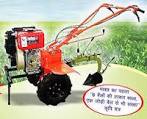
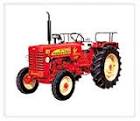
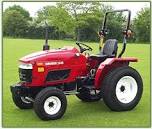
Article: SMALL TRACTORS-POWER TILLERS- THE LIKELY TOTEMPOLE OF NEXT GREEN REVOLUTION OF INDIA

Copyright@shravancharitymission

341

SULKING INDIAN AGRICULTURE

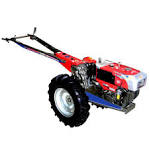
Agriculture remains the mainstay of India, even when it doesn’t contribute sufficiently to the Indian GDP. Around 65% of Indian population depends directly on agriculture when it only accounts for 22% of the GDP. But Indian agriculture now needs to undergo a paradigm shift to feed double the mouths since the last green revolution. Further, farm mechanization, agri-inputs, cropping patterns and seed varieties need to be refurbished to suit new agri challenges such as continuous soil erosion, depleting ground water levels, alarming farm labour situation and sparse market linkages. And this calls for a major overhaul on the production side of agriculture. To tackle issues such as, increase in farm produce and better farm economics, which brings us to the moot point of need based farm mechanization.

ISSUES AT HAND

India which is 17% of the world population. But it still cultivates with either the draught animals, which are inefficient and expensive to maintain or by high horsepower tractors owned by large farmers, which are few in numbers. So the daunting question is, when more than 80 percent of the Indian farmers are small and marginal why they are not in a position to purchase tractors below hp (horsepower) 22. Is it because of the government policies that are blocking the smooth transition from draught animals to small tractors and power tillers? and what is more baffling is:

  • Small farmers don’t have a requirement of large tractors. With the amount of land they hold a tractor of 25 hp engine or more is not needed in small and medium farm size. Especially, when statistics for power availability for various agricultural operations, which is an indicator of mechanization has increased from 0.3 kilowatt per hectare in 1971-72 to 1.4 kilowatt per hectare in 2003-04.
  • Even though government puts in subsidies on tractors, farmers don’t get their free will to choose, as large manufacturers step-in to sell their own brands at the behest of Government. So if we are talking of free markets why this nudging?

578

HISTORICAL PERSPECTIVE

Tractors in India were imported initially in 1960s mainly from the US and European countries, prime being the erstwhile Soviet Union. Since these countries historically had large holdings, these machines too were manufactured in the range of medium and high horsepower to suit their own land holding sizes.

Thus, started the of lasting culture of medium and high horsepower tractors in India. Even when our land holding size way back in 1960s was far less than the European and American standards and in the range of around 3 hectares.

This as a beginning was understandable but somewhere down the line a course correction was required, which didn’t happen. Presumably, because the entire technology was new, and we were devoid of the basic sense of change or even the skill to adapt. Small was not beautiful then. A similar trend we had in the auto sector where in you had those bulky fuel guzzlers. But then the auto industry caught the imagination of their customers which farm mechanization industry didn’t.

IMPORT AND MANUFACTURING HISTORY

In the year 1961-62, first time around 880 tractors were assembled from kits purchased from British and German firms. Imports stopped in 1977 but industry’s extended honeymoon with these manufacturers continued as hand holding was required to build sufficient production bandwidth. Although, India got independence in 1947 and the socialist leaning government’s five-year plans of 1950s and 1960s aggressively promoted farm mechanizations, our production of tractors was sluggish. But by late 1980s tractor production moved upwards to 140,000 units per year, yet the prevalence rate was just 2 tractors per 1,000 farmers.

ECONOMIC REFORMS AND FAO PERSPECTIVE

Post economic reforms in 1991, with the steady pace of change, the production of tractors increased to 270,000 units per annum. And in early 2000, India overtook the US as the world’s largest producer of four-wheel tractors. FAO estimated in 1999. Of the total agricultural area in India, less than 50% was under mechanized land preparation. Thereby, indicating large opportunities still existed, and projected this in favour of small machines. Steadily growing, India in 2013 produced 619,000 tractors accounting for 29% of world’s production. And, India currently has 16 domestic and 4 multinational corporations manufacturing tractors.

SOLITARY EFFORT OF 20 HP– Swaraj story:

India had approached the erstwhile Soviet Union in the mid 1960s for R&D and manufacturing support to develop a 20 hp tractor, but they refused. This project was later taken up by Central Mechanical Engineering Research Institute (CMERI) under the council of Scientific and Industrial Research.

CMERI put together a team. They started by studying tractors of other makes that were in the market. Their first prototype was ready in May 1967 but when it was taken for trial it collapsed. Learning from the failure, they developed a second prototype, testing of which was done in October 1968, which proved satisfactory. Independent field trials later at other institutes were also successful. The tractor was called Swaraj. This Company was later promoted by Punjab State Industrial Corporation and turned out to be a blue chip company.

Besides Swaraj no other company tried to delve into 20 hp category for a long time. Until the solo effort was followed by a Delhi based company SAS Motors Ltd that has launched tractor in 15-24 hp category.

LAND HOLDING VS TRACTOR HORSEPOWER MISMATCH?

In 1960s the average land holding size was around 3 hectares (7.4 acres) and in 2010-11 it declined to 1.15ha (at an average level), which is below 3 acres on a more prevalent terminology. And, with these vital statistics, both growth and technological up gradation should have been in the low horse-power segment or in the power tiller segment. But that is clearly not the case. On the contrary both growth and technological up-gradation has been in the medium and high horsepower tractors, apparently because of foreign influence. Where, more likely the low horsepower range of tractors were discouraged because of low margins and high overheads of large manufacturing corporations and also the fatigue and capital cost of introducing a new genre.

For small and marginal farmers, low priced, small tractors of 15-24 hp was required. This generic need was highlighted as early as 1970 when (NCA )National Commission on Agriculture was set up.

At the turn of the century, India had around 2.67 million tractors, which was more than NCA projections. But category wise the number were skewed. As around 1.47 million tractors were in the 31-40 hp category, 0.65 million were in > 40 hp category and 0.68 million were in < 30 hp category. And only a part of 0.68 million tractors below 30 hp comprised of small tractors for which NCA had projected a figure of over 2 million. This large gap is surprising and reveals the callous approach of the government towards small farmers. One can perhaps safely derive that non availability made them go for higher hp tractors thereby spoiling their farm economics. And the quantity of power tillers sold was merely seventy thousand.

But then who was responsible for throwing NCA’s calculation, off balance? Well, no one can pin pointedly say who. But yes, to a certain extent the agricultural community as a whole, together with the Indian tractor industry, can be questioned on this. Instead of small tractors they came up with medium and heavy tractors, which benefited only the large farmers, and as a result tractors got concentrated only in a few states which benefitted from the green revolution such as Punjab, Haryana and parts of Uttar Pradesh (See table: some benefit)

Some benefit
Tractor sales over the last five years
States Tractors sales during last five years Area under cultivation
(‘000 hectares)
UP 290,513 17,986
MP 144,049 22,111
Punjab 121,903 4,033
Rajasthan 95,450 20,971
Haryana 89,346 3,711
Gujarat 76,439 10,293
Bihar 72,467 10,743
AP 68,994 14,461
Maharashtra 66,876 20,925
Karnataka 43,163 12,322
Tamil Nadu 38,852 7,474
Orissa 14,473 5,296
Other states 65,210 15,181
Total 1,188,735 165,507
Sources: Economic Survey 2003-04 & Indian At A Glance 2004

We all agree mechanization is an unavoidable farming tool. For, productivity has to increase along with cost and economics, and that alone is sustainable in the long run. But looking at the perfunctory approach of the government, the big question would be whether farmers should go in for small tractors or still rely of animal power. It may therefore not be out of place to mention relevant statistics of animal power.

STATISTICS ON ANIMAL POWER

– India’s 83 million draught animals carry more than 5 times the freight and four times the passenger traffic carried by railways, in terms of originating traffic.

– Draught animal power contributes 30000 megawatt of power.

– It saves 24 million tonnes of diesel per year, worth more than Rs 33,000 crore.

– Draught animals cultivate about 65% of India’s total cultivable land area

– The present value of draught animals (Rs 50,000-1,00,000/pair) is Rs 2,07,500 crore even on a very conservative estimate.

– It would take 8.3 million tractors to replace draught animal power. This would cost Rs 32,490 crore; so then why is this segment not growing?

– Draught animals provide dung worth Rs 5,000 crore annually. Five million tonnes of firewood will be needed to substitute this.

The crisis around the farmer’s traditional tiller- the draught animal is continuously growing. Even though farmers still rely on draught animals their importance is being undermined by tractors.

According to an NCA report, man can provide a power equivalent to 0.07 hp, a woman 0.05 hp, a bullock/buffalo 0.40 hp, a camel 1 hp and a tractor at least 14 hp. In 1951, the farm power available was just 0.25 kilowatt per ha (KW/ha) of which 97 percent came from draught animals. This has now gone up by almost 6 times to 1.40 KW/ha and the corresponding increase in food grain by four times, and so an optimum, farm mechanization, is the need of the hour.

Farm mechanization is also important from the aspect that 65% of our cultivable area consists of dry farming or rain fed farming where the window of soil bed preparation is very small and if we are unable to do seedbed preparation and sowing in a timely manner, given the receding soil moisture, yields will drastically reduce.

However, 70% percent farmers still use draught animals where they can easily be upgraded to small farm mechanization tools. Such as small hp tractors or power tillers, but for this to happen; government policies should start focusing on the needs of the small farmer.

COMPARISON BETWEEN DRAUGHT ANIMALS AND TRACTOR

Draught animals and tractors are complementary sources of power on Indian farms, and will continue like that for many more years, to meet the ever burgeoning demand of power and of increased production and productivity. A report of 1987 says that a 35 hp tractor can prepare a seed-bed and sow 0.2 (ha) in one hour at Rs 270-300 per ha. Bullocks for the same operation require the entire day at Rs 300 per ha. The problem is draught animals have to be fed throughout the year but their optimal use is restricted to around three months in a year.

INDIAN AGRI DISCONNECT

  • Tractors in India are out of reach for the majority of the farmers. The cheapest being Rs 1.8 lakh almost as much as a new car.
  • Barely 2% of the 115 million farmers own a tractor according to the 1995-96 agriculture, census. Yet they cultivate almost 1/3rd of the countries arable land. This itself highlights the efficient toughness of farm mechanization.
  • Most farmers possessing tractors are rich and own large land holdings. Rate of ploughing is Rs 200-250/hr or Rs 2-2500/hectare
  • But small farmers are unable to reap such benefits. For them a low priced, small tractor of 15-24 HP would be ideal. This need was recognized as early as 1970 when the National Commission on Agriculture (NCA) was set up. After a 5 year study, NCA submitted a long report in 1976, which also recommended the type and quantity of tractors India should have by 2000: 2.08 million tractors and power tillers (a farm machine, with two wheels, to till the soil) below 15HP, 0.12 million medium tractors of 35 HP & 80,000 65 HP tractors, which taken together would total 2.28 million
  • This policy argued that 2.08 million tractors and power tillers below 15 hp were needed for small and medium farmers. Besides, they are also considered more suitable for paddy cultivation — the country’s dominant food grain crop — than medium (25-40 hp) and heavy (above 40 hp) tractors.

ALL TIME PANACEA FOR SULKING INDIAN AGRICULTURE IS FARM MECHANIZATION OF THE RIGHT KIND:

  • To graduate from animal tilling to mechanized tilling and that to by small tractors, power tillers and other economical high precision equipments commensurate with land holding size of small and medium farmers, keeping in mind their farm economics.
  • An option less farmer has to buy a 35 hp category tractor that costs around 5 lacs with bank loan at a high rate of interest, even if he doesn’t require this product. This should be substituted by small tractors or even power tillers.
  • GOI provides a subsidy of 25% limited up to 30,000 tractors. Wherein also, the farmer is cajoled to buy certain brands and this needs to stop forthwith, as user of the product should alone be the decider by any diktat of consumerism.
  • Tractors available in the range of 25-40 hp use advance western technologies, which may not be required for small holdings and this makes the product expensive. In fact what is needed is a below 25 hp tractor or a power tiller that is gender friendly and useful for ‘nuclear farming’ just as a nuclear family. The cost of such tractors will bring down the farmers cost by 50%. As against his investments and maintenance in a pair of bullocks, which requires to be fed and taken care of even when it is not generating any revenue, and also serves best only for a time span of 5-6 years.
  • Farmers need to come out of the clutches of debt to make agriculture more exploring, exciting, remunerative, and even status oriented. This can happen only if simple and cheap technologies are used in conjunction and proportion to their earnings. According to 59th survey by NSSO (January-December 2003) out of 89.35 million farmer households, 43.42 million (48.6%) were reported to be in debt. But in a similar survey in 1991 only showed 26% were in debt.

*****
 

Article: Providing gender friendly, low capital and operating cost, farm equipments to our Farm Labour for sustained livelihood and economic freedom.

Letter for #PMO

  • Majority of the Indian farm labour is landless and almost 50% of them are females.
  • For most of them to make two ends meet, is a huge task. Especially women who are paid less basis their reduced output as compared to males; and so there is need to provide them with equipments and tools that can increase their output and thereby multiply Indian labour output in totality.
  • Most women labourers even have children who play around their work areas. With mechanization women will finish their work in a shorter duration of time and will have more time for their children.
  • A major portion of the farm labour, sustains under tough conditions, below poverty line budgets, and earn their living by doing routine farm operations such as land preparation, sowing, spraying, transplanting, weeding, harvesting etc. Most of these operations are done manually where GOI can make a fruitful intervention by providing cheap, economical yet effective farm equipments.

SUGGESTIONS

  • Since most farm operations cited above are hitherto performed manually we would like to suggest that these be done by mechanised farm equipments to increase output, make it gender friendly and decimate seasonality factor.
  • Indian agriculture census 2001 states, the operational land holding has increased from 129.22 million from 2005-06 to 138.35 million in 2011 showing an increase of 7.06%, but the average operated size of holding which was 1.23 ha in 2006-06 has declined to 1.15 ha in 2010-11 at an average all India level, which is below 3 acres. The small and marginal <2 ha operated area has gone up from 41.14% to 44.58% while both semi medium, medium and large holding have come down. And the average operated size of holding in < 2 ha class has gone up from 83.29% to 85.01%. This should ring alarm bells.
  • The above statistics presents a scary picture, both for the farmer and the farm labour.
  • This necessitates a paradigm shift in the way agriculture is done. First the concept of Indian farming, like a ‘nuclear’ family should shift to ‘nuclear’ farming, and the manual farm labour needs to be converted into mechanised farm labour where both male and female could do equal amount of work thereby raising the total Indian farm labour output.

HOW DO WE ACHIEVE COST EFFECTIVE, GENDER FRIENDLY, MECHANISED FARM LABOUR?

  • GOI can achieve the target of mechanised farm labour by introducing the new concept, compact, gender friendly, light weight, multi-purpose, self-propelled, new age- multi functional power weeders in the farm.
  • These multifunctional self propelled weeders can be operated by even females and can do several operations in the entire crop cycle such as tilling, levelling, seed drill operations, spraying of pesticides and weedicides, mechanised weeding, irrigation and water pump operations, harvesting such as potato digger, inter-cultivation and ridger operations.
  • It is also pocket friendly.
  • Mechanised weeder is environment friendly and also helps in the fight against cancer: Since manual weeding has become extremely expensive due to non-availability of farm labour, that has moved to greener pastures; farmers use excessive weedicides to kill weeds, which has spoilt the soil strata and ground water that is becoming prone to cancer. With mass utilization of mechanised weeders we can avoid usage of chemical weedicide thereby helping in fight against cancer.
  • Also we could promote and incentivise e-rickshaws for farm labour during off season

WAY FORWARD

  • GOI should incentivise purchase of such modern multi-purpose self propelled equipments through Ministry of Agriculture, Ministry of Rural Development and Ministry of women welfare.

*****


Glamour, showbiz, One-upmanship- the veiled face of Facebook

Copyright@shravancharitymission

Kamlesh Tripathi

134

‘A steadfast and voracious facebooker’ – is what I called him, till I met this old friend of mine Harish, recently in Mumbai, is when I came to know he’s gone off Facebook. I swallowed what he told me with a pinch of salt as it sounded quite incredible. Did he? I reminisced. And asked why? He replied.

‘Because you brag without being asked to. For how does it matter where you’ve been for a holiday, which car you drive, in what kind of a house you stay, how well connected you are both professionally and socially. How many jobs you’ve changed, how exquisite your new office looks, how you look in that dress, how many promotions you’ve got, your career path or even your designation. Or how grand was your birthday party, how well groomed and aristocratic you look while standing in that plush lounge of Mumbai or John F Kennedy airport or in that swanky lobby of a five star; and the number of flights you may have undertaken last week to show how busy you are, or how big and pedigreed is your dog or for that matter the brand, colour and size of your underpants?’ As all of this is fairly bugging.

‘But then what is so wrong about bragging? One can only brag, if one is accomplished and has possessions and achievements to show around.’ I enumerated.

‘Definitely, but not by making a public announcements. It’s like inviting everyone to snoop into your worthy life. I value the privacy of my achievements and possessions and would like to limit it to my family, relatives and some close friends. But in the Facebook, I find most talk only about their newly acquired possessions and achievements of life, and that to just for some digital ‘likes’ and appreciative comments.

CULT OF FACEBOOK

Point made by Harish had rattled me for a moment, as there was a point in his point. Is Facebook taking us away from our vedic and ancient culture of sadgi (simplicity). And will Bapu, the strong supporter of non-violence and sadgi like and approve of this. I thought for an instant, as all websites have a domain culture; where members of Facebook appear to be drifting away from simplicity. Facebook, allows anyone above the age of 13 to open an account, and after registering the users can create a user profile, post status updates, pictures, share videos and receive notifications when others update their profiles. Also, users may join common-interest user groups, organized by workplace, school or college, or other characteristics and categories such as people from work or close friends. So the intent is very noble, exciting, knowledge building, innovative with perks of a global reach. But, I guess the gravity is moving towards mere showoff and showbiz. And, it is about time the members come up with something more mentally nourishing where Facebook can chart the way. Remember what our ancestors always said, ‘don’t brag and showoff- nazar lagti hai

IS BRAGGING … GRADUATING TO A REIGNING CULTURE IN FACEBOOK?

Yes as most notifications in Facebook, are about self aggrandizement and digital announcements of achievement and accomplishments. Perhaps the longing vent of modern day etiquette better understood in otherwise traditionally starved India; and that insinuates about Facebook’s gravitational pull towards newfound consumerism of India. I guess it is now a war of between two cultures; the ancient aging culture of India that teaches you sadgi versus the materialistic web-culture mobilized via Facebook. Sure enough the soft world is taking on the hard world and maybe reason enough for China to ban Facebook?

A converse point of view also describes the young emerging India through Facebook that brings along day to day transparency by digitally describing even minor activities through notifications, pictures and videos which at times might even put your spouse in trouble for those occasional furloughs. And, last but not the least.

Harish needs to get back to Facebook. But no one shall tell him when, as he will figure out for himself, the smart bloke he is. I know him well enough and he is not the sort to give up something so easily- and that too his first love, Facebook. For I know he will still login at broader intervals to see how the war of cultures is brewing and the day he feels the tangy slant of cultures has lessened he will write again, what’s in his mind. To once again bring cheer, laughter, knowledge, information and accomplishments to others and that too in abundance.

Article: #SwachhBharatAbhiyan (SBA) – Include existing Public Toilets in SBA

Copyright@shravancharitymission

123

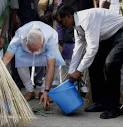
Prime Minister Narendra Modi has done well by wielding the broom to clean a road and its surroundings, thereby, burnishing the lost grandeur of ‘dignity of labour.’ He has also formed a formidable team of star citizens, who have given impetus to the campaign launched in around 4041 statutory towns. Where in you find cine stars, sports persons, social activists, industrialists, professionals and even politicians, psyched out. Icons like Amitabh Bachchan, Anil Ambani, Kamal Hassan, Sachin Tendulkar, Shashi Tharoor and many other distinguished personalities have graced the campaign, by lending both, social and glamour weight.

So with all of this, the speed and velocity of the campaign looks set to deliver the goods. However, the priorities within this need to be tweaked, mainly to prioritize the initial tranches. Where, I have some pointed and granular suggestions to make, that oozes right out of my firsthand experience. Create as many Public toilets as possible, in the shortest possible time and also include the existing ones in the campaign. Perhaps, this suggestion of mine may give the whole campaign a better fillip in converting the movement into a mass movement with the least of resistance. Arising, more out of the immediate necessity of the deprived public, in this case the general public; because of the limited, shabby and poor infrastructure that throws the spanner in the development of India.

For it was just, yesterday when I was driving down the crowded market area on Hill Road in Bandra, is when I felt like relieving myself. I stopped the car, got off and started looking for a public urinal. Keeping strictly in mind the Prime Minister’s message of Swacch Bharat Abhiyan, and trying to observe it to my heart’s content.

456

I must have spent about half-an-hour in the crowded market area, in which time I must have covered more than a kilometer but I still could not find a public toilet. Is when I saw the logo of a petrol pump to my heart’s delight, as we all know have toilets. ‘Wow- what a relief’ I said to myself. And this got me thinking.

If this is the condition of Mumbai, one of the biggest metropolis of India what about other cities? With a burgeoning population, Mumbai has a deficit of at least 47,000 toilet seats, and the cost of constructing one toilet is INR 150,000, say authorities, so we can imagine the cost involved. This shortage in 2001 was a whooping 125,000 toilet seats when the Brihan Mumbai Muncipal Corporation (BMC) had conducted its first survey on the sanitation needs for the country’s commercial population. Going by 2001 figures, the ratio of toilets versus population comes to a whopping 1: 50 or 3,000 people using it daily in Mumbai.

MUST COMPLIMENT THE OIL COMPANIES

After relieving myself, I sincerely blessed the oil companies that thought of customer convenience, by having toilets in all their retail outlets which Indian Railways couldn’t provide in all platforms. Further, I thought this is a big opportunity to include these readily available toilets, as part of the Swacch Bharat Abhiyaan as pay and use toilets to catapult the campaign exponentially.

Today, India has about 45,000 filling stations more than Canada or UK as of March 2012, and most are with the facility of a toilet. If these toilets are made to join the SBA on a pay and use basis we can have a sudden flurry of toilets and that will certainly help the SBA.

For the Government to make public toilets, every 1-2 km, in crowded market areas along the road side may be a gigantic and close to a non doable task, so here is the way forward. Today, the immediate pressing need for the Public at large is a convenient network of clean toilets spaced around close proximity and concomitant is the wielding of broom to keep it clean. While it may be possible to construct new toilets on highways and open roads but may be extremely difficult in the already cramped and crowded market areas and this is where these toilets can come in handy

CAMPAIGNS CAN CHANGE REALITIES

Even though Government of India has transcribed incentives for building public toilets. All is not achieved merely by announcing incentives on paper alone, as it requires mindsets to change–that running a public toilet too, is a respectable venture; something like Sulabh Shauchalaya.

And so, India needs a renewed and intense campaign to promote public toilets as a doable business by respectable Individuals, Unemployed Youth, Business Houses, Societies, Builders, NGOs, SMEs, Hospitality Industry and under Corporate Social Responsibility.

Government should promote people having genuine intent of doing this noble task, and who have spare Land on which Private – Public Toilets could be constructed, or even existing toilets that could be utilized at prime and vantage locations as pay and use toilets.

The building bylaws should be tweaked to incentivise for mass proliferation of such public toilets and also sops in the form of rebate in property tax or any other, are a few boons that should be considered by the Government, if possible.

Running public toilets could be ticked at par with running hospitals as both reduce human suffering. Modi Government could further do well in bringing about this social change. Prime Minister Narendra Modi in fact has orated in one of his speeches abroad that he is currently busy in construction of Public toilets.

*****

ARTICLE – 2014-15, THE CELEBRATORY POWER OF NUMBER ONE- HAPPY NEW YEAR

KAMLESH TRIPATHI


Just an addition of a number makes it ‘2015’ and the world goes into a tizzy; that explains the mystical streak and splendorous grandeur of the lowest cardinal number 1, as we get into making tall announcements about our New Year’s resolve.

I’ll give up smoking, I’ll give up drinking, I’ll go vegetarian, I’ll go jogging for fitness, I’ll be on a diet for weight loss, I’ll get married, I’ll change my job, I’ll go abroad, so on and so forth. And, so the power of ‘one’ wriggles you into doing things hitherto you have been appropriately postponing.

I often wonder as to how and why 1st of January from the Gregorian calendar has become an international day for celebrations across the world, even when many sects and religions don’t follow this calendar in the very spiritualistic of spirits and have their own calendar to live by. Reason is simple because it is now housed in the most powerful calendars of the world, now followed by the most rich and influential, including many Governments and Corporations.

In England, January 1 was celebrated as the New Year day and most western European countries changed the start of the year to January 1 even before they adopted the Gregorian calendar.

But to me 1st January is 1st January; as I’ve been doing 1st January for the last 50 odd years, because, it hell cheers me. And, because of our pursuant persuasion to celebrate this short, dark, ugly and one of the coldest days of the year as a new year’s day, we now also declare it as a public holiday. In fact, one of the reasons why 1st January has become so acceptable and popular across the world is because it has no religious connotation and gives you a break from the monotonic cocktail of life; and not forgetting some of your daily achievements and travails are also counted onwards of 1st January.

Also, it might not be a holy day, yet a day of commonality, mounting on celebrations that brings you hope and drops those idiotic wherefores that you have been dragging all along the year. But, why resolves each year on the 1st? Let the day and year stream out with no resolves and just decide to do what comes our way in the best manner possible.

And so I have decided my new year’s day is not going to have any resolves for self aggrandizement, rather will have some noble intentions to help others. Because, 1st of January like any other 1st ,only preaches you to be first; and that you need to decide from where you want to be 1st.