Category Archives: article

THE MENACE OF #LAL-BATTI #CULTURE … THE WAY OUT

Copyright@shravancharitymission

l2l1l3

A lot is being discussed about the menace of Lal-Batti (Red-Beacon) culture in India. I hear and see many suggestions on TV and newspapers. But largely those suggestions are of routine nature and may not be helpful. For now, only a paradigm shift will make the difference.  Therefore, to get rid of this menace we require some out-of-the-box thinking, and to that effect my suggestions are as follows:

  1. Stop manufacture of Lal-Battis for general market forthwith. These red-beacons should be manufactured only against specific orders, emanating from the Government of India, for constitutional posts, and as approved by GOI or the honourable Supreme Court of India. Treat it, as a dangerous commodity, such as sale of acid or even live cartridges.
  2. Honourable Supreme Court has approved of certain constitutional posts, where Lal-Batti can be used. Barring these no one else should be allowed to use Lal-Battis, and if anyone is found breaking the law he or she should be fined for a minimum of Re 1 lac, plus additional amounts for misdemeanor and dishonour of the honourable Supreme Court orders.
  3. Dismantle the entire fleet of government vehicles with red-beacons, which are only misused by Netas and Bureaucrats, barring few pool vehicles and vehicles for top dignitaries. For the rest, provide them with car loans, basis their salaries and entitlements. Also, provide them with fuel and maintenance allowance and even driver allowance like in private sector. This will save crores of hard earned tax payers money as Capex. It will help in eradicating corruption and will also root out the unnecessary evil of lal-Battis.

*****

COMMUNICATION SKILLS AT WORKPLACE

Copyright@shravancharitymission

c2c1c3

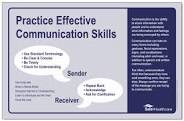
Just think of the modes in which our distant forebears communicated long ago- the evolution of the written word, speech, smoke signals, semaphores and the Morse code-one can go on and on. Here, of course, we need to concern ourselves with communication skills and time management in work place and home in the present times. Popular work culture does not perceive separate rules for men and women. We are all global managers in the local set up. Consider home, for a moment, as an extension of work place, particularly in the context of Indian women. While life at home may be laid back, care free, but is not without responsibility. And there the difference ends. The modern employee needs oral, written and technological skills to excel. Even the most naïve housewife is expected to operate the washing machine, handle the microwave oven, run the mixie, to draw money from an ATM and even to drive a car- that is if she wants to contribute meaningfully to the chores of routine but modern domestic life.

Nearly all work involves interaction and communication with others. Clear and effective communication between individuals, between teams and among departments is a vital part of any successful organization. Without effective communication in work place, business results and team relationships suffer. Poor performers continue to perform poorly and productivity drops. Good people are overburdened with more responsibility. In our personal lives we blame each other for lack of communication and agree to live in companionable silence.

We can see that employees still need written communication skills. Yet interpersonal oral communication skills are the ones most prized by employers in the new informal workplace atmosphere. At home the oral word has to be more precise as well as concise to avoid attrition. The ability to follow oral instructions is an important parameter in the overall persona of an employee, especially for front office employees. Considering the important nature of this faculty even CBSE has incorporated it in the form of ‘Listening & Writing skills, in their curricula. Employees who work with the public or closely with teams need skills in empathy and feedback techniques, especially in fields such as customer service, medical, and legal. Critical thinking and the ability to function as part of a problem-solving group are also skills that employers look for. Today’s worker must remain cool under pressure, adaptable to new technology and to a fast pace.

With benefit of hindsight I’ve shortlisted a few points which may be of some help to you while interacting with people.

  1. Clarity: Ensure the information you need to convey is, firstly, intelligible to you. Communicate it clearly and directly. Use language that is specific and unambiguous. Check that the receiver understands the message as you intended. Avoid acronyms lest they be confused.
  2. Be attentive Without becoming an active listener means you cannot make a conscious effort to truly hear what the other person is saying—don’t interrupt or respond until the other person has quite finished. It should come as no surprise that the best communicators are also the best listeners.
  3. Deportment: this means using the other person’s name, looking them in the eye, and nodding to aid in demonstrating you understand what they are saying. If you are communicating in writing, reread before sending your message to ensure that it could not be misinterpreted or taken as disrespectful.
  4. Message & Medium. Some of us are better communicating in writing and some are better at speaking. Consider the preference of your receiver.
  5. Who is the end-user : you may have to style your communication with your boss, co-worker, customer or supplier, differently.
  6. Mode: More and more of our workplace communication is done via email, voice mail and text messaging. There are advantages and disadvantages to each of these, depending on the message and the audience. Texting can be especially effective when a quick question or answer is required without further explanation or repeated follow up, e.g., “What time is the school council meeting.”

The important thing is to stay focused on behavior or performance and not character. You are not a judge of character. Avoid being biased or opinionated. When you are on the receiving end, avoid getting triggered by difficult messages. Keep in mind the bigger picture and the long term implications.

Don’t be yourself all the time. Be someone a little nicer and never confuse motion with action. After all, “ a man diligent at his work shall stand before kings”

A.K.Tripathi

Anubhab Apartments                                                                       26/03/2015

PIGEONS-KABOOTARS: DURING WAR & PEACE-TIME

Copyright@shravancharitymission

p2p3pigeon 1

    Pigeons or ‘Kabootars’ as referred in English and Hindi language respectively, have had a long history of human contact. Both in war and peace time and as the civilization kept unfolding. They have made contributions of considerable importance to humanity, especially in times of war. And quite admirably during war times, the homing ability of pigeons have been put to use by making them messengers. To carry important messages. During peace time they have contributed royally in sports. By participating in the ever royal game of Kabootarbazi. Generally enjoyed by pigeon fanciers. The so-called war pigeons have also been decorated for their services with medals such as the Croix de guerre.

    While pigeons are good at carrying out orders. They also risk their lives unknowingly. And it’ll be a bit of a news, when one hears, that even today security forces keep a hawk’s eye on them. Says the column below:

QUOTE

    You might think birds are free to fly; but there’s the security risk…

BIRD BRAINS AND CLOAK AND DAGGER

    Indian security forces must be commended for spotting a single pigeon flying suspiciously off Gujarat’s coastline. Not dismissing it as just a seagull in mufti or even a hopelessly off-course pied harrier. That alert guards managed to apprehend the flying object is a further feather in their collective cap. After all, this is not the first time that pigeons have been in the thick of clandestine activities. Though they have not been used seriously for surveillance, espionage and message-running since World War II, considering a similar questionable bird was nabbed in Punjab in 2010, investigators should not deem it a mere coincidence. Back then, police had seized an empty ring around its claw and noted a Pakistani telephone number and address stamped in red ink on its body. As this latest pigeon also had puzzling appendages and markings, a wider probe to net any other accomplices, unwitting or otherwise, is surely warranted.

Interrogation and debriefing of this suspect would be difficult- as was the case in Punjab- so the only option is to keep an eagle eye out for possible undercover avians in the future, especially in this era of spy drones. The authorities should also keep a close watch on all pigeons around sensitive government buildings, given the nationwide preponderance of the bird and its ability to blend in.

UNQUOTE

*

Posted by Kamlesh Tripathi

*

https://kamleshsujata.wordpress.com

*

Share if you like it

*

Shravan Charity Mission is an NGO that works for poor children suffering from life threatening diseases. Should you wish to donate for the cause the bank details are given below:

NAME OF ACCOUNT: SHRAVAN CHARITY MISSION

Account no: 680510110004635 (BANK OF INDIA)

IFSC code: BKID0006805

*

Our publications

GLOOM BEHIND THE SMILE

ONE TO TANGO … RIA’S ODYSSEY

AADAB LUCKNOW … FOND MEMORIES

REFRACTIONS … FROM THE PRISM OF GOD

(CAN BE BOUGHT FROM ON LINE BOOK STORES OR WRITE TO US FOR COPIES)

*****


“#Arrey … PUBLIC BEWAKOOF HAI” – THE MENTALITY OF MANY #PARTY ‘SPOKES PERSONS’ WHO COME ON #PRIME TIME #TV #DEBATES

Copyright@shravancharitymission


123

A majority of party spokes persons, still don’t believe in this age old but popular Hindi song– “Yeh jo public hai, woh sab janti hai.”

    Most party spokes persons who appear in prime time TV debates of various reputed channels need to realise that the Indian viewer has matured far beyond their imagination. And heart to heart they hate this growing wisdom of the Indian public. As it makes their job even more difficult. Which is quite apparent if you attentively watch these programmes.

    Today’s mature TV viewer can clearly make out when the party spokesperson is lying or trying to defend the indefensible, by blindly following the party whip. And that, he or she has walked in, with the solemn pledge to defend the party at all costs. Where, one can glaringly make out from the screen. Whenever, they try to abide by those intermittent instructions that keep trickling into their mobiles in staccato rhythms. Basis, the intensity of the debate resulting in who is losing and who is winning through these frequent text messages or Whats-App. When, each time their eyes dip below, to read those crisp instructions.

46

    The debates on TV have become more issue based than mere political pragmatism. Generally, trying to open each other’s ‘dhoti’ to score a brownie point. Just to stay ahead. This is what competition teaches you. Where, politics is no different, even when it has strange bedfellows. One can possibly consider the stale political rhetoric emanating out of TV screens coming all the way from the studios as mere gap fillers something like a comma or even a full stop. Often the panel comprises of spokes persons from BJP, Congress, AAP, SP, BSP, Akali- Dal, Janata Dal, Janata Dal United, TMC, NC, PDP, NCP, CPI, CPM, AIDMK and the DMK, to name a few. They all jostle to capture sound bites. The competition is mostly between political parties on one end, and journalists, lawyers, individuals- in-question or any other luminary from any other field, on the other end. All, trying to score a point over the other.

    Most spokes persons are, boastfully well-to-do. Apparently affluent, refreshingly articulate, and from the front ranks of political India. Who, while performing in these vibrant debates, quite often amalgamate a concoction of lies just to defend their party, come what may. But they cannot hide the disconnect between their pumping hearts, agitating minds, guilty eyes and tethering tongues and at times even their wavering hands and fingers, while confronting the camera. For, in a heated and not ready to give-in debate when the tongue tells a lie your eyes naturally look down, is when the heart sags, the throat chokes, the mind beeps and the hands and fingers balance between the heart and the mind. In all of this I guess the conscience is left behind, quite intentionally at a place where you can’t readily find. This irritates the viewers which the party should realise. In fact the party would gain more by accepting its mistakes if any. Than by stupidly arguing about it, as it is only human to err. One must not forget you have a new generation viewership now, that likes transparency.

    So, then why is it that no spokesperson can ever accept his party’s mistake openly on a TV debate? Perhaps, because, you require guts to do that. But then one must realise, by accepting mistakes you raise the bar of integrity. Recently, a new phenomenon has come alive. That is, to block co-panelists in debates from talking, by talking over them. I have seen this happening quite often in recent times. The latest was, what I saw the other day in Timesnow. When Arnab Goswami was debating the AAP debacle. The official party spokesperson of AAP, Preeti Menon was not allowing her own party M.P. to speak. Preeti Menon must have thought. She is doing a great job for her party, by not letting her own colleague to speak, just because he was critical about the establishment. But in such a case. The viewpoint of the viewers is quite different, where, she looked and sounded quite shallow and frivolous. As truth crosses all human boundaries. For make no mistake you can’t scuttle the truth by merely talking over it or by blocking it on a TV debate. Because, truth is  much closer to the viewer’s heart than one can even imagine.

*

Posted by Kamlesh Tripathi

*

https://kamleshsujata.wordpress.com

*

Share if you like it

*

Shravan Charity Mission is an NGO that works for poor children suffering from life threatening diseases. Should you wish to donate for the cause the bank details are given below:

NAME OF ACCOUNT: SHRAVAN CHARITY MISSION

Account no: 680510110004635 (BANK OF INDIA)

IFSC code: BKID0006805

*

Our publications

GLOOM BEHIND THE SMILE

(Archived in 7 prestigious libraries of the US, including, Harvard University and Library of Congress. It can also be accessed in MIT through Worldcat.org. Besides, it is also available for reading in Libraries and archives of Canada and Cancer Aid and Research Foundation Mumbai)  

ONE TO TANGO … RIA’S ODYSSEY

(Archived in Connemara Library, Chennai and Delhi Public Library, GOI, Ministry of Culture)

AADAB LUCKNOW … FOND MEMORIES

(Launched in Lucknow International Literary Festival 2014)

REFRACTIONS … FROM THE PRISM OF GOD

(Co-published by Cankids–Kidscan, a pan India NGO and Shravan Charity Mission, that works for Child cancer in India. The book is endorsed by Ms Preetha Reddy, MD Apollo Hospitals Group. Book was launched in Lucknow International Literary Festival 2016)

(CAN BE BOUGHT FROM ON LINE BOOK STORES OR WRITE TO US FOR COPIES)

*****


O MY FAIR LADY!

Copyright@shravancharitymission

  2my fair ladt

    Our formative years were full of fun and coupled to them was a careless, happy –go- lucky lifestyle that went naturally with it. The gay abandon and freedom we enjoyed was all within the family for we enjoyed doing things together. Life was simple and modes of entertainment simpler. No Cineplex, no DVDs, or play stations or speed dating. A good game of cricket followed by a refreshing ice soda, topped by a steaming cup of coffee with a bun, perhaps, was the ultimate luxury. My interest in movies as a source of entertainment was influenced by my uncle who belonged to the era of Douglas Fairbanks, Spencer Tracey, Clark Gable, Cary Grant, Gregory Peck and a host of others who gave that aura of sheer mysticism and glamour to Hollywood, which makes it what it is today. Uncle was particular about the movies we saw, especially the English movies. He out rightly discouraged the slam-bang-wham types, excepting, of course, the Westerns starring John Wayne, Gary Cooper and the ilk. Uncle acquainted us with the top genre movies including the noire category made by Hollywood. The list of films ranged from Ten Commandments, Ben Hur, My Fair Lady, The Sound of Music to Scapegoat, Stagecoach and Gunfight at O.K. Coral. However, my all time favourite is The Sound of Music. ‘Do Re Me Fa…’ , ‘I’m sixteen going on seventeen….’, oh, what numbers, simply out of this world-or mind blowing by today’s parlance. For sheer magic of music and visual excellence the movie is miles ahead of its genre.

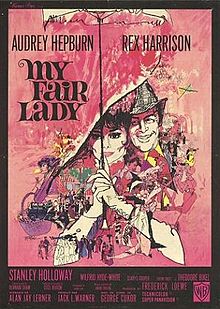
But for unalloyed intellectual treat My Fair Lady takes the cake. Elders at home took great pains to explain the essential hypocrisy of the British and their unique trait of laughing at themselves. That, perhaps, has moulded my present opinion. Based on Pygmalion by the great English dramatist, GBS, this captivating musical, a Twentieth Century Fox Production, won the best film Oscar(1964). The name Pygmalion refers to the king of Cyprus who fell in love with a statue of his own making. The beautiful statue was bestowed with life and turned into a more beautiful maiden whom Pygmalion married, or so the story goes. Henry Higgins is an English linguistics professor without peer. He is also a misogynistic bachelor-brash, arrogant but totally committed to his work. The Covent Garden scene where he meets scruffy Eliza Dolittle, superbly portrayed by Audrey Hepburn, a common flower girl with a Cockney accent, is uniquely scripted and refreshingly filmed.

Professor Higgins takes on Eliza under his tutelage in order to transform her from a rustic flower girl to a lady who captures the majesty and grandeur of the English language with impeccable articulation. They train together and enter into a cantankerous relationship where Eliza threatens Higgins, “Just you wait Henry Higgins”. Eliza has to work unceremoniously as part of his innovative speech devices much to the anguish of Col Pickering who sympathises with the girl for the ordeals she suffers. Higgins bets with Pickering that he will be able to pass Eliza off as a Duchess in six months time. The big day finally arrives. Pretenders, masqueraders, and polyglots arrive incognito to de-mask Eliza. They tease, torment and taunt Eliza who stands unnerved by their verbal sallies. Eliza steals the show with His Majesty leading the dance with her, much like the Cindrella of the fairy tale. Eliza transcends expectations beyond measure. Higgins finds it difficult to believe in his own handiwork and concedes defeat, saying: “ I have grown accustomed to her face”.

Astonishing sets, captivating costumes and excellent photography together with immortal tunes like’ “Get me to the church in time”, “I could have danced all night” transform the movie into a classic. Down to this day the movie ranks as an all time favourite for our entire family. The supporting cast in the form of Alfred Dolittle (Stanley Holloway) in the role of Eliza’s eccentric yet charismatic father is no less endearing. Alfred delivers some of the finest lines in the film, and remains my favourite character to this day. Our own Bollywood has many a times borrowed thematic contents from Hollywood classics of the early sixties and seventies. Dil Hai Ki Manta Nahi and picked up its theme from It Happened One Night, while The Sound Of Music provided the concept for Parichay. Devanand’s Manpasand adapted substantially from My Fair Lady. In doing so the Bollywood  attempt was bold but not a patch on the great movie. However, Devanand as Higgins and Girish Karnad as Col Pickering just manage to keep the movie afloat.

Going back to my favourite, the most exciting part of the movie is where Higgins and Eliza sing the ditty “The Rain In Spain Falls Mainly in the Plain”.  Suddenly Eliza discovers that the tone, timbre and modulation of her voice have acquired the Queen’s accent. The exhilaration and joy of the Professor is a delight to watch. Even Pickering and the house maids join in the fun as the song goes on and on. The scene is one of the high point of the movie. The acerbic wit in the allegory authored by the redoubtable GBS is commendably brought out in the film which for me remains a moving experience.

A.K.Tripathi,                                                                                                                                        Guwahati-Assam

March-2015

First published in Local Area Magazine titled ‘Nava Arunodoi’ in 2009. The article has since been re-edited.

‘MARWARIS’ HAVE SHOWN- TRADITION, MODERNITY & BUSINESS CAN GO HAND IN HAND


Copyright@shravancharitymission

143

For, a very long time now that dips beyond pre-independence days, Marwaris have been the back bone of Indian business; considered almost a generic term for business in India. They crafted some of the country’s oldest industrial empires- Birlas, Dalmias, Jhunjhunwalas, Goenkas; the list is long and accounts for a quarter of Indian names in the Forbes billionaire list. And in the process Marwari surnames have almost become household names.

2

And there is no denying the fact that first generation of Marwari businessmen started in a very modest way. There are stories galore about them, which you tend to believe, even without feeling the need to ratify; and knowing the finer details owing to their present stalk in Indian business scenario. For, you can’t help but believe in the hearsay that late Ghanshyam Das Birla mortgaged his lota (a round waterpot, typically of polished brass) in Hissar long ago, then a small town of Haryana for some pennies to start his business in the early twentieth century and when India liberated from the British Raj the worth of Birla group was somewhere around 60 lakh. Their histories and life philosophy of ‘simple living and high thinking’ has led them to the vying mantra of success and has always been a matter of great inquisition for many other communities that wanted to emulate Marwaris.

And there penchant to tread unknown areas for new business opportunities is time immemorial. They swarmed into Bengal and North-East of India as business entrepreneurs when many in India feared these areas.

Thomas A Timberg, author of a recent book, ‘The Marwaris’ wrote his doctoral thesis on them at Harvard back in 1978, and he has something interesting to say about Marwaris in an interview with Times of India.

In popular belief all shopkeepers and traders are Marwaris. But going by the definition of All-India Marwari Sammelan – all of those traders and business families from Rajasthan and some adjacent areas of Haryana are Marwaris. The Jodhpur region of Rajasthan is called Marwar. But many of the leading business families hail from the Shekhawati belt- Sikar, Jhunjhunu, Churu and Nagaur districts. Some are from Jaisalmer area. So I include the whole state of Rajasthan.

And, on how they became so successful he says, ‘It’s a long story.’ But what can be said is they all had common features that helped in their success. Starting from about the 1820s, they moved to Bengal to build a network of traders that covered large parts of the countryside too. This upcountry network was indeed their backbone and also the school for learning the ropes.

They developed a local sophisticated system of book-keeping called the ‘parta.’ By early 20th century this was updated in real time through phone. They had a well though-out personnel policy, with loyal and qualified people placed at key points. They had a system of incentives for good performance. Finally, they were very adaptable to changing economic or political situations.

In the 1970s, during the height of Naxalite terror, I met a Bengali lady and a Marwari insurance agent at breakfast in the guest house, where I was staying. The lady got irritated at the man’s boasting and said that the Naxalites would get him someday. The trader chuckled and said, “Before that can happen, we would join them.”

And to build a trade, one needs money. So, where did all the money come from, initially? Timberg feels different families have different tales. But during the British times, some of today’s successful families took advantage of the speculative market, as in opium and also jute. In the early 20th century when the British were easing off on opium (which they exported to China), some Mawari families in Bombay made a killing. They used their connections in Malwa where opium was grown to do so. Another family owes its origin to playing the international silver market through tiny loans. What these stories tell us about this community is that they had the ability to take risks and also that they acted on market information. And of course this should be seen in the context of tremendous hard work that these families did in going to distant places, staying in community messes (basa) and building their trade from the ground.

Their entrepreneurial spirit fared well even in the Nehruvian, economic regime controls, and most seem to have done pretty well for themselves. A 2010 study by Tarun Khanna and Krishna Palepu of Harvard Business School has shown that the share of Marwari and other family business groups in the ownership of large scale business in India is not so different from what it was in 1939, 1969 and 1997. Some like the Bajaj family, suffered for several years. Dalmia too had problems. But by and large the Marwaris benefited from their networks and especially, from their ability to negotiate with the governments of the day.

And how about the modern Marwari business houses following the same traditional practices that made them successful earlier? Some features may survive, others may get replaced. A lot of study has been done on the academic question: is tradition hostile to modernity? The Marwaris have successfully gone from being traders to industrial houses (Birlas, Goenkas, Dalmiyas) they have both tight focus and diffuse focus groups. They have largely resolved the succession problem, something that dogs every family business.

They have embraced new technologies, especially IT. In fact Birlas gave up their traditional book-keeping system for an IT based system a few years ago. Many have encouraged their daughters to study and take over business responsibilities. In fact most of the young Marwaris are now educated in Western Business schools; however there are exceptions and I’m only talking of the general trend.

CELEBRITIES, PLEASE DON’T JUST ENDORSE PRODUCTS FOR CASH STACKS ALONE- THINK OF THE CUSTOMER TOO

Copyright@shravancharitymission


    Product endorsement is a form of testimonial from someone, who indicates they like or approve of a product. Generally, product endorsements are solicited from people who are socially prominent. Friedman & Friedman defines a ‘celebrity endorser as an individual who is known by the public for his or her achievements in areas other than that of the product class endorsed.’

    Therefore, in that context, is it right for any celebrity to endorse a company’s product without proper due diligence, about its quality and customer satisfaction levels. In fact, customer satisfaction should be one of the basic criteria to decide, whether the celebrity should go ahead and endorse the product or not.

46

    For, when a customer decides to buy a product. He does take into account the profile and aura of the celebrity, who is endorsing it and takes his ‘words’ to be the gospel truth. But why? We may ask. Reason is very simple. Because, the customer one way or the other equates the profile and personality of the celebrity, endorsing the product, with that of himself and the product and service, the company offers.

    Moreover, the customer ratifies the ‘trust’ by buying the product, that the celebrity creates around the product by endorsing it–Primarily in parameters of quality; and a brief description of ‘quality’ would be, ‘what is promised, is delivered.’

79

BUT THERE ARE CERTAIN INDUSTRIES WHERE CAUTION IS REQUIRED BY CELEBRITIES

    For example Indian cricketer Mahendra Singh Dhoni is the brand ambassador of Amrapali group. A prominent builder of North India, and endorses almost all their housing projects. Film stars such as Rishi Kapoor and Neetu Kapoor (nee Neetu Singh) endorse flats and houses of Gaur sons and Shahrukh Khan for Mahagun.

    These celebrities, endorse projects of builders by appearing in full page newspaper and magazine advertisements, apart from bill board and fancy TV advertisements. To build that brand pull by charging a fortune–mostly in crores. But before accepting these endorsements, do they even check to their satisfaction about the myriads of customer complaints against these builders, in terms of projects not being completed on time, quality issues, overcharging, illegal construction, stopping of genuine refunds to customers and the list is but long. And, basis these endorsements, thousands and thousands of customers invest their hard earned and lifetime savings with these builders only to be left hapless most of the times.

SO IS THERE A WAY OUT?

    Just as the company undertakes a thorough due-diligence about the celebrity, in terms of his or her brand positioning against the product he is about to sign. The celebrity too should also undertake a thorough check of the company’s reputation and its customer satisfaction levels. Where, the advertising agency should provide all but relevant details to the product endorser. Maybe, the government can formulate a stringent law against such celebrities, who endorse false claims across industry, product and customer satisfaction levels.

    For, it will only be ethical on the part of these celebrities to make their additional millions, by not callously stamping on a common man’s dream, by endorsing any product, by any company. And, for such companies without any moral and ethics. It is imperative they revisit their mission and vision.

*

By Kamlesh Tripathi

*

                                                                    https://kamleshsujata.wordpress.com

*

Share if you like it

*

Shravan Charity Mission is an NGO that works for poor children suffering from life threatening diseases. Should you wish to donate for the cause the bank details are given below:

NAME OF ACCOUNT: SHRAVAN CHARITY MISSION

Account no: 680510110004635 (BANK OF INDIA)

IFSC code: BKID0006805

*

Our publications

GLOOM BEHIND THE SMILE

ONE TO TANGO … RIA’S ODYSSEY

AADAB LUCKNOW … FOND MEMORIES

REFRACTIONS … FROM THE PRISM OF GOD

(CAN BE BOUGHT FROM ON LINE BOOK STORES OR WRITE TO US FOR COPIES)

*****


IS LITERACY RATE OF INDIA BEGINNING TO DRIVE INDIAN POLITICS?

Copyright@shravancharitymission

123

    The working definition of literacy in the Indian census since 1991 is as follows: Literacy rate: The total percentage of the population of an area at a particular time aged seven years or above who can read and write with understanding. Here the denominator is the population aged seven years or more.

    At the time of independence in 1947. India had a population of approximately 390 million. This got divided as follows after partition: 330 million people remained in India, 30 million in remained in West Pakistan and another 30 million in East Pakistan.

    The literacy rate of independent India in 1947 was 12%. By around 1950-1951 it had increased to around 18.33% with a population of 35 crore as you can see in the (literacy and population) table below. As compared to 1947 the current average literacy rate of India as per 2011 census, is 74% when the world average is 84%. Of the big states of India some laggard states are below 8% and some above by 20% as compared to the national average of 74%.

LITERACY RATE OF INDIA POPULATION
YEAR PERSON MALE FEMALE YEAR CRORE
1951 18.33 27.16 8.86 1950 35
1961 20.3 40.4 15.35 1960 43
1971 34.45 45.96 21.97 1970 54
1981 43.57 56.38 29.76 1980 69
1991 52.21 64.13 39.29 1990 83
2001 64.83 75.26 63.67 2000 101
2011 74.04 82.14 65.46 2000 117
        2015 124

 564

    In the early stages of independent India. Nothing else mattered than the sweet hangover of the freedom struggle and the newly formed Bharat Mata. That wheeled Pandit Nehru to rule for almost 17 years, as the longest serving Prime Minister (15.8.47 to May 1964). During his tenure the literacy rate rose from 12% to around 25%. The major event that shook India then was the Chinese aggression in the year 1962.

    India was an unquestioning country then. Just rising from the dust of the long colonial rule. And during that period, there was little or no political resistance to the Indian National Congress. That had spearheaded the freedom movement, and most iconic political leaders that mattered then were from this party.

    After Pandit Nehru expired post India-China aggression in 1964 the vacancy was filled in by another firebrand Congress leader Lal Bahadur Shastri. Who, served the country only for around 19 months and expired in Tashkent, part of the erstwhile USSR and today’s Uzbekistan.

    After Shastri’s sad demise. The mantel was adorned by Nehru’s daughter Indira Gandhi. Who, ruled for eleven years from 1966-1977. The three major events during her tenure, happened to be the liberation of East Pakistan and creation of Bangla Desh in 1971 followed by a full blown battle with Pakistan in the same year and declaration of emergency for the third time in India, and this time for internal reasons. Indira Gandhi started at an average literacy rate of around 32% in 1966 but in 1977 when Congress lost, the literacy rate had crept up to around 40%. It was for the first time Congress had gone out of power since independence. And in a manner it took literacy rate to jump by 28% (12% to 40%) to throw out a long standing ruling party at the centre. This goes to prove that literacy rate one way or the other increases the political appetite of the citizenry.

    In the Indian scenario increase in literacy rate has made voters change their minds. That has demanded for a dispensation of a different nature to govern the country. Indira Gandhi had imposed ‘emergency’ in the year 1975 when the average literacy rate was around 40%. This made her lose the general elections and gave entry to the first non-Congress government headed by Morarji Desai in 1977.

    When the average literacy rate of India was around 30%. India could see. In some states, certain state and regional parties gaining ground such as the Dravidian parties that have dominated since 1967. DMK routed Congress in 1967 and in 1972 MGR split DMK into AIDMK. Such incidents clearly dawned an era of new politics.

    Some states of India, such as Kerala and Tamil Nadu have always been ahead of the average Indian literacy rate. In the 2011 census as against the average literacy rate of 74%, Kerala was at 94, Tamilnadu at 80%, Maharastra at 82% and the big laggard states were Bihar at 62%, Jharkhand 66%, AP 67% Rajasthan 66% and UP 68%

    Bihar witnessed JP movement when the literary rate was between 35-40% and Lalu became the Chief Minister of Bihar in 1984 when the literary rate of Bihar was > 45%. In U.P. Mulayam Singh became the chief minister in 1991 and Mayawati in 1995 when the state literacy rate had crossed 45%. Signalling, the thinking minds wanted a change from two national parties, Congress and the BJP. In West Bengal too Congress ruled till 1977 but when the Bengal literacy rate rose to around 40% it was taken over by the Communist rule. And when literacy rate went passed 52% the voters even rejected Communist Party that was getting irrelevant and pulled out Trinamul Congress from the stable of Congress.

7986

    The literacy rate map below shows how certain states maintain their lead in literacy rates. Where, one would find a distinct differentiation within the political set ups of states such as Kerala and Maharastra with that of Bihar and Jharkhand.

2011_Census_India_literacy_distribution_map_by_states_and_union_territories.svg

INDIA WHEN ABOVE 64% AVERAGE LITERACY RATE

    India decided to open up when the literacy rate had gone past 52% in the year 1991 when wide spread reforms were announced. And, as the literacy rate went up, ethics in politics came down. Perhaps, thinking minds made politics much more competitive- resting on the theory of ‘survival of the fittest.’

    Beyond 2001 when the average literacy rate had just crossed 64%. India saw a sea change in terms of, all the four estates. To begin with the first estate (clergy) now tampers with politics without fear. Second estate (Bureaucracy) has become irresponsible, subservient, corrupt and even callous towards the general public. Third estate (Commoners) is perennially pained but have become more knowledgeable and demanding. And the fourth estate (Press and Media) have become all powerful. Yet they remain the saving grace of modern India

INDIAN POLITICS AT 74% LITERACY RATE

    At 74%, politics of India doesn’t remain the same and is deluged by the heft of thinking minds. For in the recent past it attracted grandstanding of agitations, like ‘India against Corruption’ where revered activist like Anna Hazare had to take the centre stage.

    Besides, even the mind space of an Indian voter has got more and more complex. Because of which we could see for the first time. A political leader of the stature of Narendra Modi, to create space in voters mind traveled 3 lac km across 25 states, addressed 473 big public rallies with 5827 public interfaces, including Chai pe charcha and 3D broadcasts. More so. BJP fought more under the banner of Narendra Modi than BJP, like presidential election. In Delhi elections we saw AAP party following the new ‘volunteer’ cult to create tailor made space in voter’s mind that wiped out BJP and Congress. In J&K also it was a star struck and out-of-the-box variety of a political campaign. It was an expensive opportunity that forced BJP to abandon relevant political-IZMS just to form the government.

    As we move towards 100% literacy. The route to State Assembly and Parliament will become more and more arduous. Political Parties will have to change their tone and tenor to address 100% literacy in all their political communication and behaviour. Where, corruption, scams and VVIPSM will have no place. What will simply matter is performance. This indeed will effect hoodwinkers under the garb of individual politicians.

*

By Kamlesh Tripathi

*

https://kamleshsujata.wordpress.com

*

Share if you like it

*

Shravan Charity Mission is an NGO that works for poor children suffering from life threatening diseases. Should you wish to donate for the cause the bank details are given below:

NAME OF ACCOUNT: SHRAVAN CHARITY MISSION

Account no: 680510110004635 (BANK OF INDIA)

IFSC code: BKID0006805

*

Our publications

GLOOM BEHIND THE SMILE

(The book is about a young cancer patient. Now archived in 7 prestigious libraries of the US, including, Harvard University and Library of Congress. It can also be accessed in MIT through Worldcat.org. Besides, it is also available for reading in Libraries and archives of Canada and Cancer Aid and Research Foundation Mumbai)  

ONE TO TANGO … RIA’S ODYSSEY

(Is a book on ‘singlehood’ about a Delhi girl now archived in Connemara Library, Chennai and Delhi Public Library, GOI, Ministry of Culture, Delhi)

AADAB LUCKNOW … FOND MEMORIES

(Is a fiction written around the great city of Nawabs—Lucknow. It describes Lucknow in great detail and also talks about its Hindu-Muslim amity. That happens to be its undying characteristic. The book was launched in Lucknow International Literary Festival of 2014)

REFRACTIONS … FROM THE PRISM OF GOD

(Co-published by Cankids–Kidscan, a pan India NGO and Shravan Charity Mission, that works for Child cancer in India. The book is endorsed by Ms Preetha Reddy, MD Apollo Hospitals Group. It was launched in Lucknow International Literary Festival 2016)

TYPICAL TALE OF AN INDIAN SALESMAN

(Is a story of an Indian salesman who is, humbly qualified. Yet he fights his ways through unceasing uncertainties to reach the top. A good read not only for salesmen. The book was launched on 10th February, 2018 in Gorakhpur Lit-Fest. Now available in Amazon, Flipkart and Onlinegatha

(ALL THE ABOVE TITLES ARE AVAILABLE FOR SALE IN AMAZON, FLIPKART AND OTHER ONLINE STORES OR YOU COULD EVEN WRITE TO US FOR A COPY)

*****


‘ARROGANT INDIA’ INTIMIDATES THE ‘MEEK INDIA’ – THE CURSE OF LAL BATTI- VVIP CULTURE

Copyright@shravancharitymission

123

India belongs to we the VVIP and the rest can go to hell by drowning themselves in the sufficiently large Arabian sea or the Bay of Bengal, and for the rest who can’t reach there umpteen rivers are there or climb atop those lofty mountains or any sky-scraper and jump from there, for there is no place for NON-VIPS in India anymore. This is what the meek India is coaxed to feel by the arrogant India, shamelessly, personified by these VVIPs in flesh and blood. This VVIP class (Politicians-Bureaucrats-Judiciary) is not even 1% of the Indian population; but in the manner 1% of the world’s population controls 48% of the world’s wealth, these VVIP’s too control the entire India.

Perhaps, some of these VVIPs must also be feeling that Mahatma Gandhi, our father of the nation was perhaps an idiot, to have travelled third class and roamed in loin cloth, to live a life of simplicity; which we are not. And, so grab everything out, of the frail guts of this cattle class, of meek India.

And, for the meek India, Maharajas of the ancient India or Viceroys of the colonial British Raj, as if had never left but only got swapped by the arrogant India. Today, arrogant India very blatantly exploits the meek India by the sledgehammer of VVIP-ISM; by blocking roads for endless hours, taking their vehicles right up to the tarmac where their aircrafts are parked, by having separate lanes for themselves and also insulting senior citizens, differently abled persons and children who are made to stand in long queues while they walk in at the last moment by-passing security cordons, with their gun toting security guards. They delay lacs and lacs of workers going to office and factories by their stupid traffic movement and then talk of industrial output. They kill patients in ambulances by halting ambulances and then talk of health.

456

In the British Raj, in many cities of India there were some roads and lanes, where Indians could not enter during certain hours (such as main roads and mall roads in many cities) and pitifully we find the same atrocious culture seeping back to haunt the meek India in a more aggressive manner, just to satisfy arrogant India’s egos.

Today, meek India is standing at a crowded crossroad, not knowing which way to go and whom to look at, as all look to be the same, and in the process is losing faith in the institution of democracy that comes through the windows of these elected representatives of political parties and their cahoots in bureaucracy and even the judiciary. For starting from Congress that invented the VVIP-ISM post British Raj; today even BJP sings the same tune after having promised to go the other way, and who knows, tomorrow AAP that started primarily on anti- corruption an anti- VIP culture too may get lured to VVIP-ISM.

And what is more mystifying is the posture in which ‘arrogant India’ approaches ‘meek India’ with folded hands with a promise to serve as a dutiful ‘Public Servant’ thereby exploiting the simplicity of the meek India and once they are elected they show their real ugly face and feudal mindset.

They do everything under the sun to justify the VVIP-ISM- the hateful Lal Batti culture. They operate like parasites on hard earned tax payer’s money and refuse to reform themselves. They inculcate venomous values in their children too and would never bury the skeleton of being called the lord and master.

So what did ‘meek India’ get post-independence? They got Bapu’s- third class, his loin cloth and above all his simplicity and values; and the arrogant class? Well they became the modern day Maharajas and didn’t let the Britishers leave India in the real sense.

NO PLACE FOR FAILURE, IN CHANGING INDIA: INDIAN MEDIA & SOCIAL NETWORKING SITES JOKE AND RIDICULE 44 YEAR OLD SON OF THE SOIL RAHUL GANDHI WHO COULDN’T MEET UP WITH SUCCESS

Copyright@shravancharitymission

By Kamlesh Tripathi

12

Ever since the stormy news of Rahul Gandhi’s sabbatical for ‘personal introspection’ during the ensuing budget session came in. Both the media and the social networking sites in India have hounded him to cruel smithereens. A parallel of which one cannot remember, at least in the recent past.

When, other, light and more decent ‘critical’ phrases could have been used to put him down. Double-meaning expressions like ‘missing in action’ (MIA) were continuously aired by certain TV channels, knowingly or unknowingly.

‘MIA is a casualty classification assigned to armed services personnel and other combatants who are reported missing during wartime. They may have been killed, wounded, become a prisoner of war, or even deserted. If deceased, neither their remains nor grave has been positively identified.’ And, so the usage of MIA was in bad taste and a clear case of media going overboard.

34

And that brings us to the moot point. Is the youth of this country (as reflected in social networking sites) which is sixty five percent of the Indian population, getting intolerant to failures. That they won’t even spare a person around, their own age group. While this is a welcome sign and also an insignia of progress. It is also a double edge sword. For, in times to come Indian youth with lack of opportunities and explosion of population will surely witness failures in every family, and will every family then treat their loved ones in the manner they have treated Rahul Gandhi, over the last couple of days. For let us not forget he is still part of the great Indian family.

56

Most blame Rahul Gandhi for ditching the Congress party at the crucial Budget session. There are other reports that say he is set to bid adieu to politics. Some say he is unable to have his way with the old guard and therefore beating a tactical retreat.

And we all know, with all the effort put in by him he could not win a single election for his party, in the near past. Many of his own party men are blaming him for the state in which Congress is today. When most of them are either, arm chair politicians, lawyers or inconsequential statesmen. But there are certain other points also to be considered before we rip this man completely.

Rahul Gandhi signals a new kind of India. Where, a politician may leave the turf and decide to do something else. Which may be worth his while and worth his salt, during his lifetime. And that should be taken in the stride; and not be indecently reported by the media. For one will see more politicians behaving in this fashion in times to come. So, give the loser his due.

Prime Minister Narendra Modi says ‘I don’t dream for success in what I do. I only dream to do something worthwhile.’ This is a very powerful statement in today’s context and more so in Rahul Gandhi’s context. So whether you lose or win keep moving. As there is no intrinsic insult in moving away from politics. For politics is only heart burning and time consuming mistress for some. Perhaps, Narendra Modi could have nudged the media to be a little more relenting towards Rahul Gandhi this time, more so when the youth of India looks up to him.

Let us not forget in the emerging India there won’t be any fixed route to politics. For it won’t be necessary to remain a politician all your life. For one could also be a politician like Kiran Bedi who excels in one field and takes away Satish Upadhyay’s due. Or be a tornado like Arvind Kejriwal to take Delhi by storm.

But coming back to Rahul. At least he goes on leave all by himself. Whereas, some like LK Advani and MM Joshi are sent on leave. So which is better? And, India shouldn’t forget its great culture of being humane to all. Irrespective of a winner or a loser.

*****