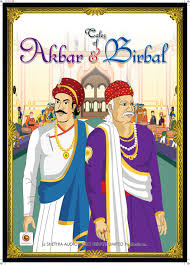
Tag Archives: shravan charity mission

Facts & Figures: KHYMER ROUGE, The Story of Marxist Dictator Pol Pot, Cambodia

Copyright@shravancharitymission

(Pol Pot)

    The Khmer Rouge was a brutal regime that ruled Cambodia, under the horrendous leadership of Marxist dictator Pol Pot, from 1975 to 1979. Pol Pot’s attempts to create a Cambodian “master race” through social engineering ultimately led to the deaths of more than 2 million people in this Southeast Asian nation. Those killed were either executed as enemies of the regime, or they died from starvation, disease or overwork. Historically, this period—is depicted in a film titled, ‘The Killing Fields.’ Referred as Cambodian Genocide.  Cambodia as we all know is surrounded by Thailand, Laos, Vietnam and the Gulf of Thailand.

    Although, Pol Pot and the Khmer Rouge didn’t come to power until the mid-1970s, the roots of their takeover can be traced back to the 1960s, when a communist insurgency first became active in Cambodia, which was then ruled by a monarch.

    Throughout the 1960s, the Khmer Rouge, operated as, the armed wing of the Communist Party of Kampuchea, the name the party used for Cambodia. Operating primarily out of remote jungles and mountain areas in the northeast of the country, near its border with Vietnam, which at that time was involved in its own civil war. Khmer Rouge did not have popular support across Cambodia, particularly in the cities, including its capital Phnom Penh.

    After a 1970 military coup that led to the ouster of Cambodia’s ruling monarch, Prince Norodom Sihanouk, the Khmer Rouge decided to join forces with the deposed leader and form a political coalition. This was because the monarch had been popular among city-dwelling Cambodians, and through this coalition the Khmer Rouge began to garner more and more support of the city-dwelling Cambodians.

    For the next five years, a civil war unleashed between the right-leaning military that had led the coup, and those supporting the alliance of Prince Norodom and the Khmer Rouge in Cambodia. Eventually, the Khmer Rouge side, seized the advantage of the conflict, after gaining control of, increasing amounts of territory in the Cambodian countryside.

    In 1975, Khmer Rouge fighters invaded Phnom Penh and took over the city. And with the capital in its grasp, the Khmer Rouge had won the civil war and, thus, started ruling over the country.

    But notably, the Khmer Rouge opted, not to restore power to Prince Norodom, and instead, handed it over to Pol Pot, leader of the Khmer Rouge. And Prince Norodom was forced to live in exile.

    As a leader of the Khmer Rouge during the days of insurgent movement, Pol Pot had come to admire the tribes in Cambodia’s rural northeast. These tribes were self-sufficient and lived on the goods that they produced through subsistence farming.

   The tribes, he felt, were like communes that worked together, shared the spoils of their labour, and were untainted by the evils of money, wealth and religion, the latter being the Buddhism, quite common in urban Cambodia.

    Once installed as the country’s leader by the Khmer Rouge, Pol Pot and the forces loyal to him quickly set about, remaking Cambodia, which they had renamed Kampuchea, in the model of these rural tribes, with the hopes of creating a communist-style, agricultural utopia.

    They declared 1975 as the “Year Zero” in the country. Pol Pot isolated Kampuchea from the global community. He resettled hundreds of thousands of the country’s city-dwellers into rural farming communes and abolished the country’s currency. He also outlawed the ownership of private property and the practice of religion in the new nation.

    Workers on the collective farms established by Pol Pot soon began suffering from the effects of overwork and lack of food. Hundreds of thousands died from disease, starvation and even damage to their bodies sustained during back-breaking work or abuse from the ruthless Khmer Rouge guards overseeing the camps.

    Pol Pot’s regime also executed thousands of people that it deemed as enemies of the state. Those seen as intellectuals, or potential leaders of a revolutionary movement, were also executed. Legend has it that, some were executed for merely appearing to be intellectuals, because they wore glasses and were able to speak a foreign language.

    As part of this effort, hundreds of thousands of the educated, middle-class Cambodians were tortured and executed in special centres established in the cities. Most infamous of which was Tuol Sleng jail in Phnom Penh, where nearly 17,000 men, women and children were imprisoned during the regime’s four years in power. In what became to be known as the Cambodian Genocide, an estimated 1.7 to 2.2 million Cambodians died during Pol Pot’s regime.

    Finally, the Vietnamese Army invaded Cambodia in 1979 and dislodged Pol Pot and the Khmer Rouge from power, after a series of violent battles on the border between the two countries. Pol Pot had sought to extend his influence into the newly unified Vietnam, but his forces were suitably rebuffed.

    After the invasion, Pol Pot and his Khmer Rouge fighters quickly retreated to remote areas of the country. Where, they remained active as an insurgent group, albeit with declining influence. Vietnam retained control of the country, with a military presence, for much of the 1980s, even over the objections of the United States.

    After the fall of the Khmer Rouge that happened decades back. Cambodia has gradually re-established ties with the world community, although the country still faces problems, including widespread poverty and illiteracy. Prince Norodom returned to govern Cambodia in 1993, but he now rules under a constitutional monarchy.

    Pol Pot himself lived in the rural northeast of the country until 1997, when he was tried by the Khmer Rouge for his crimes against the state. The trial of course was an eyewash, and the former dictator died while under house arrest in his jungle home. Since he had died in his jungle house his body parts were sent for a DNA test.

    The stories of the suffering of the Cambodian people at the hands of Pol Pot and the Khmer Rouge have garnered worldwide attention in the years since their rise and fall, including through a fictional account of the atrocities in the popular 1984 movie The Killing Fields.

    Corona Virus reminds me of the filthy communist dictator Pol Pot.

    Stay home. Stay safe.

***

By Kamlesh Tripathi

*

https://kamleshsujata.wordpress.com

*

Share it if you like it

*

Shravan Charity Mission is an NGO that works for poor children suffering from life threatening diseases especially cancer. Our posts are meant for our readers that includes both children and adults and it has a huge variety in terms of content. We also accept donations for our mission. Should you wish to donate for the cause. The bank details are given below:

NAME OF ACCOUNT: SHRAVAN CHARITY MISSION

Account no: 680510110004635 (BANK OF INDIA)

IFSC code: BKID0006805

*

Our publications

GLOOM BEHIND THE SMILE

(The book is about a young cancer patient. Now archived in 7 prestigious libraries of the US, including, Harvard University and Library of Congress. It can also be accessed in MIT through Worldcat.org. Besides, it is also available for reading in Libraries and archives of Canada and Cancer Aid and Research Foundation Mumbai)  

ONE TO TANGO … RIA’S ODYSSEY

(Is a book on ‘singlehood’ about a Delhi girl now archived in Connemara Library, Chennai and Delhi Public Library, GOI, Ministry of Culture, Delhi)

AADAB LUCKNOW … FOND MEMORIES

(Is a fiction written around the great city of Nawabs—Lucknow. It describes Lucknow in great detail and also talks about its Hindu-Muslim amity. That happens to be its undying characteristic. The book was launched in Lucknow International Literary Festival of 2014)

REFRACTIONS … FROM THE PRISM OF GOD

(Co-published by Cankids–Kidscan, a pan India NGO and Shravan Charity Mission, that works for Child cancer in India. The book is endorsed by Ms Preetha Reddy, MD Apollo Hospitals Group. It was launched in Lucknow International Literary Festival 2016)

TYPICAL TALE OF AN INDIAN SALESMAN

(Is a story of an Indian salesman who is, humbly qualified. Yet he fights his ways through unceasing uncertainties to reach the top. A good read not only for salesmen. The book was launched on 10th February, 2018 in Gorakhpur Lit-Fest. Now available in Amazon, Flipkart and Onlinegatha)

RHYTHM … in poems

(Published in January 2019. The book contains 50 poems. The poems describe our day to day life. The book is available in Amazon, Flipkart and Onlinegatha)

MIRAGE

(Published in February 2020. The book is a collection of eight short stories. It is available in Amazon, Flipkart and Notion Press)

(ALL THE ABOVE TITLES ARE AVAILABLE FOR SALE IN AMAZON, FLIPKART AND OTHER ONLINE STORES OR YOU COULD EVEN WRITE TO US FOR A COPY)

*****


SHORT STORY: BIG JOB WRONG MESSAGE

Copyright@shravancharitymission

    There was once a king who had this strange habit of meeting all the wrong kind of people in his kingdom. He met prisoners charged with murder, theft, so on and so forth. He had directed his prison chief to send him five prisoners every night for a one-on-one. He used to meet them alone but no one knew why.

    He had also left instructions that post his meeting no one should cross check with the prisoner about the conversation the king had had with him. And, if ever, it came to his notice that someone in the prison has tried to coax the prisoner to reveal the conversation the prisoner had had with the king that person’s head would be guillotined … he would be beheaded.

    The learned class in the kingdom could not comprehend this uncommon trait of the king. Failing which, they became extremely weary of this habit of his.

    Unable to hold the suspense one day the queen asked the king.

    ‘I understand from the wives of the courtiers that the courtiers are extremely unhappy and suspicious of your habit of meeting prisoners every night. What is it that you want to know from them?’

    The king said, ‘I get a lot of ground level wisdom from them.’

    ‘Maharaj … wisdom and ground level don’t go hand in hand. Moreover, you have your guru, teachers, scriptures and your courtiers for the wisdom required to govern the kingdom. Why don’t you keep consulting them on a regular basis instead of meeting these prisoners?’

    ‘Maharani, I keep doing that from time to time. But for governing a kingdom that alone is not sufficient.’

    ‘But why Maharaj? Who could be more intelligent than you and your courtiers? They are the cream and elixir of your kingdom.’ The king remained quiet.

    One day when the king was passing through his office he saw without being noticed that his courtiers were having a serious discussion. The topic, of course was, the king’s meetings with the prisoners. But the king chose not to disturb them. Rather, he remained unfazed and continued with his normal duties.

    One day the chief-Priest approached the king. It appeared he wanted to say something. The king got up from his chair with folded hands and said, ‘pranam acharya.’

    ‘Aayushman vatsya.’ replied the chief priest. But he did not stop there and continued.

    ‘Maharaj! You are such a wise and vivacious personality. In addition, you have, intelligent and renowned courtiers too, and that includes me, yet you keep meeting these immoral prisoners. What wisdom do you derive out of them? Our scriptures alone are so very rich that you could efficiently rule your kingdom with the help of them.’

    The king looked at the Chief-Priest and politely said,

    ‘Be that as it may. There is no denying the fact that I have the best of courtiers, and I too, am intelligent enough, to rule the kingdom in the most quintessential manner. But then there are certain limitations.’

    ‘What limitations Maharaj?’

    ‘Limitation of … grassroots wisdom.’

    ‘Can you please explain Maharaj?’ said the Chief-Priest.

    Hey Acharya, ‘Crime is a symptom and not the disease. I meet different kinds of criminals only to find out where I’m faltering in ruling my kingdom. For example when I meet a thief, he gives me, grassroots reality, of why he stole, which my official, may not give me. The information that I get from the prisoner, gives me a sense of, what is in short supply, and where and when. Theft, also conveys to me, that the wealth of the country is disproportionately distributed and that indeed is the reason why some are stealing and some are amassing. A murderer tells me why he murdered a person. He narrates the softer issues, whether it was for money, love or revenge and that conveys to me the unease in the society.

    After the crop is harvested, the incidents of food thefts come down because, food is abundantly available, but after a few months it starts all over again when the stocks start depleting. When the crop is sown, theft of water goes up because more water is required to irrigate the crops. This teaches me the equation of demand-supply. So, by meeting prisoners I get these titbits. That gives me the ground sense of the happenings in my kingdom.’

    The Chief Priest after a while, thought, it was pointless attempting to convince the king so he left for the day. Nonetheless, the king continued meeting prisoners every day as his routine. While the courtiers did not appreciate the king’s gesture of meeting prisoners, the citizenry of his kingdom on the contrary admired and appreciated the gesture.

    Time flew. One day the king was interfaced with a young thief. The king asked why he committed the theft.

    The young thief replied, ‘Maharaj I committed the theft only to meet you. I had heard, every night you meet five criminals … five criminals, so I took a chance and here I am in front of you. Please bless me.’

    The king froze as if he was struck by a thunderbolt.

    Moral of the story: Although, the king was doing a great job, he was passing the wrong message. The young thief took the easiest route to meet the king by becoming a criminal.

    The story goes out as a caution for our rulers and the media.


Written by Kamlesh Tripathi

*

https://kamleshsujata.wordpress.com

*

Share it if you like it

*

Shravan Charity Mission is an NGO that works for poor children suffering from life threatening diseases especially cancer. Our posts are meant for our readers that includes both children and adults and it has a huge variety in terms of content. We also accept donations for our mission. Should you wish to donate for the cause. The bank details are given below:

NAME OF ACCOUNT: SHRAVAN CHARITY MISSION

Account no: 680510110004635 (BANK OF INDIA)

IFSC code: BKID0006805

*

Our publications

GLOOM BEHIND THE SMILE

(The book is about a young cancer patient. Now archived in 7 prestigious libraries of the US, including, Harvard University and Library of Congress. It can also be accessed in MIT through Worldcat.org. Besides, it is also available for reading in Libraries and archives of Canada and Cancer Aid and Research Foundation Mumbai)  

ONE TO TANGO … RIA’S ODYSSEY

(Is a book on ‘singlehood’ about a Delhi girl now archived in Connemara Library, Chennai and Delhi Public Library, GOI, Ministry of Culture, Delhi)

AADAB LUCKNOW … FOND MEMORIES

(Is a fiction written around the great city of Nawabs—Lucknow. It describes Lucknow in great detail and also talks about its Hindu-Muslim amity. That happens to be its undying characteristic. The book was launched in Lucknow International Literary Festival of 2014)

REFRACTIONS … FROM THE PRISM OF GOD

(Co-published by Cankids–Kidscan, a pan India NGO and Shravan Charity Mission, that works for Child cancer in India. The book is endorsed by Ms Preetha Reddy, MD Apollo Hospitals Group. It was launched in Lucknow International Literary Festival 2016)

TYPICAL TALE OF AN INDIAN SALESMAN

(Is a story of an Indian salesman who is, humbly qualified. Yet he fights his ways through unceasing uncertainties to reach the top. A good read not only for salesmen. The book was launched on 10th February, 2018 in Gorakhpur Lit-Fest. Now available in Amazon, Flipkart and Onlinegatha)

RHYTHM … in poems

(Published in January 2019. The book contains 50 poems. The poems describe our day to day life. The book is available in Amazon, Flipkart and Onlinegatha)

MIRAGE

(Published in February 2020. The book is a collection of eight short stories. It is available in Amazon, Flipkart and Notion Press)

(ALL THE ABOVE TITLES ARE AVAILABLE FOR SALE IN AMAZON, FLIPKART AND OTHER ONLINE STORES OR YOU COULD EVEN WRITE TO US FOR A COPY)

*****


SHORT STORY: The Wise Blind Man

Copyright@shravancharitymission

    There was once an old blind man who was walking past his farm located near a jungle in the night. He was carrying a lantern … so that he could see his way through.

    On the way he met a fellow villager who recognised the blind man. The villager asked.

    ‘Bhaiya if you can’t see where is the need to carry a lantern?’

    The old blind man halted where he was and said.

    ‘So that fools don’t stumble against me and thieves should know that I can see.’

    The fellow villager was stunned at the blind man’s clever logic.

Moral of the story: You don’t always get hit by your own mistake always. You could be hit by other’s foolishness too. And don’t always put your shortcomings in front of the public.

By Kamlesh Tripathi

*

https://kamleshsujata.wordpress.com

*

Share it if you like it

*

Shravan Charity Mission is an NGO that works for poor children suffering from life threatening diseases especially cancer. Our posts are meant for our readers that includes both children and adults and it has a huge variety in terms of content. We also accept donations for our mission. Should you wish to donate for the cause. The bank details are given below:

NAME OF ACCOUNT: SHRAVAN CHARITY MISSION

Account no: 680510110004635 (BANK OF INDIA)

IFSC code: BKID0006805

*

Our publications

GLOOM BEHIND THE SMILE

(The book is about a young cancer patient. Now archived in 7 prestigious libraries of the US, including, Harvard University and Library of Congress. It can also be accessed in MIT through Worldcat.org. Besides, it is also available for reading in Libraries and archives of Canada and Cancer Aid and Research Foundation Mumbai)  

ONE TO TANGO … RIA’S ODYSSEY

(Is a book on ‘singlehood’ about a Delhi girl now archived in Connemara Library, Chennai and Delhi Public Library, GOI, Ministry of Culture, Delhi)

AADAB LUCKNOW … FOND MEMORIES

(Is a fiction written around the great city of Nawabs—Lucknow. It describes Lucknow in great detail and also talks about its Hindu-Muslim amity. That happens to be its undying characteristic. The book was launched in Lucknow International Literary Festival of 2014)

REFRACTIONS … FROM THE PRISM OF GOD

(Co-published by Cankids–Kidscan, a pan India NGO and Shravan Charity Mission, that works for Child cancer in India. The book is endorsed by Ms Preetha Reddy, MD Apollo Hospitals Group. It was launched in Lucknow International Literary Festival 2016)

TYPICAL TALE OF AN INDIAN SALESMAN

(Is a story of an Indian salesman who is, humbly qualified. Yet he fights his ways through unceasing uncertainties to reach the top. A good read not only for salesmen. The book was launched on 10th February, 2018 in Gorakhpur Lit-Fest. Now available in Amazon, Flipkart and Onlinegatha)

RHYTHM … in poems

(Published in January 2019. The book contains 50 poems. The poems describe our day to day life. The book is available in Amazon, Flipkart and Onlinegatha)

(ALL THE ABOVE TITLES ARE AVAILABLE FOR SALE IN AMAZON, FLIPKART AND OTHER ONLINE STORES OR YOU COULD EVEN WRITE TO US FOR A COPY)

*****


BOOK REVIEW: THE KITE RUNNER by Khaled Hosseini

Copyright@shravancharitymission

Khidki (Window)

–Read India Initiative—

This is only an attempt to create interest in reading. We may not get the time to read all the books in our lifetime. But such reviews, talk and synopsis will at least convey what the book is all about.

    If you want to discover Afghanistan this indeed is the book. Afghanistan always gives you that eerie feeling because of its difficult terrain and the exploitation and devastation by Taliban. In The Kite Runner the author while narrating the story takes you through the length and breadth of Afghanistan in terms of its socio-politico nuances. From an Indian perspective it even highlights the similarities between the cultures of the two countries and that makes the book even more interesting.

    ‘The Kite Runner’ is the first novel by Afghan American author Khaled Hosseni. It was published in 2003 by Riverhead Books. The price of this book in Amazon is Rs 319 for a print copy and Rs 179 for a kindle copy. It tells the story of Amir, a young boy, a Pashtun, from the Wazir Akbar Khan district of Kabul, whose closest friend is Hassan of Hazara tribe, and therefore, considered a lesser human being in Afghanistan and especially among the Pashtuns. The story is set against a backdrop of tumultuous events, from the fall of Afghanistan’s monarchy through the Soviet military intervention, and the exodus of refugees to Pakistan and the United States, and the rise of the Taliban regime.

    Hosseini considers The Kite Runner to be a father–son story that emphasises familial aspects of the narrative, an element that he continued to use in his later works also. Themes of guilt and redemption feature prominently in the novel, with a pivotal scene depicting an act of sexual assault that happens against Hassan that Amir fails to prevent. The situation is the primary reason why Amir and Hassan’s friendship ends. The latter half of the book centers on Amir’s attempts to make amends for this mistake by rescuing Hassan’s son two decades later.

    The Kite Runner became a bestseller after being printed in paperback and was popularized in book clubs. It was a number one New York Times bestseller for over two years, with over seven million copies sold in the United States. Reviews were generally positive, though parts of the plot drew significant controversy in Afghanistan. A number of adaptations were created following publication, including a 2007 film of the same name, several stage performances, and a graphic novel. The book classifies under Historical fiction and completes in about 372 pages.

    I particularly liked the flow, the language, the construction of sentences and the analogies used in certain sentences to explain what the author intended to say in the book. The detailing is superb and so are the coincidences. The language is high-flown, verbose but to give parochial affect the author has often used local Afghan words. Upon completing the book an Indian reader will be able to make out the similarities between the cultures of India and Afganistan, even when the author touches Hindi at one place in a slightly derogatory manner.

    Khaled Hosseni worked as a medical internist at Kaiser Hospital in Mountain View, California for several years before publishing The Kite Runner. In 1999, Hosseini learned through a news report that the Taliban had banned kite flying in Afghanistan, a restriction he found particularly cruel when that was the biggest sport of Afghanistan. The news “struck a personal chord” in him, as he had grown up with the sport while living in Afghanistan. He was motivated to write a 25-page short story about two boys who fly kites in Kabul. Hosseini submitted copies to Esquire and The New Yorker, both of which rejected it. He later discovered the manuscript in his garage in March 2001 and began to expand it into a novel format at the suggestion of a friend. According to Hosseini, the narrative became “much darker” than he originally intended. His editor, Cindy Spiegel, “helped him rework the last third of his manuscript”, something she describes as relatively common for a first novel.

    The Kite Runner covers a multigenerational period and focuses on the relationship between parents and their children. Hosseini developed an interest in the theme while in the process of writing. He later divulged that he frequently came up with pieces of the plot by drawing pictures of it. For example, he did not decide to make Amir and Hassan brothers until after he had doodled it.

    Like Amir, the protagonist of the novel, Hosseini too was born in Afghanistan and left the country as a youth, not returning until 2003. Thus, he was frequently questioned about the extent of the autobiographical aspects of the book. In response, he said, “When I say some of it is me, then people look unsatisfied. The parallels are pretty obvious, but … I left a few things ambiguous because I wanted to drive the book clubs crazy.” Having left the country around the time of the Soviet invasion, he felt a certain amount of survivor’s guilt. “Whenever I read stories about Afghanistan my reaction was always tinged with guilt. A lot of my childhood friends had a very hard time. Some of our cousins died. One died in a fuel truck trying to escape Afghanistan [an incident that Hosseini fictionalizes in The Kite Runner]. The book talks about his guilt. He was one of the kids who grew up with flying kites. His father was shot.” Regardless of that, he maintains that the plot is fictional. 

    Riverhead Books published The Kite Runner, ordering an initial printing of 50,000 copies in hardback. It was released on May 29, 2003, and the paperback edition was released a year later. Hosseini took a year-long sabbatical from practicing medicine to promote the book, signing copies, speaking at various events, and raising funds for Afghan causes. Originally published in English, The Kite Runner was later translated into 42 languages for publication in 38 countries. In 2013, Riverhead released the 10th anniversary edition with a new gold-rimmed cover and a foreword by Hosseini. 

    Plot

Part I Wazir Akbar Khan neighbourhood in Kabul

    Amir, a well-to-do Pashtun boy, and Hassan, a Hazara who is the son of Ali, Amir’s father’s servant, spend their days kite flying in the hitherto peaceful city of Kabul. Flying kites was a way to escape the horrific reality the two boys were living in. Hassan is a successful “kite runner” for Amir. He knows where the kite will land without watching it. Both boys are motherless. Amir’s mother died during childbirth, while Hassan’s mother, Sanaubar, simply abandoned him and Ali. Amir’s father is a wealthy merchant. Amir affectionately refers to him as Baba, who loves both the boys—Amir and Hassan. He makes a point of buying Hassan exactly the same things as Amir, much to Amir’s annoyance. He even pays to have Hassan’s cleft lip surgically corrected. On the other hand, Baba is often critical of Amir, considering him weak and lacking in courage, even threatening to physically punish him when he complains about Hassan. Amir finds a kinder fatherly figure in Rahim Khan, Baba’s closest friend, who understands him and supports his interest in writing. In a rare moment when Amir is sitting on Baba’s lap rather than being shooed away as a bother he asks why his father drinks alcohol which is forbidden in Islam. Baba tells him that the Mullahs are hypocrites and the only real sin is theft which takes many forms.

    Assef, an older boy with a sadistic taste for violence, mocks Amir for socializing with a Hazara, which according to him, is an inferior race whose members belong only to Hazarajat. Assef is himself is half Pashtun, having a German mother and a typical blond haired blue eyed German appearance. One day, he prepares to attack Amir with brass knuckles, but Hassan defends Amir, threatening to shoot out Assef’s eye with his slingshot. Assef backs off but swears to take revenge one day.

    One triumphant day, Amir wins the local kite fighting tournament and finally earns Baba’s praise. Hassan runs for the last cut kite, a great trophy, saying to Amir, “For you, a thousand times over.” However, after finding the kite, Hassan encounters Assef in an alleyway. Hassan refuses to give up the kite, and Assef severely beats him and buggers him. Amir witnesses the act but is too scared to intervene. He knows that if he fails to bring home the kite, Baba would be less proud of him. He feels incredibly guilty but knows his cowardice would destroy any hopes for Baba’s affections, so he keeps quiet about the incident. Afterwards, Amir maintains a distance from Hassan. His feelings of guilt prevent him from interacting with the Hassan. Hassan’s mental and physical well-being gradually begins to deteriorate.

    Amir begins to believe that life would be easier if Hassan were not around, so he plants a watch and some money under Hassan’s mattress in hopes that Baba will make him leave; Hassan falsely confesses when confronted by Baba. Although Baba believes “there is no act more wretched than stealing”, he forgives him. To Baba’s sorrow, Hassan and Ali leave anyway, because Hassan has told Ali what happened to him. Amir is freed of the daily reminder of his cowardice and betrayal, but he still lives in their shadow.

Part II

In 1979, five years later, the Soviet Union militarily intervenes in Afghanistan. Baba and Amir escape to Peshawar, Pakistan, and then to Fremont, California, where they settle in a run-down apartment. Baba begins work at a gas station. After graduating from high school, Amir takes classes at San Jose State University to develop his writing skills. Every Sunday, Baba and Amir make extra money selling used goods at a flea market in San Jose. There, Amir meets fellow refugee Soraya Taheri and her family. Baba is diagnosed with terminal cancer but is still capable of granting Amir one last favour. He asks Soraya’s father’s permission for Amir to marry her. He agrees and the two marry. Shortly thereafter Baba dies. Amir and Soraya settle down in a happy marriage, but to their sorrow, they learn that they cannot have children.

    Amir embarks on a successful career as a novelist. Fifteen years after his wedding, Amir receives a call from his father’s best friend (and his childhood father figure) Rahim Khan. Khan, who is dying, asks Amir to visit him in Peshawar. He enigmatically tells Amir, “There is a way to be good again.”

Part III

    From Rahim Khan, Amir learns that Hassan and Ali are both dead. Ali was killed by a land mine. Hassan and his wife were killed after Hassan refused to allow the Taliban to confiscate Baba and Amir’s house in Kabul. Rahim Khan further reveals that Ali was sterile and was not Hassan’s biological father. Hassan was actually the son of Sanaubar and Baba, making him Amir’s half-brother. Finally, Khan tells Amir that the reason he has called Amir to Pakistan is to ask him to rescue Hassan’s son, Sohrab, from an orphanage in Kabul.

    Amir looks for Sohrab, accompanied by Farid, an Afghan taxi driver and veteran of the war with the Soviets. They learn that a Taliban official comes to the orphanage often, brings cash, and usually takes a girl away with him. Occasionally he chooses a boy, recently Sohrab. The orphanage director tells Amir, how to find the official, and Farid secures an appointment at his home by claiming to have “personal business” with him.

    Amir meets the Taliban leader, who reveals himself as Assef. Sohrab is being kept at Assef’s house as a dancing boy. Assef agrees to relinquish him if Amir can beat him in a fight. Assef then badly beats Amir, breaking several bones, until Sohrab uses a slingshot to fire a brass ball into Assef’s left eye. Sohrab helps Amir out of the house, where he passes out and wakes up in a hospital.

    Amir tells Sohrab of his plans to take him back to America and possibly adopt him. However, American authorities demand evidence of Sohrab’s orphan status. Amir tells Sohrab that he may have to go back to the orphanage for a little while as they have encountered a problem in the adoption process, and Sohrab, terrified about returning to the orphanage, attempts suicide. Amir eventually manages to take him back to the United States. After his adoption, Sohrab refuses to interact with Amir or Soraya until Amir reminisces about Hassan and kites and shows off some of Hassan’s tricks. In the end, Sohrab only gives a lopsided smile, but Amir takes it with all his heart as he runs the kite for Sohrab, saying, “For you, a thousand times over.”

By Kamlesh Tripathi

*

https://kamleshsujata.wordpress.com

*

Share it if you like it

*

Shravan Charity Mission is an NGO that works for poor children suffering from life threatening diseases especially cancer. Our posts are meant for our readers that includes both children and adults and it has a huge variety in terms of content. We also accept donations for our mission. Should you wish to donate for the cause. The bank details are given below:

NAME OF ACCOUNT: SHRAVAN CHARITY MISSION

Account no: 680510110004635 (BANK OF INDIA)

IFSC code: BKID0006805

*

Our publications

GLOOM BEHIND THE SMILE

(The book is about a young cancer patient. Now archived in 7 prestigious libraries of the US, including, Harvard University and Library of Congress. It can also be accessed in MIT through Worldcat.org. Besides, it is also available for reading in Libraries and archives of Canada and Cancer Aid and Research Foundation Mumbai)  

ONE TO TANGO … RIA’S ODYSSEY

(Is a book on ‘singlehood’ about a Delhi girl now archived in Connemara Library, Chennai and Delhi Public Library, GOI, Ministry of Culture, Delhi)

AADAB LUCKNOW … FOND MEMORIES

(Is a fiction written around the great city of Nawabs—Lucknow. It describes Lucknow in great detail and also talks about its Hindu-Muslim amity. That happens to be its undying characteristic. The book was launched in Lucknow International Literary Festival of 2014)

REFRACTIONS … FROM THE PRISM OF GOD

(Co-published by Cankids–Kidscan, a pan India NGO and Shravan Charity Mission, that works for Child cancer in India. The book is endorsed by Ms Preetha Reddy, MD Apollo Hospitals Group. It was launched in Lucknow International Literary Festival 2016)

TYPICAL TALE OF AN INDIAN SALESMAN

(Is a story of an Indian salesman who is, humbly qualified. Yet he fights his ways through unceasing uncertainties to reach the top. A good read not only for salesmen. The book was launched on 10th February, 2018 in Gorakhpur Lit-Fest. Now available in Amazon, Flipkart and Onlinegatha)

RHYTHM … in poems

(Published in January 2019. The book contains 50 poems. The poems describe our day to day life. The book is available in Amazon, Flipkart and Onlinegatha)

(ALL THE ABOVE TITLES ARE AVAILABLE FOR SALE IN AMAZON, FLIPKART AND OTHER ONLINE STORES OR YOU COULD EVEN WRITE TO US FOR A COPY)

*****
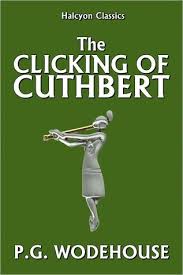


SHORT STORY: AKBAR’S DREAM

Copyright@shravancharitymission

    Once when Emperor Akbar was dreaming. The dream began with Akbar and Birbal walking towards each other on a moonless night.

    It was so dark that they could not see each other and they collided and fell.

    “Fortunately for me,” said the Emperor. “I fell into a pool of payasam—Kheer. But guess, what Birbal fell into?”
    “What, your Majesty?” asked the courtiers.

    “A gutter!”

    The court resounded with laughter. The emperor was thrilled that for once he had been able to score over Birbal.

    But Birbal remained unperturbed.

   “Your Majesty,” he said when the laughter died down. “Strangely, I too, had the same dream. But unlike you, I kept sleeping till the end. And when, you climbed out of that pool, of delicious payasam—kheer, and I, out of that stinking gutter, we discovered there was no water with which, we could clean ourselves, so guess, what we did?”

    “What?” asked the emperor, cautiously.

    “We licked each other clean!”

    The emperor became red with embarrassment and resolved never to try to get the better of Birbal again.

By Kamlesh Tripathi

*

https://kamleshsujata.wordpress.com

*

Share it if you like it

*

Shravan Charity Mission is an NGO that works for poor children suffering from life threatening diseases especially cancer. Our posts are meant for our readers that includes both children and adults and it has a huge variety in terms of content. We also accept donations for our mission. Should you wish to donate for the cause. The bank details are given below:

NAME OF ACCOUNT: SHRAVAN CHARITY MISSION

Account no: 680510110004635 (BANK OF INDIA)

IFSC code: BKID0006805

*

Our publications

GLOOM BEHIND THE SMILE

(The book is about a young cancer patient. Now archived in 7 prestigious libraries of the US, including, Harvard University and Library of Congress. It can also be accessed in MIT through Worldcat.org. Besides, it is also available for reading in Libraries and archives of Canada and Cancer Aid and Research Foundation Mumbai)

ONE TO TANGO … RIA’S ODYSSEY

(Is a book on ‘singlehood’ about a Delhi girl now archived in Connemara Library, Chennai and Delhi Public Library, GOI, Ministry of Culture, Delhi)

AADAB LUCKNOW … FOND MEMORIES

(Is a fiction written around the great city of Nawabs—Lucknow. It describes Lucknow in great detail and also talks about its Hindu-Muslim amity. That happens to be its undying characteristic. The book was launched in Lucknow International Literary Festival of 2014)

REFRACTIONS … FROM THE PRISM OF GOD

(Co-published by Cankids–Kidscan, a pan India NGO and Shravan Charity Mission, that works for Child cancer in India. The book is endorsed by Ms Preetha Reddy, MD Apollo Hospitals Group. It was launched in Lucknow International Literary Festival 2016)

TYPICAL TALE OF AN INDIAN SALESMAN

(Is a story of an Indian salesman who is, humbly qualified. Yet he fights his ways through unceasing uncertainties to reach the top. A good read not only for salesmen. The book was launched on 10th February, 2018 in Gorakhpur Lit-Fest. Now available in Amazon, Flipkart and Onlinegatha)

RHYTHM … in poems

(Published in January 2019. The book contains 50 poems. The poems describe our day to day life. The book is available in Amazon, Flipkart and Onlinegatha)

(ALL THE ABOVE TITLES ARE AVAILABLE FOR SALE IN AMAZON, FLIPKART AND OTHER ONLINE STORES OR YOU COULD EVEN WRITE TO US FOR A COPY)

*****



INTERESTING FACTS & QUOTES EPISODE 25


Significance of Maha Shivratri

Copyright@shravancharitymission

Shivratri as we all know is linked to Lord God Shiva. Shiva has a unique place in Hindu religion. Being incorporeal, or you could say intangible. Shiva alone, is usually not represented by a deity, instead is projected by a lingam. The names of ‘Shiva Temples’ in India bear the suffix of, ‘nath’ or ‘ishwar’ only to indicate that he is the teacher of all beings. One of the many names of Shiva is Sarveshwar, meaning lord of all. Images of Shiva often show him meditating in front of a Shivalingam.

     Hindu mythology talks of Krishna and Rama as avatars. They were born and they died. They are said to have worshipped Shiva. Other Gods also take physical birth, but Shiva neither takes birth, nor, he dies.

    Shiva incarnates himself in a human body. An occurrence that is celebrated during Shivratri. Shiva’s incarnation is associated with ‘ratri’ or night because he manifests in this world when it is enveloped in darkness of ignorance and evil. Omniscient Shiva dispels the darkness by giving humans the light of knowledge. The three parallel lines on the Shivaling are symbolic of Shiva’s knowledge of three aspects of time. The eye in the middle of the lines indicate the eye of wisdom that he gives to human souls.

    The Mahabharata refers to the regenerative role of Shiva, saying that when the world had plunged into darkness, and vicious proliferation. ‘An egg-like form of light descended and established a new order.’ In the ‘Dharma Sam-hita’ which is part of Shiva Purana, it is said that at the end of Kaliyug, during the time of destruction, a magnificent light revealed itself that was piercingly luminous, radiant and eternal. The world was created through this light.

    Shivratri is the commemoration of the arrival of divinity in this world to salvage humanity. In the Bhagwad Gita Krishna says that whenever righteousness declines and unrighteousness arises, he manifests for the protection of the good, and destruction of the wicked, and re-establishment of a holy order.

    According to a few God realized Yogis, Maha Shivaratri was the day when Shiva drank poisonous negativity to protect the world. The Maha Shivaratri is mentioned in several Puranas, particularly the Skanda PuranaLinga Purana and Padma Purana. These medieval era Shaiva texts present different mythologies associated with this festival, but all mention fasting and reverence for icons of Shiva such as the Lingam.

    Different legends describe the significance of Maha Shivaratri. According to one legend in Shaivism tradition, this is the night when Shiva performs the heavenly dance of creation, preservation and destruction.  The chanting of hymns, the reading of Shiva scriptures and the chorus of devotees, joins this cosmic dance and remembers Shiva’s presence, everywhere. According to another legend, this is the night when Shiva and Parvati got married. 

    A different legend states that the offering to Shiva icons such as the linga is an annual occasion to get over past sins if any, and to restart on a virtuous path and thereby reach Mount Kailash and liberation.

    The Gita insinuates at this role of Shiva when Krishna says: “I am the ‘mahakal’ (The God of Death). Death can never approach me.” Such an assertion can be made only by Shiva, the Supreme Parmatma. A soul that never takes birth, is Mrityunjaya, immortal.

    There is no room for confusion about the roles of Shiva and Krishna, because there is but one God, though deities may be many. The Supreme of all souls, across different faith traditions, is understood as being incorporeal and omnipotent. The Ocean of Peace, the Saviour, and the Almighty, is forever beyond the limitations of a physical existence.

    He performs his tasks by giving power to his spiritual children. These Gods and Goddesses, are the slayers or the killers of demons who are also embodiments of purity, love and wisdom. They are not supernatural beings, but humans with divine quality. They foster these qualities in their fellow humans, nurturing a new, elevated consciousness, and thus serve as divine instruments. In the task of creating a righteous world order.

    This is the secret of Maha Shivratri, which will be observed today, the night of the Supreme, comes to liberate his children from suffering and sorrow, as promised in the Gita.

By Kamlesh Tripathi

*

https://kamleshsujata.wordpress.com

*

Share it if you like it

*

Shravan Charity Mission is an NGO that works for poor children suffering from life threatening diseases especially cancer. Our posts are meant for our readers that includes both children and adults and it has a huge variety in terms of content. We also accept donations for our mission. Should you wish to donate for the cause. The bank details are given below:

NAME OF ACCOUNT: SHRAVAN CHARITY MISSION

Account no: 680510110004635 (BANK OF INDIA)

IFSC code: BKID0006805

*

Our publications

GLOOM BEHIND THE SMILE

(The book is about a young cancer patient. Now archived in 7 prestigious libraries of the US, including, Harvard University and Library of Congress. It can also be accessed in MIT through Worldcat.org. Besides, it is also available for reading in Libraries and archives of Canada and Cancer Aid and Research Foundation Mumbai)  

ONE TO TANGO … RIA’S ODYSSEY

(Is a book on ‘singlehood’ about a Delhi girl now archived in Connemara Library, Chennai and Delhi Public Library, GOI, Ministry of Culture, Delhi)

AADAB LUCKNOW … FOND MEMORIES

(Is a fiction written around the great city of Nawabs—Lucknow. It describes Lucknow in great detail and also talks about its Hindu-Muslim amity. That happens to be its undying characteristic. The book was launched in Lucknow International Literary Festival of 2014)

REFRACTIONS … FROM THE PRISM OF GOD

(Co-published by Cankids–Kidscan, a pan India NGO and Shravan Charity Mission, that works for Child cancer in India. The book is endorsed by Ms Preetha Reddy, MD Apollo Hospitals Group. It was launched in Lucknow International Literary Festival 2016)

TYPICAL TALE OF AN INDIAN SALESMAN

(Is a story of an Indian salesman who is, humbly qualified. Yet he fights his ways through unceasing uncertainties to reach the top. A good read not only for salesmen. The book was launched on 10th February, 2018 in Gorakhpur Lit-Fest. Now available in Amazon, Flipkart and Onlinegatha)

RHYTHM … in poems

(Published in January 2019. The book contains 50 poems. The poems describe our day to day life. The book is available in Amazon, Flipkart and Onlinegatha)

(ALL THE ABOVE TITLES ARE AVAILABLE FOR SALE IN AMAZON, FLIPKART AND OTHER ONLINE STORES OR YOU COULD EVEN WRITE TO US FOR A COPY)

*****



BOOK CORNER: THE PIECE OF STRING by Guy De Maupassant

Copyright@shravancharitymission

Khidki (Window)

–Read India Initiative—

This is only an attempt to create interest in reading. We may not get the time to read all the books in our lifetime. But such reviews, talk and synopsis will at least convey what the book is all about.


THE PIECE OF STRING

By Guy De Maupassant

    The story is set in the little village of Norman. It is about several months into the life of Maitre Hauchecorne, an old peasant. On an autumn market-day in Goderville, Hauchecorne is about to enter the square when he sees a piece of string on the ground. And he being of the saving kind, picks the string and keeps it with him. As he does so, he becomes aware that an enemy of his, M. Malandain, the local harness maker, is watching him. Ashamed to be seen picking up a remnant of string, the protagonist furtively hides it in his clothing and then pretends to be looking for something of value on the ground. With his head bent over in his intent search, he moves on towards the market.

    A few hours later, Hauchecorne is having his noon meal at the local tavern, Jordain’s, which is filled with local peasants, their gossipy chatter, and the powerful odour of food cooking. Twice the meal and the chatter are interrupted. First, by the voice of the town crier, who gravely announces the loss by M. Houlbreque of a pocketbook containing five hundred franc. Second, by the appearance of the chief of gendarmes, who summons Hauchecorne to see the mayor on business.

    Leaving his meal, the protagonist hurries to the mayor’s office. Where, he is unofficially confronted with the charge of having found Houlbreque’s pocketbook and of keeping it. The sole witness to the incident is Malandain, says the mayor. Hauchecorne sputters in rage at the accusation coming from his enemy. His defense—one that he shouts over and over—is that no one could seriously mistake a pocketbook for a piece of string. Those present do not believe him, and they say so, which enrages Hauchecorne even more. Malandain appears, and his reiterating of the charge against the protagonist leads to a lengthy and bitter exchange between them. To prove his innocence, Hauchecorne insists on being searched. But no pocketbook or large sum of money is found on him. The mayor dismisses him with a warning that as mayor he will consult a higher authority in the matter.

    Out in the village again, old Hauchecorne finds that many of the peasants have already heard of the event. But to set the record straight Hauchecorne begins to restate what he told the mayor and the others. That he found a piece of string and came across no pocketbook. To dramatize his points he turns his pockets inside out. Both his friends and strangers boldly tell him that they place no faith in his story, and that he is indeed an old rascal and a rogue.

    On his way home that night, and after his evening meal, he again stops his neighbours and strangers and again goes over his litany of facts in relation to the string and the pocketbook and the mayor’s false accusation. But sadly no single peasant steps forward to support his claim of innocence.

    The day’s events have made him ill. The next day, however, the pocketbook and its contents are found on the road and returned to their rightful owner. In his hour of triumph, Hauchecorne goes into the village and endlessly recounts the charge made against him the previous day and then the good news that fully exonerates him. Indeed, he spends the rest of the day on the road, returning often to the square to spread the news. At first he is convinced that his big adventure has ended most favourably for him, but as the day wears on, he senses that something is still wrong. He was easy now, yet something was worrying him without his knowing exactly what it is. People had a joking manner while they listened to him. They did not seem convinced. He seemed to feel their remarks behind his back.

    A week later, having brooded over the collective reaction to his supposed vindication, the protagonist returns once more to the Goderville market and once more confronts his peers with the details of the found string and the lost and returned pocketbook. On the streets and in Jordain’s, the response to Hauchecorne is the same: That he is guilty and both he and they know it. From time to time that day, he is even told that he had an accomplice who gave back the pocketbook, once Hauchecorne’s name had become implicated in the theft.

    Angry, dejected, and confused, he is unable to finish his meal at Jordain’s and is forced to return home amid the sound of mocking laughter. Going over and over in his mind the events that began one week before, Hauchecorne tries to come to terms with what has happened to him. He is positive of one thing. He is unable to prove his innocence because his reputation in Goderville for being crafty is well-known. He is, perhaps, capable of having done what they accused him of and even of boasting of it as a good trick. In other words, his reputation has preceded him—and that did not stand him in good stead now.

    Once he had prided himself on these tricky business practices. But now he had understood that those practices had predisposed his peasant neighbours and friends to doubt his innocence. The Norman peasant, suspicious by nature, was ready to think the worst of old Hauchecorne, and what all he could do.

    The gross injustice weighs heavily on the protagonist’s mind. He sees himself as being alone in the community (in fact, Guy de Maupassant does not mention Hauchecorne’s family, if he does have one). He knows, he has no defenders and many accusers. His brooding continues. His mind begins to get affected by his need to convince them that he is no dissembler. Hauchecorne goes forth every day in the village, redoubling his efforts to persuade any and all that he spied a piece of string in the road and put it in his pocket, but about the pocketbook, he knows nothing. The cruelty of the peasants is such that Hauchecorne becomes in short order, a butt of public jokes. The more they ask him to recite his tale of woe, the more elaborate and the more subtle his argument for his innocence becomes; as always, he is never believed.

    The protagonist falls ill in late December and is bedridden for some time. Early in January, he dies. In his deathbed delirium, his denials of wrongdoing are focused in a single phrase uttered repeatedly: “A little bit of string—a little bit of string.”

***

Synopsis by Kamlesh Tripathi

*

https://kamleshsujata.wordpress.com

*

Share it if you like it

*

Shravan Charity Mission is an NGO that works for poor children suffering from life threatening diseases especially cancer. Our posts are meant for our readers that includes both children and adults and it has a huge variety in terms of content. We also accept donations for our mission. Should you wish to donate for the cause. The bank details are given below:

NAME OF ACCOUNT: SHRAVAN CHARITY MISSION

Account no: 680510110004635 (BANK OF INDIA)

IFSC code: BKID0006805

*

Our publications

GLOOM BEHIND THE SMILE

(The book is about a young cancer patient. Now archived in 7 prestigious libraries of the US, including, Harvard University and Library of Congress. It can also be accessed in MIT through Worldcat.org. Besides, it is also available for reading in Libraries and archives of Canada and Cancer Aid and Research Foundation Mumbai)  

ONE TO TANGO … RIA’S ODYSSEY

(Is a book on ‘singlehood’ about a Delhi girl now archived in Connemara Library, Chennai and Delhi Public Library, GOI, Ministry of Culture, Delhi)

AADAB LUCKNOW … FOND MEMORIES

(Is a fiction written around the great city of Nawabs—Lucknow. It describes Lucknow in great detail and also talks about its Hindu-Muslim amity. That happens to be its undying characteristic. The book was launched in Lucknow International Literary Festival of 2014)

REFRACTIONS … FROM THE PRISM OF GOD

(Co-published by Cankids–Kidscan, a pan India NGO and Shravan Charity Mission, that works for Child cancer in India. The book is endorsed by Ms Preetha Reddy, MD Apollo Hospitals Group. It was launched in Lucknow International Literary Festival 2016)

TYPICAL TALE OF AN INDIAN SALESMAN

(Is a story of an Indian salesman who is, humbly qualified. Yet he fights his ways through unceasing uncertainties to reach the top. A good read not only for salesmen. The book was launched on 10th February, 2018 in Gorakhpur Lit-Fest. Now available in Amazon, Flipkart and Onlinegatha

(ALL THE ABOVE TITLES ARE AVAILABLE FOR SALE IN AMAZON, FLIPKART AND OTHER ONLINE STORES OR YOU COULD EVEN WRITE TO US FOR A COPY)

*****


SHORT STORY: RECIPE OF THE WISE-MAN

Copyright@shravancharitymission

    There was once a wise man who lived in a village. Villagers used to come to him for advice and consultation. But to the amazement of the wise man, most of the people came to him with the same problem.

    One day while he was sitting with all his disciples they started of as usual with their small and petty problems. The wise man kept listening to them. At one point he said hold on after which he cracked a joke. When everyone burst into an uncontrollable laughter.

     After this people resumed with their problems. But after a while he again requested them to stop for a moment when he cracked the same joke for the second time. But this time, only a few laughed and that too in a half hearted manner, and only a few smiled. After which disciples again started of with their problems. But after sometime the wise man again asked them to stop when he cracked the same joke for the third time. But this time neither did anyone laugh nor did anyone smile.

    Then he said, ‘You can’t laugh at the same joke over and over again. So why are you crying about the same problem again and again.

    MORAL OF THE STORY: Don’t just go about discussing the same problem again and again as it will lose its weightage and will only be a waste of time and energy.

***

Posted by Kamlesh Tripathi

*

https://kamleshsujata.wordpress.com

*

Share it if you like it

*

Shravan Charity Mission is an NGO that works for poor children suffering from life threatening diseases especially cancer. Our posts are meant for our readers that includes both children and adults and it has a huge variety in terms of content. We also accept donations for our mission. Should you wish to donate for the cause. The bank details are given below:

NAME OF ACCOUNT: SHRAVAN CHARITY MISSION

Account no: 680510110004635 (BANK OF INDIA)

IFSC code: BKID0006805

*

Our publications

GLOOM BEHIND THE SMILE

(The book is about a young cancer patient. Now archived in 7 prestigious libraries of the US, including, Harvard University and Library of Congress. It can also be accessed in MIT through Worldcat.org. Besides, it is also available for reading in Libraries and archives of Canada and Cancer Aid and Research Foundation Mumbai)  

ONE TO TANGO … RIA’S ODYSSEY

(Is a book on ‘singlehood’ about a Delhi girl now archived in Connemara Library, Chennai and Delhi Public Library, GOI, Ministry of Culture, Delhi)

AADAB LUCKNOW … FOND MEMORIES

(Is a fiction written around the great city of Nawabs—Lucknow. It describes Lucknow in great detail and also talks about its Hindu-Muslim amity. That happens to be its undying characteristic. The book was launched in Lucknow International Literary Festival of 2014)

REFRACTIONS … FROM THE PRISM OF GOD

(Co-published by Cankids–Kidscan, a pan India NGO and Shravan Charity Mission, that works for Child cancer in India. The book is endorsed by Ms Preetha Reddy, MD Apollo Hospitals Group. It was launched in Lucknow International Literary Festival 2016)

TYPICAL TALE OF AN INDIAN SALESMAN

(Is a story of an Indian salesman who is, humbly qualified. Yet he fights his ways through unceasing uncertainties to reach the top. A good read not only for salesmen. The book was launched on 10th February, 2018 in Gorakhpur Lit-Fest. Now available in Amazon, Flipkart and Onlinegatha

(ALL THE ABOVE TITLES ARE AVAILABLE FOR SALE IN AMAZON, FLIPKART AND OTHER ONLINE STORES OR YOU COULD EVEN WRITE TO US FOR A COPY)

*****
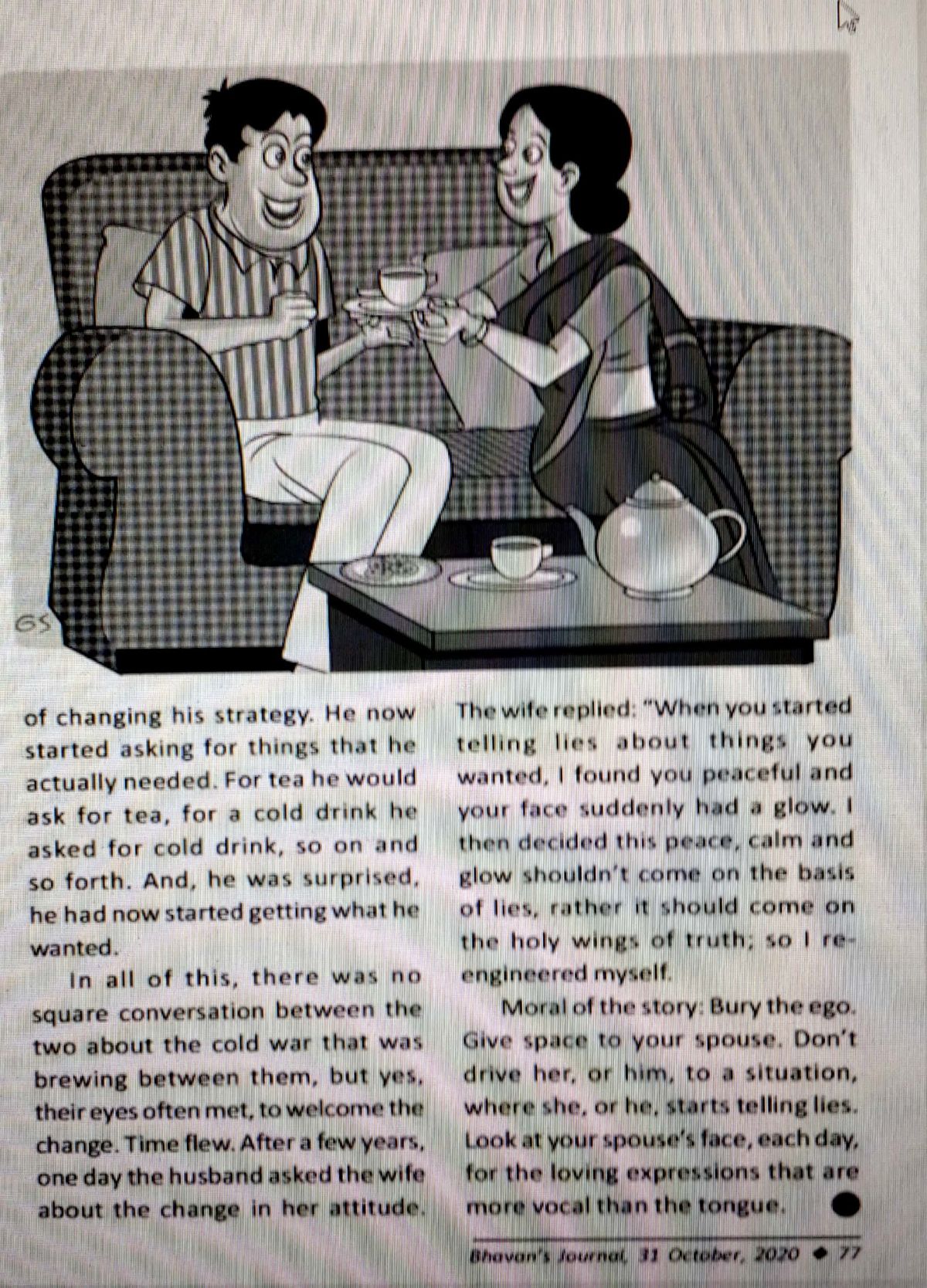


POEM: MOTHER

Copyright@shravancharitymission


By Kamlesh Tripathi

*

https://kamleshsujata.wordpress.com

*

Share it if you like it

*

Shravan Charity Mission is an NGO that works for poor children suffering from life threatening diseases especially cancer. Our posts are meant for our readers that includes both children and adults and it has a huge variety in terms of content. We also accept donations for our mission. Should you wish to donate for the cause. The bank details are given below:

NAME OF ACCOUNT: SHRAVAN CHARITY MISSION

Account no: 680510110004635 (BANK OF INDIA)

IFSC code: BKID0006805

*

Our publications

GLOOM BEHIND THE SMILE

(The book is about a young cancer patient. Now archived in 7 prestigious libraries of the US, including, Harvard University and Library of Congress. It can also be accessed in MIT through Worldcat.org. Besides, it is also available for reading in Libraries and archives of Canada and Cancer Aid and Research Foundation Mumbai)  

ONE TO TANGO … RIA’S ODYSSEY

(Is a book on ‘singlehood’ about a Delhi girl now archived in Connemara Library, Chennai and Delhi Public Library, GOI, Ministry of Culture, Delhi)

AADAB LUCKNOW … FOND MEMORIES

(Is a fiction written around the great city of Nawabs—Lucknow. It describes Lucknow in great detail and also talks about its Hindu-Muslim amity. That happens to be its undying characteristic. The book was launched in Lucknow International Literary Festival of 2014)

REFRACTIONS … FROM THE PRISM OF GOD

(Co-published by Cankids–Kidscan, a pan India NGO and Shravan Charity Mission, that works for Child cancer in India. The book is endorsed by Ms Preetha Reddy, MD Apollo Hospitals Group. It was launched in Lucknow International Literary Festival 2016)

TYPICAL TALE OF AN INDIAN SALESMAN

(Is a story of an Indian salesman who is, humbly qualified. Yet he fights his ways through unceasing uncertainties to reach the top. A good read not only for salesmen. The book was launched on 10th February, 2018 in Gorakhpur Lit-Fest. Now available in Amazon, Flipkart and Onlinegatha

(ALL THE ABOVE TITLES ARE AVAILABLE FOR SALE IN AMAZON, FLIPKART AND OTHER ONLINE STORES OR YOU COULD EVEN WRITE TO US FOR A COPY)

*****