Tag Archives: ramayana

THE TWO MAJOR HISTORICAL EPICS IN HINDUISM-VALMIKI, TULSIDAS AND VED VYAS

Copyright@shravancharitymission


    Had it not been for the ultimate epic writers and sages such as Valmiki and Tulsidas who wrote Ramayan, and Ved Vyas who wrote Mahabharat. Hinduism would have remained incomplete and perhaps in the confines of God alone. It is only because of these great all time writers. The history of Hinduism has spread so comprehensively all across the world since inception.

    Ramayan and Mahabharat are the two historical sagas referred as Itihas (history) in Hinduism. That serves as the eternal inspiration for humanity and is considered as the putative and exemplary realization of the four … purusharthas (efforts): Dharma (righteous and dutiful) Artha (wealth) Kama (desire and fulfillment) and Moksha (liberation).

    Ramayan in the real sense is the ‘abode of Lord Ram’ and is smaller of the two great works. The tireless epic mirrors the highest ideals of Hindu tradition, culture and civilization. The story relates to Treta Yug (one of the four ages of the world) and centers on Ram. The prince of Ayodhya and the incarnation of Lord Vishnu, and his wife Sita as the incarnation of Mother Lakshmi. Ramayan sings the glory of Lord Ram and advises humanity on how to lead a fulfilling life and attain the four purusharthas. The epic is profound and timeless in its popularity. It teaches with the analogy of symbolism. As to how an individual can evolve into greatness and perfection.

    Sage Valmiki’s Ramayana has been translated into most Indian languages, as well as several foreign languages, including Russian. It consists of 24,000 stanzas in seven cantos, and depicts Rama as the ideal king, son, brother, friend, and husband. In Bharat, Lakshman, and Shatrughan, we see exemplified ideal brothers. In Sita, we have the purest flower of Indian womanhood. Who is devoted to her Lord in thought, word, and deed.

    Ramayana is an ideal textbook of morals and values. That inspires nobler dimensions of character and conduct. Other noteworthy and famous versions of Ramayana include Sage Veda Vyasa’s Adhyatma Ramayana, Goswami Tulsidasa’s Shri Ramcharitamanas (Tulsi Ramayana), and Kambar’s Kamba Ramayana.

    Mahabharat on the other hand is an epic. That is more than eight times the size of Homer’s Iliad and Odyssey combined. In philosophical content it is unparalleled to any other literary work in the world. This grand book of knowledge contains more than 100,000 stanzas in 18 chapters and is the work of the renowned Sage Veda Vyasa.

    The underlying theme of Mahabharata is yato dharma tato jayah, “where there is dharma, there is victory.” Indicating the ultimate triumph of good over evil and the establishment of righteousness.

    The story unfolds toward the end of Dvapara Yuga and describes the genealogy and events leading up to, and after, the familial war between the royal cousins.

    The story is used as a vehicle. To convey eternal philosophical truths of the highest order. It is said, “that which is in Mahabharata can be seen elsewhere, but that which is not there cannot be seen anywhere else.” This gives an idea of the comprehensiveness of subjects in the epic. Which is full of lofty instructions on all aspects of human life and endeavour—an inspiring saga of India’s past glory, portraying all that is great and noble in humanity.

    The guiding spirit throughout the epic is the divine figure of Lord Krishna. Who brings the pure and the righteous to Himself, and destroys the evil and the evildoers. Shrimad Bhagwad Gita or the “Lord’s Song” is part of Mahabharata.


*

Posted by Kamlesh Tripathi

*

                                                   https://kamleshsujata.wordpress.com

     *

Share if you like it

*

Shravan Charity Mission is an NGO that works for poor children suffering from life threatening diseases. Should you wish to donate for the cause the bank details are given below:

NAME OF ACCOUNT: SHRAVAN CHARITY MISSION

Account no: 680510110004635 (BANK OF INDIA)

IFSC code: BKID0006805

*

Our publications

GLOOM BEHIND THE SMILE

ONE TO TANGO … RIA’S ODYSSEY

AADAB LUCKNOW … FOND MEMORIES

REFRACTIONS … FROM THE PRISM OF GOD

(CAN BE BOUGHT FROM ON LINE BOOK STORES OR WRITE TO US FOR COPIES)

*****


SHORT STORY: FORGIVENESS-TO REIGN OVER JEALOUSY

Copyright@shravancharitymission

By Kamlesh Tripathi

forgiveness vashist vishvamitra

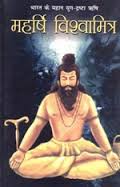
King Vishvamitra along with his army had left for Aakhet. And on the way while he was crossing the dense forest he came somewhat close to Maharishi Vashist’s ashram, and thought of paying him a visit. Maharishi Vashist was too pleased to receive him and offered him heartfelt courtesies and hospitality. But there was something that was now bothering Vishvamitra. He could not understand how an ever-meditating Maharishi Vashist from the confines of his small ashram and cottage feed a sumptuous meal to his entire army.

And when he came to know that this was possible because of his holy cow Nandini, he asked for the cow from Maharishi Vashist. But Maharishi Vashist refused to part with his holy cow at any cost. This annoyed Vishvamitra who then by using force tried to take away the cow from Vashist. But Nandini at the instance of Vashist mooed loudly to produce some tough warriors who then drove out Vishvamitra and his army from the surroundings of the ashram.

Vishvamitra then attacked Maharishi Vashist with his Divyastra (supernatural weapons) but in front of Vashist’s Brahmdand (weapons conferred by Lord Brahma) his Divyastra failed. This made Vishvamitra, who was Kshatriya by caste realise that the might of Kshatriya can do no harm to a Brahmin. Vishvamitra therefore decided to seek Brahminism through intense tapsiya (meditation)

And after many years of intense and harsh tapasiya he was able to grab the attention of Lord Brahma, who was now happy with his efforts and therefore gave him darshan (auspicious sight) but only to say—‘in case Maharishi Vashist recognises you as a Brahm-rishi you will become a Brahmin.’

It was both difficult and insulting for Vishvamitra to pray to Vashist as he considered him as his rival. And Vashist always addressed him as Rajrishi whenever he met him, and this further irritated Vishvamitra. And by now he had become a great enemy of Vashist. Vishwamitra then motivated a rakshas (demon) to kill all the hundred sons of Vashist, and was always on the lookout for an opportunity to disgrace and insult Vashist.

Since Vishvamitra was failing in all his attempts to demean Maharishi Vashist, he decided to wield the craftsmanship of Lord Brahma himself. And this was something crazy as he decided to create a new shristi (Universe) and become its Brahma. And with his tapobal (meditating power) he started creating a new world. New cereals, new flora and fauna, new animals—and he kept on creating and creating, as if testing Lord Brahma’s patience. And in the end Lord Brahma came and stopped him. And assured that whatever he had already created will remain and co-exist exist with the existing.

And this further frustrated Vishvamitra. For he realised nothing was succeeding for him and so he decided to eliminate Maharishi Vashist. And therefore: after arming himself with weapons, in the night he quietly sneaked into Vashist’s ashram. Actually he wanted to kill Vashist on the sly and without his knowing. It was a moonlit night. And outside his cottage Maharishi Vashist was sitting on his vedi (seat) along with his wife. Where, Vishvamitra was waiting for an opportune moment in the hiding, close by and behind a tree, to attack him.

And enamoured by the ambience Vashista’s wife Arundhati said—‘ what a beautiful moonlit night.’

Vashist replied—‘today’s moonlight is as bright and pure as the recent tapasya of Vishvamitra which is spreading in all directions.’

Vishvamitra upon hearing this went numb. He cursed himself for what he was planning to do—‘person whom you’ve come to kill and of whom you are so jealous; see the stature of that person. He is a Mahapurush, because, he is even praising Vishvamitra, the killer of his hundred sons, when in isolation with his wife.’

Vishvamitra dismantled all his shastras that he had worn on him. And after that he ran towards Maharishi Vashist and lay prostrate in front of him asking for forgiveness. The chronic jealousy in him was over in minutes. Simple forgiveness had conquered Vishvamitra. By dropping his weapons and forsaking his jealousy Vishvamitra had become a Brahmanav. Maharishi Vashist got off his vedi and with both his hands lifted Vishvamitra and while pulling him up he was saying—‘please get up Brahmrishi.’

***