Tag Archives: kamlesh tripathi

SHORT STORY: The Wise Blind Man

Copyright@shravancharitymission

    There was once an old blind man who was walking past his farm located near a jungle in the night. He was carrying a lantern … so that he could see his way through.

    On the way he met a fellow villager who recognised the blind man. The villager asked.

    ‘Bhaiya if you can’t see where is the need to carry a lantern?’

    The old blind man halted where he was and said.

    ‘So that fools don’t stumble against me and thieves should know that I can see.’

    The fellow villager was stunned at the blind man’s clever logic.

Moral of the story: You don’t always get hit by your own mistake always. You could be hit by other’s foolishness too. And don’t always put your shortcomings in front of the public.

By Kamlesh Tripathi

*

https://kamleshsujata.wordpress.com

*

Share it if you like it

*

Shravan Charity Mission is an NGO that works for poor children suffering from life threatening diseases especially cancer. Our posts are meant for our readers that includes both children and adults and it has a huge variety in terms of content. We also accept donations for our mission. Should you wish to donate for the cause. The bank details are given below:

NAME OF ACCOUNT: SHRAVAN CHARITY MISSION

Account no: 680510110004635 (BANK OF INDIA)

IFSC code: BKID0006805

*

Our publications

GLOOM BEHIND THE SMILE

(The book is about a young cancer patient. Now archived in 7 prestigious libraries of the US, including, Harvard University and Library of Congress. It can also be accessed in MIT through Worldcat.org. Besides, it is also available for reading in Libraries and archives of Canada and Cancer Aid and Research Foundation Mumbai)  

ONE TO TANGO … RIA’S ODYSSEY

(Is a book on ‘singlehood’ about a Delhi girl now archived in Connemara Library, Chennai and Delhi Public Library, GOI, Ministry of Culture, Delhi)

AADAB LUCKNOW … FOND MEMORIES

(Is a fiction written around the great city of Nawabs—Lucknow. It describes Lucknow in great detail and also talks about its Hindu-Muslim amity. That happens to be its undying characteristic. The book was launched in Lucknow International Literary Festival of 2014)

REFRACTIONS … FROM THE PRISM OF GOD

(Co-published by Cankids–Kidscan, a pan India NGO and Shravan Charity Mission, that works for Child cancer in India. The book is endorsed by Ms Preetha Reddy, MD Apollo Hospitals Group. It was launched in Lucknow International Literary Festival 2016)

TYPICAL TALE OF AN INDIAN SALESMAN

(Is a story of an Indian salesman who is, humbly qualified. Yet he fights his ways through unceasing uncertainties to reach the top. A good read not only for salesmen. The book was launched on 10th February, 2018 in Gorakhpur Lit-Fest. Now available in Amazon, Flipkart and Onlinegatha)

RHYTHM … in poems

(Published in January 2019. The book contains 50 poems. The poems describe our day to day life. The book is available in Amazon, Flipkart and Onlinegatha)

(ALL THE ABOVE TITLES ARE AVAILABLE FOR SALE IN AMAZON, FLIPKART AND OTHER ONLINE STORES OR YOU COULD EVEN WRITE TO US FOR A COPY)

*****
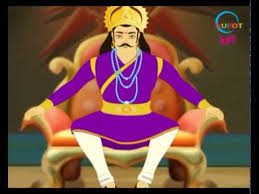


BOOK REVIEW: SUDHA MURTHY … The Upside Down King

Copyright@shravancharitymission

Khidki (Window)

–Read India Initiative—

This is only an attempt to create interest in reading. We may not get the time to read all the books in our lifetime. But such reviews, talk and synopsis will at least convey what the book is all about.

    This book is about—‘Unusual tales of Rama and Krishna.’ But before that let me give you a brief introduction of Sudha Murthy.

    Sudha Murthy was born in 1950 in Shiggaon, north Karnataka. She did her M-Tech in computer science, and is now the chairperson of the Infosys Foundation. A prolific writer both in English and Kannada, she has written novels, technical books, travelogues, collections of short stories and non-fictional pieces. She has also written eight bestselling books for children. Her books have been translated into, all major Indian languages. Sudha Murthy is the recipient of the R.K. Narayan Award for Literature (2006), the Padma Shri (2006), the Attimabbe Award from the Government of Karnataka for excellence in Kannada literature (2011) and, most recently the Lifetime Achievement Award at the 2018 Crossword Book Awards.

    Mythology is an appropriate means to connect the past with the present, and it also keeps the future in focus.  Talking of mythology did you know there was a time when bears spoke, the moon laughed and babies were found inside the fish? And have you ever seen a man with a thousand arms?

    The tales in this collection of short stories revolve around the two most popular avatars of Lord Vishnu—Rama and Krishna—and their lineages. There are countless stories on the two, yet most are simply disappearing from the hearts and minds of the present generation. So there is a great need to connect the youth of today with these stories. This is what the book does.

    Bestselling author Sudha Murthy, takes you on a whirlwind tour, where she narrates about the days, when demons and deities walked alongside humans, where animals could talk and gods granted the most glorious boons to common people.

    The book is a publication of Puffin Books. The content has some twenty three short stories out of Hindu mythology. All very interesting. Written in lucid English. The power of such short stories is immense as it often reveals what you don’t know and therefore comes to you as a surprise. It gives you a very precise moral lesson most of the times.

    The book brings to you unusual tales of Lord Rama and Krishna. It brings to you, life lessons, of various kinds, where you learn about the lineages of so many Devtas and Asuras. Most of these stories are available in our mythological texts such as Ramayana, Gita, Vedas and Puranas. Sudha Murthy as an author has put them in a logical sequence. To give you a flavour of the book I will briefly narrate one such story that the author has incorporated in this book from the ilk of mythology. It goes as follows …

    The kingdom of Kishkindha was ruled by the monkey king Bali along with his brother Sugriva. Kishkinda lies on the banks of river Tungabhadra and is surrounded by mountains.

    One day, Mayavi, a demon, approached the gates of the kingdom and challenged Bali to take up a fight with him, which Bali couldn’t have refused. He accepted the challenge and agreed to fight with him. Soon, the battle began. Sugriva became a witness to the fight. As the fight progressed, Mayavi entered a nearby cave and Bali in his haste followed suit. But before entering the cave, Bali asked Sugriva to wait for him and went inside alone.

    Six months passed but Bali did not emerge from the cave. Finally, Sugriva heard screams and saw blood flowing out of the cave. He concluded that his brother had been killed. So, with a heavy heart, and great effort Sugriva rolled a bolder to seal the cave’s mouth to contain the demon within.

    The kingdom of Kishkindha was now without a king. Sugriva took over, and became the acting ruler. But one day, Bali walked into the kingdom unexpected—hale and hearty. When he saw Sugriva, he got upset with him and said. ‘How dare you rule my kingdom? And why did you seal the mouth of the cave, when I, only told you, to wait for me.’

    Sugriva folded his hands and replied earnestly, ‘my dear brother, I heard terrible screams and saw a lot of blood on the ground near the cave. I mistakenly assumed that the demon perhaps had killed you, and in the interest of, wanting to save the subjects of the kingdom, I blocked the mouth of the cave. I am only the acting ruler and took over in your absence. Kindly forgive me and take back your kingdom.’

    Bali, however, was in no mood to listen and forgive. ‘Do you think I can die so easily at the hands of a mere demon? Aren’t you aware of my boons and my strength? Sugriva, your actions stink of deceit. You never intended to let me out. On the contrary, you did your best to ensure, that I remain trapped. And you have always had your lustful eyes on my beautiful wife Tara. Come on, admit, all of this is true.’

    Sugriva’s response in return did not satisfy Bali. He yelled at his brother, ‘Leave my kingdom now. If you enter my kingdom again I will kill you. And as an act of revenge I will detain your wife Ruma. She will not be accompanying you.’

    Sugriva was now choice less, so he left the kingdom immediately.

    Gradually, Bali became very powerful and a cause of concern for sage Matanga who lived close by, on Rishyamukha Mountain. Bali’s arrogance grew by leaps and bounds. This was when he was noticed by sage Matanga, who then cursed and commanded him to leave the kingdom of Kishkindha or he would die, and that, he shall also die instantly, the moment he re-enters the kingdom of Kishkindha.

        Bali, therefore, stayed away from Kishkindha. Sugriva took advantage of this situation and came back to the kingdom to rule it. But he was aware that he must not cross the kingdom’s boundaries at any cost for he’ll get killed by Bali.

    But in spite of all odds, Bali remained extremely powerful. He had the ability to travel in all directions and offer his daily prayers to Lord Surya, who moved from east to west. He even had a special boon that allowed him to gain half of his opponent’s energy whenever he fought anyone in a solo combat. It made him virtually indestructible, but he remained unhappy at the loss of his kingdom.

    Kishkindha is recognised today as the heritage site of the Hampi in northern Karnataka. It is this kingdom that gave rise to the great empire of Vijayanagara.

    This was just a sample. The stories indeed are interesting, but the book lacks proper editing. I would give it seven out of ten.

By Kamlesh Tripathi

*

https://kamleshsujata.wordpress.com

*

Share it if you like it

*

Shravan Charity Mission is an NGO that works for poor children suffering from life threatening diseases especially cancer. Our posts are meant for our readers that includes both children and adults and it has a huge variety in terms of content. We also accept donations for our mission. Should you wish to donate for the cause. The bank details are given below:

NAME OF ACCOUNT: SHRAVAN CHARITY MISSION

Account no: 680510110004635 (BANK OF INDIA)

IFSC code: BKID0006805

*

Our publications

GLOOM BEHIND THE SMILE

(The book is about a young cancer patient. Now archived in 7 prestigious libraries of the US, including, Harvard University and Library of Congress. It can also be accessed in MIT through Worldcat.org. Besides, it is also available for reading in Libraries and archives of Canada and Cancer Aid and Research Foundation Mumbai)  

ONE TO TANGO … RIA’S ODYSSEY

(Is a book on ‘singlehood’ about a Delhi girl now archived in Connemara Library, Chennai and Delhi Public Library, GOI, Ministry of Culture, Delhi)

AADAB LUCKNOW … FOND MEMORIES

(Is a fiction written around the great city of Nawabs—Lucknow. It describes Lucknow in great detail and also talks about its Hindu-Muslim amity. That happens to be its undying characteristic. The book was launched in Lucknow International Literary Festival of 2014)

REFRACTIONS … FROM THE PRISM OF GOD

(Co-published by Cankids–Kidscan, a pan India NGO and Shravan Charity Mission, that works for Child cancer in India. The book is endorsed by Ms Preetha Reddy, MD Apollo Hospitals Group. It was launched in Lucknow International Literary Festival 2016)

TYPICAL TALE OF AN INDIAN SALESMAN

(Is a story of an Indian salesman who is, humbly qualified. Yet he fights his ways through unceasing uncertainties to reach the top. A good read not only for salesmen. The book was launched on 10th February, 2018 in Gorakhpur Lit-Fest. Now available in Amazon, Flipkart and Onlinegatha)

RHYTHM … in poems

(Published in January 2019. The book contains 50 poems. The poems describe our day to day life. The book is available in Amazon, Flipkart and Onlinegatha)

(ALL THE ABOVE TITLES ARE AVAILABLE FOR SALE IN AMAZON, FLIPKART AND OTHER ONLINE STORES OR YOU COULD EVEN WRITE TO US FOR A COPY)

*****
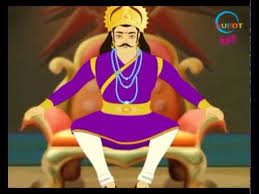


SHORT STORY: HANUMAN’S VISIT TO PATALA LOK

Copyright@shravancharitymission

    Whenever Yamraj, the Lord of Death attempted to meet Lord Rama, to tell him about, the amount of time, he had, in his human form, Hanuman would refuse entry to him. Yamraj was aware of Hanuman’s strength and the boon of immortality granted to him, so he did not wish to cross him.

    Rama, however, understood, that a human life has to complete the cycle of birth and death. He knew Hanuman was trying to protect him from his death by avoiding his meeting with Yamaraj. But Rama knew at some point in time he has to meet Yamaraj. But he realised that it was not possible to do so with Hanuman around.

    One day Rama and Hanuman went out for a walk. Rama took off his ring and began playing with it. He then discreetly dropped it into a small crack on the ground, and then requested Hanuman, ‘I have dropped my ring somewhere. Will you please retrieve it for me.?’

    Hanuman nodded. He then transformed his body into a miniature so that he could easily get into the crack on the ground. But the closer he got to the ring, the more, the ring fell below and below. He had no choice but to follow it.

    After sometime the ring reached Patala Lok. There Hanuman met Nagaraja, the king of the serpents. Hanuman said, ‘Dear Sir, Rama’s ring has fallen somewhere here. Will you please give it back to me? I must return it to him. Nagaraja replied.

    ‘I have a room full of rings. Everything that falls from the earth is kept there. You can go to the room and search for it yourself.’

    Hanuman acquiesced and entered the room, where he saw hundreds of rings on display. He kept searching until he found the ring that he was looking for. It seemed to take barely a few minutes. Hanuman thanked Nagaraja and made his way back to Ayodhya. But time takes on a different meaning in Patala Lok. A second there is worth many years on earth. By the time Hanuman reached the city, a lot of time had already passed, and Rama had already left his mortal body and achieved Nirvana.

    To his dismay, Hanuman realized that he had missed seeing Lord Rama exit the earth. Hanuman felt miserable but knew that Lord Rama wanted things to play out in that manner.

    Even today, Hanuman continues to live on our planet. There is a strong belief that whenever there are prayers for Rama. Hanuman appears in his invisible form to bless the devotees.

By Kamlesh Tripathi

*

https://kamleshsujata.wordpress.com

*

Share it if you like it

*

Shravan Charity Mission is an NGO that works for poor children suffering from life threatening diseases especially cancer. Our posts are meant for our readers that includes both children and adults and it has a huge variety in terms of content. We also accept donations for our mission. Should you wish to donate for the cause. The bank details are given below:

NAME OF ACCOUNT: SHRAVAN CHARITY MISSION

Account no: 680510110004635 (BANK OF INDIA)

IFSC code: BKID0006805

*

Our publications

GLOOM BEHIND THE SMILE

(The book is about a young cancer patient. Now archived in 7 prestigious libraries of the US, including, Harvard University and Library of Congress. It can also be accessed in MIT through Worldcat.org. Besides, it is also available for reading in Libraries and archives of Canada and Cancer Aid and Research Foundation Mumbai)  

ONE TO TANGO … RIA’S ODYSSEY

(Is a book on ‘singlehood’ about a Delhi girl now archived in Connemara Library, Chennai and Delhi Public Library, GOI, Ministry of Culture, Delhi)

AADAB LUCKNOW … FOND MEMORIES

(Is a fiction written around the great city of Nawabs—Lucknow. It describes Lucknow in great detail and also talks about its Hindu-Muslim amity. That happens to be its undying characteristic. The book was launched in Lucknow International Literary Festival of 2014)

REFRACTIONS … FROM THE PRISM OF GOD

(Co-published by Cankids–Kidscan, a pan India NGO and Shravan Charity Mission, that works for Child cancer in India. The book is endorsed by Ms Preetha Reddy, MD Apollo Hospitals Group. It was launched in Lucknow International Literary Festival 2016)

TYPICAL TALE OF AN INDIAN SALESMAN

(Is a story of an Indian salesman who is, humbly qualified. Yet he fights his ways through unceasing uncertainties to reach the top. A good read not only for salesmen. The book was launched on 10th February, 2018 in Gorakhpur Lit-Fest. Now available in Amazon, Flipkart and Onlinegatha)

RHYTHM … in poems

(Published in January 2019. The book contains 50 poems. The poems describe our day to day life. The book is available in Amazon, Flipkart and Onlinegatha)

(ALL THE ABOVE TITLES ARE AVAILABLE FOR SALE IN AMAZON, FLIPKART AND OTHER ONLINE STORES OR YOU COULD EVEN WRITE TO US FOR A COPY)

*****


BOOK REVIEW: A GARLAND OF MEMORIES by Ruskin Bond

Copyright@shravancharitymission

Khidki (Window)

–Read India Initiative—

This is only an attempt to create interest in reading. We may not get the time to read all the books in our lifetime. But such reviews, talk and synopsis will at least convey what the book is all about.

    It is one of the cutest books I’ve ever read. It reminds me of a book titled ‘Glimpses of Bengal’ by Gurudev Rabindranath Tagore that I had read some time ago. Glimpses of Bengal is the English translation of Gurudev’s letters that he had written in Bengali, and they indeed were rich with scenic description and personal thoughts when he was a youth.

    It appears to me Ruskin Bond has taken the cue from Gurudev in converting his essays and short stories into a publication titled ‘A Garland of Memories.’

    The book is a Natraj Publishers publication and is available in Amazon for Rs 173.

    It’s a flavoursome narration of essays and short stories by the author. On a day when you have nothing much to do, pick up, this book and you’re sure to have a good time. It’s a slim spine just about 146 pages.

    The author narrates the most interesting tales, from his chance encounter with Rudyard Kipling’s ghost, to his adventures with his eccentric Uncle Ken; being witness to a bitter battle between a brave snake and a brave mongoose and two foolhardy birds. It is about the hungry pet python who ate up everyone’s lunch and the mythical snow-woman who almost exists.

    The narration is in Bond’s unique, lucid, simple prose and is based on his real life experiences. I’m amazed at Ruskin Bond’s ground knowledge, of forests, animals, flora and fauna, and the jungles of Mussorie, Dehradun and one can say the entire Uttarakhand. In that he very aptly mixes the experiences of his three year stay in Europe. And, oh boy, with that, the cocktail becomes ecstatic. I expect this collection to make smile laugh and even cry.

    There are in all thirty-four chapters—comprising essays and short-stories. They were originally written for various Indian publications—The statesman, Times of India, Hindustan Times, Deccan Herald, among others—and several were published in the children’s magazines and some even in foreign magazines.

    Friends, if you are interested in nature, don’t miss books, such as, ‘Glimpses of Bengal’ and ‘A Garland of Memories’ that describe the nature of yester-years so very well. Mind you with the degradation of environment and the cutting of forests and trees, such books are becoming more and more precious or you could say priceless. The book also glimpses past a ghost story.

    A line that I particularly liked in the book goes as follows:

    Live long, my friend, be wise and strong,

    But do not take from any man his song.

    Having canvassed so much about the book let me also narrate a synopsis of an episode out of it, that’ll give you an umbrella flavour of the content. It is about flattery. Narration is in first person.

    When I was a boy in Dehradun, there was a mango-grove just opposite my bungalow. It belonged to Seth Govind Ram (May his soul rest in peace). During the mango season, it was fiercely guarded by a giant chowkidar called Phambiri. All my efforts to get into the mango-grove were normally repulsed by him. On one occasion I even received a mild lathi-blow on my backside.

    ‘I just want to climb the tree,’ I pleaded.

    ‘Come back when the mango season is over,’ said Phambiri with a vicious smile copied from a filmi-villain.

    I then discovered he was an ex-wrestler. A champion in his youth, who had the distinction of over-throwing the great King Kong (I did not know at the time that King Kong, in his bad years, was constantly being thrown out of the ring). Whenever I passed the grove and saw Phambari, I would comment on his great strength, his superb physique, his muscles like cricket balls, and his bull like neck and shoulders. Gradually he warmed up to me, and began to tell me of his exploits. I acclaimed them. Then he showed me his feats of strength, like picking up rocks and hurling them across the road. I applauded and applauded. And before long, he invited me into the mango grove, and by the end of the week I was having all the mangoes I wanted to. To be frank the guardian of the grove actually pressed them upon me.

    Flattery will get you everywhere.

    One of the first lessons learnt in school is that, the majority of teachers are susceptible to the most blatant forms of flattery. Hard work helps a little, but the child at the top of the class is often held in high esteem by the teachers. This paragon of virtue, wears an, adoring smile, and always waits, till the teacher is out of hearing, before slandering her. ‘They do but flatter with their lips, and dissemble their real feelings in their double heart.’

    There is that cynical old ploy of telling a woman she looks ten years younger than her actual age. This doesn’t always work. I once told a woman (who looked fifty) that she looked attractive forty, and she hit me, over the ear, with her handbag. It turned out she was thirty. Be careful when you flatter. The results can sometimes be unexpected. Ruskin Bond wrote this piece some 40 years ago.

    I would give this book seven out of ten.

Posted by Kamlesh Tripathi

*

https://kamleshsujata.wordpress.com

*

Share it if you like it

*

Shravan Charity Mission is an NGO that works for poor children suffering from life threatening diseases especially cancer. Our posts are meant for our readers that includes both children and adults and it has a huge variety in terms of content. We also accept donations for our mission. Should you wish to donate for the cause. The bank details are given below:

NAME OF ACCOUNT: SHRAVAN CHARITY MISSION

Account no: 680510110004635 (BANK OF INDIA)

IFSC code: BKID0006805

*

Our publications

GLOOM BEHIND THE SMILE

(The book is about a young cancer patient. Now archived in 7 prestigious libraries of the US, including, Harvard University and Library of Congress. It can also be accessed in MIT through Worldcat.org. Besides, it is also available for reading in Libraries and archives of Canada and Cancer Aid and Research Foundation Mumbai)  

ONE TO TANGO … RIA’S ODYSSEY

(Is a book on ‘singlehood’ about a Delhi girl now archived in Connemara Library, Chennai and Delhi Public Library, GOI, Ministry of Culture, Delhi)

AADAB LUCKNOW … FOND MEMORIES

(Is a fiction written around the great city of Nawabs—Lucknow. It describes Lucknow in great detail and also talks about its Hindu-Muslim amity. That happens to be its undying characteristic. The book was launched in Lucknow International Literary Festival of 2014)

REFRACTIONS … FROM THE PRISM OF GOD

(Co-published by Cankids–Kidscan, a pan India NGO and Shravan Charity Mission, that works for Child cancer in India. The book is endorsed by Ms Preetha Reddy, MD Apollo Hospitals Group. It was launched in Lucknow International Literary Festival 2016)

TYPICAL TALE OF AN INDIAN SALESMAN

(Is a story of an Indian salesman who is, humbly qualified. Yet he fights his ways through unceasing uncertainties to reach the top. A good read not only for salesmen. The book was launched on 10th February, 2018 in Gorakhpur Lit-Fest. Now available in Amazon, Flipkart and Onlinegatha)

RHYTHM … in poems

(Published in January 2019. The book contains 50 poems. The poems describe our day to day life. The book is available in Amazon, Flipkart and Onlinegatha)

(ALL THE ABOVE TITLES ARE AVAILABLE FOR SALE IN AMAZON, FLIPKART AND OTHER ONLINE STORES OR YOU COULD EVEN WRITE TO US FOR A COPY)

*****


INTERESTING FACTS FIGURES & QUOTES-47: THE MOUNTAIN RAILWAYS OF INDIA

Copyright@shravancharitymission

    We often call it the Toy-Train, that chugs on, the Kalka-Shimla, UNESCO, world heritage railway track.

    The mountain railways of India, is now collectively designated as world heritage site, by the United Nations Educational Scientific and Cultural Organisation (UNESCO), and is still, fully functional, and operational.

    Three railways form this heritage site—The Darjeeling Himalayan Railway, The Nilgiri Mountain Railway and The Kalka-Shimla Railway. These mountain railways are over hundred years old and known the world over for their engineering and scenic views. The mountain railways of India were first declared a heritage site in 1999. The Darjeeling Himalayan Railway was the first to be declared and the remaining two followed suit. Let us analyse them one by one.

KALKA-SHIMLA RAILWAY

    The train runs between Kalka and Shimla. This narrow gauge railway was built in 1898 by the British to connect their summer capital of Shimla, with the rest of the Indian Rail System. H.S. Hanington was the Chief Engineer of the project. At the time of its construction, nearly 107 tunnels and 864 bridges were built throughout its course.

    Kalka-Shimla Railway is a recent addition to the heritage list, after it was added by UNESCO as an extension of the Mountain-Railways of India in 2008.

THE NILGIRIS MOUNTAIN RAILWAYS

    This high altitude railway connects Udhagamandalam (Ooty) and Mettupalayam. Its construction was first proposed in 1854, but commenced only in 1891. Construction of this 45.88 km long metre-gauge single-track railway got completed in 1908. It has the steepest track in Asia. The train passes through 16 tunnels, 208 curves and over 250 bridges. It scales from a height of 326 metres to 2203 metres.

    It was added to the mountain railways of India heritage in 2005 by UNESCO. Prior to its entry, the heritage site was known as Darjeeling Himalayan Railways.

THE DARJEELING HIMALAYAN RAILWAY

    Darjeeling Himalayan Railway was the first railway to be inscribed by UNESCO as a world heritage site in 1999. The other railways were added later. It is a narrow-guage railway that connects New-Jalpaiguri and Darjeeling. Construction commenced in 1879 and got completed in 1881. It runs for a distance of nearly 88 km. It travels through different elevations from 100 metres to 2258 metres. Ghum at 2258 metres is the highest station on this route and also in India. Batasia Loop is one of the most scenic points on the route.

So hop on to these beautiful trains that chug through the mighty mountains of India.

Posted by Kamlesh Tripathi

*

https://kamleshsujata.wordpress.com

*

Share it if you like it

*

Shravan Charity Mission is an NGO that works for poor children suffering from life threatening diseases especially cancer. Our posts are meant for our readers that includes both children and adults and it has a huge variety in terms of content. We also accept donations for our mission. Should you wish to donate for the cause. The bank details are given below:

NAME OF ACCOUNT: SHRAVAN CHARITY MISSION

Account no: 680510110004635 (BANK OF INDIA)

IFSC code: BKID0006805

*

Our publications

GLOOM BEHIND THE SMILE

(The book is about a young cancer patient. Now archived in 7 prestigious libraries of the US, including, Harvard University and Library of Congress. It can also be accessed in MIT through Worldcat.org. Besides, it is also available for reading in Libraries and archives of Canada and Cancer Aid and Research Foundation Mumbai)  

ONE TO TANGO … RIA’S ODYSSEY

(Is a book on ‘singlehood’ about a Delhi girl now archived in Connemara Library, Chennai and Delhi Public Library, GOI, Ministry of Culture, Delhi)

AADAB LUCKNOW … FOND MEMORIES

(Is a fiction written around the great city of Nawabs—Lucknow. It describes Lucknow in great detail and also talks about its Hindu-Muslim amity. That happens to be its undying characteristic. The book was launched in Lucknow International Literary Festival of 2014)

REFRACTIONS … FROM THE PRISM OF GOD

(Co-published by Cankids–Kidscan, a pan India NGO and Shravan Charity Mission, that works for Child cancer in India. The book is endorsed by Ms Preetha Reddy, MD Apollo Hospitals Group. It was launched in Lucknow International Literary Festival 2016)

TYPICAL TALE OF AN INDIAN SALESMAN

(Is a story of an Indian salesman who is, humbly qualified. Yet he fights his ways through unceasing uncertainties to reach the top. A good read not only for salesmen. The book was launched on 10th February, 2018 in Gorakhpur Lit-Fest. Now available in Amazon, Flipkart and Onlinegatha)

RHYTHM … in poems

(Published in January 2019. The book contains 50 poems. The poems describe our day to day life. The book is available in Amazon, Flipkart and Onlinegatha)

(ALL THE ABOVE TITLES ARE AVAILABLE FOR SALE IN AMAZON, FLIPKART AND OTHER ONLINE STORES OR YOU COULD EVEN WRITE TO US FOR A COPY)

*****


SHORT STORY: Zeus … Prometheus and the Two Roads

Copyright@shravancharitymission

    Zeus and Prometheus are Greek Gods. In the olden days, the Greeks believed Zeus to be the King of all Gods, and Prometheus, the God who made man. Prometheus stole fire and gave it to mankind.

    One day, Zeus called Prometheus and said, “I command you, Prometheus, to show all human beings the way to freedom and the way to slavery.”

    Prometheus said, “The way to freedom will be rough in the beginning, with many blocks and steep climbs. There would be no water to drink. There would be no pathways, only thorns. It will be extremely tough. And there would be dangers on all sides. But the road would eventually become a smooth and plain. There will be fruit trees and streams on both sides of the path. The difficulty will end. People will be able to rest. And finally they will attain freedom.”

    Prometheus then added, “Contrary to this, the way to slavery will start out, as a smooth and plain in the beginning. The pathway will be full of beautiful flowers and very –comfortable. Just the opposite of the road leading to freedom. But later on, there will be only blocks, steep climbs and difficulty on all sides.”

    In simple terms what Prometheus said was, Good things in life do not come easy. All those successful people around you have struggled extremely hard to get there.

By Kamlesh Tripathi

*

https://kamleshsujata.wordpress.com

*

Share it if you like it

*

Shravan Charity Mission is an NGO that works for poor children suffering from life threatening diseases especially cancer. Our posts are meant for our readers that includes both children and adults and it has a huge variety in terms of content. We also accept donations for our mission. Should you wish to donate for the cause. The bank details are given below:

NAME OF ACCOUNT: SHRAVAN CHARITY MISSION

Account no: 680510110004635 (BANK OF INDIA)

IFSC code: BKID0006805

*

Our publications

GLOOM BEHIND THE SMILE

(The book is about a young cancer patient. Now archived in 7 prestigious libraries of the US, including, Harvard University and Library of Congress. It can also be accessed in MIT through Worldcat.org. Besides, it is also available for reading in Libraries and archives of Canada and Cancer Aid and Research Foundation Mumbai)  

ONE TO TANGO … RIA’S ODYSSEY

(Is a book on ‘singlehood’ about a Delhi girl now archived in Connemara Library, Chennai and Delhi Public Library, GOI, Ministry of Culture, Delhi)

AADAB LUCKNOW … FOND MEMORIES

(Is a fiction written around the great city of Nawabs—Lucknow. It describes Lucknow in great detail and also talks about its Hindu-Muslim amity. That happens to be its undying characteristic. The book was launched in Lucknow International Literary Festival of 2014)

REFRACTIONS … FROM THE PRISM OF GOD

(Co-published by Cankids–Kidscan, a pan India NGO and Shravan Charity Mission, that works for Child cancer in India. The book is endorsed by Ms Preetha Reddy, MD Apollo Hospitals Group. It was launched in Lucknow International Literary Festival 2016)

TYPICAL TALE OF AN INDIAN SALESMAN

(Is a story of an Indian salesman who is, humbly qualified. Yet he fights his ways through unceasing uncertainties to reach the top. A good read not only for salesmen. The book was launched on 10th February, 2018 in Gorakhpur Lit-Fest. Now available in Amazon, Flipkart and Onlinegatha)

RHYTHM … in poems

(Published in January 2019. The book contains 50 poems. The poems describe our day to day life. The book is available in Amazon, Flipkart and Onlinegatha)

(ALL THE ABOVE TITLES ARE AVAILABLE FOR SALE IN AMAZON, FLIPKART AND OTHER ONLINE STORES OR YOU COULD EVEN WRITE TO US FOR A COPY)

*****


BOOK REVIEW: THE MURDER ON THE LINKS by Agatha Christie

Copyright@shravancharitymission

Khidki (Window)

–Read India Initiative—

This is only an attempt to create interest in reading. We may not get the time to read all the books in our lifetime. But such reviews, talk and synopsis will at least convey what the book is all about.

Characters

  1. Hercule Poirot – The famous Belgian detective called in by the man who would be murdered.
  2. Captain Arthur Hastings – Poirot’s assistant on the case, accompanying him at his request, and the narrator of the story.
  3. Monsieur Giraud – Detective of the Paris Surete and the investigating officer. Considers Poirot to be his rival and resents his involvement in the investigation.
  4. Monsieur Hautet – Examining Magistrate, and Giruad’s assistant. More respectful of Poirot’s reputation, and thus more helpful to the Belgian detective.
  5. Paul Renauld/Georges Conneau – The victim of the case. Requested Poirot’s assistance for an unknown matter, prior to his murder. Involved in the Beroldy murder some 22 years ago, in which he was the killer, but escaped justice when caught.
  6. Eloise Renauld – Renauld’s wife, whom he met in South America. Helped her husband fake his kidnapping on the night of his death. Initially suspected of the murder by Poirot, until Eloise sees her husband’s body.
  7. Jack Renauld – Renauld’s son, born in South America, and raised both there and in France. Mistakenly suspected of murder by Giraud, due to an argument between him and his father. Formerly in love with Marthe, now in love with Bella.
  8. Madame Daubreuil/Madame Jeanne Beroldy – Renauld’s neighbour and blackmailer. Involved in plotting the murder of her husband 22 years ago, but escaped justice when exposed.
  9. Marthe Daubreuil – The killer. Madame Daubreuil’s daughter, who wants to marry Jack, but is unaware that he is in love with another woman.
  10. Gabriel Stonor – Renauld’s secretary. Absent at the time of the murder, and has no knowledge on his employer’s past.
  11. Bella Duveen – A stage performer, with whom Jack is in love, twin of Dulcie Duveen.
  12. Dulcie Duveen – A stage performer and Bella’s sister, who works under her stage name of “Cinderella” and the twin of Bella. She is the love interest of Hastings during the novel.
  13. Lucien Bex – Commissary of Police for Merlinville.
  14. Monsieur Marchaud – Police sergeant in Merlinville’s police.
  15. Dr Durand – Local doctor and police surgeon in Merlinville.
  16. Françoise Arrichet – An elderly servant of the Renauld’s household, one of three servants present at the Renauld’s house during the crime.
  17. Léonie Oulard – A young maid of the Renauld’s household, one of three servants present at the Renauld’s house during the crime.
  18. Denise Oulard – A maid of the Renaulds’ household and Léonie’s sister, and one of three servants present at the Renauld’s house during the crime.
  19. Auguste – Renaulds’ gardener. Absent from the house on the night of the murder.
  20. Joseph Aarons – A British theatrical agent.

    Hercule Poirot and Captain Hastings travel to Merlinville-sur-Mer, France, to meet Paul Renauld, who has requested for their help. Upon arriving at his home, in the Villa Genevieve, local police greet them with news that Paul Renauld has been found dead that morning. Renauld had been stabbed on the back with a letter-opener and left in a newly dug grave adjacent to a local golf course. Renauld’s wife, Eloise Renauld, claims masked men broke into the villa at 2 am, tied her up, and took her husband away with them. Upon inspecting Paul Renauld’s body, Eloise collapses with grief at seeing her dead husband. Perhaps, she was not expecting this. Monsieur Giraud of the Sûreté leads the police investigation, and resents Poirot’s involvement in the case, where Monsieur Hautet, the Examining Magistrate, is more open to sharing key information with him.

    Poirot notes four key facts about the case: One, a piece of, lead piping, is found near the body. Two, only three female servants were in the villa, as both Renauld’s son Jack and his chauffeur had been sent away. Three, an unknown person visited the house the day before, whom Renauld urged to leave immediately. Four, Renauld’s immediate neighbour, Madame Daubreuil, had placed 200,000 francs into her bank account over recent weeks.

    When Renauld’s secretary, Gabriel Stonor, returns from England, he suggests blackmail, as his, employer’s past is a complete mystery prior to his career in South America.     Meanwhile, Hastings, Poirot’s number two, unexpectedly encounters a young woman he met before, known to him as “Cinderella”, who asks him to see the crime scene, and then mysteriously disappears with the murder weapon. Poirot later travels to Paris to research the case’s similarities to that of a murder case some 22 years ago, which has only one difference – the killer, Georges Conneau, later confessed to the crime, in which he and his lover, Madame Beroldy, had plotted to kill her husband and claim that the murder was carried out by masked intruders; and where, both disappeared soon afterwards.

    Returning from Paris, Poirot learns that the body of an unknown man has been found, stabbed through the heart with the murder weapon. An examination shows he has the hands of a tramp, that he died before Renauld’s murder from an epilectic fit, and that he was stabbed after death. Giraud the investigating officer arrests Jack Renauld on the basis that he wanted his father’s money. Jack admits to police that he had argued with his father over wishing to marry Madam Daubreuil’s daughter Marthe, whom his parents found unsuitable. Poirot reveals a flaw in Giraud’s theory, as Renauld had changed his will two weeks before his murder, disinheriting Jack. Soon afterwards, Jack is released from prison after Bella Duveen, an English stage performer he loves, confesses to the murder. Both had come across the body on the night of the murder, and assumed the other had killed Renauld. Poirot reveals neither did, as the real killer was Marthe Daubreuil.

    Poirot elaborates on his theory. Paul Renauld the victim was in fact Georges Conneau, while fleeing France, he changed his name in Canada to start a new life. After gaining a wife and a son, and making a fortune in South America, he returned to France to settle down with his new family. But by misfortune, he found that his immediate neighbour was Madam Beroldy, and like him, she too, had changed her identity to become Madam Daubreuil. Blackmailed by her, over his past, Renauld’s situation worsens when Jack his son gets attracted to her daughter. But when, a tramp dies on his grounds, he sees an opportunity to escape Madam Daubreuil. He uses the same ruse, as he had used before, while committing a murder, but with one difference. This time, he uses it to fake his own death. His plan was simple – staging his own kidnapping at night. He disfigures tramp’s body with a pipe, and then buries him as Paul Reynold beside the golf course, before fleeing the area by train. Anyone, who would recognise the body as not his, would be sent away, so as to assure that his wife Eloise will falsely identify the body as his. Poirot suspected Eloise’s involvement in the scheme, as her reaction, to her husband’s death, was not genuine until she saw his body.

    However, the plan was unfortunately discovered by Marthe, who overheard, the Renaulds, discussing it together. She for sure stood to gain financially if she married Jack Renauld, their son, but the success of this scheme would ruin her plans. So, she decides to follow Renauld and stabs him, after he digs the grave, for tramp’s body. To expose Marthe as the killer, Poirot asks Eloise to openly disinherit Jack Renauld. That night, Marthe attempts to kill Eloise when Jack leaves her alone in the villa, but dies trying, when Eloise is saved by Cinderella. Marthe’s mother disappears again. Jack and his mother plan to go to South America, joined by Hastings and Dulcie Duveen — who is his Cinderella and Bella’s twin sister.

    The plot is a little less scheming. I would give the book seven of ten.

By Kamlesh Tripathi

*

https://kamleshsujata.wordpress.com

*

Share it if you like it

*

Shravan Charity Mission is an NGO that works for poor children suffering from life threatening diseases especially cancer. Our posts are meant for our readers that includes both children and adults and it has a huge variety in terms of content. We also accept donations for our mission. Should you wish to donate for the cause. The bank details are given below:

NAME OF ACCOUNT: SHRAVAN CHARITY MISSION

Account no: 680510110004635 (BANK OF INDIA)

IFSC code: BKID0006805

*

Our publications

GLOOM BEHIND THE SMILE

(The book is about a young cancer patient. Now archived in 7 prestigious libraries of the US, including, Harvard University and Library of Congress. It can also be accessed in MIT through Worldcat.org. Besides, it is also available for reading in Libraries and archives of Canada and Cancer Aid and Research Foundation Mumbai)  

ONE TO TANGO … RIA’S ODYSSEY

(Is a book on ‘singlehood’ about a Delhi girl now archived in Connemara Library, Chennai and Delhi Public Library, GOI, Ministry of Culture, Delhi)

AADAB LUCKNOW … FOND MEMORIES

(Is a fiction written around the great city of Nawabs—Lucknow. It describes Lucknow in great detail and also talks about its Hindu-Muslim amity. That happens to be its undying characteristic. The book was launched in Lucknow International Literary Festival of 2014)

REFRACTIONS … FROM THE PRISM OF GOD

(Co-published by Cankids–Kidscan, a pan India NGO and Shravan Charity Mission, that works for Child cancer in India. The book is endorsed by Ms Preetha Reddy, MD Apollo Hospitals Group. It was launched in Lucknow International Literary Festival 2016)

TYPICAL TALE OF AN INDIAN SALESMAN

(Is a story of an Indian salesman who is, humbly qualified. Yet he fights his ways through unceasing uncertainties to reach the top. A good read not only for salesmen. The book was launched on 10th February, 2018 in Gorakhpur Lit-Fest. Now available in Amazon, Flipkart and Onlinegatha)

RHYTHM … in poems

(Published in January 2019. The book contains 50 poems. The poems describe our day to day life. The book is available in Amazon, Flipkart and Onlinegatha)

(ALL THE ABOVE TITLES ARE AVAILABLE FOR SALE IN AMAZON, FLIPKART AND OTHER ONLINE STORES OR YOU COULD EVEN WRITE TO US FOR A COPY)

*****


INTERESTING FACTS FIGURES & QUOTES-46–ARAB ISRAEL CONFLICT

Copyright@shravancharitymission

   Arab-Israel war is an age old holy war. The conflict is primordial.

    The contemporary history of the Arab–Israeli conflict is very much affected by the religious beliefs of the two sides, and their views of the idea of the chosen people. (Now what is chosen people? Throughout History, various groups of people have considered themselves to be the chosen people or a deity’s extension on earth. In monotheistic faiths, that believes in only one God, references to God are used in constructs such as chosen people). In this context it is their policies with regard to the “Promised Land” and the “Chosen City” of Jerusalem.

    The Land of Canaan or Eretz Yisrael  (Land of Israel), according to the Hebrew Bible, was promised by God to the Children of Israel. This is also mentioned in the Quran. (Sura 17, in the night journey verse). In his 1896 manifesto, The Jewish State’s, Theodor Herzl repeatedly refers to the Biblically Promised Land concept.  (Theodor Herzl is a Jewish, Astro-Hungarian, journalist, playwright, political activist, and writer who was the father of modern Zionism, and formed the Zionist organization). Likud is currently the most prominent Israeli political party to include the Biblical claim to the Land of Israel in its platform.

    Muslims also claim rights to that land in accordance with the Quran. Contrary to the Jewish claim that this land was promised only to the descendants of Abraham’s grandson Jacob (that is Yisrael), (Just for reference Abraham is the common patriarch of Christianity, Islam, Judaism, and some other religions. In Judaism (the religion of Jews) Abraham is the founding father of the covenant (the agreement) of the pieces, the special relationship between the Hebrews and God. (In Christianity he is the prototype of all believers) (Jacob, the grandson of Abraham was later given the name Israel, and is regarded as the patriarch of Israelites and so is an important figure in Abrahamic religions, such as Judaism, Christianity and Islam. Jacob first appears in the book of Genesis, (the first book of Hebrew Bible) as the son of Isaac and Rebecca and the grandson of Abraham). The Arabs argue that the Land of Canaan was promised to what they consider the elder son of Abraham, Ishmael, from whom Arabs claim descent. Additionally, Muslims also revere, many sites, holy for Biblical Israelites, such as the Cave of the Patriarchs and the Temple Mount. In the past 1,400 years, Muslims have constructed Islamic landmarks on these ancient Israelite sites, such as the Dome of the Rock and the Al-Aqsa-Mosque on the Temple Mount, the holiest site in Judaism. This has brought the two groups into conflict over the rightful possession of Jerusalem. Muslim teaching is that Muhammad passed through Jerusalem on his first journey to heaven. 

    Then we have Hamas, that governs the Gaza Strip (Hamas is a Palestinian Sunni Islamic fundamentalist militant organization. It has a social service wing, Dawah, and a military wing, called the Izz-ad din-al-Qassam Brigades. It has been the de-facto governing authority of Gaza Strip since its takeover of that area in 2007). (The Gaza Strip, or simply Gaza, is a self-governing Palestinian territory on the eastern coast of the Mediterranean Sea that borders Egypt on the southwest for 11 km an Israel on the east and north along a 51 km border. Gaza and West Bank are cleared by the de-jure claims that all of the land of Palestine (which is the current Israeli and Palestinian territories) is an Islamic Waqf that must be governed by the Muslims.

    Now let’s come to Christian Zionists. Christian Zionism is a belief among some Christians that the return of the Jews to the holy land and the establishment of the state of Israel in 1948 were in accordance with the Bible prophecy. The term began to be used in the mid-20th century, superseding Christian Restorationism that often supports the State of Israel because of the ancestral right of the Jews to the Holy Land, as suggested, for instance, by the apostle Paul.

    Paul the apostle commonly known as Saint Paul and also known by his Hebrew name Saul of Taurus, was an apostle (disciple of Jesus) who taught the gospel of Christ to the first century world. Paul is generally considered one of the most important figures of the apostolic age. Christian Zionism teaches that the return of Jews to Israel is a prerequisite for the Second Coming of Christ.

    The roots of the modern, Arab–Israeli conflict, lie in the rise of Zionism and the reactionary Arab nationalism that arose in response to Zionism towards the end of the 19th century. Territory regarded by the Jewish people as their historical homeland is also regarded by the Pan-Arab movement as historically and presently belonging to the Palestinian Arabs. Before World War I, the Middle East, including Palestine (later Mandatory Palestine a geopolitical entity established between 1920 and 1948 in the region of Palestine under the terms of the Mandate for Palestine), had been under the control of the Ottoman Empire for nearly 400 years. During the closing years of their empire, the Ottomans began to espouse their Turkish ethnic identity, asserting the primacy of Turks within the empire, leading to discrimination against the Arabs. The promise of liberation from the Ottomans led many Jews and Arabs to support the allied powers during World War I, leading to the emergence of widespread Arab nationalism. Both Arab nationalism and Jewish Zionism had their formulative beginning in Europe. The Zionist Congress was established in Basel, Switzerland in 1897, while the “Arab Club” was established in Paris in 1906.

    In the late 19th century European and Middle Eastern Jewish communities began to increasingly immigrate to Palestine and purchase land from the local Ottoman landlords. The population of the late 19th century in Palestine reached 600,000 – mostly Muslim Arabs, but also significant minorities of Jews, Christians, Druze (sect of Islam) and some Samaritans and Bahai’s. At that time, Jerusalem did not extend beyond the walled area and had a population of only a few tens of thousands. Communal settlement called kibbutz, were established, as was the first entirely Jewish city Tel Aviv in modern times.

    During 1915–16, as World War I was underway, the British High Commissioner in Egypt, Sir Henry McMahon, secretly corresponded with Husayn-ibn-Ali, the patriarch of the Hashemite family (the Jordan royals) and Ottoman governor of Mecca and Medina. McMahon convinced Husayn to lead an Arab revolt against the Ottoman Empire, which was aligned with Germany against Britain and France in the war. McMahon promised that if the Arabs supported Britain in the war, the British government would support the establishment of an independent Arab state under Hashemite rule in the Arab provinces of the Ottoman Empire, including Palestine. The Arab revolt, led by T.E. Lawrence (“Lawrence of Arabia”) and Husayn’s son Faysal, was successful in defeating the Ottomans, and Britain took control over much of this area.

    The Arab-Israeli War of 1948 broke out when five Arab nations invaded the territory in the former Palestinian mandate, immediately, following the announcement of the independence of the state of Israel on May 14, 1948. In 1947, and again on May 14, 1948, the United States had offered a de-facto recognition of the Israeli Provisional Government, but during the war, the United States maintained an arms embargo against all belligerents.

    On November 29, 1947, the United Nations General Assembly adopted Resolution 181 (also known as the Partition Resolution) that would divide Great Britain’s former Palestinian mandate into Jewish and Arab states in May 1948. Under the resolution, the area of religious significance surrounding Jerusalem would remain under international control administered by the United Nations. The Palestinian Arabs refused to recognize this arrangement, which they regarded as favourable to the Jews and unfair to the Arab population that would remain in Jewish territory under the partition. The United States sought a middle way by supporting the United Nations resolution, but also encouraged negotiations between Arabs and Jews in the Middle East.

    The United Nations resolution sparked conflict between Jewish and Arab groups within Palestine. Fighting began with attacks by irregular bands of Palestinian Arabs attached to local units of the Arab Liberation Army composed of volunteers from Palestine and neighbouring Arab countries. These groups launched their attacks against Jewish cities, settlements, and armed forces. The Jewish forces were composed of the Haganah, the underground militia of the Jewish community in Palestine, and two small irregular groups, the Irgun, and LEHI. The goal of the Arabs was initially to block the Partition Resolution and to prevent the establishment of the Jewish state. The Jews, on the other hand, hoped to gain control over the territory allotted to them under the Partition Plan.

    After Israel declared its independence on May 14, 1948, the fighting intensified with other Arab forces joining the Palestinian Arabs in attacking the territory in the former Palestinian mandate. On the eve of May 14, the Arabs launched an air attack on Tel Aviv, which the Israelis resisted. This action was followed by the invasion of the former Palestinian mandate by Arab armies from Lebanon, Syria, Iraq, and Egypt. Saudi Arabia sent a formation that fought under the Egyptian command. British trained forces from Trans-jordan eventually intervened in the conflict, but only in areas that had been designated as part of the Arab state under the United Nations Partition Plan and the Corpus-Separatum of Jerusalem in 1947. After tense early fighting, Israeli forces, under joint command, were able to gain the offensive.

    Though the United Nations brokered two cease-fires during the conflict, fighting continued into 1949. Israel and the Arab states did not reach any formal armistice agreements until February. Under separate agreements between Israel and the neighboring states of Egypt, Lebanon, Transjordan, and Syria, these bordering nations agreed to a formal armistice lines. Israel gained some territory formerly granted to Palestinian Arabs under the United Nations resolution in 1947. Egypt and Jordan retained control over the Gaza Strip and the West Bank respectively. These armistice lines were held until 1967. The United States did not become directly involved with the armistice negotiations, but hoped that instability in the Middle East would not interfere with the international balance of power between the Soviet Union of those times and the United States.

By Kamlesh Tripathi

*

https://kamleshsujata.wordpress.com

*

Share it if you like it

*

Shravan Charity Mission is an NGO that works for poor children suffering from life threatening diseases especially cancer. Our posts are meant for our readers that includes both children and adults and it has a huge variety in terms of content. We also accept donations for our mission. Should you wish to donate for the cause. The bank details are given below:

NAME OF ACCOUNT: SHRAVAN CHARITY MISSION

Account no: 680510110004635 (BANK OF INDIA)

IFSC code: BKID0006805

*

Our publications

GLOOM BEHIND THE SMILE

(The book is about a young cancer patient. Now archived in 7 prestigious libraries of the US, including, Harvard University and Library of Congress. It can also be accessed in MIT through Worldcat.org. Besides, it is also available for reading in Libraries and archives of Canada and Cancer Aid and Research Foundation Mumbai)  

ONE TO TANGO … RIA’S ODYSSEY

(Is a book on ‘singlehood’ about a Delhi girl now archived in Connemara Library, Chennai and Delhi Public Library, GOI, Ministry of Culture, Delhi)

AADAB LUCKNOW … FOND MEMORIES

(Is a fiction written around the great city of Nawabs—Lucknow. It describes Lucknow in great detail and also talks about its Hindu-Muslim amity. That happens to be its undying characteristic. The book was launched in Lucknow International Literary Festival of 2014)

REFRACTIONS … FROM THE PRISM OF GOD

(Co-published by Cankids–Kidscan, a pan India NGO and Shravan Charity Mission, that works for Child cancer in India. The book is endorsed by Ms Preetha Reddy, MD Apollo Hospitals Group. It was launched in Lucknow International Literary Festival 2016)

TYPICAL TALE OF AN INDIAN SALESMAN

(Is a story of an Indian salesman who is, humbly qualified. Yet he fights his ways through unceasing uncertainties to reach the top. A good read not only for salesmen. The book was launched on 10th February, 2018 in Gorakhpur Lit-Fest. Now available in Amazon, Flipkart and Onlinegatha)

RHYTHM … in poems

(Published in January 2019. The book contains 50 poems. The poems describe our day to day life. The book is available in Amazon, Flipkart and Onlinegatha)

(ALL THE ABOVE TITLES ARE AVAILABLE FOR SALE IN AMAZON, FLIPKART AND OTHER ONLINE STORES OR YOU COULD EVEN WRITE TO US FOR A COPY)

*****


Short story: Clever Detective

Copyright@shravancharitymission

   Once a rich merchant’s house was robbed. The merchant suspected that the thief was one of his servants. So he went to Birbal and mentioned the incident to him. Birbal went to his house and assembled all his servants and asked who stole the merchant’s things. But everybody denied.

    Birbal thought for a moment. He then gave them a stick of equal length and said the stick of the real thief will be longer by two inches tomorrow and he will be caught. All the servants should be present here again tomorrow with their sticks.

    All the servants went to their homes and gathered again at the same place the next day. Birbal asked them to show him their sticks. One of the servants had his stick shorter by two inches. Birbal said, “This is your thief, merchant.”

    Later the merchant asked Birbal, “How could you catch him?” Birbal said, “The thief had already cut his stick short by two inches in the night fearing that his stick will be longer by two inches by morning.” This confirmed that he was the thief.

Moral of the story: Come what may … Truth shall always Prevail.

Posted by Kamlesh Tripathi

*

https://kamleshsujata.wordpress.com

*

Share it if you like it

*

Shravan Charity Mission is an NGO that works for poor children suffering from life threatening diseases especially cancer. Our posts are meant for our readers that includes both children and adults and it has a huge variety in terms of content. We also accept donations for our mission. Should you wish to donate for the cause. The bank details are given below:

NAME OF ACCOUNT: SHRAVAN CHARITY MISSION

Account no: 680510110004635 (BANK OF INDIA)

IFSC code: BKID0006805

*

Our publications

GLOOM BEHIND THE SMILE

(The book is about a young cancer patient. Now archived in 7 prestigious libraries of the US, including, Harvard University and Library of Congress. It can also be accessed in MIT through Worldcat.org. Besides, it is also available for reading in Libraries and archives of Canada and Cancer Aid and Research Foundation Mumbai)  

ONE TO TANGO … RIA’S ODYSSEY

(Is a book on ‘singlehood’ about a Delhi girl now archived in Connemara Library, Chennai and Delhi Public Library, GOI, Ministry of Culture, Delhi)

AADAB LUCKNOW … FOND MEMORIES

(Is a fiction written around the great city of Nawabs—Lucknow. It describes Lucknow in great detail and also talks about its Hindu-Muslim amity. That happens to be its undying characteristic. The book was launched in Lucknow International Literary Festival of 2014)

REFRACTIONS … FROM THE PRISM OF GOD

(Co-published by Cankids–Kidscan, a pan India NGO and Shravan Charity Mission, that works for Child cancer in India. The book is endorsed by Ms Preetha Reddy, MD Apollo Hospitals Group. It was launched in Lucknow International Literary Festival 2016)

TYPICAL TALE OF AN INDIAN SALESMAN

(Is a story of an Indian salesman who is, humbly qualified. Yet he fights his ways through unceasing uncertainties to reach the top. A good read not only for salesmen. The book was launched on 10th February, 2018 in Gorakhpur Lit-Fest. Now available in Amazon, Flipkart and Onlinegatha)

RHYTHM … in poems

(Published in January 2019. The book contains 50 poems. The poems describe our day to day life. The book is available in Amazon, Flipkart and Onlinegatha)

(ALL THE ABOVE TITLES ARE AVAILABLE FOR SALE IN AMAZON, FLIPKART AND OTHER ONLINE STORES OR YOU COULD EVEN WRITE TO US FOR A COPY)

*****


BIOGRAPHY POINT: AUTHOR GRAHAM GREENE

Copyright@shravancharitymission

    Henry Graham Greene (2 October 1904 – 3 April 1991), is better known by his pen name Graham Greene. He is regarded by many as one of the leading English novelists of the 20th century. Greene combined literary acclaim with widespread popularity. He acquired a reputation early in his lifetime as a major writer, both of serious Catholic novels, and of thrillers (or “entertainments” as he termed them). He was shortlisted, in 1966 and 1967, for the Nobel Prize for Literature. In his 67 years of writings, which included over 25 novels, he explored both, the ambivalent moral, and political issues of the modern world, often through a Catholic perspective.

    Although Greene objected strongly to his being described as a Roman Catholic novelist, rather than a novelist who happened to be Catholic, Catholic religious themes are at the root, of most of his writings, especially, in four of his major Catholic novels such as, Brighton Rock, The Power and the Glory, The Heart of the Matter, and The End of the Affair. Several of his works, such as The Confidential Agent, The Quiet American, Our Man in Havana, The Human Factor, and his screenplay for The Third Man, also show Greene’s avid interest in the workings and intrigues of international politics and espionage.

    Greene was born in Berkhamsted in Hertfordshire into a large, influential family that included the owners of the Greene King Brewery. He boarded at Berkhamsted School in Hertfordshire, where his father taught and became headmaster. Unhappy at the school, he attempted suicide several times. He attended Balliol College, Oxford, to study history, where, as an undergraduate, he published his first work in 1925—a poorly received volume of poetry titled, Babbling April. He converted to a Catholic, in 1926 after meeting his future wife, Vivien Dayrell-Browning. Later in life he took to calling himself a “Catholic agnostic.” He published his first novel, The Man Within, in 1929. Its favourable response enabled him to work full-time as a novelist. He supplemented his novel’s income with freelance journalism, and book and film reviews.

    Greene originally divided his fiction into two genres (which he described as “entertainments” and “novels”). His thrillers often had notable philosophic edges—such as The Ministry of Fear. His literary works on which he thought his literary reputation rested was The Power and the Glory.

    Greene had a history of depression, which had a profound effect on his writing and personal life. In a letter to his wife Vivien, he told her that, he had, “a character, profoundly antagonistic, to ordinary domestic life,”

    Henry Graham Greene was born in 1904 in St. John’s House, a boarding house of Berkhamsted School, in Hertfordshire, where his father was a housemaster. He was fourth of the six children. His younger brother Hugh became the Director-General of the BBC, and his elder brother Raymond an eminent physician and mountaineer.

    Greene’s father, Charles Henry Greene and mother Marion Raymond Greene, were first cousins, both members of a large, influential family that included the owners of Greene King Brewery, bankers, and statesmen. His mother was the cousin of novelist Robert Louis Stevenson. Charles Greene, Graham Greene’s father was the second master at Berkhamsted School, where the headmaster was Dr Thomas Fry, who was married to Charles’ cousin.

    In his childhood, Greene spent his summers with his uncle, Sir Graham Greene, at Harston House in Cambridgeshire.

    In 1910, Graham Greene’s father Charles Greene succeeded Dr Fry as headmaster of Berkhamsted School. Graham also attended the school as a boarder. Bullied and profoundly depressed, he made several suicide attempts, that he even wrote in his autobiography, by trying the Russian Roulette (a practice of loading a bullet into one chamber of a revolver, spinning the cylinder, and then pulling the trigger while pointing the gun at one’s own head) and also by taking aspirin before going swimming in the school pool. In 1920, at the age of 16, he was sent for psychoanalysis for six months in London, after which he returned to school as a day scholar. His school friends included British journalist Claud Cockburn and Peter Quennel the historian.

    In 1922, Greene was for a short time a member of the Communist Party of Great Britain, and sought an invitation to the new Soviet Union, of which nothing came through. 

    Since Greene suffered from periodic bouts of depression while at Oxford, he largely kept to himself. His contemporary in Oxford, Evelyn Waugh noted that: “Graham Greene looked down upon us (and perhaps all undergraduates) as childish and ostentatious. He certainly shared in none of our revelry. He graduated in 1925 with a second-class degree in history.

    After leaving Oxford, Greene worked for a period of time as a private tutor and then turned to journalism—first in Nottingham Journal, and then as a sub-editor in The Times. While he was working in Nottingham, he started corresponding with Vivien Dayrell-Browning, who had written to him to correct him on a point of Catholic doctrine. Greene was agnostic at the time, but later when he began to think of marrying Vivien he started associating himself with Catholic faith.  Greene was baptised on 26 February 1926. They married on 15 October 1927 at St Mary’s Church, Hampstead, in North London.

    Greene’s first published novel was The Man Within in 1929. Favourable response emboldened him to quit his sub-editor’s job in The Times and work as a full-time novelist. The next two books, The Name of Action (1930) and Rumour at Nightfall (1932), were unsuccessful. He later disowned them. His first true success was Stamboul Train (1932) which was taken over by the Book Society and adapted as the film Orient Express, in 1934.

    He supplemented his novelist’s income with freelance journalism, book and film reviews for The Spectator, and co-editing magazine Night and Day. Greene’s 1937 film review of Wee Willie Winkie, for Night and Day—which said that the nine-year-old star, Shirley Temple, displayed “a dubious coquetry” that appealed to “middle-aged men and clergymen”—provoked Twentieth Century Fox successfully to sue Greene for £3,500 plus costs, and Greene leaving the UK to live in Mexico until after the trial was over. While in Mexico, Greene developed the ideas for his novel often considered his masterpiece, The Power and the Glory. By the 1950s, Greene had become known as one of the finest writers of his generation.

    As his career lengthened, both Greene and his readers found the distinction between entertainments and novels increasingly problematic. The last book of his oeuvre that Greene termed an entertainment was Our Man in Havana in 1958.

    Greene also wrote short stories and plays, which were well received, though he was known first and foremost as a novelist. His first play, The Living Room, debuted in 1953.

    Michael Korda, a lifelong friend of Greene and later his editor at Simon & Schuster, once observed Greene at work: Greene wrote in a small black leather notebook with a black fountain pen and would write approximately 500 words. Korda described this as Graham’s daily penance—once he finished, he would put the notebook away, for the rest of the day.

    His writing influences included Conrad, Ford, Haggard, Stevenson, James, Proust, Buchan and Peguy.

TRAVEL & ESPIONAGE

    Greene travelled far from England, to what he called the world’s wild and remote places. The travels led to his being recruited into MI6 by his sister, Elisabeth, who worked for the agency. Accordingly, he was posted to Sierra Leone during the Second World War. Kim Philby, who was later revealed as a Soviet agent, was Greene’s supervisor and friend at MI6. Greene later wrote an introduction for Philby’s 1968 memoir, My Silent War. As a novelist Greene wove the characters he met and the places where he lived into the fabric of his novels.

    Greene first left Europe at the age of 30 in 1935 on a trip to Liberia that produced the travel book, Journey Without Maps. His 1938 trip to Mexico to see the effects of the government’s campaign of forced anti-Catholic secularisation was paid for by the publishing company Longman, thanks to his friendship with Tom Burns. That voyage produced two books, The Lawless Roads (published as ‘Another Mexico’ in the U.S.) and the novel The Power and the Glory. In 1953, the Holy Office informed Greene that The Power and the Glory was damaging to the reputation of the priesthood, but later, in a private audience with Greene, Pope Paul VI told him that, although parts of his novels would offend some Catholics, he should ignore the criticism.

    Greene first travelled to Haiti in 1954, where his novel The Comedians (1966) is set, which was then under the rule of dictator Francois Duvalier, known as “Papa Doc”, frequently staying at the Hotel Oloffson in Port-au-Prince. And, in the late 1950s, as inspiration for his novel, A Burnt-Out Case (published in 1960), Greene spent time travelling around Africa visiting a number of leper colonies in the Congo Basin, and in, what were then, the British Cameroons. During this trip in late February and early March 1959, he met Andree de Jongh several times, a Belgian, resistance fighter, responsible for establishing an escape route for downed airmen from Belgium to the Pyrenees, somewhere between Spain and France.

    In 1957, just months after Fidel Castro began his final revolutionary assault on the Batista Regime in Cubs, Greene played a small role in helping the revolutionaries, as a secret courier transporting warm clothing for Castro’s rebels hiding in the hills during the Cuban winter. Greene was said to have a fascination with strong leaders, which may have accounted for his interest in Castro, whom he later met. After one visit Castro gave Greene a painting he had done, which hung in the living room of the French house where the author spent the last years of his life. Greene did later voice doubts about Castro’s Cuba, telling a French interviewer in 1983, “I admire him for his courage and his efficiency, but I question his authoritarianism,” adding: “All successful revolutions, however idealistic, probably betray themselves in time.”

    After falling victim to a financial swindler, Greene chose to leave Britain in 1966, moving to Antibes in France, to be close to Yvonne Cloetta, whom he had known since 1959, a relationship that endured until his death. In 1973, he had an uncredited cameo appearance as an insurance company representative in Francois Truffaut’s film, Day for Night. In 1981, Greene was awarded the Jerusalem Prize, generally awarded to writers concerned with the freedom of the individual in society.

    In the last years of his life he lived in Vevey, on Lake Geneva in Switzerland, the same town where Charlie Chaplin was living, at this time. He visited Chaplin often, and the two were good friends. His book Doctor Fischer of Geneva or the Bomb Party (published in 1980) is based on themes of combined philosophical and geographical influences. He ceased going to mass and confession in the 1950s, but in his final years he began to receive the sacraments again from Father Leopoldo Durán, a Spanish priest, who became a friend.

    In one of his final works, a pamphlet titled J’Accuse (which means a strong denunciation): The Dark Side of Nice (1982), Greene wrote of a legal matter that embroiled him and his extended family in Nice, and declared that organised crime flourished in Nice because the city’s upper levels of civic government protected, judicial and police corruption. The accusation provoked a libel lawsuit that Greene lost. But he was vindicated after his death when, in 1994, the former mayor of Nice, Jacques Medecin, was imprisoned for corruption and associated crimes.

    In 1984, in celebration of his 80th birthday, the brewery which Greene’s great-grandfather founded in 1799 made a special edition of its ‘St. Edmunds’ ale for him, with a special label in his honour. 

    In 1986, Greene was awarded Britain’s Order of Merit. He died in 1991 at age 86 of leukaemia and was buried in Corseaux cemetery.

Posted by Kamlesh Tripathi

*

https://kamleshsujata.wordpress.com

*

Share it if you like it

*

Shravan Charity Mission is an NGO that works for poor children suffering from life threatening diseases especially cancer. Our posts are meant for our readers that includes both children and adults and it has a huge variety in terms of content. We also accept donations for our mission. Should you wish to donate for the cause. The bank details are given below:

NAME OF ACCOUNT: SHRAVAN CHARITY MISSION

Account no: 680510110004635 (BANK OF INDIA)

IFSC code: BKID0006805

*

Our publications

GLOOM BEHIND THE SMILE

(The book is about a young cancer patient. Now archived in 7 prestigious libraries of the US, including, Harvard University and Library of Congress. It can also be accessed in MIT through Worldcat.org. Besides, it is also available for reading in Libraries and archives of Canada and Cancer Aid and Research Foundation Mumbai)  

ONE TO TANGO … RIA’S ODYSSEY

(Is a book on ‘singlehood’ about a Delhi girl now archived in Connemara Library, Chennai and Delhi Public Library, GOI, Ministry of Culture, Delhi)

AADAB LUCKNOW … FOND MEMORIES

(Is a fiction written around the great city of Nawabs—Lucknow. It describes Lucknow in great detail and also talks about its Hindu-Muslim amity. That happens to be its undying characteristic. The book was launched in Lucknow International Literary Festival of 2014)

REFRACTIONS … FROM THE PRISM OF GOD

(Co-published by Cankids–Kidscan, a pan India NGO and Shravan Charity Mission, that works for Child cancer in India. The book is endorsed by Ms Preetha Reddy, MD Apollo Hospitals Group. It was launched in Lucknow International Literary Festival 2016)

TYPICAL TALE OF AN INDIAN SALESMAN

(Is a story of an Indian salesman who is, humbly qualified. Yet he fights his ways through unceasing uncertainties to reach the top. A good read not only for salesmen. The book was launched on 10th February, 2018 in Gorakhpur Lit-Fest. Now available in Amazon, Flipkart and Onlinegatha)

RHYTHM … in poems

(Published in January 2019. The book contains 50 poems. The poems describe our day to day life. The book is available in Amazon, Flipkart and Onlinegatha)

(ALL THE ABOVE TITLES ARE AVAILABLE FOR SALE IN AMAZON, FLIPKART AND OTHER ONLINE STORES OR YOU COULD EVEN WRITE TO US FOR A COPY)

*****