Tag Archives: kamlesh tripathi

Book review: Macbeth by William Shakespeare

Copyright@shravancharitymission

Khidki (Window)

–Read India Initiative—

This is only an attempt to create interest in reading. We may not get the time to read all the books in our lifetime. But such reviews, talk and synopsis will at least convey what the book is all about.

    The complete title of the play is, ‘The Tragedy of Macbeth’ written by one and only one, William Shakespeare. The play is thought to have been first performed in 1606. It dramatizes the political ambition of those who seek power for their own sake. Of all the plays that Shakespeare wrote during the reign of James I, who was the patron of Shakespeare’s acting company, Macbeth, most clearly, reflects, the playwright’s relationship with his sovereign. It was first published in the Folio of 1623, possibly from a prompt book, and is Shakespeare’s shortest tragedy. Some famous quotes of Macbeth are …

    ‘Double, double toil and trouble; Fire burn, and cauldron bubble—this is a rhyming couplet in the play chanted by the supernatural three witches. The witches represent pure evil. They are not real characters, and, indeed, they can be seen simply as the voice of temptation in the mind of Macbeth.

    Another quote that I liked was, ‘Fair is foul, and foul is fair.’ 

    Vishal Bhardwaj’s movie, Maqbool is an adaptation of the play Macbeth. The master quote of the play is, ‘by the pricking of my thumbs, something wicked this way comes’ rhymed by the second witch in the play.

    Macbeth has a sinister plot. A brave Scottish General named Macbeth receives a prophecy from a witch-trio that one day he will become the King of Scotland. Driven by ambition, and spurred to action, by his wife, Macbeth murders King Duncan and occupies the Scottish throne. He is then wracked with guilt and paranoia. Forced to commit more and more murders to protect himself from enmity and suspicion, he soon becomes a tyrannical ruler. The bloodbath and consequent civil war swiftly take Macbeth and Lady Macbeth into the realms of madness and death.

    Shakespeare’s source for the story is the account of Macbeth, King of Scotland, Macduff, and Duncan in Holinshed’s Chronicles (1587), a history of England, Scotland, and Ireland familiar to Shakespeare and his contemporaries. Although, the events in the play differ extensively from the history of the real Macbeth. The events of the tragedy are usually associated with the execution of Henry Garnet for complicity in the Gunpowder Plot of 1605.

    In the backstage world of theatre, some believe that the play is cursed, and generally they don’t mention, its title aloud, referring to it instead as, “The Scottish Play”. Over the course of many centuries, the play has attracted some of the most renowned actors to the roles of Macbeth and Lady Macbeth. It has been adapted to film, television, opera, novels, comics, and other media.

    Three witches tell the Scottish general Macbeth that he will one day be King of Scotland. Prompted by his wife, Macbeth kills the king, becomes the new king, and kills more people out of paranoia. Civil war erupts to overthrow Macbeth, resulting in more deaths.

    On a bleak Scottish moorland, Macbeth and Banquo, two of King Duncan’s generals, discover three strange women (witches). The witches prophesy that Macbeth will be promoted twice. Once to the Thane of Cawdor (a rank of the aristocracy bestowed by grateful kings) and second as the King of Scotland. But the caution is, only Banquo’s descendants, will be further kings, and where Banquo isn’t promised any kingdom himself. The generals want to hear more, but the “weird sisters” the witches suddenly disappear. 

    Soon afterwards, King Duncan names Macbeth, Thane of Cawdor as a reward for his success in the recent battles. The promotion seems to support the prophecy. The King then proposes to make a brief visit that night to Macbeth’s castle at Inverness. Lady Macbeth receives news from her husband about the prophecy and his new title. She vows to help him become king by whatever means necessary. 

    Macbeth returns to his castle, followed almost immediately, by King Duncan. The Macbeths plot together, to kill Duncan and wait until everyone is asleep. At the appointed time, Lady Macbeth gives the guards, drugged wine, so that Macbeth can enter and kill the King. But he regrets the act almost immediately, but his wife reassures him. She leaves the bloody daggers by the side of the dead king, just before Macduff, a nobleman, arrives. When Macduff discovers the murder, Macbeth kills the drunken guards in a show of rage and retribution. Duncan’s sons, Malcolm and Donalbain, flee, fearing for their own lives; but they are, nevertheless, blamed for the murder. 

    Macbeth becomes the King of Scotland but is plagued by feelings of insecurity. He remembers the prophecy that Banquo’s descendants will inherit the throne and arranges for Banquo and his son Fleance to be killed. In the darkness, Banquo is murdered, but his son escapes the assassins. At his state banquet that night, Macbeth sees the ghost of Banquo and worries the courtiers with his mad response. Lady Macbeth dismisses the court and unsuccessfully tries to calm her husband.

    The witches still prophesy that the Scottish succession will still come from Banquo’s son. Macbeth embarks on a reign of terror, slaughtering many, including Macduff’s family. Macduff goes to seek Malcolm (one of Duncan’s sons who had fled) at the court of the English King. Malcolm is young and unsure of himself, but Macduff, pained with grief, persuades him to lead an army against Macbeth. 

    Macbeth looks out for the witches who say that he will be safe until the local wood, by the name of Birnam Wood, marches into the battle against him. Finally the wood of Birnam from Perthshire, Scotland comes to Dunsinane, Macbeth’s castle.

    Macbeth feels safe in his remote castle at Dunsinane until he is told that now Birnam Wood is moving towards him. Malcolm’s army is carrying branches from the forest as camouflage for their assault on Macbeth’s stronghold. Meanwhile, an overwrought, and conscience-ridden, Lady Macbeth, walks in her sleep and tells her secrets to her doctor. She then commits suicide. As the final battle commences, Macbeth hears of Lady Macbeth’s suicide and mourns.

    In the battle, Macbeth hews violently, but the English forces gradually, overwhelm his army and castle. On the battlefield, Macbeth encounters the vengeful Macduff, who declares that he was not “of woman born” but was instead “untimely ripped” from his mother’s womb (what we now call birth by caesarean section). Though he realizes that he is doomed, Macbeth continues to fight until Macduff kills and beheads him. Malcolm, now the King of Scotland, declares his benevolent intentions for the country and invites all to see him crowned at Scone in Scotland.

By Kamlesh Tripathi

*

https://kamleshsujata.wordpress.com

*

Share it if you like it

*

Shravan Charity Mission is an NGO that works for poor children suffering from life threatening diseases especially cancer. Our posts are meant for our readers that includes both children and adults and it has a huge variety in terms of content. We also accept donations for our mission. Should you wish to donate for the cause. The bank details are given below:

NAME OF ACCOUNT: SHRAVAN CHARITY MISSION

Account no: 680510110004635 (BANK OF INDIA)

IFSC code: BKID0006805

*

Our publications

GLOOM BEHIND THE SMILE

(The book is about a young cancer patient. Now archived in 7 prestigious libraries of the US, including, Harvard University and Library of Congress. It can also be accessed in MIT through Worldcat.org. Besides, it is also available for reading in Libraries and archives of Canada and Cancer Aid and Research Foundation Mumbai)  

ONE TO TANGO … RIA’S ODYSSEY

(Is a book on ‘singlehood’ about a Delhi girl now archived in Connemara Library, Chennai and Delhi Public Library, GOI, Ministry of Culture, Delhi)

AADAB LUCKNOW … FOND MEMORIES

(Is a fiction written around the great city of Nawabs—Lucknow. It describes Lucknow in great detail and also talks about its Hindu-Muslim amity. That happens to be its undying characteristic. The book was launched in Lucknow International Literary Festival of 2014)

REFRACTIONS … FROM THE PRISM OF GOD

(Co-published by Cankids–Kidscan, a pan India NGO and Shravan Charity Mission, that works for Child cancer in India. The book is endorsed by Ms Preetha Reddy, MD Apollo Hospitals Group. It was launched in Lucknow International Literary Festival 2016)

TYPICAL TALE OF AN INDIAN SALESMAN

(Is a story of an Indian salesman who is, humbly qualified. Yet he fights his ways through unceasing uncertainties to reach the top. A good read not only for salesmen. The book was launched on 10th February, 2018 in Gorakhpur Lit-Fest. Now available in Amazon, Flipkart and Onlinegatha)

RHYTHM … in poems

(Published in January 2019. The book contains 50 poems. The poems describe our day to day life. The book is available in Amazon, Flipkart and Onlinegatha)

(ALL THE ABOVE TITLES ARE AVAILABLE FOR SALE IN AMAZON, FLIPKART AND OTHER ONLINE STORES OR YOU COULD EVEN WRITE TO US FOR A COPY)

*****


BRIEF HISTORY OF NEW YORK

Copyright@shravancharitymission

    New York is the world’s first megacity. Most people know New York. Nevertheless let me tell you a few interesting facts about it.

    New York has always been a city of superlatives and first—the richest, most populated, most diverse, most innovative, home to the world’s longest bridge, tallest skyscraper, largest public park, most elaborate subway system, the first to have electricity, telephones, potato chips, pneumatic railway, teddy bears, credit cards, air-conditioning, Silicon Valley and Scrabble, among other things. It has attracted business people and artists, rich and poor, and privileged and persecuted. Today, let’s look at the journey of this vibrant city.

BORN FROM A SHEET OF ICE!

    New York originated when a massive sheet of ice started melting, some 12,000 years ago. Pine trees and grasses grew as the climate became warmer. Woolly mammoths, bison, bears and other large land mammals, as well as hunter-gatherers appeared. As many as 3,000 years later, those animals and humans vanished. The melting ice caused oceans to rise, turning valleys into estuaries and forming new islands and peninsulas. Soon, a new generation of human beings who called themselves “Lenape” arrived. Initially, they lived off deer, fish, nuts, berries and fruits. And about 1,000 years ago, they started growing their own food.

    In the 16th Century, Italian navigator Giovanni da Verazzano set out to find a shorter route to India and China. His quest was unsuccessful but it motivated other explorations, many of which ended up in Lenape-hoking. (Lenape-hoking is a term for the lands historically inhabited by the Native American people known as the Lenape in what is now the Mid-Atlantic United States), where the explorers started selling furs from Canada and Russia, as well as kettles, blankets, hoes, knives, etc., to the Lenape. In 1609, Henry Hudson, an English sailor, claimed an area up the North River (now the Hudson) for the Dutch East India Company. This area, was named New Amsterdam, and became a Dutch trading post in 1624.

    BOUGHT WITH GLASS BEADS

    In 1626, Dutch colonial governor Peter Minuit purchased New Amsterdam from the Lenape tribe, allegedly for glass beads worth $24. New Amsterdam’s population was just 1,500 people then, and included Dutch, Belgians, French and English. Dutch farmers built the earliest settlements. Jews and African slaves soon arrived, and by the 18th Century, it was an upmarket address. The Dutch eventually lost New Amsterdam to the British, who renamed it New York in honour of the Duke of York.

    In 1700, New York’s population was just 5,000 but it was growing rapidly. It multiplied 12 times within a century, and New York became an important trading hub with a slave-labour-driven economy. In 1785—almost 10 years after a failed attempt at achieving freedom from the British, and 13 years after the Great Fire of New York—President George Washington declared New York the largest city in the US, the capital of free America. (The capital shifted to Philadelphia later that year.) The Bank of New York was founded in 1784 and the New York Stock Exchange, in 1792.

    By 1810, New York was a major cotton trading port, and by 1817, thanks to the completion of the Erie Canal from Hudson river to Lake Erie, it was the undisputed trading capital with a population approaching 1,23,000. In the manner of rapidly growing urban spaces, the city’s growth was haphazard. To combat that, the governor appointed a commission to plan the layout of the city. In 1811, the “Commissioner’s Plan” proposed a neat, grid-like arrangement of streets and avenues for the entire city, including Manhattan. By the 1830s, the population swelled to 3,12,000 and efforts were initiated to provide clean water. The New York Police Department was established in 1844.

    THE 10-MILLION MARK

    Between 1892 and 1924, more than 12 million immigrants, arrived from Ireland, Germany, Europe, Asia and other places, and passed through New York and “settled” in the U.S.—forming communities, starting businesses and building places of worship. It was relatively recent, in the 20th century, that New York City took its present shape. Geographically, the city is situated on one of the world’s largest natural harbours and is composed of five boroughs—Brooklyn, Queens, Manhattan, The Bronx and Staten Island. Each borough is a county in the State of New York. In 1895, the citizens of all five counties unanimously voted to merge with Manhattan to form Greater New York. Before the counties united, New York’s population was roughly two million people. After the merger, it increased to three million. By the 1920s, it had overtaken London, and by the 1930s, it had crossed the 10-million mark to become the first megacity in the world.

    The US economy, suffering after the Great Depression in the 1930s, picked up, because of increased wartime spending during World War II, and New York became the world’s leading city. Wall Street consolidated the country’s position in the global economy.

THE CITY TODAY

    New York continues to cope successfully with the pressures of explosive growth. The increased crime rates due to job losses triggered by industrial restructuring in the 1970s and 80s were effectively controlled by the 1990s. The 24-hour rapid transport system, buses, ferries and taxis continue to support the population that needs to be constantly on the move. Streets, expressways and nearly 2,000 bridges and tunnels—many of which are internationally acclaimed engineering marvels—link the various boroughs, supporting vehicles and pedestrians. The sprawling 843-acre Central Park, the New York Botanical Gardens, lavish baseball, soccer and basketball stadiums, internationally renowned museums, cultural institutions and historic sites, as well as Broadway—the dream destination for every theatre professional—provide open spaces as well as physical and intellectual stimulation.

    New York, symbolised by the iconic Manhattan skyline, altered, after 9/11, yet continues to be the world’s financial and architectural hub. It has something for everyone.

ACTIVITY

    The Empire State Building and Times Square are iconic spots in New York.

Posted by Kamlesh Tripathi

*

https://kamleshsujata.wordpress.com

*

Share it if you like it

*

Shravan Charity Mission is an NGO that works for poor children suffering from life threatening diseases especially cancer. Our posts are meant for our readers that includes both children and adults and it has a huge variety in terms of content. We also accept donations for our mission. Should you wish to donate for the cause. The bank details are given below:

NAME OF ACCOUNT: SHRAVAN CHARITY MISSION

Account no: 680510110004635 (BANK OF INDIA)

IFSC code: BKID0006805

*

Our publications

GLOOM BEHIND THE SMILE

(The book is about a young cancer patient. Now archived in 7 prestigious libraries of the US, including, Harvard University and Library of Congress. It can also be accessed in MIT through Worldcat.org. Besides, it is also available for reading in Libraries and archives of Canada and Cancer Aid and Research Foundation Mumbai)  

ONE TO TANGO … RIA’S ODYSSEY

(Is a book on ‘singlehood’ about a Delhi girl now archived in Connemara Library, Chennai and Delhi Public Library, GOI, Ministry of Culture, Delhi)

AADAB LUCKNOW … FOND MEMORIES

(Is a fiction written around the great city of Nawabs—Lucknow. It describes Lucknow in great detail and also talks about its Hindu-Muslim amity. That happens to be its undying characteristic. The book was launched in Lucknow International Literary Festival of 2014)

REFRACTIONS … FROM THE PRISM OF GOD

(Co-published by Cankids–Kidscan, a pan India NGO and Shravan Charity Mission, that works for Child cancer in India. The book is endorsed by Ms Preetha Reddy, MD Apollo Hospitals Group. It was launched in Lucknow International Literary Festival 2016)

TYPICAL TALE OF AN INDIAN SALESMAN

(Is a story of an Indian salesman who is, humbly qualified. Yet he fights his ways through unceasing uncertainties to reach the top. A good read not only for salesmen. The book was launched on 10th February, 2018 in Gorakhpur Lit-Fest. Now available in Amazon, Flipkart and Onlinegatha)

RHYTHM … in poems

(Published in January 2019. The book contains 50 poems. The poems describe our day to day life. The book is available in Amazon, Flipkart and Onlinegatha)

(ALL THE ABOVE TITLES ARE AVAILABLE FOR SALE IN AMAZON, FLIPKART AND OTHER ONLINE STORES OR YOU COULD EVEN WRITE TO US FOR A COPY)

*****


BOOK REVIEW: THE OVERCOAT by Ruskin Bond

Copyright@shravancharitymission

Khidki (Window)

–Read India Initiative—

This is only an attempt to create interest in reading. We may not get the time to read all the books in our lifetime. But such reviews, talk and synopsis will at least convey what the book is all about.

    Ruskin Bond is one of India’s best known authors. He was born in Kasauli, Himachal Pradesh in 1934. He wrote his first novel, The Room on the Roof, at the age of 17. Some years later, it won the John Llewellyn Rhys Memorial Prize in 1957.

    Bond spent his growing years in Jamnagar, Dehradun, Delhi and Shimla, all of which occupy a central place in his writing. After a four year stint in London and Channel Islands in the early 1950s, Bond returned to India and made Landour, Mussoorie, his home.

    A prolific writer, Bond has written several books, short stories, poems and essays. He won the Sahitya Academy Award in 1993 and was awarded the Padma Shri by the Government of India in 1999.

    The story Overcoat is set up in a hill station. It’s about a merry encounter with a ghost. And here it goes.

    The weather was clear and frosty. But as the noon came up over the Himalayan peaks, I could see patches of snow still lay on the roads of the hill station. I would have been quite happy in bed, with a book and a hot-water bottle by my side, but I’d promised the Kapadias that I’d go to their party, and I felt it would be churlish of me to stay away at the last moment. So I padded up myself before setting out for Kapadias on the moonlit road.

    It was a walk of just over a mile to the Kapadias’ house. I had covered about half the distance, when I saw a girl standing in the middle of the road.

    She must have been sixteen or seventeen. But she looked rather old-fashioned, with long hair hanging up to her waist, and a flouncy sequined dress, pink and lavender in colour that reminded me of the photos, in my grandmother’s family album. When I went closer, I noticed she had lovely eyes and a winning smile.

    ‘Good evening,’ I said. ‘It’s a cold night to be out.’

    ‘Are you going to the party?’ she asked.

    ‘That’s right. And I can see from your lovely dress that you too are going. Come along, we’re nearly there.’

    She fell into steps beside me as she commenced walking. We soon saw lights from the Kapadias’ house shining brightly through the deodars. The girl told me her name was Julie. I hadn’t seen her before, but then, I’d only been in the hill station for a few months.

    There was quite a crowd at the party, but no one seemed to know Julie. Everyone thought she was a friend of mine. I did not deny it either. Obviously, she was someone who was feeling lonely and wanted to be friendly with people. And she was certainly enjoying herself. I did not see her do much of eating or drinking, but she flitted from one group to another, talking, listening laughing and enjoying. When the music began, she started dancing and continued alone, or with partners, for it didn’t matter to her, as she was completely wrapped up in music.

    It was almost midnight when I got up to go. I had drank a fair amount of punch, and was ready for bed. As I was saying goodnight to my hosts and wishing everyone a merry Christmas, Julie slipped her arm into mine and said she too would be going home.

    When we were outside, I asked, ‘Where do you live Julie?’

    ‘At Wolfsburn,’ she said. ‘Right at the top of the hill.’

    ‘There’s a cold wind,’ I said. ‘And although your dress is beautiful, it doesn’t look very warm. Here, you’d better wear my overcoat. I’ve plenty of protection.’

    She did not protest, and allowed me to slip my overcoat over her shoulders. Then we started walking back home. But I did not have to escort her all the way. At about the spot where we had met, she said, ‘There’s a shortcut from here. I’ll just scramble up the hillside.’

    ‘Do you know it well?’ I asked. ‘It’s a very narrow path.’

    ‘Oh, I know every stone on the path. I use it all the time. And besides, it’s really a bright night.’

    ‘Well, keep the coat on,’ I said. ‘I can collect it tomorrow.’

    She hesitated for a moment, then smiled and nodded. She then disappeared up the hill, and I went home alone.

    The next day, I walked up to Wolfsburn. I crossed a little brook, from which the house had probably got its name, and entered, an open iron gate. But little had remained of the house. Just a roofless ruin, a pile of stones, a shattered chimney, a few Doric pillars where a veranda had once stood.

    Had Julie played a joke on me? Or had I found the wrong house?

    I walked around the hill, to the mission house where the Taylors live and asked old Mrs Taylor if she knew a girl named Julie.

    ‘No I don’t think so,’ she said. ‘Where does she live?’

    ‘At Wolfsburn, I was told. But the house is just a ruin.’

    ‘Nobody has lived at Wolfsburn for over forty years, the Mackinnons once lived there. One of the old families who settled here. But when their girl died …’ She stopped with that and gave me a queer look. ‘I think her name was Julie … Anyway, when she died, they sold the house and went away. No one ever lived in it again, and it fell into decay. But it couldn’t be the same Julie you’re looking for. She died of consumption (Tuberculosis)—there wasn’t much you could do about it in those days. Her grave is in the cemetery, just down the road.’

    I thanked Mrs Taylor and walked slowly down the road, to the cemetery. Not really wanting to know any more, but propelled forward almost against my will.

    It was a small cemetery under the deodars. You could see the eternal snows of the Himalayas standing out against the pristine blue sky. Here lay the bones of forgotten empire-builders—soldiers, merchants, adventurers, their wives and children. It did not take me long to find Julie’s grave. It had a simple headstone with her name clearly outlined on it:

Julie Mackinnon

1923-39

‘With us one moment,

Taken the next,

Gone to her Maker,

Gone to her rest.’

    Although, many monsoons had swept across the cemetery, wearing down the stones, but they had not touched this little tombstone.

    I was turning to leave, when I got a glimpse of something familiar behind the headstone. I walked around to where it lay.

    Neatly folded on the grass was my overcoat.

    There was no thank-you note. But something soft and invisible brushed against my cheek, and I knew someone was trying to thank me. And that was no one else but Julie … Julie’s soul.

    It is an interesting story and I would give this story seven out of ten.

By Kamlesh Tripathi

*

https://kamleshsujata.wordpress.com

*

Share it if you like it

*

Shravan Charity Mission is an NGO that works for poor children suffering from life threatening diseases especially cancer. Our posts are meant for our readers that includes both children and adults and it has a huge variety in terms of content. We also accept donations for our mission. Should you wish to donate for the cause. The bank details are given below:

NAME OF ACCOUNT: SHRAVAN CHARITY MISSION

Account no: 680510110004635 (BANK OF INDIA)

IFSC code: BKID0006805

*

Our publications

GLOOM BEHIND THE SMILE

(The book is about a young cancer patient. Now archived in 7 prestigious libraries of the US, including, Harvard University and Library of Congress. It can also be accessed in MIT through Worldcat.org. Besides, it is also available for reading in Libraries and archives of Canada and Cancer Aid and Research Foundation Mumbai)  

ONE TO TANGO … RIA’S ODYSSEY

(Is a book on ‘singlehood’ about a Delhi girl now archived in Connemara Library, Chennai and Delhi Public Library, GOI, Ministry of Culture, Delhi)

AADAB LUCKNOW … FOND MEMORIES

(Is a fiction written around the great city of Nawabs—Lucknow. It describes Lucknow in great detail and also talks about its Hindu-Muslim amity. That happens to be its undying characteristic. The book was launched in Lucknow International Literary Festival of 2014)

REFRACTIONS … FROM THE PRISM OF GOD

(Co-published by Cankids–Kidscan, a pan India NGO and Shravan Charity Mission, that works for Child cancer in India. The book is endorsed by Ms Preetha Reddy, MD Apollo Hospitals Group. It was launched in Lucknow International Literary Festival 2016)

TYPICAL TALE OF AN INDIAN SALESMAN

(Is a story of an Indian salesman who is, humbly qualified. Yet he fights his ways through unceasing uncertainties to reach the top. A good read not only for salesmen. The book was launched on 10th February, 2018 in Gorakhpur Lit-Fest. Now available in Amazon, Flipkart and Onlinegatha)

RHYTHM … in poems

(Published in January 2019. The book contains 50 poems. The poems describe our day to day life. The book is available in Amazon, Flipkart and Onlinegatha)

(ALL THE ABOVE TITLES ARE AVAILABLE FOR SALE IN AMAZON, FLIPKART AND OTHER ONLINE STORES OR YOU COULD EVEN WRITE TO US FOR A COPY)

*****


SHORT STORY: EXPECTATIONS

Copyright@shravancharitymission

    Love blossoms with No Expectations

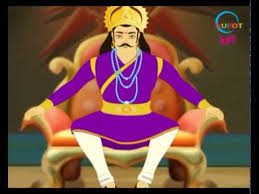
    Two travelers who survived a shipwreck, were washed ashore on a lonely island. With nothing to eat, nothing to protect them from the vagaries of the weather and with no one to listen to their woes, they started weeping in desperation. But soon, they realised that crying was of no consequence. So they decided to carry on with life.

    The two castaways toiled hard to scratch out an existence. Thirty years went past during the course of which they built a beautiful village with the help of the local tribe that they had befriended. They married local women and had children and grandchildren. Whatever they had learnt during their student days, they passed on to their newfound community and the new generation and soon the village became quite developed. The two men now commanded respect from one and all and were made heads of the village. Both lived like brothers and had great love for each other.

    As they grew older, they began to wish if they could spend the last few years of their lives with their blood relations from whom they had got separated long back. So they embarked upon a voyage, on an unknown route. At a distance, they discovered a city that looked prosperous, and was modern with all amenities. Both were shell-shocked at the beautiful sight. “Were we really so close to such a good place? Then why didn’t we travel these five hundred miles earlier? Possibly, we could have reached our country and kin and that would have saved us from the toil, struggle and the difficult times that we underwent all these years,” they said to themselves, bemoaning at their fate.

    Angry with themselves, their destiny and angry with God, they sat on the river bank and started weeping. That drew the attention of a sage passing by and he rushed to them. After he got to know their story, he asked them to follow him. Soon, they were in a palatial bungalow. Pointing to the house owner, the sage said, “His father was the wealthiest person of the state. He is younger than you but various ailments have left him immobile. Whereas, you have undertaken an arduous voyage, and that too on an uncharted route at this ripe age. The big mansion facing this, belongs to his real brother but the brothers hardly speak to each other. Their families remain estranged because each of them nurses a grouse that their parents didn’t do justice in property division. Worse, the parents spent their last few years in an old age home. You are strangers, but destiny brought you together. But I can see that you live like real brothers and are committed to live and die together.”

    By now the two men had come to the understand ground realities. Filled with gratitude, they asked the sage the reason for this unusual conduct of human beings. The sage replied, “You met as strangers so you had no expectations from each other. You had nothing, so you started creating things on your own with your hard work and that was a source of immense satisfaction to you. On the other hand, most of us, who are blessed with family and friends have only expectations from them. And that becomes the cause of unhappiness and estrangement. Instead of having the will to do something new and constructive, we want to own and enjoy what is created by others.”

    Upon hearing this the two men gave up their plans to go back to their country. They instead returned to their village that they had helped establish.

Posted by Kamlesh Tripathi (inspired by a story that I read)

*

https://kamleshsujata.wordpress.com

*

Share it if you like it

*

Shravan Charity Mission is an NGO that works for poor children suffering from life threatening diseases especially cancer. Our posts are meant for our readers that includes both children and adults and it has a huge variety in terms of content. We also accept donations for our mission. Should you wish to donate for the cause. The bank details are given below:

NAME OF ACCOUNT: SHRAVAN CHARITY MISSION

Account no: 680510110004635 (BANK OF INDIA)

IFSC code: BKID0006805

*

Our publications

GLOOM BEHIND THE SMILE

(The book is about a young cancer patient. Now archived in 7 prestigious libraries of the US, including, Harvard University and Library of Congress. It can also be accessed in MIT through Worldcat.org. Besides, it is also available for reading in Libraries and archives of Canada and Cancer Aid and Research Foundation Mumbai)  

ONE TO TANGO … RIA’S ODYSSEY

(Is a book on ‘singlehood’ about a Delhi girl now archived in Connemara Library, Chennai and Delhi Public Library, GOI, Ministry of Culture, Delhi)

AADAB LUCKNOW … FOND MEMORIES

(Is a fiction written around the great city of Nawabs—Lucknow. It describes Lucknow in great detail and also talks about its Hindu-Muslim amity. That happens to be its undying characteristic. The book was launched in Lucknow International Literary Festival of 2014)

REFRACTIONS … FROM THE PRISM OF GOD

(Co-published by Cankids–Kidscan, a pan India NGO and Shravan Charity Mission, that works for Child cancer in India. The book is endorsed by Ms Preetha Reddy, MD Apollo Hospitals Group. It was launched in Lucknow International Literary Festival 2016)

TYPICAL TALE OF AN INDIAN SALESMAN

(Is a story of an Indian salesman who is, humbly qualified. Yet he fights his ways through unceasing uncertainties to reach the top. A good read not only for salesmen. The book was launched on 10th February, 2018 in Gorakhpur Lit-Fest. Now available in Amazon, Flipkart and Onlinegatha)

RHYTHM … in poems

(Published in January 2019. The book contains 50 poems. The poems describe our day to day life. The book is available in Amazon, Flipkart and Onlinegatha)

(ALL THE ABOVE TITLES ARE AVAILABLE FOR SALE IN AMAZON, FLIPKART AND OTHER ONLINE STORES OR YOU COULD EVEN WRITE TO US FOR A COPY)

*****


CRICKET WEST INDIES

Copyright@shravancharitymission

    The Cricket Team of West Indies doesn’t belong to any particular country. The West Indies cricket team is a multi-national men’s cricket team representing the Anglophone (that is English speaking) Caribbean region and is administered by Cricket West Indies. The players on this composite team are selected from a chain of fifteen Caribbean territories, which are parts of several different countries and dependencies. Some out of them are sovereign states such as: Antigua and Barbuda, Barbados, Dominica, Grenada, Guyana, Jamaica, Saint Lucia, Saint Vincent and the Grenadines, Trinidad and Tobago, Parts of Saint Kitts and Nevis (which is an island country in the West Indies), then you have British Overseas Territories of Anguilla, Montserrat and the British Virgin Islands, then you have Saint Maarten a constituent country of the kingdom of Netherlands and the finally the US Virgin Islands.

    Cricket West Indies (CWI), formerly known as West Indies Cricket Board (WICB), is the governing body for cricket in the West Indies (a sporting confederation of over a dozen mainly English-speaking Caribbean countries and dependencies that once formed the British West Indies). It was originally formed in the early 1920s as the West Indies Cricket Board of Control, but changed its name to West Indies Cricket Board in 1996. In November 2015, the Board resolved to rename itself as Cricket West Indies as part of a restructuring exercise that also saw the creation of a separate commercial body. This rebranding formally occurred in May 2017.

    Cricket West Indies has been a full member of the International Cricket Council (ICC) since 1926. It operates the West Indies Cricket Team and West Indies A Cricket Team, that organises Test tours and one-day internationals with other teams. It also organises domestic cricket in West Indies, including the Regional Four Day Competition and the Regional Super 50 domestic one-day (List A) competition. The CWI has also collaborated with Sir Allen Stanford in the organisation of the domestic Stanford 20/20 competition for the Twenty20 format of cricket. Later they created their own Twenty20 league called Caribbean Twenty 20 after disbanding Stanford 20/20. In 2013 they Created Caribbean Premier League, a Professional Twenty20 league.

    Cricket West Indies membership includes the six territorial cricket associations of the various countries and territories which contest the West Indies first-class and limited-overs competition in the Caribbean. Each provides two directors, in addition to a number of non-member directors. Two of these associations are themselves multi-national boards representing a number of countries and dependencies.

    The present President of CWI is Ricky Skerritt, who replaced Dave Cameron in 2019. Johnny Grave is the Chief Executive Officer.

   Since 2005, as per an ICC mandate, the West Indies Women’s Cricket Federation (WIWCF) has been integrated with CWI. The President of the WIWCF is Carol Whilby-Maxwell and the Secretary is Michael Seepersaud.

    CWI is charged with aiding regional development of cricket in Americas region, under the ICC’s development program.

    The West Indies have won the ICC Cricket World Cup twice (1975 and 1979), the ICC World Twenty20 twice (2012 and 2016), the ICC Champions Trophy once (2004), the ICC Under 19 Cricket World Cup once (2016), and have also finished as runners-up in the Cricket World Cup (1983), the Under 19 Cricket World Cup (2004), and the ICC Champions Trophy (2006). The West Indies appeared in three consecutive World Cup finals (1975, 1979 and 1983), and were the first team to win back-to-back World Cups (1975 and 1979).

    The West Indies has hosted the 2007 Cricket World Cup and the 2010 ICC World Twenty20. In June 2019, during the 2019 Cricket World Cup, the West Indies played their 800th ODI match.[11]

    Cricket West Indies (CWI), formerly known as West Indies Cricket Board (WICB), is the governing body for cricket in the West Indies (a sporting confederation of over a dozen mainly English-speaking Caribbean countries and dependencies that once formed the British West Indies). It was originally formed in the early 1920s as the West Indies Cricket Board of Control, but changed its name to West Indies Cricket Board in 1996. In November 2015, the Board resolved to rename itself as Cricket West Indies as part of a restructuring exercise that would also see the creation of a separate commercial body. This rebranding formally occurred in May 2017.

    CWI has been a full member of the International Cricket Council (ICC) since 1926. It operates the West Indies Cricket Team and West Indies A Cricket Team, organising Test tours and one-day internationals with other teams. It also organises domestic cricket in West Indies, including the Regional Four Day Competition and the Regional Super 50 domestic one-day (List A) competition. The CWI has also collaborated with Sir Allen Stanford in the organisation of the domestic Stanford 20/20 competition for the Twenty20 format of cricket. Later they created their own Twenty20 league called Caribbean Twenty 20 after disbanding Stanford 20/20. In 2013 they Created Caribbean Premier League, a Professional Twenty20 league.

    CWI’s membership includes the six territorial cricket associations of the various countries and territories which contest the West Indies first-class and limited-overs competition in the Caribbean. Each provides two directors, in addition to a number of non-member directors. Two of these associations are themselves multi-national boards representing a number of countries and dependencies.

    The President of CWI is Ricky Skerritt, who replaced Dave Cameron in 2019. Johnny Grave is the Chief Executive Officer.

    Since 2005, as per an ICC mandate, the West Indies Women’s Cricket Federation (WIWCF) has been integrated with CWI. The President of the WIWCF is Carol Whilby-Maxwell and the Secretary is Michael Seepersaud.

    CWI is charged with aiding regional development of cricket in the Americas region, under the ICC’s development program.

By Kamlesh Tripathi

*

https://kamleshsujata.wordpress.com

*

Share it if you like it

*

Shravan Charity Mission is an NGO that works for poor children suffering from life threatening diseases especially cancer. Our posts are meant for our readers that includes both children and adults and it has a huge variety in terms of content. We also accept donations for our mission. Should you wish to donate for the cause. The bank details are given below:

NAME OF ACCOUNT: SHRAVAN CHARITY MISSION

Account no: 680510110004635 (BANK OF INDIA)

IFSC code: BKID0006805

*

Our publications

GLOOM BEHIND THE SMILE

(The book is about a young cancer patient. Now archived in 7 prestigious libraries of the US, including, Harvard University and Library of Congress. It can also be accessed in MIT through Worldcat.org. Besides, it is also available for reading in Libraries and archives of Canada and Cancer Aid and Research Foundation Mumbai)  

ONE TO TANGO … RIA’S ODYSSEY

(Is a book on ‘singlehood’ about a Delhi girl now archived in Connemara Library, Chennai and Delhi Public Library, GOI, Ministry of Culture, Delhi)

AADAB LUCKNOW … FOND MEMORIES

(Is a fiction written around the great city of Nawabs—Lucknow. It describes Lucknow in great detail and also talks about its Hindu-Muslim amity. That happens to be its undying characteristic. The book was launched in Lucknow International Literary Festival of 2014)

REFRACTIONS … FROM THE PRISM OF GOD

(Co-published by Cankids–Kidscan, a pan India NGO and Shravan Charity Mission, that works for Child cancer in India. The book is endorsed by Ms Preetha Reddy, MD Apollo Hospitals Group. It was launched in Lucknow International Literary Festival 2016)

TYPICAL TALE OF AN INDIAN SALESMAN

(Is a story of an Indian salesman who is, humbly qualified. Yet he fights his ways through unceasing uncertainties to reach the top. A good read not only for salesmen. The book was launched on 10th February, 2018 in Gorakhpur Lit-Fest. Now available in Amazon, Flipkart and Onlinegatha)

RHYTHM … in poems

(Published in January 2019. The book contains 50 poems. The poems describe our day to day life. The book is available in Amazon, Flipkart and Onlinegatha)

(ALL THE ABOVE TITLES ARE AVAILABLE FOR SALE IN AMAZON, FLIPKART AND OTHER ONLINE STORES OR YOU COULD EVEN WRITE TO US FOR A COPY)

*****


SHORT STORY: TWO FRIENDS AND THE BEAR

Copyright@shravancharitymission

    Vijay and Raju were friends. Once, while they were on a holiday they went into a forest. Where, they were enjoying the beauty of nature when suddenly they saw a bear charging at them. They were frightened. Raju who knew how to climb a tree, ran towards it and climbed it up in no time. He did not think of Vijay. Vijay did not know how to climb a tree.

    So Vijay got nervous and thought for a second. He had heard, animals do not prefer dead bodies. So, he fell on the ground and held his breath. The bear sniffed him for a few moments and thought he was dead and decided to carry on. Upon witnessing this scene Raju asked Vijay. ‘What did the bear whisper in your ears?’ 

    Vijay replied, The bear asked me to keep away from friends like you.’ 

    Moral of the story: A friend in need is a friend indeed.

By Kamlesh Tripathi

*

https://kamleshsujata.wordpress.com

*

Share it if you like it

*

Shravan Charity Mission is an NGO that works for poor children suffering from life threatening diseases especially cancer. Our posts are meant for our readers that includes both children and adults and it has a huge variety in terms of content. We also accept donations for our mission. Should you wish to donate for the cause. The bank details are given below:

NAME OF ACCOUNT: SHRAVAN CHARITY MISSION

Account no: 680510110004635 (BANK OF INDIA)

IFSC code: BKID0006805

*

Our publications

GLOOM BEHIND THE SMILE

(The book is about a young cancer patient. Now archived in 7 prestigious libraries of the US, including, Harvard University and Library of Congress. It can also be accessed in MIT through Worldcat.org. Besides, it is also available for reading in Libraries and archives of Canada and Cancer Aid and Research Foundation Mumbai)  

ONE TO TANGO … RIA’S ODYSSEY

(Is a book on ‘singlehood’ about a Delhi girl now archived in Connemara Library, Chennai and Delhi Public Library, GOI, Ministry of Culture, Delhi)

AADAB LUCKNOW … FOND MEMORIES

(Is a fiction written around the great city of Nawabs—Lucknow. It describes Lucknow in great detail and also talks about its Hindu-Muslim amity. That happens to be its undying characteristic. The book was launched in Lucknow International Literary Festival of 2014)

REFRACTIONS … FROM THE PRISM OF GOD

(Co-published by Cankids–Kidscan, a pan India NGO and Shravan Charity Mission, that works for Child cancer in India. The book is endorsed by Ms Preetha Reddy, MD Apollo Hospitals Group. It was launched in Lucknow International Literary Festival 2016)

TYPICAL TALE OF AN INDIAN SALESMAN

(Is a story of an Indian salesman who is, humbly qualified. Yet he fights his ways through unceasing uncertainties to reach the top. A good read not only for salesmen. The book was launched on 10th February, 2018 in Gorakhpur Lit-Fest. Now available in Amazon, Flipkart and Onlinegatha)

RHYTHM … in poems

(Published in January 2019. The book contains 50 poems. The poems describe our day to day life. The book is available in Amazon, Flipkart and Onlinegatha)

(ALL THE ABOVE TITLES ARE AVAILABLE FOR SALE IN AMAZON, FLIPKART AND OTHER ONLINE STORES OR YOU COULD EVEN WRITE TO US FOR A COPY)

*****


SHORT STORY: LESSON FROM THE BEST FRIEND

Copyright@shravancharitymission

     Once, two friends were walking through the desert. At some point of the journey they had an argument, and in the heat of the moment one friend slapped the others face.   The one who got slapped was hurt, but without saying a word he wrote on the sand.  “Today my best friend slapped me on the face.”

    Thereafter, they kept on walking until they found an oasis, where they decided to take a bath and rest. But by accident the friend who had been slapped got stuck in the wetland and he started drowning, but the friend saved him. After he recovered from the near drowning situation, he wrote on a stone.     “Today my best friend saved my life.”

    The friend who had slapped and saved his best friend asked him, “After I hurt you, you wrote in the sand and now, you write on a stone, why?” The friend replied—“When someone hurts us we should write it down in sand where winds of forgiveness can erase it away. But when, someone does something good for us, we must engrave it in a stone where no wind can ever erase it.”

By Kamlesh Tripathi

*

https://kamleshsujata.wordpress.com

*

Share it if you like it

*

Shravan Charity Mission is an NGO that works for poor children suffering from life threatening diseases especially cancer. Our posts are meant for our readers that includes both children and adults and it has a huge variety in terms of content. We also accept donations for our mission. Should you wish to donate for the cause. The bank details are given below:

NAME OF ACCOUNT: SHRAVAN CHARITY MISSION

Account no: 680510110004635 (BANK OF INDIA)

IFSC code: BKID0006805

*

Our publications

GLOOM BEHIND THE SMILE

(The book is about a young cancer patient. Now archived in 7 prestigious libraries of the US, including, Harvard University and Library of Congress. It can also be accessed in MIT through Worldcat.org. Besides, it is also available for reading in Libraries and archives of Canada and Cancer Aid and Research Foundation Mumbai)  

ONE TO TANGO … RIA’S ODYSSEY

(Is a book on ‘singlehood’ about a Delhi girl now archived in Connemara Library, Chennai and Delhi Public Library, GOI, Ministry of Culture, Delhi)

AADAB LUCKNOW … FOND MEMORIES

(Is a fiction written around the great city of Nawabs—Lucknow. It describes Lucknow in great detail and also talks about its Hindu-Muslim amity. That happens to be its undying characteristic. The book was launched in Lucknow International Literary Festival of 2014)

REFRACTIONS … FROM THE PRISM OF GOD

(Co-published by Cankids–Kidscan, a pan India NGO and Shravan Charity Mission, that works for Child cancer in India. The book is endorsed by Ms Preetha Reddy, MD Apollo Hospitals Group. It was launched in Lucknow International Literary Festival 2016)

TYPICAL TALE OF AN INDIAN SALESMAN

(Is a story of an Indian salesman who is, humbly qualified. Yet he fights his ways through unceasing uncertainties to reach the top. A good read not only for salesmen. The book was launched on 10th February, 2018 in Gorakhpur Lit-Fest. Now available in Amazon, Flipkart and Onlinegatha)

RHYTHM … in poems

(Published in January 2019. The book contains 50 poems. The poems describe our day to day life. The book is available in Amazon, Flipkart and Onlinegatha)

(ALL THE ABOVE TITLES ARE AVAILABLE FOR SALE IN AMAZON, FLIPKART AND OTHER ONLINE STORES OR YOU COULD EVEN WRITE TO US FOR A COPY)

*****


BOOK REVIEW: THE SUNSET CLUB by Khushwant Singh

Copyright@shravancharitymission

Khidki (Window)

–Read India Initiative—

This is only an attempt to create interest in reading. We may not get the time to read all the books in our lifetime. But such reviews, talk and synopsis will at least convey what the book is all about.

    The Sunset Club is about three men (all fictitious characters) – Sardar Boota Singh, Nawab Barkatullah Baig, and Pandit Preetam Sharma. They have been friends for more than forty years. They’re all octogenarians and are a part of the sunset club. Every evening, during sunset hours these men sit in the Lodhi Gardens, and indulge in conversations about a number of controversial topics. These topics range from religion and politics to love, sex, and scandals.

    In the book, the author, delicately portrays, the life and problems of old age. He keeps track of this trio for a year, from January 26, 2009 to January 26, 2010. The different events that take place through a year include violence, general elections, corruption, and natural disasters. The ways in which the conversations of the trio keep changing as per time, are narrated quite well in the book.

    The book not only gives a picture of old India, but it also highlights her various social complexities and irony. The readers can experience an emotional roller-coaster ride with sadness and laughter simultaneously in the book. The Sunset Club was published by Penguin India in 2011. It is available in paperback. The price of the book in Amazon for a print copy is Rs 254 and kindle version is Rs 174.

    Khushwant Singh was one of India’s best-known writer and columnist. He was the founder-editor of Yojana, the editor of the Illustrated Weekly of India, the National Herald and Hindustan Times. He is the author of classics such as Train to Pakistan, I shall Not Hear the Nightingale (re-titled as The Lost Victory) and Delhi. His non-fiction includes the classic two-volume of ‘A History of the Sikhs,’ a number of translations and works on Sikh religion and culture, Delhi, nature, current affairs and Urdu poetry. In 2007, he was awarded the Padma Vibhushan. Among the other awards that he has received are, the Punjab Ratan, the Sulabh International award for the most honest Indian of the year, and honorary doctorates from several universities. He passed away in 2014 at the age of ninety-nine.

    Khushwant Singh at the age of 95 wrote ‘The Sunset Club’ a novel about three friends in their 80s who spend the evenings in Delhi’s Lodhi Gardens talking about love, lust, sex and scandal towards the end of their lives.

    The prime protagonists of Sunset Club are Pandit Preetam Sharma, Nawab Barkatullah Baig and Sardar Boota Singh. They are friends for over forty years. They all are now in their eighties. Every evening, at the hour of sunset, they come and sit together on a bench in Lodhi Gardens. There they exchange news, views, events that have gone past during the day, talking about everything from love, lust, sex and scandal to religion and politics.

    The book follows a year in the lives of the three men—from January 26 2009 to January 26 2010— Khushwant Singh brings his characters vibrantly to life, with his appetising portrayals, of their fantasies and foibles. His accurate unerring ear for dialogue and his genius for capturing the flavour and texture of everyday life in their households is just fantastic. He interweaves this with the compelling Indian human story as a parallel chronicle of this book. He talks of a year in the life of India, as the country goes through the cycle of seasons, the tumult of general elections, violence, natural disasters and corruption in high places. The narrative is garnished with ribald and is lyrical, poignant and profound, The book is a deeply moving exploration of friendship, sexuality, old age and infirmity. A joyous celebration of nature, an insightful portrait of India’s paradoxes and complexities. A masterpiece from one of India’s most-loved storytellers, The Sunset Club will have you in tears and laughter, and grip you from the first page to the last.

    Khushwant Singh has remained a rarity – an almost completely a home-grown success. The Sunset Club, his most recent novel, is an achievement of great measure because of his age—to produce a novel at 95 is testimony of his interest to the cause of writing.

    He was a great writer and in that provocateur, raconteur and a celebrated editor of India. He wrote without pomposity and that’s the hallmark of his success as a writer. Even in the autumn of his life the Sardar’s zest for life was undiminished and ‘The Sunset Club is a proof of that. The Sunset Club, tagged as analects of the year 2009, chronicles the friendship of three oldies- a Hindu, A Sikh and a Muslim—but in reality you get to see contemporary India, especially between January 26, 2009 and January 26, 2010.

    It does not take a great effort on the reader’s part to realize that Sardar Boota Singh is Khushwant Singh himself. At one point Nawab Barkatullah Baig tells his wife about Boota “He is good company. He spices his talk with anecdotes, quotations and improper language. One can never tell how much of what he says is true, but it doesn’t matter. I enjoy listening to him.” Readers too, enjoy reading it. The book has some Hindi abuses too that come out naturally while in conversation that produces cheap sexy thrills. The author has tried to keep the old men’s bench at Lodhi Gardens warm throughout the pages mainly by the sexual jaunts of bachelor Punjabi Brahmin Sharma, Baig and Boota. These jaunts add to the reader’s interest and tow well with the portrait of contemporary India that lures you to finish the book. Old age and infirmity lurks in the background but it is the recollections of the youth and hope for the next day that is remarkable about the Sunset. Despite the departure of Baig and Sharma, it is the hope that makes Boota gaze upon Bara Gumbaz and makes you feel that it still resembles the fully rounded bosom of a young woman.

    The book is an appropriate homage to Delhi, emanating from the Lodhi Gardens, and in the environs of Sujan Singh Park, where Khushwant Singh has lived much of his life. But the real achievement of the book is the mere fact that it simply exists. It’s the kind of book that few writers would attempt today. The sentences and narration is very sharp and upfront. Khushwant Singh’s greatest achievements as a writer came early on, with his monumental and unparalleled ‘History of the Sikhs’ and the Partition classic ‘Train to Pakistan.’ The hold he has on our minds, and the claim he has on our hearts, comes from the rest of his life.

    He is the most un-hypocritical of writers, confessing to his preference for tanpura-like buttocks and his enthusiasm for Scotch and women with tremendous zest. His home in Sujan Singh Park has always been open to a stream of writers and publishers who wanted either his blessings or his gossip. His weekly column – carried on without a break, except in rare cases of illness, for decades—has made Santa—Banta jokes famous. And he was proud of, the dirty-minded schoolboy humour that seeped into all his novels,

    If you’ve not read this book you’ve indeed missed the spice of life. I would give this book seven out of ten.

By Kamlesh Tripathi

*

https://kamleshsujata.wordpress.com

*

Share it if you like it

*

Shravan Charity Mission is an NGO that works for poor children suffering from life threatening diseases especially cancer. Our posts are meant for our readers that includes both children and adults and it has a huge variety in terms of content. We also accept donations for our mission. Should you wish to donate for the cause. The bank details are given below:

NAME OF ACCOUNT: SHRAVAN CHARITY MISSION

Account no: 680510110004635 (BANK OF INDIA)

IFSC code: BKID0006805

*

Our publications

GLOOM BEHIND THE SMILE

(The book is about a young cancer patient. Now archived in 7 prestigious libraries of the US, including, Harvard University and Library of Congress. It can also be accessed in MIT through Worldcat.org. Besides, it is also available for reading in Libraries and archives of Canada and Cancer Aid and Research Foundation Mumbai)  

ONE TO TANGO … RIA’S ODYSSEY

(Is a book on ‘singlehood’ about a Delhi girl now archived in Connemara Library, Chennai and Delhi Public Library, GOI, Ministry of Culture, Delhi)

AADAB LUCKNOW … FOND MEMORIES

(Is a fiction written around the great city of Nawabs—Lucknow. It describes Lucknow in great detail and also talks about its Hindu-Muslim amity. That happens to be its undying characteristic. The book was launched in Lucknow International Literary Festival of 2014)

REFRACTIONS … FROM THE PRISM OF GOD

(Co-published by Cankids–Kidscan, a pan India NGO and Shravan Charity Mission, that works for Child cancer in India. The book is endorsed by Ms Preetha Reddy, MD Apollo Hospitals Group. It was launched in Lucknow International Literary Festival 2016)

TYPICAL TALE OF AN INDIAN SALESMAN

(Is a story of an Indian salesman who is, humbly qualified. Yet he fights his ways through unceasing uncertainties to reach the top. A good read not only for salesmen. The book was launched on 10th February, 2018 in Gorakhpur Lit-Fest. Now available in Amazon, Flipkart and Onlinegatha)

RHYTHM … in poems

(Published in January 2019. The book contains 50 poems. The poems describe our day to day life. The book is available in Amazon, Flipkart and Onlinegatha)

(ALL THE ABOVE TITLES ARE AVAILABLE FOR SALE IN AMAZON, FLIPKART AND OTHER ONLINE STORES OR YOU COULD EVEN WRITE TO US FOR A COPY)

*****


BOOK REVIEW: DEATH ON THE NILE

Copyright@shravancharitymission

Khidki (Window)

–Read India Initiative—

This is only an attempt to create interest in reading. We may not get the time to read all the books in our lifetime. But such reviews, talk and synopsis will at least convey what the book is all about.

    Death on the Nile is a book of detective fiction by British writer Agatha Christie, first published in the UK by the Collins Crime Club on 1 November 1937 and in the US by Dodd, Mead and Company the following year. The UK edition retailed at seven shillings and sixpence and the US edition at $2.00. This full length novel was preceded (in 1937) by a short story with the same title, but with Parker Pyne as the detective. The details of the short story’s plot are substantially different, though the settings and some of the characters are very similar.

    The book features the Belgian detective Hercule Poirot. The action takes place in Egypt, mostly on Nile River.

    While on a holiday in Cairo, Hercule Poirot is approached by successful socialite Linnet Doyle. She requests for his help in deterring her friend Jacqueline de Bellefort from hounding and stalking her. Linnet had recently married Jacqueline’s fiancé, Simon Doyle, which has made Jacqueline bitterly resentful. Poirot refuses the request, but attempts unsuccessfully, to dissuade Jacqueline from pursuing her plans further. Simon and Linnet secretly board the steamer Karnak, set to tour along the Nile to escape her, but woefully discover, she had learnt of their plans and boarded Karnak ahead of them. Apart from them, Poirot too travels on the steamer, while the other passengers include Linnet’s maid Louise Bourget, her trustee Andrew Pennington, romance novelist Salome Otterbourne (a thinly-disguised portrayal of Elinor Glynn) and her daughter Rosalie, Tim Allerton and his mother Mrs. Allerton, American socialite Marie Van Schuyler, her cousin Cornelia Robson and her nurse Miss Bowers, outspoken communist Mr. Ferguson, Italian archaeologist Guido Richetti, solicitor Jim Fanthorp, and physician Dr. Bessner.

    While visiting an ancient temple, Linnet narrowly avoids being crushed by a falling rock. Jacqueline is initially suspected, but she is found to have been aboard the steamer at the time of the incident. During the return voyage, Poirot finds his friend Colonel Race has joined the steamer. He reveals to him that he is looking for a murderer among the passengers. Later that night in the steamer’s lounge, Jacqueline’s resentment of Linnet boils over, leading her to shoot Simon in the leg with a pistol she possesses. She is taken back to her cabin by those who witness this, where she is confined, while Simon is treated for his injury; in that time, Jacqueline’s pistol, which she dropped, disappears. The following morning, Linnet is found dead, having been shot in the head, while her valuable string of pearls disappears. But no one in the cabin on the opposite side heard or saw anything. Poirot notes two bottles of nail polish in the victim’s room, one of which intrigues him. Jacqueline’s pistol is later recovered from the Nile. It is found wrapped in a stole belonging to Miss Van Schuyler, which was stolen the previous day, and which has been fired through.

    While interviewing maid Louise in the cabin in which Simon is resting, Poirot notices an oddness in the words she uses. Soon afterwards, she is found stabbed in her cabin. Mrs. Otterbourne later meets Poirot and Race in Simon’s cabin, claiming she saw who killed the maid. Simon exclaims loudly his surprise at this. But before she can even reveal who it is, she is shot dead from outside the cabin. Poirot soon confronts Pennington over his attempted murder of Linnet at the temple—he came to Egypt upon learning of her marriage to Simon, to trick her into signing documents that would exonerate him of embezzling her inheritance. However, he did not murder Linnet on the steamer, despite his gun having been used in Mrs. Otterbourne’s murder. Colonel Race later arrests Richetti, the man he sought. Poirot recovers the missing pearls from Tim Allerton, who substituted an imitation string of pearls for the real ones. The imitation pearls were later stolen by Miss Van Schuyler, a kleptomaniac, and returned by Miss Bowers.

    When alone with Simon, Poirot reveals him to be his wife’s killer. The murder was not his plan, but Jacqueline’s; the pair were still lovers. Their scheme was to steal Linnet’s money – the pair staged their break-up, whereupon Simon married Linnet. On the night of the murder, Jacqueline deliberately missed Simon, who faked his injury with red ink. While everyone in the lounge was distracted by Jacqueline, he took her gun that she had deliberately discarded, went to Linnet’s cabin, and shot her. He then returned to the lounge and shot his own leg, to give himself a genuine injury. Louise and Mrs. Otterbourne were murdered by Jacqueline, who was warned by Simon when the plan was going awry – Louise witnessed Simon entering Linnet’s cabin that night, and gave him a coded message when Poirot was interviewing her. Mrs. Otterbourne witnessed Jacqueline entering Louise’s cabin before stabbing her.

    Poirot reveals what led him to his theory. It was the ink that was contained in a bottle of nail polish he noticed in Linnet’s cabin. Simon reloaded the gun with two spare cartridges before he disposed it off, as Poirot realized that three shots were fired that night. The stole was used to silence the gun when Simon shot his own leg. Poirot suspected pre-meditation for the murder, because he slept deeply through that night’s events – he had been drugged through his wine that evening. As the steamer arrives back in Cairo and the passengers disembark, Jacqueline shoots Simon and herself with another gun she possessed, so they may escape the gallows. When pressed, Poirot reveals he had known she had a second gun, but had sympathetically chosen to allow her to take her own life.

    It’s an excellent book. Written in simple language but to the point for a detective novel. I would give the book eight out of ten. Incidentally there is also a very interesting movie based on this book.

By Kamlesh Tripathi

*

https://kamleshsujata.wordpress.com

*

Share it if you like it

*

Shravan Charity Mission is an NGO that works for poor children suffering from life threatening diseases especially cancer. Our posts are meant for our readers that includes both children and adults and it has a huge variety in terms of content. We also accept donations for our mission. Should you wish to donate for the cause. The bank details are given below:

NAME OF ACCOUNT: SHRAVAN CHARITY MISSION

Account no: 680510110004635 (BANK OF INDIA)

IFSC code: BKID0006805

*

Our publications

GLOOM BEHIND THE SMILE

(The book is about a young cancer patient. Now archived in 7 prestigious libraries of the US, including, Harvard University and Library of Congress. It can also be accessed in MIT through Worldcat.org. Besides, it is also available for reading in Libraries and archives of Canada and Cancer Aid and Research Foundation Mumbai)  

ONE TO TANGO … RIA’S ODYSSEY

(Is a book on ‘singlehood’ about a Delhi girl now archived in Connemara Library, Chennai and Delhi Public Library, GOI, Ministry of Culture, Delhi)

AADAB LUCKNOW … FOND MEMORIES

(Is a fiction written around the great city of Nawabs—Lucknow. It describes Lucknow in great detail and also talks about its Hindu-Muslim amity. That happens to be its undying characteristic. The book was launched in Lucknow International Literary Festival of 2014)

REFRACTIONS … FROM THE PRISM OF GOD

(Co-published by Cankids–Kidscan, a pan India NGO and Shravan Charity Mission, that works for Child cancer in India. The book is endorsed by Ms Preetha Reddy, MD Apollo Hospitals Group. It was launched in Lucknow International Literary Festival 2016)

TYPICAL TALE OF AN INDIAN SALESMAN

(Is a story of an Indian salesman who is, humbly qualified. Yet he fights his ways through unceasing uncertainties to reach the top. A good read not only for salesmen. The book was launched on 10th February, 2018 in Gorakhpur Lit-Fest. Now available in Amazon, Flipkart and Onlinegatha)

RHYTHM … in poems

(Published in January 2019. The book contains 50 poems. The poems describe our day to day life. The book is available in Amazon, Flipkart and Onlinegatha)

(ALL THE ABOVE TITLES ARE AVAILABLE FOR SALE IN AMAZON, FLIPKART AND OTHER ONLINE STORES OR YOU COULD EVEN WRITE TO US FOR A COPY)

*****


INTERESTING FACTS FIGURES & QUOTES–45

Copyright@shravancharitymission

  1. Why is the colour purple associated with royalty?–The dye used to make the colour was rare to obtain and therefore purple garments were very expensive. Only royalty could afford to wear them. For centuries, the colour purple has represented royalty, power and wealth. The Persian Emperor Cyrus wore a purple tunic as his royal uniform. In fact, some Roman emperors even forbade or stopped commoners from wearing purple clothes failing which they would be condemned to death.

    The coloured enjoyed elite status for long because the dye that was used to make this colour was very rare. It came from the trading city of Tyre in Phoenicia (now in modern-day Lebanon). More precisely, it was derived from a species of sea snail called Bolinas brandaris, found only in the Tyre region of the Mediterranean Sea. To obtain it, dye-makers had to crack open the snail’s shell. The mucus inside was milky but would turn into an intense purple when exposed to air. More than 9000 molluscs were needed to produce just one gram of Tyrian purple. The result was that clothes made from the dye were extremely expensive—a shawl made from Tyrian purple silk cost its weight in gold. Hence, only imperial rulers could afford to buy purple coloured fabric. Purple was also linked to spirituality because monarchs were usually thought to be of divine origin.

    Synthetic dyes of purple became widely available only after English chemist William Henry Perkin created synthetic purple compound by chance, while trying to synthesise the anti-malaria drug quinine, in 1856.

  1. Friends How are cyclones name? Find out how the practice first began in the Atlantic Ocean, and came to be adopted by countries of South and West Asia—Hurricanes and tropical cyclones in the Atlantic Ocean have been named since 1953 when Miami’s National Hurricane Centre started the practice. This was then maintained and updated by the World Meteorological Organization (WMO), a Geneva based agency of the United Nations. The name is suggested by member nations by turn.

    The countries of South Asia and West Asia chose not to name their cyclones until 2004 when the World Meteorological Organization brought about agreement between eight countries in the region, namely, India, Pakistan, Bangladesh, Maldives, Myanmar, Oman, Sri Lanka and Thailand. This group came up with a list of 64 names eight from each country, for cyclones—Hikka and upcoming ones.

    As of September 2019, 58 of the 64 names have already been used! The cyclone that recently formed was called Hikka (Maldives), and this will be followed by Kyarr (Myanmar), Maha (Oman), Bulbul (Pakistan), Pawan (Sri Lanka) and Amphan (Thailand).

By Kamlesh Tripathi

*

https://kamleshsujata.wordpress.com

*

Share it if you like it

*

Shravan Charity Mission is an NGO that works for poor children suffering from life threatening diseases especially cancer. Our posts are meant for our readers that includes both children and adults and it has a huge variety in terms of content. We also accept donations for our mission. Should you wish to donate for the cause. The bank details are given below:

NAME OF ACCOUNT: SHRAVAN CHARITY MISSION

Account no: 680510110004635 (BANK OF INDIA)

IFSC code: BKID0006805

*

Our publications

GLOOM BEHIND THE SMILE

(The book is about a young cancer patient. Now archived in 7 prestigious libraries of the US, including, Harvard University and Library of Congress. It can also be accessed in MIT through Worldcat.org. Besides, it is also available for reading in Libraries and archives of Canada and Cancer Aid and Research Foundation Mumbai)  

ONE TO TANGO … RIA’S ODYSSEY

(Is a book on ‘singlehood’ about a Delhi girl now archived in Connemara Library, Chennai and Delhi Public Library, GOI, Ministry of Culture, Delhi)

AADAB LUCKNOW … FOND MEMORIES

(Is a fiction written around the great city of Nawabs—Lucknow. It describes Lucknow in great detail and also talks about its Hindu-Muslim amity. That happens to be its undying characteristic. The book was launched in Lucknow International Literary Festival of 2014)

REFRACTIONS … FROM THE PRISM OF GOD

(Co-published by Cankids–Kidscan, a pan India NGO and Shravan Charity Mission, that works for Child cancer in India. The book is endorsed by Ms Preetha Reddy, MD Apollo Hospitals Group. It was launched in Lucknow International Literary Festival 2016)

TYPICAL TALE OF AN INDIAN SALESMAN

(Is a story of an Indian salesman who is, humbly qualified. Yet he fights his ways through unceasing uncertainties to reach the top. A good read not only for salesmen. The book was launched on 10th February, 2018 in Gorakhpur Lit-Fest. Now available in Amazon, Flipkart and Onlinegatha)

RHYTHM … in poems

(Published in January 2019. The book contains 50 poems. The poems describe our day to day life. The book is available in Amazon, Flipkart and Onlinegatha)

(ALL THE ABOVE TITLES ARE AVAILABLE FOR SALE IN AMAZON, FLIPKART AND OTHER ONLINE STORES OR YOU COULD EVEN WRITE TO US FOR A COPY)

*****