Tag Archives: india

LITERARY CORNER: WHY I AM A HINDU by Shashi Tharoor

Copyright@shravancharitymission

Khidki (Window)

–Read India Initiative—

This is only an attempt to create interest in reading. We may not get the time to read all the books in our lifetime. But such reviews, talk and synopsis will at least convey what the book is all about.

WHY I AM A HINDU’

by Shashi Tharoor

Publisher Aleph

Year of publication: 2018

    The price of the book is Rs 699. It’s a 300 page book loaded with some palpable stuff—quite typical of Shashi Tharoor. The book has three main chapters divided into seven sub chapters.

    It starts off quite well with the author glossing over reasons as to why he decided to write this book. Where, he takes you through the essence of Hinduism, but not so much through the rituals but essentially through the religious-socio-cultural plank. He gets into meticulous detailing such as how a Sanskrit word ‘Jagannath’ came to be known as ‘Juggernaut.’ He takes you through the Bhakti movement. He talks about the Advaita Vedanta, the vedic learnings with lots of anecdotes—interesting ones. He describes in great detail the wisdom of Swami Vivekananda and Adi Shankracharya. Talks about his own childhood entangled in Hinduism. The ‘sanskars’ that he got from his parents. While Shashi loves Hinduism he admonishes Hindutva in his hot narration.

    The author, initially appears, quite as a baby faced admirer and a harmless volunteer of Hinduism till around page hundred and forty. But thereafter he changes gear and moves into the domain of political Hinduism.

    Where, he goes unsparingly after Savarkar, Golwalkar and Deen Dayal Upadhyay all stalwarts of the Sangh Parivar. And, as expected of Shashi Tharoor, he does make, a piercing commotion about the atrocities committed by the British Raj on Hinduism, but remains somewhat vague about the atrocities of the Muslim invaders, perhaps, offering them benefit of doubt. He feigns or genuinely believes Hindus are large hearted or even dodos, and will never react to the persecution that they were subjected to at the hands of the British Raj and the devious invaders, even in a millennium which is not quite clear. While he allows Deen Dayal Upadhyay to pass off as a more tolerable face of the Sangh Parivar. For Savarkar and Golwalkar, he projects unalloyed despise rising up to hate, but doesn’t really touch Hedgewar the founding Sangh Chalak even with a bargepole.  Shashi cannot imagine leave alone believing that RSS may have been an initial emotional reaction to the atrocities of the British Raj and the Islamization during Jinnah before and even after the partition. Just as Islamization could have been a reaction to American atrocities on the Muslims as believed by many and not some. And why forget the fascism of Europe that arose primarily because of Communism.

    Beyond page 140 the author shows his real face and that is his attack on Hindutva. The point that he makes is about the ancient Indian culture of hospitality where India has always been a great host to all communities. The population of India is 80% Hindus but they have always looked after the minority communities in terms of Muslims, Christians, Sikhs, Jains, Parsis and others. When you cruise through the book further what becomes more apparent is that Hindutva is the brain child of RSS. And till the time Congress was well in control of India the Indian society was an Utopia and now it has become a dystopia. The book is excellent in terms of narration and flow. And is action packed with all the appreciated fantasies of the Congress regime. Yet, I was left with the following gaps for which I did not find answers or were the answers held back. I really don’t know?

   The book has a good spread of Hinduism’s history but lacks in precipitating/ Hindu emotions because of obvious reasons. It churns out great details about Hinduism yet it does make you feel a depreciated Hindu. The author talks about large scale conversion of Hindus, at the hands of Muslims and even Christians but at the same time is short of saying that both Muslims and Christians are fanatics in that manner.

    Although, he goes after Hindutva with a gun yet he doesn’t give any plausible explanation as to why Hindutva flourished in the last 25-30 years. Was it a pent up emotional need of the Hindus or the failure of Congress party that ruled for so many years. All he does is to blame the Sangh and the BJP. The author having criticised the BJP and the Sangh so vehemently, should have suggested a socio-religious-cultural alternative to BJP which he hasn’t. Muslims have their mosque and Christians their Church but where do Hindus go barring their defining book Gita. And is BJP a reaction to 70 years of Congress rule is the question the author needs to answer to complete the book? BJP has come up through a democratic process. It started with just two seats in the parliament and now occupies almost a full house. If all was going so well for the Hindus in India why did Hindutva gain so much ground. For which there is no elaborate answer from the author barring the cliché of the divisive policy of the RSS and BJP.

    Book is a little too much to digest in one go for an average reader. It’s outright verbose—Shashi Tharoor style. And yes read it with a pinch of salt. The book leans towards Congress. In which he has mixed society, religion and politics. It has excellent flow and detailing. Author admits his erudite team has also helped him in this narration. A large part of the book is all about RSS and BJP bashing. Though India is projected well in the eyes of the world, which, Shashi always does. The first half and even all along, the book is all about the uniqueness of Hindu religion. It covers the Sikh riots in just about half a paragraph just because Congress was to blame for it. Whereas, he criticizes forcefully the doctrine of Hindutva. And mildly conveys about the invaders who came and plundered India from time to time. He sings the same old tune of secularism. He compares India with Pakistan. In Pakistan all non-Muslims have it written on their passports as non-Muslims, signifying they are second rate citizens.

    The book doesn’t reveal the dynamics of an evolving society. One will agree, Hindutva was not in the agenda of things when India got independence. But obviously, there have been factors that propagated the concept of Hindutva later on. Intermittently Shashi criticizes the caste system propagated by the Britishers and subsequently upheld by the Congress party.

    Author doesn’t accept Hindutva as a reaction to Muslim radicalisation. And even fails to say that if Muslim radicalisation continues there is a likelihood of Christian radicalisation too, maybe not in India but in various Christian majority states of the world.

    The book is excellent in terms of detailing and of course the content, language and the flow.

    But surprisingly, it nowhere deciphers between the temperaments of Hindus settled in south and the ones in the north who mostly took the wrath of these Muslim invaders.

    Towards the final chapters the author takes you through some iconic inventions in the realm of Hinduism and Science, especially the inventions of numerals in terms of Shunya or zero. At one point he also tries to justify the invaders and that includes the Mughals starting from Babar. He compares them with the Britishers only to say that Britishers took the loot to their own country whereas, the Muslim invaders spent it here in India. Then he goes on to talk about holy cows, changing the name of Aurangzeb road and even the independence movement.

    Overall it’s an excellent read if you don’t mind the politics that the book generates. I would give the book eight out of ten for the content, detailing, information, language flow and of course Shashi’s guts in being one-sided and the frankness.

By Kamlesh Tripathi

*

https://kamleshsujata.wordpress.com

*

Share it if you like it

*

Shravan Charity Mission is an NGO that works for poor children suffering from life threatening diseases especially cancer. Our posts are meant for our readers that includes both children and adults and it has a huge variety in terms of content. We also accept donations for our mission. Should you wish to donate for the cause. The bank details are given below:

NAME OF ACCOUNT: SHRAVAN CHARITY MISSION

Account no: 680510110004635 (BANK OF INDIA)

IFSC code: BKID0006805

*

Our publications

GLOOM BEHIND THE SMILE

(The book is about a young cancer patient. Now archived in 7 prestigious libraries of the US, including, Harvard University and Library of Congress. It can also be accessed in MIT through Worldcat.org. Besides, it is also available for reading in Libraries and archives of Canada and Cancer Aid and Research Foundation Mumbai)  

ONE TO TANGO … RIA’S ODYSSEY

(Is a book on ‘singlehood’ about a Delhi girl now archived in Connemara Library, Chennai and Delhi Public Library, GOI, Ministry of Culture, Delhi)

AADAB LUCKNOW … FOND MEMORIES

(Is a fiction written around the great city of Nawabs—Lucknow. It describes Lucknow in great detail and also talks about its Hindu-Muslim amity. That happens to be its undying characteristic. The book was launched in Lucknow International Literary Festival of 2014)

REFRACTIONS … FROM THE PRISM OF GOD

(Co-published by Cankids–Kidscan, a pan India NGO and Shravan Charity Mission, that works for Child cancer in India. The book is endorsed by Ms Preetha Reddy, MD Apollo Hospitals Group. It was launched in Lucknow International Literary Festival 2016)

TYPICAL TALE OF AN INDIAN SALESMAN

(Is a story of an Indian salesman who is, humbly qualified. Yet he fights his ways through unceasing uncertainties to reach the top. A good read not only for salesmen. The book was launched on 10th February, 2018 in Gorakhpur Lit-Fest. Now available in Amazon, Flipkart and Onlinegatha)

RHYTHM … in poems

(Published in January 2019. The book contains 50 poems. The poems describe our day to day life. The book is available in Amazon, Flipkart and Onlinegatha)

(ALL THE ABOVE TITLES ARE AVAILABLE FOR SALE IN AMAZON, FLIPKART AND OTHER ONLINE STORES OR YOU COULD EVEN WRITE TO US FOR A COPY)

*****
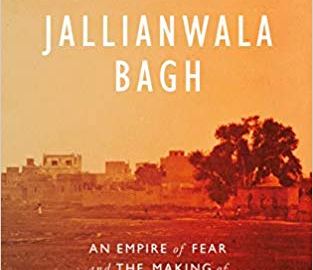


LITERARY CORNER: “Jallianwala Bagh: An Empire of Fear and the Making of the Amritsar Massacre,” by Kim A Wagner.

Copyright@shravancharitymission

Khidki (Window)

–Read India Initiative—

This is only an attempt to create interest in reading. We may not get the time to read all the books in our lifetime. But such reviews, talk and synopsis will at least convey what the book is all about.

    Time doesn’t dilute the scars of hateful crimes. I’m pointing at the “Jallianwala Bagh” massacre, a crime perpetrated by Brigadier General Reginald Dyer. People who died in that slaughter, I’m sure, must be turning in their graves on each anniversary of the crime that was unleashed on April 13, 1919 by this devil. With that logic the victims by now must have turned at least a hundred times in their proverbial grave. But the apology from the British is yet to come. This monster, Brigadier Dyer later died on 23 July 1927. Winston Churchill called him a rotten apple simply to disavow his own responsibility.

    But then the rotten apple grew in his own backyard colony called India. General Dyer is also called, “the Butcher of Amritsar,” because of his order to fire repeatedly on a crowd of peaceful protesters. This resulted in the murder of at least 500-600 people and injuries to over a thousand more. Subsequently, Dyer was removed from duty and widely condemned both in Britain and in India. But he became a celebrated hero among some with connections to the British Raj. Some historians argue the episode was a decisive event towards the end of the British rule in India.

    Many books have been written on this particular massacre. Latest being “Jallianwala Bagh: An Empire of Fear and the Making of the Amritsar Massacre,” by historian Kim A Wagner. Wagner teaches, the history of colonial India and the British Empire at Queen Mary, University of London. He has written extensively on the subject of ‘Thuggee,’ the Indian Uprising of 1857, and resistance and colonial violence more generally in 19th and 20th century global history. The book has been published by Penguin, and the price is below Rs 500 in Amazon. Even though it has been a century since Brigadier General Reginald Dyer ordered Indian Army troops to open fire upon an unarmed crowd at Jallianwala Bagh on April 13, 1919, the memory of it is still painful for Indians. British historian Kim Wagner has taken a fresh look at the incident in this book. There are some advance praises about the book, a couple of them are as follows:

  1. “In the cautionary tale provided in Jallianwala Bagh, it is enduring racist fear that lies at the heart of precipitate violence. Analytically sharp but gripping to read, the book is a page turner.”—says Barbara D. Metcalf, Co-Author of “A Concise History of India.”
  1. In the compelling yet exacting study Kim Wagner combines the intimacy of the storyteller and the distance of the historian to evoke the “micro story” of the massacre while understanding it as the “final stage of the much longer process”, stretching back to Sepoy Uprising. Mining a variety of sources—diaries, memoirs and court testimonies—he uncovers fresh perspectives and examines the relation between colonial panic and state brutality with sophistication, sincerity and style rare in published accounts of this much-trodden ground.”–says Santanu Das, Author of, “India, Empire and First War Culture.”

    The book gives a good overview of the massacre from all corners and all stakeholders. Was Jallianwala Bagh massacre a one-off incident, as portrayed back then and even today by many? The book tries to answer that. The author feels rather than being an unprecedented event, the Amritsar massacre revealed the racialized logic of a colonial violence, and we find the exact sentiments expressed by British officers involved in the suppression of the Indian Uprising of 1857, for instance.

    An apology that describes General Dyer as a rotten apple, which is, essentially what Winston Churchill said in 1920, is not an apology at all but rather an attempt to disavow any form of responsibility in terms of the Raj and the British Empire in general.

    There is often a debate about the troops who open fired. Some say they were Gorkhas and Pathan troops. The author with his research tries to clear the air when he says. There probably were a few Sikh troops also present but we have to remember that the British at the same time did not think of the local population in communal terms. Dyer refers to the protesters simply as ‘rebels.’ The composition of the force he took with him to ‘Jallianwala Bagh’ was largely accidental.

    To a question about Indian Army veterans who had served in World War-I, being among the unfortunate crowd that got killed and injured the eyewitnesses describe how veterans called out for people to lie down to avoid being shot, so there were clearly demobilised soldiers in the crowd.

    British Empire apologists often dismiss the Indian National Congress’s findings about the tragedy and settle for government estimates to save their skin. The Indian National Congress actually estimated that 500 had been killed but that 1,000 might not be an exaggerated estimate—based on the door-to-door inquiry made by local agencies, some 540 names were found, and the author feels that somewhere between 500 to 600 were killed and, perhaps, three times that many wounded.

    As per the book it was not a pre-meditated plan. Dyer believed he was entering a war zone and was fully prepared to shoot at anyone who defied his ban on public meetings. He did not know what the layout of the city or Jallianwala Bagh was. Once he arrived at the Bagh, he did not care much about who was actually present but simply open fired without using his brains.

   There is no evidence about the 120 bodies that were recovered from the well. Eye-witnesses describe one or two people falling in it, and Motilal Nehru and Madan Mohan Malviya thought they saw one or two bodies floating in the well, later that summer—which was nothing more than a clay-pot and some old clothes floating in the well. There was a merging of the canal feeding with the holy tank, which runs under Jallianwala Bagh, since we know that some people climbed into that to flee the bullets and that several bodies were later recovered.

    Lastly, Churchill denounced Dyer in 1920 but it was not because he found indiscriminate violence in the Empire unacceptable, but rather because Dyer’s actions made it so difficult to defend British rule in India. That is also why he was eager to depict Dyer and the massacre as ‘un-British.’

    The massacre has been portrayed in several movies, starting with Attenborough’s Gandhi. But author Kim Wagner thinks none of them make more impact than re-enact the set of visual tropes first deployed by Attenborough. There is almost a checklist of recurrent motifs, including Dyer ordering his troops to fire, and people throwing themselves into the well or getting crushed against a locked gate, crying kids sitting next to their dead parents. To break new ground in this respect would require a break from these filmic conventions.

    Jallianwalla Bagh is often the least talked about episode in the British circles but yes to an extent or rather to quite an extent during the trial it helped in understanding the British colonial policy. The Hunter Commission was set up partly to assuage moderate Indian nationalists and Montagu, the Secretary of State for India, never expected it to reveal the things it did. The fact that this was such a large inquiry, which elicited so much evidence, not least Dyer’s own testimony, means that this was probably the best-recorded colonial atrocity within the British Empire up till that point.

    Well if you’re interested in history and the sad chapters of Indian history this book is for you. Well written and great in detailing and largely unbiased barring certain chapters where you get some eerie feeling it sails through in the Indian Ocean without turbulence. A historians prime job is to lay down history in proper perspective where the author I think has not failed. I would give the book seven out of ten.

Posted by Kamlesh Tripathi

*

https://kamleshsujata.wordpress.com

*

Share it if you like it

*

Shravan Charity Mission is an NGO that works for poor children suffering from life threatening diseases especially cancer. Our posts are meant for our readers that includes both children and adults and it has a huge variety in terms of content. We also accept donations for our mission. Should you wish to donate for the cause. The bank details are given below:

NAME OF ACCOUNT: SHRAVAN CHARITY MISSION

Account no: 680510110004635 (BANK OF INDIA)

IFSC code: BKID0006805

*

Our publications

GLOOM BEHIND THE SMILE

(The book is about a young cancer patient. Now archived in 7 prestigious libraries of the US, including, Harvard University and Library of Congress. It can also be accessed in MIT through Worldcat.org. Besides, it is also available for reading in Libraries and archives of Canada and Cancer Aid and Research Foundation Mumbai)  

ONE TO TANGO … RIA’S ODYSSEY

(Is a book on ‘singlehood’ about a Delhi girl now archived in Connemara Library, Chennai and Delhi Public Library, GOI, Ministry of Culture, Delhi)

AADAB LUCKNOW … FOND MEMORIES

(Is a fiction written around the great city of Nawabs—Lucknow. It describes Lucknow in great detail and also talks about its Hindu-Muslim amity. That happens to be its undying characteristic. The book was launched in Lucknow International Literary Festival of 2014)

REFRACTIONS … FROM THE PRISM OF GOD

(Co-published by Cankids–Kidscan, a pan India NGO and Shravan Charity Mission, that works for Child cancer in India. The book is endorsed by Ms Preetha Reddy, MD Apollo Hospitals Group. It was launched in Lucknow International Literary Festival 2016)

TYPICAL TALE OF AN INDIAN SALESMAN

(Is a story of an Indian salesman who is, humbly qualified. Yet he fights his ways through unceasing uncertainties to reach the top. A good read not only for salesmen. The book was launched on 10th February, 2018 in Gorakhpur Lit-Fest. Now available in Amazon, Flipkart and Onlinegatha)

RHYTHM … in poems

(Published in January 2019. The book contains 50 poems. The poems describe our day to day life. The book is available in Amazon, Flipkart and Onlinegatha)

(ALL THE ABOVE TITLES ARE AVAILABLE FOR SALE IN AMAZON, FLIPKART AND OTHER ONLINE STORES OR YOU COULD EVEN WRITE TO US FOR A COPY)

*****


INTERESTING FACTS & QUOTES–16

Copyright@shravancharitymission  

Google sab janta hai. Google knows everything about everyone through their ‘search history.’ If Google were to enter the business of “Private Detectives’ or open a “Marriage Bureau” they probably would be the best among the trade, as Google knows everything about everyone. And through Google one can say even ‘Úncle Sam’ that is the US also knows everything about everyone.

A committee of senior statisticians has said that verifying 479, randomly selected EVMs, from a total of 10.35 lakh EVMs, achieves a confidence level of 99.99%. Raising sample size further yielded only ‘negligible gains’ in confidence levels. This would also roughly translate to one EVM per Lok Sabha seat. Election Commission says that VVPAT slip count from 1,500 polling stations in elections since March 2017 have matched completely with corresponding EVMs.

In 1939 Savarkar wrote the foreword of a book by a Nazi sympathizer and European born Hindu revivalist who called herself or you could say she wrote under the pseudonym of Savitri Devi Mukerji. Savitri Devi Mukerji lived between (1905-1982), and her real name was Maximiani Portas she was a mix of Greek, French and English parentage, she was a remarkable figure who, among other idiosyncratic beliefs, considered Adolf Hitler an avatar of Vishnu. Her book, prophetically titled “A Warning to be Hindus,” is a passionate polemic about the need for Hindu assertion. A prominent proponent of, deep ecology and Nazism, who served the Axis cause during World War II by spying on Allied forces.

The origin of the word Juggernaut comes from the Hindu God Jagannath. The word is derived from the Sanskrit—Odia Jagannatha meaning “World Lord” which is one of the names of Krishna found in the Sanskrit epics. Where, Jagata means world, combining with Natha meaning Lord. By the eighteenth century juggernaut was in common use as a synonym for an irresistible and destructive force that demanded total devotion or unforgiving sacrifice—the sense in which it pops up in novels of Charlotte Bronte and Charles Dickens, and even Robert Louis Stevenson, who applied it to Dr Jekyll’s foil. Mr Hyde. It was only Mark Twain in his autobiography, who described juggernaut as the kindest of Gods.

The concept of GDP was invented in 1937 by US economist Simon Kuznets, who was later awarded the Nobel Prize for Economics in 1971. In 1944, following the Bretton Woods conference that established the World Bank and the International Monetary Fund, GDP became the standard tool for sizing up the country’s economy.

India is now the largest market for Youtube with over 265 million or you could say 26 crore monthly active users for the video sharing website.

Last week five South Korean celebrities became the world’s first 5G subscribers. The service since then has been opened to regular subscribers as well. Simultaneously the US also saw a limited commercial launch of 5G networks. The intensity with which telecoms in the two countries are claiming they did first, underscores the stakes in this battle for supremacy and how competitive it’s likely to be.

2G opened up mobile telephony mainstream, 3G opened up the app economy and social platforms, 4G redefined businesses from banking to entertainment and transportation, 5G equals superfast communications that backers say will transform life as we know it. Its speed, responsiveness and reach could indeed revolutionise agriculture, utilities, law and order, healthcare, manufacturing, AI and virtual reality.

Whereas, South Korea and the US have launched 5G and China is in a great state of readiness. India on the other hand is yet to allocate spectrum for 5G trails. There is no doubt that rolling out this technology is seriously capital intensive.

During the 2014 campaign, Narendra Modi crisscrossed 3,00,000 km to address hundreds of rallies in person. Five years later, his energy is still undiminished. With 150 rallies already planned and more in the works, he is poised to convert the election into a presidential style contest once again.

Deteriorating quality of education in public institutions poses a serious threat to the Indian youth of today and tomorrow. As it directly affects about 65-70% of the students—those who use publicly funded institutions. 

Mumbai is one of the hottest stock markets of the world, with a gain of nearly 30%.

To go off the rails. Means to start behaving in a way that is not generally acceptable, especially being dishonest or illegal.

Tail wagging the dog means a situation where a small part controls a big part.

Magna-carta—is a document ensuring guarantee of basic rights.

Research shows that over a third of the US population is single. In India too, the demographic has been rising. They now number 74 million or 7 crore and comprise 12% of the female population.

The commonwealth is by no means a perfect institution. It is a legacy of the days when London was the centre of the world and Great Britain was the mother country.

From a peak of 90800 sq km under its control in 2015, IS (Islamic State) is now down to ruling over a mere 3% of Iraq and 5% of Syria today.

More than 80% of Google’s revenue comes just from its ad business. In the last quarter, the company earned $32.6 billion from ads and just $ 6.6 billion from other sources.

A strategic industry should be defined on the basis of its multiplier effect on employment.

India has fought three, and two half wars, against Pakistan, and one against China in the past 70 years. The halves are the limited Kargil war and the longer Pakistani covert war that continues. Two of them in 1965 and 1971 lasted less than a month. The Kargil war went on for three months but in a very small un-populated part of the country. The first Kashmir war began in October 1947 and ended a year and more later on December 31, 1948. The Sino-Indian war of 1962, too, was a month-long affair. Acutely aware of their own vulnerability, India and Pakistan have generally avoided the deliberate targeting of economic and civilian areas during their wars. But in this regard the future now remains unpredictable.

A recent unofficial count found more than 600 lions in the area, up from 523 in a 2015 census in Gujarat. Gujarat’s chief minister Vijay Rupani said. “Our efforts for lion conservation with support of local people have yielded good results. The number of lions now in Gujarat has reached the 600 mark.”

More than 2500 years ago Confucius said that those who govern should do so through merit and virtue, not inherited status. From the 10th century to 1905, Chinese officials were selected primarily through competitive exams and promoted through rigorous performance assessments.

When a sector with less than 15% of GDP supports a population three times its size, we have a convergence of rural and urban hopes which is jobs. You cannot lift rural incomes without absorbing at least two-thirds of those dependent on the farm in non-farm or urban jobs.

China’s staunch opposition has ensured that Taiwan remains the only major country in the world to be outside the UN.

Interesting quotes and lines.

Crime does not pay as well as politics—ALFRED NEWMAN, a US composer.

The ability to look without motive is missing in the world today—Sadhguru Jaggi Vasudev.

I noticed people coming out of restaurants always had more joyful faces than those coming out of temples—anonymous.

I knew nothing about anything. That means I ended up paying enormous attention to everything—anonymous.

When someone spoke, I saw they were only making sounds and I was making up the meaning—anonymous.

Sophocles, one of the three ancient Greek tragedians said he would prefer even to fail with honour than win by cheating.

There can be a world of a difference between knowing ethics and practicing ethics—anonymous.

In business you don’t get what you deserve, you get what you negotiate—CHESTER KARRASS, US author

By Kamlesh Tripathi

*

https://kamleshsujata.wordpress.com

*

Share it if you like it

*

Shravan Charity Mission is an NGO that works for poor children suffering from life threatening diseases especially cancer. Our posts are meant for our readers that includes both children and adults and it has a huge variety in terms of content. We also accept donations for our mission. Should you wish to donate for the cause. The bank details are given below:

NAME OF ACCOUNT: SHRAVAN CHARITY MISSION

Account no: 680510110004635 (BANK OF INDIA)

IFSC code: BKID0006805

*

Our publications

GLOOM BEHIND THE SMILE

(The book is about a young cancer patient. Now archived in 7 prestigious libraries of the US, including, Harvard University and Library of Congress. It can also be accessed in MIT through Worldcat.org. Besides, it is also available for reading in Libraries and archives of Canada and Cancer Aid and Research Foundation Mumbai)  

ONE TO TANGO … RIA’S ODYSSEY

(Is a book on ‘singlehood’ about a Delhi girl now archived in Connemara Library, Chennai and Delhi Public Library, GOI, Ministry of Culture, Delhi)

AADAB LUCKNOW … FOND MEMORIES

(Is a fiction written around the great city of Nawabs—Lucknow. It describes Lucknow in great detail and also talks about its Hindu-Muslim amity. That happens to be its undying characteristic. The book was launched in Lucknow International Literary Festival of 2014)

REFRACTIONS … FROM THE PRISM OF GOD

(Co-published by Cankids–Kidscan, a pan India NGO and Shravan Charity Mission, that works for Child cancer in India. The book is endorsed by Ms Preetha Reddy, MD Apollo Hospitals Group. It was launched in Lucknow International Literary Festival 2016)

TYPICAL TALE OF AN INDIAN SALESMAN

(Is a story of an Indian salesman who is, humbly qualified. Yet he fights his ways through unceasing uncertainties to reach the top. A good read not only for salesmen. The book was launched on 10th February, 2018 in Gorakhpur Lit-Fest. Now available in Amazon, Flipkart and Onlinegatha)

RHYTHM … in poems

(Published in January 2019. The book contains 50 poems. The poems describe our day to day life. The book is available in Amazon, Flipkart and Onlinegatha)

(ALL THE ABOVE TITLES ARE AVAILABLE FOR SALE IN AMAZON, FLIPKART AND OTHER ONLINE STORES OR YOU COULD EVEN WRITE TO US FOR A COPY)

*****


INTERESTING FACTS & QUOTES-EPISODE 14

Copyright@shravancharitymission

  1. It was observed in an Economic Survey of 2016-17 that there are 950 central government welfare schemes accounting for 5% of GDP. But out of that only 11 of them account for 50% of the budget allocation. This indicates that there is a strong case to revisit the balance 939 welfare schemes which are not receiving adequate funds and are perhaps defunct.
  2. Global Trade is $16 trillion and India’s share in that is an abysmal 1.7%. If this could grow up to 2.5%, there would be enough jobs in India. And to further improve on the job situation all jobs leaving China should come to India, and not Vietnam. 
  3. India’s film industry is now a global powerhouse. In 2018, Indians made and watched 1,776 films across several languages, garnering more than Rs 7 Lakh crore in revenues. Indian movies are also becoming a valuable export. And notable is that 60% of Bollywood’s overseas earnings in 2018 came from China.
  4. Hindi film Dangal earned Rs 1300 crore in China, dwarfing its domestic earnings of Rs 500 crore. Dangal is the highest grossing Indian film in China. Amir Khan’s other films, ‘Secret Superstar’ and ‘PK’ were also big earners making Rs 800 crore and Rs 100 crore respectively. 
  5. Bollywood earned Rs 1800 crores from just 10 Indian films released in China in 2018. As compared to an earning of Rs 1200 crore from Indian films released in all other countries out together. The earning of Indian films in overseas markets was 2,500 crore in 2017.
  6. Hindi movie Padmavaat was the highest revenue earner in 2018 at Rs 185 crore followed by Sanju at Rs 148 crore. The other top earners of 2018 were ‘Badhai Ho’ ‘Raazi’ & ‘Stree.’ 
  7. 332 Indian films were released abroad in 2018. About the same as in 2017 which was 331. Indian movies have a strong presence in at least 25 international markets, particularly Gulf, North America and Australia.
  8. Bill Gates as compared to his mentor Warren Buffet owns a home of 66,000 sq ft  estimated cost of which is $64 million which is ten times the size of the 6,000 sq ft Omaha home of Warren Buffet, bought in 1958 for $31,500.
  9. A Mexican Standoff is a confrontation between two or more parties in which no participant can proceed or retreat without being exposed to danger. As a result, all participants need to maintain the strategic tension, which remains unresolved until some outside event makes it possible to resolve it.
  10. Air pollution is a mix of ozone, sulphur-dioxide, nitrogen-di-oxide, carbon monoxide, and fine particles. A 2013 WHO study revealed that Delhi had the world’s worst air, in terms of its PM2.5 count- these happen to be the tiniest granules that settle deep in the lungs and bloodstream. This causes chronic obstructive pulmonary disease, lower respiratory infections, heart disease, cerebrovascular disease and cancers of trachea and lungs.
  11. India is short on oil and imports 80% of its total oil demand.
  12. UN recommends a ratio of more than 222 policemen per one lakh of population, whereas, India has only 106.
  13. Groundwater supplies around 70% of all our water requirement.
  14. Women are not only getting more lead roles. In fact movies led by women are making more money. A study of the global box office from 2014 to 2017 has found that in every budget bracket, average earnings of women-led films outstripped their men-led rivals. Evidently audience viewpoints and taste are shifting such that it now makes good business sense to caste women leads.
  15. The Union cabinet has sanctioned, Rs 4242 crore to strengthen and enhance the technology backbone of the income tax department. Once done it should make filing taxes online easier and also compress the cycle of tax refunds.
  16. Delhi and Arunachal Pradesh are 2500 km apart as the crow flies, more than double the 960 odd km between the farthest points on the British map.
  17. A recent analysis published in Science reported that the oceans are warming at a 40% faster rate than was estimated just five years ago. And 2018 was the fourth hottest year on record.
  18.  Roughly 70% of Indian bank loans are dispensed by government owned banks.
  19. Indian Railways transports more than 23 million passengers and 3 million tonnes of freight every day. This makes it the economic lifeline of India. Derailments account for 50% of rail accidents, with civil engineering defects being the main culprit.
  20. Human mind on an average has over 50,000 thoughts in a day.

By Kamlesh Tripathi

*

https://kamleshsujata.wordpress.com

*

Share it if you like it

*

Shravan Charity Mission is an NGO that works for poor children suffering from life threatening diseases especially cancer. Our posts are meant for our readers that includes both children and adults and it has a huge variety in terms of content. We also accept donations for our mission. Should you wish to donate for the cause. The bank details are given below:

NAME OF ACCOUNT: SHRAVAN CHARITY MISSION

Account no: 680510110004635 (BANK OF INDIA)

IFSC code: BKID0006805

*

Our publications

GLOOM BEHIND THE SMILE

(The book is about a young cancer patient. Now archived in 7 prestigious libraries of the US, including, Harvard University and Library of Congress. It can also be accessed in MIT through Worldcat.org. Besides, it is also available for reading in Libraries and archives of Canada and Cancer Aid and Research Foundation Mumbai)  

ONE TO TANGO … RIA’S ODYSSEY

(Is a book on ‘singlehood’ about a Delhi girl now archived in Connemara Library, Chennai and Delhi Public Library, GOI, Ministry of Culture, Delhi)

AADAB LUCKNOW … FOND MEMORIES

(Is a fiction written around the great city of Nawabs—Lucknow. It describes Lucknow in great detail and also talks about its Hindu-Muslim amity. That happens to be its undying characteristic. The book was launched in Lucknow International Literary Festival of 2014)

REFRACTIONS … FROM THE PRISM OF GOD

(Co-published by Cankids–Kidscan, a pan India NGO and Shravan Charity Mission, that works for Child cancer in India. The book is endorsed by Ms Preetha Reddy, MD Apollo Hospitals Group. It was launched in Lucknow International Literary Festival 2016)

TYPICAL TALE OF AN INDIAN SALESMAN

(Is a story of an Indian salesman who is, humbly qualified. Yet he fights his ways through unceasing uncertainties to reach the top. A good read not only for salesmen. The book was launched on 10th February, 2018 in Gorakhpur Lit-Fest. Now available in Amazon, Flipkart and Onlinegatha)

RHYTHM … in poems

(Published in January 2019. The book contains 50 poems. The poems describe our day to day life. The book is available in Amazon, Flipkart and Onlinegatha)

(ALL THE ABOVE TITLES ARE AVAILABLE FOR SALE IN AMAZON, FLIPKART AND OTHER ONLINE STORES OR YOU COULD EVEN WRITE TO US FOR A COPY)

*****



INTERESTING FACTS … DID YOU KNOW-EPISODE 6

Copyright@shravancharitymission

A linguistic Survey of India reveals there are 780 mother tongues in India. Out of which, 480 are spoken by tribal or adivasis concentrated in the north-east and central-east of India.

*

Arunachal Pradesh has a population of 14 million, which is just about 7% of UP. Yet in Arunachal Pradesh, people speak in 66 tongues—one of India’s least-populated states is linguistically the most diverse.

*

With more than 210 tongues, India’s northeast is the world’s most linguistically diverse place.

*

The length of an average sentence in English has been reducing. According to a study, it came down from an average of 63 words in the 16th century to 22 words by the 19th  century.  One current estimate for sentence length is 14.3 words, a number that will no doubt go down even further, given the direction that technology is taking language to. Earlier in 1896 for the democratic nomination for the president, the average length of a sentence was 104 words, whereas, today politicians speak in sentences that are less than 20 words long.

*

Overseas Indians having foreign passport remit on an average $70 billion, annually to India, which is approximately 3% of India’s GDP. Given India’s large twin deficits in the fiscal and current accounts, these remittances continue to be a vital bridge to India’s economic stability. (TOI 24.1.19).

*

Almost one-third of India’s coastline was lost to soil erosion between 1990 and 2016, according to the National Centre for Coastal Research (TOI 24.1.19).

*

The giant statue of Sardar Vallabhbhai Patel known as the Statue of Unity was built at an astronomical cost of Rs 2,900 crores (TOI article by Ronojoy Sen dated 3.11.19).

*

Sardar Patel was instrumental in getting the 560 odd princely states in 1947 to join the Indian Union. (TOI article by Ronojoy Sen dated 3.11.19).

*

It was well known secret that Nehru and Gandhi had tense moments. In December 1947, Nehru and Patel traded letters on the handling of Kashmir and both threatened to resign. With Gandhi playing the arbiter. (TOI article by Ronojoy Sen dated 3.11.19).

*

As many as 3447 people died in India due to fireworks and crackers in the decade of 2005-2014. This was way higher than the figure of 1,429, that the deadly dengue killed during the same period. (Dipankar Gupta’s article (Why do Indians live dangerously?) TOI 3.11.18.

*

About 28 motor cycle and scooter riders died daily on Indian roads in 2016 because of not wearing helmets (Dipankar Gupta’s article (Why do Indians live dangerously?) TOI 3.11.18

*

In the past four years or so, a total of 23,013 people were killed while trespassing railway tracks, alighting from running trains or falling off them.

*

Another study points out that as many as 452 workers lost their lives between 2013 and 2016, because normal precautions were not taken. The fact is not just the illiterate poor who take unnecessary risks. About 15 motorists die every day for not putting on their seat belts.

*

The 2004 National policy for Urban Street Vendors states, India has about 10 million street vendors. The numbers would have surely gone up by then.—TOI article 23.1.19 Arbind Singh, the national coordinator of National Association of Street Vendors of India (Nasvi)

*

India is home to the highest number of TB patients globally—TOI article dated 23.1.19

*

A third of central government employees are due to retire in the next 10 years. On an aggregate basis, government is ‘short staffed’ going by the number of employees it can have. At the start of 2014, there were 33 lakh employees as against the sanctioned strength of 40.5 lakh, which translates into a shortage of around 18%. The maximum gap is in the revenue department where over 45% jobs are vacant.

*

The pay panel of India has estimated that the US federal government has 668 employees for every one lakh citizens, compared to 139 in India.

*

The average size of homes now being built in the US (average family size 2.4 people) has touched 2,600 sq ft, an all time high, and twice the size of most other developed countries. In contrast to that an Indian family with a household strength of 4.8 persons cramps itself in a 504 sq ft. Indian NSS computed that 32% of Indian urban homes are 258 sq ft or less, which translates to 60 sq ft per person—the minimum specified for a US prison cell.

*

India’s per-capita emission is among the lowest in the world (155th in ranking) a tenth of that of the United States, and a 4th of that of China.

*

White house is a mansion and office–cum-residence that has 132 rooms and 35 bathrooms.

***

By Kamlesh Tripathi

*

https://kamleshsujata.wordpress.com

*

Share it if you like it

*

Shravan Charity Mission is an NGO that works for poor children suffering from life threatening diseases especially cancer. Our posts are meant for our readers that includes both children and adults and it has a huge variety in terms of content. We also accept donations for our mission. Should you wish to donate for the cause. The bank details are given below:

NAME OF ACCOUNT: SHRAVAN CHARITY MISSION

Account no: 680510110004635 (BANK OF INDIA)

IFSC code: BKID0006805

*

Our publications

GLOOM BEHIND THE SMILE

(The book is about a young cancer patient. Now archived in 7 prestigious libraries of the US, including, Harvard University and Library of Congress. It can also be accessed in MIT through Worldcat.org. Besides, it is also available for reading in Libraries and archives of Canada and Cancer Aid and Research Foundation Mumbai)  

ONE TO TANGO … RIA’S ODYSSEY

(Is a book on ‘singlehood’ about a Delhi girl now archived in Connemara Library, Chennai and Delhi Public Library, GOI, Ministry of Culture, Delhi)

AADAB LUCKNOW … FOND MEMORIES

(Is a fiction written around the great city of Nawabs—Lucknow. It describes Lucknow in great detail and also talks about its Hindu-Muslim amity. That happens to be its undying characteristic. The book was launched in Lucknow International Literary Festival of 2014)

REFRACTIONS … FROM THE PRISM OF GOD

(Co-published by Cankids–Kidscan, a pan India NGO and Shravan Charity Mission, that works for Child cancer in India. The book is endorsed by Ms Preetha Reddy, MD Apollo Hospitals Group. It was launched in Lucknow International Literary Festival 2016)

TYPICAL TALE OF AN INDIAN SALESMAN

(Is a story of an Indian salesman who is, humbly qualified. Yet he fights his ways through unceasing uncertainties to reach the top. A good read not only for salesmen. The book was launched on 10th February, 2018 in Gorakhpur Lit-Fest. Now available in Amazon, Flipkart and Onlinegatha)

RHYTHM … in poems

(Published in January 2019. The book contains 50 poems. The poems describe our day to day life. The book is available in Amazon, Flipkart and Onlinegatha)

(ALL THE ABOVE TITLES ARE AVAILABLE FOR SALE IN AMAZON, FLIPKART AND OTHER ONLINE STORES OR YOU COULD EVEN WRITE TO US FOR A COPY)

*****



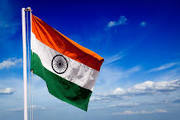
HAPPY REPUBLIC DAY

Copyright@shravancharitymission


    Dear Friends, I wish you all a happy Republic Day. In life, what we have we never value, and that could even be our own country India and its valued citizenship. But I certainly value the privilege of being a loyal citizen of this great nation. Just as I love my life I love this great nation.

    Think and relish the fact that you’re born into this mighty and enduring civilization which is definitely not a coincidence. But a divine semaphore, about which we all are unaware. India takes into its iron fold, the great diversity of all times, in terms of Parsis, Sikhs, Jains, Christians, Muslims, Hindus, and even some of those religions, that I may have missed out, or even people who in reality might not practice any religion, living together for generations. It has a wealth in trillions to the power of infinity that we all share and have been sharing.

    This humongous civilization called Indic … India … Bharat … Hind, has for generations stood together and I’m sure it’ll stay together till infinity. Any aberrations of course will be met by the collective strength of this burgeoning society called India.

    And, last but not the least, if at all, you are ever told, you’re not going to live for more than thirty days, the things that’ll immediately reflect on your mind are, the love for your immediate family, distant family, friends, your journey of life, your hometown and finally your nation that gave you your identity.

    So love thy nation and celebrate the Republic day.

    Jai Hind!!!!!

By Kamlesh Tripathi

*

https://kamleshsujata.wordpress.com

*

Share it if you like it

*

Shravan Charity Mission is an NGO that works for poor children suffering from life threatening diseases especially cancer. Our posts are meant for our readers that includes both children and adults and it has a huge variety in terms of content. We also accept donations for our mission. Should you wish to donate for the cause. The bank details are given below:

NAME OF ACCOUNT: SHRAVAN CHARITY MISSION

Account no: 680510110004635 (BANK OF INDIA)

IFSC code: BKID0006805

*

Our publications

GLOOM BEHIND THE SMILE

(The book is about a young cancer patient. Now archived in 7 prestigious libraries of the US, including, Harvard University and Library of Congress. It can also be accessed in MIT through Worldcat.org. Besides, it is also available for reading in Libraries and archives of Canada and Cancer Aid and Research Foundation Mumbai)  

ONE TO TANGO … RIA’S ODYSSEY

(Is a book on ‘singlehood’ about a Delhi girl now archived in Connemara Library, Chennai and Delhi Public Library, GOI, Ministry of Culture, Delhi)

AADAB LUCKNOW … FOND MEMORIES

(Is a fiction written around the great city of Nawabs—Lucknow. It describes Lucknow in great detail and also talks about its Hindu-Muslim amity. That happens to be its undying characteristic. The book was launched in Lucknow International Literary Festival of 2014)

REFRACTIONS … FROM THE PRISM OF GOD

(Co-published by Cankids–Kidscan, a pan India NGO and Shravan Charity Mission, that works for Child cancer in India. The book is endorsed by Ms Preetha Reddy, MD Apollo Hospitals Group. It was launched in Lucknow International Literary Festival 2016)

TYPICAL TALE OF AN INDIAN SALESMAN

(Is a story of an Indian salesman who is, humbly qualified. Yet he fights his ways through unceasing uncertainties to reach the top. A good read not only for salesmen. The book was launched on 10th February, 2018 in Gorakhpur Lit-Fest. Now available in Amazon, Flipkart and Onlinegatha)

RHYTHM … in poems

(Published in January 2019. The book contains 50 poems. The poems describe our day to day life. The book is available in Amazon, Flipkart and Onlinegatha)

(ALL THE ABOVE TITLES ARE AVAILABLE FOR SALE IN AMAZON, FLIPKART AND OTHER ONLINE STORES OR YOU COULD EVEN WRITE TO US FOR A COPY)

*****


INTERESTING FACTS … did you know episode 5

Copyright@shravancharitymission

20th century saw the worst of violent wars in human history

India has around 1,000 diplomats which is far fewer than Britain that has over 6,000 and China that has around 7,500 diplomats

Let’s put it this way. If you send a silly person on an important job and he acts true to his nature, who is real silly? The man who acted silly or the one who sent him?

Only 3% are vegetarian in America, 9% in the U.K., a noteworthy 10% in Italy and Taiwan and surprisingly 8.5% in Israel. And in this particular area, we Indians are the kings, 40% of our huge population is vegetarian

The contribution of nuclear energy in electricity generation in India is not more than 3.5%

World’s military expenditure is estimated to have been 1.74 trillion$ in 2013 which is 2.4% of the global GDP.

Mark Twain, is the pen name for Samuel Langhorne Clemens

Ricky Ponting holds the world record of 24 straight wins in ODI cricket captaincy

Sri Lankan cricketer Sangakara is a great collector of books/ Lakshadeep has in all 36 islands

Mumbai has 30 of India’s 68 billionaires/India’s luxury car market has grown eight times in the last seven years from 4000 units in 2007 to 33,000 units in 2014. And as per car experts the number is expected to hit 100,000 units by 2020

Real estate: Prime residential prices in Re/sq ft. are Monaco-339723, Hongkong-293944, London-283215, New York-174362, Singapore-151419, Shanghai-121608, Paris-116851, Miami-99210, Beijing-97087, Mumbai-61300, Dubai-40455, Delhi-33400, Bengaluru-18600. (Mumbai is the 10th most expensive)

All India Brewers Association says- Beer sales account for only 50% of liquor sales in India- Much lower than in China, Brazil, US & UK. And wine accounts for only 1% of the total liquor sales in India

On top of the billionaire list is New York with 14, followed by Moscow 91, Hongkong 53, London 49, Beijing 37 and Mumbai 30

About 3.5 crore legal cases are pending in Indian courts/ Not every flower in a plant becomes a fruit

Mahabharata unlike Ramayana is not about an ideal man. It focuses on ethical and moral conflicts-faced in the pursuit of dharma

Central Board for film certification certifies 13,500 films every year

Narendra Modi was the first Prime Minister to visit Parliament canteen where he had an ordinary subsidised thali costing Rs 29.


By Kamlesh Tripathi

*

https://kamleshsujata.wordpress.com

*

Share it if you like it

*

Shravan Charity Mission is an NGO that works for poor children suffering from life threatening diseases especially cancer. Our posts are meant for our readers that includes both children and adults and it has a huge variety in terms of content. We also accept donations for our mission. Should you wish to donate for the cause. The bank details are given below:

NAME OF ACCOUNT: SHRAVAN CHARITY MISSION

Account no: 680510110004635 (BANK OF INDIA)

IFSC code: BKID0006805

*

Our publications

GLOOM BEHIND THE SMILE

(The book is about a young cancer patient. Now archived in 7 prestigious libraries of the US, including, Harvard University and Library of Congress. It can also be accessed in MIT through Worldcat.org. Besides, it is also available for reading in Libraries and archives of Canada and Cancer Aid and Research Foundation Mumbai)  

ONE TO TANGO … RIA’S ODYSSEY

(Is a book on ‘singlehood’ about a Delhi girl now archived in Connemara Library, Chennai and Delhi Public Library, GOI, Ministry of Culture, Delhi)

AADAB LUCKNOW … FOND MEMORIES

(Is a fiction written around the great city of Nawabs—Lucknow. It describes Lucknow in great detail and also talks about its Hindu-Muslim amity. That happens to be its undying characteristic. The book was launched in Lucknow International Literary Festival of 2014)

REFRACTIONS … FROM THE PRISM OF GOD

(Co-published by Cankids–Kidscan, a pan India NGO and Shravan Charity Mission, that works for Child cancer in India. The book is endorsed by Ms Preetha Reddy, MD Apollo Hospitals Group. It was launched in Lucknow International Literary Festival 2016)

TYPICAL TALE OF AN INDIAN SALESMAN

(Is a story of an Indian salesman who is, humbly qualified. Yet he fights his ways through unceasing uncertainties to reach the top. A good read not only for salesmen. The book was launched on 10th February, 2018 in Gorakhpur Lit-Fest. Now available in Amazon, Flipkart and Onlinegatha)

RHYTHM … in poems

(Published in January 2019. The book contains 50 poems. The poems describe our day to day life. The book is available in Amazon, Flipkart and Onlinegatha)

(ALL THE ABOVE TITLES ARE AVAILABLE FOR SALE IN AMAZON, FLIPKART AND OTHER ONLINE STORES OR YOU COULD EVEN WRITE TO US FOR A COPY)

*****


DID YOU KNOW -interesting facts episode 4

Copyright@shravancharitymission


China’s economy today is 30 times larger than what it was three decades ago. And in PPP terms China’s economy is already larger than that of America’s.

*

The length of the Mexican wall to stop illegal immigrants entering the US from its southern borders of Mexico is expected to be around 900 miles long.

*

A typical 300 room five-star hotel generates direct employment for around 500 people, 90% of whom are waiters, housekeeping staff, front desk and concierge staff. And besides cooks, chefs, managers, financial and clerical staff, there are a host of others employed in associated services such as spa, gift shops and swimming pool.

*

China’s staunch opposition has ensured that Taiwan remains the only major country in the world outside the UN.

*

US and India are able to export only a quarter of what they import from China.

*

In China there has been a massive explosion of higher education leading to more than 30 million university enrolments this year.

*

The Real Estate sector accounts for roughly 10% of India’s GDP. Thus, a 10% decline in sales could chop off 1% from India’s GDP growth directly and maybe another 1% by dampening downstream industries and services ranging from cement steel and other building material.

*

80% Indians make less than Rs 1,32000 (per capita income) a year. Only 6% Indians earn more than Rs 2,40,000 a year.

*

The current Lok-sabha is the oldest ever with its average age of 57.5 years as opposed to the average age of the general population which is 27.8 years.

*

Millennials (personal reaching young adulthood) constitute 47% of the working age population in India—a considerable vote bank. Yet on an average only 29.49% of them are enrolled to vote.

*

India has made significant improvements in reducing HIV infections—from 5.1 million in 2003 to 2.1 million in 2017—but it still has the world’s third largest HIV-infected population after South Africa and Nigeria.

*

India has the highest population of cattle in the world.

*

Indore is India’s cleanest city and so a winner of the Safaigiri Award of 2018.

*

Gotra is the male bloodline that links Hindus with a range of ancient sages.

*

A country of 50 lakh population Croatia plays in the finals of the world cup soccer, while India, our country of 135 crore only keeps playing the Hindu Muslim card.

*

Nearly 50% of India is below the age of 25.

*

25% of cement produced in India comes from Chhatisgarh.

*

Nearly half of India’s farms are less than half a hectare, a size too small to yield adequate living standard for a family of five says Arvind Panagariya.

*

The global market of merchandise exports today is approximately $15 trillion. Share of India in these exports is only 1.6%, compared to 12% of China. China’s share in the world exports as recently as 2000 was only 4%.

*

India is set to emerge as the youngest country in the world by 2020. However, the youngest country doesn’t translate into a fit country necessarily. Also we are the world’s third most obese country and also the diabetic capital of the world says Sachin Tendulkar

***

By Kamlesh Tripathi

*

https://kamleshsujata.wordpress.com

*

Share it if you like it

*

Shravan Charity Mission is an NGO that works for poor children suffering from life threatening diseases especially cancer. Our posts are meant for our readers that includes both children and adults and it has a huge variety in terms of content. We also accept donations for our mission. Should you wish to donate for the cause. The bank details are given below:

NAME OF ACCOUNT: SHRAVAN CHARITY MISSION

Account no: 680510110004635 (BANK OF INDIA)

IFSC code: BKID0006805

*

Our publications

GLOOM BEHIND THE SMILE

(The book is about a young cancer patient. Now archived in 7 prestigious libraries of the US, including, Harvard University and Library of Congress. It can also be accessed in MIT through Worldcat.org. Besides, it is also available for reading in Libraries and archives of Canada and Cancer Aid and Research Foundation Mumbai)  

ONE TO TANGO … RIA’S ODYSSEY

(Is a book on ‘singlehood’ about a Delhi girl now archived in Connemara Library, Chennai and Delhi Public Library, GOI, Ministry of Culture, Delhi)

AADAB LUCKNOW … FOND MEMORIES

(Is a fiction written around the great city of Nawabs—Lucknow. It describes Lucknow in great detail and also talks about its Hindu-Muslim amity. That happens to be its undying characteristic. The book was launched in Lucknow International Literary Festival of 2014)

REFRACTIONS … FROM THE PRISM OF GOD

(Co-published by Cankids–Kidscan, a pan India NGO and Shravan Charity Mission, that works for Child cancer in India. The book is endorsed by Ms Preetha Reddy, MD Apollo Hospitals Group. It was launched in Lucknow International Literary Festival 2016)

TYPICAL TALE OF AN INDIAN SALESMAN

(Is a story of an Indian salesman who is, humbly qualified. Yet he fights his ways through unceasing uncertainties to reach the top. A good read not only for salesmen. The book was launched on 10th February, 2018 in Gorakhpur Lit-Fest. Now available in Amazon, Flipkart and Onlinegatha

(ALL THE ABOVE TITLES ARE AVAILABLE FOR SALE IN AMAZON, FLIPKART AND OTHER ONLINE STORES OR YOU COULD EVEN WRITE TO US FOR A COPY)

*****


Literary Corner: About Lord Mountbatten of Burma

Copyright@shravancharitymission


By Kamlesh Tripathi

*

https://kamleshsujata.wordpress.com

*

Share it if you like it

*

Shravan Charity Mission is an NGO that works for poor children suffering from life threatening diseases especially cancer. Our posts are meant for our readers that includes both children and adults and it has a huge variety in terms of content. We also accept donations for our mission. Should you wish to donate for the cause. The bank details are given below:

NAME OF ACCOUNT: SHRAVAN CHARITY MISSION

Account no: 680510110004635 (BANK OF INDIA)

IFSC code: BKID0006805

*

Our publications

GLOOM BEHIND THE SMILE

(The book is about a young cancer patient. Now archived in 7 prestigious libraries of the US, including, Harvard University and Library of Congress. It can also be accessed in MIT through Worldcat.org. Besides, it is also available for reading in Libraries and archives of Canada and Cancer Aid and Research Foundation Mumbai)  

ONE TO TANGO … RIA’S ODYSSEY

(Is a book on ‘singlehood’ about a Delhi girl now archived in Connemara Library, Chennai and Delhi Public Library, GOI, Ministry of Culture, Delhi)

AADAB LUCKNOW … FOND MEMORIES

(Is a fiction written around the great city of Nawabs—Lucknow. It describes Lucknow in great detail and also talks about its Hindu-Muslim amity. That happens to be its undying characteristic. The book was launched in Lucknow International Literary Festival of 2014)

REFRACTIONS … FROM THE PRISM OF GOD

(Co-published by Cankids–Kidscan, a pan India NGO and Shravan Charity Mission, that works for Child cancer in India. The book is endorsed by Ms Preetha Reddy, MD Apollo Hospitals Group. It was launched in Lucknow International Literary Festival 2016)

TYPICAL TALE OF AN INDIAN SALESMAN

(Is a story of an Indian salesman who is, humbly qualified. Yet he fights his ways through unceasing uncertainties to reach the top. A good read not only for salesmen. The book was launched on 10th February, 2018 in Gorakhpur Lit-Fest. Now available in Amazon, Flipkart and Onlinegatha

(ALL THE ABOVE TITLES ARE AVAILABLE FOR SALE IN AMAZON, FLIPKART AND OTHER ONLINE STORES OR YOU COULD EVEN WRITE TO US FOR A COPY)

*****


SHORT STORY: HAZIR JAWAB (QUICK WITTED)

Copyright@shravancharitymission

SHORT STORY: HAZIR JAWAB

(QUICK WITTED)

    There was once a king who was extremely intelligent and at the same time he was extremely passionate about serving his own people. Often he used to hold welfare programmes for them. Today was a similar day. When, he had returned after a long and hectic tour. After tackling various issues in order to help the citizens of his kingdom. The king had an intelligent minister too, who used to escort him almost everywhere. The king trusted the minister not only because he was intelligent but also because he was a ‘hazir jawab.’

    As the king entered his court and sat on his throne he felt extremely tired. He thought of calling it a day almost immediately as he was not feeling fit. But just then his personal assistant entered the court. And after some ostentatious genuflections he said.

    ‘Huzoor, there is a learned scholar who has just now arrived at the main gate of the castle. He is requesting for your immediate audience. He says he has a very important question for you. Unfortunately he has not been able to get the answer of which till now, even when he has visited many kingdoms and has met many kings.’

    The king enquired if he could wait till morning but the scholar was in a hurry. Finally, the king had no choice so he asked the minister if he could handle the scholar and answer his question. The minister agreed and told the king that he was ready. As it was a question of the kingdom’s reputation. Else, he will go out and gossip. That the kingdom doesn’t have people with wit and wisdom and therefore they can’t answer difficult questions. The king was happy at this logic of the minister.

    Finally, the scholar entered the king’s court. After paying his respect to the king he stood there. The king said, since he is not feeling well he has asked his learned minister sitting in the court, to answer his question in his presence. The scholar was happy at this. And the very next moment the scholar was introduced to the minister.

    The scholar said, ‘Mister Minister what would you like to have. Hundred easy questions or one difficult question?’ The minister looked at the king and said.

    ‘Since his majesty is not feeling well and he would like to wind up, the court early today. I would prefer one difficult question so that we all can be done with it fast.’

    The scholar thought for a moment and then he smiled and said. ‘Learned Minister, so get ready for that one difficult question.’

    ‘Tell me … what came first. The chicken or the egg.’

    The minister thought for a while. He made eye contact with the king and then he looked at some the courtiers and said, ‘the chicken came first.’

    The scholar was happy to hear that. He thought for a moment and then said,

    ‘Mister Minister … are your sure the chicken came first?’

    The Minister got up from his seat. He then looked at the scholar and said.

    ‘Dear scholar you were allowed to ask only one question which you’ve already asked. This is the second question which you’re not allowed to ask.

    MORAL: By being hazir jawab or quick witted you can safely come out of tricky situations.

Posted by Kamlesh Tripathi

*

https://kamleshsujata.wordpress.com

*

Share it if you like it

*

Shravan Charity Mission is an NGO that works for poor children suffering from life threatening diseases especially cancer. Our posts are meant for our readers that includes both children and adults and it has a huge variety in terms of content. We also accept donations for our mission. Should you wish to donate for the cause. The bank details are given below:

NAME OF ACCOUNT: SHRAVAN CHARITY MISSION

Account no: 680510110004635 (BANK OF INDIA)

IFSC code: BKID0006805

*

Our publications

GLOOM BEHIND THE SMILE

(The book is about a young cancer patient. Now archived in 7 prestigious libraries of the US, including, Harvard University and Library of Congress. It can also be accessed in MIT through Worldcat.org. Besides, it is also available for reading in Libraries and archives of Canada and Cancer Aid and Research Foundation Mumbai)  

ONE TO TANGO … RIA’S ODYSSEY

(Is a book on ‘singlehood’ about a Delhi girl now archived in Connemara Library, Chennai and Delhi Public Library, GOI, Ministry of Culture, Delhi)

AADAB LUCKNOW … FOND MEMORIES

(Is a fiction written around the great city of Nawabs—Lucknow. It describes Lucknow in great detail and also talks about its Hindu-Muslim amity. That happens to be its undying characteristic. The book was launched in Lucknow International Literary Festival of 2014)

REFRACTIONS … FROM THE PRISM OF GOD

(Co-published by Cankids–Kidscan, a pan India NGO and Shravan Charity Mission, that works for Child cancer in India. The book is endorsed by Ms Preetha Reddy, MD Apollo Hospitals Group. It was launched in Lucknow International Literary Festival 2016)

TYPICAL TALE OF AN INDIAN SALESMAN

(Is a story of an Indian salesman who is, humbly qualified. Yet he fights his ways through unceasing uncertainties to reach the top. A good read not only for salesmen. The book was launched on 10th February, 2018 in Gorakhpur Lit-Fest. Now available in Amazon, Flipkart and Onlinegatha

(ALL THE ABOVE TITLES ARE AVAILABLE FOR SALE IN AMAZON, FLIPKART AND OTHER ONLINE STORES OR YOU COULD EVEN WRITE TO US FOR A COPY)

*****