#VVIPS: IF YOU COULD ONLY SPARE DAINTY FLOWERS- IN YOUR THANKLESS BOUQUETS

Copyright@shravancharitymission


b1b3


    ‘Earth laughs in flowers’ – Ralph Waldo Emerson

    Each flower is the heart throb of the garden where it is grows, and so also the emblem of ‘earth’s laughter’—as Emerson puts it.

    But it is sad to see on TV these days. How people in droves, mindlessly present flower bouquets to VVIPs and Heads of States who mechanically pass it on to their personal security staff, standing next to them. And you get a disgusting feeling seeing these lovely flowers being insulted.

    Perhaps, callous VVIPS do not have the time and mind to visualise and feel about the labour pains ‘Mother Earth’ undertakes to deliver each flower. And the blood and sweat of the gardener in bringing about this exquisite beauty.

    Therefore, won’t it be wonderful to leave them in the garden alone, than to give them premature death in thankless bouquets. So I would plead to our PM Sri Narendra Modi to stop this culture of bouquets.

   And, for tokenism one could think of plastic or paper flowers. That too under—‘make in India’ scheme.

*

Posted by Kamlesh Tripathi

*

https://kamleshsujata.wordpress.com

*

Share if you like it

*

Shravan Charity Mission is an NGO that works for poor children suffering from life threatening diseases. Should you wish to donate for the cause the bank details are given below:

NAME OF ACCOUNT: SHRAVAN CHARITY MISSION

Account no: 680510110004635 (BANK OF INDIA)

IFSC code: BKID0006805

*

Our publications

GLOOM BEHIND THE SMILE

ONE TO TANGO … RIA’S ODYSSEY

AADAB LUCKNOW … FOND MEMORIES

REFRACTIONS … FROM THE PRISM OF GOD

(CAN BE BOUGHT FROM ON LINE BOOK STORES OR WRITE TO US FOR COPIES)

*****


Feudalism Lives- Rachpal Singh makes his guard put on his shoes, democracy sheds a tear

Copyright@shravancharitymission

By Kamlesh Tripathi

New Doc 60_1 (2)

Sardar Rachpal Singh, also minister for Planning and Implementation in government of Bengal forgot at his convenience, Guru Nanak’s all time relevant teachings; so also the umbilical and noble duties that a Sikh is supposed to perform in a Gurudwara by allowing his security guard to tie his shoe laces. And, further shamed the martial race by hiding behind a measly back pain, the reason why he allowed the security guard to tie his shoe laces, when Sikhs are known for their unimaginable pain enduring capacities.

But let me also point out as to why security personnel posted along Netas, VVIPs and bureaucrats are getting into such a demeaning form of Chamchagiri? Why can’t they refuse on the face of these VVIPs as this is not part of their job?

And what will happen if one guy refuses, hundred guys refuse and thousand guys refuse?

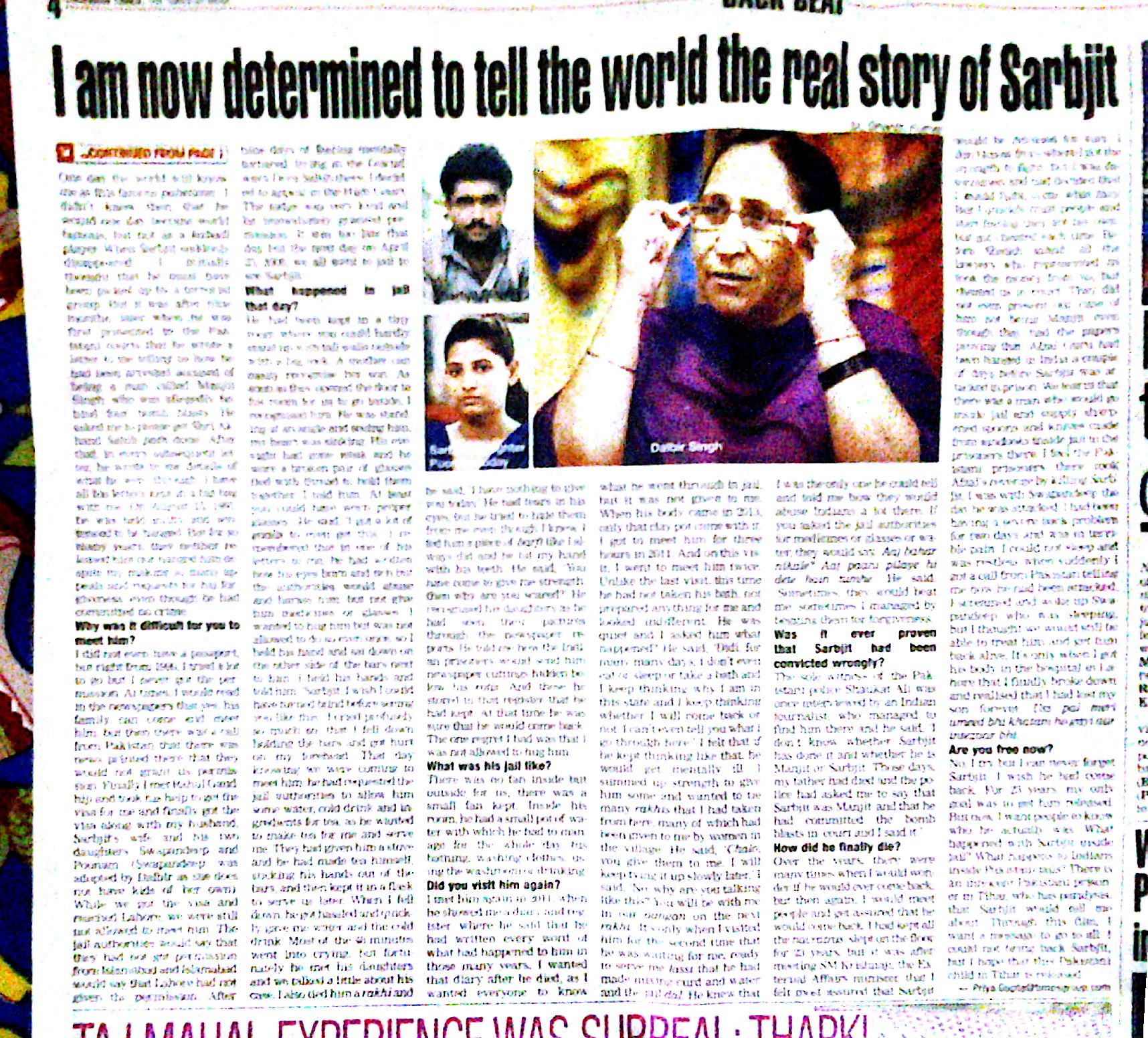
SARBJIT SINGH’S SISTER RECOUNTS THE 3 TIMES SHE MET HIM IN 23 YEARS BEFORE HE DIED IN 2013

Copyright@shravancharitymission

By Kamlesh Tripathi

New Doc 67_1New Doc 68_1

This is a nostalgic account narrated by Dalbir Singh, elder sister of Sarbjit Singh:

  • Sarbjit Singh had to spend 23 years in a Pakistani prison for a small mistake he committed unknowingly, and eventually he was murdered there—He headed in the wrong direction, towards Pakistan, at night after working in his fields located close to the LOC in Punjab and was nabbed by Pakistani rangers.
  • It is an emotional account of a sister; and pixels well about their relationship.
  • Dalbir Singh, Sarabjit’s elder sister considered him as her son. And after Sarabjit was whisked away by Pakistani authorities for 23 years she slept on the floor to please her God for his safe return.
  • It is said; sometimes there is success in defeat and sometimes there is defeat in success—it was success in defeat for Dalbir. For one cannot fathom the turbulence Dalbir must have undergone for 23 long years, each time blaming only herself that she hasn’t done enough to save her brother and she must continue with bigger and untiring efforts—so that was her success; and in the end not being able to save Sarbjit, her defeat.
  • I liked the account as it reminded me of my defeat, when I too could not save my ailing son from cancer, but like Dalbir the untiring  efforts that me and my family had put in gave a whiff of success. For in life one should only try his best and not get intimidated by what is beyond one’s capacity.
  • It also gives an account of how Indian prisoners are treated in Pakistani prisons.

  • Briefly describes how Indian prisoners are treated in Pakistani prisons.
  • Soon to be released as a film.

TOI- 26.5.15

SARBJIT SINGH’S SISTER RECOUNTS THE 3 TIMES SHE MET HIM IN 23 YEARS BEFORE HE DIED IN 2013

I am now determined to tell the world the real story of Sarbjit

Dalbir Singh, 61, is the older sister of Sarbjit Singh, a farmer from Bhikhiwind in Punjab (just 5 kms from the the Indo-Pakistan border). He by mistake crossed over in 1990 while farming, got mistaken as an Indian spy, was given capital punishment in 1991, but was not hanged. He was kept in Kot Lakhpat jail in Lahore for 23 years, before he was killed by inmates a few days after the death of Afzal Guru in India. During his 23 years in jail, his older sister Dalbir Singh who treated him more like her son than her brother, made it her life’s agenda to get him released. While she finally did not succeed, she is determined to reach his real story to the world through a film being made based on his life. The film will be directed by Omung Kumar, the National Award-winning director of Mary Kom. Dalbir Singh met her brother only three times in those 23 years. She opens up to us for the first time after her brother’s death in 2013 and recounts the three times she met her brother in jail. Excerpts:

Did instance like the Kargil War affect you?

At the time of Kargil, I got very scared. There is a nearby village called Khasa, where many army officers live. I went to meet them and asked Brigadier sahab, given the situation how it would affect the way Pakistan would treat our prisoners. I was scared that if there would be war, how would the prisoners come out? I met another Brigadier who told me that if there would be war, we would open up the jail and release the prisoners, so that an innocent man should not get bombed and die in jail. But he didn’t know what the Pakistanis would do. We would feel scared that Khuda na kare, if there was a bomb thrown in jail, how would he be able to run? My heart would sink if there was a flood or earthquake in Lahore.

How did Sarbjit actually cross over to Pakistan?

Our village is just about 4-5 kms from the border. I myself have gone many times to the other side while working together with the women from the other side on our fields. We would be working on our respective fields and sometimes, even eat a meal together with the Pakistani brothers and sisters on the other side.

Gradually and slowly, the situation got bad to worse and they first put a rough line to segregate a boundary and then, there were some fundamentalists on both sides who did not have good thoughts. Though I believe that ours were not as negative as the people on the other side. There would be things smuggled in across the borders, but the women had good behaviour towards each other and there was no enemity. However, if there was anybody who went the other side by mistake, they would be caught and put behind bars termed as ‘spies’. That night, we had finished our dinner when a friend of Sarbjit came and took him to the fields to work. The field was right next to the border. As is usually the case in Punjab, the men drink and then work. Sarbjit and his friend too had their full share of drinks and then, Sarbjit put his axe on his shoulder and not realising which direction he was walking, he walked into the Pakistan side. At that time, there was not even a wire to show the borderline. He was caught and blindfolded and only the next morning, he realised that he was in Lahore’s Kot Lakhpat jail, accused of being an Indian spy by the name of Manjit Singh. Sarbjit was very fond of playing kabaddi and he would often tell me, ‘You wait and see. One day the world will know me as this famous pahelwan.’ I didn’t know then that he would one day become world famous, but not as a kabaddi player. When Sarabjit suddenly disappeared, I initially thought that he must have been picked up by a terrorist group. But it was after nine months, later when he was first presented in the Pakistani courts that he wrote a letter to me telling us how he had been arrested accused of being a man called Manjit Singh, who was allegedly behind four bomb blasts. He asked to please get Shri Akhand Sahib path done. After that in every subsequent letter; he wrote to me details of what he went through. I have all his letters kept in a big bag with me. On August 15, 1991, he was held guilty and sentenced to be hanged. But for so many years, they neither released him nor hanged him despite my making so many appeals and requests for his forgiveness, even though he had committed no crime.

Why was it difficult for you to meet him?

I did not even have a passport, but right from 1990, I tried a lot to go but I never got the permission. At times, I would read in the newspapers that yes, his family can come and meet him, but then there was a call from Pakistan that there was news printed there that they would not grant us permission. Finally I met Rahul Gandhi and took his help to get the visa for me and finally got the visa along with my husband, Sarbjit’s wife and his two daughters Swapandeep and Poonam (Swapandeep was adopted by Dalbir as she does not have kids of her own). While we got the visa and reached Lahore, we were still not allowed to meet him. The jail authorities would say that they had not got permission from Islamabad and Islamabad would say that Lahore had not given the permission. After nine days of feeling mentally tortured, living in Gurudwara Dera Sahib there, I decided to appeal in the High Court. The judge was very kind and he immediately granted permission. It was too late that day, but the next day on April 23, 2008, we all went to jail to see Sarbjit.

What happened in jail that day?

He had been kept in a tiny room where you could hardly stand up with tall walls outside with a big lock. A mother can easily recognise her son. As soon as they opened the door to his room for us to go inside, I recognised him. He was standing at an angle and seeing him, my heart was sinking. His eyesight had gone weak and he wore a broken pair of glasses tied with a thread to hold them together: I told him, ‘At least you could have worn proper glasses.’ He said, ‘I got a lot of gaalis to even get this.’ I remembered that in one of his letters to me, he had written how his eyes burn and itch but the authorities would abuse and harass him, but not give him medicines and glasses. I wanted to hug him but I was not allowed to do so even once, so I held his hand and sat down on the other side of the bars next to him. I held his hands and told him, “Sarbjit, I wish I could have turned blind before seeing you like this.’ I cried profusely so much so, that I fell down holding the bars and got hurt in my forehead. That day knowing we were coming to meet him, he had requested the jail authorities to allow him some water, cold drink and ingredients for tea, as he wanted to make tea for me and serve me. They had given him a stove and he had made tea himself, sticking his hands out of the bars, and then kept it in a flask to serve us later. When I fell down, he got hassled and quickly gave me water and cold drink. Most of the 48 minutes went into crying, but fortunately he met his daughters and we talked a little about his case. I also tied him rakhi and he said, ‘I have nothing to give you today.’ He had tears in his eyes, but he tried to hide them from me even though I knew. I fed him with a piece of barfi like I always did and he bit my hand with his teeth. He said, ‘You have come to give me strength, then why are you scared?’ He recognised his daughters as he had seen their pictures through the newspaper reports. He told me how the Indian prisoners would send him newspaper cuttings hidden behind his rotis. And these he stored in the register he had kept. At that time he was sure he would come back. The one regret that I had was that I was not allowed to hug him.

What was his jail like?

There was no fan inside but outside for us, there was a small fan kept. Inside his room, he had a small pot of water with which he had to manage for the whole day, his bathing, washing clothes, using the washroom or drinking.

Did you visit him again?

I met him again in 2011, when he showed me a diary and register, where he said that he had written every word of what had happened to him in those many years. I wanted that diary after he died, as I wanted everyone to know what he went through in jail, but it was not given to me. When his body came in 2013, only that clay pot came with it. I got to meet him for three hours in 2011. And on this visit, I went to visit him twice. Unlike the last visit, this time he had not taken his bath, not prepared anything for me and looked indifferent. He was quiet and I asked him what happened? He said, ‘Didi, for many days, I don’t even eat or sleep or take a bath and I keep thinking why I am in this state and I keep thinking whether I will come back or not. I can’t even tell you what I go through here.’ I felt that if he kept thinking like that, he would get mentally ill. I summed up strength to give him some and wanted to tie many rakhis that I had taken from here, many of which had been given to me by women in the village. He said, ‘Chalo, you give them to me. I will keep tying it up slowly later.’ I said, ‘No, why are you talking like this? You will be with me in our aangan on the next rakhi.’ It’s only when I visited him for the second time that he was waiting for me, ready to serve me lassi that he had made mixing curd and water and the jail dal. He knew that I was the only one he could tell and told me how they would abuse Indians a lot there. If you ask the jail authorities for medicines or glasses or water, they would say, ‘Aaj bahar nikale? Aaj paani pilaye hi dete hain tumhe.’ He said, ‘Sometimes, they would beat me, sometimes I managed by begging them for forgiveness.’

Was it ever proven that Sarbjit had been convicted wrongly?

The sole witness of the Pakistani police Shaukat Ali was once interviewed by an Indian journalist, who managed to find him there and he said, ‘I don’t know whether Sarbjit has done it and whether he is Manjit or Sarbjit. Those days, my father had died and the police had asked me to say that Sarbjit was Manjit and that he had committed the bomb blasts in court and I said it.’

How did he finally die?

Over the years, there were many times when I would wonder if he would ever come back, but then again, I would meet people and get assured that he would come back. I had kept all the navratras, slept on the floor for 23 years, but it was after meeting SM Krishnaji, the External Affairs minister, that I felt most assured that Sarbjit would be released for sure. I don’t know from where I got the strength to fight, but I was determined and had decided that I would fight, come what may. But I quickly trust people and start feeling they are my own, but got cheated each time. Before Sheikh sahab, all the lawyers who represented us took the money from us, but cheated us in court. They did not even present our case of him not being Manjit even though they had the papers proving that. Afzal Guru had been hanged in India a couple of days before Sarbjit was attacked in prison. We learnt that there was a man who would go inside jail and supply sharpened spoons and knives made from sandooks inside jail to the prisoners there. I feel the Pakistani prisoners there took Afzal’s revenge by killing Sarabjit. I was with Swapandeep the day he was attacked. I had been having a severe back problem for two days and was in terrible pain. I could not sleep and was restless when suddenly I got a call from Pakistan telling me how he had been attacked. I screamed and woke up Swapandeep who was sleeping, but I thought we would still be able to treat him and get him back alive. It’s only when I got his body in the hospital in Lahore that I finally broke down and realised that I had lost my son forever: Uss pal meri umeed bhi khatam ho gayi aur intezaar bhi.

Are you free now?

No, I try but I can never forget Sarbjit. I wish he had come back. For 23 years, my only goal was to get him released. But now, I want people to know who he actually was. What happened with Sarbjit inside jail? What happens to Indians inside Pakistani jails? There is an innocent Pakistani prisoner in Tihar, who has paralysis, that Sarbjit would tell me about. Through this film, I want a message to go to all. I could not bring back Sarbjit, but I hope that this Pakistani child in Tihar is released.

Priya.Gupta@timesgroup.com


MODI GOVERNMENT DOES WELL: Rent won’t allow longer stay in Lutyens’ zone now

Copyright@shravancharitymission

By Kamlesh Tripathi

New Doc 66_1

Narendra Modi government has done extremely well by disallowing, Politicians and Bureaucrats to continue in their ‘Paradise’ (official Lutyens’ zone bungalows) when it’s a clear case of ‘Paradise-lost.’

Government truly is not a real estate agent and is not there to make money on such properties. By bringing about this order, BJP has hit at some politicians and bureaucrats where it hurts the most.

Recently TOI had covered shameless politicians like Ambika Soni and Kumari Selja of Congress party who were digging their heels for their sprawling bungalows, when they don’t deserve it anymore. Congress had converted Lutyens’ zone into a “Private Estate.”

Well done Prime Minister Narendra Modi and Mr Venkaiah Naidu!

Suggestion: The more you remove VVIP-ISM more you will stand a chance of returning in the next elections. Remember Indians are now frustrated with vulgar display of VVIP-ISM.

TOI: column 25.5.15 ‘Rent won’t allow longer stay in Lutyens’zone now.

KNOW THY SELF … WHAT ARE YOU?

Copyright@shravancharitymission

i2 innerself i3

You are what you like to think,

You are what you like to remember,

You are what you like to discover,

You are what you like to recover.

*

You are what you like to speak,

You are what you like to read,

You are what you like to write,

You are what you like to hear,

*

You are what you like to dream,

You are what you like to do,

You are what you like to scream,

You are what you like to achieve,

*

You are what you like to preach,

You are what you like to tread,

You are what you like to grace,

You are what you like to brace.

*

You are what you like to appreciate,

You are what you like to criticize,

You are what you like to support,

You are what you like to kill.

*

You are what you like to sing,

You are what you like to worry,

You are what you like to celebrate,

You are what you like to mourn.

*

You are what you like as company,

You are what you like to eat,

You are what you like to drink,

You are what you like to mint.

*

You are what you like to enjoy,

You are what you like to crib,

You are what you like to scoff,

You are what you like to rinse.

*

You are what you like to encounter,

You are what you like to interface.

*

And last but not the least, and as you breathe,

Whether you like it or not,

Some day you will realise,

You are only a sum total of all these.

**

To know yourself, honestly plot two choices against each to know the complex beehive you live in.

*

By Kamlesh Tripathi

*

https://kamleshsujata.wordpress.com

*

Share if you like it

*

Shravan Charity Mission is an NGO that works for poor children suffering from life threatening diseases. Should you wish to donate for the cause the bank details are given below:

NAME OF ACCOUNT: SHRAVAN CHARITY MISSION

Account no: 680510110004635 (BANK OF INDIA)

IFSC code: BKID0006805

*

Our publications

GLOOM BEHIND THE SMILE

(Archived in 7 prestigious libraries of the US, including, Harvard University and Library of Congress. It can also be accessed in MIT through Worldcat.org. Besides, it is also available for reading in Libraries and archives of Canada and Cancer Aid and Research Foundation Mumbai)

ONE TO TANGO … RIA’S ODYSSEY

(Archived in Connemara Library, Chennai and Delhi Public Library, GOI, Ministry of Culture)

AADAB LUCKNOW … FOND MEMORIES

(Launched in Lucknow International Literary Festival 2014)

REFRACTIONS … FROM THE PRISM OF GOD

(Co-published by Cankids–Kidscan, a pan India NGO and Shravan Charity Mission, that works for Child cancer in India. The book is endorsed by Ms Preetha Reddy, MD Apollo Hospitals Group. Book was launched in Lucknow International Literary Festival 2016)

(CAN BE BOUGHT FROM ON LINE BOOK STORES OR WRITE TO US FOR COPIES)

*****


SONI, SELJA DIG IN HEELS, WON’T VACATE BUNGALOWS- Such unwieldy politicians likely to fade away from the Indian political map

Copyright@shravancharitymission

By Kamlesh Tripathi

ambikaselja

Once upon a time American and European fuel guzzling cars were very popular all over the world because there was no other choice. Then came, the fuel efficient Japanese cars that took the car markets by storm where some of these companies faced the threat of closure and some actually closed. Finally, to survive every car manufacturer had to manufacture fuel efficient cars. They say global trends are more powerful than national and national trends are more powerful than the local.

Indian political market is somewhat heading in the same direction where the culture of VVIPISM is frustrating the Indian population as a whole. Prime Minister Narendra Modi keeps harping about the strength of the young Indian population which happens to be under the age of 35 and is 60% of the Indian population. And this population will soon be up for grabs if they don’t find employment in other sectors, and they will turn into politicians and that will be only good for the Indian Political Market.

For this new breed of politicians will be lean, wieldy, needy and talented, and putting it more appropriately–fuel efficient. Like the Sonis and Seljas they won’t require Bungalows to reside in, vehicles and drivers to cart them, secretaries to communicate, peons to lift their baggage and security guards to protect them. They will be confident and self-sufficient.

And they will be ready to operate out of small residence, carry their own luggage, drive their own cars or move in public transport without security guards and operate their own laptops; pretty much, away from the hulky and unwieldy syndrome.

Looking in the manner the current generation of politicians is frustrating India through VVIPISM; the talented young India is seeing an opportunity in this. And this may happen quite soon. Arvind Kejriwal came quite close to this methodology but for some reasons moved away. But the younger generation is still contemplating the opportunity and it will require only 5-10 young crusaders to announce this new kind of politicking; and will become the new hero of new India—the lean Indian Politician.

Read the TOI column, Thursday, May 21, 2015

New Delhi: Former Union ministers and Rajya Sabha MPs from Congress Ambika Soni and Kumari Selja have slapped privilege notices on the urban development (UD) ministry for asking them to vacate their official bungalows.

The ministry served them eviction notice on the ground that they were no entitled to the ministerial bungalows. Both the MPs have contested the claim and have dubbed the notice as a breach of their privilege as parliamentarians. The UD ministry has been intimated by the Upper House.

“The two have given privilege notices to the urban development ministry in response to its eviction notice served on them for vacating their Type-VIII bungalows.” said an official.

Soni and Selja are staying in 22, Akbar Road and 7, Moti Lal Nehru Road, respectively, which are allotted to them when they were ministers in the previous UPA government. The UD ministry claimed they were entitled to accommodation meant for MPs as per their seniority but not ministerial bungalows.

This came even as all MPs staying in the Ashoka Hotel have vacated it. “Dushyant Chautala of INLD was the last to vacate the hotel.” an official said. At one point, 120 newly-elected MPs were staying at Ashoka Hotel.

INDIA JOINS CLUB OF NATIONS WITH ‘ROAD RUNWAYS’- A moment of pride for Uttar Pradesh

Copyright@shravancharitymission

By Kamlesh Tripathi

iafNew Doc 63_1 (2)

Uttar Pradesh which is often in the news for wrong and silly reasons had a moment of pride when in a first for military aviation in the country, Indian Air Force on Thursday successfully test-landed a French Dassault Mirage-2000 on the Yamuna Expressway near Raya village, Mathura at 6.40 am on 21st May 2015.

The aim behind successfully test-landing a Mirage-2000 fighter on Yamuna Expressway was to be able to use national highways during emergencies.

Flown by Wing Commander Prashant Arora from the “Tigers” squadron based at Gwalior, the French origin Mirage-2000 first made “a practice approach” around 100-metre over the highway. Then, after tearing back into the sky, the supersonic jet returned to finally touch down.

mayawatiakhilesh

The marvel of Yamuna Expressway was constructed by JP Infratech when Mayawati was the Chief Minister of UP and that showcases her vision for big infrastructure projects, and Akhilesh Yadav the present Chief Minister showed graceful maturity by helping IAF in landing a supersonic jet in the Expressway constructed by his rival.

Others who helped IAF were Yamuna Expressway Authority and Mathura Police.

Though several countries, ranging from China and Pakistan to Sweden and Germany have such “road runways.” But it was the first of its kind in India.

IAF deserves commendation, and so does JP Infratech for the Engineering genius. It is also a rare moment of pride, for the citizens of the state and the country.

And last but not the least we hope in this celebratory moment, the bickering and divided Netas of UP will join hands to honour the occasion.

NGO ACTIVITY ON 21.5.15: BRING SMILES

Copyright@shravancharitymission

By Kamlesh Tripathi

Once again in the pursuit of smiles on the two young faces we visited Apollo hospital and handed over two cheques to the Parents/Elders of these children for cancer treatment. We spoke to them for a while. May God bless them.

20150521_134605

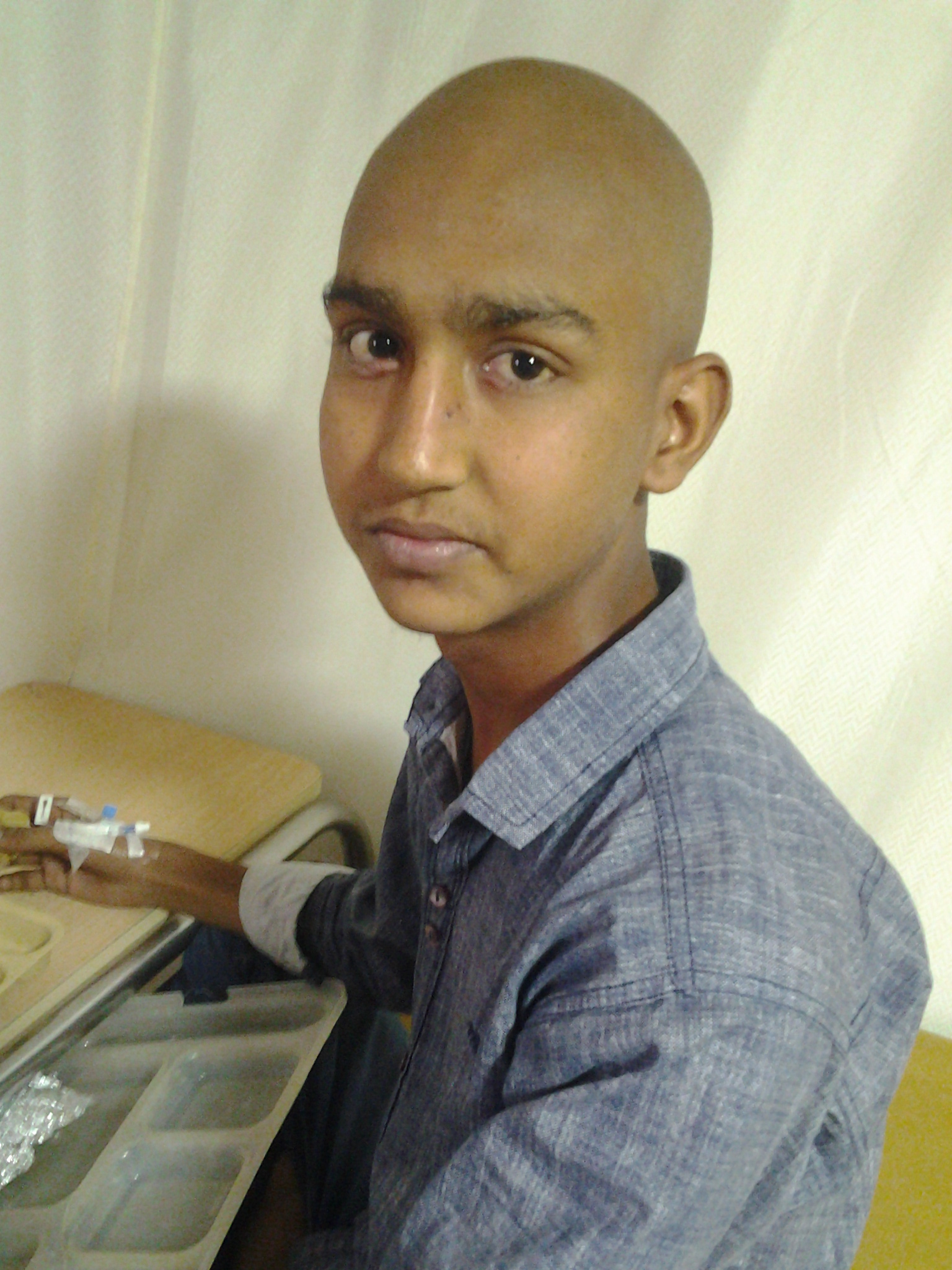
  1. Master Tarif, Age 12 is from the family of farmers. He doesn’t have a father and his treatment is being taken care of by Aas Mohammed his uncle who is a marginal farmer with very low income from Hayana. He is suffering from Brain Tumour. We wish Master Tarif all the  the best in life.   20150521_132626
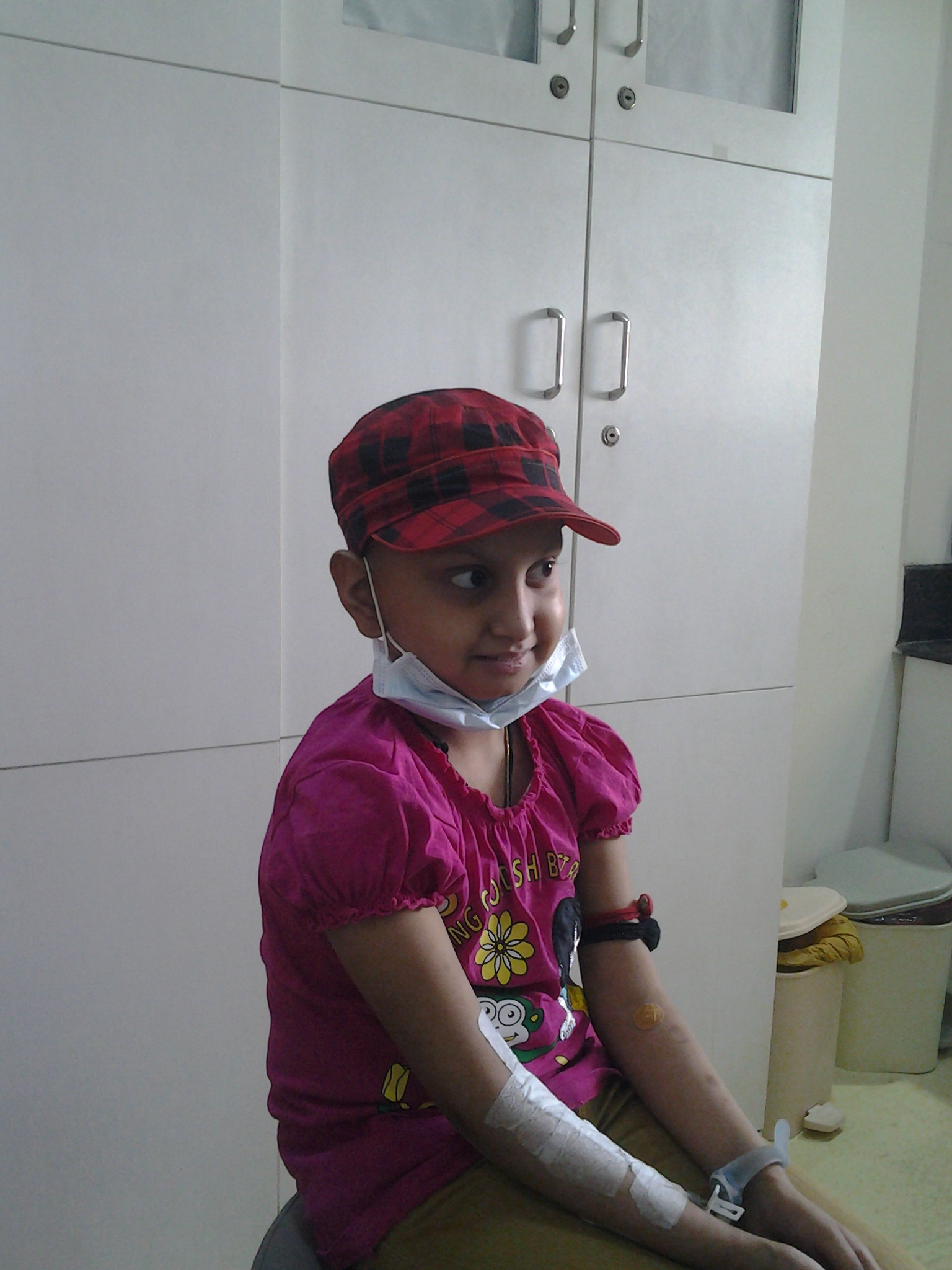
  2. Miss Mehak Misra, age 9 is suffering from CNS Lymphoma. Her father works for a private job. Mehmak is a bright student and wants to do great things in life. We wish Mehak the very best in life.

A small contribution from you can change the lives of these poor Unfortunate children:

For net transfer:

  1. Name of account: ‘Shravan Charity Mission’

Bank of India account no: (680510110004635)

IFSC code: BKID0006805

  1. Name of account: ‘Shravan Charity Mission’

HDFC account no: (04801450000140)

IFSC Code: HDFC0000480

You could also send us a cheque in favour of ‘Shravan Charity Mission’ at the following address:

Shravan Charity Mission, c/o Mr Kamlesh Tripathi, Arihant Ambience, Sapphire-002, Crossings Republik, Ghaziabad-201009

our e-mail id is : shravancharitymission@gmail.com

INSULT – IN THE ALCOVES OF LIFE

Copyright@shravancharitymission

INSULT- IN THE ALCOVES OF LIFE

113322

In the alcoves of life when insult strikes,

Morale dies but sorrow thrives,

Hate emerges and love vanishes,

And life cries in the lap of disgust.

*

In the upswing of life when insult strikes,

You zeal through life, leaving behind the fright,

To play the game of life, you retaliate to such strikes,

And in spasms of success, you sword the frights.

*

And in the grace of life when insult strikes,

Your seams burst to no respite,

And longings transform to disgraced moribund,

When the maze of life appears a mere tantrum,

*

And finally in the twilight of life when insults strikes,

Time is scarce and there is no rejoice,

And as I grapple towards my last rites,

I shudder at the pending equations of life,

For in heaven there is no carry forward of dice

*

So to each insult give a thought

Trace its footsteps back to your fraught

As time is scarce and the world imprecise

Penance will only be somewhat

*

For in the see-saw of life, lies the riles,

For I may have insulted, to get insulted,

Says the boomerang of life,

And now wait and watch, what more comes your way

In the unforeseen tremors of life.

************

By Kamlesh Tripathi

*

https://kamleshsujata.wordpress.com

*

Share if you like it

*

Shravan Charity Mission is an NGO that works for poor children suffering from life threatening diseases. Should you wish to donate for the cause the bank details are given below:

NAME OF ACCOUNT: SHRAVAN CHARITY MISSION

Account no: 680510110004635 (BANK OF INDIA)

IFSC code: BKID0006805

*

Our publications

GLOOM BEHIND THE SMILE

(Archived in 7 prestigious libraries of the US, including, Harvard University and Library of Congress. It can also be accessed in MIT through Worldcat.org. Besides, it is also available for reading in Libraries and archives of Canada and Cancer Aid and Research Foundation Mumbai)  

ONE TO TANGO … RIA’S ODYSSEY

(Archived in Connemara Library, Chennai and Delhi Public Library, GOI, Ministry of Culture)

AADAB LUCKNOW … FOND MEMORIES

(Launched in Lucknow International Literary Festival 2014)

REFRACTIONS … FROM THE PRISM OF GOD

(Co-published by Cankids–Kidscan, a pan India NGO and Shravan Charity Mission, that works for Child cancer in India. The book is endorsed by Ms Preetha Reddy, MD Apollo Hospitals Group. Book was launched in Lucknow International Literary Festival 2016)

TYPICAL TALE OF AN INDIAN SALESMAN

Story of an Indian salesman who is lowly qualified but fights his ways through uncertainities to reach the top. A good read for all salesmen. Now available in Amazon.com

(CAN BE BOUGHT FROM ON LINE BOOK STORES OR WRITE TO US FOR COPIES)

*****


TOGETHER … BUT NOT MADE FOR EACH OTHER

Copyright@shravancharitymission

 …. Cherish your struggle together

m6

m2

m

TOGETHER … BUT NOT MADE FOR EACH OTHER


In the bygones of life I find …

… We sacrificed so much … to be together,

But soon I realised we were not made for each other.

*

How well we began together,

Only to learn midway,

That we were not made for each other.

*

Every criss-cross of life we treaded together,

Every sorrow and happiness we faced together,

In those steep ups … and slimy slides of life we held together,

But then again I thought we were not made for each other,

*

Each step in life, we took together,

Every deed, and misdeed if any, we enacted together,

Knowing fully well we were not made for each other,

*

We saw each wrinkle lining up in us together,

And, also, each strand greying in us together,

Yet, I always thought we were not made for each other.

*

One day we noticed our walk was slowing,

And another day we saw our shoulders were drooping,

Yet we kept walking together,

But even then I thought we were not made for each other,

*
Not one but every sunrise was together,
Not occasional, but each sunset was together,
And of course we laughed and fought and cried together,
Even when we were not made for each other,
 

*

And then one day,

In my dying moments when we were together,

I saw we were not only together but also made for each other,

But by then it was late,

Because our physical togetherness was over.

*

Life is a drag if you wish to live in dissensions and a melody if you adopt togetherness.

By Kamlesh Tripathi

*

Share if you like it

*

Shravan Charity Mission is an NGO that works for poor children suffering from life threatening diseases. Should you wish to donate for the cause the bank details are given below:

NAME OF ACCOUNT: SHRAVAN CHARITY MISSION

Account no: 680510110004635 (BANK OF INDIA)

IFSC code: BKID0006805

*

Our publications

GLOOM BEHIND THE SMILE

ONE TO TANGO … RIA’S ODYSSEY

AADAB LUCKNOW … FOND MEMORIES

REFRACTIONS … FROM THE PRISM OF GOD

(CAN BE BOUGHT FROM ON LINE BOOK STORES OR WRITE TO US FOR COPIES)

*****