Category Archives: story

BOOK STALL: TO BUILD A FIRE by Jack London

Copyright@shravancharitymission

Khidki (Window)

–Read India Initiative—

This is only an attempt to create interest in reading. We may not get the time to read all the books in our lifetime. But such reviews, talk and synopsis will at least convey what the book is all about.
    “To Build a Fire” is a short story by American author Jack London. There are two versions of this story. One published in 1902 and the other in 1908. The story that was written in 1908 has become an anthologized classic, while the 1902 story is lesser known. The 1908 version is about an unnamed protagonist who ventures out in the sub-zero boreal forest (located in the Arctic zone) of the Yukon Territory, along with his dog, to visit some of his friends. While doing so he ignores the warnings from an older man about the dangers of hiking alone. The protagonist underestimates the harsh conditions and slowly begins to freeze to death. After trying and then failing to build a fire, he slips into unconsciousness and dies of hypothermia—low body temperature.

    The 1902 version describes a similar situation, but with a different plot. Though the structure and storyline are similar in both. In 1902 the weather is not as cold and horrendous, and no dog follows the protagonist, the fire is not doused, and the man (named Tom Vincent) suffers only from permanent frostbite. And he survives to become a melancholic but wiser person.

    Whereas, the 1908 version of the story is an example of the naturalist movement that portrays the conflict of man versus nature. It also reflects what Jack London perhaps learned in the Yukon Territory. And it details as follows:

    An unnamed man sets out to hike through the forests bordering the Yukon River on a winter day when the temperature has reached -75°F (-59°C). Having ignored the advice of an old prospector against traveling alone in such weather, he is accompanied only by his large husky dog. The animal’s instincts warn about the dangers of the extreme cold weather. Yet, it follows the man unwillingly. And as they follow the course of a frozen creek, the man is careful to avoid patches of thin ice, hidden in the snow, that cover pockets of unfrozen water. His goal is to reach a group of prospectors (“the boys”) at their camp by 6:00 that evening.

    At half past noon, the man stops and builds a fire so that he can warm up and also eat his lunch. He shortly resumes his hike, when he breaks through the ice and drenches his feet and lower legs, forcing him to stop and build another fire. This one under a tree, in order to dry himself. But as he pulls the twigs, from the brush pile around the tree to feed the flames. The vibrations cause the snow to tumble down from the branches overhead and extinguish the fire. This creates a crisis. The man quickly begins to lose sensation in the extremities and hurries to light another fire. He now begins to premonition the life-threatening danger posed by the cold. He tries to light the fire by igniting all his matches and in the process he exhausts, all of it. Now with no more matches in hand, the man tries to kill the dog for warmth. But his hands are so stiff that he can neither strangle it nor draw his knife. Finally, he tries to restore his circulation by running towards the camp, but stumbles and falls in the snow. The man dies of hypothermia, imagining himself standing with “the boys” as they find his body. The dog leaves the body after dark to find food and shelter at the camp.

    The man and the dog’s relationship is followed throughout the story. The man is in absolute control of the dog, as explicitly mentioned by London. The dog is almost like a slave to him and is shown cowering before the man and following orders. However, there is no physical intimacy between the two. The man doesn’t pet the dog or treat him fondly. In fact, the man forces the dog to go ahead of him when he suspects the ice will break. This helps to build the idea that the man believes nature is intended to serve him. The man’s interactions, in this relationship, is how the reader discovers the man’s personality and character to be. By including the dog in the story, the author makes the man less likable. London even describes the dog as his “toil-slave”.

    “Man vs Nature” is one of the themes presented in this short story. The protagonist decides to face the brutal cold temperatures of the Yukon Territory, despite being warned by an older man. The short story depicts the protagonist’s battle of life and death while highlighting the importance of the fire.

    Another theme illustrated in the story is the man’s human sense of judgment contrasted with the dog’s animal instincts. Throughout the story, London hints that the dog has more knowledge of survival than the man. The judgment versus instinct theme is evident when the man builds the first fire. While the dog wants to stay by the fire to keep warm, the man is determined to keep moving. And as the dog reluctantly follows the man across a frozen river, the dog is more cautious than the man.

    The protagonist’s desperation is evident throughout the story. It is noticeable soon after the man falls into a frozen river. In order to save himself, he scrambles to build a fire but is too busy worrying about his health to notice the mistake of building a fire underneath a tree that has collected an enormous amount of snow. After the first fire is put out, his desperation becomes even more defined as he seemingly will do anything to survive. Including attempting to kill his dog for warmth and using all his matches at once in a final attempt to light his last fire. His desperation for survival and his fear of death causes his demise as he freezes to death at the end of the story.

    Another evident theme in the story is perseverance. Although the man makes several mistakes and is getting frostbite in his fingers and toes, he continues to fight for survival.

    Stupidity and arrogance are personified in the story’s protagonist. For example, he goes through the extremely cold territory alone, despite going for the first time. He laughs off the crucial advice of traveling with an acquaintance because he thinks he knows what he’s doing. This arrogance results in the protagonist putting himself in a dangerous situation that was preventable. At first, he thinks it’s nothing and that everything will be fine. By the end of the story, he dies as a result of his arrogance. Another example of arrogance occurs when the protagonist disregards the possibility that there may be situations he cannot overcome. The old man warns the protagonist of this and also seems to have a better understanding of the natural world, respecting the fact that there are some situations the man will be unable to control. Not only does the old man see the protagonist’s stupidity, but the dog notices the man’s lack of knowledge about the terrain and its obstacles after he fails to keep a fire going.

    Succumbing to death is another theme in the story: more specifically the peace that may be found in death. London foreshadows the death of the man early in the story, so it is not a surprise that the man dies. London depicts the death quite differently than many other authors do. The man drifts off into a calm and peaceful slumber devoid of suffering and pain. London’s use of relaxing words dissuades the reader from feeling a great deal of sympathy for the man, as the death is merciful and graciously anticipated, rather than sad. In contrast to more dramatic depictions of death, London’s depiction reveals death as a peaceful escape from tumult and pain.

    Individualism is another common theme London portrays in the story. The man only relies on himself to get him through the Yukon; he doesn’t believe that he needs any help. This theme can also be connected to the theme mentioned above of the man’s judgement, and the man’s arrogance.

Synopsis by Kamlesh Tripathi

*

https://kamleshsujata.wordpress.com

*

Share it if you like it

*

Shravan Charity Mission is an NGO that works for poor children suffering from life threatening diseases especially cancer. Our posts are meant for our readers that includes both children and adults and it has a huge variety in terms of content. We also accept donations for our mission. Should you wish to donate for the cause. The bank details are given below:

NAME OF ACCOUNT: SHRAVAN CHARITY MISSION

Account no: 680510110004635 (BANK OF INDIA)

IFSC code: BKID0006805

*

Our publications

GLOOM BEHIND THE SMILE

(The book is about a young cancer patient. Now archived in 7 prestigious libraries of the US, including, Harvard University and Library of Congress. It can also be accessed in MIT through Worldcat.org. Besides, it is also available for reading in Libraries and archives of Canada and Cancer Aid and Research Foundation Mumbai)  

ONE TO TANGO … RIA’S ODYSSEY

(Is a book on ‘singlehood’ about a Delhi girl now archived in Connemara Library, Chennai and Delhi Public Library, GOI, Ministry of Culture, Delhi)

AADAB LUCKNOW … FOND MEMORIES

(Is a fiction written around the great city of Nawabs—Lucknow. It describes Lucknow in great detail and also talks about its Hindu-Muslim amity. That happens to be its undying characteristic. The book was launched in Lucknow International Literary Festival of 2014)

REFRACTIONS … FROM THE PRISM OF GOD

(Co-published by Cankids–Kidscan, a pan India NGO and Shravan Charity Mission, that works for Child cancer in India. The book is endorsed by Ms Preetha Reddy, MD Apollo Hospitals Group. It was launched in Lucknow International Literary Festival 2016)

TYPICAL TALE OF AN INDIAN SALESMAN

(Is a story of an Indian salesman who is, humbly qualified. Yet he fights his ways through unceasing uncertainties to reach the top. A good read not only for salesmen. The book was launched on 10th February, 2018 in Gorakhpur Lit-Fest. Now available in Amazon, Flipkart and Onlinegatha)

RHYTHM … in poems

(Published in January 2019. The book contains 50 poems. The poems describe our day to day life. The book is available in Amazon, Flipkart and Onlinegatha)

(ALL THE ABOVE TITLES ARE AVAILABLE FOR SALE IN AMAZON, FLIPKART AND OTHER ONLINE STORES OR YOU COULD EVEN WRITE TO US FOR A COPY)

*****


SHORT STORY: HOW SUZUKI FOUND HIROO ONODA IN THE JUNGLES OF LUBANG (PHILIPPINES)

Copyright@shravancharitymission


    It was in the closing months of 1944 and almost after a decade when the tide was turning against Japan.  Their economy was staggering, their military was exhausted across, half of Asia. The territories that they had won all along the Pacific were now toppling like dominoes against the forces of U.S. Defeat now, seemed inevitable.

    On December 26, 1944, Second Lieutenant Hiroo Onoda of the Japanese Imperial Army was deployed at the small island of Lubang in the Philippines. His orders were, to slow the progress of United States as much as possible. To stand and fight at all costs, and to never surrender. Both he and his commander knew it was essentially a suicide mission.

    In February 1945, the Americans finally arrived at Lubang and took the island by storm. Within days, most of the Japanese soldiers had either surrendered or were killed. But Onoda and three of his men managed to hide in the jungle. From there, they began a campaign of guerrilla warfare against the U.S. forces and the local population. They attacked supply lines, shot stray soldiers, and interfered with the American forces in every possible manner that they could.

    After about six months on August 6 and 9, 1945, United States, dropped the atomic bombs on the cities of Hiroshima and Nagasaki respectively. Japan surrendered, and the deadliest war in human history came to its dramatic end.

    However, thousands of Japanese soldiers were still scattered among the Pacific isle, and most, like Onoda, were hiding in the jungle, unaware that the war was over. These holdouts continued to fight and pillage as they had done before. This became a real problem for rebuilding eastern Asia after the war. Where, the governments did agree that something needs to be done.

    The U.S. military, in agreement with the Japanese government, dropped thousands of leaflets throughout the Pacific region. Announcing that the war was over and it was time for everyone to go home. Onoda and his men, like many others soldiers, found and read these leaflets. But unlike most of them, Onoda decided that they were fake. A trap set by the American forces to get the guerrilla fighters to show themselves. Onoda burned the leaflets. He and his men stayed hidden and continued to fight.

    Five years had gone by. The leaflets had stopped, and most of the American forces had long since gone home. The local population of Lubang attempted to return to their normal lives of farming and fishing. Yet, there were, Hiroo Onoda and his merry men, still shooting farmers, burning their crops, stealing their livestock, and murdering locals who wandered too far into the jungle. The Philippine government then took to drawing up new flyers and spreading them out across the jungle. Come out, they said. The war is over. You lost. But these too, were also ignored by Onoda.

    In 1952, the Japanese government made one final effort to pull out the last remaining soldiers out of the hiding all throughout the Pacific. This time, letters and pictures, from the missing soldiers’ families were air-dropped, along with a personal note from the emperor himself. Once again, Onoda refused to believe that the information was real. Once again, he believed the airdrop, to be a trick of the Americans. So, once again, he and his men stood their ground and continued with their fight.

    By now another few years had gone by. The Philippine locals, sick of being terrorized, finally armed themselves, and began firing back. By 1959, one of Onoda’s companions had surrendered, and another was killed. A decade later. Onoda’s last companion. A man called Kozuka, was killed in a shootout with the local police, while he was burning rice fields—still waging war against the local population, a full quarter-century after the end of World War II.

    Onoda, now having spent more than half of his life in the jungles of Lubang, was all alone.

    In 1972, the news of Kozuka’s death reached Japan and caused a stir. The Japanese people had thought. The last of the soldiers from the war had come home years earlier. The Japanese media began to speculate. If Kozuka was still in Lubang until 1972. Then perhaps, Onoda himself, the last known Japanese holdout, from World War II, might still be alive as well. That year, both Japanese and Philippine governments, jointly sent search parties, to look for the enigmatic second lieutenant Onoda. Who, by now had become a part of a myth, a hero, or even a ghost, for no one knew the reality. Finally, the search parties found nothing.

    As months progressed. The story of Lieutenant Onoda morphed into, something like an urban legend in Japan—the war hero sounded too insane to actually exist. Many romanticized him. Others criticized him. Others thought he was a stuff out of a fairy tale.

    It was around this time that a young man by the name of Norio Suzuki first heard of second lieutenant Onoda. Suzuki was an adventurer, an explorer, and a bit of a hippie. Born after the end of the war. He had dropped out of school and had spent four years hitchhiking his way across Asia, the Middle East, and Africa. Sleeping on park benches, in stranger’s cars, in jail cells, and under the stars. He volunteered on farms for food, and donated blood to pay for places to stay. He was a free spirit, and perhaps a little bit nuts.

    In 1972, Suzuki needed another adventure. He had returned to Japan after his travels and found the strict cultural norms and social hierarchy to be too stifling. He hated school. He couldn’t hold on to a job. He wanted to be back on the road, back on his own again.

    For Suzuki, the legend of Hiroo Onoda came as the answer to his problems. It was a new and worthy adventure for him to pursue. Suzuki believed that he would be the one who would find Onoda. Extensive search parties conducted by the Japanese, Philippine and American governments had not been able to find Onoda. Local police forces had been scavenging the jungles for almost thirty years now with no luck. Thousands of leaflets had met with no response. So, was it this deadbeat, a college dropout, a hippie, be the one, to find him?

    Unarmed and untrained for any sort of reconnaissance or tactical warfare, Suzuki travelled to Lubang and began wandering around the jungle all by himself. His strategy was simple. Scream Onoda’s name really loud and tell him that the emperor was worried about him.

    He found second lieutenant Hiroo Onoda in just four days.

   Moral of the story: One, use the right means and methods to communicate. See how Suzuki found Onoda in just four days. Two, learn to trust people, which Onoda didn’t, and as a result of which, he spent, more than half of his life, in the jungles of Lubang.  

    Second Lieutenant Hiroo Onoda died later in Japan at the age of ninety one.

By Kamlesh Tripathi

*

https://kamleshsujata.wordpress.com

*

Share it if you like it

*

Shravan Charity Mission is an NGO that works for poor children suffering from life threatening diseases especially cancer. Our posts are meant for our readers that includes both children and adults and it has a huge variety in terms of content. We also accept donations for our mission. Should you wish to donate for the cause. The bank details are given below:

NAME OF ACCOUNT: SHRAVAN CHARITY MISSION

Account no: 680510110004635 (BANK OF INDIA)

IFSC code: BKID0006805

*

Our publications

GLOOM BEHIND THE SMILE

(The book is about a young cancer patient. Now archived in 7 prestigious libraries of the US, including, Harvard University and Library of Congress. It can also be accessed in MIT through Worldcat.org. Besides, it is also available for reading in Libraries and archives of Canada and Cancer Aid and Research Foundation Mumbai)  

ONE TO TANGO … RIA’S ODYSSEY

(Is a book on ‘singlehood’ about a Delhi girl now archived in Connemara Library, Chennai and Delhi Public Library, GOI, Ministry of Culture, Delhi)

AADAB LUCKNOW … FOND MEMORIES

(Is a fiction written around the great city of Nawabs—Lucknow. It describes Lucknow in great detail and also talks about its Hindu-Muslim amity. That happens to be its undying characteristic. The book was launched in Lucknow International Literary Festival of 2014)

REFRACTIONS … FROM THE PRISM OF GOD

(Co-published by Cankids–Kidscan, a pan India NGO and Shravan Charity Mission, that works for Child cancer in India. The book is endorsed by Ms Preetha Reddy, MD Apollo Hospitals Group. It was launched in Lucknow International Literary Festival 2016)

TYPICAL TALE OF AN INDIAN SALESMAN

(Is a story of an Indian salesman who is, humbly qualified. Yet he fights his ways through unceasing uncertainties to reach the top. A good read not only for salesmen. The book was launched on 10th February, 2018 in Gorakhpur Lit-Fest. Now available in Amazon, Flipkart and Onlinegatha)

RHYTHM … in poems

(Published in January 2019. The book contains 50 poems. The poems describe our day to day life. The book is available in Amazon, Flipkart and Onlinegatha)

(ALL THE ABOVE TITLES ARE AVAILABLE FOR SALE IN AMAZON, FLIPKART AND OTHER ONLINE STORES OR YOU COULD EVEN WRITE TO US FOR A COPY)

*****


BOOK CORNER: I AM ALWAYS HERE WITH YOU by Himanshu Rai

Copyright@shravancharitymission

Khidki (Window)

–Read India Initiative—

This is only an attempt to create interest in reading. We may not get the time to read all the books in our lifetime. But such reviews, talk and synopsis will at least convey what the book is all about.


I AM ALWAYS HERE WITH YOU

By Himanshu Rai

Publisher: Srishti Publishers

Price Rs 195

    They say love acknowledges no boundaries. I agree to that. But then love is also a state of mind that often stands on the crutches of tragedies. In this flurry of viewpoints let me add one more—‘Love knows no time, or distance, and it certainly knows no reason- says lady author Genevieve Dewey, and then again there is that famous Hindi song ‘janam-janam ka sath hai nibha ne ko. Sao sao bar mene janam liye, a Mohd Rafi song enacted on the screen by Babita and Shammi Kapur in film, ‘Tum se accha kaun hai’ released in the year 1966. So in sum, love is ever-green and the oldest plaything that mankind pulled out from the treasures of mother earth.

    I have just finished reading this title, ‘I am Always Here With You’ written by young author Himanshu Rai who happens to be a telecom professional and also a fraternity friend of mine. It so happened by the stroke of luck I had read one of his earlier titles, this being his second one. India being a young nation, is deep in love, and therefore a number of love stories are flowering all over the place. There was once the deluge of Mills & Boon that took the ‘rustic India’ by storm. And now we have the unlimited, ‘Indian love stories’ that is taking the ‘unrealised India’ by storm.

     Since the book was published only recently I’ll refrain myself from being a spoiler. But yes of course there is Kartik and Ashima entangled in deep puppy love. Both are good students studying in Dehradun. Kartik’s father wants him to be an engineer. But his love takes him somewhere else both academically and emotionally. This only creates a deep rift between the father and the son after Kartik’s marriage with Ashima. As the story unfolds, after seven years of courtship, and two years of marriage they are now about to graduate into the next hierarchy of life. And all along Kartik attempts to mend his relationship with his father where he even seeks the support of his wife Ashima.

    All is moving well until here. But then life is, so very, unpredictable as they say. And you’ll have to read the book to find out why Ashima is now marrying someone else? And why is Kartik accepting that helplessly?

    I would desist from going any further on the storyline. But yes, the book definitely appears to be written, keeping in mind the young readers. It goes on to pass the im-memorial message, that love is crazy.

    It’s an offbeat story. Where, the author has tried to bring in, some innovative ideas that are somewhat unconventional, but not filled with cheer. The book paces well but within the same context so it gets over-descriptive at spaces where it can be avoided. There are enchanting pages about school and college romance that will mostly delight the young age group. The author has used the methodology of quote-unquote where he could have used simple narration to make the story move faster. For in the first forty pages I found the book to be slow and it picks up a little after seventy pages. But then it slows down again before the end and that is because of some meticulous descriptions that the author takes us through. The book has titillating love scenes but they do not culminate at any point. It has well captured emotions. But the author could have done well with lesser of detailing and more of events in the story. Or he could have ended the book at around, a hundred and fifty pages. To me it was like a fairy tale. High on emotions that made my own love story look pale. Once again the book is descriptive where a plethora of emotions inter-twine within the ambit of high emotions with less of engaging events or episodes.

    Some books impact you for their meaty storyline, some for the wisdom, that they provide you, some for the narration and language, and some for all of these. So, the readers need to find it out for themselves by reading the book which way the book has impacted them.

    The book is around two hundred pages written in lucid language easy to understand.

    Overall, it’s a good read, for the college crowd and even other grown up youngsters where slow moving stories with high pitch emotions can be a selling point.

    A line that I liked out of the book was, ‘friendship is the start, but togetherness is the end.’

    I wish Himanshu Rai the very best in is his future titles.

Synopsis by Kamlesh Tripathi

*

https://kamleshsujata.wordpress.com

*

Share it if you like it

*

Shravan Charity Mission is an NGO that works for poor children suffering from life threatening diseases especially cancer. Our posts are meant for our readers that includes both children and adults and it has a huge variety in terms of content. We also accept donations for our mission. Should you wish to donate for the cause. The bank details are given below:

NAME OF ACCOUNT: SHRAVAN CHARITY MISSION

Account no: 680510110004635 (BANK OF INDIA)

IFSC code: BKID0006805

*

Our publications

GLOOM BEHIND THE SMILE

(The book is about a young cancer patient. Now archived in 7 prestigious libraries of the US, including, Harvard University and Library of Congress. It can also be accessed in MIT through Worldcat.org. Besides, it is also available for reading in Libraries and archives of Canada and Cancer Aid and Research Foundation Mumbai)  

ONE TO TANGO … RIA’S ODYSSEY

(Is a book on ‘singlehood’ about a Delhi girl now archived in Connemara Library, Chennai and Delhi Public Library, GOI, Ministry of Culture, Delhi)

AADAB LUCKNOW … FOND MEMORIES

(Is a fiction written around the great city of Nawabs—Lucknow. It describes Lucknow in great detail and also talks about its Hindu-Muslim amity. That happens to be its undying characteristic. The book was launched in Lucknow International Literary Festival of 2014)

REFRACTIONS … FROM THE PRISM OF GOD

(Co-published by Cankids–Kidscan, a pan India NGO and Shravan Charity Mission, that works for Child cancer in India. The book is endorsed by Ms Preetha Reddy, MD Apollo Hospitals Group. It was launched in Lucknow International Literary Festival 2016)

TYPICAL TALE OF AN INDIAN SALESMAN

(Is a story of an Indian salesman who is, humbly qualified. Yet he fights his ways through unceasing uncertainties to reach the top. A good read not only for salesmen. The book was launched on 10th February, 2018 in Gorakhpur Lit-Fest. Now available in Amazon, Flipkart and Onlinegatha)

RHYTHM … in poems

(Published in January 2019. The book contains 50 poems. The poems describe our day to day life. The book is available in Amazon, Flipkart and Onlinegatha)

(ALL THE ABOVE TITLES ARE AVAILABLE FOR SALE IN AMAZON, FLIPKART AND OTHER ONLINE STORES OR YOU COULD EVEN WRITE TO US FOR A COPY)

*****



BOOK CORNER: THE SUBTLE ART OF NOT GIVING A F*CK by Mark Manson

Coypright@shravancharitymission


By Kamlesh Tripathi

*

https://kamleshsujata.wordpress.com

*

Share it if you like it

*

Shravan Charity Mission is an NGO that works for poor children suffering from life threatening diseases especially cancer. Our posts are meant for our readers that includes both children and adults and it has a huge variety in terms of content. We also accept donations for our mission. Should you wish to donate for the cause. The bank details are given below:

NAME OF ACCOUNT: SHRAVAN CHARITY MISSION

Account no: 680510110004635 (BANK OF INDIA)

IFSC code: BKID0006805

*

Our publications

GLOOM BEHIND THE SMILE

(The book is about a young cancer patient. Now archived in 7 prestigious libraries of the US, including, Harvard University and Library of Congress. It can also be accessed in MIT through Worldcat.org. Besides, it is also available for reading in Libraries and archives of Canada and Cancer Aid and Research Foundation Mumbai)  

ONE TO TANGO … RIA’S ODYSSEY

(Is a book on ‘singlehood’ about a Delhi girl now archived in Connemara Library, Chennai and Delhi Public Library, GOI, Ministry of Culture, Delhi)

AADAB LUCKNOW … FOND MEMORIES

(Is a fiction written around the great city of Nawabs—Lucknow. It describes Lucknow in great detail and also talks about its Hindu-Muslim amity. That happens to be its undying characteristic. The book was launched in Lucknow International Literary Festival of 2014)

REFRACTIONS … FROM THE PRISM OF GOD

(Co-published by Cankids–Kidscan, a pan India NGO and Shravan Charity Mission, that works for Child cancer in India. The book is endorsed by Ms Preetha Reddy, MD Apollo Hospitals Group. It was launched in Lucknow International Literary Festival 2016)

TYPICAL TALE OF AN INDIAN SALESMAN

(Is a story of an Indian salesman who is, humbly qualified. Yet he fights his ways through unceasing uncertainties to reach the top. A good read not only for salesmen. The book was launched on 10th February, 2018 in Gorakhpur Lit-Fest. Now available in Amazon, Flipkart and Onlinegatha)

RHYTHM … in poems

(Published in January 2019. The book contains 50 poems. The poems describe our day to day life. The book is available in Amazon, Flipkart and Onlinegatha)

(ALL THE ABOVE TITLES ARE AVAILABLE FOR SALE IN AMAZON, FLIPKART AND OTHER ONLINE STORES OR YOU COULD EVEN WRITE TO US FOR A COPY)

*****


SHORT STORY: ASPIRATIONS OF A ROCKSTAR

Copyright@shravancharitymission

    This story is from the US. In the year 1983 a talented young guitarist was kicked out of his band in the most unceremonious manner. The band had just been signed up for a remarkable deal. They were about to record their first album. But only a couple of days before the recording. The band showed the guitarist the door. In other words he was asked to leave. There was no warning, no discussion, and no melodrama. They literally woke him up one day, and handed him, a bus ticket home.

    While on the bus, back to Los Angeles from New York, the guitarist kept asking himself. What was his fault? How did all of this happen? What was his mistake? Did he rub someone the wrong way? Such stupendous contracts, didn’t just, fall out of the sky, especially for the raucous, upstart metal bands. And had he missed his chance of a lifetime?

    But by the time the bus rolled into Los Angeles, the guitarist had got over his self-pity. He vowed to start a new band. He decided that his new band would be so very successful, that his old band would forever regret their decision of firing him. He would become so very famous that they would be subjected to years of seeing his face on TV, hearing him on the radio, and seeing his posters on the streets, and his pictures in magazines. While they’d be flipping burgers in some dingy eatery, loading vans, from their shitty club gigs, obese and drunk with their ugly wives, while he’d be rocking out in front of the stadium crowds, live on television. And as a sadist he would bathe in the tears of his betrayers, and each tear would be wiped dry by a crisp clean hundred dollar bill.

    Thereon, the guitarist worked as if possessed by some musical demon. He spent months recruiting the best musicians he could find—far better than his previous band mates. He wrote dozens of songs and practiced meticulously. His seething anger fuelled his ambition. Revenge became his muse. Within a couple of years his new band had signed a record deal of their own, and a year later their first album was going gold. In other words it had achieved a sales level meriting a gold disc.

    The guitarist’s name was Dave Mustaine and the band he formed was the legendary heavy-metal band Megadeth. Megadeth went on to sell over 25 million albums and went around the world many times. Today, Mustaine is considered one of the most brilliant and influential musicians, in the history of heavy-metal music.

   But unfortunately. The band that he was kicked out of, was Metallica, which has sold over 180 million albums worldwide. Metallica is considered by many to be one of the greatest rock bands of all times.

    And because of this, in an exclusive and intimate interview in 2003, a tearful Mustaine admitted, that he couldn’t help but still consider himself, a failure despite all that he had accomplished in his mind. For he would always be the guy who got kicked out of Metallica.

    Dave Mustaine knowingly or unknowingly chose to measure himself by the inconsequential fact whether he was more successful and popular than Metallica. The experience of getting thrown out of his former band Metallica, was so painful for him. That he considered his success relative to Metallica and as the metric by which to measure himself and his music career.

    Despite churning that horrible event of his life into something positive, when Mustaine created Megadeth, his choice to hold on to Metallica’s success, as his life-defining metric continued to hurt him even decades later. Despite all the money, and the fans and the accolades, he still considered himself a failure.

    Now you and I may wonder at Dave Mustaine’s situation. This is because you and I have different values than Mustaine has. Because we measure ourselves with a different metrics. Whereas, Mustaine’s yardstick of being better than Metallica helped him launch an incredibly successful music career. But the same yardstick later on tortured him, in spite of his success.

    Moral of the story: Be content with what you have in life, and stop comparing yourself with others, especially, your peers.

Synopsis by Kamlesh Tripathi

*

https://kamleshsujata.wordpress.com

*

Share it if you like it

*

Shravan Charity Mission is an NGO that works for poor children suffering from life threatening diseases especially cancer. Our posts are meant for our readers that includes both children and adults and it has a huge variety in terms of content. We also accept donations for our mission. Should you wish to donate for the cause. The bank details are given below:

NAME OF ACCOUNT: SHRAVAN CHARITY MISSION

Account no: 680510110004635 (BANK OF INDIA)

IFSC code: BKID0006805

*

Our publications

GLOOM BEHIND THE SMILE

(The book is about a young cancer patient. Now archived in 7 prestigious libraries of the US, including, Harvard University and Library of Congress. It can also be accessed in MIT through Worldcat.org. Besides, it is also available for reading in Libraries and archives of Canada and Cancer Aid and Research Foundation Mumbai)  

ONE TO TANGO … RIA’S ODYSSEY

(Is a book on ‘singlehood’ about a Delhi girl now archived in Connemara Library, Chennai and Delhi Public Library, GOI, Ministry of Culture, Delhi)

AADAB LUCKNOW … FOND MEMORIES

(Is a fiction written around the great city of Nawabs—Lucknow. It describes Lucknow in great detail and also talks about its Hindu-Muslim amity. That happens to be its undying characteristic. The book was launched in Lucknow International Literary Festival of 2014)

REFRACTIONS … FROM THE PRISM OF GOD

(Co-published by Cankids–Kidscan, a pan India NGO and Shravan Charity Mission, that works for Child cancer in India. The book is endorsed by Ms Preetha Reddy, MD Apollo Hospitals Group. It was launched in Lucknow International Literary Festival 2016)

TYPICAL TALE OF AN INDIAN SALESMAN

(Is a story of an Indian salesman who is, humbly qualified. Yet he fights his ways through unceasing uncertainties to reach the top. A good read not only for salesmen. The book was launched on 10th February, 2018 in Gorakhpur Lit-Fest. Now available in Amazon, Flipkart and Onlinegatha)

RHYTHM … in poems

(Published in January 2019. The book contains 50 poems. The poems describe our day to day life. The book is available in Amazon, Flipkart and Onlinegatha)

(ALL THE ABOVE TITLES ARE AVAILABLE FOR SALE IN AMAZON, FLIPKART AND OTHER ONLINE STORES OR YOU COULD EVEN WRITE TO US FOR A COPY)

*****



THREE CORPORATE LESSONS

Copyright@shravancharitymission

Lesson no 1

    A crow was sitting on a tree doing nothing all day. A small rabbit who was passing by asked the crow, ‘can I also sit like you and do nothing all day long?

    The crow answered: ‘Sure why not, come along. So the rabbit sat on the ground below the crow and rested all day. But in the evening all of a sudden a fox appeared from nowhere and pounced on the cat and ate him up.

    MORAL OF THE STORY: to be sitting and doing nothing like a crow you must be sitting, very high up, on the ladder or position.

    Lesson no 2

    A turkey was chatting with a bull. ‘I would love to be able to get to the top of that tree,’ sighed the turkey, ‘but I haven’t got the energy to do so.’ ‘Well then, why don’t you nibble some of my droppings? Replied the bull. And added ‘They are packed with nutrients.’ The idea appealed to the turkey. He pecked at the lump of dung and discovered. That the bull was in fact right, as it actually gave him enough strength to reach the first branch of the tree. The next day after eating some more dung, he reached the second branch. Finally, after a fortnight, there he was, proudly perched at the top of the tree. But soon he was spotted by a farmer who promptly shot the turkey and had a feast.

MORAL OF THE STORY: Bullshit might get you to the top. But it won’t keep you there.

Lesson no 3

    A little bird was flying south to escape the winter. It was so very cold that the bird froze and fell on the ground in a large field. And while it was lying on the ground there, a cow came by and dropped some dung on it. As the frozen bird lay there in the pile of cow dung, it began to realise how warm it was. The dung was actually thawing him out. He lay there all warm and soon began to sing out of joy. Just then a passing cat heard the bird singing and came to investigate, following the sound. The cat discovered the bird under the pile of cow dung and promptly dug him out and ate him up.

MORAL OF THE STORY: Not everyone who drops shit on you is your enemy. Not everyone who gets you out of shit is your friend. And when you are in deep shit keep your mouth shut.

Posted by Kamlesh Tripathi

*

https://kamleshsujata.wordpress.com

*

Share it if you like it

*

Shravan Charity Mission is an NGO that works for poor children suffering from life threatening diseases especially cancer. Our posts are meant for our readers that includes both children and adults and it has a huge variety in terms of content. We also accept donations for our mission. Should you wish to donate for the cause. The bank details are given below:

NAME OF ACCOUNT: SHRAVAN CHARITY MISSION

Account no: 680510110004635 (BANK OF INDIA)

IFSC code: BKID0006805

*

Our publications

GLOOM BEHIND THE SMILE

(The book is about a young cancer patient. Now archived in 7 prestigious libraries of the US, including, Harvard University and Library of Congress. It can also be accessed in MIT through Worldcat.org. Besides, it is also available for reading in Libraries and archives of Canada and Cancer Aid and Research Foundation Mumbai)  

ONE TO TANGO … RIA’S ODYSSEY

(Is a book on ‘singlehood’ about a Delhi girl now archived in Connemara Library, Chennai and Delhi Public Library, GOI, Ministry of Culture, Delhi)

AADAB LUCKNOW … FOND MEMORIES

(Is a fiction written around the great city of Nawabs—Lucknow. It describes Lucknow in great detail and also talks about its Hindu-Muslim amity. That happens to be its undying characteristic. The book was launched in Lucknow International Literary Festival of 2014)

REFRACTIONS … FROM THE PRISM OF GOD

(Co-published by Cankids–Kidscan, a pan India NGO and Shravan Charity Mission, that works for Child cancer in India. The book is endorsed by Ms Preetha Reddy, MD Apollo Hospitals Group. It was launched in Lucknow International Literary Festival 2016)

TYPICAL TALE OF AN INDIAN SALESMAN

(Is a story of an Indian salesman who is, humbly qualified. Yet he fights his ways through unceasing uncertainties to reach the top. A good read not only for salesmen. The book was launched on 10th February, 2018 in Gorakhpur Lit-Fest. Now available in Amazon, Flipkart and Onlinegatha)

RHYTHM … in poems

(Published in January 2019. The book contains 50 poems. The poems describe our day to day life. The book is available in Amazon, Flipkart and Onlinegatha)

(ALL THE ABOVE TITLES ARE AVAILABLE FOR SALE IN AMAZON, FLIPKART AND OTHER ONLINE STORES OR YOU COULD EVEN WRITE TO US FOR A COPY)

*****


Significance of Maha Shivratri

Copyright@shravancharitymission

Shivratri as we all know is linked to Lord God Shiva. Shiva has a unique place in Hindu religion. Being incorporeal, or you could say intangible. Shiva alone, is usually not represented by a deity, instead is projected by a lingam. The names of ‘Shiva Temples’ in India bear the suffix of, ‘nath’ or ‘ishwar’ only to indicate that he is the teacher of all beings. One of the many names of Shiva is Sarveshwar, meaning lord of all. Images of Shiva often show him meditating in front of a Shivalingam.

     Hindu mythology talks of Krishna and Rama as avatars. They were born and they died. They are said to have worshipped Shiva. Other Gods also take physical birth, but Shiva neither takes birth, nor, he dies.

    Shiva incarnates himself in a human body. An occurrence that is celebrated during Shivratri. Shiva’s incarnation is associated with ‘ratri’ or night because he manifests in this world when it is enveloped in darkness of ignorance and evil. Omniscient Shiva dispels the darkness by giving humans the light of knowledge. The three parallel lines on the Shivaling are symbolic of Shiva’s knowledge of three aspects of time. The eye in the middle of the lines indicate the eye of wisdom that he gives to human souls.

    The Mahabharata refers to the regenerative role of Shiva, saying that when the world had plunged into darkness, and vicious proliferation. ‘An egg-like form of light descended and established a new order.’ In the ‘Dharma Sam-hita’ which is part of Shiva Purana, it is said that at the end of Kaliyug, during the time of destruction, a magnificent light revealed itself that was piercingly luminous, radiant and eternal. The world was created through this light.

    Shivratri is the commemoration of the arrival of divinity in this world to salvage humanity. In the Bhagwad Gita Krishna says that whenever righteousness declines and unrighteousness arises, he manifests for the protection of the good, and destruction of the wicked, and re-establishment of a holy order.

    According to a few God realized Yogis, Maha Shivaratri was the day when Shiva drank poisonous negativity to protect the world. The Maha Shivaratri is mentioned in several Puranas, particularly the Skanda PuranaLinga Purana and Padma Purana. These medieval era Shaiva texts present different mythologies associated with this festival, but all mention fasting and reverence for icons of Shiva such as the Lingam.

    Different legends describe the significance of Maha Shivaratri. According to one legend in Shaivism tradition, this is the night when Shiva performs the heavenly dance of creation, preservation and destruction.  The chanting of hymns, the reading of Shiva scriptures and the chorus of devotees, joins this cosmic dance and remembers Shiva’s presence, everywhere. According to another legend, this is the night when Shiva and Parvati got married. 

    A different legend states that the offering to Shiva icons such as the linga is an annual occasion to get over past sins if any, and to restart on a virtuous path and thereby reach Mount Kailash and liberation.

    The Gita insinuates at this role of Shiva when Krishna says: “I am the ‘mahakal’ (The God of Death). Death can never approach me.” Such an assertion can be made only by Shiva, the Supreme Parmatma. A soul that never takes birth, is Mrityunjaya, immortal.

    There is no room for confusion about the roles of Shiva and Krishna, because there is but one God, though deities may be many. The Supreme of all souls, across different faith traditions, is understood as being incorporeal and omnipotent. The Ocean of Peace, the Saviour, and the Almighty, is forever beyond the limitations of a physical existence.

    He performs his tasks by giving power to his spiritual children. These Gods and Goddesses, are the slayers or the killers of demons who are also embodiments of purity, love and wisdom. They are not supernatural beings, but humans with divine quality. They foster these qualities in their fellow humans, nurturing a new, elevated consciousness, and thus serve as divine instruments. In the task of creating a righteous world order.

    This is the secret of Maha Shivratri, which will be observed today, the night of the Supreme, comes to liberate his children from suffering and sorrow, as promised in the Gita.

By Kamlesh Tripathi

*

https://kamleshsujata.wordpress.com

*

Share it if you like it

*

Shravan Charity Mission is an NGO that works for poor children suffering from life threatening diseases especially cancer. Our posts are meant for our readers that includes both children and adults and it has a huge variety in terms of content. We also accept donations for our mission. Should you wish to donate for the cause. The bank details are given below:

NAME OF ACCOUNT: SHRAVAN CHARITY MISSION

Account no: 680510110004635 (BANK OF INDIA)

IFSC code: BKID0006805

*

Our publications

GLOOM BEHIND THE SMILE

(The book is about a young cancer patient. Now archived in 7 prestigious libraries of the US, including, Harvard University and Library of Congress. It can also be accessed in MIT through Worldcat.org. Besides, it is also available for reading in Libraries and archives of Canada and Cancer Aid and Research Foundation Mumbai)  

ONE TO TANGO … RIA’S ODYSSEY

(Is a book on ‘singlehood’ about a Delhi girl now archived in Connemara Library, Chennai and Delhi Public Library, GOI, Ministry of Culture, Delhi)

AADAB LUCKNOW … FOND MEMORIES

(Is a fiction written around the great city of Nawabs—Lucknow. It describes Lucknow in great detail and also talks about its Hindu-Muslim amity. That happens to be its undying characteristic. The book was launched in Lucknow International Literary Festival of 2014)

REFRACTIONS … FROM THE PRISM OF GOD

(Co-published by Cankids–Kidscan, a pan India NGO and Shravan Charity Mission, that works for Child cancer in India. The book is endorsed by Ms Preetha Reddy, MD Apollo Hospitals Group. It was launched in Lucknow International Literary Festival 2016)

TYPICAL TALE OF AN INDIAN SALESMAN

(Is a story of an Indian salesman who is, humbly qualified. Yet he fights his ways through unceasing uncertainties to reach the top. A good read not only for salesmen. The book was launched on 10th February, 2018 in Gorakhpur Lit-Fest. Now available in Amazon, Flipkart and Onlinegatha)

RHYTHM … in poems

(Published in January 2019. The book contains 50 poems. The poems describe our day to day life. The book is available in Amazon, Flipkart and Onlinegatha)

(ALL THE ABOVE TITLES ARE AVAILABLE FOR SALE IN AMAZON, FLIPKART AND OTHER ONLINE STORES OR YOU COULD EVEN WRITE TO US FOR A COPY)

*****


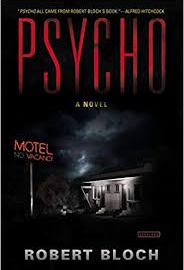
BOOK CORNER: PSYCHO by Robert Bloch

Copyright@shravancharitymission

Khidki (Window)

–Read India Initiative—

This is only an attempt to create interest in reading. We may not get the time to read all the books in our lifetime. But such reviews, talk and synopsis will at least convey what the book is all about.

Psycho was written in the year 1959 by American author Robert Bloch. The book is so-so-so-so very scary that one might even feel scared, in meeting its author.  The novel is widely recognized, as Bloch’s, most illustrious work. So intensely written, that even while narrating it to you now, I get a feeling as if someone is standing behind me.

    The book was later adapted into Alfred Hitchcock’s seminal 1960 film of the same name, and was loosely adapted into the Bates Motel television series of (2013-2017). Bloch later wrote two sequels, which are unrelated to any of the film sequels.

    The novel tells the story of Norman Bates, caretaker of an isolated motel who struggles under his domineering Mother and gets embroiled in a series of murders. 

     Norman Bates is the main protagonist of this novel, who traces his struggles with insanity, particularly, split personality disorder. In the novel, Norman is described, as in mid-forties, overweight, pale, and balding. As a child, Norman had an extremely dysfunctional, even abusive relationship, with his Mother that forever changed his ability to relate normally in society. As an adult, Norman lives alone with his Mother and runs the Bates Motel. When the novel opens, Norman is reading about the Oedipus Situation or Complex with the hope of understanding more about his strange relationship with his Mother. It’s clear that Norman’s relationship with his Mother has deeply affected the way he views all women, particularly women, to whom he is sexually attracted. Norman drinks as an excuse to block the strange voices in his head—arguably his Mother’s voice—telling him that he’s not good enough, and reminding him that he’s impotent.

    All in all ‘Psycho’ is a horror story of Norman Bates, and his strange relationship with his Mother, and the motel he runs on the side of a deserted highway.

    The novel opens with an image of a forty-year-old Norman Bates reading in his office. His Mother approaches and chides him for reading filthy material. The two get into a vicious fight is when the Mother lambasts Norman. He is too weak, and too afraid to stand up to her. She challenges everything of Norman, from his social skills to his sexual predilections while he silently takes the abuse. In his head, however, he imagines the release he would feel if he killed his Mother, but the buzzer ringing at the front door breaks him from his thoughts. Someone needs a room in the motel.

    Its a woman who needs a room. Mary Crane, has just driven across several states in the pouring rain. Norman doesn’t know that Mary Crane has stolen $40,000 from her real estate boss. She hopes to meet Sam Loomis, her fiancé with whom she’s been having a long distance relationship, and with this money she wants to settle his debts, and start a married life together. After getting lost on the highway, Mary pulls into the Bates Motel and asks for a room. Norman, who has clearly never interacted with young women, shyly asks Mary, up to the house for dinner. She accepts, but when she hears of the horrific, and seemingly abusive, relationship that Norman has with his Mother, she gently suggests that Norman put her in an institution. This idea outrages Norman, who shouts and screams that his Mother is normal: “She’s not crazy!” Mary quietly excuses herself, and returns to her motel room, and vows to return the money she’s stolen so that she doesn’t end up being tortured by guilt. Moments later, an old woman enters Mary’s room while she’s in the shower and beheads her.

    In the moments before Mary was murdered, Norman had been watching her undress through a peephole in his office. He was drinking at that time, and passed out in his chair. He awoke to find Mary’s corpse and immediately suspected his Mother to be the murderer. He momentarily considers letting Mother go to the prison, but the thought of being separated from her is too much for him. He knows he must protect her, help cover up her crimes. Norman methodically cleans up the murder scene, just as he remembers cleaning up the scene with Mother and “Uncle Joe” all those years ago. He deposits Mary’s corpse and the car into the sinkhole behind the motel and assumes he has got away with the murder. Meanwhile, Mary’s old boss, Mr. Lowery, hires a private detective to track Mary in order to recover his $40,000 that she had stolen. The detective, Mr. Arbogast, traces Mary to the motel and now stands knocking at the door, demanding to speak with Norman, or his Mother. Moments later, the same mysterious figure, who appears to be an old woman, attacks Arbogast and slits his throat. Norman deposits Arbogast’s body and the car in the same sinkhole.

    Unfortunately for Norman, Mary Crane’s little sister Lila by now had grown suspicious of her sister’s disappearance. She meets up with Sam Loomis to search for her. They too trace Mary back to the Bates Motel, Lila is now convinced that something terrible has happened to Mary in the motel only.

    She notifies the local sheriff, but he insists that she is wrong. He tells her that Norman Bates is harmless, and that his mother has been dead for years now (after she poisoned herself and her lover, “Uncle Joe”). Unconvinced, Lila arranges for Sam Loomis to distract Norman while she explores the house searching for clues. Although Sam does his best to distract Norman, he drops his guard when Norman smashes a whisky bottle over Sam’s head, knocking him unconscious. Meanwhile, as Lila explores the house, she finds a tiny shrivelled woman whom she assumes is Mrs. Bates. But as she approaches, she discovers that the woman is actually a taxidermal corpse or you could say a stuffed corpse. Norman appears behind Lila, dressed in his mother’s clothes and speaking in a high, affected voice saying, “I am Norma Bates.” He raises a butcher knife and pounces on Lila, but Sam, who wakes up from his stupor well on time, manages to wrestle Norman away from her and hold him there until he is arrested. In the weeks that follow, it is discovered that Norman only had murdered his mother and her lover, “Uncle Joe.” To mask the guilt he felt over the murders, Norman developed a split personality in which Mother became his alternate self. At the trial, Norman is found to be insane and is institutionalized or you could say imprisoned in a house prison for life.

Synopsis by Kamlesh Tripathi

*

https://kamleshsujata.wordpress.com

*

Share it if you like it

*

Shravan Charity Mission is an NGO that works for poor children suffering from life threatening diseases especially cancer. Our posts are meant for our readers that includes both children and adults and it has a huge variety in terms of content. We also accept donations for our mission. Should you wish to donate for the cause. The bank details are given below:

NAME OF ACCOUNT: SHRAVAN CHARITY MISSION

Account no: 680510110004635 (BANK OF INDIA)

IFSC code: BKID0006805

*

Our publications

GLOOM BEHIND THE SMILE

(The book is about a young cancer patient. Now archived in 7 prestigious libraries of the US, including, Harvard University and Library of Congress. It can also be accessed in MIT through Worldcat.org. Besides, it is also available for reading in Libraries and archives of Canada and Cancer Aid and Research Foundation Mumbai)  

ONE TO TANGO … RIA’S ODYSSEY

(Is a book on ‘singlehood’ about a Delhi girl now archived in Connemara Library, Chennai and Delhi Public Library, GOI, Ministry of Culture, Delhi)

AADAB LUCKNOW … FOND MEMORIES

(Is a fiction written around the great city of Nawabs—Lucknow. It describes Lucknow in great detail and also talks about its Hindu-Muslim amity. That happens to be its undying characteristic. The book was launched in Lucknow International Literary Festival of 2014)

REFRACTIONS … FROM THE PRISM OF GOD

(Co-published by Cankids–Kidscan, a pan India NGO and Shravan Charity Mission, that works for Child cancer in India. The book is endorsed by Ms Preetha Reddy, MD Apollo Hospitals Group. It was launched in Lucknow International Literary Festival 2016)

TYPICAL TALE OF AN INDIAN SALESMAN

(Is a story of an Indian salesman who is, humbly qualified. Yet he fights his ways through unceasing uncertainties to reach the top. A good read not only for salesmen. The book was launched on 10th February, 2018 in Gorakhpur Lit-Fest. Now available in Amazon, Flipkart and Onlinegatha)

RHYTHM … in poems

(Published in January 2019. The book contains 50 poems. The poems describe our day to day life. The book is available in Amazon, Flipkart and Onlinegatha)

(ALL THE ABOVE TITLES ARE AVAILABLE FOR SALE IN AMAZON, FLIPKART AND OTHER ONLINE STORES OR YOU COULD EVEN WRITE TO US FOR A COPY)

*****


SHORT STORY: Lata Bhagvan Kare … the marathon runner

Copyright@shravancharitymission

    This is a real life story of a sixty-five year old lady, Lata Bhagvan Kare, a resident of a small village in Buldhama district, in Maharashra. She was leading a simple life with her husband. They both worked as farm labour and barely made enough to make ends meet. They had a small house near the farmland where they used to live.

    The small savings that they had accumulated all throughout their lives was spent on getting their three daughters married off. Apart from their daughters they also had a son. After the daughters were settled their responsibilities were practically over. They enjoyed the simple pleasures of life and of course each other’s company. They were inseparable and understood each other comprehensively. Their relationship was a proof of the principle that you did not need luxury to be happy.

    One day after returning from the farm, her husband told her that he was not feeling well. First she tried all sorts of herbal medicines to help him, but he wouldn’t get better. The local government hospital, diagnosed him of some serious infection. They recommended he be taken to a bigger hospital that had better facilities for further tests. This bewildered Lata. They barely had enough money for the fare to reach the hospital, let alone the expensive tests prescribed by the doctors. With tearful eyes, she told her husband the news and felt helpless. But then how could she let her husband die without treatment.

    She dropped her ego and pulled together all her courage to beg her neighbours and relatives for donations to go to a bigger hospital in order to save her husband’s life. With the donations she had received they finally got to bigger hospital. This was not the sort of place that they were used to, being in. They felt very uncomfortable and out of place. Nevertheless, Lata gathered courage, to ask for a doctor. The official at the reception desk collected an initial fee. With that they had exhausted almost a major chunk of money that Lata was carrying. They were asked to wait outside the doctor’s cabin until they were called.

    When their turn came, her husband was called in. after examination, the doctor handed her a list for further tests, some medicines and the recommendation for hospitalization. With these developments Lata went into a tizzy. She had no money and nowhere to go. How do I save my husband she thought? With tears flowing down her cheeks, she and her husband slowly walked out of the hospital.

    She couldn’t have afforded the expensive hospital canteen, so they stopped by a samosa stall at the bus stand. They bought two samosas for the journey back to their village. Lata thought this could perhaps be her husband’s last meal. The samosa-wallah wrapped the samosa and handed it to her with a smile. As she ate her samosa and chutney from the newspaper wrapper, she saw the headline: ‘Baramati Marathon: Attractive Prize Money.’ Her heart missed a beat. The next moment she was preparing to run the race.

    The next day as everyone lined up at the start of the race, in their running gear, Lata Kare stood there, in her red-checked Maharashtrian-style sari. Barefoot, with tears in her eyes. She argued with the organisers, to allow her to run in the marathon, but they refused. She was sixty five. In trying to save her husband, they did not want her to die. After about an hour of begging and pleading, they finally agreed to let her run, and pinned a number on her clothes. As she began running, people turned to look at her and laughed.

    It was a sight for sore eyes. Teenagers and young adults who had been practicing for months, for this race, lined up, next to an old lady who had hitched her sari above her ankles. She had never run a race in her life, what to say of a marathon. Little did her competitors know that they were about to get schooled by someone who was old enough to be their grandmother. Lata could not think of anything else, but for the love she had for her husband. This race was a matter of life and death for her. What were a few pebbles and rocks to stop her progress?

    Lata, finally ran and ran like the wind with just one focus—the finish line. Her feet began to bleed, her sari became soaked in sweat, but she kept running and running. It would have been an achievement had she even finished the race. But she had aimed much higher. The people who witnessed this spectacle cheered her all along the way. They were touched by her reason for running.

    It would be a pointless story if she did not win. For there was no award for mere participation, yet she had done it! The organizers of the race could not believe that Lata Kare a sixty-five-year-old Maharashtrian woman from a small village, had won the race. The crowds on the streets of Baramati clapped for her and celebrated her victory. She was now the local hero, but she did not care for the attention.

    She collected her winnings, marched into the hospital and got her husband the best treatment. At the same time she even got a few bandages done on her feet. She had achieved her mission and that was to save her husband. As they say, the most powerful force in the world is love. Lata went on to win for the next two years consecutively.

Moral of the story: If you have determination and confidence nothing is impossible.

Posted by Kamlesh Tripathi

*

https://kamleshsujata.wordpress.com

*

Share it if you like it

*

Shravan Charity Mission is an NGO that works for poor children suffering from life threatening diseases especially cancer. Our posts are meant for our readers that includes both children and adults and it has a huge variety in terms of content. We also accept donations for our mission. Should you wish to donate for the cause. The bank details are given below:

NAME OF ACCOUNT: SHRAVAN CHARITY MISSION

Account no: 680510110004635 (BANK OF INDIA)

IFSC code: BKID0006805

*

Our publications

GLOOM BEHIND THE SMILE

(The book is about a young cancer patient. Now archived in 7 prestigious libraries of the US, including, Harvard University and Library of Congress. It can also be accessed in MIT through Worldcat.org. Besides, it is also available for reading in Libraries and archives of Canada and Cancer Aid and Research Foundation Mumbai)  

ONE TO TANGO … RIA’S ODYSSEY

(Is a book on ‘singlehood’ about a Delhi girl now archived in Connemara Library, Chennai and Delhi Public Library, GOI, Ministry of Culture, Delhi)

AADAB LUCKNOW … FOND MEMORIES

(Is a fiction written around the great city of Nawabs—Lucknow. It describes Lucknow in great detail and also talks about its Hindu-Muslim amity. That happens to be its undying characteristic. The book was launched in Lucknow International Literary Festival of 2014)

REFRACTIONS … FROM THE PRISM OF GOD

(Co-published by Cankids–Kidscan, a pan India NGO and Shravan Charity Mission, that works for Child cancer in India. The book is endorsed by Ms Preetha Reddy, MD Apollo Hospitals Group. It was launched in Lucknow International Literary Festival 2016)

TYPICAL TALE OF AN INDIAN SALESMAN

(Is a story of an Indian salesman who is, humbly qualified. Yet he fights his ways through unceasing uncertainties to reach the top. A good read not only for salesmen. The book was launched on 10th February, 2018 in Gorakhpur Lit-Fest. Now available in Amazon, Flipkart and Onlinegatha)

RHYTHM … in poems

(Published in January 2019. The book contains 50 poems. The poems describe our day to day life. The book is available in Amazon, Flipkart and Onlinegatha)

(ALL THE ABOVE TITLES ARE AVAILABLE FOR SALE IN AMAZON, FLIPKART AND OTHER ONLINE STORES OR YOU COULD EVEN WRITE TO US FOR A COPY)

*****


SHORT STORY: THE VILLAGERS AND THE SNAKE

Copyright@shravancharitymission

    Thousands of years ago, a group of villagers approached a saintly man who was meditating inside a cave in a mountain. Years of meditation had given him the wisdom to solve any problem that came his way. Restless and scared the villagers approached him, when one out of them pleaded, ‘O Sadhu baba! Please help us. There is a large venomous snake that is terrorising the whole village.’ But the sage did not respond. As he was in deep meditation. The villagers looked at each other and then nudged their spokesman to speak again. ‘You can hear the hiss of the snake from miles. He cunningly bites anyone on his path, regardless of whether or not he is threatened. As a consequence of this, we are all fearful, to venture out in the fields all by ourselves, which has led to our crops dying for want of care. The snake’s venom is not the only thing that is killing us one by one. We are also dying because of starvation. So, we beg of you to help us.’

    The saint was compassionate, soft and a spiritual-minded person. After understanding the gravity of the situation. He got up from his straw mat and looked at the villagers. ‘Let’s find that snake,’ he said softly. The villagers cheered at this. They now saw hope, and thought, the Saint will solve their problem. So they trailed behind him in search of their hissing enemy.

    As they approached the deserted ghost land, which was once their home, the scary sound of the snake echoed from the other side of the village. It approached the group of villagers at great speed, paying no regard to their pitchforks nor their torches of fire. The villagers fled for their lives. But the saint stood there, undeterred by the hooded creature that came to attack him. The snake’s slithering and undulating green and black scales shimmered majestically in the sunlight. What beauty! The saint exclaimed.

    This confused the snake since the saint wasn’t fleeing like the rest of its prey. The snake stopped and stared at him. ‘Come ahead, you magnificent creature,’ yelled the saint. The snake, who had never been treated with such kindness before, was mesmerized by these fascinating words. The warmth of the saint’s words, replaced the heat of the blazing fire, it was used to. For a moment the snake lost all its ferocity, and glided towards the saint, and coiled up meekly by his feet in reverence. The villagers, some of them hiding in the trees, and some on the other side of the fields, couldn’t hear this conversation between the two. They looked on from a distance, astounded by what they were now seeing.

    ‘I am stunned by your beauty.’ Said the saint to the snake, as if they were old friends. ‘But why do you frighten these villagers? The snake responded by lowering its hood. ‘Leave your destructive ways and do not terrorise the poor villagers needlessly. Stop biting them—they are no match for you. There is plenty for you to eat in the forest.’ Rattled the saint. Upon hearing this the snake bowed at the saint, and resolved to leave the villagers alone. It had taken a new vow.

    Soon the snake began a new life of innocence, without attempting to harm anyone. From that day onwards the villagers had become elated. Their crop yield doubled, their cattle grazed without fear and even their children played games in the forest. The saint returned to his cave to continue his spiritual journey. A happy story? Not yet

    Some months later, the saint came down from the mountain to beg for food from the villagers, just enough to keep him alive. As he travelled to the village, he saw the same snake, coiled up near the root of a tree, lying mangled, practically dead, its scales had fallen off, it looked emaciated and injured, with sores all over his body.

    ‘My dear friend what happened to you? The saint enquired in deep concern.

    ‘This is the fruit of being good.’ The snake replied. Although, his venom had dried up, yet he spoke with bitterness. ‘I obeyed you. I gave up my tormenting ways. I left the villagers alone and stopped attacking them. But in the process see what has happened to me. Everyone pelts me with stones, beats me with sticks, and even children tease me and drag me mercilessly by my tail. I am now a laughing stock. However, I have kept my promise to you.’

    The saint smiled and said, ‘Dear snake you did what I had asked you to do. But you didn’t understand my discourse, in the right spirit. I had told you not to bite them, but I had said nothing, about stopping, your ferocious hiss, that could deter people for miles on end.’

    The snake uncoiled itself and finally understood what it had to do to survive. The villagers trembled once again as the hissing sound of the snake, returned to the area, like a bad dream. But now the snake exactly knew, where to draw the line, the laxman rekha. And thereafter both the villagers and the snake lived happily.

    Moral of the story: Humility or meekness does not mean you’re a weakling. Everyone was scared of the snake as long as he was wild and used to bite people. But when he adopted to a peaceful living the villagers started poking, fun at him. And when the saint re-appeared in his life, and advised him again, he was able to find the right balance to lead a happy life and so did the villagers.

 *** 

Posted by Kamlesh Tripathi

*

https://kamleshsujata.wordpress.com

*

Share it if you like it

*

Shravan Charity Mission is an NGO that works for poor children suffering from life threatening diseases especially cancer. Our posts are meant for our readers that includes both children and adults and it has a huge variety in terms of content. We also accept donations for our mission. Should you wish to donate for the cause. The bank details are given below:

NAME OF ACCOUNT: SHRAVAN CHARITY MISSION

Account no: 680510110004635 (BANK OF INDIA)

IFSC code: BKID0006805

*

Our publications

GLOOM BEHIND THE SMILE

(The book is about a young cancer patient. Now archived in 7 prestigious libraries of the US, including, Harvard University and Library of Congress. It can also be accessed in MIT through Worldcat.org. Besides, it is also available for reading in Libraries and archives of Canada and Cancer Aid and Research Foundation Mumbai)  

ONE TO TANGO … RIA’S ODYSSEY

(Is a book on ‘singlehood’ about a Delhi girl now archived in Connemara Library, Chennai and Delhi Public Library, GOI, Ministry of Culture, Delhi)

AADAB LUCKNOW … FOND MEMORIES

(Is a fiction written around the great city of Nawabs—Lucknow. It describes Lucknow in great detail and also talks about its Hindu-Muslim amity. That happens to be its undying characteristic. The book was launched in Lucknow International Literary Festival of 2014)

REFRACTIONS … FROM THE PRISM OF GOD

(Co-published by Cankids–Kidscan, a pan India NGO and Shravan Charity Mission, that works for Child cancer in India. The book is endorsed by Ms Preetha Reddy, MD Apollo Hospitals Group. It was launched in Lucknow International Literary Festival 2016)

TYPICAL TALE OF AN INDIAN SALESMAN

(Is a story of an Indian salesman who is, humbly qualified. Yet he fights his ways through unceasing uncertainties to reach the top. A good read not only for salesmen. The book was launched on 10th February, 2018 in Gorakhpur Lit-Fest. Now available in Amazon, Flipkart and Onlinegatha)

RHYTHM … in poems

(Published in January 2019. The book contains 50 poems. The poems describe our day to day life. The book is available in Amazon, Flipkart and Onlinegatha)

(ALL THE ABOVE TITLES ARE AVAILABLE FOR SALE IN AMAZON, FLIPKART AND OTHER ONLINE STORES OR YOU COULD EVEN WRITE TO US FOR A COPY)

*****